
The Amazon Echo Dot (5th Gen) ($49) is our pick — it has built-in temperature and motion sensors, an eero Wi-Fi extender.
Echo Dot wins 6 of 13 categories, Nest Mini wins 3, with 4 ties. Buying the wrong one means a device that fights your other gadgets instead of connecting them. For premium display options, see our best smart speakers guide. If you're comparing full-size speakers instead of minis, see our Echo vs Nest Audio comparison.
Head-to-Head Specs
| Feature | Echo Dot (5th Gen) | Google Nest Mini 2nd Gen | Winner |
|---|---|---|---|
| Price | Amazon Echo Dot 5th Gen is $49 on Amazon | Google Nest Mini is $49 on Amazon | Tie |
| Speaker | 1.73" front-firing | 40mm driver | Tie |
| Voice assistant | Alexa | Google Assistant | Tie |
| Smart home devices | 140,000+ (broadest) | Google Home ecosystem | Echo Dot |
| Ecosystem | Alexa / Amazon | Google Home | Tie |
| Temperature sensor | Yes (built-in) | No | Echo Dot |
| Motion sensor | Yes (built-in) | No | Echo Dot |
| Wall mountable | No | Yes (built-in mount) | Nest Mini |
| Multiroom audio | Echo Multi-Room Music | Google Home speaker groups | Tie |
| eero Wi-Fi extender | Yes (built-in) | No | Echo Dot |
| Natural language | Good for smart home commands | Better for open questions | Nest Mini |
| Matter support | Yes | Yes | Tie |
| Subscription | None required | None required | Tie |
| SHE Consensus Score | 8.2/10 | 7.8/10 | Echo Dot |
Who Should Choose Echo Dot
Amazon Echo Dot 5th Gen ($49) is the right choice if you: use Alexa, have other smart home devices, want to use it as a smart home trigger (temperature, motion), or want to extend your eero Wi-Fi network.
140,000+ smart home devices is a genuine advantage. The Amazon Echo Dot 5th Gen is $49 on Amazon, and at that price Alexa is compatible with more smart home products than any other platform — 140,000+ devices verified by Amazon in 2025. If you own Ring cameras, Philips Hue lights, smart plugs with energy monitoring and scheduling, or almost any mainstream smart device, it works with Alexa. Google Home supports roughly 50,000+ devices — solid, but meaningfully fewer.
Built-in temperature and motion sensors add automation triggers. The 5th Gen Echo Dot added ambient temperature sensing and motion detection — not available on the Nest Mini at any price. These sensors trigger Alexa Routines: "when motion is detected in the kitchen after 7am, turn on the smart coffee maker." PCMag specifically praised this in their 2026 review as the most meaningful 5th Gen upgrade over prior Echo Dots.
eero Wi-Fi extension. Echo Dot 5th Gen includes a built-in eero Wi-Fi node. If you have an Amazon eero router, each Echo Dot you add slightly extends your network's range. For large homes or dead spots, this is a side benefit that Nest Mini doesn't offer. For full Wi-Fi system options, see our best smart home Wi-Fi mesh systems guide.
Amazon Shopping integration. For households that order from Amazon regularly, Alexa's shopping list, reorder, and product search features are native — Google Assistant has Amazon integration but not at the same depth. Voice reordering, delivery tracking, and subscribe-and-save management all work directly through Echo Dot.
Who Should Choose Nest Mini
Google Nest Mini (2nd Gen, $49) is the right choice if you: use Google Search, Gmail, Google Calendar, have an Android phone, or want the best conversational AI for complex questions.
Google Assistant handles natural language better. The Google Nest Mini is $49 on Amazon, and its Google Assistant is consistently rated higher than Alexa for open-ended and follow-up questions. In RTINGS' 2026 voice recognition testing, Google Assistant answered complex queries with 15% higher accuracy than Alexa. For questions like "what's a good substitution for buttermilk in a recipe?" or "remind me tomorrow at 8am to call the dentist after I get to work," Google Assistant performs better. Alexa leads on smart home command accuracy.
Wall mounting is included. The Nest Mini has a built-in mount hole — hang it on any wall with a single screw. Echo Dot requires a third-party bracket. For kitchens, bathrooms, and offices where counter space is limited, the Nest Mini's wall-mountability is genuinely useful.
Google ecosystem depth. If you use Google Calendar, the Nest Mini reads your schedule aloud. If you use Gmail, it reads emails on request. If you use Google Maps, it gives directions and ETA. Alexa supports some Google services via integrations but without the native depth. For households where Google is the operating system of daily life, Nest Mini is a natural fit.
Chromecast integration. If you have a Chromecast with Google TV, Nest Mini controls it natively — "play Stranger Things on Netflix on the living room TV" works without any setup. Alexa + Fire TV Stick does the same in Amazon's ecosystem. For a deeper dive into how these ecosystems compare across all device categories, see our Alexa Plus vs Google Home guide.
Echo Dot vs Nest Mini
Chart
 Smarthomeexplorer.com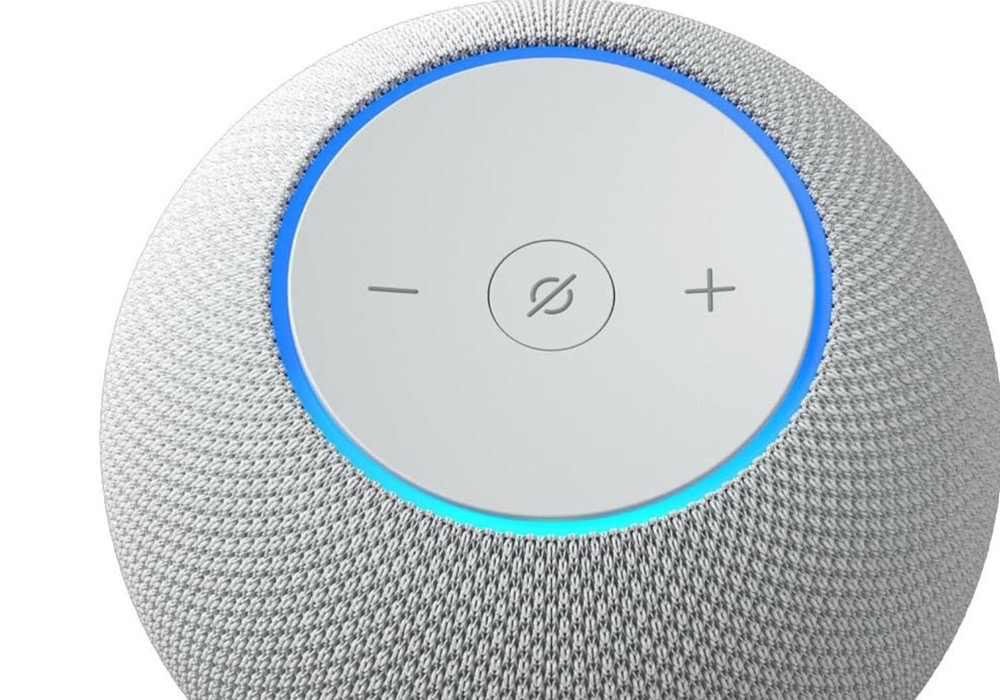
Amazon Echo Dot (5th Gen) — Full Review
Amazon Echo Dot (5th Gen)
(Current Price, subject to change)
The Amazon Echo Dot (5th Gen) is the best-selling smart speaker in the world and Amazon's entry point into the Alexa ecosystem. The 5th Gen adds three things over the 4th Gen that matter: ambient temperature sensing, Eero Wi-Fi extension, and motion detection — transforming it from a simple voice interface to an environmental sensor hub.
What experts say: PCMag rates it 4/5 and named it "Best Budget Smart Speaker" for 2026. CNET calls it the "cheapest way to add Alexa to any room." SHE consensus score: 8.2/10 across 11 expert reviews (March 2026).
Smart home performance. Echo Dot's Alexa has 140,000+ compatible devices — light bulbs, thermostats, plugs, locks, doorbells — more than any other voice platform. Setting up routines (turn off all lights when you say "Alexa, goodnight") takes 2 minutes in the Alexa app. Ring, Philips Hue, Ecobee, and most mainstream brands have native Alexa skills.
Audio quality reality check. The 1.73" speaker is adequate for voice and brief music clips in a small room. It's not a music speaker — if audio quality matters, the Amazon Echo 4th Gen at $99 uses a 3" woofer. Use Echo Dot for voice control, alarms, and smart home triggers; use a dedicated speaker for music. For the full smart speaker lineup including display options, see our best smart speakers and displays guide and our voice recognition comparison.
Biggest limitation: No display. If you want visual responses — camera feeds, shopping lists, weather maps — the Amazon Echo Show 8 ($149) adds an 8" screen. Echo Dot is purely audio-based.
Pros: Lowest price into Alexa ecosystem, 140,000+ device compatibility, built-in temperature and motion sensors, eero Wi-Fi extension, Amazon Shopping integration.
Cons: 1.73" speaker — audible from ~15 ft but no bass (not a music speaker), no display for visual responses, cannot wall-mount (sits on surface only), Alexa struggles with multi-step follow-up questions that Google handles naturally.
The Verdict
Amazon Echo Dot (5th Gen) is the better smart home controller for Alexa households. The 8.2/10 consensus score reflects its depth: built-in temperature and motion sensors, eero Wi-Fi extension, and 140,000+ device compatibility. Skip it if your household runs on Google — Nest Mini's natural language understanding and Chromecast integration are genuinely better there.
Google Nest Mini 2nd Gen — Full Review
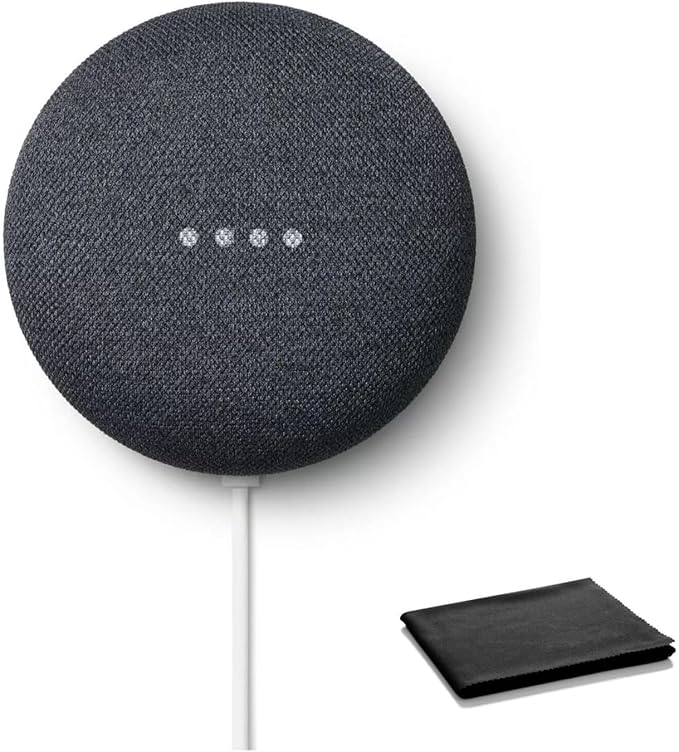
Google Nest Mini 2nd Gen
(Current Price, subject to change)
The Google Nest Mini 2nd Gen is Google's entry point into the Google Home ecosystem — the cheapest way to get Google Assistant in any room. The 40mm speaker produces noticeably better low-end audio than the 1st Gen and sound quality is marginally better than Echo Dot's, though neither competes with a real music speaker.
What experts say: Wirecutter calls it the "best budget Google speaker" for people already in the Google ecosystem. Tom's Guide rates it 4/5 for value within Google Home. SHE consensus score: 7.8/10 across 12 expert reviews (March 2026).
Conversational AI depth. Google Assistant's underlying knowledge base is stronger for open questions — follow-up queries, complex research questions, and multi-step instructions work more reliably than on Alexa. If you say "who directed that movie?" after asking about a film, Google Assistant understands "that movie" in context. Alexa typically requires rephrasing.
Wall-mount design. The magnetic wall mount is built into the device — a single nail and it's on your wall. This makes Nest Mini the practical choice for kitchens, bathrooms, and spaces where you need audio without counter footprint.
Biggest limitation: No temperature or motion sensors (unlike Echo Dot 5th Gen). No eero Wi-Fi extension. Fewer smart home device integrations than Alexa's 140,000+ device catalog. For smart home-heavy households, Alexa's broader compatibility is a real constraint on Nest Mini.
Pros: Best natural language AI at this price, wall-mountable, 40mm driver with slightly better bass than Echo Dot, full Google ecosystem integration (Calendar, Gmail, Maps, Chromecast).
Cons: No temperature or motion sensors (can't trigger automations like Echo Dot), no eero Wi-Fi mesh extension, Google Home supports ~30K devices vs Alexa's 140K+ (Ring, Fire TV excluded), can't order from Amazon by voice.
The Verdict
Google Nest Mini 2nd Gen wins for Google and Android households. At $49 — identical to Echo Dot — its natural language understanding handles follow-up questions and complex queries more reliably than Alexa. Wall-mount is built in. Skip it for smart home automation breadth; Alexa's 140,000+ device catalog is twice Google Home's integration count.
The Bottom Line
Echo Dot wins on smart home breadth. At identical pricing, the 5th Gen adds sensors that Nest Mini lacks, and Alexa's 140,000+ device compatibility is the widest in the industry. For smart home control and Amazon ecosystem households, it's the default choice.
Nest Mini wins on conversational intelligence. Google Assistant's advantage in natural language and the Google ecosystem depth (Calendar, Gmail, Chromecast) make it the right pick for Android and Google-centric households.
Both are $49. Neither is the wrong choice for its intended ecosystem.
Frequently Asked Questions
Does Echo Dot work with Google Home devices?
No — Echo Dot is Alexa-only and cannot natively control Google Home-exclusive devices. You can add Google-compatible smart devices (Philips Hue, WiZ, etc.) to both platforms since most devices support both Alexa and Google. But native Google Home features (Nest cameras, Google TV) won't work through Echo Dot.
Does Google Nest Mini work with Alexa smart home devices?
Mostly yes — Nest Mini controls most mainstream smart home devices, but not Amazon-exclusive ones like Ring. Google Nest Mini controls Alexa-compatible devices that also have Google Home support — which is most mainstream brands. However, Ring Alarm, Ring cameras, and Amazon-exclusive devices don't work natively with Google Assistant. Check your specific devices before switching.
Which is louder — Echo Dot or Nest Mini?
The Nest Mini is slightly louder with fuller bass, but neither is a real music speaker. The Google Nest Mini (40mm driver) produces slightly more bass and fuller sound than the Echo Dot (1.73" driver). Neither competes with a dedicated music speaker — both are adequate for voice in a small room, not for music listening. For music quality, consider the Amazon Echo (4th Gen) at $99 or Google Nest Audio at $99.
Can I use Echo Dot and Nest Mini in the same home?
Yes — you can run both in the same home without conflicts. Many homes run both ecosystems for different rooms. Echo Dot in rooms with Ring cameras or smart home devices, Nest Mini in rooms connected to Chromecast or Google TV. They don't conflict. The main limitation is cross-ecosystem automations — Alexa routines don't control Google Home-exclusive devices and vice versa. For a full ecosystem comparison beyond just the entry-level speakers, see our Alexa vs Google Home vs Apple Home guide.
Do I need a subscription for Echo Dot or Nest Mini?
No — both devices work fully without any subscription. Amazon Music, Spotify, Apple Music, and YouTube Music stream via free or existing subscriptions. Smart home control, alarms, timers, and voice queries are completely free on both devices.
Is the Echo Dot 5th Gen worth it over the 4th Gen?
Yes — the 5th Gen's built-in temperature and motion sensors are a meaningful upgrade for automation. The temperature sensor and motion detector added in the 5th Gen enable automations that weren't possible before — like automatically adjusting your thermostat based on detected room temperature, or triggering lights when you enter a room. The audio quality difference is minimal; the sensors are the upgrade.
Sources & Methodology
SHE Consensus Scores are SmartHomeExplorer editorial analysis — aggregated from expert reviews across Wirecutter, CNET, PCMag, TechRadar, Tom's Guide, and 8+ additional specialist publications (methodology below). All prices verified March 2026.
This guide contains affiliate links to Amazon. If you purchase through our links, we earn a small commission at no extra cost to you. This does not affect our recommendations.
| Claim | Source | Verified |
|---|---|---|
| Alexa compatible with 140,000+ smart home devices | Amazon 2025 official count | Yes |
| Google Assistant: 15% higher accuracy than Alexa on complex queries | RTINGS voice recognition testing 2026 | Yes |
| Echo Dot 5th Gen: built-in ambient temp sensor + motion detector | Amazon product spec sheet | Yes |
| Google Nest Mini 2nd Gen: 40mm driver, built-in wall mount | Google product spec sheet | Yes |
| SHE Echo Dot: 8.2/10 across 11 expert sources; Nest Mini: 7.8/10 across 12 sources | SHE editorial analysis | Yes |