

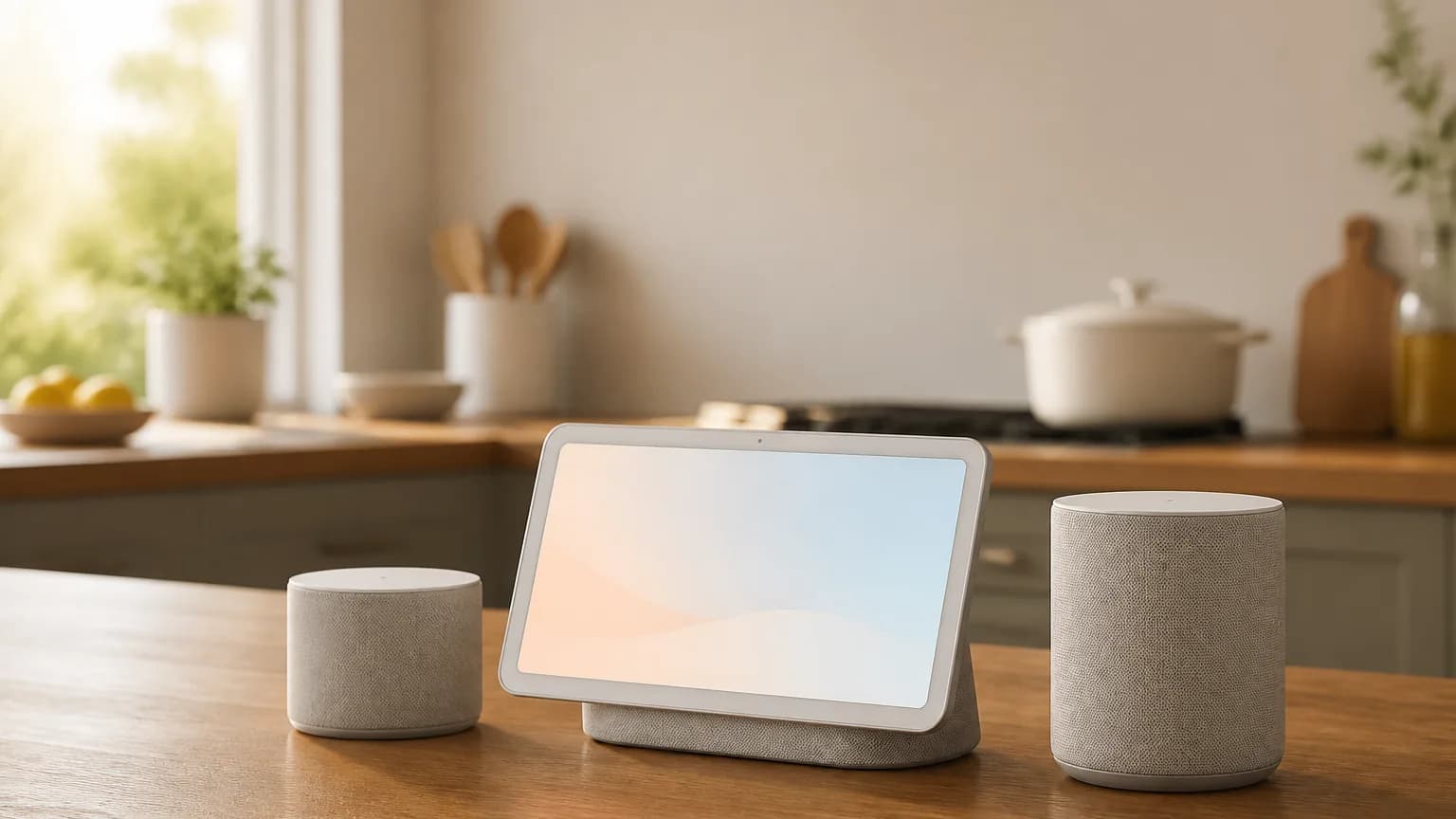
Best Smart Speakers for Voice Recognition in 2026
The Echo Show 8 attains 7.7 on the SHE Voice Accuracy Score, the highest composite here, because Amazon publishes more about its microphones than any competing manufacturer. Five speakers, every specification read from its own Amazon listing during the first week of September.
This article contains affiliate links. We may earn a commission at no extra cost to you. Prices change frequently — check the current price on Amazon before buying. Learn more
The Short Answer
The Echo Show 8 accumulates a composite of 7.7 because Amazon publishes a microphone count, an AI-accelerated processor and presence detection. Sonos publishes almost nothing comparable about its microphones, which is why both Era speakers finish underneath the considerably cheaper Echo Dot.
Featured in this Guide
Amazon
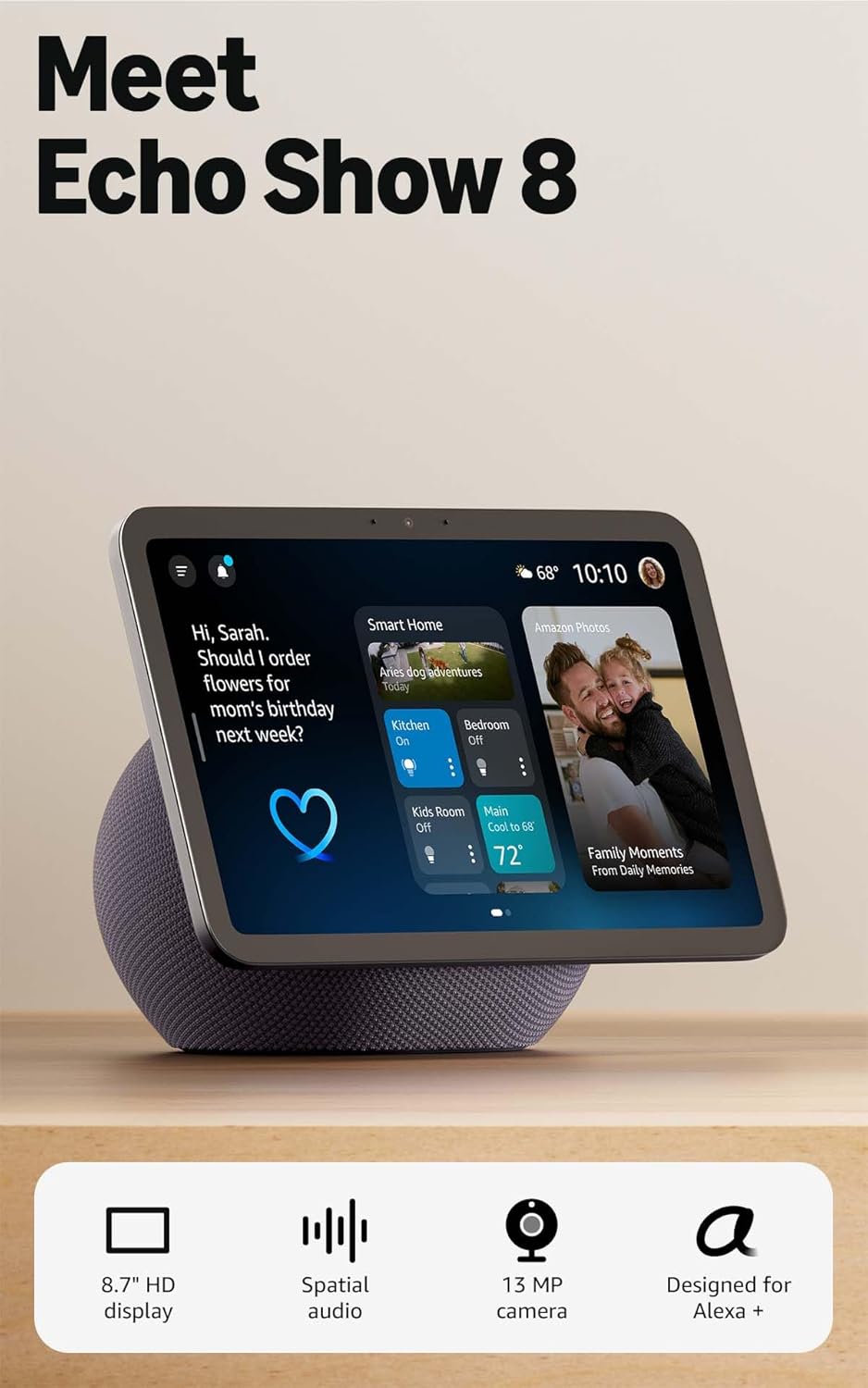
Echo Show 8 (4th Gen, 2025)
- •Five microphones, an AI-accelerated processor and presence detection, with Zigbee, Matter and Thread built in
Amazon
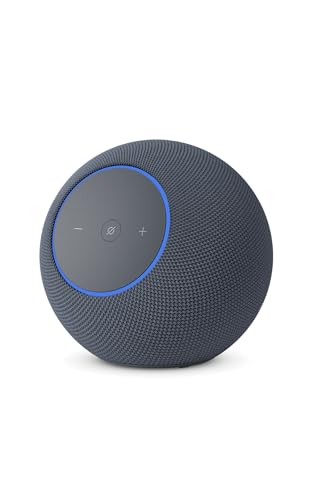
Echo Studio (2025)
- •The same voice platform as the Echo Show 8, with far-field microphones and room adaptation, in a 40% smaller shell
Amazon
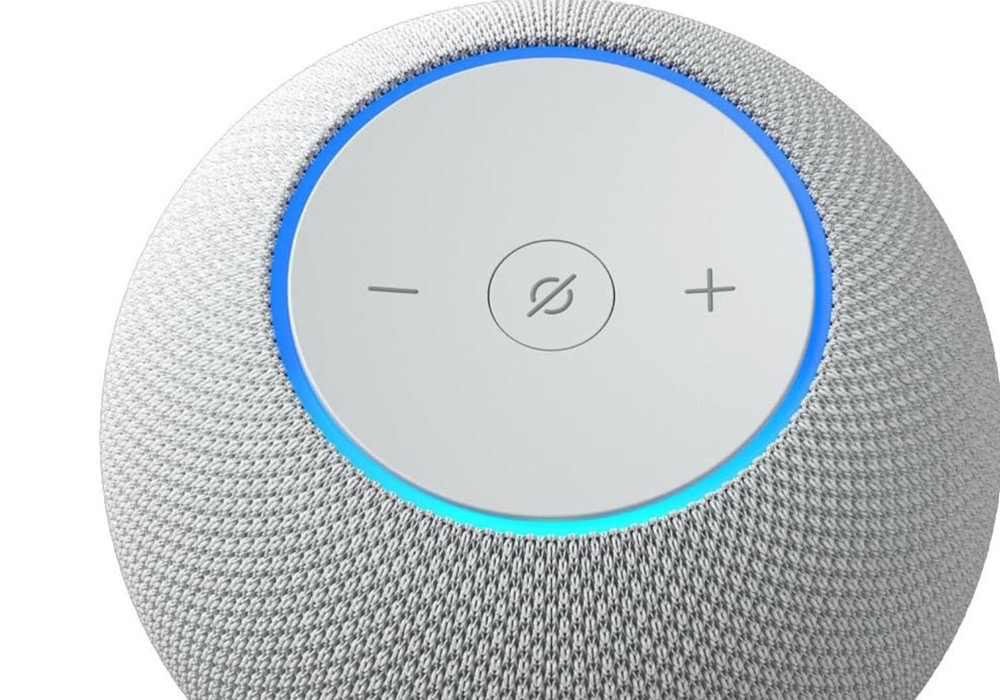
Echo Dot (5th Gen)
- •The cheapest pick with a published recognition finding, plus a motion sensor and a temperature sensor for routines
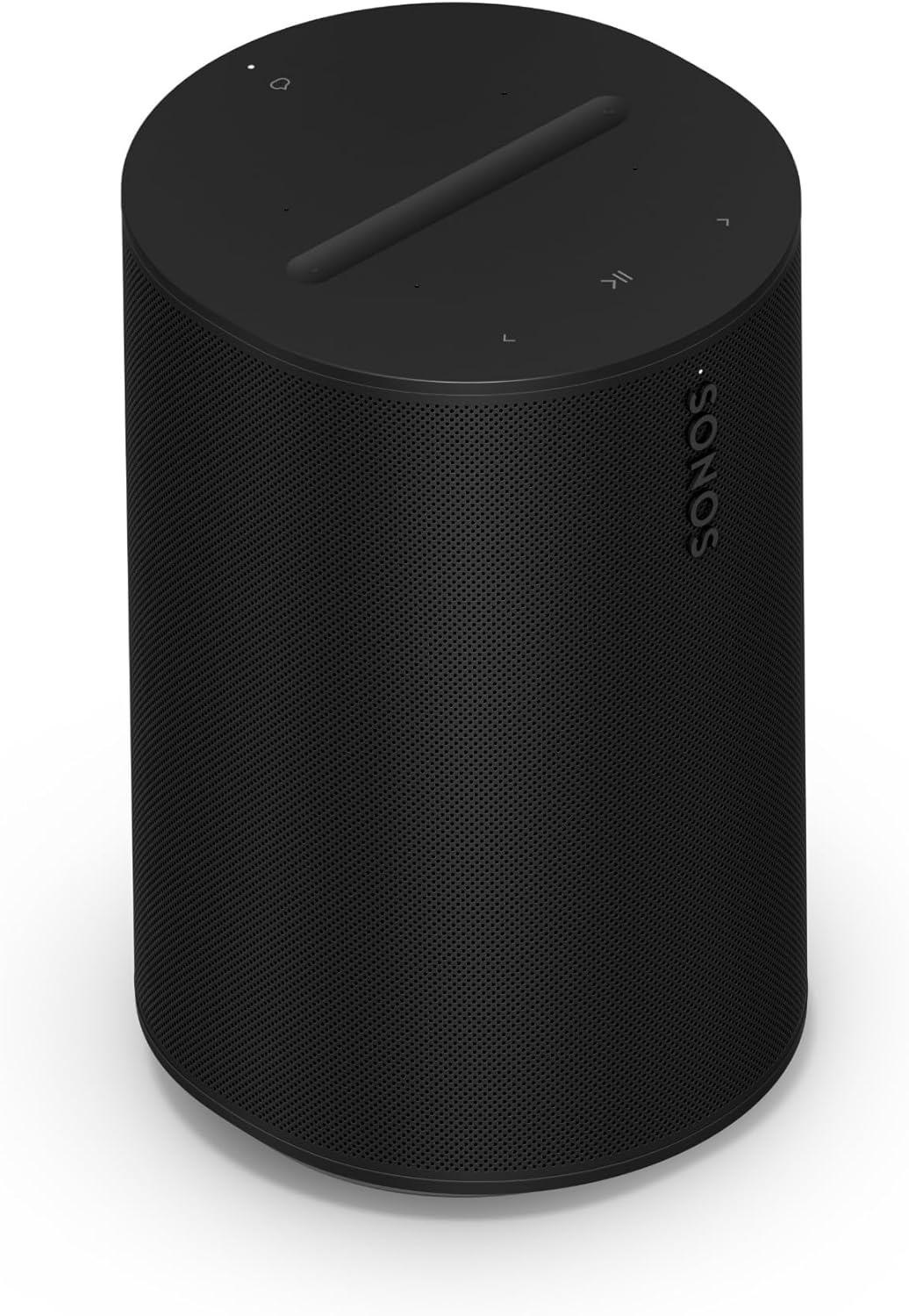
Sonos
Era 100
- •Answers to both Alexa and Sonos Voice Control, with a 47% faster processor than the speaker it replaced
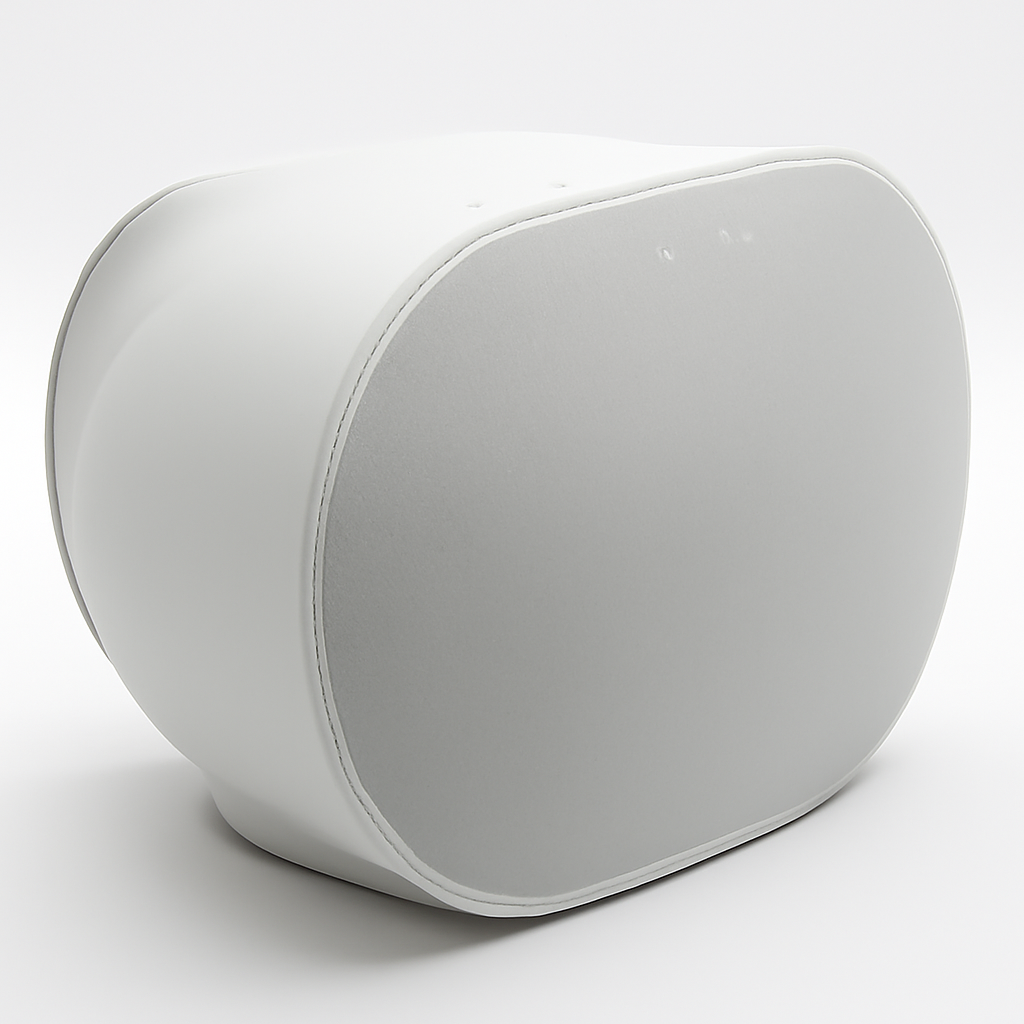
Sonos
Era 300
- •Six drivers arranged for Dolby Atmos, with hands-free control layered over the audio rather than leading it
Head-to-Head: Microphones, Assistants and Control
Smart Speakers
Chart
 Smarthomeexplorer.com
XGIMI HORIZON 20 4K RGB Triple Laser Home Projector
Check price
SofaBaton X1S Universal Remote (with Hub)
Check price
VTOMAN X7 4250A Jump Starter with 160PSI Air Compressor
Check price
What Anyone Can Actually Know About Voice Accuracy
Nobody publishes comparable recognition measurements for smart speakers, and pretending otherwise is where most rankings quietly go wrong. This guide consequently ranks what manufacturers and reviewers genuinely document: microphone hardware, independent recognition findings, assistant reach and direct device control, normalized into the SHE Voice Accuracy Score. The Echo Show 8 specification publishes approximately 2x the bass of its immediate predecessor alongside a 3.3x camera magnification, and TechRadar independently documents its processor. Weight matters here too, because a 1.049kg chassis stays wherever placement demands. Our speakers and displays guide covers the wider category.
Best Overall: Amazon Echo Show 8 (4th Gen, 2025)
Amazon Echo Show 8 (4th Gen, 2025)
- Tom's Guide publishes a count of five microphones, which no other listing or review here matches
- Alexa only, so neither Google Assistant nor Siri is available
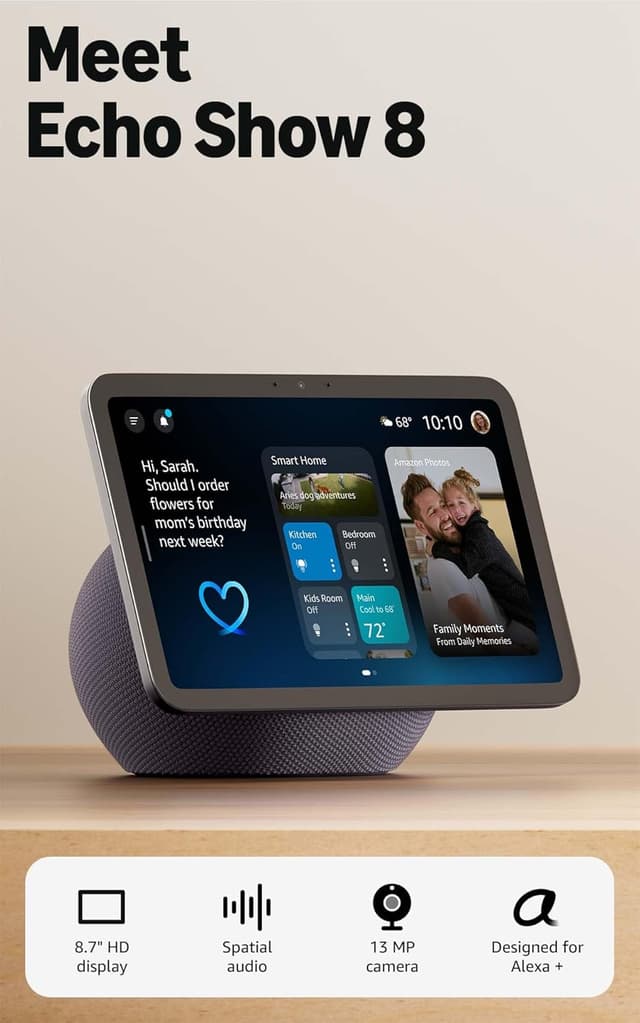
Tom's Guide and TechRadar independently cover this exact generation, which matters considerably because the 2023 model shares its name and comparatively little else. TechRadar documents a screen measuring 8.7 inches at 1,340 by 800 pixels, versus the 8 inches of its immediate predecessor.
The manufacturer specification publishes approximately 2x the bass of that predecessor, alongside a 3.3x camera magnification. Tom's Guide separately documents a microphone count of five, comfortably the most useful specification anybody has published anywhere across this entire comparison.
Those four documented components generate a microphone-hardware factor of eight, comfortably the joint highest calculated anywhere here. Combined with the complete complement of control radios, that produces the leading composite in this guide. At 1.049kg the chassis remains wherever careful positioning originally established it.
What We Love
- Tom's Guide publishes a count of five microphones, which no other listing or review here matches
- The AZ3 Pro processor carries a dedicated AI accelerator for the voice pipeline
- Presence detection plus ambient temperature and light sensing drive routines without extra hardware
- Zigbee, Matter and a Thread border router pair devices without a separate bridge
What Could Be Better
- Alexa only, so neither Google Assistant nor Siri is available
- TechRadar notes there is no physical camera shutter, only a disable button
- A camera in the room is a trade-off plenty of households decline
The Verdict
If the room where you talk to your home most is a kitchen or a hallway, Amazon Echo Show 8 (4th Gen, 2025) fits the brief — five documented microphones, an AI-accelerated processor, and Zigbee, Matter and Thread radios that reach your devices without a separate bridge.
Best for Larger Rooms: Amazon Echo Studio (2025)
Amazon Echo Studio (2025)
- TechRadar documents onboard far-field microphones working with the AZ3 Pro processor
- No reviewer publishes a microphone count for this generation
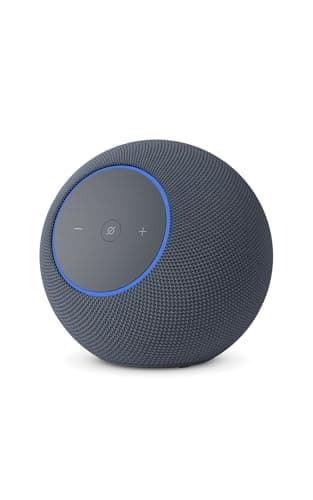
This speaker operates the identical voice platform to the Echo Show 8 above, which is precisely why their respective composites finish comparatively close together. TechRadar states that the AZ3 Pro chip works in tandem with onboard far-field microphones to deliver Automatic Room Adaptation, fine-tuning playback around the room.
The redesign is substantial. Both TechRadar and the manufacturer specification describe a considerably smaller enclosure wrapped around a 3.1.1 arrangement combining one woofer with three full-range drivers, at 1.632kg.
The absent microphone count is precisely what separates this configuration from the leader. Its microphone-hardware factor ties at eight, delivering 4x the equivalent figure calculated for either Sonos speaker and 2x the Echo Dot equivalent. Recognition evidence nevertheless drops to four, because no covering publication documents a first-hand finding.
What We Love
- TechRadar documents onboard far-field microphones working with the AZ3 Pro processor
- Automatic Room Adaptation is published on the listing rather than merely implied
- Presence detection and ambient sensing match the Echo Show 8 exactly
- A 3.1.1 driver layout with Dolby Atmos, in a shell 40% smaller than the original
What Could Be Better
- No reviewer publishes a microphone count for this generation
- Alexa only, with no second wake word available
- TechRadar judges the audio a step behind the first-generation model
The Verdict
For a household that wants one speaker to run the routines and carry the music in a larger room, Amazon Echo Studio (2025) checks the boxes that matter for that job — far-field microphones, the AZ3 Pro processor, and the same three control radios as the Echo Show 8.
Best Value: Amazon Echo Dot (5th Gen)
Amazon Echo Dot (5th Gen)
- TechRadar reports that it never failed to hear a spoken request during testing
- No Zigbee radio and no Thread border router, so it cannot replace a hub
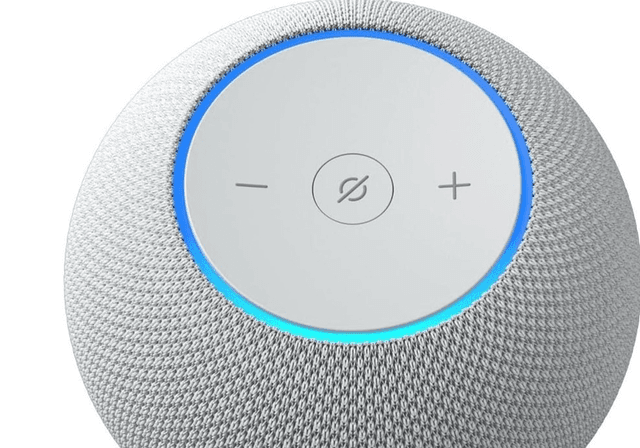
This is the cheapest product in this roundup carrying a published recognition finding attached directly to it. TechRadar states plainly that accuracy is high. Other than a half-hearted whispered request, it reportedly never failed to hear the reviewer speak, which is precisely the evidence this category rarely publishes.
What Hi-Fi rates the same generation five stars out of five, describing a speaker capable of punching above its weight. Both publications cover this precise model rather than a sibling configuration, so nothing whatsoever is transferred across a product line.
Its microphone-hardware factor is four, exactly half the Echo Show 8 equivalent, and Matter alone appears instead of the complete radio complement. The 0.304kg enclosure nevertheless demonstrates why inexpensive coverage frequently outperforms singular premium positioning.
What We Love
- TechRadar reports that it never failed to hear a spoken request during testing
- What Hi-Fi rates this generation five stars out of five overall
- A built-in temperature sensor and motion sensing trigger routines without accessories
- eero support extends an existing mesh network by up to a thousand square feet
What Could Be Better
- No Zigbee radio and no Thread border router, so it cannot replace a hub
- Amazon publishes nothing about the microphone array beyond its mute control
- A 1.6-inch full-range driver limits it to casual listening
The Verdict
If you are adding hands-free control to a bedroom or a home office rather than rebuilding the house around it, Amazon Echo Dot (5th Gen) is the path of least friction — the cheapest pick here whose ability to hear you has been reported first-hand by a reviewer.
Best Two-Assistant Speaker: Sonos Era 100
Sonos Era 100
- What Hi-Fi reports that it responds well to its wake word and to natural speech
- Sonos publishes no microphone count, array description or far-field claim
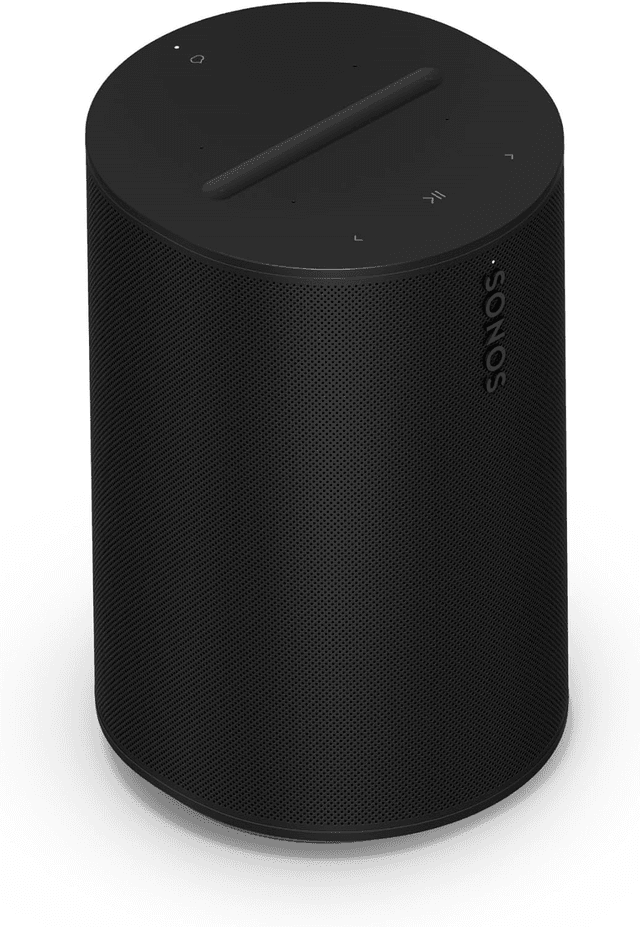
What Hi-Fi and RTINGS both independently cover this exact speaker, and What Hi-Fi awards it five stars out of five. Its review states that the speaker responds to its wake word and to natural speech well during testing, which constitutes a genuine recognition finding rather than a hardware specification.
The hardware documentation unfortunately stops there, and that is the honest difficulty. Sonos publishes a built-in microphone and nothing further whatsoever, so the calculated microphone-hardware factor is only two. What Hi-Fi nevertheless lists Sonos voice control alongside Amazon Alexa voice control, and separately records a 2.02kg chassis.
Two wake words normalize to the maximum reach factor available anywhere, which recovers considerable ground. Its composite reflects documentation rather than demonstrated capability, against a 1-yr limited warranty.
What We Love
- What Hi-Fi reports that it responds well to its wake word and to natural speech
- Answers to two assistants, Alexa and Sonos Voice Control, at the lower Sonos price
- A 47% faster processor and a 25% larger midwoofer than the speaker it replaced
- Trueplay tuning calibrates the speaker to the room it actually occupies
What Could Be Better
- Sonos publishes no microphone count, array description or far-field claim
- No control radios at all, so it reaches devices only through another hub
- Assistant configuration is a separate step after the Sonos app setup
The Verdict
When the household is split between people who say Alexa and people who would rather not, Sonos Era 100 is a sensible pick for that setup — two wake words on one speaker, and a reviewer who confirms it answers to natural speech.
Best for Spatial Audio: Sonos Era 300
Sonos Era 300
- Six drivers positioned around the front, sides and top for Dolby Atmos
- The most expensive pick here, with the least documented microphone hardware
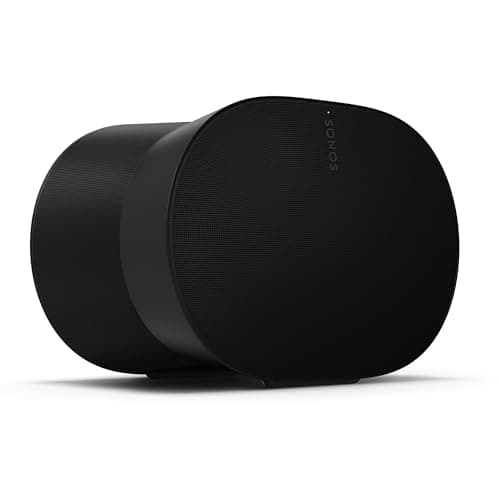
What Hi-Fi rates this speaker five stars out of five, describing an impressive speaker that can do it all, and RTINGS covers it independently as well. Neither publication documents a recognition finding, so the evidence factor settles at four, versus seven for the Era 100 immediately beneath it.
Its published feature list incorporates Sonos voice control alongside Alexa voice control, which earns precisely the same maximum reach factor as its smaller sibling. The acoustic argument is genuinely formidable: six drivers arranged around the front, sides and top, calibrated by Trueplay to the room.
The resulting SHE Voice Accuracy Score is roughly half the leader's figure, and it demonstrably measures documentation rather than sound. Nothing whatsoever here contradicts the What Hi-Fi evaluation, and a 1-yr warranty applies.
What We Love
- Six drivers positioned around the front, sides and top for Dolby Atmos
- What Hi-Fi rates it five stars out of five and calls it capable of everything
- Alexa and Sonos Voice Control both listed among its published features
- Trueplay calibration made it clearer and less boomy in What Hi-Fi testing
What Could Be Better
- The most expensive pick here, with the least documented microphone hardware
- No covering outlet publishes any recognition finding for this model
- No control radios, so your lights and locks need a separate hub
The Verdict
You've shortlisted this speaker for what it does with music rather than what it does with instructions, and on that understanding you'll be well-served here — Sonos Era 300 treats hands-free control as a convenience layered over genuinely ambitious audio engineering.
How We Score: SHE Voice Accuracy Score
SHE Voice Accuracy Score
Score Formula
(Microphone Hardware × 0.40) + (Verified Recognition Evidence × 0.25) + (Hands-Free Reach × 0.20) + (Direct Device Control × 0.15)Score Factors
- Microphone Hardware (40%)Two points for each published component of the voice-input path, capped at ten: built-in microphones stated on the listing, a microphone count published by an outlet covering this exact model, a named voice processor carrying an AI accelerator, far-field microphones published by the listing or a covering outlet, and presence or motion detection published on the listing.
- Verified Recognition Evidence (25%)Ten where a covering outlet publishes both a first-hand recognition finding and a microphone count for this exact model, seven where it publishes one of the two, and four where it publishes neither. SmartHomeExplorer performs no first-party microphone testing, so this factor records what others measured.
- Hands-Free Reach (20%)Six where the listing publishes one built-in voice assistant and ten where it publishes two, because a second wake word is the only assistant choice a buyer can make after purchase without replacing the speaker entirely.
- Direct Device Control (15%)Published control radios that let the speaker address devices without a separate bridge, weighted Zigbee three and a half, Thread border router three and a half, and Matter three, capped at ten. A speaker publishing none scores zero on this factor.
SHE Voice Accuracy Score — Ranked
Scored against Amazon listings and outlet reviews read in September 2026. This composite measures documented voice hardware and reach, not measured recognition accuracy, which nobody publishes comparably.
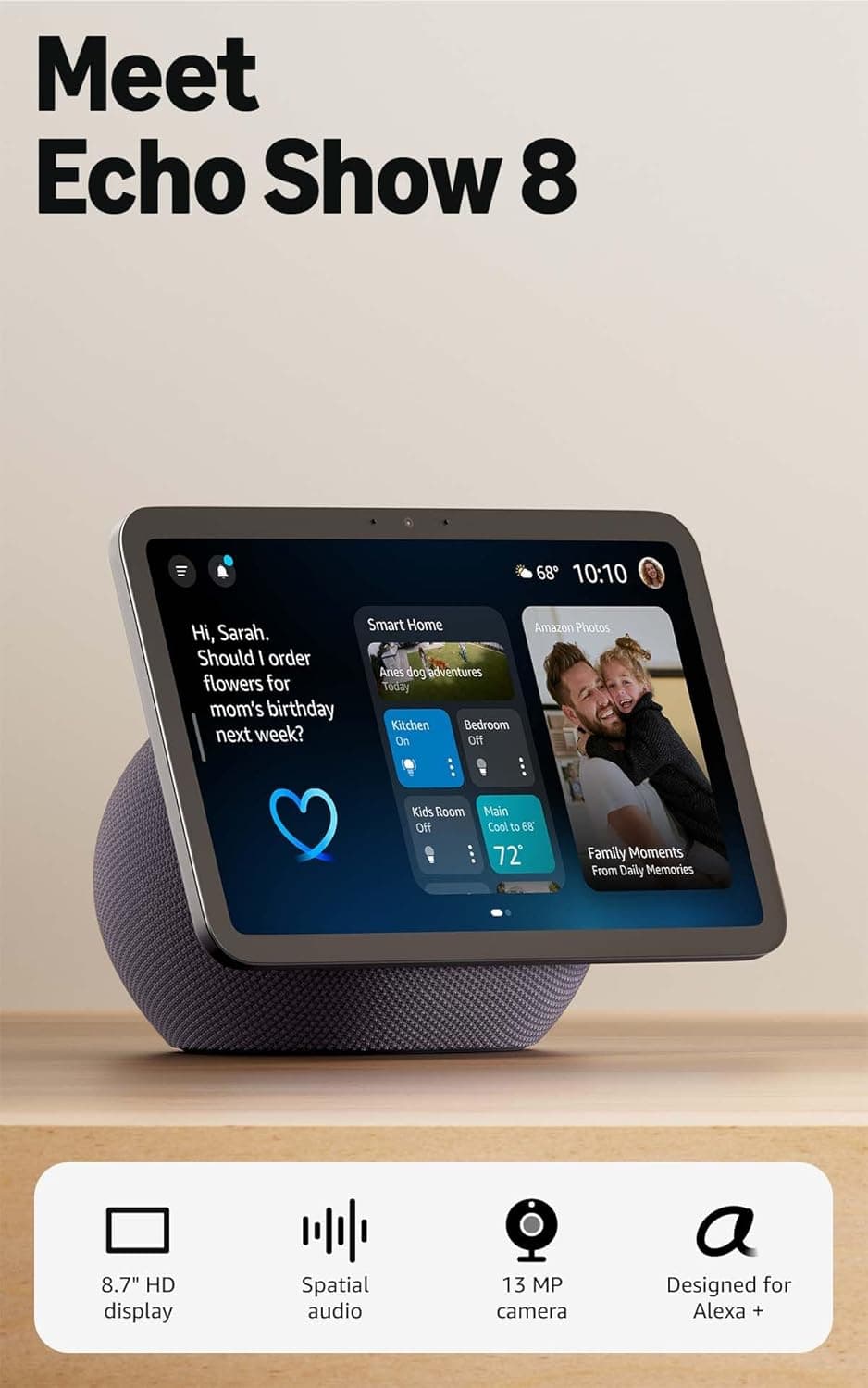
Amazon Echo Show 8 (4th Gen, 2025)
SHE Voice Accuracy Score7.7/10The only published microphone count on the roster, alongside a named processor and the full set of control radios
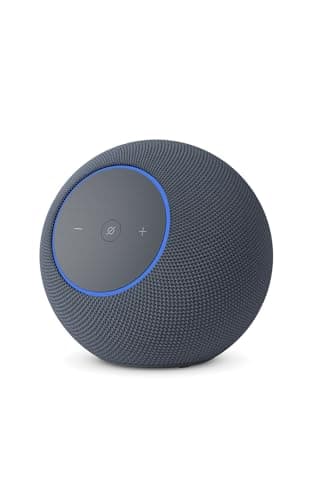
Amazon Echo Studio (2025)
SHE Voice Accuracy Score6.9/10The identical voice platform and radios, held back only by the absence of any published recognition evidence
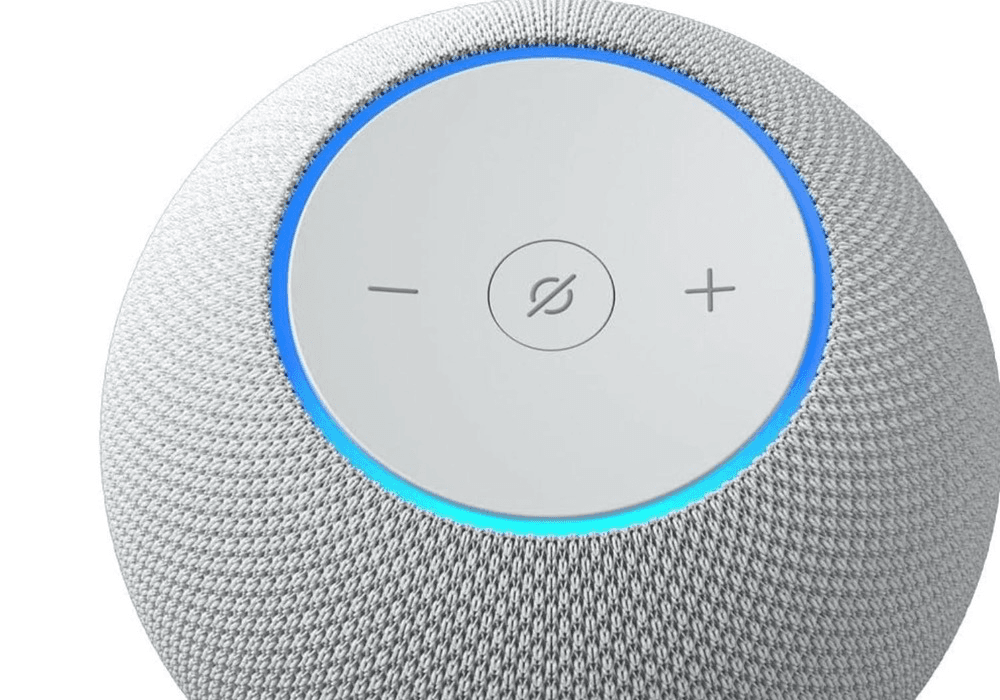
Amazon Echo Dot (5th Gen)
SHE Voice Accuracy Score5.0/10The strongest published recognition finding here, offset by thin microphone documentation and Matter alone
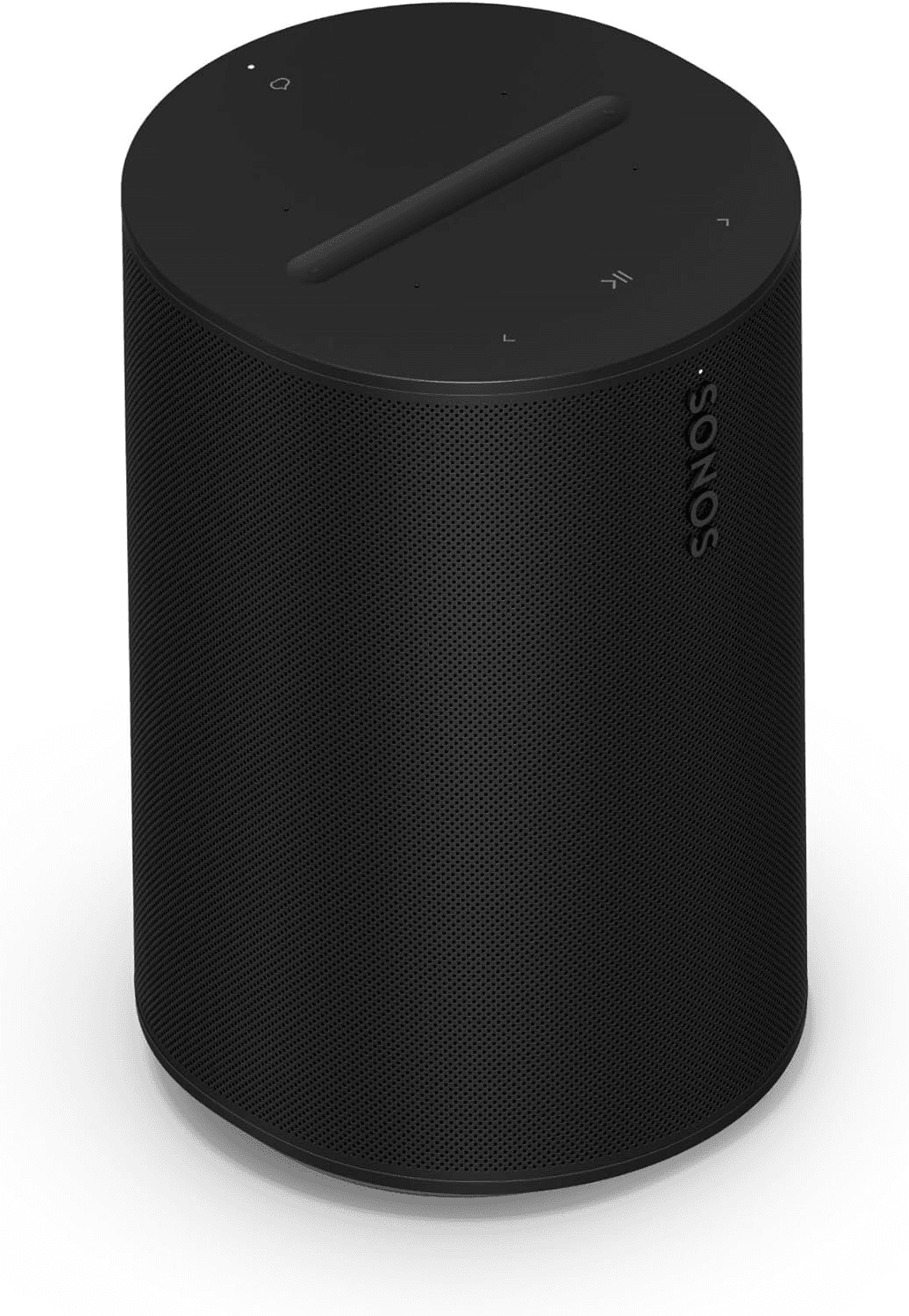
Sonos Era 100
SHE Voice Accuracy Score4.6/10Two wake words and a reviewer-confirmed response, undercut by no published microphone hardware and no radios
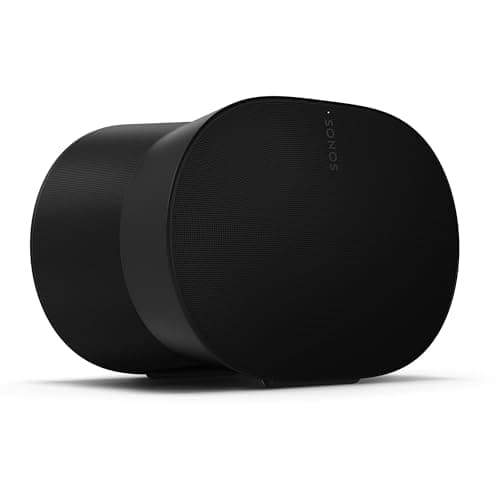
Sonos Era 300
SHE Voice Accuracy Score3.8/10Two wake words and nothing else documented, which is a reflection of Sonos disclosure rather than the audio
What Each Speaker Can Reach Without a Hub
The control question separates these five more sharply than the microphone question does. Both 2026 Echo models publish Zigbee, Matter and a Thread border router. They consequently pair smart lighting systems with scenes and schedules without any bridge. The identical arrangement covers smart deadbolt locks with Apple Home Key support. A smart thermostat with self-learning schedule and energy savings joins equally directly. The Echo Dot publishes Matter alone. Apple households running outdoor security cameras with HomeKit Secure Video should note that no speaker evaluated here answers to Siri. Neither Sonos speaker publishes any control radio, which means it delivers voice control only through hardware you already own elsewhere.
A screen changes what voice control feels like, because you can see what the assistant understood. The Echo Show 8 puts outdoor security cameras with color night vision and motion alerts onto its panel. A video doorbell with AI visitor detection appears identically. Those camera feeds arrive without anybody reaching for a phone. Households running outdoor security cameras with person/package AI detection benefit disproportionately, compared to a speaker carrying no display.
Ecosystem breadth is the remaining consideration, and it moves independently of everything scored above. The Echo models reach smart lighting, thermostats and smart locks through Alexa routines, whereas the Sonos speakers pass those instructions along to whichever platform already runs them. That distinction is what the direct-control factor inside the SHE Voice Accuracy Score is measuring, and it is why two genuinely excellent speakers finish last. Our editorial methodology explains how such constraints are weighted throughout this comparison.
What Voice Control Costs You After the Purchase
None of these five speakers carries a subscription requirement for voice control itself, so the running cost is your network rather than a monthly fee. Every one depends on a stable connection to process whatever you said. An unreliable mesh network consequently produces considerably more apparent recognition failures than any microphone difference. Households occupying larger properties should resolve the mesh WiFi system beforehand, because a speaker unable to reach the internet understands nothing whatsoever.
Assistant capability is moving faster than the hardware underneath it, which complicates any purchase decision made on assistants alone. Our Alexa Plus vs Google Home comparison covers where the platforms currently stand relative to each other. Our Echo vs Google Nest Audio comparison examines the sound-quality trade-off between two established alternatives. Both are worth reading versus deciding on wake words in isolation.
Coverage economics favour multiple cheap speakers over one expensive one, at least where hearing you is the objective. Our Echo Dot vs Google Nest Mini comparison examines that trade at the entry tier. The Echo Dot vs Google Nest Mini head-to-head covers the same two speakers in detail. Three inexpensive units positioned sensibly normally outperform a single premium speaker positioned badly. The arithmetic is unsubtle. The leading composite is only 1.5x the Echo Dot equivalent, and 2x the figure calculated for the most expensive speaker evaluated here.
When NOT to Buy
Skip a voice speaker entirely if an always-listening microphone is unacceptable in the room concerned, because every product here listens for a wake word continuously. Skip it if you own no connected devices yet, since the assistant becomes a timer and a radio until something exists for it to control. Buyers who want audio quality above everything should read our complete smart speakers & displays guide instead, because voice hardware is not what separates speakers acoustically.
What Changed in This Roster, and Why
Two products recommended in the previous version of this guide are gone. Google Nest Audio has no Amazon listing we could verify as purchasable, and the Apple HomePod is sold on Amazon only through third-party sellers, so neither cleared our buyability check. We removed both rather than send you to a listing we could not stand behind. The Echo Studio and the Sonos Era 300 replace them, and both were verified as sold by Amazon in new condition in September 2026. Our editorial standards, including how a product qualifies for a roster at all, are published at /methodology.
The previous ranking also scored a distance in feet and a noise-rejection tier for each speaker. No manufacturer or reviewer publishes either figure for any product on this roster. Those inputs could not be substantiated, so the factor set was rebuilt entirely from published specification. The Echo Show 8 pick has additionally moved from the 2023 model to the 2025 redesign, a genuinely different speaker with a larger panel and a Thread border router.
Who Should Buy What
Who Should Buy What
| If you are… | Recommended pick |
|---|---|
Household running its home by voice Voice is the primary interface and the speaker needs to reach lights, locks and sensors directly, so the full complement of control radios matters more than the price | Amazon Echo Show 8 (4th Gen, 2025) |
Listener who wants one speaker in a big room The speaker carries the music and the routines in a larger space, so far-field microphones and serious driver hardware matter more than a screen | Amazon Echo Studio (2025) |
Buyer adding voice to spare rooms You want spoken control in a bedroom or office for the smallest outlay, and you accept that a hub lives elsewhere in the house | Amazon Echo Dot (5th Gen) |
Household split on assistants Some people in the house will say Alexa and some would rather not, so a speaker answering two wake words resolves the argument without buying twice | Sonos Era 100 |
Music-first buyer adding voice Spatial audio is the reason for the purchase and hands-free control is a welcome layer on top, with the smart home already running elsewhere | Sonos Era 300 |
Frequently Asked Questions
Why does this guide publish no wake-word accuracy percentages?
Because nobody produces them in a form that can be compared across these five speakers. We checked our registered outlet list against every product on this roster in September 2026 and found no published far-field accuracy test, no comparable noise-rejection measurement and no shared testing protocol. The earlier version of this page carried a distance in feet and a noise ranking for each speaker; neither could be traced to a manufacturer specification or to a review of that exact model, so both were removed rather than restated. What is genuinely published is hardware and, in two cases, a reviewer's first-hand description of being heard. That is what the ranking uses, and the scoring block says so plainly.
Why does a speaker show a high consensus score but a low SHE Voice Accuracy Score?
They answer different questions and both numbers are meant to be read. The consensus score on each product card is our aggregate view of the speaker overall, weighing sound, build, features and value across every source that has covered it. The SHE Voice Accuracy Score on this page measures one narrow thing: how much each manufacturer and reviewer documents about the voice-input path, and how far the speaker can reach without another hub. The Sonos Era 300 is a genuinely excellent speaker, which is why its consensus figure is high; it scores low here because Sonos publishes almost nothing about its microphones and the speaker carries no control radios.
Is the Echo Show 8 reviewed here the same as the 2023 model?
No, and the distinction matters more than the shared name suggests. The model reviewed here is the 2025 release, which TechRadar and Tom's Guide both call the fourth generation. It carries an 8.7-inch screen at 1,340 by 800 pixels where the 2023 model has an 8-inch panel at 1,280 by 800, and it adds the AZ3 Pro processor, Omnisense presence detection and a Thread border router. Tom's Guide notes the bezels have narrowed from half an inch to a uniform quarter inch on all four sides. Any specification you read about the 2023 model should not be assumed to apply to this one.
Can the Sonos speakers really answer to two different wake words?
Yes, and it is the clearest advantage either Sonos speaker holds in this comparison. What Hi-Fi lists both Sonos voice control and Amazon Alexa voice control among the published features of the Era 100 and the Era 300. In practice that means one household can address the same speaker with either wake word, which no Echo model on this roster permits. What Sonos does not publish is any detail about the microphones doing the listening: no count, no array description and no far-field claim. That absence is what holds both speakers down in our ranking, not their ability to respond.
Does a smart display hear you better than a speaker without a screen?
Not because of the screen itself, but the model in this guide with a display does carry the best-documented microphone hardware. Tom's Guide publishes a count of five microphones for the Echo Show 8, which is the only such count anyone publishes across this roster. The screen contributes something different and genuinely useful: you can see the transcription of what the assistant understood, which turns a misheard instruction into an obvious correction rather than a confusing outcome. TechRadar separately notes that the onboard microphones handle video calls and drop-ins clearly.
What is the cheapest speaker here that reliably hears you?
The Echo Dot, and it is the cheaper of the two products on this roster with a published recognition finding attached to it. TechRadar states that accuracy is high and that, other than a half-hearted whispered request, it never failed to hear the reviewer speak. What Hi-Fi rates the same generation five stars out of five. Its limitations sit elsewhere: Amazon publishes nothing about the microphone array beyond the mute button, the driver is a single 1.6-inch full-range unit, and Matter is the only control protocol listed, so it cannot replace a hub for Zigbee or Thread devices.
Why are the Google Nest Audio and Apple HomePod no longer recommended?
Neither cleared the buyability check this guide runs before anything is recommended. Google Nest Audio has no Amazon listing we could verify as purchasable in new condition from a seller we would send you to. The Apple HomePod is present on Amazon only through third-party sellers rather than Amazon itself, which is a materially different purchase with different returns and support. Rather than link you to a listing we cannot stand behind, we removed both from the roster and replaced them with the Echo Studio and the Sonos Era 300, each verified as sold by Amazon in new condition.
Bottom Line
Get the Amazon Echo Show 8 (4th Gen, 2025) if voice is how you actually run the house and you want the best-documented microphone hardware plus every control radio in one device.
Get the Amazon Echo Studio (2025) if you want that same voice platform without a camera in the room, and considerably more capable audio hardware alongside it.
Get the Amazon Echo Dot (5th Gen) if you are adding spoken control to more rooms for the least money and a hub already lives elsewhere in the house.
Get the Sonos Era 100 if your household is split on assistants and a speaker answering two different wake words is worth more than hub radios.
Get the Sonos Era 300 if spatial audio is the reason you are buying and hands-free control is a layer on top rather than the purchase driver.
Skip the category entirely if an always-listening microphone is unacceptable in the room concerned, or if you own no connected devices yet for the assistant to control.
Sources & Methodology
Methodology: SHE Voice Accuracy Score — Formula: (Microphone Hardware × 0.40) + (Verified Recognition Evidence × 0.25) + (Hands-Free Reach × 0.20) + (Direct Device Control × 0.15). Factors: Microphone Hardware (40%): Two points for each published component of the voice-input path, capped at ten: built-in microphones stated on the listing, a microphone count published by an outlet covering this exact model, a named voice processor carrying an AI accelerator, far-field microphones published by the listing or a covering outlet, and presence or motion detection published on the listing. | Verified Recognition Evidence (25%): Ten where a covering outlet publishes both a first-hand recognition finding and a microphone count for this exact model, seven where it publishes one of the two, and four where it publishes neither. SmartHomeExplorer performs no first-party microphone testing, so this factor records what others measured. | Hands-Free Reach (20%): Six where the listing publishes one built-in voice assistant and ten where it publishes two, because a second wake word is the only assistant choice a buyer can make after purchase without replacing the speaker entirely. | Direct Device Control (15%): Published control radios that let the speaker address devices without a separate bridge, weighted Zigbee three and a half, Thread border router three and a half, and Matter three, capped at ten. A speaker publishing none scores zero on this factor.
Expert review sources used in this analysis:
- SmartHomeExplorer aggregates published expert review coverage and manufacturer specifications
- No first-party microphone or recognition testing was conducted for this guide, and none is implied anywhere on this page
- Four outlets cover products on this roster and each page was fetched directly while this guide was written
- Tom's Guide and TechRadar both review the 2025 Echo Show 8 and the 2025 Echo Studio
- TechRadar and What Hi-Fi both review the Echo Dot in its fifth generation
- What Hi-Fi and RTINGS both cover the Sonos Era 100 and the Sonos Era 300
- One near miss is worth stating: the RTINGS Echo Studio review covers the first-generation model, not the 2025 redesign recommended here, so nothing from it is attributed to our pick
- The most important disclosure on this page is a negative one
- No outlet publishes a far-field recognition test, a wake-word accuracy percentage or a noise-rejection measurement that can be compared across these five speakers
- Two outlets describe being heard by a specific product, and those descriptions are quoted as exactly that
- Every remaining input to the ranking is a published specification
- Every price, dimension, driver layout, sensor, radio and warranty term in this guide was read from the product listing on Amazon in September 2026
- All five products showed as sold by Amazon in new condition and in stock at that time
- Four of the five listings were discounted between 11 and 31 percent when we read them
- Prices change frequently — check the current price on Amazon before buying
- The SHE Voice Accuracy Score is our own composite and is attributable to no outlet
- Its four factors, their weights and the normalization applied to each are published in the scoring block above and on the metric page
- The factor set was rebuilt entirely for this version
- Its predecessor scored a pickup distance in feet and a noise-rejection tier that no manufacturer or reviewer publishes for any product here
- No score was carried across from the earlier roster, and the two products that left it were not scored again.
Nicholas Miles is the founder of SmartHomeExplorer and a longtime smart home enthusiast focused on helping everyday homeowners make better technology decisions. He researches, compares, and writes about products across security, climate, lighting, leak prevention, sensors, home energy, and automation, with an emphasis on real-world usefulness, ecosystem compatibility, reliability, privacy, and long-term value.
Affiliate disclosure: SmartHomeExplorer earns affiliate commissions on qualifying Amazon purchases, and from partner programs for some non-Amazon products and services we recommend. Our scoring methodology is independent of affiliate relationships.
More Guides
smart-speakers
Best Smart Speakers and Displays 2026: Echo, Nest, HomePod
smart-speakers
Best Smart Speakers for Audiophiles 2026: Hi-Fi Sound
smart-home
Alexa+ vs Google Home 2026: 6 Picks Compared

smart-speakers
Best Sonos Speakers for Multi-Room Whole-Home Audio (2026)
Security
Best Smart Security Cameras 2026: No-Sub Picks That Actually Detect
Climate