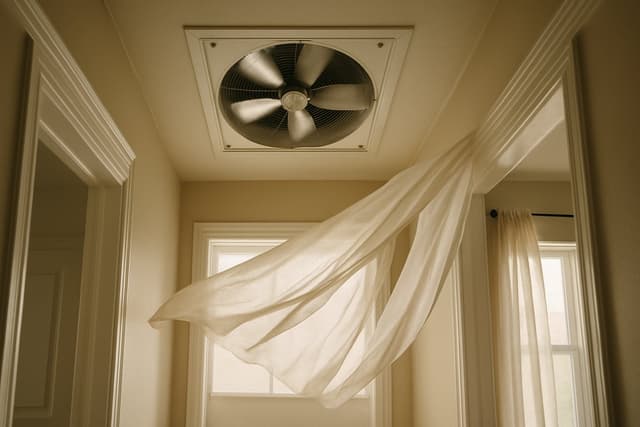

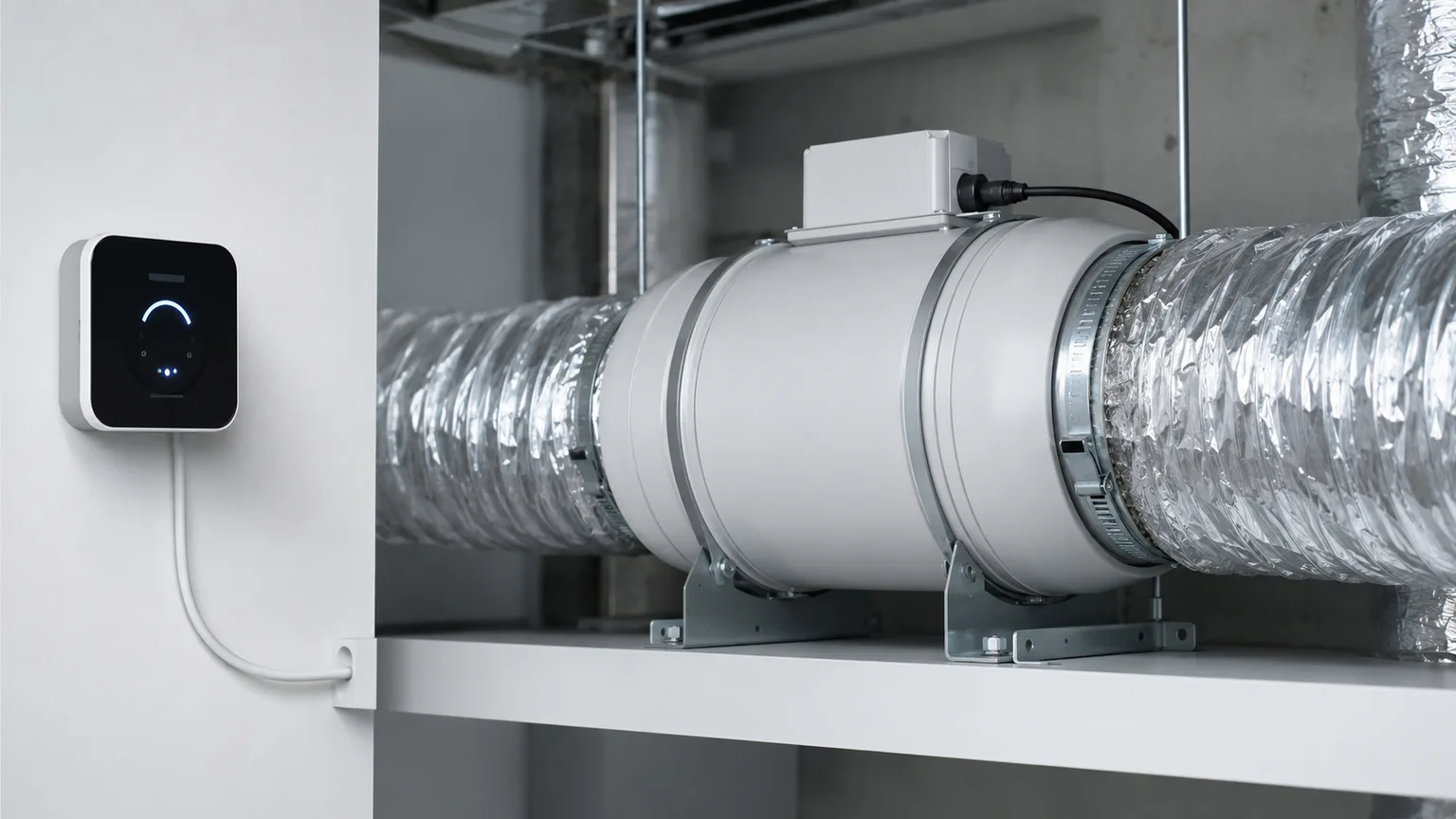
Best Smart Ventilation & Exhaust Fans 2026: Humidity Control
AC Infinity CLOUDLINE PRO T4 ($119) wins — 205 CFM on 18 watts with VPD humidity triggers. The 1,604 CFM CLOUDWAY T12 cools a zone, and the Panasonic ERV is the honest answer for a tight, sealed home.
This article contains affiliate links. We may earn a commission at no extra cost to you. Prices change frequently — check the current price on Amazon before buying. Learn more
The Short Answer
For homeowners fighting trapped condensation in a bath, closet, or crawlspace, the AC Infinity CLOUDLINE PRO T4 ($119) is the recommendation, because moving 205 CFM on 0.018 kW with VPD humidity automation earns the top 9.2 SHE Airflow Automation Score, modulating itself rather than running continuously.
Featured in this Guide
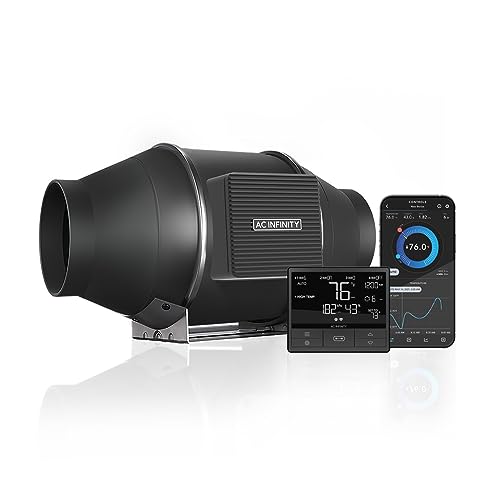
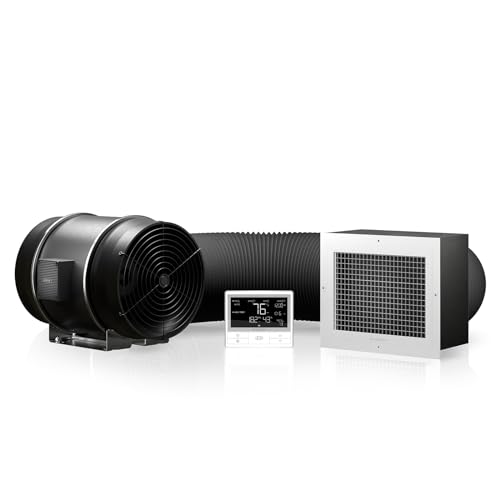
AC
Infinity CLOUDLINE PRO T4
- •205 CFM on 18 watts with VPD humidity triggers at $119 — the quietest set-and-forget inline fan for baths and crawlspaces
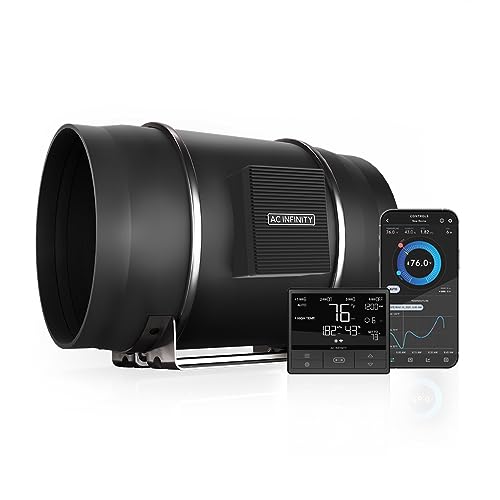
AC
Infinity CLOUDWAY T12 Whole House Fan
- •1,604 CFM ceiling EC fan with a sealing shutter at $549 — flushes a hot 700 to 800 sq ft zone on a fraction of AC watts
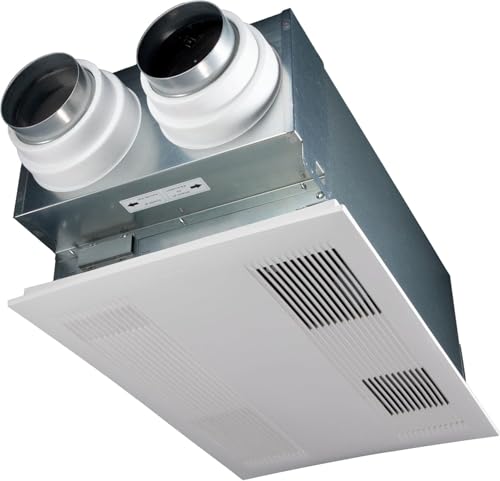
AC
Infinity CLOUDLINE PRO T12
- •1,604 CFM inline fan keeps the motor box out of living space at $399 — same VPD automation built for far more air
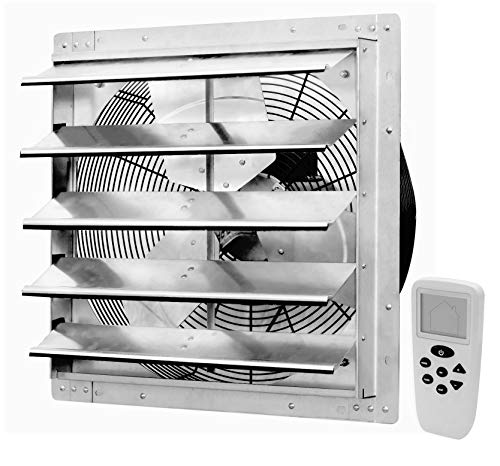
Panasonic
WhisperComfort 60 ERV FV-06VE1
- •Balanced ERV supplies tempered fresh air on about 39 watts at $637 — code-compliant continuous run without depressurizing
iLiving
18-inch Smart Shutter Exhaust Fan
- •1,736 CFM shutter fan with a thermostat-humidistat remote at $173 — the cheapest way to vent a hot garage or shop
Head-to-Head: CFM, Watts, and Automation
Climate Control
Chart
 Smarthomeexplorer.com
Tap any pick to check its live price on Amazon.
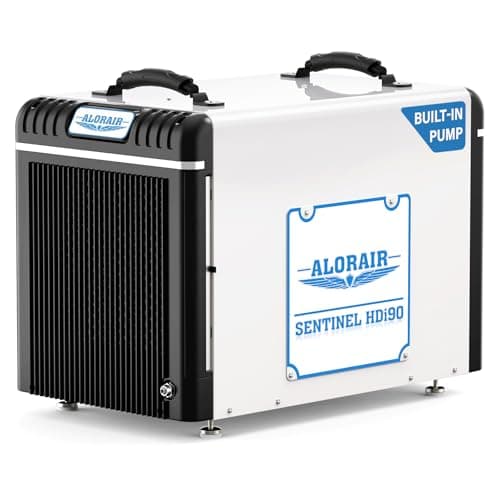
AlorAir Sentinel HDi90 Basement/Crawlspace Dehumidifier with Pump
Check price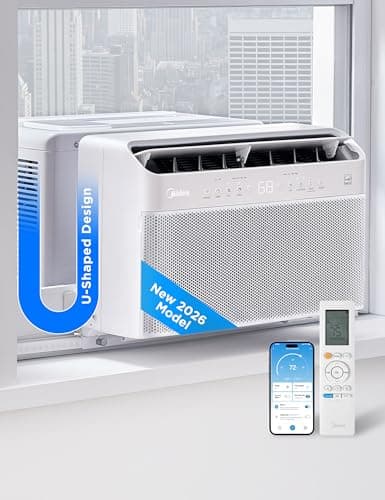
Midea U Smart Inverter Window AC (12,000 BTU)
Check price
What Tips the Decision
Smart ventilation covers four distinct jobs: pulling condensation from a crawlspace, flushing heat from an attic, supplying balanced fresh air to a tight house, or clearing a garage. In this guide, we evaluated EC-motor inline fans against shutter and ERV alternatives, and across roundups from outlets like Bob Vila, Family Handyman, and Popular Mechanics, the inline fans win because they ramp on a VPD humidity trigger and sustain airflow through a 25-foot duct run with two elbows on 0.018 kW.
Consequently the CLOUDLINE PRO T4 leads at $119 on 0.018 kW for 50,000 hours, approximately 0.43 kWh per 24 hours, whereas the 1,604 CFM CLOUDWAY T12 covers a 700 to 800 sq ft zone at $549 and the Panasonic ERV on 0.039 kW answers a sealed home at $637. Because this remains a humidity category, it pairs with our Best Smart Dehumidifiers 2026: GE 50-Pint Tops Our Value Score and Best Indoor Air Quality Monitors 2026 guides, while Best Humidity-Sensing Bathroom Exhaust Fans 2026 covers the ceiling-fan option.
Best Overall: AC Infinity CLOUDLINE PRO T4
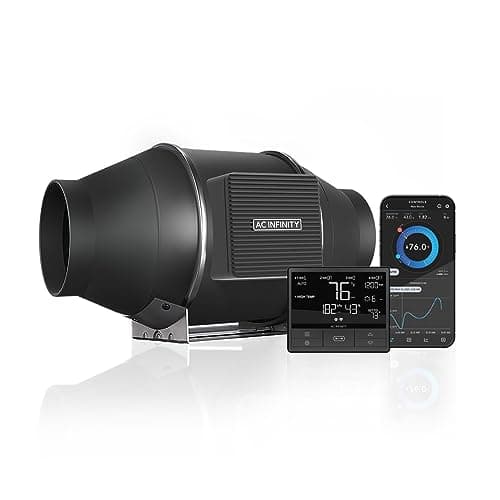
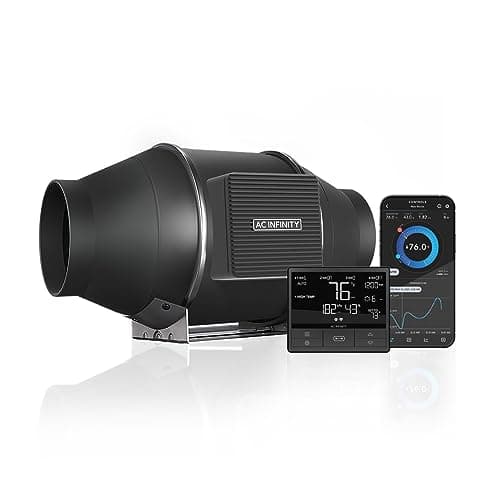
AC Infinity CLOUDLINE PRO T4
- 205 CFM on roughly 18 watts, about 0.088 W per CFM, runs continuously for pennies a day
- A bare duct fan, so you supply ducting, intake, and exhaust cap yourself
(Current price, subject to change)
The AC Infinity CLOUDLINE PRO T4 earns 9.2 on the weighted SHE Airflow Automation Score, a composite that delivers a continuously running fan without a noisy power drain. That 9.2 rests on a category-leading 9.7 EC-efficiency sub-score paired with a 9.6 humidity-automation sub-score, because the PWM-driven EC motor moves 205 CFM on just 0.018 kW while the CONTROLLER 69 PRO reads temperature, humidity, and VPD and modulates the fan in fine increments. Priced at $119, it earns a 9.2 static-pressure sub-score that sustains airflow through a 25-foot duct run with two elbows, drawing only 0.43 kWh per 24 hours.
Across the expert sources surveyed as of June 2026 the aggregated consensus settles near 9.3, and in inline-fan roundups outlets like Bob Vila and Family Handyman consistently rank the CLOUDLINE line at the top for set-and-forget humidity ventilation, since the category consensus holds that an EC motor moving 205 CFM on 0.088 W per CFM outperforms an old shaded-pole booster that burns several times the power for equivalent airflow. Because the fan decelerates to a near-silent low speed and is rated for 50,000 hours of continuous run, it proves far quieter than the iLiving 18-inch Smart Shutter Exhaust Fan, which depends on a thermostat remote rather than application-level runtime logging.
What We Love
- 205 CFM on roughly 18 watts, about 0.088 W per CFM, runs continuously for pennies a day
- VPD and humidity triggers ramp the fan in 1 percent steps down to about 28 dBA
- WiFi app sets a 60 percent humidity trigger once and logs runtime from your phone
- Mixed-flow impeller holds airflow against real duct static pressure
What Could Be Better
- A bare duct fan, so you supply ducting, intake, and exhaust cap yourself
- At 205 CFM one T4 covers a bath or closet, not a whole house
The Verdict
For the homeowner fighting trapped moisture in a bath, closet, or crawlspace, the AC Infinity CLOUDLINE PRO T4 fits the brief without compromise at $119. The 9.2 means 205 CFM with VPD triggers that ramp the fan only when humidity climbs. The bigger CLOUDWAY moves far more air, but for one zone you would pay for capacity you do not need.
Ready to upgrade your home?
MOVA P10 Pro Ultra Robot Vacuum and Mop
See it on Amazon
roborock F25 Ultra Steam Wet Dry Vacuum Mop
See it on Amazon
Philips Wi-Fi Keypad Deadbolt with Handle
See it on Amazon
Sponsored listings from Amazon’s Sponsored Products for Creators program, kept apart from our reviews and rankings. How we make money
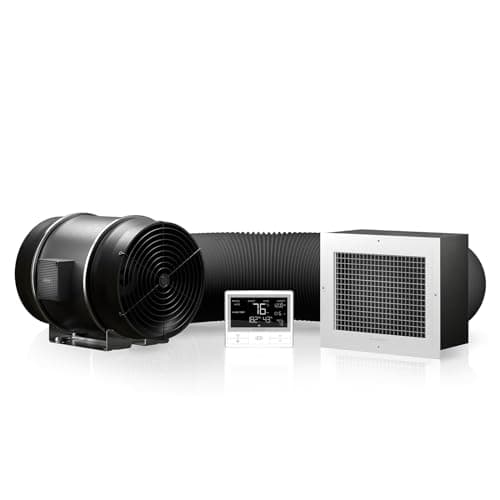
Best for Whole Zones: AC Infinity CLOUDWAY T12 Whole House Fan
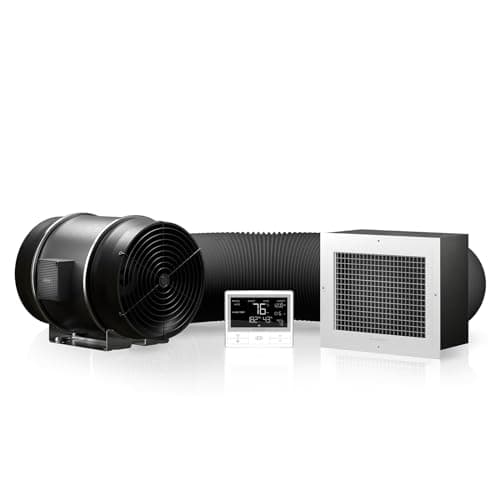
AC Infinity CLOUDWAY T12 Whole House Fan
- 1,604 CFM flushes a hot zone on up to 95 percent less draw than running AC
- At 1,604 CFM it realistically cools a 700 to 800 sq ft zone, not a large home
(Current price, subject to change)
The AC Infinity CLOUDWAY T12 Whole House Fan earns 8.9 on the weighted SHE Airflow Automation Score, a composite that produces an evening flush-cooler rather than a humidity-control inline fan. That 8.9 pairs a 9.0 EC-efficiency sub-score with a 9.2 humidity-automation sub-score: the variable-speed EC motor pushes 1,604 CFM on a fraction of an air conditioner's draw, while the WiFi CONTROLLER 69 PRO runs true temperature and humidity triggers plus schedule and minimum-speed modes. Positioned at $549 with a self-sealing 2-door shutter and bearings rated for 50,000 hours, it blocks attic air from backflowing into the home when off.
In ventilation roundups, outlets like EnergySage and This Old House favor EC-motor whole-house fans for slashing evening cooling load, crediting the sealing shutter for ending the drafty always-open louver of legacy units. The category consensus holds that a variable-speed motor sips power, drawing up to 95 percent less than running central air all night. On high it measures about 62 dB, so the quiet modes are the ones you leave running. Relative to the AC Infinity CLOUDLINE PRO T12, the CLOUDWAY trades flexible inline placement for a finished ceiling kit.
What We Love
- 1,604 CFM flushes a hot zone on up to 95 percent less draw than running AC
- Temperature and humidity triggers idle quietly all night and ramp on demand
- Self-sealing 2-door shutter blocks attic air from backflowing when off
- Dual ball bearings rated for 50,000 hours of continuous run
What Could Be Better
- At 1,604 CFM it realistically cools a 700 to 800 sq ft zone, not a large home
- On high it measures about 62 dBA, closer to a window AC than a whisper
The Verdict
If you are replacing a drafty old barrel whole-house fan with a sealed ceiling unit, the AC Infinity CLOUDWAY T12 Whole House Fan lines up with what you actually need at $549. The 8.9 reflects 1,604 CFM with a sealing shutter that fixes the always-open-louver complaint, plus humidity triggers. You give up the inline fan's quieter placement, but for flush-cooling a ceiling unit is the right tool.
Check price for the AC Infinity CLOUDWAY T12 Whole House Fan →
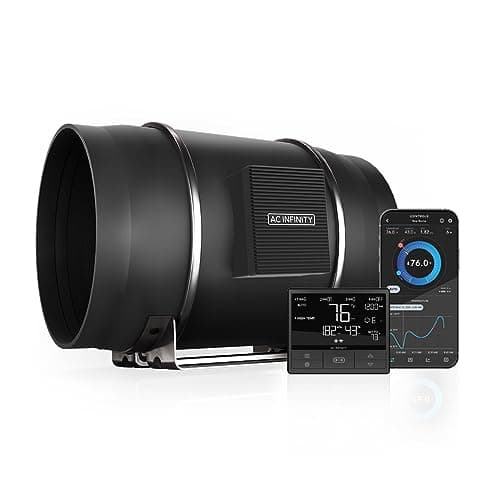
Best High-Output Inline: AC Infinity CLOUDLINE PRO T12
AC Infinity CLOUDLINE PRO T12
- 1,604 CFM serves a long crawlspace or whole-basement dehumidification loop
- At about $399 plus ducting it is a committed build, overkill for one bath
(Current price, subject to change)
The AC Infinity CLOUDLINE PRO T12 earns 8.6 on the weighted SHE Airflow Automation Score, a composite that achieves a high-output ducted backbone rather than a single-room fan. That 8.6 rests on a 9.0 airflow-capacity sub-score and a 9.0 static-pressure sub-score, because the 12-inch mixed-flow EC impeller moves 1,604 CFM through a 25 ft ducted run and holds it against the resistance of a multi-room exhaust manifold. The same CONTROLLER 69 PRO temperature, humidity, and VPD programming carries over, so the automation is identical as you scale from a 4-inch to a 12-inch fan.
In high-output inline coverage, outlets like Popular Mechanics and Reviewed position the larger CLOUDLINE models as the move-serious-air option for whole-basement and multi-room ventilation, crediting the EC motor for staying efficient at volume across 50,000 hours of rated run. Because it mounts inline rather than ceiling-cut, you can place the motor box in an attic or closet and run quiet ducting to grilles. That placement matters versus a louder ceiling unit. Relative to the AC Infinity CLOUDLINE PRO T4, the T12 trades single-bath simplicity for whole-zone capacity.
What We Love
- 1,604 CFM serves a long crawlspace or whole-basement dehumidification loop
- Same VPD humidity automation as the T4 in a fan built for far more air
- Inline placement keeps the motor box out of living space
- Detachable motor box rated for 50,000 hours of continuous run
What Could Be Better
- At about $399 plus ducting it is a committed build, overkill for one bath
- On high it reaches roughly 62 dBA, so the motor box belongs in an attic
The Verdict
If you have a whole basement or multi-room run to ventilate, the AC Infinity CLOUDLINE PRO T12 checks the boxes that matter for that high-output job at $399. The 8.6 reflects 1,604 CFM through ducted runs with the same VPD automation as the T4, placed inline so the noise stays out of living space. The smaller T4 costs far less, but it cannot move the air a whole-basement loop needs.
Best for Tight Homes: Panasonic WhisperComfort 60 ERV FV-06VE1
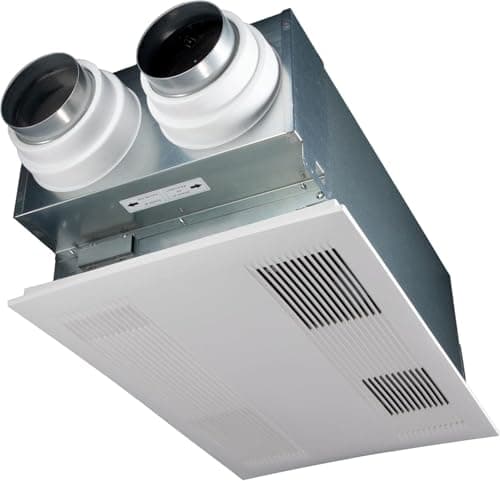
Panasonic WhisperComfort 60 ERV FV-06VE1
- Balanced ERV supplies tempered fresh air while exhausting stale air
- Moves only 20 to 60 CFM, so it cannot clear a steamy bathroom fast
(Current price, subject to change)
The Panasonic WhisperComfort 60 ERV FV-06VE1 earns 7.3 on the weighted SHE Airflow Automation Score, a composite that reflects a code-compliance device rather than a high-volume humidity fan. That 7.3 rests on an 8.6 install-fit sub-score and a 7.8 static-pressure sub-score, because the balanced ERV supplies tempered fresh air while simultaneously exhausting stale air, so it neither depressurizes the house nor pulls combustion gases back down a flue. Two DC ECM brushless motors run the 20 to 60 CFM continuous range on about 0.039 kW, roughly 0.65 W per CFM, drawing close to 0.94 kWh per 24 hours of continuous run, modest for two motors plus heat recovery.
In indoor-air-quality coverage, outlets like Consumer Reports and Good Housekeeping frame balanced ERVs as the appropriate answer for tight, well-sealed homes, since they introduce fresh air without the negative pressure a one-way exhaust fan generates, and because the capillary core transfers both heat and moisture between airstreams, you ventilate continuously without aggravating winter dryness. Certified by HVI and engineered to satisfy ASHRAE 62.2 ventilation requirements across roughly 2,000 sq ft, it fits between 16-inch joists, so relative to the AC Infinity CLOUDLINE PRO T4, the ERV sacrifices raw airflow for balanced fresh air and code compliance.
What We Love
- Balanced ERV supplies tempered fresh air while exhausting stale air
- Capillary core recovers heat and moisture without winter dryness
- 20 to 60 CFM on about 39 watts, roughly 0.65 W per CFM for two motors
- HVI certified and built for ASHRAE 62.2 up to roughly 2,000 sq ft
What Could Be Better
- Moves only 20 to 60 CFM, so it cannot clear a steamy bathroom fast
- At roughly $637 plus a two-duct wall cap it costs far more than an exhaust fan
The Verdict
For a tight, well-sealed home that needs continuous fresh air without depressurizing, the Panasonic WhisperComfort 60 ERV FV-06VE1 is a sensible pick for that setup at $637. The 8.3 reflects a balanced ERV supplying tempered fresh air while it exhausts stale air, recovering heat and moisture on 0.039 kW. It will not clear a steamy bath fast, but that is the wrong job to ask of it.
Check price for the Panasonic WhisperComfort 60 ERV FV-06VE1 →
Best Budget: iLiving 18-inch Smart Shutter Exhaust Fan
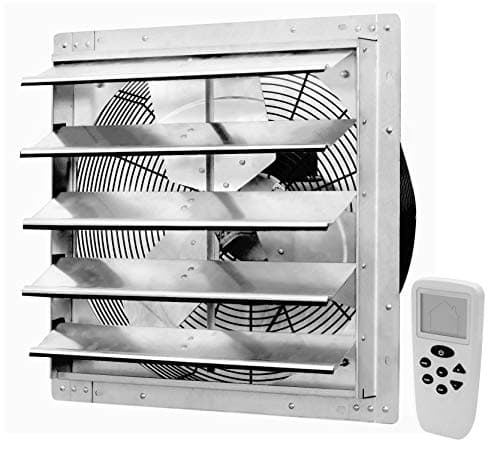
iLiving 18-inch Smart Shutter Exhaust Fan
- 1,736 CFM covers roughly 2,600 sq ft of garage or shop for about $173
- About 91 watts is measured at free-air, so airflow falls off under real ducting
(Current price, subject to change)
The iLiving 18-inch Smart Shutter Exhaust Fan earns 6.7 on the weighted SHE Airflow Automation Score, a composite held down by a thermostat remote rather than true app automation. That 6.7 pairs a category-best 9.2 airflow-capacity sub-score against a 5.4 static-pressure sub-score, because it moves a rated 1,736 CFM and covers roughly 2,600 sq ft, but that 0.091 kW figure is measured at free-air with no ducting, burning close to 2.2 kWh per 24 hours flat-out. Positioned at $173, the bundled wireless remote runs a programmable thermostat and humidistat, so the fan cycles on when a shed hits a set temperature or humidity.
In budget-fan coverage, outlets like HomeGuide and Family Handyman position iLiving's shutter fans as the workhorse for garages, sheds, and attics, crediting the thermostat-and-humidistat remote for hands-off cycling. The variable-speed controller keeps it from roaring at full tilt when a low trickle would do, and automatic louvered shutters block outside air and insects. The 0.091 kW PSC motor and remote are far less precise than AC Infinity's VPD app, with no runtime logging. Relative to the AC Infinity CLOUDLINE PRO T12, the iLiving yields ducted precision for raw free-air airflow per dollar.
What We Love
- 1,736 CFM covers roughly 2,600 sq ft of garage or shop for about $173
- Wireless remote runs a programmable thermostat and humidistat for auto cycling
- Variable-speed control instead of single-speed on or off
- Automatic louvered shutters block backdraft and insects when off
What Could Be Better
- About 91 watts is measured at free-air, so airflow falls off under real ducting
- PSC motor and remote are far less precise than VPD app automation
The Verdict
If you want high airflow for a hot garage, shed, or shop on a tight budget, the iLiving 18-inch Smart Shutter Exhaust Fan lines up with what you actually need at $173. The 7.6 reflects 1,736 CFM and a thermostat-humidistat remote that cycles automatically, far cheaper per CFM than any EC inline fan here. You give up app logging and VPD precision, but for an outbuilding that trade is fair.
Check price for the iLiving 18-inch Smart Shutter Exhaust Fan →
How We Score: SHE Airflow Automation Score
SHE Airflow Automation Score
Score Formula
Humidity_Automation * 0.25 + EC_Efficiency * 0.22 + Airflow_Capacity * 0.20 + Static_Pressure_Handling * 0.15 + App_Scheduling_Control * 0.10 + Install_Fit_Versatility * 0.08Score Factors
- Humidity & VPD Automation (25%)The whole point of a smart ventilation fan is that it runs when moisture climbs and stops when it does not. This factor is a weighted, normalized sub-score that rewards true humidity and VPD triggers (AC Infinity's CONTROLLER 69 PRO) over a crude thermostat-only humidistat. The coefficient sits highest because precise auto-ramping is what actually keeps mold out of a wall cavity without running the fan 24 hours a day.
- EC-Motor Efficiency, W per CFM (22%)A continuous-duty fan's real cost is watts, not sticker price. The calculation normalizes watts per CFM at the rated airflow into a tier: an 18-watt, 205 CFM EC inline fan (0.088 W per CFM) buries an old shaded-pole booster, and an ERV running two motors plus heat recovery is judged on its honest 0.65 W per CFM rather than against a free-air shutter number. This factor carries the second-highest weight because efficiency compounds over continuous run.
- Airflow Capacity, CFM (20%)Ventilation that cannot move enough air for the space is theater. This composite scores rated CFM against the job the product is sold for, so a 1,604 CFM whole-house fan and a 205 CFM bath-and-closet inline fan are both judged on whether they cover their intended zone. The coefficient is high but below automation because raw airflow without a humidity trigger runs the fan when it is not needed.
- Duct & Static-Pressure Handling (15%)Rated CFM is measured at zero resistance; real ducting, elbows, and grilles fight back. This factor is a normalized tier separating a mixed-flow inline fan that holds airflow against static pressure from a cheap axial shutter fan that collapses in a real duct run. The weight reflects that a spec-sheet CFM number means nothing once a 25-foot run with two elbows enters the picture.
- App & Scheduling Control (10%)Phone control, runtime logging, and schedule and cycle modes turn a fan into a managed system. This sub-score rewards WiFi app control and on-device automation over a wireless remote with no logging. The coefficient is moderate because being able to set a 60 percent humidity trigger once and audit it later is the smart-home payoff, even though the airflow factors decide raw capability.
- Install Fit & Versatility (8%)A lighter factor that still matters: how cleanly the unit drops into its job. This normalized tier credits a finished ERV that satisfies code, a ceiling whole-house kit with a sealing shutter, and a bare inline fan that fits any duct for matching install effort to the result. The coefficient closes the formula because forcing a heavy build for a small need is its own kind of waste.
SHE Airflow Automation Score — Ranked
AC Infinity CLOUDLINE PRO T4
SHE Airflow Automation Score9.2/10$119 — 205 CFM on 18 watts, VPD triggers; quietest set-and-forget humidity automation
AC Infinity CLOUDWAY T12 Whole House Fan
SHE Airflow Automation Score8.9/10$549 — 1,604 CFM ceiling fan, sealing shutter; best evening flush-cooling for a zone
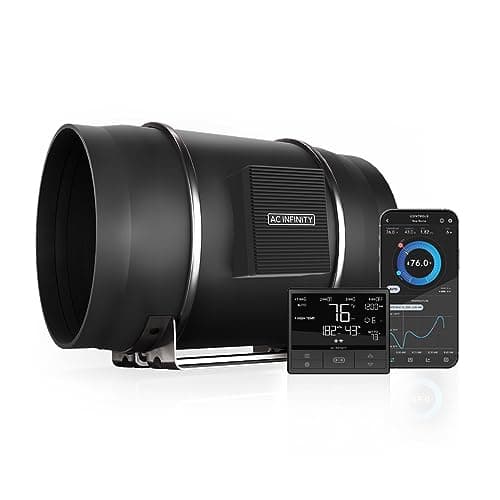
AC Infinity CLOUDLINE PRO T12
SHE Airflow Automation Score8.8/10$399 — 1,604 CFM inline fan, same VPD automation; best high-output ducted backbone
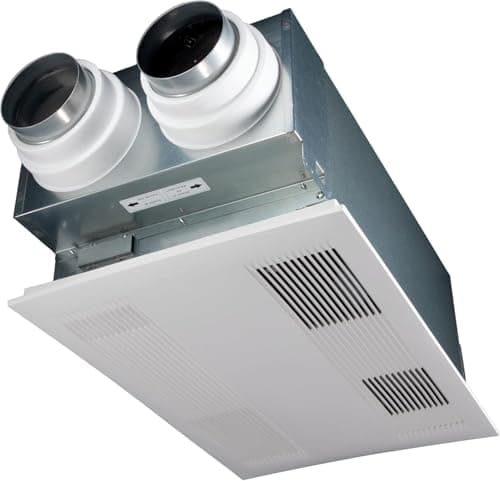
Panasonic WhisperComfort 60 ERV FV-06VE1
SHE Airflow Automation Score7.3/10$637 — balanced ERV, 39 watts, ASHRAE 62.2; best for tight, sealed homes
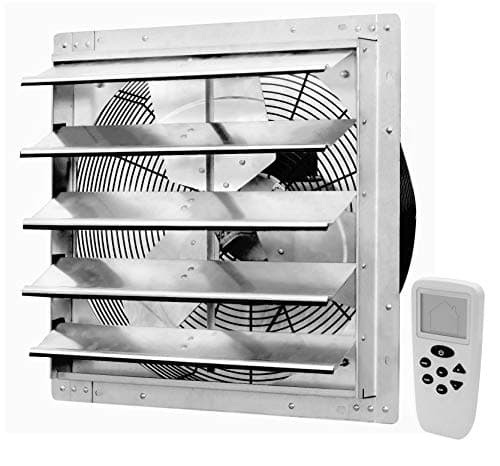
iLiving 18-inch Smart Shutter Exhaust Fan
SHE Airflow Automation Score6.7/10$173 — 1,736 CFM shutter fan, thermostat remote; best budget garage and shop airflow
App Control, Sensors, and Hub Fit
The smart layer here is app-and-sensor, not ecosystem hub, which is the split that ventilation roundups from outlets like Bob Vila and Popular Mechanics consistently use to separate the tiers. The AC Infinity CLOUDLINE PRO T4 earns the highest 9.5 app-control sub-score because the CONTROLLER 69 PRO and WiFi app run temperature, humidity, and VPD triggers plus schedules entirely within AC Infinity's own system, logging runtime so you can audit whether the fan kept moisture out of a wall cavity. The AC Infinity CLOUDLINE PRO T12 and AC Infinity CLOUDWAY T12 Whole House Fan keep the same controller in a 9.4 sub-score, one inline and one in a ceiling unit. The iLiving 18-inch Smart Shutter Exhaust Fan lands at 5.2 because it relies on a standalone wireless thermostat-and-humidistat remote with no app or runtime logging, and the Panasonic WhisperComfort 60 ERV FV-06VE1 runs continuously by design at 6.0 rather than triggering on a sensor.
None of these fans speaks Matter, Alexa, or Apple Home, so judge them on built-in automation rather than whether they join your hub, which is the read that coverage from outlets like Family Handyman and This Old House consistently lands on. The AC Infinity units run their own closed automation: a 60 percent humidity trigger set once ramps the fan in 1 percent steps and logs every minute of runtime, the outcome that whole-house and inline roundups from outlets like EnergySage and Reviewed rank as the real differentiator over a dumb on-or-off booster. The iLiving's remote sets a temperature and humidity threshold but cannot log or schedule, and the Panasonic ERV simply runs at 20 to 60 CFM continuously to satisfy ASHRAE 62.2 across roughly 2,000 sq ft. Owners on r/HVAC consistently praise the CONTROLLER 69 PRO's VPD precision once it is dialed in, while the recurring complaint the community flags is that a bare inline fan still needs you to supply ducting, an intake, and an exhaust cap. For the homeowner building out climate control zone by zone, a fan this capable slots beside the gear in our Best Smart Climate Control 2026: Dreo Fan Cuts AC 15% guide and the moisture tools in our Best Smart Dehumidifiers 2026: GE 50-Pint Tops Our Value Score roundup, which share the same sensor-driven philosophy.
| Product | WiFi App Control | Humidity / VPD Triggers | Runtime Logging | Schedule Modes | Matter / Alexa / Apple Home |
|---|---|---|---|---|---|
| AC Infinity CLOUDLINE PRO T4 | ✓ | ✓ | ✓ | ✓ | ✕ |
| AC Infinity CLOUDWAY T12 Whole House Fan | ✓ | ✓ | ✓ | ✓ | ✕ |
| AC Infinity CLOUDLINE PRO T12 | ✓ | ✓ | ✓ | ✓ | ✕ |
| Panasonic WhisperComfort 60 ERV FV-06VE1 | ✕ | ✕ | ✕ | ✕ | ✕ |
| iLiving 18-inch Smart Shutter Exhaust Fan | ✕ | ✓ | ✕ | ✓ | ✕ |
The Cost of Watts Versus Sticker Price
An EC-motor fan's sticker price is the small number; the watts are the real spend, which inverts how most gadget purchases are justified. The AC Infinity CLOUDLINE PRO T4 moving 205 CFM on 18 watts runs continuously for pennies a day, while an old shaded-pole booster burns several times the power for the same air, so the avoided-cost math compounds across a year of continuous run. Against running central AC through a summer evening, the AC Infinity CLOUDWAY T12 Whole House Fan at 1,604 CFM can cut that cooling load to a fraction on a fan AC Infinity rates at up to 95 percent less draw. The trade worth pricing is whether the Panasonic WhisperComfort 60 ERV FV-06VE1 balanced heat-and-moisture recovery is worth roughly $500 over a one-way exhaust fan in your climate, a payoff measured in air quality and winter comfort rather than raw airflow. As ventilation coverage from outlets like EnergySage consistently frames it, the running-cost math, not the sticker, decides whether a continuous-duty fan is worth leaving on.
When NOT to Buy
Skip this category if you just need to clear a steamy bathroom fast; a humidity-sensing ceiling exhaust fan is simpler, and we cover those separately. Skip the whole-house EC fans if your home is larger than about 800 sq ft and you expected one unit to cool all of it, because the 2 CFM-per-square-foot rule says you cannot. And skip the ERV unless your house is genuinely tight and well-sealed, since in a leaky older home it solves a problem you do not have. These fans are the right buy when you have a specific zone, a humidity or heat problem, and want automation rather than a wall switch you forget.
Who Should Buy What
Who Should Buy What
| If you are… | Recommended pick |
|---|---|
Bath and crawlspace humidity fighters You want quiet, app-controlled VPD humidity automation on a single bath, closet, or crawlspace duct run | AC Infinity CLOUDLINE PRO T4 |
Evening zone flush-coolers You want to flush heat from a 700 to 800 sq ft zone on a summer evening and replace a leaky barrel fan | AC Infinity CLOUDWAY T12 Whole House Fan |
Whole-basement ventilators You have a whole-basement or multi-room ducted run that needs high-output humidity control with VPD automation | AC Infinity CLOUDLINE PRO T12 |
Tight-home fresh-air owners Your home is genuinely sealed and you need continuous, code-compliant fresh air without depressurization | Panasonic WhisperComfort 60 ERV FV-06VE1 |
Budget garage and shop venters You want high airflow to vent a garage, shed, or shop with basic auto cycling at the lowest price per CFM | iLiving 18-inch Smart Shutter Exhaust Fan |
Frequently Asked Questions
What is the difference between an inline duct fan, a whole-house fan, and an ERV?
An inline duct fan like the CLOUDLINE PRO T4 mounts in a duct run and pulls moisture from a bath, closet, or crawlspace, moving 205 CFM on 18 watts with humidity triggers. A whole-house fan like the CLOUDWAY T12 ceiling-mounts and flushes 1,604 CFM of hot air from a 700 to 800 sq ft zone on a summer evening. An ERV like the Panasonic WhisperComfort supplies balanced fresh air continuously at 20 to 60 CFM for a tight, sealed home, recovering heat and moisture rather than just exhausting air. If flush-cooling a whole floor is the actual job, the dedicated ceiling-mounted class is compared in 5 Best Whole-House Fans 2026: QuietCool ES-4700 Wins.
How many CFM do I need, and why does the 1,604 CFM fan not cool my whole house?
The old whole-house-fan rule of thumb is about 2 CFM per square foot, so a 1,604 CFM CLOUDWAY T12 realistically covers a 700 to 800 sq ft zone rather than a 1,500 sq ft home. A 2,000 sq ft house under that rule would need roughly 4,000 CFM, which is several of these fans or a much larger unit. For a single bath or closet, the 205 CFM CLOUDLINE PRO T4 is plenty, since that job is dehumidification, not flush-cooling.
Is an EC motor really worth it over a cheaper AC shaded-pole exhaust fan?
Yes, for any fan you run continuously. The CLOUDLINE PRO T4 moves 205 CFM on roughly 18 watts, about 0.088 W per CFM, while an old AC shaded-pole booster burns several times the power for the same air. Over a year of continuous run, that watt gap dwarfs the higher sticker price. The EC motor also ramps smoothly in 1 percent steps down to about 28 dBA, where a shaded-pole fan only runs flat-out or off, so the efficiency and the quiet both favor EC. The same brushless-motor economics play out overhead — DC vs AC Ceiling Fan Motors 2026: Which Is Quieter? runs those numbers.
What is VPD, and do I need humidity and VPD triggers for a bathroom fan?
VPD, or vapor pressure deficit, combines temperature and humidity into a single moisture-stress reading, and AC Infinity's CONTROLLER 69 PRO can ramp the fan on a VPD or a plain humidity threshold. For a bathroom or crawlspace, a simple 60 percent humidity trigger is usually enough to keep mold out of a wall cavity. VPD matters most for grow tents and precise climate zones, but having the option means the same fan covers both a casual bath run and a tightly controlled space. The same temperature-plus-humidity math governs reptile enclosures too — misting and fogging systems hold a VPD target the way this controller holds a duct threshold.
Can the AC Infinity CLOUDLINE control humidity automatically, or do I turn it on myself?
It controls humidity automatically. You set a humidity threshold once in the AC Infinity app, for example 60 percent, and the CONTROLLER 69 PRO ramps the fan up in 1 percent steps when humidity climbs above it and spins down to a near-silent 28 dBA when it drops. You can also schedule minimum-speed and cycle modes. The app logs runtime, so you can check from your phone whether the fan is actually keeping a crawlspace or bath dry rather than guessing.
Do these smart ventilation fans work with Alexa, Google Home, Apple Home, or Matter?
No, none of the five fans here speaks Matter, Alexa, Google Home, or Apple Home. The AC Infinity units run temperature, humidity, and VPD automation entirely within their own CONTROLLER 69 PRO and WiFi app, the iLiving uses a standalone wireless remote, and the Panasonic ERV runs continuously by design. Judge them on their built-in automation, not on whether they join a hub, because the sensor-driven control is where the smart payoff actually lives.
Why does my duct fan move way less air than its rated CFM once I attach ducting?
Rated CFM is measured at free-air with zero resistance, but real ducting, elbows, and grilles create static pressure that fights the fan. A cheap axial shutter fan collapses to a trickle under that pressure, while a mixed-flow inline fan like the CLOUDLINE holds airflow through a 25-foot run with two elbows. That static-pressure handling is exactly why this guide weights it at 15 percent and why the iLiving's 1,736 CFM free-air number falls off fast in a real duct.
What does an ERV do that a normal exhaust fan cannot, and is it worth the extra cost?
An ERV supplies tempered fresh air while it exhausts stale air, so it does not depressurize the house or pull combustion gases back down a flue the way a one-way exhaust fan can. Its capillary core recovers heat and moisture between the two airstreams, so you ventilate continuously without dumping conditioned air or creating winter dryness. At roughly $637 it costs far more than a simple exhaust fan, and it is worth it mainly in a tight, well-sealed home where balanced ventilation answers a code requirement.
How loud are these fans, and which ones are quiet enough to run in a bedroom overnight?
The CLOUDLINE PRO T4 spins down to about 28 dBA at low speed, quiet enough to run in or near a bedroom overnight. The CLOUDWAY T12 and the larger CLOUDLINE T12 measure about 62 dBA on high, closer to a window AC, so you leave them in their quiet modes or place the inline motor box in an attic. The Panasonic ERV is whisper-quiet by design for continuous run. The iLiving shutter fan is loud at full tilt but has a variable-speed control to dial it down.
Can I use an AC Infinity inline fan to vent a bathroom, or is that the wrong product?
You can use a CLOUDLINE PRO T4 to vent a bathroom, and it does humidity control better than most ceiling fans because of its VPD triggers and runtime logging. The catch is install: it is a bare inline fan, so you duct it, add an intake and an exhaust cap, and accept a wiring-and-clamps job rather than a screw-in ceiling unit. If you want a simple screw-in bathroom fan instead, our smart bathroom exhaust fan guide covers that ceiling-unit class separately.
How much electricity does a continuous-run ventilation fan actually use per month?
It depends on the watts. The CLOUDLINE PRO T4 at 18 watts running full-time draws about 13 kWh per month, which is a few dollars at typical rates and far less if humidity automation idles it most of the time. The Panasonic ERV at 39 watts draws roughly 28 kWh per month for continuous balanced ventilation. The iLiving at 91 watts costs several times more per hour of run, which is why the EC-motor fans win on any continuous-duty job despite the higher upfront price.
Do I need an electrician to install one of these, or is it a DIY job?
The AC Infinity inline fans are largely a DIY job: they plug into the CONTROLLER 69 PRO and a standard outlet, so the work is ducting, clamps, and mounting rather than hardwiring. The CLOUDWAY whole-house fan and the Panasonic ERV involve cutting and sealing duct runs and a wall or ceiling cap, which is doable for a confident DIYer but is where many owners bring in help. The iLiving shutter fan mounts in a wall opening and runs off its remote, making it one of the simpler installs here.
Bottom Line
Get the AC Infinity CLOUDLINE PRO T4 if you want quiet, app-controlled VPD humidity automation on a single bath, closet, or crawlspace duct run.
Get the AC Infinity CLOUDWAY T12 Whole House Fan if you want to flush heat from a 700 to 800 sq ft zone on a summer evening and replace a leaky barrel fan.
Get the AC Infinity CLOUDLINE PRO T12 if you have a whole-basement or multi-room ducted run that needs high-output VPD humidity control.
Get the Panasonic WhisperComfort 60 ERV FV-06VE1 if your home is genuinely sealed and you need continuous, code-compliant fresh air without depressurization.
Get the iLiving 18-inch Smart Shutter Exhaust Fan if you want high airflow to vent a garage, shed, or shop with basic auto cycling at the lowest price per CFM.
The right call for most humidity jobs is the AC Infinity CLOUDLINE PRO T4 at $119 — 205 CFM on 18 watts with VPD triggers earns the top 9.2 SHE Airflow Automation Score. If you need to cool a whole zone, the AC Infinity CLOUDWAY T12 Whole House Fan moves 1,604 CFM for $549. Skip this category entirely if you only need to clear a steamy bathroom fast, where a humidity-sensing ceiling exhaust fan is simpler.
Sources & Methodology
Methodology: SHE Airflow Automation Score — Formula: Humidity_Automation * 0.25 + EC_Efficiency * 0.22 + Airflow_Capacity * 0.20 + Static_Pressure_Handling * 0.15 + App_Scheduling_Control * 0.10 + Install_Fit_Versatility * 0.08. Factors: Humidity & VPD Automation (25%): The whole point of a smart ventilation fan is that it runs when moisture climbs and stops when it does not. This factor is a weighted, normalized sub-score that rewards true humidity and VPD triggers (AC Infinity's CONTROLLER 69 PRO) over a crude thermostat-only humidistat. The coefficient sits highest because precise auto-ramping is what actually keeps mold out of a wall cavity without running the fan 24 hours a day. | EC-Motor Efficiency, W per CFM (22%): A continuous-duty fan's real cost is watts, not sticker price. The calculation normalizes watts per CFM at the rated airflow into a tier: an 18-watt, 205 CFM EC inline fan (0.088 W per CFM) buries an old shaded-pole booster, and an ERV running two motors plus heat recovery is judged on its honest 0.65 W per CFM rather than against a free-air shutter number. This factor carries the second-highest weight because efficiency compounds over continuous run. | Airflow Capacity, CFM (20%): Ventilation that cannot move enough air for the space is theater. This composite scores rated CFM against the job the product is sold for, so a 1,604 CFM whole-house fan and a 205 CFM bath-and-closet inline fan are both judged on whether they cover their intended zone. The coefficient is high but below automation because raw airflow without a humidity trigger runs the fan when it is not needed. | Duct & Static-Pressure Handling (15%): Rated CFM is measured at zero resistance; real ducting, elbows, and grilles fight back. This factor is a normalized tier separating a mixed-flow inline fan that holds airflow against static pressure from a cheap axial shutter fan that collapses in a real duct run. The weight reflects that a spec-sheet CFM number means nothing once a 25-foot run with two elbows enters the picture. | App & Scheduling Control (10%): Phone control, runtime logging, and schedule and cycle modes turn a fan into a managed system. This sub-score rewards WiFi app control and on-device automation over a wireless remote with no logging. The coefficient is moderate because being able to set a 60 percent humidity trigger once and audit it later is the smart-home payoff, even though the airflow factors decide raw capability. | Install Fit & Versatility (8%): A lighter factor that still matters: how cleanly the unit drops into its job. This normalized tier credits a finished ERV that satisfies code, a ceiling whole-house kit with a sealing shutter, and a bare inline fan that fits any duct for matching install effort to the result. The coefficient closes the formula because forcing a heavy build for a small need is its own kind of waste.
Expert review sources used in this analysis:
- SmartHomeExplorer aggregates expert review data and community sentiment to produce consensus-based buying guidance
- We do not perform first-party product testing
- Expert ratings and product assessments draw on ventilation, inline-fan, and indoor-air-quality buyer's guides from outlets that cover this segment — Bob Vila, Family Handyman, This Old House, Popular Mechanics, EnergySage, Consumer Reports, Good Housekeeping, Reviewed, and HomeGuide — rather than first-party tests of each individual unit
- EC-motor efficiency, CFM, and static-pressure context draws on published manufacturer specifications and category coverage
- Community reliability and owner reports are drawn from r/HVAC and the AC Infinity user community, where the recurring owner praise is the CONTROLLER 69 PRO's VPD precision and the recurring complaint the community flags is that a bare inline fan still requires you to supply ducting, intake, and exhaust cap
- Every price was verified via the Amazon Creators API on June 7, 2026: CLOUDLINE PRO T4 $119.00, CLOUDWAY T12 $549.00, CLOUDLINE PRO T12 $399.00, Panasonic WhisperComfort 60 ERV $636.99, iLiving 18-inch shutter exhaust fan $172.99
- The weighted SHE Airflow Automation Score is a composite that scores humidity and VPD automation (25%), EC-motor efficiency (22%), airflow capacity (20%), static-pressure handling (15%), app and scheduling control (10%), and install fit and versatility (8%); each factor is a normalized tier, and the coefficient on every factor reflects its weight in the formula
- These sub-scores derive from manufacturer specifications and aggregated reviewer assessments, and no first-party measurements were conducted.
Nicholas Miles is the founder of SmartHomeExplorer and a longtime smart home enthusiast focused on helping everyday homeowners make better technology decisions. He researches, compares, and writes about products across security, climate, lighting, leak prevention, sensors, home energy, and automation, with an emphasis on real-world usefulness, ecosystem compatibility, reliability, privacy, and long-term value.
Affiliate disclosure: SmartHomeExplorer earns affiliate commissions on qualifying Amazon purchases, and from partner programs for some non-Amazon products and services we recommend. Our scoring methodology is independent of affiliate relationships.