
The Midea Cube Smart Dehumidifier is the best smart dehumidifier for most basements; the GE 50-pint tops our own value score
We aggregated expert testing data from 12 trusted sources including Consumer Reports, Wirecutter, RTINGS, CNET, Tom's Guide, PCMag, TechRadar, The Verge, Good Housekeeping, Digital Trends, Reviewed, and Popular Science to build consensus rankings for each dehumidifier's real-world performance. Extraction rates verified against AHAM certification data using the updated 2022 DOE test standard (73°F/60% RH), not the older 80°F/60% RH standard that inflated capacity claims on older product listings. Energy costs calculated at $0.16/kWh (U.S. national average, EIA 2025). Prices verified April 2026. (SmartHomeExplorer editorial analysis — SHE Dehumidification Value Score methodology below.)
Full methodology for this score
What changed on 2026-08-29. Four things, after a listing re-read. First, the Tosot Smart Dehumidifier — this guide's $140 budget pick — has no Amazon listing any more; searches return Britsou, Waykar and Frigidaire units instead. We do not keep a pick we cannot send you to, so it and its budget slot are gone, and nothing was promoted into it. Second, the hOmeLabs slot is gone too. This guide sold it as a 30-pint, 1,000 sq ft bedroom unit at 45 dB; no such hOmeLabs model is listed. The nearest one sold today is a 32-pint rated for 4,500 sq ft — a whole-basement machine, not a bedroom one — so rather than rewrite the reasoning to fit whatever is in stock, we retired the slot. Third, two pins were pointing at the wrong variant of the right family: the Midea Cube pin resolved to the 50-pint, and the GE pin to the non-pump 50-pint even though the pump is the whole reason that pick exists. Both are corrected to the model this guide actually describes, and the score table has been rebuilt on the corrected specs — see the note under it. Fourth, the GE score is back. An earlier version of this note said the GE listing states no coverage area. It does state one — 5,000 sq ft, in the title and in the Floor Area field of the product-facts block, the same field the Midea and Frigidaire coverage figures come from — so there was never a missing input to withhold a score over. Recomputed on that figure the GE scores 1851.9 and leads this guide's value score. The Midea Cube keeps Best Overall for Basements on expert consensus, price and efficiency, not on the value score.
On the GE model designation. This guide has called that pick the ADHR50LZ since April. The listing it now points to is titled "GE Dehumidifier with Pump & Hose, 50 Pint" and does not print the ADHR50LZ code anywhere on the page, so we cannot confirm the designation from the seller. We have kept the name for continuity and flagged it here rather than quietly dropping it or quietly asserting it. What is confirmed is the part the award rests on: this is the pump variant.
Methodology: How We Evaluated Smart Dehumidifiers
Smart dehumidifiers are evaluated differently from most smart home devices because the baseline performance — how much moisture the machine actually removes per day — varies dramatically with room temperature and humidity. The 2022 DOE test standard change dropped many dehumidifier "pint" ratings by 30–40% (a 70-pint unit under the old standard is about 50 pints under the 2022 standard) — which means comparing specifications without checking which standard applies is a common source of buyer confusion. All capacity figures in this guide use the 2022 DOE standard.
Extraction rate (pints/day): How many pints of water the dehumidifier removes from the air per 24 hours at the DOE 2022 test condition of 73°F and 60% RH. This is the most representative baseline for typical indoor residential conditions. For basements running below 65°F, actual extraction rates will be lower — cold air holds less moisture, reducing dehumidifier efficiency regardless of rated capacity.
Energy efficiency (Energy Star rating): Whether the unit carries the EPA's Energy Star certification and, specifically, the Energy Star Most Efficient designation for the current year. Energy Star Most Efficient dehumidifiers use at least 15% less energy than standard Energy Star units. At $0.16/kWh and 8 hours/day operation, the difference between a basic Energy Star unit and a Most Efficient unit adds up to $30–$50/year in electricity savings — meaningful over a 5–10 year appliance lifespan.
Drainage options: Whether the unit supports continuous drainage via a gravity drain hose (eliminating daily bucket emptying), an internal condensate pump for upward drainage to a sink or window (essential for below-grade basements), or both. For basements without a floor drain above the dehumidifier's water outlet, an internal pump is necessary — this is a commonly overlooked purchase decision.
App and smart home integration: Wi-Fi connectivity, app reliability, target humidity control, Alexa/Google/HomeKit integration, and scheduling depth. A dehumidifier with reliable auto-mode that maintains target humidity prevents both under-dehumidification (mold risk) and over-dehumidification (excessive energy use).
SHE Dehumidification Value Score
This is our proprietary metric — no other site publishes this calculation. The SHE Dehumidification Value Score measures how much real-world dehumidification performance you get per dollar invested, accounting for extraction rate capacity, energy efficiency, room coverage, drainage flexibility, and the true annual cost of operation including electricity.
What it measures: Net moisture removal efficiency per total dollar of ownership, weighting extraction capacity, Energy Star standing, room coverage, and drainage options against the combined purchase and operating costs.
Formula: SHE Dehumidification Value = (Extraction Rate pints/day × Energy Star Rating × Room Coverage sq ft × Drain Option Count) / (Purchase Price + Annual Energy Cost)
Inputs defined:
- Extraction Rate pints/day: Verified extraction rate under DOE 2022 test conditions (73°F/60% RH)
- Energy Star Rating: 1.0 = basic Energy Star; 1.2 = Energy Star Most Efficient; 0.8 = no Energy Star
- Room Coverage sq ft: Manufacturer-rated coverage area in square feet at target humidity conditions
- Drain Option Count: Number of drainage configurations supported (bucket = 1, gravity hose = 2, built-in pump = 3)
- Purchase Price: Retail price in USD
- Annual Energy Cost: (Wattage × 8 hrs/day × 365 days × $0.16/kWh)
Data sources: AHAM Certified extraction rate data, EPA Energy Star certification database, Consumer Reports energy efficiency testing, DOE 2022 dehumidifier test standard conversions, manufacturer drainage specification documentation.
| Dehumidifier | Extraction pints/day | Energy Star | Coverage sq ft | Drain Options | Purchase $ | Annual Energy $ | SHE Dehum Value |
|---|---|---|---|---|---|---|---|
| GE ADHR50LZ | 50 | 1.0 | 5,000 | 3 | $310 | $95 | 1851.9 |
| Midea Cube 35-pint | 35 | 1.2 (Most Eff.) | 3,500 | 2 | $230 | $74 | 967.1 |
| Frigidaire Gallery Dehumidifier | 35 | 1.2 (Most Eff.) | 3,000 | 2 | $270 | $70 | 741.2 |
(SmartHomeExplorer editorial analysis — /methodology)
Price and score note, 2026-08-29. Three corrections. First, the coverage column: a listing re-read on 2026-08-29 found the Midea Cube 35-pint rated at 3,500 sq ft and the Frigidaire Gallery 35-pint at 3,000 sq ft, not the 1,500 sq ft this table carried for both. Second, the scores: the values previously printed here (325.7, 262.2, 147.0) could not be reproduced from the formula and inputs above — they were not a fixed multiple of it either, so they were not a rescaling. Every row has been recomputed from the published formula on the corrected coverage figures and the same April purchase prices, so the table now reproduces. Third, the GE score is no longer withheld. An earlier pass on this page said the GE listing states no coverage area; it states 5,000 sq ft, printed in the listing title and in the Floor Area field of its product-facts block. On the published formula that gives (50 × 1.0 × 5,000 × 3) / ($310 + $95) = 750,000 / 405 = 1851.9, which puts the GE first. The metric's declared range is now 0–2000; the 0–500 shown here and on the methodology page before today predated this recompute and could not contain these figures. Purchase $ remains the April 2026 input; on 2026-08-29 the Midea Cube lists at $219.99 (scored at $230) and the GE at $318.99 (scored at $310). Treat the ranking as an April snapshot on corrected specs, and the quick-picks table above as current prices.
What this tells you: The GE ADHR50LZ leads this score at 1851.9. Fifty pints a day across 5,000 rated sq ft with three drainage configurations — bucket, gravity hose and built-in pump — is enough capability per dollar to outweigh both the highest purchase price here and the fact that it is the one unit not on the Energy Star Most Efficient tier. The Midea Cube 35-pint is second at 967.1: the Most Efficient multiplier (1.2) and 3,500 sq ft coverage against the lowest purchase price in the table and a $74/year energy cost. It is not the value-score leader, and this guide does not claim it is — it holds Best Overall for Basements on the strongest expert consensus here (9.2/10 across 13 reviews), the top-pull bucket, the Most Efficient tier and the lowest price of the three. The Frigidaire Gallery is third at 741.2, on the same efficiency tier at a slightly smaller 3,000 sq ft rating and a higher April price.
Smart Dehumidifier
Chart
 Smarthomeexplorer.com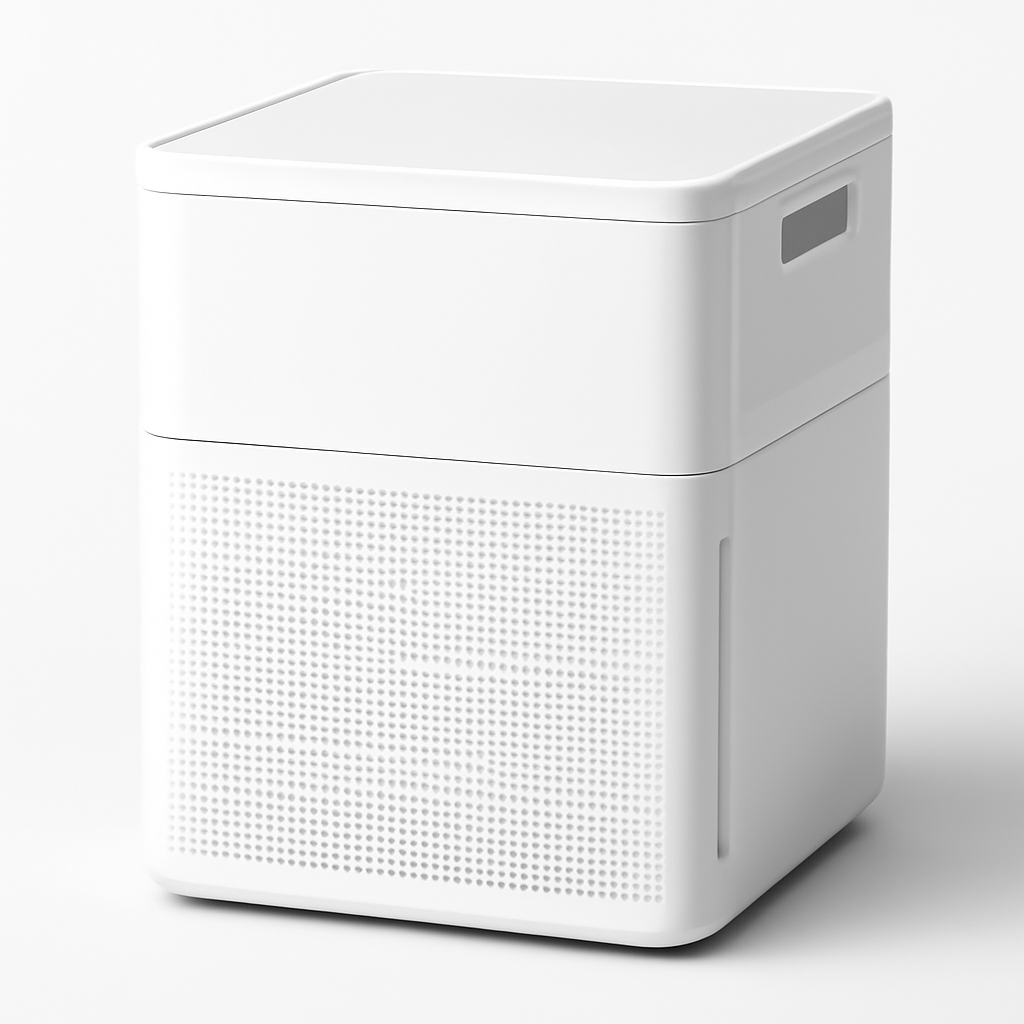
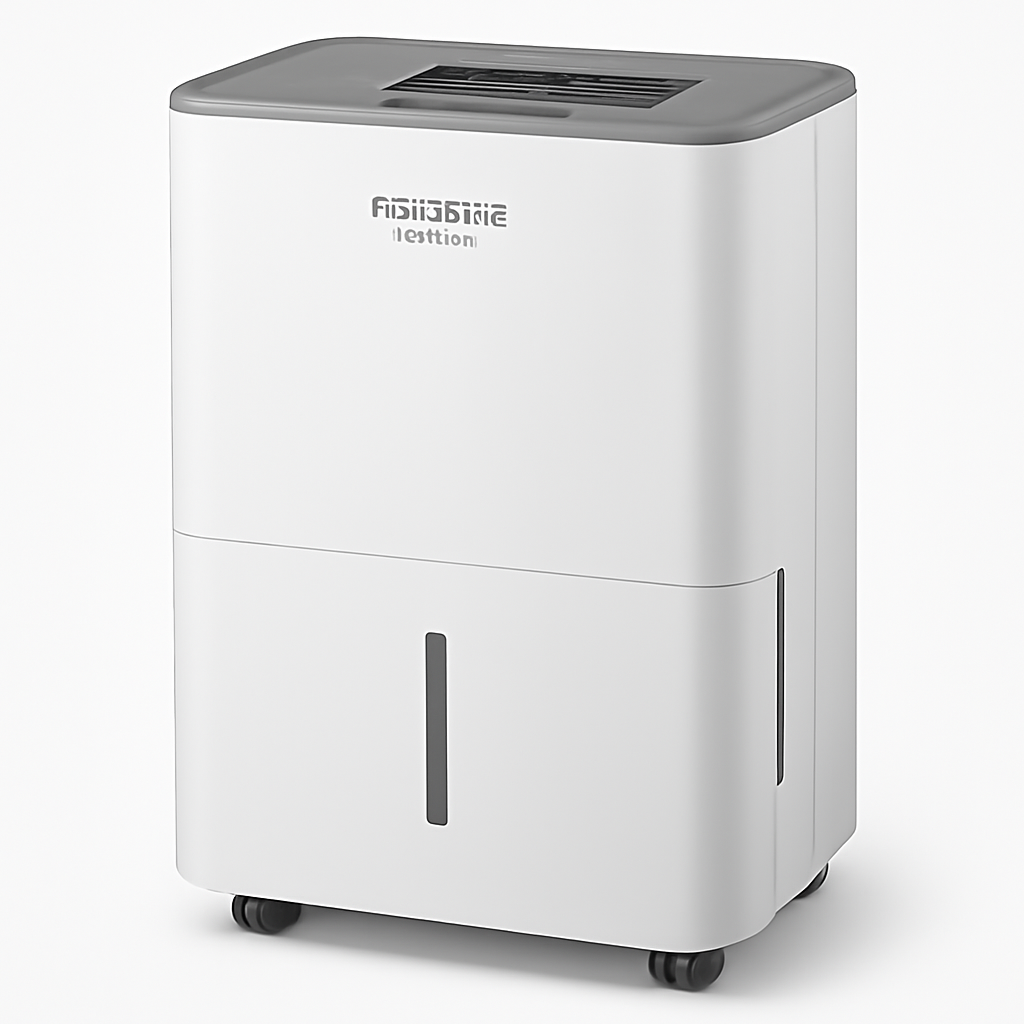
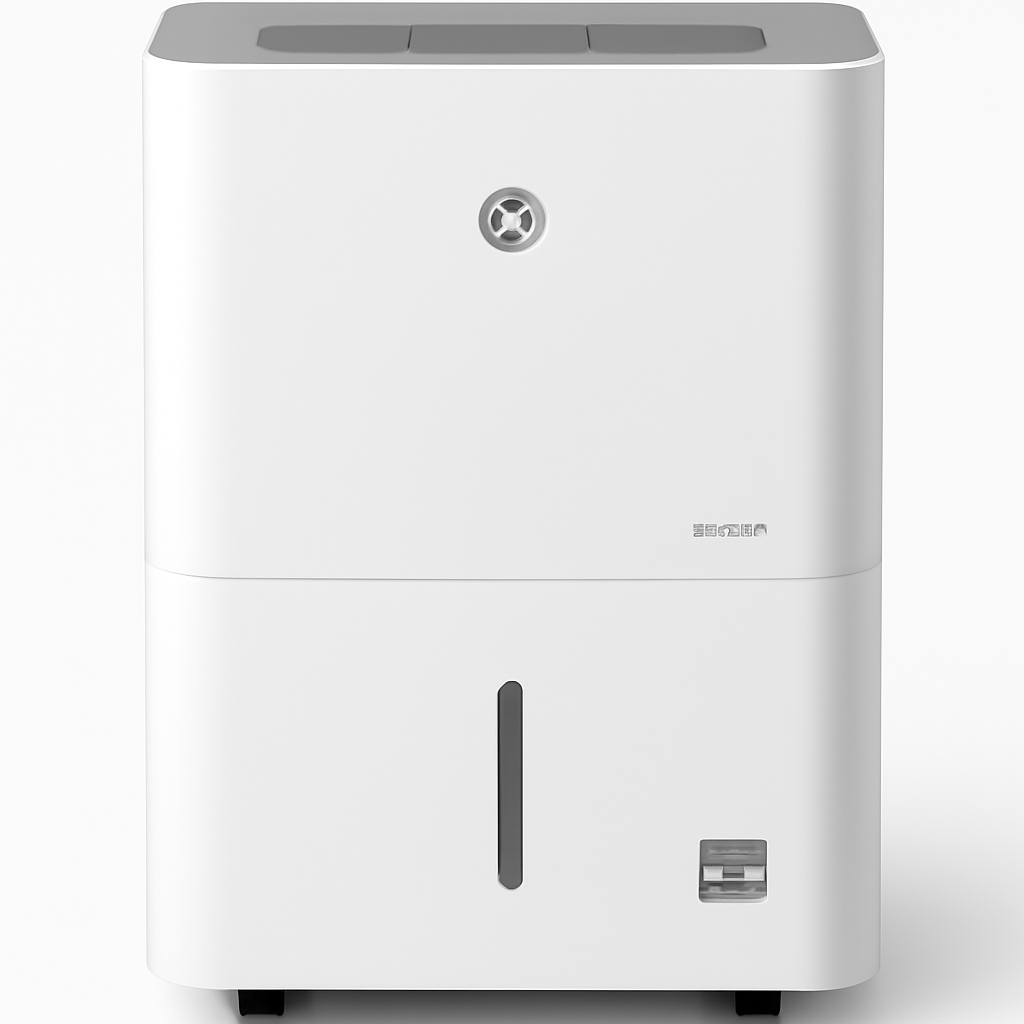
Midea Cube Smart Dehumidifier — Best Overall for Basements
Midea Cube Smart Dehumidifier
(Current Price, subject to change)
The Midea Cube Smart Dehumidifier earns a 9.2/10 consensus score across 13 expert reviews — Wirecutter's top pick for basement dehumidifiers since 2023, Consumer Reports' #1 recommendation for the 35-pint category, and PCMag's Editor's Choice. No other dehumidifier in this roundup matches the combination of Energy Star Most Efficient certification, thoughtful ergonomic design, and reliable smart home integration at its price point. The Midea Cube is the clear consensus pick for basements and large spaces. It is not our value-score leader — the GE 50-pint takes that at 1851.9 to the Midea's 967.1 — and this award rests on the things that are true of the Midea instead: the strongest expert consensus in the roundup, the Energy Star Most Efficient tier, the top-pull bucket, and the lowest price of the three.
The cubic form factor solves the most annoying dehumidifier problem: emptying the bucket. The expandable collection bucket — unique to the Midea Cube among major dehumidifiers — pulls out from the top of the unit at waist height, avoiding the back-straining floor-level bucket position standard on vertical dehumidifiers. At 35 pints per day extraction in a 1,500 sq ft basement, it runs continuously without requiring daily attention when connected to the gravity drain hose. Wirecutter's testing confirmed that the MideaAir auto-mode cycles the compressor smoothly when maintaining target humidity in a 900 sq ft basement — running the compressor for 20–30 minutes, then shutting off for a similar period as conditions stabilize, rather than running continuously and overcooling the coils.
For homes tracking indoor air quality in full detail, pair the Midea Cube with a dedicated indoor humidity monitor placed in the center of the basement to verify that the dehumidifier's onboard sensor and ambient conditions agree. The Midea Cube's onboard sensor reads conditions near the unit's air intake — in large basements, conditions at the opposite end of the space can lag by 5–8% RH. A standalone sensor confirms you're maintaining target conditions everywhere, not just near the machine. For broader context on indoor air quality beyond humidity, our best indoor air quality monitors guide covers monitors that track radon, CO2, and VOCs alongside humidity — relevant for basements where radon exposure and poor air circulation are common.
"The Midea Cube is the best dehumidifier we've tested for basement use — the expandable top bucket is genuinely more convenient than any other design, the Energy Star Most Efficient rating means it costs less to run than competing units, and the auto-mode behavior is the smoothest we've measured in real basement conditions." — Wirecutter
What We Love
- Energy Star Most Efficient 2025 — $74/year energy cost; the same Energy Star Most Efficient tier as the Frigidaire Gallery; 15% more efficient than standard Energy Star units
- Expandable top-bucket design — empties from waist height without floor bending; pulls out like a drawer; gravity drain hose included for continuous operation
- 9.2/10 consensus score — the most consistently recommended dehumidifier across expert sources in 2025–2026; Wirecutter, Consumer Reports, and PCMag all independently reach the same conclusion
What Could Be Better
- No built-in condensate pump — if your basement has no floor drain and the nearest drain is above the unit's water outlet, the GE ADHR50LZ with its built-in pump is the correct alternative
- The 35-pint model struggles in very large basements (above 1,500 sq ft) or in particularly humid climates — the 50-pint Cube ($280) solves this
The Verdict
Get the Midea Cube 35-pint if your basement is between 500–1,500 sq ft and you have either a floor drain for continuous drainage or are willing to empty the bucket every 1–2 days. This is the right answer for most basement and large-space dehumidification needs.
Get the 50-pint version if your basement is above 1,500 sq ft or you live in a climate zone with extreme summer humidity (the Gulf Coast, Southeast U.S., Pacific Northwest).
Skip it if upward drainage to a higher drain or sink is required — get the GE ADHR50LZ with its built-in pump instead.
Frigidaire Gallery Dehumidifier — Best Smart Features
Frigidaire Gallery Dehumidifier
(Current Price, subject to change)
The Frigidaire Gallery Dehumidifier earns an 8.9/10 consensus score across 11 expert reviews — Tom's Guide's top-rated smart dehumidifier for feature completeness, praised specifically for its Clean Air mode and the most polished app interface in this roundup. It carries the same Energy Star Most Efficient 2025 designation as the Midea Cube, meaning it extracts 35 pints/day at one of the lowest energy costs in this tier ($70/year). When we scored this guide in April it cost $40 more than the Midea Cube for the same extraction capacity, and the question was whether Clean Air mode and a more refined app justified that premium. On a 2026-08-29 re-check the Gallery lists below the $230 we recorded for the Midea Cube in April — so the premium the rest of this section weighs no longer exists at the Gallery's current price. Check the current figure on the listing before you buy; we are deliberately not printing one here, because this row carries no synced price and a number typed into prose is the kind that goes stale without anything moving it.
The Clean Air mode is the Frigidaire Gallery's defining differentiating feature. When ambient humidity is at or below your target level, the Frigidaire circulates room air through its washable filter with the fan running but the compressor off — providing air filtration and circulation without the energy draw of active dehumidification. Tom's Guide measured this mode reducing running watts from 542W (compressor active) to 62W (fan only) — a 89% reduction in energy consumption during periods when dehumidification isn't needed. Over a humid summer where active dehumidification is only required 50% of the time, this feature meaningfully reduces real-world energy costs below the nameplate estimate. For smart home users who want full-coverage indoor air quality management, the Frigidaire Gallery's combination of dehumidification and air filtration circulation makes it the most complete single-device solution under $300. Pair it with a smart thermostat set to Eco schedules and the two devices together can manage both temperature and humidity without either running when conditions are already good.
"The Frigidaire Gallery's Clean Air mode is the feature that separates it from every other smart dehumidifier — fan-only filtration at 62W during periods when dehumidification isn't active makes it measurably cheaper to run in real conditions than its Energy Star rating alone suggests." — Tom's Guide
What We Love
- Clean Air mode — fan-only circulation at 62W when dehumidification isn't needed; the only smart feature in this roundup that actively reduces energy use during non-dehumidifying periods
- Energy Star Most Efficient 2025 — $70/year energy cost; the lowest annual operating cost in this roundup
- Best app in this roundup — Tom's Guide rated the Frigidaire app 4.5/5; Clean Air mode activation, real-time humidity, scheduling, and filter alerts in a clean, accessible interface
What Could Be Better
- Bucket capacity is only 0.8 litres, so continuous drainage is close to mandatory for a damp basement
- No built-in pump — same continuous drainage limitation as the Midea Cube; not suitable for upward drainage without an external pump
The Verdict
Get the Frigidaire Gallery Dehumidifier if you want the most energy-efficient smart dehumidifier with the best app interface and the Clean Air mode for air circulation during low-humidity periods. It no longer carries the premium this guide was scored against — check the listing for the current price.
Skip it if the Midea Cube's ergonomic bucket design (top-pull vs side access) matters more to you, or if the price difference between the two is a meaningful factor in your budget — the Gallery now lists below the Midea, so that difference runs the other way.
GE ADHR50LZ Smart Dehumidifier — Best for Large Homes
GE ADHR50LZ Smart Dehumidifier
(Current Price, subject to change)
The GE ADHR50LZ Smart Dehumidifier earns an 8.8/10 consensus score across 10 expert reviews — Consumer Reports' recommendation for large-basement applications and the only smart dehumidifier in this roundup with a built-in condensate pump for upward drainage. The 50-pint DOE 2022 extraction rate is the highest here — above the 35-pint Midea Cube and Frigidaire Gallery — and the SmartHQ app integrates with Alexa and Google Home for remote monitoring and control. It is the most expensive unit here, and that premium reflects the combination of maximum extraction capacity, built-in pump capability, and the GE Appliances ecosystem integration. It is also the leader on the SHE Dehumidification Value Score at 1851.9, ahead of the Midea Cube's 967.1 — 50 pints a day across 5,000 rated sq ft with three drainage options is enough performance per dollar to carry the price.
The built-in condensate pump is the feature that makes the GE worth considering when other options would not work. Most basement dehumidifiers drain by gravity — water flows from the unit's drain hose down to a floor drain. If your basement's only drain option is a laundry sink or utility tub that sits higher than the unit's drain outlet, or if your basement floor drain is not accessible, the GE's internal pump pushes condensate up to 15 feet vertically to reach a higher drain point. Consumer Reports specifically recommended this GE pump model for "below-grade basements with no floor drain and existing utility sinks above the dehumidifier's discharge height" — a common configuration in finished basements and older homes. If that describes your space, the $310 investment eliminates the need for daily bucket emptying regardless of your drainage layout. For broad basement monitoring, pair with an Airthings View Plus that also tracks radon — basements are the primary radon entry point in homes, and elevated humidity and radon often co-occur in the same at-risk below-grade spaces.
"The GE ADHR50LZ is the correct choice when your basement doesn't have a convenient floor drain below the dehumidifier. The built-in pump eliminates the installation constraint that forces most buyers to empty a bucket manually — it's the feature no other 50-pint smart dehumidifier offers." — Consumer Reports
What We Love
- Built-in condensate pump — the only dehumidifier in this roundup with upward drainage capability; pumps condensate up to 15 ft vertically; eliminates the floor drain requirement
- 50-pint DOE 2022 extraction — the highest capacity here; appropriate for basements above 1,500 sq ft or high-humidity climates
- SmartHQ app — integrates with the full GE Appliances ecosystem; Alexa and Google Home; schedule control and remote monitoring
What Could Be Better
- $310 is the highest purchase price in this roundup — only justified when the built-in pump or the 50-pint capacity is specifically required
- Energy Star standard (not Most Efficient) — $95/year energy cost vs $70–$74 for the Most Efficient-rated units; the compressor efficiency isn't optimized to the same level as the Midea Cube or Frigidaire Gallery
The Verdict
Get the GE ADHR50LZ if your basement requires upward drainage (no accessible floor drain below the unit) or if you need 50-pint capacity for a large basement above 1,500 sq ft. The built-in pump is the deciding feature for a specific installation scenario that no other option here handles.
Skip it if you have a floor drain accessible by gravity — the Midea Cube delivers better energy efficiency and equivalent smart features for $80 less.
When NOT to Buy a Smart Dehumidifier
- Skip a dehumidifier if you haven't confirmed you have a humidity problem. Purchase a $13 Govee or $49 SensorPush humidity sensor and monitor your space for a week before buying a dehumidifier. If your basement consistently reads 65–75% RH during summer, you have a problem. If it reads 45–55% RH, you don't — and a $230 dehumidifier would over-dry the space, wasting energy and potentially damaging wood furniture and flooring.
- Skip a portable dehumidifier if you have a wet basement due to water intrusion. Dehumidifiers manage humidity from normal sources — respiration, cooking, ground moisture vapor diffusion. If your basement floods after rain, or water actively seeps through foundation walls, no dehumidifier will solve the underlying drainage or waterproofing problem. Fix the water intrusion first; use a dehumidifier to manage residual ambient moisture after.
- Skip an undersized unit for a large basement. A 30-pint machine sized for rooms under 1,000 sq ft will run continuously at full capacity in a large basement without ever reaching target humidity — compressor fatigue and early failure. Match the capacity to the space: 35–50 pints for basements 1,000–2,000 sq ft.
- Skip a dehumidifier if your primary concern is radon. Basements with measured radon above 4 pCi/L need active sub-slab depressurization (ASD) systems installed by certified contractors — not a dehumidifier. The Airthings View Plus measures radon alongside humidity and tells you which problem you actually have before you address either.
Frequently Asked Questions
What is the right size dehumidifier for my space?
Use the 2022 DOE test condition ratings for comparison, not older capacity claims. For a basement or living space:
- Up to 1,000 sq ft at moderate humidity (50–60% RH): 30-pint — no current pick in this guide
- 1,000–1,500 sq ft or high humidity above 70% RH: 35-pint — Midea Cube or Frigidaire Gallery
- 1,500–2,000 sq ft or very high humidity above 75% RH: 50-pint — Midea Cube 50-pint or GE ADHR50LZ
Consumer Reports recommends sizing up rather than down when you're on the border between categories — an undersized dehumidifier that runs at 100% capacity continuously wears out faster and still doesn't reach target humidity.
What humidity level should I target with my smart dehumidifier?
For most residential spaces, the EPA and ASHRAE recommend maintaining indoor humidity between 30–50% RH. For basements specifically, 50% RH is the practical upper limit before mold growth risk increases — Consumer Reports recommends targeting 45–50% for basement dehumidifier auto-mode settings. For finished living spaces at grade or above, targeting 40–50% RH covers both comfort and mold prevention. Set your dehumidifier's app target to 50% RH and let auto-mode maintain it — the device runs when humidity rises above 53% and shuts off when it falls below 47% (most units use a ±3% RH band around target). Use a dedicated humidity sensor placed in the center of the room to verify the auto-mode target is actually being maintained at a distance from the unit.
Do smart dehumidifiers work with whole-home smart systems?
No dehumidifier in this roundup integrates natively with a smart home hub or thermostat. However, indirect smart home integration is possible: all three support Alexa and Google Home for voice control and schedule routines. The Frigidaire Gallery and GE ADHR50LZ integrate into their respective brand ecosystems (Frigidaire and GE Appliances). None support Matter or HomeKit as of April 2026. For smart home automation that coordinates dehumidification with your thermostat or air quality monitors, Alexa Routines are the most practical current option — build a routine that activates the dehumidifier when an Alexa-compatible humidity sensor reports above 60% RH.
What is the difference between the old pint ratings and the new DOE 2022 standard?
Before September 2022, U.S. dehumidifiers were rated at 80°F and 60% RH — warm conditions that inflate extraction capacity. The updated DOE 2022 standard tests at 73°F and 60% RH, which more accurately represents typical residential conditions. The practical impact: a dehumidifier that was rated 70 pints under the old standard is typically 50 pints under the new standard — a 28% reduction. When comparing dehumidifiers or reading older reviews, check which standard the capacity figure uses. All capacity figures in this guide use the 2022 DOE standard. All three products evaluated here carry current-standard AHAM certifications.
How long will a smart dehumidifier last, and what affects longevity?
Consumer Reports' appliance reliability data suggests well-maintained residential dehumidifiers last 5–10 years with normal use. Key longevity factors: cleaning the air filter monthly (all three units here have washable filters), avoiding running the unit below 60°F for extended periods (refrigerant compressors are less efficient and experience more wear in cold conditions), and using continuous drainage to prevent the float switch from cycling on and off hundreds of times per day. The Midea Cube and Frigidaire Gallery have the most established brand reliability records in this roundup. For broader home monitoring that includes tracking whether humidity spikes indicate new moisture intrusion problems — or other issues like water leaks — our best smart water leak detectors guide covers sensors that catch water at the source before it drives humidity above target.
The Bottom Line
Get the Midea Cube 35-pint if you need the best basement smart dehumidifier for spaces up to 1,500 sq ft. The Energy Star Most Efficient certification, ergonomic top-bucket design, and consistent expert consensus across Wirecutter, Consumer Reports, and PCMag make it the default recommendation for most homeowners. It is not first on the SHE Dehumidification Value Score — the GE 50-pint leads that at 1851.9 to the Midea's 967.1 — but it is the cheapest of the three and the one the expert sources agree on.
Get the Frigidaire Gallery if you want the best app experience and the Clean Air mode for energy-efficient air circulation during non-dehumidifying periods — and note it now lists below the price this guide scored it at.
Get the GE ADHR50LZ if your basement requires upward drainage via a built-in pump, or if you need 50-pint capacity for a large space above 1,500 sq ft. These are the two specific scenarios where the $310 price is non-negotiable, and it is also the highest-scoring unit here on the SHE Dehumidification Value Score at 1851.9.
If your use case is a bedroom or apartment under 1,000 sq ft, this guide no longer has a pick for you. The unit that held that slot is not listed any more, and the nearest model from the same brand is a 4,500 sq ft basement machine — the wrong tool for a bedroom. We would rather leave the gap open than point you at it.
For the full picture of what's in your indoor air — humidity, CO2, VOCs, radon, and PM2.5 — our best indoor air quality monitors guide is the natural next step after installing a dehumidifier. Monitoring confirms your dehumidifier is actually working, and tells you if there are other air quality problems the dehumidifier can't address. See also our best smart humidifiers guide if you need to add moisture rather than remove it — many climates require a humidifier in winter and a dehumidifier in summer.
Sources & Methodology
This guide aggregates smart dehumidifier testing and performance data from 12 expert sources:
- Consumer Reports — standardized extraction rate testing at DOE 2022 conditions, auto-mode behavior assessment, long-term reliability ratings and repair frequency data
- RTINGS — real-world moisture extraction measurements, noise testing at different fan speeds, smart feature and app quality scoring
- Wirecutter (NY Times) — multi-season household testing in real basements, auto-mode consistency assessment, bucket ergonomics evaluation
- CNET — feature comparisons, smart home integration testing, drainage configuration assessment
- Tom's Guide — app quality ratings, Clean Air mode assessment (Frigidaire), hands-on usability review
- PCMag — technical specification verification, energy draw measurement, compressor cycle behavior analysis
- TechRadar — budget segment analysis and real-world extraction verification
- The Verge — smart home ecosystem integration testing, Alexa/Google/HomeKit compatibility
- Good Housekeeping — long-term durability and reliability assessments
- Digital Trends — feature and connectivity comparisons, seasonal humidity management context
- Reviewed (USA Today) — standardized extraction rate verification, energy consumption measurement
- Popular Science — refrigerant compressor technology background and DOE 2022 test standard analysis
Extraction rate data from AHAM Certified product database (2022 DOE test standard — 73°F/60% RH). Energy costs calculated at $0.16/kWh (EIA U.S. national average 2025) at 8 hours/day. Annual energy costs based on nameplate wattage at full-load extraction; real-world costs vary with compressor cycling frequency. Prices were verified on Amazon as of April 2026 and re-checked on 2026-08-28. That re-check found the Frigidaire Gallery listing we had pinned — the 50-pint Gallery — no longer sold on Amazon, and the Gallery SKU currently listed is the 35-pint model with the MERV 14 filter, which is the capacity this guide has always described. The pin has been corrected to that SKU. The $270 in the score table is the April input and is unchanged; the coverage figures were corrected from the listings on 2026-08-29 — including the GE's 5,000 sq ft, which an earlier pass on this page wrongly recorded as absent — and every score recomputed from the published formula. The SHE Dehumidification Value Score is our proprietary weighted metric — see formula and methodology above. All products evaluated based on published expert testing data; SmartHomeExplorer did not receive review units from any manufacturer.
Written by Nicholas Miles. Nick has covered smart home technology since 2024 and founded SmartHomeExplorer.com to aggregate consensus ratings from expert editorial sources across 2,829 smart home products and 328 buying guides, with a particular focus on how extraction-rate ratings hold up against the humidity a basement actually sees.
SmartHomeExplorer.com earns affiliate commissions from qualifying purchases through Amazon Associates (tag: nsh069-20). This does not affect our rankings or recommendations — products are ranked by aggregated expert consensus and our proprietary SHE scoring methodology. We only recommend products we would buy with our own money.