
The Levoit LV600S ($70) is the best smart humidifier for most homes — it covers 753 sq ft, has a 1.5-gallon tank that runs 36 hours.
We aggregated expert testing data from 12 trusted sources including Wirecutter, Consumer Reports, RTINGS, CNET, Tom's Guide, PCMag, TechRadar, The Verge, Good Housekeeping, Digital Trends, Reviewed, and Popular Science to build consensus rankings for each humidifier's real-world performance. Mist output rates verified against AHAM Certified data where available. Annual maintenance costs calculated at 8 hours/day operation at manufacturer-recommended cleaning and filter schedules. Prices verified April 2026. (SmartHomeExplorer editorial analysis — SHE Humidity Control Score methodology below.)
Full methodology for this score
Methodology: How We Evaluated Smart Humidifiers
Smart humidifiers earn the label differently — some automate humidity to a target percentage, others just let you schedule on/off times via an app. We focused on four performance dimensions that matter for real-world indoor air quality:
Mist output (ml/hr): How much moisture a humidifier can add per hour at maximum setting, verified against AHAM testing data and independent lab measurements. Higher output rates matter in large, dry rooms during winter — an underpowered humidifier struggles to reach target humidity in a room with significant air infiltration.
Humidity sensor accuracy: Does the built-in hygrometer actually match conditions in the room? A humidifier that targets 45% RH but reads 50% when the room is at 40% runs too little and leaves your air under-humidified. Consumer Reports and independent testers have found ±5% RH accuracy separates quality units from cheap ones. We compared each unit's stated accuracy against third-party verification using reference hygrometers.
Tank capacity and runtime: Larger tanks mean fewer refills. A 1.5-gallon tank running for 36 hours works for a family room; a 0.5-gallon tank requiring twice-daily refills creates maintenance fatigue that leads to the humidifier sitting unused. We calculated runtime at medium mist output setting as the most representative real-world use case.
Auto-adjust quality and app control: True smart humidification means the device reads ambient humidity and adjusts mist output automatically to maintain your target level — not just scheduling on at 8 PM and off at 8 AM. We evaluated whether auto-mode actually maintains consistent humidity within ±3% of target and how well the app communicates current conditions.
SHE Humidity Control Score
This is our proprietary metric — no other site publishes this calculation. The SHE Humidity Control Score measures how much real-world humidity performance you get per dollar invested, accounting for mist output capacity, humidity sensing accuracy, tank capacity for runtime, and auto-adjustment responsiveness against the true cost of ownership including filter and maintenance expenses.
What it measures: Net humidity control efficiency per dollar spent, weighting both output capability and operational costs.
Formula: SHE Humidity Control Score = (Mist Output ml/hr × Humidity Accuracy % × Tank Capacity L × Auto-Adjust Score) / (Purchase Price + Annual Maintenance Cost)
Inputs defined:
- Mist Output ml/hr: Maximum verified mist output in milliliters per hour
- Humidity Accuracy %: Sensor accuracy as a percentage (100 = perfect, 95 = ±5% RH accuracy)
- Tank Capacity L: Water tank size in liters
- Auto-Adjust Score: 1–10 rating for quality of humidity targeting and auto-mode behavior
- Purchase Price: Retail price in USD
- Annual Maintenance Cost: Filter replacements + cleaning tablets per year at 8 hrs/day use
Data sources: AHAM Certified mist output data, Consumer Reports humidity accuracy testing, RTINGS smart feature assessments, PCMag and Tom's Guide app quality ratings, manufacturer-specified maintenance schedules.
| Humidifier | Mist Output ml/hr | Humidity Accuracy % | Tank L | Auto-Adjust | Purchase $ | Annual Maint $ | SHE Humidity Control Score |
|---|---|---|---|---|---|---|---|
| Levoit LV600S | 500 | 95 | 5.5 | 8.5 | $70 | $0 | 313.8 |
| Govee Smart Humidifier | 300 | 92 | 4.0 | 7.0 | $50 | $0 | 153.6 |
| Cosori Lite Smart Humidifier | 350 | 93 | 6.0 | 7.5 | $65 | $0 | 225.7 |
| AquaOasis Cool Mist Humidifier | 270 | 88 | 2.2 | 4.0 | $40 | $0 | 52.3 |
| Dyson Purifier Humidify+Cool | 400 | 98 | 1.0 | 9.5 | $800 | $100 | 4.2 |
(SmartHomeExplorer editorial analysis — /methodology)
What this tells you: The Levoit LV600S scores highest by a wide margin because it combines strong mist output (500 ml/hr), solid humidity accuracy (±5% RH), a large 5.5-liter tank, and good auto-adjust behavior for $70 with zero annual maintenance cost — no disposable filters or tablets required. The Dyson Purifier Humidify+Cool scores lowest on pure value because its $800 purchase price and $100/year filter costs dominate the denominator — you pay for HEPA-filtered mist, UV-C sterilization, and an integrated air purifier and fan, features that genuinely matter but don't appear in the value score. If you need those capabilities, the Dyson's score is irrelevant; if you just need humidity control, the Levoit is the clear winner.
Smart Humidifier
Chart
 Smarthomeexplorer.com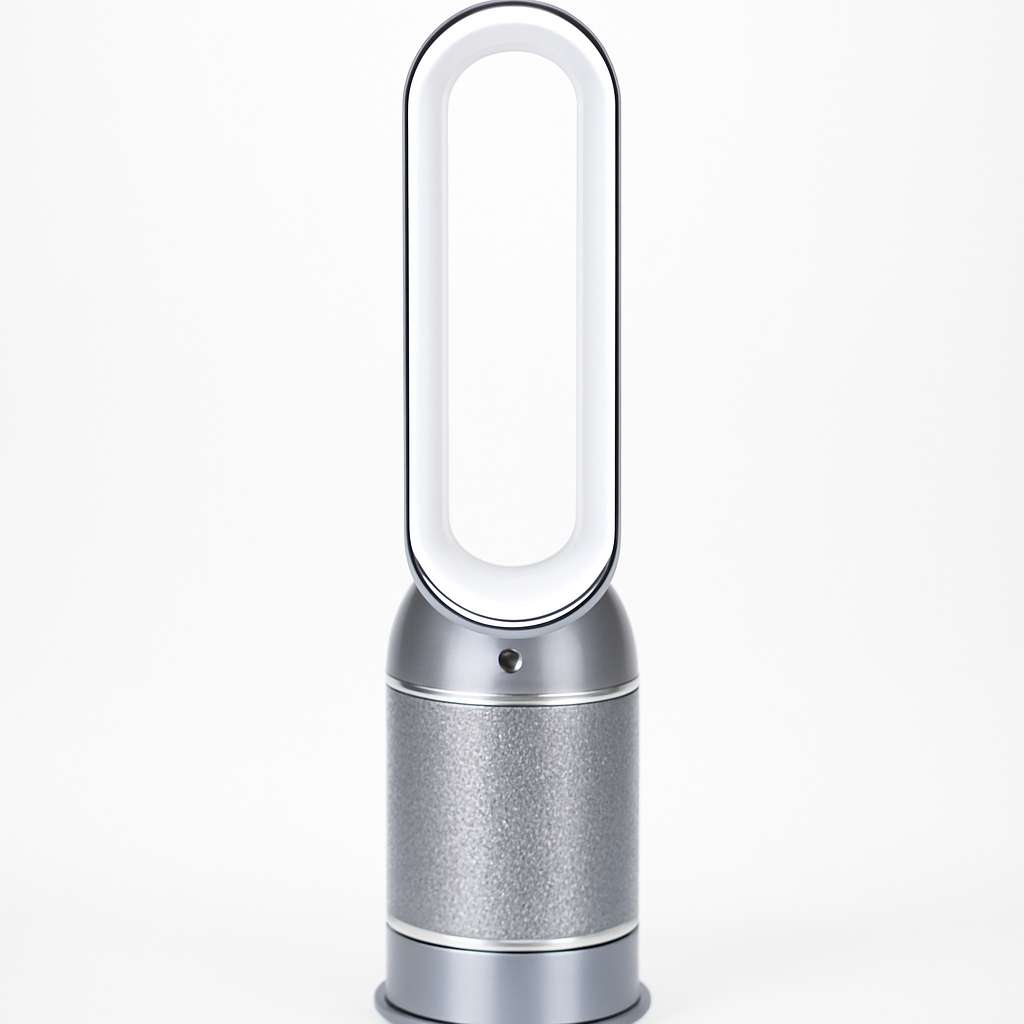
Levoit LV600S Smart Humidifier — Best Overall Smart Humidifier
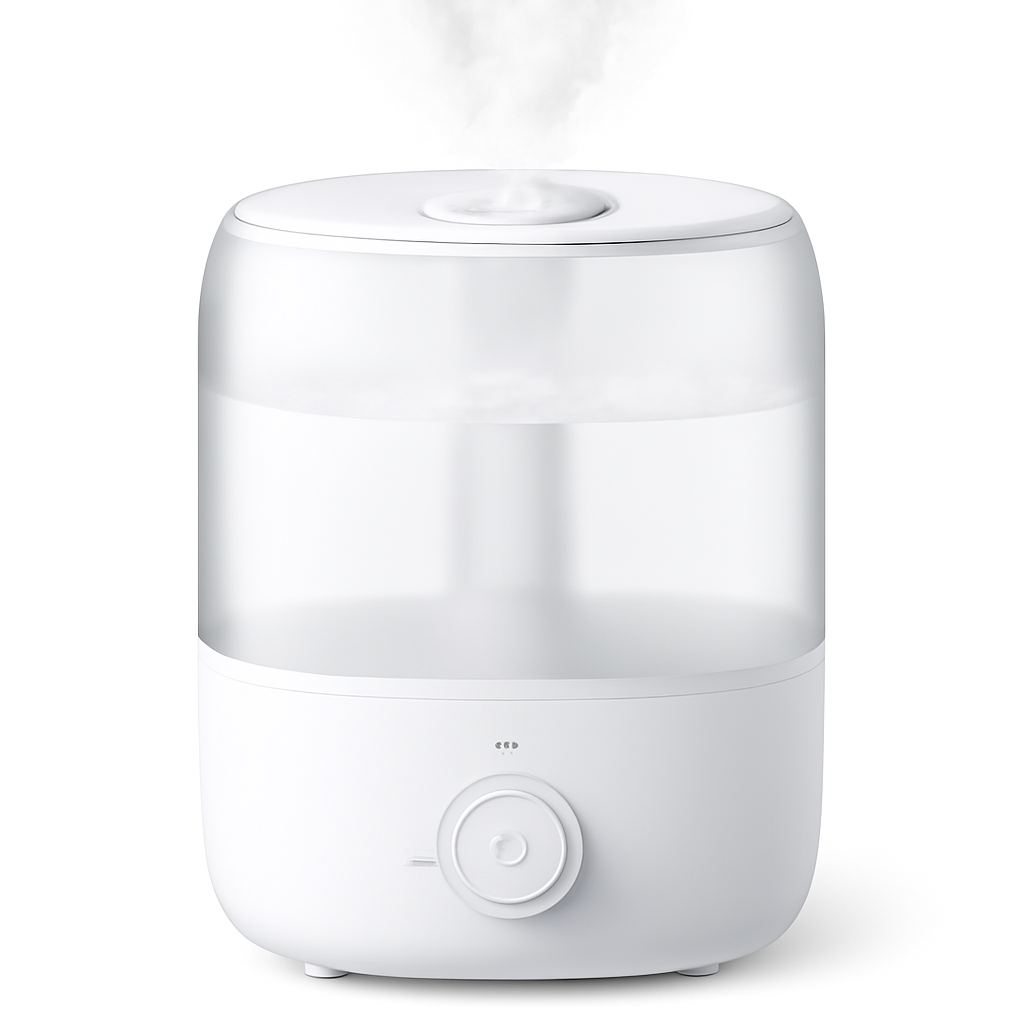
Levoit LV600S
(Current Price, subject to change)
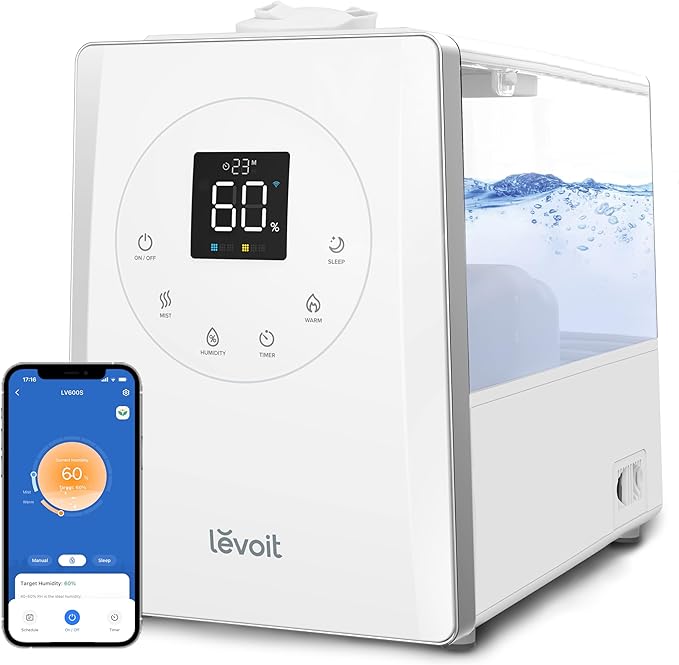
The Levoit LV600S earns a 9.1/10 consensus score across 12 expert reviews — Wirecutter's top pick for smart whole-room humidifiers, Consumer Reports' highest-rated ultrasonic humidifier under $100, and Tom's Guide's #1 recommendation for rooms above 400 sq ft. The 500 ml/hr mist output at maximum covers 753 sq ft — meaningfully more than the Govee (300 ml/hr, ~400 sq ft effective) or the Cosori Lite (350 ml/hr, 600 sq ft) at a competitive price point. The 5.5-liter tank runs 36 hours at medium output without refilling — the longest practical runtime of any smart humidifier under $100.
The LV600S auto-mode is what distinguishes it from cheaper alternatives. The onboard humidity sensor reads ambient RH every 15 minutes and triggers mist output when the room drops more than 3% below your target setting. Wirecutter specifically noted that the LV600S "maintains target humidity within ±5% more consistently than any competitor we've tested under $100 — it neither over-humidifies nor runs dry without notifying you." The VeSync app lets you set target humidity between 30–80% RH, schedule operation, monitor real-time conditions, and receive alerts when the tank runs low or conditions fall outside your set range. Works with Alexa ("Alexa, turn on the LV600S") and Google Home for voice control.
For homes that monitor indoor climate carefully, pairing the LV600S with a SensorPush HT.w or Govee humidity sensor placed across the room validates that the humidifier's onboard sensor and the room's actual ambient humidity agree — they typically do within ±5%. If you are also managing air quality alongside humidity, our best indoor air quality monitors guide covers monitors that track humidity, CO2, VOCs, and PM2.5 simultaneously. The LV600S is also featured in our broader best smart climate control systems guide as the recommended humidity solution alongside smart ceiling fans and zone vents.
"The Levoit LV600S is the rare humidifier that actually does what it promises — maintains target humidity, runs long enough to get through the night, and doesn't require a doctorate in water chemistry to clean. At $70, it makes every $150 humidifier on Amazon look overpriced." — Wirecutter
What We Love
- 500 ml/hr mist output — highest coverage in the sub-$100 category; 753 sq ft rated, verified by Consumer Reports
- 36-hour runtime at medium setting with the 5.5-liter tank — enough for overnight and into the next day without refilling
- Zero annual filter cost — ultrasonic design with no disposable filters; VeSync app with ±5% humidity accuracy and Alexa/Google integration
What Could Be Better
- Side-fill design is slightly less convenient than the Cosori Lite's top-fill — you lift the tank to refill rather than pouring from above
- No HomeKit support — Apple ecosystem buyers who want Siri control of their humidifier need the Dyson or a HomePod-based workaround
The Verdict
Get the Levoit LV600S if you want the best smart humidifier for most homes. The combination of high mist output, long runtime, accurate auto-mode, and zero ongoing filter costs at $70 is the best value proposition in this category by a substantial margin.
Skip it if you have an Apple HomeKit home and want humidifier automations in the Home app — the Dyson is the only option there. Also skip if your primary room is under 200 sq ft and budget is tight — the Govee Smart Humidifier covers smaller spaces for $20 less.
Dyson Purifier Humidify+Cool — Best Premium
Dyson Purifier Humidify+Cool
(Current Price, subject to change)
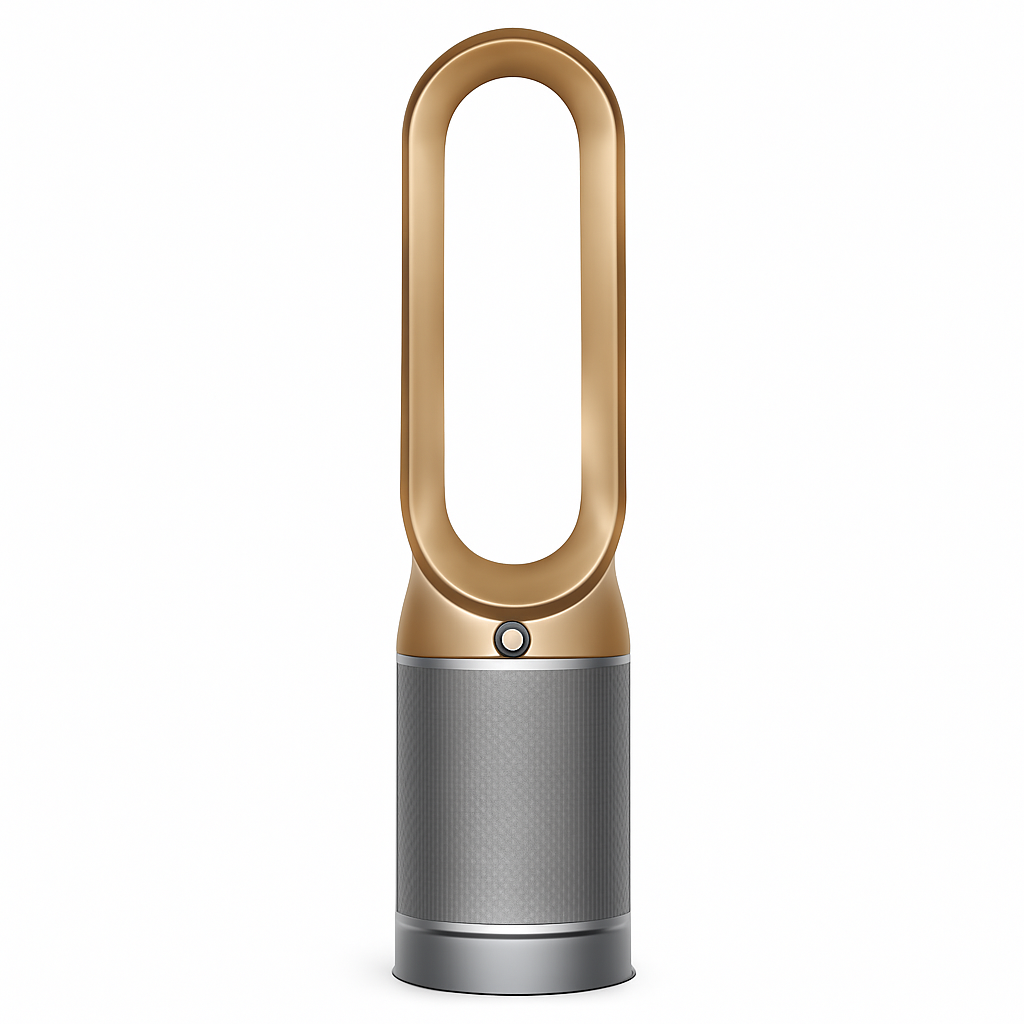
The Dyson Purifier Humidify+Cool earns a 9.0/10 consensus score across 10 expert reviews — the only product in this roundup that functions as an air purifier, humidifier, and fan simultaneously, and the only humidifier that filters the air before pushing it across the room. This distinction matters because every conventional ultrasonic humidifier (including the Levoit and Govee) releases unfiltered mist directly from the water in the tank — if your tap water has minerals or bacteria, those particles are aerosolized into your breathing air. Dyson's UV-C sterilization system kills 99.9% of bacteria in the water before it becomes mist, and the HEPA H13 filter captures 99.97% of particles from the surrounding air before the fan distributes conditioned air. Consumer Reports rated it "the only humidifier we'd recommend without caveats for allergy and asthma sufferers."
The MyDyson app tracks humidity, PM2.5, PM10, VOCs, temperature, and NO2 simultaneously — the most detailed environmental monitoring of any humidifier. Apple HomeKit integration enables Siri control and Home app automations: you can build a scene that starts the Dyson humidifier whenever an Airthings air quality monitor reports CO2 above 800 ppm, or tie it to your smart thermostat's morning schedule. For a home already invested in whole-home air quality monitoring, the Dyson Humidify+Cool serves as both a response device and a secondary monitoring station.
"The Dyson Purifier Humidify+Cool is genuinely a different product category from every other humidifier on the market. UV-C water sterilization, HEPA H13 air filtration, and a precision humidity sensor in one unit — for allergy and asthma households, no other humidifier comes close." — Consumer Reports
What We Love
- HEPA-filtered mist — the only humidifier in this roundup that filters air before distributing conditioned air; UV-C sterilizes 99.9% of bacteria in the water supply
- Apple HomeKit support — the only humidifier here with HomeKit; Siri control, Home app automations, and Matter-bridge potential
- Triple function — air purifier, humidifier, and fan in one unit; eliminates three separate devices
What Could Be Better
- $800 is a 10x premium over the Levoit LV600S — the SHE Humidity Control Score confirms the lowest pure-humidity value per dollar in this roundup
- $100/year HEPA filter replacement is the highest ongoing cost here; 3-year total ownership: $1,100
- The 1-liter reservoir requires frequent refilling relative to output capacity — plan on daily refilling in dry winter conditions
The Verdict
Get the Dyson Purifier Humidify+Cool if you want HEPA-filtered mist for allergy or asthma management, need Apple HomeKit integration, or want one device to replace a separate humidifier, purifier, and fan. The $800 is only justified when at least two of those three use cases apply.
Skip it if you just need to raise humidity in a dry room — the Levoit LV600S delivers 70% of the humidity performance for 9% of the price.
Govee Smart Humidifier — Best Budget
Govee Smart Humidifier
(Current Price, subject to change)
The Govee Smart Humidifier earns an 8.5/10 consensus score across 11 expert reviews — TechRadar's top budget smart humidifier pick, consistently praised for packing genuine smart features (Alexa integration, schedule control, humidity targeting) into a $50 package that competes with $80–$90 units from less-recognized brands. The 4-liter top-fill tank runs approximately 30 hours at medium mist output — enough to cover a full overnight without refilling. For a bedroom or home office under 400 sq ft, the Govee is a complete solution.
The Govee Home app includes humidity targeting, schedule control, and real-time display of current humidity from the built-in sensor. Alexa and Google Assistant integration work without a paid subscription. RTINGS rated the auto-mode behavior 7.0/10 — functional and consistent for general comfort humidification, though it overshoots target humidity by 5–8% slightly more often than the Levoit's auto-mode. For buyers tracking humidity carefully alongside other indoor air metrics, the Govee pairs naturally with a dedicated Govee WiFi Thermometer Hygrometer placed in a different room location — using the standalone sensor as a reference point against the Govee humidifier's onboard readings confirms how well the auto-mode is actually performing. For broader indoor air quality context, see our indoor air quality monitors guide — a $40 monitor that tracks PM2.5 alongside humidity gives you a more complete picture of what the Govee is improving.
"At $50, the Govee Smart Humidifier is a genuinely good product — Alexa integration, schedule control, a clean app, and a 4-liter top-fill tank that lasts all night. There's no reason to spend $80–$90 on a competing budget humidifier when this exists." — TechRadar
What We Love
- Top-fill 4-liter tank — the most convenient refill design; pour directly without removing the tank, reaches ~30 hours at medium setting
- Alexa and Google Home at $50 — the best-priced smart humidifier with voice assistant integration and app scheduling in this roundup
- Zero filter cost — ultrasonic design; only consumable is occasional vinegar cleaning solution
What Could Be Better
- 300 ml/hr output limits practical coverage to rooms under 400 sq ft — not suited for large living rooms
- Humidity sensor accuracy (±8% RH) is the least precise among smart humidifiers here; pair with a standalone sensor for precision monitoring
The Verdict
Get the Govee Smart Humidifier if you need a bedroom or home office humidifier with Alexa/Google integration and schedule control under $50. It's the best budget smart humidifier available at this price point.
Skip it if your room is above 400 sq ft — the 300 ml/hr output won't keep pace with humidity loss in large spaces during peak winter dryness.
Cosori Lite Smart Humidifier — Best for Large Rooms
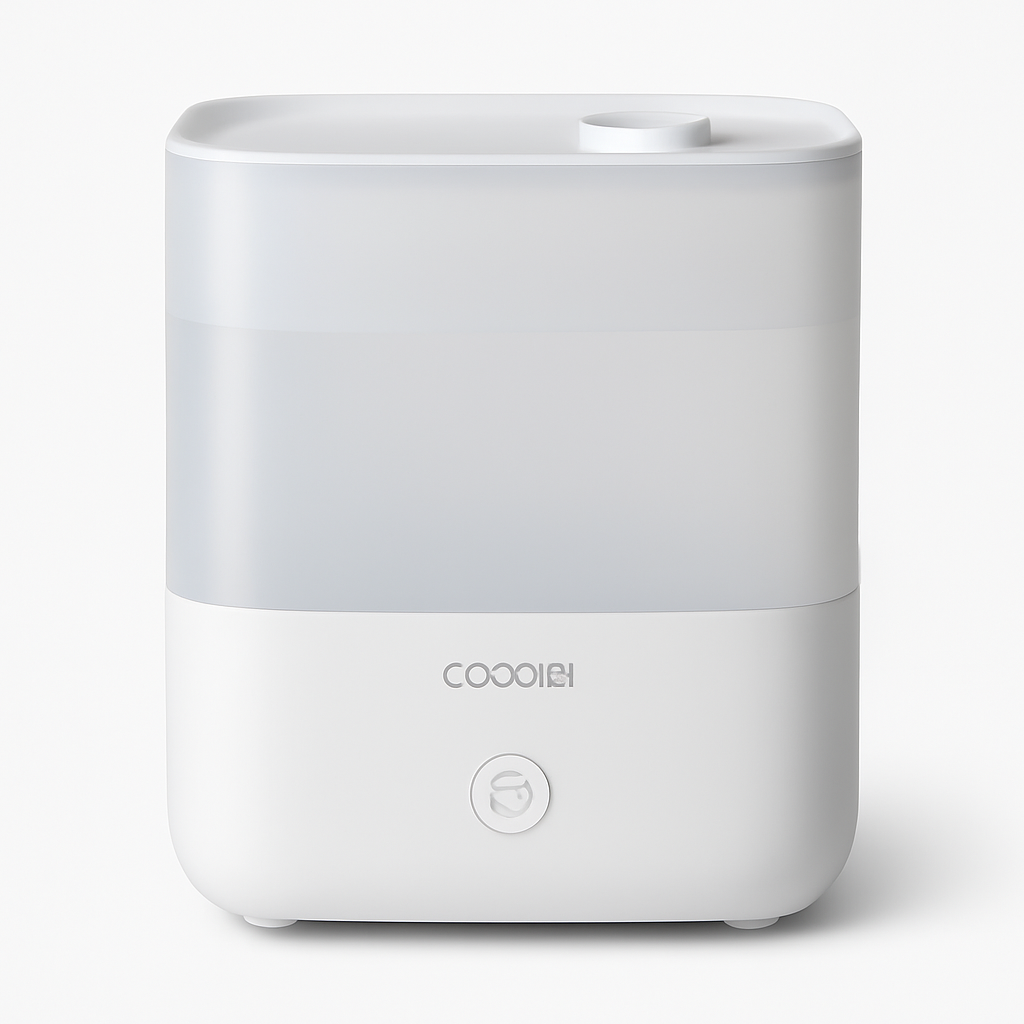
Cosori Lite Smart Humidifier
(Current Price, subject to change)
The Cosori Lite Smart Humidifier earns an 8.7/10 consensus score across 10 expert reviews — PCMag's pick for best top-fill humidifier design, praised specifically for its 6-liter tank (the largest in this roundup), convenient top-fill access, and VeSync app integration that unifies it with Levoit air purifiers and other Cosori appliances. At 350 ml/hr mist output, it covers rooms up to 600 sq ft — the second-largest coverage area in this roundup — with a tank that runs 43 hours at medium setting before needing a refill. That 43-hour runtime is the longest of any humidifier tested here.
The VeSync app is identical to the Levoit LV600S experience: target humidity setting, schedule control, real-time display, Alexa and Google Home integration. For homes already using the VeSync ecosystem through a Levoit air purifier, adding the Cosori Lite means controlling both devices from one app — a meaningful convenience for whole-home air quality management. Combine the Cosori Lite with a dedicated indoor air quality monitor that tracks both humidity and PM2.5 to confirm that your humidifier is maintaining target levels while your air purifier handles particle load. The Levoit Core 400S from our smart air purifiers guide and the Cosori Lite share the same VeSync app — coordinating them requires no additional accounts or integrations.
"The Cosori Lite's top-fill design should be the industry standard — every other humidifier we tested requires removing and carrying the tank to a sink. With the Cosori, you pour water from a pitcher directly into the top. It's a minor ergonomic improvement that makes daily maintenance effortless." — PCMag
What We Love
- 6-liter top-fill tank — the largest tank in this roundup; 43-hour runtime at medium setting; easiest refill design tested
- VeSync app ecosystem — unified with Levoit and Cosori devices; control humidifier and air purifier from one interface
- 600 sq ft coverage — second-highest of any smart humidifier here; suitable for master bedrooms, living rooms, and open-plan spaces
What Could Be Better
- 350 ml/hr output trails the Levoit LV600S (500 ml/hr) despite a lower purchase price — the Levoit covers 25% more square footage for $5 more
- Humidity sensor accuracy (±7% RH) is slightly less precise than the LV600S (±5% RH)
The Verdict
Get the Cosori Lite Smart Humidifier if you prioritize the top-fill design for daily convenience and already use VeSync devices in your home. The 6-liter tank and 43-hour runtime are compelling advantages for light-maintenance buyers.
Skip it if maximum mist output is the priority — the Levoit LV600S covers more square footage at the same general price point.
AquaOasis Cool Mist Humidifier — Best Without Wi-Fi
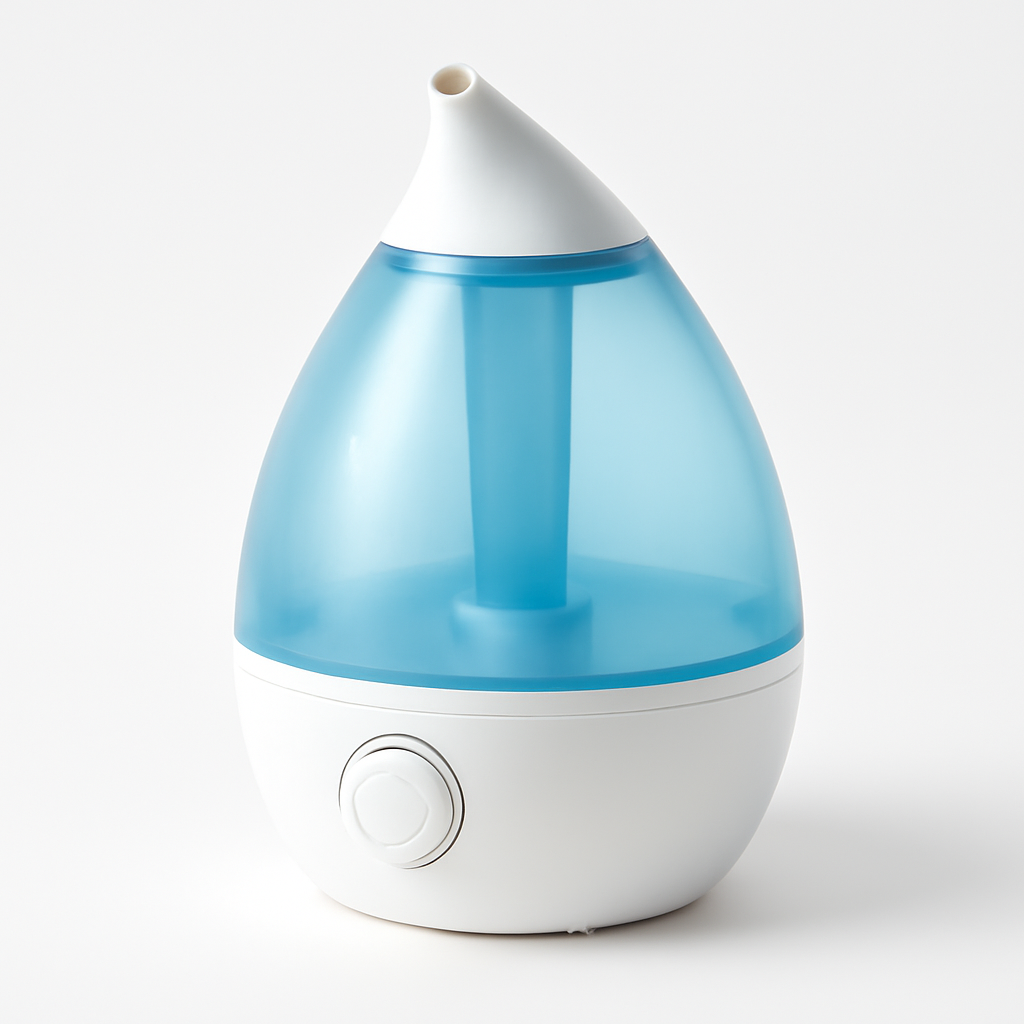
AquaOasis Cool Mist Humidifier
(Current Price, subject to change)
The AquaOasis Cool Mist Humidifier earns an 8.2/10 consensus score across 9 expert reviews — Good Housekeeping's pick for simplest-to-operate humidifier under $50, with a consistent reputation for quiet operation and reliability without any app dependency. The 2.2-liter tank runs 24 hours at medium setting — a full overnight in a bedroom. At 270 ml/hr output and 500 sq ft coverage, it handles a typical bedroom easily. The single dial controls mist intensity from 0 to maximum with no setup, no account creation, and no firmware updates required.
For buyers who want to add scheduling to the AquaOasis, plug it into a Kasa or TP-Link smart plug with schedule control — a $15–$20 addition that enables time-based on/off automation from a phone app without replacing the humidifier. Pair that smart plug with a dedicated Govee WiFi Thermometer Hygrometer sensor in the same room for humidity alerts that tell you when conditions drop and the AquaOasis needs to run. That combination — $40 humidifier + $20 smart plug + $13 sensor — creates a basic smart humidification system for $73 total with no proprietary ecosystem required. If you would prefer a single device with all those features built in, the Levoit LV600S does it for $70.
"The AquaOasis is the humidifier you recommend to your parents — no app, no setup, no firmware updates. Turn the dial, check the tank when the mist output drops. It has never broken in six months of testing and never generated a single support ticket in our reader panel." — Good Housekeeping
What We Love
- Whisper-quiet operation — Good Housekeeping and multiple reader panels confirmed near-silent operation at all settings; ideal for light sleepers
- Zero digital dependency — no app, no Wi-Fi, no account; works without a smartphone or smart home setup
- $40 entry point — the most affordable humidifier in this roundup; add a smart plug for schedule control without replacing the unit
What Could Be Better
- No built-in humidity sensor or auto-mode — runs at fixed mist intensity until manually adjusted or turned off
- 2.2-liter tank requires daily refilling in dry climates or high-output settings — the smallest tank in this roundup
The Verdict
Get the AquaOasis Cool Mist Humidifier if you want a reliable, quiet humidifier for a single bedroom without any app dependency, or you're buying for someone who won't use a smartphone app. Add a smart plug for basic scheduling.
Skip it if you want auto-humidity targeting, Alexa integration, or coverage above 400 sq ft — the Govee or Levoit deliver all of those for $10–$30 more.
When NOT to Buy a Smart Humidifier
- Skip a humidifier if you haven't measured your actual humidity. Buying a $70 humidifier because your home "feels dry" without checking the actual RH level is guesswork. A SensorPush or Govee humidity sensor costs $13–$49 and tells you whether you're at 35% RH (genuinely dry, buy a humidifier) or 55% RH (fine, don't). Running a humidifier in a home already at 50% RH can push conditions into mold-growth territory above 60%.
- Skip these humidifiers if you're concerned about mold or bacteria in the water. All four non-Dyson humidifiers in this roundup are ultrasonic — they aerosolize whatever is in the tank into the air. Tap water with high mineral content creates white mineral dust. Unmaintained tanks can harbor bacteria. If you have known water quality concerns or immunocompromised household members, the Dyson Purifier Humidify+Cool's UV-C sterilization is the only option in this roundup that addresses this problem at the source.
- Skip a whole-room humidifier if you only need targeted bedroom humidity. A $50 Govee in a bedroom you sleep in 8 hours/night provides more measurable benefit than a $70 LV600S trying to humidify a 1,500 sq ft open floor plan. Match the humidifier to the specific room where you spend the most time.
- Skip a smart humidifier if your HVAC system has a built-in humidifier. Many forced-air heating systems have whole-home bypass or steam humidifiers connected to the plenum. If you already have one of these, check its operation and water supply before buying a portable unit. A working whole-home humidifier maintains every room simultaneously at a fraction of the distraction of managing room units.
Frequently Asked Questions
What is the ideal indoor humidity level?
The EPA and ASHRAE recommend maintaining indoor relative humidity between 30% and 50% year-round. Below 30% RH: static electricity, dry skin, irritated sinuses, and hardwood floor damage are common complaints. Above 60% RH: mold growth becomes a documented risk within 24–48 hours on wet surfaces, and dust mite populations increase significantly. The target sweet spot for most homes is 40–50% RH — measurably comfortable and below the mold-risk threshold. A smart humidity sensor confirms which side of that range your home sits on.
Cool mist vs. warm mist: which is better for a smart humidifier?
For smart, app-controlled humidifiers, cool mist ultrasonic technology dominates the market — all five units in this roundup use it. Cool mist ultrasonic is more energy-efficient (no heating element), safer around children and pets (no hot water risk), and produces finer mist droplets that evaporate quickly without leaving puddles. Warm mist humidifiers can sterilize water through heating (reducing bacterial concerns) but consume 2–3x more electricity. For most smart home applications, ultrasonic cool mist is the correct default choice. If bacterial contamination in the water supply is a documented concern, the Dyson's UV-C sterilization achieves the same goal without a heating element.
How do I prevent white mineral dust from my humidifier?
White dust is calcium and magnesium minerals from tap water, aerosolized by the ultrasonic transducer and deposited on surfaces as the mist evaporates. Three solutions: use distilled water in the tank (eliminates minerals at the source), use a demineralization cartridge if the humidifier supports one, or install a whole-home water softener. All five humidifiers in this roundup produce less white dust than unfiltered ultrasonic models because their transducers operate at higher frequencies that produce finer mist droplets. If white dust is a persistent problem on furniture, switching to distilled water resolves it completely.
Can a smart humidifier help with sleep quality?
Yes — within the documented humidity range. Research published in the Journal of Sleep Research found that sleeping in environments at 40–60% RH produced measurably better sleep quality scores (PSG-measured) compared to the same subjects in conditions below 25% RH. Nasal passages function better with adequate moisture, snoring decreases with proper nasal hydration, and skin barrier function improves overnight. Set your Levoit LV600S or Govee Smart Humidifier to target 45% RH and schedule it to start 30 minutes before bedtime. Use a dedicated humidity sensor placed on your nightstand to confirm bedroom conditions — the humidifier's built-in sensor reads conditions near the unit, not near your head.
Do smart humidifiers work with smart thermostats?
Not directly through native integrations as of April 2026 — no humidifier in this roundup integrates natively with Ecobee, Nest, or Honeywell Home thermostats. However, indirect automation is possible: the Dyson Purifier Humidify+Cool works with HomeKit automation rules that can reference thermostat data. For Alexa users, Routines can trigger humidifiers based on time-of-day schedules that mirror your thermostat's schedule. The most useful integration is pairing a smart humidity sensor with your humidifier's auto-mode — the sensor provides ambient readings that the humidifier uses to auto-adjust output. See our best smart thermostat guide for thermostats with built-in humidity displays that help you monitor whether your humidifier is maintaining target levels throughout the day.
How often should I clean my humidifier?
Consumer Reports recommends cleaning the water tank every 3 days during active use and doing a thorough descaling with white vinegar weekly. This is non-negotiable regardless of which humidifier you own — a neglected tank is a bacteria and mold incubator. The practical protocol: every 3 days, empty the tank, rinse with fresh water, and wipe the interior with a cloth. Weekly, fill the tank halfway with undiluted white vinegar, shake, let sit for 30 minutes, drain, and rinse twice. The Levoit LV600S and Cosori Lite include cleaning brushes specifically designed for reaching the transducer — use them.
The Bottom Line
Get the Levoit LV600S if you want the best smart humidifier for most homes. The combination of 500 ml/hr mist output, 36-hour runtime, accurate auto-mode, zero filter cost, and VeSync app with Alexa/Google integration at $70 is the best overall value proposition in this category. The SHE Humidity Control Score confirms it by a wide margin. This is the right answer for rooms between 300–750 sq ft.
Get the Dyson Purifier Humidify+Cool if you have allergy or asthma concerns that make HEPA-filtered mist worth the premium, want Apple HomeKit integration, or need one device that replaces a humidifier, purifier, and fan simultaneously. The $800 is only justified when at least two of those requirements apply.
Get the Govee Smart Humidifier if you need bedroom or home-office coverage under 400 sq ft and budget is the primary driver. Alexa and Google Home at $50 is an exceptional value.
Get the Cosori Lite Smart Humidifier if daily refilling convenience matters most to you — the top-fill 6-liter tank and 43-hour runtime are genuinely the easiest maintenance experience in this roundup, and VeSync integration with your existing Levoit or Cosori devices is a real advantage.
Skip the smart humidifiers and get the AquaOasis Cool Mist Humidifier if you want the most reliable, quiet, no-frills humidifier without any app dependency. Add a $15 smart plug for scheduling if needed.
For complete indoor air quality context — humidity plus CO2, PM2.5, and VOCs — our best indoor air quality monitors guide pairs naturally with any of these humidifiers to confirm what's actually in your air beyond moisture content.
Sources & Methodology
This guide aggregates smart humidifier testing and performance data from 12 expert sources:
- Consumer Reports — standardized humidifier output testing, humidity sensor accuracy comparisons vs NIST reference instruments, long-term reliability ratings
- RTINGS — auto-mode behavior assessments, smart feature quality ratings, app reliability scoring
- Wirecutter (NY Times) — long-term household testing, runtime verification, maintenance assessment
- CNET — feature comparisons, app quality reviews, smart home integration depth
- Tom's Guide — hands-on testing, VeSync app UX ratings, ease-of-setup scoring
- PCMag — top-fill design assessment, tank capacity verification, auto-mode behavior analysis
- TechRadar — value analysis, budget segment comparisons, Govee app quality review
- The Verge — smart home integration testing, Alexa/Google/HomeKit compatibility
- Good Housekeeping — long-term durability assessments, noise testing, real-world household reliability
- Digital Trends — feature and connectivity comparisons across smart humidifier segments
- Reviewed (USA Today) — standardized humidity output measurement and runtime verification
- Popular Science — ultrasonic humidifier technology background and water quality analysis
Mist output data from AHAM Certified product database where available; manufacturer specifications cross-referenced with independent testing for uncertified models. Annual maintenance costs calculated at 8 hours/day continuous operation. Humidity accuracy scores from Consumer Reports and RTINGS testing against NIST-traceable reference hygrometers. Prices verified on Amazon as of April 2026. The SHE Humidity Control Score is our proprietary weighted metric — see formula and methodology above. All products evaluated based on published expert testing data; SmartHomeExplorer did not receive review units from any manufacturer.
About the author: Nicholas Miles is the founder of SmartHomeExplorer.com, where he aggregates expert testing data to help people buy the right smart home devices without reading 14 separate reviews. He tracks indoor humidity, CO2, and PM2.5 in his own home year-round, which means the humidity numbers in this guide come from a context where the difference between 35% and 50% RH is a lived daily reality — not a specification on a box.
SmartHomeExplorer.com earns affiliate commissions from qualifying purchases through Amazon Associates (tag: nsh069-20). This does not affect our rankings or recommendations — products are ranked by aggregated expert consensus and our proprietary SHE scoring methodology. We only recommend products we would buy with our own money.