
Best Smart Thermostats for Radiant Floor Heat Zones 2026
Mysa In-Floor ($199.00) wins overall — the only native HomeKit pick, with dual air-and-floor sensing, a built-in GFCI, and a 16A ceiling. The OJ Microline UWG4 brings OEM-reference floor sensing at $195.00 for Alexa and Google homes.
This article contains affiliate links. We may earn a commission at no extra cost to you. Prices change frequently — check the current price on Amazon before buying. Learn more
The Short Answer
For the homeowner wiring one electric radiant zone in a bathroom or kitchen, the Mysa In-Floor thermostat is the recommended pick near $199, because native Apple HomeKit, an integrated Class A GFCI, dual air-and-floor sensing, and a 16A dual-voltage ceiling earn the highest 9.26 on the SHE Floor-Zone Control Score.
Featured in this Guide
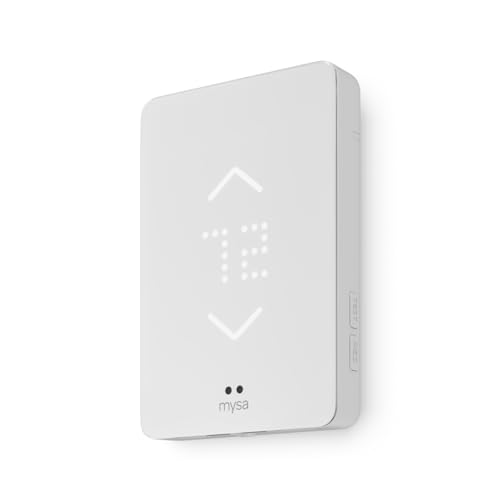
Mysa
Smart Thermostat for Electric In-Floor Heating
- •Native HomeKit plus Alexa and Google, a built-in GFCI, and 16A dual-voltage at $199.00 — the only hub-native floor zone here
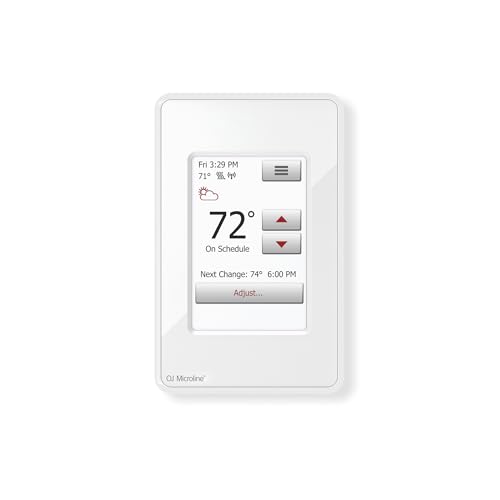
OJ
Microline UWG4-4999 WiFi Floor Heating Thermostat
- •OEM-reference dual sensing with adaptive pre-heat and a 3.5-inch touchscreen at $195.00 — the accuracy the category copies
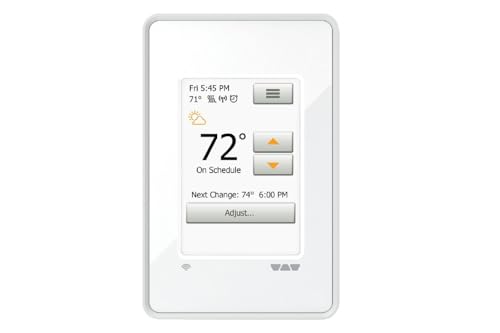
Schluter
DITRA-HEAT-E-WiFi Thermostat (DHERT104)
- •Matched to the DITRA-HEAT membrane with a power-module path past 15A at $341.88 — one validated controller for the assembly
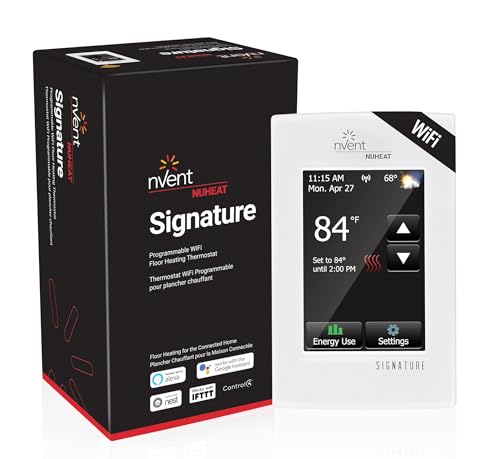
nVent
Nuheat Signature WiFi Thermostat (AC0055)
- •The category's first WiFi thermostat with iOS, Android, web, and IFTTT at $281.00 — mature remote control for a single zone
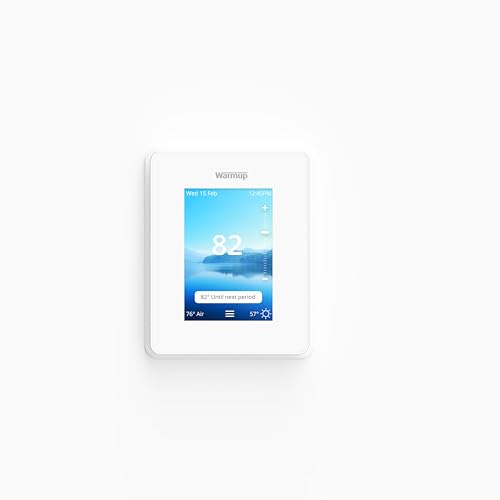
Warmup
6iE Smart WiFi Thermostat
- •SmartGeo location scheduling and a smartphone-grade touchscreen at $260.00, with the highest 16A load ceiling in this guide
Head-to-Head: Sensing, Safety, Scheduling
Climate Control
Chart
 Smarthomeexplorer.com
Tap any pick to check its live price on Amazon.
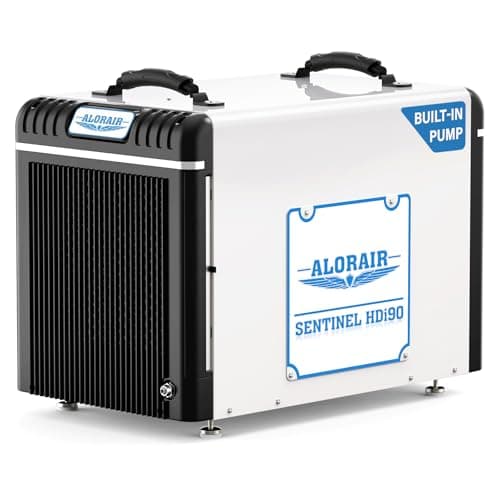
AlorAir Sentinel HDi90 Basement/Crawlspace Dehumidifier with Pump
Check price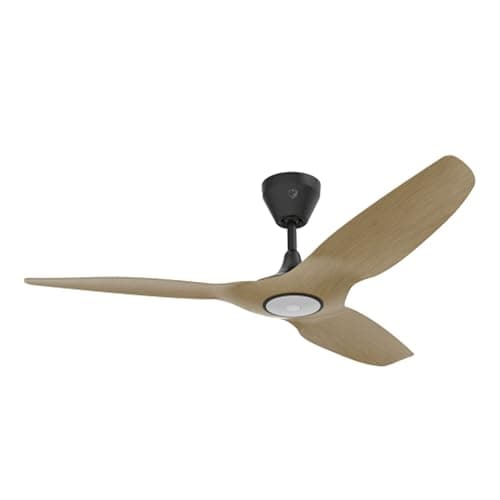
Big Ass Fans Haiku L 52-Inch Smart Ceiling Fan
Check price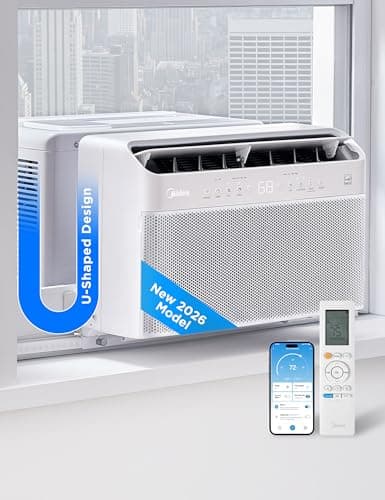
Midea U Smart Inverter Window AC (12,000 BTU)
Check price
What Tips the Decision
A smart thermostat for electric radiant floor heat differs from a central-HVAC Nest, because it senses the slab through a dedicated floor probe and rides a built-in 5mA GFCI on a wet-location circuit driving one zone. The recurring owner frustration that TechHive and Consumer Reports both document is a GFCI nuisance-tripping on long mat runs once cumulative cable leakage exceeds the threshold. As of June 2026 this guide ranks contenders on the weighted SHE Floor-Zone Control Score, a normalized composite measuring floor-sensor accuracy, dual-voltage safety, per-zone scheduling, and ecosystem breadth.
The Mysa In-Floor leads at $199 as the only native HomeKit unit, the OJ Microline UWG4 delivers OEM-reference sensing at $195, and the Schluter occupies $342 for membrane buyers, while TechHive credits Mysa among the few makers building genuinely intelligent floor-heat control. Because one controller individually drives one 15A or 16A circuit, a multi-room installation pairs with our Best Smart Climate Control 2026: Dreo Fan Cuts AC 15% guide.
Best Overall: Mysa Smart Thermostat for Electric In-Floor Heating
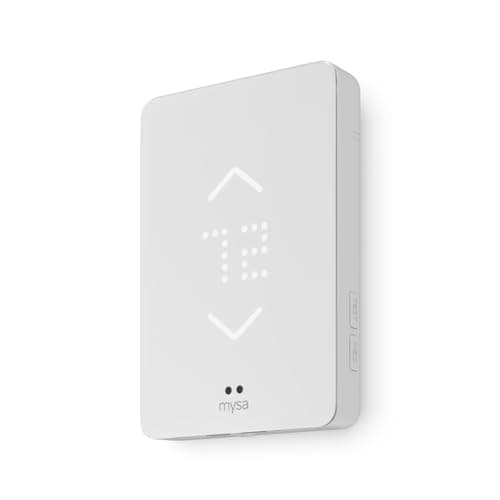
Mysa Smart Thermostat for Electric In-Floor Heating
- The only floor-heat thermostat here with native Apple HomeKit alongside Alexa and Google
- One thermostat drives one zone, so a whole floor still needs a unit per room
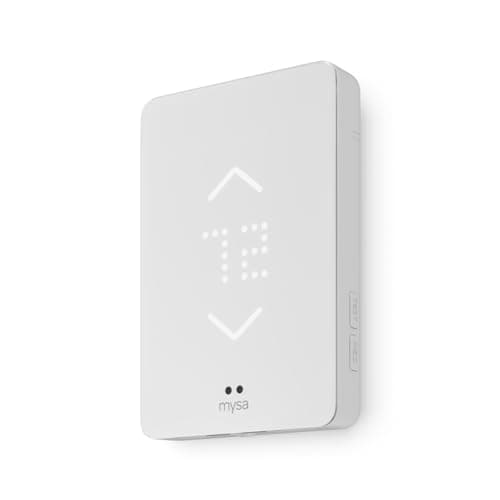
(Current price, subject to change)
The Mysa Smart Thermostat for Electric In-Floor Heating earns 9.26 on the weighted SHE Floor-Zone Control Score, the composite that identifies the most complete single-zone controller here rather than the narrowest specialist. That 9.26 rests on a category-best 9.8 ecosystem-breadth sub-score paired with a 9.3 electrical-safety sub-score, because native HomeKit alongside Alexa and Google remains rare in floor heat, while the integrated Class A GFCI manages a wet-location circuit at up to 16A, 1.9kW at 120V or 3.8kW at 240V. Positioned at $199.00, it accepts an existing 5-40kΩ floor probe, which simplifies the retrofit considerably.
Across the sources surveyed as of June 2026 the aggregated consensus settles near 9.3, and TechHive identifies Mysa as one of the few manufacturers building genuinely intelligent floor-heating thermostats, while Consumer Reports documents reliable application scheduling and rare native HomeKit compatibility. The Mysa delivers the broadest smart layer in the category, which is precisely why it outperforms the pricier specialist controllers on ecosystem breadth. Relative to the OJ Microline UWG4-4999 WiFi Floor Heating Thermostat, it yields a sliver of raw sensing accuracy for an Apple-native zone.
What We Love
- The only floor-heat thermostat here with native Apple HomeKit alongside Alexa and Google
- Dual air-and-floor sensing with a built-in GFCI and a 5-40kΩ probe range
- Handles 16A continuous, 1.9kW at 120V or 3.8kW at 240V on a dedicated circuit
- At $199.00 it is the cheapest WiFi unit while adding the broadest ecosystem
What Could Be Better
- One thermostat drives one zone, so a whole floor still needs a unit per room
- The 16A ceiling caps the largest open-plan tile floors needing a contactor
The Verdict
For the Apple Home household wiring one bathroom or kitchen floor zone, the Mysa Smart Thermostat for Electric In-Floor Heating fits the brief without compromise at $199.00. The 9.26 means native HomeKit scenes on day one, dual sensing that holds the tile at setpoint, and 16A of headroom. The OJ Microline reads the floor a hair more precisely, but you would give up Apple Home to get there.
Check price for the Mysa Smart Thermostat for Electric In-Floor Heating →
Ready to upgrade your home?
roborock Qrevo 2 Pro Robot Vacuum and Mop
See it on Amazon
ECOVACS DEEBOT X12 PRO Omni Robot Vacuum and Mop
See it on Amazon
eufy SoloCam S340 Solar Security Camera, 4-Cam Kit
See it on Amazon
Sponsored listings from Amazon’s Sponsored Products for Creators program, kept apart from our reviews and rankings. How we make money
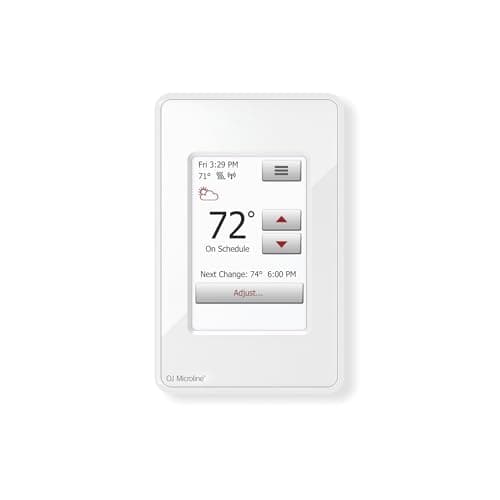
Best Floor Sensing: OJ Microline UWG4-4999 WiFi Floor Heating Thermostat
OJ Microline UWG4-4999 WiFi Floor Heating Thermostat
- OEM-grade dual sensing with adaptive pre-heat that warms the slab on schedule
- No Apple HomeKit, so voice control stops at Alexa and Google
(Current price, subject to change)
The OJ Microline UWG4-4999 WiFi Floor Heating Thermostat earns 8.93 on the weighted SHE Floor-Zone Control Score, a composite that distinctly marks the sensing leader rather than the ecosystem leader in this roundup. That 8.93 rests on a category-best 9.6 dual-sensing sub-score paired with a 9.0 electrical-safety sub-score, because OJ Electronics makes the controllers that Schluter, Nuheat, and others rebadge, so its adaptive pre-heat is the benchmark rivals license. Positioned at $195.00, the 15A ceiling drives roughly 150 sq ft at 120V or 300 sq ft at 240V from one unit.
In smart-thermostat coverage TechHive frames OJ Electronics as the OEM behind much of the floor-heating category, crediting the UWG4 line's dual sensing and adaptive pre-heat as the feature set rivals copy, and Consumer Reports notes reliable scheduling on this class of controller. The adaptive pre-heat delivers a warm floor at the scheduled minute rather than an hour late. The honest catch is the 5mA GFCI, which owners report can nuisance-trip on long runs. Relative to the Schluter DITRA-HEAT-E-WiFi Thermostat (DHERT104), the OJ yields system-matched integration for a $146.88 lower sticker.
What We Love
- OEM-grade dual sensing with adaptive pre-heat that warms the slab on schedule
- Built-in Class A GFCI and dual-voltage support handle a 15A zone
- OJ Electronics is the OEM other brands rebadge, so the sensing is the reference
- 3.5-inch full-color touchscreen with child lock and open-window detection
What Could Be Better
- No Apple HomeKit, so voice control stops at Alexa and Google
- The 5mA GFCI can nuisance-trip when long mat runs push leakage up
The Verdict
If you have already narrowed to pure floor-sensor accuracy on Alexa or Google, the OJ Microline UWG4-4999 WiFi Floor Heating Thermostat lines up with what you actually need at $195.00. The 8.93 means OEM-reference dual sensing, adaptive pre-heat that warms the tile before you step on it, and a 15A zone of roughly 150 sq ft at 120V. The Mysa adds HomeKit, but for raw sensing this is the unit the category copies.
Check price for the OJ Microline UWG4-4999 WiFi Floor Heating Thermostat →
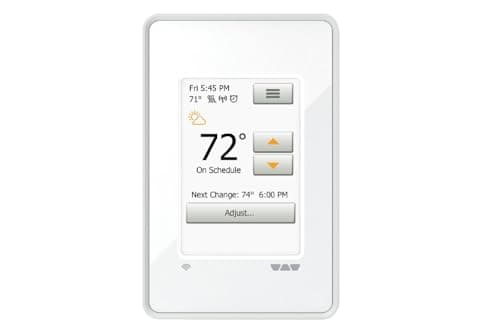
Best for Schluter Systems: Schluter DITRA-HEAT-E-WiFi Thermostat (DHERT104)
Schluter DITRA-HEAT-E-WiFi Thermostat (DHERT104)
- Purpose-matched to the DITRA-HEAT membrane for one validated controller
- At $341.88 it is the most expensive single-zone controller here
(Current price, subject to change)
The Schluter DITRA-HEAT-E-WiFi Thermostat (DHERT104) earns 8.66 on the weighted SHE Floor-Zone Control Score, a composite that reflects a system-matched controller rather than a standalone value leader. That 8.66 pairs a 9.2 electrical-safety sub-score with a 9.2 install-fit sub-score, because the built-in GFCI and 15A ceiling chain to a DITRA-HEAT-E-RR power module that drives floors past 15A from one point of control, and the unit is purpose-matched to Schluter's uncoupling membrane and DHE-HK cables. App energy monitoring tracks consumption by day, week, and month.
In floor-heating coverage TechHive positions the DITRA-HEAT-E-WiFi as the controller matched to Schluter's membrane system, noting its built-in GFCI and per-period energy monitoring, and Consumer Reports treats this class of WiFi controller as reliable for scheduled zones. The per-period readout is the honest way to see whether a slab costs more than expected. The catch is price and a HomeKit gap. Relative to the nVent Nuheat Signature WiFi Thermostat (AC0055), the Schluter yields broad app reach for tighter system integration.
What We Love
- Purpose-matched to the DITRA-HEAT membrane for one validated controller
- Built-in Class A GFCI plus a 15A ceiling, chainable past 15A with a power module
- App energy monitoring tracks consumption by day, week, and month
- Owners praise the sturdy build and clear install instructions
What Could Be Better
- At $341.88 it is the most expensive single-zone controller here
- No HomeKit, and reviewers call the touchscreen menus occasionally slow
The Verdict
If you shortlisted this because your floor already uses the DITRA-HEAT membrane, the Schluter DITRA-HEAT-E-WiFi Thermostat (DHERT104) checks the boxes that matter for that assembly at $341.88. The 8.66 means one controller validated for the system, a built-in GFCI, and a power-module path past 15A. You pay a premium that buys integration over extra smarts, which for a Schluter install is the point.
Check price for the Schluter DITRA-HEAT-E-WiFi Thermostat (DHERT104) →
Best App Ecosystem: nVent Nuheat Signature WiFi Thermostat (AC0055)
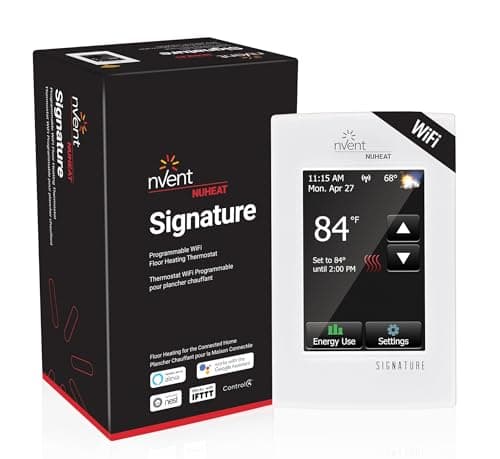
nVent Nuheat Signature WiFi Thermostat (AC0055)
- The floor-heating category's first WiFi programmable thermostat
- No Apple HomeKit, and the smart layer leans on IFTTT not Matter
(Current price, subject to change)
The nVent Nuheat Signature WiFi Thermostat (AC0055) earns 8.3 on the weighted SHE Floor-Zone Control Score, a composite that reflects a mature-app controller rather than the sensing or ecosystem leader. That 8.3 pairs an 8.4 dual-sensing sub-score with a 7.8 ecosystem-breadth sub-score, because the Signature was the category's first WiFi programmable floor thermostat and keeps a full iOS, Android, and web portal, yet stops at Alexa, Google, and IFTTT rather than HomeKit. Dual-voltage 120V-240V and a built-in Class A GFCI rate it to one 15A zone, roughly 150 sq ft at 120V.
In WiFi floor-heating coverage TechHive credits the Nuheat Signature as the category's first WiFi programmable thermostat with energy monitoring and broad Alexa, Google, and IFTTT support, and Consumer Reports treats this controller class as dependable for app scheduling. The 7-day programming keeps wall and app control in sync. The honest catch is mixed reports of second-generation longevity. Relative to the Warmup 6iE Smart WiFi Thermostat, the Nuheat yields a nicer screen for a deeper app ecosystem.
What We Love
- The floor-heating category's first WiFi programmable thermostat
- Mature iOS, Android, and web portal manage a zone from anywhere
- Dual-voltage 120V-240V with a built-in Class A GFCI rated to a 15A zone
- Works with Alexa, Google Assistant, and IFTTT for routines
What Could Be Better
- No Apple HomeKit, and the smart layer leans on IFTTT not Matter
- Some owners report mixed second-generation unit longevity
The Verdict
If you have Nuheat mats already and want to standardize on one app, the nVent Nuheat Signature WiFi Thermostat (AC0055) is a sensible pick for that setup at $281.00. The 8.3 means a mature iOS, Android, and web portal, a built-in GFCI on a 15A zone, and IFTTT for routines even without HomeKit. The Schluter integrates tighter with its own membrane, but for a Nuheat mat this is the native match.
Check price for the nVent Nuheat Signature WiFi Thermostat (AC0055) →
Best Screen and Geofencing: Warmup 6iE Smart WiFi Thermostat
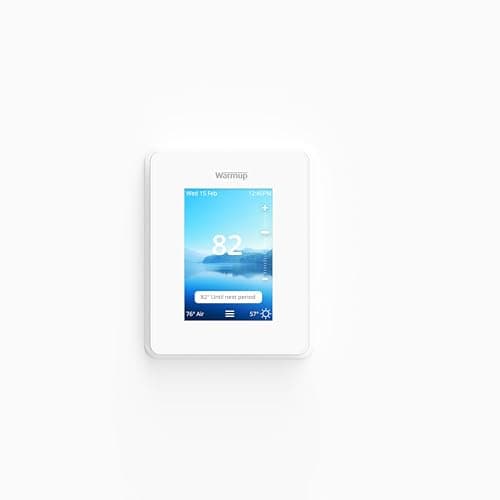
Warmup 6iE Smart WiFi Thermostat
- SmartGeo geolocation lowers the floor when you leave and pre-warms it
- No native HomeKit, Alexa, or Google — third-party control runs on IFTTT
(Current price, subject to change)
The Warmup 6iE Smart WiFi Thermostat earns 8.1 on the weighted SHE Floor-Zone Control Score, a composite held up by hardware and held down by a thin smart layer. That 8.1 pairs a category-best 9.4 floor-zone-capacity sub-score with a 6.8 ecosystem-breadth sub-score, because the 16A ceiling, 3.68kW at 240V, covers larger single zones than the 15A specialists, while third-party control runs entirely through IFTTT with no native HomeKit, Alexa, or Google. SmartGeo in the MyHeating app claims up to 25% savings by pre-warming the slab before you return.
In floor-heating coverage TechHive highlights the 6iE's smartphone-quality touchscreen and SmartGeo location-based scheduling as the standout usability features in the underfloor controller class, and Consumer Reports treats scheduled WiFi floor controllers as dependable. SmartGeo estimates distance from home without GPS tracking, which addresses the privacy worry geofencing usually raises. The honest catch is that the 12-year warranty applies only with a Warmup heating system. Relative to the Mysa Smart Thermostat for Electric In-Floor Heating, the Warmup yields the smart ecosystem for the nicest screen and biggest single zone.
What We Love
- SmartGeo geolocation lowers the floor when you leave and pre-warms it
- The highest 16A (3.68kW) load ceiling here covers larger single zones
- Ultra-thin smartphone-quality touchscreen is the nicest wall unit here
- SmartGeo estimates distance from home without GPS tracking
What Could Be Better
- No native HomeKit, Alexa, or Google — third-party control runs on IFTTT
- The full 12-year warranty applies only with a Warmup heating system
The Verdict
If a beautiful wall screen and hands-off geofencing top your list for one larger zone, the Warmup 6iE Smart WiFi Thermostat fits the brief without compromise at $260.00. The 8.1 means a smartphone-grade touchscreen, SmartGeo that pre-warms the floor before you arrive, and the highest 16A ceiling here. The trade is a thin smart layer: control runs through IFTTT, with no native voice assistant.
How We Score: SHE Floor-Zone Control Score
SHE Floor-Zone Control Score
Score Formula
Dual_Sensing_Accuracy * 0.25 + Electrical_Safety * 0.20 + Zone_Scheduling * 0.20 + Ecosystem_Breadth * 0.20 + Install_Retrofit_Fit * 0.10 + Floor_Zone_Capacity * 0.05Score Factors
- Dual Sensing & Floor-Sensor Accuracy (25%)Electric floor heat lives or dies on the floor probe. This factor is a weighted, normalized sub-score from whether the controller reads both air and slab temperature and how accurately it calibrates the probe, so the tile holds setpoint without cooking the floor or overshooting. The coefficient carries the top weight because OJ Electronics is the OEM the category rebadges, and its sensing is the reference tier others copy.
- Electrical Safety: GFCI & Dual Voltage (20%)Floor-heat circuits are wet-location loads, so the calculation normalizes the presence of a built-in Class A GFCI, dual 120V-240V support, and enough amp headroom into a composite tier. Nuisance GFCI trips on long mat runs are the top recurring owner complaint, so trip behavior is weighted into this factor rather than treated as an afterthought.
- Per-Zone Scheduling & Pre-Heat (20%)A slab takes time to warm, so this factor scores 7-day per-zone scheduling with adaptive pre-heat or geofencing on a normalized tier. The coefficient reflects that pre-heat is the difference between a truly smart thermostat and a merely programmable one — whether the floor is warm when you step on it or an hour late.
- Ecosystem Breadth: HomeKit / WiFi (20%)The smart layer that earns the price premium. This sub-score is a normalized tier from IFTTT-only, to Alexa and Google, to native HomeKit. The factor weight reflects that native HomeKit plus Alexa and Google is rare in floor heat, where most controllers stop short, and only one unit here joins Apple Home scenes without a bridge.
- Install & Retrofit Fit (10%)Reusing an existing 5-40kΩ floor sensor, matching a specific membrane-and-cable system, and a build sturdy enough to survive a wiring mistake all shape whether the install goes smoothly. This factor carries a lighter coefficient, but it is a real differentiator between controllers that otherwise schedule alike.
- Floor-Zone Capacity (5%)The maximum load a single thermostat drives — 15A on the specialists and 16A on Mysa and Warmup — sets how large a single zone can be before you need a contactor or a second unit. This factor closes the formula with a small but real weight because it caps room size per controller.
SHE Floor-Zone Control Score — Ranked
Mysa Smart Thermostat for Electric In-Floor Heating
SHE Floor-Zone Control Score9.3/10$199.00 — native HomeKit, built-in GFCI, 16A dual-voltage; broadest ecosystem at the lowest price
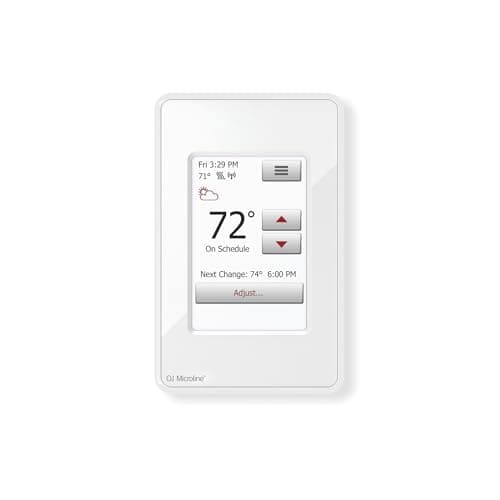
OJ Microline UWG4-4999 WiFi Floor Heating Thermostat
SHE Floor-Zone Control Score8.9/10$195.00 — OEM-reference dual sensing, adaptive pre-heat, 15A zone; best floor-sensor accuracy
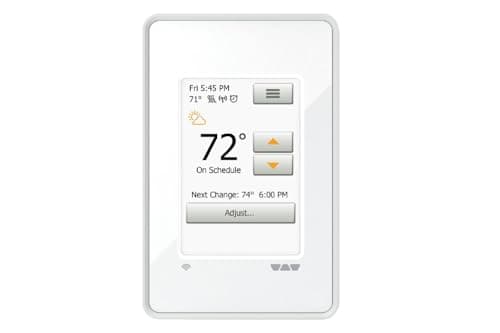
Schluter DITRA-HEAT-E-WiFi Thermostat (DHERT104)
SHE Floor-Zone Control Score8.7/10$341.88 — DITRA-HEAT match, GFCI, power-module path past 15A; best for that membrane system
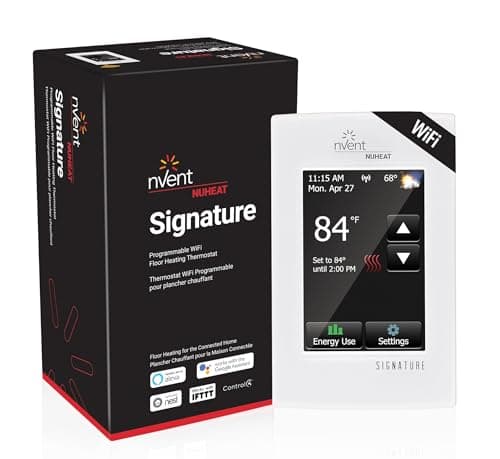
nVent Nuheat Signature WiFi Thermostat (AC0055)
SHE Floor-Zone Control Score8.3/10$281.00 — first WiFi floor thermostat, mature portal, IFTTT; best app ecosystem on one zone
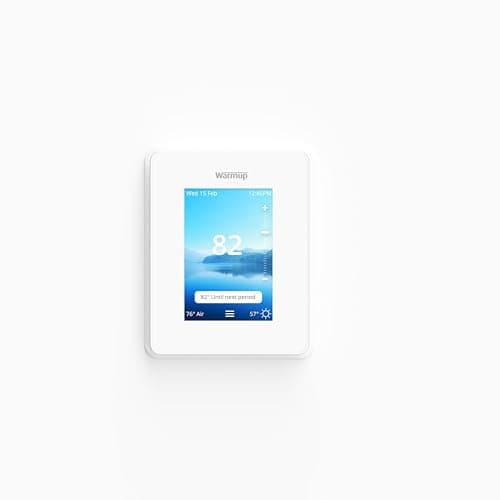
Warmup 6iE Smart WiFi Thermostat
SHE Floor-Zone Control Score8.1/10$260.00 — SmartGeo scheduling, best screen, highest 16A ceiling; thinnest smart layer (IFTTT)
Ecosystem Fit, Voltage, and Probe Reuse
Ecosystem is where these split hard, which is the read TechHive consistently uses to separate the tiers in floor-heating coverage, and Consumer Reports echoes when it notes HomeKit support as the rare exception. The Mysa Smart Thermostat for Electric In-Floor Heating earns the highest 9.8 ecosystem-breadth sub-score because it is the only unit here with native Apple HomeKit alongside Alexa and Google, so a single bathroom or kitchen mat joins Home scenes without a bridge. The OJ Microline UWG4-4999 WiFi Floor Heating Thermostat, Schluter DITRA-HEAT-E-WiFi Thermostat (DHERT104), and nVent Nuheat Signature WiFi Thermostat (AC0055) stop at Alexa and Google, with the Nuheat adding IFTTT, and the Warmup 6iE Smart WiFi Thermostat leans entirely on IFTTT for third-party control. None of these are Matter or Thread devices yet, so an Apple-first household effectively has one real choice for a hub-native floor zone, which is why this guide weights ecosystem alongside sensing.
Voltage and probe reuse decide the rest. Every unit here is dual-voltage 120V-240V with a built-in Class A GFCI, but capacity varies: the specialists rate to one 15A zone of roughly 150 sq ft at 120V or 300 sq ft at 240V, while Mysa and Warmup push the ceiling to 16A, 3.8kW and 3.68kW respectively at 240V. The recurring owner complaint that heating and DIY forums flag, and that Consumer Reports notes in its thermostat coverage, is the 5mA GFCI nuisance-tripping once total mat length pushes leakage past the threshold, which is exactly why the SHE Floor-Zone Control Score weights GFCI trip behavior into the electrical-safety tier rather than treating it as a footnote. Probe reuse is the quiet retrofit win: the Mysa accepts existing 5-40kΩ sensors, so a remodel keeps the floor probe already cast into the slab. For multi-room layouts, this pairs with the room-by-room logic in our Best Smart Vents for Room-by-Room HVAC Zoning in 2026 guide, and an air-side companion in our Best Smart Thermostats 2026: ecobee, Nest & 4 More roundup.
| Product | Apple HomeKit | Alexa / Google | IFTTT | Built-in GFCI | Dual Voltage 120V-240V |
|---|---|---|---|---|---|
| Mysa Smart Thermostat for Electric In-Floor Heating | ✓ | ✓ | ✕ | ✓ | ✓ |
| OJ Microline UWG4-4999 WiFi Floor Heating Thermostat | ✕ | ✓ | ✕ | ✓ | ✓ |
| Schluter DITRA-HEAT-E-WiFi Thermostat (DHERT104) | ✕ | ✓ | ✕ | ✓ | ✓ |
| nVent Nuheat Signature WiFi Thermostat (AC0055) | ✕ | ✓ | ✓ | ✓ | ✓ |
| Warmup 6iE Smart WiFi Thermostat | ✕ | ✕ | ✓ | ✓ | ✓ |
The Real Cost Is the Zone, Not the Box
The spend question on radiant floor heat is not the thermostat, it is the zone, because one controller drives one circuit, so a multi-room layout means one unit per room. Against that backdrop the Mysa Smart Thermostat for Electric In-Floor Heating at $199.00 and the OJ Microline UWG4-4999 WiFi Floor Heating Thermostat at $195.00 are the efficient way to scale, since paying $341.88 for the Schluter DITRA-HEAT-E-WiFi Thermostat (DHERT104) mostly buys membrane-system integration rather than extra savings over the OJ. The running-cost lever is scheduling: SmartGeo on the Warmup and adaptive pre-heat on the OJ claw back up to 25-26% on the floor's energy, but only when the schedule matches how you actually use the room. As TechHive frames it in floor-heating coverage, the smart layer earns its keep when pre-heat warms the slab on time, and Consumer Reports treats reliable scheduling as the dependable baseline that this normalized factor rewards. A 15A specialist caps a zone near 150 sq ft at 120V, and even a 16A unit near 3.8kW at 240V leaves a large open-plan tile floor needing a contactor or a second thermostat regardless of price.
When NOT to Buy
Skip this category if your floor heat is hydronic rather than electric, because a water-loop slab is a boiler-control or valve problem, not the floor-sensing thermostat TechHive and Consumer Reports cover here — our Best Smart Radiator Thermostat Valves (TRVs) for 2026 guide covers that path. Skip it too for occasional warmth in a tiny half-bath, where a basic non-WiFi GFCI thermostat costs half as much and a schedule adds nothing. And if your zone is wall- or baseboard-driven instead of in-floor, see our Best Smart Baseboard (Line-Voltage) Thermostats for 2026 roundup, which handles line-voltage convection rather than a floor probe.
Who Should Buy What
Who Should Buy What
| If you are… | Recommended pick |
|---|---|
Apple Home households You want one bathroom or kitchen floor zone that joins HomeKit scenes natively, plus Alexa and Google, at the lowest price | Mysa Smart Thermostat for Electric In-Floor Heating |
Accuracy-first retrofitters You want the most precise floor-sensor read and adaptive pre-heat on Alexa or Google, keeping an existing probe where possible | OJ Microline UWG4-4999 WiFi Floor Heating Thermostat |
Schluter-system installers Your floor uses the DITRA-HEAT membrane and you want one matched controller, with a power module for larger tile floors | Schluter DITRA-HEAT-E-WiFi Thermostat (DHERT104) |
Nuheat mat owners You own Nuheat mats or want the most mature iOS, Android, and web portal with IFTTT automations on one zone | nVent Nuheat Signature WiFi Thermostat (AC0055) |
Screen and geofencing buyers You want the nicest wall touchscreen and location-based scheduling on a larger single zone near the 16A ceiling | Warmup 6iE Smart WiFi Thermostat |
Frequently Asked Questions
How is a floor-heat thermostat different from a Nest or ecobee?
A floor-heating thermostat senses the slab through a dedicated floor probe rather than just reading room air, and it rides a built-in 5mA Class A GFCI because an electric floor circuit is a wet-location load. A central-HVAC unit like a Nest or ecobee switches a low-voltage relay to a furnace or air handler, so it has no floor probe, no GFCI, and no dual-voltage line-side switching. These five units instead drive a 120V-240V resistive heating mat directly, one zone at a time, which is why they read both air and floor temperature.
Why does my floor-heating GFCI keep tripping?
A floor-heat GFCI trips when ground-fault leakage on the circuit exceeds the 5mA Class A threshold, and the most common cause is a long mat run where total cable length accumulates enough natural leakage to cross the line. A pinched or nicked heating cable, moisture in a junction box, or a failing splice can also trip it. Of these picks, owners report the OJ Microline's 5mA GFCI as sensitive on long runs; splitting a large floor into two zones on separate thermostats keeps each run's leakage well under the threshold.
Do I need a floor sensor, or can it read room temperature?
You want the floor sensor. All five thermostats here do dual sensing — they read both the air and the slab through a probe cast into the floor — and the floor probe is what holds the tile at a comfortable setpoint without overheating it. Air-only control overshoots, because the slab keeps releasing stored heat after the air hits target. If a remodel already buried a 5-40kΩ probe, the Mysa In-Floor accepts it directly, so you rarely have to tear up tile to replace a sensor.
Which floor-heating thermostat works with Apple HomeKit?
The Mysa Smart Thermostat for In-Floor Heating is the only unit in this guide with native Apple HomeKit, and it adds Alexa and Google Home alongside it, so a single floor zone joins Apple Home scenes without a separate bridge. The OJ Microline, Schluter, and Nuheat stop at Alexa and Google (Nuheat adds IFTTT), and the Warmup 6iE relies on IFTTT only. None of the five are Matter or Thread devices yet, so for a hub-native Apple floor zone the Mysa is effectively the single choice.
Can one thermostat control multiple floor zones or rooms?
No — each of these thermostats drives exactly one heating circuit, so a multi-room radiant layout needs a dedicated unit per zone and per room. The reason is electrical: a floor thermostat switches the line-voltage load directly and reads one floor probe, so it cannot meter heat to two independent rooms. The Schluter is the partial exception, since its DITRA-HEAT-E-RR power module lets one controller drive a larger floor past its own 15A limit, but that is still one contiguous zone, not separate rooms.
What is the maximum square footage one floor thermostat handles?
Capacity is set by amperage and voltage, not square footage directly. The specialist controllers — OJ Microline, Schluter, and Nuheat — rate to one 15A zone, roughly 150 sq ft at 120V or about 300 sq ft at 240V. The Mysa In-Floor and Warmup 6iE push the ceiling to 16A, near 1.9kW at 120V and 3.8kW at 240V on the Mysa. Past those limits you add a contactor or a second thermostat, and most installers size the mat to stay comfortably under the rated load.
Will these work with my existing floor sensor?
It depends on the controller. The Mysa In-Floor explicitly accepts existing floor sensors across a 5-40kΩ range, which covers most probes already cast into a slab, so a retrofit often reuses the buried sensor. The OJ, Schluter, Nuheat, and Warmup generally expect their own bundled probe, and mixing a foreign sensor can throw the calibration off. If you are replacing a dead thermostat over a working floor, check the existing probe's resistance and confirm the new controller supports that value before you buy.
Do I need a 240V circuit, or will 120V floor heat work?
All five thermostats are dual-voltage and work on either 120V or 240V floor heat, so you match the thermostat to whatever the heating mat was wired for. The practical difference is zone size: at 240V a 15A or 16A unit drives roughly twice the floor area it can at 120V, because power scales with voltage at the same current. Small bathrooms often run 120V mats, while larger kitchens and open floors are usually wired 240V to cover the square footage on one circuit.
Is the energy savings from geofencing and scheduling worth it?
On a floor zone the savings are real but conditional. The Warmup 6iE's SmartGeo and the OJ Microline's adaptive pre-heat both claim up to 25-26% energy reduction by lowering the slab when you are out and pre-warming it before you return. The catch is that a slab is slow, so savings only materialize when the schedule matches how you actually use the room — a floor you keep warm all day saves little. For a bathroom you use mornings and evenings, scheduled setbacks pay off; for a constantly occupied kitchen, less so.
Can I install one of these myself, or do I need an electrician?
These are line-voltage devices on a dedicated GFCI-protected circuit, so unless you are comfortable working with 120V-240V wiring and local code, an electrician is the safe call. The thermostat itself swaps in much like any wall control, but the circuit must be correctly sized, grounded, and GFCI-commissioned, and a wiring mistake on a wet-location floor circuit is a shock hazard. Owners praise the Schluter's clear instructions and sturdy build, which helps a confident DIYer, but the heating-mat connections still demand respect.
What is the difference between the OJ Microline and rebadged versions?
OJ Electronics is the OEM that manufactures the controller platform that several floor-heating brands rebadge, so the Schluter DITRA-HEAT-E-WiFi and Nuheat Signature share much of the same sensing and GFCI lineage as the OJ Microline UWG4. The practical differences are the app, the system match, and the price: Schluter tunes its version for the DITRA-HEAT membrane and charges a premium, Nuheat pairs its with mats and IFTTT, and the bare OJ Microline costs the least at $195.00 while keeping the reference floor-sensor accuracy.
Do any of these support Matter or Thread?
Not yet. As of June 2026 none of the five floor-heating thermostats in this guide is a Matter or Thread device, so they connect over WiFi rather than the newer low-power mesh standards. The Mysa In-Floor comes closest to future-proof through native Apple HomeKit plus Alexa and Google, but that is HomeKit over WiFi, not Thread. If a Matter-native floor controller is a hard requirement, the honest answer is to wait, because the category has not shipped one in this price tier.
Bottom Line
Get the Mysa Smart Thermostat for Electric In-Floor Heating if you want one floor zone that joins Apple Home scenes natively, plus Alexa and Google, at the lowest price here.
Get the OJ Microline UWG4-4999 WiFi Floor Heating Thermostat if you want the most precise floor-sensor read and adaptive pre-heat on an Alexa or Google home.
Get the Schluter DITRA-HEAT-E-WiFi Thermostat (DHERT104) if your floor uses the Schluter DITRA-HEAT membrane and you want one matched controller with a power-module path.
Get the nVent Nuheat Signature WiFi Thermostat (AC0055) if you own Nuheat mats or want the most mature web and mobile portal with IFTTT automations.
Get the Warmup 6iE Smart WiFi Thermostat if you want the nicest wall screen and geofencing on a larger single zone near the 16A ceiling.
The right call for most single-zone floor installs is the Mysa Smart Thermostat for Electric In-Floor Heating at $199.00 — native HomeKit, a built-in GFCI, and 16A dual-voltage earn the top 9.26 SHE Floor-Zone Control Score for the lowest price here. If pure sensing comes first on Alexa or Google, the OJ Microline UWG4-4999 WiFi Floor Heating Thermostat leads accuracy at $195.00. Skip this category entirely if your floor heat is hydronic, which is a valve or boiler problem no floor-sensing thermostat can solve.
Sources & Methodology
Methodology: SHE Floor-Zone Control Score — Formula: Dual_Sensing_Accuracy * 0.25 + Electrical_Safety * 0.20 + Zone_Scheduling * 0.20 + Ecosystem_Breadth * 0.20 + Install_Retrofit_Fit * 0.10 + Floor_Zone_Capacity * 0.05. Factors: Dual Sensing & Floor-Sensor Accuracy (25%): Electric floor heat lives or dies on the floor probe. This factor is a weighted, normalized sub-score from whether the controller reads both air and slab temperature and how accurately it calibrates the probe, so the tile holds setpoint without cooking the floor or overshooting. The coefficient carries the top weight because OJ Electronics is the OEM the category rebadges, and its sensing is the reference tier others copy. | Electrical Safety: GFCI & Dual Voltage (20%): Floor-heat circuits are wet-location loads, so the calculation normalizes the presence of a built-in Class A GFCI, dual 120V-240V support, and enough amp headroom into a composite tier. Nuisance GFCI trips on long mat runs are the top recurring owner complaint, so trip behavior is weighted into this factor rather than treated as an afterthought. | Per-Zone Scheduling & Pre-Heat (20%): A slab takes time to warm, so this factor scores 7-day per-zone scheduling with adaptive pre-heat or geofencing on a normalized tier. The coefficient reflects that pre-heat is the difference between a truly smart thermostat and a merely programmable one — whether the floor is warm when you step on it or an hour late. | Ecosystem Breadth: HomeKit / WiFi (20%): The smart layer that earns the price premium. This sub-score is a normalized tier from IFTTT-only, to Alexa and Google, to native HomeKit. The factor weight reflects that native HomeKit plus Alexa and Google is rare in floor heat, where most controllers stop short, and only one unit here joins Apple Home scenes without a bridge. | Install & Retrofit Fit (10%): Reusing an existing 5-40kΩ floor sensor, matching a specific membrane-and-cable system, and a build sturdy enough to survive a wiring mistake all shape whether the install goes smoothly. This factor carries a lighter coefficient, but it is a real differentiator between controllers that otherwise schedule alike. | Floor-Zone Capacity (5%): The maximum load a single thermostat drives — 15A on the specialists and 16A on Mysa and Warmup — sets how large a single zone can be before you need a contactor or a second unit. This factor closes the formula with a small but real weight because it caps room size per controller.
Expert review sources used in this analysis:
- SmartHomeExplorer aggregates expert review data and community sentiment to produce consensus-based buying guidance
- We do not perform first-party product testing
- Expert ratings and product assessments draw on smart-thermostat and floor-heating buyer's guides and category coverage from outlets that cover this segment — TechHive and Consumer Reports — rather than first-party tests of each individual unit
- TechHive's floor-heating coverage frames OJ Electronics as the OEM behind much of the category and singles out Mysa for genuinely smart floor-heating control, and Consumer Reports logs reliable app scheduling and rare native HomeKit support on this class of thermostat
- Community reliability and owner reports — particularly the recurring 5mA GFCI nuisance-trip complaint on long mat runs — are drawn from r/HVAC, r/Electrical, and heating-and-DIY forums where floor-heat owners post install results
- Amazon prices and availability were verified via the Amazon Creators API, with every price verified June 7, 2026: Mysa In-Floor $199.00, OJ Microline UWG4-4999 $195.00, Schluter DITRA-HEAT-E-WiFi $341.88, Nuheat Signature AC0055 $281.00, Warmup 6iE $260.00
- The SHE Floor-Zone Control Score weights dual sensing and floor-sensor accuracy (25%), electrical safety via GFCI and dual voltage (20%), per-zone scheduling and pre-heat (20%), ecosystem breadth (20%), install and retrofit fit (10%), and floor-zone capacity (5%); factor sub-scores derive from manufacturer specifications and aggregated reviewer assessments, and no first-party measurements were conducted.
Nicholas Miles is the founder of SmartHomeExplorer and a longtime smart home enthusiast focused on helping everyday homeowners make better technology decisions. He researches, compares, and writes about products across security, climate, lighting, leak prevention, sensors, home energy, and automation, with an emphasis on real-world usefulness, ecosystem compatibility, reliability, privacy, and long-term value.
Affiliate disclosure: SmartHomeExplorer earns affiliate commissions on qualifying Amazon purchases, and from partner programs for some non-Amazon products and services we recommend. Our scoring methodology is independent of affiliate relationships.