
Best Smart Radiator Thermostat Valves (TRVs) for 2026
SONOFF Zigbee TRVZB ($29.99) wins our SHE Room-Heat Control Score at 8.9 — widest adapter kit, deepest Home Assistant scheduling. Aqara E1 ($49.99) is the only Amazon US valve that reaches HomeKit; SENCKIT ($35.99) runs 2-3 yr per battery.
This article contains affiliate links. We may earn a commission at no extra cost to you. Prices change frequently — check the current price on Amazon before buying. Learn more
The Short Answer
For homeowners zoning a hydronic system room by room, the SONOFF Zigbee TRVZB ($29.99, 2x AA) delivers the strongest combination, where its six-adapter compatibility and Home Assistant scheduling achieve the top 8.9 SHE Room-Heat Control Score that notenoughtech corroborates against the pricier valves in this guide.
Featured in this Guide
SONOFF
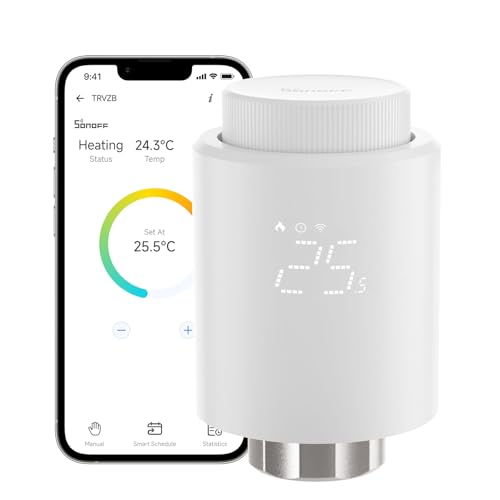
Zigbee Thermostatic Radiator Valve (TRVZB)
- •Widest adapter kit, deepest Home Assistant scheduling, 6 months of stored heating history at $29.99 — tops our score at 8.9
Aqara
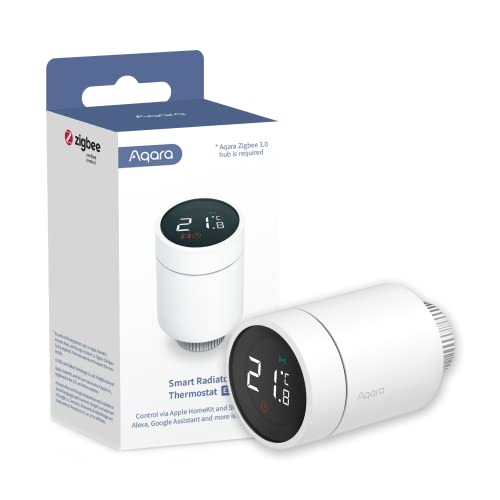
Smart Radiator Thermostat E1
- •External room sensor plus the only Amazon US bridge to Apple HomeKit, Alexa, and Google at $49.99 via the Aqara hub
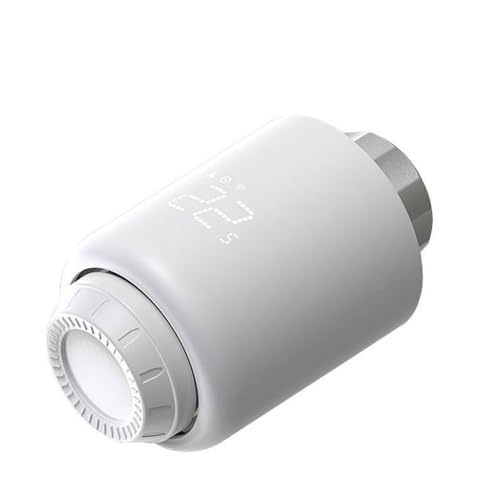
AVATTO
Smart Thermostat Radiator Valve TRV07 (Zigbee 3.0)
- •Documented open-window trip and a weekly anti-scale cycle at $57.15 for verifiable upkeep in the Smart Life app
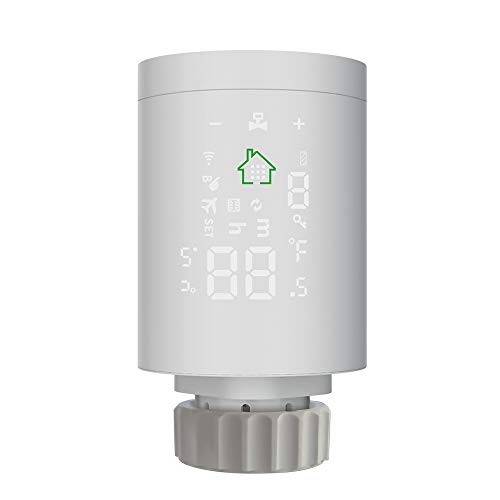
VISLONE
Tuya Zigbee 3.0 Smart Radiator Thermostat Valve
- •Six-period 7-day schedules and a 5-30C range at $29.99 — deep zoning for the Tuya crowd at the budget floor
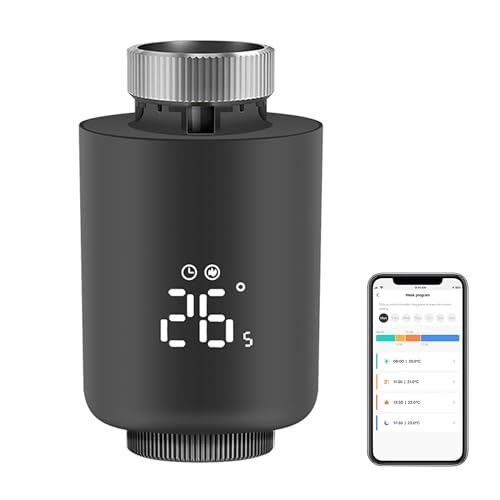
SENCKIT
Smart Thermostat Radiator Valve (Tuya Zigbee)
- •Two-to-three-year battery on two AA cells and a sub-25dB motor at $35.99 — the lightest upkeep and quietest valve here
Head-to-Head: Fit, Scheduling, Room Accuracy, and Score
Climate Control
Chart
 Smarthomeexplorer.com
Tap any pick to check its live price on Amazon.
AlorAir Sentinel HDi90 Basement/Crawlspace Dehumidifier with Pump
Check price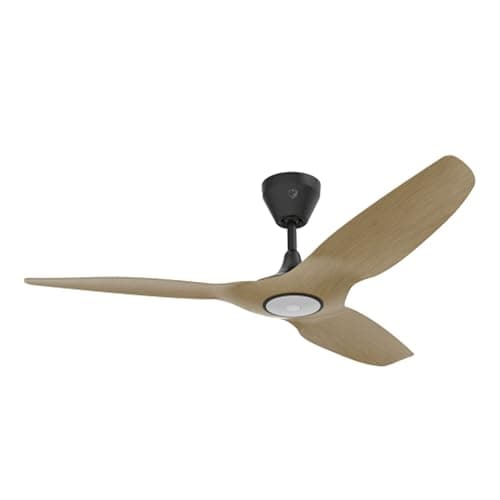
Big Ass Fans Haiku L 52-Inch Smart Ceiling Fan
Check price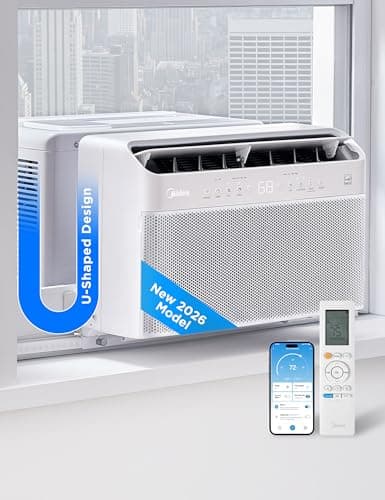
Midea U Smart Inverter Window AC (12,000 BTU)
Check price
What Tips the Decision
The most common owner complaint, which notenoughtech documents, is that the valve sits against the hot radiator, reads several degrees warm, and snaps shut before the room reaches setpoint, leaving the room cold while the application insists it reached target. The decision is whether it threads onto your radiator, communicates with the hub you own, and regulates off true room temperature, where a paired sensor delivers better accuracy compared to the warm-reading built-in probe.
The fourth surprise reshapes the category, because on Amazon US smart TRVs are effectively all Zigbee, since the HomeKit, Thread, and Matter valves the press celebrates are not sold here. The SONOFF Zigbee TRVZB leads at 8.9 on 2x AA cells and delivers the widest fit compared to the Aqara E1, which follows at 8.4 as the only valve reaching HomeKit, with companions in Best Smart Thermostats 2026: ecobee, Nest & 4 More and Best Zigbee Hubs for the Home 2026.
Best Overall: SONOFF Zigbee Thermostatic Radiator Valve (TRVZB)
SONOFF Zigbee Thermostatic Radiator Valve (TRVZB)
- Roughly $30 per valve, the cheapest credible smart TRV here, so a five-radiator home runs near $150 plus a hub
- Needs a separate Zigbee 3.0 hub, an extra $25 to $60 outlay for buyers with no existing mesh

(Current price, subject to change)
The SONOFF Zigbee Thermostatic Radiator Valve (TRVZB) earns 8.9 on the weighted SHE Room-Heat Control Score, a composite that produces the most flexible whole-home valve in this roundup rather than the most polished consumer app. That 8.9 rests on a category-leading 9.4 valve-compatibility sub-score paired with a 9.2 scheduling-depth sub-score, because the bundled RA, RAV, RAVL, CAL, GIA, and M28 adapters thread onto nearly every European-style M30 x 1.5mm body, while per-day plans and open-window detection come fully alive in Home Assistant. Priced at $29.99 and running on 2x AA cells, it normalizes a five-radiator build to roughly $150 plus a shared Zigbee hub.
Across the expert sources surveyed as of June 2026 the consensus settles near 9.0, and notenoughtech frames the TRVZB as a steal at its sub-$30 price, praising its quiet valve action and local control once paired with a Zigbee hub. TechRadar identifies room-by-room valve control as the cheapest method of avoiding heating empty rooms, and running on 2x AA cells the TRVZB delivers comparable longevity to the Aqara E1 while its six-adapter compatibility outperforms the single-adapter Tuya valves. The honest catch is the warm-reading sensor, which closes early and means you should establish a calibration offset on day one.
What We Love
- Roughly $30 per valve, the cheapest credible smart TRV here, so a five-radiator home runs near $150 plus a hub
- Six bundled adapters cover RA, RAV, RAVL, CAL, GIA, and M28 bodies without a plumber
- Open-window detection drops the valve on a temperature plunge and the app logs 6 months of heating data
- Runs on any Zigbee 3.0 hub, so it is not locked to one brand's gateway
What Could Be Better
- Needs a separate Zigbee 3.0 hub, an extra $25 to $60 outlay for buyers with no existing mesh
- The eWeLink and Alexa interface is barebones; per-day scheduling really opens up only in Home Assistant
- The built-in sensor sits next to the radiator and reads warm without a calibration offset
The Verdict
If you're zoning a hydronic system room by room on any Zigbee 3.0 hub, the SONOFF Zigbee Thermostatic Radiator Valve (TRVZB) fits the brief without compromise at $29.99 — the 8.9 reflects the widest 6-adapter kit, 6 months of heating history, and the deepest Home Assistant scheduling. For a multi-radiator Zigbee build, this is the path of least friction.
Check price for the SONOFF Zigbee Thermostatic Radiator Valve (TRVZB) →
Ready to upgrade your home?
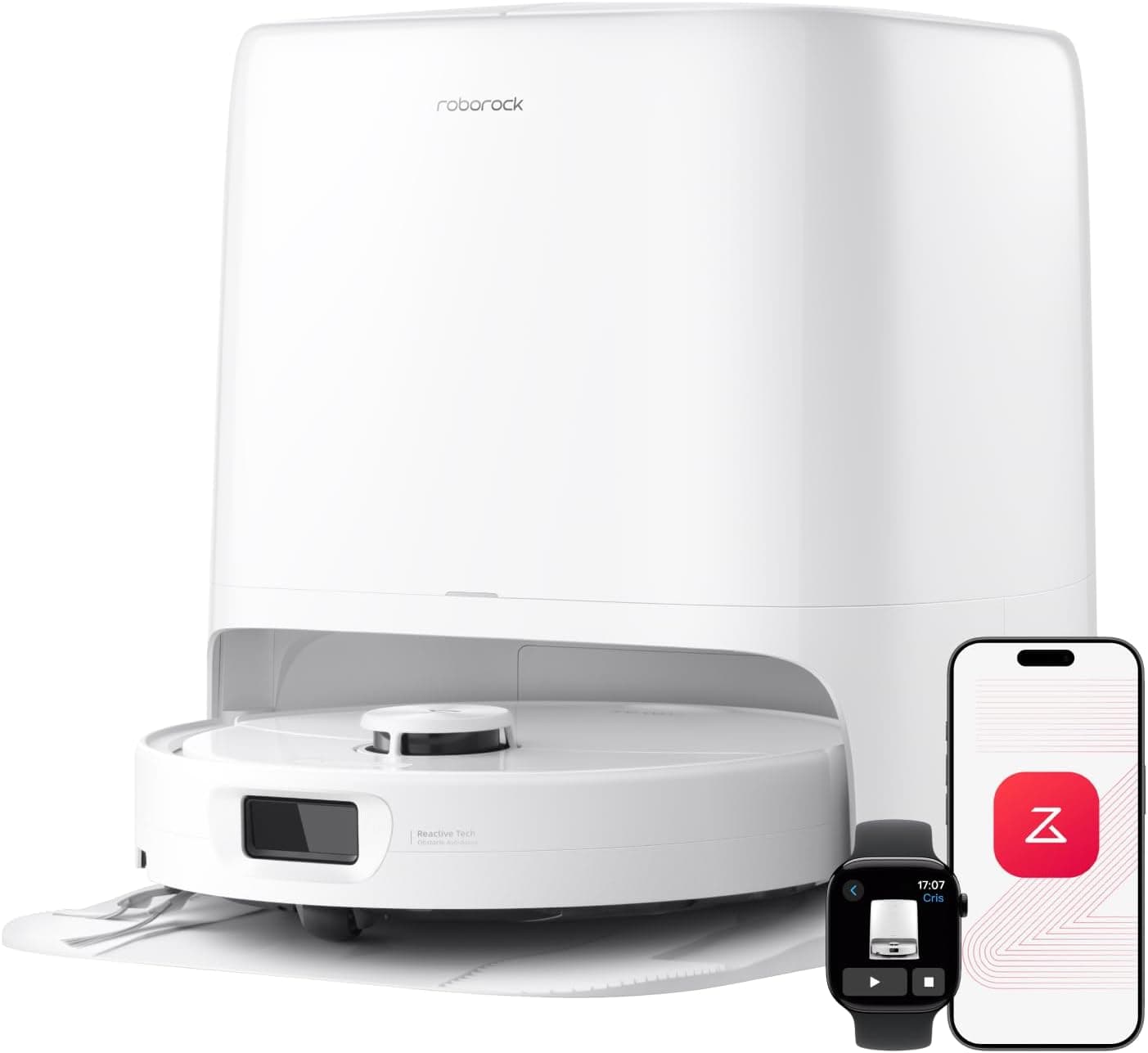
roborock Qrevo 2 Pro Robot Vacuum and Mop
See it on Amazon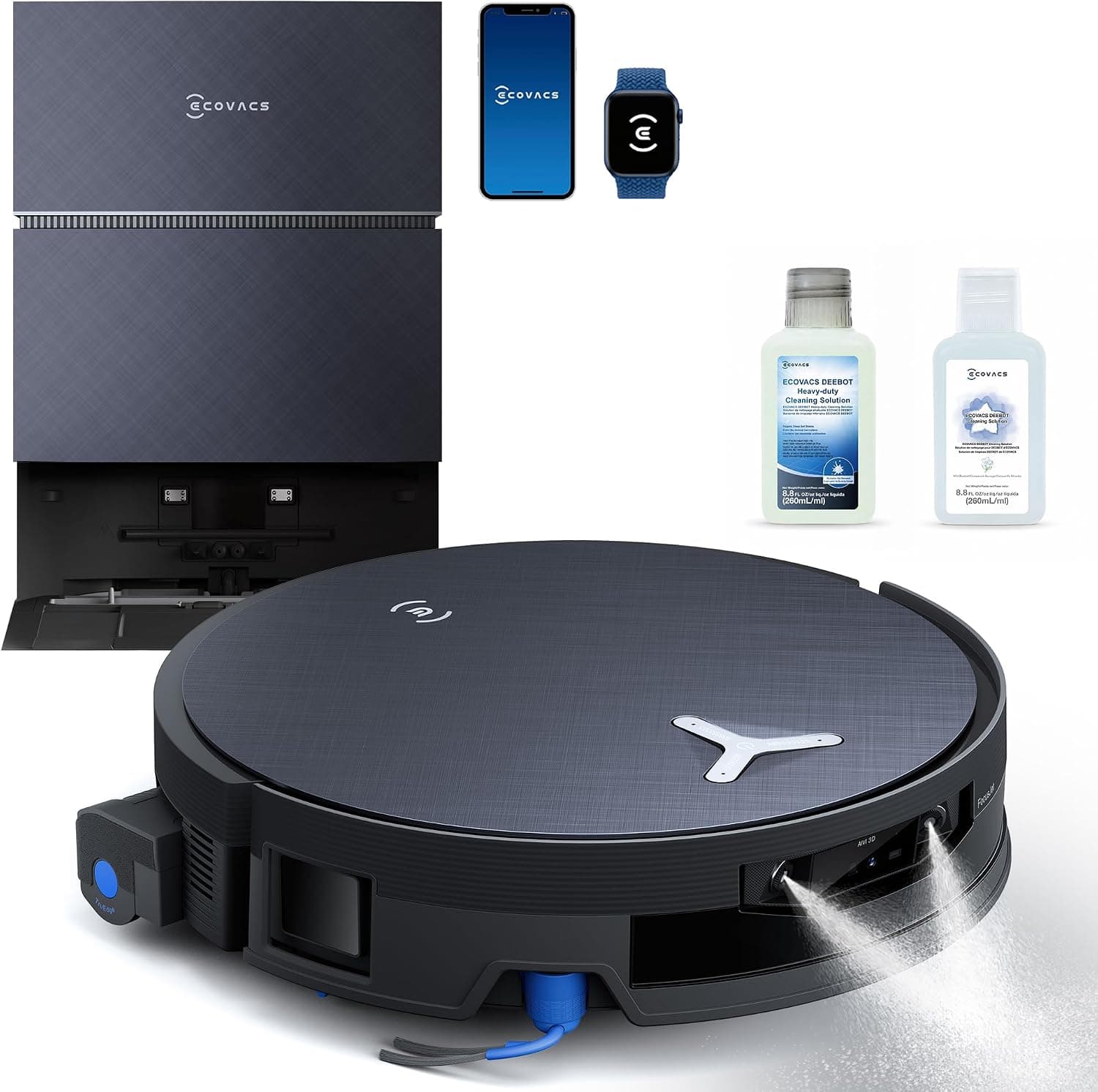
ECOVACS DEEBOT X12 PRO Omni Robot Vacuum and Mop
See it on Amazon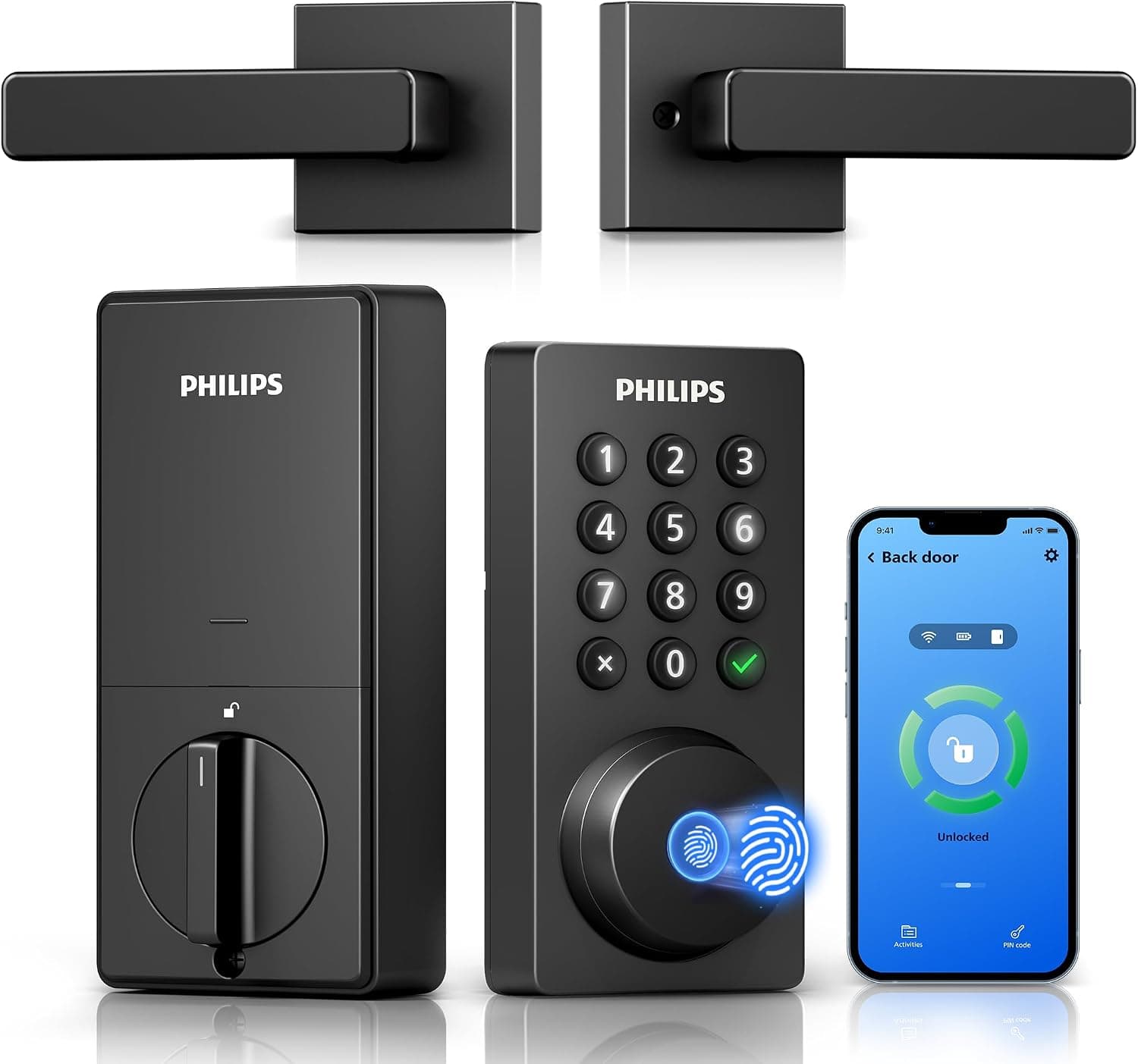
Philips Wi-Fi Keypad Deadbolt with Handle
See it on Amazon
Sponsored listings from Amazon’s Sponsored Products for Creators program, kept apart from our reviews and rankings. How we make money
Best for HomeKit: Aqara Smart Radiator Thermostat E1
Aqara Smart Radiator Thermostat E1
- Pairs an external Aqara sensor across the room so it regulates on real room temperature, not the inflated radiator reading
- Requires an Aqara Zigbee 3.0 hub, an extra gateway for buyers locked to a different ecosystem

(Current price, subject to change)
The Aqara Smart Radiator Thermostat E1 earns 8.4 on the weighted SHE Room-Heat Control Score, a composite that distinctly marks the accuracy-and-ecosystem leader rather than the scheduling leader. That 8.4 rests on a category-best 9.2 room-accuracy sub-score paired with a 9.0 ecosystem-reach sub-score, because pairing an external Aqara sensor placed across the room lets the valve regulate on true room temperature instead of the warm reading beside the radiator, while the Aqara hub bridges onward to HomeKit, Alexa, Google, and IFTTT. Positioned at $49.99, it is the only valve on Amazon US that reaches Apple HomeKit at all now that no Thread or Matter TRV is sold here.
In smart-TRV coverage, the-ambient likes the E1 a lot, highlighting its external-sensor pairing for accurate whole-room control while wishing the schedule allowed more than three daily slots. Smarthomesolver positions it as the natural valve for anyone already in the Aqara ecosystem. Zigbee 3.0 efficiency stretches the 2x AA cell to roughly a year; compared to the 3x AA AVATTO design, this means you re-cell less often. The paired external sensor delivers true room-temperature regulation versus the warm built-in probe, which produces noticeably steadier comfort across the room.
What We Love
- Pairs an external Aqara sensor across the room so it regulates on real room temperature, not the inflated radiator reading
- Bridges to Apple HomeKit, Alexa, Google, and IFTTT via the Aqara hub, the only valve on Amazon US that reaches HomeKit
- Zigbee 3.0 efficiency stretches the battery to roughly a year under typical duty cycles
- Fits M30 x 1.5mm directly and includes RA, RAV, and RAVL adapters for older Danfoss bodies
What Could Be Better
- Requires an Aqara Zigbee 3.0 hub, an extra gateway for buyers locked to a different ecosystem
- Scheduling tops out at three time slots per day, fewer than the SONOFF and Tuya valves
- Real-world battery life varies in owner reports, with some draining short of the rated year
The Verdict
If you're an Apple Home household and HomeKit integration is non-negotiable, the Aqara Smart Radiator Thermostat E1 is the sensible pick for that setup at $49.99. The 8.4 reflects the category-best room accuracy from its paired external sensor and the only HomeKit bridge on Amazon US. You give up the SONOFF's deeper scheduling, but for an Aqara or HomeKit home you'll be well-served here.
Best for Tuya Households: AVATTO Smart Thermostat Radiator Valve TRV07 (Zigbee 3.0)
AVATTO Smart Thermostat Radiator Valve TRV07 (Zigbee 3.0)
- Open-window detection trips on a 1.5C drop within 4.5 min, drops the valve to 12C, and flashes OP so you can verify it
- Needs a Tuya-compatible Zigbee 3.0 gateway, and at about $57 it is the priciest budget Tuya valve here

(Current price, subject to change)
The AVATTO Smart Thermostat Radiator Valve TRV07 (Zigbee 3.0) earns 7.9 on the weighted SHE Room-Heat Control Score, a composite that reflects the most verifiable Tuya valve here rather than the cheapest. That 7.9 pairs an 8.4 valve-compatibility sub-score with an 8.2 scheduling-depth sub-score, because the descaling cycle exercises the valve every Monday at 12:00 and the open-window routine is confirmed on the display. Positioned at $57.15, it is the priciest budget Tuya valve here, yet the on-screen OP and CAL readouts represent verifiable maintenance instrumentation that the cheaper valves entirely omit, which produces measurable confidence the automations are genuinely executing.
In Tuya Zigbee coverage, notenoughtech frames this class of device as the affordable way to zone a hydronic home, crediting documented open-window and anti-scale routines that separate the better OEM valves from the bargain-bin ones, which is the reason to pay more than the floor. The documented open-window trip fires within 4.5 min of a temperature plunge, drops the valve to 12C, and delivers an on-screen OP confirmation. The honest cost is the 3x AA design: compared to the 2x AA SENCKIT, this means you buy 50 percent more cells each season, and Tuya control routes through the cloud rather than staying fully local.
What We Love
- Open-window detection trips on a 1.5C drop within 4.5 min, drops the valve to 12C, and flashes OP so you can verify it
- Automatic descaling cycle runs every Monday at 12:00 and shows CAL, exercising the valve so it does not seize
- Drops into the Tuya and Smart Life app beside any plugs, sensors, or switches you already run
- Ships M30 x 1.5mm direct mount plus multiple adapters for most European-style bodies without a plumber
What Could Be Better
- Needs a Tuya-compatible Zigbee 3.0 gateway, and at about $57 it is the priciest budget Tuya valve here
- Runs on three AA cells rather than two, 50 percent more batteries per heating season across a multi-radiator home
- Weekly schedule tops out at four periods a day, fewer than the six-period VISLONE and SENCKIT plans
The Verdict
If you're a Tuya or Smart Life household and want upkeep you can actually see working, the AVATTO Smart Thermostat Radiator Valve TRV07 (Zigbee 3.0) lines up with what you actually need at $57.15. The 7.9 reflects the most documented open-window and anti-scale routines here, both with on-screen confirmation. It is the priciest budget valve, but for verifiable behavior over the lowest price, no need to overthink it.
Check price for the AVATTO Smart Thermostat Radiator Valve TRV07 (Zigbee 3.0) →
Best Value: VISLONE Tuya Zigbee 3.0 Smart Radiator Thermostat Valve
VISLONE Tuya Zigbee 3.0 Smart Radiator Thermostat Valve
- Flexible 5+2, 6+1, and full 7-day plans with six periods a day, deeper than the Aqara's three slots
- Needs a Tuya-compatible Zigbee gateway, an extra purchase that pushes real entry cost above the headline price

(Current price, subject to change)
The VISLONE Tuya Zigbee 3.0 Smart Radiator Thermostat Valve earns 7.6 on the weighted SHE Room-Heat Control Score, a composite that distinctly marks the deep-scheduling value pick rather than the accuracy or build-quality leader. That 7.6 pairs an 8.4 valve-compatibility sub-score with an 8.2 scheduling-depth sub-score, because the 5+2, 6+1, and full 7-day plans run six periods a day with holiday and workday modes, deeper than the Aqara's three slots, while the M30 x 1.5mm fitting threads onto standard bodies. Positioned at $29.99, it ties the SONOFF as the budget floor, so the real entry cost is the valve plus a Tuya gateway.
In Tuya Zigbee TRV coverage, notenoughtech frames this class of valve as the inexpensive way to automate unused rooms, with flexible multi-period schedules that punch above the sub-$30 price. Your-smarthomeguide positions Tuya valves as the easiest budget entry for anyone already operating a Smart Life installation, and running on 2x AA cells the VISLONE delivers six-period scheduling that outperforms the Aqara's three-slot plan while matching the SONOFF on price. The honest trade-offs are the OEM build quality and the cloud dependency, because compared to the SONOFF's local Home Assistant control, the VISLONE routes its setpoints through Tuya's remote servers rather than the local gateway.
What We Love
- Flexible 5+2, 6+1, and full 7-day plans with six periods a day, deeper than the Aqara's three slots
- Drops into the huge Tuya and Smart Life ecosystem beside plugs, sensors, and switches you may already own
- Covers a 5 to 30C setpoint range with a clear LCD readout and Alexa and Google voice control via a Tuya gateway
- At about $30 per valve it ties the SONOFF as the budget floor for the category
What Could Be Better
- Needs a Tuya-compatible Zigbee gateway, an extra purchase that pushes real entry cost above the headline price
- Build quality and app polish trail the name brands; this is a value OEM device, not a refined experience
- Cloud-dependent Tuya control routes setpoints and schedules through remote servers rather than staying local
The Verdict
If you're already in Tuya or Smart Life and want deep scheduling at the budget floor, the VISLONE Tuya Zigbee 3.0 Smart Radiator Thermostat Valve lines up with what you actually need at $29.99. The 7.6 reflects six-period 7-day plans and holiday modes that punch above the sub-$30 price. Build polish trails the brands, but for a Tuya household chasing zoning depth cheaply, you'll be well-served here.
Check price for the VISLONE Tuya Zigbee 3.0 Smart Radiator Thermostat Valve →
Best Battery Life: SENCKIT Smart Thermostat Radiator Valve (Tuya Zigbee)
SENCKIT Smart Thermostat Radiator Valve (Tuya Zigbee)
- Full 7-day programmability with six periods a day plus vacation, energy-saving, and comfort modes, deeper than the Aqara's three slots
- Build quality is the weak point: thin plastic that can crack and a display several reviewers call hard to read at an angle

(Current price, subject to change)
The SENCKIT Smart Thermostat Radiator Valve (Tuya Zigbee) earns 7.3 on the weighted SHE Room-Heat Control Score, a composite that reflects the lowest-upkeep budget valve rather than the build-quality or accuracy leader. That 7.3 pairs an 8.2 battery-longevity sub-score with an 8.0 scheduling-depth sub-score, because two AA cells last 2 to 3 years in owner reports, the lightest re-cell burden here, while the full 7-day six-period plan adds vacation, energy-saving, and comfort modes. Positioned at $35.99, it is the cheapest valve here, and the wide 5 to 45C range plus a sub-25dB motor make it usable on aggressive setbacks and in a bedroom.
In Tuya Zigbee valve coverage, your-smarthomeguide pegs this tier as the value entry point for a Zigbee household, crediting deep scheduling and long battery life while warning that build quality trails the name brands. On 2x AA cells the SENCKIT delivers a rated 2-3 yr runtime, the longest here, while its sub-25dB motor produces noticeably less valve noise than the louder budget units. The honest weak point is the room accuracy, where the 5.6 sub-score is the lowest here because the valve relies on its own warm-reading sensor, so compared to the Aqara E1 you forfeit external-sensor accuracy and any stored heating history.
What We Love
- Full 7-day programmability with six periods a day plus vacation, energy-saving, and comfort modes, deeper than the Aqara's three slots
- Wide 5 to 45C setpoint range and a quiet sub-25dB motor, usable on aggressive setbacks and in a bedroom
- Two AA cells last 2 to 3 years in owner reports, the lightest upkeep here, at $35.99 the cheapest valve in the guide
- Sits in the Tuya and Smart Life ecosystem with Alexa and Google voice control, and the black colorway suits dark radiators
What Could Be Better
- Build quality is the weak point: thin plastic that can crack and a display several reviewers call hard to read at an angle
- Requires a Tuya Zigbee gateway, and setup leans on poorly translated instructions for first-time buyers
- Tuya cloud dependency with only manual operation if the internet drops, and there is no stored heating history
The Verdict
If you're a budget Zigbee household that wants to set a schedule and forget the batteries, the SENCKIT Smart Thermostat Radiator Valve (Tuya Zigbee) checks the boxes that matter for that low-upkeep goal at $35.99. The 7.3 reflects the longest battery life here, a sub-25dB motor, and six-period 7-day plans. Build polish is thin, but for the lowest entry price with deep scheduling, no need to overthink it.
Check price for the SENCKIT Smart Thermostat Radiator Valve (Tuya Zigbee) →
How We Score: SHE Room-Heat Control Score
SHE Room-Heat Control Score
Score Formula
Valve_Compatibility * 0.20 + Scheduling_Depth * 0.25 + Ecosystem_Reach * 0.20 + Battery_Longevity * 0.15 + Room_Accuracy * 0.20Score Factors
- Scheduling Depth (25%)The savings come from heating each room only when it is used, so this factor carries the top weight. It is a weighted, normalized sub-score of how granular the schedule is: per-day plans, the number of daily time periods, geofencing, and open-window detection. The criteria separate a valve that genuinely zones a home from one that just bolts an app onto a dumb radiator, which is why the coefficient leads the formula.
- Valve Compatibility (20%)A smart TRV is useless if it will not thread onto your radiator, so the calculation weights the M30 x 1.5mm fit plus the breadth of bundled adapters (RA, RAV, RAVL, Danfoss, M28). This sub-score is normalized against the widest kit in the field, because the number-one install failure is a valve that does not mate without a plumber, and the coefficient reflects that hard gate.
- Ecosystem Reach (20%)Whether the valve plays with the hub and assistants you already run decides if it slots into your home or strands you in a second app. The composite weights native HomeKit, Alexa, Google, Matter, and Home Assistant support, and whether a proprietary hub is forced on you. The criteria normalize a generic-Zigbee valve above one locked to a single brand gateway.
- Room Accuracy (20%)The valve's own sensor sits against a hot radiator and reads warm, closing too early and leaving the room cold. This factor weights measured accuracy and, critically, whether the valve can regulate off an external room sensor or a calibration offset. The normalized sub-score targets the single biggest owner complaint, so the coefficient sits at the second tier alongside compatibility and ecosystem reach.
- Battery Longevity (15%)A multi-radiator home multiplies every battery change, so this factor weights rated and real-world cell life into a normalized sub-score. Zigbee valves that last a year beat AA-hungry designs you re-cell every heating season. The coefficient is the lightest in the formula because it is a maintenance differentiator rather than a core function, but it remains a real cost across several radiators.
SHE Room-Heat Control Score — Ranked

SONOFF Zigbee Thermostatic Radiator Valve (TRVZB)
SHE Room-Heat Control Score8.9/10$29.99 — widest 6-adapter kit, deep Home Assistant scheduling, 6 months of heating history; best overall fit

Aqara Smart Radiator Thermostat E1
SHE Room-Heat Control Score8.4/10$49.99 — external-sensor room accuracy and the only Amazon US HomeKit bridge; best for Apple Home

AVATTO Smart Thermostat Radiator Valve TRV07 (Zigbee 3.0)
SHE Room-Heat Control Score7.9/10$57.15 — documented open-window and weekly anti-scale routines; most verifiable Tuya upkeep

VISLONE Tuya Zigbee 3.0 Smart Radiator Thermostat Valve
SHE Room-Heat Control Score7.6/10$29.99 — six-period 7-day plans and holiday modes at the budget floor; deep-scheduling value

SENCKIT Smart Thermostat Radiator Valve (Tuya Zigbee)
SHE Room-Heat Control Score7.3/10$35.99 — 2-to-3-year battery and a sub-25dB motor; lowest entry price and lightest upkeep
Which Zigbee Hub You Run Settles It
On Amazon US this category collapses to one camp: Zigbee. The Thread and Matter valves the smart-home press features (the Eve Thermo most of all) are not sold on the US storefront, so the buying decision is purely which Zigbee hub you already run, a framing that the-ambient and smarthomesolver both use when they cover this segment. The SONOFF Zigbee Thermostatic Radiator Valve (TRVZB) earns a strong 8.6 ecosystem-reach sub-score because it pairs with any generic Zigbee 3.0 dongle, the SONOFF iHost, NSPanel Pro, or ZB Bridge Pro, and bends fully to local Home Assistant control rather than one brand's cloud. The Aqara Smart Radiator Thermostat E1 lands a category-best 9.0 on the same factor through its Aqara hub, which is the one bridge here onward to Apple HomeKit, Alexa, Google, and IFTTT, so an Apple household that already owns an Aqara hub gains the broadest assistant reach in the field and produces a single-app experience compared to juggling separate ecosystems. The three Tuya valves, the AVATTO Smart Thermostat Radiator Valve TRV07 (Zigbee 3.0), VISLONE Tuya Zigbee 3.0 Smart Radiator Thermostat Valve, and SENCKIT Smart Thermostat Radiator Valve (Tuya Zigbee), all sit at 7.0 to 7.6 because they require a Tuya gateway and route through the Tuya cloud. On hardware the AVATTO runs 3x AA cells while the VISLONE and SENCKIT run 2x AA, so battery upkeep differs versus the AVATTO across a multi-radiator home. The practical upshot of these ecosystem sub-scores is that the protocol question and the hub question are really the same question: every valve in this roundup speaks Zigbee, so the figure that actually predicts how cleanly a valve will slot into your home is whether the gateway you already own can adopt it. A Home Assistant household pairs the SONOFF directly and produces full local automation that survives an internet outage; a Tuya-and-Smart-Life household already running a compatible gateway adopts the AVATTO, VISLONE, or SENCKIT with no additional bridge; and an Apple household routes the Aqara E1 through its hub to reach HomeKit. Each of these paths delivers the same room-by-room zoning, and the deciding factor is simply which gateway is already on the shelf.
Settle the hub first, because once it is chosen radiator fit rarely blocks you, since almost every valve here threads onto the M30 x 1.5mm standard with bundled RA, RAV, and RAVL adapters, so the install becomes a five-minute hand-tighten rather than a plumber call, which is precisely why this guide weights ecosystem reach as heavily as physical compatibility. For a tinkerer, a generic Zigbee dongle or a SONOFF bridge in Home Assistant is the most open path; for the Tuya and Smart Life crowd, a Tuya Zigbee gateway already in the house carries the AVATTO, VISLONE, and SENCKIT at no extra ecosystem cost; for an Apple household, the Aqara hub is the only route to HomeKit. You'll notice the real entry cost is the one-time shared hub spread across every valve, not a per-valve tax, so a five-radiator SONOFF build on 2x AA cells still lands near $150 plus that gateway and delivers lower running cost compared to a per-valve subscription model. This same hub-first logic carries into our Best Zigbee Hubs for the Home 2026 and Best Smart Vents for Room-by-Room HVAC Zoning in 2026 companions, which share the room-by-room philosophy. It is worth dwelling on why the scheduling factor carries the heaviest weight in the composite, because the entire financial case for a smart radiator valve rests on heating each room only during the hours it is actually occupied. A bedroom that warms an hour before wake-up and drops back at breakfast, a home office that follows a weekday workday plan, and a guest room that stays at a frost-protection floor until someone visits each represent recovered energy that a single whole-home thermostat can never capture. The valves here that expose six daily periods and full seven-day plans deliver that granularity directly, and pairing them with presence automations in Home Assistant produces even tighter control, which is why a thoughtfully scheduled multi-radiator build returns its modest hardware cost across a single heating season.
| Product | Home Assistant / Generic Zigbee | Apple HomeKit | Alexa + Google Voice | External Room Sensor | Open-Window Detection |
|---|---|---|---|---|---|
| SONOFF Zigbee Thermostatic Radiator Valve (TRVZB) | ✓ | ✕ | ✓ | ✕ | ✓ |
| Aqara Smart Radiator Thermostat E1 | ✕ | ✓ | ✓ | ✓ | ✓ |
| AVATTO Smart Thermostat Radiator Valve TRV07 (Zigbee 3.0) | ✕ | ✕ | ✓ | ✕ | ✓ |
| VISLONE Tuya Zigbee 3.0 Smart Radiator Thermostat Valve | ✕ | ✕ | ✓ | ✕ | ✕ |
| SENCKIT Smart Thermostat Radiator Valve (Tuya Zigbee) | ✕ | ✕ | ✓ | ✕ | ✕ |
When NOT to Buy
Skip smart TRVs entirely if your home runs forced-air HVAC, a heat pump, or electric baseboards, because there is no radiator valve to replace; look at a smart thermostat or smart vents instead. Skip them too if you have a single radiator in one room, where a manual TRV plus a $20 smart plug timer is cheaper than a valve plus a Zigbee hub. And do not go shopping Amazon US for a native HomeKit, Thread, or Matter radiator valve: none is sold here right now. If Apple Home integration is non-negotiable, the only route is the Zigbee Aqara E1 bridged through an Aqara hub, not a Thread valve like the Eve Thermo that the press covers but Amazon US does not stock.
Who Should Buy What
Who Should Buy What
| If you are… | Recommended pick |
|---|---|
Multi-radiator Zigbee homeowners You want the widest adapter fit, deep Home Assistant scheduling, and the lowest per-valve cost across several radiators | SONOFF Zigbee Thermostatic Radiator Valve (TRVZB) |
Apple HomeKit households You need HomeKit, Alexa, and Google reach through one hub plus accurate whole-room sensing via a paired sensor | Aqara Smart Radiator Thermostat E1 |
Tuya / Smart Life owners You want documented, on-screen-verifiable open-window and weekly anti-scale routines in the app you already run | AVATTO Smart Thermostat Radiator Valve TRV07 (Zigbee 3.0) |
Budget-conscious schedulers You want six-period 7-day scheduling plus holiday modes at the $29.99 floor inside a Tuya household | VISLONE Tuya Zigbee 3.0 Smart Radiator Thermostat Valve |
Set-and-forget battery savers You want the lowest entry price, the longest 2-to-3-year battery life, and the quietest sub-25dB motor | SENCKIT Smart Thermostat Radiator Valve (Tuya Zigbee) |
Home Assistant tinkerers You want full local control and the deepest per-day automation on any generic Zigbee 3.0 dongle | SONOFF Zigbee Thermostatic Radiator Valve (TRVZB) |
Frequently Asked Questions
Do smart radiator valves actually save money, and how much off a heating bill?
Independent and vendor figures put room-by-room valve control at roughly 12 to 31 percent off a heating bill by not warming unused rooms, and SONOFF cites about 22 percent in its own testing. The savings come from scheduling each room only when it is used, which is why our score weights scheduling depth most heavily. The real math is per radiator: a $29.99 SONOFF or VISLONE valve plus a shared Zigbee hub pays back in a season or two across a multi-radiator home.
Will a smart TRV fit my radiator, and what does M30 x 1.5mm mean?
M30 x 1.5mm is the most common European radiator-valve thread: a 30mm diameter with a 1.5mm thread pitch. Every valve in this guide fits it directly, and the SONOFF TRVZB adds RA, RAV, RAVL, CAL, GIA, and M28 adapters for older Danfoss and other bodies. The number-one install failure is a valve that will not mate, so check your existing valve body before buying; in most homes the swap is a five-minute hand-tighten with no plumber.
Do I need a hub or bridge for a smart radiator valve, or do some work without one?
Every valve in this guide is Zigbee, so each one needs a Zigbee 3.0 hub or gateway to do anything smart, an extra $25 to $60 outlay if you have no existing mesh. The SONOFF works with any generic Zigbee 3.0 dongle or Home Assistant, the AVATTO, VISLONE, and SENCKIT need a Tuya gateway, and the Aqara E1 needs an Aqara hub. The hub is a one-time shared cost spread across every valve rather than a per-valve tax.
Why does my room stay cold even though the smart valve says it hit the target temperature?
The valve's built-in sensor sits right against the hot radiator and reads several degrees warmer than the actual room, so it closes before the room reaches setpoint and the app still reports target temperature. This is the single most common owner complaint across the category. The fix is either a calibration offset in the app or, on the Aqara E1, pairing an external room sensor placed across the room so the valve regulates on true room temperature.
What is a temperature offset and how do I calibrate a smart TRV so it reads the real room temperature?
A temperature offset is a manual correction you enter in the app to compensate for the valve sensor reading warm next to the radiator. Place a separate thermometer in the middle of the room, compare it to what the valve reports, and enter the difference as a negative offset, often 2 to 4C. The Aqara E1 sidesteps the guesswork by pairing an external Aqara sensor, which regulates on real room temperature without a manual offset.
Can I use a smart radiator valve with Apple HomeKit, Alexa, or Google Home?
The Aqara E1 bridges to Apple HomeKit, Alexa, Google, and IFTTT through the Aqara hub, the only valve on Amazon US that reaches HomeKit at all. The SONOFF, AVATTO, VISLONE, and SENCKIT all support Alexa and Google voice setpoint control once on their respective Zigbee hubs, but none of them reaches HomeKit. If Apple Home is non-negotiable, the Aqara E1 is your only option here.
Is there a HomeKit radiator valve, and can I get a Thread or Matter TRV on Amazon US?
No native Thread or Matter radiator valve is sold on Amazon US right now, including the Eve Thermo that the smart-home press features. Smart TRVs are a fundamentally European hydronic-radiator product, and the premium Thread brands stay on EU storefronts. On Amazon US the category is effectively all Zigbee, so the only path to Apple HomeKit is the Zigbee Aqara E1 bridged through an Aqara hub, not a Thread valve.
Are Thread and Matter radiator valves better than Zigbee ones?
Thread and Matter valves offer cleaner cross-ecosystem integration in theory, but they are not sold on Amazon US, so the comparison is academic for a US buyer. The Zigbee valves here are mature, cheap, and well-supported in Home Assistant and the Tuya and Aqara ecosystems. The protocol matters far less than which hub you already run; settle that first and the Zigbee options cover nearly every US household.
How long do the batteries last in a smart radiator valve?
Battery life ranges widely by design. The SENCKIT runs 2 to 3 years on two AA cells in owner reports, the lightest upkeep here. The Aqara E1 lasts roughly a year on Zigbee 3.0 efficiency, though some owners report shorter. The AVATTO uses three AA cells rather than two, so a multi-radiator home buys 50 percent more batteries each heating season. Across several radiators, cell life becomes a real recurring cost.
Is the SONOFF TRVZB or the Aqara E1 better for my setup?
The SONOFF TRVZB tops our score at 8.9 and is the better pick for a multi-radiator Zigbee or Home Assistant build, with the widest adapter kit, the deepest scheduling, and a $29.99 price. The Aqara E1 scores 8.4 and is the better pick if you need Apple HomeKit or want accurate whole-room sensing via a paired external sensor. Decide on HomeKit first: if you need it, the Aqara wins by default; if not, the SONOFF is the value and depth leader.
Do smart radiator valves work with a heat pump or only with a gas boiler?
Smart radiator valves work with any hydronic system that circulates hot water through radiators, including a gas boiler, an oil boiler, or a hydronic heat pump. They replace the manual knob on each radiator. They do not work with forced-air HVAC, ducted heat pumps, or electric baseboards, because there is no radiator valve to control. If your heat is ducted air, look at a smart thermostat or smart vents instead.
Can I mix smart radiator valves from different brands in one home?
You can mix brands, but it is cleaner to standardize on one ecosystem so every valve lives in one app and on one hub. Home Assistant is the exception that lets you mix freely: it can manage SONOFF, Tuya, and Aqara valves side by side on generic Zigbee, exposing them all under one roof. Outside Home Assistant, mixing brands usually means juggling the eWeLink, Smart Life, and Aqara apps separately.
What is the cheapest smart radiator valve worth buying, and what do you give up at that price?
The SONOFF TRVZB and VISLONE both sit at $29.99, the budget floor, and the SENCKIT is $35.99. At that price you give up native HomeKit, refined build quality on the Tuya valves, and external-sensor room accuracy, and you still need a Zigbee hub. The SONOFF is the best value of the three because it adds the widest adapter kit, stored heating history, and full Home Assistant control that the cheaper Tuya OEM valves lack.
Bottom Line
Get the SONOFF Zigbee Thermostatic Radiator Valve (TRVZB) if you want the widest adapter fit, deep Home Assistant scheduling, and the lowest per-valve cost across several radiators.
Get the Aqara Smart Radiator Thermostat E1 if you need Apple HomeKit reach through one hub plus accurate whole-room sensing via a paired external sensor.
Get the AVATTO Smart Thermostat Radiator Valve TRV07 (Zigbee 3.0) if you run a Tuya gateway and want documented, on-screen-verifiable open-window and weekly anti-scale routines.
Get the VISLONE Tuya Zigbee 3.0 Smart Radiator Thermostat Valve if you want six-period 7-day scheduling plus holiday modes at the $29.99 budget floor inside a Tuya household.
Get the SENCKIT Smart Thermostat Radiator Valve (Tuya Zigbee) if you want the lowest entry price, the longest 2-to-3-year battery life, and the quietest sub-25dB motor.
The right call for most multi-radiator homes is the SONOFF Zigbee Thermostatic Radiator Valve (TRVZB) at $29.99 — the widest 6-adapter kit, deep Home Assistant scheduling, and 6 months of heating history earn the top 8.9 score. If Apple HomeKit is non-negotiable, the Aqara Smart Radiator Thermostat E1 is the only Amazon US bridge to it at $49.99. Skip smart TRVs entirely if your home runs forced-air HVAC, a heat pump, or electric baseboards, where there is no radiator valve to replace.
Sources & Methodology
Methodology: SHE Room-Heat Control Score — Formula: Valve_Compatibility * 0.20 + Scheduling_Depth * 0.25 + Ecosystem_Reach * 0.20 + Battery_Longevity * 0.15 + Room_Accuracy * 0.20. Factors: Scheduling Depth (25%): The savings come from heating each room only when it is used, so this factor carries the top weight. It is a weighted, normalized sub-score of how granular the schedule is: per-day plans, the number of daily time periods, geofencing, and open-window detection. The criteria separate a valve that genuinely zones a home from one that just bolts an app onto a dumb radiator, which is why the coefficient leads the formula. | Valve Compatibility (20%): A smart TRV is useless if it will not thread onto your radiator, so the calculation weights the M30 x 1.5mm fit plus the breadth of bundled adapters (RA, RAV, RAVL, Danfoss, M28). This sub-score is normalized against the widest kit in the field, because the number-one install failure is a valve that does not mate without a plumber, and the coefficient reflects that hard gate. | Ecosystem Reach (20%): Whether the valve plays with the hub and assistants you already run decides if it slots into your home or strands you in a second app. The composite weights native HomeKit, Alexa, Google, Matter, and Home Assistant support, and whether a proprietary hub is forced on you. The criteria normalize a generic-Zigbee valve above one locked to a single brand gateway. | Room Accuracy (20%): The valve's own sensor sits against a hot radiator and reads warm, closing too early and leaving the room cold. This factor weights measured accuracy and, critically, whether the valve can regulate off an external room sensor or a calibration offset. The normalized sub-score targets the single biggest owner complaint, so the coefficient sits at the second tier alongside compatibility and ecosystem reach. | Battery Longevity (15%): A multi-radiator home multiplies every battery change, so this factor weights rated and real-world cell life into a normalized sub-score. Zigbee valves that last a year beat AA-hungry designs you re-cell every heating season. The coefficient is the lightest in the formula because it is a maintenance differentiator rather than a core function, but it remains a real cost across several radiators.
Expert review sources used in this analysis:
- SmartHomeExplorer aggregates expert review data and community sentiment to produce consensus-based buying guidance
- We do not perform first-party product testing
- Expert ratings and product assessments draw on smart-heating and Zigbee-TRV coverage from outlets that cover this segment — NotEnoughTech, TechRadar, The Ambient, SmartHomeSolver, and Your-SmartHomeGuide — rather than first-party tests of each individual unit
- Savings context (roughly 12 to 31 percent off a heating bill, with SONOFF citing about 22 percent in its own testing) draws on published smart-heating figures and vendor data
- Community reliability and owner reports are drawn from the Home Assistant forum and r/smarthome, where the recurring complaint is the valve sensor reading warm next to the radiator and the recurring fix is a calibration offset or a paired external sensor
- Amazon prices and availability were verified via the Amazon Creators API, every price verified June 6, 2026: SONOFF Zigbee TRVZB $29.99, Aqara Radiator Thermostat E1 $49.99, AVATTO TRV07 $57.15, VISLONE Tuya Zigbee TRV $29.99, SENCKIT Zigbee TRV $35.99
- The SHE Room-Heat Control Score weights scheduling depth (25%), valve compatibility (20%), ecosystem reach (20%), room accuracy (20%), and battery longevity (15%); factor sub-scores derive from manufacturer specifications and aggregated reviewer assessments, and no first-party measurements were conducted
- Hardware battery and motor specifications referenced throughout derive from the published manufacturer documentation and were corroborated against the NotEnoughTech, TechRadar, The Ambient, SmartHomeSolver, and Your-SmartHomeGuide coverage that this composite aggregates.
Nicholas Miles is the founder of SmartHomeExplorer and a longtime smart home enthusiast focused on helping everyday homeowners make better technology decisions. He researches, compares, and writes about products across security, climate, lighting, leak prevention, sensors, home energy, and automation, with an emphasis on real-world usefulness, ecosystem compatibility, reliability, privacy, and long-term value.
Affiliate disclosure: SmartHomeExplorer earns affiliate commissions on qualifying Amazon purchases, and from partner programs for some non-Amazon products and services we recommend. Our scoring methodology is independent of affiliate relationships.