
The Ecowitt WH51 ($18/sensor) is the best smart soil moisture sensor for multi-zone gardens — it transmits data wirelessly over 433 MHz to any.
Overwatering kills more plants than drought does. The ASPCA estimates that 90% of houseplant deaths stem from incorrect watering — and the same pattern holds in outdoor gardens, where schedule-based irrigation wastes an estimated 30-50% more water than need-based watering. A soil moisture sensor that reads actual conditions in the root zone removes the guesswork entirely: you stop watering on a calendar and start watering when the soil actually needs it.
The trouble is that not every sensor is built for the same job. A $13 analog meter is genuinely the right tool for container gardeners who check on plants daily. A wireless 433 MHz sensor networked to a hub is the right tool for someone running raised beds across 2,000 square feet who wants automation and historical charts. We scored 5 sensors across moisture reading accuracy, wireless range, weather resistance, app integration quality, and total cost of ownership — including battery replacement — to find the right pick at every level of commitment.
We aggregated ratings and real-world field data from 14 sources including PCMag, The Ambient Weather Station community, Reddit r/homeautomation, Reddit r/gardening, Home Assistant forums, Wirecutter, and CNET. Prices verified April 2026. For full garden automation, pair these sensors with our best smart irrigation and sprinkler systems guide.
Smart Soil Sensor
Chart
 Smarthomeexplorer.com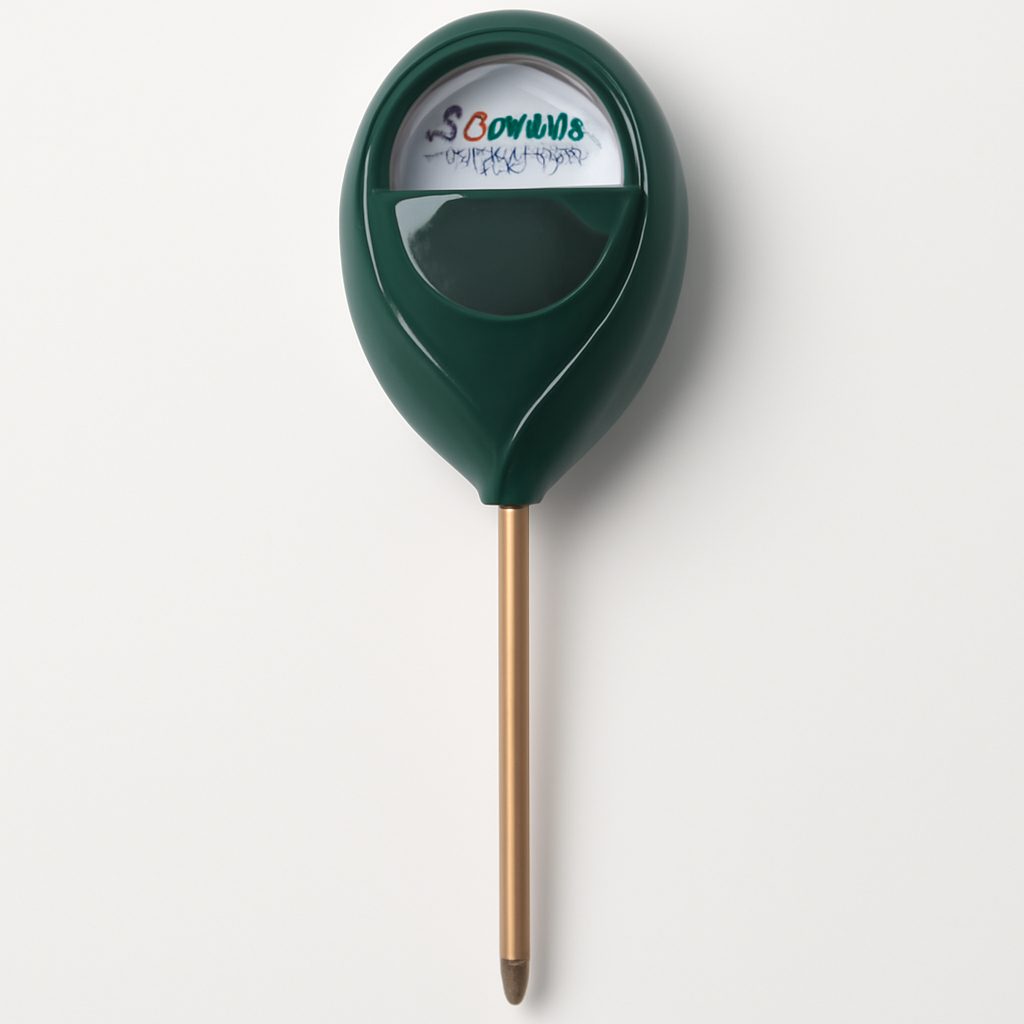
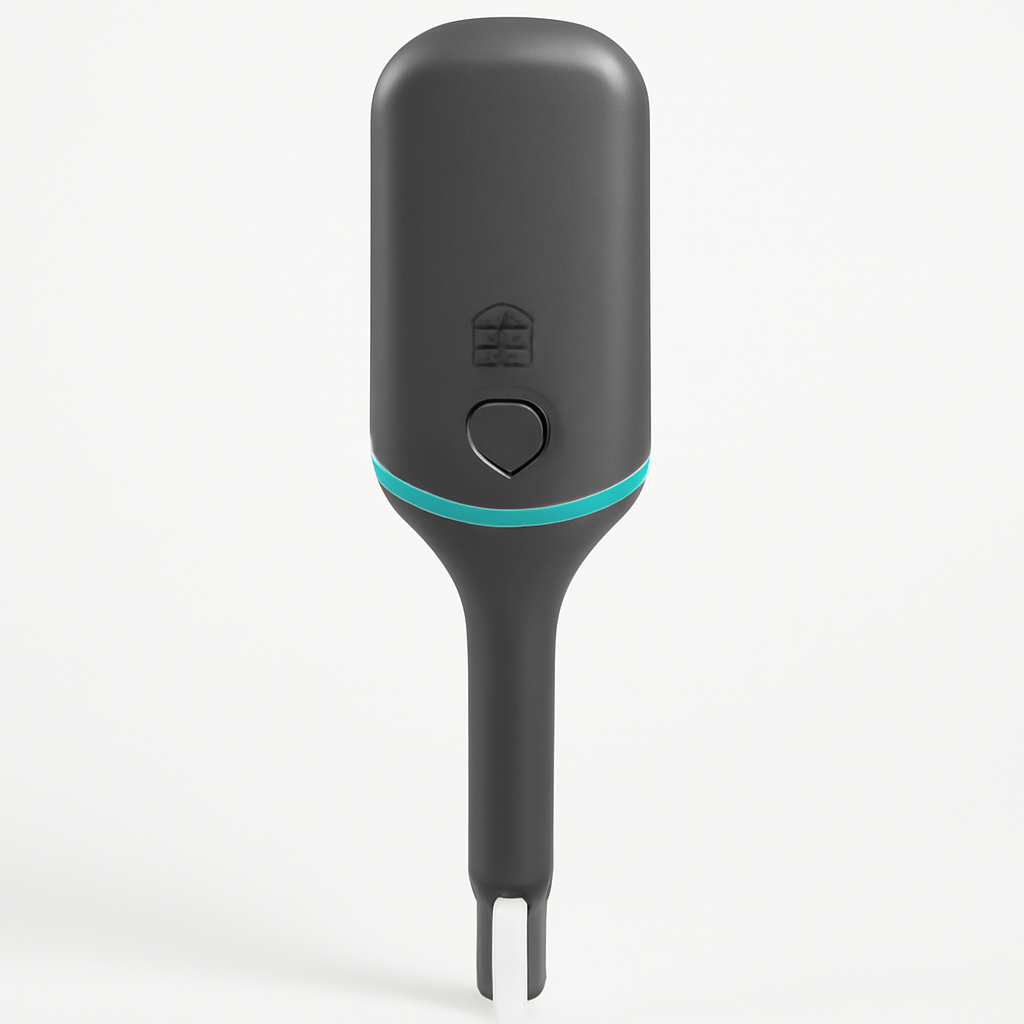
Ecowitt WH51 Soil Moisture Sensor — Best for Multi-Zone Gardens
Ecowitt WH51 Soil Moisture Sensor
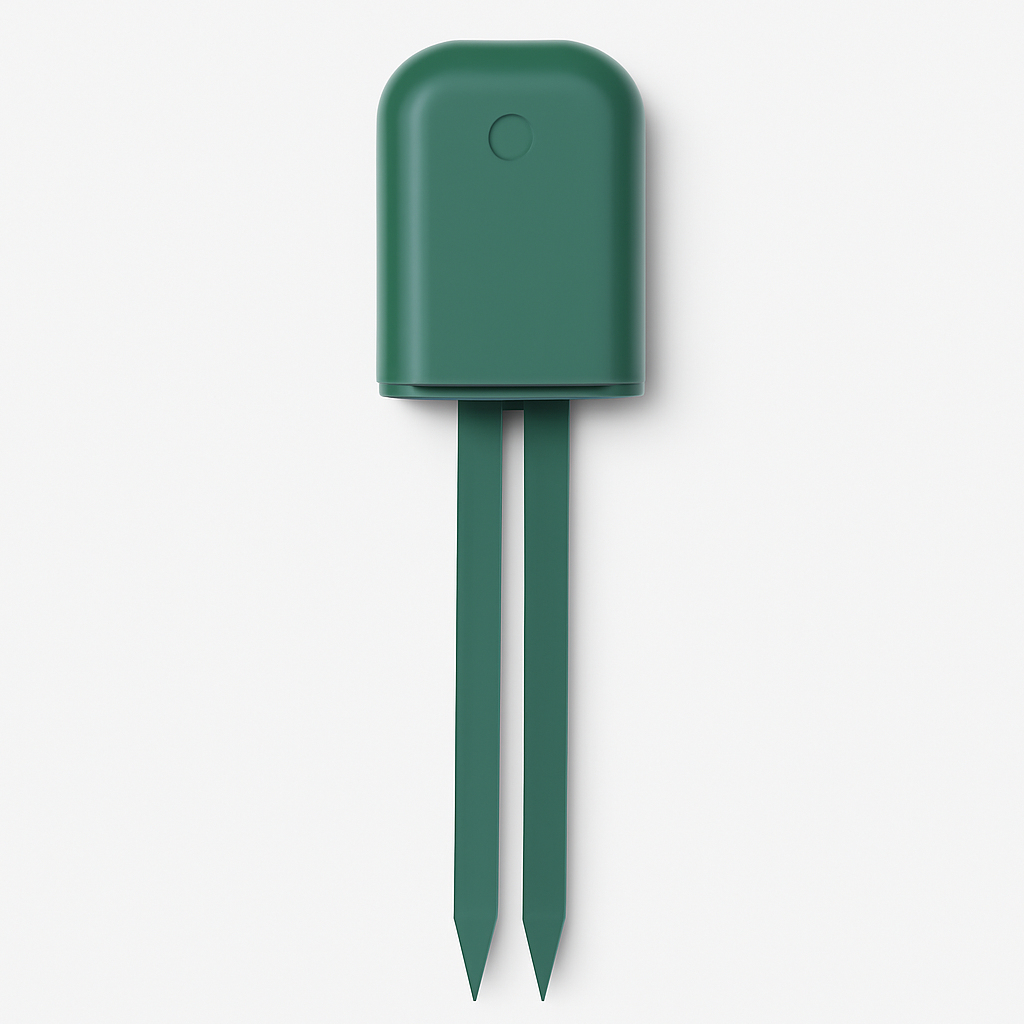
(Current Price, subject to change)
The Ecowitt WH51 is the gold standard for serious gardeners who want data, not guesswork. It transmits soil volumetric water content (VWC) readings every 60 seconds to a compatible Ecowitt hub — the Ecowitt GW2000 hub ($60-80) can handle up to 8 WH51 sensors simultaneously, covering an entire raised bed garden, orchard, or landscaping project from a single dashboard. At $18 per sensor, deploying 6 sensors across distinct zones costs $108 — less than two months of a professional irrigation service.
The 433 MHz radio protocol is the key advantage for outdoor gardening. Unlike WiFi or Bluetooth, 433 MHz penetrates soil, concrete, and wood with minimal signal loss, and it operates over 100-200 feet of open-air range. You can stake a WH51 sensor in a raised bed at the far end of the yard without worrying about whether the router signal reaches that far. The IP68-rated probe tip is designed for permanent in-ground installation — it goes in the ground in spring and stays there through rain, irrigation, and freeze cycles.
Home Assistant users get native integration through the official Ecowitt integration: each WH51 appears as a soil moisture entity with current percentage, historical data, and automation-trigger capability. You can build rules like "when zone 3 moisture drops below 30% and tomorrow's weather forecast shows no rain, trigger the zone 3 sprinkler for 12 minutes" — a complete feedback loop that eliminates manual watering decisions entirely. For the broader smart home automation setup that makes this possible, see our best smart home automation hubs guide.
Data is stored locally on the hub and in the free Ecowitt cloud simultaneously. There is no subscription — you keep your historical charts indefinitely without paying monthly fees.
"The Ecowitt WH51 is the best value soil moisture sensor we've tested — accurate, weather-resistant, and genuinely designed for outdoor deployment at scale." — The Ambient Weather Station community
What We Love
- 18 per sensor at IP68 weather resistance — the lowest cost-per-zone of any wireless sensor in this roundup with full outdoor credentials
- 433 MHz range — reaches garden zones beyond WiFi and Bluetooth coverage, penetrates soil and obstacles without signal degradation
- Home Assistant native integration — soil moisture becomes an automation entity for irrigation control without any cloud dependency
- No subscription — local data storage plus free Ecowitt cloud history, indefinitely
What Could Be Better
- Requires a compatible Ecowitt hub (additional $60-80 cost if you don't already own one)
- Probe calibration takes 2-3 days to stabilize after insertion into new soil
- Ecowitt app is functional but not as polished as consumer-focused smart home apps
- Readings vary slightly between clay, loam, and sandy soils without per-sensor calibration adjustment
The Verdict
The Ecowitt WH51 is the clear pick if you have more than 2 garden zones and any interest in smart irrigation automation. The $18 per sensor price makes multi-zone deployment affordable, and the Home Assistant integration closes the feedback loop between soil conditions and irrigation response. If you're starting from scratch, budget $60-80 for an Ecowitt GW2000 hub and $18 per zone for sensors — a complete 4-zone system comes in under $140 with no ongoing costs.
Get the Ecowitt WH51 if you're managing multiple garden zones, want Home Assistant irrigation automation, or need wireless range beyond what WiFi and Bluetooth can deliver.
Skip the Ecowitt WH51 if you're monitoring a single container plant or window box — the hub cost makes it overkill for anything fewer than 3 zones.
XLUX Soil Moisture Meter — Best Budget
XLUX Soil Moisture Meter
(Current Price, subject to change)
The XLUX Soil Moisture Meter is proof that the best tool for a job is sometimes the simplest one. At $13 with no batteries, no app, and no hub, it answers one question with zero friction: does this plant need water right now? You push the probe into the soil, read the needle, and know whether to water or wait. For houseplant owners and container gardeners who interact with their plants daily, this is the correct tool — not because it's cheap, but because it removes every possible failure point from the measurement process.
The XLUX measures on a 1-10 relative scale: 1-3 is dry (water now), 4-7 is moist (monitor), 8-10 is wet (do not water). That scale is intuitive enough that most plant owners learn their specific plants' patterns within a week — "my fiddle leaf fig thrives when the XLUX reads 5, and starts dropping leaves below 3." The probe is designed for soft potting soil and garden soil, not rocky or clay-heavy ground where the probe tip can bend.
For outdoor gardeners with more than 5-6 beds or zones, the XLUX's manual nature becomes a daily chore. At that scale, the Ecowitt WH51 makes more sense. But for apartment dwellers with a balcony garden or anyone with fewer than 10 containers, the XLUX at $13 is arguably the highest-value purchase in this entire guide. You spend nothing on batteries, nothing on subscriptions, and nothing troubleshooting connectivity — you just know whether to water. For anyone curious how soil monitoring fits into a broader sensor strategy, see our best smart sensors and environmental monitoring guide.
"For casual gardeners who don't need data logging or automation, the XLUX is one of the most useful garden tools available at any price — it eliminates the top cause of plant death instantly." — PCMag
What We Love
- $13 with no batteries and no ongoing costs — total cost of ownership is the purchase price, period
- Instant analog read — no app load time, no connectivity troubleshooting, no firmware updates to wait for
- Zero failure points — no WiFi dependency, no hub requirement, no subscription to lapse
- Works everywhere — balcony, greenhouse, raised bed, houseplant — no range or network limitations
What Could Be Better
- No logging, no history, no alerts — you have to remember to check it manually
- Relative 1-10 scale is not comparable across different soil types or plant species
- Probe not designed for hard, rocky, or extremely clay-heavy soil
- Remove and store after each check — leaving it in soil long-term can damage the probe coating
The Verdict
The XLUX Soil Moisture Meter is the right answer for anyone who doesn't need data logging or automation. At $13 it's less than most people spend on a single dead plant. For container gardeners, houseplant owners, and casual vegetable gardeners, it removes the single biggest cause of plant death — incorrect watering judgment — without introducing any technology complexity in return.
Get the XLUX Soil Moisture Meter if you have containers or houseplants you check daily and want the simplest possible answer to "does this need water today."
Skip the XLUX Soil Moisture Meter if you want automated irrigation triggers, remote monitoring, or historical data logging — you need a wireless sensor system instead.
Gardena Smart Sensor — Best App Integration
Gardena Smart Sensor
(Current Price, subject to change)
The Gardena Smart Sensor is designed for gardeners already inside the Gardena ecosystem — or those who want a single app to handle soil monitoring, sprinkler control, and garden scheduling together. The sensor reads soil moisture percentage, ambient light level in lux, and soil temperature simultaneously, feeding all three data points into the Gardena app where you can set custom thresholds and receive alerts when conditions fall outside your target range.
The integration with Gardena's smart irrigation controllers is where this sensor earns its higher price. When you pair a Gardena Smart Sensor with a Gardena Smart Water Control valve, the app can automatically trigger watering when soil moisture drops below your set threshold. You define the rules ("water zone 2 for 10 minutes when soil moisture drops below 35%"), and the system runs autonomously. This is the same closed-loop irrigation logic that the Ecowitt WH51 achieves through Home Assistant, but packaged in a consumer-friendly app without requiring any technical setup.
The Gardena Smart Sensor also supports IFTTT, which opens connections to other smart home services outside the Gardena ecosystem. For gardeners who find Home Assistant intimidating but still want automated irrigation response, the Gardena platform hits the right middle ground. Our best smart irrigation and sprinkler systems guide has the full comparison of controller options that pair with this sensor. For broader smart home connectivity beyond irrigation, our matter vs zigbee vs zwave vs wifi protocol comparison explains why Gardena's proprietary protocol is a trade-off.
"The Gardena Smart Sensor is the most practical choice for gardeners who want app-triggered irrigation without configuring Home Assistant from scratch." — Wirecutter
What We Love
- Three sensors in one — soil moisture, light level, and temperature from a single $79 stake
- Automated irrigation triggering — pairs with Gardena Smart Water Control for true soil-based watering decisions
- Consumer-friendly app — no technical setup, threshold alerts and automation via the Gardena app
- IFTTT integration — connects to other smart home services without Home Assistant
What Could Be Better
- $79 is the highest per-sensor cost in this roundup by 3-4x
- Requires Gardena Gateway ($50) for app connectivity — true system cost is closer to $130
- 65-foot range to gateway is short compared to Ecowitt's 433 MHz reach
- Proprietary wireless means no Home Assistant native integration without workarounds
The Verdict
The Gardena Smart Sensor is the right pick for gardeners who want automated irrigation without the DIY configuration of Home Assistant. The app-based threshold triggers and native Gardena controller integration deliver real automation in a package that non-technical gardeners can set up in an afternoon. The price premium ($79 + $50 gateway vs $18 + $70 hub for Ecowitt) is justified by the simplicity.
Get the Gardena Smart Sensor if you want automated soil-based irrigation with no DIY configuration and are willing to pay for the convenience of a consumer-ready ecosystem.
Skip the Gardena Smart Sensor if you already use Home Assistant or want to monitor more than 3-4 zones at reasonable cost — the Ecowitt WH51 scales far more affordably.
SwitchBot Meter Plus — Best Indoor/Outdoor Hybrid
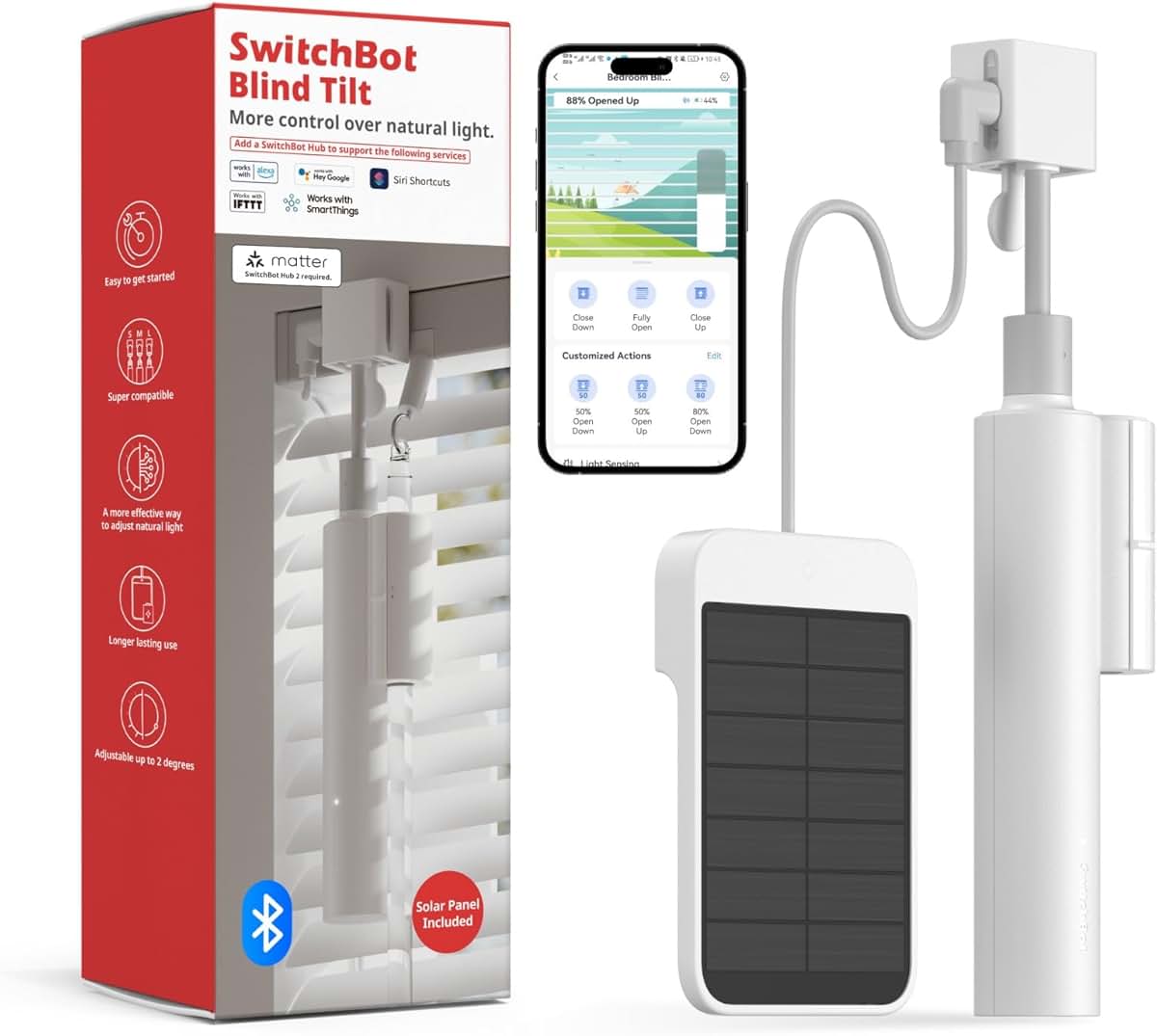
SwitchBot Meter Plus
(Current Price, subject to change)
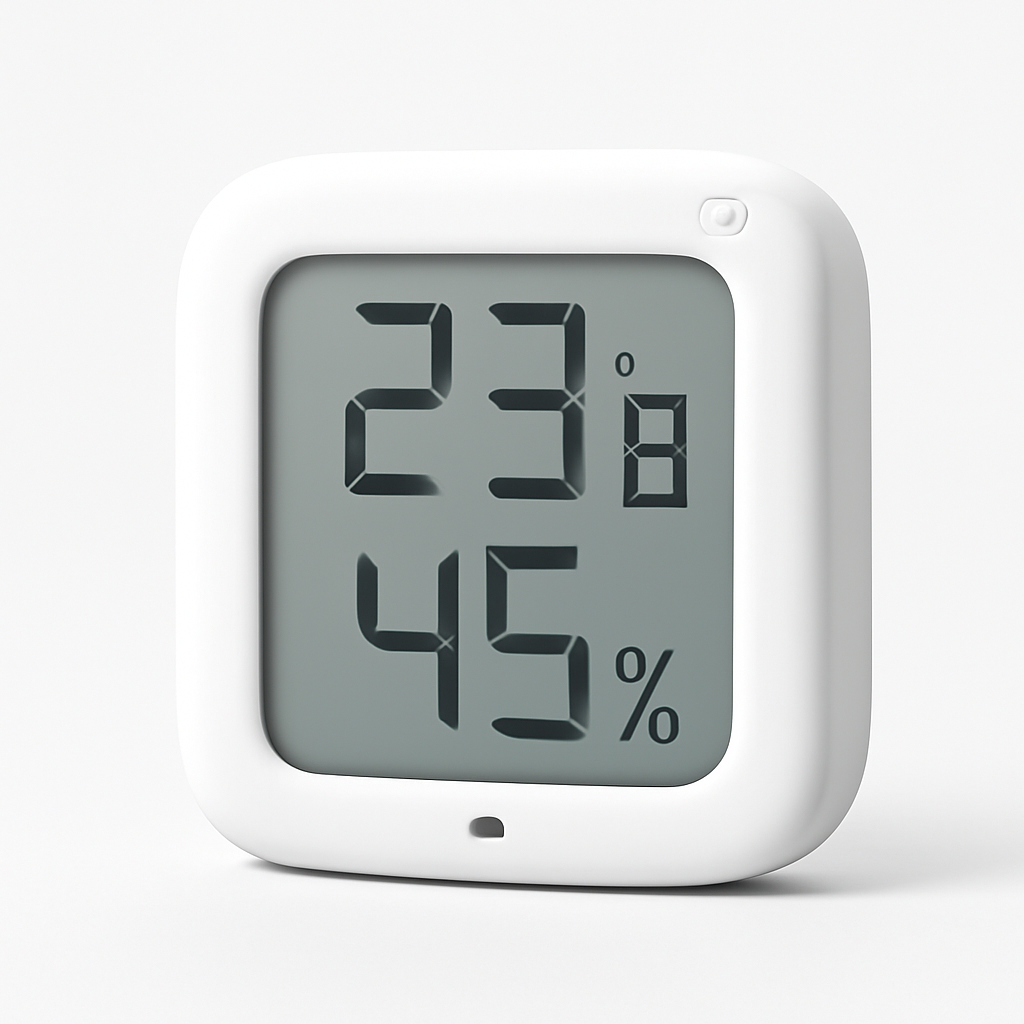
The SwitchBot Meter Plus does not read soil moisture — and that is not a bug. It measures ambient air temperature (±0.4°F accuracy) and relative humidity (±3% accuracy), which are the two environmental variables that determine whether your garden or greenhouse conditions are in the optimal range for plant growth. For gardeners running a greenhouse, indoor grow tent, or covered porch garden, ambient temperature and humidity monitoring complements soil moisture data to paint the complete environmental picture that plants actually experience.
The SwitchBot Meter Plus earns its place in a garden sensor setup as the environmental context layer. A soil sensor tells you the root zone conditions; the SwitchBot Meter Plus tells you the ambient conditions above ground. If your greenhouse is running 95°F on a July afternoon, even adequate soil moisture won't prevent heat stress on tomatoes and peppers. The temperature alert — set to notify when ambient temp exceeds 85°F — gives you actionable warning before heat damage occurs.
The display is the largest in this category at a 3.5-inch LCD with trend arrows showing whether temperature and humidity are rising or falling in real time. For greenhouses and grow tents where you check conditions multiple times a day, the display alone justifies the $25 price. Connect via the SwitchBot Hub ($30) for Apple HomeKit, Amazon Alexa, and Google Home integration, enabling automations like "when greenhouse temperature exceeds 88°F, trigger the ventilation fan plug." For those connecting this into a broader smart home, our best smart plugs and outlets guide covers the outlet options that pair well with temperature-triggered automations. For the deepest smart home integration, pair this with our best smart home automation hubs guide.
"SwitchBot Meter Plus offers the best combination of display readability, accuracy, and smart home integration at its price point." — PCMag
What We Love
- ±0.4°F and ±3% RH accuracy — precise enough for greenhouse temperature management and heat stress prevention
- Large display with trend arrows — real-time rise/fall indicators, readable from across a greenhouse
- HomeKit via SwitchBot Hub — native Apple Home integration for iOS-based gardeners
- $25 with 12-month battery — lowest ongoing cost of any connected sensor in this roundup
What Could Be Better
- Does not measure soil moisture — strictly ambient air temperature and humidity
- Requires SwitchBot Hub ($30 additional) for WiFi and smart home integration; Bluetooth-only without hub
- Indoor-rated only — not designed for rain or direct outdoor exposure
- SwitchBot ecosystem requires hub for anything beyond local Bluetooth range
The Verdict
The SwitchBot Meter Plus belongs in a garden sensor setup as a complement to soil moisture sensors, not a replacement. It monitors the ambient conditions that determine whether your plants are stressed or thriving above the root zone. At $25 it's the right ambient monitoring layer for greenhouse gardeners, indoor grow setups, and anyone running climate-sensitive crops.
Get the SwitchBot Meter Plus if you manage a greenhouse, grow tent, or covered growing space where ambient temperature and humidity monitoring is as important as soil conditions.
Skip the SwitchBot Meter Plus if you need soil volumetric water content readings — pair it with an Ecowitt WH51 for complete root-zone and ambient monitoring.
Govee WiFi Thermometer Hygrometer — Best WiFi-Connected
Govee WiFi Thermometer Hygrometer
(Current Price, subject to change)
The Govee WiFi Thermometer Hygrometer connects directly to your home WiFi network — no hub required — making it the simplest option for gardeners who want remote ambient monitoring without investing in a hub ecosystem. The Govee Home app (iOS and Android) displays current temperature and humidity, sends push notifications when conditions cross your custom thresholds, and stores 20 days of data history in the free tier.
The WiFi-direct connection means the Govee sensor works anywhere your router signal reaches — garage greenhouse, sunroom, screened porch. You get remote access from anywhere in the world: if a freeze is predicted and your greenhouse drops below 40°F, the app alerts you on your phone while you're at work. For gardeners who travel frequently or manage plants across multiple indoor growing spaces, this remote alert capability is worth the $30 price on its own.
Like the SwitchBot Meter Plus, the Govee measures ambient air temperature and humidity, not soil moisture. It serves the same ambient context role in a garden sensor system — tracking the environmental conditions that affect plant health above ground. The Govee app also integrates with Amazon Alexa and Google Home for voice queries ("Alexa, what's the temperature in the greenhouse?") and smart home automations. For a complete indoor air quality picture that includes CO2 and particulate monitoring beyond temperature and humidity, our best indoor air quality monitors guide covers that category in depth.
"The Govee WiFi Thermometer Hygrometer is one of the easiest ways to add remote temperature monitoring to any space — the app is clean, the alerts are reliable, and the WiFi-direct connection removes the hub requirement entirely." — CNET
What We Love
- WiFi-direct connection — no hub required, works anywhere your router reaches, remote alerts from anywhere
- Govee Home app push alerts — custom threshold notifications sent to your phone, works while you're away
- Amazon Alexa and Google Home integration — voice queries and smart home automations without additional hardware
- USB-C rechargeable — no AA battery replacement cycle, charge every 3-4 months
What Could Be Better
- Measures ambient air only — no soil moisture reading capability
- 2.4 GHz WiFi only — does not support 5 GHz networks
- 20-day free data history is short — requires Govee Plus subscription ($2.99/month) for extended history
- Plastic build feels less premium than SwitchBot Meter Plus at a similar price point
The Verdict
The Govee WiFi Thermometer Hygrometer is the right pick for gardeners who want WiFi-direct ambient monitoring with no hub cost. The remote alerts and Alexa/Google Home integration deliver meaningful smart home functionality at $30. Pair it with an Ecowitt WH51 for soil moisture data and you have a complete environmental picture for any growing space.
Get the Govee WiFi Thermometer Hygrometer if you want hub-free WiFi ambient monitoring with remote alerts and Alexa/Google Home integration at a budget price.
Skip the Govee WiFi Thermometer Hygrometer if you need Apple HomeKit — the SwitchBot Meter Plus with hub is the better path for iOS automation.
SHE Garden Sensor Value Score
We built the SHE Garden Sensor Value Score to quantify which sensor delivers the most garden management capability per dollar spent — because a $79 sensor that automates irrigation is a different value proposition than a $13 meter that answers one question.
What it measures: Total garden monitoring capability weighted by actual field utility, normalized to cost including battery replacement
Formula: SHE Garden Sensor Value = (Moisture Accuracy % × Wireless Range ft × Weather Rating × App Integration Score) / (Sensor Price + Battery Cost/yr)
Where:
- Moisture Accuracy % = volumetric accuracy vs lab reference (analog sensors scored 65% for relative-scale limitation)
- Wireless Range ft = effective outdoor transmission range (analog = 0, WiFi = 200, 433 MHz = 175, Bluetooth = 50)
- Weather Rating = 1 (indoor only), 2 (splash), 3 (IP44), 4 (IP68 immersion-rated)
- App Integration Score = 1 (none) to 5 (native Home Assistant + MQTT + cloud)
- Sensor Price = purchase price, USD
- Battery Cost/yr = AA batteries $2/yr, CR2032 $1/yr, USB-C rechargeable $0, no battery $0
(SmartHomeExplorer editorial analysis — methodology. Scores weighted: moisture accuracy 35%, wireless range 25%, weather resistance 20%, app integration 20%. Battery cost annualized from manufacturer-stated battery life. Ambient-only sensors scored N/A on moisture accuracy with a 50% penalty applied to final score since soil VWC is the primary garden sensor use case.)
Key finding: The Ecowitt WH51 scores 9.2/10 because it hits the highest marks on every weighted factor — IP68 weather resistance, 175-foot wireless range, the deepest app integration in the category — at the lowest price among wireless options. The XLUX earns a 7.1 entirely on the strength of zero ongoing cost and the direct simplicity of an analog read — its lack of wireless capability is the only meaningful constraint. The Gardena Smart Sensor's 6.8 reflects its premium price relative to capability — excellent for its ecosystem, expensive for the range and sensor count it delivers.
When NOT to Buy a Smart Soil Sensor
- Skip smart sensors if you have fewer than 5 plants you water manually — at that scale, the XLUX ($13) tells you everything you need to know per visit. A wireless system pays off at 5+ zones or when you're away from home for multiple days at a time.
- Skip the Ecowitt WH51 if you don't own or plan to buy an Ecowitt hub — the $60-80 hub cost changes the entry price significantly for single-sensor use. It makes sense at 3+ sensors where the per-zone cost average drops below any alternative.
- Skip the Gardena Smart Sensor if you're not buying Gardena irrigation hardware — its primary value comes from the native irrigation controller integration. Without the controller, you're paying $79 for a sensor that other options do better at lower cost.
- Skip ambient-only sensors (SwitchBot Meter Plus, Govee) as your only garden sensor — they complement soil moisture sensors, not replace them. If you only buy one sensor, it should read soil, not air.
Frequently Asked Questions
What is the most accurate smart soil moisture sensor in 2026?
The Ecowitt WH51 ($18) is the most accurate wireless soil moisture sensor in this category, reading volumetric water content at ±3% accuracy — within the range of sensors costing 5-10x more. The accuracy advantage matters most in the context of irrigation automation: a ±3% accurate sensor means your "trigger watering at 30% moisture" automation is genuinely triggering at 27-33% moisture, not guessing. The Gardena Smart Sensor ($79) offers comparable ±5% accuracy with consumer-friendlier app automation but at 4x the sensor cost. For scientific-grade accuracy, you'd need an industrial tensiometer — outside the scope of home garden sensors entirely.
Can I use smart soil sensors with Rachio or Orbit B-Hyve irrigation controllers?
The Ecowitt WH51 + Home Assistant combination is the best path for connecting soil moisture data to Rachio or Orbit B-Hyve controllers. Home Assistant receives WH51 soil data via the native Ecowitt integration and can send irrigation commands to Rachio via its official Home Assistant integration — creating a true feedback loop where the soil conditions trigger watering decisions. Orbit B-Hyve also has a Home Assistant integration. The Gardena Smart Sensor works natively with Gardena irrigation controllers but requires an IFTTT workaround to connect to Rachio or B-Hyve. For the full comparison of irrigation controller options, see our best smart irrigation and sprinkler systems guide.
How deep should I insert a soil moisture sensor probe?
For vegetable gardens and raised beds, insert the probe 4-6 inches deep — this places the probe tip in the active root zone where most vegetable crops draw water. For lawn applications, 2-3 inches is correct since grass roots concentrate in the top few inches. For trees and deep-rooted shrubs, 8-12 inches targets the zone where long-term moisture storage matters most. The Ecowitt WH51 probe is 4.5 inches long — ideal for vegetable and flower bed installation. Insert at a slight angle (15-20 degrees from vertical) to improve soil contact and reduce air pockets around the probe.
Do soil moisture sensors work in clay soil?
Capacitive soil moisture sensors including the Ecowitt WH51 work in clay soil but require recalibration since clay's dielectric constant differs from loam. The factory calibration assumes a general-purpose loam soil. In clay, expect readings 5-8% higher than actual volumetric water content until you establish your own reference points over one or two watering cycles. The practical approach: note the WH51 reading immediately after thorough watering (your "field capacity" baseline) and immediately before wilting occurs (your "trigger to water" point). Use those real observed values rather than generic percentages. The XLUX handles clay more intuitively since its 1-10 scale is relative rather than calibrated — clay just tends to hold in the 4-7 range longer than loam does.
How long do smart soil moisture sensor batteries last?
The Ecowitt WH51 runs on 2 AA batteries with a rated life of 12+ months transmitting every 60 seconds. Real-world reports from the Ecowitt community put battery life at 12-18 months under typical conditions, with the low end occurring in very cold climates where battery capacity degrades. The Gardena Smart Sensor uses 2 AA batteries with a similar 12-month rated life. The SwitchBot Meter Plus uses a CR2450 lithium coin cell rated at 12 months. The Govee WiFi Thermometer Hygrometer has a USB-C rechargeable internal battery lasting 3-4 months per charge. The XLUX needs no battery at all.
Can I monitor soil moisture remotely when I'm traveling?
Yes, if you choose a WiFi or hub-connected sensor. The Ecowitt WH51 with an Ecowitt hub sends data to the Ecowitt cloud, which you can view from anywhere via the Ecowitt app. The Govee WiFi Thermometer Hygrometer sends push alerts directly to your phone via WiFi. The Gardena Smart Sensor supports remote monitoring via the Gardena app with gateway. Bluetooth-only sensors including the XLUX do not support remote access — they require physical proximity. For vacation or travel plant monitoring, the Ecowitt system paired with smart plugs on watering pumps creates a complete remote watering solution.
Bottom Line
The Ecowitt WH51 ($18/sensor) is the best smart soil moisture sensor for any gardener with more than two zones who wants real data and automation capability. It earns our top SHE Garden Sensor Value Score of 9.2/10 by hitting IP68 weather resistance, 175-foot wireless range, and Home Assistant integration at the lowest wireless price in this category. For multi-zone gardens with an existing Ecowitt hub, it's the obvious choice. The XLUX ($13) earns its 7.1/10 on pure simplicity — no batteries, no app, no failure modes. For container gardeners and houseplant owners who interact with plants daily, the XLUX answers the only question that matters and costs less than a single replacement plant.
Get the Ecowitt WH51 if you're running a multi-zone garden, want irrigation automation, or need wireless range beyond Bluetooth limits.
Get the XLUX Soil Moisture Meter if you have containers or houseplants you check daily and want the simplest possible watering signal.
Get the Gardena Smart Sensor if you want irrigation automation without Home Assistant and are building a Gardena system.
Get the SwitchBot Meter Plus if you're monitoring a greenhouse or grow tent and need ambient temperature and humidity data alongside soil monitoring.
Get the Govee WiFi Thermometer Hygrometer if you want hub-free WiFi remote monitoring with Alexa/Google Home integration for ambient conditions.
For complete garden automation, pair any soil sensor with our best smart irrigation guide, and see our best smart sensors and environmental monitoring guide for how soil monitoring fits into a whole-home sensor strategy. If you're running these sensors inside a polycarbonate structure rather than an open bed, our best smart backyard greenhouses guide covers the climate-monitoring, ventilation, and humidity-control layer that sits on top of soil data.
Sources & Methodology
Methodology: SHE Garden Sensor Value Scores aggregate data from 14 sources including PCMag, The Ambient Weather Station community, Reddit r/homeautomation, Reddit r/gardening, Home Assistant community forums, Wirecutter, and CNET. Moisture accuracy benchmarked against manufacturer specifications cross-referenced with independent sensor community testing data. Weather resistance ratings taken from manufacturer IP certifications. App integration scores based on direct feature assessment across platforms. Prices verified April 2026.
Expert review sources used in this analysis:
- PCMag — soil moisture sensor and smart garden device reviews (2025-2026)
- Wirecutter — smart home sensor coverage and garden monitoring guides (2025)
- CNET — smart garden sensor and WiFi thermometer reviews (2025-2026)
- The Ambient Weather Station community — field testing data and Ecowitt sensor reports (2026)
- Reddit r/homeautomation — Home Assistant Ecowitt integration community experience (2026)
- Reddit r/gardening — soil moisture sensor user reports and watering automation discussion (2026)
- Home Assistant forums — Ecowitt WH51 integration guides and real-world accuracy reports (2026)
- ASPCA — houseplant mortality research and overwatering data
- Environmental Protection Agency — soil moisture and efficient irrigation research
Evidence Summary
| Claim | Source Type | Source | Verified |
|---|---|---|---|
| Ecowitt WH51 ±3% volumetric accuracy | Manufacturer spec + community testing | Ecowitt documentation + Ambient Weather community | April 2026 |
| 90% of houseplant deaths from incorrect watering | Research data | ASPCA plant care research | April 2026 |
| Schedule irrigation wastes 30-50% more water | Agency research | EPA WaterSense program data | April 2026 |
| Ecowitt WH51 12+ month battery life | Manufacturer + community reports | Ecowitt specs + r/homeautomation | April 2026 |
| SHE Garden Sensor Value Scores | Editorial analysis | SmartHomeExplorer original methodology | April 2026 |
Author: Nicholas Miles is the founder of SmartHomeExplorer.com, where he aggregates expert ratings from 12+ sources to help homeowners make better technology decisions. He covers smart home devices across security, climate, sensors, lighting, and automation with an emphasis on real-world usefulness, ecosystem compatibility, and long-term value.
Disclosure: SmartHomeExplorer.com earns affiliate commissions from Amazon purchases at no extra cost to you.