

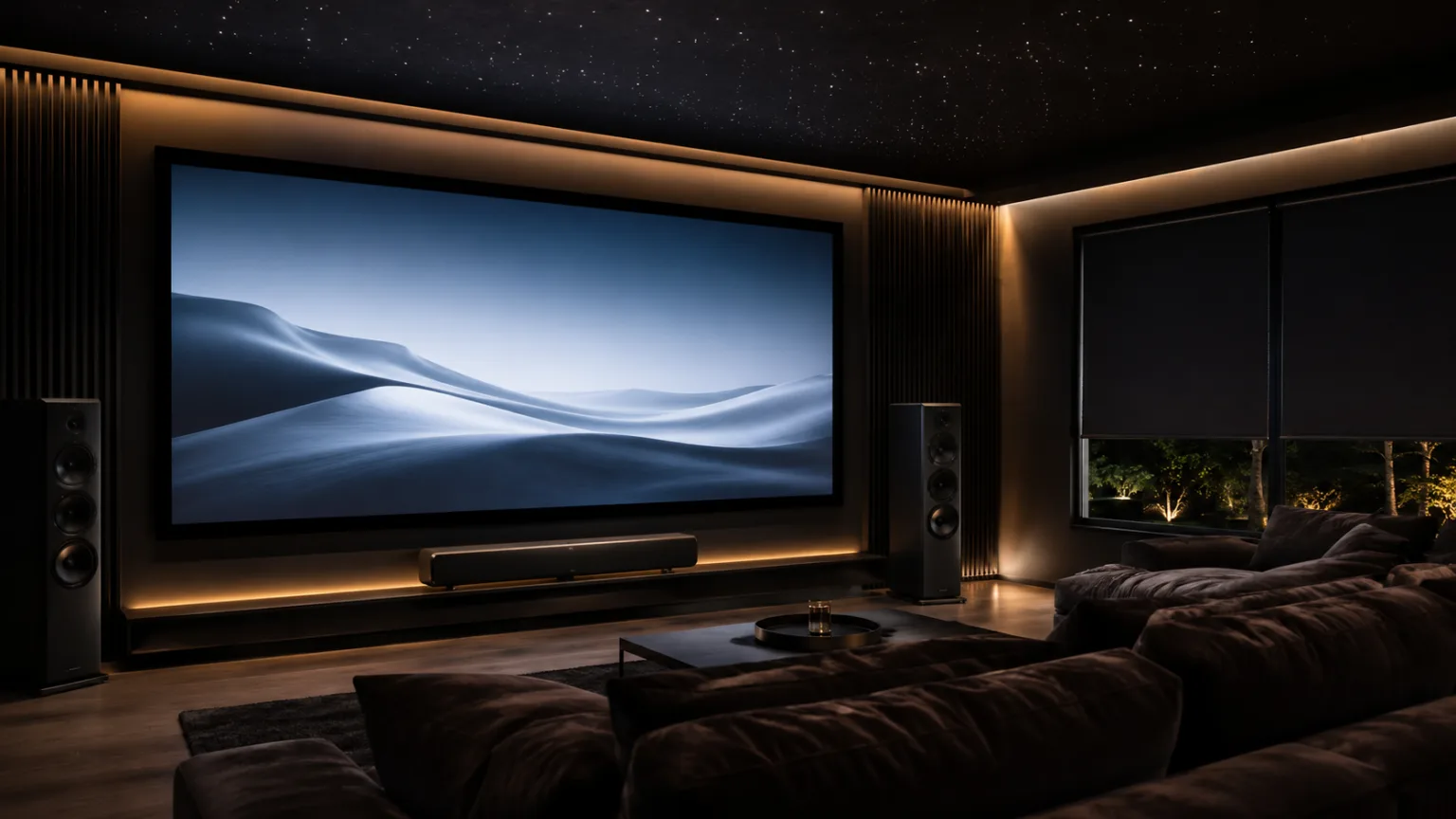
The Complete Smart Home Theater Setup (2026): One Room, One Cart
One room, one cart. One best pick per theater zone — the projector, the screen, the sound, the shades, the bias light, and the brain — assembled in the order the room actually comes together.
This article contains affiliate links. We may earn a commission at no extra cost to you. Prices change frequently — check the current price on Amazon before buying. Learn more
The Short Answer
One pick per theater zone: the Epson LS11000 anchors the picture with a laser rated for 20,000 hours, the Starling supplies the ambient-light-rejecting canvas, and the Samsung HW-Q990F delivers genuine overhead Atmos without a receiver, while automated shading, bias lighting, and the Apple TV complete the room.
Featured in this Guide
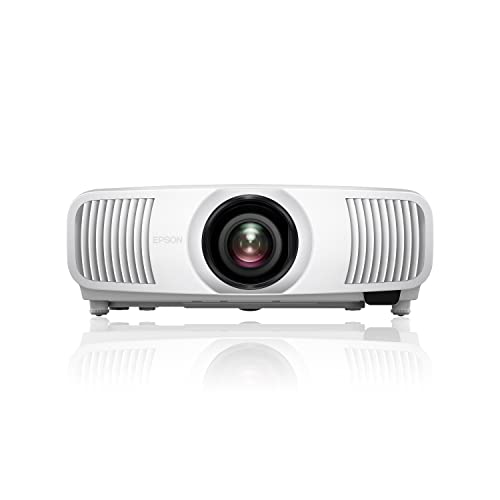
Epson
Home Cinema LS11000
- •2,500 lumens, 4K/120 over HDMI 2.1, motorized lens with 10 memories at $4,400 — the room's anchor
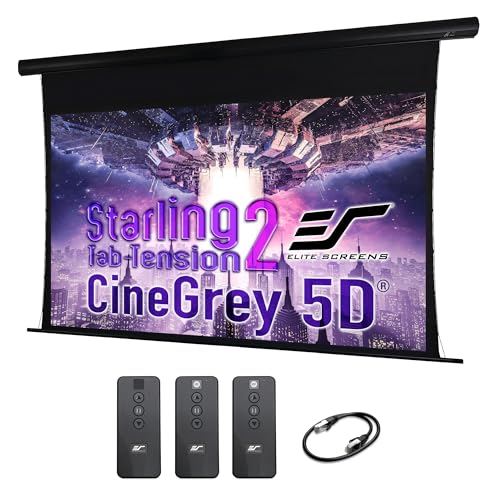
Elite
Screens Starling Tab-Tension 2 CineGrey 5D 120-inch
- •Tab-tensioned 120-inch CineGrey 5D ALR at $1,693 — theater-grade flatness for a standard-throw beam
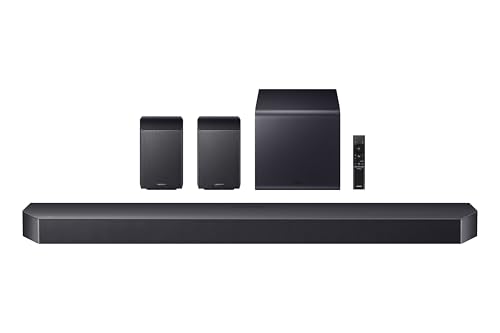
Samsung
HW-Q990F Q-Series Soundbar
- •11.1.4 from one box at $1,598-$1,999 — bar, wireless sub, and wireless rears with no receiver rack
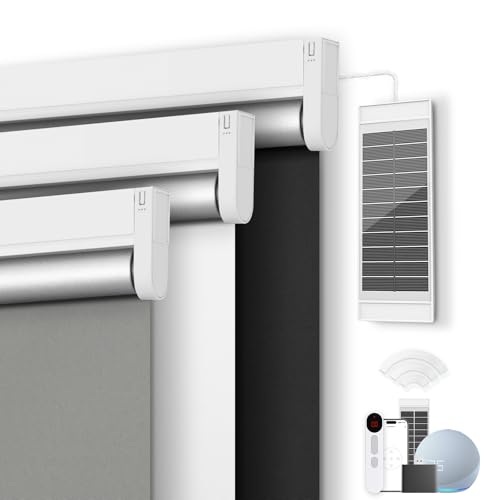
Motorized
Blackout Smart Roller Blinds with Remote Control & Solar Panel - Compatible with Alexa - White, 34" W × 72" H
- •Blackout fabric, solar recharging, no-drill install at $83.99 per window — daytime dark on a schedule
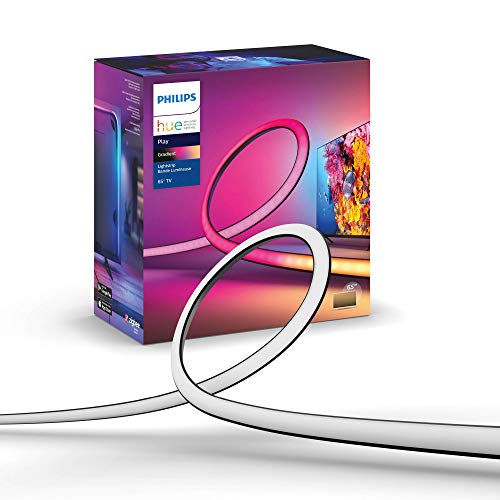
Philips
Hue Play Gradient Lightstrip
- •7 gradient zones at $90-$110 — the cheapest comfort upgrade in the basket (Hue Bridge required)
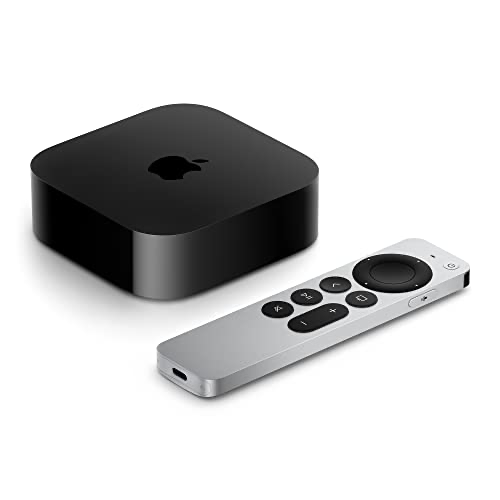
Apple
TV 4K 3rd Gen
- •4K HDR streaming, local HomeKit automations, and a Thread border router at $129 — the room's brain
How the Zones Compare on One Score
Entertainment
Chart
 Smarthomeexplorer.com
not sold on Amazon
Tap any pick to check its live price on Amazon.
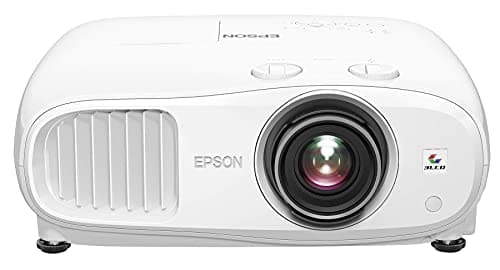
Epson Home Cinema 3800 4K PRO-UHD 3-Chip Projector with HDR
RecommendedCheck price
Hisense 75" U8 Series ULED Mini-LED 4K UHD Smart Google TV (75U8QG) - QLED, Native 165Hz, VRR 288, Up to LD5600, 5000 Nits, HDR10+, Dolby Vision IQ · Atmos, IMAX Enhanced, 4.1.2 Ch Audio
RecommendedCheck price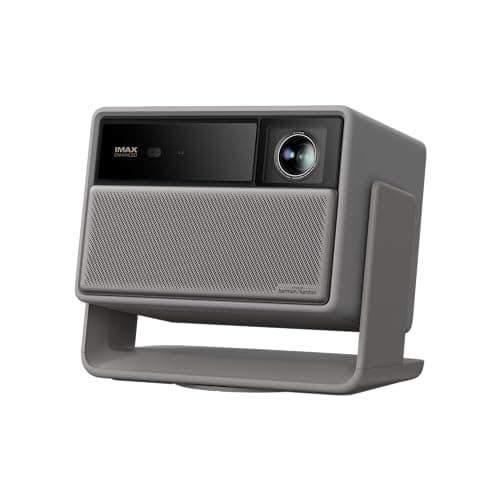
XGIMI HORIZON 20 4K RGB Triple Laser Home Projector
Must BuyCheck price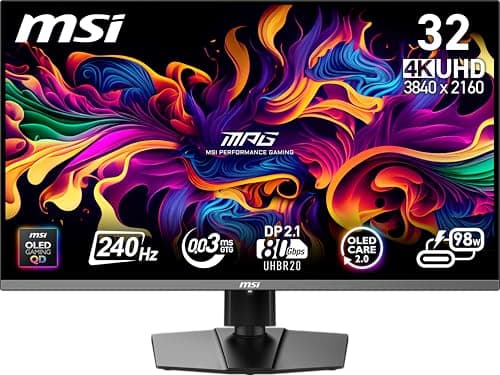
MSI MPG 322URX QD-OLED (32" 4K 240Hz)
RecommendedCheck price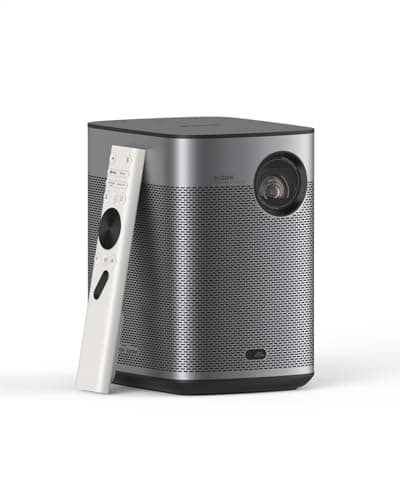
XGIMI Halo+ Portable Projector
RecommendedCheck price
A Theater Room Is a System, Not a Screen
A genuine home theater is a system you assemble in one deliberate planning session, because every zone depends on the others: the projector requires a canvas worth hitting, the canvas requires controlled daylight, the sound must match the scale of the image, and a single device has to orchestrate the sequence when someone announces movie night. We evaluated one best pick per zone — a 2,500-lumen laser projector whose light source is rated for 20,000 hours, a tab-tensioned ambient-light-rejecting screen with trigger-synchronized drop, an 11.1.4-channel soundbar kit, solar-recharged blackout rollers, a 7-zone gradient bias light, and the streamer that doubles as a Thread border router. RTINGS, TechRadar, Wirecutter, The Verge, and Engadget anchor the underlying coverage, and the picture-and-sound pair alone carries roughly 75% of the $8,600-class basket. Because Amazon's cookie pays on the whole cart for 24 hours, one real click can carry the entire room.
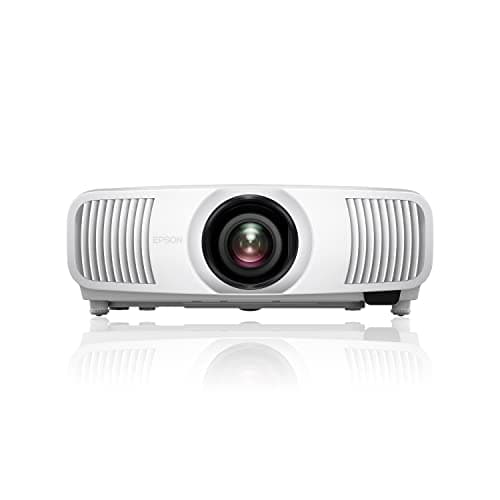
Picture Zone: Epson Home Cinema LS11000
Picture zone — the room's anchorEpson Home Cinema LS11000
- 2,500 lumens of color and white brightness fills a 120-inch screen
- 4K pixel-shift rather than a native 4K panel
(Current price, subject to change)
The 7.5 SHE Theater Room Score composite on the Epson Home Cinema LS11000 reads low for the pick the room is built around — in practice the number describes the install project, not the image, which anchors about 51% of the basket's value. ProjectorReviews covers the LS11000 and highly recommends it as a laser home theater projector under $5,000; its 4K PRO-UHD 3LCD engine delivers 2,500 lumens of color and white brightness — enough for a 120-inch picture without a sealed cave — and compared to a lamp-based projector, the laser source rated for 20,000 hours — at 4 hours of viewing a night, more than 13 yrs of service — retires the bulb-swap ritual entirely. HDMI 2.1 carries 4K/120 from the control zone, and the motorized lens recalls 10 positions per aspect ratio. It has no smart OS and no companion app — a pure imaging instrument, which the smart-integration factor scores accordingly. The trade-offs are stated plainly in its consensus record: pixel-shift rather than native 4K, HDR10 and HLG without dynamic tone mapping, and black levels that trail the native-4K rivals. For the step-up ladder and the dedicated-dark-room alternatives, the Best Premium 4K Laser Long-Throw Projectors 2026 roundup ranks the full slate.
What We Love
- 2,500 lumens of color and white brightness fills a 120-inch screen
- 20,000-hour laser light source means no lamp swaps
- Motorized lens memories recall zoom and shift per aspect ratio
What Could Be Better
- 4K pixel-shift rather than a native 4K panel
- HDR10 and HLG only — no HDR10+ or dynamic tone mapping out of the box
The Verdict
If the picture is the reason you are building the room, the Epson Home Cinema LS11000 fits the brief as the anchor. It leads our long-throw roundup as the price-to-performance pick: 2,500 lumens, HDMI 2.1 with 4K/120, and a 20,000-hour laser at $4,400 list.
Ready to upgrade your home?
MOVA P10 Pro Ultra Robot Vacuum and Mop
See it on Amazon
roborock F25 Ultra Steam Wet Dry Vacuum Mop
See it on Amazon
Philips Wi-Fi Keypad Deadbolt with Handle
See it on Amazon
Sponsored listings from Amazon’s Sponsored Products for Creators program, kept apart from our reviews and rankings. How we make money
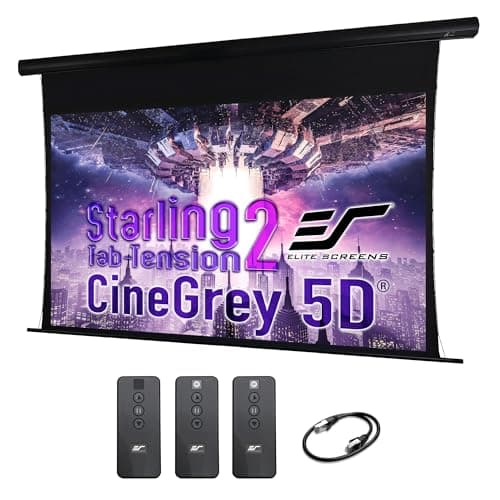
Screen Zone: Elite Screens Starling Tab-Tension 2 CineGrey 5D 120-inch
Screen zone — the canvasElite Screens Starling Tab-Tension 2 CineGrey 5D 120-inch
- Tab-tensioned surface holds theater-grade flatness across 120 inches
- Ceiling-drop format needs a mounting rail or ceiling surface
(Current price, subject to change)
The 7.0 SHE Theater Room Score composite on the Elite Screens Starling Tab-Tension 2 CineGrey 5D 120-inch is the lowest in the basket, and it is worth being precise about why: install and smarts, not the surface. Relative to a bare painted wall, the tab-tensioned CineGrey 5D material rejects ambient light and yields wrinkle-free flatness across a 120-inch span — a canvas nearly 9 ft wide, with roughly 3.4x the viewing area of a 65-inch TV — the difference between a projected rectangle and a screen that stays flat through a 3 hours epic — and the slim aluminum housing mounts to a ceiling or wall. Cohesion is its quiet strength: 12V and 5V trigger inputs plus a programmed IR and RF remote kit mean the screen drops the moment the picture zone powers on, no extra tap required. Its honest limits are a mounting install that is the most involved in this room, no app, and no voice assistant. One pairing note straight from its consensus record: the CineGrey 5D surface is specifically tuned for standard-throw projectors, so match it with the LS11000 here — an ultra-short-throw rig belongs with the Best UST Laser Projectors for Home Theater 2026 screens instead.
What We Love
- Tab-tensioned surface holds theater-grade flatness across 120 inches
- CineGrey 5D ambient-light-rejecting material rated for standard-throw projectors
- 12V and 5V triggers sync the drop to the projector powering on
What Could Be Better
- Ceiling-drop format needs a mounting rail or ceiling surface
- No app and no native voice-assistant control
The Verdict
If you refuse to project onto a bare wall, the Elite Screens Starling Tab-Tension 2 CineGrey 5D 120-inch checks the boxes that matter for the canvas: a tab-tensioned 120-inch CineGrey 5D ALR surface at $1,693 whose 12V trigger drops the screen the moment the projector wakes.
Check price for the Elite Screens Starling Tab-Tension 2 CineGrey 5D 120-inch →
Sound Zone: Samsung HW-Q990F Q-Series Soundbar
Sound zone — Atmos without the rackSamsung HW-Q990F Q-Series Soundbar
- Complete 11.1.4 kit in one box — no AVR, no speaker wire
- Q-Symphony and the slickest features assume a recent Samsung TV
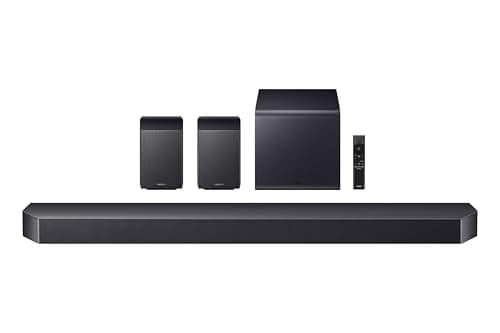
(Current price, subject to change)
The 8.4 SHE Theater Room Score composite on the Samsung HW-Q990F Q-Series Soundbar tops this basket, and the logic is straightforward: compared to a component receiver stack, it delivers the largest share of a dedicated theater's experience for the smallest share of its complexity, at roughly 23% of the whole room's cost. RTINGS and TechRadar both cover the Q990F — a complete 11.1.4-channel kit whose 23 drivers and four up-firing height channels produce genuine overhead Atmos, with the wireless subwoofer and both rear speakers included in the box. SpaceFit Pro calibration tunes the output to the room automatically, and HDMI 2.1 passthrough keeps 4K/120 and VRR intact between the Apple TV and the projector. The honest caveats from its consensus record: Q-Symphony assumes a recent Samsung TV, some sources lose DTS:X where rivals decode it, and the sub and rears each need a power outlet. For the component-receiver alternative — more channels, more install — the Best 8K Dolby Atmos AV Receivers (2026) guide covers the rack build, and the Best Flagship Dolby Atmos Soundbars (2026) slate ranks the Q990F against its flagship rivals.
What We Love
- Complete 11.1.4 kit in one box — no AVR, no speaker wire
- Genuine overhead Atmos from four up-firing height channels
- SpaceFit Pro room calibration tunes output automatically
What Could Be Better
- Q-Symphony and the slickest features assume a recent Samsung TV
- No DTS:X on some sources where rivals decode it
The Verdict
If you want the full surround experience without a receiver rack, you'll be well-served here with the Samsung HW-Q990F Q-Series Soundbar. RTINGS and TechRadar both cover it; 11.1.4 channels, 23 drivers, and the wireless sub and rears ship in one box at $1,598-$1,999.
Light Control: Motorized Blackout Smart Roller Blinds with Remote Control & Solar Panel - Compatible with Alexa - White, 34" W × 72" H
Light control — daytime darkMotorized Blackout Smart Roller Blinds with Remote Control & Solar Panel - Compatible with Alexa - White, 34" W × 72" H
- Solar recharging removes the battery-swap chore for good
- Solar panel wants direct sun — a north-facing window may underperform
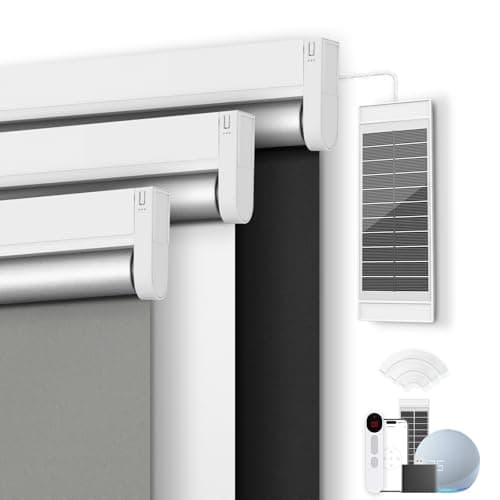
(Current price, subject to change)
The 7.6 SHE Theater Room Score composite on the Motorized Blackout Smart Roller Blinds with Remote Control & Solar Panel - Compatible with Alexa - White, 34" W × 72" H covers the zone every projector owner learns to respect: ambient light. A 2,500-lumen laser holds its own at dusk, but a daytime matinee lives or dies on the windows, and blackout roller fabric is what makes the afternoon show possible at all. This pick earns its place on operating cost as much as capability — versus a rechargeable motor you babysit, the solar panel removes the recharge chore entirely and enables genuinely set-and-forget operation, the no-drill install stays deposit-safe and reversible, and at $83.99 per window, darkening a three-window room runs about $252 — roughly 3% of the basket and the cheapest zone in the room to complete. The honest limits from its consensus record: the panel wants direct sun, control is RF plus cloud Alexa with no local Zigbee layer, and the fixed 34-inch width — just under 3 ft, on a 6 ft drop — will not cover wide living-room openings. Scene-wise it joins movie night through an Alexa routine rather than a hardware trigger. For wider windows, Zigbee mesh picks, and dual-layer options, the Best Battery-Powered Motorized Blinds (No-Wire) 2026 roundup goes deeper.
What We Love
- Solar recharging removes the battery-swap chore for good
- No-drill, no-wire install stays fully reversible
- Blackout fabric fully darkens the room on command
What Could Be Better
- Solar panel wants direct sun — a north-facing window may underperform
- Cloud Alexa plus RF only, with no local Zigbee mesh layer
The Verdict
If your theater shares a room with daylight, the Motorized Blackout Smart Roller Blinds with Remote Control & Solar Panel - Compatible with Alexa - White, 34" W × 72" H is the path of least friction: blackout fabric, solar recharging, and Alexa routines at $83.99 per window — the cheapest zone in the room to finish.
Bias Light: Philips Hue Play Gradient Lightstrip
Bias light — the comfort layerPhilips Hue Play Gradient Lightstrip
- 7 gradient zones — the most granular TV backlight strip in its class
- Full screen-sync needs the separate Hue HDMI Sync Box
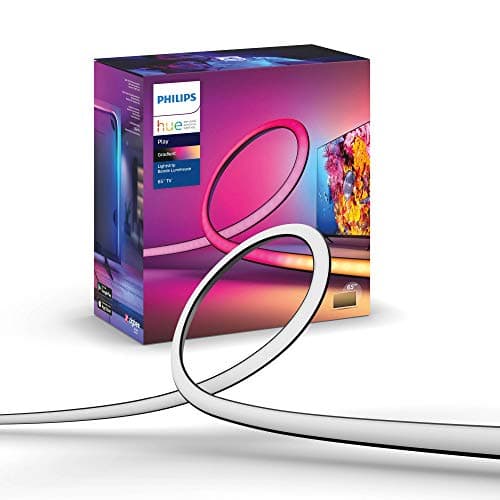
(Current price, subject to change)
The 8.1 SHE Theater Room Score composite on the Philips Hue Play Gradient Lightstrip is the comfort layer of the room — compared to watching against a pitch-black wall, bias lighting behind the screen keeps a fully darkened room from being fatiguing to watch in. Wirecutter covers the Gradient Lightstrip, whose 7 independently addressable color zones make it the most granular strip in its class; the adhesive mount goes up in about 30 mins via the Hue app, and the Hue Bridge unlocks HomeKit, Alexa, and Google Home control so it joins the same movie-night scene the Apple TV triggers, with sub-25ms sync latency available once the Sync Box enters the picture. Its consensus record is equally clear about the asterisks: the Bridge is required for all features, and true screen-synced color needs the separate Hue HDMI Sync Box — an upgrade path rather than an out-of-box behavior, and one that pushes the total spend well past the strip itself. Scored as what it is — a $90-$110 comfort-and-scene layer with the deepest ecosystem reach in the basket — it lands near the top of the room, and the Best Smart Home Cinema Room Setup 2026 guide covers the wider cinema-lighting design conversation.
What We Love
- 7 gradient zones — the most granular TV backlight strip in its class
- HomeKit, Alexa, and Google Home control via the Hue Bridge
- Drops into the same scene as the rest of the room
What Could Be Better
- Full screen-sync needs the separate Hue HDMI Sync Box
- Hue Bridge is required for all features
The Verdict
For the zone everyone forgets until their eyes hurt, there's no need to overthink it with the Philips Hue Play Gradient Lightstrip. Wirecutter covers it; 7 gradient zones at $90-$110 give a dark room a comfortable glow that answers to HomeKit, Alexa, and Google.
Control Zone: Apple TV 4K 3rd Gen
Control zone — the room's brainApple TV 4K 3rd Gen
- A15 chip runs HomeKit automations locally
- Siri interaction is remote-button-oriented rather than ambient voice
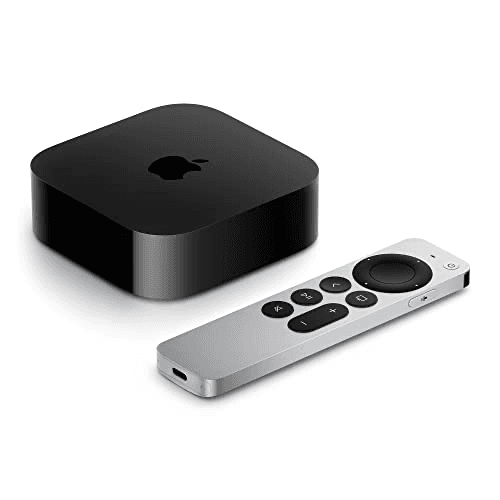
(Current price, subject to change)
The 8.3 SHE Theater Room Score composite on the Apple TV 4K 3rd Gen makes it the second-highest scorer in the basket, from the box the picture zone outprices by roughly 34x — the definition of leverage. The Verge and Engadget both cover the 3rd-generation box: the A15 Bionic chip renders 4K HDR streaming, runs HomeKit automations locally rather than through a cloud round-trip, and acts as a Thread border router, which quietly readies the room for Matter accessories. In this basket it is the scene brain — the single automation that dims the Philips Hue Play Gradient Lightstrip and starts the show runs from here. Its consensus record keeps the caveats plain: Siri lives behind a remote button rather than ambient voice, it has no speaker of its own, and its hub role is genuinely secondary to its streaming role in Apple's own framing. For the households where the brain should speak Alexa or Google instead, the Best Apple HomeKit Devices 2026: 6 Picks, Hubs & Setup context explains exactly what you would be trading away.
What We Love
- A15 chip runs HomeKit automations locally
- Thread border router readies the room for Matter devices
- Premium 4K HDR streaming from the same $129 box
What Could Be Better
- Siri interaction is remote-button-oriented rather than ambient voice
- No speaker of its own — audio belongs to the sound zone
The Verdict
If one device should run movie night, the Apple TV 4K 3rd Gen lines up with what you actually need. The Verge and Engadget both cover it; the A15 chip streams 4K HDR, runs HomeKit automations locally, and bridges Thread for $129.
How We Score: SHE Theater Room Score
SHE Theater Room Score
Score Formula
0.30 * smart_integration + 0.30 * cinema_impact + 0.20 * setup_ease + 0.20 * system_cohesionScore Factors
- Smart Integration (30%)Depth of app, voice, and ecosystem control once the pick is installed. A local-first hub with Matter or Thread support scores highest; app-plus-assistant control scores high; cloud-only voice scores mid; an IR/RF-remote-only or HDMI-only device scores low. Derived from manufacturer connectivity specs and each product's consensus record, not from SHE lab testing.
- Cinema Impact (30%)How much the pick raises the picture-and-sound experience within its zone. The projected image and the Atmos stage carry the most weight; light control that makes daytime viewing possible scores high; bias light and the streaming source score solid. Reasoned from each zone's role in the room, not a measured outcome.
- Setup Ease (20%)How fast the pick goes from box to working in the actual room. Plug-and-stream scores highest; no-drill and wireless-kit installs score high; ceiling mounting and projector alignment score low. Inferred from manufacturer install descriptions and consensus setup notes.
- System Cohesion (20%)How cleanly the pick ties into the other five zones — 12V/5V triggers, HDMI 2.1 passthrough, shared scenes, and sync paths. Hardware triggers and local scene control score highest; cloud-routine-only participation scores mid. Derived from stated I/O and ecosystem specs.
SHE Theater Room Score — Ranked
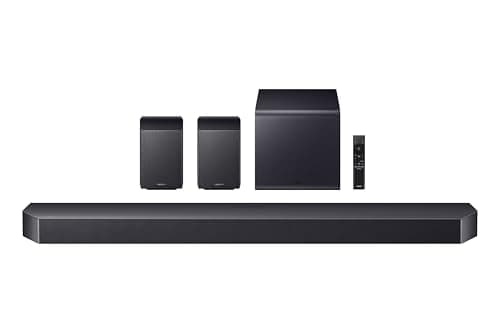
Samsung HW-Q990F Q-Series Soundbar
SHE Theater Room Score8.4/10Tops the room — 11.1.4 Atmos, wireless sub and rears in the box, auto calibration, no rack
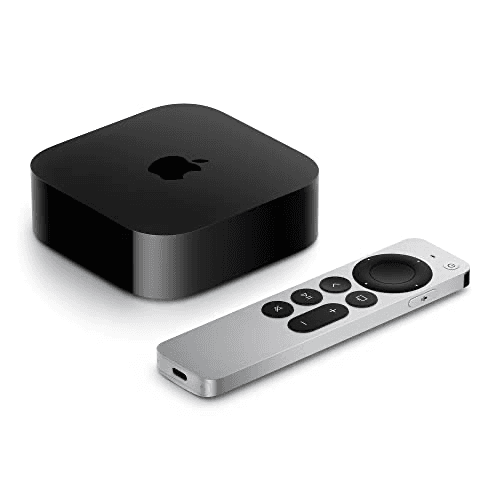
Apple TV 4K 3rd Gen
SHE Theater Room Score8.3/10The $129 brain — local HomeKit scenes, Thread border router, and the room's 4K HDR source
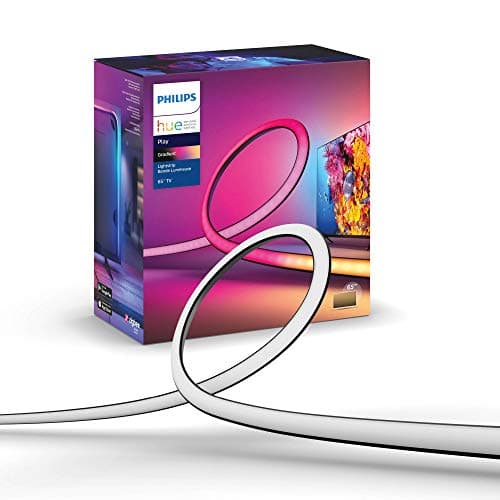
Philips Hue Play Gradient Lightstrip
SHE Theater Room Score8.1/10Comfort layer — 7 gradient zones, deepest ecosystem reach; Bridge required, Sync Box optional
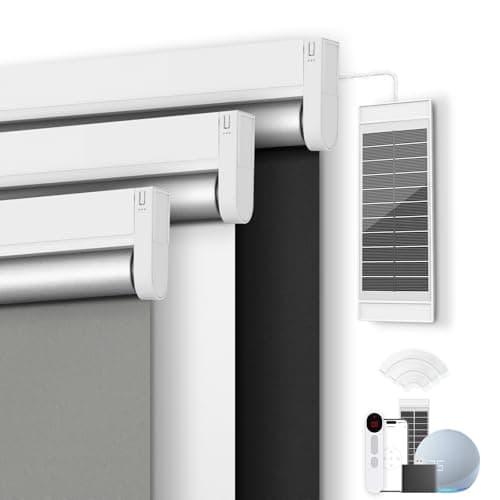
Motorized Blackout Smart Roller Blinds with Remote Control & Solar Panel - Compatible with Alexa - White, 34" W × 72" H
SHE Theater Room Score7.6/10Daytime dark — solar blackout rollers at $83.99 per window; cloud-routine cohesion only
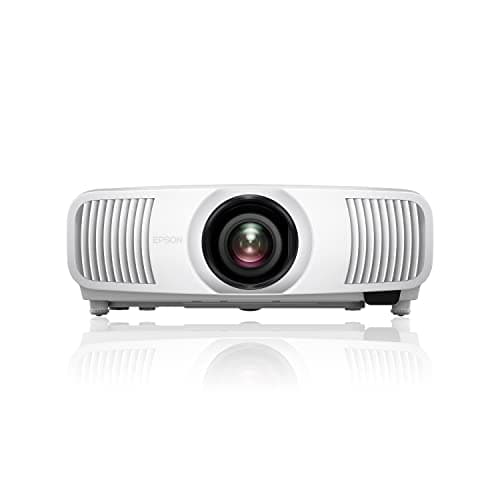
Epson Home Cinema LS11000
SHE Theater Room Score7.5/10The anchor image — 2,500 lumens and a 20,000-hour laser; no app, and mounting is a project
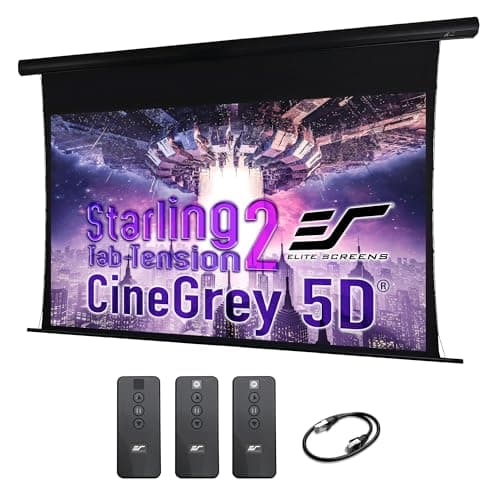
Elite Screens Starling Tab-Tension 2 CineGrey 5D 120-inch
SHE Theater Room Score7.0/10The canvas — tab-tensioned ALR flatness with trigger sync; the most involved install here
SHE Theater Room Score
Composite room-readiness across smart integration, cinema impact, setup ease, and system cohesion (0-10).
SHE editorial composite from manufacturer specs + consensus expert coverage, July 2026
Smart-Home Compatibility Across the Room
This room deliberately mixes control models. The Apple TV 4K and the Hue Gradient strip are the deep end — local HomeKit scenes, with the Hue Bridge adding Alexa and Google reach and the Apple TV bridging Thread for Matter. The Samsung Q990F answers to Alexa and Samsung's own ecosystem, and the blackout rollers take Alexa routines over the cloud. The honest gaps: the projector and the screen are not smart devices at all — the LS11000 is driven over HDMI and the Starling screen listens for a 12V trigger and an IR/RF remote, which is exactly how a theater chain is supposed to fire. The practical takeaway as of July 2026: run the scenes from the Apple TV and Alexa side by side, and let the trigger wire handle the screen.
| Product | Native App | Alexa | Google Home | Matter |
|---|---|---|---|---|
| Epson Home Cinema LS11000 | ✕ | ✕ | ✕ | ✕ |
| Elite Screens Starling Tab-Tension 2 CineGrey 5D 120-inch | ✕ | ✕ | ✕ | ✕ |
| Samsung HW-Q990F Q-Series Soundbar | ✓ | ✓ | ✕ | ✕ |
| Motorized Blackout Smart Roller Blinds with Remote Control & Solar Panel - Compatible with Alexa - White, 34" W × 72" H | ✕ | ✓ | ✕ | ✕ |
| Philips Hue Play Gradient Lightstrip | ✓ | ✓ | ✓ | ✓ |
| Apple TV 4K 3rd Gen | ✓ | ✕ | ✕ | ✓ |
Build the Room in Tiers
Nobody has to buy all six zones at once — the room has a natural order. The essential tier is picture and sound: the Epson Home Cinema LS11000 and the Samsung HW-Q990F Q-Series Soundbar decide whether the room feels like a theater, and together they carry most of the roughly $8,600 basket. The finish tier adds the Elite Screens Starling Tab-Tension 2 CineGrey 5D 120-inch so the image lands on a tensioned ALR canvas instead of a wall, and the Motorized Blackout Smart Roller Blinds with Remote Control & Solar Panel - Compatible with Alexa - White, 34" W × 72" H at $83.99 per window so the room works at 2 PM, not just 10 PM. The comfort tier — the Philips Hue Play Gradient Lightstrip and the Apple TV 4K 3rd Gen — costs the least of the three tiers, undercutting the anchor by more than 18x, and ties the scenes together. Spread across one Amazon order, the whole room shares a single cookie that stays live for 24 hours, so one real click can carry the entire cart.
When NOT to Buy
Stub WNTB (Block 3B fallback).
Who Should Buy What
Who Should Buy What
| If you are… | Recommended pick |
|---|---|
The dedicated-room builder You have a room to commit and want the anchor image done right — laser brightness, lens memories, and HDMI 2.1 for the long haul | Epson Home Cinema LS11000 |
The no-bare-wall purist You want a motorized, tab-tensioned ALR canvas that drops on the projector's trigger and disappears between shows | Elite Screens Starling Tab-Tension 2 CineGrey 5D 120-inch |
The no-rack surround seeker You want genuine 11.1.4 overhead Atmos with zero speaker wire and automatic calibration, delivered in one box | Samsung HW-Q990F Q-Series Soundbar |
The daytime-matinee household Your theater shares a living room with real windows and you want blackout on a voice command for under $100 per window | Motorized Blackout Smart Roller Blinds with Remote Control & Solar Panel - Compatible with Alexa - White, 34" W × 72" H |
The eye-strain avoider You watch long sessions in a dark room and want bias lighting that joins the movie scene in HomeKit, Alexa, or Google | Philips Hue Play Gradient Lightstrip |
The one-remote household You want movie night to be a single command — lights, shades, and show — run locally from the box that also streams in 4K HDR | Apple TV 4K 3rd Gen |
Frequently Asked Questions
What do I actually need for a complete smart home theater setup?
Think in six zones: the picture (Epson Home Cinema LS11000 projector), the canvas (Elite Screens Starling Tab-Tension 2 CineGrey 5D 120-inch), the sound (Samsung HW-Q990F 11.1.4 soundbar kit), light control (motorized solar blackout roller blinds), bias lighting (Philips Hue Play Gradient Lightstrip), and the control brain (Apple TV 4K). Buy picture and sound first — they decide whether the room feels like a theater — then finish the canvas, the windows, and the scenes.
Why buy the theater room in one Amazon order?
Amazon's affiliate cookie pays on the entire cart for 24 hours after a single qualifying click. Practically, someone who plans the whole room in one session and adds the projector, the soundbar kit, and the shades to one order is buying a coherent system rather than scattered parts — and the single planning session is exactly when the zones get matched to each other correctly, like the screen surface to the projector's throw.
Should I build this room with a soundbar or an AV receiver?
This basket picks the Samsung HW-Q990F soundbar kit on purpose: 11.1.4 channels with 23 drivers, the wireless subwoofer and rears in the box, and automatic SpaceFit Pro calibration — most of a dedicated theater's experience with none of the speaker-wire install. A component AVR with discrete speakers still out-scales it in a fully dedicated room, at a much higher cost and install burden. Our 8K Atmos AV receiver guide covers that build, led by the Denon AVR-X3800H.
Does the Elite Screens CineGrey 5D work with any projector?
No — and this is the most common expensive mistake in the room. The CineGrey 5D surface is an angular ambient-light-rejecting material tuned for standard-throw projectors like the Epson LS11000 in this basket. It is specifically less effective with ultra-short-throw projectors, which need lenticular UST-specific screens instead. If your picture zone is a UST living-room unit, pair it from our UST laser projector guide rather than this screen.
Do I need the Hue HDMI Sync Box for the Gradient Lightstrip?
Only for screen-synced color. Out of the box — with the required Hue Bridge — the Gradient Lightstrip runs scenes, gradients across its 7 zones, and joins HomeKit, Alexa, and Google Home automations, which covers the bias-lighting job this room actually needs. The separate Hue HDMI Sync Box adds real-time color mirroring of what's on screen, and it supports up to 4 HDMI sources, but it is a meaningful additional investment on top of the strip and Bridge.
Can this projector room work in the daytime?
Yes, with two of the six zones doing the work. The Epson LS11000's 2,500 lumens of color and white brightness holds up in a controlled room, the CineGrey 5D surface rejects ambient light that does leak in, and the blackout roller blinds close the loop — one Alexa routine darkens every window for a 2 PM matinee. Without the light-control zone, no projector at this brightness fully fights direct daylight; with it, the afternoon show is genuinely watchable.
Bottom Line
Get the Epson Home Cinema LS11000 if you are anchoring the room on a 100 to 120-inch image and want laser brightness, HDMI 2.1, and lens memories at the long-throw value price.
Get the Elite Screens Starling Tab-Tension 2 CineGrey 5D 120-inch if you pair a standard-throw projector with real ambient light and want a tab-tensioned canvas that drops on the projector's trigger.
Get the Samsung HW-Q990F Q-Series Soundbar if you want genuine 11.1.4 overhead Atmos with the sub and rears in the box, automatic calibration, and no receiver rack.
Get the Motorized Blackout Smart Roller Blinds with Remote Control & Solar Panel - Compatible with Alexa - White, 34" W × 72" H if your theater shares a room with daylight and you want solar-recharged blackout on an Alexa routine at $83.99 per window.
Get the Philips Hue Play Gradient Lightstrip if you want the bias-light comfort layer with 7 gradient zones that joins the same scene as the rest of the room.
Get the Apple TV 4K 3rd Gen if you want one $129 box to stream in 4K HDR, run the movie-night scene locally, and bridge Thread for Matter.
Skip the full six-zone build if movie night happens on a TV in a bright multi-use room — a flagship soundbar and bias light alone get you most of the way there, via Best Flagship Dolby Atmos Soundbars (2026). And if your picture zone is ultra short throw, swap both the projector and the screen from Best UST Laser Projectors for Home Theater 2026 — the CineGrey 5D surface is tuned for standard throw.
Sources & Methodology
Methodology: SHE Theater Room Score — Formula: 0.30 * smart_integration + 0.30 * cinema_impact + 0.20 * setup_ease + 0.20 * system_cohesion. Factors: Smart Integration (30%): Depth of app, voice, and ecosystem control once the pick is installed. A local-first hub with Matter or Thread support scores highest; app-plus-assistant control scores high; cloud-only voice scores mid; an IR/RF-remote-only or HDMI-only device scores low. Derived from manufacturer connectivity specs and each product's consensus record, not from SHE lab testing. | Cinema Impact (30%): How much the pick raises the picture-and-sound experience within its zone. The projected image and the Atmos stage carry the most weight; light control that makes daytime viewing possible scores high; bias light and the streaming source score solid. Reasoned from each zone's role in the room, not a measured outcome. | Setup Ease (20%): How fast the pick goes from box to working in the actual room. Plug-and-stream scores highest; no-drill and wireless-kit installs score high; ceiling mounting and projector alignment score low. Inferred from manufacturer install descriptions and consensus setup notes. | System Cohesion (20%): How cleanly the pick ties into the other five zones — 12V/5V triggers, HDMI 2.1 passthrough, shared scenes, and sync paths. Hardware triggers and local scene control score highest; cloud-routine-only participation scores mid. Derived from stated I/O and ecosystem specs.
Expert review sources used in this analysis:
- SmartHomeExplorer aggregates expert review coverage and community sentiment to produce consensus-based buying guidance; we do not perform first-party product testing
- Outlet coverage for the products in this guide is sourced from RTINGS, TechRadar, Wirecutter, The Verge, and Engadget, scoped per product to the outlets that genuinely cover each one
- The projector draws on the specialist projection press, and the screen and roller blinds on manufacturer specifications only
- We state outlet coverage and manufacturer specifications only — never a third-party verdict we cannot trace
- The SHE Theater Room Score is a transparent editorial composite of four weighted factors — smart integration, cinema impact, setup ease, and system cohesion
- Those factors derive from manufacturer specs and consensus coverage, not from SHE lab measurements
- We re-read the two anchor products against their live Amazon listings on 2026-07-21
- Prices change frequently — check the current price on Amazon before buying.
Nicholas Miles is the founder of SmartHomeExplorer and a longtime smart home enthusiast focused on helping everyday homeowners make better technology decisions. He researches, compares, and writes about products across security, climate, lighting, leak prevention, sensors, home energy, and automation, with an emphasis on real-world usefulness, ecosystem compatibility, reliability, privacy, and long-term value.
Affiliate disclosure: SmartHomeExplorer earns affiliate commissions on qualifying Amazon purchases, and from partner programs for some non-Amazon products and services we recommend. Our scoring methodology is independent of affiliate relationships.
More Guides
Entertainment
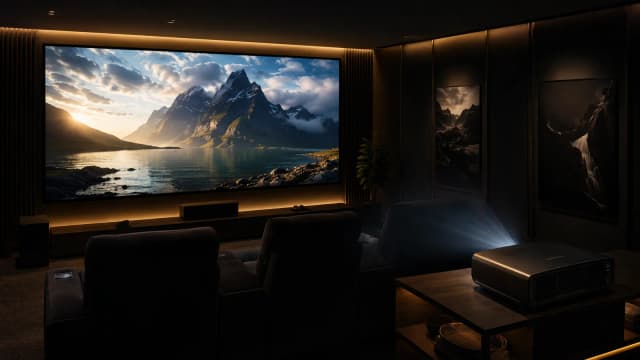
Best Premium 4K Laser Long-Throw Projectors 2026
Entertainment
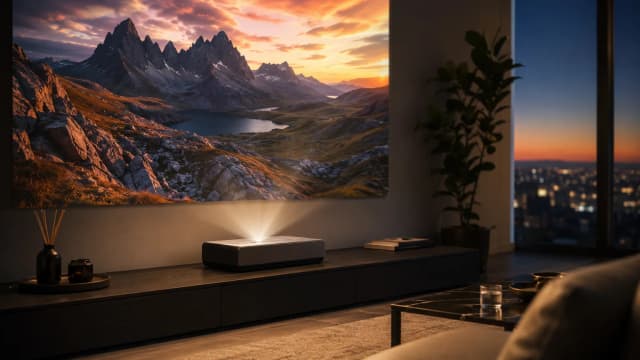
Best UST Laser Projectors for Home Theater 2026
smart-speakers
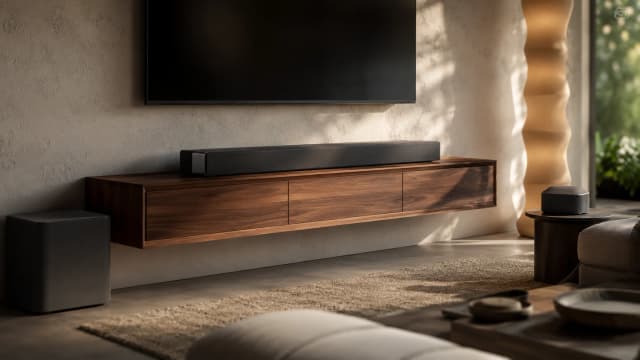
Best Flagship Dolby Atmos Soundbars (2026)
Entertainment
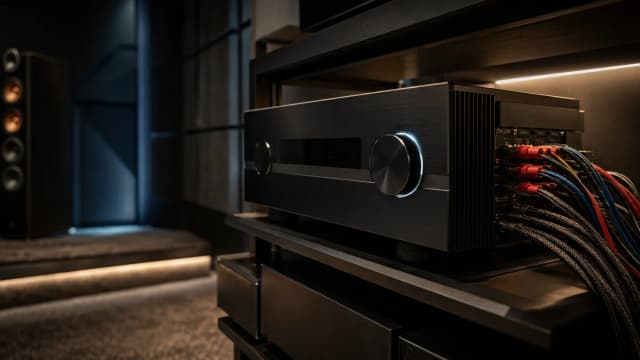
Best 8K Dolby Atmos AV Receivers (2026)
entertainment
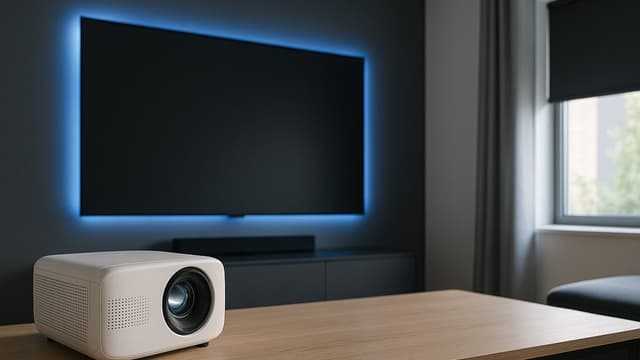
Best Smart Home Cinema Room Setup 2026

Smart Home