
Best Flagship Dolby Atmos Soundbars (2026)
You've wired a flagship OLED and you want overhead sound without an AV receiver and a rack of speakers. The Samsung HW-Q990F gives you a complete 11.1.4 surround kit; the Sonos Arc Ultra does it from one bar.
This article contains affiliate links. We may earn a commission at no extra cost to you. Prices change frequently — check the current price on Amazon before buying. Learn more
The Short Answer
The Samsung HW-Q990F prevails for most home theaters because its 11.1.4 configuration delivers a wireless subwoofer, discrete rears, and four overhead channels RTINGS confirms outperform virtualized competitors. The compromise involves powering three enclosures. Preferring one cabinet, the Sonos Arc Ultra suits better.
Featured in this Guide
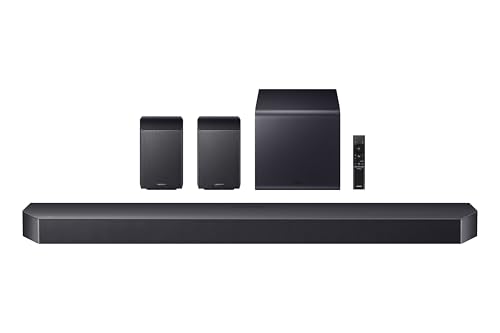
Samsung
HW-Q990F Q-Series Soundbar
- •Complete 11.1.4 kit, four height channels, SpaceFit room tuning — the consensus full-surround pick
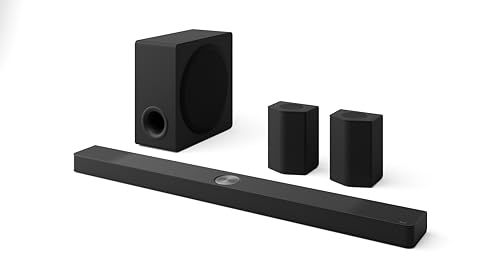
LG
S95TR Soundbar System
- •9.1.5 with five height channels plus sub and rears, often the lowest-priced full kit in this slate

JBL
Bar 1300X
- •Detachable battery rears need no wiring, with a 12-inch sub and the loudest 1,170W rating here
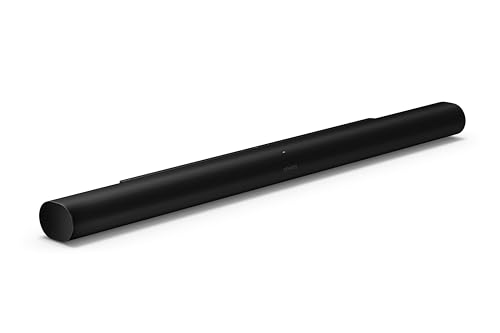
Sonos
Arc Ultra Soundbar
- •9.1.4 from one bar with deep Sound Motion bass and the easiest setup, no sub or rears to place
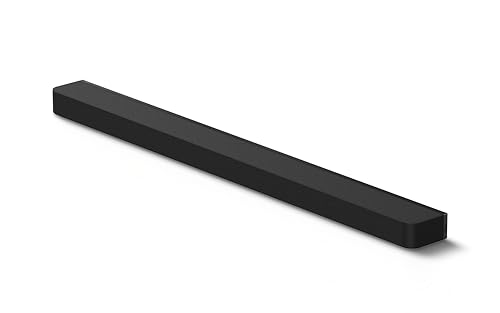
Sony
BRAVIA Theater Bar 9 (HT-A9000)
- •13 speakers and 360 Spatial Sound Mapping from a single bar, with Acoustic Center Sync to BRAVIA TVs
Nakamichi
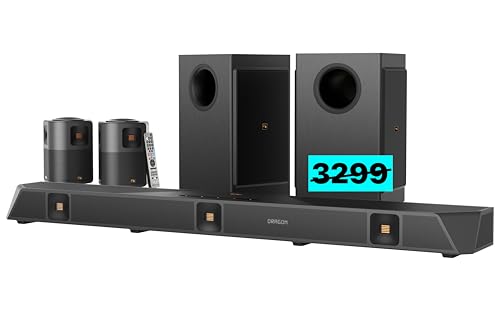
Dragon 11.4.6 Surround System
- •11.4.6 with six discrete height channels and quad 8-inch subs — AVR-grade immersion, top dollar
Head-to-Head: Channels, Bass, Setup, and Immersion Value
Smart Speakers
Chart
 Smarthomeexplorer.com
XGIMI HORIZON 20 4K RGB Triple Laser Home Projector
Check price
SofaBaton X1S Universal Remote (with Hub)
Check price
VTOMAN X7 4250A Jump Starter with 160PSI Air Compressor
Check price
When a Flagship Bar Beats an AV Receiver
You invested substantially in a flagship OLED, yet its integrated speakers render Dolby Atmos approximately equivalent to a smartphone. RTINGS, TechRadar, and What Hi-Fi independently reach an identical conclusion: a pre-matched flagship bar now reproduces authentic overhead and surround channels without an AV receiver, in-ceiling speakers, or ceiling penetrations whatsoever. The determining question concerns immersion per dollar, which stratifies this guide into three tiers across a 36% price differential. All six need a flat ceiling between 8 ft and 11 ft for their height drivers to work.
The simplest tier comprises one-box bars — the Sonos Arc Ultra Soundbar and Sony BRAVIA Theater Bar 9 (HT-A9000), the latter engineered 36% smaller than its predecessor. The intermediate tier adds a wireless subwoofer and discrete rears: the Samsung HW-Q990F Q-Series Soundbar, LG S95TR Soundbar System, and JBL Bar 1300X. At the apex, TechRadar characterizes the Nakamichi Dragon 11.4.6 Surround System as closer to an AV receiver. Our weighted SHE Immersion-Per-Dollar Score explains why a discounted LG configuration outperforms a costlier rival.
Best for most home theaters: Samsung HW-Q990F Q-Series Soundbar
Samsung HW-Q990F Q-Series Soundbar
- Complete 11.1.4 kit — bar, wireless sub, and true rear speakers all included
- Q-Symphony and the slickest tricks assume a recent Samsung TV
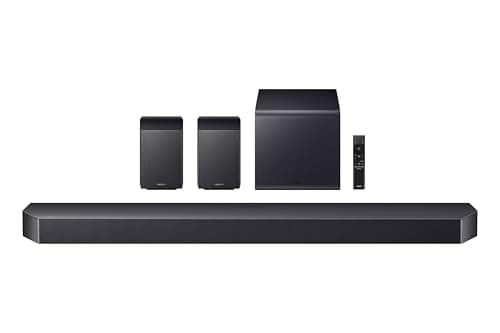
The Samsung HW-Q990F Q-Series Soundbar represents the appropriate selection for buyers requiring authentic surround reproduction who accept positioning several enclosures. Three characteristics differentiate it: a genuine 11.1.4 configuration incorporating 23 drivers, four up-firing height channels, and a wireless subwoofer containing dual 8-inch drivers alongside two wireless rear satellites weighing approximately 4 lbs each. On our weighted SHE Immersion-Per-Dollar Score it achieves a composite 8.8, positioned near the maximum, because a complete configuration near $1,600 delivers substantial immersion per dollar.
That 8.8 translates, practically, into effects genuinely positioned behind and above you, rather than a phantom image fabricated entirely from the front. RTINGS describes immersive surround exhibiting a wide soundstage and dynamic height effects, while TechRadar designated it the Atmos bar to beat. Compared to the Sonos Arc Ultra Soundbar, the Samsung provides discrete rears the Sonos matches only by purchasing supplementary Era speakers; versus the LG S95TR Soundbar System, it sacrifices one height channel for deeper bass. The complication remains logistical: the subwoofer and both rears each require an outlet, and Samsung provides a standard 1-year warranty, consequently a minimalist single-bar room is not its natural environment.
What We Love
- Complete 11.1.4 kit — bar, wireless sub, and true rear speakers all included
- 23 drivers and four up-firing height channels for genuine overhead Atmos
- Q-Symphony adds a Samsung TV's own speakers to widen the front stage
- HDMI 2.1 with 4K/120Hz passthrough and VRR for gaming
What Could Be Better
- Q-Symphony and the slickest tricks assume a recent Samsung TV
- The full kit needs outlets for the sub and both rear speakers
- Some sources don't get DTS:X where rivals decode it
- Street price still hovers near $1,600 after most discounts
The Verdict
If you want a complete surround system without an AV receiver, the Samsung HW-Q990F Q-Series Soundbar fits the brief without compromise. You get a true 11.1.4 layout — bar, wireless sub, and real rears — with four height channels, and RTINGS calls the result a wide, dynamic Atmos presentation. This checks the boxes for a living-room theater. The honest cost is three units to power, not one.
Best value flagship kit: LG S95TR Soundbar System
LG S95TR Soundbar System
- Five up-firing height drivers — the most overhead channels of any kit here
- Many controls live only in the LG app, and the LED display is basic
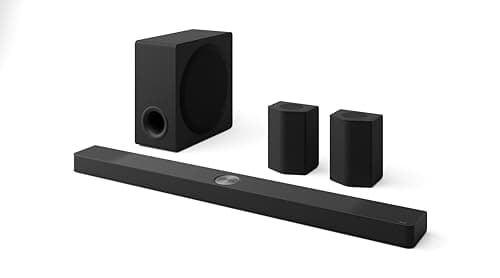
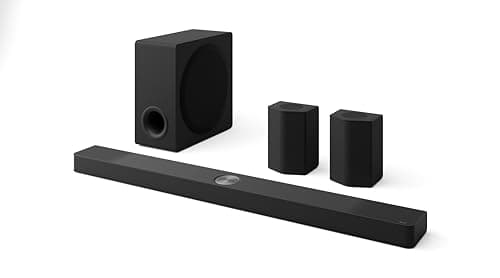
The LG S95TR Soundbar System represents the appropriate purchase for value-focused shoppers, particularly LG television owners. The differentiating characteristics: a 9.1.5 configuration incorporating 17 drivers and 810W aggregate output, five up-firing height drivers — the highest overhead complement here — plus an included wireless subwoofer and wireless rear satellites. Its weighted SHE Immersion-Per-Dollar Score normalizes to a composite 9.4, the maximum here, because a five-height-channel configuration at a frequent street price near $700 constitutes the strongest value calculation in the group.
The score rewards precisely what you perceive within the room: five height channels construct a taller ceiling layer than the four-channel configurations, and Reviewed commended the grounded, well-balanced presentation. WOW Orchestra integrates the LG television's speakers, while WOWCAST transmits audio wirelessly, eliminating the HDMI connection. The limitations remain genuine. What Hi-Fi observed the 3D reproduction lacks the ultimate degree of finesse, and TechRadar emphasized the rudimentary display compels app dependence. Compared to the Samsung HW-Q990F Q-Series Soundbar, you acquire an additional height channel and typically economize 40% on price, sacrificing marginal bass authority and imaging refinement. LG provides a 1-year warranty.
What We Love
- Five up-firing height drivers — the most overhead channels of any kit here
- Wireless subwoofer and rear speakers included in the box
- WOW Orchestra blends the bar with an LG TV's own speakers
- WOWCAST links wirelessly to compatible LG TVs without an HDMI cable
What Could Be Better
- Many controls live only in the LG app, and the LED display is basic
- What Hi-Fi found the 3D imaging slightly behind the class leaders
- The best features assume a recent LG OLED TV
- Tonal match between bar and surrounds can feel uneven
The Verdict
If you've got an LG OLED and want the most surround for the money, the LG S95TR Soundbar System is a sensible pick for that setup. It packs 9.1.5 channels with five height drivers plus a sub and rears, and TechRadar gave it an Editor's Choice. It often sells for the least full kit here, so on immersion-per-dollar you can stop here. The trade is app-reliant controls and imaging that trails the best.
Best wire-free surround: JBL Bar 1300X
JBL Bar 1300X
- Detachable rear speakers run on battery — place true surrounds with no wiring
- Battery rears must recharge on the bar between long sessions
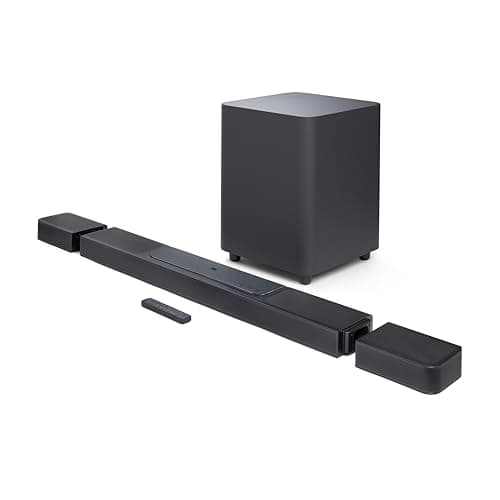
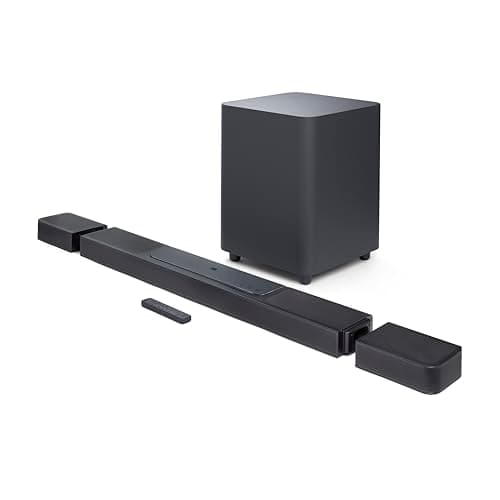
The JBL Bar 1300X represents the appropriate selection for rooms where wiring rears proves impossible. Three characteristics anchor it: an 11.1.4 system incorporating 20 drivers, detachable rear satellites operating approximately 10 hours on battery, eliminating permanent wiring, and a 12-inch wireless subwoofer paired with a 1,170W rating — the highest power specification here. Its weighted SHE Immersion-Per-Dollar Score normalizes to a composite 9.0, third here, assisted by complete 11-channel surround at a street price frequently near $1,080.
The wireless rears constitute the purchasing rationale. Where the Samsung HW-Q990F Q-Series Soundbar provides wireless-but-tethered rears, the JBL's satellites detach from the bar, recharge in position, subsequently residing across the room without any cable whatsoever. Tom's Guide commended the value proposition, and the 12-inch subwoofer delivers the most physical low frequency excluding the Nakamichi. The compromises remain practical: the satellites require periodic recharging, the subwoofer occupies floor space, and the height effects position somewhat less precisely than the Samsung's. JBL provides a 1-year warranty. Place the rears 3 ft to 6 ft behind the seats for the cleanest surround. For an apartment with a finished back wall, that wire-free flexibility justifies the maintenance.
What We Love
- Detachable rear speakers run on battery — place true surrounds with no wiring
- 11.1.4 channels with a 12-inch wireless subwoofer for deep bass
- 1,170W total power, the loudest rating in this slate
- MultiBeam calibration tunes the room with the supplied mic
What Could Be Better
- Battery rears must recharge on the bar between long sessions
- The 12-inch subwoofer takes real floor space
- The app is functional but less polished than Sonos
- Height precision trails the Samsung and Nakamichi slightly
The Verdict
If running speaker wire to the back of the room is the dealbreaker, the JBL Bar 1300X is the path of least friction. Its rears detach, charge on the bar, and run on battery wherever you set them — true surround, no cables. Tom's Guide called it one of the best $1,500 soundbars you can buy. You'll be well-served here; the catch is recharging the rears and floor space for the big sub.
Best single-box pick: Sonos Arc Ultra Soundbar
Sonos Arc Ultra Soundbar
- 9.1.4 from one cabinet — no sub or rears to place or power
- One HDMI eARC port only — no passthrough for extra devices
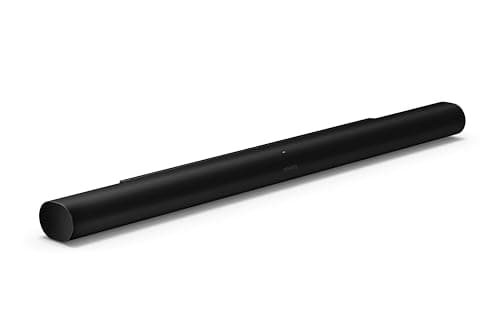
The Sonos Arc Ultra Soundbar is the right pick for buyers who prize a single-cabinet installation, and the wrong choice for anyone who requires genuine rear channels straight out of the box. The differentiating facts: a 9.1.4 configuration achieved from one bar incorporating 14 drivers and 15 Class-D amplifiers, a Sound Motion transducer producing deep bass without a separate subwoofer, and a compact 13 lbs single-box footprint requiring only a power cable and one eARC connection. Its SHE Immersion-Per-Dollar Score normalizes to a composite 8.2, the easiest installation score in the slate.
That 8.2 reflects a deliberate engineering tradeoff rather than a deficiency. What Hi-Fi describes a clean, spacious, three-dimensional presentation with tuneful bass and tremendous detail for a soundbar, and RTINGS confirms a wide, immersive image from the single cabinet. What you surrender is physical: there are no discrete rear speakers, so surround effects are beamformed rather than positioned behind you, and you would incorporate Sonos Era speakers later. The bar also provides only one HDMI eARC port and omits DTS:X. Compared to the Samsung HW-Q990F Q-Series Soundbar, you exchange genuine rear channels for a dramatically cleaner room. For an apartment or rental, that represents exactly the right compromise.
What We Love
- 9.1.4 from one cabinet — no sub or rears to place or power
- Sound Motion woofer delivers deep, tuneful bass from a single bar
- Trueplay room tuning plus AirPlay 2 and full Sonos multiroom
- Built-in voice control and the simplest setup of any flagship here
What Could Be Better
- One HDMI eARC port only — no passthrough for extra devices
- No DTS:X decoding
- True rear surround means buying Sonos Era speakers later
- The Sonos app has a history of stability complaints
The Verdict
If a clean room matters more than a full speaker kit, the Sonos Arc Ultra Soundbar fits the brief — 9.1.4 from one cabinet, no sub or rears to position. What Hi-Fi calls it a huge upgrade on the original Arc, with clean, spacious, three-dimensional sound. For an apartment or minimalist room this is the sensible pick. The tradeoff is no true rears and a single HDMI port.
Best Sony BRAVIA match: Sony BRAVIA Theater Bar 9 (HT-A9000)
Sony BRAVIA Theater Bar 9 (HT-A9000)
- 13 speakers and 360 Spatial Sound Mapping for a tall, wide image from one bar
- Single-bar layout means no sub or rears at this price
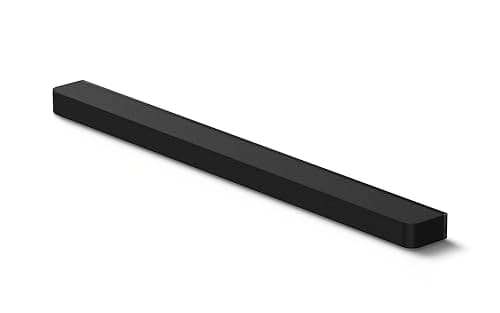
The Sony BRAVIA Theater Bar 9 (HT-A9000) represents the appropriate selection for BRAVIA owners requiring a single bar. Three characteristics determine it: a 7.0.2 configuration constructed from 13 speakers, 360 Spatial Sound Mapping positioning phantom channels throughout the room, and HDMI 2.1 incorporating 4K/120Hz passthrough alongside Acoustic Center Sync. At 28.66 lbs it constitutes a substantial single cabinet. Its weighted SHE Immersion-Per-Dollar Score normalizes to a composite 6.4, mid-pack, because a single bar lacking an included subwoofer delivers less raw immersion per dollar than the complete configurations.
The score remains equitable rather than punitive. What Hi-Fi commended superb clarity, detail, and punch exhibiting impressive 3D processing and designated it an Awards 2024 winner, while RTINGS observes a tall, room-filling image without a separate subwoofer. The limitations maintain its mid-pack positioning: no rears or subwoofer at this price, a presentation occasionally tending clinical, and spatial mapping presupposing a Sony television. Compared to the Samsung HW-Q990F Q-Series Soundbar, it relinquishes discrete rears and deep bass for a cleaner single-bar footprint. Sony provides a 1-year warranty. For a Sony-centric room prioritizing imaging over speaker quantity, it earns its placement.
What We Love
- 13 speakers and 360 Spatial Sound Mapping for a tall, wide image from one bar
- Coherent, detailed sound that holds up without an external subwoofer
- HDMI 2.1 with 4K/120Hz passthrough and Acoustic Center Sync with BRAVIA TVs
- 36 percent smaller cabinet than the HT-A7000 it replaces
What Could Be Better
- Single-bar layout means no sub or rears at this price
- Delivery can sound slightly clinical next to warmer rivals
- No front-panel display
- The best spatial mapping leans on a Sony BRAVIA TV
The Verdict
If you run a Sony BRAVIA TV and want a single-bar flagship, the Sony BRAVIA Theater Bar 9 (HT-A9000) lines up with what you actually need. Its 13 speakers and 360 Spatial Sound Mapping throw a tall, room-filling image, and What Hi-Fi made it an Awards winner for clarity. For a clean BRAVIA setup this is a sensible pick. The tradeoff is no included sub or rears, so bass trails the full kits.
Best no-compromise ceiling: Nakamichi Dragon 11.4.6 Surround System
Nakamichi Dragon 11.4.6 Surround System
- 11.4.6 channels with six discrete up-firing height speakers — true AVR-grade immersion
- By far the most expensive and the largest hardware footprint here
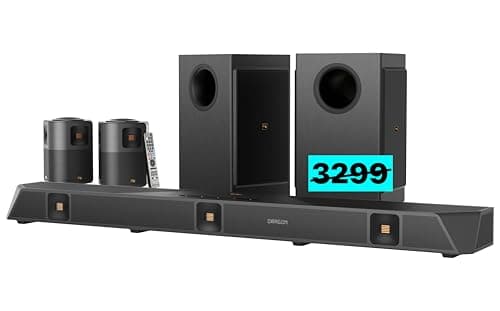
The Nakamichi Dragon 11.4.6 Surround System is the right buy for enthusiasts chasing the absolute ceiling. Three facts anchor it: an 11.4.6 layout with six discrete up-firing height speakers — more than any rival — quad 8-inch subwoofer drivers split across two cabinets for deep extension, and a 3,000W maximum output with seven Air Motion tweeters. Its SHE Immersion-Per-Dollar Score normalizes to a composite 7.0, strong on raw immersion but pulled down by a street price near $2,599 that no rival approaches.
The 7.0 encapsulates a split personality: it dominates the heaviest-weighted factors, height realism and bass authority, yet the value calculation relegates it beneath cheaper configurations. TechRadar characterizes it as more comparable to a complete home theater than a soundbar, and Digital Trends observes the six height speakers provide immersion rival systems cannot replicate. The caveats remain honest: RTINGS has published no laboratory measurements, so cross-verification depends upon AV-specialist coverage, and two subwoofer cabinets plus surrounds necessitate a dedicated room. Compared to the Samsung HW-Q990F Q-Series Soundbar, you acquire two height channels and deeper bass yet expend 60% more, and it rewards a seating distance of 10 ft or more. It answers one question: the maximum immersion a soundbar-style system delivers, cost aside.
What We Love
- 11.4.6 channels with six discrete up-firing height speakers — true AVR-grade immersion
- Quad 8-inch subwoofer drivers across two cabinets for bass to 20Hz
- 3,000W maximum output and seven Air Motion tweeters for headroom
- DTS:X Pro and Dolby Atmos with a Pro Cinema Engine handling room processing
What Could Be Better
- By far the most expensive and the largest hardware footprint here
- No mainstream RTINGS lab measurements to cross-check
- Two subs and multiple surrounds need real floor space and outlets
- Overkill for anything smaller than a dedicated media room
The Verdict
If you want AV-receiver-grade immersion without building a receiver rig, the Nakamichi Dragon 11.4.6 Surround System fits without compromise on scale. TechRadar describes it as more like a full home theater than a soundbar, with six up-firing height speakers and quad 8-inch subs. For a dedicated media room with the budget, you can stop here. The reality is the top price and biggest footprint here.
Check price for the Nakamichi Dragon 11.4.6 Surround System →
How We Score: SHE Immersion-Per-Dollar Score
SHE Immersion-Per-Dollar Score
Score Formula
(Height_Realism × 0.30 + Bass_Authority × 0.25 + Surround_Completeness × 0.20 + Setup_Ecosystem × 0.15 + Value_Density × 0.10), normalized to a 0-10 scale across the slateScore Factors
- Height-Channel RealismHow convincingly the system places effects overhead, weighted to discrete up-firing drivers rather than virtualized height. The Nakamichi's six discrete height channels and the Samsung and LG's four-to-five up-firing drivers score above the single-box bars that beamform their height layer.
- Bass AuthorityLow-frequency depth and physicality, driven by subwoofer driver area and rated extension in Hz. The Nakamichi's quad 8-inch drivers to 20Hz and the JBL's 12-inch sub lead; the sub-less single bars sit lowest.
- Surround CompletenessWhether the system ships true discrete rear speakers versus virtualized surround, plus total channel count. The 11.1.4 and 9.1.5 kits with real rears outscore the one-box 9.1.4 and 7.0.2 bars that fake the back channels.
- Setup and Ecosystem FitAuto-calibration quality, HDMI 2.1 passthrough, and TV-brand pairing tricks like Q-Symphony, WOW Orchestra, and Acoustic Center Sync, balanced against how many boxes you must place and power.
- Value DensityDelivered channels and drivers per $100 of verified street price. This is the factor that lifts the $700 LG and rewards the JBL while pulling the $2,599 Nakamichi down despite its hardware.
- 0-10 NormalizationThe weighted factor sum is min-max normalized across the six systems onto a readable 0-10 band, using street prices verified live via the Amazon Creators API on 2026-06-14.
SHE Immersion-Per-Dollar Score — Ranked
LG S95TR Soundbar System
SHE Immersion-Per-Dollar Score9.4/10Five height channels plus sub and rears at a frequent ~$700 street price — the value leader
JBL Bar 1300X
SHE Immersion-Per-Dollar Score9.0/10Full 11.1.4 with wire-free battery rears and a 12-inch sub near $1,080
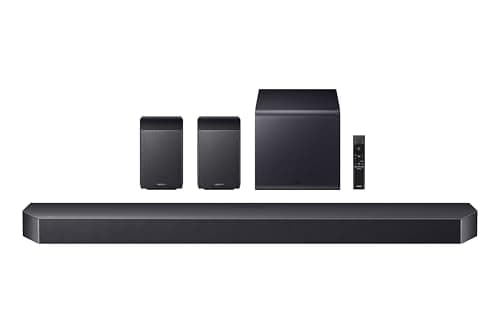
Samsung HW-Q990F Q-Series Soundbar
SHE Immersion-Per-Dollar Score8.8/10Complete 11.1.4 kit, four height channels, deepest bass of the mid tier near $1,600
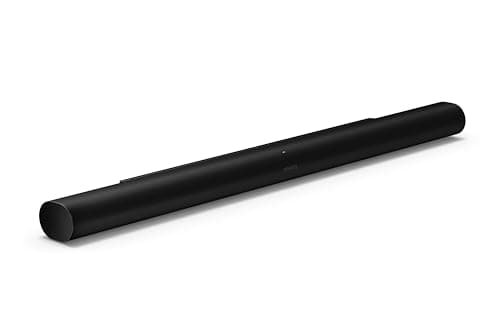
Sonos Arc Ultra Soundbar
SHE Immersion-Per-Dollar Score8.2/109.1.4 and deep bass from one cabinet at ~$899 — best single-box immersion value
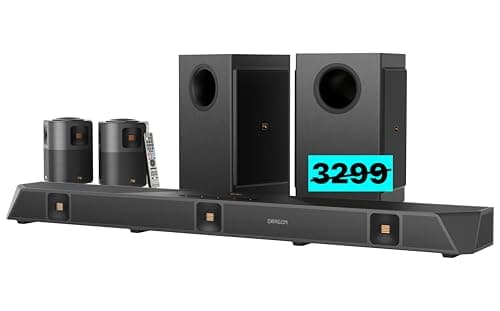
Nakamichi Dragon 11.4.6 Surround System
SHE Immersion-Per-Dollar Score7.0/10Tops height and bass but the ~$2,599 price drags the per-dollar math down
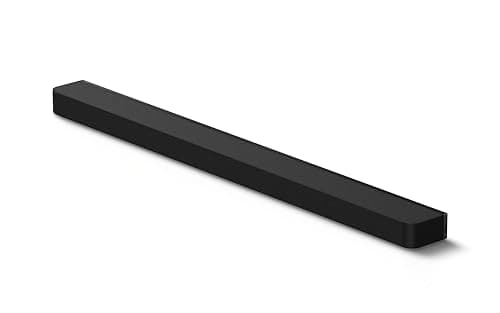
Sony BRAVIA Theater Bar 9 (HT-A9000)
SHE Immersion-Per-Dollar Score6.4/10Strong single-bar imaging, but no included sub or rears thins the per-dollar value
Ecosystem Fit: TV Pairing, Voice, and HDMI
The platform story here is less about smart-home assistants and more about which TV you own, because each maker reserves its best trick for its own panels. The Samsung HW-Q990F Q-Series Soundbar uses Q-Symphony to play through a Samsung TV's speakers and the bar at once; the LG S95TR Soundbar System does the same with WOW Orchestra and adds WOWCAST for a wireless TV link; and the Sony BRAVIA Theater Bar 9 (HT-A9000) uses Acoustic Center Sync so a BRAVIA TV becomes the center channel. None of these tricks works cross-brand, so a Samsung kit on an LG TV simply runs as a normal eARC soundbar. For voice and music, the Sonos Arc Ultra Soundbar is the standout: it carries built-in voice control, AirPlay 2, and full Sonos multiroom, making it the only system here that slots into an existing whole-home audio setup.
On the wired side, HDMI 2.1 passthrough separates the bars that suit a gaming console from those that do not. The Samsung, Sony, and Nakamichi pass 4K/120Hz and VRR through the bar to the TV; the Sonos has a single eARC port with no passthrough, so a console connects to the TV directly instead. For height effects, aim the up-firing drivers at a flat ceiling between 8 ft and 11 ft — Dolby's own guidance — since a ceiling above 14 ft scatters the reflection and thins the overhead layer. If you care about Apple HomeKit, treat this category as off-platform — none of these flagship bars is a HomeKit accessory, though the Sonos and Sony both support AirPlay 2 for casting audio from an Apple device. For buyers building a wider setup, our Best Soundbars With Dolby Atmos Under $500 2026 guide covers the tier below this one, and Best Smart Home Theater Projectors Under $2000 2026 pairs naturally with any of these bars in a dedicated room. The decision that actually matters, verified June 2026, is matching the bar's pairing trick to the TV brand already on your wall.
When NOT to Buy
A flagship Atmos bar is the wrong purchase for a small bedroom or a casual TV room where you sit under 8 ft from the screen, since a $400 to $500 bar delivers most of the perceived benefit at a third of the cost — our under-$500 guide covers that tier. It also makes little sense if you already own, or want to build, a full AV receiver and discrete-speaker system, since separates beat any soundbar on raw fidelity and upgrade flexibility for serious enthusiasts. And if your ceiling sits higher than 12 ft or angles away — a vaulted, angled, or open-beam ceiling — the up-firing height drivers lose much of their effect, so the immersion you are paying for partly evaporates before it reaches your ears.
Who Should Buy What
Who Should Buy What
| If you are… | Recommended pick |
|---|---|
Complete-surround buyer You want a true 11-channel kit with a sub and real rear speakers and have room to place and power them | Samsung HW-Q990F Q-Series Soundbar |
Value-focused LG owner You want the most height channels and a full surround kit for the lowest typical price, ideally with an LG TV | LG S95TR Soundbar System |
No-wiring household You want genuine rear surround speakers but cannot run speaker wire to the back of the room | JBL Bar 1300X |
Single-box minimalist You want flagship Atmos from one clean cabinet with no sub or rears and the simplest possible setup | Sonos Arc Ultra Soundbar |
Dedicated-media-room enthusiast You have a dedicated room and the budget and want the most height channels and deepest bass available | Nakamichi Dragon 11.4.6 Surround System |
Frequently Asked Questions
Is a flagship Atmos soundbar as good as an AV receiver and speakers?
For most people in a living room, it is close enough to be the smarter buy. A complete kit like the Samsung HW-Q990F or LG S95TR delivers true overhead and rear channels with no receiver, no in-ceiling speakers, and no cable runs. A separates system still wins on raw fidelity and upgrade flexibility, which is why the Nakamichi Dragon exists to bridge that gap. But if you do not want an installer, a speaker rack, or holes in the ceiling, a flagship bar is the right tradeoff.
Do I really need the rear speakers, or is a single bar enough?
It depends on your room and your tolerance for boxes. Single-box bars like the Sonos Arc Ultra and Sony BRAVIA Theater Bar 9 beamform surround from the front, which sounds wide and tall but cannot place effects genuinely behind you. The kits with real rears — Samsung, LG, JBL — put sound at the back of the room, which is a clear step up for movies. If a clean room matters more than literal rear placement, a single bar is enough; if immersion is the priority, get true rears.
Do any of these soundbars charge a subscription?
No. None of the six systems in this guide requires a monthly fee to use its core features. The Sonos Arc Ultra ties into the free Sonos app for multiroom and tuning, but there is no paywall on the soundbar itself. Your only ongoing cost would be replacement HDMI cables or, on the JBL Bar 1300X, eventually recharging its battery-powered rear speakers, which is free electricity rather than a fee.
Does the soundbar need to match my TV brand?
It helps but is not required. Samsung's Q-Symphony, LG's WOW Orchestra, and Sony's Acoustic Center Sync only deliver their best front-stage trick when paired with the same brand of TV. On any other TV, the bar still works normally over HDMI eARC; you just lose that one paired feature. If you own a Samsung, LG, or Sony TV, matching the bar brand is a genuine bonus. If you own something else, choose on sound and channels instead.
Which of these pass 4K/120Hz gaming through the soundbar?
The Samsung HW-Q990F, Sony BRAVIA Theater Bar 9, and Nakamichi Dragon include HDMI 2.1 inputs that pass 4K/120Hz and VRR through to the TV, which suits a PS5 or Xbox Series X plugged into the bar. The Sonos Arc Ultra has a single HDMI eARC port with no passthrough, so a console connects to the TV directly. If you route your console through the soundbar, prioritize the bars with HDMI 2.1 passthrough.
How big a room do these flagship soundbars suit?
The mid-tier kits suit a typical 200 to 400 sq ft living room well. The Samsung, LG, and JBL have the power and channel count to fill that space convincingly. The Nakamichi Dragon, with 3,000W and quad 8-inch subs, is built for a dedicated media room and is overkill for a small space. For a bedroom or casual TV room under 150 sq ft, a flagship bar is more than you need, and a sub-$500 model serves you better.
Bottom Line
Get the Samsung HW-Q990F Q-Series Soundbar if you want a complete 11.1.4 surround kit with true rears and overhead channels, especially on a Samsung TV.
Get the LG S95TR Soundbar System if you want the most height channels and a full surround kit for the lowest typical price, ideally with an LG TV.
Get the JBL Bar 1300X if you want genuine rear surround speakers but cannot run wires to the back of the room.
Get the Sonos Arc Ultra Soundbar if you want flagship Atmos from one clean cabinet with the simplest setup and no sub or rears to place.
Get the Nakamichi Dragon 11.4.6 Surround System if you have a dedicated media room and the budget for AVR-grade immersion in a bar-based system.
For most home theaters the Samsung HW-Q990F Q-Series Soundbar is the right call, with the LG S95TR Soundbar System the value pick if you can find it discounted. Choose the Sonos Arc Ultra Soundbar only if a single clean cabinet matters more than true rear speakers. Skip this whole tier if your room is small, your ceiling is vaulted, or you would rather build a full AV receiver and speaker system instead.
Sources & Methodology
Methodology: SHE Immersion-Per-Dollar Score — Formula: (Height_Realism × 0.30 + Bass_Authority × 0.25 + Surround_Completeness × 0.20 + Setup_Ecosystem × 0.15 + Value_Density × 0.10), normalized to a 0-10 scale across the slate. Factors: Height-Channel Realism: How convincingly the system places effects overhead, weighted to discrete up-firing drivers rather than virtualized height. The Nakamichi's six discrete height channels and the Samsung and LG's four-to-five up-firing drivers score above the single-box bars that beamform their height layer. | Bass Authority: Low-frequency depth and physicality, driven by subwoofer driver area and rated extension in Hz. The Nakamichi's quad 8-inch drivers to 20Hz and the JBL's 12-inch sub lead; the sub-less single bars sit lowest. | Surround Completeness: Whether the system ships true discrete rear speakers versus virtualized surround, plus total channel count. The 11.1.4 and 9.1.5 kits with real rears outscore the one-box 9.1.4 and 7.0.2 bars that fake the back channels. | Setup and Ecosystem Fit: Auto-calibration quality, HDMI 2.1 passthrough, and TV-brand pairing tricks like Q-Symphony, WOW Orchestra, and Acoustic Center Sync, balanced against how many boxes you must place and power. | Value Density: Delivered channels and drivers per $100 of verified street price. This is the factor that lifts the $700 LG and rewards the JBL while pulling the $2,599 Nakamichi down despite its hardware. | 0-10 Normalization: The weighted factor sum is min-max normalized across the six systems onto a readable 0-10 band, using street prices verified live via the Amazon Creators API on 2026-06-14.
Expert review sources used in this analysis:
- SmartHomeExplorer aggregates expert review data and manufacturer specifications to produce consensus-based buying guidance; we do not perform first-party product testing
- Verdicts lean on the outlets that actually reviewed each system — RTINGS, TechRadar, and What Hi-Fi for the Samsung HW-Q990F and Sonos Arc Ultra; RTINGS and What Hi-Fi for the Sony BRAVIA Theater Bar 9; RTINGS, Tom's Guide, and What Hi-Fi for the JBL Bar 1300X; RTINGS, TechRadar, What Hi-Fi, and Reviewed for the LG S95TR; and TechRadar, What Hi-Fi, and Digital Trends for the Nakamichi Dragon, which mainstream lab outlets have not measured
- Prices were verified live via the Amazon Creators API on 2026-06-14
- The SHE Immersion-Per-Dollar Score weights height-channel realism, bass authority, surround completeness, setup and ecosystem fit, and value density, normalized to a 0-10 scale; no first-party measurements were conducted.
Nicholas Miles is the founder of SmartHomeExplorer and a longtime smart home enthusiast focused on helping everyday homeowners make better technology decisions. He researches, compares, and writes about products across security, climate, lighting, leak prevention, sensors, home energy, and automation, with an emphasis on real-world usefulness, ecosystem compatibility, reliability, privacy, and long-term value.
Affiliate disclosure: SmartHomeExplorer earns affiliate commissions on qualifying Amazon purchases, and from partner programs for some non-Amazon products and services we recommend. Our scoring methodology is independent of affiliate relationships.