
Best UST Laser Projectors for Home Theater 2026
The Hisense PX3-PRO wins — the only UST laser projector that pairs triple-laser Dolby Vision color, native Google TV, and sub-6ms gaming in one console-friendly box.
This article contains affiliate links. We may earn a commission at no extra cost to you. Prices change frequently — check the current price on Amazon before buying. Learn more
The Short Answer
The best UST laser projector for home theater in 2026 is the Hisense PX3-PRO — the only one delivering triple-laser Dolby Vision color, native Google TV, and sub-6ms gaming together. For a bright living room, the 4,000-lumen Epson LS800 is the daytime-sports pick; the Samsung LPU9D is the premium upgrade.
Featured in this Guide
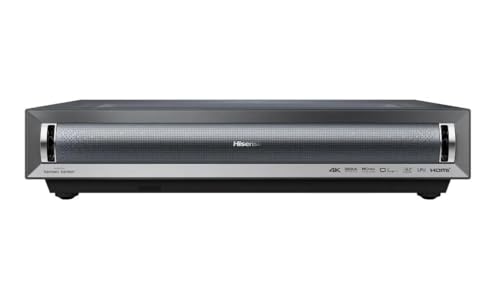
Hisense
PX3-PRO Ultra Short Throw Triple Laser Projector
- •Only UST top-tier on triple-laser color, native Google TV, and sub-6ms 1080p240 gaming at once
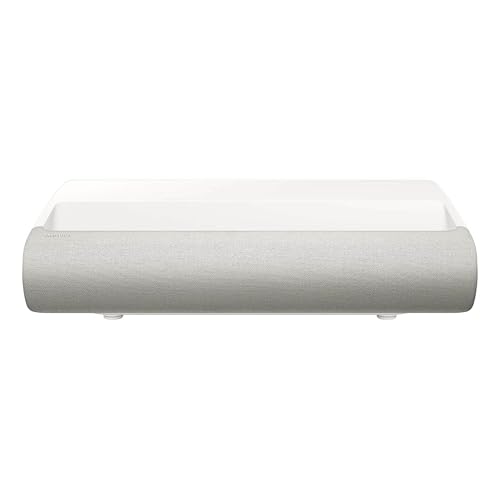
Samsung
The Premiere LPU9D 130-Inch Triple Laser Projector
- •3,450 ISO triple laser plus the most TV-like Tizen software
- •the money-no-object pick
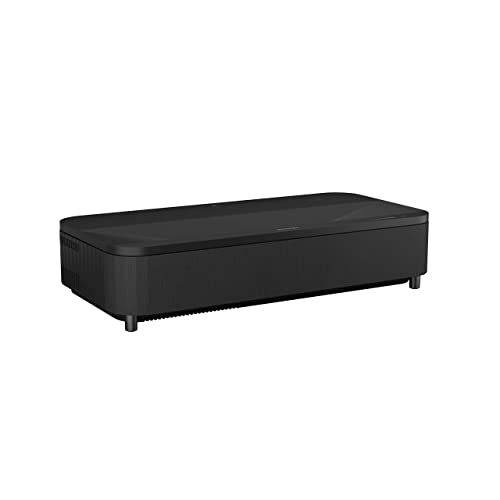
Epson
EpiqVision Ultra LS800 Smart Streaming Laser Projector
- •4,000 lumens and a 0.16:1 throw — the daytime World Cup champion for lit living rooms
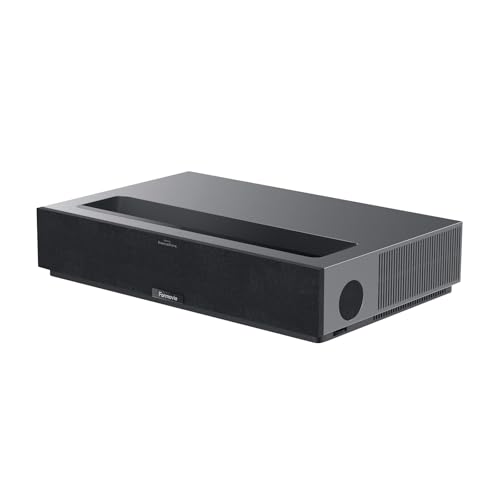
Formovie
Theater Premium 4K UST Triple Laser Projector
- •ALPD RGB+ Dolby Vision plus Bowers & Wilkins audio — the roster's best built-in sound for light-controlled rooms
NexiGo
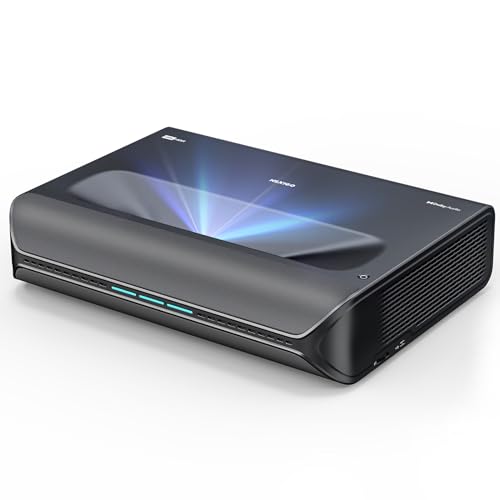
Aurora Pro 4K Tri-Color Laser UST Projector
- •9ms at 1080p240 with Dolby Vision and 3D at $2,999.99 list, accepting an uncertified Android OS
AWOL
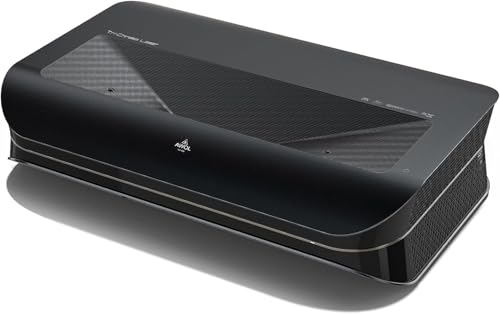
VISION LTV-3000 Pro 4K 3D UST Triple Laser Projector
Samsung
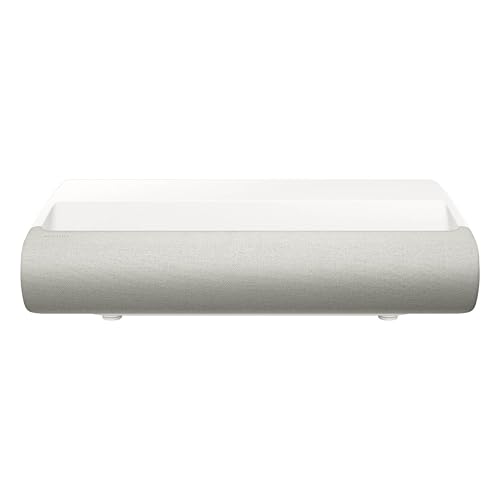
The Premiere LPU7D 120-Inch 4K Laser Projector
Head-to-Head: Brightness, Gaming, Color, and the SHE Score
Entertainment
Chart
 Smarthomeexplorer.com
SofaBaton X1S Universal Remote (with Hub)
Check price
VTOMAN X7 4250A Jump Starter with 160PSI Air Compressor
Check price
Can a UST Projector Really Replace Your TV?
You want a 120 in screen for World Cup illumination, but a 98 in TV runs $4,000 and resists transportation upstairs. A UST laser projector occupies a console position inches from the wall, throwing its image upward, no ceiling installation required. The honest physics: even 4,000 lumens cannot match television punch in direct sunlight, and ambient-light quality depends substantially on ALR-screen pairing. Smart-platform capability determines genuine TV replacement.
In this roundup we scored eight laser TVs on one weighted composite, the SHE Living-Room Theater Readiness Score. The normalized formula weights five factors, and the dominant coefficient is ambient-light punch, the deficiency buyers report most. Triple-laser configurations achieve 107% BT.2020 chromaticity continuously with Dolby Vision; Epson's single-laser illumination produces 4,000 lumens but narrower Rec.709 coverage. ProjectorCentral measured the PX3-PRO at 2,669 ANSI; RTINGS corroborates these specifications.
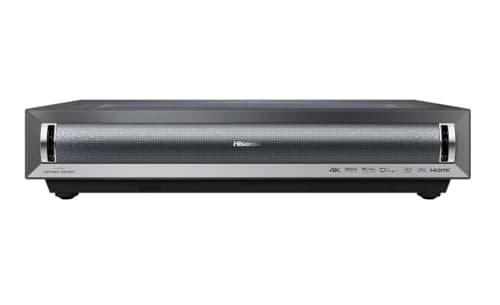
Best Overall: Hisense PX3-PRO Ultra Short Throw Triple Laser Projector
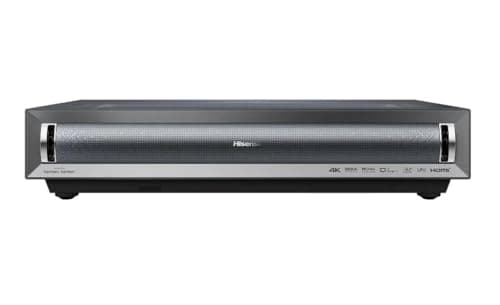
Hisense PX3-PRO Ultra Short Throw Triple Laser Projector
- Only UST that is top-tier on brightness, native platform, gaming, AND color at once
- At $3,499.99 list it is a premium buy
(Current price, subject to change)
The Hisense PX3-PRO Ultra Short Throw Triple Laser Projector earns the top composite of 9.1 on the SHE Living-Room Theater Readiness Score. It is the only projector here that scores at or near maximum on every weighted factor. What that number means for your living room is concrete. The TriChroma RGB triple laser produces Dolby Vision and IMAX Enhanced color, and native Google TV runs Netflix without a dongle. ProjectorCentral measured 2,669 ANSI lumens in its brightest mode, within ISO21118 tolerance of the 3,000-lumen rating.
No alternative pick delivers that combination, and that completeness is exactly what the weighted formula rewards. ProjectorCentral recorded 17.6ms input lag at 4K60 and sub-6ms at 1080p240, and this is the only Designed-for-Xbox UST in the roundup. The 0.22:1 throw places a 150 in image from a normal media console. Its 240Hz refresh ceiling and sealed laser-illumination engine yield approximately 20,000 hours of viewing, roughly 13 yr at 4 hours per day. ProjectorCentral calls it arguably the best UST projector available, and What Hi-Fi rates it strong with movies, too.
Compared to the Samsung The Premiere LPU9D 130-Inch Triple Laser Projector, the PX3-PRO adds Dolby Vision and a far better gaming stack. The LPU9D answers with 3,450 ISO lumens and more TV-like Tizen software for less daytime compromise.
What We Love
- Only UST that is top-tier on brightness, native platform, gaming, AND color at once
- ProjectorCentral measured 2,669 ANSI lumens, within ISO tolerance of the 3,000 rating
- Sub-6ms input lag at 1080p240 and 17.6ms at 4K60 — the best gaming stack in class
- Licensed Google TV with native Netflix means it works as a TV with zero extra hardware
What Could Be Better
- At $3,499.99 list it is a premium buy
- 3,000 ANSI trails the Epson LS800's 4,000 lumens in direct sun
- An ALR screen is still a $500 to $1,500 line item
The Verdict
If you want one box that does sports, console gaming, and movie nights without a compromise you will resent, the Hisense PX3-PRO Ultra Short Throw Triple Laser Projector fits the brief without compromise. The 9.1 reflects the only UST that is top-tier across every factor — triple-laser color, native Google TV, and sub-6ms gaming. You pay for it, but no need to overthink it.
Check price for the Hisense PX3-PRO Ultra Short Throw Triple Laser Projector →
Ready to upgrade your home?
eufy SoloCam S340 Solar Security Camera, 4-Cam Kit
See it on Amazon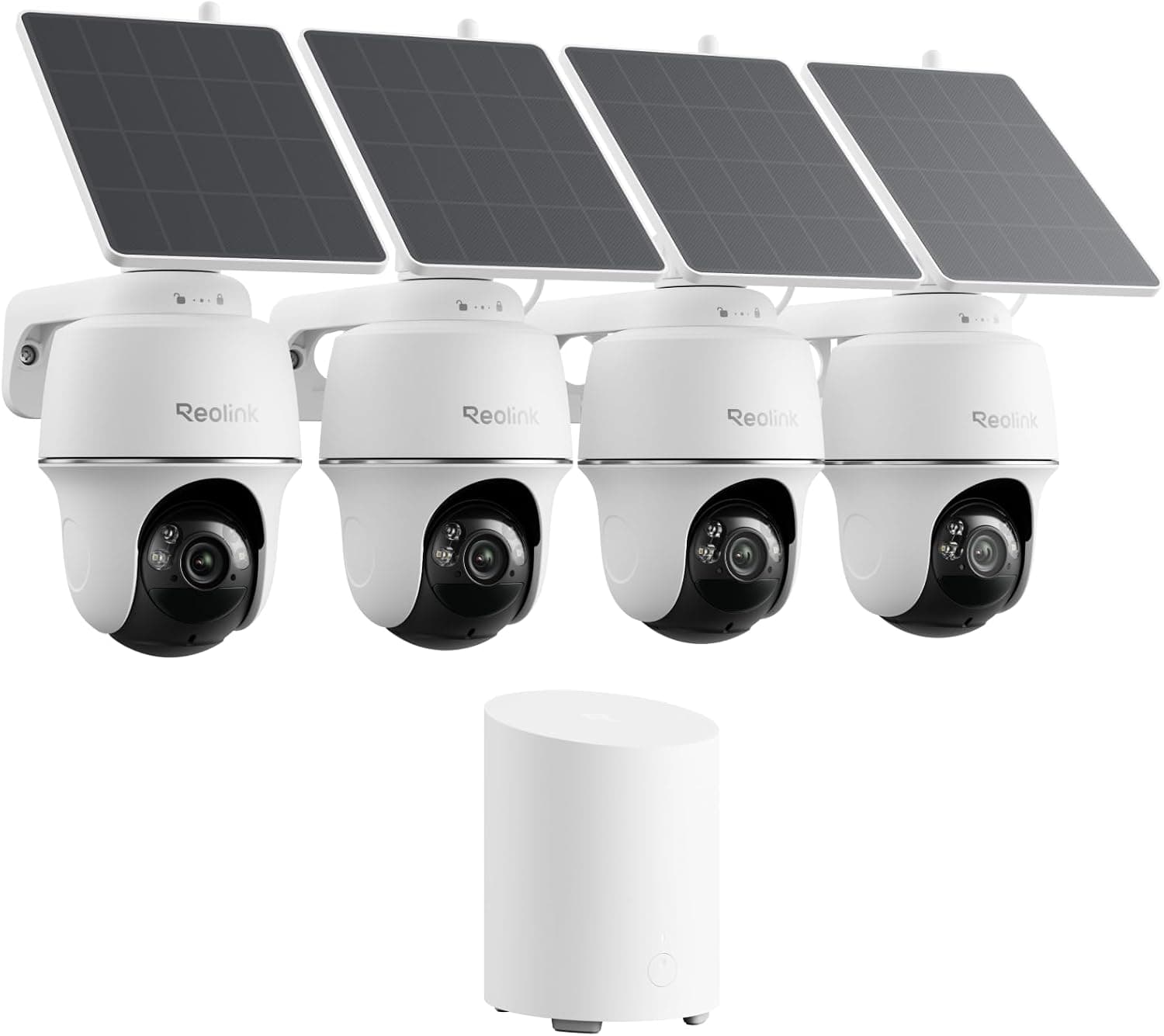
REOLINK 360° Solar Security Cameras, 4 Pack
See it on Amazon
Yale Assure Lock 2 Wi-Fi Smart Lock with Keypad
See it on Amazon
Sponsored listings from Amazon’s Sponsored Products for Creators program, kept apart from our reviews and rankings. How we make money
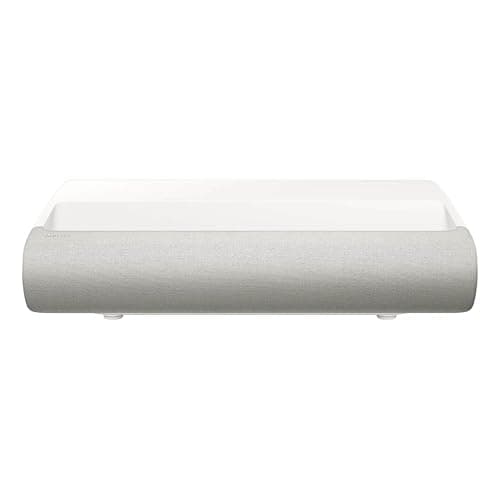
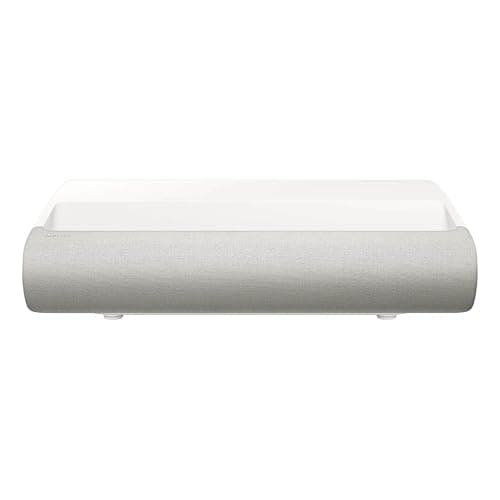
Best Premium Upgrade: Samsung The Premiere LPU9D 130-Inch Triple Laser Projector
Samsung The Premiere LPU9D 130-Inch Triple Laser Projector
- 3,450 ISO lumens — the second-brightest pick and bright enough for moderate ambient light
- At $5,999.99 list it is the most expensive pick here
(Current price, subject to change)
The Samsung The Premiere LPU9D 130-Inch Triple Laser Projector earns a composite of 8.3 on the SHE Living-Room Theater Readiness Score, the second-highest mark here. For your living room that translates into the most TV-like experience with genuine cinematic color. The RGB triple laser yields 3,450 ISO lumens, and Home Technology Review crowned it the new king of ultra-short throw. Tizen delivers the fullest app catalog plus Samsung Gaming Hub for cloud play without a console.
Its 0.189:1 throw produces a 130 in image from under 10 in off the wall, and Vision Boost continuously adapts panel brightness to surrounding ambient illumination. Where it yields ground is HDR, because Samsung skips Dolby Vision across both Premieres, a stance RTINGS confirms in its LPU7D review. HDR10+ covers most content, but DV-tier Netflix and Disney+ titles play in the fallback format.
Compared to the Epson EpiqVision Ultra LS800 Smart Streaming Laser Projector, the LPU9D trades 550 lumens of raw punch for triple-laser color and richer software. The Epson wins the daytime-brightness fight outright.
What We Love
- 3,450 ISO lumens — the second-brightest pick and bright enough for moderate ambient light
- Tizen runs the most complete TV-like app suite plus Samsung Gaming Hub cloud play
- 0.189:1 throw places a 130 in image from under 10 in off the wall
- Home Technology Review crowned the Premiere 9 the new king of ultra-short throw
What Could Be Better
- At $5,999.99 list it is the most expensive pick here
- No Dolby Vision — Samsung uses HDR10+ instead
- No published low-lag gaming figure at the PX3-PRO's tier
The Verdict
If money is no object and you want the most TV-like software with triple-laser color, the Samsung The Premiere LPU9D 130-Inch Triple Laser Projector is a sensible pick for that setup. The 8.3 reflects 3,450 ISO lumens and Tizen's full app suite. The one caveat: no Dolby Vision, so committed Netflix DV viewers will feel that gap.
Check price for the Samsung The Premiere LPU9D 130-Inch Triple Laser Projector →
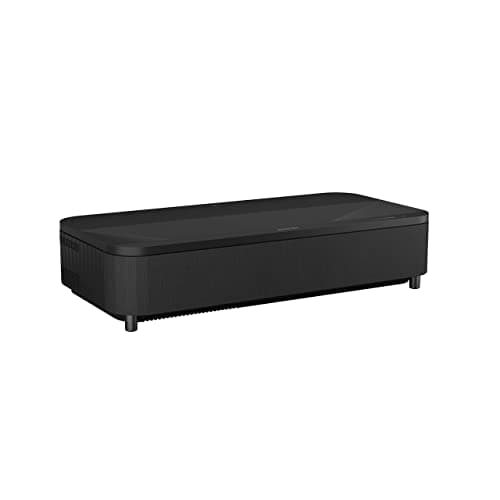
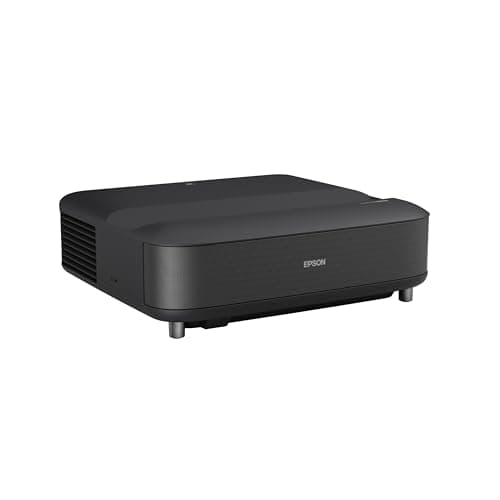
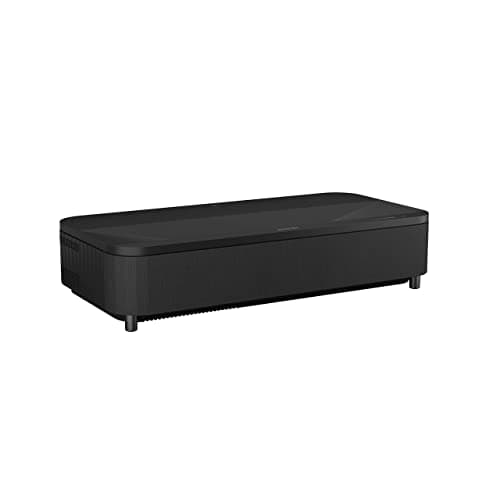
Best Bright-Room / Sports: Epson EpiqVision Ultra LS800 Smart Streaming Laser Projector
Epson EpiqVision Ultra LS800 Smart Streaming Laser Projector
- 4,000 lumens color and white — the brightest pick for direct sun and daytime sports
- No Dolby Vision; HDR10 and HLG only, with Rec.709-class color from a single laser
(Current price, subject to change)
The Epson EpiqVision Ultra LS800 Smart Streaming Laser Projector earns a composite of 7.75 on the SHE Living-Room Theater Readiness Score, the third-highest position and the bright-room champion. For your illuminated room that means it achieves daytime punch no alternative configuration here matches. ProjectorCentral confirms 4,000 lumens of color and white luminance, the maximum on our ambient-light factor. The 3-chip 3LCD architecture produces equivalent color and white output continuously, eliminating single-chip rainbow artifacts.
Its 0.16:1 throw is the tightest in this category, yielding a 100 in image with the unit's back positioned 3.9 in from the wall. ProjectorCentral measured 16.7ms input lag at 1080p120 on the dedicated gaming HDMI port. The single-laser illumination engine covers approximately Rec.709 with HDR10 and HLG. Android TV is licensed but trails Google TV and Tizen on application depth. One availability consideration: Epson has discontinued the LS800 on its own site; it remains available on Amazon as of July 17, 2026, though stock now flows through third-party AV dealers whose street prices float below the $3,499 list.
Compared to the Formovie Theater Premium 4K UST Triple Laser Projector, the LS800 yields the inverse trade: it produces daytime luminance the 2,200-lumen Formovie cannot, prioritizing brightness over triple-laser Dolby Vision chromaticity.
What We Love
- 4,000 lumens color and white — the brightest pick for direct sun and daytime sports
- 0.16:1 throw is the tightest in class, a 100 in image from 3.9 in off the wall
- 16.7ms input lag at 1080p120 on its dedicated gaming HDMI port
- 3-chip 3LCD delivers equal color and white brightness with no rainbow artifacts
What Could Be Better
- No Dolby Vision; HDR10 and HLG only, with Rec.709-class color from a single laser
- Android TV is licensed but a step behind Google TV and Tizen app catalogs
- Pixel-shift 4K PRO-UHD rather than a native 4K triple-laser panel
The Verdict
If your living room has windows and you care most about daytime sports and World Cup matches, the Epson EpiqVision Ultra LS800 Smart Streaming Laser Projector checks the boxes that matter for a lit room. The 7.75 reflects 4,000 lumens and the tightest 0.16:1 throw in class. You give up Dolby Vision color, but you gain the brightness no triple-laser unit here matches.
Check price for the Epson EpiqVision Ultra LS800 Smart Streaming Laser Projector →
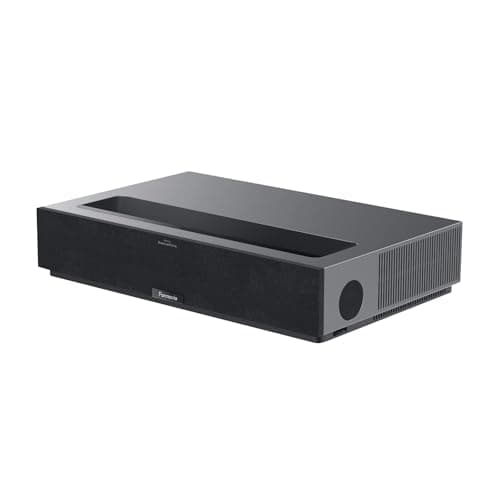
Best Dark-Room Cinema: Formovie Theater Premium 4K UST Triple Laser Projector
Formovie Theater Premium 4K UST Triple Laser Projector
- ALPD RGB+ triple laser with Dolby Vision for theater-grade color in a dark room
- 2,200 ISO lumens is dim — a light-controlled room only
(Current price, subject to change)
The Formovie Theater Premium 4K UST Triple Laser Projector earns a composite of 7.25 on the SHE Living-Room Theater Readiness Score, the cinephile-value pick in this guide. For a dark room that means it produces theater-grade color and audio for the money. The ALPD RGB+ triple laser delivers Dolby Vision, and the Bowers & Wilkins 2x15W system is the best built-in audio here. Google TV 12 runs native Netflix, so no extra streamer is needed.
The honest limitation is brightness, and the formula does not pretend otherwise. At 2,200 ISO lumens it is the dimmest pick, which costs it heavily on the 30%-weighted ambient-light factor. HomeTheaterReview lists 18ms game-mode input lag, but reviewers report ALLM quirks that can raise real-world latency. In a light-controlled room those caveats matter far less than the color does.
Compared to the NexiGo Aurora Pro 4K Tri-Color Laser UST Projector, the Formovie wins on platform and audio, while the NexiGo answers with brighter output, lower gaming lag, and active 3D for roughly $500 less at list.
What We Love
- ALPD RGB+ triple laser with Dolby Vision for theater-grade color in a dark room
- Bowers & Wilkins 2x15W audio is the best built-in sound in this roundup
- Native Google TV 12 with Netflix means no extra streaming dongle
- Triple-laser Dolby Vision at the same $3,499 list as the single-laser LS800
What Could Be Better
- 2,200 ISO lumens is dim — a light-controlled room only
- 18ms claimed game mode with reported ALLM quirks
- Lower brightness costs it on the weighted ambient-light factor
The Verdict
If you control the lighting and want the closest thing to a theater for the money, the Formovie Theater Premium 4K UST Triple Laser Projector lines up with what you actually need. The 7.25 reflects ALPD RGB+ Dolby Vision color and Bowers & Wilkins audio at its $3,499 list price. Just go in knowing 2,200 lumens is a dark-room number, not a daytime one.
Check price for the Formovie Theater Premium 4K UST Triple Laser Projector →
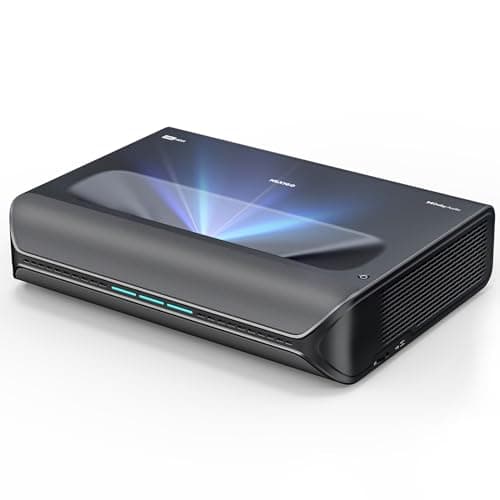
Best Gaming Value: NexiGo Aurora Pro 4K Tri-Color Laser UST Projector
NexiGo Aurora Pro 4K Tri-Color Laser UST Projector
- 9ms input lag at 1080p240 and 17.8ms at 4K60 — the lowest published 1080p240 lag under $3,000
- Android 9 is not Google-certified — Netflix requires a sideload or a dongle
(Current price, subject to change)
The NexiGo Aurora Pro 4K Tri-Color Laser UST Projector earns a composite of 6.95 on the SHE Living-Room Theater Readiness Score. For a budget-conscious gamer that means it delivers triple-laser chromaticity and the lowest published 1080p240 latency under $3,000. Projector Reviews measured 9ms input lag at 1080p240 and 17.8ms at 4K60 continuously. The tri-color RGB illumination supports Dolby Vision, Atmos, and active 3D simultaneously. NexiGo lists it at $2,999.99, and it frequently sells around $2,000 during promotional windows — deal behavior, not the list price.
Its 0.233:1 throw positions a 150 in image from 1.44 ft, and Fresnel ALR-screen configurations bundle for brighter environments. The Android 9 operating system lacks Google certification, so Netflix necessitates a sideload installation or a supplementary streaming accessory. At 2,400 ANSI lumens it accommodates moderate illumination reliably, though direct sunlight remains beyond its capability.
Compared to the AWOL VISION LTV-3000 Pro 4K 3D UST Triple Laser Projector, the NexiGo matches active-3D and triple-laser chromaticity while answering with superior gaming responsiveness, where the AWOL counters with a cleaner bundled Fire TV platform.
What We Love
- 9ms input lag at 1080p240 and 17.8ms at 4K60 — the lowest published 1080p240 lag under $3,000
- Tri-color RGB triple laser with Dolby Vision, Atmos, and active 3D
- Fresnel ALR screen options bundle to help in a moderately lit room
- $2,999.99 list buys triple-laser color plus a top-tier gaming stack
What Could Be Better
- Android 9 is not Google-certified — Netflix requires a sideload or a dongle
- 2,400 ANSI is moderate, fine in controlled light but not direct sun
- Uncertified OS costs it heavily on smart-platform quality vs Google TV picks
The Verdict
If you game in the living room and want triple-laser color without paying PX3-PRO money, the NexiGo Aurora Pro 4K Tri-Color Laser UST Projector is a sensible pick for that setup. The 6.95 reflects 9ms 1080p240 latency with Dolby Vision and 3D at its $2,999.99 list price. The trade is the uncertified Android 9, so plan to sideload Netflix or add a dongle.
Check price for the NexiGo Aurora Pro 4K Tri-Color Laser UST Projector →
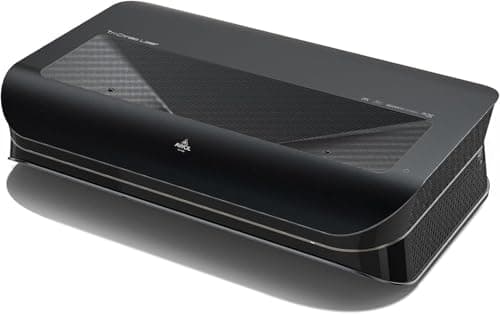
Best for 3D Movie Nights: AWOL VISION LTV-3000 Pro 4K 3D UST Triple Laser Projector
AWOL VISION LTV-3000 Pro 4K 3D UST Triple Laser Projector
- RGB triple laser with Dolby Vision plus active 3D — rare cinematic breadth
- 2,000 ISO lumens is dim — a light-controlled room only, despite the 3,000 peak claim
(Current price, subject to change)
The AWOL VISION LTV-3000 Pro 4K 3D UST Triple Laser Projector earns a composite of 6.75 on the SHE Living-Room Theater Readiness Score. For a dark-room cinephile who wants 3D, that means it produces full cinematic format breadth with strong gaming latency. The RGB triple laser supports Dolby Vision, HDR10+, and active 3D, and Projector Reviews measured 15ms at 4K60 and 8ms at 1080p120. A Fire TV Stick 4K Max ships in a dedicated pocket for a certified streaming platform.
The catch is brightness, and the ISO-comparable figure scores it accordingly. AWOL quotes 3,000 peak lumens but 2,000 ISO, so our ambient-light factor scores the dimmer, honest number. The bundled streamer is a clean workaround for the missing OS, but it adds one remote and one HDMI port. In a controlled-light room the 3D and color outweigh those compromises.
Compared to the Samsung The Premiere LPU7D 120-Inch 4K Laser Projector, the AWOL trades brightness and native software for triple-laser Dolby Vision and active 3D the single-laser Samsung cannot match.
What We Love
- RGB triple laser with Dolby Vision plus active 3D — rare cinematic breadth
- 15ms input lag at 4K60 and 8ms at 1080p120 for responsive console gaming
- Bundled Fire TV Stick 4K Max gives a clean, certified streaming experience
- Up to a 150 in image from a 0.25:1 throw on a normal console
What Could Be Better
- 2,000 ISO lumens is dim — a light-controlled room only, despite the 3,000 peak claim
- No built-in OS; the bundled Fire TV stick means one more remote and HDMI port
- Lower ISO brightness costs it on the heavily weighted ambient-light factor
The Verdict
If active 3D and Dolby Vision matter and you control the lighting, the AWOL VISION LTV-3000 Pro 4K 3D UST Triple Laser Projector checks the boxes that matter for a dark-room cinema. The 6.75 reflects triple-laser DV plus 3D and a clean bundled Fire TV. Just remember 2,000 ISO is the real figure, so this is a controlled-light pick.
Check price for the AWOL VISION LTV-3000 Pro 4K 3D UST Triple Laser Projector →
Best Tizen Value: Samsung The Premiere LPU7D 120-Inch 4K Laser Projector
Samsung The Premiere LPU7D 120-Inch 4K Laser Projector
- Tizen full app suite plus Samsung Gaming Hub cloud play with no console
- Single laser plus phosphor covers narrower color than the triple-laser picks
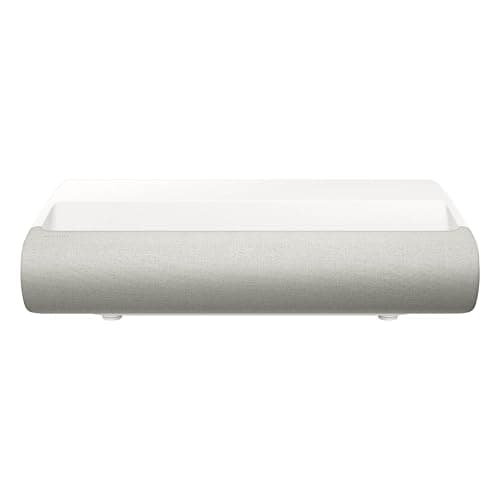
The Samsung The Premiere LPU7D 120-Inch 4K Laser Projector earns a composite of 6.7 on the SHE Living-Room Theater Readiness Score. For a Samsung-ecosystem buyer that means it delivers the most TV-like software without the LPU9D's price. The single-laser-plus-phosphor engine produces 2,500 ISO lumens, and Tizen runs the full app suite plus Samsung Gaming Hub. Alexa is built in for hands-free control, and Vision Boost adapts to ambient light.
The limitation is color, and the formula weights it against the unit. Single laser plus phosphor covers a narrower gamut than the triple-laser picks, and Samsung again skips Dolby Vision in favor of HDR10+. Its image tops out at 120 in, where the triple-laser units reach 150 in. RTINGS confirms the no-DV stance in its LPU7D bench review.
Compared to the Epson EpiqVision LS650 Smart Streaming Laser Projector, the LPU7D wins on smart-platform depth and brightness, while the cheaper Epson answers with more lumens at an entry-level price.
What We Love
- Tizen full app suite plus Samsung Gaming Hub cloud play with no console
- Alexa built-in for hands-free voice control out of the box
- Vision Boost adapts brightness to ambient light in a moderately lit room
- 2,500 ISO lumens is workable in controlled-to-moderate living-room light
What Could Be Better
- Single laser plus phosphor covers narrower color than the triple-laser picks
- No Dolby Vision; HDR10+ only across the Premiere line
- 120 in maximum image trails the 150 in triple-laser units here
The Verdict
If you want Samsung's TV-like Tizen software and Alexa at a lower price than the LPU9D, the Samsung The Premiere LPU7D 120-Inch 4K Laser Projector lines up with what you actually need. The 6.7 reflects 2,500 ISO lumens and the full Tizen app suite. The trade is single-laser color, so cinephiles should look at a triple-laser pick instead.
Get the Samsung The Premiere LPU7D 120-Inch 4K Laser Projector — $2,640.07 at Amazon →
Best Entry Price: Epson EpiqVision LS650 Smart Streaming Laser Projector
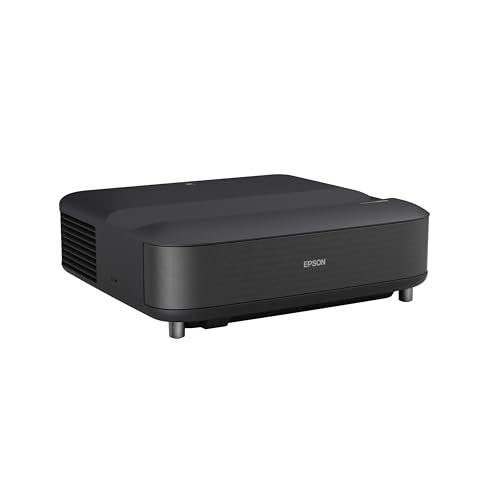
Epson EpiqVision LS650 Smart Streaming Laser Projector
- 3,600 lumens at $2,799.99 list — the brightest entry-price laser TV here
- No low-lag gaming port — it is a movies-and-streaming unit, not a gaming one
(Current price, subject to change)
The Epson EpiqVision LS650 Smart Streaming Laser Projector earns a composite of 6.55 on the SHE Living-Room Theater Readiness Score, the entry position in this guide. For a first-time purchaser that represents honest brightness value. Its 3-chip 3LCD architecture produces 3,600 lumens continuously at a $2,799.99 list price — the floor of this roster — and TechRadar praised its substantial illumination from a compact projector. The Setting Assistant simplifies initial alignment, and Android TV handles native streaming applications.
This entry-level positioning prioritizes affordability over gaming versatility. Lacking a dedicated low-lag port, it functions as a movies-and-streaming projector rather than a console-gaming one. The single-laser illumination covers Rec.709-class chromaticity with HDR10 and HLG. Its image maximizes at 120 in, and the wider throw geometry requires 10.5 in of wall separation for a 100 in projection.
Compared to the Epson EpiqVision Ultra LS800 Smart Streaming Laser Projector, the LS650 economizes considerably while relinquishing 400 lumens, the tighter 0.16:1 throw, and the dedicated gaming port that earns the LS800 its bright-room distinction.
What We Love
- 3,600 lumens at $2,799.99 list — the brightest entry-price laser TV here
- 3-chip 3LCD delivers equal color and white brightness with no rainbow effect
- Setting Assistant simplifies first alignment for a first-time buyer
- TechRadar praised big brightness from a compact projector
What Could Be Better
- No low-lag gaming port — it is a movies-and-streaming unit, not a gaming one
- HDR10 and HLG only, Rec.709-class color, no Dolby Vision or triple laser
- 120 in maximum image and a 0.27:1-class throw trail the brighter LS800
The Verdict
If you want the cheapest credible laser TV and brightness matters more than gaming or wide color, the Epson EpiqVision LS650 Smart Streaming Laser Projector is the path of least friction. The 6.55 reflects 3,600 lumens at a $2,799.99 list price, the entry point in this guide. There is no low-lag gaming port, so console players should step up to a gaming-ready pick.
Check price for the Epson EpiqVision LS650 Smart Streaming Laser Projector →
How We Score: SHE Living-Room Theater Readiness Score
SHE Living-Room Theater Readiness Score
Score Formula
(Ambient-Light Punch × 0.30) + (Smart Platform Quality × 0.20) + (Cinematic Format Support × 0.20) + (Placement Efficiency × 0.15) + (Gaming Readiness × 0.15)Score Factors
- Ambient-Light Punch (30%)Rated brightness in ISO or ANSI lumens, the single biggest determinant of daytime TV-replacement viability. 4,000 lumens scores 10; 3,400-3,999 scores 9; 3,000-3,399 scores 8; 2,400-2,999 scores 6; 2,000-2,399 ISO scores 5. Where a maker quotes peak versus ISO, the ISO-comparable figure is scored, cross-checked against ProjectorCentral bench measurements.
- Smart Platform Quality (20%)Can it be the TV with zero extra hardware? Licensed Google TV with native Netflix scores 10; full Tizen app suite plus Gaming Hub scores 9; licensed Android TV scores 7; a bundled external streamer such as AWOL's pocketed Fire TV Stick scores 6; uncertified Android 9 requiring Netflix sideloads scores 4.
- Cinematic Format Support (20%)Laser architecture plus HDR breadth. RGB triple laser with Dolby Vision, IMAX Enhanced, and HDR10+ scores 10; triple laser with Dolby Vision plus 3D or premium audio scores 9; triple laser with HDR10+ but no Dolby Vision scores 7; single laser with HDR10+ scores 5; single-laser 3LCD with HDR10 and HLG only scores 4.
- Placement Efficiency (15%)Throw ratio and wall distance per screen inch — how big an image a normal console yields. A 0.16:1 throw (Epson LS800, 100 in from 3.9 in) scores 10; 0.18-0.19:1 scores 9; 0.21-0.23:1 scores 8; 0.25:1 scores 7; a 100 in from 10.5 in with a 120 in cap scores 6.
- Gaming Readiness (15%)Best published input lag plus refresh ceiling. Sub-6ms 1080p240 with 17.6ms 4K60 and Designed for Xbox scores 10; 9ms 1080p240 scores 9; 8ms 1080p120 scores 8; 16.7ms 1080p120 on one port or cloud Gaming Hub scores 7; 18ms with ALLM quirks scores 5; no low-lag mode scores 5.
SHE Living-Room Theater Readiness Score — Ranked
Hisense PX3-PRO Ultra Short Throw Triple Laser Projector
SHE Living-Room Theater Readiness Score9.1/10$3,499.99 list — only UST top-tier on triple-laser color, native Google TV, and sub-6ms gaming at once
Samsung The Premiere LPU9D 130-Inch Triple Laser Projector
SHE Living-Room Theater Readiness Score8.3/10$5,999.99 list — 3,450 ISO triple laser plus the most TV-like Tizen software; no Dolby Vision
Epson EpiqVision Ultra LS800 Smart Streaming Laser Projector
SHE Living-Room Theater Readiness Score7.8/10$3,499 list — 4,000 lumens and the tightest 0.16:1 throw; Rec.709 color, no Dolby Vision
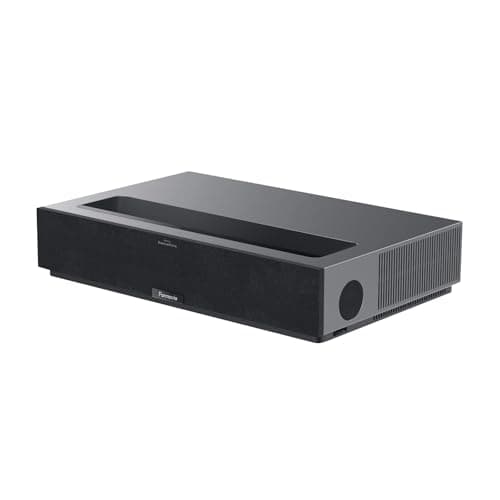
Formovie Theater Premium 4K UST Triple Laser Projector
SHE Living-Room Theater Readiness Score7.3/10$3,499 list — ALPD RGB+ Dolby Vision plus Bowers & Wilkins audio; dim 2,200 ISO lumens
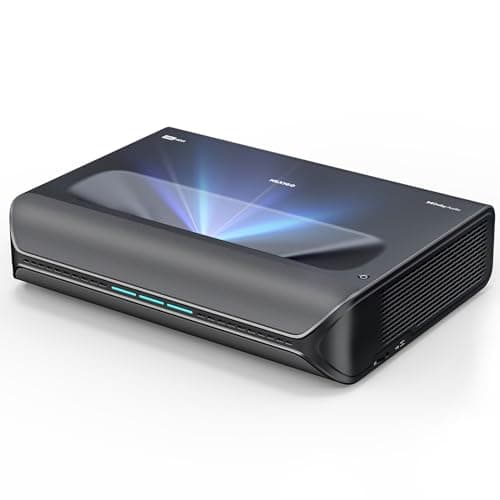
NexiGo Aurora Pro 4K Tri-Color Laser UST Projector
SHE Living-Room Theater Readiness Score7.0/10$2,999.99 list — 9ms 1080p240 gaming with triple-laser DV and 3D; uncertified Android 9
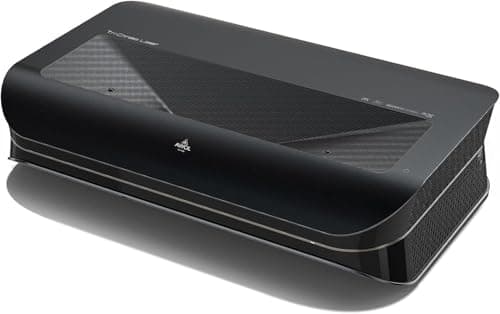
AWOL VISION LTV-3000 Pro 4K 3D UST Triple Laser Projector
SHE Living-Room Theater Readiness Score6.8/10$2,999 list — triple-laser Dolby Vision plus active 3D and bundled Fire TV; 2,000 ISO lumens
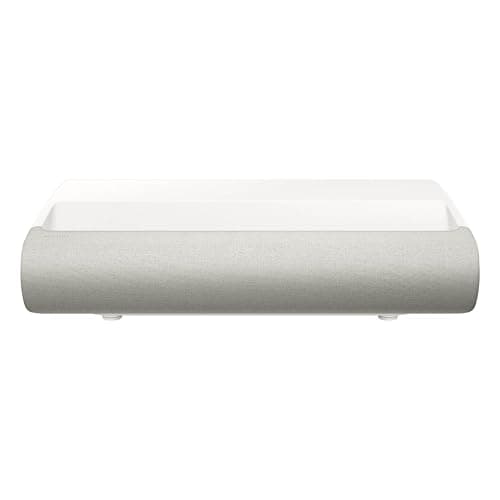
Samsung The Premiere LPU7D 120-Inch 4K Laser Projector
SHE Living-Room Theater Readiness Score6.7/10$2,999.99 list — full Tizen suite and Alexa; single-laser color, no Dolby Vision, 120 in cap
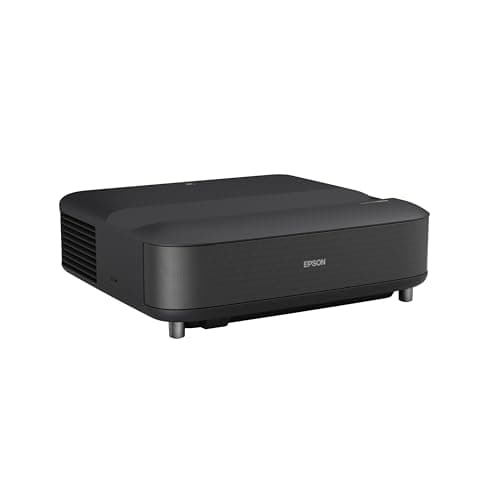
Epson EpiqVision LS650 Smart Streaming Laser Projector
SHE Living-Room Theater Readiness Score6.5/10$2,799.99 list — cheapest credible laser TV at 3,600 lumens; no gaming port, single-laser color
Smart Platforms, Voice, and Audio Wiring
The silent dealbreaker for TV replacement is the smart platform, not the laser. A UST projector only replaces the TV if it streams apps natively the way a TV does. Licensed Google TV on the Hisense PX3-PRO Ultra Short Throw Triple Laser Projector and the Formovie Theater Premium 4K UST Triple Laser Projector runs native Netflix and answers to Google Assistant, the cleanest experience here. Samsung's Tizen on both Premieres delivers the fullest app suite plus Samsung Gaming Hub for cloud play, and Alexa is built in for hands-free voice. RTINGS bench-tests the PX3-PRO, the Premiere LPU7D, and the AWOL LTV-3000 Pro, Projector Reviews and TechRadar both run full Premiere 9 reviews, HomeTheaterReview covers the Formovie Theater Premium, and ProjectorCentral and What Hi-Fi both publish dedicated PX3-Pro reviews — so the platform calls here rest on documented exact-model coverage.
Android TV on the Epson LS800 and LS650 is licensed and reliable, but its app catalog runs a step behind Google TV and Tizen. The two outliers ask for a workaround. The NexiGo Aurora Pro 4K Tri-Color Laser UST Projector runs an uncertified Android 9 build, so Netflix requires a sideload or a separate streaming stick. The AWOL VISION LTV-3000 Pro 4K 3D UST Triple Laser Projector skips an OS entirely and bundles a Fire TV Stick 4K Max in a dedicated pocket. That is a clean, certified fix that produces a familiar interface, at the cost of one more remote and HDMI port.
Audio wiring is the last consideration, and it is uniform enough to plan around. Every pick has built-in speakers, from the Samsung The Premiere LPU9D 130-Inch Triple Laser Projector's 40W system to the Formovie's Bowers & Wilkins 2x15W setup, the best onboard audio here. The NexiGo Aurora Pro answers with 60W of integrated amplification for larger rooms. All of these units carry HDMI eARC, so a soundbar or AVR connects with one cable and passes lossless Atmos. Plan an ALR screen into any bright-room budget. That screen is a $500 to $1,500 line item, protecting daytime contrast across a laser-light lifespan rated near 20,000 hours — roughly 13 yr at 4 hours of viewing a day.
| Product | Triple Laser | Dolby Vision | Native Apps | HDMI eARC | Alexa | Google Assistant |
|---|---|---|---|---|---|---|
| Hisense PX3-PRO Ultra Short Throw Triple Laser Projector | ✓ | ✓ | ✓ | ✓ | ✕ | ✓ |
| Samsung The Premiere LPU9D 130-Inch Triple Laser Projector | ✓ | ✕ | ✓ | ✓ | ✓ | ✕ |
| Epson EpiqVision Ultra LS800 Smart Streaming Laser Projector | ✕ | ✕ | ✓ | ✓ | ✕ | ✓ |
| Formovie Theater Premium 4K UST Triple Laser Projector | ✓ | ✓ | ✓ | ✓ | ✕ | ✓ |
| NexiGo Aurora Pro 4K Tri-Color Laser UST Projector | ✓ | ✓ | ✕ | ✓ | ✕ | ✕ |
| AWOL VISION LTV-3000 Pro 4K 3D UST Triple Laser Projector | ✓ | ✓ | ✕ | ✓ | ✓ | ✕ |
When NOT to Buy
A UST laser projector is not automatically the appropriate decision. The economics favor it in many environments. A 100 in image plus an ALR screen lands considerably under a $4,000 98 in TV, and the laser-illumination source operates 20,000-plus hours without lamp replacement. However, if your living room admits uncontrollable direct sunlight throughout the day, even 4,000 lumens deteriorates visibly, and a bright television remains the honest answer. Positioning closer than 8 ft overwhelms the viewing geometry. And anticipating true native 4K rather than pixel-shift interpolation requires recalibrated expectations before spending $2,700 to $6,000 at list.
Who Should Buy What
Who Should Buy What
| If you are… | Recommended pick |
|---|---|
Do-it-all households You want one box that handles daytime sports, console gaming, and Dolby Vision movie nights without trading any one away | Hisense PX3-PRO Ultra Short Throw Triple Laser Projector |
Bright-room sports fans Your living room has windows and daytime sports and World Cup viewing matter more than the widest color gamut | Epson EpiqVision Ultra LS800 Smart Streaming Laser Projector |
Premium upgraders Money is no object and you want triple-laser color with the most complete TV-like software in one unit | Samsung The Premiere LPU9D 130-Inch Triple Laser Projector |
Dark-room cinephiles You control your lighting and want theater-grade Dolby Vision color plus premium built-in audio at a mid price | Formovie Theater Premium 4K UST Triple Laser Projector |
Living-room gamers You game in the living room and want triple-laser color plus class-leading input lag at a budget triple-laser price | NexiGo Aurora Pro 4K Tri-Color Laser UST Projector |
Frequently Asked Questions
What is the best UST laser projector in 2026?
The Hisense PX3-PRO is the best UST laser projector for home theater in 2026, topping the SHE Living-Room Theater Readiness Score at 9.1. It is the only pick combining triple-laser Dolby Vision and IMAX Enhanced color, native Google TV with built-in Netflix, and sub-6ms 1080p240 gaming, at a $3,499.99 list price. The Samsung Premiere LPU9D ($5,999.99 list) is the premium upgrade, and the 4,000-lumen Epson LS800 ($3,499 list) is the bright-room alternative.
What is the best projector for home cinema in a living room?
An ultra short throw laser projector is the practical living-room home-cinema choice because it sits on a console inches from the wall — no ceiling mount or long cable runs. In a light-controlled living room, the Formovie Theater Premium pairs ALPD RGB+ Dolby Vision color with Bowers & Wilkins audio; in a lit room, the 4,000-lumen Epson LS800 or the 3,450 ISO-lumen Samsung LPU9D holds up better. Whichever you pick, pair it with an ALR screen to protect daytime contrast.
Can a UST projector replace a TV in a bright living room?
Partly. A UST laser projector replaces a TV well in a room with controllable light, especially paired with an ALR (ambient-light-rejecting) screen. The brightest picks here, the 4,000-lumen Epson LS800 and the 3,450 ISO-lumen Samsung LPU9D, handle moderate ambient light. But no projector matches a bright TV in direct, uncontrolled sunlight all day. For a room with big windows and constant sun, an ALR screen is mandatory, and a bright TV may still be the better answer.
Do I need an ALR screen for a UST projector?
For a bright room, effectively yes. A UST-specific ALR (ambient-light-rejecting) screen rejects overhead and side light while reflecting the projector's upward throw, which preserves contrast in daylight. It adds $500 to $1,500. In a fully dark room a plain matte-white screen or even a flat white wall can work, but any living room with windows benefits enormously. NexiGo bundles Fresnel ALR options with the Aurora Pro, which simplifies the pairing.
What is the difference between triple-laser and single-laser UST projectors?
Single-laser units (Epson LS800 and LS650, plus the Samsung LPU7D's laser-plus-phosphor) are brighter per dollar but cover a narrower, roughly Rec.709 color gamut with no Dolby Vision. RGB triple-laser units (Hisense PX3-PRO, Samsung LPU9D, Formovie, AWOL, NexiGo) reach about 107% BT.2020 color with Dolby Vision on most, but tend to be dimmer. Only the PX3-PRO and LPU9D deliver both 3,000-plus lumens and triple-laser color, and they sit at the premium end of this roster.
Are UST projectors good for watching sports and the World Cup?
Yes, with the right pick and screen. For daytime sports in a lit room, brightness wins, so the 4,000-lumen Epson LS800 is the strongest choice, ideally with an ALR screen. The Samsung LPU9D at 3,450 ISO lumens and the Hisense PX3-PRO at 3,000 ANSI also handle moderate light well. A 100 to 150 in image makes a World Cup match feel like a stadium, which is the seasonal draw, but plan the lighting and the screen before kickoff.
Are UST projectors good for gaming?
The best ones are excellent. The Hisense PX3-PRO leads with sub-6ms input lag at 1080p240 and 17.6ms at 4K60, the only Designed-for-Xbox UST. The NexiGo Aurora Pro hits 9ms at 1080p240, and the AWOL LTV-3000 Pro reaches 8ms at 1080p120. Avoid the Epson LS650, which has no low-lag gaming port. The Formovie's 18ms claim comes with reported ALLM quirks, so it is the weakest gaming pick of the triple-laser units.
How long does a UST laser light source last?
Laser light sources in these projectors are rated for roughly 20,000 to 25,000 hours, with no lamp swaps over that span. At 4 hours of viewing per day, 20,000 hours is about 13 years. That longevity, plus a sealed laser engine that resists dust, is why laser TVs are marketed as TV replacements. Traditional lamp projectors need a costly bulb change every few thousand hours.
Bottom Line
Get the Hisense PX3-PRO Ultra Short Throw Triple Laser Projector if you want one UST that handles daytime sports, console gaming, and Dolby Vision movie nights without compromise.
Get the Epson EpiqVision Ultra LS800 Smart Streaming Laser Projector if your living room has windows and daytime sports brightness matters more than the widest color gamut.
Get the Samsung The Premiere LPU9D 130-Inch Triple Laser Projector if money is no object and you want triple-laser color with the most TV-like Tizen software.
Get the Formovie Theater Premium 4K UST Triple Laser Projector if you control your room lighting and want Dolby Vision color plus premium audio at a mid price.
Get the NexiGo Aurora Pro 4K Tri-Color Laser UST Projector if you game in the living room and want triple-laser color plus low input lag on a budget.
The right call for most living rooms is the Hisense PX3-PRO Ultra Short Throw Triple Laser Projector — the only UST that is top-tier on color, platform, and gaming at once. For a bright, sunny room, the Epson EpiqVision Ultra LS800 Smart Streaming Laser Projector and its 4,000 lumens punch through daylight. Skip a UST projector entirely if your room takes harsh direct sun all day or you sit under 8 ft from the wall — a bright TV stays the honest answer there.
Sources & Methodology
Methodology: SHE Living-Room Theater Readiness Score — Formula: (Ambient-Light Punch × 0.30) + (Smart Platform Quality × 0.20) + (Cinematic Format Support × 0.20) + (Placement Efficiency × 0.15) + (Gaming Readiness × 0.15). Factors: Ambient-Light Punch (30%): Rated brightness in ISO or ANSI lumens, the single biggest determinant of daytime TV-replacement viability. 4,000 lumens scores 10; 3,400-3,999 scores 9; 3,000-3,399 scores 8; 2,400-2,999 scores 6; 2,000-2,399 ISO scores 5. Where a maker quotes peak versus ISO, the ISO-comparable figure is scored, cross-checked against ProjectorCentral bench measurements. | Smart Platform Quality (20%): Can it be the TV with zero extra hardware? Licensed Google TV with native Netflix scores 10; full Tizen app suite plus Gaming Hub scores 9; licensed Android TV scores 7; a bundled external streamer such as AWOL's pocketed Fire TV Stick scores 6; uncertified Android 9 requiring Netflix sideloads scores 4. | Cinematic Format Support (20%): Laser architecture plus HDR breadth. RGB triple laser with Dolby Vision, IMAX Enhanced, and HDR10+ scores 10; triple laser with Dolby Vision plus 3D or premium audio scores 9; triple laser with HDR10+ but no Dolby Vision scores 7; single laser with HDR10+ scores 5; single-laser 3LCD with HDR10 and HLG only scores 4. | Placement Efficiency (15%): Throw ratio and wall distance per screen inch — how big an image a normal console yields. A 0.16:1 throw (Epson LS800, 100 in from 3.9 in) scores 10; 0.18-0.19:1 scores 9; 0.21-0.23:1 scores 8; 0.25:1 scores 7; a 100 in from 10.5 in with a 120 in cap scores 6. | Gaming Readiness (15%): Best published input lag plus refresh ceiling. Sub-6ms 1080p240 with 17.6ms 4K60 and Designed for Xbox scores 10; 9ms 1080p240 scores 9; 8ms 1080p120 scores 8; 16.7ms 1080p120 on one port or cloud Gaming Hub scores 7; 18ms with ALLM quirks scores 5; no low-lag mode scores 5.
Expert review sources used in this analysis:
- SmartHomeExplorer aggregates expert review data and manufacturer specifications to produce consensus-based buying guidance
- We do not perform first-party product testing
- Brightness ratings, throw ratios, laser architecture, smart-platform details, input-lag figures, and pricing are drawn from manufacturer documentation
- They are corroborated against UST projector coverage from ProjectorCentral, RTINGS, HomeTheaterReview, Home Technology Review, Projector Reviews, What Hi-Fi, and TechRadar
- ProjectorCentral measured the Hisense PX3-PRO at 2,669 ANSI lumens with 17.6ms input lag at 4K60, and confirmed the Epson LS800's 4,000 lumens and 0.16:1 throw
- Input-lag figures for the NexiGo Aurora Pro and AWOL LTV-3000 Pro come from Projector Reviews' published tests
- Prices shown are manufacturer list (MSRP) figures; list prices and Amazon availability re-verified 2026-07-17
- A fluctuation advisory applies to this category: most picks currently sell through third-party sellers — independent AV dealers such as Projector Screen Co
- as well as brand storefronts like NexiGo USA and AWOL Vision — whose Amazon buy-box prices swing 20% or more below list from week to week, so always check the live price before buying
- The Epson LS650's buy link now points to the listing carrying a New-condition buy box after its original listing fell to a used-only offer in July 2026
- The SHE Living-Room Theater Readiness Score weights ambient-light punch, smart platform quality, cinematic format support, placement efficiency, and gaming readiness from aggregated specs and published measurements
- No first-party measurements were conducted.
Nicholas Miles is the founder of SmartHomeExplorer and a longtime smart home enthusiast focused on helping everyday homeowners make better technology decisions. He researches, compares, and writes about products across security, climate, lighting, leak prevention, sensors, home energy, and automation, with an emphasis on real-world usefulness, ecosystem compatibility, reliability, privacy, and long-term value.
Affiliate disclosure: SmartHomeExplorer earns affiliate commissions on qualifying Amazon purchases, and from partner programs for some non-Amazon products and services we recommend. Our scoring methodology is independent of affiliate relationships.