
Best 8K Dolby Atmos AV Receivers (2026)
You're building a Dolby Atmos theater around a 4K/120 console or an 8K TV, and the receiver decides how far it scales. The Denon AVR-X3800H gives you full HDMI 2.1 and four-sub bass for the money.
This article contains affiliate links. We may earn a commission at no extra cost to you. Prices change frequently — check the current price on Amazon before buying. Learn more
The Short Answer
The Denon AVR-X3800H prevails for most home theaters near $1,799 because it consolidates full HDMI 2.1 connectivity across all six inputs, four subwoofer outputs, and Audyssey XT32 correction, although amplifier power trails costlier flagships. The Onkyo TX-RZ50 substitutes when bundled Dirac Live matters more.
Featured in this Guide
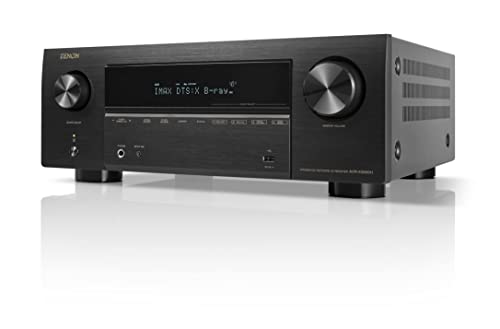
Denon
AVR-X3800H
- •Full HDMI 2.1 on all six inputs, 9.4 channels, four subwoofer outputs, Audyssey XT32 — the value sweet spot
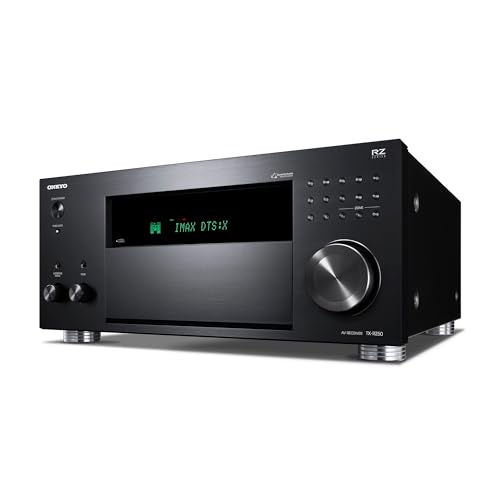
Onkyo
TX-RZ50
- •9.2 channels with full-bandwidth Dirac Live in the box and 7.2.4 pre-out support, near $1,095
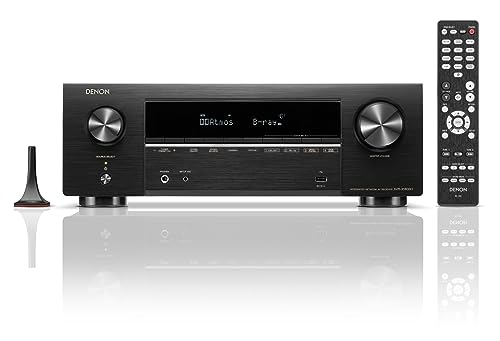
Denon
AVR-X1800H
- •Full HDMI 2.1 on every input and 5.2.2 Atmos at the lowest price here, around $849
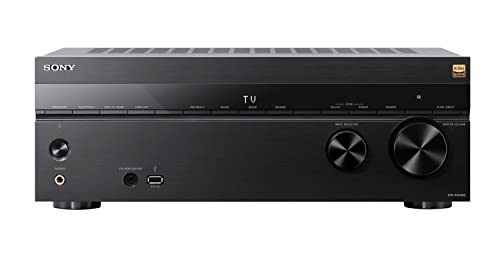
Sony
STR-AN1000
- •360 Spatial Sound Mapping fakes a height layer where speaker placement is awkward
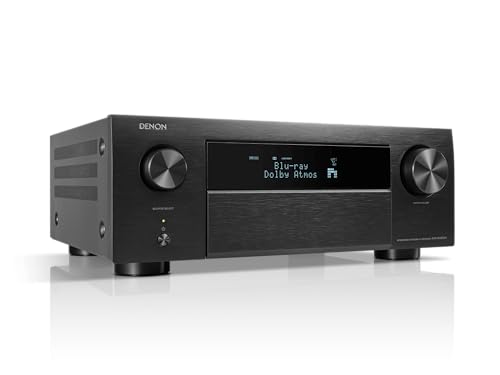
Denon
AVR-X4800H
- •Seven HDMI 2.1 inputs, 125W per channel, four subs, and pro-install control certification
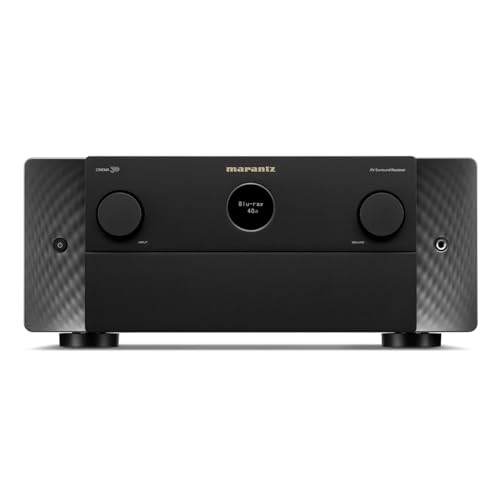
Marantz
Cinema 30
- •11.4 channels at 140W with four subs for a full ceiling layout — top dollar, top refinement
Head-to-Head: HDMI 2.1, Channels, Room Correction, and Value
Entertainment
Chart
 Smarthomeexplorer.com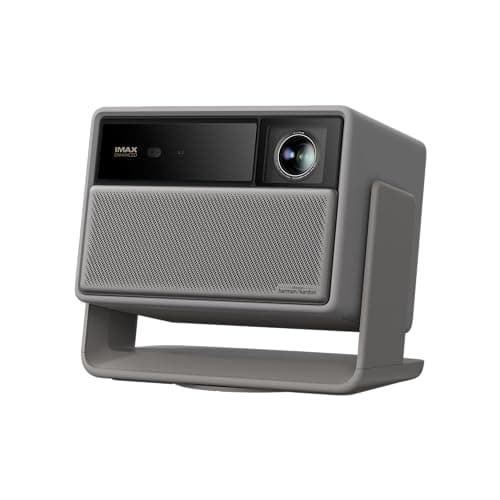
XGIMI HORIZON 20 4K RGB Triple Laser Home Projector
Check price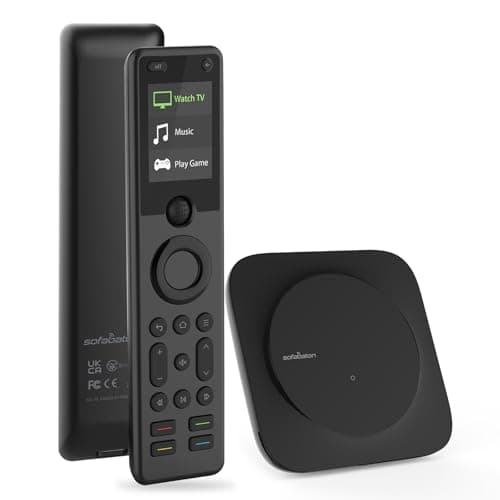
SofaBaton X1S Universal Remote (with Hub)
Check price
VTOMAN X7 4250A Jump Starter with 160PSI Air Compressor
Check price
What 8K and Atmos Actually Demand From a Receiver
You are upgrading from a soundbar or a pre-2020 receiver because a new PS5 or an 8K-ready TV exposed what your old box cannot pass through. The trap is that the specification looks identical across an $849 receiver and a $4,800 one, since both advertise "8K" and "Dolby Atmos." As What Hi-Fi keeps noting, whether you outgrow it within two years reduces to three variables — how many HDMI inputs are genuinely full-bandwidth HDMI 2.1, how many addressable height channels the amplifier drives across a ceiling between 8 ft and 12 ft, and which tier of room correction does the work.
Sound & Vision frames the Denon AVR-X3800H near $1,799 as the cheapest model with the channels for full Atmos and HDMI 2.1 on every port, while the Denon AVR-X1800H at $849 and the Marantz Cinema 30 at $4,800 anchor opposite ends of the scale our SHE Home-Theater Future-Proofing Score measures.
Best for most theaters: Denon AVR-X3800H
Best for most home theatersDenon AVR-X3800H
- All six HDMI inputs are full HDMI 2.1 with 8K/60 and 4K/120 passthrough
- 105W per channel trails the X4800H and Marantz when every channel is driven
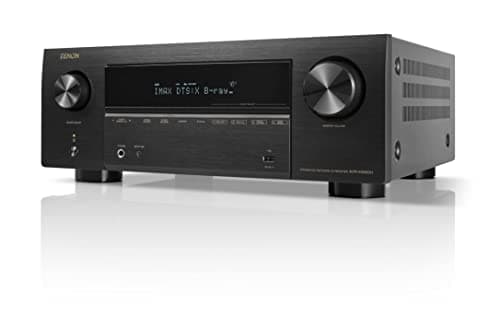
The Denon AVR-X3800H near $1,799 is the appropriate selection for a buyer assembling a complete Dolby Atmos configuration who declines flagship pricing, and the inappropriate selection only when raw amplifier power dominates the decision. Three specifications determine it: all six HDMI inputs deliver genuine HDMI 2.1 conveying 8K/60 and 4K/120 passthrough, the amplifier supplies 105 watts across nine channels with 11.4-channel processing for a 7.2.4 height configuration, and four independent subwoofer outputs bass-manage a room extending beyond 14 ft deep. On our weighted SHE Home-Theater Future-Proofing Score it normalizes to a composite 9.8, the highest here, because the formula rewards establishing every future-proofing specification beneath $1,800.
Sound & Vision characterizes it as the least costly model incorporating the nine channels necessary for full Dolby Atmos and HDMI 2.1 on every input, while What Hi-Fi commends the smooth, cinematic delivery. Compared to the Denon AVR-X4800H, you relinquish one HDMI 2.1 input and roughly 20 watts per channel for a $1,000 saving most rooms never register, whereas versus the Onkyo TX-RZ50 you exchange bundled Dirac Live for full HDMI 2.1 distribution. The honest constraint remains the installation, since Dirac Live persists as a paid license atop the bundled Audyssey.
What We Love
- All six HDMI inputs are full HDMI 2.1 with 8K/60 and 4K/120 passthrough
- 9.4 channels powered with 11.4-channel processing for a 7.2.4 Atmos layout
- Four independent subwoofer outputs for bass-managed large rooms
- Audyssey MultEQ XT32, with Dirac Live available as a paid upgrade
What Could Be Better
- 105W per channel trails the X4800H and Marantz when every channel is driven
- Dirac Live is an extra license, not bundled like the Onkyo
- No native Matter support
- Nine channels of speaker wire and four subs make for a real install
The Verdict
If you're building a full Atmos theater and want a receiver that won't bottleneck the system, the Denon AVR-X3800H fits the brief without compromise on the specs that age fastest. What Hi-Fi calls it a superb home cinema receiver, and Sound & Vision flags it as the cheapest model with full HDMI 2.1 on every port. You can stop the search here for most rooms.
Best bundled room correction: Onkyo TX-RZ50
Onkyo TX-RZ50
- Full-bandwidth Dirac Live (20Hz-20kHz) included, not a paid upgrade
- Only three of seven HDMI inputs are full HDMI 2.1, fewer than the Denons
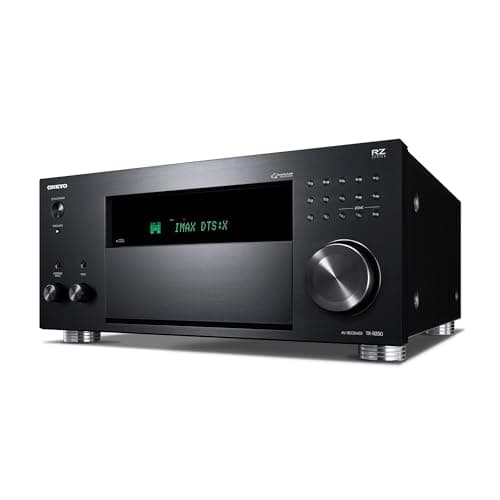
The Onkyo TX-RZ50 near $1,095 is the appropriate purchase for the listener who treats room correction as the deciding capability, and the inappropriate one when connecting three or four 4K/120 sources simultaneously. The anchoring specifications: full-bandwidth Dirac Live spanning 20Hz to 20kHz arrives bundled rather than as a paid addition, the amplifier supplies 120 watts across nine channels with 7.2.4 pre-out support for a room beyond 14 ft deep, and three HDMI 2.1 inputs handle 8K/60 and 4K/120 alongside two 8K outputs. On our weighted SHE Home-Theater Future-Proofing Score it normalizes to a composite 8.5, elevated by the bundled correction yet constrained by narrower HDMI 2.1 coverage.
The Dirac Live inclusion constitutes the entire argument, because where the Denon AVR-X3800H ships Audyssey XT32 and sells Dirac separately, the Onkyo bundles the full-bandwidth version that corrects tonal balance across the spectrum from a laptop with the supplied microphone. THX Certified Select establishes a measured baseline for power and distortion, although the compromises remain specific: only three of seven HDMI inputs are full HDMI 2.1, so a multi-console rack exhausts high-bandwidth connectivity faster than the Denons, and no four-subwoofer bass management exists. Compared to a $1,799 Denon, those trades suit a correction-first installation.
What We Love
- Full-bandwidth Dirac Live (20Hz-20kHz) included, not a paid upgrade
- 9.2 channels rated 120W at 8 ohms with 7.2.4 pre-out support
- Three HDMI 2.1 inputs with 8K/60, 4K/120, VRR, ALLM, and two 8K outputs
- THX Certified Select with Sonos, Chromecast, AirPlay 2, and DTS Play-Fi
What Could Be Better
- Only three of seven HDMI inputs are full HDMI 2.1, fewer than the Denons
- Dirac Live needs a laptop or phone run to unlock its benefit
- No four-subwoofer bass management like the X3800H
- Single-sub focus limits very large or dual-sub rooms
The Verdict
If room correction tops your list and you don't want a separate license for it, the Onkyo TX-RZ50 is a sensible pick for that setup — it ships with full-bandwidth Dirac Live in the box, which most rivals charge extra for. At 120W across nine channels with 7.2.4 pre-outs, you can stop here when correction quality leads. The honest trade is fewer HDMI 2.1 inputs than the Denons.
Best entry Atmos pick: Denon AVR-X1800H
Denon AVR-X1800H
- All six HDMI inputs are full HDMI 2.1 with 8K/60 and 4K/120 passthrough
- 80W per channel is the lowest power rating in this slate
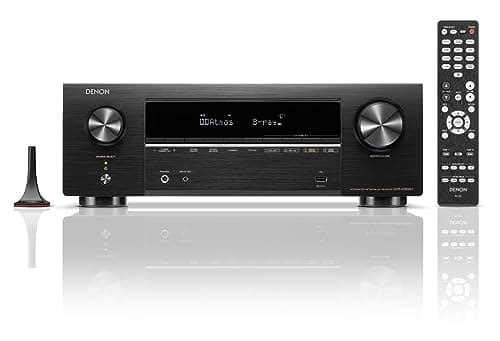
The Denon AVR-X1800H at $849 is the appropriate selection for a first Atmos configuration where the budget governs the decision, and the inappropriate one when you already intend to install a four-speaker ceiling. The decision specifications combine usefully: all six HDMI inputs deliver genuine HDMI 2.1 conveying 8K/60 and 4K/120 passthrough, the amplifier supplies 80 watts across seven channels rated at 0.08% distortion for a 5.2.2 Dolby Atmos configuration, and VRR, ALLM, and Quick Frame Transport occupy every input for a contemporary console. On our weighted SHE Home-Theater Future-Proofing Score it normalizes to a composite 7.9, carried almost entirely by that full HDMI 2.1 distribution at the lowest price here.
The value argument is the connectivity coverage, because where the Sony STR-AN1000 confines full-bandwidth HDMI to two of six inputs, this Denon distributes it across all six. The amplifier remains the limitation: 80 watts per channel represents the floor, and seven channels restrict the height layer to two overhead speakers mounted on a ceiling between 8 ft and 12 ft. Audyssey remains the base MultEQ tier, and no pre-outs accommodate external amplification, so compared to the $1,799 Denon AVR-X3800H you relinquish two channels, XT32 correction, and four-subwoofer bass for roughly half the expenditure.
What We Love
- All six HDMI inputs are full HDMI 2.1 with 8K/60 and 4K/120 passthrough
- 7.2 channels supporting a 5.2.2 Dolby Atmos height layout out of the box
- VRR, ALLM, and Quick Frame Transport on every HDMI input for gaming
- HEOS Built-in multi-room with Bluetooth, Wi-Fi, Dolby Vision, and HDR10+
What Could Be Better
- 80W per channel is the lowest power rating in this slate
- Seven channels cap the height layer at two overhead speakers
- Audyssey is the base MultEQ tier, not the XT32 of the step-up Denons
- No pre-outs for adding external amplification later
The Verdict
If this is your first Atmos receiver and the budget is tight, the Denon AVR-X1800H checks the boxes that matter most for future-proofing — every HDMI input is full HDMI 2.1, so a PS5 or an 8K TV won't be bottlenecked at the entry price. At around $849 with a 5.2.2 layout, no need to overthink it as a starter. The honest constraint is 80W per channel and a two-speaker height cap.
Best for odd-shaped rooms: Sony STR-AN1000
Sony STR-AN1000
- 360 Spatial Sound Mapping creates phantom height and surround without full layouts
- Only two of six HDMI inputs pass 8K/60 and 4K/120 — the weakest coverage here
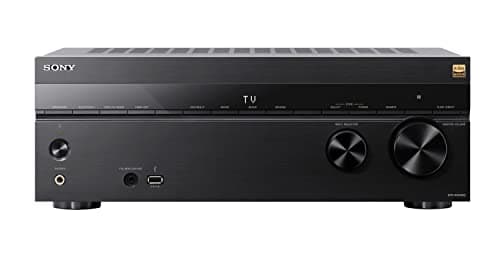
The Sony STR-AN1000 near $948 is the appropriate selection for a placement-constrained room where Sony's processing genuinely earns its position, and the inappropriate one for a multi-source gaming rack. The deciding capabilities combine distinctively: 360 Spatial Sound Mapping constructs phantom height and surround channels from the speakers you can physically position across a seating distance of 8 ft to 12 ft, Digital Cinema Auto Calibration IX executes from a supplied microphone, and streaming spans Chromecast, Spotify Connect, and AirPlay. On our weighted SHE Home-Theater Future-Proofing Score it normalizes to a composite 6.2, the lowest here, depressed by HDMI 2.1 on only two of six inputs.
Tom's Guide reports that 360 Spatial Sound Mapping performs really well and assists those with less than ideally shaped listening rooms, yet the same review judged the STR-AN1000 overpriced on build and connectivity against rivals. The specification corroborates that assessment, because only two HDMI inputs carry the full 8K/4K-120 bandwidth, neither Dirac Live nor Audyssey XT32 is present, and the pre-out-less 7.2-channel design constrains future ceiling expansion. Compared to the $849 Denon AVR-X1800H, you exchange full HDMI 2.1 coverage for Sony's spatial processing, so where placement is the genuine constraint, that trade can prove worthwhile.
What We Love
- 360 Spatial Sound Mapping creates phantom height and surround without full layouts
- 7.2 channels with Digital Cinema Auto Calibration IX and a supplied mic
- Chromecast built-in, Spotify Connect, and Apple AirPlay for casting
- Six HDMI inputs and two outputs with Dolby Atmos and DTS:X decoding
What Could Be Better
- Only two of six HDMI inputs pass 8K/60 and 4K/120 — the weakest coverage here
- Tom's Guide found it looks overpriced on build and connectivity versus rivals
- No Dirac Live or Audyssey XT32 room correction
- 7.2 channels without pre-outs limits a future ceiling expansion
The Verdict
If your room is awkwardly shaped and height speakers are hard to place, the Sony STR-AN1000 lines up with what you actually need — 360 Spatial Sound Mapping fakes a convincing overhead image from the speakers you can fit. Tom's Guide credits the mapping as working really well for less-than-ideal rooms. For a placement-constrained setup this is a sensible pick.
Best dedicated-theater pick: Denon AVR-X4800H
Denon AVR-X4800H
- 125W per channel across 9.4 channels with 11.4-channel processing
- At $2,799 it costs around $1,000 more than the X3800H for similar performance
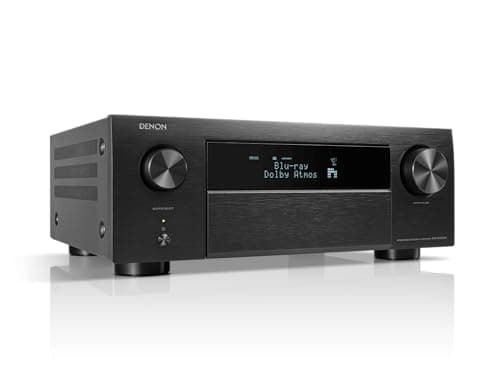
The Denon AVR-X4800H at $2,799 is the appropriate purchase for a dedicated screening room where ceiling, connectivity, and bass headroom all matter, and the inappropriate one for a living room the $1,799 Denon AVR-X3800H already serves. Three specifications anchor it: 125 watts across nine channels with 11.4-channel processing, seven full HDMI 2.1 inputs representing the most 8K/4K-120 connectivity here, and four subwoofer outputs paired with Audyssey MultEQ XT32 for a room beyond 14 ft deep. On our weighted SHE Home-Theater Future-Proofing Score it normalizes to 9.3, just behind the X3800H, because the added power and ports cannot offset the $1,000 price step.
Tom's Guide characterizes it as one of the most thrilling AV receivers it has heard, versatile across movies, music, and games, and the seven HDMI 2.1 inputs guarantee consoles and an 8K source never contend for bandwidth. Control-system certification for Crestron, Control4, and Savant suits a professionally installed room, although the honest limitation remains value, because compared to the X3800H the extra 20 watts per channel and one more HDMI 2.1 input seldom change the experience yet cost roughly $1,000 more. For a custom theater wanting that margin, the X4800H earns it.
What We Love
- 125W per channel across 9.4 channels with 11.4-channel processing
- Seven full HDMI 2.1 inputs — the most 8K/4K-120 ports in this slate
- Four independent subwoofer outputs and Audyssey MultEQ XT32
- Certified for Crestron, Control4, Savant, and other pro-install systems
What Could Be Better
- At $2,799 it costs around $1,000 more than the X3800H for similar performance
- Four subwoofer outputs and rack support mainly help custom-install builds
- No native Matter support
- Overkill for a standard living-room Atmos system
The Verdict
If you're wiring a dedicated theater and want headroom on ports, power, and bass at once, the Denon AVR-X4800H fits the brief — seven HDMI 2.1 inputs, 125W per channel, and four subs. Tom's Guide calls it one of the most thrilling AV receivers it has heard. For a screening room with the budget, you can stop here. The catch is it costs about $1,000 more than the X3800H.
Best no-compromise build: Marantz Cinema 30
Marantz Cinema 30
- 11.4 channels of amplification with 13.4-channel pre-processing
- At $4,800 it is by far the most expensive receiver here
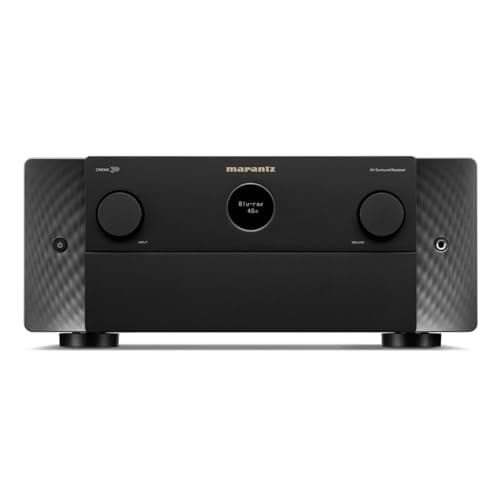
The Marantz Cinema 30 at $4,800 is the appropriate selection for the enthusiast assembling a complete ceiling configuration who values refinement over value, and the inappropriate one for anyone calculating dollars per channel. The amplifier supplies 140 watts across 11 channels with 13.4-channel pre-processing for the deepest height layer here, while four independent subwoofer outputs grant a dedicated room beyond 12 ft deep complete bass management. On our weighted SHE Home-Theater Future-Proofing Score it normalizes to 7.6, since it tops channel-headroom and power yet the $4,800 price and narrow HDMI 2.1 coverage depress the per-dollar calculation.
What Hi-Fi designated the Cinema 30 a 2025 Awards winner, describing luxury and refinement with crispness, considerable scale, and spatial precision, and the 11.4-channel design addresses a full Atmos ceiling no rival here matches. Yet only two HDMI inputs carry the full 8K/4K-120 bandwidth despite the flagship price, and the cost per powered channel remains the highest in this group, so compared to the $2,799 Denon AVR-X4800H you acquire two channels and Marantz's tuning but expend roughly $2,000 more while surrendering HDMI 2.1 connectivity. It delivers precisely one outcome: the most complete ceiling configuration a single receiver achieves, price aside.
What We Love
- 11.4 channels of amplification with 13.4-channel pre-processing
- 140W per channel and four independent subwoofer outputs
- Audyssey MultEQ XT32 with Dolby Atmos and IMAX Enhanced
- What Hi-Fi Awards 2025 winner for refined, controlled, large-scale sound
What Could Be Better
- At $4,800 it is by far the most expensive receiver here
- Only two HDMI inputs carry the full 8K/4K-120 bandwidth
- Overkill for anything short of a dedicated screening room
- The largest, heaviest chassis to rack or shelve here
The Verdict
If you're building a no-compromise theater and want a full ceiling layout from one box, the Marantz Cinema 30 fits without compromise on scale — 11.4 channels at 140W with four subs cover a complete Atmos dome. What Hi-Fi made it an Awards 2025 winner for its refinement. For a dedicated room with the budget, you can stop here. The catch is the top price and just two HDMI 2.1 inputs.
How We Score: SHE Home-Theater Future-Proofing Score
SHE Home-Theater Future-Proofing Score
Score Formula
(HDMI_2.1_Coverage × 0.30 + Channel_Headroom × 0.25 + Room_Correction × 0.20 + Amp_Power × 0.15 + Price_Per_Channel × 0.10), normalized to a 0-10 scale across the slateScore Factors
- HDMI 2.1 Bandwidth CoverageThe count of inputs that pass full 8K/60 and 4K/120 versus total HDMI inputs. This is the spec that ages a receiver fastest, so it carries the most weight. The Denon X3800H and X4800H put it on six and seven inputs respectively; the Sony and Marantz limit it to two.
- Immersive Channel HeadroomPowered channels plus pre-out expandability for the Atmos height layer you can address. The Marantz Cinema 30's 11.4 powered channels lead; the 7.2-channel X1800H and Sony cap at a 5.2.2 layout with two overhead speakers.
- Room-Correction TierThe correction system doing the work after speakers are placed, plus multi-subwoofer count. The Onkyo's bundled full-bandwidth Dirac Live and the four-sub Audyssey XT32 Denons score above receivers with the base Audyssey tier and a single sub.
- Amplifier Power Per ChannelThe real continuous power rating at 8 ohms. The Marantz's 140W and the X4800H's 125W lead; the X1800H's 80W is the floor. This is weighted lower than ports and channels because most rooms never drive every channel to its limit.
- Price-Per-Channel ValueVerified street price divided by powered channels — the factor that lifts the $849 X1800H and the $1,095 Onkyo while pulling the $4,800 Marantz down despite its hardware. Prices verified live via the Amazon Creators API on 2026-06-14.
- 0-10 NormalizationThe weighted factor sum is min-max normalized across the six receivers onto a readable 0-10 band, so the spread reflects relative future-proofing per dollar rather than absolute capability.
SHE Home-Theater Future-Proofing Score — Ranked
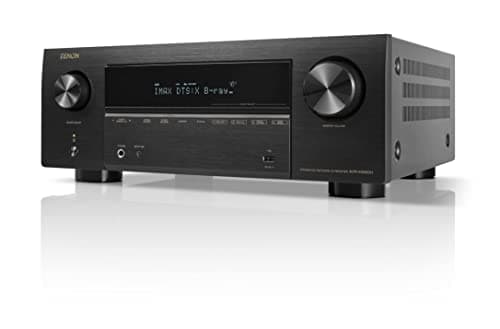
Denon AVR-X3800H
SHE Home-Theater Future-Proofing Score9.8/10Full HDMI 2.1 on six inputs, 9.4 channels, four subs, and XT32 near $1,799 — the value leader
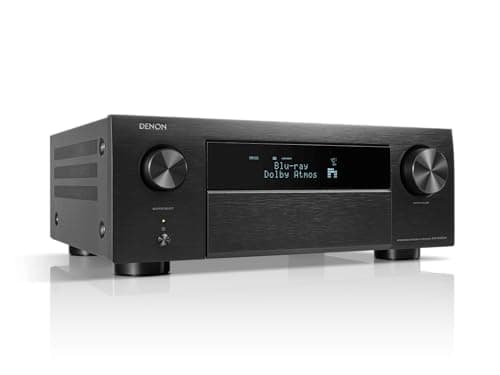
Denon AVR-X4800H
SHE Home-Theater Future-Proofing Score9.3/10Seven HDMI 2.1 inputs and 125W per channel, just behind on the $2,799 per-dollar math
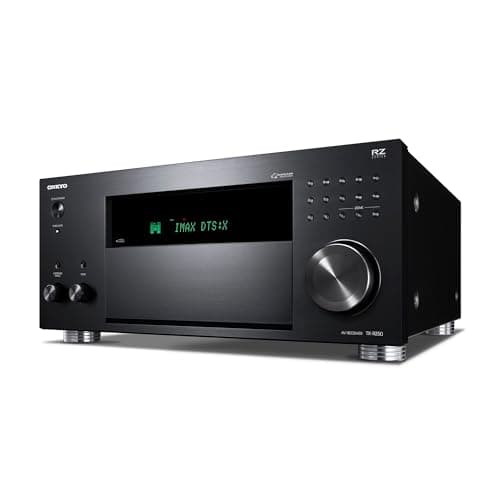
Onkyo TX-RZ50
SHE Home-Theater Future-Proofing Score8.5/10Bundled full-bandwidth Dirac Live and 9.2 channels, held back by three HDMI 2.1 inputs
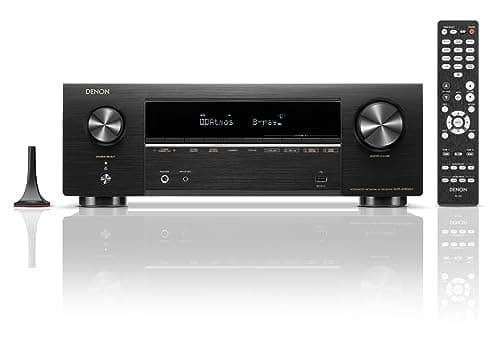
Denon AVR-X1800H
SHE Home-Theater Future-Proofing Score7.9/10Full HDMI 2.1 on every input at $849, capped by 80W and a 5.2.2 layout
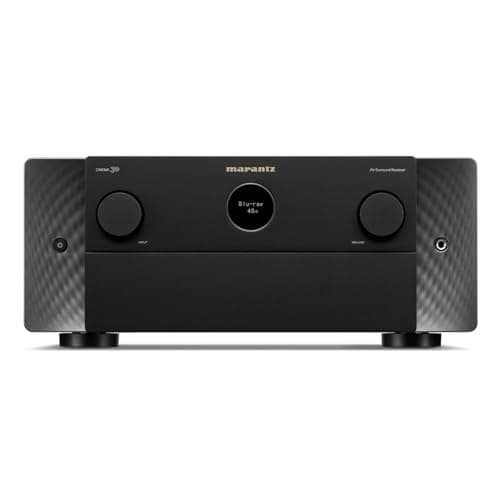
Marantz Cinema 30
SHE Home-Theater Future-Proofing Score7.6/10Tops channels and power, but $4,800 and two HDMI 2.1 inputs drag the per-dollar math
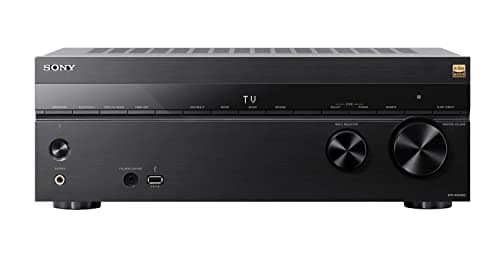
Sony STR-AN1000
SHE Home-Theater Future-Proofing Score6.2/10Strong spatial processing, but only two HDMI 2.1 inputs and no advanced correction
Ecosystem Fit: Streaming, Voice, and the HDMI 2.1 Reality
The platform story here is split between streaming stacks and the wired HDMI 2.1 question, and the second one matters more for future-proofing. On streaming, the four Denon and Marantz receivers all run HEOS, which carries AirPlay 2, Bluetooth, and full Alexa and Google voice control, so they slot into the same multi-room fabric. The Onkyo TX-RZ50 takes a different route with Sonos certification, Chromecast built-in, AirPlay 2, and DTS Play-Fi, which makes it the natural pick if your house already runs Sonos. The Sony STR-AN1000 leans on Chromecast, Spotify Connect, and AirPlay rather than a proprietary multi-room platform. None of these is an Apple HomeKit accessory, so an Apple-first household should treat the receiver as an AirPlay 2 audio endpoint rather than a HomeKit device.
The HDMI 2.1 split is where the receivers genuinely separate, and it is the spec to verify before you buy. The Denon AVR-X3800H and Denon AVR-X4800H pass full 8K/60 and 4K/120 on every input, so multiple consoles and an 8K source never compete for a high-bandwidth port. The Onkyo TX-RZ50 limits that to three of seven inputs, and the Sony STR-AN1000 and Marantz Cinema 30 to just two — enough for a single PS5 or Xbox, but a constraint if you wire two next-gen consoles plus an 8K player. For the height layer, Dolby's guidance is to mount up-firing or in-ceiling speakers for a flat ceiling between 7 ft and 12 ft; above that, the overhead image thins. For buyers wiring the rest of the room, our Best Smart Home Theater Projectors Under $2000 2026 guide pairs naturally with any of these receivers, and Best UST Laser Projectors for Home Theater 2026 covers the short-throw alternative. The decision that actually matters, verified June 2026, is counting how many full-bandwidth HDMI 2.1 inputs your sources will need before you choose.
When NOT to Buy
A dedicated AV receiver is the wrong purchase if you are not prepared to run speaker wire and place at least five speakers plus a subwoofer, since the whole point of the receiver is to drive discrete channels — a flagship Atmos soundbar delivers most of the perceived immersion with none of the wiring for a room under 12 ft deep. It also makes little sense if your only sources are a single console and a streaming stick on a 4K/60 TV, because the 8K and 4K/120 passthrough you are paying to future-proof goes unused. And if your ceiling is vaulted, angled, or higher than 14 ft, the up-firing height layer these receivers are built to address loses much of its effect, so a chunk of the channel count you bought never reaches a seat 10 ft away.
Who Should Buy What
Who Should Buy What
| If you are… | Recommended pick |
|---|---|
Most home-theater builders You want full HDMI 2.1 on every input, four-sub bass, and a 7.2.4 Atmos layout at a mid-range price | Denon AVR-X3800H |
Room-correction-first buyer You want full-bandwidth Dirac Live bundled in the box and a 9.2-channel receiver with pre-outs for external amps | Onkyo TX-RZ50 |
Entry Atmos builder You want full HDMI 2.1 and a 5.2.2 Atmos starter system at the lowest price, ideally for a gaming console | Denon AVR-X1800H |
Dedicated-theater owner You have a dedicated room and want the most HDMI 2.1 inputs, 125W per channel, and pro-install control certification | Denon AVR-X4800H |
No-compromise enthusiast You have the budget for a full 11-channel ceiling layout with four-sub bass and Marantz refinement | Marantz Cinema 30 |
Frequently Asked Questions
How many HDMI 2.1 inputs do I actually need?
Count your full-bandwidth sources and add one. A single 4K/120 console needs only one HDMI 2.1 input, which every receiver here covers. Two next-gen consoles plus an 8K disc player needs three, which rules out the Sony STR-AN1000 and Marantz Cinema 30 at two inputs each, and pushes you toward the Denon AVR-X3800H or AVR-X4800H, which put full 8K/60 and 4K/120 on every input. This is the spec most likely to make a receiver feel dated in two years, so it is worth counting carefully before you buy.
Is the Denon AVR-X4800H worth $1,000 more than the X3800H?
For most rooms, no. The X4800H adds one more HDMI 2.1 input, 20W more per channel, and control-system certification for Crestron or Control4, but the X3800H already has full HDMI 2.1 on six inputs, four subwoofer outputs, and the same Audyssey XT32 room correction. The extra power and port rarely change the experience in a normal living room. The X4800H earns its premium in a dedicated theater or a professionally installed system where the headroom and certification matter; otherwise the X3800H captures the same future-proofing for less.
Should I prioritize a receiver with Dirac Live over Audyssey?
Only if room correction tops your list. The Onkyo TX-RZ50 bundles full-bandwidth Dirac Live, widely regarded as a step above the Audyssey MultEQ XT32 that the Denon X3800H and X4800H ship with. But the Denons let you add Dirac Live as a paid license later if you want it, and XT32 is already strong. If you have a difficult room and want the best correction in the box without an extra purchase, the Onkyo is the pick. If HDMI 2.1 coverage and four-sub bass matter more, the Denons are the better base.
How many channels do I need for Dolby Atmos?
A minimum of seven for a 5.1.2 Atmos layout — five speakers, a subwoofer, and two overhead channels. The 7.2-channel Denon AVR-X1800H and Sony STR-AN1000 cover that and a 5.2.2 layout. For four overhead speakers in a 5.2.4 or 7.2.4 system, you need nine powered channels, which is where the Onkyo TX-RZ50 and Denon X3800H come in. The Marantz Cinema 30's 11.4 channels address the most complete ceiling, but that is overkill for anything short of a dedicated room.
Is 8K passthrough worth paying for in 2026?
It is cheap insurance rather than a feature you will use today. Native 8K content is still scarce, but the same HDMI 2.1 ports that pass 8K/60 also pass 4K/120 for gaming, which is the spec that matters right now for a PS5 or Xbox Series X. Because the bandwidth requirement is identical, buying a receiver with full HDMI 2.1 future-proofs you for both. You are not really paying for 8K video so much as for the full HDMI 2.1 bandwidth that handles high-frame-rate 4K gaming today and 8K whenever it arrives.
Do I need a receiver with four subwoofer outputs?
Most rooms do not, but it solves a real problem in larger spaces. The Denon X3800H, X4800H, and Marantz Cinema 30 offer four independent subwoofer outputs, which lets room correction even out bass across multiple seats by placing subs in different spots. For a single seating position or a small room, one or two subs is plenty, and the Onkyo TX-RZ50 or Denon X1800H serve you fine. The four-sub feature pays off in a wide or oddly shaped room where one subwoofer leaves dead spots in the bass.
Bottom Line
Get the Denon AVR-X3800H if you want full HDMI 2.1 on every input, four-sub bass, and a 7.2.4 Atmos layout at a mid-range price.
Get the Onkyo TX-RZ50 if you want full-bandwidth Dirac Live bundled in the box and a 9.2-channel receiver with pre-outs.
Get the Denon AVR-X1800H if you want full HDMI 2.1 and a 5.2.2 Atmos starter system at the lowest price here.
Get the Denon AVR-X4800H if you have a dedicated theater and want the most HDMI 2.1 inputs, 125W per channel, and pro-install certification.
Get the Marantz Cinema 30 if you have the budget for a no-compromise 11-channel ceiling layout with Marantz refinement.
For most home theaters the Denon AVR-X3800H is the right call, with the Denon AVR-X1800H the budget pick if a 5.2.2 layout is enough. Choose the Onkyo TX-RZ50 only if bundled Dirac Live correction matters more than full HDMI 2.1 coverage. Skip a dedicated receiver entirely if you won't run speaker wire, your sources are all 4K/60, or your ceiling is too high for a real height layer.
Sources & Methodology
Methodology: SHE Home-Theater Future-Proofing Score — Formula: (HDMI_2.1_Coverage × 0.30 + Channel_Headroom × 0.25 + Room_Correction × 0.20 + Amp_Power × 0.15 + Price_Per_Channel × 0.10), normalized to a 0-10 scale across the slate. Factors: HDMI 2.1 Bandwidth Coverage: The count of inputs that pass full 8K/60 and 4K/120 versus total HDMI inputs. This is the spec that ages a receiver fastest, so it carries the most weight. The Denon X3800H and X4800H put it on six and seven inputs respectively; the Sony and Marantz limit it to two. | Immersive Channel Headroom: Powered channels plus pre-out expandability for the Atmos height layer you can address. The Marantz Cinema 30's 11.4 powered channels lead; the 7.2-channel X1800H and Sony cap at a 5.2.2 layout with two overhead speakers. | Room-Correction Tier: The correction system doing the work after speakers are placed, plus multi-subwoofer count. The Onkyo's bundled full-bandwidth Dirac Live and the four-sub Audyssey XT32 Denons score above receivers with the base Audyssey tier and a single sub. | Amplifier Power Per Channel: The real continuous power rating at 8 ohms. The Marantz's 140W and the X4800H's 125W lead; the X1800H's 80W is the floor. This is weighted lower than ports and channels because most rooms never drive every channel to its limit. | Price-Per-Channel Value: Verified street price divided by powered channels — the factor that lifts the $849 X1800H and the $1,095 Onkyo while pulling the $4,800 Marantz down despite its hardware. Prices verified live via the Amazon Creators API on 2026-06-14. | 0-10 Normalization: The weighted factor sum is min-max normalized across the six receivers onto a readable 0-10 band, so the spread reflects relative future-proofing per dollar rather than absolute capability.
Expert review sources used in this analysis:
- SmartHomeExplorer aggregates expert review data and manufacturer specifications to produce consensus-based buying guidance; we do not perform first-party product testing
- Mainstream coverage of the 8K AV receivers in this guide is uneven, so verdicts lean on the outlets that actually reviewed each unit — What Hi-Fi and Sound & Vision for the Denon AVR-X3800H, Tom's Guide for the Sony STR-AN1000 and the Denon AVR-X4800H, and What Hi-Fi for the Marantz Cinema 30 — alongside manufacturer specifications from Denon, Onkyo, Sony, and Marantz for the products mainstream outlets have not reviewed, including the Onkyo TX-RZ50 and the Denon AVR-X1800H
- Prices were verified live via the Amazon Creators API on 2026-06-14
- The SHE Home-Theater Future-Proofing Score weights HDMI 2.1 coverage, immersive channel headroom, room-correction tier, amplifier power, and price-per-channel value, normalized to a 0-10 scale; no first-party measurements were conducted.
Nicholas Miles is the founder of SmartHomeExplorer and a longtime smart home enthusiast focused on helping everyday homeowners make better technology decisions. He researches, compares, and writes about products across security, climate, lighting, leak prevention, sensors, home energy, and automation, with an emphasis on real-world usefulness, ecosystem compatibility, reliability, privacy, and long-term value.
Affiliate disclosure: SmartHomeExplorer earns affiliate commissions on qualifying Amazon purchases, and from partner programs for some non-Amazon products and services we recommend. Our scoring methodology is independent of affiliate relationships.