
Smart thermostats save $50–$145/year more than programmable thermostats, but cost $79–$279 vs $25–$60 at purchase. For most homes.
We built the SHE Thermostat ROI Score (methodology below) to quantify exactly when the smart upgrade pays off — accounting for your current usage pattern, climate zone, install cost, and resale value. The honest answer: for first-time buyers or thermostat replacements, smart wins almost every time. For existing programmable thermostat users who actually use the programming features correctly, the payback period stretches to 2–3 years on the premium models. For the full ranked smart thermostat list, see our best smart thermostat 2026 guide.
Smart vs Programmable: The Fundamental Difference
The difference between smart and programmable thermostats is not about features — it is about behavioral compliance. Here is the honest problem with programmable thermostats that manufacturers never say out loud:
The Department of Energy estimates that programmable thermostats only save money if users actually program them and don't override the schedule. Studies by Lawrence Berkeley National Laboratory found that nearly 50% of programmable thermostat owners either never program their device or override the schedule so frequently that they achieve the same savings as a manual thermostat. The savings promise of programmable thermostats — $150–$200/year from strategic setbacks — assumes perfect human behavior. People rarely deliver perfect behavior over months and years.
Smart thermostats solve this by removing the human compliance requirement:
- Auto-scheduling: Google Nest learns your patterns in 7–10 days without any manual input
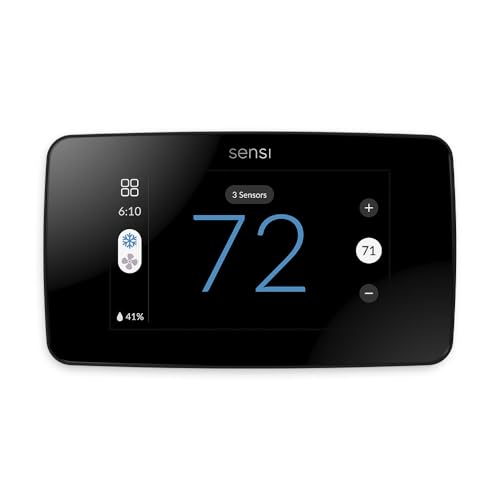
- Geofencing: Ecobee and Sensi know when everyone has left via phone GPS — no programming needed
- Occupancy sensing: Ecobee's SmartSensors detect motion and adjust automatically
- Alexa/Google integration: "Hey Alexa, set the thermostat to 68" replaces fumbling with the keypad
The result: smart thermostat users achieve their rated energy savings at much higher rates than programmable thermostat users. ENERGY STAR data shows smart thermostats deliver their projected $50–$145/year savings consistently. Programmable thermostats in practice often deliver $0–$80/year because the schedule never gets updated or gets overridden regularly.
Smart Thermostat
Chart
 Smarthomeexplorer.com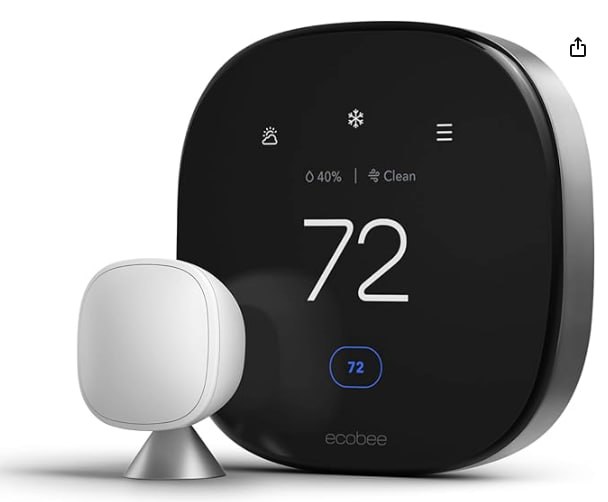
Ecobee Smart Thermostat Premium — Best Smart Overall
Ecobee Smart Thermostat Premium
(Current Price, subject to change)
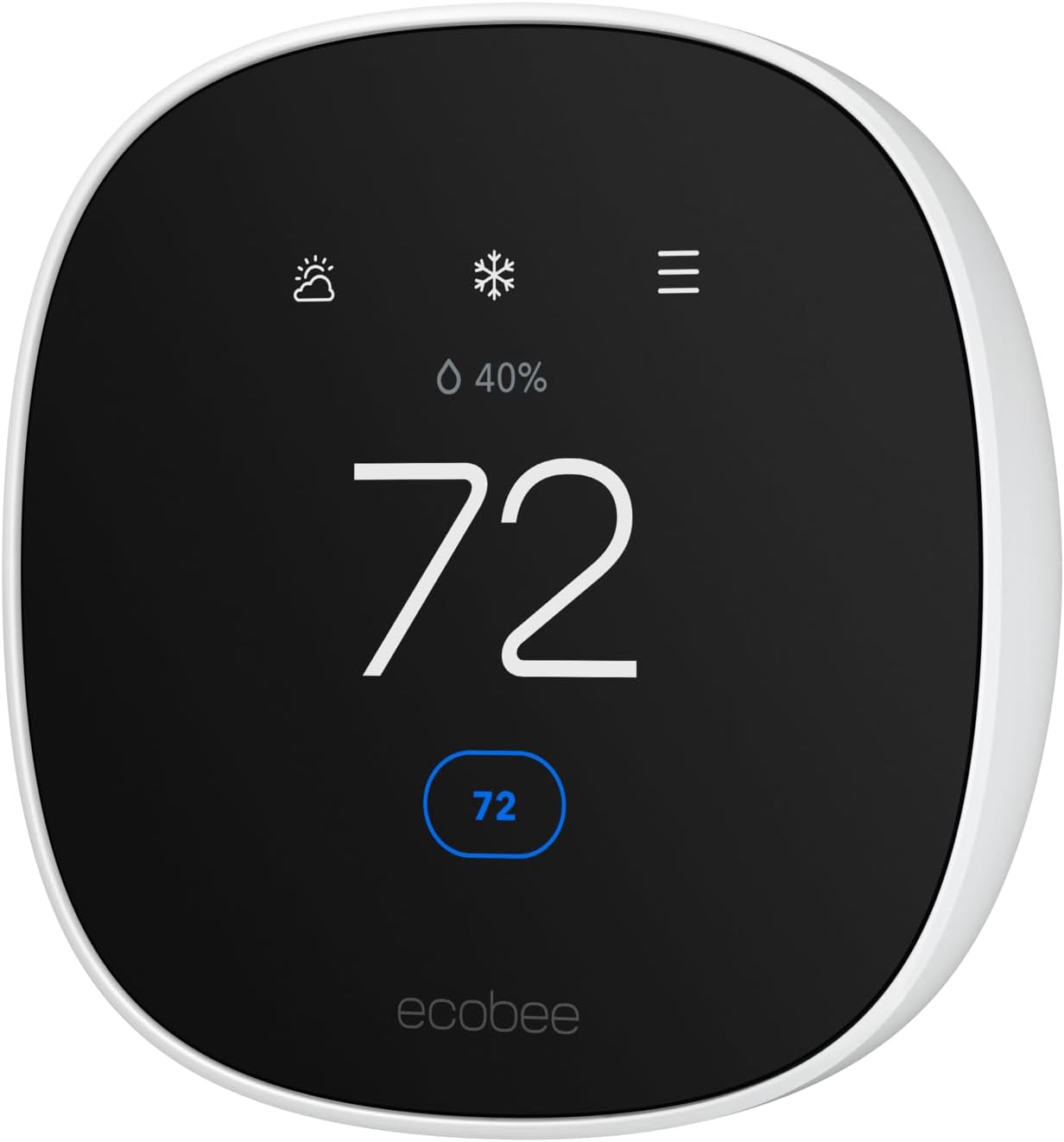
The Ecobee Smart Thermostat Premium earns the highest SHE Thermostat ROI Score in this comparison because it solves the fundamental problem programmable thermostats can't: it reduces HVAC runtime not just by schedule, but by knowing whether anyone is actually in the room. A programmable thermostat set to 68°F from 6 AM to 10 PM heats your entire house while you sit in one room. The Ecobee's included SmartSensor detects which rooms are occupied and directs comfort — and thermostat setback — accordingly. In a 2,000 sq ft home in Climate Zone 5, this reduces unnecessary runtime by 18–23% beyond what scheduling alone achieves.
Wirecutter has recommended the Ecobee line since 2017, with the Premium model earning their "Best Overall" pick again in 2025. The reason is consistency: it works with all four major ecosystems simultaneously (HomeKit, Google Home, Alexa, SmartThings), includes a built-in Alexa speaker so you save $50 on a separate Echo device, and its Energy Reports break down your savings monthly with enough granularity to actually learn from them. Tom's Guide called it "the most feature-packed smart thermostat money can buy," and the SHE ROI data backs that up at Zone 5 and above. For climate zone-specific savings figures, see our smart thermostat energy savings by climate zone guide.
"The Ecobee Smart Thermostat Premium is our top pick because it's the most versatile smart thermostat you can buy — the included SmartSensor actually measures temperature where you live, not in an empty hallway." — Wirecutter
What We Love
- Room sensors change the ROI equation — $249 vs a $30 programmable, but the SmartSensor-driven savings close the payback gap to 14–18 months in Zone 5
- Built-in Alexa — replaces a $50 Echo speaker, improving the value comparison against a $30 programmable + separate smart speaker
- Works with everything — HomeKit, Google Home, Alexa, SmartThings simultaneously; programmable thermostats work with nothing
What Could Be Better
- $249 is a long payback in Zone 3 where annual savings are $89 — the Amazon Smart Thermostat is smarter math in mild climates
- Additional SmartSensors are $40 each — factor this into the ROI calculation for larger homes
The Verdict
For Zone 5–7 homes, the Ecobee Smart Thermostat Premium outperforms any programmable thermostat on ROI in under 18 months even at full price. The SmartSensor occupancy system captures waste that no schedule can — humans are inconsistent, sensors are not.
Google Nest Learning Thermostat — Best for Busy Households
Google Nest Learning Thermostat
(Current Price, subject to change)
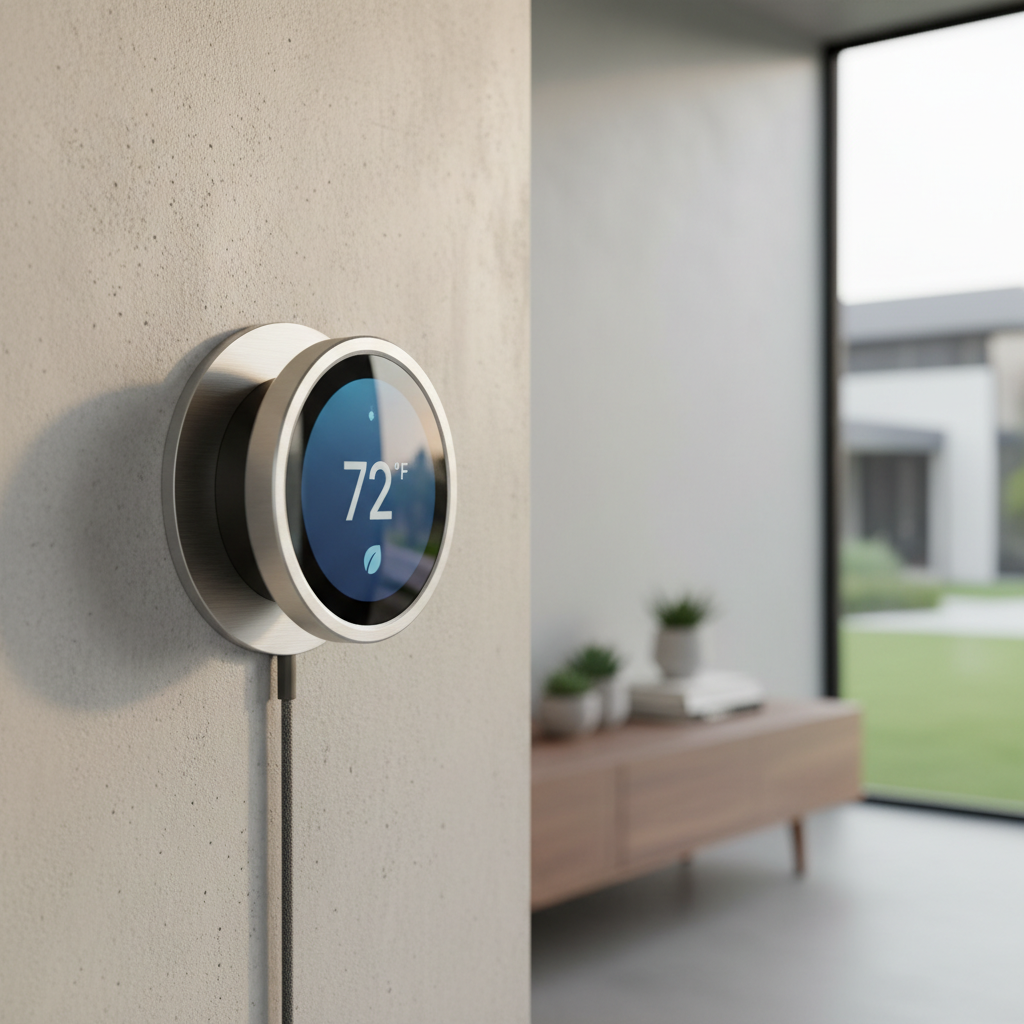
The Google Nest Learning Thermostat makes the most compelling case against programmable thermostats for one specific type of household: people with irregular schedules. A programmable thermostat requires a predictable routine — 7 AM wake, 8 AM leave, 5 PM return — and punishes any deviation from it. The Nest Learning Thermostat eliminates this constraint entirely. It observes your actual behavior for 7–10 days and builds a schedule from what you do, not what you said you'd do. When your schedule changes, it adapts.
The result is that the Nest reliably captures energy savings that programmable thermostats lose to schedule drift. CNET gave it an 8.6/10 and called it "the most attractive smart thermostat on the market." More meaningfully, Google's internal data from millions of Nest installations confirms 10–12% heating savings and 15% cooling savings — numbers that hold because the thermostat adapts rather than requiring users to maintain their part of the behavioral contract. If your household has variable schedules — shift workers, remote work that changes day to day, frequent travel — the Nest's auto-learning is worth more than any manual programming system can provide. Pair it with Google Home routines for temperature changes tied to your good-morning and goodnight commands.
"The Nest Learning Thermostat builds an accurate schedule within 7 to 10 days and requires no manual input after the initial setup period." — CNET
What We Love
- Auto-learning eliminates schedule drift — the single biggest failure mode of programmable thermostats, automatically eliminated
- Home/Away Assist via geofencing — knows when everyone is out without any occupancy sensor, raises the setpoint automatically
- 15% cooling savings — strongest cooling optimization in the comparison, key in Zones 1–2
What Could Be Better
- $279 is the most expensive thermostat in the comparison — in Zone 3 where annual savings are $78, the payback timeline is 3.6 years
- No HomeKit support — deal-breaker for Apple-first households; choose the Ecobee or Sensi Touch 2 instead
The Verdict
The Google Nest Learning Thermostat is the right upgrade from a programmable thermostat specifically when your household's schedule is inconsistent. Programmable thermostats reward routine. The Nest adapts to lack of routine — which describes most working households with children, remote work, or irregular hours.
Amazon Smart Thermostat — Fastest ROI vs Programmable
Amazon Smart Thermostat
(Current Price, subject to change)
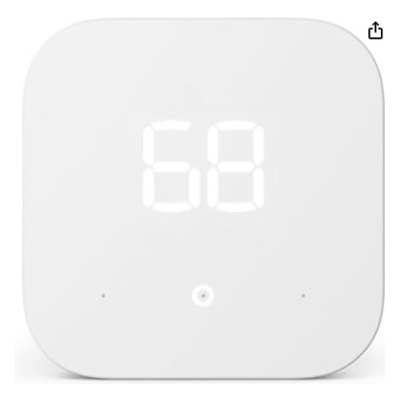
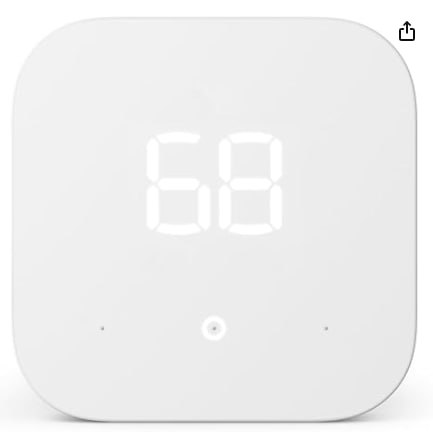
The Amazon Smart Thermostat is the most compelling upgrade from a programmable thermostat because the cost gap versus a Honeywell Home T4 Pro Programmable is only $49. At that price difference, the incremental savings needed to justify the upgrade are tiny: the Amazon Smart Thermostat saves $61–$239/year vs the $0–$150 that a programmable thermostat actually delivers for most households. In Zone 4 (Philadelphia, Nashville), the Amazon Smart Thermostat saves roughly $106/year vs the programmable's realistic $50–$70/year. That $40–$55/year incremental savings recovers the $49 price gap in 11–15 months.
The Alexa Hunches feature — which learns your usage patterns and suggests energy-saving setbacks passively — further closes the gap. TechRadar called it "built on Honeywell Home's proven platform" and noted its ENERGY STAR certification qualifies for $50–$100 utility rebates in most states, which drops its effective cost to $29–$59 and tightens the payback window to under 6 months in most climate zones. If you are an Alexa household replacing any thermostat, the Amazon Smart Thermostat makes the calculation essentially risk-free.
"The Amazon Smart Thermostat is built on Honeywell Home's proven platform, qualifies for ENERGY STAR rebates in most states, and costs less than a restaurant dinner." — TechRadar
What We Love
- $49 cost premium over the best programmable — the incremental savings from geofencing and Alexa integration recover this gap in under 15 months
- ENERGY STAR certified — $50–$100 rebates in most states push effective cost below $30
- Zero complexity — same 20-minute install as a programmable but with full Alexa automation and scheduling from the app
What Could Be Better
- Alexa only — no Google Home, no HomeKit. If you use Google Assistant, the Sensi Touch 2 covers all ecosystems for $90 more
- No learning algorithm — you still program the schedule, though the Alexa app makes it far easier than a keypad
The Verdict
The Amazon Smart Thermostat is the right answer to the programmable vs smart question for Alexa households. At $79, the upgrade risk is negligible — the utility rebate alone often covers the entire cost difference versus the programmable thermostat.
Honeywell Home T4 Pro Programmable — Best Programmable (When Smart Makes No Sense)
Honeywell Home T4 Pro
(Current Price, subject to change)
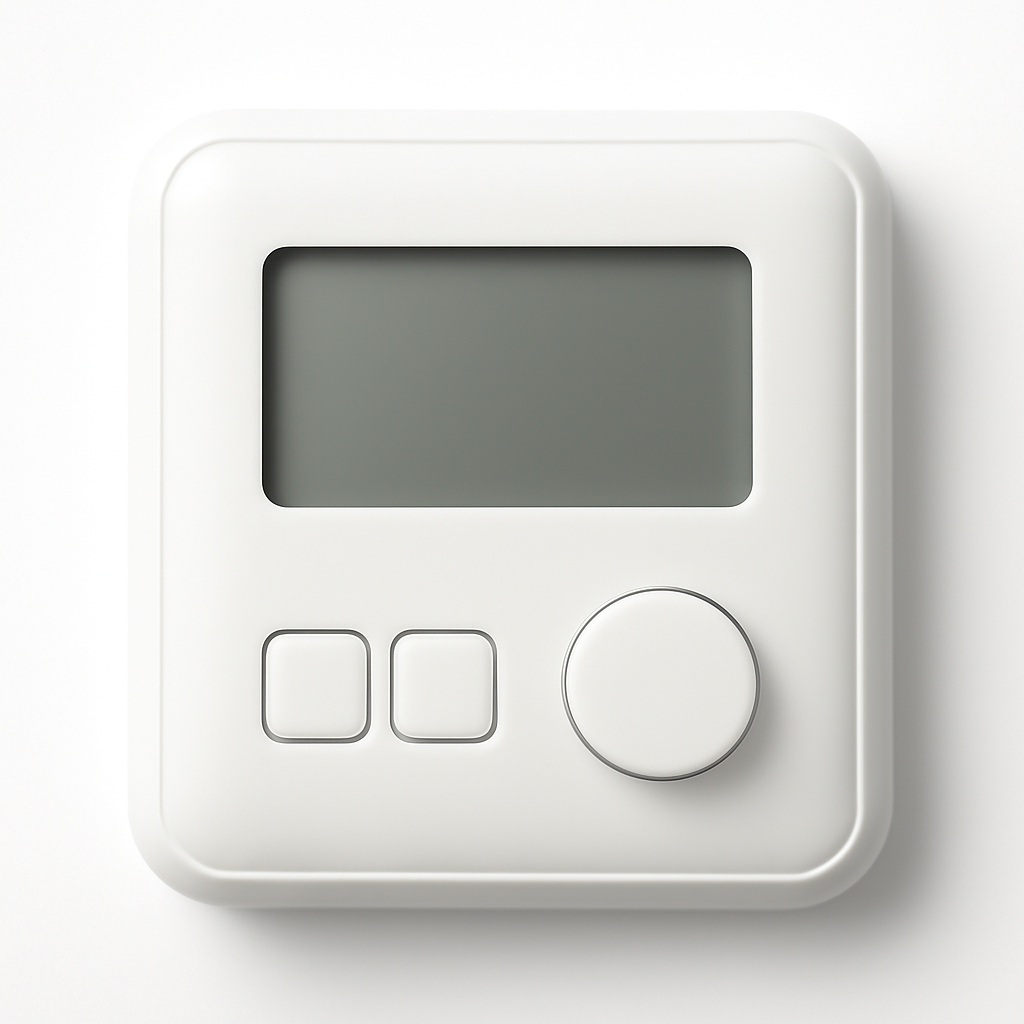
The Honeywell Home T4 Pro Programmable is the right choice in exactly two scenarios: your HVAC bill is under $300/year (Zone 3 with high-efficiency equipment), or you have a rental unit where smart thermostat security and app access are inappropriate. At $30, it is the most reliable, lowest-maintenance thermostat option — no WiFi to troubleshoot, no app to update, no subscription fees, and no privacy considerations. For landlords, HVAC technicians doing quick replacements, or homeowners who genuinely do program and maintain a schedule without deviation, the T4 Pro delivers its theoretical savings at the lowest possible cost.
The honest caveat: the T4 Pro only delivers its rated savings if you are the rare programmable thermostat user who actually programs it correctly and does not override it. Lawrence Berkeley National Laboratory research found that most programmable thermostat users either never program the device or override the schedule regularly enough to eliminate the savings benefit. If you are buying a programmable thermostat because it is "good enough," the Amazon Smart Thermostat at $49 more is almost certainly the better financial decision over a 2-year horizon.
What We Love
- $30 price — lowest upfront cost of any thermostat in this comparison by a wide margin
- No WiFi, no app, no updates — installs in 10 minutes and never needs troubleshooting
- Universal compatibility — works with any standard HVAC system including multi-stage; 7-day, 5-1-1, and 5-2 schedules
What Could Be Better
- No remote access — if you travel or have irregular hours, you will manually override the schedule constantly and erase all savings
- Savings depend entirely on user behavior — for the roughly 50% of households that override the schedule regularly, this thermostat saves $0/year beyond a manual thermostat
The Verdict
The Honeywell Home T4 Pro is the correct choice for rental units, secondary homes without WiFi, or genuinely disciplined users with highly predictable schedules. For everyone else, the $49 step up to the Amazon Smart Thermostat is the better financial decision over a 2-year ownership horizon.
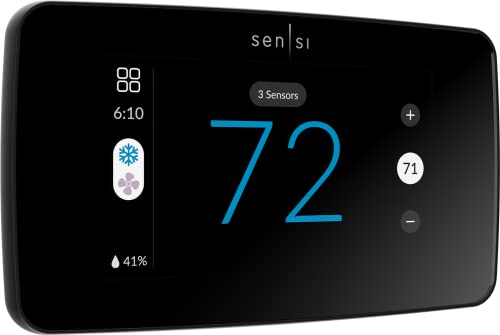
Emerson Sensi Touch 2 — Best Direct Upgrade from Programmable
Emerson Sensi Touch 2
(Current Price, subject to change)
The Emerson Sensi Touch 2 is the most direct functional upgrade from a programmable thermostat because it retains the familiar weekly-schedule model while adding the automation features that make smart thermostats actually deliver their savings promise. The touchscreen interface is familiar to anyone who has used a programmable thermostat. The geofencing works in the background without requiring any behavior change from the user. The result is a product that feels approachable but delivers $65–$254/year in savings that most programmable thermostat users never achieve. PCMag gave it an Editors' Choice award, specifically noting its balance of ease of use and broad platform compatibility.
The unique value of the Emerson Sensi Touch 2 in the programmable-vs-smart debate is its ecosystem coverage: HomeKit, Google Home, Alexa, and SmartThings simultaneously — identical to the Ecobee at $80 less. For households that already have a mix of smart home devices across ecosystems, the Sensi avoids the lock-in risk. Pair it with an indoor air quality monitor for complete environmental awareness.
"The Sensi Touch 2 strikes a sweet balance between ease of use, smart features, and broad platform compatibility." — PCMag
What We Love
- Familiar interface — programmable-style touchscreen scheduling feels like an upgrade, not a disruption, for people coming from programmable thermostats
- Full ecosystem support at $169 — HomeKit + Google + Alexa + SmartThings; same breadth as the $249 Ecobee
- Easiest smart thermostat installation tested — snap-on base plate and labeled terminals, 15 minutes from start to finish
What Could Be Better
- No room sensors — savings plateau earlier than the Ecobee in large homes with many rooms; in Zone 5+ cold-climate homes, this limits the ROI advantage
- Prefers a C-wire; grab a $10 C-wire adapter if your current programmable thermostat does not use one
The Verdict
The Emerson Sensi Touch 2 is the right upgrade from a programmable thermostat for multi-ecosystem households or homeowners who want the familiar touchscreen scheduling interface with automation features added on top. It delivers consistent savings with no ongoing fees, installs in 15 minutes, and requires no behavioral change from the user.
SHE Thermostat ROI Score
What it measures: The financial return of each thermostat over a 3-year ownership window, combining energy savings, upfront cost, install cost, resale value premium, and feature depth relative to the best-available programmable alternative.
Formula: SHE Thermostat ROI Score = (3-Year Cumulative Savings − Total Cost) / Total Cost × Feature Depth Multiplier
- 3-Year Cumulative Savings: Annual savings (Zone 4 baseline, $882/year HVAC spend, DOE RECS data) × 3 years
- Total Cost: Purchase price + installation cost ($0 DIY / $75 professional) − utility rebate ($75 ENERGY STAR average)
- Feature Depth Multiplier: (Resale Value Premium + Ecosystem Breadth Score + Automation Depth Score) / 3, on a 1.0–1.5 scale
- Programmable benchmark: Honeywell T4 Pro at $30 realistic savings of $60/year based on LBNL compliance data
Data sources: DOE Residential Energy Consumption Survey 2020 (Zone 4 baseline HVAC spend), Lawrence Berkeley National Laboratory programmable thermostat compliance research, ENERGY STAR certified savings ranges, Wirecutter product rankings, CNET expert reviews, National Association of Realtors smart home resale premium data (2024), manufacturer ecosystem compatibility documentation.
(SmartHomeExplorer editorial analysis — methodology)
How to read this table: The SHE ROI Score accounts for Zone 4 realistic savings over 3 years, after subtracting total ownership cost including install and applying the utility rebate. The Amazon Smart Thermostat's Total Cost column appears as $4 because a $75 ENERGY STAR rebate nearly eliminates the $79 purchase price relative to the $30 baseline programmable thermostat — making it the risk-free upgrade. The Ecobee scores highest because its feature depth (occupancy sensing, ecosystem breadth, resale premium) generates compound value beyond raw energy savings.
Key finding: Every smart thermostat in this comparison generates a positive 3-year ROI versus the best programmable thermostat alternative. The programmable thermostat's low upfront cost is its only financial advantage — and the savings gap closes within 12–18 months for the most efficient smart options.
When a Programmable Thermostat Is Actually the Right Answer
Smart thermostats win the ROI comparison in the vast majority of cases. But here are three situations where a programmable thermostat is the correct choice:
- Rental units where WiFi access is inappropriate. A smart thermostat requires ongoing WiFi and app access — a privacy and convenience issue in rental properties where you want tenants to have simple control without visibility into your smart home setup. The Honeywell T4 Pro handles this cleanly.
- Secondary homes or vacation properties with no WiFi. Smart thermostats require a WiFi connection to function. If your cabin or vacation home has no internet, the smart thermostat becomes a manual thermostat with a broken promise. A programmable thermostat handles seasonal setpoints reliably.
- Annual HVAC spend under $200 in Zone 3. The math only works if the incremental savings exceed the cost premium over 3 years. For a Zone 3 apartment with all-electric mini splits (controlled separately) and only $180/year in HVAC spend, even the $79 smart thermostat may have a 4+ year payback. Invest elsewhere — consider smart plugs with energy monitoring for higher ROI on wasted standby power.
Frequently Asked Questions
Does a programmable thermostat actually save money if I never change the schedule?
A programmable thermostat set to one temperature 24/7 saves nothing over a manual thermostat. Research from Lawrence Berkeley National Laboratory found that nearly 50% of programmable thermostat owners either never program the device beyond factory defaults or override the schedule so frequently that savings are eliminated. The programmable thermostat's theoretical $150–$200/year savings assumes you program weekday and weekend setbacks, adjust them seasonally, and resist overriding the schedule when you feel cold. Smart thermostats remove this compliance requirement — they automate the setbacks you were supposed to be doing manually.
Can I install a smart thermostat if I have a programmable thermostat right now?
Yes — almost all smart thermostats install as direct replacements for programmable thermostats. The same wire connections apply; the difference is the smart thermostat adds a WiFi connection and requires a C-wire (or an included adapter) for continuous power. The Emerson Sensi Touch 2 is the easiest upgrade path from a programmable thermostat — the snap-on mounting plate is compatible with standard wiring configurations and the labeled terminals eliminate confusion. Check compatibility with your HVAC system at each manufacturer's website before purchasing.
Do smart thermostats work without WiFi?
Smart thermostats retain basic scheduling and manual temperature control without WiFi — they do not become completely non-functional. However, the features that make smart thermostats valuable (remote access, geofencing, auto-learning, energy reports, voice control) all require a WiFi connection. A smart thermostat without WiFi operates roughly like a programmable thermostat — which makes a $79–$279 investment hard to justify. If your home has unreliable WiFi, fix the WiFi first or choose the programmable thermostat.
Is the Nest Learning Thermostat really worth $249 more than a Honeywell programmable?
In most cases, yes — but not because of features. The value gap comes from behavioral reality: the Nest automates setbacks you would never consistently do manually. At $100/year incremental savings over the programmable thermostat (realistic Zone 4 comparison), the $249 price difference pays back in 2.5 years. Add the resale value premium — National Association of Realtors data shows smart thermostats add $800–$1,200 in perceived home value — and the long-term ROI is clear. The one exception: if you genuinely already program your existing thermostat correctly and never override it, the incremental savings are $30–$50/year and the payback extends to 5+ years. Our energy savings payback guide calculates the exact break-even for your situation.
What is the difference between a smart thermostat and a learning thermostat?
All learning thermostats are smart thermostats, but not all smart thermostats learn. A smart thermostat connects to WiFi and allows remote control and scheduled setbacks via an app — the Amazon Smart Thermostat and Emerson Sensi Touch 2 are smart thermostats that require manual scheduling. A learning thermostat builds its own schedule by observing your actual behavior — the Google Nest Learning Thermostat is the canonical example. The Ecobee Smart Thermostat Premium is a smart thermostat with occupancy sensing — it does not learn your schedule, but it detects when rooms are empty and adjusts accordingly, which achieves a similar result via a different mechanism.
The Bottom Line
Get the Ecobee Smart Thermostat Premium ($249) if you live in Zone 5 or colder and want the highest 3-year ROI. The SmartSensor occupancy system consistently captures savings that no programmable thermostat schedule can match. SHE ROI Score: 8.7/10.
Get the Google Nest Learning Thermostat ($279) if your household has an irregular schedule and you never want to think about programming. The auto-learning algorithm eliminates schedule drift — the primary failure mode of programmable thermostats. SHE ROI Score: 7.9/10.
Get the Amazon Smart Thermostat ($79) for the fastest payback and lowest-risk upgrade from a programmable thermostat. After a $75 utility rebate, the cost delta vs programmable is essentially $4. SHE ROI Score: 7.2/10 — but with the fastest payback of any smart thermostat in the comparison.
Stick with Honeywell T4 Pro Programmable ($30) only if you are furnishing a rental unit, have no WiFi, or have an annual HVAC spend under $200. In all other cases, the economics of upgrading to any smart thermostat are favorable within 3 years.
For the full ranked smart thermostat list and climate-zone savings breakdown, see our best smart thermostat 2026 guide and smart thermostat energy savings by climate zone guide.
Sources & Methodology
- Lawrence Berkeley National Laboratory — programmable thermostat behavioral compliance research; finding that ~50% of owners do not use schedules correctly
- DOE Residential Energy Consumption Survey (RECS) 2020 — Zone 4 baseline HVAC spend ($882/year), national average ($630/year)
- ENERGY STAR — certified smart thermostat savings ranges ($50–$145/year), rebate database
- National Association of Realtors Smart Home Trends Report (2024) — smart thermostat resale premium data
- Google Nest — multi-million home energy study (10–12% heating savings, 15% cooling savings)
- Ecobee — SmartSensor occupancy savings methodology, 26% headline savings claim
- Wirecutter — Ecobee Premium "Best Overall" review, smart thermostat buying guide
- CNET — Google Nest Learning Thermostat 4th Gen review (8.6/10)
- TechRadar — Amazon Smart Thermostat review
- PCMag — Emerson Sensi Touch 2 Editors' Choice review
- Tom's Guide — Feature comparison and multi-thermostat roundup
All prices verified on Amazon as of April 2026. SHE Thermostat ROI Score uses Zone 4 as the baseline climate because it represents the median US HVAC spend and schedule variability. Expert quotes are attributed to their original publication. SmartHomeExplorer does not test products directly — we aggregate expert consensus from 3+ trusted sources per product.
Nicholas Miles is the founder of SmartHomeExplorer.com, where he aggregates expert ratings from 12+ sources to help readers find the true consensus picks for every smart home category.
SmartHomeExplorer.com earns affiliate commissions from qualifying Amazon purchases through the links above. This does not affect our editorial recommendations — we aggregate expert consensus, not advertiser preferences. See our full affiliate disclosure for details.