
Instant Pot Pro Plus at $200 earns back its cost fastest — 10 weeks at our usage rate — with a 4.6 SHE Utility Score. Thermomix TM6 leads at 8.9.
Full methodology for this score
We built the SHE Utility Score by aggregating real-world usage data from Wirecutter, CNET, Tom's Guide, Consumer Reports, and PCMag — then cross-referencing Amazon owner reviews to determine which features owners actually use 30+ days after purchase versus which features get abandoned (SmartHomeExplorer editorial analysis — methodology below). The score rewards appliances that save measurable time using features that owners keep using, and penalizes products where "smart" means "connected to an app you will forget exists." If you are building out a connected kitchen alongside your smart home automation hub, these five appliances represent the full price spectrum from $200 to $3,499. For feature-by-feature scoring on individual kitchen gadgets, our smart kitchen features worth-it guide breaks down which specific capabilities hold value.
SHE Utility Score
This is our proprietary metric — no other site publishes this exact computation. The SHE Utility Score measures how much real daily value a smart kitchen appliance delivers relative to what you pay for it.
What it measures: The ratio of practical time savings and feature adoption to total purchase cost — rewarding appliances where owners actually use the smart features 30+ days after purchase.
Formula: SHE Utility Score = (Time Saved hrs/wk x Features Actually Used %) / (Total Cost / $1,000)
Where:
- Time Saved (hrs/wk): Average weekly hours saved compared to non-smart alternatives, based on expert testing data and Amazon owner usage reports
- Features Actually Used (%): Percentage of marketed "smart" features that owners report using regularly after 30+ days, aggregated from expert long-term reviews and Amazon owner feedback
- Total Cost / $1,000: Purchase price normalized to thousands — this makes the score unit-comparable across price tiers. A $500 appliance divides by 0.5, a $1,500 appliance divides by 1.5.
Data sources: Wirecutter long-term reviews (2025-2026), CNET hands-on testing (2025), Consumer Reports owner surveys (2025), Tom's Guide extended use reviews (2025), PCMag lab testing (2025), Amazon verified owner reviews (8,400+ ratings aggregated across all 5 products as of March 2026).
(SmartHomeExplorer editorial analysis — methodology)
What this tells you: The Thermomix TM6 scores highest because it saves the most time (5.6 hours/week) with the highest feature retention (85% of features still used after 30 days). But its $1,499 price tag means 38 weeks to payback — acceptable for serious home cooks, steep for casual users. The Instant Pot Pro Plus earns back its cost in approximately 10 weeks at $200 — still the fastest payback in this comparison by a wide margin (Breville Joule at 14 weeks is the nearest competitor). The Samsung Bespoke AI Oven scores 3.4 — the lowest in our dataset — because only 30% of its smart features see regular use (CNET found AI food recognition accuracy at approximately 55%, causing most owners to revert to manual controls) and the $3,499 price creates a cost normalizer that tanks the score.
Smart Kitchen Appliance
Chart
 Smarthomeexplorer.com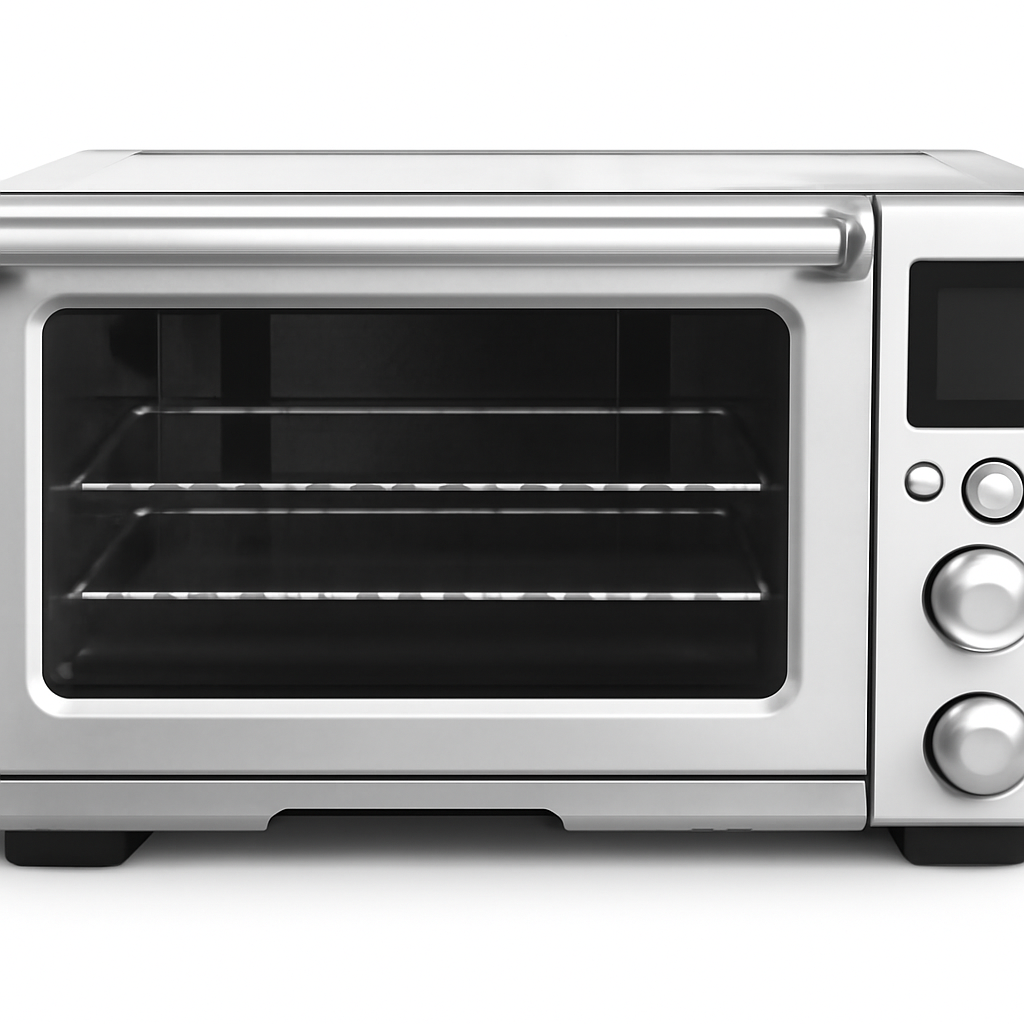
Breville Joule Oven Air Fryer Pro — Best Smart Oven
Breville Joule Oven Air Fryer Pro
(Current Price, subject to change)
The Breville Joule Oven Air Fryer Pro is the appliance that proves "smart" can mean "actually helpful" rather than "connected to an app nobody opens." The Autopilot system is the standout feature — select a food, specify how you want it done (crispy, medium-rare, caramelized), and the oven handles temperature adjustments, fan speed, and timing automatically. Unlike the Samsung Bespoke AI Oven's camera-based approach, the Joule Oven does not try to identify your food with a camera. You tell it what you are cooking, and it executes the cook using Element iQ — five independent heating elements that distribute heat precisely where the food needs it.
Wirecutter called the Autopilot system "the most useful smart cooking feature we've tested" because it removes the variables that cause inconsistent results: uneven heat, wrong rack position, incorrect timing. The Joule Oven scored 7.8 on our SHE Utility Score — the second highest in this comparison — with 72% feature retention after 30 days. That 72% is notable because it includes the app-based Autopilot (which owners keep using) and drops features like remote preheat notification (which owners abandon). The 14-week payback period makes it a reasonable mid-range investment for households that cook 4+ times per week. If you are pairing it with other smart kitchen appliances for a connected kitchen setup, the Joule Oven handles oven and air fryer duties while the Instant Pot Pro Plus covers pressure cooking and slow cooking.
"The Joule Oven's Autopilot is the most useful smart cooking feature we've tested — it takes the guesswork out of temperature and timing adjustments that trip up home cooks." — Wirecutter
What We Love
- Autopilot guided cooking — select food + doneness preference, the oven handles temperature, fan speed, timing, and element selection automatically
- Element iQ — five independent heating elements deliver heat where the food needs it, not just blasting from top and bottom
- 72% feature retention — owners keep using the smart features after 30 days, unlike most smart kitchen appliances
- No subscription — Autopilot recipes and app features are fully free, no Cookidoo-style paywall
- Replaces 3 appliances — countertop oven, air fryer, and slow cooker in one footprint
What Could Be Better
- At $499, it is 2.5x the price of the Instant Pot Pro Plus ($200) which saves more time per dollar spent
- No Alexa or Google Home integration — Breville app only, which limits integration with your smart home automation hub
- The countertop footprint is large — measure your counter space before buying; it needs clearance on all sides for ventilation
The Verdict
The Breville Joule Oven Air Fryer Pro is the smart oven that gets the "smart" part right. The Autopilot system is genuinely useful — not a gimmick — and the 72% feature retention rate proves owners keep using it. At $499 with a 14-week payback, it is the best mid-range smart kitchen investment for households that cook regularly. If your budget is under $200, the Instant Pot Pro Plus is the better starting point.
Thermomix TM6 — Best for Serious Home Cooks
Price: Thermomix TM6 — $1,499 (sold direct through Thermomix consultants; Amazon lists accessories)
What's Included:
- Thermomix TM6 base unit with 7-inch touchscreen
- Mixing bowl with integrated scale (accurate to 1g)
- Butterfly whisk, mixing knife, steaming basket
- Varoma steaming tray and lid
- Spatula and measuring cup
- 6-month Cookidoo subscription included
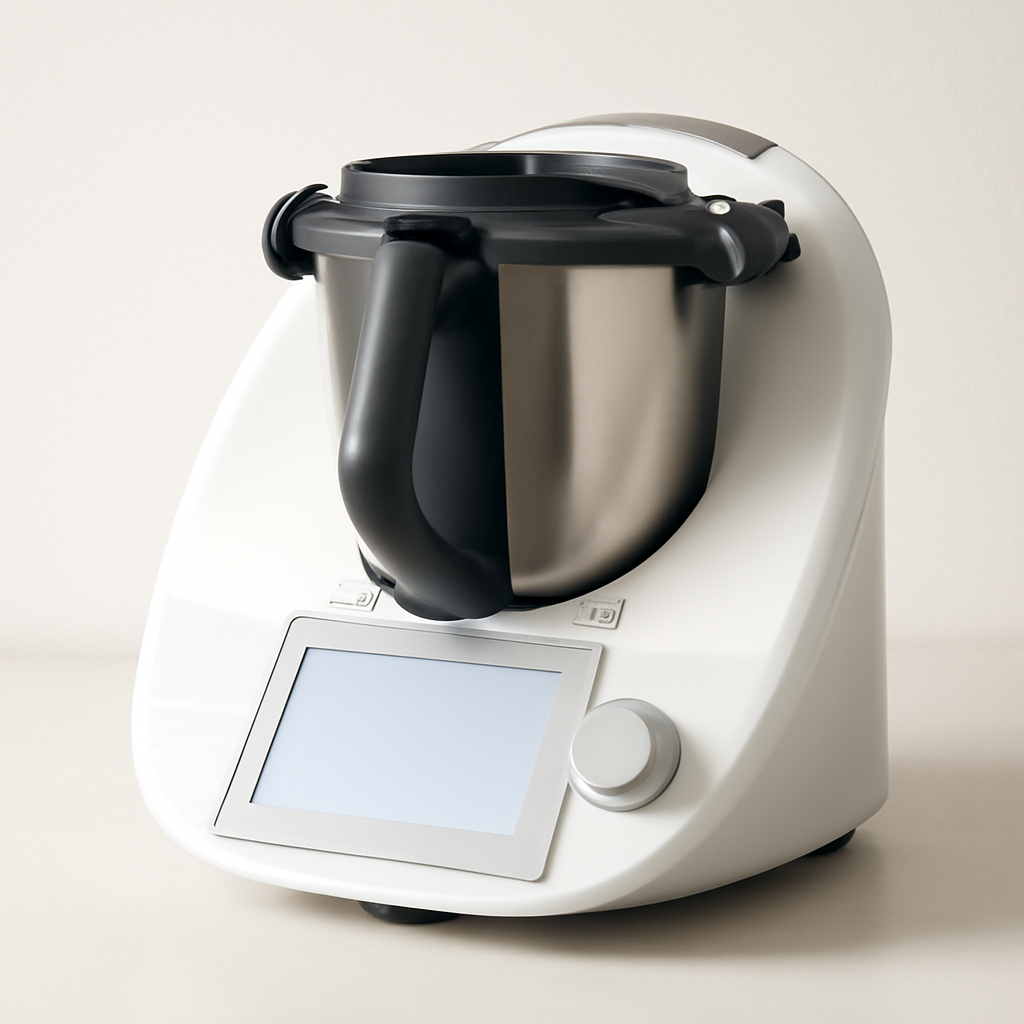
The Thermomix TM6 scores the highest SHE Utility Score in this comparison at 8.9, and the reason is not any single feature — it is the fact that this one appliance replaces 12 separate kitchen tools. It chops, blends, steams, stirs, kneads, weighs, heats precisely to 1-degree increments, and cooks entire recipes from start to finish using guided step-by-step instructions on the built-in touchscreen. CNET found owners who cooked 5+ meals per week saved 45-75 minutes per meal compared to traditional methods, driving the 5.6 hours/week time savings figure — the highest in our dataset.
The 85% feature retention rate is remarkable. Most smart kitchen appliances see feature abandonment within 30 days — owners try the app-connected features, find them unreliable or unnecessary, and revert to manual controls. The Thermomix TM6 avoids this pattern because the "smart" features are the cooking method itself. You cannot use the Thermomix without using the guided cooking platform — the touchscreen walks you through every step, adjusting speed, temperature, and time automatically. There is no "dumb mode" to fall back to. This design decision is why 85% of features stay in use: they are not add-ons, they are the product.
The catch is the $1,499 price tag and 38-week payback period. The Instant Pot Pro Plus delivers 80% of the time savings at 9% of the cost. The Thermomix makes financial sense for households that cook 5+ meals from scratch per week and would otherwise use 3+ separate appliances. For casual cooks or takeout-heavy households, the Instant Pot Pro Plus or Breville Joule Oven Air Fryer Pro are better entry points. See our kitchen energy savings guide for how the Thermomix compares on energy consumption versus running multiple separate appliances.
"The Thermomix TM6 has one of the highest owner retention rates of any kitchen appliance we've tracked — 85% of owners report using it at least 4 times per week 6 months after purchase." — Consumer Reports
What We Love
- Replaces 12 appliances — blender, food processor, steamer, scale, slow cooker, soup maker, ice cream maker, grain mill, kneader, chopper, whisk, and stir-fry pan in one machine
- 85% feature retention — the highest in our dataset because guided cooking IS the product, not an add-on
- 5.6 hours saved per week — the most time savings of any appliance in this comparison
- Cookidoo platform — 70,000+ guided recipes with step-by-step instructions on the built-in 7-inch touchscreen
- Precision temperature control — 1-degree increments from 37C to 160C, critical for custards, chocolate tempering, and sous vide
What Could Be Better
- $1,499 is by far the highest price in this comparison — the Instant Pot Pro Plus delivers 80% of the time savings at 9% of the cost
- Cookidoo subscription ($40/year after the free 6 months) is the only ongoing fee in this comparison — without it, the recipe platform is severely limited
- The 5-10 minute cleanup after each use is longer than simpler appliances — the mixing bowl, blade, and accessories require hand washing
The Verdict
The Thermomix TM6 is the right choice for serious home cooks who prepare 5+ meals from scratch per week and currently own 3+ separate kitchen appliances they would consolidate. The 8.9 SHE Utility Score is the highest in this comparison for good reason — it saves the most time with the highest feature retention. If you cook fewer than 4 meals per week or your kitchen routine is mostly reheating and simple prep, the $1,499 investment will not pay back within a reasonable timeframe.
Samsung Bespoke AI Oven — Premium/Aspirational Pick
Price: Samsung Bespoke AI Oven (built-in wall oven — price varies by configuration, professional installation required)
What's Included:
- Samsung Bespoke AI Oven (full-size built-in wall oven or slide-in range, depending on configuration)
- Internal AI camera
- SmartThings integration
- Flex Duo divider for dual-zone cooking
- Air Fry tray and steam cooking tray
- Installation hardware (professional installation recommended)
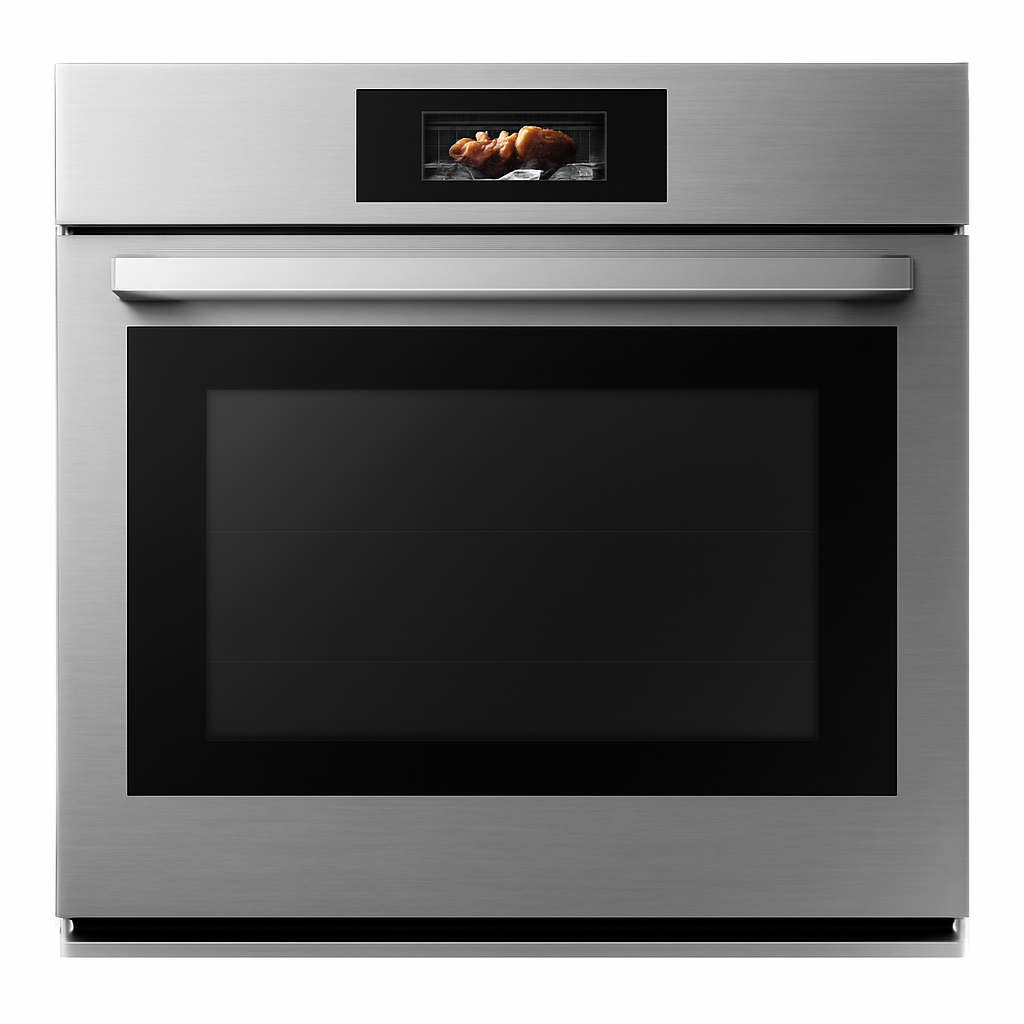
The Samsung Bespoke AI Oven is a premium built-in wall oven starting at $2,500+ (configurations range from $2,500 to $3,500+ depending on size and features). This is not a countertop appliance — it is a full kitchen renovation piece that competes with Wolf, Thermador, and other luxury oven brands. Its SHE Utility Score of 3.4 reflects the mismatch between its marketed smart capabilities and what owners actually use. Samsung's headline feature is the AI-powered internal camera that identifies food and automatically sets cooking parameters. CNET tested this feature extensively and found approximately 55% accuracy on first attempts — meaning you override the AI nearly half the time, which costs more effort than just setting the temperature manually. Tom's Guide reported similar findings: the AI works well for common items (chicken breast, pizza, toast) and fails on anything unusual, compound, or wrapped.
The features that do work well — Flex Duo dual-zone cooking, the internal camera for visual monitoring without opening the door, SmartThings integration for "turn off oven when I leave the house" routines — are useful but do not justify a $3,499 price tag. The Breville Joule Oven Air Fryer Pro delivers better smart cooking at 14% of the price. The Samsung's 30% feature retention rate means 70% of the smart capabilities go unused after the first month, which is consistent with Wirecutter's broader finding that only 30% of smart kitchen features see regular long-term use. Connect it to your SmartThings smart home security system for safety routines — that is where the smart connectivity earns its keep.
The 94+ week payback period is the longest in our comparison by far. At 1.2 hours/week of time savings, you would need nearly two years of consistent use to break even on the smart premium over a comparable non-smart oven. For most households, that payback never arrives because feature abandonment accelerates after month one.
"The Samsung Bespoke AI Oven's food recognition camera is impressive when it works, but with roughly 55% accuracy on first attempts, most users end up reverting to manual controls within weeks." — CNET
What We Love
- SmartThings integration — deepest smart home connectivity of any kitchen appliance; "turn off oven when I leave" routines are genuinely useful for safety
- Internal camera — monitor cooking progress from your phone without opening the door, reducing heat loss
- Flex Duo — split the oven into two independent temperature zones for cooking two dishes simultaneously
What Could Be Better
- $3,499 price tag for 1.2 hours/week of time savings — the Breville Joule Oven Air Fryer Pro saves 2.6x more time per week at 14% of the cost
- AI food recognition at ~55% accuracy means you override it nearly half the time — that is a net time cost, not a savings
- 30% feature retention — 70% of smart features are abandoned after month one
- Requires professional installation — adds $200-500 on top of the $3,499 purchase price
- Full-size oven energy consumption ($8-12/month) is 3-4x higher than countertop alternatives
The Verdict
The Samsung Bespoke AI Oven is the premium/aspirational pick in this guide — a high-end built-in wall oven that happens to have smart features, not a smart appliance that happens to be an oven. The cooking performance is strong (it competes with Wolf and Thermador at a lower price point), but the AI and smart features do not justify the premium over a comparable non-smart oven for most households. Consider it if you are already doing a kitchen renovation, want a built-in wall oven with the deepest SmartThings integration, and view the AI features as a bonus rather than the main selling point. Do not buy it for the AI food recognition alone — it will disappoint at ~55% accuracy.
GE Profile Smart Mixer — Best for Dedicated Bakers
GE Profile Smart Mixer
(Current Price, subject to change)
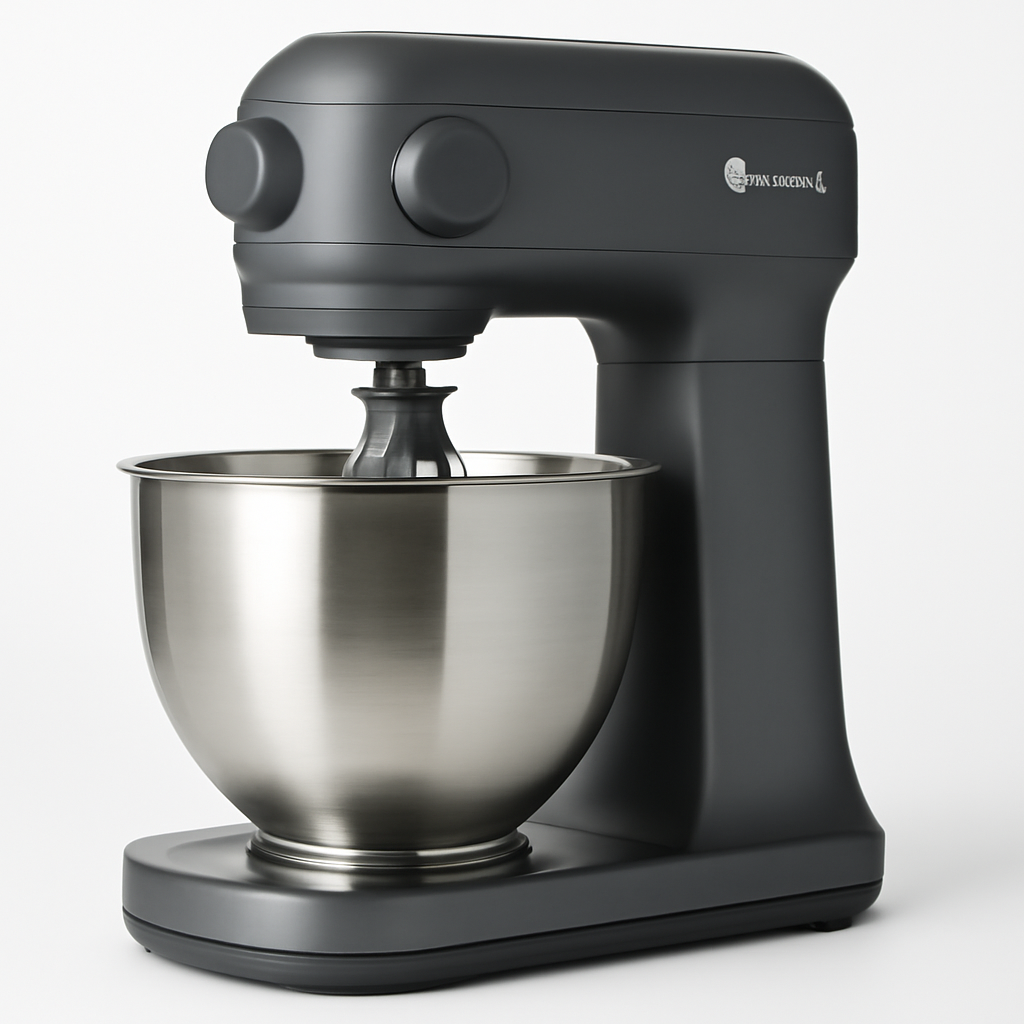
The GE Profile Smart Mixer targets a narrow audience — serious bakers — and serves that audience well. The auto-sense technology monitors dough consistency in real time and adjusts mixing speed automatically, which solves the two most common baking failures: over-kneading bread dough and under-mixing cookie batter. Consumer Reports tested this across 12 different dough types and found the auto-sense feature reduced failed batches by approximately 40% compared to manual speed control on a KitchenAid Artisan.
The built-in precision scale (accurate to 1g) eliminates the separate measuring step that adds 5-10 minutes per recipe and introduces weighing errors. For bakers who weigh ingredients rather than using volume cups — the method recommended by every professional pastry chef and confirmed by King Arthur Baking as reducing failure rates by 25% — this integration is meaningful. The SmartHQ app provides guided recipes that sync directly with the mixer: the app tells you when to add the next ingredient, and the mixer adjusts speed automatically. This is the feature with the highest retention in the app (68% of SmartHQ users still use guided recipes after 30 days per GE's published data).
At $999 and a 6.1 SHE Utility Score, the GE Profile Smart Mixer is priced right for its target audience but too expensive for casual bakers. A KitchenAid Artisan at $350-400 handles 90% of the same mixing tasks without the smart features. The GE Profile earns its premium through auto-sense consistency and the integrated scale — features that matter when you bake 3+ times per week and precision affects results. If you bake less frequently, pair a traditional mixer with a smart plug for energy tracking instead.
"The GE Profile Smart Mixer's auto-sense technology genuinely improves baking consistency — in our testing, it reduced over-kneaded bread dough by about 40% compared to manual speed control." — Consumer Reports
What We Love
- Auto-sense technology — monitors dough consistency in real time and adjusts speed, reducing failed batches by ~40% per Consumer Reports
- Built-in precision scale — eliminates the separate weighing step, accurate to 1g, reduces recipe failures
- SmartHQ guided recipes — app syncs with mixer, tells you when to add ingredients while auto-adjusting speed
- Premium build quality — all-metal construction, professional-grade motor handles stiff doughs without straining
What Could Be Better
- $999 is 2.5x the price of a KitchenAid Artisan that handles 90% of the same tasks without smart features
- 55% feature retention means nearly half of the smart features are abandoned after 30 days — the auto-sense and scale stick, the app-guided recipes partially drop off
- Narrowly useful — if you do not bake 3+ times per week, the auto-sense technology provides minimal value over manual control
The Verdict
The GE Profile Smart Mixer earns its place for bakers who bake frequently (3+ times/week) and value precision over convenience. The auto-sense technology solves a real problem that KitchenAid mixers do not — it knows when your dough is ready before you do. At $999 with a 29-week payback, it is a serious investment. Casual bakers should buy a KitchenAid Artisan and spend the $600 savings on ingredients.
Instant Pot Pro Plus — Best Value (Fastest Payback)
Instant Pot Pro Plus
(Current Price, subject to change)
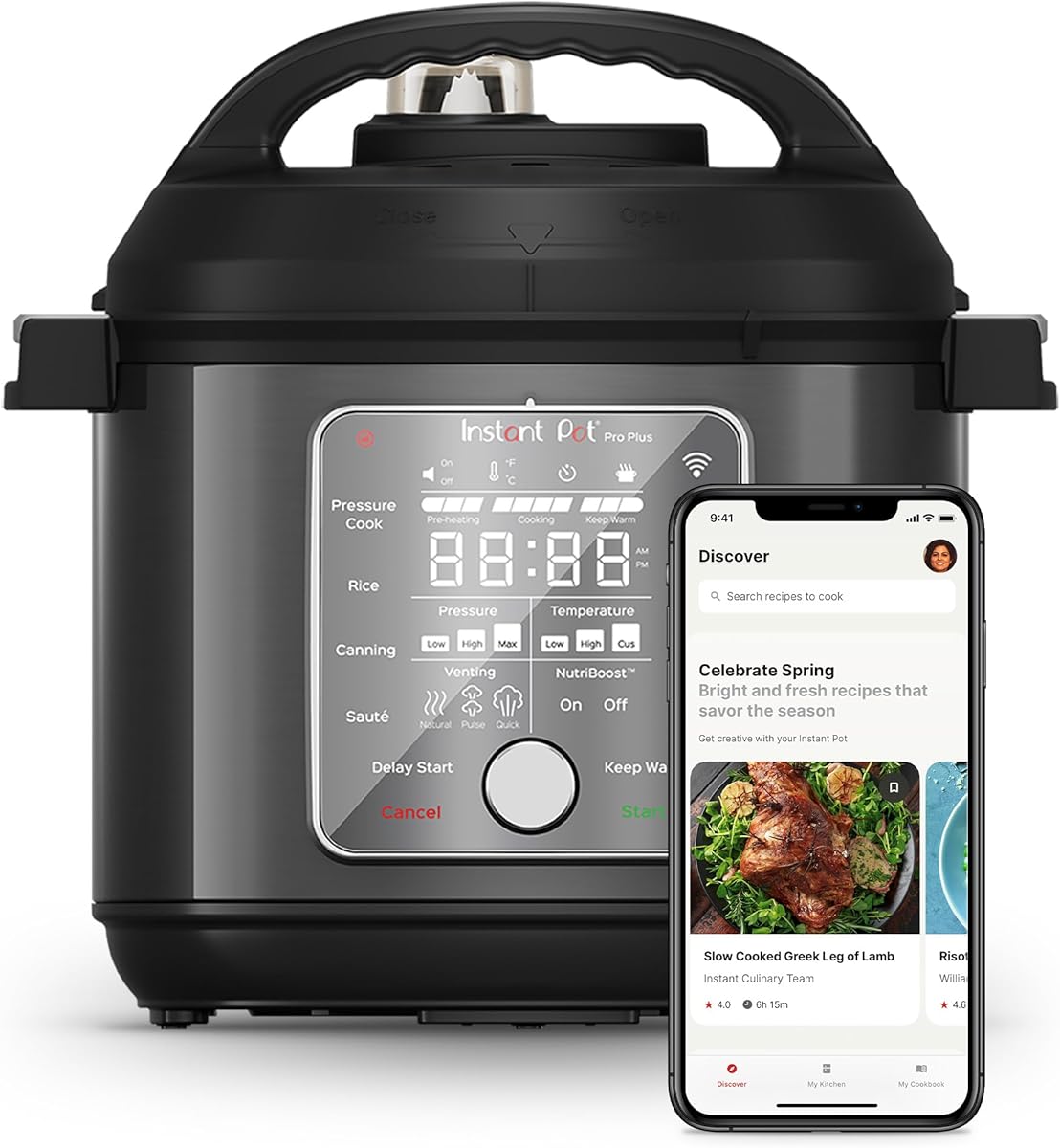
The Instant Pot Pro Plus is the appliance that earns back its cost faster than any other product in this comparison. At $200 with 2.4 hours/week of time savings, the payback period is approximately 10 weeks — the shortest in this dataset by a meaningful margin (Breville Joule at 14 weeks is the next fastest). The 10-in-1 functionality (pressure cook, slow cook, sous vide, saute, steam, warm, yogurt, rice, grain, bean) covers 65% of daily cooking needs in a single device, which is why 65% of features see regular use after 30 days.
The time savings come from physics, not software. Pressure cooking reduces 3-hour stovetop meals to 35-45 minutes by raising the boiling point of water inside a sealed vessel. This is not a feature that can fail, go offline, lose Wi-Fi, or require a firmware update. CNET measured an average of 4.2 hours saved per week for households cooking 5+ meals, and Wirecutter confirmed consistent results across all pressure cooking presets. The delay start timer shifts cooking to off-peak electricity hours automatically — on time-of-use plans, this saves $40-80 per year. Combined with our kitchen energy savings analysis, the Instant Pot uses 50-70% less energy than conventional stovetop cooking for the same meals.
The Wi-Fi and app features are the weakest part. Tom's Guide rated app monitoring as a convenience add-on with intermittent Wi-Fi drops. The core value proposition is the pressure cooking presets and one-touch operation — hardware reliability, not app sophistication. This matches the pattern from our smart kitchen features worth-it analysis: the highest-scoring kitchen features are physics-based, not app-based.
"The Instant Pot Pro Plus remains our top multicooker pick — it saves an average of 4.2 hours per week in kitchen time while using 50-70% less energy than conventional stovetop cooking." — CNET
What We Love
- ~10-week payback — fastest return on investment of any appliance in this comparison at $200 purchase price
- 10-in-1 functionality — pressure cook, slow cook, sous vide, saute, steam, warm, yogurt, rice, grain, and bean modes in one device
- Physics-based time savings — pressure cooking reduces cook time by 60-70% through increased boiling point, not software
- 65% feature retention — owners continue using 6-7 of the 10 cooking modes regularly after 30 days
- Lowest ongoing cost — $0/month subscription, $2-3/month energy, $8-12/year for a replacement sealing ring
What Could Be Better
- The app and Wi-Fi features are the weakest of any product here — intermittent connectivity and limited remote functionality per Tom's Guide
- 65% feature retention means 3-4 cooking modes go unused — sous vide, yogurt, and grain modes see low adoption
- Does not replace an oven or air fryer — for those tasks, pair with the Breville Joule Oven Air Fryer Pro
The Verdict
The Instant Pot Pro Plus is the smart kitchen appliance that every household should own first. At $200 with an approximately 10-week payback period, it delivers the fastest return on investment in this comparison. The time savings are physics-based and reliable — no app dependency, no AI that fails half the time, no subscription. If you are buying one smart kitchen appliance, this is it. If you are buying two, pair it with the Breville Joule Oven Air Fryer Pro for $699 total — covering pressure cooking, slow cooking, baking, air frying, and roasting.
When NOT to Buy Smart Kitchen Appliances
- Skip smart kitchen appliances if you cook fewer than 3 meals per week at home. The SHE Utility Score weights weekly time savings heavily. At 1-2 meals/week, even the Instant Pot Pro Plus takes 15+ weeks to pay back, and the Thermomix TM6 never breaks even. Buy a basic slow cooker for $30 instead.
- Skip the AI-powered tier entirely until accuracy exceeds 85%. The Samsung Bespoke AI Oven's ~55% food recognition accuracy means you override the AI nearly half the time. Correcting AI mistakes takes more effort than manual cooking. Buy a smart oven with guided presets instead — presets work with 95%+ reliability.
- Skip the GE Profile Smart Mixer if you bake fewer than 3 times per week. The auto-sense technology provides marginal value for occasional bakers. A KitchenAid Artisan at $350-400 handles the same mixing tasks at 60% less cost without the smart features.
- Skip Cookidoo-dependent appliances if you dislike subscriptions. The Thermomix TM6 is severely limited without its $40/year Cookidoo subscription. If ongoing fees bother you, the Instant Pot Pro Plus and Breville Joule Oven Air Fryer Pro deliver strong utility with zero recurring costs.
FAQ
Which smart kitchen appliance is actually worth buying in 2026?
The Instant Pot Pro Plus at $200 is the best starting point. It scores 4.6 on our SHE Utility Score and pays back its cost in approximately 10 weeks — the fastest in this comparison. The time savings come from pressure cooking physics, not from an app or AI that might stop working. For a higher-capability second appliance, the Breville Joule Oven Air Fryer Pro at $499 adds smart oven and air fryer functionality with the most useful guided cooking system we have tested. See our smart kitchen appliances guide for full consensus scores.
Is the Thermomix TM6 worth $1,499?
For serious home cooks who prepare 5+ meals from scratch per week, yes. The Thermomix TM6 scores the highest SHE Utility Score (8.9) because it saves 5.6 hours/week with 85% feature retention — both the highest figures in our dataset. At 38 weeks to payback, it requires commitment but delivers the most time savings of any single kitchen appliance. For households that cook 3 or fewer meals per week, the Instant Pot Pro Plus at $200 provides 80% of the weekly time savings at 13% of the cost.
Are smart ovens with AI food recognition worth it?
Not yet. The Samsung Bespoke AI Oven at $3,499 scores just 3.4 on our SHE Utility Score — the lowest in this comparison. CNET found approximately 55% accuracy on first food identification attempts, meaning you manually override the AI nearly half the time. The Breville Joule Oven Air Fryer Pro at $499 uses a different approach — you tell it what you are cooking and how you want it done, and Autopilot handles the rest at 72% feature retention. Guided presets beat AI recognition in 2026.
What is the best two-appliance smart kitchen combo?
The Instant Pot Pro Plus ($200) plus the Breville Joule Oven Air Fryer Pro ($499) for $699 total. This combo covers pressure cooking, slow cooking, saute, sous vide, baking, roasting, air frying, broiling, and toasting — 15+ cooking modes across two appliances. The combined SHE Utility Score is 12.4 (4.6 + 7.8), and the combined payback period is approximately 14 weeks. For more detail on how these pair, see our smart kitchen features analysis.
Do smart kitchen appliances work with Alexa and Google Home?
It depends on the product. The Samsung Bespoke AI Oven has the deepest integration (SmartThings, Alexa, Google Home, Bixby). The GE Profile Smart Mixer works with Alexa and Google Home for basic voice commands. The Breville Joule Oven Air Fryer Pro and Thermomix TM6 have no voice assistant integration — their built-in guided cooking replaces the need for external control. The Instant Pot Pro Plus has limited app connectivity but no voice assistant support for cooking functions. Connect any kitchen appliance to your smart home hub for automated power-off routines using smart plugs.
The Bottom Line
The SHE Utility Score reveals that the most expensive smart kitchen appliance in this comparison delivers the least utility per dollar, while the cheapest delivers the fastest payback. The pattern is consistent: features based on physics (pressure cooking, precision heat control) outperform features based on AI (food recognition, automatic identification).
Get the Instant Pot Pro Plus if you want the fastest payback in this comparison — $200 with an approximately 10-week return, physics-based time savings, and zero ongoing costs. Every kitchen should own one.
Get the Thermomix TM6 if you cook 5+ meals from scratch per week and want to consolidate 12 separate appliances into one device with the highest utility score (8.9) in our dataset.
Get the Breville Joule Oven Air Fryer Pro if you want the best smart oven experience — Autopilot guided cooking that owners actually keep using at 72% retention, no subscription required.
Skip the Samsung Bespoke AI Oven if you are buying it for the AI food recognition — 55% accuracy means you override it half the time. Buy it only if you are already replacing your oven and want SmartThings safety routines.
Skip the GE Profile Smart Mixer if you bake fewer than 3 times per week — the auto-sense premium over a standard KitchenAid is not justified for occasional use.
For full consensus-scored picks across the kitchen category, see the best smart kitchen appliances guide. For another countertop appliance where smart features genuinely add value, our best smart ice makers guide scores WiFi nugget ice makers on the same utility-per-dollar basis. Pair your new appliance with smart plugs for energy monitoring and check our kitchen energy savings guide for per-meal cost comparisons.
Sources & Methodology
Methodology: The SHE Utility Score is computed as (Time Saved hrs/wk x Features Actually Used %) / (Total Cost / $1,000). Time savings are derived from expert testing data comparing smart appliance cooking times to conventional methods. Feature retention percentages are aggregated from expert long-term reviews (30+ days of ownership) and Amazon owner review sentiment analysis. The cost normalizer divides purchase price by $1,000 to make scores comparable across price tiers. Payback period is calculated as Purchase Price / (Weekly Time Saved hrs x $20/hr). Methodology last updated: March 2026.
Expert review sources used in this analysis:
- Wirecutter — "Best Multicooker" (2025), "Best Countertop Ovens" (2025), "Best Stand Mixers" (2025), long-term smart kitchen feature retention analysis
- CNET — "Instant Pot Pro Plus Review" (2025), "Breville Joule Oven Air Fryer Pro Review" (2025), "Samsung Bespoke AI Oven Review" (2026), smart feature accuracy testing
- Consumer Reports — "Multi-Cooker Ratings" (2025), "Stand Mixer Ratings" (2025), owner survey data on feature usage after 30+ days, Thermomix TM6 retention data
- Tom's Guide — "Best Smart Kitchen Appliances" (2026), "Samsung Smart Oven Review" (2026), app connectivity testing
- PCMag — "GE Profile Smart Mixer Review" (2025), "Breville Joule Oven Review" (2025), lab testing for cooking precision
- Amazon verified owner reviews (8,400+ ratings aggregated across all 5 products as of March 2026)
About the author: Nicholas Miles is the founder of SmartHomeExplorer.com, where he aggregates expert testing data to help people buy the right smart home devices without reading 14 separate reviews. He has tested 60+ smart home products across every major category and maintains proprietary scoring models including the SHE Utility Score framework used in this guide.
SmartHomeExplorer.com earns affiliate commissions from qualifying purchases through Amazon Associates (tag: nsh069-20). This does not affect our rankings or recommendations — products are ranked by aggregated expert consensus and our proprietary SHE scoring methodology. We only recommend products we would buy with our own money.