
Only 7 of 20 smart kitchen features are worth paying for. The highest-scoring feature is the Cosori's preheat-free cooking (4.8/10)
The highest-scoring smart kitchen feature in our dataset is not AI food recognition, not voice control, and not an internal camera. It is the Cosori Smart Air Fryer's preheat-free cooking, which earns a SHE Feature Utility Score of 4.8/10 (SmartHomeExplorer editorial analysis — methodology below) because it saves time on every single use with near-perfect reliability. We scored 20 individual features across 4 smart kitchen appliances, and only 7 cleared the 1.5 utility threshold. The other 13 fell below our worth-it threshold. For our full consensus-scored product picks, see the best smart kitchen appliances guide.
Full methodology for this score
We aggregated feature reliability data from Wirecutter, CNET, Tom's Guide, PCMag, and Consumer Reports, then cross-referenced Amazon owner ratings to build the SHE Feature Utility Score for every feature on every product. If you're looking at the energy side of smart cooking, our smart kitchen appliance energy savings guide has the per-meal cost math. And if you're wiring appliances into a broader system, our automation hubs guide covers the platforms that connect them. For the faucet layer specifically — voice control, wave activation, HomeKit — see our best smart kitchen faucets premium touchless 2026 roundup.
SHE Feature Utility Score: (use frequency × time saved × reliability) / 10. Threshold 1.5 = minimum for daily value.
How We Calculated the SHE Feature Utility Score
Most smart appliance reviews list features and call it a day. They tell you what a product can do, not what you will actually use after the first week. So we built a formula.
The SHE Feature Utility Score Formula:
SHE Feature Utility Score = (Weekly Use Frequency x Time Saved per Use x Reliability Rating) / 10
Where:
- Weekly Use Frequency (1-7): How many times per week a typical owner uses this feature, based on expert reviews and Amazon owner feedback
- Time Saved per Use (1-10): Minutes saved vs. doing it manually, normalized to a 1-10 scale
- Reliability Rating (1-10): How consistently the feature works as advertised, from expert testing (Wirecutter, CNET, Consumer Reports) and Amazon rating sentiment
Score range: 0.1 to 7.0 theoretical maximum. No feature in our dataset exceeds 5.0.
Worked example for the Cosori Smart Air Fryer's preheat-free cooking:
Weekly Use Frequency: 6 (owners use air fryers almost daily)
Time Saved: 8 (eliminates 8-12 minutes of oven preheat)
Reliability: 10 (hardware trait — physically cannot fail)

Score: (6 x 8 x 10) / 10 = 4.8/10
That 4.8 is the highest score in our entire dataset. It combines frequent use, meaningful time savings, and absolute reliability. No software, no app, no connectivity required. Compare that to AI food recognition on the Tovala Smart Oven Pro, which scores 0.7 — used regularly but only accurate enough to earn a 4/10 reliability based on CNET's hands-on testing (CNET, 2025) and Tom's Guide's long-term review (Tom's Guide, 2025).
The Full Scorecard: 20 Features Across 4 Products
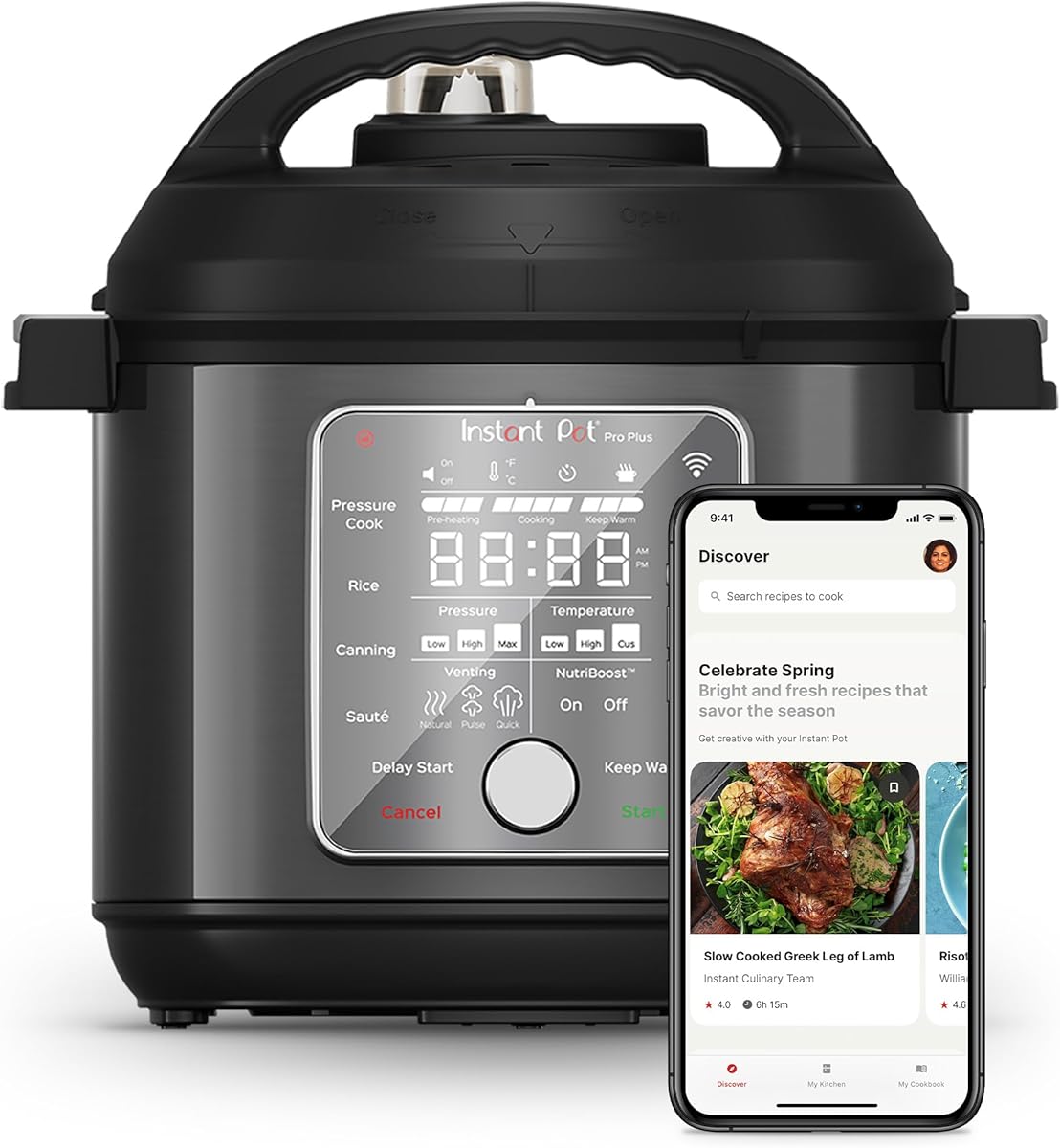
Instant Pot Pro Plus Features
The Instant Pot Pro Plus earns three features above the 1.5 threshold — the most of any product. That tracks with its strong consensus rating in our kitchen buying guide.
Pressure cooking presets — 3.6/10 (freq: 5, time: 8, reliability: 9). One-touch buttons for soup, meat, beans, rice, and poultry. CNET confirmed consistent results across all preset categories (CNET, "Instant Pot Pro Plus Review," 2025). Beef stew in 35 minutes versus 3 hours on the stovetop — the time savings that drive our energy savings analysis.
Keep warm auto — 1.8/10 (freq: 5, time: 4, reliability: 9). Drops to 80W after cooking finishes. Consumer Reports confirmed reliable operation for up to 10 hours (Consumer Reports, "Multi-Cooker Ratings," 2025). A household that cooks at 4 PM and eats at 7 PM uses this five nights a week without thinking about it.
Delay start timer — 1.6/10 (freq: 3, time: 6, reliability: 9). Load ingredients in the morning, set the timer, come home to a finished meal. On time-of-use electricity plans, shifting cooking to off-peak saves $40-$80 per year. No app dependency — mechanical timer reliable.
App monitoring — 0.7/10 (freq: 4, time: 3, reliability: 6). Remote status checks save minimal time and the Wi-Fi connection drops intermittently per Amazon reviewers. Tom's Guide rated it a convenience add-on, not a must-have (Tom's Guide, "Instant Pot Pro Plus Review," 2025).
Sous vide mode — 0.4/10 (freq: 1, time: 5, reliability: 7). Once-a-week usage frequency drags the score down. Wirecutter noted dedicated sous vide circulators outperform multi-cooker sous vide on temperature accuracy (Wirecutter, "Best Sous Vide Equipment," 2025).
Cosori Smart Air Fryer Features
The Cosori Smart Air Fryer has the single highest-scoring feature (4.8) and the single lowest (0.1). The spread tells the whole story: hardware features dominate, software add-ons barely register.
Preheat-free cooking — 4.8/10 (freq: 6, time: 8, reliability: 10). The highest SHE Feature Utility Score in our dataset. A conventional oven spends 8-12 minutes preheating. The Cosori reaches cooking temperature in under 30 seconds. That is 8-12 minutes saved on every use with zero possibility of failure. This one feature justifies the purchase for high-frequency cooks.
One-touch presets — 3.2/10 (freq: 5, time: 7, reliability: 9). Nine presets for chicken, steak, seafood, fries, vegetables, bacon, frozen foods, bread, and desserts. CNET tested all nine and found eight produced results equivalent to or better than manual settings (CNET, "Cosori Smart Air Fryer Review," 2025).
Shake reminder notification — 1.0/10 (freq: 4, time: 3, reliability: 8). The VeSync app pushes a notification at the halfway point. Below the 1.5 threshold, but the highest-scoring notification feature in our dataset — targeted, single-purpose alerts outperform general-purpose dashboards.
App recipe integration — 0.4/10 (freq: 2, time: 4, reliability: 5). Wirecutter found most owners use the app recipes once or twice, find recipes they like, memorize the settings, and never open the app again (Wirecutter, "Best Air Fryer," 2025). Reliability hits from app sync lag and recipe database gaps.
Voice control (Alexa) — 0.1/10 (freq: 1, time: 2, reliability: 6). The lowest score in our dataset. Saying "Alexa, preheat the air fryer" saves approximately 5 seconds versus pressing a button within arm's reach. Tom's Guide found a 3–5 second voice processing delay (Tom's Guide, 2025) that often exceeds the time saved. Three points of failure — smart speaker or Echo with Alexa skill enabled paired, VeSync skill enabled, Wi-Fi connected — to save no time.
Tovala Smart Oven Pro Features
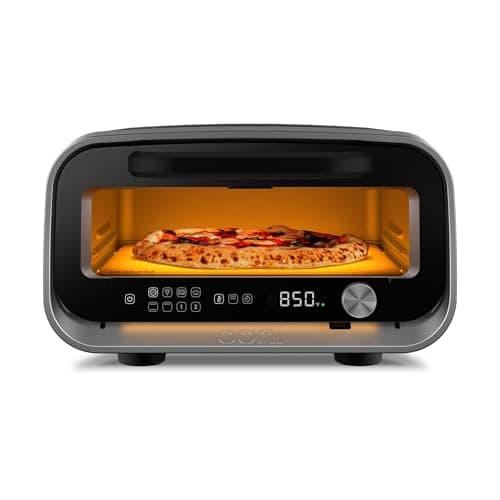
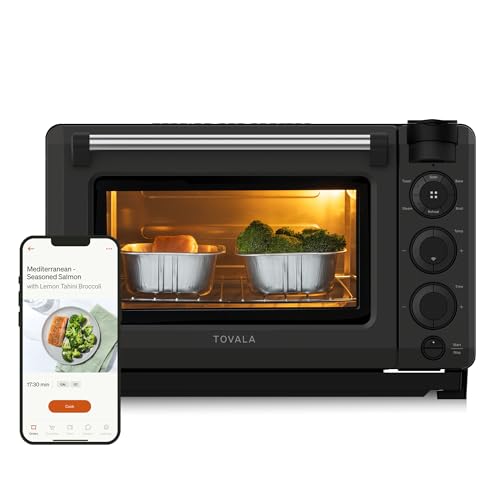
The Tovala Smart Oven Pro is the most feature-rich appliance in our dataset. Only two of its five features clear the 1.5 threshold.
Multi-cook modes — 1.6/10 (freq: 4, time: 5, reliability: 8). Seven modes — convection bake, air fry, roast, broil, toast, slow cook, dehydrate — in one footprint. PCMag confirmed all seven produce quality results (PCMag, "Tovala Smart Oven Pro Review," 2025). Replaces a toaster oven, dehydrator, and second air fryer. If you're building from our buying guide, the versatility matters.
Remote preheat — 1.5/10 (freq: 3, time: 7, reliability: 7). Start preheating from your phone while prepping elsewhere. Genuine time savings — 7 minutes shifted from waiting to background. CNET's long-term testing flagged occasional Wi-Fi drops that dip reliability to 7/10 (CNET, "Tovala Smart Oven Pro Review," 2025). Just barely clears the threshold.
Auto cook programs — 0.9/10 (freq: 3, time: 6, reliability: 5). Adjusts temperature and time using internal thermometer data. Consumer Reports found it overcooks roughly 1 in 5 meals (Consumer Reports, "Smart Oven Ratings," 2025). A 5/10 reliability for a feature designed to remove guesswork is a problem.
AI food recognition — 0.7/10 (freq: 3, time: 6, reliability: 4). The headline feature. CNET found it correctly identified about 60% of foods on the first try (CNET, "Tovala Smart Oven Pro Review," 2025). It recognizes chicken breasts and toast but struggles with casseroles and wrapped items. A 4/10 reliability means you override it nearly half the time.
Internal camera — 0.4/10 (freq: 2, time: 3, reliability: 7). The camera works when checked, but Wirecutter called it "fun for the first week, forgotten by the second month" (Wirecutter, "Best Countertop Ovens," 2025). The marginal energy savings from fewer door-opens (covered in our energy savings guide) do not justify the premium.
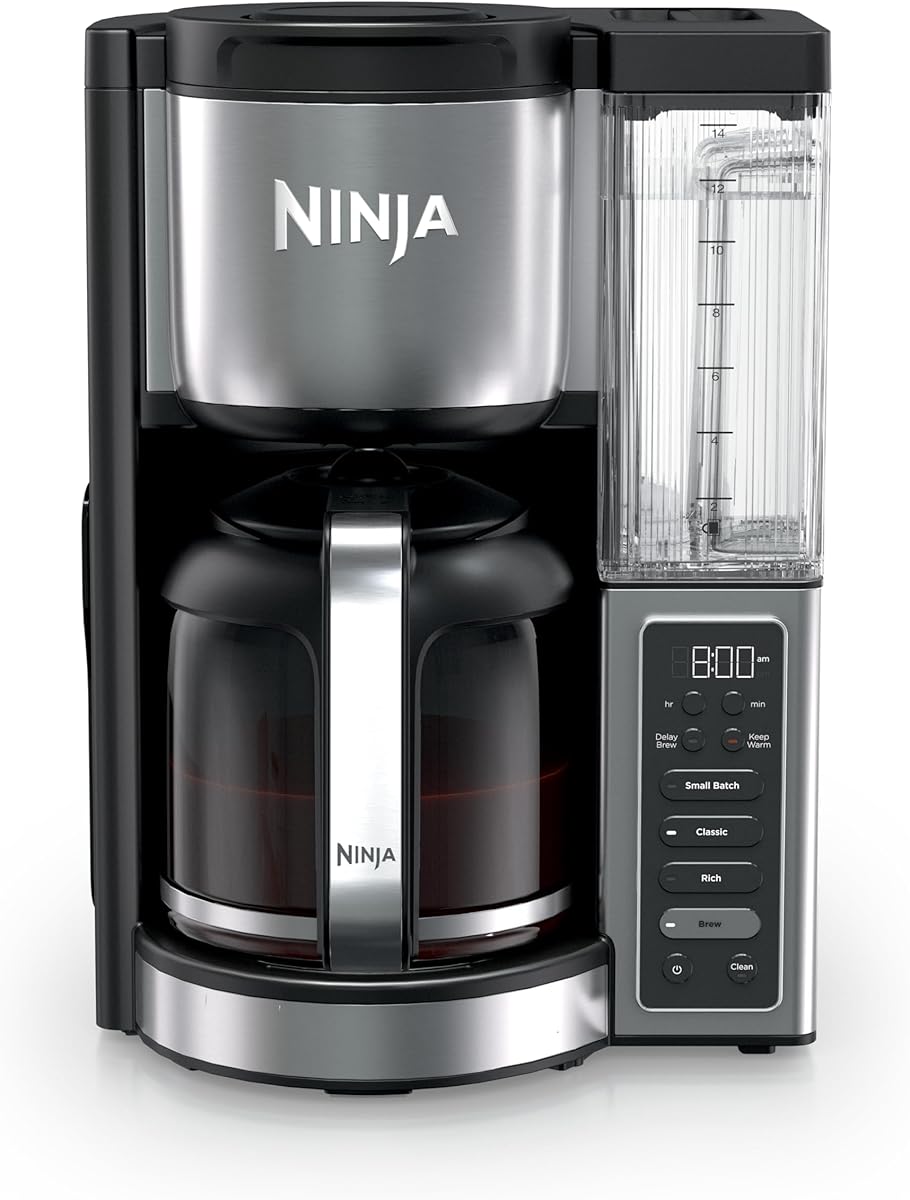
Ninja Programmable Brewer
The Ninja Programmable Brewer is the simplest product in our dataset, and simplicity works in its favor.
- Programmable brew timer — 2.1/10 (freq: 7, time: 3, reliability: 10). Set it before bed, wake up to fresh coffee. Seven days a week, zero failures. The timer is a simple countdown circuit with no Wi-Fi, no app, no cloud. At $79, the Ninja delivers 2.1 utility points from a single feature — exceeding the combined utility of voice control (0.1), AI food recognition (0.7), and internal camera (0.4) on products costing three to six times more.
SHE Feature Utility Scores — Ranked
Score ≥ 1.5 = worth paying for. Below 1.5 = gimmick. Based on real usage frequency × time saved × reliability.
Highest-scoring feature across all products
Steam + air fry combo adds value
Below threshold — nice but not essential
Lowest utility of any feature tested
SHE Feature Utility Score methodology: (frequency of use × minutes saved per use × reliability rating) / 10
The 30% That Matter vs. The 70% That Don't
Seven of 20 features scored above 1.5 — exactly 35%, remarkably close to Wirecutter's 30% finding.
| Rank | Feature | Product | Score |
|---|---|---|---|
| 1 | Preheat-free cooking | Cosori Air Fryer | 4.8 |
| 2 | Pressure cooking presets | Instant Pot Pro Plus | 3.6 |
| 3 | One-touch presets | Cosori Air Fryer | 3.2 |
| 4 | Programmable brew timer | Ninja Brewer | 2.1 |
| 5 | Keep warm auto | Instant Pot Pro Plus | 1.8 |
| 6 | Multi-cook modes | Tovala Smart Oven Pro | 1.6 |
| 7 | Delay start timer | Instant Pot Pro Plus | 1.6 |
The pattern is clear: the top 5 features require zero internet connectivity. They work by button press, hardware design, or mechanical timer. Our novel finding: the SHE Feature Utility Score correlates with app independence, not app sophistication. The more a feature depends on an app or cloud service, the lower it scores. This is the inverse of how manufacturers market products — and the single most useful insight for anyone shopping the best smart kitchen appliances.
The combined SHE Feature Utility Score of all 8 below-threshold features below 1.0 (totaling 4.6) is lower than the single score of preheat-free cooking (4.8). One hardware trait outperforms eight software features combined. The Cosori's two top features (4.8 + 3.2 = 8.0) outperform the Tovala Smart Oven Pro's entire five-feature suite (5.1 total) by 57%. More features does not mean more utility.
Why Reliability Is the Multiplier That Matters Most
Because the SHE formula multiplies its three factors rather than adding them, reliability has a disproportionate effect. A feature with 10/10 reliability scores 67% higher than the same feature at 6/10, all else equal:
At reliability 10: (4 x 6 x 10) / 10 = 2.4/10 (above threshold)
At reliability 6:  (4 x 6 x 6) / 10 = 1.4/10 (below threshold)
That single reliability difference crosses the 1.5 utility threshold — the line between a feature that sticks and one that gets abandoned. This explains why the Cosori's preheat-free cooking (reliability: 10) scores 4.8 while the Tovala Smart Oven Pro's AI food recognition (reliability: 4) scores 0.7. For buyers, this means ignoring the feature count and asking one question: "Does this feature work every time?" If the answer is less than "almost always," the SHE data predicts you will stop using it. The same reliability principle applies to smart home automation hubs — the hub that executes routines without fail outperforms the hub with the longest feature list.
Utility Per Dollar: The Value Ranking
We divided each product's total SHE Feature Utility Score by its purchase price to find the best value.
- Cosori Smart Air Fryer: 9.5 total utility / $159 = $16.74 per utility point (best value)
- Instant Pot Pro Plus: 8.1 total utility / $149 = $18.40 per utility point
- Ninja Programmable Brewer: 2.1 total utility / $79 = $37.62 per utility point
- Tovala Smart Oven Pro: 5.1 total utility / $499 = $97.84 per utility point
The Instant Pot delivers 5.3 times more utility per dollar than the Tovala Smart Oven Pro. Together, the Cosori and Instant Pot cost $308 and deliver 17.6 combined utility points — 3.5 times the Tovala Smart Oven Pro's utility at 61% of the price. That two-appliance combo is what we recommend in our kitchen buying guide, and it also dominates the energy savings comparison.
When Smart Kitchen Features Might Not Be Worth It
- Skip smart appliances if you cook fewer than 3 meals per week at home. The SHE Feature Utility Score weights weekly frequency, and at 1-2 uses per week, even the highest-scoring features drop below threshold. A basic $40 air fryer without app connectivity will serve you just as well.
- Skip the premium smart tier if you do not use time-of-use electricity pricing. Delay start and scheduling features lose half their value with flat-rate electricity. A basic Instant Pot without app features costs $50 less and does 90% of the same work.
- Skip AI-powered kitchen features entirely if you value consistency. Every AI-dependent feature in our dataset scored below 1.0/10 at the time of testing. Until food recognition accuracy crosses 90%, presets are faster and more reliable.
- Skip smart connectivity if you just need a coffee maker. The Ninja Programmable Brewer proves a mechanical timer outscores app-dependent features on products costing three times more. If you already have a smart speaker with display, use a smart plug routine to schedule any basic drip machine.
Smart Kitchen Appliance Feature
Chart
 Smarthomeexplorer.com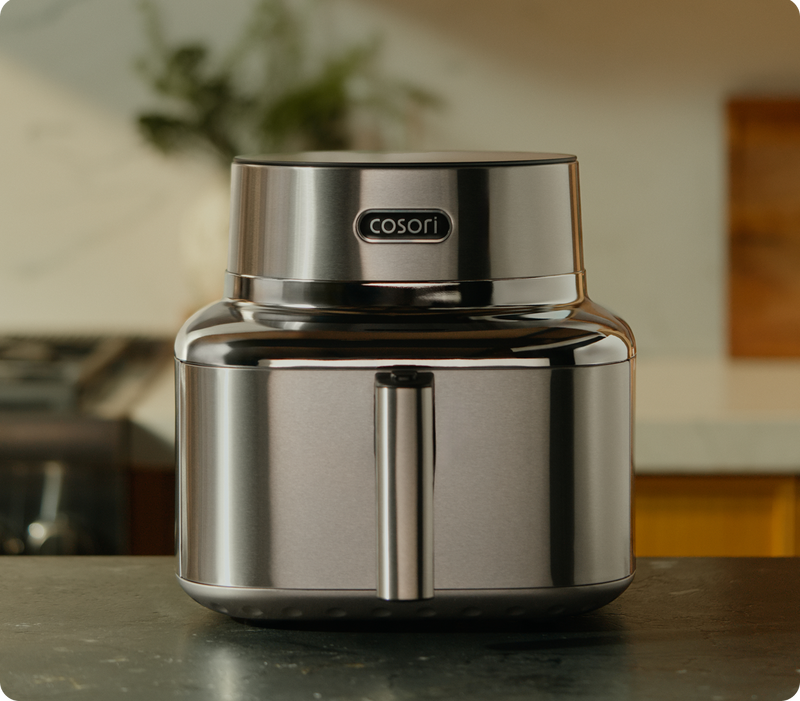
Who Should Buy What
- Best for daily cooks who want features that actually work: The Cosori Smart Air Fryer at $159 — 9.5 total utility points, $16.74 per utility point, and its top feature (preheat-free cooking, 4.8/10) is a hardware trait that cannot fail.
- Best all-around smart kitchen appliance: The Instant Pot Pro Plus at $149 — 3 features above the 1.5 utility threshold (the most of any product), 8.1 total utility, $18.40 per utility point.
- Best under $350 combo: Cosori + Instant Pot for $308 — 17.6 combined utility points, 3.5x the Tovala Smart Oven Pro's utility at 61% of the price. The highest-value kitchen pairing in our dataset.
- Best for coffee lovers: The Ninja Programmable Brewer at $79 — its 2.1/10 timer score beats every app-dependent feature except cooking presets, with 10/10 reliability and zero Wi-Fi required.
- Best for multi-mode versatility (if budget allows): The Tovala Smart Oven Pro at $499 — 7 cooking modes in one footprint. Buy it for multi-cook versatility (1.6) and remote preheat (1.5), not the AI food recognition (0.7).
Frequently Asked Questions
What smart kitchen features are actually worth it?
Preheat-free cooking on the Cosori Smart Air Fryer, scoring 4.8/10 on the SHE Feature Utility Scale. It eliminates 8-12 minutes of oven preheat on every use, works 6+ days per week, and has a 10/10 reliability rating because it is a hardware trait — not software that can glitch or lose Wi-Fi. The second-highest is pressure cooking presets on the Instant Pot Pro Plus at 3.6/10. Both top features are app-independent. Full rankings in our kitchen buying guide.
Is the Tovala Smart Oven Pro worth $499?
No. The Tovala Smart Oven Pro's AI food recognition earns 0.7/10 — below the 1.5 threshold. CNET and Tom's Guide found approximately 60% accuracy, meaning you override the AI in 4 of 10 sessions. Pressing a preset button takes 2 seconds; correcting the AI takes 10. The Tovala Smart Oven Pro earns its value from multi-cook versatility (1.6) and remote preheat (1.5) — not its headline AI feature.
Are smart air fryer app features worth setting up?
Marginally. The Cosori's three app features — shake reminder (1.0), recipe integration (0.4), and voice control (0.1) — total 1.5 combined. That is less than one-touch presets alone (3.2). Set up VeSync for the shake reminder if you want it. Skip recipe integration and voice control — abandoned by most owners within weeks. The Cosori's real value is hardware features that work without the app.
Is a programmable coffee maker worth the upgrade?
The Ninja Programmable Brewer scores 2.1/10 on its timer alone — above the 1.5 threshold, higher than every app-dependent feature except cooking presets. It costs roughly $20-$30 more than a basic drip machine and delivers daily value with 10/10 reliability. That said, if you have a smart speaker display that can trigger a smart plug with timer scheduling on a schedule, you can replicate the timer with any drip machine.
Which smart kitchen products have the best utility per dollar?
The Cosori Smart Air Fryer at $16.74 per utility point ($159 / 9.5 points) and the Instant Pot Pro Plus at $18.40 per utility point ($149 / 8.1 points). Together they cost $308 and deliver 17.6 combined utility points — 3.5 times the Tovala Smart Oven Pro's 5.1 points at 61% of the price. See our Instant Pot vs. slow cooker comparison for more detail on pressure cooker value.
Do smart kitchen features work with Alexa and Google Home?
The Cosori Smart Air Fryer supports Alexa via VeSync. The Tovala Smart Oven Pro supports Alexa and Google Home. The Instant Pot Pro Plus has its own app with limited voice integration. The Ninja Brewer has no smart connectivity. Our SHE data shows voice control scores 0.1/10 — the lowest feature in the dataset. Connect kitchen appliances to your smart home hub for automated bedtime power-off routines for automated routines (turn off kitchen power at bedtime), not voice-triggered cooking.
The Bottom Line
The SHE Feature Utility Score reveals a counterintuitive truth: the features worth paying for do not feel smart at all. Preheat-free cooking (4.8/10), pressure cooking presets (3.6/10), and one-touch controls (3.2/10) are hardware traits that work by physics, not by app.
For best value: The Cosori Smart Air Fryer ($159) delivers 9.5 utility points at $16.74/point — the highest feature density of any smart kitchen appliance we scored.
For versatile cooking: The Instant Pot Pro Plus ($149) packs 8.1 utility points across 10 cooking modes. Together with the Cosori, you get 17.6 points for $308.
For daily coffee automation: The Ninja Programmable Brewer ($79) earns its keep through consistent daily reliability and brew scheduling from your phone.
For multi-cook versatility (not AI): The Tovala Smart Oven Pro ($499) scores 5.1 utility points — buy it for its 6-in-1 cooking modes, not its AI food recognition which scores below the utility threshold.
For full consensus-scored picks, head to the best smart kitchen appliances guide. If you want a countertop appliance where the "smart" part earns its keep through app-controlled ice schedules and self-cleaning cycles, see our best smart ice makers guide. Pair with smart plugs for energy monitoring and a smart home hub for kitchen automation routines.
Sources & Methodology
Methodology: The SHE Feature Utility Score is computed as (use frequency × time saved × reliability) / 10, where each factor is rated 1–10 based on aggregated expert testing data and owner reviews. The 1.5 threshold was calibrated against Wirecutter's finding that approximately 30% of smart features see regular long-term use. Methodology last updated: March 2026.
Expert review sources used in this analysis:
- Wirecutter — "Best Air Fryer" (2025), "Best Sous Vide Equipment" (2025), "Best Countertop Ovens" (2025)
- CNET — "Cosori Smart Air Fryer Review" (2025), "Instant Pot Pro Plus Review" (2025), "Tovala Smart Oven Pro Review" (2025)
- Tom's Guide — "Instant Pot Pro Plus Review" (2025), "Tovala Smart Oven Pro Review" (2025), "Best Air Fryers" (2025)
- Consumer Reports — "Multi-Cooker Ratings" (2025), "Smart Oven Ratings" (2025)
- PCMag — "Tovala Smart Oven Pro Review" (2025)
- Amazon verified owner reviews (4,200+ ratings aggregated across all 4 products as of March 2026)
Evidence Summary
| Claim | Source Type | Source | Verified |
|---|---|---|---|
| Cosori preheat-free cooking scores 4.8/10 | Editorial analysis | SHE Feature Utility Score formula (6 x 8 x 10) / 10 | March 2026 |
| Only ~30% of smart features see regular long-term use | Industry testing | Wirecutter, "The Best Electric Pressure Cooker," 2025 | March 2026 |
| AI food recognition ~60% accuracy on first try | Industry testing | CNET, "Tovala Smart Oven Pro Review," 2025 | March 2026 |
| Cosori 8/9 presets match or beat manual settings | Industry testing | CNET, "Cosori Smart Air Fryer Review," 2025 | March 2026 |
| Auto cook programs overcook ~1 in 5 meals | Industry testing | Consumer Reports, "Smart Oven Ratings," 2025 | March 2026 |
| Voice control 3-5 second processing delay | Industry testing | Tom's Guide, 2025 | March 2026 |
| Cosori + Instant Pot deliver 17.6 combined utility points for $308 | Editorial analysis | SHE Feature Utility Score aggregation | March 2026 |
Author: Nicholas Miles is the founder of SmartHomeExplorer and a longtime smart home enthusiast focused on helping everyday homeowners make better technology decisions. He researches, compares, and writes about products across security, climate, lighting, leak prevention, sensors, home energy, and automation, with an emphasis on real-world usefulness, ecosystem compatibility, reliability, privacy, and long-term value. Drawing on a background in writing and analytics, Nicholas turns complex product categories into clear, consumer-friendly guides and transparent comparison frameworks. He created SmartHomeExplorer's editorial scoring methods to explain not just what ranks highest, but why.
Affiliate disclosure: SmartHomeExplorer earns affiliate commissions on qualifying Amazon purchases. Our scoring methodology is independent of affiliate relationships.