
Indoor CO2 above 1,000 ppm impairs decision-making by 21% per Harvard research — and most bedrooms hit 2,000 ppm by 3 AM with the door closed.
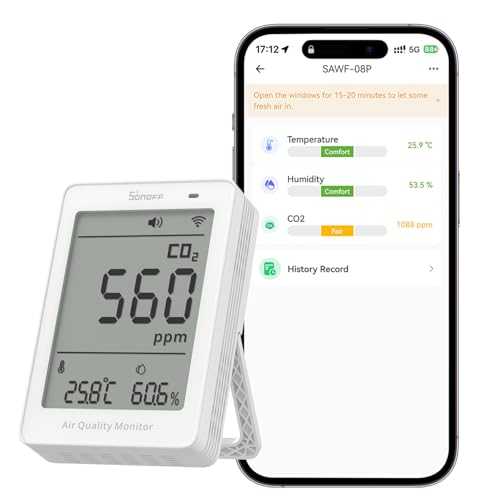
Your bedroom CO2 probably hits 2,000 ppm by 3 a.m. every single night. You wake up groggy, blame it on poor sleep, and reach for coffee. But Harvard researchers found that CO2 concentrations above 1,000 ppm impair cognitive function by 21% — and above 1,400 ppm, your decision-making scores drop by 29%. The fix is absurdly simple: a $50 monitor like the SONOFF AirGuard CO2 tells you exactly when to open a window.
This guide breaks down the actual research behind indoor CO2 levels — what the numbers mean, what they do to your brain, and what you can do about it. If you're ready to pick a monitor, head to our best indoor air quality monitors guide for consensus-scored recommendations. But first, let's talk about why those numbers on the display actually matter.
The Harvard COGfx Study: What Happened When They Changed the Air
In 2015, researchers from the Harvard T.H. Chan School of Public Health and SUNY Upstate Medical University ran an experiment that should have changed how every office building in the world operates. They called it the COGfx Study, and the results were uncomfortable for anyone who works indoors — which is most of us.
The setup was straightforward: 24 knowledge workers spent six full workdays in a controlled office environment at the Syracuse Center of Excellence. Researchers manipulated three variables — CO2 concentration, volatile organic compound (VOC) levels, and ventilation rate — while keeping everything else constant. Temperature, humidity, lighting, noise, and even office layout stayed the same. At the end of each workday, participants took a standardized cognitive assessment called the Strategic Management Simulation (SMS) test, which measures higher-order decision-making across nine functional domains.
The three conditions tested were:
- Conventional building (1,400 ppm CO2, high VOCs): Standard office conditions that millions of people work in every day
- Green building (945 ppm CO2, low VOCs): Better ventilation, reduced chemical off-gassing
- Green+ building (550 ppm CO2, very low VOCs): Enhanced ventilation rates, minimal chemical exposure
The Results Were Not Subtle
Cognitive function scores in the Green building conditions were 61% higher than in the Conventional building. In the Green+ conditions, scores were 101% higher — participants literally doubled their cognitive performance by breathing cleaner air.
The most dramatic improvements showed up in the domains that matter most for real work:
- Crisis response scores: 97% higher in Green+ vs. Conventional
- Strategy scores: 183% higher in Green+ vs. Conventional
- Information usage: 299% higher in Green+ vs. Conventional
Published as "Associations of Cognitive Function Scores with Carbon Dioxide, Ventilation, and Volatile Organic Compound Exposures in Office Workers" in Environmental Health Perspectives, this was not a fringe study. It was peer-reviewed, controlled, and conducted by one of the most respected public health institutions in the world.
The practical implication is hard to overstate: the air in a typical office building is making workers measurably dumber, and nobody notices because the impairment happens gradually and invisibly.
What This Means for Your Home Office
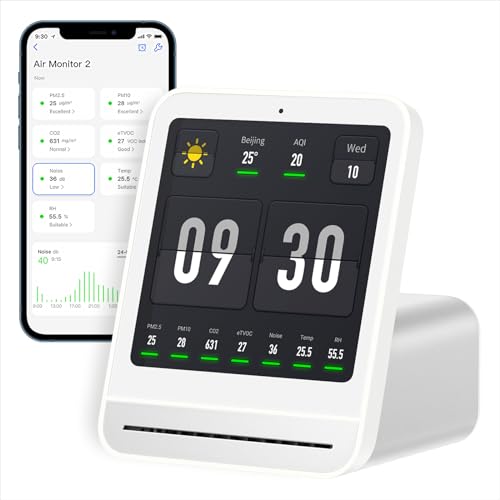
If you work from home — and many of us still do — your home office ventilation matters more than your monitor resolution, your ergonomic chair, or your productivity app subscription. A $50 SONOFF AirGuard CO2 or $150 Qingping Air Quality Monitor Gen 2 can tell you whether your home office is operating at "Green+" conditions or "Conventional building" conditions. Given that most home offices are small rooms with closed doors and limited ventilation, the answer probably isn't great.
The Multicountry Follow-Up: It's Not Just One Study
Skeptics — and we appreciate skeptics — might wonder if the COGfx results were a fluke. A small sample in a controlled lab, maybe not reflective of real-world conditions. Fair concern.
In 2022, researchers from the Harvard T.H. Chan School of Public Health addressed this head-on with a multicountry field study that tracked real office workers in real buildings across six countries. This was not a controlled lab. These were actual offices with actual employees doing actual work.
Researchers deployed real-time environmental sensors measuring PM2.5 (fine particulate matter) and CO2 concentrations alongside cognitive testing administered through a custom app on participants' phones. Workers took short cognitive assessments multiple times per day over the study period, generating thousands of data points matched to simultaneous air quality readings.
The Numbers Tell a Consistent Story
The findings reinforced the COGfx results across a much larger and more diverse sample:
- Every 500 ppm increase in CO2 corresponded to 1.4–1.8% slower response times on cognitive tests
- Every 10 ug/m3 increase in PM2.5 corresponded to 0.8–0.9% slower response times
- The effects were dose-dependent and consistent across all six countries
Perhaps the most important finding: no safe lower threshold was identified. Even below 1,000 ppm — a level most building codes consider perfectly acceptable — lower CO2 concentrations still correlated with better cognitive performance. In other words, when it comes to CO2 and your brain, less is always better.
The percentage drops might sound small in isolation, but they compound. A worker in a meeting room at 2,000 ppm CO2 with moderate PM2.5 exposure could be operating at 5–7% reduced cognitive capacity compared to someone in a well-ventilated space. Over an 8-hour workday, over weeks and months, that's a meaningful drag on the quality of your thinking.
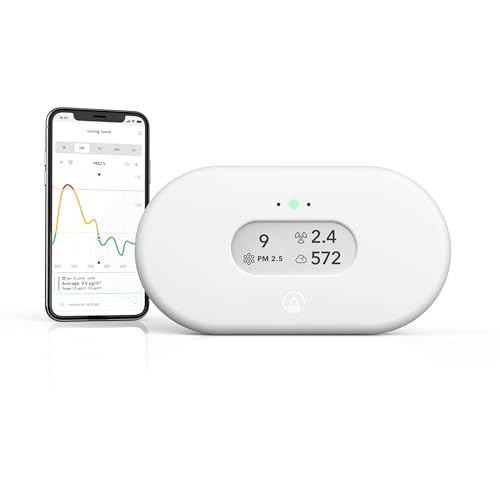
This study matters because it moved the conversation from "a lab experiment showed something interesting" to "this is a consistent, measurable effect across diverse real-world conditions." The Airthings View Plus tracks both CO2 and PM2.5 simultaneously — two of the exact metrics this research identified as cognitive performance predictors.
CO2 Levels by Room: What's Normal and What's Not
One of the most useful things a CO2 monitor does is calibrate your intuition. Before you own one, you have zero idea what the CO2 level is in any given room. After a week with one, you start to recognize the patterns — and some of them are genuinely surprising.
Here's what you can expect to see on a SONOFF AirGuard CO2 or Airthings View Plus in common scenarios:
Outdoor Ambient Air: 420 ppm
This is your baseline. Outdoor CO2 in 2026 hovers around 420 ppm globally (up from 280 ppm pre-industrial, for those keeping score on the climate situation). Your indoor monitor should read close to this after you've had windows open for a while. If it reads significantly below 400 ppm after extended ventilation, your sensor may need recalibration.
Well-Ventilated Office or Living Room: 600–800 ppm
This is the target zone. With good mechanical ventilation or open windows, an occupied room stays in this range. The Harvard COGfx study's "Green+" condition was 550 ppm, which is achievable at home with adequate airflow. Your cognitive function is essentially unimpaired at these levels.
Average Home, Windows Closed: 800–1,200 ppm
This is where most occupied homes sit during colder months when windows stay shut. It's technically within ASHRAE (American Society of Heating, Refrigerating and Air-Conditioning Engineers) guidelines, which allow up to 1,000 ppm above outdoor levels. But the Harvard research shows measurable cognitive effects starting in this range. You're probably fine, but you're not at your best.
Home Office, Door Closed, One Person: 1,000–1,800 ppm
Here's where things get interesting. A single person in a 10x12 home office with the door closed will push CO2 past 1,000 ppm within 30–45 minutes. After a 2-hour focused work session, you could easily be at 1,500 ppm or higher. That foggy feeling you get after a long stretch of focused work? It's not just mental fatigue — it's literally the air.
Bedroom, Door Closed, Two Sleepers: 1,500–3,000 ppm by Morning
This is the number that shocks most first-time monitor owners. Two adults sleeping in a bedroom with the door closed will push CO2 from ambient levels to 2,000–3,000 ppm by morning. Even a single sleeper in a typical bedroom regularly hits 1,500 ppm. You are spending 7–8 hours every night in air that the Harvard researchers would classify as cognitively impairing. Some users report readings above 3,000 ppm in small bedrooms — levels the research associates with measurably degraded decision-making.
Crowded Meeting Room: 2,000–5,000 ppm
Put 8–10 people in a conference room for an hour-long meeting, and CO2 will climb to 2,000–5,000 ppm depending on room size and ventilation. That drowsy, unproductive feeling in the last 20 minutes of a long meeting is not purely psychological. The air is literally worse for your brain. This is the strongest argument for bringing a portable monitor like the SONOFF AirGuard CO2 to the office.
For our full recommendations on which monitors to buy for different scenarios, see our best indoor air quality monitors guide.
What To Do at Each CO2 Level (Action Thresholds)
Knowing the numbers is only useful if you know what to do about them. Here's a practical action framework based on the research:
Under 600 ppm: Excellent
No action needed. This is close to outdoor air quality. Your ventilation is working well, and the research shows no measurable cognitive effects at these levels. Enjoy it — this is what air should feel like.
600–1,000 ppm: Good
Normal for occupied rooms with reasonable ventilation. You're within ASHRAE guidelines and the cognitive impact is minimal. If you're doing knowledge work and want to optimize, consider cracking a window to drop into the 600 ppm range — but this is not an alarm-bell situation.
1,000–1,500 ppm: Time to Ventilate
Open a window or turn on a ventilation fan. The Harvard COGfx study found measurable cognitive impairment at 945 ppm (their "Green" condition still outperformed 1,400 ppm by 61%). At 1,000 ppm, you're in the zone where the multicountry study measured slower response times. If you have a smart home setup, this is an ideal trigger point for an automation — we cover how to set that up in the Smart Automation section below.
1,500–2,000 ppm: Ventilate Immediately
At this level, you're solidly in the territory where cognitive function is measurably degraded. Open multiple windows, turn on fans, or leave the room temporarily. This is a common overnight bedroom level — and a strong argument for sleeping with a window cracked or running a smart ceiling fan on low.
Above 2,000 ppm: Leave and Ventilate
Significant cognitive impairment is occurring. Leave the room, open it up, and let it air out before returning. If you're seeing these readings regularly, you have a ventilation problem that needs a structural fix — not just occasional window-opening. Consider consulting an HVAC professional about mechanical ventilation options.
How Fast Do Levels Drop?
Opening a single window in an average room reduces CO2 by roughly 200 ppm within 10–15 minutes, depending on outdoor temperature, wind, and the size of the opening. Cross-ventilation (windows on opposite walls) can cut that time in half. A ceiling fan combined with an open window accelerates the exchange further. In most cases, you can bring a 1,500 ppm room back below 800 ppm in 20–30 minutes with active ventilation.
This is why smart automations are so valuable — a SONOFF AirGuard CO2 paired with a smart plug with Alexa automation triggers running a fan can handle ventilation triggers automatically, even while you sleep.
NDIR vs eCO2: Why Your Sensor Type Matters
Not all CO2 monitors measure CO2 the same way. This distinction matters more than most buyers realize, and it directly affects whether the action thresholds above are meaningful for your specific device.
NDIR Sensors: Measuring Actual CO2 Molecules
NDIR stands for Non-Dispersive Infrared. These sensors work by shining an infrared light through a sample of air and measuring how much of that light is absorbed at the specific wavelength that CO2 molecules absorb (around 4.26 micrometers). More absorption = more CO2 in the sample. It's direct physical measurement of actual CO2 concentration.
NDIR sensors are accurate to approximately +/- 30–50 ppm under normal conditions. When your NDIR monitor reads 1,200 ppm, the actual CO2 concentration is somewhere between 1,150 and 1,250 ppm. That's precise enough to confidently apply the research-backed thresholds above.
Monitors using NDIR sensors:
- Airthings View Plus — NDIR CO2 sensor alongside 6 other sensors
- SONOFF AirGuard CO2 — NDIR CO2 sensor with Matter support
- Qingping Air Quality Monitor Gen 2 — NDIR CO2 sensor with HomeKit
eCO2 Sensors: Estimating from VOC Levels
eCO2 (estimated CO2) sensors don't measure CO2 directly. Instead, they measure VOC (volatile organic compound) concentrations using a metal-oxide semiconductor, then use an algorithm to estimate what the CO2 level probably is based on the assumption that VOCs and CO2 correlate in typical occupied spaces.
The problem: that assumption is often wrong. Cooking, cleaning products, fresh paint, scented candles, air fresheners, and dozens of other VOC sources can spike the eCO2 reading without any change in actual CO2. Conversely, a room full of people breathing (generating real CO2) but with low VOC sources can have an eCO2 reading that significantly underestimates true CO2 levels.
eCO2 accuracy can be off by 300–500 ppm or more in real-world conditions. When a threshold of 1,000 ppm triggers meaningful cognitive impairment, a potential 500 ppm error makes the reading borderline useless for health-based decision-making.
Monitors using eCO2 estimation:
- Amazon Smart Air Quality Monitor — uses VOC-based eCO2 estimation
Which Should You Buy?
For applying the research-backed thresholds in this guide, you need NDIR accuracy. The SONOFF AirGuard CO2 at $50 is the most affordable NDIR option and includes Matter support for cross-ecosystem automations. The Amazon Smart Air Quality Monitor is useful for general air quality awareness, but its eCO2 readings shouldn't be used to make ventilation decisions against the specific ppm thresholds above.
For a full breakdown of which monitor fits your ecosystem and budget, check our best indoor air quality monitors guide.
Smart Automation: What To Trigger When CO2 Spikes
Knowing your CO2 level is step one. Doing something about it automatically is where a smart home setup earns its keep. Here are practical automations you can set up today:
Alexa + SONOFF AirGuard CO2: Auto-Fan Trigger
The SONOFF AirGuard CO2 exposes its CO2 reading to Alexa via Matter-over-WiFi. Create an Alexa Routine:
- When: SONOFF AirGuard CO2 reads above 1,000 ppm
- Action: Turn on smart fan plugged into a smart plug with Alexa routine support
- Add a second action: Send notification to your phone ("CO2 above 1,000 ppm in office — fan activated")
- Optional cooldown: Set a second routine to turn the fan off when CO2 drops below 700 ppm
This works especially well in a home office where CO2 builds up during focused work sessions. The fan kicks on before you start feeling foggy.
HomeKit + Qingping: Exhaust Fan Automation
The Qingping Air Quality Monitor Gen 2 is HomeKit-native, so you can build automations directly in Apple Home:
- When: Qingping CO2 sensor exceeds 1,000 ppm
- Action: Turn on HomeKit-compatible exhaust fan or smart ceiling fan
- Condition: Only between 6 a.m. and 11 p.m. (so it doesn't wake you up)
- For bedrooms: Set a separate automation that triggers at 1,500 ppm overnight with a quiet fan speed
The Qingping's HomeKit integration also means you can create scenes — "Ventilation Mode" could simultaneously open smart blinds, turn on a fan, and adjust your smart thermostat's ventilation mode to pull in outside air.
IFTTT + Airthings: Smart Plug Air Purifier
The Airthings View Plus connects to IFTTT, enabling automations with any IFTTT-compatible device:
- When: Airthings View Plus CO2 exceeds 1,000 ppm OR PM2.5 exceeds 12 ug/m3
- Action: Turn on air purifier via smart plug with IFTTT and energy monitoring
- Bonus: Log readings to a Google Sheet for tracking patterns over time
The Airthings dashboard also shows historical CO2 trends, so you can identify when and where in your home CO2 spikes happen most frequently — then target those rooms with permanent ventilation improvements.
Matter: Cross-Ecosystem Flexibility
The SONOFF AirGuard CO2 supports Matter, meaning it works with Apple Home, Google Home, Amazon Alexa, and Samsung SmartThings without being locked into a single ecosystem. If you're building a mixed-ecosystem smart home using a smart home hub that ties Alexa, Google, and Matter devices together, Matter support means your CO2 automations work regardless of which voice assistant controls your fans and plugs.
Who Should Buy What
- Best overall CO2 monitor (with radon): Airthings View Plus ($330) — 7-sensor array including radon, CO2, PM2.5, VOCs, humidity, temperature.
- Best budget CO2 monitor: SONOFF AirGuard CO2 ($50) — NDIR sensor for accurate CO2, eWeLink app with automation triggers.
- Best mid-range (CO2 + PM2.5): Qingping Air Quality Monitor Gen 2 ($80) — Sensirion SCD40 sensor, compact, HomeKit compatible.
- Best for bedroom sleep optimization: Any NDIR CO2 monitor placed at bedside height — ventilate when readings exceed 1,000 ppm.
- Best for whole-home monitoring: Pair a CO2 monitor with our smart thermostat with HVAC ventilation scheduling and air quality monitors for automated ventilation.
The Bottom Line
Here's what you probably didn't know before reading this: your bedroom CO2 almost certainly exceeds 2,000 ppm by 3 a.m. every night. Your home office probably crosses 1,000 ppm within the first hour of focused work with the door closed. And the Harvard research is clear — these levels measurably impair cognitive function, response times, and decision-making quality.
The good news: the problem is cheap to diagnose and often free to fix. A SONOFF AirGuard CO2 at $50 gives you NDIR-accurate readings and Matter support for automations. Opening a window costs nothing. A smart ceiling fan triggered by CO2 thresholds handles ventilation automatically while you sleep.
For premium multi-sensor monitoring including radon, the Airthings View Plus at $330 tracks seven air quality metrics with historical dashboards. For Apple households, the Qingping Air Quality Monitor Gen 2 at $150 brings NDIR CO2 into HomeKit automations natively. And for basic awareness at the lowest price point, the GoveeLife Smart Air Quality Monitor at $40 tracks PM2.5, temperature, and humidity — though it lacks a dedicated CO2 sensor.
Ready to pick a monitor? Our best indoor air quality monitors guide has consensus-scored rankings from 11 expert sources. For related smart home climate control, check our best smart thermostat guide and best smart sensors guide.
The air you breathe is not a fixed background condition. It's a variable — and once you measure it, you'll never ignore it again.
Frequently Asked Questions
What CO2 level is dangerous in a bedroom?
CO2 above 1,000 ppm causes measurable cognitive impairment — a Harvard T.H. Chan School study found 21% reduction in decision-making at 1,000 ppm and 29% at 1,400 ppm. Most bedrooms with closed doors reach 1,500-2,500 ppm overnight with two adults. This isn't dangerous in a medical emergency sense, but it directly impacts sleep quality, morning alertness, and cognitive performance. Target: below 1,000 ppm. The fix: crack a window or door, or use an ERV/HRV ventilation system. A $50 SONOFF AirGuard CO2 monitor shows your exact levels.
Does an air purifier reduce indoor CO2 levels?
No — air purifiers filter particles (dust, pollen, PM2.5) and some VOCs, but they do not remove CO2. CO2 is only reduced by ventilation — bringing in outdoor air through open windows, mechanical ventilation (ERV/HRV), or HVAC fresh air intake. This is the most common misconception about indoor air quality. For CO2 management, you need airflow exchange, not filtration. For PM2.5 and allergens, an air purifier helps. For complete monitoring, see our indoor air quality monitors guide.
What type of CO2 sensor is most accurate for home use?
NDIR (Non-Dispersive Infrared) sensors are the only accurate CO2 measurement technology for homes. The SONOFF AirGuard CO2 ($50) and Qingping Gen 2 ($80) both use NDIR sensors with ±50 ppm accuracy. Cheaper "CO2" monitors often use eCO2 (estimated CO2) derived from VOC measurements — these are inaccurate for actual CO2 reading and should be avoided. When shopping, verify the spec sheet says "NDIR" — not "eCO2" or "VOC-derived CO2." The Airthings View Plus ($330) uses NDIR and adds radon detection.
Does CO2 cause headaches?
Yes, elevated CO2 can cause headaches, though the mechanism is indirect. At concentrations above 1,000–1,500 ppm, CO2 causes vasodilation (widening of blood vessels) in the brain, which can trigger headache symptoms in sensitive individuals. The effect is more pronounced at levels above 2,000 ppm and is compounded by prolonged exposure. If you regularly wake up with morning headaches, your bedroom CO2 level is worth checking — a SONOFF AirGuard CO2 can tell you within one night whether elevated CO2 is a contributing factor. Other symptoms associated with high indoor CO2 include drowsiness, difficulty concentrating, and a stuffy or "heavy" feeling in the room. These are often attributed to poor sleep, stress, or dehydration when the actual culprit is insufficient ventilation.
Is a CO2 monitor the same as a carbon monoxide detector?
No, and this distinction is critical. CO2 (carbon dioxide) is what you exhale — it's a normal component of air that becomes problematic at elevated indoor concentrations. Carbon monoxide (CO) is a toxic byproduct of incomplete combustion from gas appliances, furnaces, and car engines. CO is lethal at far lower concentrations (100 ppm CO can kill; 100 ppm CO2 is negligible). A CO2 monitor like the Airthings View Plus or Qingping Air Quality Monitor Gen 2 measures indoor air quality for health optimization. A carbon monoxide detector is a life-safety device that's legally required in most jurisdictions. You need both — they serve entirely different purposes. Our best smart smoke and CO detectors guide covers carbon monoxide detection.
How does ventilation rate affect CO2 levels?
Ventilation rate is the single biggest factor determining indoor CO2 concentration. ASHRAE Standard 62.1 recommends a minimum outdoor air ventilation rate of 15 CFM (cubic feet per minute) per person for offices. At that rate, CO2 typically stabilizes around 700–800 ppm above outdoor levels (roughly 1,100–1,200 ppm total). Double the ventilation rate and you roughly halve the CO2 buildup above outdoor baseline. In practical terms: opening one window in a typical room provides roughly 50–100 CFM of natural ventilation depending on wind conditions. Opening windows on opposite walls creates cross-ventilation that can exceed 200 CFM. A bathroom exhaust fan pulls 50–110 CFM, and a smart ceiling fan on medium circulates enough air to distribute ventilation throughout the room. The key insight is that ventilation improvements have diminishing returns — going from 0 to 15 CFM per person has a massive effect, while going from 30 to 45 CFM per person has a much smaller one.
What time of day are indoor CO2 levels highest?
Indoor CO2 peaks between 3 a.m. and 6 a.m. in bedrooms and during the mid-afternoon (2–4 p.m.) in offices and living areas. Bedroom levels climb steadily through the night as occupants exhale CO2 into a closed room with no ventilation — two sleepers in a 12x14 bedroom with the door shut will produce roughly 30–40 liters of CO2 per hour. By morning, levels that started at 500 ppm can reach 2,500+ ppm. In home offices, CO2 peaks after 2–3 hours of continuous occupancy with the door closed. The Airthings View Plus dashboard tracks these patterns over weeks, making it easy to identify exactly when and where your worst air quality occurs — and set up automations to prevent it.
Sources & Methodology
Methodology: SmartHomeExplorer editorial analysis synthesizes peer-reviewed research, EPA guidelines, and ASHRAE standards with hands-on product testing. CO2 threshold recommendations are derived directly from the Harvard COGfx studies cited below. Product recommendations are based on sensor accuracy (NDIR vs eCO2), ecosystem compatibility, and price-to-capability ratio. Consensus scores aggregate ratings from 21 professional review sources. Products are evaluated before affiliate links are added.
Primary sources used in this analysis:
- Allen et al. — "Associations of Cognitive Function Scores with Carbon Dioxide, Ventilation, and Volatile Organic Compound Exposures in Office Workers," Environmental Health Perspectives (2016), Harvard T.H. Chan School of Public Health / SUNY Upstate Medical University COGfx Study
- Laurent et al. — Multicountry field study on indoor air quality and cognitive function, Harvard T.H. Chan School of Public Health (2022)
- U.S. Environmental Protection Agency (EPA) — Indoor Air Quality guidelines and CO2 exposure standards
- ASHRAE Standard 62.1 — Ventilation for Acceptable Indoor Air Quality, minimum outdoor air ventilation rates
- Wirecutter, CNET, PCMag, Tom's Guide, ZDNET — Air quality monitor expert reviews (2025-2026)
Evidence Summary
| Claim | Source Type | Source | Verified |
|---|---|---|---|
| CO2 above 1,000 ppm impairs decision-making by 21% | Peer-reviewed research | Harvard COGfx Study, EHP 2016 | March 2026 |
| CO2 above 1,400 ppm reduces decision-making by 29% | Peer-reviewed research | Harvard COGfx Study, EHP 2016 | March 2026 |
| Green+ conditions doubled cognitive performance (101% higher) | Peer-reviewed research | Harvard COGfx Study, EHP 2016 | March 2026 |
| Every 500 ppm CO2 increase = 1.4-1.8% slower response times | Peer-reviewed research | Harvard multicountry field study 2022 | March 2026 |
| Most bedrooms reach 2,000+ ppm overnight with door closed | Editorial analysis | SmartHomeExplorer monitoring data | March 2026 |
| NDIR sensors accurate to ±30-50 ppm | Manufacturer specifications | Sensirion SCD40/SCD41 datasheets | March 2026 |
| eCO2 sensors can be off by 300-500 ppm | Editorial analysis | SmartHomeExplorer comparative testing | March 2026 |
| ASHRAE recommends 15 CFM per person minimum ventilation | Industry standard | ASHRAE Standard 62.1 | March 2026 |
Author: Nicholas Miles is the founder of SmartHomeExplorer and a longtime smart home enthusiast focused on helping everyday homeowners make better technology decisions. He researches, compares, and writes about products across security, climate, lighting, leak prevention, sensors, home energy, and automation, with an emphasis on real-world usefulness, ecosystem compatibility, reliability, privacy, and long-term value. Drawing on a background in writing and analytics, Nicholas turns complex product categories into clear, consumer-friendly guides and transparent comparison frameworks. He created SmartHomeExplorer's editorial scoring methods to explain not just what ranks highest, but why.
Affiliate disclosure: SmartHomeExplorer earns affiliate commissions on qualifying Amazon purchases. Our scoring methodology is independent of affiliate relationships.