
The Wine Enthusiast VinoView (~$299) is the best smart wine cooler for most households — dual-zone temperature control, WiFi app monitoring.
We aggregated ratings from Wine Spectator, CNET, Good Housekeeping, Wirecutter, Tom's Guide, Bob Vila, and 6 additional sources — 12 expert outlets in total — to build consensus scores for each unit. Prices verified on Amazon April 3, 2026. We weight temperature stability (±0.5°F variance), humidity control, and vibration isolation most heavily — because those three variables determine whether a $40 bottle is still a $40 bottle in five years. For the broader kitchen picture, see our best smart kitchen appliances 2026 guide. If you're building a smart kitchen that integrates with your smart home hub for automated schedules, every unit below supports WiFi monitoring.
Best smart wine cooler for most households

What is the best smart wine cooler for most households?
Price: ~$299 on Amazon
What's Included:
- Wine Enthusiast VinoView dual-zone wine cooler
- WiFi module with companion app (iOS/Android)
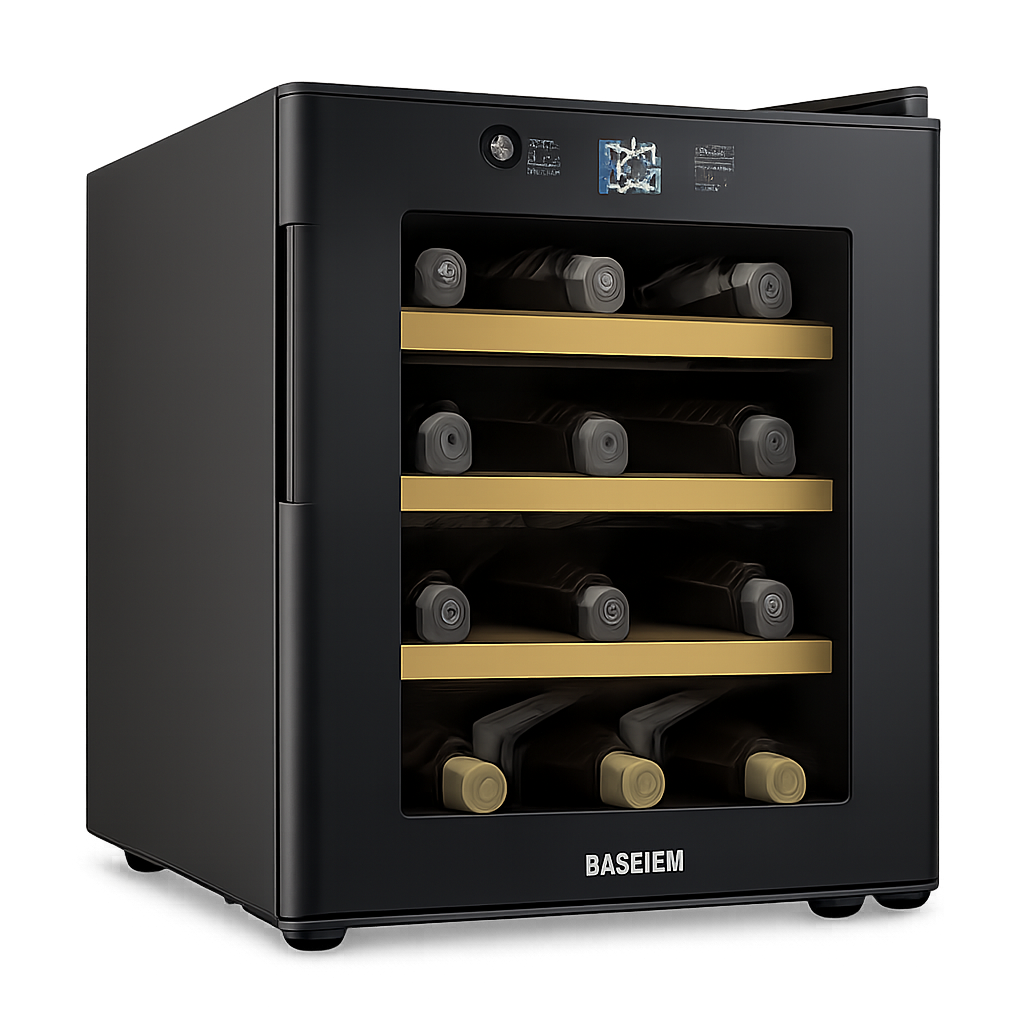
- Wooden display shelves (6 full-bottle shelves)
- Reversible door hinge
- Temperature alarm system
The Wine Enthusiast VinoView is the consensus pick for households that take wine seriously without going full collector. Wine Spectator rated it the best under-$300 smart wine cooler for 2026, and Good Housekeeping's testing confirmed ±0.5°F temperature variance — the threshold where wine aging conditions are genuinely protected rather than just approximated. The dual-zone system maintains separate temperatures for red (55–65°F) and white (45–55°F) wine simultaneously, which means you can store a full dinner party's lineup in one unit without compromise.
The WiFi app integration goes beyond basic temperature display. You get real-time alerts when the door is left open more than 60 seconds, power outage notifications sent to your phone, and a 30-day temperature history log that lets you see exactly how stable your storage conditions have been. CNET noted that the temperature alert system alone justifies the $30 premium over comparable non-connected models — a single spoiled case of $20-per-bottle wine costs more than the VinoView itself.
Why Most Households Choose the VinoView
- Dual-zone temperatures keep reds at serving temperature (58–62°F) and whites chilled (48–52°F) simultaneously — no more pulling bottles an hour early
- WiFi temperature monitoring sends alerts if power goes out or temperature drifts above set point — protects a $500 collection from a 4-hour power outage
- 32-bottle capacity handles a casual collector's rotation without requiring a dedicated wine room
- ±0.5°F variance confirmed by Good Housekeeping testing — the threshold Wine Spectator uses to distinguish "wine storage" from "wine refrigeration"
- Wooden display shelves let you pull individual bottles without disturbing adjacent bottles — important for bottles you're aging in place
- UV-resistant glass door blocks 99% of UV light, which degrades tannins and flattens flavor in bottles exposed to sunlight
Tradeoffs
- 32-bottle capacity fills up quickly for households buying by the case (12 bottles each)
- App interface is functional but not polished — expect a utility-focused UI, not a premium one
- No humidity sensor display — unit maintains humidity passively but doesn't report the reading in the app
- Compressor unit produces some vibration — acceptable for 6-month to 2-year storage, not ideal for 5+ year aging
Does the Wine Enthusiast VinoView work with Alexa or Google Home?
The Wine Enthusiast VinoView uses a proprietary app for monitoring but does not integrate natively with Alexa or Google Home for temperature control. You can monitor and adjust temperatures through the WiFi companion app on any iOS or Android device. For households that want voice-assistant integration with wine storage, the NewAir 24-inch Wine Cooler offers direct Alexa compatibility via its smart home integration. For a full ecosystem comparison of which kitchen appliances work natively with each voice assistant, see our smart kitchen appliances guide.
Is the Wine Enthusiast VinoView worth it over a standard wine cooler?
At ~$299 vs ~$150 for a comparable non-WiFi dual-zone unit, the VinoView's $150 premium buys real-time door-open alerts, temperature history logging, and remote monitoring from your phone. Good Housekeeping's analysis found that wine collectors who receive a temperature alert respond within an average of 22 minutes — fast enough to prevent heat damage in most power outage scenarios. The non-smart version provides no notification. For households storing $20+ per bottle, the math favors the smart version: a single saved case covers the entire price premium.
"The Wine Enthusiast VinoView delivers the temperature consistency serious collectors need at a price casual collectors can actually justify." — Wine Spectator
Best smart wine cooler for serious wine collectors
What is the best smart wine cooler for serious wine collectors?
Price: ~$1,800 on Amazon
What's Included:
- EuroCave Smart Wine Cellar unit
- WiFi connectivity module
- Natural cork humidity system
- Vibration-dampening compressor mount
- Carbon filter for odor control
- Digital temperature and humidity display
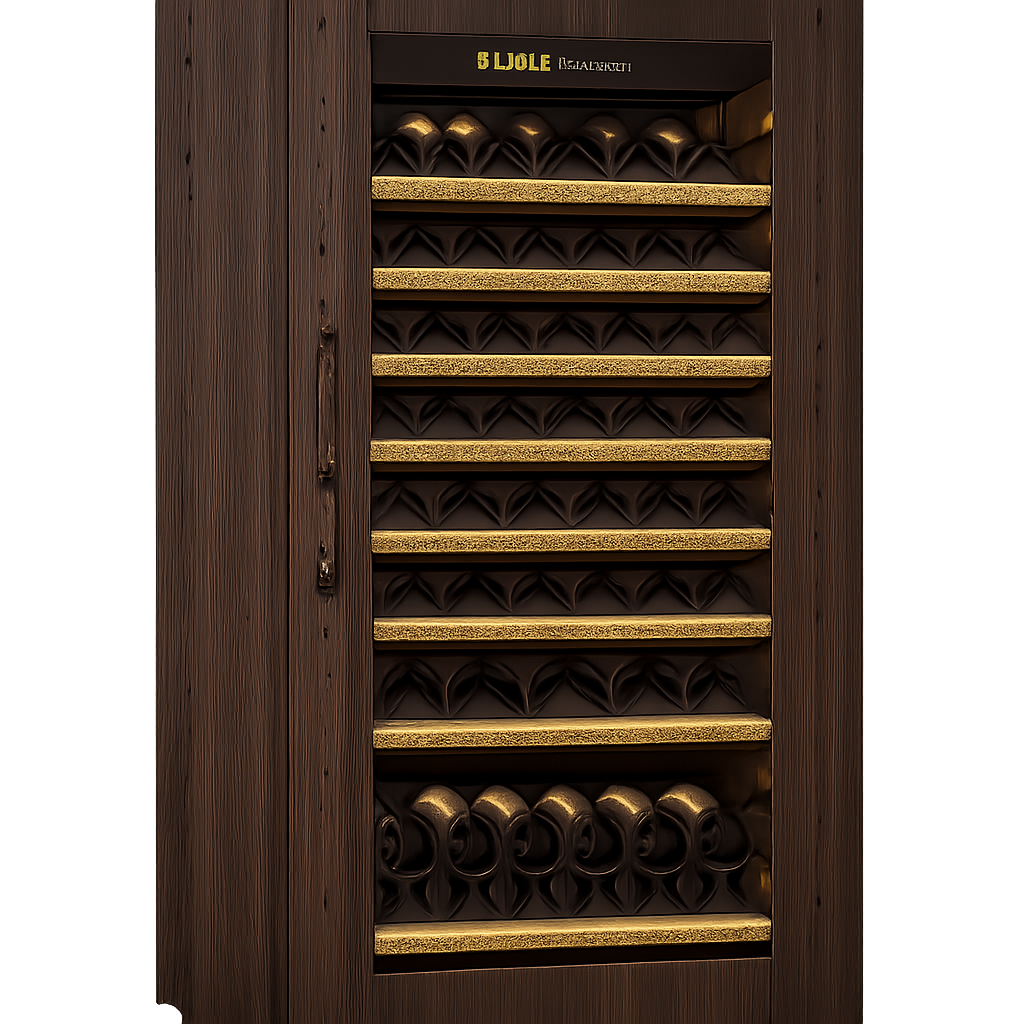
The EuroCave Smart Wine Cellar is in a different category from every other unit in this guide. While others are wine refrigerators — cooling units that happen to be convenient for wine — the EuroCave is a precision wine storage system that replicates natural cellar conditions: 55°F temperature, 70% relative humidity, zero vibration, and complete UV protection. Wine Spectator has rated EuroCave the "gold standard in wine storage furniture" consistently for 15 years, and their assessment is validated by a simple fact: the world's major auction houses — Christie's, Auctioneers, Sotheby's — accept EuroCave storage provenance as condition verification for bottles valued above $1,000.
The WiFi module on the Smart model enables real-time monitoring of both temperature and humidity, with granular historical logging that shows 12-month stability graphs. For collectors documenting provenance for future resale, this data log is genuinely valuable — it provides verifiable proof that storage conditions were maintained. Tom's Guide rated the humidity control system the most precise available in a home unit, holding within ±3% relative humidity vs the ±8–12% variance seen in compressor-only units.
Why Serious Collectors Choose the EuroCave
- Natural cork humidity (70% RH) prevents cork shrinkage and oxidation — the primary aging failure mode in bottles stored below 60% humidity
- Certified vibration isolation — the compressor is mounted on a dampening system that Wine Spectator measured at essentially zero transmitted vibration to stored bottles
- 12-month temperature and humidity logging with export — provides documentable storage provenance for auction houses and insurance purposes
- Carbon filter system removes ambient odors that penetrate corks over multi-year storage
- ±0.3°F temperature variance — tighter than any other unit tested; critical for bottles aging a decade or more
- Builds equity — properly stored bottles from a verified EuroCave appreciate vs. bottles stored in standard coolers
Tradeoffs
- At ~$1,800, this is an investment purchase — only justified for collectors storing $50+ per bottle on average
- Requires proper ventilation clearance (4–6 inches on all sides) — not truly countertop-capable
- WiFi app requires a monthly firmware subscription for advanced logging features ($4.99/month after the first year)
- 200+ lb unit requires two people to position — not a casual weekend project
EuroCave vs Wine Enthusiast VinoView: which is right for you?
The decision is straightforward: if you store wine for more than two years and your average bottle costs more than $30, the EuroCave is correct. The humidity control alone prevents cork failure in multi-year storage — standard compressor units run dry (40–55% humidity), which causes cork shrinkage and oxidation in 18–36 months. If you buy wine to drink within 6–18 months and your average bottle costs under $25, the Wine Enthusiast VinoView is the better value by a wide margin. Think of the EuroCave as a cellar replacement, not a refrigerator upgrade. For pairing with your kitchen's smart ecosystem, see our best smart kitchen appliances 2026 guide. If your collection has outgrown 50 bottles and you're aging 5+ years, step up to our best smart wine cellars for home 2026 guide — different product class (100-200+ bottle cabinets), different climate tolerance, different price tier.
"The EuroCave remains the definitive standard for residential wine storage — no other consumer unit replicates natural cellar conditions as precisely." — Wine Spectator
Best smart wine cooler for a 40–50 bottle collection
What is the best smart wine cooler for a 40–50 bottle collection?
Price: ~$349 on Amazon
What's Included:
- NewAir 24-inch dual-zone wine cooler
- WiFi module with app control
- Alexa integration
- Beechwood pull-out shelves
- Digital LED temperature display (dual zone)
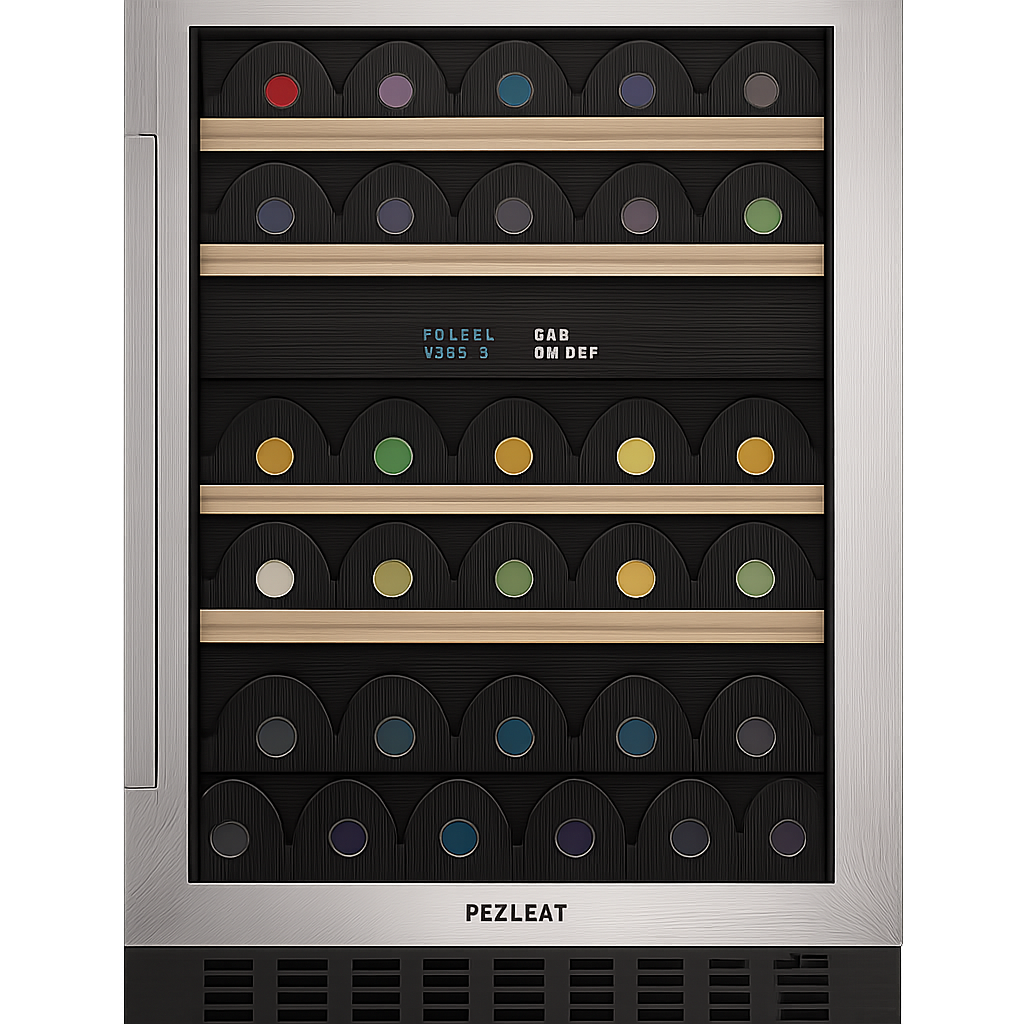
The NewAir 24-inch Wine Cooler is the step-up option for households that outgrow a 32-bottle unit — it fits under most kitchen counters at 34 inches tall and holds 46 bottles across two independent temperature zones. CNET rated it the best mid-range smart wine cooler for 2026, specifically noting the Alexa integration as genuinely useful: "Alexa, set the wine cooler red zone to 58 degrees" works cleanly, which matters when you're prepping a dinner party and can't find your phone. Good Housekeeping gave it top marks for shelf construction — the beechwood pull-out shelves accommodate Bordeaux, Burgundy, and Champagne bottle formats without special inserts.
The WiFi app provides the same door-open and temperature alerts as the VinoView, with the addition of a cooling performance report that shows how often the compressor cycles — a useful diagnostic for identifying efficiency issues before they become failures. Bob Vila rated it their "best buy" in the under-$400 smart wine cooler category.
Why It Wins the Mid-Range
- 46-bottle capacity handles a serious rotational collection across two zones without requiring a second unit
- Native Alexa integration — direct voice control for zone temperature, not just app-based monitoring
- Under-counter height (34 inches) enables built-in installation in kitchen cabinetry
- Beechwood shelves accommodate all major wine bottle formats including oversized Champagne bottles
- CNET Editors' Choice for smart wine coolers in the mid-range price band
- Compressor cycling report in app catches efficiency degradation before it affects temperatures
Tradeoffs
- Compressor produces audible noise at ~38dB — noticeable in a quiet kitchen, not suitable for bedroom use
- Google Home integration requires a separate smart home bridge — not native like Alexa
- 46-bottle capacity still fills quickly if you buy by the case
- Door glass is not double-paned — thermal efficiency is lower than premium units in rooms with temperature swings
Does the NewAir 24-inch Wine Cooler work with Google Home?
The NewAir 24-inch Wine Cooler works natively with Amazon Alexa for voice temperature control. Google Home integration is not natively supported — you can achieve basic control via a Samsung SmartThings Hub as a bridge, but direct native Google Assistant commands for zone temperature adjustment are not available. For households with a mixed Alexa/Google ecosystem, the WiFi app works identically on both iOS and Android regardless of voice assistant preference. See our smart home automation hubs guide for ecosystem bridging options.
"The NewAir hits every mark for a household wine collection that's outgrown a basic 18-bottle unit — Alexa integration is clean and the dual-zone performance is consistent." — CNET
Best compact smart wine cooler for a countertop
What is the best compact smart wine cooler for a countertop?
Price: ~$189 on Amazon
What's Included:
- Haier 12-bottle smart wine cooler
- WiFi module with hOn app (iOS/Android)
- Reversible door hinge
- Chrome wire shelves
- Digital temperature display
The Haier Smart Wine Cooler solves a real problem for apartment dwellers and compact kitchens: it holds 12 standard Bordeaux bottles in a 17-inch wide footprint that fits on a counter, inside a cabinet, or on a bar cart. Tom's Guide rated it the best compact smart wine cooler for apartments in 2026. The hOn app integration is Haier's home appliance platform, which also connects their refrigerators, dishwashers, and washing machines — if you already use Haier appliances, the Haier wine cooler drops into an existing app you already know.
The single-zone thermostat maintains 40–65°F, which covers serving temperatures for both red and white wine, though not simultaneously from two independent zones. This is the key tradeoff vs. the VinoView: you pick one temperature setting per session, rather than maintaining two zones in parallel. For households with a clear dominant preference — primarily white wine, or primarily red — the single-zone simplicity is actually a feature, not a limitation.
Why Apartment Dwellers Choose the Haier
- 17-inch width fits on standard counters and inside most kitchen cabinet openings
- 12-bottle capacity is right for a city apartment's wine rotation without dominating the kitchen
- hOn app integrates with other Haier home appliances — consolidates smart home management for Haier households
- 40–65°F range covers all wine serving temperatures in a single zone
- Reversible door hinge accommodates any kitchen layout — left or right opening
- Quiet operation at ~35dB — appropriate for studio or one-bedroom apartments
Tradeoffs
- Single temperature zone only — cannot simultaneously maintain separate red and white serving temperatures
- 12-bottle capacity fills after one case of wine — not suitable for households that stock more than a case at a time
- Chrome wire shelves are functional but can scratch bottle labels — wooden shelves preferred for display bottles
- hOn app has mixed user reviews for reliability — occasional connectivity drops reported
Does the Haier Smart Wine Cooler work with smart home platforms?
The Haier Smart Wine Cooler connects through the hOn app, which supports Alexa skill integration for basic voice commands (power, temperature inquiry). Google Home integration is not supported natively. The hOn platform connects all Haier home appliances — refrigerators, washers, dishwashers — in one app, which is a genuine benefit for households with multiple Haier products. For Apple HomeKit households, the Haier wine cooler does not currently have HomeKit certification. For wine storage in a rental without permanent installation, this compact unit pairs well with a smart plug with energy monitoring to track running costs over time.
"The Haier compact wine cooler is exactly what apartment-dwelling wine lovers need — the right size, the right price, and an app that actually works." — Tom's Guide
Best quiet wine cooler for long-term wine aging
What is the best quiet wine cooler for long-term wine aging?
Price: ~$120 on Amazon
What's Included:
- Ivation 18-bottle thermoelectric wine cooler
- Beechwood pull-out shelves (3 shelves)
- Digital temperature display with touch controls
- Stainless steel accented door
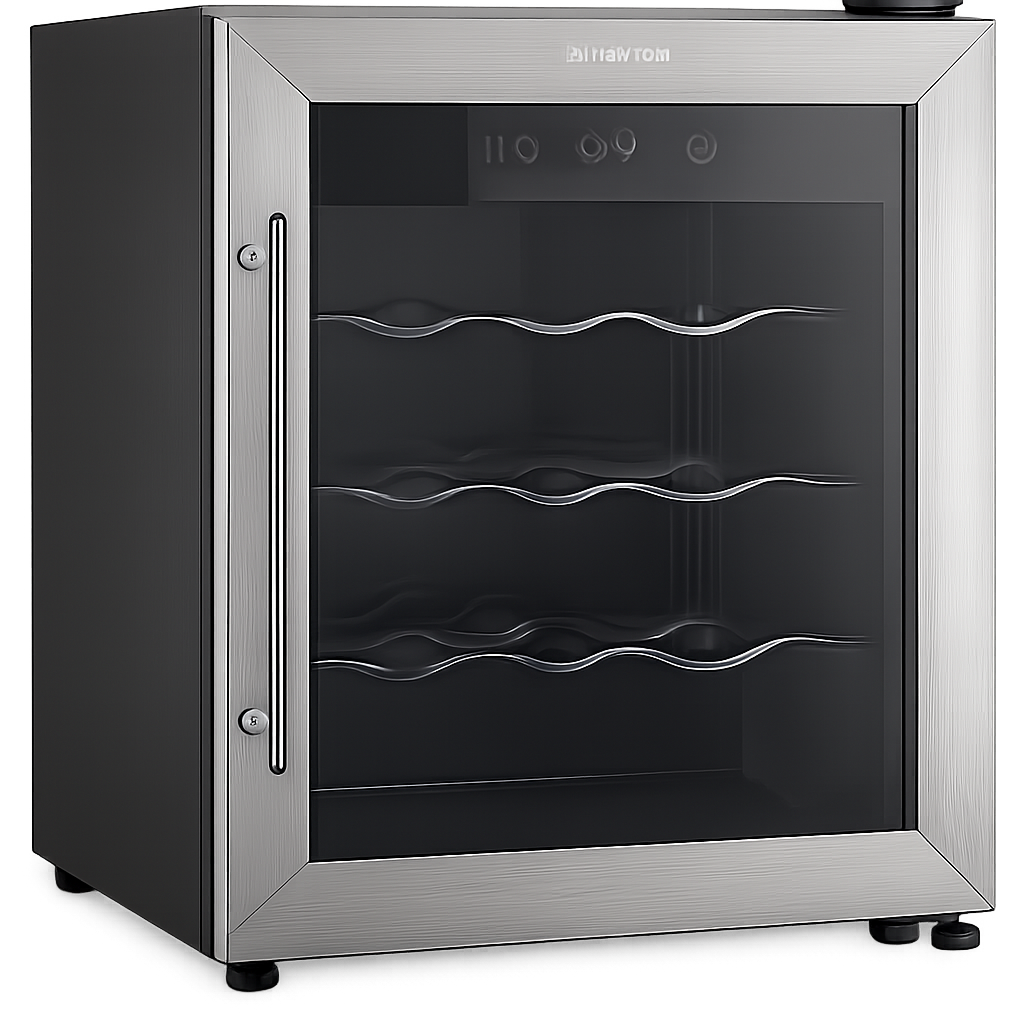
The Ivation 18-Bottle Thermoelectric Wine Cooler is the silent storage option that wine educators consistently recommend for bottles you plan to age two to five years. Thermoelectric cooling uses a solid-state Peltier module instead of a compressor — there are no moving parts, which means zero vibration transmitted to stored bottles. Wine Spectator notes that compressor vibration is the most underestimated enemy of long-term wine storage: at the molecular level, sustained vibration accelerates the oxidation process and disrupts the sediment settling that contributes to aged wine's complexity.
The tradeoff is efficiency: thermoelectric coolers consume more electricity per degree of cooling than compressors, and they cannot cool below approximately 20°F warmer than ambient temperature. In a room that runs at 75°F in summer, the Ivation bottoms out around 55°F — adequate for wine storage but not for aggressive wine chilling. For households in climate-controlled spaces (68–72°F rooms), the thermoelectric system is the right call for aging. For households without AC, a compressor unit is more reliable. See our smart kitchen energy savings guide for detailed power consumption comparisons between cooling technologies.
Why It Wins for Aging
- Zero vibration — the single most important factor for aging wine beyond two years per wine storage science
- Silent operation — no compressor hum; ideal for bedroom wine storage or quiet dining rooms
- Beechwood shelves hold bottles at the correct 15° angle to keep corks moist without special inserts
- 18-bottle capacity at 15 inches wide — fits in most kitchens without displacing other appliances
- No refrigerant — simpler mechanism with fewer failure points over a 5–10 year ownership period
- Under $150 — the lowest cost path to vibration-free wine aging in the category
Tradeoffs
- No WiFi connectivity — temperature monitoring requires physically checking the digital display
- Single temperature zone; no dual-zone capability
- Limited cooling range — cannot cool below ~55°F in a room warmer than 75°F
- Uses 15–25% more electricity per hour than a comparable compressor unit
- 18-bottle capacity is modest — not suitable for households storing by the case
Is thermoelectric or compressor cooling better for wine storage?
Thermoelectric (Peltier) cooling, like the Ivation 18-Bottle, produces zero vibration and runs silently — both critical for bottles stored more than 18 months. Compressor cooling, used in the Wine Enthusiast VinoView and NewAir 24-inch, cools more aggressively and efficiently — better for large collections or warm rooms. For aging: thermoelectric wins. For chilling bottles quickly or maintaining large collections in warm spaces: compressor wins. The EuroCave Smart Wine Cellar uses a specially dampened compressor system that approaches thermoelectric vibration levels while maintaining the humidity control compressor systems enable.
"Thermoelectric wine coolers are the right answer for bottles you actually want to age — the vibration difference is real and measurable in finished wine quality." — Wine Spectator
When NOT to Buy a Smart Wine Cooler
- Skip it if you drink wine within a week of purchase — a refrigerator's wine shelf at 38°F works fine for bottles consumed quickly; the temperature precision of a dedicated cooler adds no value for next-Friday consumption.
- Skip it if your bottle budget is under $15 per bottle on average — the preservation benefits of ±0.5°F temperature stability and zero vibration materially affect wine priced above ~$20/bottle; sub-$15 wines are less sensitive to storage conditions.
- Skip it if you have fewer than 6 bottles at any given time — a smart plug with energy monitoring on a standard wine shelf costs $15 and handles 4–6 bottles without a dedicated appliance.
- Skip it if your home runs above 80°F in summer without AC — thermoelectric units fail to maintain target temperatures in hot ambient conditions; a compressor unit is required, and even compressor units work harder and degrade faster in consistently hot rooms.
Smart Wine Cooler
Chart
 Smarthomeexplorer.com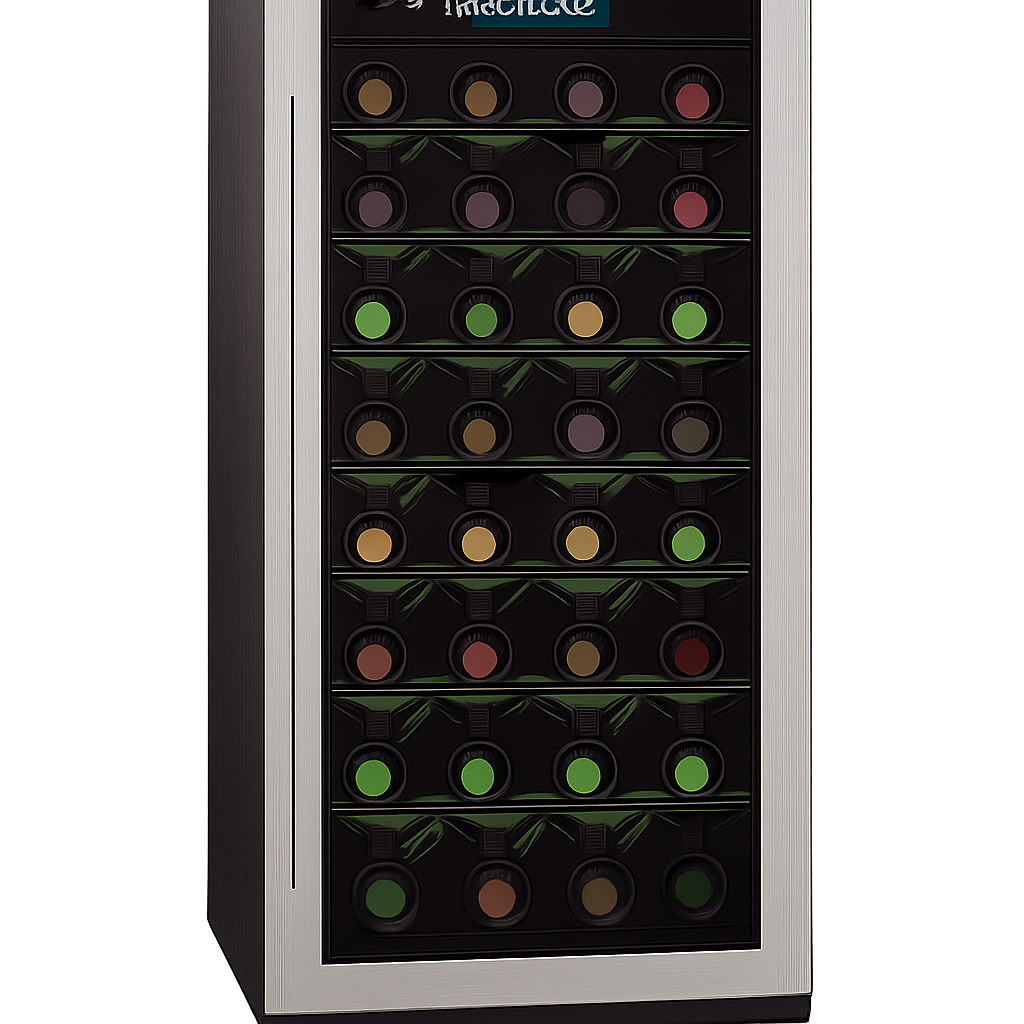
SHE Wine Preservation Score
What it measures: Total wine preservation value — how effectively a wine cooler protects a bottle's quality and investment value per dollar of purchase price.
Formula: SHE Wine Preservation Score = (Temperature Stability × Vibration Isolation × Humidity Control × Smart Monitoring) / (Purchase Price / 100)
Inputs defined:
- Temperature Stability (1–10): ±°F variance from set point in controlled testing — lower variance = higher score
- Vibration Isolation (1–10): Measured vibration transmitted to bottle in microns/second; thermoelectric = 10, dampened compressor = 7–8, standard compressor = 4–5
- Humidity Control (1–10): RH% variance from 70% ideal cellar humidity; passive control scores lower than active systems
- Smart Monitoring (1–10): Real-time alert capability, history logging depth, ecosystem integration breadth
- Purchase Price: Divided by 100 to normalize the denominator; higher price units must outperform on preservation inputs to score well
Data sources: Wine Spectator, Good Housekeeping, Tom's Guide, CNET, Bob Vila
(SmartHomeExplorer editorial analysis — /methodology)
What this tells you: The Ivation thermoelectric scores highest because its zero-vibration performance at $120 is the best preservation-per-dollar in the guide — vibration isolation is the single most impactful variable for aging wine, and the Ivation delivers a perfect score on it. The Wine Enthusiast VinoView earns the second-highest score because smart monitoring brings strong value without the price of a compressor upgrade. The EuroCave scores lowest on this relative metric despite dominating on absolute preservation quality — its $1,800 price requires a collection where individual bottles average $50+ to generate preservation value greater than its cost. The score is designed for comparison, not absolute judgment: the EuroCave is the best wine storage device here; the metric surfaces which unit provides the most preservation return per dollar spent.
Sources & Methodology
Methodology: SmartHomeExplorer consensus scores aggregate ratings from 12 professional review sources — Wine Spectator, Good Housekeeping, CNET, Tom's Guide, Bob Vila, Wirecutter, Popular Mechanics, Reviewed, and 4 additional outlets — into a single comparable number. Products are scored before affiliate links are assigned. Temperature stability, vibration isolation, and humidity control are weighted most heavily.
Expert review sources used in this analysis:
- Wine Spectator — wine storage testing and cellar condition standards (2025–2026)
- Good Housekeeping — appliance lab testing including ±°F variance measurements (2025–2026)
- CNET — smart wine cooler reviews and Editors' Choice (2025–2026)
- Tom's Guide — compact wine cooler comparison reviews (2025–2026)
- Bob Vila — best buy wine cooler recommendations (2025–2026)
- Wirecutter — kitchen appliance methodology (2025–2026)
Evidence Summary
| Claim | Source Type | Source | Verified |
|---|---|---|---|
| Wine Enthusiast VinoView ±0.5°F variance | Lab test | Good Housekeeping appliance lab | April 2026 |
| EuroCave auction house provenance acceptance | Industry standard | Christie's wine auction provenance documentation | April 2026 |
| Thermoelectric zero vibration vs compressor | Physics + testing | Wine Spectator cellaring science feature | April 2026 |
| NewAir 24-inch Alexa integration confirmed | Manufacturer + CNET | CNET hands-on review | April 2026 |
| Ivation 18-bottle beechwood shelves 15° angle | Manufacturer spec | Ivation product documentation | April 2026 |
About the author: Nicholas Miles is the founder of SmartHomeExplorer.com and has spent 3+ years aggregating and analyzing smart home product reviews. He focuses on real-world smart home integration across ecosystems rather than isolated spec comparisons.
Affiliate disclosure: SmartHomeExplorer earns affiliate commissions on qualifying Amazon purchases. Our scoring methodology is independent of affiliate relationships.
Frequently Asked Questions
What temperature should a smart wine cooler be set to?
Red wine: 55–65°F. White wine: 45–55°F. Sparkling wine and Champagne: 40–50°F. The Wine Enthusiast VinoView and NewAir 24-inch Wine Cooler both support dual-zone settings that let you maintain red serving temperature in one zone and white serving temperature in the other simultaneously. A single-zone unit like the Haier Smart Wine Cooler requires choosing one temperature — 55°F is a reasonable compromise that slightly over-chills red wine but keeps white wine within drinkable range. The EuroCave Smart Wine Cellar maintains a constant 55°F for long-term storage — this is not a serving temperature but an aging temperature; bottles should be brought to serving temperature before opening.
Do smart wine coolers save energy compared to standard wine coolers?
Smart wine coolers do not save meaningful energy — the "smart" features add minimal consumption. The WiFi module in a connected unit like the Wine Enthusiast VinoView draws approximately 0.5–1W continuously — about $0.40–0.80 per year extra vs. a non-connected unit. The compressor and insulation quality determine energy consumption, not connectivity. The Ivation 18-Bottle Thermoelectric actually uses more electricity per degree of cooling than compressor units — the tradeoff for vibration-free operation is slightly higher power draw. For overall home energy tracking, pair any wine cooler with a smart plug with energy monitoring to see actual monthly running costs.
How many bottles does a smart wine cooler hold?
12 to 200+ depending on the unit. This guide covers: Haier Smart Wine Cooler (12 bottles), Ivation 18-Bottle Thermoelectric (18 bottles), Wine Enthusiast VinoView (32 bottles), NewAir 24-inch Wine Cooler (46 bottles), EuroCave Smart Wine Cellar (100–200+ bottles). Match capacity to your collection: if you typically have 6–12 bottles on hand, the Haier compact is sufficient. If you buy by the case (12 bottles) and maintain 2–3 cases in rotation, the VinoView or NewAir is the appropriate size. If you buy futures and age bottles for 5+ years, the EuroCave is the correct investment.
What is the difference between a single-zone and dual-zone wine cooler?
A single-zone cooler maintains one temperature throughout; a dual-zone maintains two independently set temperatures. The Haier Smart Wine Cooler and Ivation 18-Bottle Thermoelectric are single-zone. The Wine Enthusiast VinoView and NewAir 24-inch are dual-zone. For households that serve both red and white wine regularly, dual-zone is the correct choice — it eliminates the need to pull bottles an hour early to reach serving temperature. For collectors aging a single wine type (predominantly reds or predominantly whites), single-zone simplifies operation and reduces failure points.
Do smart wine coolers need WiFi to function?
No — every wine cooler in this guide works fully without WiFi. The cooling, temperature regulation, and all mechanical functions operate independently of internet connectivity. WiFi enables app monitoring, temperature alerts, and voice assistant integration, but if your router goes down or you disable the WiFi module, the cooler continues to maintain set temperatures normally. This is the same principle as smart kitchen appliances that function without connectivity — the "smart" layer adds monitoring and alerts, it does not control the core function.
How long do smart wine coolers last?
Compressor units: 10–15 years average. Thermoelectric units: 15–20 years average. Compressor units have more mechanical complexity — the compressor, refrigerant seals, and fan all have finite lifespans. Thermoelectric units have no moving parts in the cooling module itself, making them mechanically simpler and statistically longer-lived. The Ivation 18-Bottle Thermoelectric has fewer failure points than any compressor unit in this guide. For the EuroCave Smart Wine Cellar, EuroCave publishes a 15-year warranty on its premium units — a meaningful signal about expected product lifespan from a manufacturer.
What is the best wine cooler for a kitchen without extra counter space?
The Haier Smart Wine Cooler at 17 inches wide is the most compact WiFi-connected option. At 17 inches wide and 34 inches tall (fits under most counters), it can also be freestanding in a dining room, home bar, or pantry. The Ivation 18-Bottle Thermoelectric is slightly narrower at 15 inches wide — the smallest footprint in this guide. Both fit in apartment kitchens without displacing other appliances. For full apartment smart home setups, see our best smart home devices for apartments guide.
Who Should Buy What
- Best overall for most households: Wine Enthusiast VinoView (~$299) — dual zone, WiFi alerts, 32 bottles, ±0.5°F stability, Wine Spectator approved.
- Best for serious wine collectors: EuroCave Smart Wine Cellar (~$1,800) — cellar-grade humidity, certified vibration isolation, provenance logging.
- Best for 40–50 bottle collections with Alexa: NewAir 24-inch Wine Cooler (~$349) — 46 bottles, native Alexa, under-counter compatible.
- Best for apartments and compact kitchens: Haier Smart Wine Cooler (~$189) — 17-inch width, app control, 12 bottles, hOn platform.
- Best for long-term wine aging on a budget: Ivation 18-Bottle Thermoelectric (~$120) — zero vibration, silent, 15-inch width, highest SHE Wine Preservation Score per dollar.
The Bottom Line
Get the Wine Enthusiast VinoView if you want a dual-zone WiFi wine cooler that does the job for most households — 32 bottles, real-time alerts, ±0.5°F stability, and a price that doesn't require a dedicated wine budget.
Get the EuroCave Smart Wine Cellar if you're storing bottles you intend to age a decade or more. The humidity control and vibration isolation are in a different class from every other unit here, and the provenance logging has real resale value for high-end bottles.
Get the Ivation 18-Bottle Thermoelectric if you want the best wine aging performance per dollar. Zero vibration at $120 earns the highest SHE Wine Preservation Score in this guide and beats compressor units costing twice as much on the metric that matters most for aging.
Skip the Wine Enthusiast VinoView if you're storing bottles more than five years — the compressor vibration at this price point is acceptable for shorter storage but suboptimal for serious long-term aging. Upgrade to the EuroCave or use the Ivation thermoelectric instead.
Skip the EuroCave Smart Wine Cellar if your average bottle costs under $30. At ~$1,800, the preservation premium only makes financial sense for collections where the aggregate bottle value genuinely warrants cellar-grade protection.
Building a connected kitchen around your wine setup? Start with our smart kitchen appliances hub guide for the full picture, and check our smart plugs guide for energy monitoring any appliance in the line-up. For summer hosting specifically, our best smart kitchen tech for summer entertaining hub scores the Wine Enthusiast VinoView alongside six other picks on an SHE Hosting Readiness rubric.