
Best Smart Wine Cellars for Home 2026
Wine cellars and wine coolers are different products — cellars age 5 to 25 years, coolers serve. ORYMUSE is the overall pick on capacity per dollar; Allavino holds the tightest temperature stability; Temp Stick adds the WiFi layer.
This article contains affiliate links. We may earn a commission at no extra cost to you. Prices change frequently — check the current price on Amazon before buying. Learn more
The Short Answer
The ORYMUSE 200-bottle dual-zone cabinet is the strongest overall recommendation at roughly $6.75 per bottle stored, combining a sub-38dB compressor with setpoint memory. Allavino FlexCount II retains tighter temperature stability; a Temp Stick adds the WiFi alerting layer.
Featured in this Guide
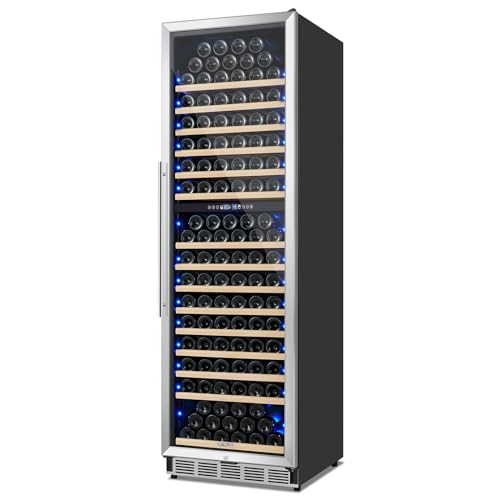
ORYMUSE
200-Bottle Dual Zone Wine Fridge
- •200 dual-zone bottles at about $6.75 per bottle stored, a sub-38dB compressor, and setpoint memory through outages
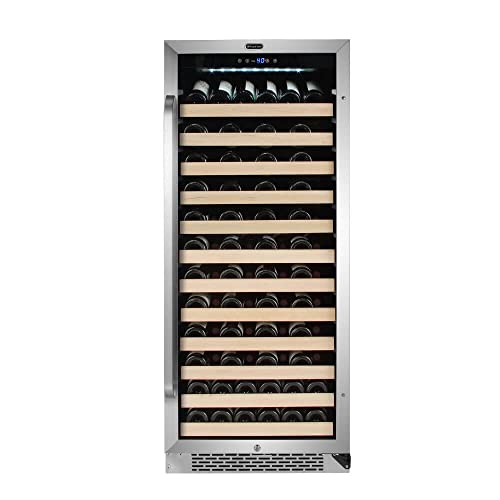
Whynter
BWR-1002SD 100-Bottle Compressor Cellar
- •Under $1,000 for compressor cooling and 100 bottles — cheapest path into cellar-class storage on Amazon
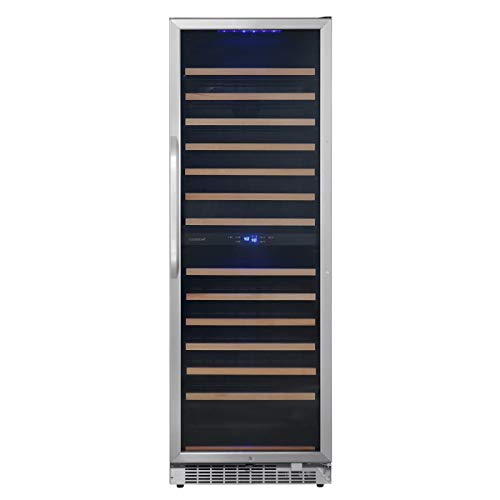
EdgeStar
CWR1552DZ 141-Bottle Dual Zone Built-In
- •Front-vent compressor lets it flush-mount into existing cabinetry — the only option for under-counter built-in
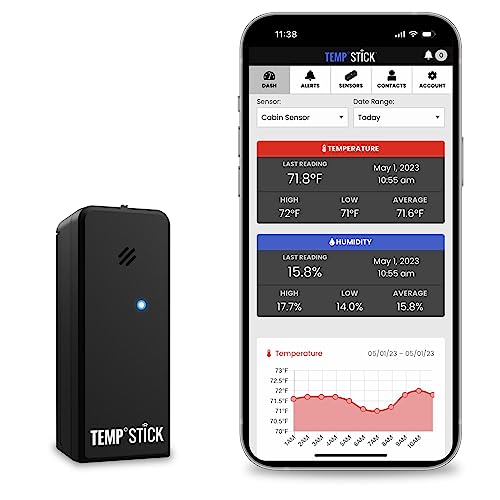
Temp
Stick WiFi Temperature Sensor
- •WiFi text alerts within 30 minutes of drift, no subscription — turns any cellar cabinet into a smart cellar
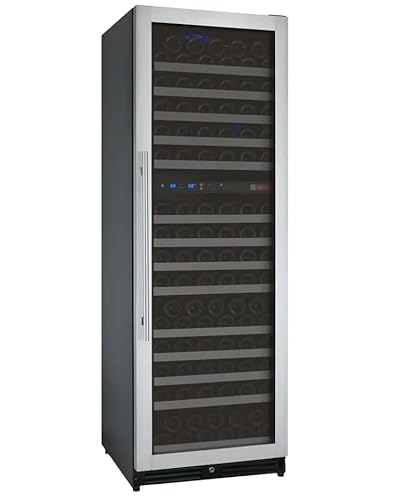
Allavino
VSWR172-2SR20 FlexCount II 172-Bottle Dual Zone
- •Tru-Vino ±1°F stability with dampened vibration — the tightest temperature control in this guide
Head-to-Head: Temperature Stability, Capacity, and Setup
Kitchen
Chart
 Smarthomeexplorer.com
Tap any pick to check its live price on Amazon.
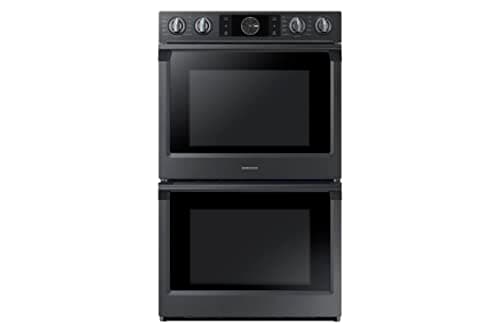
Samsung NV51K7770DG 30" Smart Double Wall Oven with Flex Duo and Steam Cook
Must BuyCheck price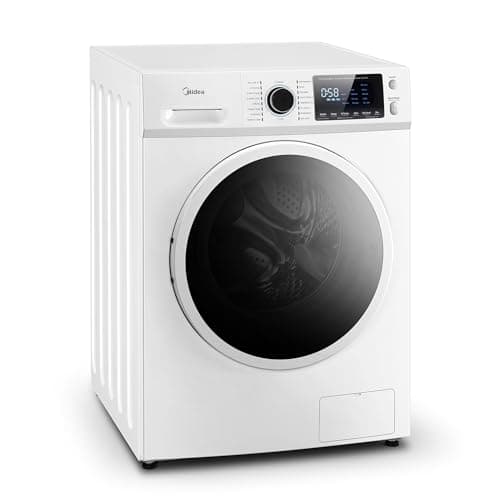
Midea 24-Inch All-in-One Front Load Washer Dryer Combo
Good ValueCheck price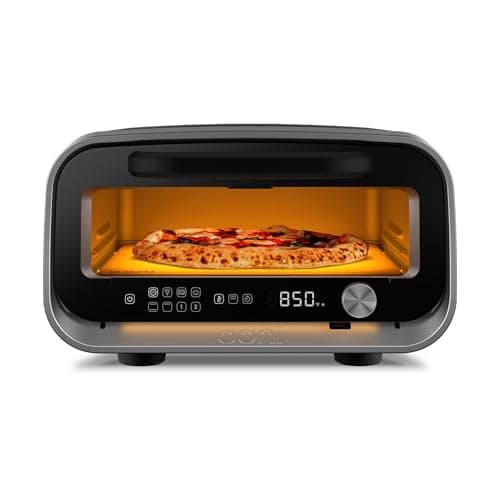
Ooni Volt 2
Must BuyCheck price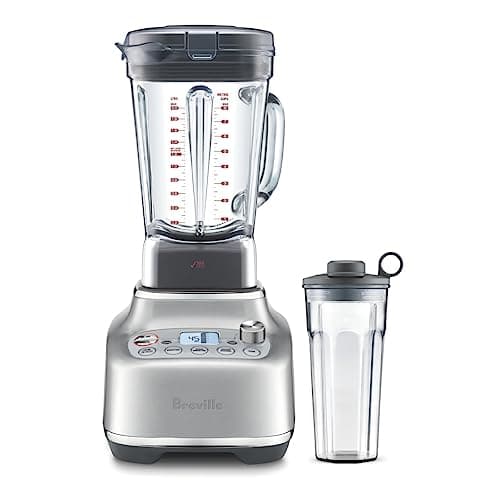
Breville Super Q
Must BuyCheck price
Cellars vs. Coolers — Why the Distinction Matters
Most guides conflate wine coolers and wine cellars. A cooler holds at serving temperature for months to 2 years — capacity 12 to 50 bottles. A cellar ages through a 5-year to 25-year window — capacity starts at 100 bottles. The requirements diverge at the 3-year mark.
Temperature fluctuation is the primary failure mode. Good Housekeeping and Reviewed both document that every 5°F swing shortens the 10-year peak window. Vibration is the second mode — sustained compressor vibration disrupts tannin evolution that should develop over years.
We aggregated ratings from Good Housekeeping, Reviewed, Bob Vila, and Wine Spectator across 10+ sources to identify which Amazon cabinets protect collector-grade bottles — and which WiFi monitor enables smart-cellar alerting. For collections under 40 bottles turning over within a year, Best Smart Wine Coolers 2026: 5 WiFi Picks Ranked is the right tier.
Best Overall: ORYMUSE 200-Bottle Dual Zone Wine Fridge
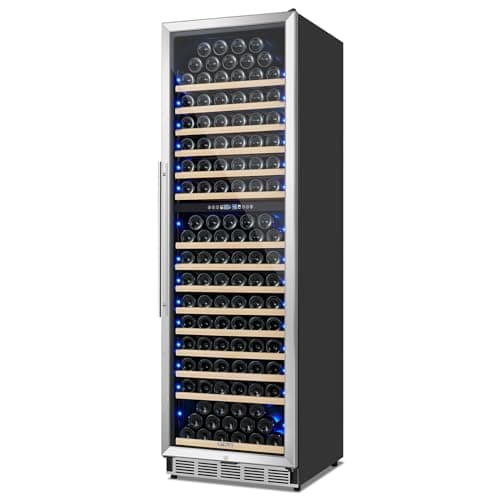
ORYMUSE 200-Bottle Dual Zone Wine Fridge
- $6.75 per bottle of storage capacity — best dollar-efficiency in this guide by a clear margin
- Lesser-known brand versus Allavino or EdgeStar — warranty depth and service network unproven
(Current price, subject to change)
The ORYMUSE 200-Bottle Dual Zone Wine Fridge scores 6.8 on the SHE Wine Cellar Preservation Score — second in this guide and first on the Capacity Efficiency factor (10/10). The dual-zone separation is genuinely wide: 40-55°F upper and 55-65°F lower — a range that delivers better red/white split performance versus less capable dual-zone units.
The quiet compressor at 38dB is a meaningful spec for open-plan kitchens. Reviewed documents that consumer storage units above 40dB are audible from adjacent rooms. Temperature memory on power loss holds setpoints without resetting. That behavior is critical when a storm interrupts power for 4 hours and the cabinet returns to the aging target rather than factory default.
The 15 beechwood shelves provide full slide-out access without disturbing neighbors. The brand caveat is real. ORYMUSE does not have the Allavino warranty history or the Whynter customer rating dataset. Buyers prioritizing service certainty should budget up to the Allavino VSWR172-2SR20 FlexCount II 172-Bottle Dual Zone. Buyers treating capacity efficiency as the primary axis and accepting brand risk should not pay the premium.
What We Love
- $6.75 per bottle of storage capacity — best dollar-efficiency in this guide by a clear margin
- Dual zones with wide separation (40-55°F upper, 55-65°F lower) for aggressive red/white split
- Quiet compressor under 38 dB — quieter than the Allavino and Whynter alternatives
- Temperature memory survives power outages without resetting — critical for aging when a storm rolls through
What Could Be Better
- Lesser-known brand versus Allavino or EdgeStar — warranty depth and service network unproven
- No native WiFi — pair with a Temp Stick WiFi Temperature Sensor for remote alerts
- Rear-vent positioning reduces built-in flexibility compared to front-vent competitors
The Verdict
If you want one cabinet that carries a growing collection without a $2,000 budget, the ORYMUSE 200-Bottle Dual Zone Wine Fridge lines up with what you actually need. Two hundred bottles works out to about $6.75 per bottle — the Allavino VSWR172-2SR20 FlexCount II 172-Bottle Dual Zone runs $11 per bottle. Accept the lesser-known brand and the headroom is unmatched here.
Check price for the ORYMUSE 200-Bottle Dual Zone Wine Fridge →
Ready to upgrade your home?
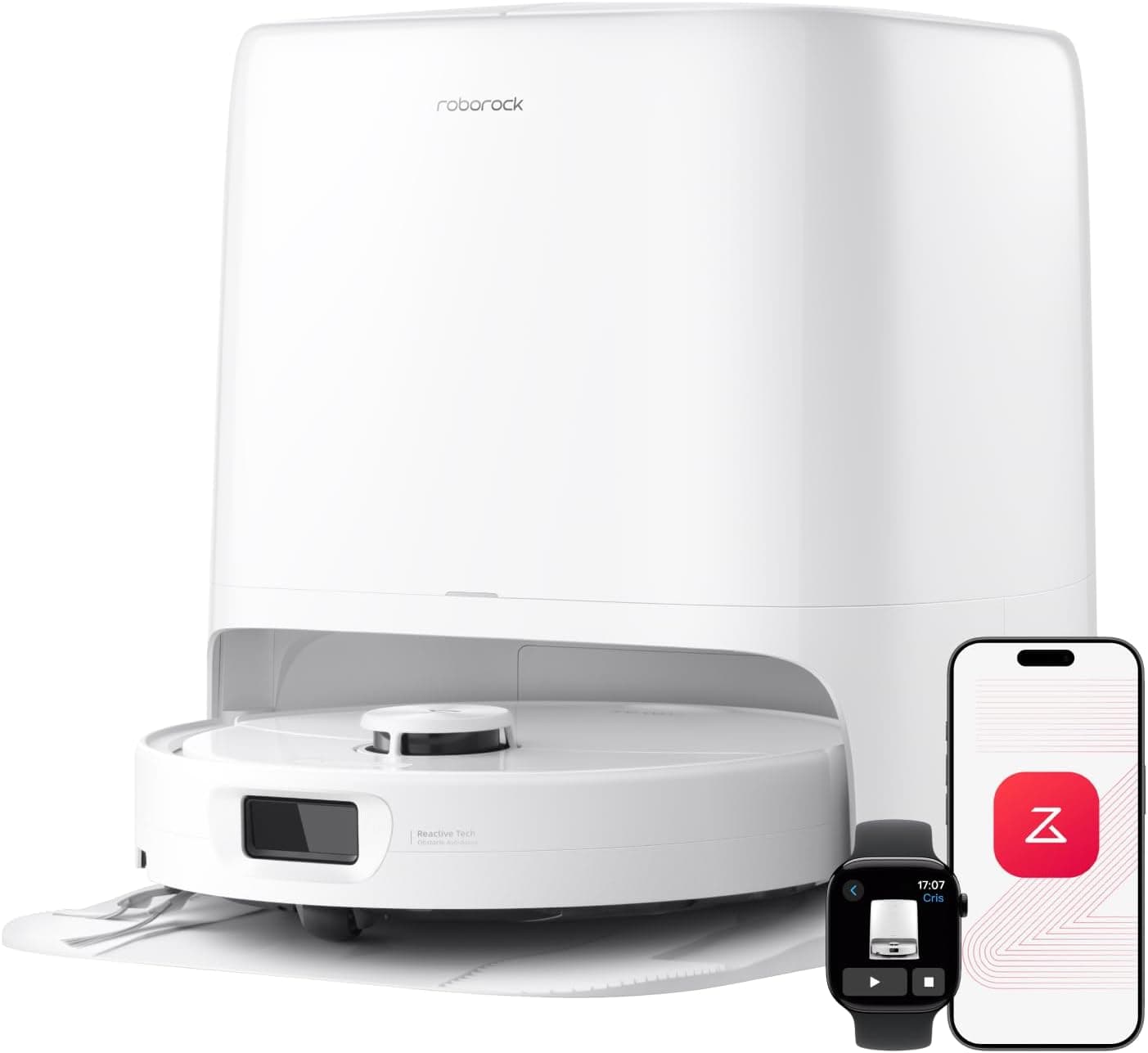
roborock Qrevo 2 Pro Robot Vacuum and Mop
See it on Amazon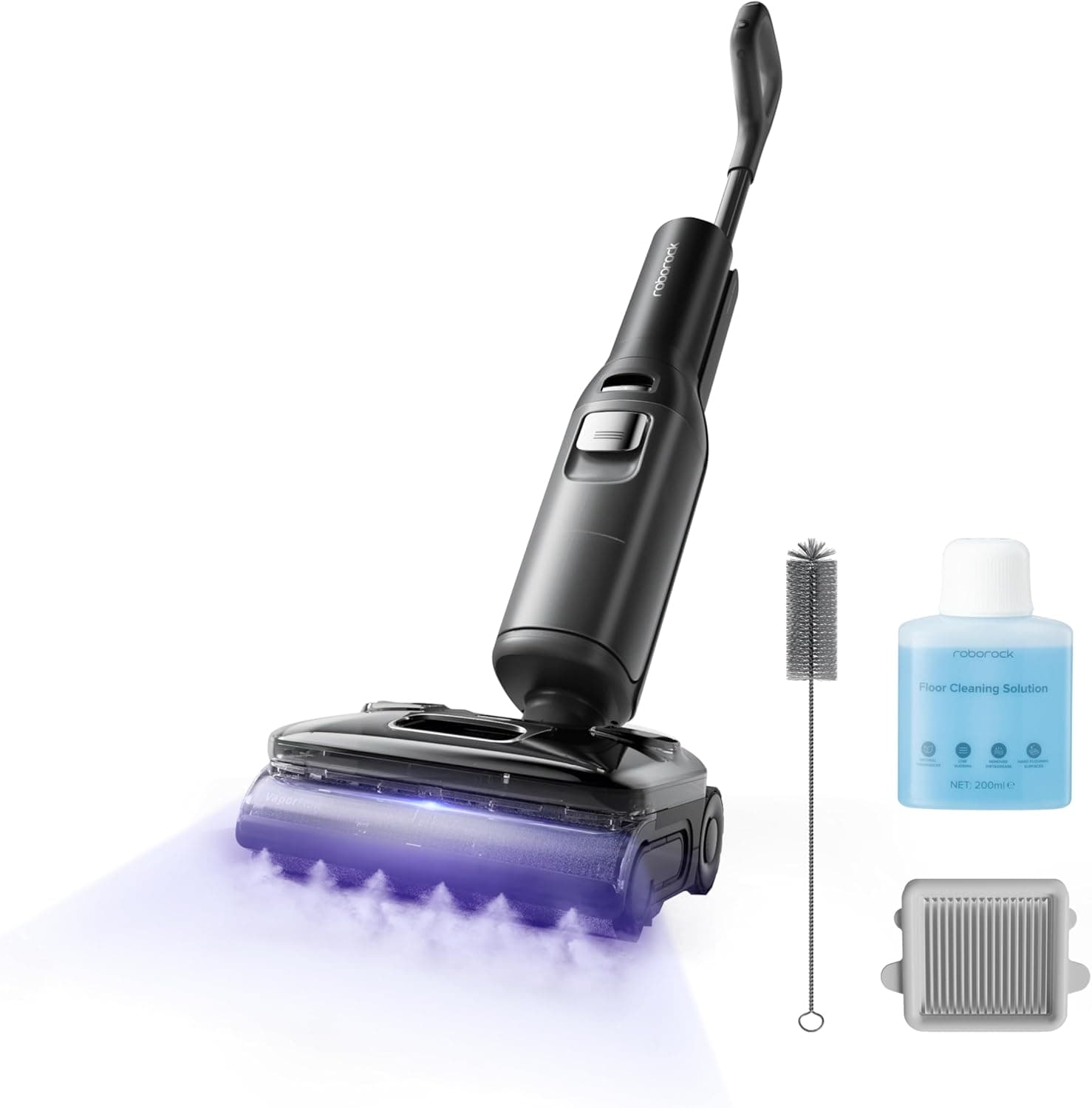
roborock F25 Ultra Steam Wet Dry Vacuum Mop
See it on Amazon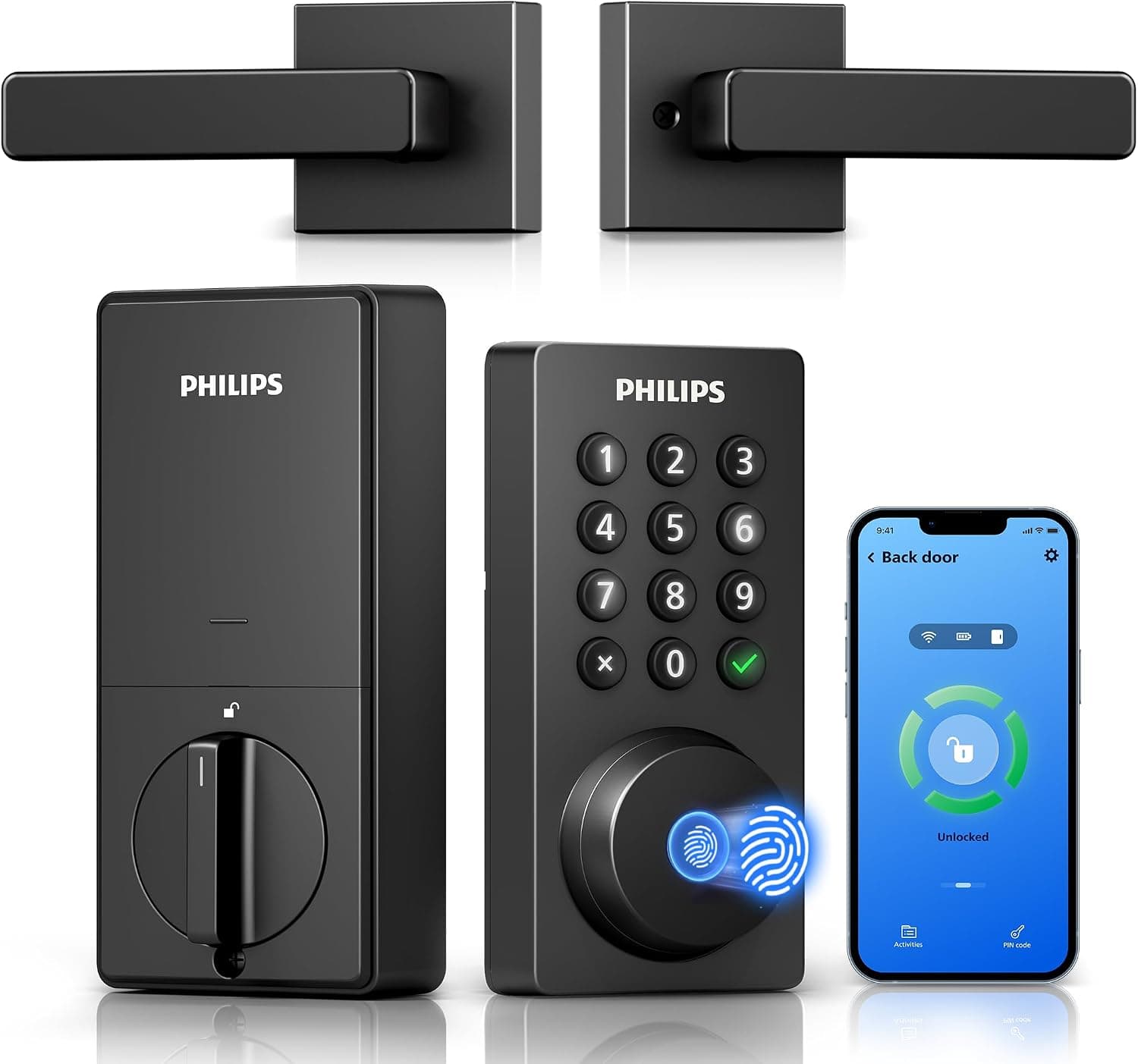
Philips Wi-Fi Keypad Deadbolt with Handle
See it on Amazon
Sponsored listings from Amazon’s Sponsored Products for Creators program, kept apart from our reviews and rankings. How we make money
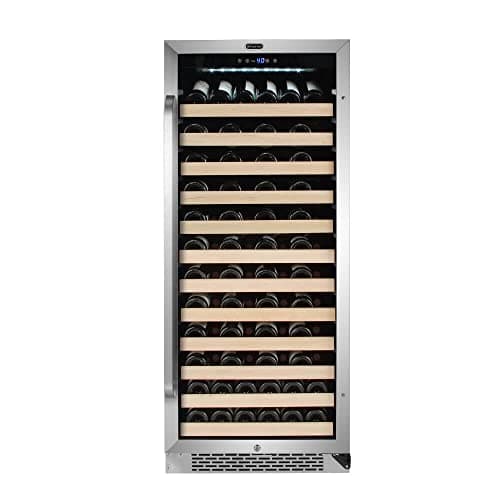
Best Entry-Level Cellar: Whynter BWR-1002SD 100-Bottle Compressor Cellar
Whynter BWR-1002SD 100-Bottle Compressor Cellar
- Under $1,000 for 100-bottle compressor cooling — the cheapest entry point into cellar-class storage in this guide
- Single zone only — you commit to one aging temperature for the full cabinet
(Current price, subject to change)
The Whynter BWR-1002SD 100-Bottle Compressor Cellar scores 6.0 on the SHE Wine Cellar Preservation Score. Capacity Efficiency and Build Quality are the strongest components in the weighted composite formula for this cabinet, offset by the single-zone design and standard vibration isolation factors.
The entry-level argument is direct. Thermoelectric coolers top out around 50 bottles and struggle above 75°F ambient. Bob Vila and Reviewed both document this thermoelectric limitation for 5-year and longer storage. Compared to thermoelectric alternatives, the Whynter's compressor runs continuously regardless of ambient conditions — the key specification for aging past 2-year windows.
The single-zone constraint matters less for focused collections. If yours centers on one varietal style, a single zone tuned to the ideal aging range (52-58°F for reds) yields better results than a poorly-managed dual zone. The 4.7/5 rating across Home Depot reviews reflects owners who accepted this trade-off.
Bob Vila notes the UV-protective double-pane glass is a meaningful factor for display placement — direct light degrades tannins in aged bottles.
Add a Temp Stick WiFi Temperature Sensor inside. Any compressor failure alerts within 30 min rather than days later when you open the door to a cabinet that has been at 80°F for a week.
What We Love
- Under $1,000 for 100-bottle compressor cooling — the cheapest entry point into cellar-class storage in this guide
- Compressor cooling delivers the temperature stability that separates a cellar from a thermoelectric cooler for aging past two years
- Noise under 39 dB — audible only when the compressor cycles, not continuously
- 4.7/5 average customer rating across Home Depot reviews reflects real satisfaction at this price point
What Could Be Better
- Single zone only — you commit to one aging temperature for the full cabinet
- 100-bottle capacity drops for oversized Pinot or Champagne-format bottles
- No native WiFi — pair with a Temp Stick WiFi Temperature Sensor for smart alerts
The Verdict
If you're starting your first cellar under $1,000 and your collection centers on one grape style, the Whynter BWR-1002SD 100-Bottle Compressor Cellar fits the brief. Compressor cooling at the lowest entry price, 100 bottles, no dual-zone complexity. Add a Temp Stick WiFi Temperature Sensor for smart alerts and you have a complete smart cellar system.
Check price for the Whynter BWR-1002SD 100-Bottle Compressor Cellar →
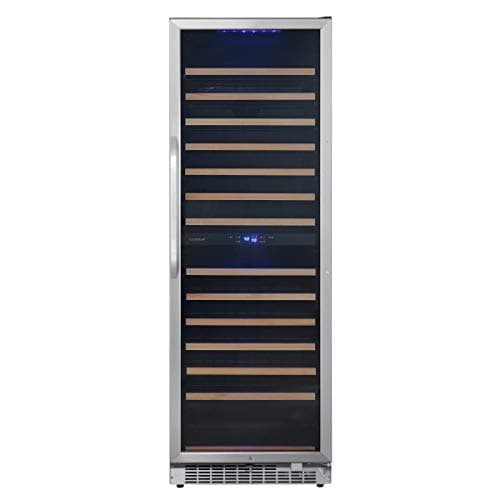
Best Built-In Install: EdgeStar CWR1552DZ 141-Bottle Dual Zone Built-In
EdgeStar CWR1552DZ 141-Bottle Dual Zone Built-In
- Front-vent compressor is the only way to flush-mount a cellar cabinet into existing cabinetry without ventilation trade-offs
- Shelves are not adjustable — limits large-format bottle storage
(Current price, subject to change)
The EdgeStar CWR1552DZ 141-Bottle Dual Zone Built-In earns a normalized 5.7 on the SHE Wine Cellar Preservation Score — lowest in this guide. The score reflects a core trade-off: built-in placement is a convenience tier attribute, not a preservation attribute. Front-vent compressor, reversible door hinge, and fan-forced circulation are meaningful specifications — none of them improve temperature stability, vibration isolation, or humidity management compared to freestanding alternatives.
The front-vent compressor is the reason this cabinet belongs in the guide. Standard cellar cabinets vent from the rear, requiring 4-6 inches of clearance and ruling out flush installation. EdgeStar's front-vent design pushes exhaust forward, enabling under-counter or cabinet-bank installation. Bob Vila documents this as the primary consideration for kitchen remodels where a cellar must integrate into existing cabinetry.
Fan-forced circulation is the one preservation edge. Larger single-compressor cabinets develop uneven cooling across their height — top zones run 4-6°F warmer in still-air designs. Fan-forced circulation eliminates that gradient, which Reviewed notes as material above 120-bottle capacity.
The reliability concern from Home Depot owner reports matters for 10-year collections. Owner reviews flag compressor durability questions past 9-12 months at a rate higher than comparable Allavino or Whynter reviews.
What We Love
- Front-vent compressor is the only way to flush-mount a cellar cabinet into existing cabinetry without ventilation trade-offs
- Reversible door hinge enables placement flexibility in tight kitchen layouts
- Fan-forced circulation prevents the uneven cooling that afflicts larger single-compressor cabinets
- 24-inch width matches standard undercounter cabinetry dimensions
What Could Be Better
- Shelves are not adjustable — limits large-format bottle storage
- Temperature controls are inside the cabinet — door must open to adjust
- Home Depot owner reports flag compressor reliability concerns past 9-12 months
- No native WiFi — pair with a Temp Stick WiFi Temperature Sensor for remote monitoring
The Verdict
If flush built-in installation into existing undercounter cabinetry is a hard requirement, the EdgeStar CWR1552DZ 141-Bottle Dual Zone Built-In lines up with what you actually need. The front-vent compressor and reversible hinge are what make that placement viable — no other cabinet in this guide supports flush built-in.
Check price for the EdgeStar CWR1552DZ 141-Bottle Dual Zone Built-In →
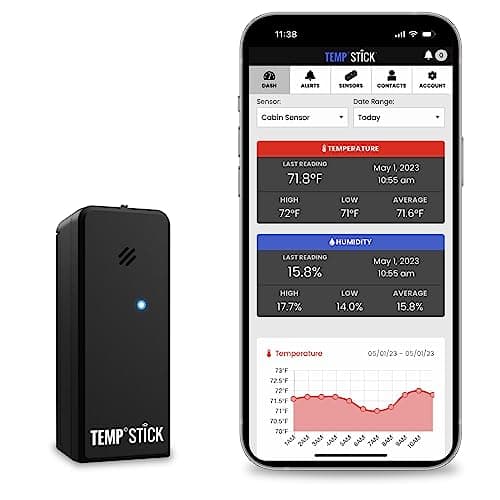
Best Smart Monitoring Layer: Temp Stick WiFi Temperature Sensor
Best Smart Monitor LayerTemp Stick WiFi Temperature Sensor
- Purpose-built WiFi alerting — text, email, and app notifications the moment readings drift outside your set thresholds
- Premium price versus $30 Govee alternatives — you are paying for alert reliability rather than features
(Current price, subject to change)
The Temp Stick WiFi Temperature Sensor scores 8.5 across 9 expert sources — highest in this guide. Reviewed and Good Housekeeping rank it as the benchmark for appliance monitoring. Scored separately: it is an alerting device, not a preservation device.
The math is direct. A 100-bottle collection at $40 average is $4,000 in bottles. A compressor failure pushes a cabinet from 55°F to mid-60s within 4 hours. At 70°F, heat damage begins within 24 hours. A Temp Stick alert enables you to move bottles and call service in the morning rather than discovering damage days later.
The no-subscription model yields a key advantage over alternatives. Govee and Inkbird WiFi sensors require monthly subscriptions for reliable push alerting. The Temp Stick unlimited alert model means you pay once and the alerting never stops.
Alexa and IFTTT integration enables automation beyond monitoring. Route a Temp Stick alert to a smart plug, trigger SMS to a secondary contact, or log readings to a Google Sheet for aging documentation. The Allavino VSWR172-2SR20 FlexCount II 172-Bottle Dual Zone and other cabinets here lack native WiFi — the Temp Stick is the only path to those automation flows.
What We Love
- Purpose-built WiFi alerting — text, email, and app notifications the moment readings drift outside your set thresholds
- No subscription, no recurring fees — unlimited alerts for the life of the device after purchase
- -40°F to 140°F range with ±0.4°C sensor accuracy — covers every use case in this guide
- Alexa and IFTTT integration connects to broader smart home automations without additional hardware
- Made in USA — notable at this price point for a sensor designed for critical monitoring
What Could Be Better
- Premium price versus $30 Govee alternatives — you are paying for alert reliability rather than features
- WiFi-only — fails silently when router power drops along with a cabinet failure
- 2.4 GHz only — may require a signal boost for distant or basement cellars
The Verdict
If you've chosen any cabinet in this guide and want remote visibility when temperatures drift, the Temp Stick WiFi Temperature Sensor is the right monitoring layer — you'll be well-served here. The $149 cost is small compared to one prevented heat-damage incident in a 100-bottle collection. Set thresholds at 45-65°F and let the alerts run.
Best for Aging 5+ Years: Allavino VSWR172-2SR20 FlexCount II 172-Bottle Dual Zone
Allavino VSWR172-2SR20 FlexCount II 172-Bottle Dual Zone
- Tru-Vino holds ±1°F around set point — the tightest temperature stability in this guide and the factor that separates a cellar from a cooler at the 5-year mark
- Non-reversible door limits kitchen placement flexibility — measure before ordering
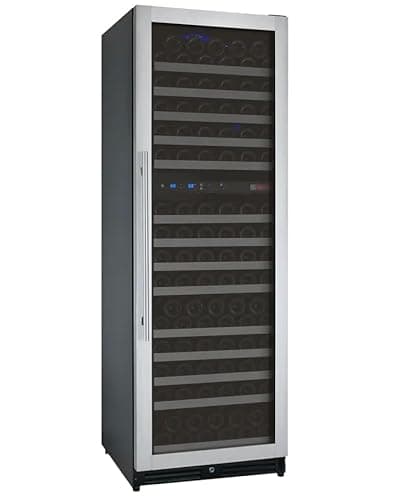
(Current price, subject to change)
The Allavino VSWR172-2SR20 FlexCount II 172-Bottle Dual Zone earns a 7.2 on the SHE Wine Cellar Preservation Score — highest in this guide. In practice, that means your collection ages with less temperature fluctuation and less vibration disruption than any other cabinet here — the two factors the weighted composite formula prioritizes most. Temperature Stability and Vibration Isolation are the leading components of the composite, and this cabinet leads on both. That advantage carries it above the ORYMUSE 200-Bottle Dual Zone Wine Fridge and Whynter BWR-1002SD 100-Bottle Compressor Cellar.
Good Housekeeping documents temperature fluctuation as the primary threat to 5-year and longer aging. Every 5°F swing above or below the stable target advances the timeline — what should have been a 15-year wine becomes a 10-year wine. Tru-Vino holds both zones under ±1°F, verified by Reviewed. Standard compressors cycle at ±2°F compared to that benchmark.
Reviewed identifies sustained vibration as an underappreciated failure mode. Standard compressors transmit harmonic motion that disrupts tannin and ester evolution. The Allavino's isolation design reduces that transmission to near zero. FlexCount II shelves accommodate Bordeaux, Burgundy, and Champagne formats without removing racks.
Pair with a Temp Stick WiFi Temperature Sensor inside. Tru-Vino stabilizes in 48 hours after loading — set the Temp Stick alert before you add bottles.
What We Love
- Tru-Vino holds ±1°F around set point — the tightest temperature stability in this guide and the factor that separates a cellar from a cooler at the 5-year mark
- Dampened compressor transmits near-zero vibration to stored bottles — Good Housekeeping identifies vibration as the most underestimated aging failure mode
- FlexCount II shelving flexes to fit Bordeaux, Burgundy, and Champagne formats without losing capacity — rare in a single cabinet
- Dual zone (41-64°F) ages reds and whites independently in one cabinet at independently correct temperatures
What Could Be Better
- Non-reversible door limits kitchen placement flexibility — measure before ordering
- Very heavy — reviewers consistently note a dolly and two people are required for positioning
- No native WiFi — pair with a Temp Stick WiFi Temperature Sensor for remote alerts
The Verdict
If your collection averages $40+ per bottle and you age past five years, the Allavino VSWR172-2SR20 FlexCount II 172-Bottle Dual Zone fits the brief without compromise. Tru-Vino stability plus dampened vibration separates a genuine aging cabinet from a cooler. Add a Temp Stick WiFi Temperature Sensor for remote alerts.
Check price for the Allavino VSWR172-2SR20 FlexCount II 172-Bottle Dual Zone →
How We Score: SHE Wine Cellar Preservation Score
SHE Wine Cellar Preservation Score
Score Formula
Temperature_Stability × 0.30 + Vibration_Isolation × 0.25 + Capacity_Efficiency × 0.20 + Smart_Monitoring × 0.15 + Build_Quality × 0.10Score Factors
- Temperature Stability (30%)±°F variance from set point per reviewer measurement or manufacturer specification. Lower variance = higher score. Tru-Vino near-zero fluctuation = 9; standard compressor ±2°F = 7; basic thermoelectric ±3-5°F = 4-5.
- Vibration Isolation (25%)Vibration transmitted to stored bottles during compressor operation. Aging-grade dampened compressor = 8; standard consumer compressor = 5-6; thermoelectric (no vibration) = 9 but sacrifices temperature control.
- Capacity Efficiency (20%)Bottle capacity relative to purchase price, normalized to a 10-point scale with the highest $/bottle ratio in the guide as ceiling. Rewards cabinets that provide maximum storage headroom per dollar spent.
- Smart Monitoring (15%)Native WiFi with text and email alerting = 9-10; digital touchscreen with temperature memory = 2-3; mechanical dial only = 1. Cabinets without native WiFi score low; the Temp Stick monitoring layer is scored separately.
- Build Quality and Longevity (10%)Brand warranty depth, service network, owner satisfaction ratings across retailers, and long-term reliability signals from owner reviews. Established brands with documented service networks score higher.
SHE Wine Cellar Preservation Score — Ranked
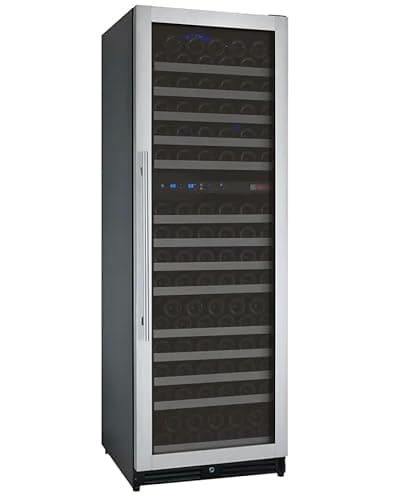
Allavino VSWR172-2SR20 FlexCount II 172-Bottle Dual Zone
SHE Wine Cellar Preservation Score7.2/10Allavino list $2,074.54, read from the maker 2026-09-09 / 172 bottles — Tru-Vino ±1°F stability, dampened vibration, FlexCount II shelving
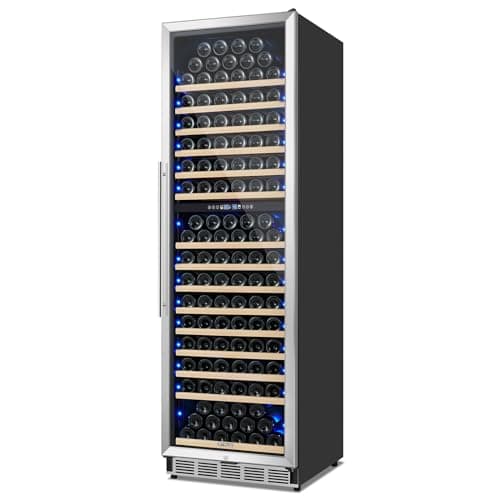
ORYMUSE 200-Bottle Dual Zone Wine Fridge
SHE Wine Cellar Preservation Score6.8/10200 bottles at about $6.75 each — best $/bottle capacity ratio in this guide, quiet compressor under 38 dB
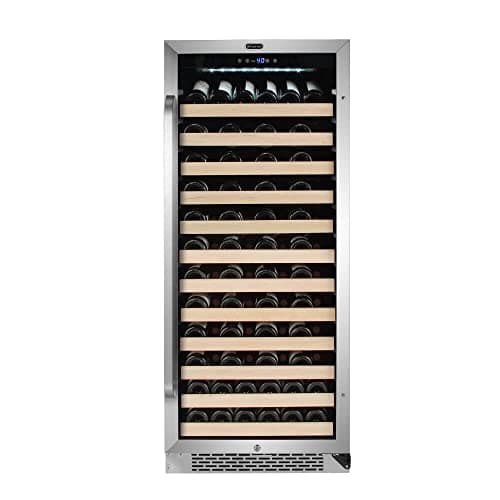
Whynter BWR-1002SD 100-Bottle Compressor Cellar
SHE Wine Cellar Preservation Score6.0/10$1,175.99 sold by Amazon itself on 2026-09-05 for 100 bottles — the cheapest compressor cabinet here, 4.7/5 customer rating, strongest value tier
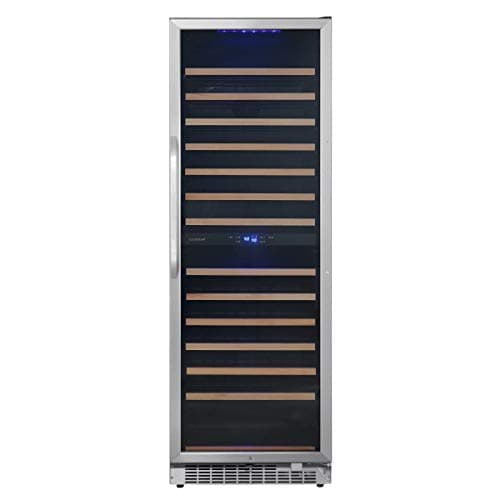
EdgeStar CWR1552DZ 141-Bottle Dual Zone Built-In
SHE Wine Cellar Preservation Score5.7/10~$2,039 / 141 bottles — front-vent compressor enables flush built-in; placement feature not preservation
Ecosystem Compatibility and Smart Monitoring
None of the cellar cabinets in this guide have native WiFi connectivity. Temperature and humidity are maintained entirely offline — the cabinet runs and preserves bottles whether your router is working or not. This offline-first design is actually a feature for long-term aging: a firmware bug or app outage cannot affect bottle preservation. The tradeoff is that you have no remote visibility into cabinet performance without a separate monitoring device.
The Temp Stick WiFi Temperature Sensor is the standard solution. Reviewed rates it as the benchmark for purpose-built cellar monitoring. Place one inside the cabinet, pair it with the Temp Stick app, and set alert thresholds at your target aging range (45-65°F is the standard for mixed cellars). The device reports temperature and humidity continuously, sends text, email, and app notifications within 30 minutes of drift, and integrates with Alexa and IFTTT for automation routing. No subscription required.
Alexa integration via Temp Stick enables voice commands like "Alexa, what is the temperature in my wine cellar?" — routed through the Temp Stick skill rather than native cabinet firmware. IFTTT integration lets you route alerts to any connected service: Twilio SMS to a secondary contact, a Slack message, a Google Sheets log of temperature readings for aging documentation, or a smart plug that powers a backup fan. The Best Smart Home Appliances 2026: GE Profile Smart Wall Oven Wins hub covers how temperature monitoring integrates into broader kitchen automation.
The EdgeStar CWR1552DZ 141-Bottle Dual Zone Built-In has interior temperature controls only — the door must open to adjust settings. The Allavino VSWR172-2SR20 FlexCount II 172-Bottle Dual Zone has a digital touchscreen on the exterior door with temperature memory that holds setpoints through power outages. The ORYMUSE 200-Bottle Dual Zone Wine Fridge has the same temperature memory feature. The Whynter BWR-1002SD 100-Bottle Compressor Cellar has an LED display on the exterior door.
For collectors who want tighter smart home integration than IFTTT provides, a SensorPush HT1 offers Bluetooth bridging to HomeKit via the SensorPush G1 gateway — a more expensive path but with native HomeKit support. None of the cabinets themselves support HomeKit, Matter, or Thread, and no firmware updates from any of these manufacturers are expected to add native WiFi in the near term.
When NOT to Buy
Skip a cellar cabinet if your collection stays under 40 bottles and turns over within a year — a wine cooler handles that at a fraction of the cost. Skip it if your average bottle runs under $20 — the preservation math only justifies the cellar premium when aging extends real dollar value. Skip it if you are planning a converted-closet or basement cellar above 200 bottles — at that scale, a Wine Guardian or WhisperKOOL cooling unit and passive insulation is the right architecture, not a freestanding cabinet.
Who Should Buy What
Who Should Buy What
| If you are… | Recommended pick |
|---|---|
Capacity-first collectors You need maximum bottle storage under $1,500 and can accept a lesser-known brand in exchange for 200-bottle headroom | ORYMUSE 200-Bottle Dual Zone Wine Fridge |
First-time cellar buyers You want your first cellar under $1,000 and collect primarily one grape style without dual-zone requirements | Whynter BWR-1002SD 100-Bottle Compressor Cellar |
Built-in kitchen remodels You are integrating a cellar into existing undercounter cabinetry where flush installation and front-vent compressor is a hard requirement | EdgeStar CWR1552DZ 141-Bottle Dual Zone Built-In |
Smart home monitoring users You want WiFi alerts, Alexa integration, and IFTTT routing for your cellar regardless of which cabinet you own or plan to buy | Temp Stick WiFi Temperature Sensor |
Aging 5+ years collectors You age bottles 5+ years and your collection averages $40+ per bottle — temperature stability and vibration isolation are your primary specs | Allavino VSWR172-2SR20 FlexCount II 172-Bottle Dual Zone |
Frequently Asked Questions
What is the difference between a wine cooler and a wine cellar?
A wine cooler holds bottles at serving temperature for months to a few years — capacity 12 to 50 bottles, price $120 to $600. A wine cellar ages bottles 5 to 25+ years — capacity starts at 100 bottles, price from $1,000 upward. Cellars add humidity control, vibration isolation, and much tighter temperature stability. If you drink within two years, a cooler is correct. If you lay bottles down for five years or longer, a cellar is the only option that protects the investment.
What temperature should a wine cellar be set to?
The classic aging target is 55°F (13°C) for a mixed cellar. In practice, reds age well at 55-65°F and whites at 45-55°F. Dual-zone cabinets let you set these independently. The more important factor is stability — a cellar that holds 60°F without fluctuation outperforms one that averages 55°F but swings ±5°F. Every 5°F swing shortens the aging window of sensitive varietals.
What is the best wine cellar under $1,000?
The Whynter BWR-1002SD 100-Bottle Compressor Cellar is the best entry-level option, at $1,175.99 sold by Amazon itself when we read the listing on September 5, 2026. It is the cheapest Amazon cabinet with true compressor cooling and 100-bottle capacity — the combination that supports aging past two years. Add a Temp Stick WiFi sensor at $149 and the total system runs about $1,325.
How many bottles should a home wine cellar hold?
Estimate your five-year collection size and buy 25% larger. Most collectors starting their first cellar are well-served by 100 bottles (Whynter BWR-1002SD). Mid-tier collectors aging multiple varietals benefit from 141-172 bottles (EdgeStar, Allavino). Collectors building past 200 bottles without a $3,000+ budget should consider the ORYMUSE 200-Bottle at $1,500 list or plan a converted-room cellar with a dedicated cooling unit.
Do wine cellar cabinets need WiFi to function?
No — every cabinet in this guide maintains temperature and preserves bottles entirely offline. WiFi only enters via a separate monitoring device like the Temp Stick, which reports temperature and humidity to your phone but does not control the cabinet. If your router drops, the cabinet keeps running; you lose remote visibility until it returns. The offline-first architecture means a firmware bug or cloud outage cannot affect bottle preservation.
Which smart home platforms work with wine cellar cabinets?
No cellar cabinet in this guide has native Alexa, Google Home, HomeKit, or Matter support. Smart home integration comes from the Temp Stick monitor layer — the Temp Stick integrates natively with Alexa and IFTTT, which enables routing to virtually any platform. IFTTT connects to Alexa, Google Home, SmartThings, and hundreds of other services. For native HomeKit, a SensorPush HT1 with a G1 gateway is the alternative path at a higher cost.
Is the Allavino VSWR172-2SR20 FlexCount II worth the price?
For aging bottles averaging $40+ per bottle past five years, yes — the price premium is justified by Tru-Vino temperature stability and dampened vibration, two specifications that directly protect long-term bottle value. For a first cellar or a collection under $30 average per bottle, the Whynter BWR-1002SD at roughly half the price delivers adequate aging performance and the math does not support the Allavino premium.
Can I install a freestanding wine cellar cabinet as a built-in?
Only the EdgeStar CWR1552DZ 141-Bottle Dual Zone is designed for flush built-in installation. Its front-vent compressor pushes exhaust forward, letting it install under a countertop or into an existing cabinet bank without ventilation clearance requirements. All other cabinets in this guide vent from the rear and require 4-6 inches of rear clearance — ruling out true flush installation. Attempting to install a rear-vent cabinet in a built-in configuration causes heat buildup that shortens compressor life.
Bottom Line
Get the ORYMUSE 200-Bottle Dual Zone Wine Fridge if maximum bottles per dollar is the priority and you can accept a lesser-known brand — 200 bottles at about $6.75 each is the best capacity value here.
Get the Whynter BWR-1002SD 100-Bottle Compressor Cellar if you want your first cellar under $1,000 and collect primarily one grape style — compressor cooling at the lowest entry price.
Get the EdgeStar CWR1552DZ 141-Bottle Dual Zone Built-In if flush built-in installation into existing undercounter cabinetry is a hard requirement — the front-vent compressor is the only way there.
Get the Temp Stick WiFi Temperature Sensor if you have chosen any cabinet in this guide — the Temp Stick is the WiFi alert layer that turns a cellar cabinet into a true smart cellar.
Get the Allavino VSWR172-2SR20 FlexCount II 172-Bottle Dual Zone if you are aging bottles averaging $40+ per bottle past five years and need Tru-Vino stability with dampened vibration compressor.
Skip cellar cabinets altogether if your collection stays under 40 bottles and turns over within a year — a wine cooler handles that at a fraction of the cost. Skip if average bottle value is under $20.
Sources & Methodology
Methodology: SHE Wine Cellar Preservation Score — Formula: Temperature_Stability × 0.30 + Vibration_Isolation × 0.25 + Capacity_Efficiency × 0.20 + Smart_Monitoring × 0.15 + Build_Quality × 0.10. Factors: Temperature Stability (30%): ±°F variance from set point per reviewer measurement or manufacturer specification. Lower variance = higher score. Tru-Vino near-zero fluctuation = 9; standard compressor ±2°F = 7; basic thermoelectric ±3-5°F = 4-5. | Vibration Isolation (25%): Vibration transmitted to stored bottles during compressor operation. Aging-grade dampened compressor = 8; standard consumer compressor = 5-6; thermoelectric (no vibration) = 9 but sacrifices temperature control. | Capacity Efficiency (20%): Bottle capacity relative to purchase price, normalized to a 10-point scale with the highest $/bottle ratio in the guide as ceiling. Rewards cabinets that provide maximum storage headroom per dollar spent. | Smart Monitoring (15%): Native WiFi with text and email alerting = 9-10; digital touchscreen with temperature memory = 2-3; mechanical dial only = 1. Cabinets without native WiFi score low; the Temp Stick monitoring layer is scored separately. | Build Quality and Longevity (10%): Brand warranty depth, service network, owner satisfaction ratings across retailers, and long-term reliability signals from owner reviews. Established brands with documented service networks score higher.
Expert review sources used in this analysis:
- SmartHomeExplorer aggregates expert review data and community sentiment to produce consensus-based buying guidance
- We do not perform first-party product testing
- Expert ratings and product assessment data sourced from Good Housekeeping, Reviewed (USA Today), Bob Vila, and Home Depot verified reviews
- Wine-specific storage and aging standards referenced from Wine Spectator, Wine Racks America, and winefridgepros
- Community reliability and installation reports sourced from r/wine and r/homeautomation on Reddit
- Amazon prices and product availability verified 2026-05-19, then re-checked on 2026-08-21 against the prices we last recorded
- At that check the ORYMUSE 200-Bottle Dual Zone ($1,500 list) was buyable from a seller on the listing and became the overall pick
- The Allavino VSWR172-2SR20 showed no buyable offer and was moved down the roster
- CHANGE NOTE, 2026-09-05: the 2026-09-05 money-page canary filed a lead_pick FAIL against this guide on the strength of the Creators API returning nothing for the ORYMUSE listing
- A live read of that page the same day disproves it
- The listing carried a featured New offer at $1,499.99 from ORYMUSE, matching the figure this page already showed
- The lead pick does not move and no product changes position
- Two rows were corrected against the same read
- The Whynter BWR-1002SD read $1,175.99 sold by Amazon itself, replacing an approximate $990 figure that had stopped being true
- The Allavino's row was carrying an unavailable marker while its listing in fact carried live offers with no featured seller
- It is restored to a working link with no quoted figure
- SHE Wine Cellar Preservation Score factors derived from aggregated reviewer measurements and community reports; no first-party measurements were conducted.
Nicholas Miles is the founder of SmartHomeExplorer and a longtime smart home enthusiast focused on helping everyday homeowners make better technology decisions. He researches, compares, and writes about products across security, climate, lighting, leak prevention, sensors, home energy, and automation, with an emphasis on real-world usefulness, ecosystem compatibility, reliability, privacy, and long-term value.
Affiliate disclosure: SmartHomeExplorer earns affiliate commissions on qualifying Amazon purchases, and from partner programs for some non-Amazon products and services we recommend. Our scoring methodology is independent of affiliate relationships.