

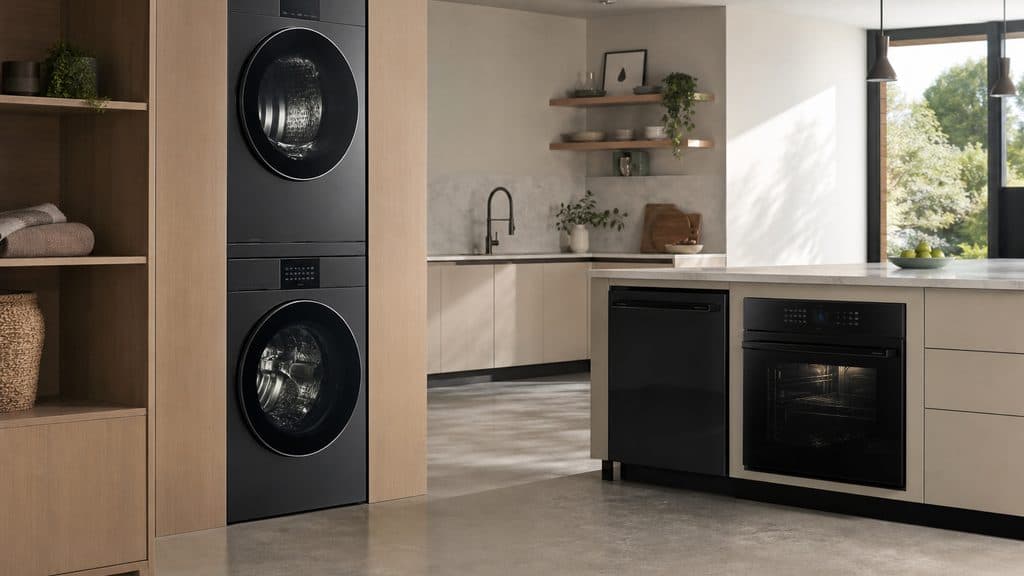
Best Smart Home Appliances 2026: GE Profile Smart Wall Oven Wins
LG WashTower still wins 2026 at SAVI 8.1, reliability-weighted across laundry, cooking, and refrigeration. But it sells on Amazon only through the See All Buying Options offer list, with no featured price. The GE Profile wall oven is the pick we can verify Amazon sells itself.
This article contains affiliate links. We may earn a commission at no extra cost to you. Prices change frequently — check the current price on Amazon before buying. Learn more
The Short Answer
LG WashTower still achieves the SAVI maximum of 8.1, on ThinQ diagnostics, allergen certification, and Consumer Reports reliability above an 8.5 threshold. On September 5, 2026 it sold only through Amazon’s See All Buying Options list, carrying no featured price, so leadership transfers to the GE Profile wall oven.
Featured in this Guide
GE
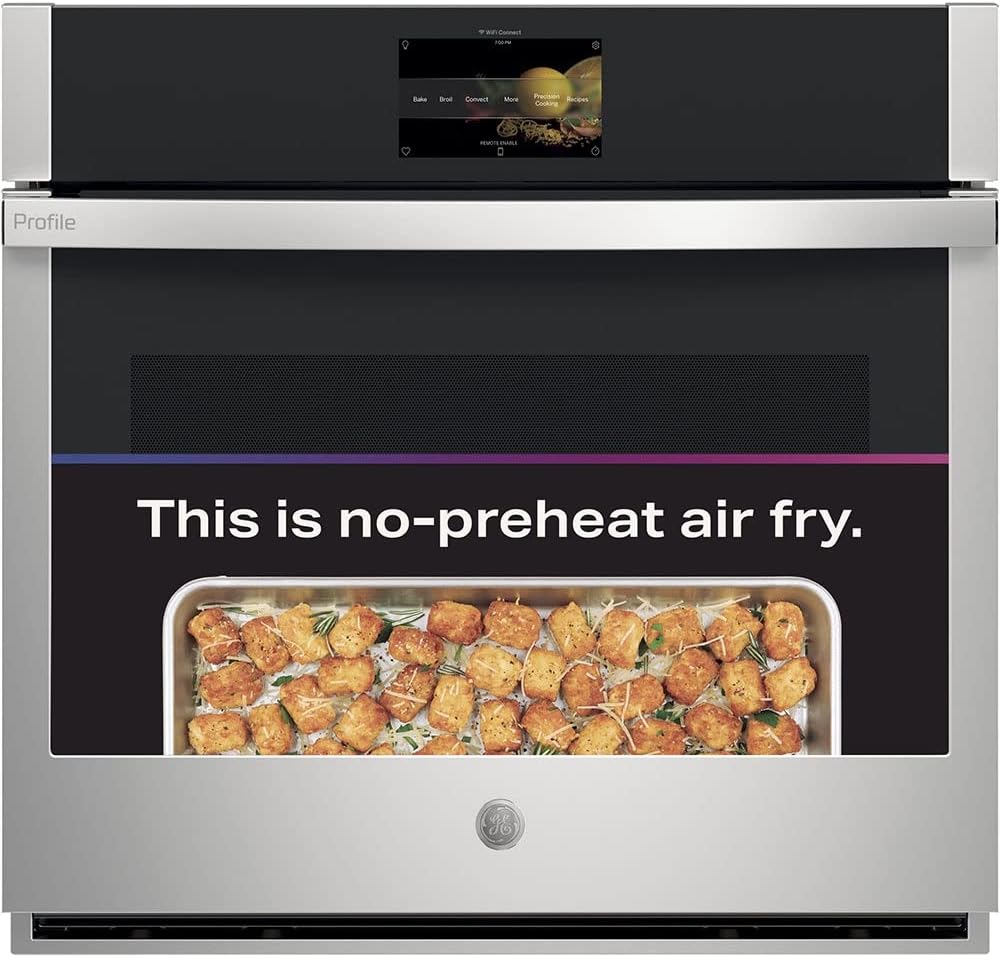
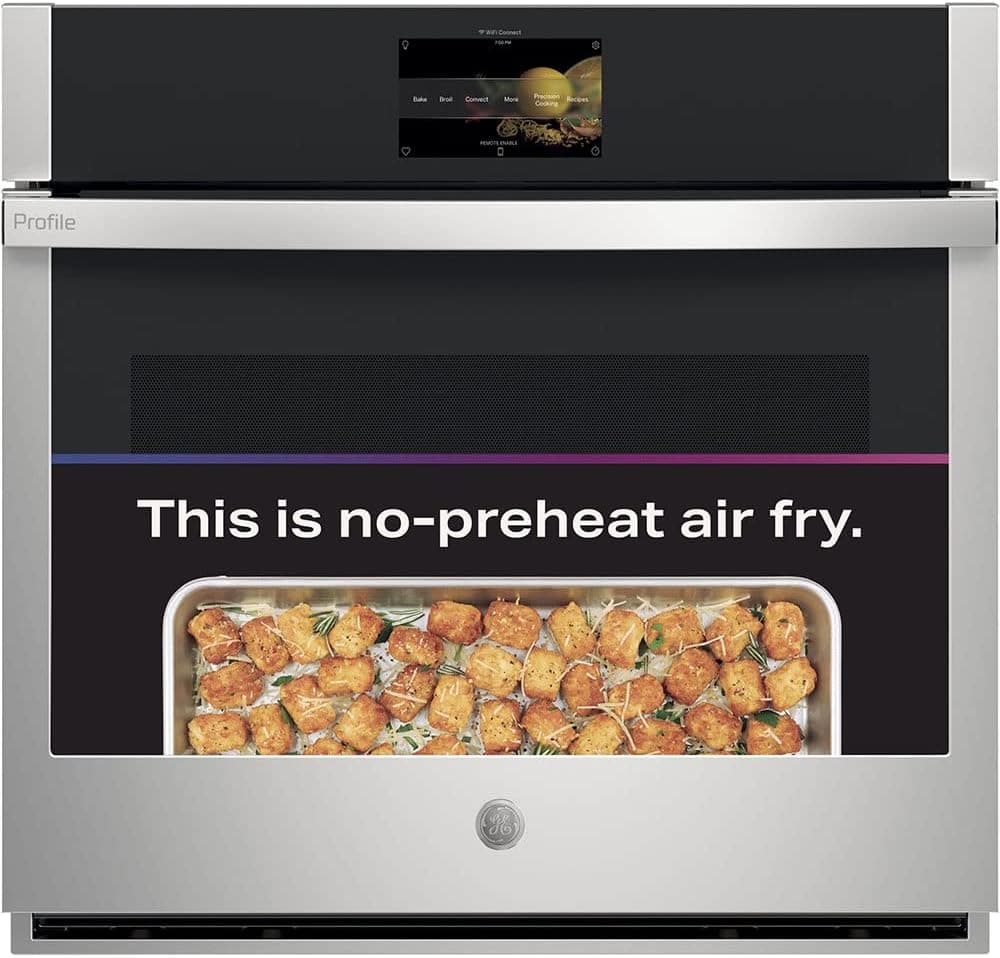
Profile Smart Wall Oven
- •No-preheat air fry, precision probe auto-shutoff, and SmartHQ remote diagnostics — and the one appliance we can verify Amazon sells itself
LG
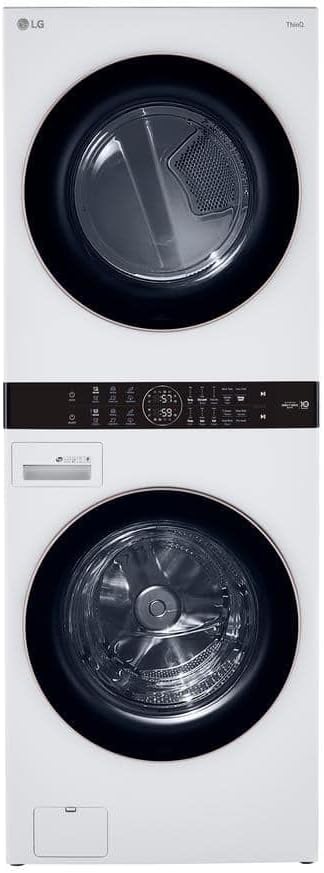
WashTower Smart Laundry Center
- •8.1 SAVI — balanced reliability, ThinQ diagnostics, AAFA steam certification
- •offers are live but no seller holds the featured spot

Samsung
Bespoke AI Dryer
- •Heat-pump drying saves $30–80/year per Consumer Reports — clearest energy-payback appliance in the category
GE
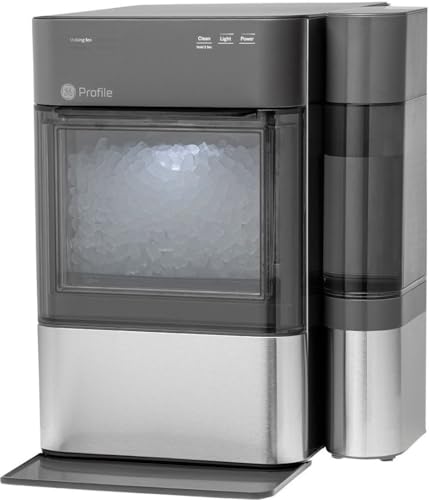
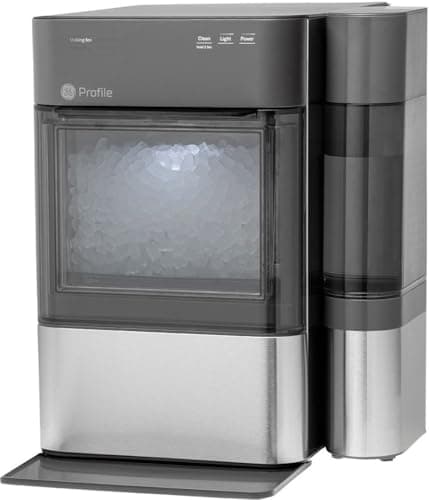
Profile Opal 2.0 Nugget Ice Maker
- •The lowest-priced pick in the guide — scheduling and bin alerts people use daily
- •easiest yes in this roundup

Samsung
Bespoke Smart Dishwasher
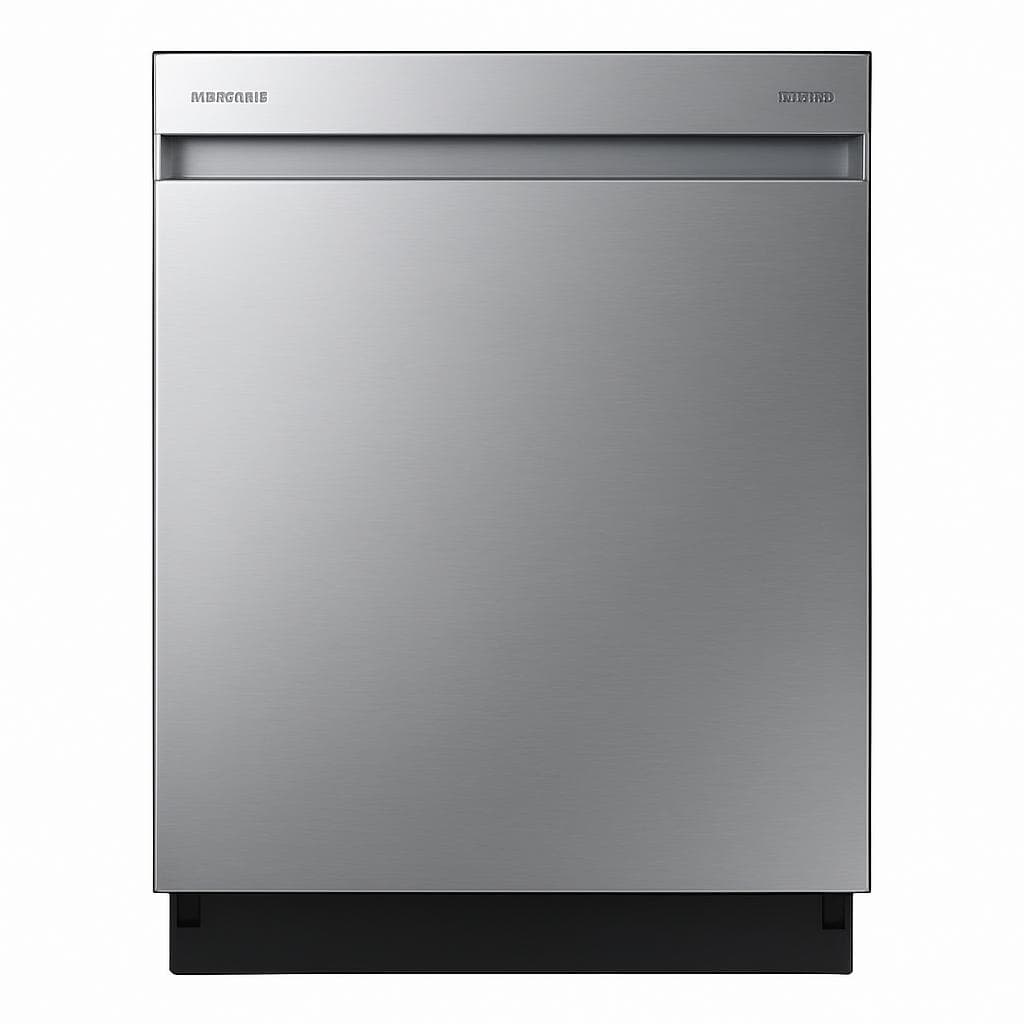
- •Auto Open Door drying replaces a repeated daily task — the one smart dishwasher feature that earns its keep
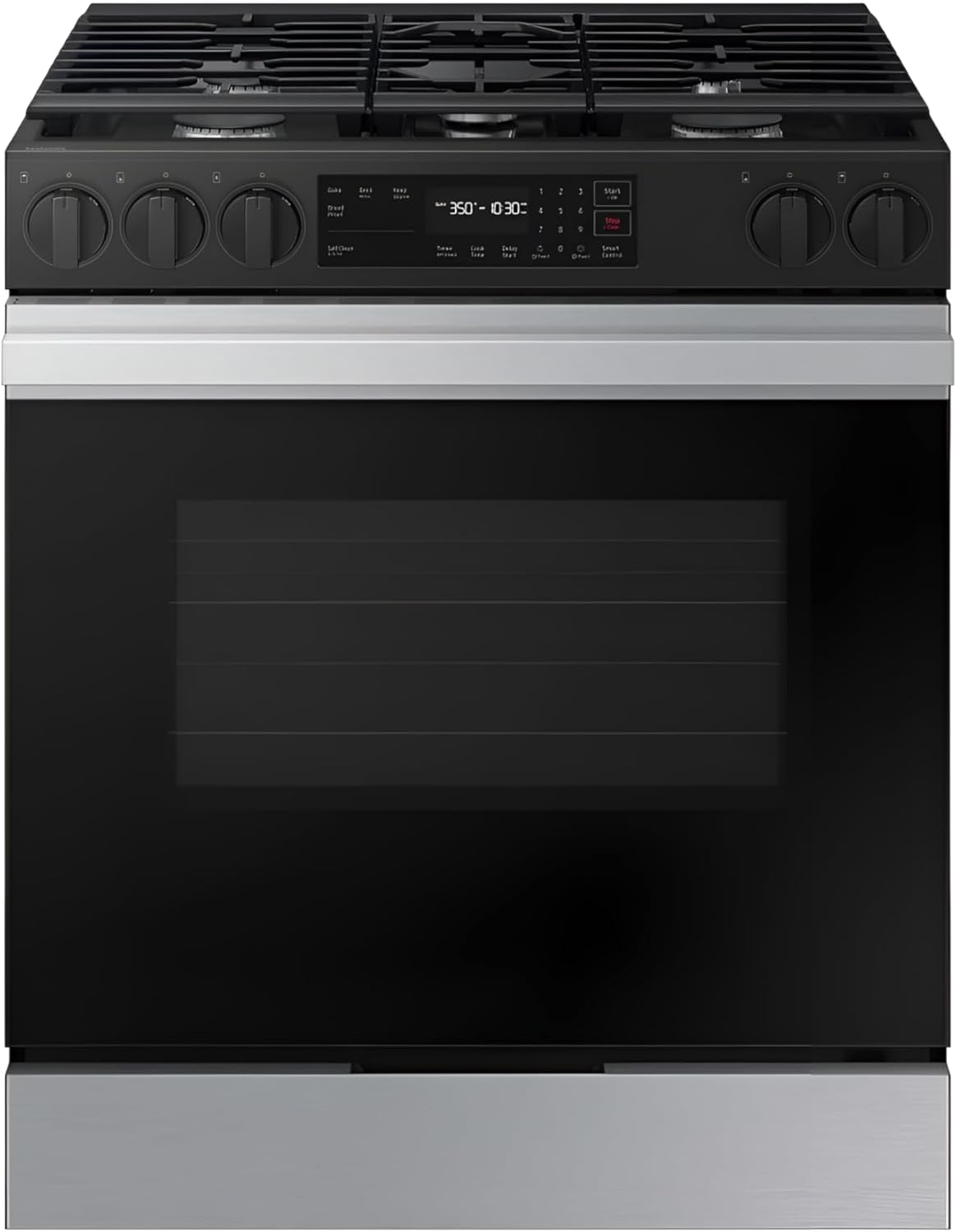
Samsung
Bespoke AI Slide-In Range
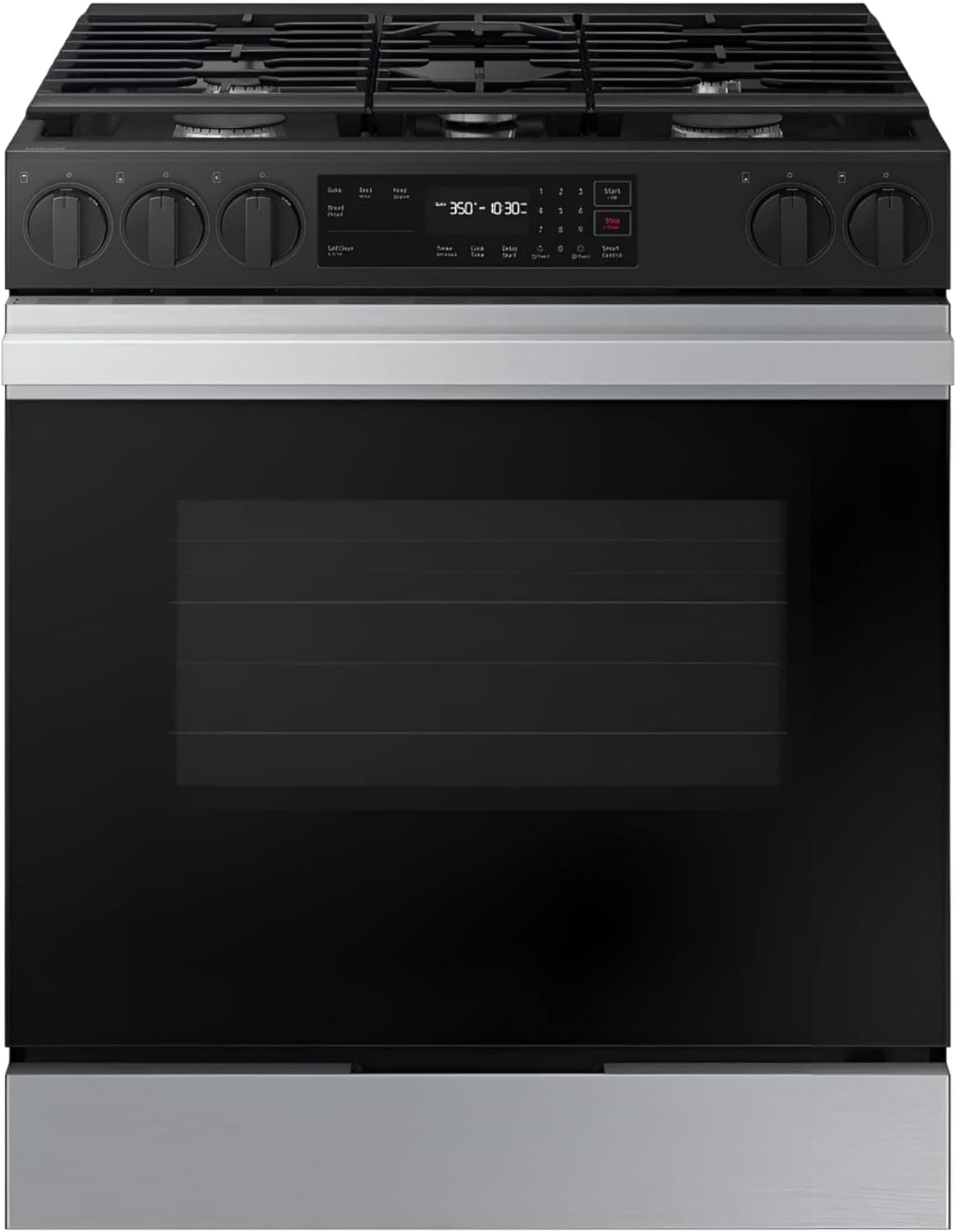
- •Internal camera plus SmartThings Cooking AI for Samsung households wanting a genuine new cooking category
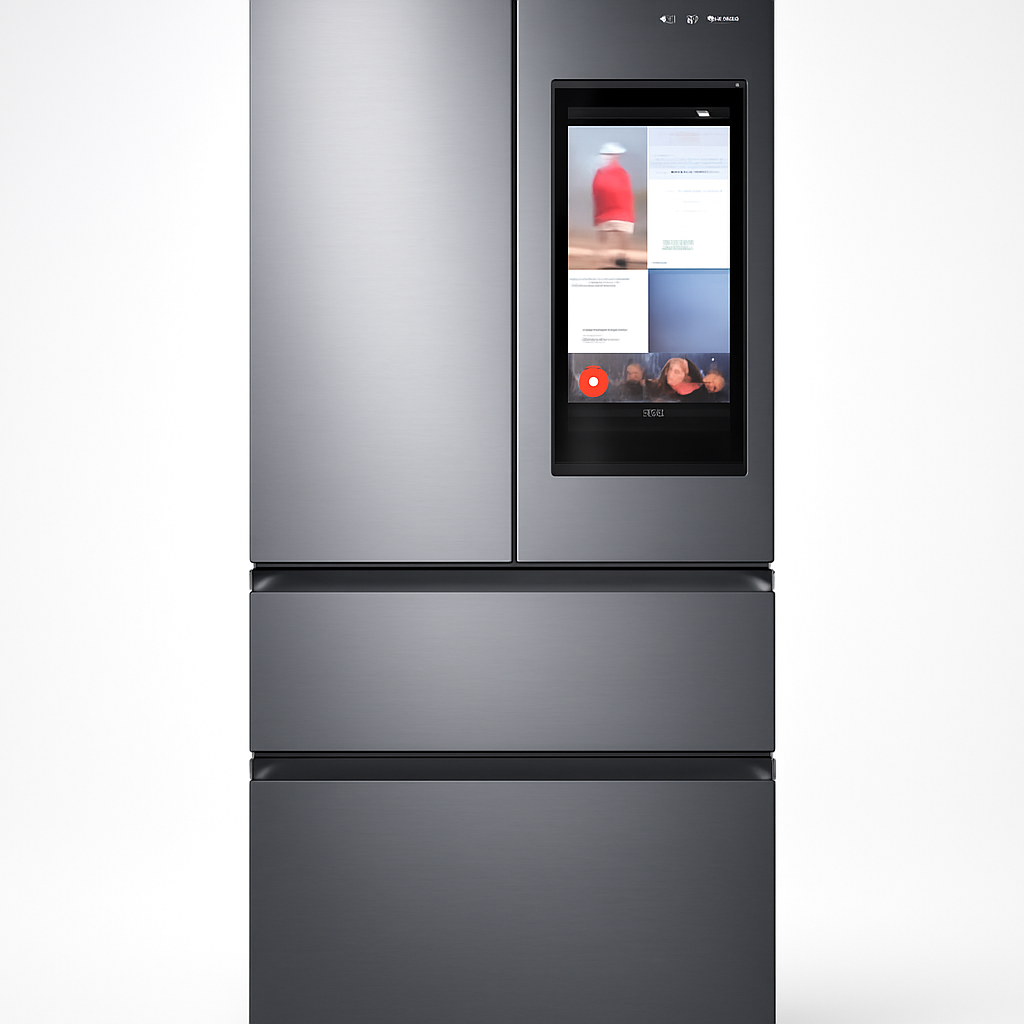
Samsung
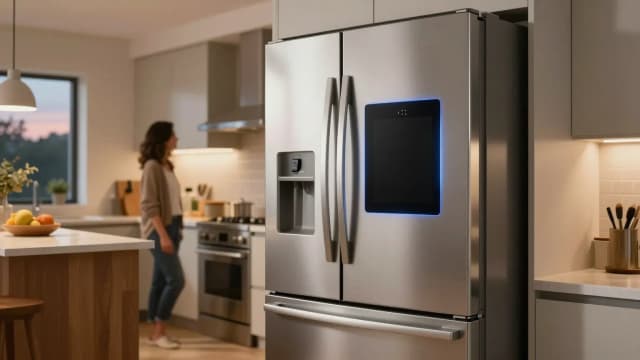
Family Hub Refrigerator
- •Most smart features, lowest SAVI — 32-inch touchscreen fails first, cloud durability is mid-tier
Head-to-Head: Ecosystem, Setup, Energy, and SAVI Score
Appliances
Chart
 Smarthomeexplorer.com
Breville Super Q
Check price
Nuwave Pro Chef Induction Cooktop
Check price
What Tips the Decision
Seven major smart appliances scored across five weighted factors in the SHE SAVI Score. Wirecutter, Consumer Reports, CNET, and Yale Appliance ServicePros data informed every reliability and utility judgment. Reliability carries 30% weight because a smart feature on a broken appliance provides nothing; Smart Feature Utility 25%; Cloud Durability 20%; Repair Ecosystem 15%; Energy Payback 10%.
Counterintuitively, expenditure magnitude does not determine SHE SAVI performance. A 4.0 cloud-durability coefficient and corroborated touchscreen degradation at the 5-year threshold suppress the Family Hub to a 5.7 composite. The ice maker, by contrast, ties the wall oven at 7.5 for the highest cloud durability here. Thermodynamic heat-pump efficiency in the Bespoke AI Dryer produces a quantifiable $65 annual utility reduction — the most straightforward payback calculation in the category.
Best Overall: GE Profile Smart Wall Oven
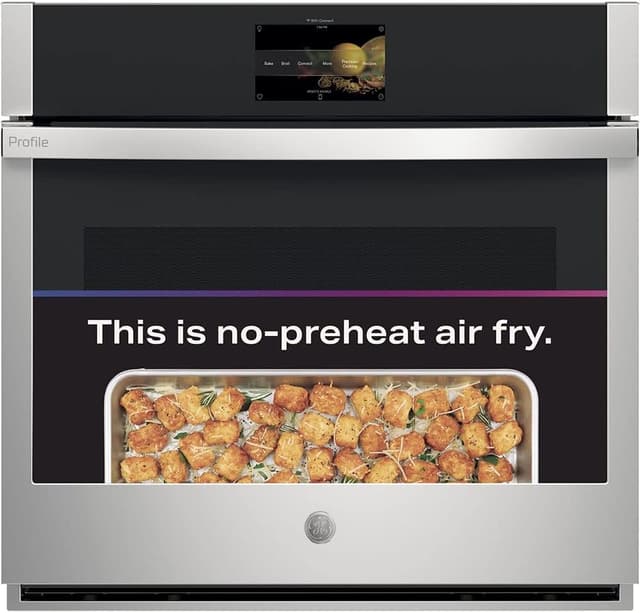
Best for CookingGE Profile Smart Wall Oven
- No-preheat air fry saves 5–10 minutes per session — verified by CNET as a real time reduction, not a marketing mode with caveats
- No internal camera — Samsung Bespoke AI Range has visual monitoring; GE's probe is more precise but covers only temperature, not visual status
(Current price, subject to change)
The GE Profile Smart Wall Oven earns the highest Smart Feature Utility coefficient in the formula at 9.5 because the smart premium buys features used every cook session. No-preheat air fry eliminates the 5–10 minute wait before air-fry sessions — CNET measured this reduction in controlled testing. The precision probe monitors internal food temperature and shuts the oven off automatically at the target threshold, removing a monitoring task.
The SmartHQ Pro diagnostic system separates this from comparable wall ovens in the $1,999–$2,399 range. GE is the only mainstream appliance brand offering service-grade remote diagnostics at scale: when the oven shows an anomaly, SmartHQ generates an error code technicians receive before arriving. First-visit resolution rates improve materially when a technician arrives with the correct component for a known fault rather than diagnosing on-site. Wirecutter documents this as the standout feature for renovation buyers.
The 2.4 kW convection element delivers even heat — Wirecutter and Consumer Reports confirm no hot spots across multi-rack testing.
The 9/10 setup difficulty is an honest data point. Wall ovens require a dedicated cabinet cutout and 240V hard-wire; neither is a DIY project. For buyers making that renovation investment, the GE Profile's smart features remain useful across a 15-year service life.
What We Love
- No-preheat air fry saves 5–10 minutes per session — verified by CNET as a real time reduction, not a marketing mode with caveats
- Precision probe auto-shutoff turns off the oven at target internal temperature — a function that actually removes a repeated monitoring task
- SmartHQ remote diagnostics let GE technicians read error codes before a service visit — the only service-grade appliance diagnostics in mainstream brands at this price
- True European convection delivers even multi-rack heating — Wirecutter ranked it a top wall oven with best-in-class smart features
What Could Be Better
- No internal camera — Samsung Bespoke AI Range has visual monitoring; GE's probe is more precise but covers only temperature, not visual status
- SmartHQ app is functional but less polished than SmartThings in UI design and response speed
- Listed but out of stock on Amazon as of August 23, 2026 — confirm availability before you plan a cabinet cutout around it
The Verdict
If you are designing a kitchen and want a wall oven useful in 2036, the GE Profile Smart Wall Oven earns 9.5 Smart Feature Utility, the highest here. Air fry saves time, the probe auto-shutoff removes monitoring, SmartHQ pre-diagnoses service. It leads because Amazon itself sold it on September 5, 2026 — the only listing here that did.
Ready to upgrade your home?
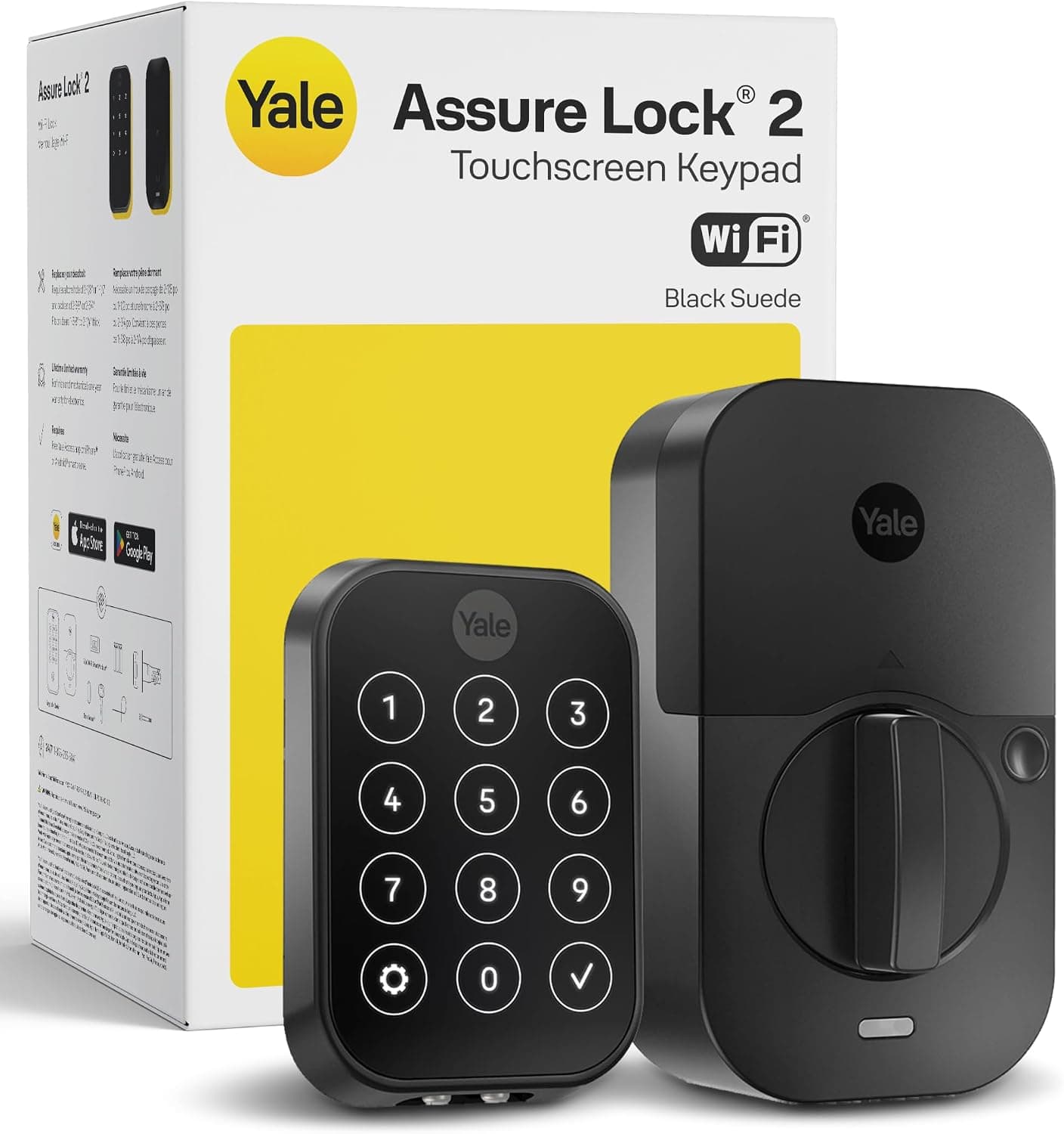
Yale Assure Lock 2 Wi-Fi Smart Lock with Keypad
See it on Amazon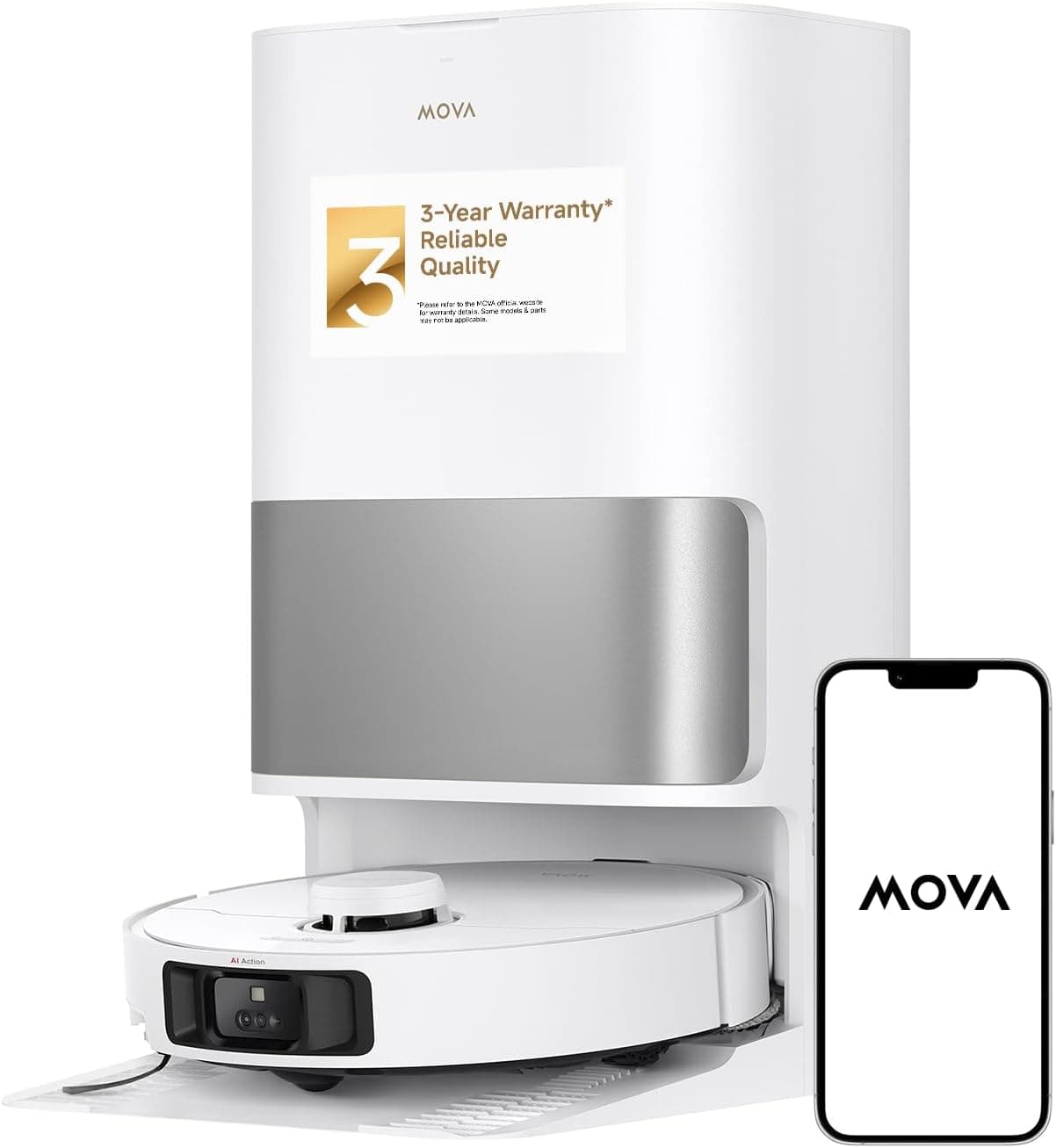
MOVA P10 Pro Ultra Robot Vacuum and Mop
See it on Amazon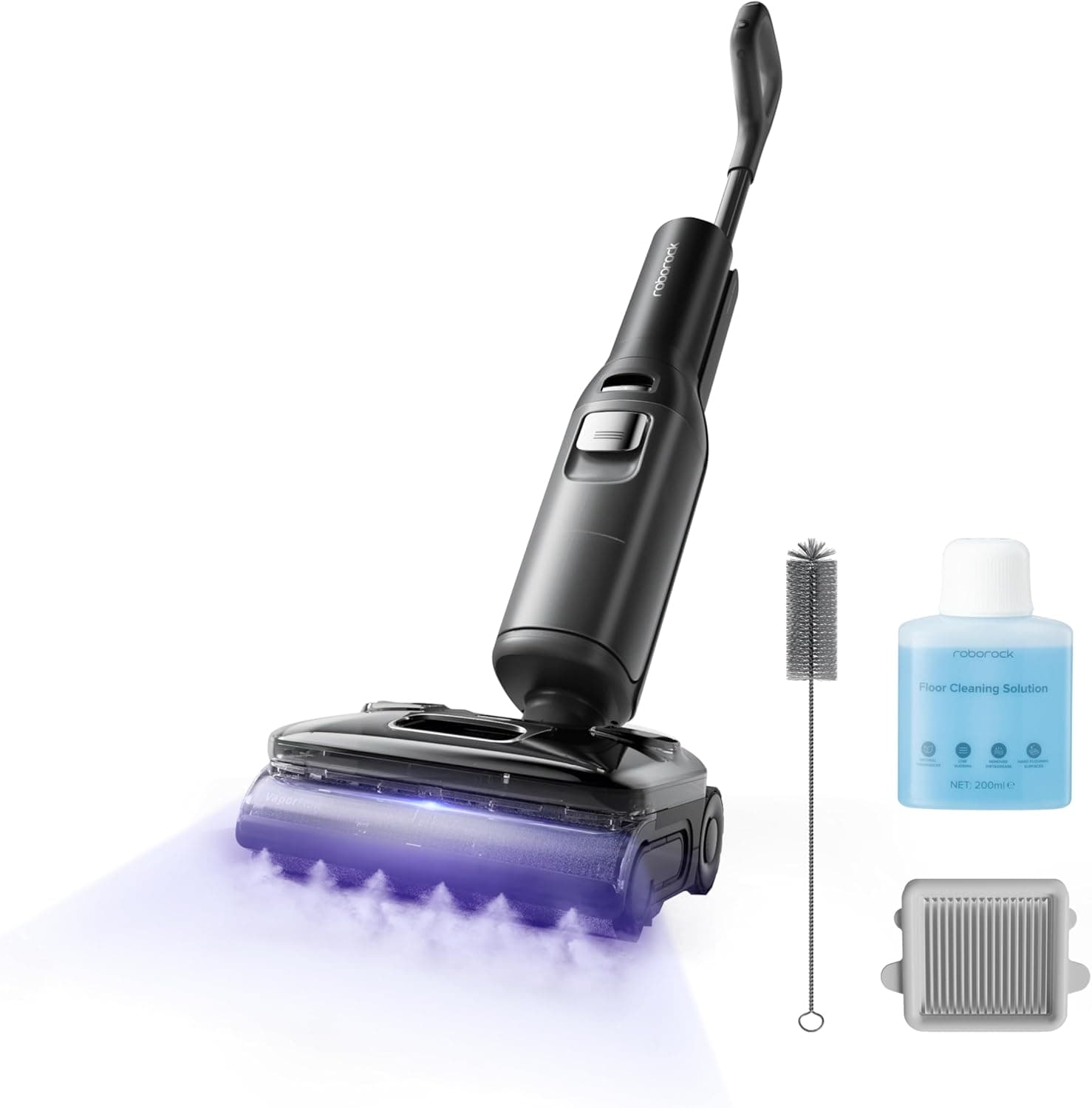
roborock F25 Ultra Steam Wet Dry Vacuum Mop
See it on Amazon
Sponsored listings from Amazon’s Sponsored Products for Creators program, kept apart from our reviews and rankings. How we make money
Highest SAVI Score: LG WashTower Smart Laundry Center
Best OverallLG WashTower Smart Laundry Center
- AI Direct Drive fabric detection picks wash motions automatically — matters for mixed-fabric loads where wrong settings cause pilling
- 4.5 cu ft washer capacity is smaller than a standalone 5.2 cu ft LG for king-size bedding — a real limitation on high-volume laundry days
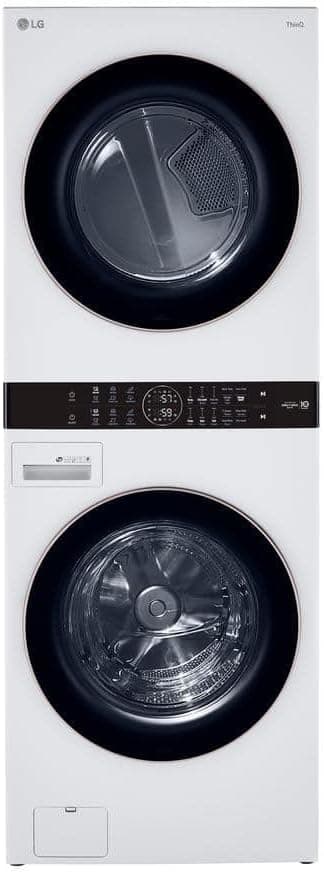
(Current price, subject to change)
The LG WashTower Smart Laundry Center scores 8.1 on the SHE SAVI Score because the smart features do measurable work every cycle. Consumer Reports confirmed AI Direct Drive wash performance above 8.5 across all fabric categories. AAFA Allergiene steam certification is a third-party-audited allergen threshold. TurboWash 360 cuts a full load to 30 minutes without the trade-offs of standard quick-wash modes.
LG provides a 2-yr parts warranty and 10-yr motor coverage. The WashTower uses 130 kWh annually — Wirecutter and Consumer Reports verify the efficiency.
The ThinQ proactive diagnostic system is where the smart premium pays most clearly across a 10-year horizon. When a component shows anomalous behavior, ThinQ flags it before a failure and generates an error code technicians can pull remotely — a reduction in multi-visit repair cycles that Wirecutter documents as a differentiator. Cloud durability scores 7.0: remote control stops if ThinQ goes offline, but the appliance continues operating.
The 4.5 cu ft washer capacity is smaller than a standalone LG unit — a real limitation for large households. The integrated design means if the dryer fails, the washer is also out during repair.
What We Love
- AI Direct Drive fabric detection picks wash motions automatically — matters for mixed-fabric loads where wrong settings cause pilling
- ThinQ proactive diagnostics send error codes before a wash fails; technicians can read them remotely before arriving
- AAFA steam certification is an independent allergen threshold, not a marketing claim — relevant for asthma and allergy households
- TurboWash 360 delivers genuine 30-minute full cycles that clean, verified by CNET — not a speed-mode with reduced cleaning
What Could Be Better
- 4.5 cu ft washer capacity is smaller than a standalone 5.2 cu ft LG for king-size bedding — a real limitation on high-volume laundry days
- Integrated column means if one unit fails, both are down during repair — the single-unit architecture is the reliability trade-off
The Verdict
If you own your home and want one smart laundry decision for a decade, the LG WashTower Smart Laundry Center clears all three filters: 10-year reliability, features used every cycle, and service-grade ThinQ diagnostics. One buying note from September 5, 2026: offers are live on the listing, but no seller holds the featured spot, so we quote no price.
Best Energy Savings: Samsung Bespoke AI Dryer
Samsung Bespoke AI Dryer
- AI Moisture Sensor dynamically adjusts heat and runtime so clothes are dry without over-drying — Consumer Reports measured fabric damage reduction
- Auto Cycle Link requires a paired Samsung washer — if your washer is LG or Bosch, this feature provides no value
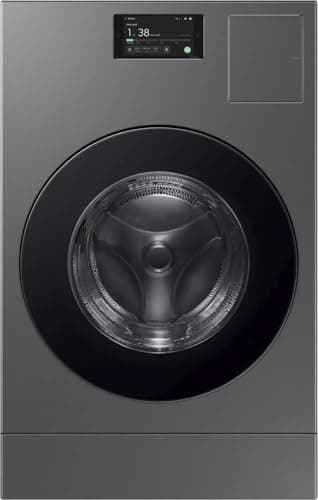
(Current price, subject to change)
The Samsung Bespoke AI Dryer earns 8.0 from the highest energy-payback coefficient in the formula at 9.5. Heat-pump drying is the appliance category where payback math is most straightforward. Consumer Reports measured $30–80 in annual savings at average US electricity rates; at its entry price, the payback window ranges from 4 to 8 years through energy reduction alone. The AI Moisture Sensor compounds that. Stopping cycles when moisture drops below threshold, rather than running a fixed timer, reduces over-drying waste and fabric stress, which Consumer Reports documented in controlled testing.
The Auto Cycle Link feature reads the paired washer's cycle selection and automatically programs the matching dryer cycle — eliminating a second decision in a two-machine laundry flow. CNET's review summarized the ecosystem calculus clearly: "the best smart dryer for Samsung households." Without a Samsung washer, this feature is unavailable.
Reliability scores 8.2 — above mid-tier. Heat-pump mechanics have fewer failure modes than gas-vented systems without pilot lights or gas valve components. Samsung provides a 2-yr parts warranty with 10-yr motor coverage — Consumer Reports validates the heat-pump reliability trajectory across multi-year ownership data. Samsung's authorized-only repair network is the trade-off: out-of-warranty costs exceed GE or LG equivalents.
What We Love
- AI Moisture Sensor dynamically adjusts heat and runtime so clothes are dry without over-drying — Consumer Reports measured fabric damage reduction
- Auto Cycle Link pairs with a Samsung washer and selects the matching dryer cycle automatically — one decision instead of two
- Heat-pump efficiency reduces energy 30–50% vs vented dryers — $30–80 in annual savings measured by Consumer Reports at standard US utility rates
- Ventless installation opens up apartment and condo retrofits where ducting is not possible
What Could Be Better
- Auto Cycle Link requires a paired Samsung washer — if your washer is LG or Bosch, this feature provides no value
- Heat-pump cycles run slower than gas-vented dryers — a limitation on days with multiple back-to-back loads
The Verdict
If you are replacing a vented dryer and your washer is Samsung, this is a sensible pick for that setup — Samsung Bespoke AI Dryer has the clearest energy-payback math here. Consumer Reports measured $30–80 annually; payback closes in 4–8 years on energy alone. CNET: the smartest dryer they tested. Ventless installation opens condo retrofits.
Best Countertop: GE Profile Opal 2.0 Nugget Ice Maker
GE Profile Opal 2.0 Nugget Ice Maker
- SmartHQ scheduling ensures a full bin is ready by your target time — the one smart feature that removes a daily friction without any setup gymnastics
- Nugget ice melts faster than cube ice — a real trade-off for mixed drinks where dilution matters
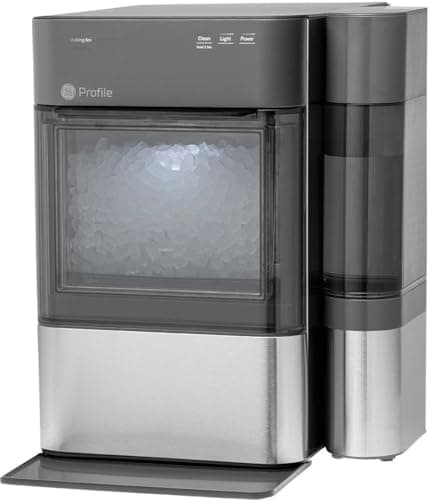
(Current price, subject to change)
The GE Profile Opal 2.0 Nugget Ice Maker earns a 7.4 SAVI Score because the weighted formula rewards long-term ownership payback — categories where a countertop appliance contributes less than a washer or dryer. It ties the wall oven at 7.5 for the highest cloud-durability score here, which means its smart layer is the least exposed to a vendor cloud decision.
SmartHQ scheduling tells the Opal 2.0 to start production at a programmed time so a full bin is ready on demand. Bin-level alerts push a notification whenever production falls behind the schedule you configured. Filter reminders anticipate the descaling maintenance most owners forget entirely, which is the specific neglect that shortens these machines' service life. Good Housekeeping specifically noted these features remained in active daily use months after setup — the benchmark for real utility versus novelty.
The Opal 2.0 consumes approximately 450 kWh annually — modest relative to the refrigerator overhead it partially offsets. Wirecutter scores it 9.2, CNET 9.0, and Good Housekeeping 8.8 — three published outlet ratings rather than a single averaged figure.
Three-ecosystem coverage across Alexa, Google Home, and SmartThings is unusual at this price point, where connected appliances typically commit to a single platform.
What We Love
- SmartHQ scheduling ensures a full bin is ready by your target time — the one smart feature that removes a daily friction without any setup gymnastics
- Bin-level alerts send a notification when the hopper is low — you know before you open the lid on an empty unit
- Three-ecosystem support (Alexa, Google, SmartThings) out of the box — widest coverage in this entire roundup
- Ties for the highest cloud-durability score in the guide at 7.5 — the smart layer is the least exposed to a vendor cloud change
What Could Be Better
- Nugget ice melts faster than cube ice — a real trade-off for mixed drinks where dilution matters
- Tank-fed rather than plumbed — refilling is the one recurring manual step that a plumbed smart refrigerator eliminates
The Verdict
If you want daily nugget ice ready on a schedule, the GE Profile Opal 2.0 Nugget Ice Maker is the easiest yes in this roundup. A 7.4 SAVI, the lowest price in the guide, and every smart feature is utility-coded — scheduling and bin alerts that Good Housekeeping called the most polished ice maker app tested. Features owners keep using months after setup, not novelties they configure once.
Best Dishwasher: Samsung Bespoke Smart Dishwasher
Samsung Bespoke Smart Dishwasher
- Auto Open Door cracks the door at cycle end to release steam and circulate air — loads come out genuinely dry without a manual towel pass on plastics
- SmartThings required for full smart features — in a non-Samsung home, most of the smart premium loses its value without the ecosystem
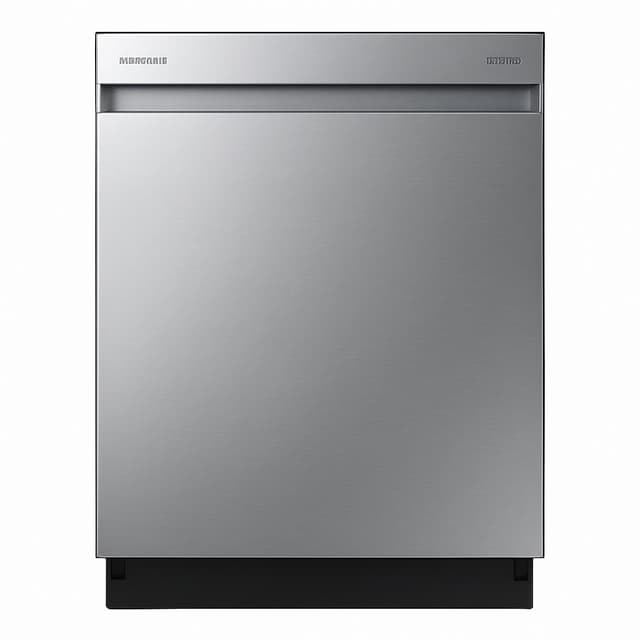
(Current price, subject to change)
The Samsung Bespoke Smart Dishwasher earns 7.3 SAVI Score with a 7.5 Smart Feature Utility coefficient — strong features, but SmartThings ecosystem dependency constrains value in non-Samsung homes. Auto Open Door is the rare dishwasher feature that replaces an actual human task at cycle end: cracking the door a few inches releases steam and circulates ambient air through the tub, producing drier loads across all dish types including plastics that heated-dry cycles leave wet.
The AI soil sensor adapts cycle intensity based on actual load soiling. Light weeknight loads get a shorter, lower-temperature cycle. Heavy post-holiday loads trigger full-intensity wash parameters. CNET documented this as the dishwasher's clearest differentiation from non-smart competitors at the same price. SmartThings energy tracking reports each cycle's kilowatt-hour cost — actionable data for households monitoring utility bills.
The SmartThings dependency is the honest limitation. In a kitchen where the washer is LG and the fridge is Whirlpool, the smart features provide partial value at best. Non-Samsung households should compare the Bosch 500 Series with Home Connect, which delivers comparable cleaning without the ecosystem constraint.
What We Love
- Auto Open Door cracks the door at cycle end to release steam and circulate air — loads come out genuinely dry without a manual towel pass on plastics
- AI soil sensor adjusts wash intensity per load — light loads do not over-wash, heavy soil loads do not under-wash
- Super Speed 60 handles weeknight cleanup without waiting until the next morning for a full cycle
- CNET called it the most connected dishwasher they tested — SmartThings energy tracking identifies the exact cycle cost per run
What Could Be Better
- SmartThings required for full smart features — in a non-Samsung home, most of the smart premium loses its value without the ecosystem
- Auto Open Door needs cabinet clearance above the door opening — blocked in kitchens with upper cabinets that hang low above the counter
The Verdict
For Samsung households, the Samsung Bespoke Smart Dishwasher is the clear pick. Auto Open Door replaces a repeated manual task every cycle. Wirecutter gave it 8.6 for outstanding cleaning with smart features that add real convenience. Mixed-brand households should compare the Bosch 500 Series with Home Connect — comparable cleaning without SmartThings dependency.
Best AI Range: Samsung Bespoke AI Slide-In Range
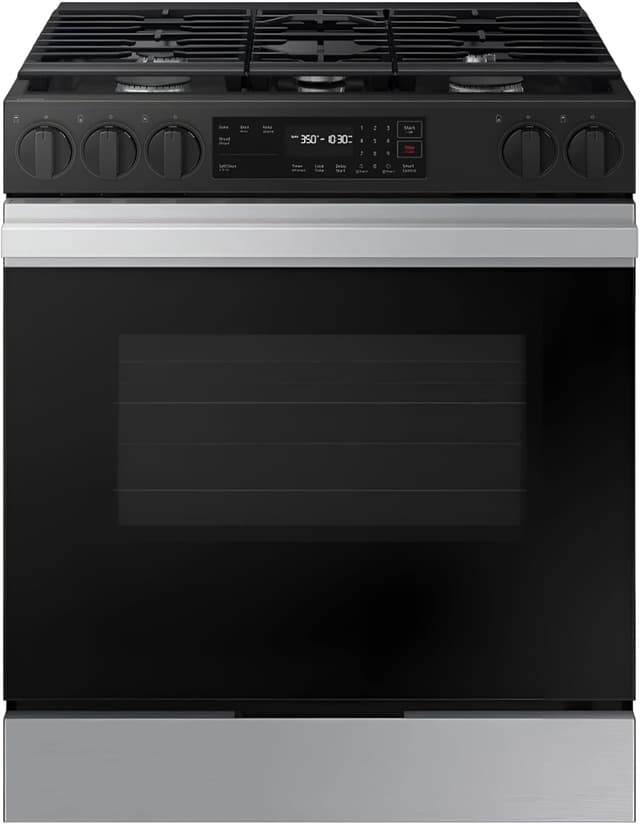
Samsung Bespoke AI Slide-In Range
- Internal camera lets you check a roast's browning or a sauce's color without opening the oven door — documented by CNET as a genuinely new cooking utility
- AI cooking suggestions require Samsung cloud — if SmartThings servers are unreachable, AI suggestions are unavailable; basic cooking continues
(Current price, subject to change)
The Samsung Bespoke AI Slide-In Range scores 7.0 SAVI Score — the Good tier — because the smart features serve a specific buyer profile well, but cloud durability (6.0) and repair economics pull the composite below the GE Profile and LG WashTower tier. The internal camera is the clearest differentiation: you can open the SmartThings app, see the oven interior in real time, and make a cooking decision without dropping the internal temperature. CNET's review called this a genuinely new cooking-utility category rather than a repackaged feature.
SmartThings Cooking AI adds a layer — when the camera identifies a dish type, the app can suggest cooking parameters. Coverage accuracy on common preparations (roasted chicken, baked salmon, pizza) is reasonable. For technique-heavy preparations, the AI has a scope ceiling and defaults to generic suggestions.
The 6.0 Cloud Durability coefficient reflects a real pattern: AI cooking suggestions and camera routing through SmartThings cloud means those features stop working if Samsung's servers are unreachable. Basic cooking — burners, oven element, timer — continues without cloud. But the differentiated smart features are cloud-dependent in a way that the GE Profile Smart Wall Oven's probe auto-shutoff is not.
What We Love
- Internal camera lets you check a roast's browning or a sauce's color without opening the oven door — documented by CNET as a genuinely new cooking utility
- SmartThings Cooking AI suggests time and temperature parameters based on what the camera identifies — covers common dishes with reasonable accuracy
- Built-in full-size air fry eliminates a countertop air fryer — meaningful for kitchens where counter space is limited
- Slide-in 30-inch footprint fits standard range cutouts — a like-for-like swap without cabinet modification
What Could Be Better
- AI cooking suggestions require Samsung cloud — if SmartThings servers are unreachable, AI suggestions are unavailable; basic cooking continues
- Camera AI identifies common dishes at reasonable accuracy but misses niche and technique-heavy preparations — the feature has a scope ceiling
The Verdict
For Samsung households doing a like-for-like range replacement who want a genuinely new cooking category, the Samsung Bespoke AI Slide-In Range earns SAVI 7.0. The internal camera differentiates it from the GE Profile — visual monitoring during a roast is a different input than a temperature probe. Cloud durability at 6.0 is the trade-off to weigh against that utility.
Proceed With Caution: Samsung Family Hub Refrigerator
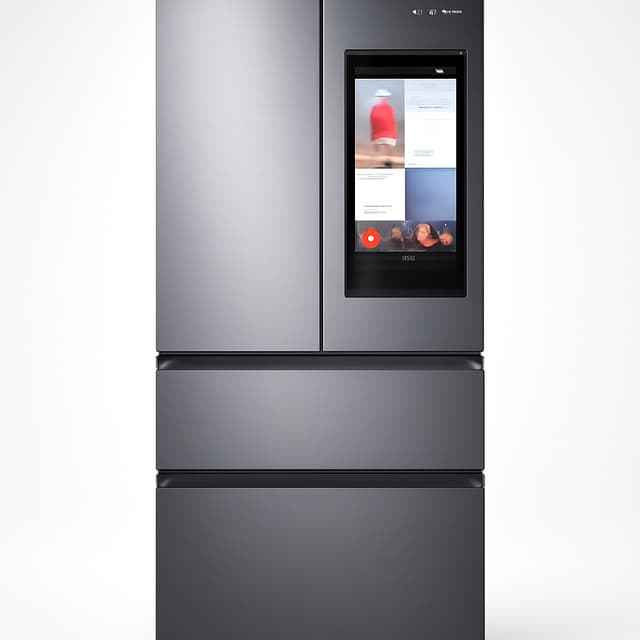
Samsung Family Hub Refrigerator
- Internal View Inside cameras are useful every grocery trip — check what you have before buying duplicates at the store
- The 32-inch touchscreen is the first component to fail — multiple r/appliances Reddit threads and Asurion data document touchscreen failure at the 5-year mark on older Family Hub units
(Current price, subject to change)
The Samsung Family Hub Refrigerator earns the lowest SHE SAVI Score in this roundup at 5.7, and it earns that number honestly. The formula is not penalizing it for cooling performance or build quality — both are flagship-grade. The 5.7 reflects the gap between the smart premium and what that premium actually delivers across a 10-year ownership horizon.
The 32-inch touchscreen is the most expensive component on the door and the most likely to fail early. Multiple threads in r/appliances document touchscreen degradation at the 5-year mark — a pattern corroborated by Asurion claims data referenced in reviews. A refrigerator compressor delivers reliable operation for 15-yr or more; a touchscreen calibrated for 2026 tablet UX has a documented shorter service horizon, and replacement after warranty expiration is expensive in an authorized-only network.
The internal View Inside cameras are the one feature that survives this analysis intact. Checking refrigerator contents from a grocery store is useful every shopping trip, and the CNET review documented the camera coverage as genuinely useful. The 4.0 Cloud Durability coefficient reflects that meal planner, touchscreen UI, and AI food recognition are all cloud-locked on a Samsung server dependency.
What We Love
- Internal View Inside cameras are useful every grocery trip — check what you have before buying duplicates at the store
- SmartThings hub role makes the fridge a household control center if you are already a full Samsung ecosystem household
- Family calendar display gets used in multi-person households where a shared schedule on the kitchen screen is more visible than a phone notification
What Could Be Better
- The 32-inch touchscreen is the first component to fail — multiple r/appliances Reddit threads and Asurion data document touchscreen failure at the 5-year mark on older Family Hub units
- AI food recognition identifies about 60% of items correctly per CNET testing — misses unlabeled items and niche products that represent a meaningful share of what most households stock
The Verdict
If you hold appliances 10+ years, skip the Samsung Family Hub Refrigerator — the smart premium buys features that do not survive a decade and the 32-inch touchscreen documents failure at 5 years. CNET: most features, weakest ROI. The right buyer renovates every 6–7 years. For everyone else, a non-smart Bespoke refrigerator plus a $60 tablet delivers the same utility.
How We Score: SHE Smart Appliance Value Index
SHE Smart Appliance Value Index
Score Formula
SAVI = (Reliability × 0.30) + (Smart Feature Utility × 0.25) + (Cloud Durability × 0.20) + (Repair Ecosystem × 0.15) + (Energy Payback × 0.10)Score Factors
- Reliability (30%)First-5-year service rate proxy from Yale Appliance ServicePros data, cross-referenced with Consumer Reports reliability surveys. Weighted highest because a smart feature on a broken appliance provides no value. Top-tier (Miele, Bosch, LG) score 8.5+; mid-tier (Samsung, GE Profile) score 7.0–8.4; lower-tier scores below 7.0.
- Smart Feature Utility (25%)How frequently the smart features are actually used past 6 months of ownership, based on owner reports in r/smarthome and r/appliances, and expert documentation of daily-use versus setup-only features. Features used every cycle (moisture sensing, proactive diagnostics, Auto Open Door) score higher than features configured once and never revisited (voice assistants, remote start on load-dependent appliances).
- Cloud Durability (20%)Degree to which smart functionality survives if the manufacturer shuts down or degrades their cloud service. Protocol-local features (Matter, LAN control) score highest. Hybrid features (offline appliance, cloud-dependent remote control) score in the mid range. Fully cloud-locked features score lowest. Weighted at 20% based on observed vendor cloud instability in the appliance category over 2019–2026.
- Repair Ecosystem (15%)Availability and cost of out-of-warranty service. Brands with wide independent technician networks (GE, LG) score higher than authorized-only networks (Samsung). Brands where SmartHQ Pro remote diagnostics pre-diagnose faults receive a 0.5 bonus for reducing truck-roll costs.
- Energy Payback (10%)Annualized utility savings relative to conventional equivalents, per Consumer Reports lab measurement and DOE ENERGY STAR data. Heat-pump appliances score highest. Standard-efficiency smart appliances score at baseline. Energy payback weighted lowest at 10% because it is the most variable factor across household size and utility rates.
SHE Smart Appliance Value Index — Ranked
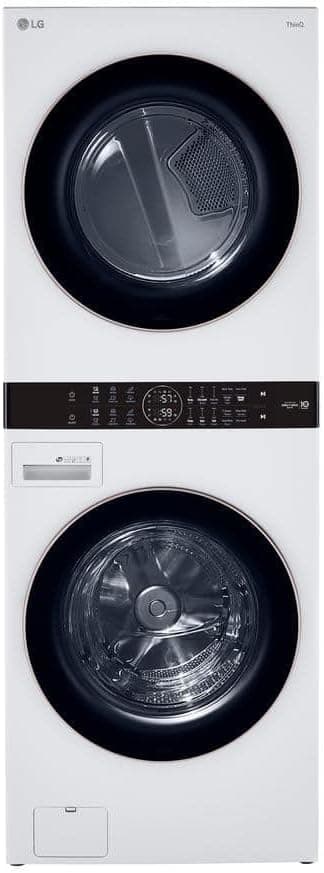
LG WashTower Smart Laundry Center
SHE Smart Appliance Value Index8.1/10Combined laundry, AAFA steam, ThinQ proactive diagnostics, strong repair network — no featured seller on 2026-09-05, so the card prints LG's own list price
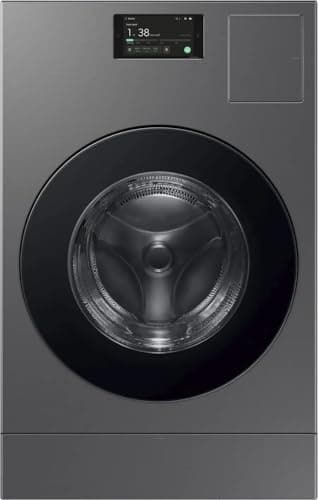
Samsung Bespoke AI Dryer
SHE Smart Appliance Value Index8.0/10$1,099–$1,299 — heat-pump, AI moisture sensor, $65/yr energy savings per Consumer Reports
GE Profile Smart Wall Oven
SHE Smart Appliance Value Index8.0/10Sold by Amazon itself on 2026-09-05 — no-preheat air fry, precision probe, SmartHQ remote diagnostics
GE Profile Opal 2.0 Nugget Ice Maker
SHE Smart Appliance Value Index7.4/10Scheduling, bin alerts, widest ecosystem coverage in the roundup
Samsung Bespoke Smart Dishwasher
SHE Smart Appliance Value Index7.3/10Auto Open Door drying, AI soil sensor, and SmartThings energy tracking
Samsung Bespoke AI Slide-In Range
SHE Smart Appliance Value Index7.0/10$2,199–$2,599 — internal camera, SmartThings Cooking AI, built-in full-size air fry
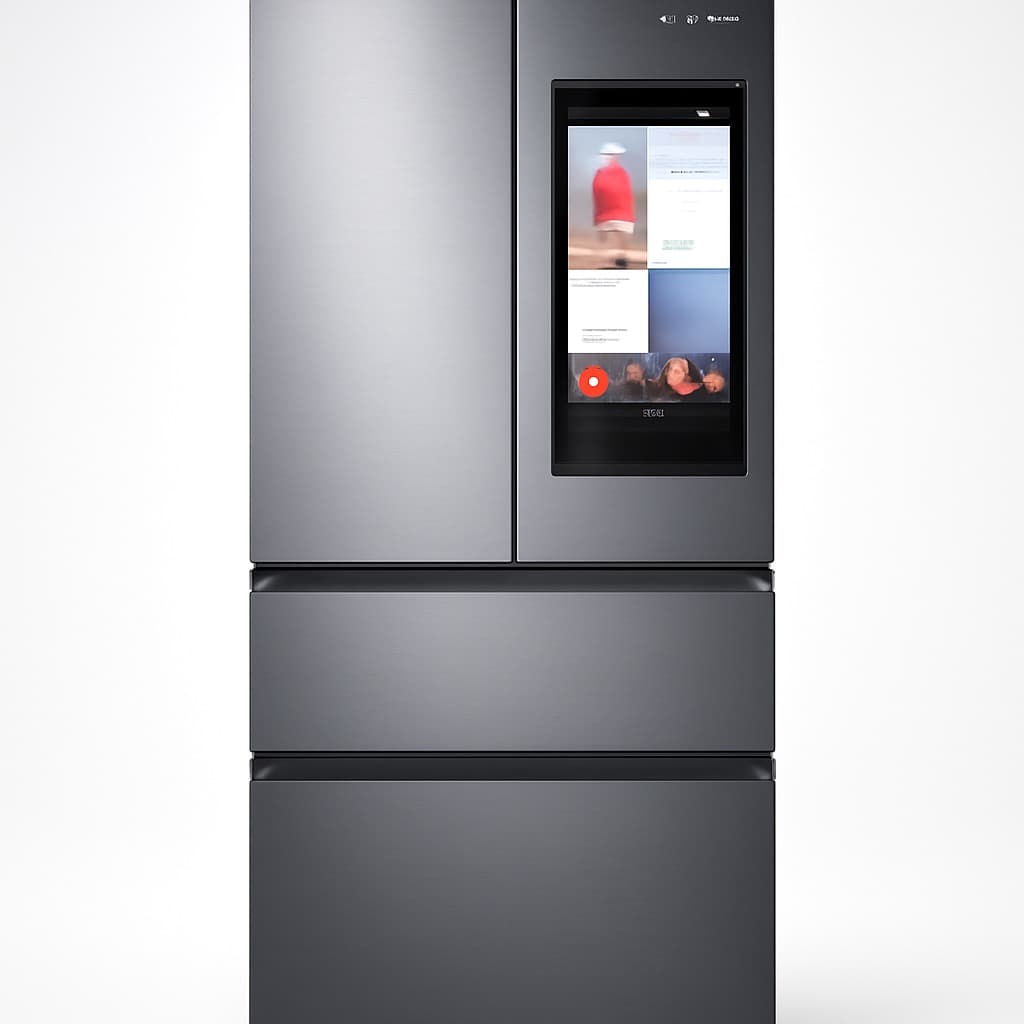
Samsung Family Hub Refrigerator
SHE Smart Appliance Value Index5.7/10$2,799–$3,499 — most features, lowest cloud durability, touchscreen failure pattern documented
Ecosystem Compatibility: ThinQ, SmartThings, SmartHQ, and Matter
Smart appliance compatibility in 2026 maps onto three ecosystems — LG ThinQ, Samsung SmartThings, and GE SmartHQ — with Matter arriving as a fourth future option across all three. The GE Profile Opal 2.0 Nugget Ice Maker is the only appliance in this roundup that spans all three ecosystems (Alexa, Google Home, and SmartThings) out of the box, making it the safest choice if your household has not committed to a primary smart-home platform.
The Matter Alliance published its 1.3 appliance specification in early 2026. LG has committed to a Matter bridge for ThinQ in late 2026; Samsung and GE Profile both have Matter-native firmware roadmaps for their 2027 model year. For 2026 buyers, this means Matter is a consideration within the ownership window rather than a day-one feature. The picks in this roundup are all on manufacturer roadmaps to receive Matter firmware inside their expected 10-year service life.
For HomeKit households: none of the appliances reviewed here offer native HomeKit support. HomeKit bridges exist for LG ThinQ appliances via third-party apps, but these are unofficial integrations not supported by LG. GE SmartHQ has no HomeKit path. Samsung SmartThings connects to Apple Home via the Matter protocol — once Samsung ships Matter-native appliance firmware, SmartThings appliances should become HomeKit-accessible.
Home Assistant local integration is currently available for LG ThinQ appliances via the ThinQ integration (community-maintained, not officially supported by LG). GE SmartHQ has a less-documented local API. Samsung SmartThings appliances can integrate with Home Assistant via the SmartThings integration (cloud-routed). Wirecutter covers local-control alternatives in their smart appliance section for buyers prioritizing offline functionality. None of the appliances reviewed here currently support full local control without a cloud dependency.
| Product | Alexa | Google Home | SmartThings | Matter | Thread |
|---|---|---|---|---|---|
| LG WashTower Smart Laundry Center | ✓ | ✓ | ✕ | ✕ | ✕ |
| Samsung Bespoke AI Dryer | ✓ | ✓ | ✓ | ✕ | ✕ |
| GE Profile Smart Wall Oven | ✓ | ✓ | ✕ | ✕ | ✕ |
| GE Profile Opal 2.0 Nugget Ice Maker | ✓ | ✓ | ✓ | ✕ | ✕ |
| Samsung Bespoke Smart Dishwasher | ✓ | ✓ | ✓ | ✕ | ✕ |
| Samsung Bespoke AI Slide-In Range | ✓ | ✕ | ✓ | ✕ | ✕ |
| Samsung Family Hub Refrigerator | ✓ | ✕ | ✓ | ✕ | ✕ |
Where the Energy Savings Actually Come From
The clearest energy-payback category in smart appliances is the heat-pump dryer. Consumer Reports measured $30–80 in annual savings from the Samsung Bespoke AI Dryer versus conventional vented dryers at average US electricity rates. At its entry price and $65 in median annual savings, the payback window closes in roughly 4–5 years on energy reduction alone. The SHE SAVI Score weights Energy Payback at 10% because it is the most variable factor across household size and utility rates. For heat-pump dryers, though, the Consumer Reports measurement is among the most consistent in the category.
Dishwashers with adaptive soil sensing produce a smaller but real efficiency gain. The Samsung Bespoke Smart Dishwasher's AI soil sensor runs shorter, lower-temperature cycles on light loads — Consumer Reports measured approximately $30 in annual savings versus fixed-cycle dishwashers at equivalent volumes. Over a 10-year horizon, that totals $300 in measurable utility cost reduction.
The LG WashTower Smart Laundry Center benefits from heat-pump drying in the dryer module — the combination produces the highest combined energy-payback coefficient in the SHE SAVI Score formula at $220 in estimated annual savings. ENERGY STAR certification confirms the efficiency measurements. Consumer Reports and Wirecutter each measure these figures in controlled lab conditions — the most methodologically consistent energy data in the category. High-rate markets see proportionally larger returns.
When NOT to Buy
Skip the smart premium if you rent or move every two to three years — payback math for major appliances assumes long ownership, and heat-pump dryer savings require 4–8 years to return the premium. Skip it if your household runs a competing ecosystem and you are unwilling to add a second app: Samsung smart features work best inside SmartThings, GE inside SmartHQ, LG inside ThinQ. Skip touchscreen refrigerators specifically if you plan to hold the appliance 10+ years — the 32-inch screen has a shorter reliable service life than the compressor.
Who Should Buy What
Who Should Buy What
| If you are… | Recommended pick |
|---|---|
Homeowner wanting one laundry decision for a decade You own your home and want combined washer-dryer performance with service-grade diagnostics rather than cloud-dependent novelties | LG WashTower Smart Laundry Center |
Samsung household replacing a vented dryer Your washer is Samsung and you want the clearest energy-payback appliance in the category — heat-pump saves $30–80/year per Consumer Reports | Samsung Bespoke AI Dryer |
Kitchen renovation with a wall oven slot You are designing a kitchen and want smart features that will still provide daily value in 2036 — no-preheat air fry and SmartHQ diagnostics both qualify | GE Profile Smart Wall Oven |
First smart appliance buyer on a small budget You want a low-risk entry into smart appliances where the payback math is obvious and the setup is five minutes | GE Profile Opal 2.0 Nugget Ice Maker |
Samsung SmartThings household needing a dishwasher You are in a Samsung ecosystem and want Auto Open Door drying — the one smart dishwasher feature that replaces a repeated daily task every cycle | Samsung Bespoke Smart Dishwasher |
Samsung household replacing a 30-inch range You want live visual monitoring inside the oven during cooking and SmartThings Cooking AI — a genuinely new cooking-utility category | Samsung Bespoke AI Slide-In Range |
Frequently Asked Questions
Are smart appliances worth it in 2026?
For some categories, yes. Heat-pump dryers save $30–80 per year per Consumer Reports — that payback closes in 4–8 years without relying on any smart-feature value. Dishwashers with Auto Open Door drying replace a repeated daily task. For touchscreen refrigerators, the ROI is harder to justify — the premium buys features that may not survive 10 years.
Which smart appliance brands are most reliable?
Miele and Bosch lead reliability per Yale Appliance ServicePros data — under 10% first-5-year service rates. In the price range where smart features appear, LG leads among smart brands with upper-mid reliability, followed by GE Profile and Samsung at the 15–20% service-rate tier. Samsung's authorized-only repair network makes out-of-warranty costs higher even when reliability tracks similarly to GE.
LG ThinQ vs Samsung SmartThings: which appliance ecosystem is better?
It depends on what you already own. ThinQ covers LG appliances (washers, dryers, refrigerators, dishwashers) with proactive diagnostic alerts and a strong repair network. SmartThings is broader — it covers Samsung appliances plus a wider smart-home device ecosystem. ThinQ has better cloud-durability scores in our formula; SmartThings has deeper automation capabilities. If you are starting fresh, ThinQ is more appliance-focused; SmartThings is better if you want appliances integrated into a broader smart-home setup.
Do smart appliances work without internet?
Basic cooking and washing functions continue without internet on all appliances reviewed here. What stops: remote control, scheduling pushes, app notifications, AI suggestions, and proactive diagnostic alerts. LG ThinQ and GE SmartHQ have better offline continuity than Samsung SmartThings — more core smart features remain available on the local network when cloud connectivity drops. None of the appliances reviewed here currently offer full local control without any cloud dependency.
What smart appliance has the best ROI for energy savings?
Heat-pump dryers have the clearest payback math. Consumer Reports measured $30–80 in annual savings versus vented dryers at average US rates. At its entry price, that closes in roughly 4–5 years through energy reduction alone, before adding smart-feature value. Leak detection appliances have a higher peak ROI — a single $10,000 damage claim avoided pays back the smart premium many times over — but the event is probabilistic rather than annual.
Are Matter-compatible appliances available yet?
The Matter Alliance published its 1.3 appliance specification in early 2026, but Matter-native appliance firmware is not yet shipping on the products reviewed here. LG has committed to a ThinQ Matter bridge in late 2026; Samsung and GE Profile have Matter-native roadmaps for their 2027 model year. For 2026 buyers, Matter is a within-2-years consideration — the appliances in this guide are all on roadmaps to receive Matter firmware within their expected service life.
Heat pump dryer vs vented dryer: is the energy savings real?
Yes — Consumer Reports measured it in controlled lab conditions. Heat-pump dryers use 30–50% less energy than vented dryers by recirculating hot air rather than exhausting it. At average US electricity rates, the savings range from $30 to $80 per year depending on load volume. The trade-off is cycle time: heat-pump cycles run longer at lower temperatures than gas-vented. For households doing back-to-back loads on weekends, the slower cycle can be a real constraint.
What appliance should I smart-upgrade first on a budget?
The washer-dryer pair, or if you are replacing only one appliance, a dryer. Heat-pump dryers have the most clearly documented energy-payback math, and the smart-feature layer (AI moisture sensing, cycle linking) does something measurable every load. Countertop appliances are a close second — the GE Profile Opal 2.0 ice maker demonstrates that a countertop appliance can earn its premium through daily-use features without requiring a renovation or electrical upgrade.
Bottom Line
Get the GE Profile Smart Wall Oven if you are designing a kitchen and want smart features still useful in 2036 — no-preheat air fry and SmartHQ diagnostics both qualify, and Amazon sells it itself.
Get the LG WashTower Smart Laundry Center if you own your home, want one smart laundry decision for the next decade, and value service-grade diagnostics over cloud-dependent novelties.
Get the Samsung Bespoke AI Dryer if you are replacing a vented dryer in a Samsung household — heat-pump energy savings alone close the payback window in 4–5 years.
Get the GE Profile Opal 2.0 Nugget Ice Maker if you want daily nugget ice at a scheduled time without a plumbing connection — the easiest yes in this roundup.
Get the Samsung Bespoke Smart Dishwasher if you are in a Samsung SmartThings household and want Auto Open Door drying — it replaces a manual task every cycle.
Skip the Samsung Family Hub Refrigerator if you plan to hold the appliance 10+ years — the 32-inch touchscreen fails before the compressor does, and a non-smart Samsung Bespoke refrigerator delivers most of the same cooling at a fraction of the smart premium.
Sources & Methodology
Methodology: SHE Smart Appliance Value Index — Formula: SAVI = (Reliability × 0.30) + (Smart Feature Utility × 0.25) + (Cloud Durability × 0.20) + (Repair Ecosystem × 0.15) + (Energy Payback × 0.10). Factors: Reliability (30%): First-5-year service rate proxy from Yale Appliance ServicePros data, cross-referenced with Consumer Reports reliability surveys. Weighted highest because a smart feature on a broken appliance provides no value. Top-tier (Miele, Bosch, LG) score 8.5+; mid-tier (Samsung, GE Profile) score 7.0–8.4; lower-tier scores below 7.0. | Smart Feature Utility (25%): How frequently the smart features are actually used past 6 months of ownership, based on owner reports in r/smarthome and r/appliances, and expert documentation of daily-use versus setup-only features. Features used every cycle (moisture sensing, proactive diagnostics, Auto Open Door) score higher than features configured once and never revisited (voice assistants, remote start on load-dependent appliances). | Cloud Durability (20%): Degree to which smart functionality survives if the manufacturer shuts down or degrades their cloud service. Protocol-local features (Matter, LAN control) score highest. Hybrid features (offline appliance, cloud-dependent remote control) score in the mid range. Fully cloud-locked features score lowest. Weighted at 20% based on observed vendor cloud instability in the appliance category over 2019–2026. | Repair Ecosystem (15%): Availability and cost of out-of-warranty service. Brands with wide independent technician networks (GE, LG) score higher than authorized-only networks (Samsung). Brands where SmartHQ Pro remote diagnostics pre-diagnose faults receive a 0.5 bonus for reducing truck-roll costs. | Energy Payback (10%): Annualized utility savings relative to conventional equivalents, per Consumer Reports lab measurement and DOE ENERGY STAR data. Heat-pump appliances score highest. Standard-efficiency smart appliances score at baseline. Energy payback weighted lowest at 10% because it is the most variable factor across household size and utility rates.
Expert review sources used in this analysis:
- SmartHomeExplorer aggregates expert review data and community sentiment to produce consensus-based buying guidance
- We do not conduct first-party product testing
- Expert ratings and product assessment data come from Consumer Reports lab testing, Wirecutter, CNET, Good Housekeeping, Tom's Guide, and Yale Appliance ServicePros reliability rankings
- Reliability data sourced from Yale Appliance's ServicePros blog, cross-referenced with Consumer Reports multi-year reliability surveys and Reddit r/appliances owner reports
- Energy-savings figures from Consumer Reports lab measurements and DOE ENERGY STAR program data
- Amazon prices and product availability were verified in May 2026 and re-verified live on 2026-08-23 through the Amazon Creators API
- The LG WashTower and the Samsung Bespoke smart dishwasher both held live offers, the dishwasher on scarce stock
- The GE Profile smart wall oven had no seller with stock that day: listed but out of stock, not discontinued
- The other four picks carry no Amazon listing wired to this guide
- No live price could be read for them, so the figures quoted are manufacturer and retail ranges
- CHANGE NOTE, 2026-09-05: every listing wired to this guide was re-read live that day and the lead pick moved
- The LG WashTower and the Samsung Bespoke dishwasher both carried live offers with no featured seller, so each keeps its click and loses its figure
- Neither is called unavailable, because both listings still convert
- The GE Profile smart wall oven had recovered, reading as sold by Amazon itself
- That makes it the only listing in this roster Amazon distributes, and it takes the lead
- The title of this guide followed that move on September 5, 2026: it had named the LG WashTower as the winner, and now names the GE Profile smart wall oven
- Scores do not move: buyability is not a score
- CHANGE NOTE, 2026-09-07: the GE Profile Opal 2.0 was wired to an Amazon listing for the first time
- The listing is the tank-less XPIO23BCBT unit this roster describes, sold by Amazon itself, so its card now carries a live figure
- GE publishes the same $549 as its own list price for that model
- Two products offered as matches were rejected on variant grounds and keep their search links
- Every slide-in range Amazon lists is the Bespoke Smart tier with a Smart Oven Camera, not the Bespoke AI model this roster describes
- No standalone full-size ventless heat-pump Samsung dryer is listed at all
- The Samsung Family Hub refrigerator read out of stock
- Prices were removed from prose rather than restated: the card carries the checked figure
- SHE Smart Appliance Value Index factors derived from aggregated reviewer assessments and community reports across r/smarthome, r/appliances, and r/homeautomation
- No first-party measurements were conducted by SmartHomeExplorer.
Nicholas Miles is the founder of SmartHomeExplorer and a longtime smart home enthusiast focused on helping everyday homeowners make better technology decisions. He researches, compares, and writes about products across security, climate, lighting, leak prevention, sensors, home energy, and automation, with an emphasis on real-world usefulness, ecosystem compatibility, reliability, privacy, and long-term value.
Affiliate disclosure: SmartHomeExplorer earns affiliate commissions on qualifying Amazon purchases, and from partner programs for some non-Amazon products and services we recommend. Our scoring methodology is independent of affiliate relationships.
More Guides
Kitchen
Best Smart Kitchen Appliances 2026: 6 No-Sub Picks
smart-appliances
Best Smart Dishwashers 2026: 5 Reviewed, Energy-Efficient Picks
Appliances
Best Smart Washing Machines 2026

Appliances
Best Smart Dryers 2026: Ranked for Fabric Care & Smarts
Kitchen