
Best Smart Refrigerator 2026: Which Ones Are Worth It
Only some smart-fridge premiums pay back. We scored 8 LG, Samsung, and GE models on verified smart utility, spec-sheet kWh, reliability, and value density. The LG LRMVS3006S InstaView leads the picks Amazon itself sells; the top-scoring Family Hub is unavailable there.
This article contains affiliate links. We may earn a commission at no extra cost to you. Prices change frequently — check the current price on Amazon before buying. Learn more
The Short Answer
Buy the LG LRMVS3006S InstaView Craft Ice, the highest-scoring refrigerator Amazon itself currently sells, combining this roster's largest measured capacity with LG's 85 percent reliability determination. The top-scoring Samsung Family Hub listing carried absolutely no purchasable offer on September 5, 2026.
Featured in this Guide
Lg
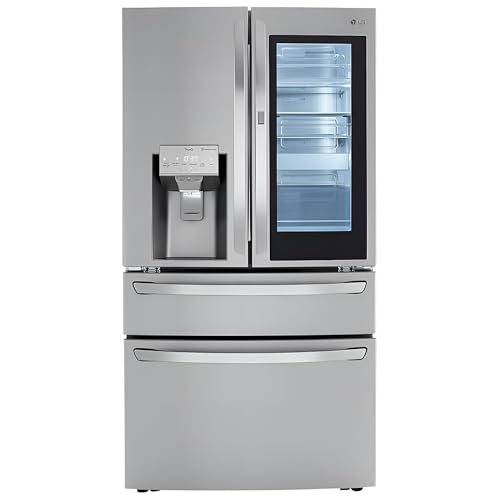
Lrmvs3006S Instaview Craft Ice
- •Largest measured capacity here at 29.5 cu ft
- •LG's 85% reliability tier
- •The top-scoring pick Amazon itself sells
Samsung
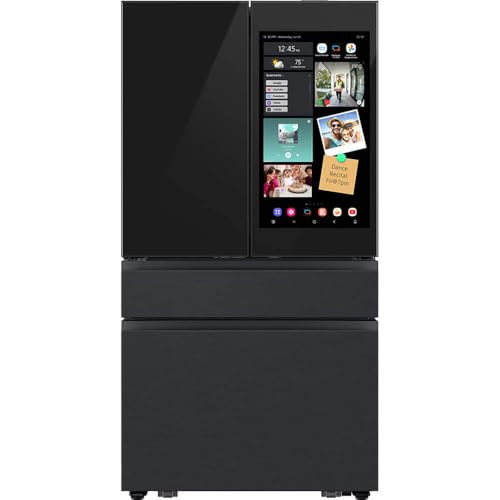
Bespoke 4Door Ai Family Hub
- •Only screen-and-camera fridge here
- •Tops the Worth-It ranking at 8.9
- •Currently unavailable on Amazon
Samsung
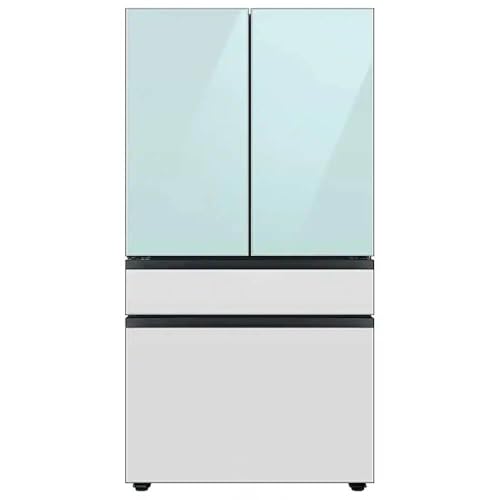
Bespoke 4Door Beverage Center
- •Family Hub capacity without the screen
- •Same 72% Samsung reliability
- •No featured Amazon offer today
Lg
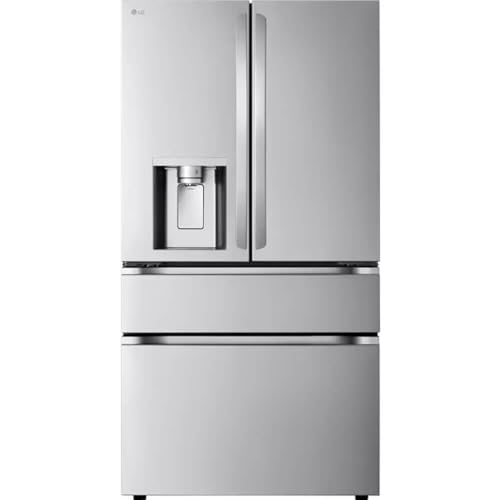
Lf29H8330S Smart Standard Depth
- •Full-Convert drawer flexes fridge to freezer
- •No Craft Ice or InstaView
- •Mid-price standard depth
Samsung
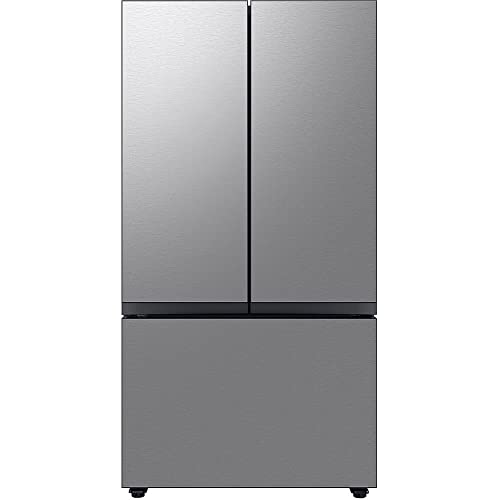
Bespoke Counter Depth 3Door
- •Ice Bites plus a counter-depth fit
- •No lab has tested this trim
- •Sold by Amazon itself
Ge
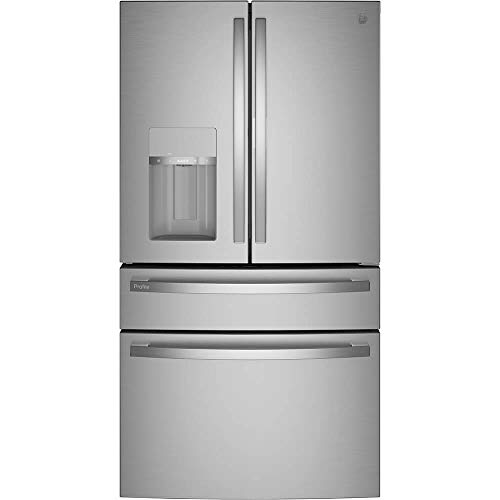
Profile Pvd28Bynfs 4Door French Door
- •Covered at three testing outlets
- •Older design, single ice maker
- •Highest live price here
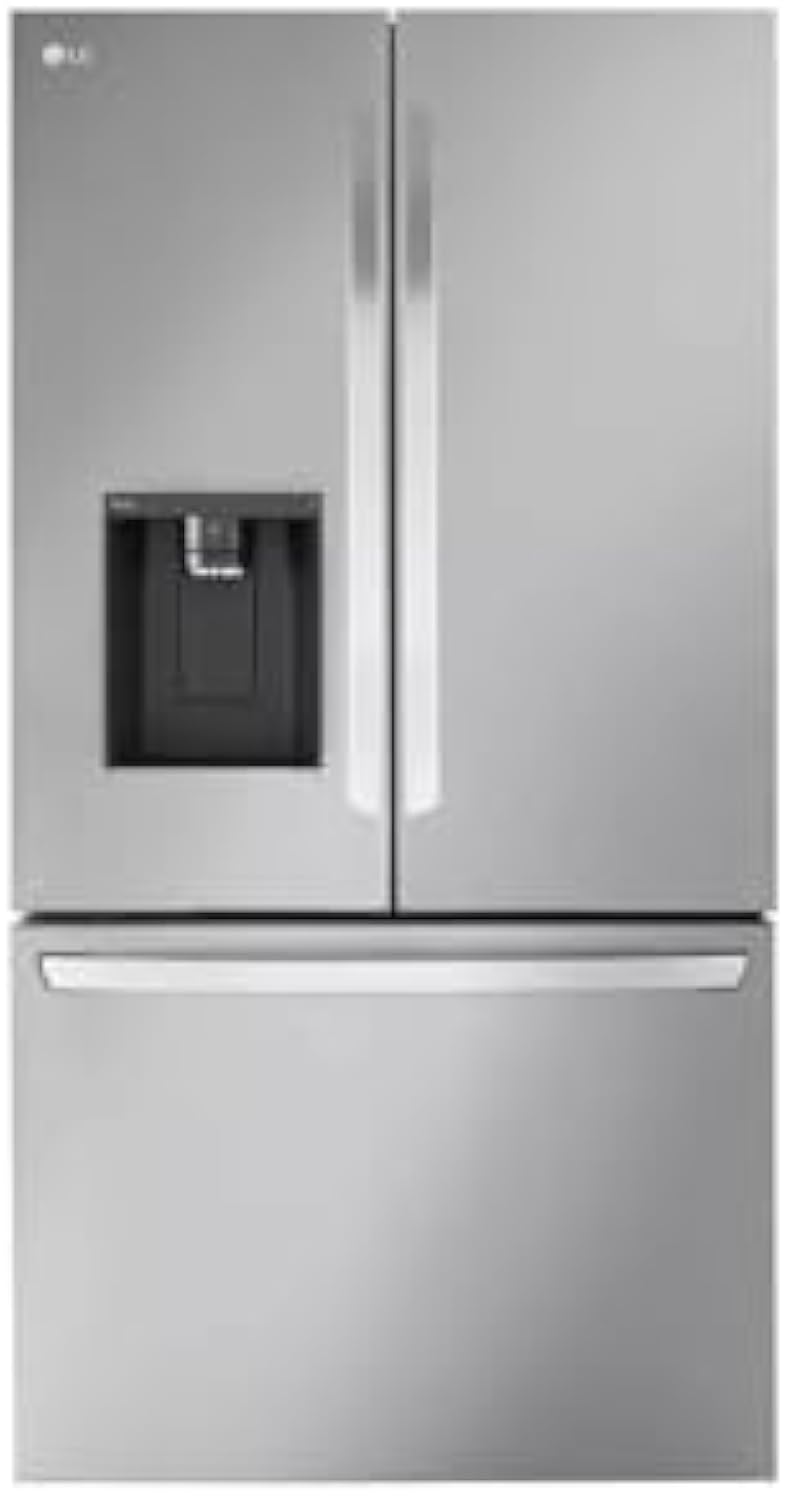
Lg
Counter Depth Max Smart French Door
- •True through-door ice and water
- •Thinnest smart set of the LGs
- •Lowest live price here
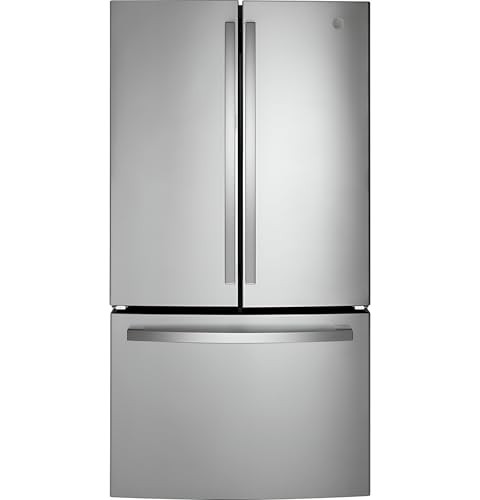
Ge
Profile B0Djvkncz9 Counter Depth
- •Lowest draw here at 581 kWh per yr
- •Not smart without the module
- •Currently unavailable on Amazon
How the Newest Smart Refrigerator Models Compare
Kitchen
Chart
 Smarthomeexplorer.com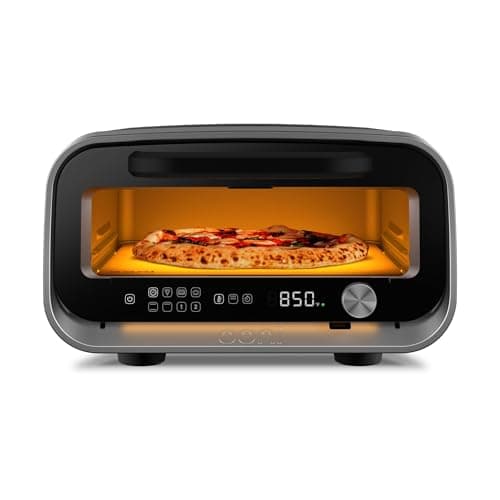
Ooni Volt 2
Check price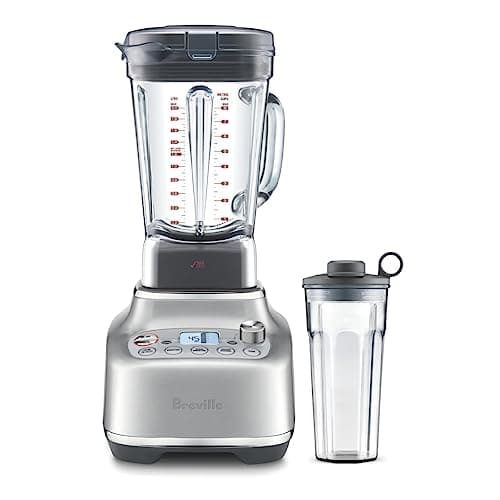
Breville Super Q
Check price
Nuwave Pro Chef Induction Cooktop
Check price
What's the Best Smart Refrigerator for Home Automation 2026?
The real question is not which smart refrigerator accumulates the most features. It is which configuration returns the connected premium in ordinary daily operation, and that varies considerably by manufacturer. Reliability divides sharply. Consumer Reports positions LG and GE near 85% reliability over a 5-yr window, versus approximately 72% for Samsung. Community discussion echoes that skepticism toward Bespoke ice makers — sentiment, not verified documentation. We evaluated all 8 configurations on the SHE Smart Fridge Worth-It Score. Purchasability is determined independently of that composite. Our September 5, 2026 verification found Amazon carrying no offer whatsoever on the top-ranked Samsung Family Hub. Consequently the LG LRMVS3006S InstaView leads the recommendations you can genuinely act upon today.
Best Overall: Lg Lrmvs3006S Instaview Craft Ice
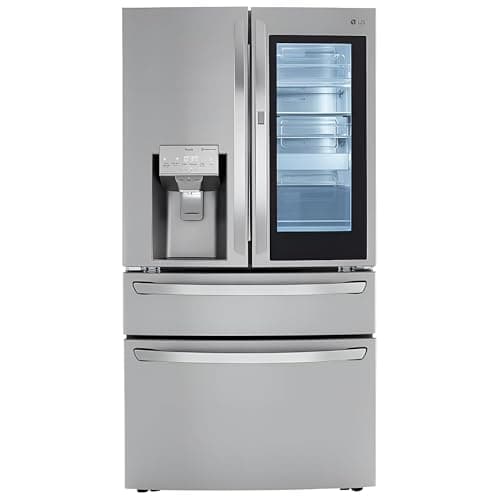
Lg Lrmvs3006S Instaview Craft Ice
- Largest measured capacity in this guide at 29.5 cu ft
- Highest annual energy draw here at 799 kWh per yr
(Current price, subject to change)
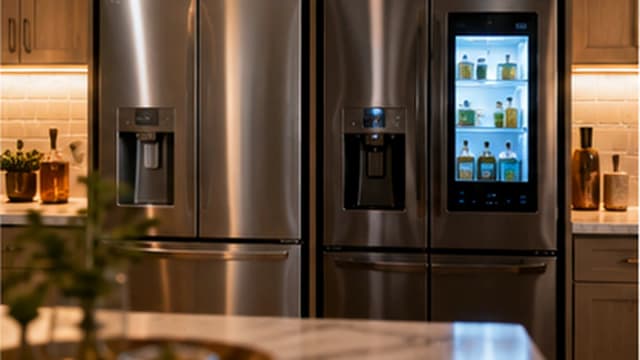
On paper the Lg Lrmvs3006S Instaview Craft Ice assembles the most refrigeration hardware of any LG in this comparison. It incorporates a measured 29.5 cu ft interior, which LG advertises as 30, alongside dual ice makers pairing slow-melting Craft Ice spheres with standard door ice. A Full-Convert drawer additionally contributes five independent temperature settings. The InstaView panel is a knock-to-illuminate glass window rather than an interactive display. Reviewed published a dedicated evaluation of this particular model, and Consumer Reports includes it among its evaluated refrigerators. Its 8.4 composite on the SHE Smart Fridge Worth-It Score reflects that breadth alongside LG's considerably stronger reliability tier. Consumer Reports positions LG near 85% over a 5-yr window versus approximately 72% for Samsung. What restricts it to second place on the composite is the screen it does not have, not its price. On September 5, 2026 Amazon itself sold it, one of only two picks here Amazon distributes directly. Its 799 kWh per yr specification draw is the roster's highest, against a federal standard of 836 kWh.
What We Love
- Largest measured capacity in this guide at 29.5 cu ft
- Craft Ice spheres plus standard door ice from dual ice makers
- LG's 85% Consumer Reports brand reliability tier
- Full-Convert drawer with five temperature settings
What Could Be Better
- Highest annual energy draw here at 799 kWh per yr
- No touchscreen or camera at the flagship tier
- InstaView is a window, not a smart display
The Verdict
For a reliability-first household that entertains, the Lg Lrmvs3006S Instaview Craft Ice fits the brief — and it leads this guide as the highest-scoring fridge here Amazon itself sells. An 8.4 composite, LG's 85% reliability tier, the roster's largest measured capacity, Craft Ice for the bar cart. You accept its 799 kWh per yr draw, the highest here.
Highest Worth-It Score: Samsung Bespoke 4Door Ai Family Hub
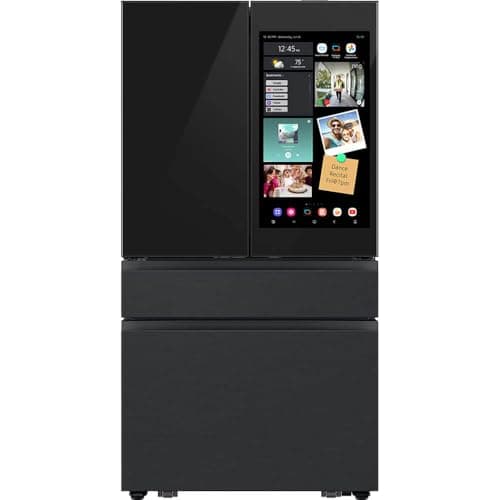
Samsung Bespoke 4Door Ai Family Hub
- The only door touchscreen and internal camera in this roster
- Samsung's 72% brand reliability trails LG and GE
(Current price, subject to change)
The Samsung Bespoke 4Door Ai Family Hub is the roster's only refrigerator with both a door touchscreen and an internal camera. That earns it a 10.0 on smart utility density and an 8.9 on the SHE Smart Fridge Worth-It Score. Every dollar of premium purchases independently verifiable, daily-use hardware. Samsung's specification confirms a 28.6 cu ft measured interior, advertised as 29, alongside a door touchscreen the manufacturer documents at 32 inches. Additional capability includes AI Vision Inside food recognition, a Beverage Center with AutoFill pitcher, and dual ice generation rated at 5.2 lbs daily. Its 663 kWh per yr consumption is the roster's most efficient per cubic foot despite the always-on display. Trusted Reviews and Consumer Reports have both evaluated the stainless finish of this identical RF90F29 series. Samsung additionally backs the compressor with a 10 yr parts warranty; the brand-level reliability record remains the honest caveat. The purchasing caveat is considerably newer. Our September 5, 2026 verification found Amazon's listing carrying no offer whatsoever, so the composite survives and the acquisition path does not.
What We Love
- The only door touchscreen and internal camera in this roster
- Best spec-sheet energy per cubic foot here at 663 kWh per yr
- Beverage Center, AutoFill pitcher, and dual ice with Ice Bites
- 10 yr compressor parts warranty from Samsung
What Could Be Better
- Samsung's 72% brand reliability trails LG and GE
- Currently unavailable on Amazon — no offer on the listing
- Screen features assume a SmartThings household
The Verdict
If your household will genuinely use a door screen and internal camera every day, the Samsung Bespoke 4Door Ai Family Hub fits the brief and tops our Worth-It ranking at 8.9. It is not the pick we can point you at today: we read the listing on September 5, 2026 and Amazon had nothing for sale on it, so no price here.
Best Screen-Free Bespoke: Samsung Bespoke 4Door Beverage Center
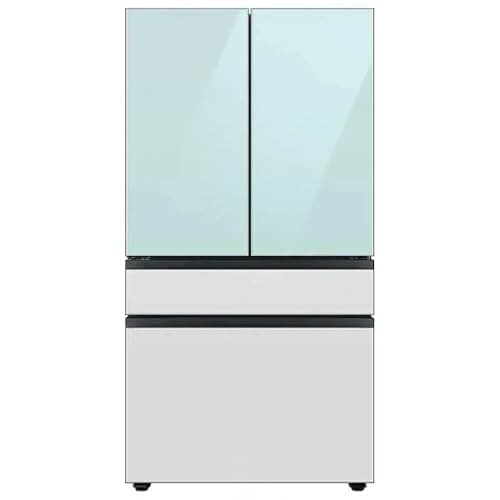
Best Screen-Free ValueSamsung Bespoke 4Door Beverage Center
- Family Hub architecture and SmartThings depth without the screen
- Same 72% Samsung brand reliability caveat
(Current price, subject to change)
Functionally the Samsung Bespoke 4Door Beverage Center is the Family Hub's screen-free equivalent. Identical 4-door Bespoke architecture, identical SmartThings remote administration and notifications, an internal Beverage Center with AutoFill pitcher, and dual ice generation rated up to 5.3 lbs daily. Samsung's spec sheet measures it at 28.8 cu ft (marketed as 29) drawing 685 kWh per yr. Consumer Reports tests this exact configuration, and Reviewed's lab coverage extends to the panel-ready color of the same RF29BB8600 series. Because it skips the Family Hub's screen premium, its value density factor lands in the roster's upper tier, which yields an 8.2 composite. One purchasing note accompanies our September 5, 2026 verification. Offers populate the listing, but no merchant currently occupies the featured position, so the card prints Samsung's own list price beside the offer collection. The honest trade-offs: no camera, no touchscreen, and the same Samsung brand-reliability record that trails LG and GE. Compared to the door computer, this is the calculated compromise — Bespoke capacity and connectivity with the premium returned.
What We Love
- Family Hub architecture and SmartThings depth without the screen
- Family Hub capacity in a screen-free box at 28.8 cu ft
- Beverage Center plus dual ice rated up to 5.3 lbs per day
- 685 kWh per yr spec-sheet draw, second-best per cubic foot
What Could Be Better
- Same 72% Samsung brand reliability caveat
- No screen or camera at this tier
- Standard depth protrudes past counter lines
The Verdict
When you want SmartThings depth without financing a door screen, the Samsung Bespoke 4Door Beverage Center is a sensible pick for that setup — an 8.2 composite built on near-best value density and energy efficiency. The trade is Samsung's weaker brand reliability record, the absence of any camera hardware, and a live offer set that no seller currently wins, so we quote no price for it.
Best Convertible Storage: Lg Lf29H8330S Smart Standard Depth
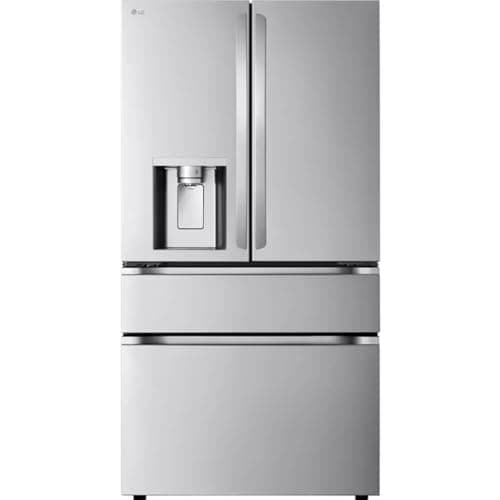
Lg Lf29H8330S Smart Standard Depth
- Full-Convert drawer flexes between fridge and freezer duty
- No Craft Ice or InstaView at this tier
(Current price, subject to change)
Flexibility is the argument for the Lg Lf29H8330S Smart Standard Depth: its Full-Convert drawer transitions between refrigerator and freezer operation across five configurable settings, effectively a 3.2 cu ft compartment you reassign seasonally for holiday cooking or bulk purchasing. The 28.6 cu ft total (marketed as 29) occupies a standard-depth footprint, with an in-door ice maker rated 3.0 lbs per day plus a freezer maker adding 2.5 lbs, and the specification sheet records 785 kWh per yr of consumption. RTINGS and Consumer Reports both maintain exact-model test pages — both are gated, so we cite their coverage rather than their conclusions. ThinQ delivers remote temperature control and Smart Diagnosis over Wi-Fi, and LG's 85% brand reliability tier applies equally here. The composite settles at 7.6 because the verified smart-feature checklist is thinner than the flagships': no camera, no display, no specialty ice — but the convertible compartment it does verify is the single capability many households genuinely utilize weekly.
What We Love
- Full-Convert drawer flexes between fridge and freezer duty
- 28.6 cu ft standard-depth capacity in a French-door layout
- LG's 85% brand reliability tier and ThinQ diagnostics
- In-door and freezer ice makers running in parallel
What Could Be Better
- No Craft Ice or InstaView at this tier
- 785 kWh per yr draw is mid-pack at best
- Both covering outlets sit behind paywalls
The Verdict
If a convertible zone matters more to you than specialty ice, the Lg Lf29H8330S Smart Standard Depth lines up with what you actually need: a 7.6 composite, LG's stronger reliability tier, and a Full-Convert drawer that reassigns 3.2 cu ft between fridge and freezer duty on demand.
Best Counter-Depth Bespoke: Samsung Bespoke Counter Depth 3Door
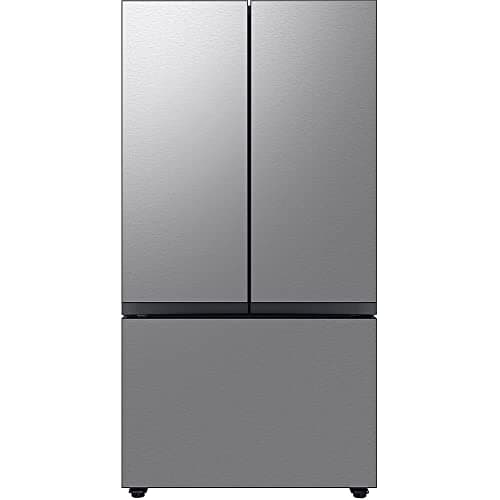
Best Counter-Depth ValueSamsung Bespoke Counter Depth 3Door
- Lowest cost per cubic foot in this roster
- Zero verifiable editorial coverage of this exact trim
(Current price, subject to change)
Samsung's counter-depth Bespoke is the value anchor of this roundup. On the July 17, 2026 list capture behind our value-density factor, the Samsung Bespoke Counter Depth 3Door carried the lowest cost per cubic foot here. That drives its perfect value density mark and a 7.5 composite on the SHE Smart Fridge Worth-It Score. The manufacturer spec sheet verifies a dual auto ice maker producing standard cubes plus nugget-style Ice Bites. It also lists an internal AutoFill water pitcher and SmartThings connectivity, with door-open, temperature, and filter alerts alongside an AI Energy mode. It is ENERGY STAR certified, though Samsung publishes no verified annual kWh figure for this exact trim, so we print none. Transparency matters more than polish on this entry. No mainstream testing outlet has published a dedicated evaluation of this exact configuration, so it is scored entirely on manufacturer specifications. That is the honest way to handle a genuinely uncovered trim, and its energy factor is flagged as an estimate accordingly.
What We Love
- Lowest cost per cubic foot in this roster
- Nugget-style Ice Bites plus standard cubes from dual ice makers
- AutoFill internal pitcher and SmartThings energy tools
- Counter-depth footprint for flush kitchen lines
What Could Be Better
- Zero verifiable editorial coverage of this exact trim
- No published kWh figure from Samsung
- Smallest Samsung capacity here at 24 cu ft
The Verdict
For a small kitchen that still wants nugget-style ice and app alerts, there's no need to overthink it — the Samsung Bespoke Counter Depth 3Door carries the roster's best value density and a 7.5 composite. Know upfront that no mainstream lab has published an evaluation of this exact trim.
Best for App-Driven Organization: Ge Profile Pvd28Bynfs 4Door French Door
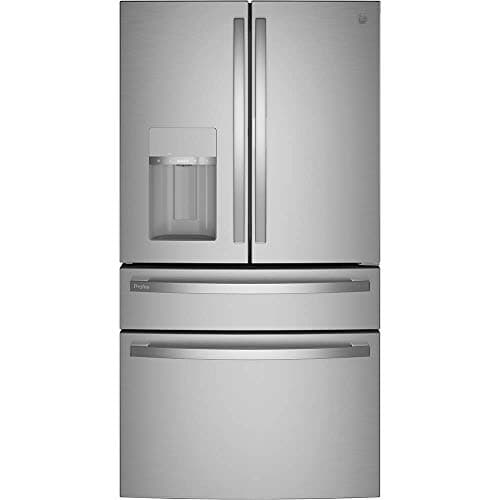
Ge Profile Pvd28Bynfs 4Door French Door
- Broadest documentation here — three outlets keep dedicated pages
- Older design; its ENERGY STAR certification dates to 2021
(Current price, subject to change)
Documented coverage separates the Ge Profile Pvd28Bynfs 4Door French Door from the rest: Consumer Reports, Reviewed, and RTINGS all maintain dedicated pages for this exact model, the broadest verification in this guide. GE Profile's spec sheet lists 27.9 cu ft across a 4-door layout, drawing 758 kWh per yr. It carries a Door-in-Door bin, TwinChill dual evaporators, a CustomChill convertible drawer, and a hands-free AutoFill external dispenser. SmartHQ Wi-Fi ships built in, with Alexa and Google Assistant on GE's compatibility list. Reddit owner threads are genuinely mixed — praise for the convertible middle drawer alongside a "SUPER loud" complaint thread and icemaker gripes — worth reading before committing. Two honest cautions temper the tier. This is an older design whose ENERGY STAR certification dates to 2021. And its September 5, 2026 Amazon price sat far below GE's original nominal list — street pricing undercut that long ago. Its 7.4 composite rides GE's 85% reliability tier and that documentation depth.
What We Love
- Broadest documentation here — three outlets keep dedicated pages
- CustomChill convertible drawer and Door-in-Door bin
- Hands-free AutoFill on the external water dispenser
- GE's 85% brand reliability tier at standard depth
What Could Be Better
- Older design; its ENERGY STAR certification dates to 2021
- Single ice maker; no craft or nugget ice
- Mixed Reddit owner reports on noise and the icemaker
The Verdict
If app-driven organization and documented coverage drive your decision, the Ge Profile Pvd28Bynfs 4Door French Door checks the boxes that matter for an organized kitchen: a 7.4 composite, GE's 85% reliability tier, and dedicated pages at three major testing outlets. It is an older design with a single ice maker.
Check price for the Ge Profile Pvd28Bynfs 4Door French Door →
Best Counter-Depth With a True Dispenser: Lg Counter Depth Max Smart French Door
Lg Counter Depth Max Smart French Door
- External UVnano ice and water dispenser with Measured Fill
- Fewest verified smart features of the LGs here
(Current price, subject to change)
Counter-depth buyers who refuse to give up a true through-door dispenser end up here: the Lg Counter Depth Max Smart French Door pairs a Counter-Depth MAX chassis measuring 25.5 cu ft on LG's spec sheet (marketed as 26) with an external UVnano ice and water dispenser with Measured Fill — the convenience the internal-pitcher Samsungs skip. Dual ice makers produce 3.0 lbs per day in-door plus 2.5 lbs in the freezer, with no Craft Ice at this tier, and the unit draws 699 kWh per yr. ThinQ adds remote monitoring with Alexa and Google Assistant voice support. Consumer Reports maintains an exact-model page; beyond that, editorial coverage is thin, and the sparse Reddit threads that exist include one ice-maker water-line defect complaint — limited signal, cited cautiously. Its 7.0 composite reflects a modest verified feature count rather than a quality verdict: the smart utility factor is where this trim concedes ground to the flagships.
What We Love
- External UVnano ice and water dispenser with Measured Fill
- Counter-Depth MAX chassis keeps 25.5 cu ft usable
- Dual ice makers at 3.0 lbs and 2.5 lbs per day
- ThinQ with Alexa and Google Assistant voice support
What Could Be Better
- Fewest verified smart features of the LGs here
- 25.5 cu ft trails the standard-depth rivals
- Thin editorial coverage beyond Consumer Reports
The Verdict
When a flush counter-depth fit plus a true through-door dispenser is the requirement, you'll be well-served here: the Lg Counter Depth Max Smart French Door posts a 7.0 composite with LG's reliability tier and dual ice makers, trading capacity and specialty features for the fit.
Check price for the Lg Counter Depth Max Smart French Door →
Best Platform-Entry Design: Ge Profile B0Djvkncz9 Counter Depth
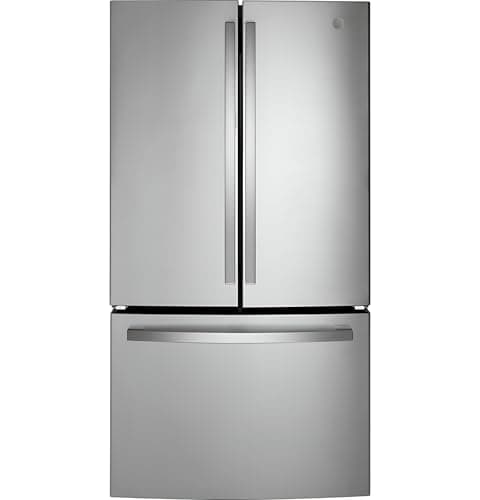
Best Budget / Platform-EntryGe Profile B0Djvkncz9 Counter Depth
- Lowest annual energy draw in this roster at 581 kWh per yr
- Not smart out of the box — module required
(Current price, subject to change)
Honesty first: the Ge Profile B0Djvkncz9 Counter Depth is a GE — not a GE Profile, despite Amazon's listing title — and it is not a smart refrigerator out of the box. Connectivity and SmartHQ administration arrive exclusively through GE's optional Connect Module (PBX23W00Y1). The standard configuration provides an internal temperature display, a bottom-freezer ice generator, and an internal filtered-water dispenser. What it genuinely delivers is a counter-depth 21.9 cu ft configuration consuming a specification-verified 581 kWh annually. That represents the lowest consumption in this comparison, although its limited capacity eliminates any per-cubic-foot advantage. GE's 85% reliability determination accompanies it. Consumer Reports maintains an exact-model lab page; no other mainstream outlet covers this trim. Its 6.2 composite sits at the roster floor precisely because the smart utility checklist registers almost nothing. That is the point: this pick formalizes deciding the premium isn't worth it, while keeping a path in.
What We Love
- Lowest annual energy draw in this roster at 581 kWh per yr
- GE's 85% brand reliability tier at the roster's entry tier
- Counter-depth fit with a fingerprint-resistant finish
- Optional SmartHQ path via GE's Connect Module
What Could Be Better
- Not smart out of the box — module required
- Currently unavailable on Amazon — no offer on the listing
- No through-door ice or water dispensing
- Smallest capacity in this roundup
The Verdict
If you've concluded the smart premium isn't worth it but want the option later, the Ge Profile B0Djvkncz9 Counter Depth fits the brief — a 6.2 composite earning its keep on efficiency and GE reliability, Wi-Fi via an optional module. Not today, though: on September 5, 2026 Amazon had nothing for sale on the listing, so no price here.
How We Score: SHE Smart Fridge Worth-It Score
SHE Smart Fridge Worth-It Score
Score Formula
score = 0.35 * smart_utility_density + 0.25 * energy_cost_efficiency + 0.25 * reliability_outlook + 0.15 * value_densityScore Factors
- Smart Utility Density (weight 0.35)A deterministic count of daily-use features verified on each manufacturer spec sheet, applied identically to all 8 models: built-in Wi-Fi app, door touchscreen, internal camera, dual ice makers, specialty ice, external dispenser, internal water source, convertible temperature zone, and quick-access door. Normalized so the 7-feature leader scores 10.0. The GE GWE22JYMFS earns no Wi-Fi credit because SmartHQ requires an optional plug-in module.
- Energy Cost Efficiency (weight 0.25)Inverse-normalized manufacturer kWh per yr divided by spec-sheet cubic feet; the best row (23.18 kWh per cu ft, the Family Hub) anchors 10.0. Figures come from LG, Samsung, and GE spec sheets plus the ENERGY STAR database — not capacity-class estimates. One Samsung counter-depth trim has no published kWh figure, so its factor is computed from a retail-transcribed value and flagged approximate.
- Reliability Outlook (weight 0.25)Consumer Reports 5-yr brand reliability as published in our french-door hub: LG and GE near 85% map to 8.5, Samsung near 72% maps to 7.2. Deliberately brand-level — Consumer Reports model scores are paywalled and we do not transcribe them.
- Value Density (weight 0.15)Inverse list price per spec-sheet cubic foot; the roster minimum, the counter-depth Bespoke, anchors 10.0. Uses evergreen list prices captured outside deal pricing — never July-4 or Prime Day window prices; the roster was re-baselined to live July 17, 2026 list prices, which compressed the price spread without changing the per-cubic-foot anchor. Composite scores were computed on the pre-re-baseline capture.
SHE Smart Fridge Worth-It Score — Ranked
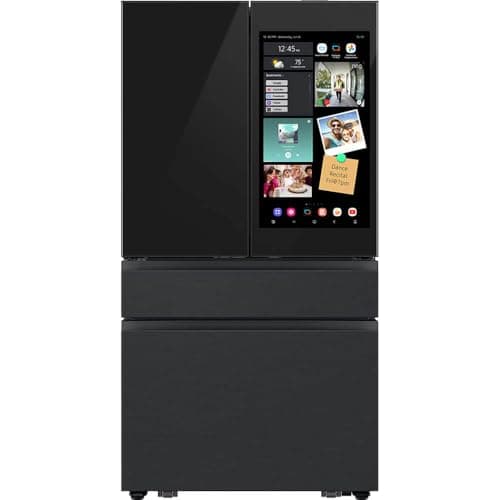
Samsung Bespoke 4Door Ai Family Hub
SHE Smart Fridge Worth-It Score8.9/10The only screen-and-camera fridge here, with the best energy per cubic foot; Samsung's brand reliability is the drag, and Amazon carries no offer on it today
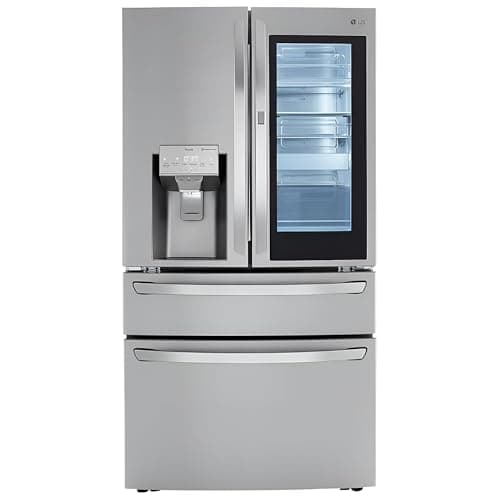
Lg Lrmvs3006S Instaview Craft Ice
SHE Smart Fridge Worth-It Score8.4/10Sold by Amazon.com — largest measured capacity, Craft Ice, and LG's 85% reliability tier; the roster's highest energy draw and its top buyable pick
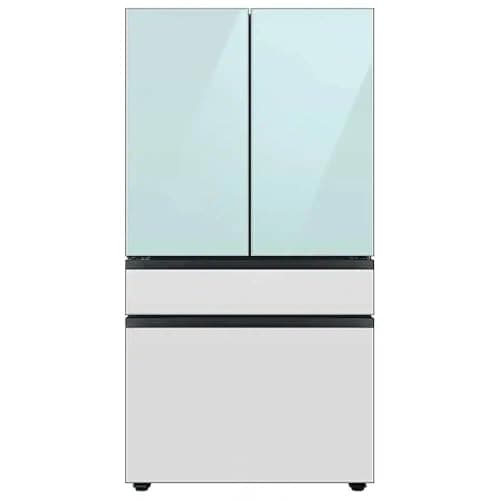
Samsung Bespoke 4Door Beverage Center
SHE Smart Fridge Worth-It Score8.2/10The screen-free Family Hub twin; near-best value density and 685 kWh per yr efficiency, but no seller holds the featured spot on its listing today
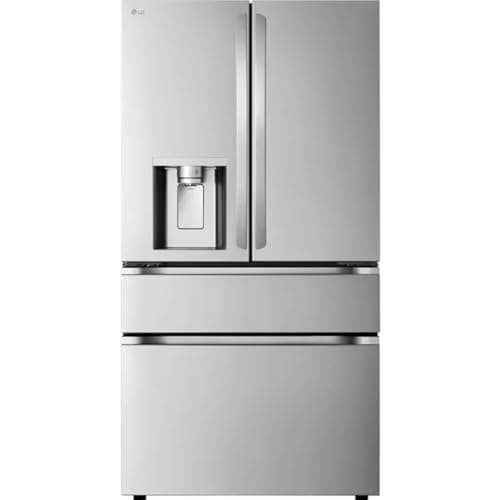
Lg Lf29H8330S Smart Standard Depth
SHE Smart Fridge Worth-It Score7.6/10Full-Convert drawer flexibility on LG's reliability tier; no specialty ice or InstaView
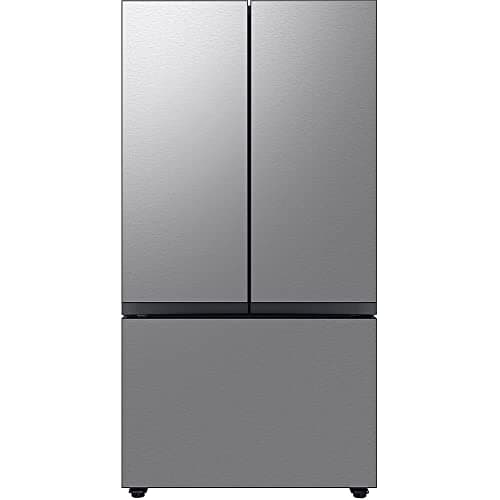
Samsung Bespoke Counter Depth 3Door
SHE Smart Fridge Worth-It Score7.5/10Sold by Amazon.com — zero editorial coverage of this exact trim, scored on manufacturer specs; its value-density factor was computed on the July 17, 2026 capture
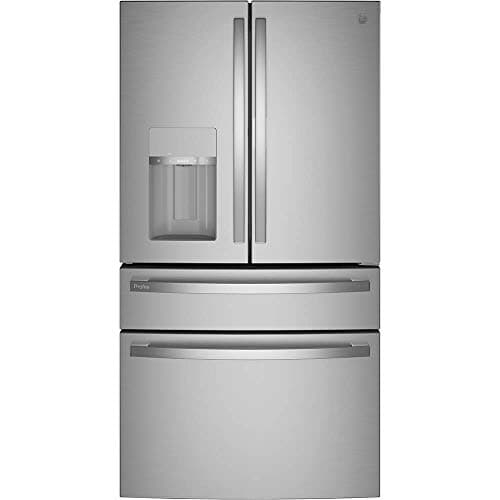
Ge Profile Pvd28Bynfs 4Door French Door
SHE Smart Fridge Worth-It Score7.4/10The best-documented model here with GE reliability; an older design with a single ice maker
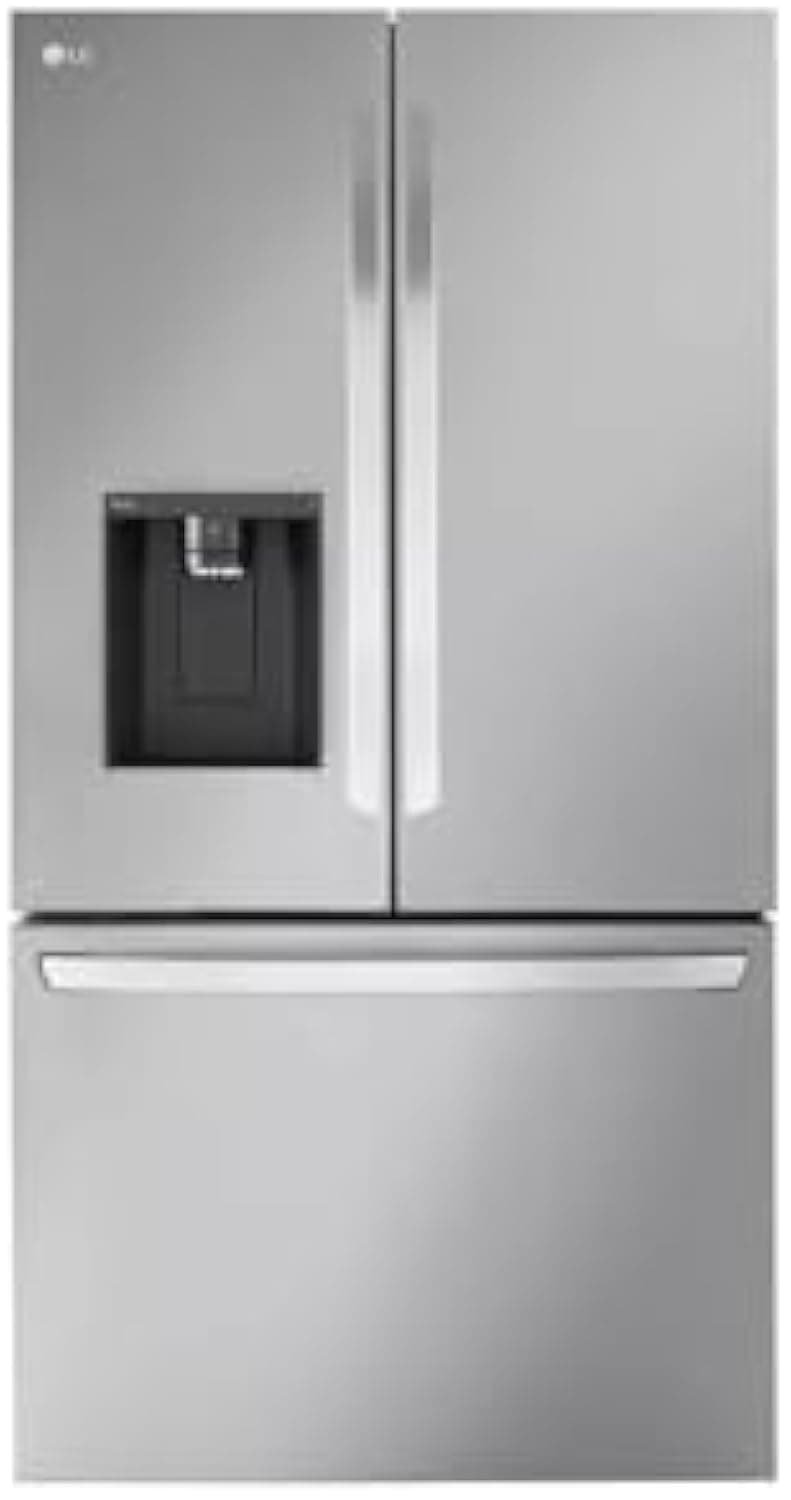
Lg Counter Depth Max Smart French Door
SHE Smart Fridge Worth-It Score7.0/10Counter-depth fit with a true external dispenser; the thinnest verified smart checklist of the LGs
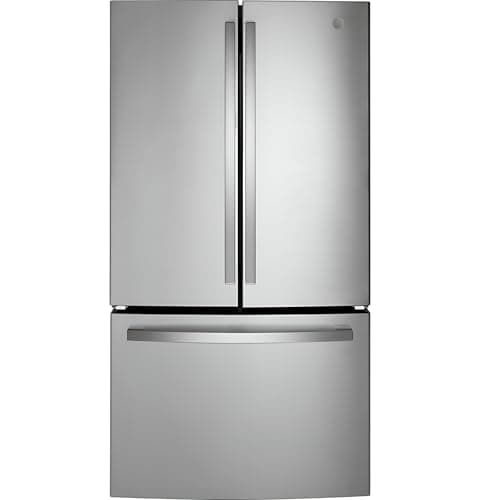
Ge Profile B0Djvkncz9 Counter Depth
SHE Smart Fridge Worth-It Score6.2/10Lowest 581 kWh annual draw and GE reliability; not smart out of the box, Wi-Fi module optional — and currently unavailable on Amazon
SHE Smart Fridge Worth-It Score
Weighted worth-it composite across 8 smart refrigerators — higher means the premium returns more verified utility.
Best Smart Fridge With Built-In Camera 2026
Start with the honest market answer: most smart refrigerators have no cameras at all, and seven of the eight models in this guide ship with zero. If you specifically want built-in camera hardware, the mainstream full-size path funnels to one pick: the Samsung Bespoke 4Door Ai Family Hub. Its AI Vision Inside camera handles food recognition and remote interior checks through SmartThings and the door screen. Samsung does not publish how many cameras the system uses, so neither do we. One clarification prevents a common purchasing mistake. LG's InstaView on the Lg Lrmvs3006S Instaview Craft Ice is a knock-to-illuminate glass window revealing the Door-in-Door compartment. It is not a display and contains no camera. If camera-based inventory is the single feature you want, two realistic choices remain. One is the Family Hub, which Amazon had no offer on when we read it on September 5, 2026. The other is a screen-free refrigerator plus a shelf camera you position yourself. The matrix below shows exactly which connected features each model verifiably delivers.
Most Reliable Smart Refrigerators 2026
Reliability is where the worth-it calculation turns brand-shaped. Consumer Reports' brand-level data — the same figures our french-door hub carries — places LG and GE near 85% predicted reliability across a 5-yr window, with Samsung near 72%, a 13-percentage-point spread. Community sentiment points the same direction: r/Appliances threads on Bespoke models recur on ice-maker and compressor skepticism, though several multi-year owners in those same threads report zero problems, so treat that signal as sentiment rather than a verdict. Model-level Consumer Reports scores sit behind a paywall, which is exactly why our reliability factor stays brand-level by design — we cite coverage, never paywalled conclusions. The practical guidance: if a decade of dependable service weighs heavier for you than a door screen, the top-scoring LG here is the Lg Lrmvs3006S Instaview Craft Ice at an 8.4 composite, and GE delivers that same 85% tier at two price points — the heavily documented Ge Profile Pvd28Bynfs 4Door French Door and the budget Ge Profile B0Djvkncz9 Counter Depth.
Which are the best energy efficient smart refrigerators of 2026? Spec sheets, not estimates, settle that question — and they produce a counterintuitive result. Ranked by manufacturer and ENERGY STAR figures, the Ge Profile B0Djvkncz9 Counter Depth draws the least at 581 kWh per yr, followed by the Family Hub at 663 kWh, the Beverage Center at 685 kWh, the LG counter-depth at 699 kWh, the GE Profile at 758 kWh, the LF29H8330S at 785 kWh, and the InstaView Craft Ice at 799 kWh against an 836 kWh federal standard for its class. The counterintuitive part: the touchscreen Family Hub draws less on paper than its screen-free twin, so the common assumption that an always-on display inflates the electric bill does not hold for this pair — capacity class and platform generation matter more than the screen. Normalized per cubic foot, the Family Hub is actually the most efficient row in the guide, which is precisely what its energy factor rewards. One gap disclosed: Samsung publishes no verified kWh figure for the counter-depth Bespoke trim, so that model is ENERGY STAR certified but unquantified here.
Is the screen premium worth it? The cleanest natural experiment in the category sits inside Samsung's own lineup. The Samsung Bespoke 4Door Ai Family Hub and the Samsung Bespoke 4Door Beverage Center share the 4-door Bespoke architecture at identical standard depth. The gap between their list prices at the July 17, 2026 re-baseline is effectively the market price of the 32-inch screen and the internal camera. We quote neither figure as current: on September 5, 2026 Amazon carried no offer on the Family Hub and no featured offer on the Beverage Center. Our SHE Screen Premium Payback Index weights what that premium verifiably purchases. The Family Hub posts an 8.7 against the Beverage Center's 5.9, because the screen and camera arrive with no spec-sheet energy overhead: 663 kWh per yr versus 685 kWh. Read the index carefully. It does not declare the Family Hub the better refrigerator; the Beverage Center is the payback baseline the premium is measured against. If your household will use the door screen for lists, streaming, and camera checks daily, the premium delivers a verified return. If it will not, the baseline retains the capacity and the connectivity and returns that premium. One timing note on that baseline. On our September 5, 2026 read the Beverage Center's listing carried live offers but no featured seller, and the Family Hub's carried no offer at all. The comparison holds as a buying argument; the Amazon path for either may need a restock or an appliance dealer.
| Product | Door Touchscreen | Internal Camera | Built-In Wi-Fi | Convertible Zone | Through-Door Dispenser |
|---|---|---|---|---|---|
| Samsung Bespoke 4Door Ai Family Hub | ✓ | ✓ | ✓ | ✓ | ✕ |
| Lg Lrmvs3006S Instaview Craft Ice | ✕ | ✕ | ✓ | ✓ | ✓ |
| Samsung Bespoke 4Door Beverage Center | ✕ | ✕ | ✓ | ✓ | ✕ |
| Lg Lf29H8330S Smart Standard Depth | ✕ | ✕ | ✓ | ✓ | ✓ |
| Samsung Bespoke Counter Depth 3Door | ✕ | ✕ | ✓ | ✕ | ✕ |
| Ge Profile Pvd28Bynfs 4Door French Door | ✕ | ✕ | ✓ | ✓ | ✓ |
| Lg Counter Depth Max Smart French Door | ✕ | ✕ | ✓ | ✕ | ✓ |
| Ge Profile B0Djvkncz9 Counter Depth | ✕ | ✕ | ✕ | ✕ | ✕ |
When NOT to Buy
A smart refrigerator is the wrong purchase when the app will go unopened after setup week — a comparable non-smart French door chills identically for meaningfully less, and refrigeration performance never depended on Wi-Fi. Skip the screen premium whenever remote temperature control and door alerts are all you would genuinely use; the screen-free picks in this guide already deliver those basics. If connectivity itself is the doubt, the GE GWE22JYMFS formalizes the skip: buy it as a plain counter-depth unit, then add GE's Connect Module later only if the appetite returns. A non-smart fridge paired with an inexpensive Wi-Fi freezer alarm replicates the most-used alert for a fraction of the cost.
Which Smart Fridges Best Preserve Food Freshness?
Food-preservation hardware, not the app, drives freshness here — and it favors GE and LG. The Ge Profile Pvd28Bynfs 4Door French Door runs TwinChill dual evaporators that keep the fridge and freezer on separate climate loops, so humidity stays put and freezer odors do not cross into fresh food; its CustomChill drawer and LG's Full-Convert drawer on the Lg Lf29H8330S Smart Standard Depth add per-food temperature presets — meat, beverage, and chill settings that extend produce and protein life. LG's Door-in-Door bin limits cold-air loss on frequent opens. Samsung's Bespoke models lean the other way, toward beverage and ice convenience plus AI Vision food tracking on the Samsung Bespoke 4Door Ai Family Hub — inventory-and-waste management through the camera rather than dedicated preservation zones. Match the freshness tech to what your household actually stores: the Convertible Zone column in the feature matrix above marks exactly which picks carry a reassignable compartment, and the GE Profile 4-door plus LG's Full-Convert models are where the food-first hardware concentrates.
Who Should Buy What
Who Should Buy What
| If you are… | Recommended pick |
|---|---|
SmartThings screen households Your home runs SmartThings and the family will actually use a 32-inch door hub, camera inventory checks, and the Beverage Center daily | Samsung Bespoke 4Door Ai Family Hub |
Reliability-first big households You want a decade of dependable service with maximum measured capacity and Craft Ice, and will pay LG's flagship price for it | Lg Lrmvs3006S Instaview Craft Ice |
Screen-skeptic value buyers You want big Bespoke capacity and full remote alerts but refuse to finance a door computer you would never touch | Samsung Bespoke 4Door Beverage Center |
Seasonal bulk shoppers A convertible fridge-to-freezer drawer would genuinely change how you store holiday and bulk purchases through the year | Lg Lf29H8330S Smart Standard Depth |
Small flush kitchens Counter-depth fit matters most, you like nugget-style ice, and you want the lowest list price of any Samsung here | Samsung Bespoke Counter Depth 3Door |
App-driven organizers You want the most independently documented model with flexible app-controlled storage and GE's stronger reliability tier | Ge Profile Pvd28Bynfs 4Door French Door |
Through-door dispenser loyalists You want a flush counter-depth fit without giving up a true external ice and water dispenser with measured fill | Lg Counter Depth Max Smart French Door |
Smart skeptics with an exit ramp You have concluded the connected premium isn't worth it and want efficient counter-depth basics with an optional Wi-Fi path later | Ge Profile B0Djvkncz9 Counter Depth |
Frequently Asked Questions
Which smart fridge should you choose in 2026?
Choose the LG LRMVS3006S InstaView Craft Ice if you want the strongest pick you can actually buy today: at 8.4 it is the highest-scoring model here that Amazon itself is selling, and Consumer Reports' brand-level five-year data places LG near 85% against Samsung near 72%. The Samsung Bespoke AI Family Hub ranks higher at 8.9 — a door touchscreen, the AI Vision camera, and the roster's best energy per cubic foot at 663 kWh per year — but Amazon had no offer on its listing when we read it on September 5, 2026, and none on the budget GE counter-depth either. And if nothing connected earned a nod while you read, choose a non-smart French door: it chills identically for less.
What is the best smart refrigerator with an integrated camera in 2026?
The Samsung Bespoke AI Family Hub (RF90F29AECE) is the only refrigerator in this guide with an internal camera — its AI Vision Inside system recognizes food and shows the interior remotely via SmartThings. Samsung does not publish the number of cameras, so we do not state one. Most smart refrigerators, including the other seven here, have no cameras at all; the realistic alternative is a screen-free model plus a third-party shelf camera.
How do the newest smart refrigerator models compare?
Our comparison table above charts the six highest-scoring models on ecosystem fit, setup ease, smart utility, and energy efficiency, and the full eight-model ranking sits in the methodology section. The short version: Samsung's Family Hub leads on verified smart hardware, the Beverage Center leads on value, LG leads on brand reliability, and the plain GE counter-depth wins only if you want minimal connectivity with the lowest annual energy draw. On buyability the ranking reshuffles — Amazon had no offer on the Family Hub or the GE counter-depth on September 5, 2026, which puts the LG InstaView at the front of the picks you can act on.
Is the Samsung Family Hub refrigerator worth it in 2026?
It earns the top SHE Smart Fridge Worth-It Score in this guide (8.9) because the premium buys verified hardware — the 32-inch hub screen, the AI Vision camera, and the roster's best energy per cubic foot at 663 kWh per year. Two caveats. Consumer Reports' brand-level reliability data places Samsung near 72% versus 85% for LG and GE, and Amazon carried no offer on the listing when we read it on September 5, 2026, so we quote no price for it. For model-level detail, read our Samsung Family Hub refrigerator review.
Are smart refrigerators worth it in 2026?
Only conditionally. The premium is worth paying when the features are ones you will use daily — camera inventory, a door hub screen, convertible zones, remote alerts — and when the brand's reliability record supports a decade of service. It is not worth paying for connectivity you will never open after setup week; a non-smart French door chills identically for less. Our Worth-It ranking exists precisely to price that judgment model by model.
Which smart refrigerators have a touchscreen in 2026?
Exactly one model in this roster has a touchscreen: the Samsung Bespoke AI Family Hub, whose door display Samsung's product page lists at 32 inches. LG's InstaView is sometimes mistaken for a screen, but it is a knock-to-illuminate glass window with no display hardware. Every other model here manages through a phone app instead.
What is the best French door smart refrigerator?
All eight models in this guide are French door designs, and the LG LRMVS3006S InstaView Craft Ice is the strongest pure French-door package for capacity plus reliability. For the full category ranking scored on integration depth rather than worth-it ROI, see our dedicated hub: Best Smart French Door Refrigerators 2026.
Craft Ice vs nugget Ice Bites vs standard cubes — which smart fridge ice type should you pick?
It depends on how you drink. LG's Craft Ice on the LRMVS3006S makes slow-melting round spheres for spirits and entertaining. Samsung's Ice Bites on the Bespoke models are nugget-style — soft, chewable, and quick for everyday cups. Most picks here run dual ice makers, pairing a specialty or in-door maker with standard cubes so you rarely run out — the Family Hub and Beverage Center rate up to 5.2 and 5.3 lbs per day respectively. Two run a single maker: the GE Profile 4-door carries one standard-cube maker, and the budget GE counter-depth makes standard cubes in its bottom freezer.
Which smart refrigerator is the most energy efficient for its size?
Raw kWh favors the smallest box — the GE counter-depth draws the least at 581 kWh per year — but normalized per cubic foot the touchscreen Samsung Family Hub is the most efficient row in this guide, ahead of its own screen-free twin (663 versus 685 kWh per year). That is the counterintuitive result our Energy Cost Efficiency factor rewards: an always-on display does not inflate the electric bill here, because capacity class and platform generation matter more than the screen. Samsung publishes no kWh figure for the counter-depth Bespoke trim, so it stays ENERGY STAR certified but unquantified.
Bottom Line
Get the Lg Lrmvs3006S Instaview Craft Ice if you want the strongest pick Amazon itself is selling — LG's 85% tier, the roster's largest measured capacity, and Craft Ice for entertaining.
Get the Samsung Bespoke 4Door Ai Family Hub if the door screen and internal camera will see genuine daily use in a SmartThings household — though Amazon carries no offer on it today.
Get the Samsung Bespoke 4Door Beverage Center if you want the Family Hub's capacity and SmartThings depth while keeping the screen premium, and will buy from a marketplace seller.
Get the Samsung Bespoke Counter Depth 3Door if a flush counter-depth fit and the lowest cost per cubic foot matter more than editorial validation.
Get the Ge Profile Pvd28Bynfs 4Door French Door if you want the most independently documented pick with app-driven storage and GE reliability.
Get the Ge Profile B0Djvkncz9 Counter Depth if you have decided smart isn't worth it and want efficient counter-depth basics with an optional path in — currently unavailable on Amazon.
The answer you can act on today is the Lg Lrmvs3006S Instaview Craft Ice — the highest-scoring pick Amazon itself is selling. The worth-it answer on paper is still the Samsung Bespoke 4Door Ai Family Hub if the screen and camera will see daily use, or the Samsung Bespoke 4Door Beverage Center if they will not — same architecture, one screen apart — but neither carried a featured Amazon offer on September 5, 2026. And if none of the connected features earned a nod while you read, skip the category: a non-smart French door plus a basic Wi-Fi freezer alarm covers the practical need for far less.
Sources & Methodology
Methodology: SHE Smart Fridge Worth-It Score — Formula: score = 0.35 * smart_utility_density + 0.25 * energy_cost_efficiency + 0.25 * reliability_outlook + 0.15 * value_density. Factors: Smart Utility Density (weight 0.35): A deterministic count of daily-use features verified on each manufacturer spec sheet, applied identically to all 8 models: built-in Wi-Fi app, door touchscreen, internal camera, dual ice makers, specialty ice, external dispenser, internal water source, convertible temperature zone, and quick-access door. Normalized so the 7-feature leader scores 10.0. The GE GWE22JYMFS earns no Wi-Fi credit because SmartHQ requires an optional plug-in module. | Energy Cost Efficiency (weight 0.25): Inverse-normalized manufacturer kWh per yr divided by spec-sheet cubic feet; the best row (23.18 kWh per cu ft, the Family Hub) anchors 10.0. Figures come from LG, Samsung, and GE spec sheets plus the ENERGY STAR database — not capacity-class estimates. One Samsung counter-depth trim has no published kWh figure, so its factor is computed from a retail-transcribed value and flagged approximate. | Reliability Outlook (weight 0.25): Consumer Reports 5-yr brand reliability as published in our french-door hub: LG and GE near 85% map to 8.5, Samsung near 72% maps to 7.2. Deliberately brand-level — Consumer Reports model scores are paywalled and we do not transcribe them. | Value Density (weight 0.15): Inverse list price per spec-sheet cubic foot; the roster minimum, the counter-depth Bespoke, anchors 10.0. Uses evergreen list prices captured outside deal pricing — never July-4 or Prime Day window prices; the roster was re-baselined to live July 17, 2026 list prices, which compressed the price spread without changing the per-cubic-foot anchor. Composite scores were computed on the pre-re-baseline capture.
Expert review sources used in this analysis:
- SmartHomeExplorer aggregates manufacturer specifications and expert-outlet coverage to produce consensus buying guidance
- We perform no first-party testing and transcribe no outlet scores, star ratings, or paywalled conclusions
- Consumer Reports, Reviewed, RTINGS, and Trusted Reviews coverage is cited for existence only, scoped per model to our coverage manifest
- Capacities, ice-maker rates, screen size, camera hardware, platform support, and kWh figures come from LG, Samsung, and GE spec sheets plus the ENERGY STAR product database
- Samsung publishes no verified kWh for the RF24BB6200QL, so none is printed
- Reliability figures are Consumer Reports brand-level 5-yr rates as published in our french-door hub
- All prices were re-baselined to live Amazon list prices on 2026-07-17, outside any deal window
- That followed live list prices proving 17 to 46 percent below the nominal manufacturer MSRPs captured 2026-07-01
- The Worth-It composite factors were computed on the earlier capture, and the per-cubic-foot anchor product is unchanged by the re-baseline
- CHANGE NOTE, 2026-09-05: every listing in this roster was re-read live that day, and the lead pick moved as a result
- The Samsung Bespoke AI Family Hub — still the top scorer at 8.9 — carried no offer of any kind
- Neither did the GE counter-depth GWE22JYMFS
- Both stay in the guide, scored and reviewed, with no price on any money surface and a search link in place of a dead listing
- The Samsung Bespoke 4-Door Beverage Center carried live offers but no featured seller, so its link goes to the offer set and its card prints Samsung's own list price
- On 2026-08-23 the LG LRMVS3006S InstaView had read far higher
- It now reads new, sold by Amazon itself
- That makes it the highest-scoring pick Amazon sells, and therefore this guide's lead
- Its 8.4 composite is unchanged: buyability is not a score, and the composite predates the re-baseline by design
- Three other live figures were refreshed the same day
- The Samsung Bespoke counter-depth 3-door read new, sold by Amazon itself
- Two marketplace figures moved with it, on the GE Profile PVD28BYNFS and the LG counter-depth MAX, both from Inventure Solutions
- A fluctuation advisory applies to the rest
- Several picks sell through third-party appliance dealers such as Electronic Express and Inventure Solutions, whose new-condition prices move week to week, so check the live price before buying.
Nicholas Miles is the founder of SmartHomeExplorer and a longtime smart home enthusiast focused on helping everyday homeowners make better technology decisions. He researches, compares, and writes about products across security, climate, lighting, leak prevention, sensors, home energy, and automation, with an emphasis on real-world usefulness, ecosystem compatibility, reliability, privacy, and long-term value.
Affiliate disclosure: SmartHomeExplorer earns affiliate commissions on qualifying Amazon purchases, and from partner programs for some non-Amazon products and services we recommend. Our scoring methodology is independent of affiliate relationships.