
The Aqara Presence Sensor FP2 is the best smart presence sensor for most homes because it solves the whole reason people buy mmWave in the first place
This is the occupancy and presence hub for this slice of our automation coverage. It is intentionally not a rehash of generic PIR security sensors and not a roundup of "motion" products that only fire when someone crosses the room. Presence sensors exist for a narrower problem: rooms where people stay put. Desks, sofas, bathrooms, breakfast nooks, media rooms, and bedrooms all punish standard motion sensors because standard motion sensors think stillness means vacancy. If your real goal is fast-trigger lighting in hallways, stair landings, and laundry rooms, jump to the dedicated spoke: best smart motion sensors for lights automation 2026. If you are mapping a broader system, keep our best smart home automation hubs guide, best smart lighting systems guide, and best smart sensors environmental monitoring guide nearby.
I verified all five products against current Amazon listings on April 1, 2026. The list stays tightly on mmWave-backed occupancy gear, which means no bare PIR sensors, no vague DIY radar modules, and no security-first products pretending to solve desk-chair problems. The thing that matters here is occupancy fidelity: how convincingly a sensor can hold a room state when a human is still, while avoiding false "someone is here" scenes from fans, pets, curtains, or HVAC drafts. That is what the SHE score below is designed to clarify.
mmWave Presence Sensor
Chart
 Smarthomeexplorer.com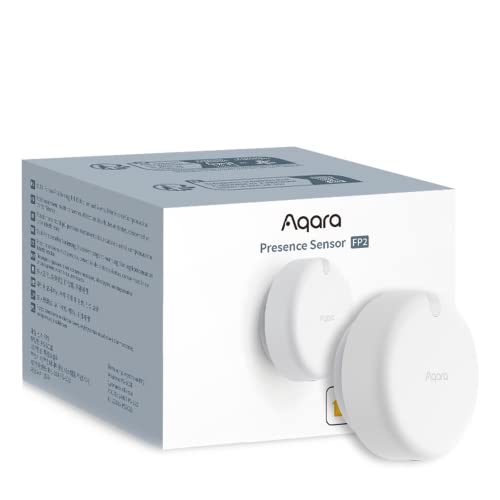
Aqara Presence Sensor FP2 — Best Overall
Aqara Presence Sensor FP2
(Current Price, subject to change)
The Aqara Presence Sensor FP2 is the one I would buy first because it understands the real occupancy problem better than the rest of this field. It can split a room into zones, distinguish multiple people, and hold presence while someone is sitting almost perfectly still. That matters more than buyers think. A hallway sensor only has to notice movement. A desk, couch, vanity, or reading chair sensor has to keep believing you exist after the dramatic excitement of sitting down is over.
The FP2 is also the easiest product in this group to build real room logic around. One sensor can keep a media-room lamp on near the recliner, turn a desk scene on only in the office corner, or hold bathroom lighting through a long shower without forcing you into the "wave your hand at the sink" routine. It is not cheap, but it replaces multiple PIR-style workarounds. If your use case is narrower and you just need simple hallway triggers, the better spoke is best smart motion sensors for lights automation 2026.
What We Love
- Strongest still-person hold behavior in the guide
- Zone positioning makes one sensor more useful than several basic sensors
- Broad platform reach without requiring an Aqara hub
Tradeoffs
- Wired power and app calibration are more work than simpler sensors
- Overkill if you only need fast walk-by triggers for lights
The Verdict
The Aqara Presence Sensor FP2 is the best mmWave presence sensor for buyers who want occupancy logic that actually feels intelligent. It costs more than the rest, but it earns that price by solving the "lights turn off while I am still here" problem better than anything else in this roundup.
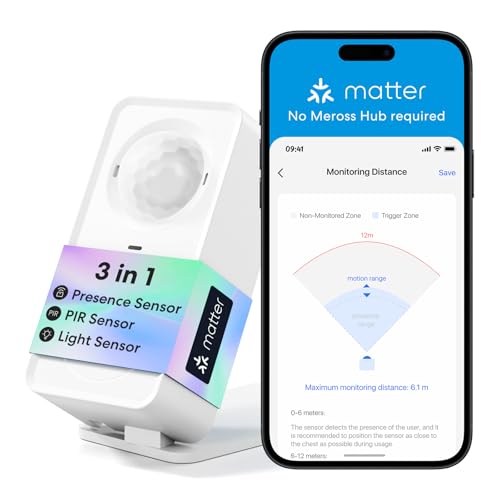
meross Matter Human Presence Sensor — Best Matter Value
meross Matter Human Presence Sensor
(Current Price, subject to change)
The meross Matter Human Presence Sensor is the best value pick because it hits the buyer sweet spot: presence sensing, light sensing, and broad platform support at a price that does not feel like a science-project surcharge. That combination makes it especially good for mixed-platform homes where no one wants to marry the entire lighting strategy to one app just to keep a bathroom or office automation stable.
This is also the most obvious choice for people who think in routines first. It can help you hold lights on while someone is stationary, suppress triggers when the room is already bright, and plug into Matter-friendly environments with less ecosystem drama than older hub-locked sensors. If you are comparing platforms before you buy, our Matter vs Zigbee vs Z-Wave vs Wi-Fi guide is the right companion read.
What We Love
- Strong price-to-capability balance
- Light sensor is genuinely useful for room automations
- Better cross-platform story than most occupancy sensors in this range
Tradeoffs
- Needs constant power
- Less advanced room mapping than the Aqara FP2
The Verdict
The meross Matter Human Presence Sensor is the easiest value recommendation for buyers who want real presence sensing without jumping straight to FP2 pricing. It is the right compromise when interoperability matters as much as detection.
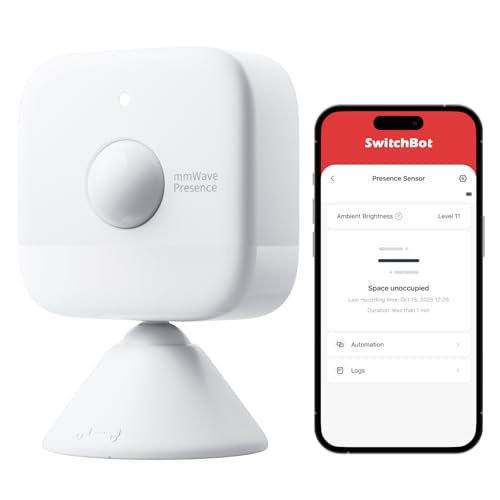
SwitchBot Smart mmWave Radar Motion Sensor — Best Battery Retrofit
SwitchBot Smart mmWave Radar Motion Sensor
(Current Price, subject to change)
The SwitchBot Smart mmWave Radar Motion Sensor earns its place because it removes the installation excuse. Most mmWave presence sensors want USB power and a semi-permanent spot. SwitchBot makes a more forgiving entry point with battery power, a magnetic base, and enough local linkage to do useful work even before you build a bigger automation stack. That makes it the least annoying first buy for renters, for temporary experiments, and for rooms where cable management would immediately kill the idea.
Its value is less about absolute capability and more about friction. If you want to test whether presence sensing will fix your office desk lamp, vanity light, or TV nook, this is the easy yes. It will not out-map the FP2, but it is easier to place, easier to move, and easier to live with if you are still figuring out the right angle and zone. If you already use SwitchBot devices, the local linkage story gets stronger fast.
What We Love
- Battery-powered flexibility is rare in this category
- Magnetic placement makes tuning much easier
- Good on-ramp for renters and low-commitment installs
Tradeoffs
- Smaller stillness range than the strongest wired sensors
- Best experience depends on the broader SwitchBot ecosystem
The Verdict
The SwitchBot Smart mmWave Radar Motion Sensor is the best buy when the biggest barrier is installation friction. It is the easiest way to try real presence sensing before you start hardwiring sensors around the house.
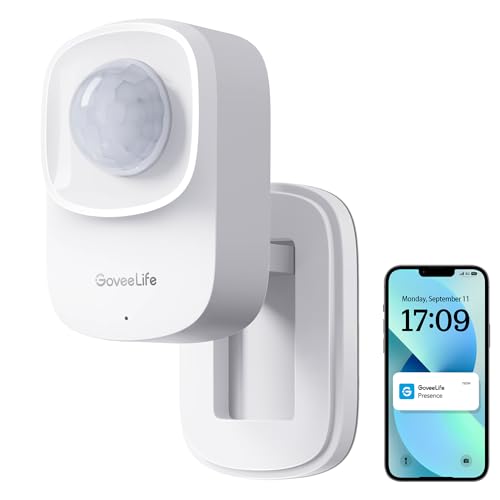
GoveeLife Human Presence Sensor — Best for Govee Homes
GoveeLife Human Presence Sensor
(Current Price, subject to change)
The GoveeLife Human Presence Sensor is the best niche pick for people who already buy Govee lighting on purpose. Govee is good at scenes, accent lighting, and room-specific automations, so a presence sensor that can trigger based on presence duration and distance makes more sense here than it would in a bare-bones ecosystem. If the room already runs on Govee light bars, lamps, or strips, this sensor can produce the kind of responsive scene logic that cheaper PIR devices routinely fumble.
That ecosystem-first strength is also the caution. This is not the best sensor for pure platform flexibility or for Home Assistant maximalists. It is the right answer if your lighting stack is already Govee-heavy and you want occupancy logic to feel more deliberate. If your house is more mixed than that, the meross Matter Human Presence Sensor is usually easier to recommend.
What We Love
- Strong distance and duration logic for scene-based lighting
- Easy fit for buyers already using Govee lights
- Adjustable base makes aiming and exclusions easier
Tradeoffs
- Less platform-neutral than the meross pick
- Constant power requirement narrows placement options
The Verdict
The GoveeLife Human Presence Sensor is the right buy if your occupancy automations are really about getting more out of Govee lighting. Outside that ecosystem, its advantages are harder to defend.
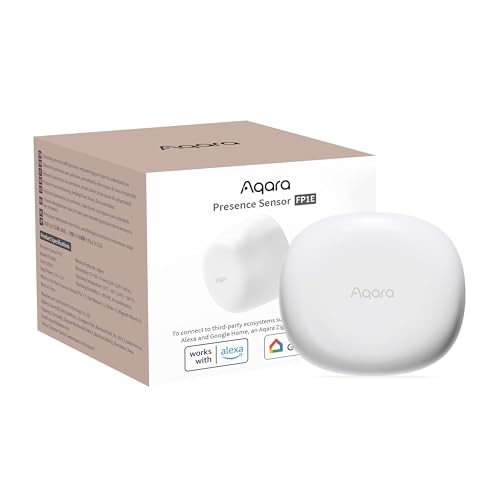
Aqara Zigbee Presence Sensor FP1E — Best Simpler Aqara Option
Aqara Zigbee Presence Sensor FP1E
(Current Price, subject to change)
The Aqara Zigbee Presence Sensor FP1E is the pick for buyers who want Aqara-style occupancy logic without paying FP2 money for zone positioning they may never use. It still uses mmWave, still aims to detect still humans rather than just movement, and still fits naturally into Aqara automations with Apple Home, Alexa, Google, and Matter-over-bridge in the picture. What you give up is the FP2's room segmentation and more aggressive high-end feature set.
That trade works fine in many rooms. Small bathrooms, laundry spaces, a breakfast nook, or a single desk corner often do not need multi-zone intelligence. They just need a sensor that will not abandon you the second you stop moving. If you already have an Aqara hub and know the room geometry is simple, the FP1E is the most sensible Aqara occupancy buy here.
What We Love
- Lower-cost Aqara path into real presence sensing
- Simpler to justify in small rooms than the FP2
- Broad Aqara ecosystem compatibility if you already own the hub
Tradeoffs
- Aqara hub required
- Not as flexible or granular as the FP2
The Verdict
The Aqara Zigbee Presence Sensor FP1E is the right pick when you want Aqara occupancy logic in a simpler room and a simpler budget. It is the "buy this instead of overbuying FP2" answer.
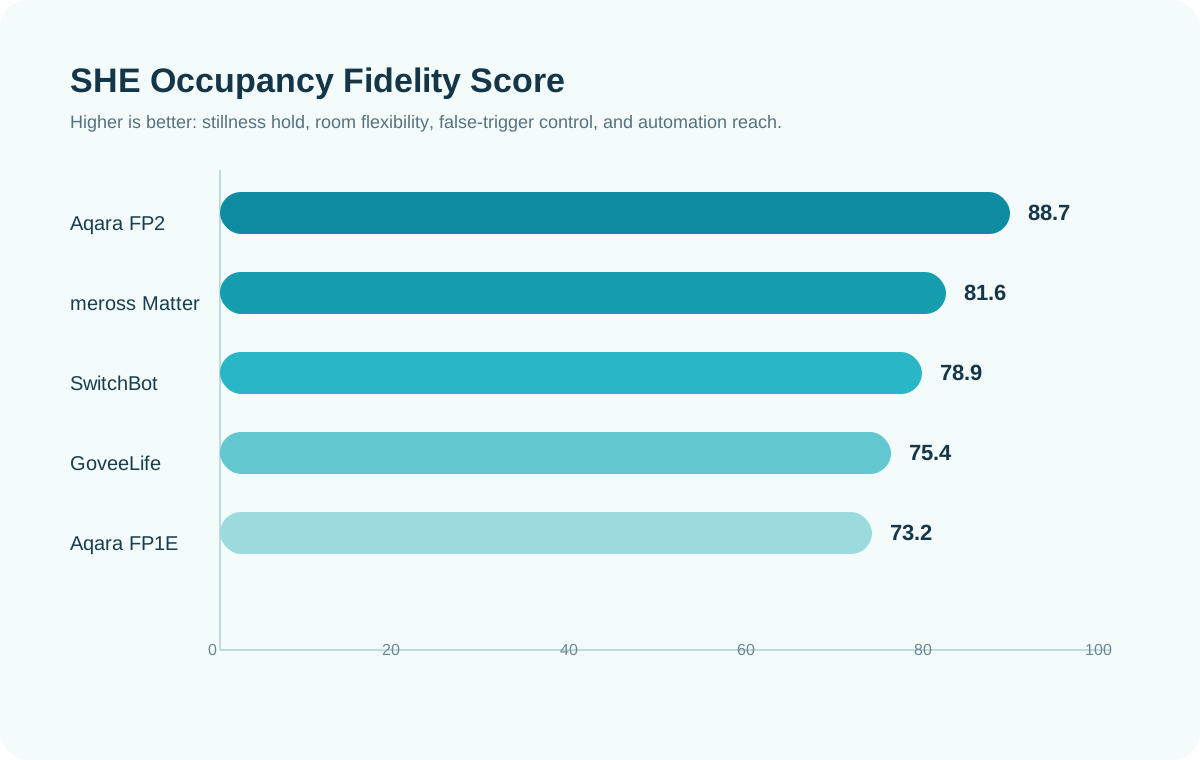
SHE Occupancy Fidelity Score
Full methodology for this score
What it measures: This is our occupancy-first metric for mmWave sensors. It rewards products that hold still-person presence reliably, stay configurable enough for real rooms, and avoid false "occupied" states from pets or environmental noise.
Formula: SHE Occupancy Fidelity Score = ((Stillness Detection x 0.35) + (Placement and Zone Flexibility x 0.25) + (False Trigger Resistance x 0.20) + (Automation Reach x 0.20)) x Power Practicality Multiplier
Data sources: Amazon pricing and verified current listings on April 1, 2026, current product feature disclosures, setup and protocol requirements, and SmartHomeExplorer editorial weighting for occupancy stability over generic motion response.
(SmartHomeExplorer editorial analysis — methodology)
The reason the Aqara Presence Sensor FP2 stays in front is not brand prestige. It is room intelligence. It can replace multiple compromises in one awkward space. The reason the meross Matter Human Presence Sensor stays close is that it gives up some zoning but wins back a lot of value through price and platform reach. The score is intentionally harsher on sensors that are easy to install but less trustworthy once the room gets complicated.
When NOT to Buy a mmWave Presence Sensor
- Skip this category entirely if your only goal is quick walk-by light triggers in a hallway, pantry, garage, or laundry room. The better tool is the spoke: best smart motion sensors for lights automation 2026.
- Do not buy the Aqara Presence Sensor FP2 for a tiny room that only needs one simple occupancy state. The Aqara Zigbee Presence Sensor FP1E is easier to justify there.
- Skip the SwitchBot Smart mmWave Radar Motion Sensor if you want the richest zone logic and broadest room mapping.
- Avoid any of these if your lighting problem is really fixture choice, not sensing. Start with the best smart lighting systems guide or best smart recessed lights retrofit guide.
Frequently Asked Questions
What is the difference between a presence sensor and a motion sensor?
A motion sensor is optimized to notice movement. A presence sensor is optimized to keep believing a human is still there after movement stops. That is why the Aqara Presence Sensor FP2 and meross Matter Human Presence Sensor make sense for desks, sofas, and bathrooms, while our spoke on best smart motion sensors for lights automation 2026 is the better read for hallways and quick-trigger rooms.
Are mmWave presence sensors better than PIR for lighting?
They are better for rooms where someone stays put. A PIR sensor is still fine for a hallway or stair pass-through. A mmWave sensor is better when you want lights to stay on while someone reads, works, watches TV, or showers without big gestures to keep the room alive.
Do I need a hub for these presence sensors?
Not always. The Aqara Presence Sensor FP2 does not require an Aqara hub, and the meross Matter Human Presence Sensor is the cleanest cross-platform pick. The Aqara Zigbee Presence Sensor FP1E does require an Aqara hub, and the SwitchBot Smart mmWave Radar Motion Sensor is strongest if you already use a SwitchBot Hub.
What rooms benefit most from a presence sensor?
Bathrooms, offices, media rooms, dining nooks, bedside reading zones, and vanity areas benefit most because these are the rooms where people are present but not obviously moving. For laundry rooms, mudrooms, hallways, and closets, faster-trigger motion hardware is usually the smarter buy.
Bottom Line
Get the Aqara Presence Sensor FP2 if you want the strongest answer to real occupancy logic and room zoning.
Get the meross Matter Human Presence Sensor if you want the best cross-platform value without paying FP2 money.
Get the SwitchBot Smart mmWave Radar Motion Sensor if installation friction is the main reason you have not tried presence sensing yet.
Sources & Methodology
- Amazon product pricing, titles, and feature sets verified April 1, 2026 using current Amazon listings and the Amazon lookup workflow used in this repo
- SmartHomeExplorer editorial comparison based on still-person hold behavior, placement flexibility, false-trigger control, automation reach, and total setup friction
- Category framing cross-checked against our own best smart motion sensors for lights automation 2026, best smart home automation hubs guide, and best smart lighting systems guide
Author: Nicholas Miles is the founder of SmartHomeExplorer and a longtime smart home enthusiast focused on helping everyday homeowners make better technology decisions. He researches, compares, and writes about products across security, climate, lighting, leak prevention, sensors, home energy, and automation, with an emphasis on real-world usefulness, ecosystem compatibility, reliability, privacy, and long-term value. Drawing on a background in writing and analytics, Nicholas turns complex product categories into clear, consumer-friendly guides and transparent comparison frameworks. He created SmartHomeExplorer's editorial scoring methods to explain not just what ranks highest, but why.
Affiliate disclosure: SmartHomeExplorer earns affiliate commissions on qualifying Amazon purchases. Our scoring methodology is independent of affiliate relationships.