
The smartest indoor garden on the market is not the best one. Gardyn's Kelby AI can identify plant diseases from camera feeds, adjust light cycles automatically, and predict nutrient deficiencies before leaves show symptoms. It earns a 9.5 out of 10 on Grow Intelligence — the highest of any consumer garden system available. It also costs $2,223 to $2,583 over three years once the mandatory $29-39/month subscription is factored in, making it the most expensive system in this guide by a wide margin. The Lettuce Grow Farmstand Nook costs less, requires no subscription, and earned the highest expert consensus of any product here.
The short answer: The Lettuce Grow Farmstand Nook ($749) leads with an IGIS of 69 — CNN Underscored's top pick, pre-grown seedlings that eliminate germination guesswork, and no subscription. For the best AI features, the Gardyn Home Kit 4.0 ($899) offers camera-based plant monitoring unmatched by any competitor. On a budget, the Click & Grow Smart Garden 9 ($250) is the best entry point.
We aggregated expert reviews from CNN Underscored, Bob Vila, Food Network, Reviewed, HGTV, Healthline, The Kitchn, Gear Patrol, and 8 additional sources, then scored each system on our proprietary Indoor Garden Intelligence Score — a weighted composite measuring grow intelligence, yield efficiency, true cost of ownership, ecosystem openness, and expert consensus. This guide is a hub in our smart kitchen coverage. For broader smart kitchen context, see our smart kitchen appliances guide. For smart home ecosystem compatibility, see our smart home hub guides. For monitoring soil moisture in traditional gardens alongside indoor systems, see our smart soil moisture sensors guide.
The numbers tell one story; the growing experience tells another. Below, we dig into each system — what arrives in the box, how the first harvest actually goes, and where each garden fits different budgets and growing goals. We start with the overall winner and work through the field.
Indoor Garden Intelligence
Chart
 Smarthomeexplorer.com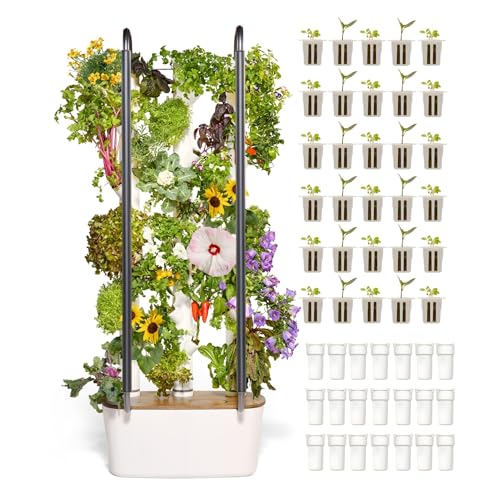
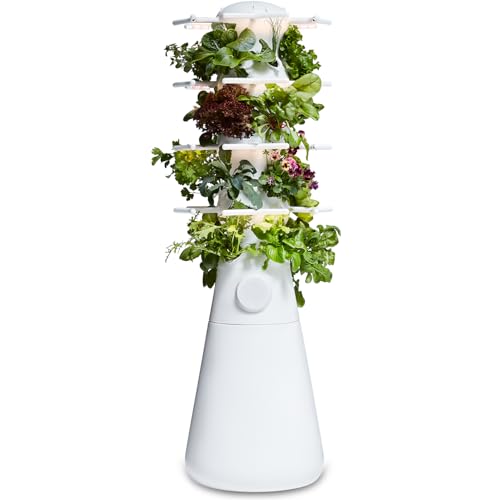
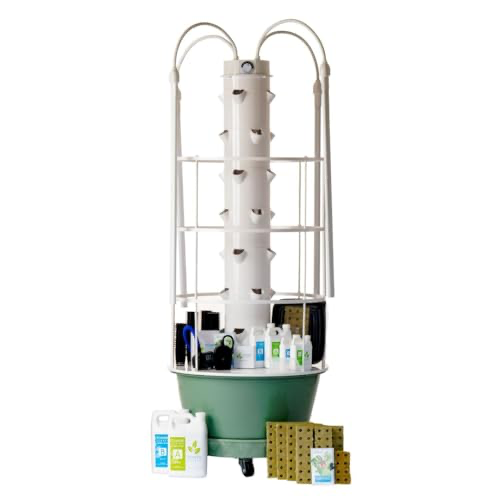
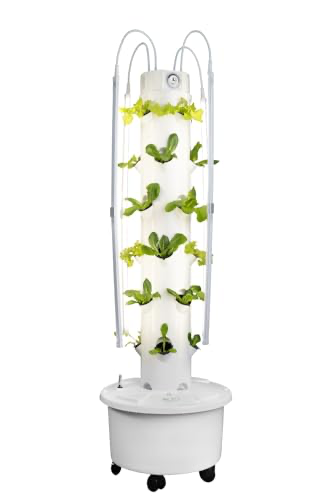
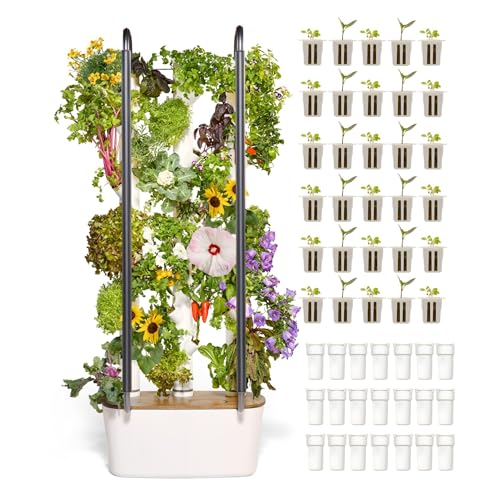
Gardyn Home Kit 4.0 — Best AI / Smart Features
Gardyn Home Kit 4.0
(Current Price, subject to change)
Ready to upgrade your home?
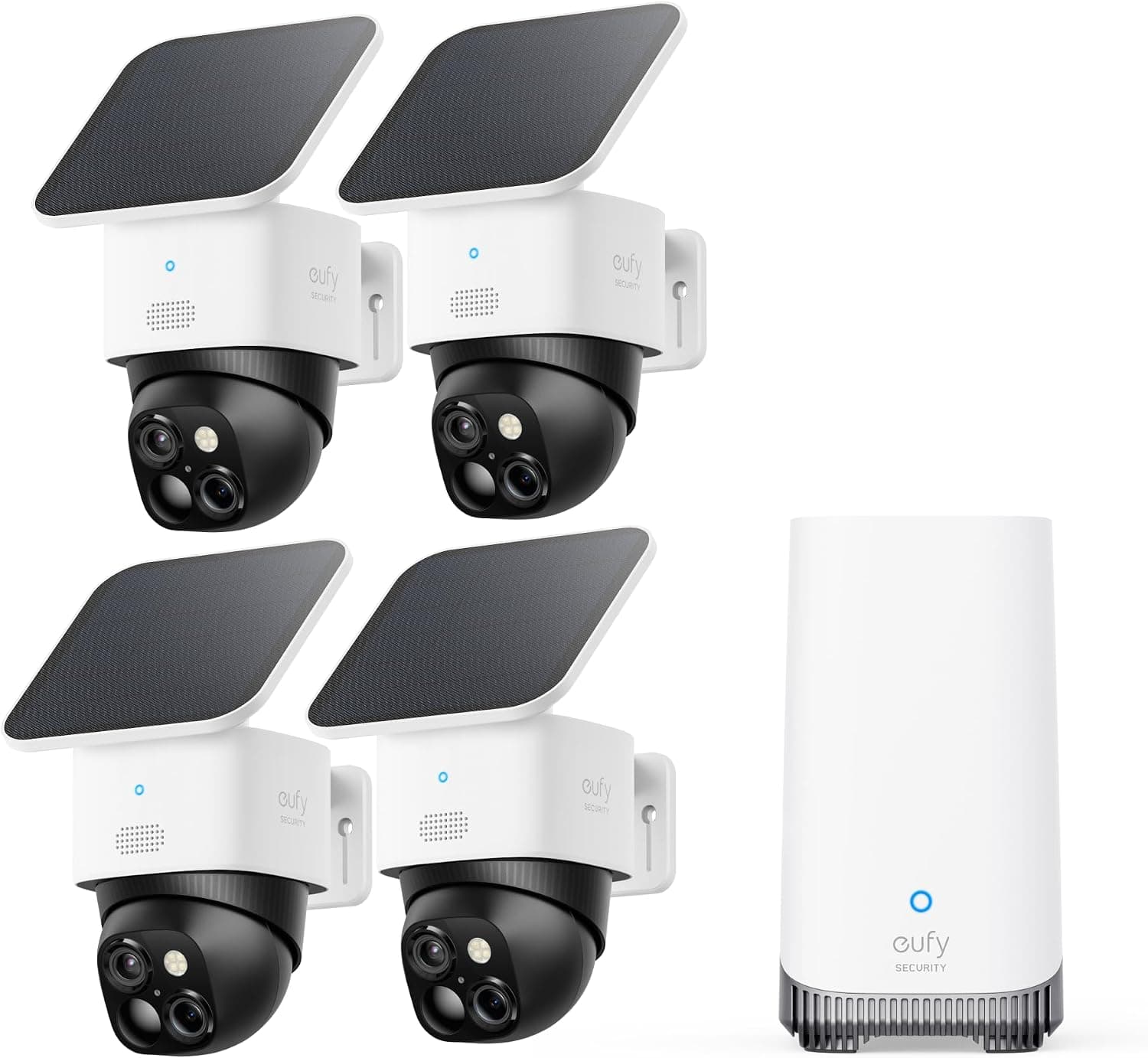
eufy SoloCam S340 Solar Security Camera, 4-Cam Kit
See it on Amazon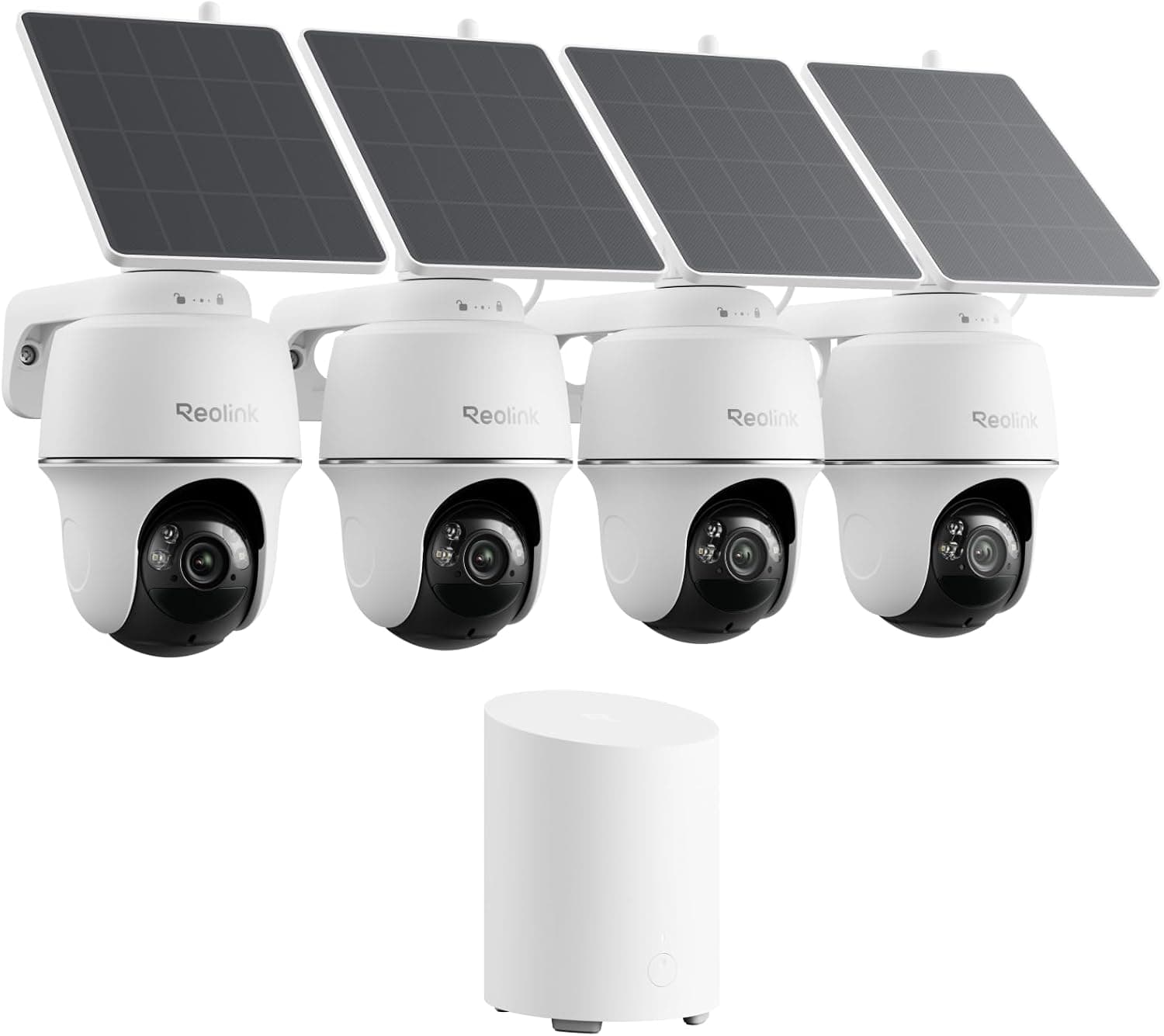
REOLINK 360° Solar Security Cameras, 4 Pack
See it on Amazon
Yale Assure Lock 2 Wi-Fi Smart Lock with Keypad
See it on Amazon
Sponsored listings from Amazon’s Sponsored Products for Creators program, kept apart from our reviews and rankings. How we make money
Gardyn's Kelby AI is the only consumer-grade plant assistant with camera-based plant identification and predictive health alerts. It monitors humidity, temperature, and water levels in real time, adjusting light cycles automatically and pushing condition-specific notifications — "your basil needs more airflow" rather than generic reminders. CNN Underscored and GearBrain both highlighted the sunrise/sunset light mode as genuinely useful for plant growth cycles. The Grow Intelligence score of 9.5 is the highest in this guide by a significant margin.
The problem is the subscription. At $29-39 per month, Gardyn's membership gates most of Kelby's AI features, vacation mode, and discounted yCube pricing. Energy-conscious growers should also note that Gardyn's grow lights run continuously — pairing the system with a smart plug with energy monitoring helps track actual power consumption. Without it, yCubes jump from $1.99 to $4.99 each and the app loses core functionality. Over three years, that subscription adds $1,044 to $1,404 to the $899 hardware cost — pushing total ownership to $2,223-$2,583.
What We Love
- Kelby AI camera monitoring — the only consumer garden with vision-based plant identification and predictive health alerts
- 30-plant vertical density — 15 plants per square foot of floor space, strongest density ratio here
- Sunrise/sunset light mode — automated light cycle mimics natural growing conditions
What Could Be Better
- Subscription ($29-39/month) is effectively mandatory — core AI features are paywalled
- Proprietary yCube system with no third-party alternatives
- No documented Alexa or Google Home integration
The Verdict
Gardyn is the right system if AI-powered plant monitoring is the priority and the subscription cost is acceptable. It is the wrong system if total cost of ownership matters — the Lettuce Grow Farmstand Nook delivers a higher IGIS with no recurring fees and stronger expert consensus.
Lettuce Grow Farmstand 24-Plant — Best Seedling System
Lettuce Grow Farmstand 24-Plant
(Current Price, subject to change)
The Farmstand's defining feature is its seedling model — rather than starting from seeds, Lettuce Grow ships pre-grown seedlings (200+ varieties) that arrive 2-3 weeks into their growth cycle. This eliminates the germination phase that causes most first-time hydroponic failures. Food Network, Bob Vila, and The Kitchn all praised this approach. Modular tiers expand capacity to 36 plants, and the system supports fruiting crops alongside herbs and greens.
The tradeoff is ongoing cost. Seedlings run $2.49-$2.99 each, and at 6 batches per year for 24 plants, consumable costs reach approximately $360-$430 annually — pushing the 3-year TCO to around $1,469. There are no smart features beyond a basic timer plug.
What We Love
- Pre-grown seedlings — 200+ varieties arrive ready to grow, eliminating germination failures
- Modular design — add tiers to expand from 24 to 36 plants
- Strong editorial consensus — Bob Vila pick, Food Network reviewed, The Kitchn endorsed
What Could Be Better
- Seedling costs add up at scale ($360-$430/year for full capacity)
- No AI, no app, no sensors — minimal smart features
The Verdict
The Farmstand is the best system for buyers who want reliable harvests without learning hydroponic science. Growers who want AI-powered monitoring should consider Gardyn; growers who want lower long-term costs should look at ALTO Garden GX.
Lettuce Grow Farmstand Nook — Best Overall
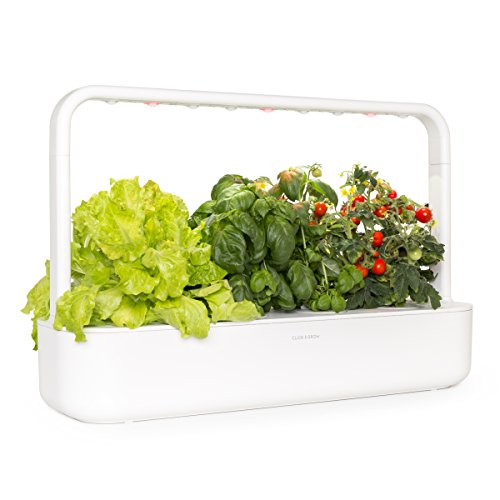
Lettuce Grow Farmstand Nook
(Current Price, subject to change)
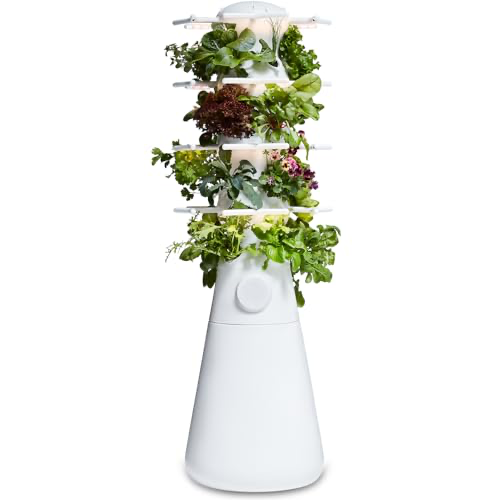
CNN Underscored named the Nook its top overall indoor garden pick. The Kitchn called it a product they would "splurge on again and again." The expert consensus score of 9.0 is the highest of any product in this guide. The Nook takes the Farmstand concept — pre-grown seedlings, vertical tower design — and optimizes it for indoor use with integrated lighting and a more compact footprint (20 plants in 2 square feet).
The 3-year TCO of approximately $1,479 is competitive: no subscription, and seedling costs are slightly lower than the full Farmstand since the Nook holds 20 plants instead of 24 per refill cycle.
What We Love
- Strongest expert consensus — CNN Underscored top pick, The Kitchn "splurge again and again"
- Compact indoor design — 20 plants in 2 square feet with integrated lighting
- Same seedling system — 200+ varieties, pre-grown, shipped ready to plant
What Could Be Better
- Minimal smart features despite the "smart" positioning
- Smaller capacity than the full Farmstand (20 vs. 24 plants)
The Verdict
The Nook is the safest recommendation for anyone who does not want to manage nutrients, troubleshoot sensors, or pay subscription fees. Growers who want more capacity should look at the Farmstand 24-Plant; those who want AI monitoring should consider Gardyn.
Tower Garden FLEX — Best Aeroponic Yield
Tower Garden FLEX
(Current Price, subject to change)
Tower Garden uses patented aeroponic technology — roots are misted with nutrient solution rather than submerged — which produces 30% greater yields than hydroponic systems and 3x faster growth than soil, per manufacturer specs confirmed by MistCulture. The FLEX model works both indoors and outdoors, a versatility no other system here offers. Indoor use requires a separate grow light purchase (approximately $200).
No app, no AI, no connected sensors. Nutrient and pH management are fully manual. The 3-year TCO of approximately $1,430 is mid-range, with no subscription costs.
What We Love
- Aeroponic technology — 30% higher yields than hydroponic competitors, 98% less water than soil
- Indoor/outdoor versatility — the only system here that works in both environments
- Full fruiting crop support — tomatoes, peppers, strawberries, cucumbers
What Could Be Better
- No smart features at all — fully manual nutrient and pH management
- Indoor grow lights are a separate $200 purchase
The Verdict
Tower Garden is for experienced growers who prioritize raw yield performance over technology. Buyers who want a simpler experience should choose Lettuce Grow Farmstand Nook; buyers who want the lowest-cost tower should consider ALTO.
ALTO Garden GX — Best Value
ALTO Garden GX
(Current Price, subject to change)
ALTO Garden GX has the lowest 3-year TCO in this guide at approximately $989. The $649 hardware price is competitive among tower systems, nutrients are included in the kit, and standard net pots allow the cheapest possible refills. No subscription, no app, no account. The 2mm food-grade walls suggest durability beyond what most competitors offer at this price.
The included pH test pen adds a manual monitoring capability that most budget systems lack. Plant capacity is 24 pots in under 3 square feet, with 30% greater yields and 3x faster growth than soil per manufacturer specs.
What We Love
- Lowest 3-year TCO ($989) — cheapest to own and operate over time
- Complete kit — pH pen, nutrients, germination station, and grow lights all included
- Heavy-duty build — 2mm food-grade walls signal long-term durability
What Could Be Better
- No smart features — manual operation with basic timers
- Very limited editorial reviews from major publications
The Verdict
ALTO is the value pick for buyers who want a productive tower garden without paying tower garden prices. The $989 three-year TCO is the lowest of any tower system in this guide. For AI-powered growing, Gardyn offers camera-based monitoring at a significantly higher total cost.
Click & Grow Smart Garden 9 — Best Budget / Beginner
Click & Grow Smart Garden 9
(Current Price, subject to change)
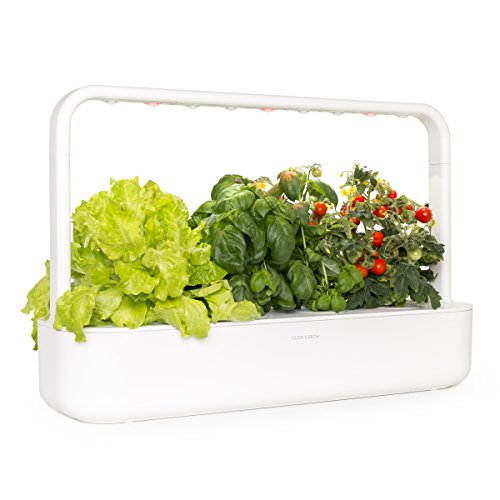
The Smart Garden 9 is the most recommended entry-level indoor garden across major publications — CNN Underscored and Bob Vila both feature it as a top beginner pick. At $250, the barrier to entry is lower than any other system in this guide by a factor of three. The 3-week self-watering reservoir is the longest in the category, and the automated light cycle reduces maintenance to near zero for the first few weeks.
The 3-year TCO of approximately $700 is the second-lowest here. Pod costs (about $360 over 3 years) are manageable at 9-pod scale. The limitation is capacity — 9 plants is insufficient for meaningful produce volume.
What We Love
- Lowest entry price ($250) — the most accessible indoor garden on the market
- 3-week self-watering — longest reservoir in the category, genuinely low-maintenance
- Strong editorial backing — CNN Underscored and Bob Vila recommend it for beginners
What Could Be Better
- 9-pod capacity is too small for serious produce goals
- Proprietary Smart Soil pods with no third-party options
The Verdict
The Smart Garden 9 is the correct first indoor garden for anyone unsure whether they will stick with it. At $250, the financial risk is minimal. Buyers who already know they want serious capacity should skip directly to Lettuce Grow Farmstand Nook or ALTO.
How the SHE Indoor Garden Intelligence Score (IGIS) Works
Full methodology for this score
What it measures: How intelligently, efficiently, and cost-effectively a smart indoor hydroponic garden grows food — combining AI/app sophistication, yield capacity, true ownership cost, ecosystem openness, and aggregated expert opinion into a single 0-100 composite.
Formula: IGIS = [(Grow Intelligence x 0.25) + (Yield Efficiency x 0.20) + (TCO x 0.20) + (Ecosystem Openness x 0.15) + (Expert Consensus x 0.20)] x 10
Factors: Grow Intelligence (25%) measures AI/app sophistication. Yield Efficiency (20%) measures plant capacity and crop variety relative to footprint. True Cost of Ownership (20%) models 3-year total cost — lower is better. Ecosystem Openness (15%) penalizes vendor lock-in and proprietary pods. Expert Consensus (20%) aggregates editorial ratings from 16+ sources. All factors scored 0-10.
(SmartHomeExplorer editorial analysis — methodology. Data aggregated from 16+ expert sources. April 2026.)
SHE Indoor Garden Intelligence Score (IGIS)
Formula: Grow Intelligence (25%) + Yield Efficiency (20%) + TCO (20%) + Ecosystem Openness (15%) + Expert Consensus (20%). Higher = smarter + more cost-effective garden.
$749 · 20 plants · CNN Underscored top pick · best overall
$899 · Kelby AI camera · $29-39/mo subscription · best AI features
$649 · 200+ seedling varieties · pre-grown plants · best seedling system
$649 · lowest 3-year TCO ($989) · open system · best value
$670 · aeroponic 30% more yield · indoor/outdoor · best yield
$250 · 9 plants · lowest entry price · best budget beginner
SmartHomeExplorer editorial analysis. Formula: Grow Intelligence (25%) + Yield Efficiency (20%) + True Cost of Ownership (20%) + Ecosystem Openness (15%) + Expert Consensus (20%), each scored 0-10, weighted sum × 10. Data from CNN Underscored, Bob Vila, Food Network, Reviewed, HGTV, Healthline, The Kitchn, Gear Patrol, GearBrain, The Gadgeteer, Taste of Home (April 2026)
When NOT to Buy
- Skip smart indoor gardens if you have a sunny south-facing yard or balcony. Outdoor container gardening produces higher yields at a fraction of the cost, and no subscription or electricity is required.
- Skip if you travel frequently and cannot maintain a water reservoir. Most systems need refilling every 1-2 weeks, and even the smartest AI cannot add water remotely. For outdoor growing that handles watering automatically when you are away, see our smart irrigation sprinkler systems guide.
- Skip if your primary goal is saving money on groceries. Three-year TCO ranges from $700 to $2,583 — most households will not recoup that in herb and lettuce savings alone. For smart home investments with clearer ROI, see our smart plugs with energy monitoring guide.
The Bottom Line
The IGIS reveals a counterintuitive truth: the most technologically impressive garden (Gardyn, GI 9.5) ranks second overall because its subscription model undermines the value proposition. The best indoor garden in 2026 is the one that balances capability and cost without locking buyers into recurring fees.
Get the Lettuce Grow Farmstand Nook if you want the highest-scoring system overall — CNN Underscored's top pick, pre-grown seedlings, integrated lighting, and the simplest growing experience. IGIS 69.
Get the Gardyn Home Kit 4.0 if you want the most advanced AI plant monitoring on the market and the subscription cost ($29-39/month) is acceptable. IGIS 68.
Get the ALTO Garden GX if you want the lowest 3-year cost of ownership — $989 total with nutrients included. IGIS 66.
Get the Click & Grow Smart Garden 9 if you want the cheapest entry point to prove the concept before committing to a tower system. IGIS 62.
For growing beyond the indoors, see our smart planters and indoor garden guide. If indoor air quality matters alongside plant health, our smart air quality monitors guide covers CO₂, humidity, and VOC sensors that help optimize growing conditions.
Frequently Asked Questions
Q: How much electricity does an indoor hydroponic garden use?
Most LED-lit hydroponic gardens consume 40-100 watts running 16 hours per day. At the national average of $0.15/kWh, that translates to roughly $35-$90 per year. Tower systems with more powerful lighting trend toward the higher end. Countertop systems like the Click & Grow Smart Garden 9 use approximately 20 watts and cost around $20 per year.
Q: Can you grow tomatoes and peppers in an indoor hydroponic garden?
Yes, but not in every system. Tower Garden FLEX, Lettuce Grow Farmstand, and ALTO Garden GX all support fruiting crops including tomatoes, peppers, strawberries, and cucumbers. Click & Grow supports cherry tomatoes and chili peppers but is limited by pod size. Fruiting crops require more vertical space, light intensity, and nutrient management than herbs — choose a tower system rated for at least 20 plants if fruiting crops are a priority.
Q: Is AeroGarden still available in 2026?
AeroGarden shut down in January 2025 and relaunched in spring 2025 with uncertain product availability. If you were an AeroGarden user looking for a replacement, the Click & Grow Smart Garden 9 is the closest countertop alternative, while Lettuce Grow Farmstand offers significant upgrades in capacity.
Q: Do indoor hydroponic gardens save money on groceries?
Rarely in direct dollar terms. A productive system can yield $200-$500 worth of herbs and greens annually at retail prices, but 3-year TCO ranges from $620 to $2,583. The value proposition improves for high-cost herbs (basil, cilantro, mint at $2-4 per grocery store bunch) and households that waste purchased produce. Most buyers should frame indoor gardens as a quality-of-life purchase rather than a cost-saving measure.
Q: What is the difference between hydroponic and aeroponic systems?
Hydroponic systems submerge plant roots in nutrient-rich water (Lettuce Grow, Click & Grow, ALTO). Aeroponic systems mist roots with nutrient solution in an air chamber (Tower Garden FLEX). Aeroponics delivers 30% higher yields and faster growth because roots receive more oxygen, but requires more precise nutrient management.
Sources & Methodology
Consensus scores aggregate expert reviews from CNN Underscored, Bob Vila, Food Network, Reviewed, HGTV, Healthline, The Kitchn, Gear Patrol, GearBrain, The Gadgeteer, Taste of Home, NBC Select, Gardens Illustrated, and community sources including SherSheGrows, GreenerPods, and MistCulture. IGIS factor scores are based on verified manufacturer specifications, published review data, and current retail pricing as of April 2026. 3-year TCO calculations model hardware + subscription + consumables + nutrients + estimated electricity at $0.15/kWh. Full methodology at /methodology.
Written by Nicholas Miles. Nick has covered smart home technology since 2024, with a focus on how connected devices perform in real households over time rather than just out of the box.
Disclosure: SmartHomeExplorer.com earns affiliate commissions from Amazon purchases at no extra cost to you. This does not influence our rankings — our methodology is published at /methodology.