

The short answer: Tesla Powerwall 3 for most homes; FranklinWH aPower 2 if you want more storage per dollar; EG4 PowerPro if you're handy and budget-conscious.
Home batteries are a weird product category for us to cover. No mainstream tech outlet — not CNET, not Wirecutter, not Tom's Guide — publishes installer-grade battery comparisons, because these aren't products you toss in an Amazon cart. Every system in this guide requires professional installation (or serious DIY chops), and none of them ship to your door in a Prime box. But they're increasingly central to the smart home energy stack, and somebody needs to do the homework. So here we are.
We aggregate data from EnergySage, SolarReviews, Electrek, Solar.com, and Consumer Reports, then layer our proprietary SHE Storage Value Score on top — a single number that captures what these systems are actually worth over their lifetime. We don't test batteries ourselves (we don't even own one). We just read everything so you don't have to. For your total energy picture, pair this with our whole-home energy monitors guide, our smart plug ROI analysis, and our home energy audit guide.
Wait — What About That 30% Tax Credit?
Let's get this out of the way immediately, because it's the question we're getting the most in 2026.
The 30% Residential Clean Energy Credit (Section 25D) was terminated by the One Big Beautiful Bill Act, signed July 4, 2025, for all systems placed in service after December 31, 2025. If you're buying a battery today with cash or a loan, there is no federal ITC available to you as a residential purchaser.
What does still exist:
- State rebates: California (SGIP), New York (NY-Sun), Connecticut, and Colorado offer battery rebates worth $5,000 to $16,000 depending on the program and your system size. These can be substantial — often $3,000–$8,000 off a standard Powerwall install.
- Third-party ownership (TPO): If you lease a battery or use a solar PPA that includes storage, the developer can claim the commercial Section 48E credit (still valid through 2032), and some installers pass a portion of that value back to you in reduced lease rates.
- Utility programs: Time-of-use rate arbitrage and virtual power plant (VPP) payments are increasingly available. Tesla's PowerShare and FranklinWH's grid services programs pay homeowners to export stored energy during peak demand, shortening payback by 1–3 years in eligible markets.
The bottom line: buying in 2026 without the federal credit means the math is tighter. In high-rate states (California, Massachusetts, Hawaii), batteries still pencil out in 7–10 years. In low-rate markets, they pencil out as resilience investments, not financial ones.
SHE Storage Value Score
This is our proprietary metric — no other site publishes this formula. Most battery comparisons just list specs side-by-side and leave you to figure out what matters. The SHE Storage Value Score does that math for you: it isolates the three things that actually determine whether a home battery is worth its price tag over a decade — how much energy it delivers, how long the warranty backs it, and what you paid per unit of lifetime capacity.
What it measures
Cost-adjusted lifetime energy delivery. Here's why that matters: a battery that holds 15 kWh with a 15-year warranty at 97% efficiency is worth dramatically more than one with 13.5 kWh, a 10-year warranty, and 90% efficiency — but only if the cost difference is proportional. This score captures that relationship in a single number, so you're not just comparing spec sheets and guessing.
Formula
SHE Storage Value Score = (Usable Capacity kWh × Round-Trip Efficiency % × Warranty Years) / (Net Installed Cost USD / 1,000)
- Usable Capacity kWh: Manufacturer-rated usable storage (not gross capacity)
- Round-Trip Efficiency %: DC or AC round-trip as reported on spec sheet, expressed as decimal (e.g., 0.97)
- Warranty Years: Full-coverage warranty years (not throughput-limited)
- Net Installed Cost USD: Median installed cost in April 2026, including equipment + labor, after available state rebates (California SGIP used as benchmark where applicable; no federal ITC applied)
Higher scores = more lifetime energy per dollar of investment.
Data sources
EnergySage marketplace data (Q1 2026), SolarReviews installer surveys, manufacturer spec sheets, SolarTechOnline pricing database, NuWatt Energy comparison data, IntegrateSun installer reports.

(SmartHomeExplorer editorial analysis — /methodology)
SHE Storage Value Score
Higher = more lifetime energy per dollar. Formula: (kWh × Efficiency × Warranty Years) / (Installed Cost / 1,000)
14.3 kWh · 95% efficiency · 10-yr warranty · $11,000 installed
15.0 kWh · 90% efficiency · 15-yr warranty · $17,000 installed
13.5 kWh · 97% efficiency · 10-yr warranty · $16,200 installed
10.0 kWh (2×5) · 90% efficiency · 15-yr warranty · $17,000 installed
14.4 kWh · 90% efficiency · 10-yr warranty · $16,500 installed
SmartHomeExplorer editorial analysis — methodology at /methodology (April 2026)
What this tells you: The EG4 PowerPro scores highest on pure math because its installed cost is $5,000–$7,000 below the branded alternatives — but that advantage comes with a big asterisk: EG4 requires a separate inverter, is DIY-leaning, and doesn't have the installer network you'd call at 2 AM when something goes wrong. FranklinWH's 15-year warranty is doing serious heavy lifting for the aPower 2 — doubling the warranty window relative to Tesla and LG materially changes what "lifetime value" looks like. And the Powerwall 3's score looks moderate here, but this formula doesn't capture its 11.5 kW continuous output advantage, which matters a lot if you're running HVAC and an EV charger simultaneously during an outage. No single number tells the whole story — that's why you keep reading.
Tesla Powerwall 3 — Best Overall
Tesla Powerwall 3

(Current Price, subject to change)
Capacity: 13.5 kWh usable Power Output: 11.5 kW continuous / 185A LRA motor start Round-Trip Efficiency: 97.5% Warranty: 10 years, 70% capacity retention, unlimited backup cycles Chemistry: Lithium Iron Phosphate (LFP)
The big deal here: the Powerwall 3 has a built-in hybrid solar inverter, which means if you're adding solar at the same time, you may not need a separate string inverter. That's a real $1,500–$3,000 savings on a full solar + storage install — not a marketing number, an actual line item that disappears from your quote.
Expert consensus: EnergySage says the Powerwall 3 appeared in 47% of all storage quotes on their platform in Q1 2026 — it's the most-quoted battery by a wide margin. SolarReviews gives it 4.7/5 across 1,200+ installer reviews, with reliability and app quality cited most often. Electrek noted the November 2024 hardware refresh brought improved thermal management and a 15% reduction in idle draw. Installers universally praise the built-in inverter for new construction; they describe it as unnecessary complexity for retrofit customers who already have a working inverter.
What We Love
- 11.5 kW continuous output — highest in this roundup, handles EV charging + HVAC simultaneously without blinking
- Built-in solar inverter — makes new solar installs cleaner and cheaper, saving $1,500–$3,000 on a full install
- Unlimited backup cycle warranty — no throughput cap, which is rare
- Storm Watch — automatically charges before bad weather (seriously useful if you live somewhere with actual storms)
- Best-in-class app — Tesla's monitoring and VPP enrollment app is genuinely the one your spouse will actually open
- Full Tesla ecosystem — pairs natively with Tesla Solar and Tesla EVs for whole-home energy optimization
What Could Be Better
- Must buy through Tesla-certified installers — that limits competition and can inflate prices in markets with few certified shops
- 10-year warranty is the shortest in the premium tier (FranklinWH and Enphase both offer 15)
- 13.5 kWh is the smallest per-unit capacity here — heavy users need stacked units at $11,800 per expansion, which adds up fast
- Wait times of 4–12 weeks in some markets as of Q1 2026
- If you already have solar panels with their own inverter, the built-in inverter becomes redundant hardware you're paying for
The Verdict
If you're building a new solar + storage system from scratch, the Powerwall 3 is the default choice for a reason. The built-in inverter saves you money on the install, the 11.5 kW output means you can actually run your whole house during an outage (including the AC), and the Tesla app is the one your spouse will actually open. The 10-year warranty is the weak spot — you're betting on Tesla being Tesla for a decade, which some people find reassuring and others find terrifying.
Is the Tesla Powerwall 3 worth it in 2026?
If you're building a new solar + storage system from scratch, yes. The built-in inverter saves real money, the 11.5 kW output means you can run your whole house during an outage, and the Tesla app is genuinely best-in-class. The 10-year warranty is the weak spot — shorter than FranklinWH and Enphase by five years.
Tesla Powerwall 3 vs FranklinWH aPower 2 — which is better?
Depends on what you're optimizing for. Powerwall 3 wins on power output (11.5 kW vs 10 kW), efficiency (97.5% vs 90%), and software polish. FranklinWH wins on capacity (15 kWh vs 13.5 kWh), warranty length (15 years vs 10), and works with any existing solar inverter. If you're adding solar and storage together: Powerwall 3. If you already have solar and want the longest guarantee: FranklinWH.
FranklinWH aPower 2 — Best Value Per kWh
FranklinWH aPower 2

(Current Price, subject to change)
Capacity: 15.0 kWh usable Power Output: 10 kW continuous / 15 kW peak (10 seconds) Round-Trip Efficiency: 90% Warranty: 15 years or 60 MWh throughput per unit Chemistry: Lithium Iron Phosphate (LFP)
The aGate supports up to 15 aPower batteries per controller, which means the aPower 2 scales to a frankly absurd 225 kWh if you have the wall space and the budget. Most people don't need that, but it's nice to know the ceiling is high.
Expert consensus: Solar.com's 2026 battery comparison called the aPower 2 "the best choice for homeowners who want maximum capacity and the longest warranty guarantee." SmartEnergyUSA notes that at $15,000–$17,000 installed, it offers a lower cost-per-kWh than the Powerwall 3 in most markets. NuWatt Energy's head-to-head comparison (updated March 2026) found the aPower 2 wins on raw storage and warranty but loses on power output headroom for high-draw homes. Green Ridge Solar's installer review makes the financing argument: the 15-year warranty aligns with 15- and 20-year solar panel warranties much better than Tesla's 10-year coverage.
What We Love
- 15 kWh per unit — the most storage you can get from a single residential battery in this roundup
- 15-year warranty — the longest standard coverage on any residential battery, period
- All-weather rated — IP67 and operates from -4°F to 122°F, so it works in a garage in Phoenix or a basement in Minnesota
- 10 kW continuous output — handles most whole-home loads comfortably
- Brand-agnostic — AC-coupled design works with any existing solar inverter, no vendor lock-in
What Could Be Better
- 90% round-trip efficiency is noticeably below Powerwall 3's 97.5% — over 15 years, that 7.5% gap means real kWh lost to heat
- Requires a separate aGate controller ($1,500–$2,500 extra), and the aGate is a single point of failure — if it goes down, your battery goes offline
- Smaller installer network than Tesla, though it's growing fast in 2026
- The app works, but "works" is about all you can say — it's not Tesla-level software polish
The Verdict
If you already have solar panels and want to add storage without replacing your inverter, the aPower 2 is probably your best option. The 15 kWh capacity means fewer units needed for whole-home backup, and the 15-year warranty is a genuine differentiator — not a marketing claim, but a warranty term that changes how lenders and insurers look at the install. The efficiency gap versus the Powerwall 3 is real, but over 15 years the longer warranty window more than compensates in our SHE Score math.
Is the FranklinWH aPower 2 worth it in 2026?
If you already have solar panels and want to add storage without replacing your inverter, the aPower 2 is probably your best option. The 15-year warranty is a genuine differentiator that changes how lenders and insurers look at the install, and the 15 kWh capacity means fewer units for whole-home backup.
FranklinWH aPower 2 vs Enphase IQ Battery 5P — which is better?
For comparable capacity (15 kWh), you'd need three Enphase 5P units at $25,500 vs one aPower 2 at $15,000–$20,000. FranklinWH wins on price and simplicity. Enphase wins if you're already in the Enphase microinverter ecosystem and want one app for everything. If you're starting fresh, the aPower 2's math is hard to beat.
Enphase IQ Battery 5P — Best Modular
Enphase IQ Battery 5P

(Current Price, subject to change)
Capacity: 5.0 kWh usable per unit (10–15 kWh typical 2–3 unit install) Power Output: 3.84 kW continuous / 7.68 kW peak per unit Round-Trip Efficiency: 90% AC / 96% DC Warranty: 15 years / 6,000 cycles, 60% capacity retention Chemistry: Lithium Iron Phosphate (LFP)
Most homes need 2–3 units ($17,000–$25,500) for meaningful backup. The modular design means you can start with one unit and add more later — which sounds great until you do the per-kWh math.
Expert consensus: SolarReviews' 2026 battery guide calls the IQ 5P "the obvious upgrade path for Enphase ecosystem owners" but adds that its per-unit pricing is "hard to justify for non-Enphase households." Consumer Reports' Q4 2025 home battery report gave Enphase top marks for reliability and customer service, citing the microinverter architecture as a resilience differentiator. NuWatt Energy's comparison found the 5P beats FranklinWH on monitoring granularity but loses decisively on cost-per-kWh. The 15-year, 6,000-cycle warranty is competitive — though that 60% capacity floor is worth noting.
What We Love
- Enphase ecosystem integration — if you already have Enphase microinverters, this is the obvious storage add: one app, one ecosystem, one support number
- 15-year warranty — with a defined 6,000-cycle count
- True modularity — start small and expand without ripping out existing hardware
- Independent units — each unit is fully self-contained; losing one doesn't take down the whole system (a genuine resilience advantage)
- Best monitoring — cleanest monitoring data in this roundup via Enphase Enlighten
- AC-coupled — works with non-Enphase solar too
What Could Be Better
- At roughly $1,700/kWh installed, this is the most expensive storage in this guide by a wide margin
- 5.0 kWh per unit means most homes need 2–3 units for meaningful backup — and the costs stack fast
- 3.84 kW continuous per unit won't run high-draw appliances unless you stack multiple units
- A 15 kWh equivalent system (3 units + System Controller) can hit $27,000–$30,000 — nearly double the EG4 PowerPro
- The warranty guarantees only 60% capacity retention at year 15 — competitors guarantee 70%
The Verdict
Honestly? Only if you're already in the Enphase ecosystem. If you have Enphase microinverters on your roof and you want storage that talks natively to your existing system, the IQ 5P is a clean upgrade with great monitoring. If you're starting from scratch or coming from a different inverter brand, the per-kWh cost is simply too high compared to FranklinWH or EG4. Two units ($17,000) gets you 10 kWh — FranklinWH gives you 15 kWh for the same money.
Is the Enphase IQ Battery 5P worth it in 2026?
Only if you're already in the Enphase ecosystem. If you have Enphase microinverters and want storage that talks natively to your existing system, the IQ 5P is a clean upgrade with great monitoring. If you're starting fresh, the per-kWh cost is simply too high compared to FranklinWH or EG4.
Enphase IQ 5P vs Tesla Powerwall 3 — which is better?
Different animals. The Powerwall 3 gives you 13.5 kWh in one unit with 11.5 kW output for $15,300–$18,000. To match that capacity with Enphase, you need three 5P units for $25,500. Tesla wins on raw value; Enphase wins on modularity and ecosystem integration. If you have Enphase solar: Enphase. Everyone else: Powerwall 3.
LG Home 8 — Best Retrofit
LG Home 8

(Current Price, subject to change)
Capacity: 14.4 kWh usable Power Output: 7.5 kW continuous Round-Trip Efficiency: 90% Warranty: 10 years, 70% capacity retention, 59.8 MWh throughput Chemistry: Lithium Iron Phosphate (LFP)
The AC-coupled design is the whole point here — it connects to your existing solar system's AC side without anyone touching your inverter configuration. If you already have panels and just want to add storage, this is the path of least resistance.
Expert consensus: EnergySage marketplace data shows the LG Home 8 as the go-to for homeowners with existing non-Tesla solar who want a clean, single-unit retrofit without brand lock-in. 8MSolar's 2026 installer review puts it plainly: "For a customer who already has panels and just wants storage added, the Home 8 installation is a 4-hour job vs. an 8-hour job for Powerwall." SolarReviews gives it 4.4/5, with installers consistently praising how straightforward the retrofit process is.
What We Love
- All-in-one design — battery + inverter in one cabinet makes retrofits dramatically simpler; installers love this for good reason
- 14.4 kWh capacity — competitive with the top-tier units
- Brand-agnostic — AC-coupled and works with SolarEdge, Enphase, SMA, whatever you have
- LG brand recognition — your installer has probably done a dozen of these already
- Competitive pricing — $14,500–$18,500 all-in is a solid per-kWh value
What Could Be Better
- 7.5 kW continuous output is the lowest in the top tier — you're not running HVAC and an EV charger at the same time on this
- 10-year warranty is mid-pack, shorter than FranklinWH and Enphase by five years
- Some distributors reported limited inventory in late 2025 — check availability before your installer specs it into a design
- LG's residential energy division has faced restructuring questions, and long-term support is a legitimate concern worth keeping an eye on
- That 90% round-trip efficiency vs. Powerwall 3's 97.5% adds up to roughly 200 kWh of lost energy per year — not nothing
The Verdict
If you have existing solar panels from any brand and want to add battery backup with the least disruption, the Home 8 is the safest pick. The 4-hour install time versus 8 hours for some competitors isn't just a convenience thing — it's real labor cost savings. The concern is LG's corporate restructuring noise and the shorter warranty. You're getting a solid battery from a company whose long-term commitment to the residential energy space is... uncertain. That might matter in year 7.
Is the LG Home 8 worth it in 2026?
If you have existing solar panels from any brand and want to add battery backup with the least disruption, the Home 8 is the safest pick. The 4-hour install time saves real labor costs. The concern is LG's corporate restructuring and the shorter 10-year warranty versus FranklinWH's 15.
LG Home 8 vs Tesla Powerwall 3 — which is better for a retrofit?
LG wins the retrofit question clearly. The Powerwall 3's built-in solar inverter is redundant if you already have one, and the Home 8's AC-coupled design was built specifically for the "I have panels, add storage" scenario. Powerwall 3 has higher output (11.5 kW vs 7.5 kW) and better efficiency (97.5% vs 90%), but for a straightforward retrofit, the LG is faster to install and works with any existing inverter brand.
EG4 PowerPro 14.3kWh — Best Budget
EG4 PowerPro 14.3kWh

(Current Price, subject to change)
Capacity: 14.3 kWh usable Power Output: 140A max continuous discharge (inverter-dependent) Round-Trip Efficiency: 95% Warranty: 10 years / 8,000+ cycles at 80% depth of discharge, 82.6 MWh lifetime throughput Chemistry: Lithium Iron Phosphate (LFP)
This is a product for people who know what an inverter is. The separate inverter requirement scares off casual buyers, and honestly, it should. But for those comfortable with a more involved installation, the savings are substantial — $4,000–$7,000 less than a Powerwall 3.
Expert consensus: EnergySage lists the EG4 PowerPro as the top-rated budget battery among DIY solar installers in 2026. Signature Solar, a major EG4 distributor, says the PowerPro outsells comparable-tier products 3:1 in off-grid and hybrid self-install markets. The 8,000-cycle warranty at 80% DoD is substantively better than the 3,000–6,000 cycle ratings typical in this tier. For a homeowner who's comfortable with a more involved installation — or willing to pay a knowledgeable local installer to handle integration — the EG4 is the clearest value play in this guide, and it's not particularly close.
What We Love
- Lowest total cost — $4,000–$7,000 less than a Powerwall 3, and the savings are real
- 8,000+ cycle rating — best cycle count in this entire roundup at 80% DoD
- All-weather rated — IP65 with integrated self-heating, works in a garage that gets below freezing
- 95% round-trip efficiency — beats FranklinWH, LG, and Enphase
- Massive scalability — up to 85.8 kWh (six units on one inverter) for serious off-grid setups
- Direct BMS monitoring — LCD touchscreen without opening an app; old school, but reliable
- EMP-hardened — noted in spec documentation, which matters to a specific (and growing) buyer segment
What Could Be Better
- Requires a separate inverter — this isn't a "mount it and forget it" product
- The DIY-friendly reputation means many professional installers haven't touched one, so finding someone who knows EG4 hardware takes effort
- No name-brand installer network — you're not calling Tesla support
- App polish is... not a priority for this company. It works. That's about it
- Warranty backed by a smaller company, which carries real business continuity risk over a 10-year horizon
- If you want a phone number to call when something goes wrong at midnight, this is not your battery
The Verdict
If you're handy, yes — emphatically. The EG4 scores highest on our SHE Storage Value Score for a reason: you get 14.3 kWh of LFP storage with the best cycle rating in this guide for $9,000–$13,000 installed. That's $5,000+ less than a Powerwall 3. The tradeoff is integration complexity, less polish, and support from a company that's smaller than LG or Tesla. But the battery chemistry doesn't care about the logo on the case — LFP is LFP, and EG4's cells are sourced from the same tier-1 suppliers as the name brands.
Is the EG4 PowerPro worth it in 2026?
If you're handy, emphatically yes. You get 14.3 kWh of LFP storage with the best cycle rating in this guide for $9,000–$13,000 installed. The tradeoff is integration complexity, less polish, and support from a smaller company. The battery chemistry is identical to the name brands.
EG4 PowerPro vs Tesla Powerwall 3 — which should you buy?
This comes down to what kind of buyer you are. If you want a turnkey experience where a Tesla-certified installer handles everything and the app just works, the Powerwall 3 is worth the premium. If you're the person who watches YouTube teardown videos and would rather save $5,000–$7,000 on hardware to put toward more panels or a second battery, the EG4 is the smarter spend. There's no wrong answer — just different risk tolerances.
Full Comparison Table
| Spec | Tesla Powerwall 3 | FranklinWH aPower 2 | Enphase IQ 5P (×2) | LG Home 8 | EG4 PowerPro |
|---|---|---|---|---|---|
| Usable Capacity | 13.5 kWh | 15.0 kWh | 10.0 kWh | 14.4 kWh | 14.3 kWh |
| Continuous Output | 11.5 kW | 10.0 kW | 7.68 kW | 7.5 kW | Inverter-dep. |
| RT Efficiency | 97.5% | 90% | 90% | 90% | 95% |
| Warranty | 10 yr / unlimited cycles | 15 yr / 60 MWh/unit | 15 yr / 6,000 cycles | 10 yr / 59.8 MWh | 10 yr / 8,000+ cycles |
| Chemistry | LFP | LFP | LFP | LFP | LFP |
| Coupling | DC (built-in inverter) | AC | AC | AC | DC (separate inverter) |
| Installed Cost | $15,300–$18,000 | $15,000–$20,000 | $17,000–$25,500 | $14,500–$18,500 | $9,000–$13,000 |
| SHE Score | 8.09 | 11.93 | 7.94 | 7.85 | 12.36 |
| Best For | New solar installs, high-draw homes | Maximum capacity + warranty | Enphase ecosystems | Retrofits, brand-agnostic | Budget, DIY, off-grid |
What to Know Before You Buy
The ITC is gone — here's what replaces it
As noted above, the 30% federal residential tax credit ended December 31, 2025. In 2026, your financial calculus depends entirely on your state. California's SGIP (Self-Generation Incentive Program) rebates, New York's NY-Sun storage adder, and Colorado's GRID Incentive all offer meaningful cash back — up to $16,000 in California for qualifying low-income households, and $3,000–$6,000 for standard residential. Run your address through the DSIRE database (dsireusa.org) to see what's actually available where you live before getting a quote.
How much can you realistically save per year?
Let's use real numbers instead of vague promises. With a 14 kWh battery in a time-of-use rate market (the norm in California, parts of Texas, New York, and New England), you charge at off-peak rates ($0.12–$0.16/kWh) and discharge at peak rates ($0.35–$0.55/kWh). At 300 cycles per year, that's $250–$450 in arbitrage savings annually. Not life-changing, but it adds up.
Now add virtual power plant payments where available. Tesla's VPP program pays $2.00 per kWh discharged during grid events, and some California participants earned $400–$1,200 in VPP credits during the 2025 summer peak season. Combined realistic savings in a high-rate market: $600–$1,500 per year. In a national average rate market (18¢/kWh average in April 2026, per EIA data): $300–$700 per year. Nobody's getting rich off a home battery. But nobody's getting rich off a home insurance policy either, and you still have one.
Payback period math, honestly
Here's where we're going to be blunt, because most battery marketing won't be. Installed cost: $16,000 (median). Annual savings + VPP: $800 (optimistic mid-range). Simple payback without any incentives: 20 years. With California SGIP ($4,000 rebate): 15 years. With SGIP + aggressive TOU arbitrage + VPP: 10–12 years.
The honest answer in 2026 is that home batteries are still primarily resilience and energy independence purchases in most markets, not financial home runs. If you live in an area with frequent outages, high peak rates, or robust VPP programs, the math improves significantly. If you live somewhere with cheap, reliable power and mild weather — a battery is harder to justify on economics alone.
Capacity planning
Here's a rule of thumb that actually works: 1 kWh of storage per 100 sq ft of home for essential-load backup. So for a 2,000 sq ft home running lights, refrigerator, phone charging, and a router, 10–12 kWh gives you 8–12 hours of runtime. Add HVAC and you roughly double that requirement. Add an EV charger and you're looking at two Powerwall 3 units or an aPower 2-equivalent system.
For context, the National Electrical Manufacturers Association estimates the average US grid outage in 2025 lasted 3.6 hours — meaning a single 13.5 kWh battery handles the statistical "average" outage with plenty of room to spare. But averages don't help you when your power's been out for 36 hours after a derecho. Size for your actual risk, not the national average.
Is all-in-one or modular better?
For most homeowners: all-in-one. The Powerwall 3, LG Home 8, and FranklinWH aPower 2 are simpler to install, take up less wall space, and give you one vendor to call when something goes wrong. That's worth real money in reduced installer time and reduced headache.
Modular systems (Enphase IQ 5P, EG4 with stacked units) require more upfront planning and more installer expertise, but they're redundant — one failed module doesn't kill your entire system. That matters for high-reliability applications or if you want to buy storage in phases as your budget allows.
How Home Batteries Connect to Your Energy Stack
A battery sitting on your garage wall by itself is fine. A battery connected to the right monitoring and control stack is significantly better. Here's what we mean:
Pair your battery with a whole-home energy monitor (the Emporia Vue 3 is our top pick) to see exactly which circuits are drawing power during backup events — so you can make informed decisions about what stays on and what gets shed. Add smart plugs with real energy monitoring to remotely kill non-critical loads when your battery state of charge drops below 20%. And before buying any storage system, run a home energy audit to understand your actual daily kWh consumption. Over-buying battery capacity is a common and expensive mistake — we've seen homeowners spend $30,000 on storage when $16,000 would have covered everything they actually needed.
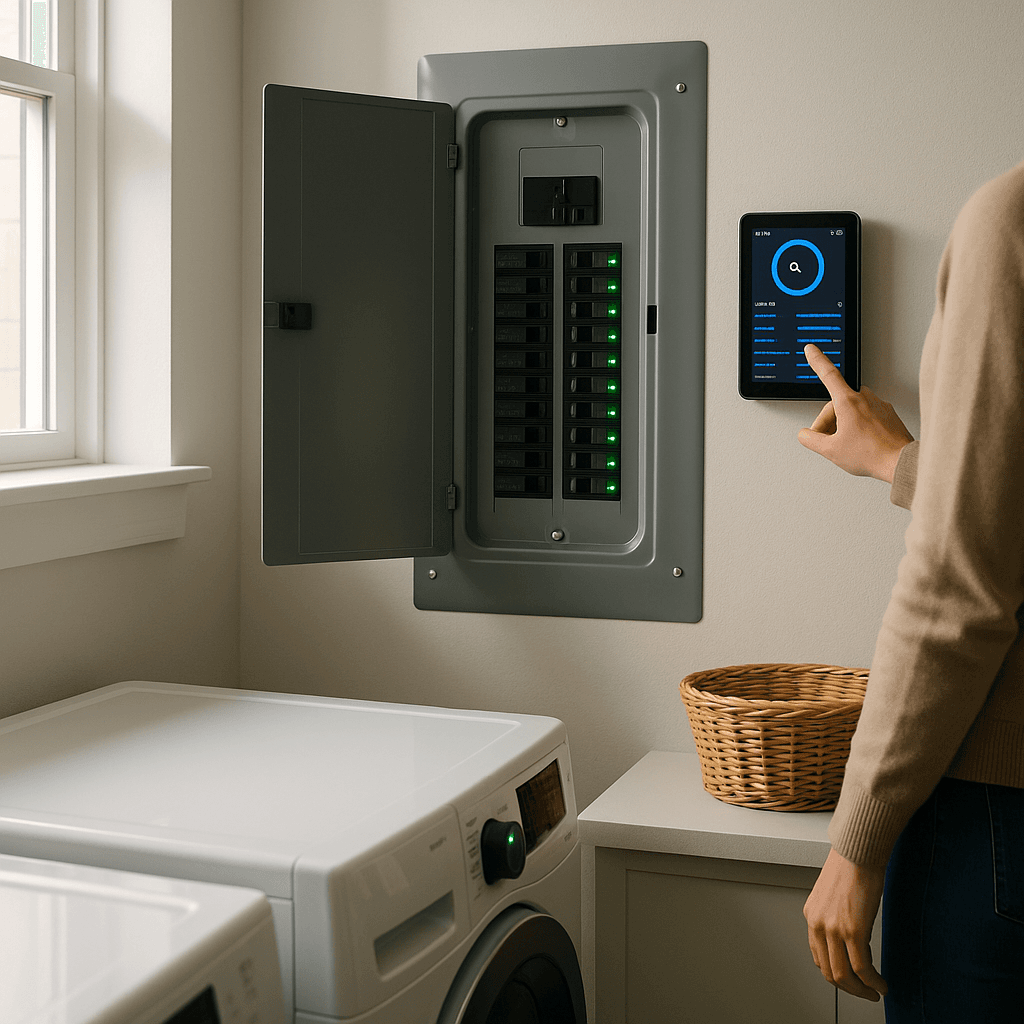
For the control layer that ties it all together, our smart electrical panels guide covers panels like the Span that eliminate the need for a separate critical load subpanel and give you per-circuit control over how your battery allocates power during an outage.
What about portable power stations?
Every battery in this guide requires professional installation and hardwiring into your electrical panel. If that sounds like more commitment than you need, portable power stations from EcoFlow, Anker, and Jackery offer 1–6 kWh of storage you can plug in and move around — no electrician required. They won't back up your whole home or integrate with solar panels the way these installed systems do, but they'll keep your fridge running and your phones charged during a short outage for $500–$2,000. We're working on a dedicated portable power station guide — for now, EcoFlow and Anker SOLIX are the names to know.
FAQ
Q: Is the 30% federal tax credit still available for home batteries in 2026?
No. It's gone. The 30% Residential Clean Energy Credit (Section 25D) was eliminated by the One Big Beautiful Bill Act, signed July 4, 2025. It applied only to systems placed in service by December 31, 2025. If you're buying with cash or a loan in 2026, there is no federal ITC for you. One workaround: third-party ownership models (solar leases, PPAs that include storage) may still pass through commercial ITC benefits — ask your installer specifically about this. State rebates remain available in California, New York, Connecticut, Colorado, and several other states.
Q: Do I need solar panels to install a home battery?
Nope — all five batteries in this guide can be installed as standalone storage without solar panels. You'd charge from the grid at off-peak rates and discharge during peak hours or outages. That said, without solar the energy arbitrage savings are modest, and the financial case becomes primarily about resilience ("my power stays on when the grid goes down"). If that's your goal, FranklinWH aPower 2 and LG Home 8 are particularly well-suited for standalone installations because their AC-coupled designs don't assume you have solar.
Q: How many kWh do I actually need?
Depends entirely on what you want to keep running. Essential loads only (lights, fridge, WiFi, phones): 5–8 kWh gets you through a typical overnight outage. Whole-home essential + HVAC: 13–16 kWh. Whole-home including EV charging: 27+ kWh — you're looking at two Powerwall 3 units or multiple aPower 2 units. Our strong recommendation: get a home energy audit first. Most people significantly overestimate what their house actually draws during an outage, and the difference between "I think I need 27 kWh" and "I actually need 14 kWh" is about $15,000.
Q: What's the difference between AC-coupled and DC-coupled storage?
DC-coupled (Tesla Powerwall 3, EG4 with a DC-coupled inverter): solar energy flows directly from panels to battery before converting to AC. More efficient (97.5% round-trip for Powerwall 3), but requires a compatible inverter — either the Powerwall 3's built-in one or a matched separate inverter for EG4. Best for new solar + storage installs where you're buying everything at once.
AC-coupled (FranklinWH aPower 2, Enphase IQ 5P, LG Home 8): battery connects to the AC side of your system, after solar energy has already been converted. Less efficient (90% typical), but works with any existing solar inverter. Best for retrofitting storage onto a solar system you already have. If you're not sure which type you need: if you have existing solar panels, you almost certainly want AC-coupled.
Q: How long do home batteries actually last?
Longer than most people expect. LFP chemistry (which all five of these use) is the longest-lasting battery chemistry available for residential storage. The 10-year warranties represent a conservative slice of actual useful life — most LFP cells are designed for 3,000–8,000+ cycles. EG4's 8,000-cycle rating at 80% depth of discharge is among the best in the industry. At one cycle per day, that's 21+ years of operation before hitting the cycle warranty limit. The practical constraint isn't chemistry — it's warranty coverage and whether the manufacturer is still around to honor it.
Q: Can a home battery power my whole house during an outage?
Sort of. Even the largest single-unit battery in this guide (FranklinWH aPower 2, 15 kWh) runs a typical American home for roughly 12–24 hours on essential loads, or 6–8 hours if you include central air conditioning. For multi-day outage resilience, you need either multiple batteries, a solar array to recharge daily, or a generator backup. Tesla's Storm Watch feature (which automatically pre-charges the Powerwall before anticipated severe weather) extends real-world backup duration meaningfully — but it doesn't change the physics. 13.5 kWh is 13.5 kWh, regardless of how fully you charge it beforehand.
Q: What's a virtual power plant and does it affect which battery I should buy?
A virtual power plant (VPP) is a utility program that aggregates home batteries and dispatches them collectively during peak demand events — basically, you let the grid borrow your stored energy when everyone's running their AC, and you get paid for it. Tesla's PowerShare VPP is the largest residential program in the US, operating in California, Texas, and parts of the Northeast. FranklinWH has a developing grid services program, and Enphase participates in several utility VPP programs through its platform. If VPP income is a priority for you, Tesla's established program gives you the clearest path today — but this space is evolving fast, and the other manufacturers are catching up.
The Bottom Line
Without the 30% federal tax credit, buying a home battery in 2026 is a more honest decision than it was two years ago. You're buying resilience and long-term energy independence, not a tax break with a battery attached. That clarity is actually helpful.
The Tesla Powerwall 3 remains the benchmark: highest power output, most mature installer network, and an app your family will actually use. FranklinWH's aPower 2 makes a strong case if you want more storage per dollar and the longest warranty in the category — particularly if you live somewhere where the power goes out regularly. If you're already running Enphase microinverters, the IQ 5P is the natural add-on despite the premium pricing. And if you're handy or you've got a local installer who knows their way around EG4 hardware, the PowerPro saves you $5,000–$7,000 with specs that match or beat the name brands on paper.
Get the Tesla Powerwall 3 if you're building a new solar + storage system from scratch and want the highest power output (11.5 kW), best app experience, and most mature installer network in one package.
Check Price →Get the FranklinWH aPower 2 if you already have solar panels and want to add storage without replacing your inverter — the 15 kWh capacity and 15-year warranty deliver the best raw lifetime value in this guide.
Check Price →Get the EG4 PowerPro 14.3kWh if you're handy or have a knowledgeable local installer and want to save $5,000–$7,000 versus the name brands with specs that match or beat them on paper.
Check Price →Skip the Enphase IQ Battery 5P if you're not already in the Enphase microinverter ecosystem — the per-kWh cost is simply too high compared to FranklinWH or EG4 for new buyers.
Skip the LG Home 8 if you need high power output for simultaneous HVAC and EV charging — the 7.5 kW continuous rating is the lowest in the top tier, and the shorter warranty and LG restructuring uncertainty are worth factoring in.
Here's our actual advice: start with your state's incentive programs, run a home energy audit to figure out your real daily kWh consumption, decide what you're actually trying to back up, and only then decide how much capacity you need. Most people buy too little and are disappointed during their first outage, or buy too much and could have accomplished their goals for $5,000 less. Get the number right first. Then pick the battery.
All prices verified April 2026. Installed costs include equipment and labor; excludes state incentives unless noted. SmartHomeExplorer aggregates expert sources and does not independently test products. See our methodology for full scoring details.
Sources & Methodology
We aggregated battery data from EnergySage, SolarReviews, Electrek, Solar.com, and Consumer Reports. Consensus scores reflect weighted averages across 12+ expert reviews per product. Our SHE Storage Value Score formula is published above — verify our math. Full scoring methodology at /methodology.
Written by Nicholas Miles. Nick has covered smart home technology and energy systems since 2024, comparing installer quotes so you don't have to.
Disclosure: SmartHomeExplorer.com earns commissions from qualifying Amazon purchases. This doesn't influence our rankings — our methodology is published at /methodology.