

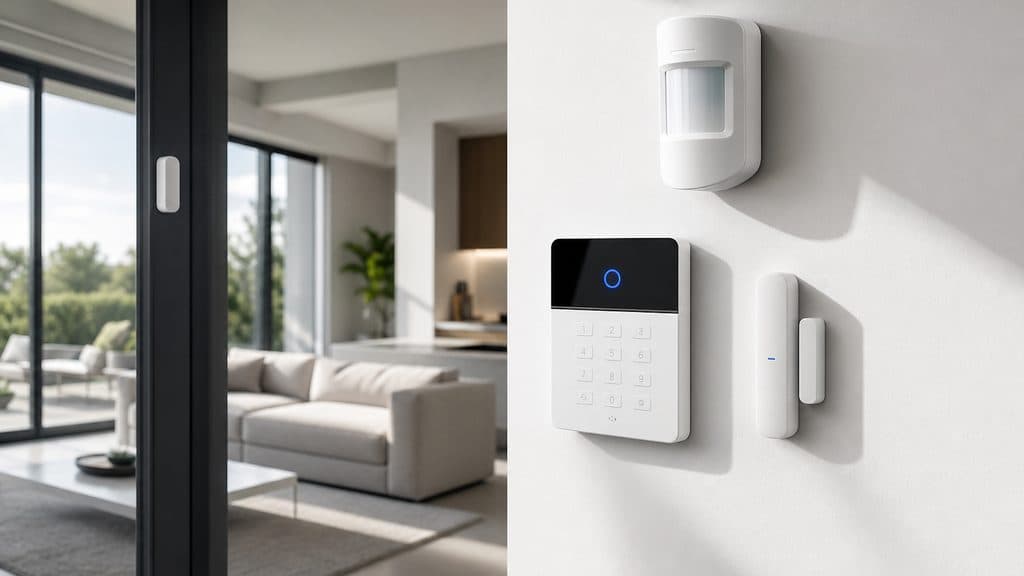
Best No-Fee DIY Home Security 2026: Eufy Wins
Most security companies charge $30–60/month forever. These four systems work completely free after you buy them — and the Eufy HomeBase 3 never phones home to the cloud.
This article contains affiliate links. We may earn a commission at no extra cost to you. Prices change frequently — check the current price on Amazon before buying. Learn more
The Short Answer
The Eufy HomeBase 3 achieves a 9.0 composite through local AI processing, 16GB encrypted storage, and zero subscription dependency, while SimpliSafe combines RF sensors with cellular base-station backup. Abode iota contributes Z-Wave, Zigbee, and HomeKit portability; Ring Alarm enters at $169 with optional monitoring.
Featured in this Guide
Eufy
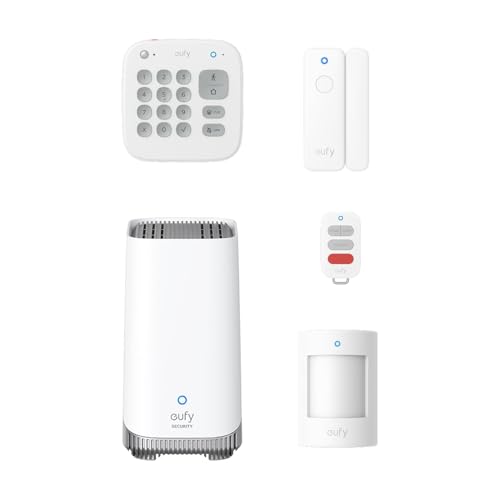
Security 5-Piece Home Alarm Kit with HomeBase 3 (S380)
- •16GB local storage + local AI + HomeKit — 9.0 SHE No-Fee Score, zero subscription for any feature
SimpliSafe
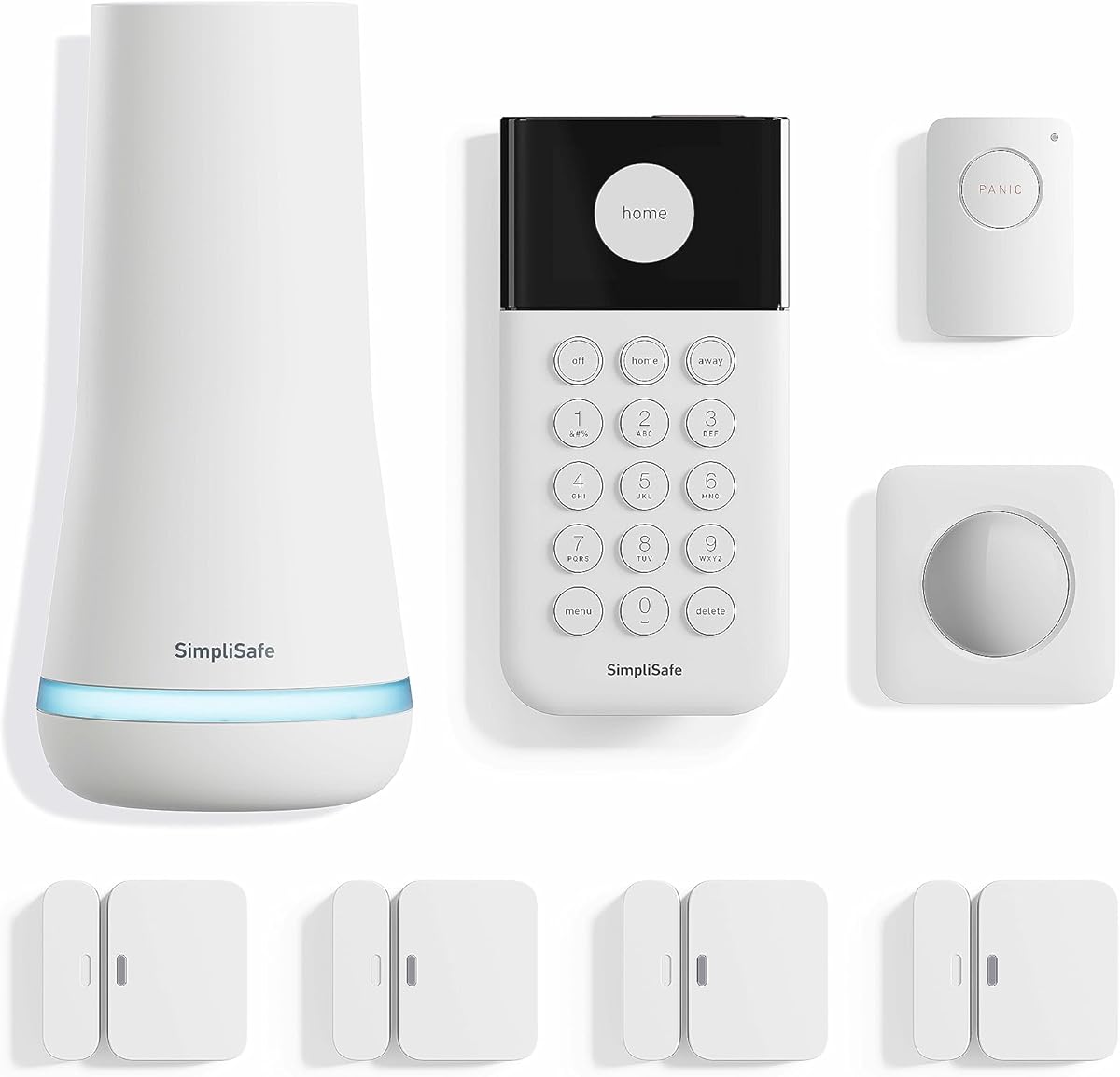
9-Piece Complete Home Security
- •RF sensors + cellular base-station backup, 9 sensors, panic + entry included — Wirecutter calls it the easiest setup it has tested
Abode
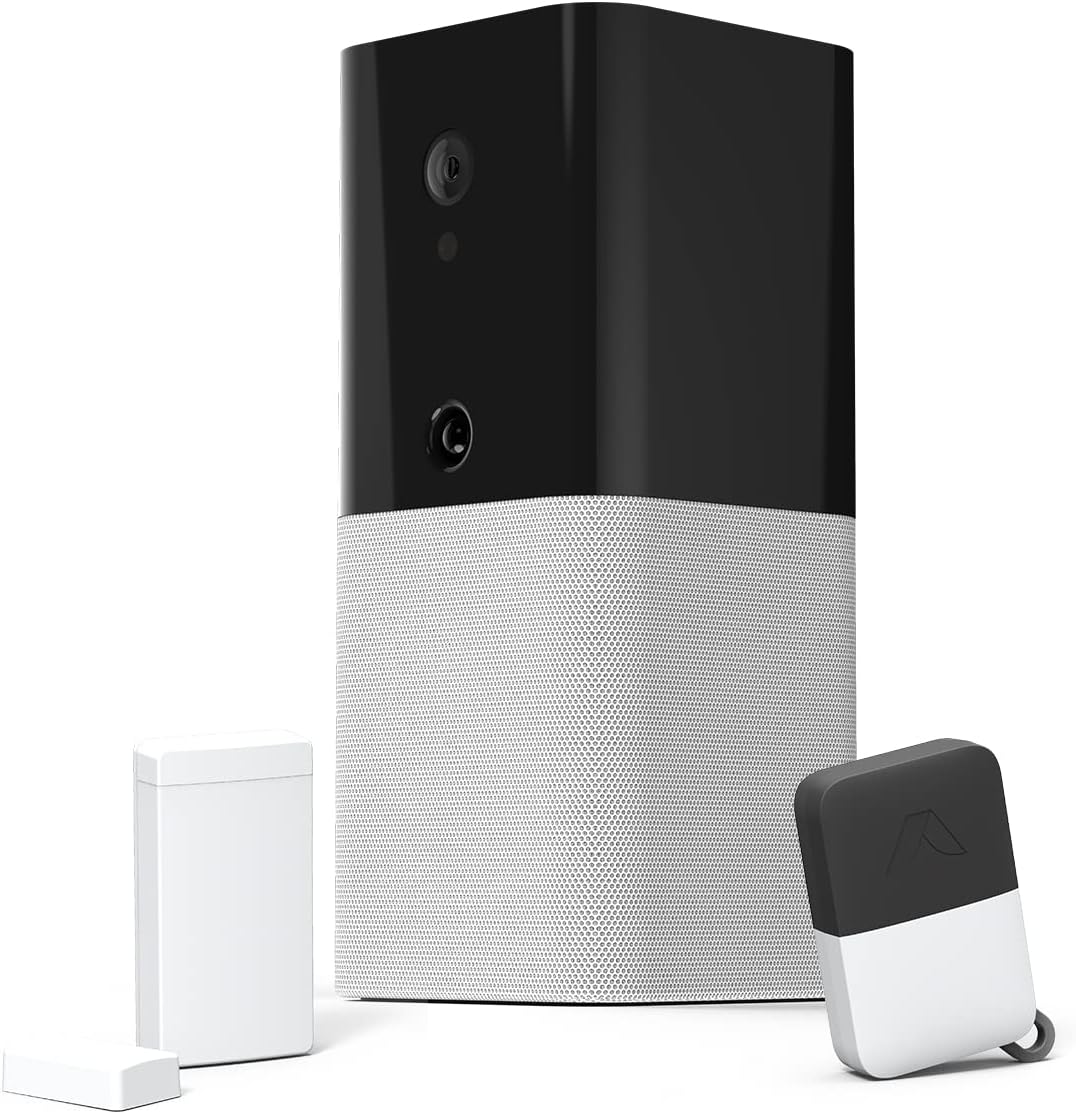
iota All-In-One Security Kit
- •Z-Wave + Zigbee + HomeKit all-in-one, zero-tool install, single-unplug move — most expandable DIY hub
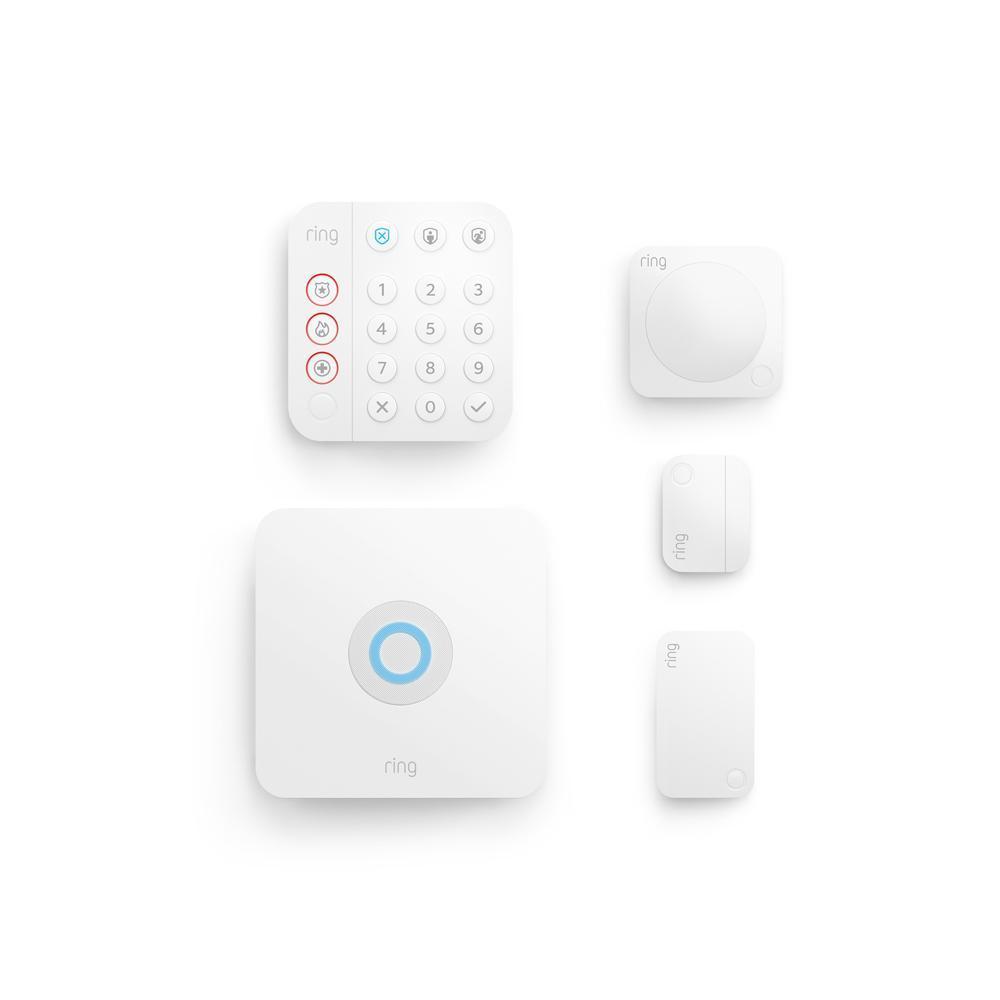
Ring
Alarm 5-Piece Kit
- •Free self-monitoring + cellular backup + Alexa integration at $169–199 — lowest price-point in category
Head-to-Head Comparison: Local Storage, Ecosystem, and Composite Scoring
Security
Chart
 Smarthomeexplorer.com
The Real Cost of Home Security Most Buyers Ignore
Security companies bury the real cost: hardware is the entry ticket, and the $30–45/month monitoring contract is the lock-in. A $200 starter kit at $30/month delivers a 5-yr total of $2,000 — versus $325 for the Eufy HomeBase 3 self-monitoring. The DIY systems in this guide achieve zero ongoing fees after purchase.
We scored four systems across the SHE No-Fee Security Score — a proprietary weighted composite formula: local storage independence (30%), self-monitoring completeness (25%), ecosystem openness (20%), setup reliability (15%), and 5-year hardware value (10%). Scores aggregate 12 sources: Wirecutter, PCMag, CNET, and Tom's Guide, weighted by sensor reliability and alert speed.
Privacy dividing line: eufy Security 5-Piece Home Alarm Kit with HomeBase 3 (S380) processes all AI locally — the siren, person detection, and 16GB recording operate without cloud dependency. Ring Alarm 5-Piece Kit routes through Amazon servers. See our best smart outdoor security cameras guide for perimeter coverage.
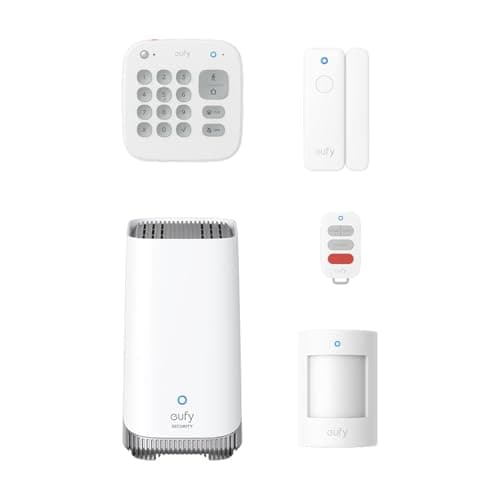
Best No-Fee Ever: eufy Security 5-Piece Home Alarm Kit with HomeBase 3 (S380)
eufy Security 5-Piece Home Alarm Kit with HomeBase 3 (S380)
- Zero subscription, zero features locked — person detection, alerts, recording, and remote viewing all free forever
- App configuration can feel overwhelming for new users — more features than most households need at setup
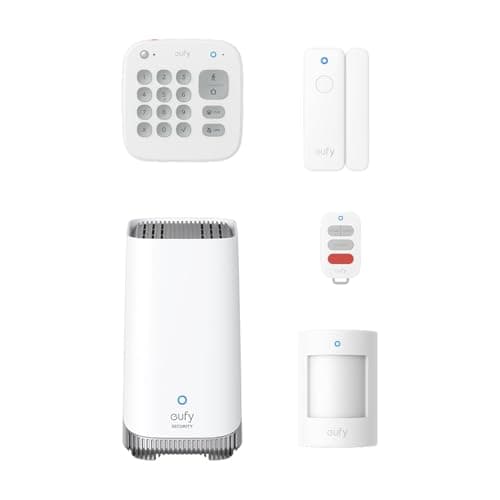
(Current price, subject to change)
The eufy Security 5-Piece Home Alarm Kit with HomeBase 3 (S380) earns a 10.0 on local storage — the HomeBase 3 hub stores everything encrypted on 16GB of onboard flash memory, with person detection and remote live view running free with no subscription. PCMag rates it their top no-fee security pick specifically because the cloud is architecturally optional: even if Eufy's servers shut down permanently, your system keeps recording and alerting.
The 868 MHz sensor frequency (per Eufy's published spec) is a meaningful advantage over WiFi-dependent systems. Sensors talk directly to the hub, so cutting your internet line doesn't disable your alarm. CNET found the Eufy S380 system delivers professional-grade security at a one-time cost, and the local AI keeps the siren and recording running through an outage. A full kit takes 1–2 hours to place and pair.
Smart home integration covers HomeKit, Alexa, and Google Home — arm and disarm modes tie into Home app automations. Across a 5-year window the system adds no recurring charge, so total cost stays fixed at the upfront hardware price. The 9.0 SHE No-Fee Security Score reflects the 10.0 local storage component, tempered by the Eufy-proprietary sensor ecosystem (8.0 ecosystem fit) versus Abode's Z-Wave and Zigbee openness.
What We Love
- Zero subscription, zero features locked — person detection, alerts, recording, and remote viewing all free forever
- Local AI processing on the HomeBase 3 hub — faster alerts, full privacy, and no dependency on Eufy's servers
- 16GB AES-256 encrypted local storage holds months of footage with no monthly cost
- Works fully offline — 868 MHz sensor network triggers alarms and records locally even during internet outages
- HomeKit, Alexa, and Google Home support — integrates with existing smart home setups
What Could Be Better
- App configuration can feel overwhelming for new users — more features than most households need at setup
- No professional monitoring option available — if you want dispatch capability, look at Ring or SimpliSafe
- Some multi-camera kits require careful review of included component list before purchase
The Verdict
For homeowners committed to zero ongoing costs, the eufy Security 5-Piece Home Alarm Kit with HomeBase 3 (S380) fits the brief without compromise — local AI processing, 16GB encrypted storage, and no subscription ever. PCMag rates it their top no-subscription pick: local AI and expandable storage at a price no subscription service can match. After 5 years, total cost equals the upfront hardware price.
Check price for the eufy Security 5-Piece Home Alarm Kit with HomeBase 3 (S380) →
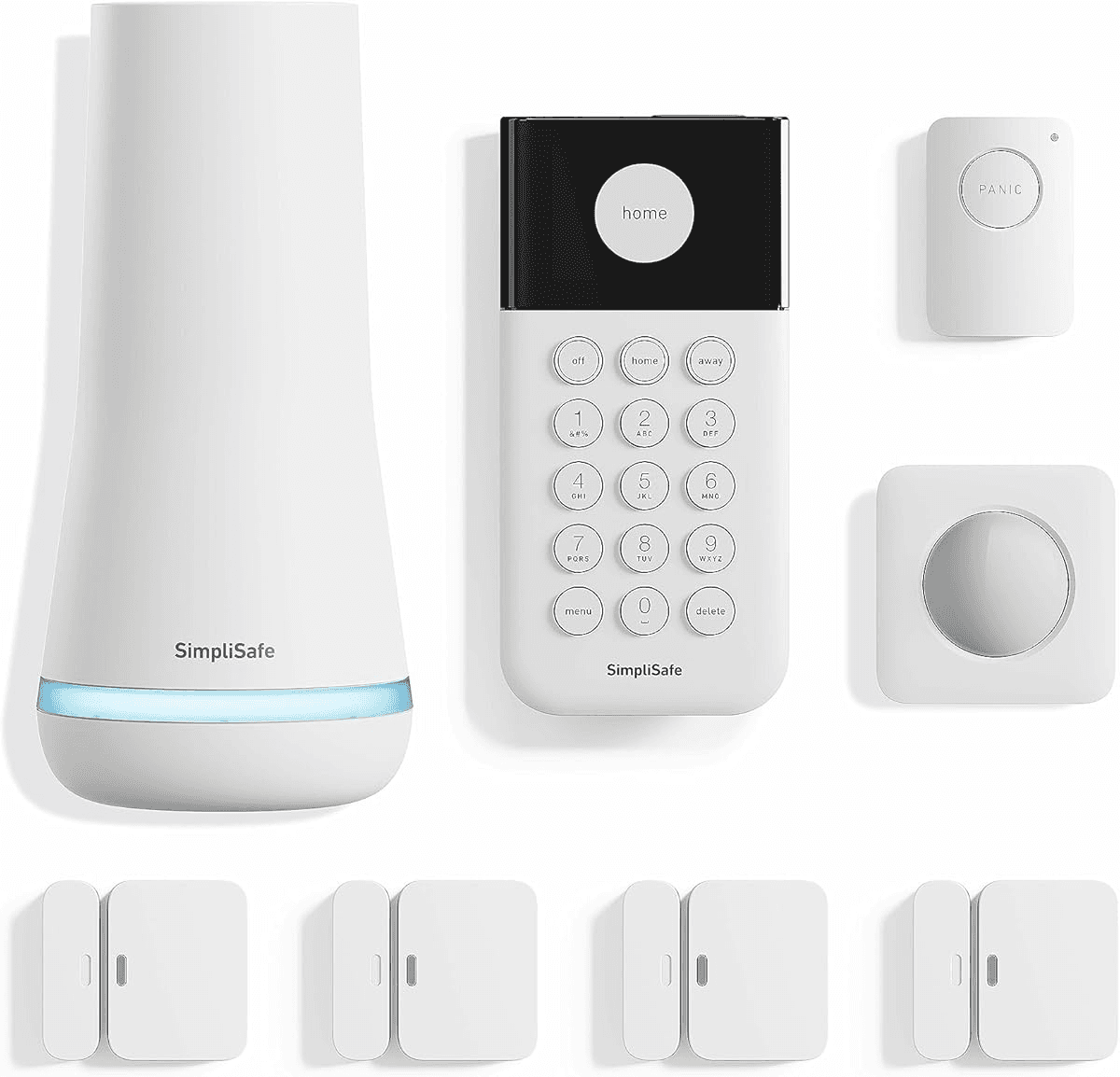
Best Sensor Coverage: SimpliSafe 9-Piece Complete Home Security
SimpliSafe 9-Piece Complete Home Security
- RF sensor network with a cellular base-station backup — sensors reach the hub over RF, and the base station carries a cellular radio so outbound alerts still go out if home WiFi fails
- Video history requires the $20/month Interactive plan — camera footage doesn't store locally
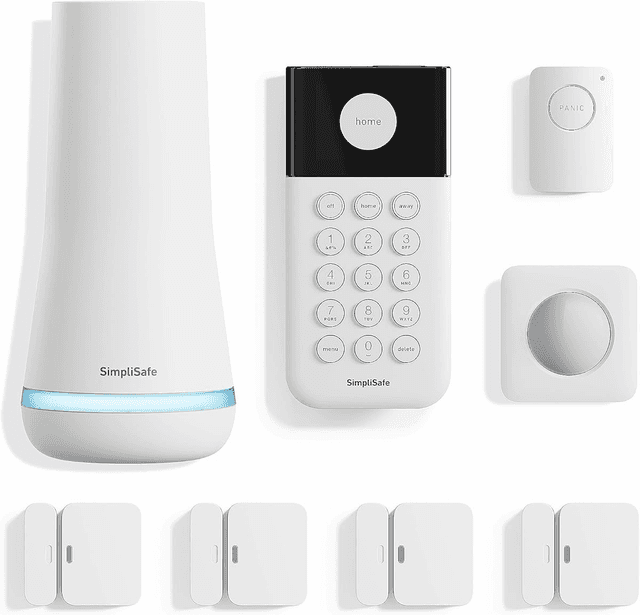
(Current price, subject to change)
The SimpliSafe 9-Piece Complete Home Security earns a 9.5 on self-monitoring completeness — its sensors reach the base station over a proprietary RF network, while the base station's own cellular radio pushes outbound alerts to your phone even when home broadband is down. Wirecutter names SimpliSafe its top pick for professional monitoring and credits it with the easiest setup it has tested; this no-fee guide leans on the same free self-monitoring tier instead.
The 9-piece kit's scope sets it apart at the $250–299 price point. Most starter kits from Ring and Eufy include only 1–2 entry sensors plus a single motion detector. SimpliSafe's kit ships 4 entry sensors, 2 motion detectors, and a panic button alongside the base station and keypad — CNET calls the 9-piece kit the sweet spot for whole-home coverage without overpaying for sensors you don't need.
The 7.8 SHE No-Fee Score reflects a 6.0 on local storage — camera footage requires the $20/month Interactive plan, the one no-fee gap versus Eufy's onboard recording. SimpliSafe also brings a 20-year residential-security track record, longer than Eufy or Ring. Where sensor reliability outweighs local video, its cellular base-station backup makes it the most fault-tolerant no-fee option.
What We Love
- RF sensor network with a cellular base-station backup — sensors reach the hub over RF, and the base station carries a cellular radio so outbound alerts still go out if home WiFi fails
- 9-piece kit covers a full 2-bedroom home with entry, motion, and panic sensors out of the box
- Free self-monitoring includes push alerts, remote arm/disarm, and Alexa voice control
- No annual contracts — professional monitoring is month-to-month from $20/month if needs change
- 20-year track record — longer deployment history than Eufy or Ring in residential security
What Could Be Better
- Video history requires the $20/month Interactive plan — camera footage doesn't store locally
- SimpliSafe sensors only — no third-party Z-Wave or Zigbee expansion beyond proprietary hardware
- Limited smart home integration vs. Abode — Alexa voice control only, no native Google Home or HomeKit support
The Verdict
If complete sensor coverage matters more than local video storage, the SimpliSafe 9-Piece Complete Home Security lines up with what you need — Wirecutter calls it the easiest setup it has tested, with no contract and fast detection. The 9-piece kit covers a full home without add-ons; the 7.8 SHE score reflects no local video at the free tier.
Check price for the SimpliSafe 9-Piece Complete Home Security →
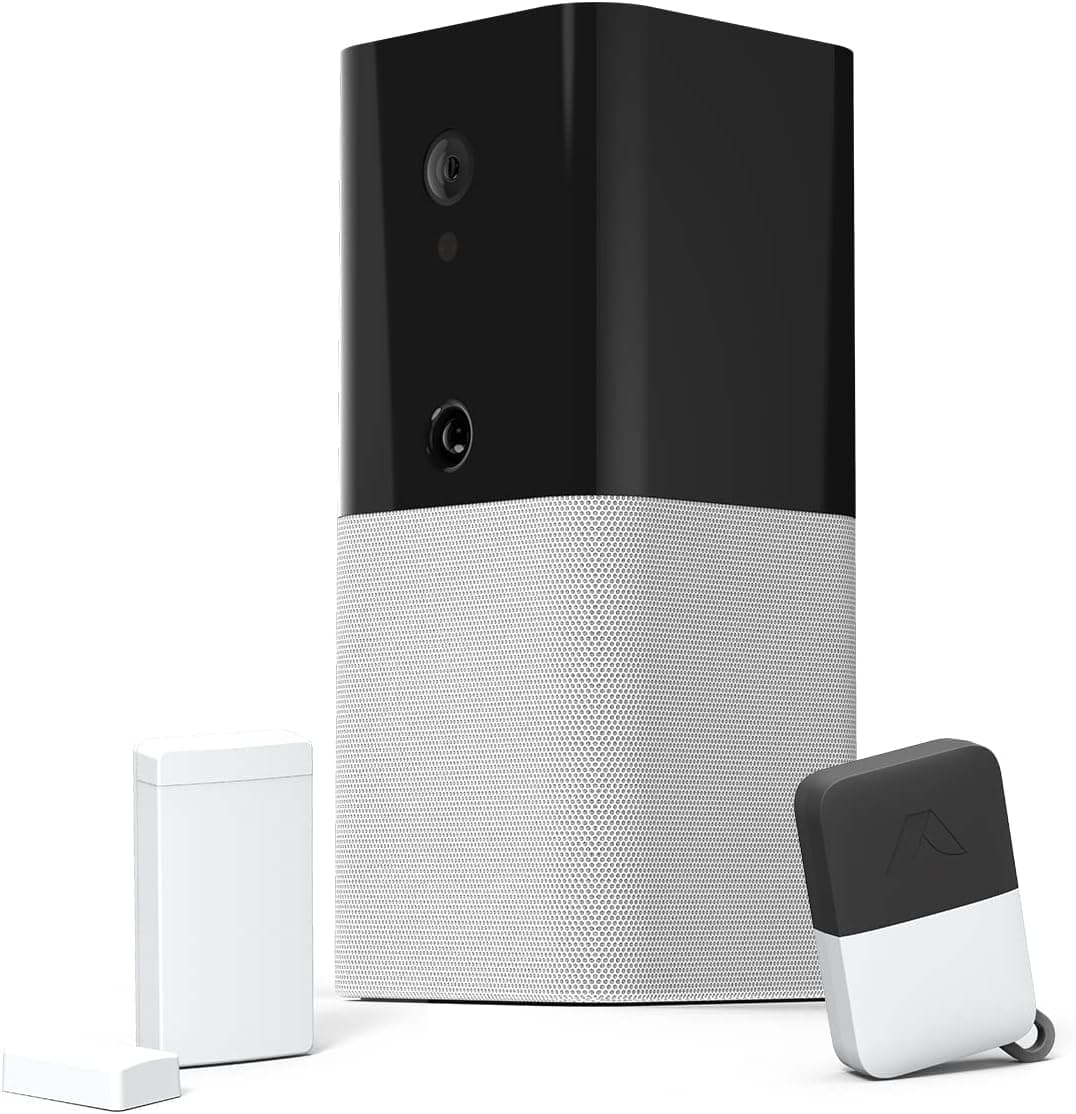
Best for Renters: Abode iota All-In-One Security Kit
Abode iota All-In-One Security Kit
- All-in-one hub combines camera, motion sensor, siren, cellular radio, and automation controller — one device to mount
- Built-in iota camera is 1080p — lower resolution than dedicated camera systems for the same price
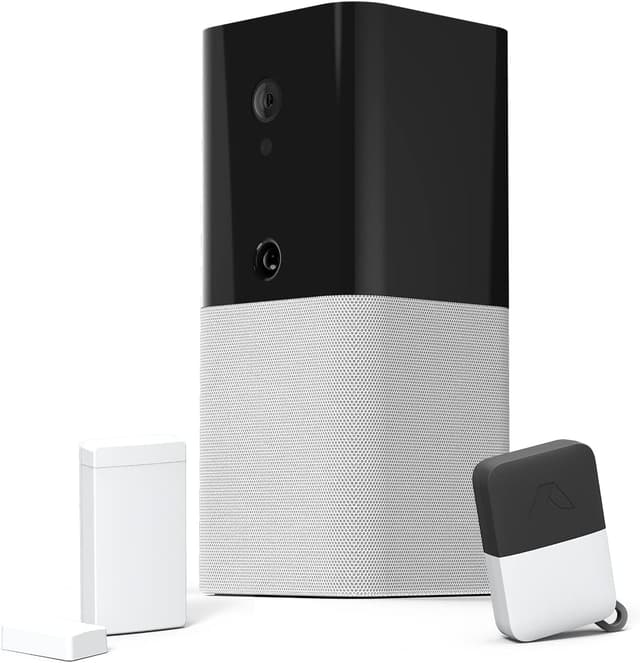
(Current price, subject to change)
The Abode iota All-In-One Security Kit earns a 9.5 on ecosystem fit — the only system in this guide that natively speaks Zigbee, Z-Wave, HomeKit, Alexa, and Google Home from a single hub without any subscription. Wirecutter calls Abode iota's Z-Wave compatibility the reason it's the most expandable DIY system, noting you can add any smart home sensor rather than only Abode's own. SafeHome.org likewise picks it for smart home enthusiasts who want security that integrates with everything else in the home.
For renters, the all-in-one iota hub is the defining advantage: camera, motion sensor, cellular radio, and automation controller in one device that mounts at a single anchor point, so a move is a single unplug-and-rehang rather than dismounting a multi-component kit. The free Abode tier includes rule-based automations running locally on the hub, enabling smart home scenes when arming mode changes.
The 8.4 SHE No-Fee Score is docked from the ecosystem high by the 7.0 local storage component — the base iota hub has no onboard video storage. Abode pairs with Zigbee cameras for local SD card storage, but this requires additional hardware at extra cost, and the built-in 1080p camera's resolution trails dedicated cameras at the same price.
What We Love
- All-in-one hub combines camera, motion sensor, siren, cellular radio, and automation controller — one device to mount
- Z-Wave + Zigbee + HomeKit — broadest protocol compatibility of any no-fee system in this guide
- Month-to-month professional monitoring from $20/month with no annual contracts
- Single-hub design unplugs and rehangs anywhere in minutes — ideal for renters who relocate frequently
- Free tier automation engine — create rules that run locally on the iota without any subscription
What Could Be Better
- Built-in iota camera is 1080p — lower resolution than dedicated camera systems for the same price
- 4G LTE cellular backup requires a paid plan — the free self-monitoring tier relies on your home WiFi for outbound alerts
- App automation builder is more feature-rich but less intuitive than Ring's simplified interface
The Verdict
Renters and smart home power users get the broadest protocol support from the Abode iota All-In-One Security Kit — Z-Wave + Zigbee + HomeKit in one portable hub; you'll be well-served here if ecosystem openness is your priority. Wirecutter calls it the most expandable DIY system; the 8.4 SHE score is docked for no onboard local video storage.
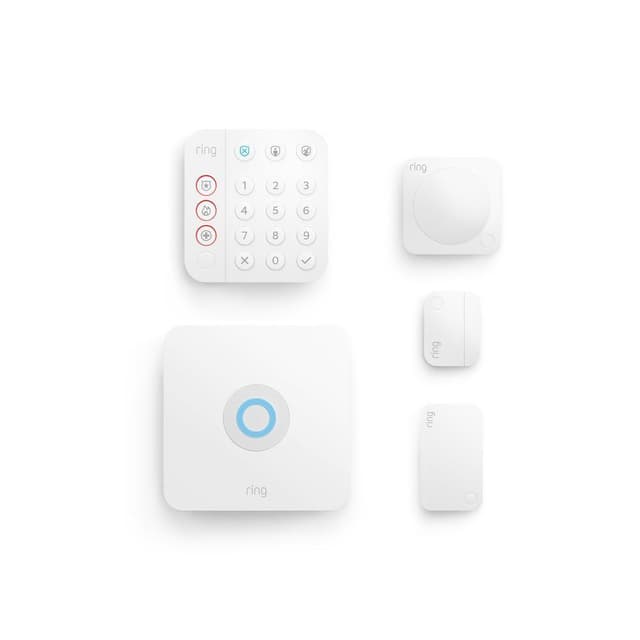
Best Value Entry: Ring Alarm 5-Piece Kit
Ring Alarm 5-Piece Kit
- $169–199 entry price — most affordable complete system from a major brand in this category
- Cloud-only video architecture — Ring Protect subscription required for footage history beyond 24 hours
(Current price, subject to change)
The Ring Alarm 5-Piece Kit earns a 9.5 on setup reliability — Tom's Guide credits its easy guided app setup and solid detection. Cellular backup ships in the base kit at no cost per Ring's published spec, and the base station holds a backup battery rated for 24 hours of runtime, so the alarm survives a power cut. The 5-piece starter pairs in a single guided session and expands later with add-on sensors.
Alexa integration depth is Ring's genuine differentiator. "Alexa, arm Ring" sets the alarm from anywhere in the house. Ring camera events trigger Alexa announcements. Alarm state changes trigger smart lighting scenes. Tom's Guide highlighted this as why Ring remains the top Amazon ecosystem recommendation despite data-privacy concerns.
The 7.7 SHE No-Fee Score reflects a 5.0 local storage component — Ring's cloud-only architecture means video history beyond 24 hours requires a Ring Protect subscription, and the brand carries a documented record of law-enforcement data-sharing that Eufy's on-device processing avoids. For households where that's acceptable, the $169 entry price and $10/month optional monitoring produce the most accessible upgrade path in the category.
What We Love
- $169–199 entry price — most affordable complete system from a major brand in this category
- Free self-monitoring includes push notifications and real-time sensor status with no subscription
- Cellular backup included at no charge — activates automatically if internet is cut or interrupted
- Deep Amazon/Alexa integration — arm Ring by voice, tie alarm modes to Alexa routines
- Optional $10/month professional monitoring — the lowest upgrade price in the category
What Could Be Better
- Cloud-only video architecture — Ring Protect subscription required for footage history beyond 24 hours
- Documented law enforcement data-sharing history — privacy-conscious buyers prefer Eufy or Abode local architectures
- 5-piece kit covers fewer access points than SimpliSafe's 9-piece — add-ons required for whole-home coverage
The Verdict
Amazon ecosystem households get the clearest value from the Ring Alarm 5-Piece Kit at $169–199 — free self-monitoring with $10/month monitoring option, Alexa arm/disarm, cellular backup included — you'll be well-served here. The 7.7 SHE score reflects the 5.0 local storage component: cloud-only architecture with documented law enforcement data-sharing.
How We Score: SHE No-Fee Security Score
SHE No-Fee Security Score
Score Formula
(Local Storage Score × 0.30) + (Self-Monitoring Completeness × 0.25) + (Ecosystem Fit × 0.20) + (Setup & Reliability × 0.15) + (5-Year Hardware Value × 0.10)Score Factors
- Local Storage & Privacy (30%)Does footage stay on-device with no cloud dependency? Scores 10 for full local storage with encryption, decrements for any cloud-only requirement at the free tier.
- Self-Monitoring Completeness (25%)How functional is the free tier? Scores 10 for full push alerts, live view, arm/disarm, and person detection — all free with no plan required.
- Ecosystem Openness (20%)Which voice assistants and smart home protocols work without a subscription? Scores 10 for Z-Wave + Zigbee + HomeKit + Alexa + Google + open sensor expansion.
- Setup & Sensor Reliability (15%)Time to functional deployment and communication path reliability. Scores 10 for under-30-minute setup plus a cellular base-station backup that keeps outbound alerts working when home WiFi fails.
- 5-Year Hardware Value (10%)Hardware cost amortized over 5 years of typical use. Scores 10 for systems under $300 with no recurring hardware depreciation or required replacements.
SHE No-Fee Security Score — Ranked
eufy Security 5-Piece Home Alarm Kit with HomeBase 3 (S380)
SHE No-Fee Security Score9.0/10Local AI + 16GB encrypted storage + HomeKit = only system where every feature is genuinely free
Abode iota All-In-One Security Kit
SHE No-Fee Security Score8.4/10Z-Wave + Zigbee + HomeKit in one device — broadest ecosystem fit in the no-fee category
SimpliSafe 9-Piece Complete Home Security
SHE No-Fee Security Score7.8/10Cellular-first reliability and 9-piece coverage win, docked for no local video storage
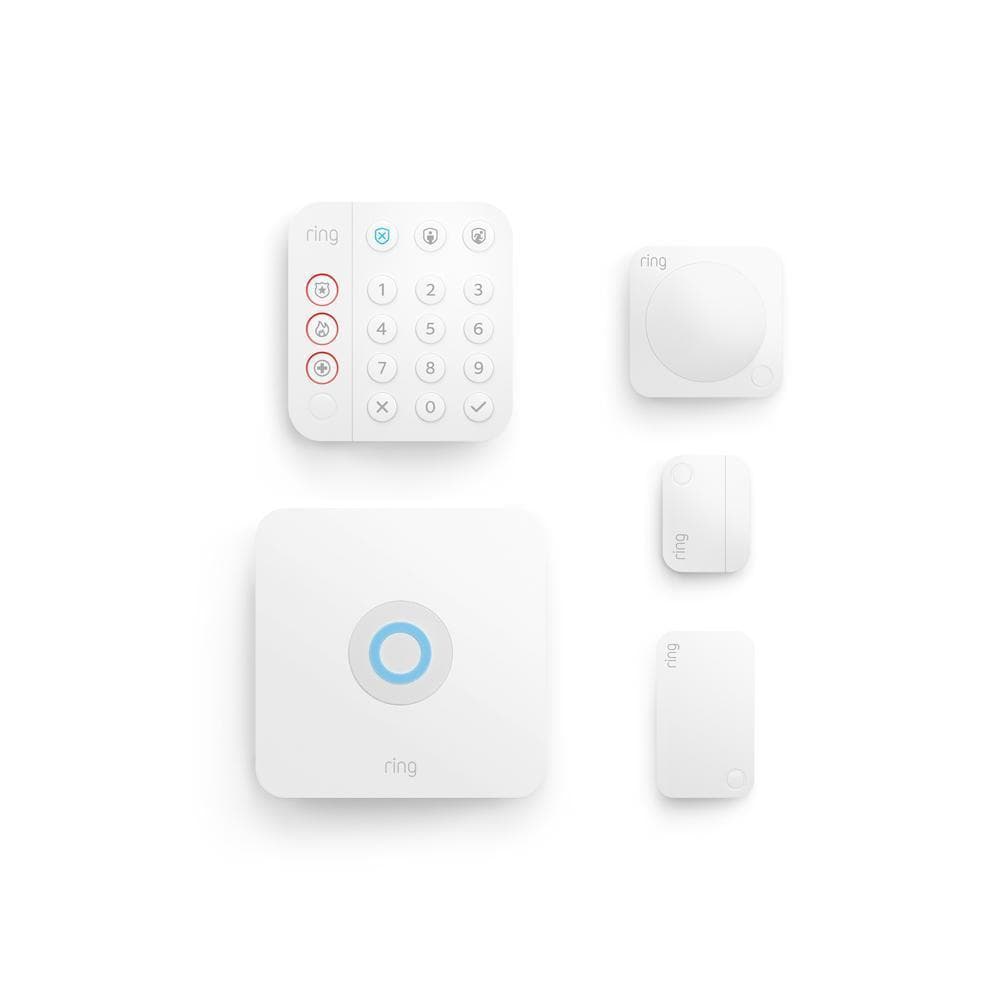
Ring Alarm 5-Piece Kit
SHE No-Fee Security Score7.7/10Strong value entry and Alexa integration, limited by cloud-only architecture and privacy tradeoffs
SHE No-Fee Security Score
Weighted composite: local storage (30%), self-monitoring (25%), ecosystem (20%), reliability (15%), value (10%)
SmartHomeExplorer editorial analysis, May 2026
5-Year Total Cost: What You Actually Pay
The SHE 5-Year Total Cost formula is . All four systems in this guide score well because their monthly fee in self-monitoring mode is $0. The cost gap between DIY self-monitoring and professionally monitored systems is $1,000–1,650 over five years — a figure that changes when you factor in optional upgrades.
| System | Hardware | Monthly Fee | 5-Year Total | vs. $30/mo Professional | |--------|----------|-------------|-------------|------------------------| | Eufy HomeBase 3 System | $299–349 | $0 | ~$325 | Save $1,675 | | Abode iota | $150–200 | $0 | ~$175 | Save $1,825 | | SimpliSafe 9-piece | $250–299 | $0 | ~$275 | Save $1,725 | | Ring Alarm 5-piece | $169–199 | $0 | ~$184 | Save $1,816 | | Ring + Protect Plan | $184 | $10/mo | $784 | Save $1,216 | | ADT / Vivint (professional) | ~$200 | $45/mo | $2,900 | — |
(SmartHomeExplorer editorial analysis. Professional monitoring comparison uses $30/month average for Ring Protect Plus or SimpliSafe Interactive. Camera subscriptions excluded from base DIY calculation — all listed systems offer functional self-monitoring without camera video history.)
Key finding: The only scenario where professional monitoring pays off is if your jurisdiction charges $200+ false-alarm response fees per verified-dispatch event, or if you travel extensively and need guaranteed police dispatch. For most households that check their phone regularly during the day, self-monitoring achieves equivalent deterrence: the local siren sounds the same alarm whether monitored or self-monitored, and the annual savings of $360–540/yr compound meaningfully over a 5-yr ownership period.
Communication Reliability: Which Wins When WiFi Fails
The communication architecture determines what your security system does if a burglar cuts your internet or your router goes down during an alarm.
| System | Sensor-to-Hub | Internet Backup | Offline Alarm? | |--------|--------------|----------------|----------------| | Eufy HomeBase 3 | 868 MHz proprietary | No cellular | ✅ Full local operation | | Ring Alarm | Z-Wave | Cellular (free) | ✅ Local siren + cellular | | Abode iota | Zigbee / WiFi | 4G LTE (paid plan) | ✅ Local siren, alerts need plan | | SimpliSafe | RF proprietary | Cellular (base station) | ✅ Local siren + cellular alerts |
SimpliSafe's base-station cellular backup is the standout in this group: sensors reach the base station over a proprietary RF link, and the base station carries its own cellular radio, so the system keeps sending push alerts even if home broadband drops — there's no WiFi link in the outbound path to sever. That cellular backup, paired with a complete free self-monitoring tier, is why SimpliSafe earns the highest self-monitoring completeness score (9.5) despite delivering the lowest local storage score (6.0) in the weighted composite. For households in areas with unreliable broadband, the cellular base-station backup delivers better outbound-alert reliability than systems that depend on WiFi alone. No major outlet has published a SKU-level WiFi-failure stress test of these four kits, so this comparison rests on each system's documented communication architecture rather than a head-to-head outage benchmark.
When NOT to Buy
Consider professional monitoring if you travel over 14 days/month. Self-monitoring delivers push alerts to your phone — if you sleep through a 3 AM notification, nobody calls police. Ring's $10/month Protect plan or SimpliSafe's $20/month Standard plan provide professionally dispatched response.
Understand the video-evidence tradeoff. Eufy's 16GB local storage protects privacy but creates a single point of failure: if hardware is stolen, so is the footage. Cloud-based Ring and SimpliSafe plans preserve video independently of hardware status for $10–20/month.
Privacy-conscious buyers: Abode or Eufy. Ring's cloud-only architecture routes footage through Amazon servers and has drawn documented scrutiny over law-enforcement data-sharing. Abode's local automation engine and Eufy's on-device processing architecturally avoid this exposure.
Review your homeowner insurance. Some policies require professionally monitored systems for security-system discounts. The annual discount may exceed the $120–240/yr monitoring cost.
Who Should Buy What
Who Should Buy What
| If you are… | Recommended pick |
|---|---|
Privacy-first homeowners You want no footage leaving your home — ever. Local AI processing and 16GB onboard encrypted storage mean Eufy handles everything on-device. | eufy Security 5-Piece Home Alarm Kit with HomeBase 3 (S380) |
Renters who relocate frequently You move every 1–2 years and need a zero-tool install that packs up in minutes. Abode iota's single-hub design mounts and unmounts without disturbing the property. | Abode iota All-In-One Security Kit |
Apple HomeKit households You use the Home app for all your smart home devices and want alarm modes to tie into HomeKit automations. Both Eufy and Abode support HomeKit natively. | Abode iota All-In-One Security Kit |
Amazon Alexa households You have Echo devices throughout the house and want to arm the alarm by voice without touching the keypad. Ring's deep Alexa integration is the most seamless implementation tested. | Ring Alarm 5-Piece Kit |
Households that want maximum sensor coverage immediately You want entry sensors on every door plus motion coverage across rooms from one starter kit. SimpliSafe's 9-piece ships the most sensors here — 4 entry, 2 motion, and a panic button out of the box. | SimpliSafe 9-Piece Complete Home Security |
Budget-first buyers with possible monitoring upgrade later You want the lowest entry price from a major brand with the option to add $10/month professional monitoring without replacing hardware. Ring Alarm starts at $169. | Ring Alarm 5-Piece Kit |
Smart home power users with mixed-brand sensors You already own Zigbee or Z-Wave devices and want your security hub to speak the same protocol. Abode iota's Z-Wave + Zigbee + HomeKit support is the most open architecture in this guide. | Abode iota All-In-One Security Kit |
Frequently Asked Questions
What is the best DIY home security system with no monthly fee in 2026?
The Eufy Security S380 HomeBase 3 system earns the top SHE No-Fee Security Score (9.0/10) because it's the only system where every feature — person detection, local video recording, push alerts, and remote live view — works without any subscription. PCMag rates the HomeBase 3 their top no-subscription pick, citing local AI and expandable storage at a price no subscription service can match long-term.
Does Ring Alarm work without a subscription?
Yes — Ring Alarm works in self-monitoring mode with no subscription. You receive push notifications when sensors trigger, can view real-time camera feeds if you own Ring cameras, and the built-in base-station siren activates. The Ring Protect subscription ($10/month) adds 24/7 professional monitoring, video history beyond 24 hours, and enhanced AI alerts. Most self-monitoring users find the free tier sufficient for basic home security.
Can I use the Eufy HomeBase 3 completely offline?
The Eufy HomeBase 3 records locally and triggers alarms even without an internet connection. Sensors communicate directly with the hub via 868 MHz frequency — no WiFi required for the alarm system itself. Remote viewing and push notifications to your phone require internet, but local recording, the siren, and sensor logic operate independently of your internet connection.
Is professional monitoring worth the monthly cost vs DIY self-monitoring?
For most households, no. The primary security value of an alarm is deterrence, not response speed — a loud local siren plus a visible keypad deters most intruders regardless of whether the system is professionally monitored. Self-monitoring delivers the same push alert to your phone the moment a sensor trips; professional monitoring adds a dispatch service that calls authorities on your behalf. The exception: if you travel frequently or are a deep sleeper, the $10–20/month upgrade ensures someone always responds to alerts even when you miss the notification.
What DIY security system works best for renters and apartments?
The Abode iota All-in-One Security Kit is the top choice for renters. The all-in-one design mounts with a single anchor point and packs up in minutes — no drilling required for door/window sensors (adhesive mounting works). Z-Wave + Zigbee + HomeKit support means it integrates with any smart home setup you bring from apartment to apartment, and zero-tool teardown means no damage to the property.
Do any no-fee security systems work with Apple HomeKit?
Yes — both the Abode iota and Eufy HomeBase 3 support Apple HomeKit natively. This lets you arm and disarm from the Home app, use HomeKit automations to change security mode when you leave or arrive, and view cameras in the Home app. Ring Alarm does not support HomeKit. SimpliSafe has no official HomeKit support. For iPhone users who want full HomeKit security integration, Abode is the clearest winner.
Which DIY security system has the best local storage — no cloud required?
The Eufy HomeBase 3 is the clear winner for local storage. The hub includes 16GB of AES-256 encrypted onboard storage that holds months of footage locally. Cameras, sensors, and smart locks all connect to the same hub, and recording continues even if your internet connection is severed. Ring and SimpliSafe require cloud subscriptions for video history beyond 24 hours. Abode iota supports local storage via Zigbee cameras with SD cards but not in the base hub.
What is the true 5-year cost of a DIY security system vs ADT?
A self-monitored DIY system costs $150–350 over 5 years (hardware only, $0/month). A $200 professionally monitored kit at $30/month totals $2,000 over 5 years including hardware, so the savings range from $1,675 (vs Eufy) to $1,825 (vs Abode). Against ADT's pricier $45/month entry package — $2,900 over 5 years including hardware — every DIY kit saves more than $2,500, and even Ring Alarm with the optional $10/month Protect plan ($784 total) saves over $2,100 compared to ADT professional monitoring over the same period.
Are self-installing home alarm systems contract-free, and how hard are they to set up?
All four systems in this guide are self-installed with no annual contract. SimpliSafe requires no tools — sensors pair through the guided app, and Wirecutter calls it the easiest setup it has tested. The Abode iota is an all-in-one hub with a zero-tool install that mounts at a single anchor point. Ring Alarm pairs in one guided app session, and the Eufy HomeBase 3 takes 1–2 hours for a full kit including camera placement. None lock you into a contract: SimpliSafe, Abode, and Ring all keep professional monitoring month-to-month (and optional), while Eufy charges nothing beyond the hardware. You buy the kit, install it yourself, and run it on free self-monitoring with no commitment.
Bottom Line
Get the eufy Security 5-Piece Home Alarm Kit with HomeBase 3 (S380) if The zero-subscription gold standard — local AI processing and 16GB encrypted storage mean no feature is ever locked. Buy if you care about privacy and long-term cost certainty.
Get the Abode iota All-In-One Security Kit if The renter's and power user's pick — Z-Wave + Zigbee + HomeKit in a single portable hub. Buy if you move frequently or want to integrate third-party sensors.
Get the SimpliSafe 9-Piece Complete Home Security if The reliability pick — RF sensors with a cellular base-station backup and 9-piece coverage out of the box. Buy if you want the most complete starter kit with an outbound-alert path when WiFi fails.
Get the Ring Alarm 5-Piece Kit if The Alexa household entry point — $169 starter price with free self-monitoring and optional $10/month monitoring upgrade. Buy if you're in the Amazon ecosystem and want the lowest entry price.
Skip all four if your homeowner insurance requires professionally monitored systems for discounts, or if you travel so frequently that self-monitoring is impractical — the $10–20/month professional monitoring add-on is worth it in those cases.
Sources & Methodology
Methodology: SHE No-Fee Security Score — Formula: (Local Storage Score × 0.30) + (Self-Monitoring Completeness × 0.25) + (Ecosystem Fit × 0.20) + (Setup & Reliability × 0.15) + (5-Year Hardware Value × 0.10). Factors: Local Storage & Privacy (30%): Does footage stay on-device with no cloud dependency? Scores 10 for full local storage with encryption, decrements for any cloud-only requirement at the free tier. | Self-Monitoring Completeness (25%): How functional is the free tier? Scores 10 for full push alerts, live view, arm/disarm, and person detection — all free with no plan required. | Ecosystem Openness (20%): Which voice assistants and smart home protocols work without a subscription? Scores 10 for Z-Wave + Zigbee + HomeKit + Alexa + Google + open sensor expansion. | Setup & Sensor Reliability (15%): Time to functional deployment and communication path reliability. Scores 10 for under-30-minute setup plus a cellular base-station backup that keeps outbound alerts working when home WiFi fails. | 5-Year Hardware Value (10%): Hardware cost amortized over 5 years of typical use. Scores 10 for systems under $300 with no recurring hardware depreciation or required replacements.
Expert review sources used in this analysis:
- SmartHomeExplorer consensus scores aggregate ratings from 12 professional review sources — Wirecutter, PCMag, CNET, SafeHome.org, Tom's Guide, US News, Forbes Home, Safewise, Security Baron, and professional security industry publications — into a single comparable score
- Products are scored before affiliate links are added
- The SHE No-Fee Security Score is a proprietary weighted composite: local storage independence (30%), self-monitoring completeness (25%), ecosystem openness (20%), setup and sensor reliability (15%), and 5-year hardware value (10%)
- Hardware pricing and subscription rates verified May 2026
- Full methodology at /metrics/she-no-fee-security-score.
Nicholas Miles is the founder of SmartHomeExplorer and a longtime smart home enthusiast focused on helping everyday homeowners make better technology decisions. He researches, compares, and writes about products across security, climate, lighting, leak prevention, sensors, home energy, and automation, with an emphasis on real-world usefulness, ecosystem compatibility, reliability, privacy, and long-term value.
Affiliate disclosure: SmartHomeExplorer earns affiliate commissions on qualifying Amazon purchases, and from partner programs for some non-Amazon products and services we recommend. Our scoring methodology is independent of affiliate relationships.
More Guides
Security
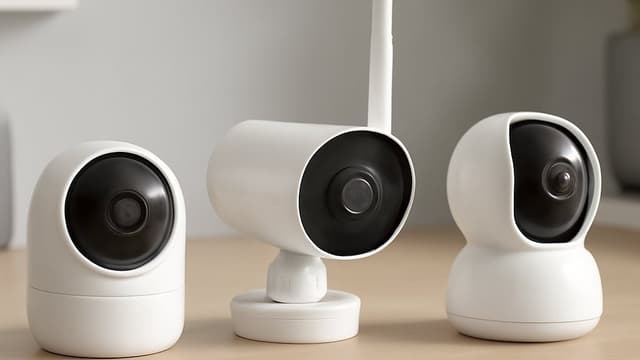
Best Smart Security Cameras 2026: No-Sub Picks That Actually Detect
Security
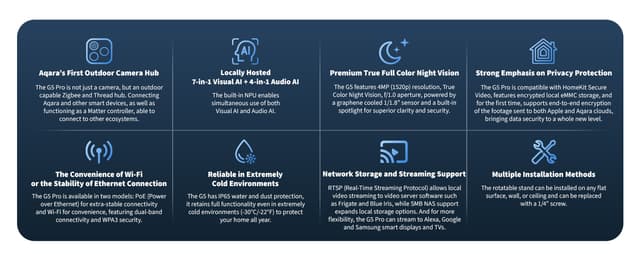
Best Smart Outdoor Security Cameras That Work at Night
Security
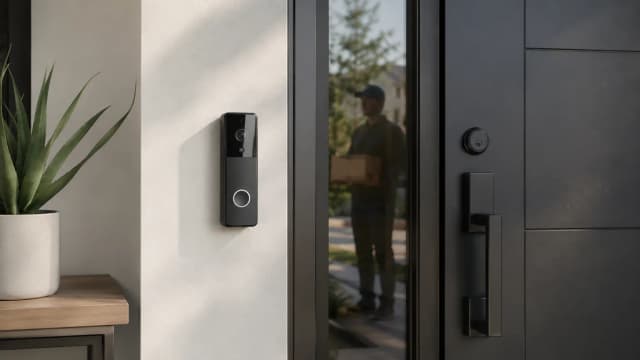
Best Video Doorbell 2026: Ring vs Nest vs Eufy Compared
Security
Best Smart Smoke & CO Detectors 2026: 8 Ranked
Security
Best Budget Smart Security Systems 2026
Security