
Best Home Security System Under $500 (2026)
Skip the $35/month contract. The Ring Alarm 5-Piece Kit anchors a DIY build you self-monitor free, with Wyze and Blink cameras and Aqara sensors filling the gaps.
This article contains affiliate links. We may earn a commission at no extra cost to you. Prices change frequently — check the current price on Amazon before buying. Learn more
The Short Answer
The Ring Alarm 5-Piece Kit anchors the strongest sub-$500 build because its cellular-capable base delivers professional-grade deterrence through self-monitoring at no recurring subscription, complemented by the Wyze Cam v4 recording locally. Households prioritizing HomeKit should instead consider the Aqara Hub M3.
Featured in this Guide
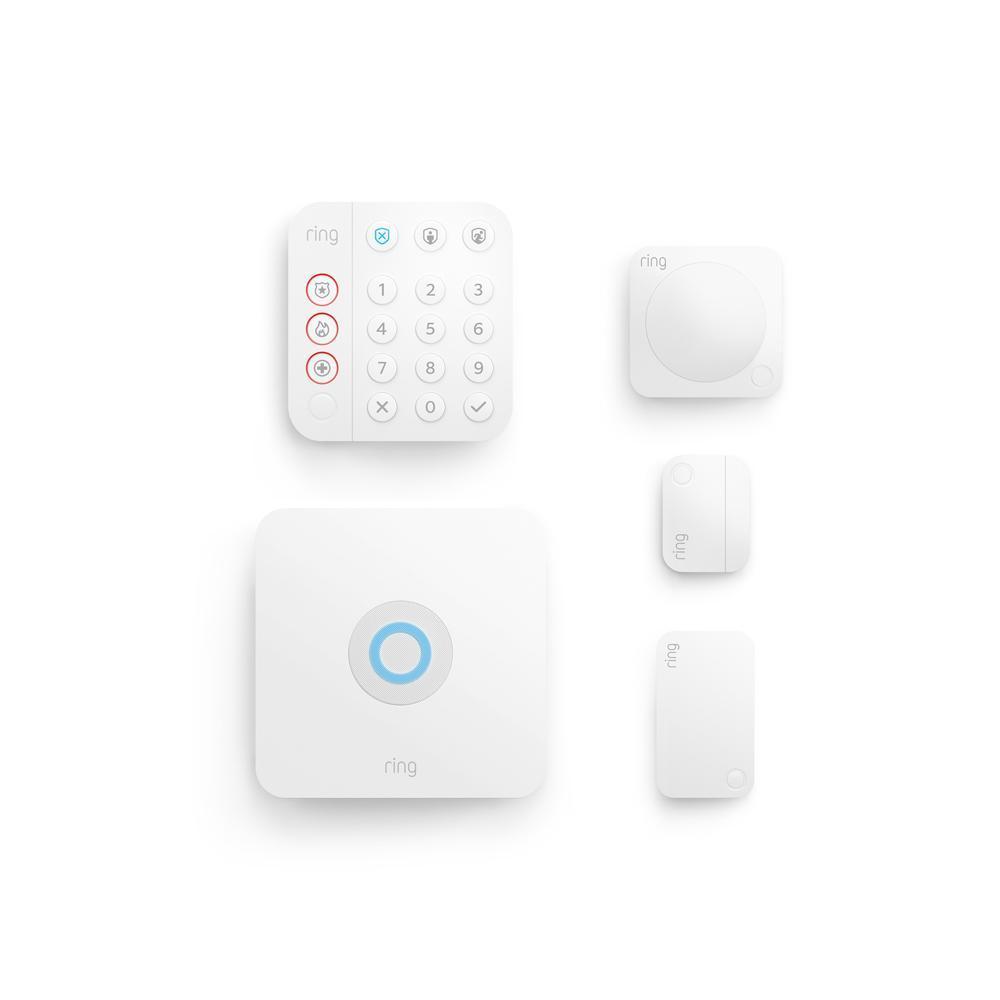
Ring
Alarm 5-Piece Kit
- •Loud siren, cellular-backed alarm spine you can self-monitor for $0/month or upgrade to $10/month dispatch
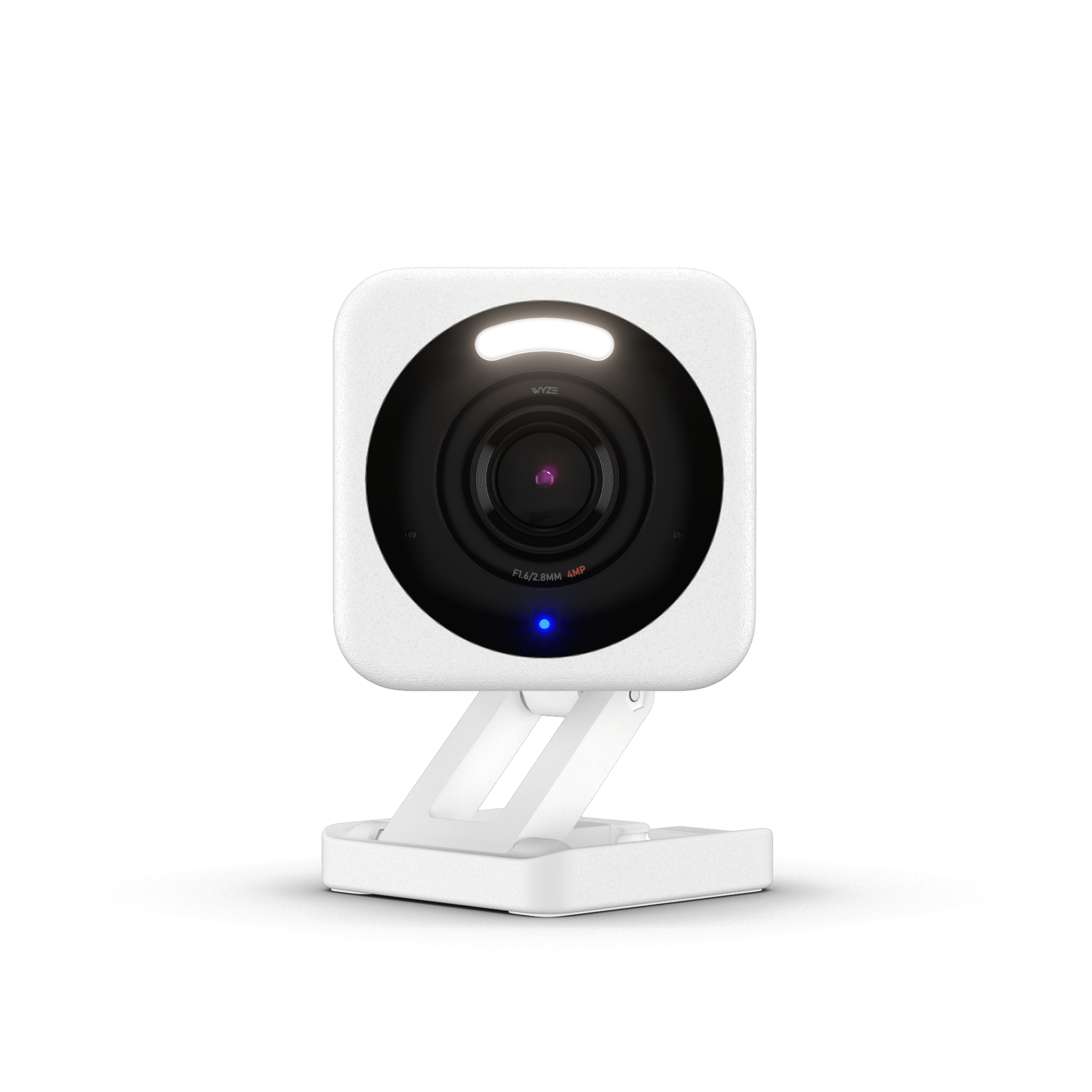
Wyze
Cam v4
- •2.5K video and free local microSD recording for about $36 — the cheapest no-fee camera in this build
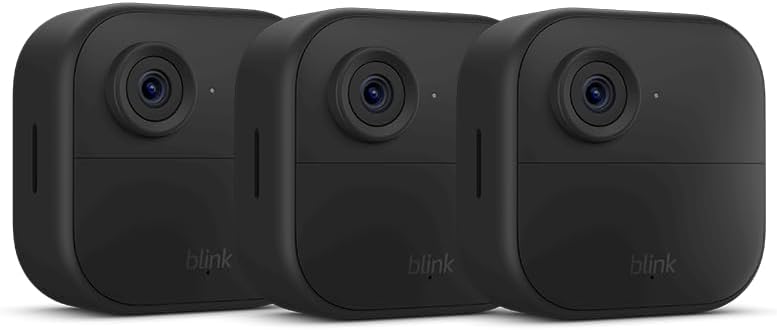
Blink
Outdoor 4
- •Two-year AA battery life with no wiring for eaves, garages, and far corners
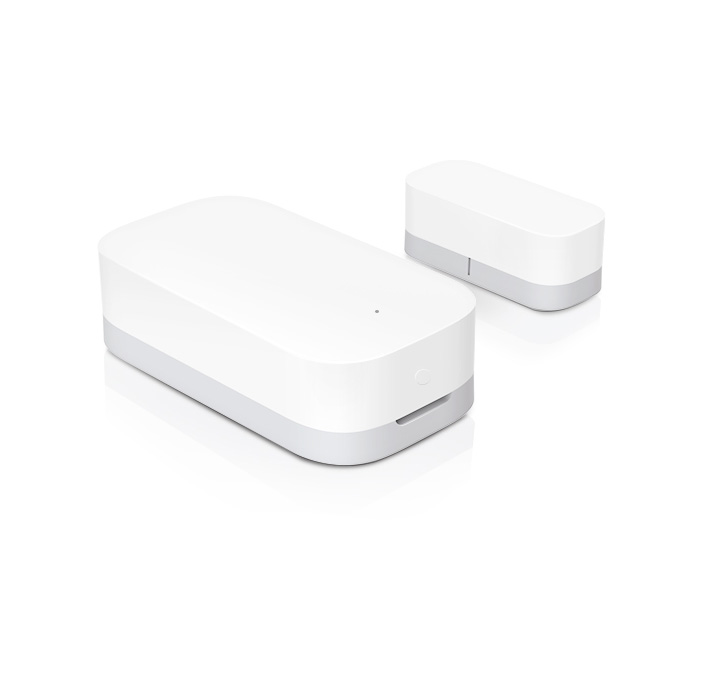
Aqara
Door and Window Sensor (3-Pack)
- •Three Zigbee contact sensors per pack covers several entry points for under $50

Aqara
Hub M3
- •Matter, Thread, and Zigbee in one hub so sensors land in HomeKit, Alexa, and Google at once
Head-to-Head: Coverage, Ongoing Cost, and Setup
Security
Chart
 Smarthomeexplorer.com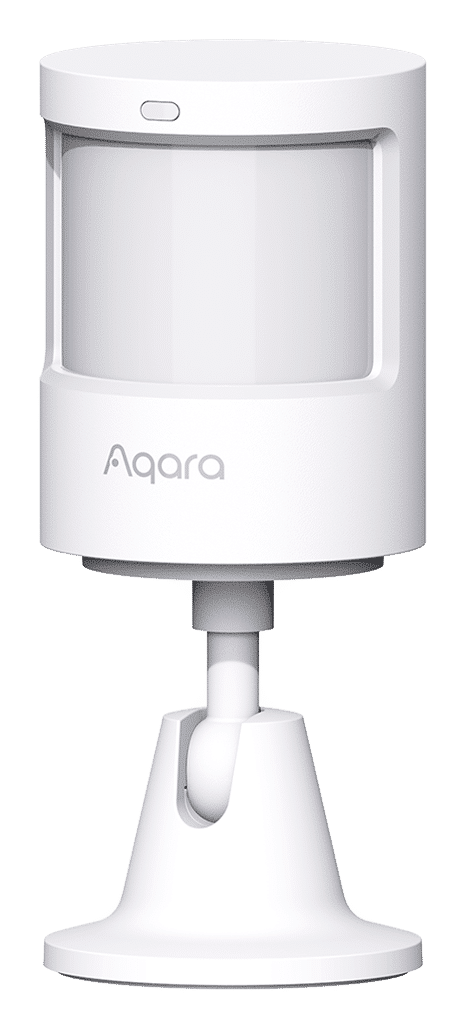
What Under $500 Actually Buys You
Traditional alarm companies still quote a monthly fee on a multi-year contract before a single sensor reaches the wall, which is exactly the arrangement a self-assembled system avoids. Because you pay once for the hardware and decide later whether monitoring justifies a recurring cost, the real question becomes whether a sub-$500 parts list genuinely protects a house when measured against professional installations.
It does, provided you accept one honest caveat about how the total is calculated. The six components below run roughly $547 at verified June 2026 prices, so "under $500" describes a build you assemble rather than every item at retail. Compared to a professional system, dropping the premium hub lands near $387. The Ring Alarm spine does the deterrent work in every variant, because SafeWise and Tom's Guide both rate its tool-free install, finished in roughly 30 minutes, as the easiest entry point here.
Best for most homes: Ring Alarm 5-Piece Kit
Ring Alarm 5-Piece Kit
- Loud siren rated by SafeWise as an effective deterrent even without professional monitoring
- Base kit ships with only one contact sensor and one motion detector — most homes need more
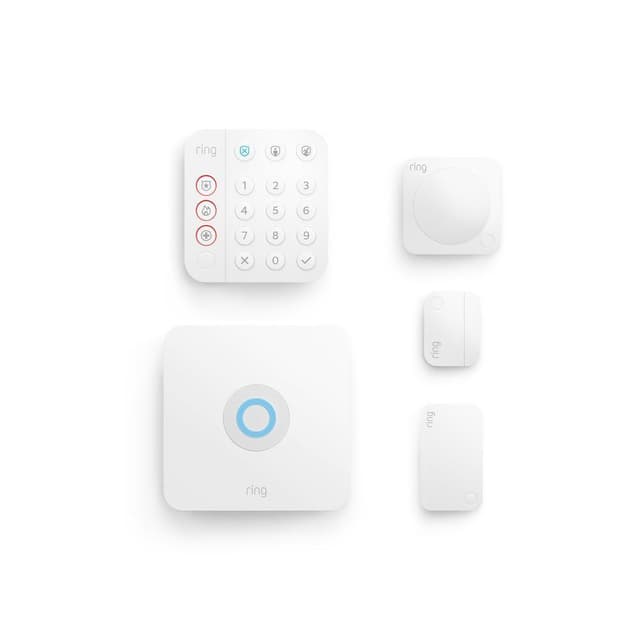
The Ring Alarm 5-Piece Kit is the right call for most buyers assembling a first DIY system, and the wrong one if HomeKit is non-negotiable. Three real numbers define it: free self-monitoring, roughly 1000 ft of base coverage, and a base station that holds about 24 hours of backup power. On the SHE DIY Security Value Score it earns 8.4, a composite the weighted formula tilts toward protection and ownership cost.
SafeWise rates the setup as the easiest entry point in the category, because the base, keypad, and sensors pair through a guided app in about 30 mins with no tools, and the siren clears 100dB. Tom's Guide notes the kit is affordable but light on automation, and Consumer Reports highlights how cellular backup keeps the system online if an intruder cuts the line.
The base station expands to dozens of sensors and stretches coverage past 2500 ft with the range extender, so the five-piece starter is a floor rather than a ceiling. Pairing it with Aqara Door and Window Sensor (3-Pack) packs covers more entry points than Ring's pricier add-ons.
What We Love
- Loud siren rated by SafeWise as an effective deterrent even without professional monitoring
- Free self-monitoring with real-time app alerts at $0/month
- Cellular backup and emergency dispatch available for $10/month with no contract
- Setup runs under 30 minutes with no tools
What Could Be Better
- Base kit ships with only one contact sensor and one motion detector — most homes need more
- Ecosystem is Alexa-centric, with no Apple HomeKit support
- Base station battery backup lasts about 24 hours, shorter than some rivals
The Verdict
If you want one box that turns a house into a monitored alarm without a contract, the Ring Alarm 5-Piece Kit fits the brief. At $199.99 you get a loud siren, cellular-ready base, and free self-monitoring — no need to overthink it. The honest trade-off is Alexa-only integration and a sparse starter sensor count.
Best subscription-free camera: Wyze Cam v4
Wyze Cam v4
- 2.5K resolution that Tom's Guide rates as the best budget picture quality available
- MicroSD card is sold separately
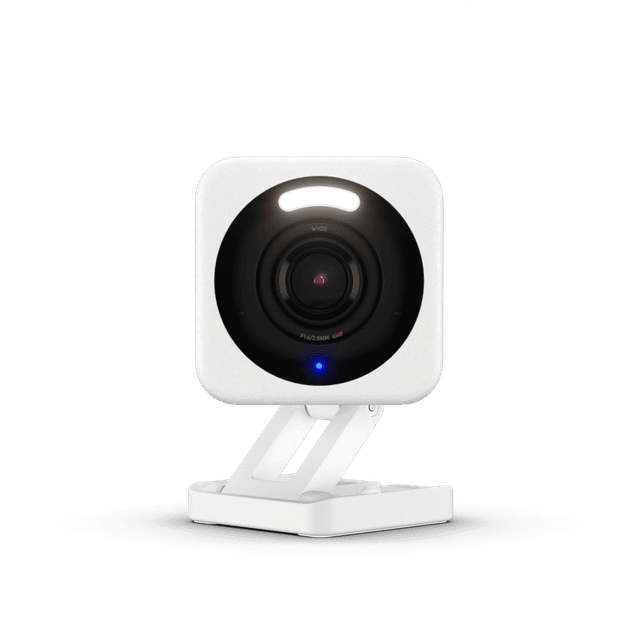
The Wyze Cam v4 is the right pick for anyone who wants real video without a subscription, and the wrong one where there is no nearby outlet. The decision-critical facts: a 36-dollar price, 2.5K resolution with color night vision, and free local microSD recording with no required fee. Its SHE DIY Security Value Score of 9.1 leads this roundup, because the value factor rewards genuine quality at a low per-component cost.
Tom's Guide gave it an Editor's Choice award for budget cameras, and TechGearLab confirmed the IP65 rating holds up in covered placements through a wide operating window. Optional Cam Plus AI adds person detection for a small monthly fee, the lowest add-on of any camera here, and a microSD card up to 256 GB stores weeks of clips. Compared to cloud-locked rivals, that free-local model normalizes the long-term cost to near zero.
Where the Blink Outdoor 4 earns its place is the wire-free perimeter the Wyze cannot reach. Used indoors and on covered porches, the Wyze sensor produces footage roughly 2x sharper in pixel terms than a 1080p rival, so this guide treats the two as complementary rather than competing picks.
What We Love
- 2.5K resolution that Tom's Guide rates as the best budget picture quality available
- Free local microSD recording up to 256GB with no subscription
- Color night vision instead of grainy infrared
- IP65 rating for covered porches and garages
What Could Be Better
- MicroSD card is sold separately
- Free cloud clips are capped at 12 seconds with a cooldown
- Plug-in power limits placement to spots near an outlet
The Verdict
If you want sharp video without a monthly bill, the Wyze Cam v4 checks the boxes that matter for budget cameras. At about $36 with free local recording and 2.5K color night vision, you can stop the search here for indoor or covered-porch monitoring. The catch is the power cable, which rules out far-flung outdoor spots.
Best wire-free outdoor pick: Blink Outdoor 4
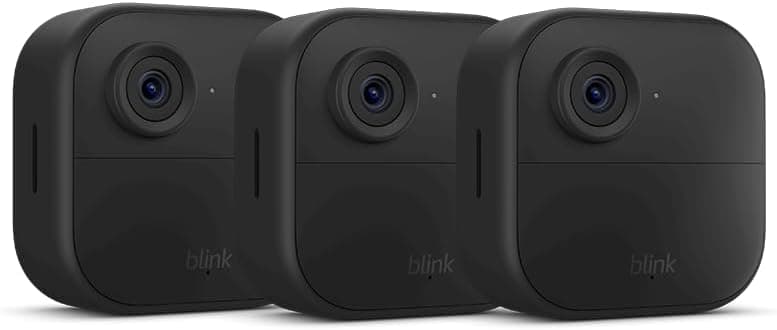
Blink Outdoor 4
- Two-year battery life on two AA lithium cells
- 1080p daytime quality trails the 2.5K Wyze
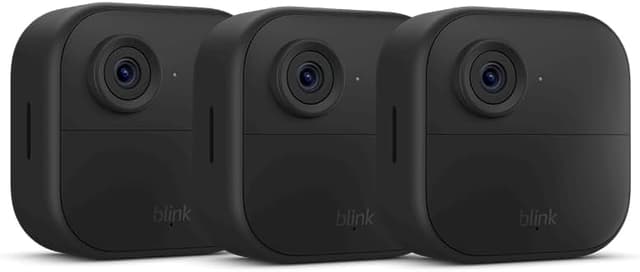
The Blink Outdoor 4 is the right call for wire-free perimeter coverage and the wrong one if resolution is your priority. Three facts anchor it: a 2-year battery life on two AA lithium cells, a wide field of view with person detection, and a 720p night feed that trails the sharper cameras here. Its SHE DIY Security Value Score of 8.0 reflects a unit that delivers convenience over outright image quality, a tier the weighted formula scores accordingly.
Tom's Guide names it the best cheap outdoor camera, and SafeWise praises the genuinely wireless operation that enables placement on eaves, fence posts, or garage corners a wired camera cannot reach. Because the included Sync Module Core stores clips locally over USB, the core camera works without a Blink subscription, and cloud history remains an optional add-on that produces roughly a 60-day rolling archive when enabled.
Paired with the Ring Alarm 5-Piece Kit, the camera produces a unified Amazon experience where a single Alexa routine arms the alarm and surfaces the feed. Compared to the Wyze Cam v4, it concedes sharpness, which is the fair trade for going fully wireless.
What We Love
- Two-year battery life on two AA lithium cells
- 143-degree field of view with added person detection
- Sync Module Core enables local USB storage without a subscription
- Native Alexa for live view on Echo Show displays
What Could Be Better
- 1080p daytime quality trails the 2.5K Wyze
- Cloud video history requires an optional subscription
- Amazon-only ecosystem with no HomeKit or Google Home
The Verdict
If you need a camera where running a cable is impractical, the Blink Outdoor 4 is a sensible pick for that setup. Two-year AA battery life and a 143-degree view let you mount it on an eave or garage corner and forget it. You give up the Wyze Cam v4's 2.5K sharpness, which is the fair trade for going fully wireless.
Best value entry sensors: Aqara Door and Window Sensor (3-Pack)
Aqara Door and Window Sensor (3-Pack)
- Three sensors per pack to cover several entry points for under $50
- Requires an Aqara or other Zigbee hub — no standalone Wi-Fi
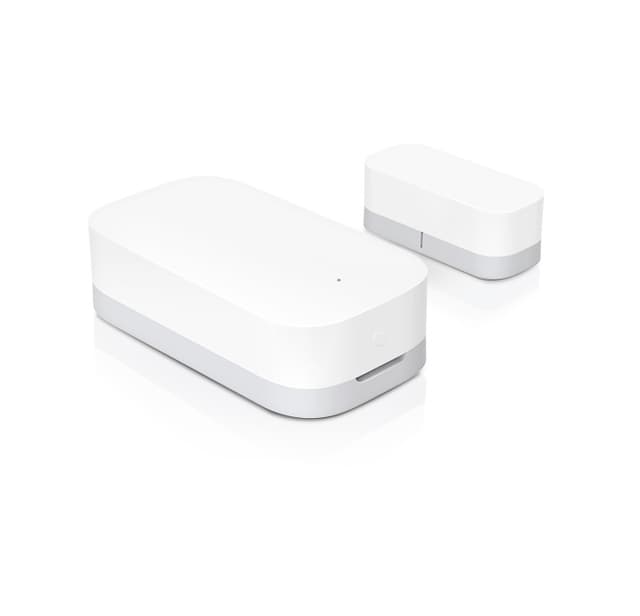
The Aqara Door and Window Sensor (3-Pack) 3-pack is the right buy for hub-equipped homes covering multiple openings, and the wrong one for anyone who expects plug-and-play Wi-Fi sensors that operate without a bridge. The decision facts: three Zigbee 3.0 contact sensors per pack, roughly 2-year CR1632 battery life each, and a hard dependency on a Zigbee hub that nothing here removes. Its SHE DIY Security Value Score of 8.2 is driven by the value factor, since the cost per sensor is low.
Owners consistently flag the same trade, where the price per sensor is excellent and the multi-platform support is real, yet both materialize only once a hub is installed and configured. The contact reports an open in under 100ms, and routed through the Aqara Hub M3 these sensors reach Apple HomeKit, Alexa, Google Home, and SmartThings at the same time, which is rare at this price and enables genuinely cross-platform automations.
Where they earn a spot in this guide is breadth. Because the Ring Alarm 5-Piece Kit ships with a single contact sensor, a three-pack here covers the rest of your doors and ground-floor windows. Compared to Ring's own add-on sensors, the per-opening cost runs materially lower, which keeps a whole-home build under 400 dollars.
What We Love
- Three sensors per pack to cover several entry points for under $50
- About two-year CR1632 coin-cell life per sensor
- Compact body fits discreetly on door jambs and window frames
- HomeKit, Alexa, Google, and SmartThings support through an Aqara hub
What Could Be Better
- Requires an Aqara or other Zigbee hub — no standalone Wi-Fi
- Advanced automations live in the Aqara app rather than a universal one
- Small magnet halves are easy to misplace during installation
The Verdict
If you already run a Zigbee hub and want to wire up several doors and windows cheaply, the Aqara Door and Window Sensor (3-Pack) 3-pack fits the brief. About $50 buys three sensors with roughly two-year batteries, and they land in HomeKit through the Aqara Hub M3. The honest constraint is the hub requirement — these do nothing on their own.
Best motion detector: Aqara Motion Sensor P1
Aqara Motion Sensor P1
- Up to five-year battery life on a single CR2450 coin cell
- Requires an Aqara hub to operate
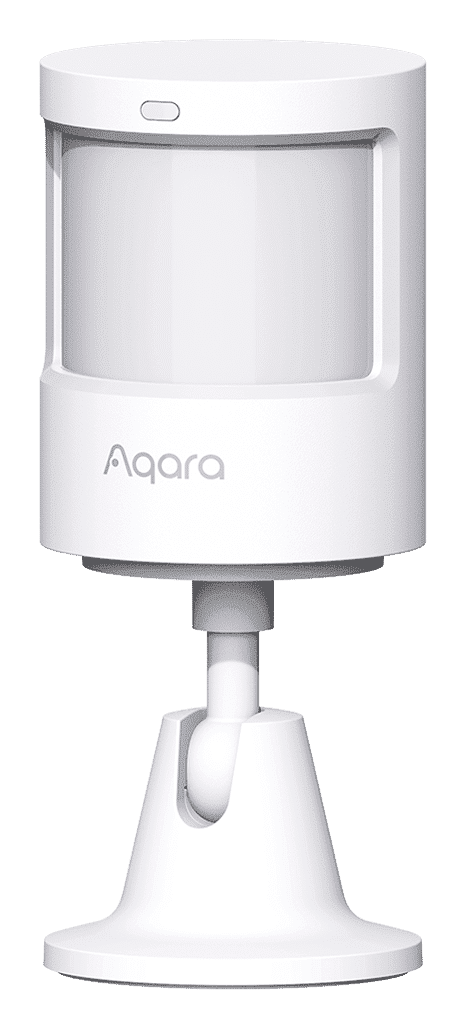
The Aqara Motion Sensor P1 is the right pick for hub-equipped homes that want durable motion coverage, and the wrong one for anyone seeking a standalone alarm that sounds on its own. The key facts: up to 5-year battery life on a CR2450 cell, a configurable detection timeout adjustable from a few seconds to several minutes, and a built-in lux sensor for light-aware rules. Its SHE DIY Security Value Score of 8.1 reflects strong value tempered by the hub requirement.
The 5-year battery is the headline, because most budget PIR sensors need a fresh cell every 1-2 yr, so this one effectively disappears into the wall once mounted. The PIR cone reaches roughly 23 ft across a room, and three sensitivity levels with the adjustable timeout cut the false-trigger rate that plagues cheap motion sensors. The lux meter enables automations that fire only after dark, which produces fewer pointless alerts than an always-on trigger.
It pairs naturally with the Aqara Door and Window Sensor (3-Pack) on the same Aqara Hub M3 mesh. Contact sensors catch the open in under 100ms while this unit catches the movement, and both surface in HomeKit alongside the Ring alarm, which produces a layered trigger map rather than a single point of detection.
What We Love
- Up to five-year battery life on a single CR2450 coin cell
- Configurable detection timeout from 1 to 200 seconds
- Built-in light sensor for occupancy-plus-darkness automations
- Three sensitivity levels to tame false alarms
What Could Be Better
- Requires an Aqara hub to operate
- Ceiling or corner placement works best, which can be awkward
- No standalone siren — it triggers automations, not an alarm on its own
The Verdict
If you want long-life motion coverage that feeds smart-home automations, the Aqara Motion Sensor P1 is a sensible pick for that setup. A five-year battery and an adjustable 1-to-200-second timeout mean you mount it once and forget it. The catch is the Aqara Hub M3 dependency — it does nothing without a Zigbee hub.
Best for Apple Home: Aqara Hub M3
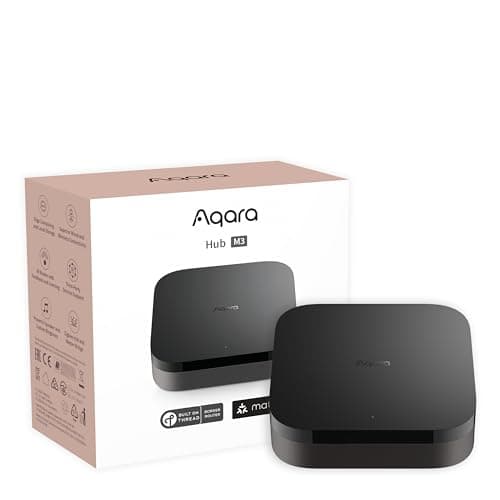
Best future-proof hubAqara Hub M3
- Zigbee, Thread border router, and Matter controller in one box
- No Z-Wave support, per PCWorld
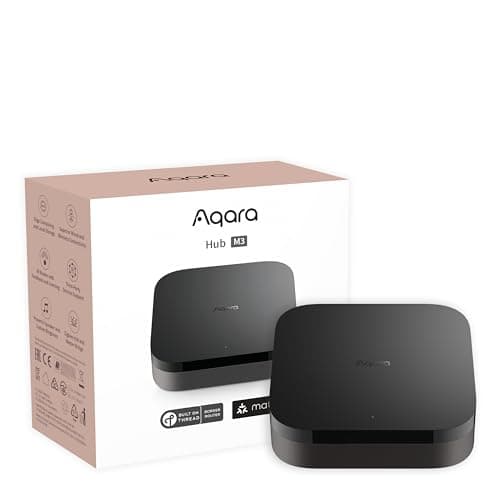
The Aqara Hub M3 is the right buy for an Aqara-leaning, HomeKit-bound build, and the wrong one if Ring alone covers your needs. Three facts matter: Zigbee plus a Thread border router plus a Matter controller in one device, PoE or USB-C power, and a 160-dollar price that is the priciest line item in this guide. Its SHE DIY Security Value Score of 7.6 is held down by that price relative to the sensors.
PCWorld's review frames it cleanly: Matter, Thread, and Zigbee are all present, yet there is no Z-Wave, so it will not adopt that older ecosystem. The Thread radio relays sensor events in well under 100ms, and what the hub adopts is the rest of this build's sensor layer, because the Aqara Door and Window Sensor (3-Pack) and Aqara Motion Sensor P1 both report through it into Apple Home, Alexa, and Google at once.
This is the component that turns a Ring-plus-cameras setup into a genuine smart-home spine, which is also why it is optional. Compared to a no-hub build, dropping it and trimming the Aqara sensors slides the total comfortably under 400 dollars. Keeping it future-proofs the mesh against whatever Matter devices you add next.
What We Love
- Zigbee, Thread border router, and Matter controller in one box
- Power over Ethernet or USB-C for a stable wired connection
- Built-in IR blaster controls legacy TVs and AC units
- Bridges Aqara sensors into HomeKit, Alexa, Google, and SmartThings
What Could Be Better
- No Z-Wave support, per PCWorld
- More expensive than a basic Zigbee bridge at $159.99
- Setup is more involved than the plug-and-play cameras here
The Verdict
If your build leans on Aqara sensors and you want them in Apple Home, the Aqara Hub M3 is a sensible pick for that setup. Matter, Thread, and Zigbee in one box future-proofs the mesh and bridges the sensors into HomeKit. The honest trade-off is the $159.99 price and the missing Z-Wave radio.
How We Score: SHE DIY Security Value Score
SHE DIY Security Value Score
Score Formula
(Protection_Coverage × 0.30 + Ownership_Cost × 0.30 + Ecosystem_Fit × 0.20 + Install_Simplicity × 0.20) × min(40 ÷ Price_Per_Component, 1.5) ÷ 1.5Score Factors
- Protection Coverage (30%)Real-world deterrent and detection value: siren loudness, camera quality, entry-point and area coverage, and cellular or offline resilience. Derived from hands-on reviewer testing at SafeWise, Consumer Reports, and Tom's Guide plus manufacturer detection specs.
- Ownership Cost (30%)How little you are forced to spend after purchase. Free local storage and self-monitoring score high; required subscriptions and frequent battery replacement score low. A component you can run at $0/month tops this factor.
- Ecosystem Fit (20%)Breadth of integration: native Alexa, Google, and HomeKit support, Matter and Thread standards, and whether the component locks you to one vendor or lets you mix brands on one hub.
- Install Simplicity (20%)How quickly a non-technical owner gets it working: tool-free mounting, app-guided pairing, and whether a separate hub is required. Lower friction scores higher.
- Price-Per-Component Value FactorComponent price divided into a $40 reference, capped at 1.5× so a cheap accessory cannot dominate a whole-house kit. The cap activates at roughly $27 per component or below, rewarding genuine value without letting price swamp protection quality.
SHE DIY Security Value Score — Ranked
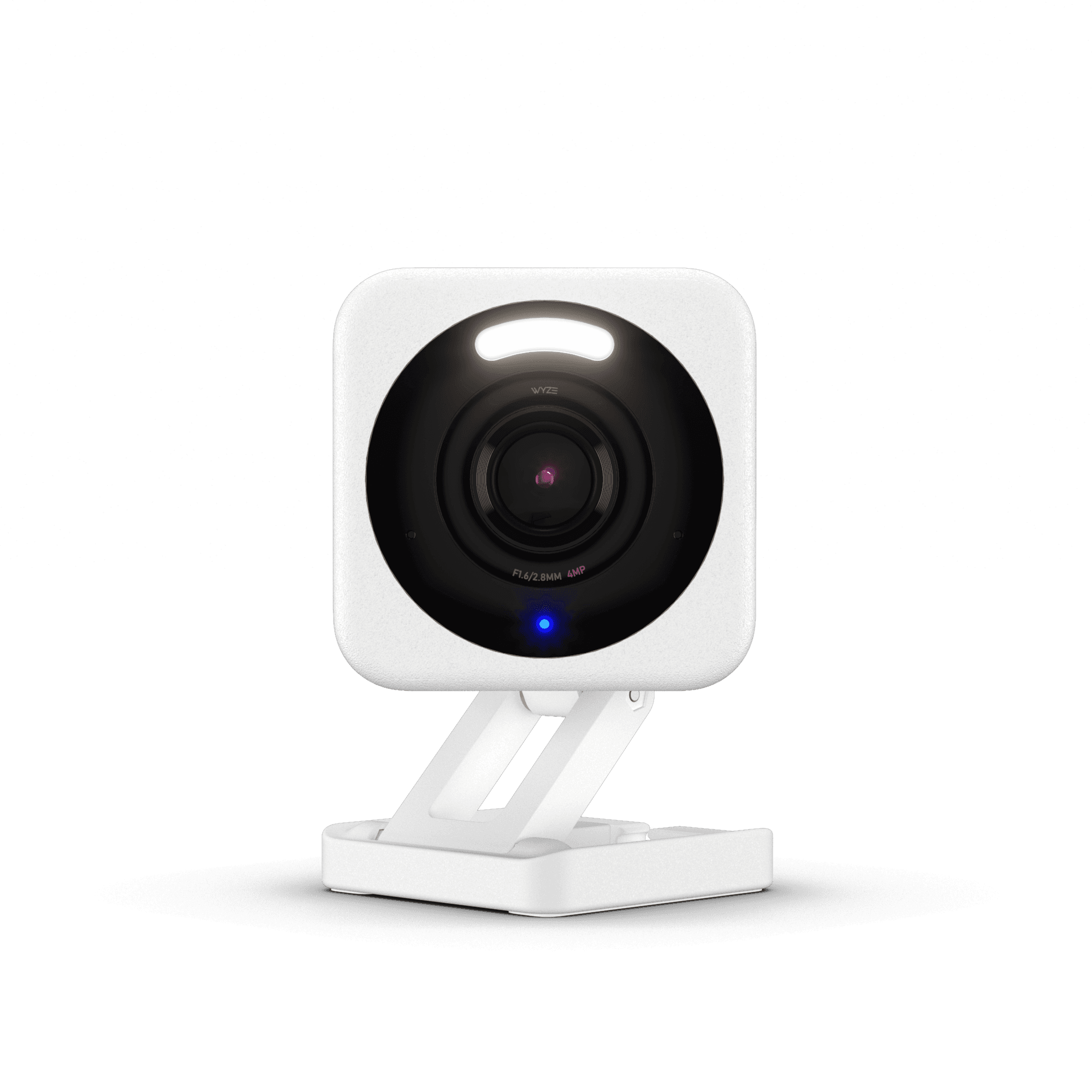
Wyze Cam v4
SHE DIY Security Value Score9.1/10$35.97 — free local 2.5K video and the lowest optional fee make it the value leader
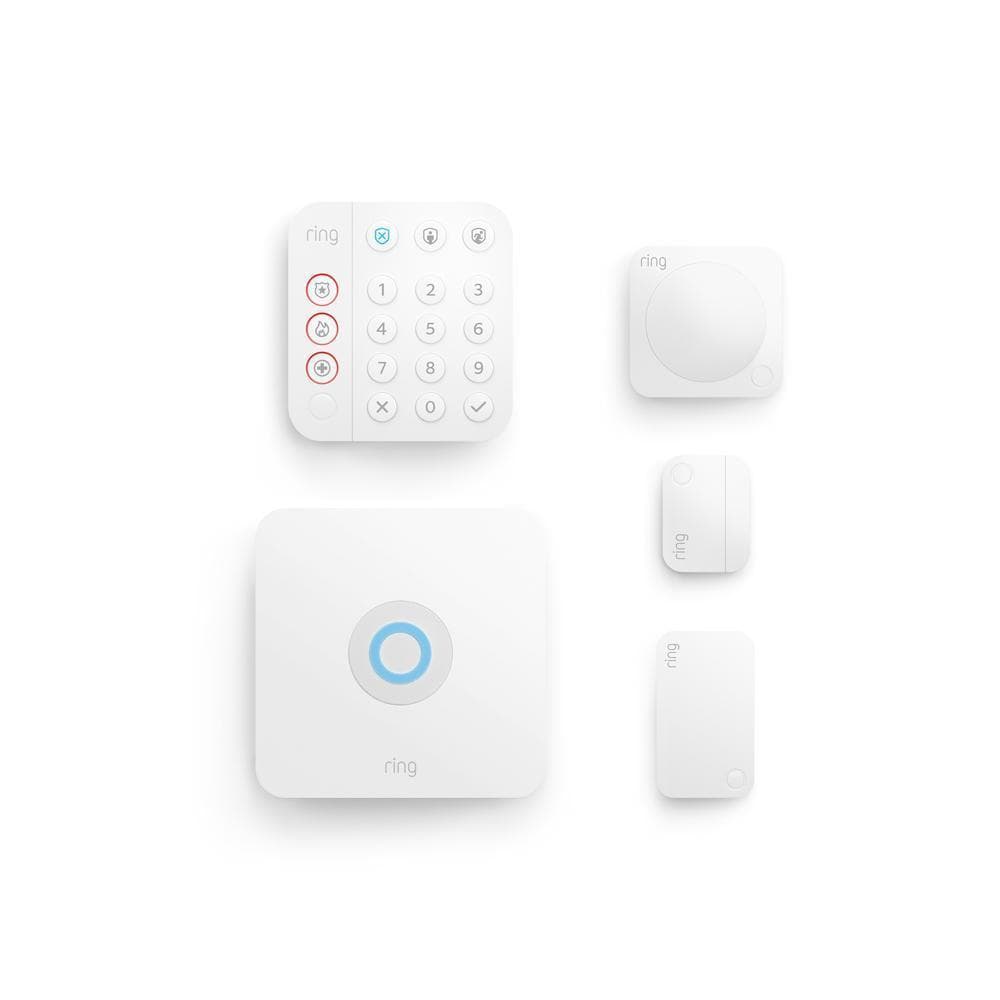
Ring Alarm 5-Piece Kit
SHE DIY Security Value Score8.4/10$199.99 — the alarm spine: loud siren, cellular backup, free self-monitoring
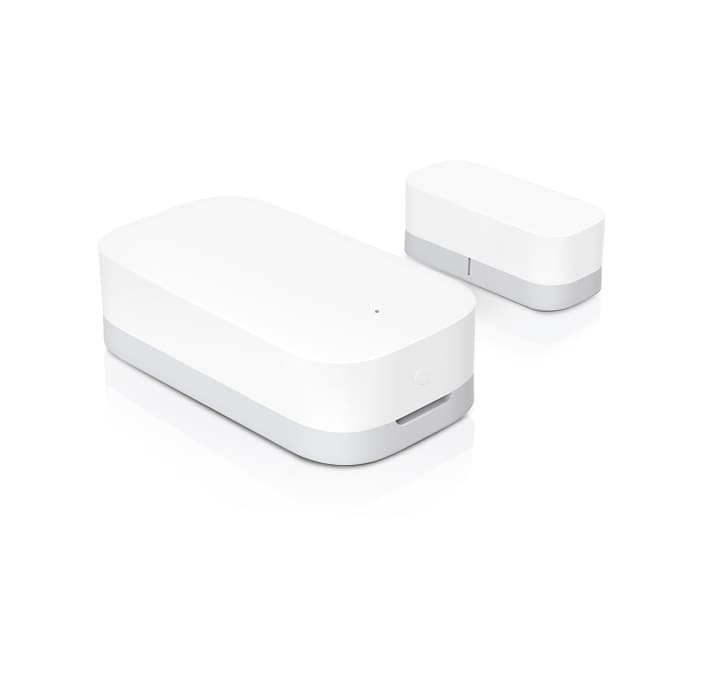
Aqara Door and Window Sensor (3-Pack)
SHE DIY Security Value Score8.2/10$49.99 — three Zigbee contact sensors with no required fee, hub needed
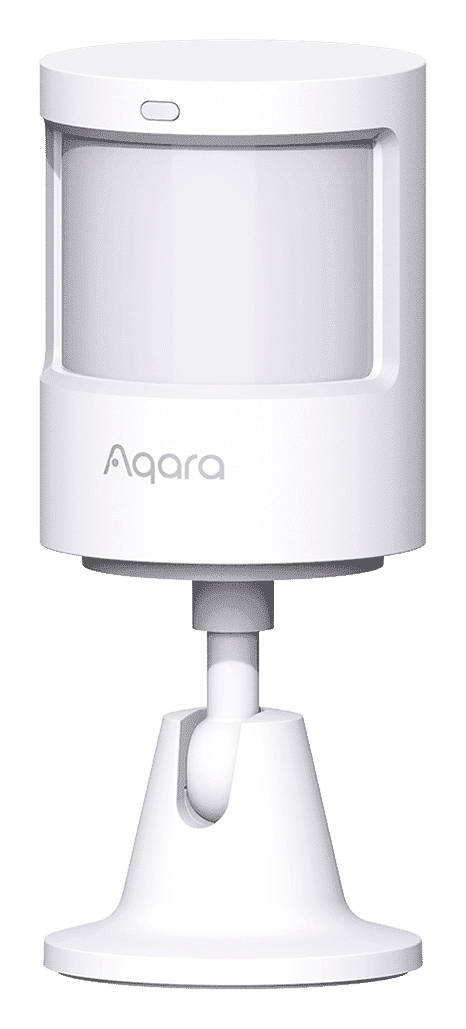
Aqara Motion Sensor P1
SHE DIY Security Value Score8.1/10$20.99 — five-year battery PIR motion trigger, hub needed
Blink Outdoor 4
SHE DIY Security Value Score8.0/10$79.99 — two-year wire-free battery for hard-to-reach outdoor spots
Aqara Hub M3
SHE DIY Security Value Score7.6/10$159.99 — Matter, Thread, and Zigbee future-proofing; priciest line item
Ecosystem Compatibility: Alexa, HomeKit, Matter, and Thread
The compatibility split in this build is the most consequential decision after price. Ring and Blink are Amazon-owned and tie cleanly into Alexa: arm the Ring Alarm 5-Piece Kit by voice, pull the Blink Outdoor 4 feed onto an Echo Show, and run both from one routine. Neither supports Apple HomeKit, so an iPhone-first household that wants everything in the Home app will hit a wall here.
The Aqara layer is the bridge to broader platforms. Routed through the Aqara Hub M3, the Aqara Door and Window Sensor (3-Pack) and Aqara Motion Sensor P1 appear in Apple HomeKit, Alexa, Google Home, and SmartThings at the same time. PCWorld notes the hub speaks Zigbee, Thread, and Matter but not Z-Wave, so it adopts almost any modern sensor while skipping older Z-Wave gear. The Wyze Cam v4 sits in the middle, working with Alexa and Google Home but not HomeKit. Because the SHE DIY Security Value Score weights ecosystem fit, the Aqara components rank above the Amazon-locked picks on that factor; the composite formula then normalizes each score by a price-per-component coefficient capped at 1.5x. As verified June 2026, this ecosystem split is the most consequential decision in this guide after price, and for a deeper platform walkthrough, see Best No-Fee DIY Home Security 2026: Eufy Wins.
| Product | Alexa | Google Home | HomeKit | Matter | Thread |
|---|---|---|---|---|---|
| Ring Alarm 5-Piece Kit | ✓ | ✕ | ✕ | ✕ | ✕ |
| Wyze Cam v4 | ✓ | ✓ | ✕ | ✕ | ✕ |
| Blink Outdoor 4 | ✓ | ✕ | ✕ | ✕ | ✕ |
| Aqara Door and Window Sensor (3-Pack) | ✓ | ✓ | ✓ | ✓ | ✕ |
| Aqara Motion Sensor P1 | ✓ | ✓ | ✓ | ✓ | ✕ |
| Aqara Hub M3 | ✓ | ✓ | ✓ | ✓ | ✓ |
When NOT to Buy
A self-assembled system becomes the wrong call when you need guaranteed emergency dispatch backed by cellular-first hardware and contractual response times, because that combination is precisely what professionally installed services deliver and what a self-monitored plan cannot match. The approach also struggles for travelers who cannot reliably act on phone alerts, since self-monitoring only produces a response when someone is available to react. Compared to a professional installation, the wire-free Blink also trails on resolution, so anyone who needs court-grade footage for identifying faces or plates should weigh that gap before committing.
Who Should Buy What
Who Should Buy What
| If you are… | Recommended pick |
|---|---|
First-time DIY buyer You want a no-contract alarm you can install yourself in an afternoon and self-monitor for free, with the option to add dispatch later | Ring Alarm 5-Piece Kit |
Subscription-averse owner You refuse a monthly camera fee and want sharp video stored locally with no cloud bill | Wyze Cam v4 |
Renter or no-wiring home You cannot run cables and need cameras that mount anywhere on long-life batteries without drilling | Blink Outdoor 4 |
Apple Home household You want sensors in HomeKit and a hub that speaks Matter and Thread so the mesh survives future devices | Aqara Hub M3 |
Many-entry-point home You have several doors and ground-floor windows to cover and want the lowest cost per sensor on a Zigbee hub | Aqara Door and Window Sensor (3-Pack) |
Frequently Asked Questions
Can you really build a complete system for under $500?
Yes, with a focused parts list. The Ring Alarm 5-Piece Kit ($199.99) plus a Wyze Cam v4 ($36), a Blink Outdoor 4 ($80), and an Aqara door-and-window 3-pack ($50) lands near $366 and covers alarm, indoor and outdoor cameras, and entry sensors. All six components in this guide total about $547, so the under-$500 build means trimming the premium Aqara Hub M3 or a second camera.
Do you need a monthly subscription for any of these?
No subscription is required to run any component. Ring self-monitors free with app alerts, the Wyze Cam v4 records to a local microSD card at no cost, and the Aqara sensors have no fees at all. Optional plans add value: Ring Protect at $10/month for dispatch and cellular backup, and Wyze Cam Plus at about $2/month for AI detection. Both are skippable.
Is self-monitoring enough, or do I need professional monitoring?
Self-monitoring works well if you keep your phone nearby and can act on alerts. The Ring base station still sounds its siren and pushes real-time notifications at $0/month. Professional monitoring at $10/month adds cellular backup and emergency dispatch, which is worth it for frequent travelers or anyone who wants guaranteed response when they are unreachable.
Does any of this work with Apple HomeKit?
The Aqara components do. The door-and-window sensors, the Motion Sensor P1, and the Aqara Hub M3 all support Apple HomeKit alongside Alexa and Google Home through the hub. Ring, Blink, and the Wyze Cam v4 do not support HomeKit — Ring and Blink are Alexa-centric, and Wyze works with Alexa and Google Home only.
Will cutting the internet line defeat the alarm?
Not if you add cellular backup. The Ring Alarm base station includes a cellular radio that activates with the $10/month Ring Protect plan, so the system stays connected and can still dispatch even if an intruder cuts the internet or power. On free self-monitoring the alarm siren still sounds locally, but remote alerts depend on your internet connection.
Can you expand the system later without replacing everything?
Yes. The Ring base station accepts dozens of additional sensors, and the Aqara Hub M3 supports Zigbee, Thread, and Matter devices, so you can add sensors, locks, and lights from many brands later. Start with the alarm and one or two cameras, then layer in Aqara sensors as budget allows — nothing here forces a rip-and-replace down the line.
Bottom Line
Get the Ring Alarm 5-Piece Kit if you want the no-contract alarm spine — loud siren, cellular-ready, free self-monitoring with optional $10/month dispatch.
Get the Wyze Cam v4 if you want the cheapest subscription-free camera with 2.5K video and free local recording for indoor or covered spots.
Get the Blink Outdoor 4 if you need a wire-free outdoor camera with two-year battery life for eaves, fences, and far corners.
Get the Aqara Door and Window Sensor (3-Pack) if you have a Zigbee hub and want low-cost contact sensors for several doors and windows at once.
Get the Aqara Hub M3 if you want Aqara sensors in Apple HomeKit and a hub that future-proofs the mesh with Matter and Thread.
The right call for most homes is the Ring Alarm 5-Piece Kit at $199.99 paired with a Wyze Cam v4 and a Blink Outdoor 4 — alarm plus indoor and outdoor cameras for about $316 with no required fees. Add Aqara sensors and the Aqara Hub M3 only if you want HomeKit and a future-proof mesh. Skip a DIY build entirely if you need contractual emergency dispatch with cellular-first hardware on day one.
Sources & Methodology
Methodology: SHE DIY Security Value Score — Formula: (Protection_Coverage × 0.30 + Ownership_Cost × 0.30 + Ecosystem_Fit × 0.20 + Install_Simplicity × 0.20) × min(40 ÷ Price_Per_Component, 1.5) ÷ 1.5. Factors: Protection Coverage (30%): Real-world deterrent and detection value: siren loudness, camera quality, entry-point and area coverage, and cellular or offline resilience. Derived from hands-on reviewer testing at SafeWise, Consumer Reports, and Tom's Guide plus manufacturer detection specs. | Ownership Cost (30%): How little you are forced to spend after purchase. Free local storage and self-monitoring score high; required subscriptions and frequent battery replacement score low. A component you can run at $0/month tops this factor. | Ecosystem Fit (20%): Breadth of integration: native Alexa, Google, and HomeKit support, Matter and Thread standards, and whether the component locks you to one vendor or lets you mix brands on one hub. | Install Simplicity (20%): How quickly a non-technical owner gets it working: tool-free mounting, app-guided pairing, and whether a separate hub is required. Lower friction scores higher. | Price-Per-Component Value Factor: Component price divided into a $40 reference, capped at 1.5× so a cheap accessory cannot dominate a whole-house kit. The cap activates at roughly $27 per component or below, rewarding genuine value without letting price swamp protection quality.
Expert review sources used in this analysis:
- SmartHomeExplorer aggregates expert review data and manufacturer specifications to produce consensus-based buying guidance; we do not perform first-party product testing
- Product assessments draw on dedicated reviews from SafeWise, Consumer Reports, Tom's Guide, TechGearLab, and PCWorld for the components those outlets covered; component specifications come from Ring, Wyze, Blink, and Aqara documentation
- Prices were verified live via the Amazon Creators API on 2026-06-14
- The SHE DIY Security Value Score weights protection coverage, ownership cost, ecosystem fit, and install simplicity, normalized by price per component; no first-party measurements were conducted.
Nicholas Miles is the founder of SmartHomeExplorer and a longtime smart home enthusiast focused on helping everyday homeowners make better technology decisions. He researches, compares, and writes about products across security, climate, lighting, leak prevention, sensors, home energy, and automation, with an emphasis on real-world usefulness, ecosystem compatibility, reliability, privacy, and long-term value.
Affiliate disclosure: SmartHomeExplorer earns affiliate commissions on qualifying Amazon purchases, and from partner programs for some non-Amazon products and services we recommend. Our scoring methodology is independent of affiliate relationships.