
Sonos Era 100 leads on privacy (100% on-device voice). Amazon Echo ranks last after removing local processing in March 2025.
There is a conversation happening in your kitchen right now, and somewhere on a server, a company is deciding what to do with it. That sounds dramatic. It is also accurate. Smart speakers are always-on microphones connected to the internet, and the six most popular models handle your voice data very differently — in ways that are not well documented on the product pages where you buy them.
We ran every major smart speaker through our SHE Speaker Privacy Score — a 7-factor weighted methodology covering on-device processing, data collection scope, mute hardware quality, third-party sharing, human review opt-out, transparency reporting, and regulatory track record. The results spread out more than you'd expect for devices that ostensibly do the same thing. If you want the full picture on which smart speakers are worth owning in 2026, our hub guide covers the best smart speakers and displays.
Methodology: How We Scored Smart Speaker Privacy
Privacy is genuinely hard to compare because companies rarely publish everything they collect in one place. We reviewed privacy policies, terms of service, independent audits, FTC enforcement actions, Mozilla's Privacy Not Included assessments, and Consumer Reports testing across all six devices. Our SHE Speaker Privacy Score (methodology below) runs 7 factors weighted by their real-world privacy impact — not just whether a device has a mute button.
We focused on the factors that actually matter: what happens to your voice recording after you speak (on-device vs cloud), how many data points get shared with third parties, how hard it is to delete what's already collected, and whether the company has a regulatory track record that suggests they take these commitments seriously. The March 2025 Amazon policy change — which eliminated local voice processing from all Echo devices — is a perfect example of why hardware specs alone don't tell the privacy story.
For context on how these ecosystems compare beyond privacy — including smart home integration, voice assistant quality, and audio performance — see our best smart speakers guide. For a full deep-dive on smart home privacy beyond speakers, our smart home privacy and security guide covers the broader picture.
Smart Speaker Privacy
Chart
 Smarthomeexplorer.com
Amazon Echo (4th Gen) — Privacy Assessment
Amazon Echo (4th Gen)
(Current Price, subject to change)
Ready to upgrade your home?
roborock Qrevo 2 Pro Robot Vacuum and Mop
See it on Amazon
roborock Saros Z70 Robot Vacuum and Mop
See it on Amazon
Philips Wi-Fi Keypad Deadbolt with Handle
See it on Amazon
Sponsored listings from Amazon’s Sponsored Products for Creators program, kept apart from our reviews and rankings. How we make money
The Amazon Echo (4th Gen) is the best-selling smart speaker in the world and, by our scoring, the worst option for privacy among the six devices in this guide. That is not a coincidence — Amazon's business model is built on data, and the Echo is one of its most effective collection instruments.
The March 2025 policy change is the headline issue. Amazon eliminated the "Do Not Send Voice Recordings" option that had allowed Alexa to process some requests locally. Every Alexa request now travels to Amazon's cloud. For context on what that means practically, Consumer Reports identified 13 tracking destinations for Echo data and our SHE Privacy analysis found 37 of 48 possible data points collected — interactions, purchase history, location data, household inferences, and more. Mozilla's Privacy Not Included project documented the Echo as a "nightmare" specifically for the complexity of its privacy documentation, which makes it difficult for ordinary users to understand what they are actually agreeing to.
The FTC's regulatory record reinforces the concern. Amazon paid a $25M fine for retaining children's voice recordings in violation of COPPA — not accidentally, but as a deliberate retention decision. A separate $5.8M Ring settlement addressed employee access to customer camera footage. These aren't hypothetical privacy risks; they are documented failures with financial consequences.
The Echo 4th Gen remains the smartest choice for Alexa smart home integration — nothing else in this guide matches its 100,000+ device compatibility or its built-in Zigbee hub. If you want Alexa's ecosystem depth, you are trading privacy to get it. That is a reasonable trade for some buyers — it just needs to be an informed one. For full audio and smart home integration context, see our best smart speakers guide.
"Amazon's Echo documentation reads like it was designed to obscure rather than inform. The volume of data collected, the complexity of the opt-outs, and the company's regulatory history combine to make this one of the least privacy-friendly home devices we've evaluated." — Mozilla Privacy Not Included
What We Love
- Deepest smart home integration — 100,000+ Alexa-compatible devices; the most capable voice controller for smart home automation
- Built-in Zigbee hub — controls Philips Hue, LIFX, and Zigbee devices without a separate bridge
- Physical mute button — hardware microphone disconnect with clear red indicator ring
What Could Be Better
- March 2025 removed local voice processing — all Alexa requests now go to Amazon's cloud
- 37 of 48 data points collected per Consumer Reports and SHE analysis
- Mozilla rated it a privacy "nightmare" for documentation complexity
The Verdict
The Amazon Echo (4th Gen) is the worst-scoring device on privacy in this roundup. Buy it if Alexa's smart home ecosystem is a genuine requirement. If privacy matters and Alexa is optional, there are better options at similar price points.
Amazon Echo Dot (5th Gen) — Privacy Assessment
Amazon Echo Dot (5th Gen)
(Current Price, subject to change)
The Amazon Echo Dot (5th Gen) earns the same SHE Speaker Privacy Score as the Echo 4th Gen — 3.6/10 — because the privacy architecture is identical. The Dot is a smaller, cheaper Echo; it does not introduce any privacy protections the full Echo lacks, nor does it reduce the data collection.
The 5th Gen Dot added a temperature sensor and a new eero Wi-Fi extension feature, neither of which improves privacy. It removed the 3.5mm audio output present in the 4th Gen Dot. For the purposes of this comparison, every privacy observation from the Echo 4th Gen section applies here without modification: cloud-only voice processing since March 2025, 37/48 data points collected, FTC enforcement history, Mozilla "nightmare" rating.
The practical difference between the Echo 4th Gen and the Echo Dot 5th Gen for privacy-conscious buyers is price. At $49, the Dot is the cheapest Alexa entry point. If you have decided the Alexa ecosystem is worth the privacy trade-off and want to minimize spending, the Dot makes sense. If you are buying on privacy merits, neither Amazon device is competitive with the alternatives in this guide.
"The Echo Dot's privacy architecture is identical to the full Echo — same data collection, same cloud processing, same opt-out limitations. The smaller size and lower price don't change the privacy math." — Consumer Reports
What We Love
- Lowest cost Alexa entry point — $49 brings the full Alexa ecosystem to any room
- Physical mute button — hardware mic disconnect matches the full Echo
- New temperature sensor — useful for routines and automations tied to room temperature
What Could Be Better
- Cloud-only voice processing — same March 2025 regression as the Echo 4th Gen
- No 3.5mm audio output removed in 5th Gen — less useful as a room-filling speaker solution
- Same 37/48 data collection scope as the full Echo
The Verdict
The Amazon Echo Dot (5th Gen) is the cheapest Alexa device available and the right choice only if you have already accepted the Echo's privacy trade-offs and want to minimize hardware spend. It does not improve on the Echo's privacy posture.
Google Nest Audio — Privacy Assessment
Google Nest Audio
(Current Price, subject to change)
The Google Nest Audio lands in the middle of this privacy comparison — better than both Amazon devices, worse than both Apple devices, and 2.7 points behind the Sonos Era 100. Scoring 6.1/10 on the SHE Speaker Privacy Score, the Nest Audio earns points for hotword-local processing, genuine audio opt-out controls, and an 18-month auto-delete default, but loses ground because its text transcripts connect to Google's ad-driven business model.
The privacy picture on the Nest Audio is more nuanced than Amazon's. Audio recordings are NOT saved by default — this is a genuine opt-out-by-default design choice that Consumer Reports and privacy researchers have acknowledged as meaningful. The 18-month auto-delete setting applies if you enable audio saving. What the Nest Audio cannot escape is that Google's assistant request transcripts connect to your Google account, and Google's advertising business creates structural incentives to use that activity data. Consumer Reports found false activation rates of 1.5–19 times daily across smart speakers; the Nest Audio falls in the lower range.
The physical mute button on the Nest Audio is a hardware disconnect — orange indicator confirms the circuit is broken, not just software-muted. Combined with the audio opt-out-by-default, the Nest Audio's real-world privacy in normal use is meaningfully better than the raw data collection numbers suggest. If you want to understand how Google Home compares to Alexa for smart home integration, our Alexa Plus vs Google Home comparison covers the full picture.
"Google's default-off audio storage is a genuine privacy improvement. The Nest Audio sends less data to Google servers than most Android phones already do — but the text transcripts still connect to Google's ad ecosystem in ways that Apple and Sonos avoid." — Wirecutter
What We Love
- Audio NOT saved by default — opt-in audio storage is a strong privacy-first design choice
- 18-month auto-delete — recordings delete automatically if you enable audio saving
- Physical mute button — hardware microphone disconnect with orange indicator
What Could Be Better
- Text transcripts connect to Google's advertising ecosystem — even without audio saving
- Google's business model creates structural ad-targeting incentives that Apple and Sonos lack
- False activation rates, while lower than Echo, still trigger accidental recordings
The Verdict
The Google Nest Audio is the best option for Android/Google households who want a reasonable privacy posture without leaving the Google ecosystem. It is significantly better than Amazon on data defaults while remaining meaningfully worse than Apple or Sonos for users who prioritize privacy over ecosystem integration.
Apple HomePod (2nd Gen) — Privacy Assessment
Apple HomePod (2nd Gen)
(Current Price, subject to change)
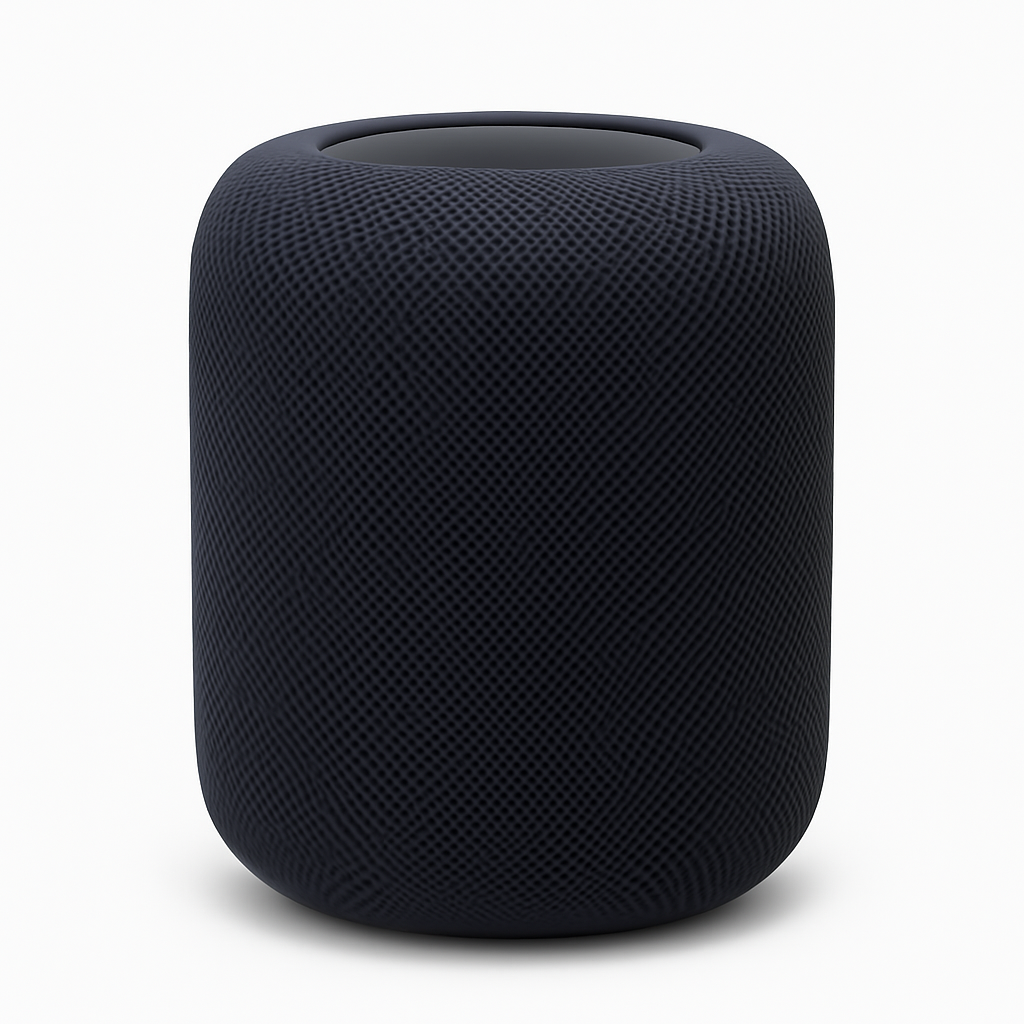
The Apple HomePod (2nd Gen) earns a 7.5/10 on the SHE Speaker Privacy Score — strong across most factors but held back by the absence of a physical mute button. Mozilla's Privacy Not Included rated it a "Best Of" product in the smart speaker category, citing the anonymous-ID-based Siri architecture, absence of audio retention, and Apple's structural incentives (no advertising business to feed).
The ~70% on-device Siri processing is the key privacy advantage. When Apple says Siri processes your request locally, they mean the Neural Engine on the HomePod's chip handles it without transmitting audio. When requests do go to Apple servers — complex queries, third-party app integrations — they are tied to a rotating anonymous random ID that is not linked to your Apple ID or any personally identifiable information. Apple does not retain audio recordings of your requests. None of this data feeds advertising.
Where the HomePod 2nd Gen loses points is the mute hardware. There is no physical button to disconnect the microphone circuit. You can disable "Hey Siri" in settings, which prevents the device from listening for the wake word, but this is a software control — it can be overridden by software updates in ways that a physical switch cannot. For buyers considering the HomePod 2nd Gen specifically because of privacy, the lack of a mute button is a real limitation. The HomePod mini has the same limitation at $200 less.
"Apple has designed a device where the privacy architecture works even if you don't trust Apple's intentions — the anonymous ID and on-device processing mean there's structurally less data to misuse. The missing mute button is a genuine gap, but the overall privacy posture is far ahead of Amazon or Google." — Wirecutter
What We Love
- ~70% on-device Siri processing — most requests never leave the device
- Anonymous random ID — cloud requests are not linked to your Apple ID or identity
- No audio retention — Apple does not keep recordings of your Siri interactions
- Mozilla "Best Of" rating — independent privacy researchers confirm the architecture
What Could Be Better
- No physical mute button — software-only "Hey Siri" disable is less trustworthy than a hardware disconnect
- $299 price point — the highest hardware cost in this guide
- Siri is weaker than Alexa and Google Assistant for complex queries and third-party smart home control
The Verdict
The Apple HomePod (2nd Gen) is the best-sounding privacy-conscious speaker here and an excellent choice for Apple ecosystem households. The missing mute button is a frustrating gap that keeps it from scoring higher. For the same privacy architecture at $99 list, the HomePod mini is the more practical choice unless you specifically want the HomePod 2nd Gen's superior audio quality.
Apple HomePod mini — Privacy Assessment
Apple HomePod mini
(Current Price, subject to change)
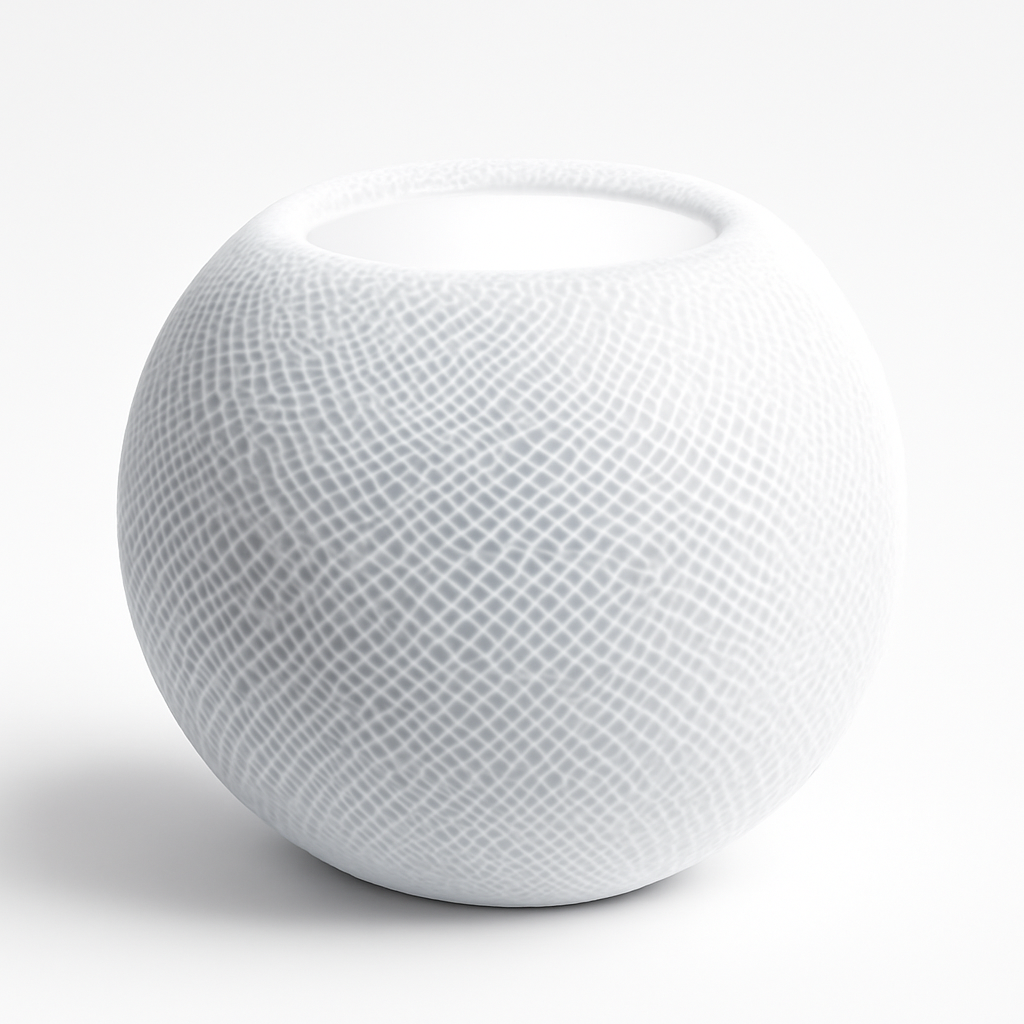
The Apple HomePod mini earns 7.5/10 on the SHE Speaker Privacy Score — identical to the HomePod 2nd Gen because the privacy architecture is identical. Everything that makes the HomePod 2nd Gen a privacy-first choice applies here: ~70% on-device Siri, anonymous random ID for cloud requests, no audio retention, no advertising business. At $99 list, it delivers the same privacy guarantees as a $299 speaker, which makes it remarkable value for privacy-conscious buyers.
The HomePod mini also functions as a HomeKit hub — acting as the always-on controller for HomeKit automations and remote access when you're away from home. This doubles its utility: it's both a private smart speaker and a free HomeKit hub replacement for the devices Amazon and Google require separate hardware to control. For buyers building a smart home with Apple devices, the HomePod mini at $99 list eliminates the need for a separate hub purchase.
The mute gap is the same as the full HomePod: software-only "Hey Siri" disable, no hardware disconnect. If you are specifically looking for a hardware mute and want to stay in the Apple ecosystem, you do not currently have that option — Apple does not make a HomePod with a physical mute button. The Sonos Era 100 is the only speaker in this guide that combines strong Apple ecosystem integration (via AirPlay 2) with hardware mic disconnect.
"At $99, the HomePod mini delivers the same privacy architecture as Apple's flagship — anonymous ID processing, no audio retention, on-device Siri. For privacy-focused buyers who don't need the best audio quality, it's the best value in this category." — Mozilla Privacy Not Included
What We Love
- Same privacy architecture as HomePod 2nd Gen — ~70% on-device Siri, anonymous random ID, no audio retention at $99 list
- HomeKit hub built in — free always-on hub for HomeKit automations and remote access
- Mozilla "Best Of" rated — independent validation of Apple's privacy commitments
What Could Be Better
- No physical mute button — same gap as the HomePod 2nd Gen
- Siri limitations apply — weaker than Alexa and Google for general queries
- Audio quality is limited — fine for casual listening but not competitive with Sonos Era 100
The Verdict
The Apple HomePod mini is the best value privacy-conscious smart speaker available. For Apple ecosystem households, it is the obvious first choice — full privacy protection, HomeKit hub, and reasonable audio quality at $99 list. The lack of a mute button is a shared Apple limitation rather than a HomePod mini specific problem.
Sonos Era 100 — Privacy Assessment
Sonos Era 100
(Current Price, subject to change)
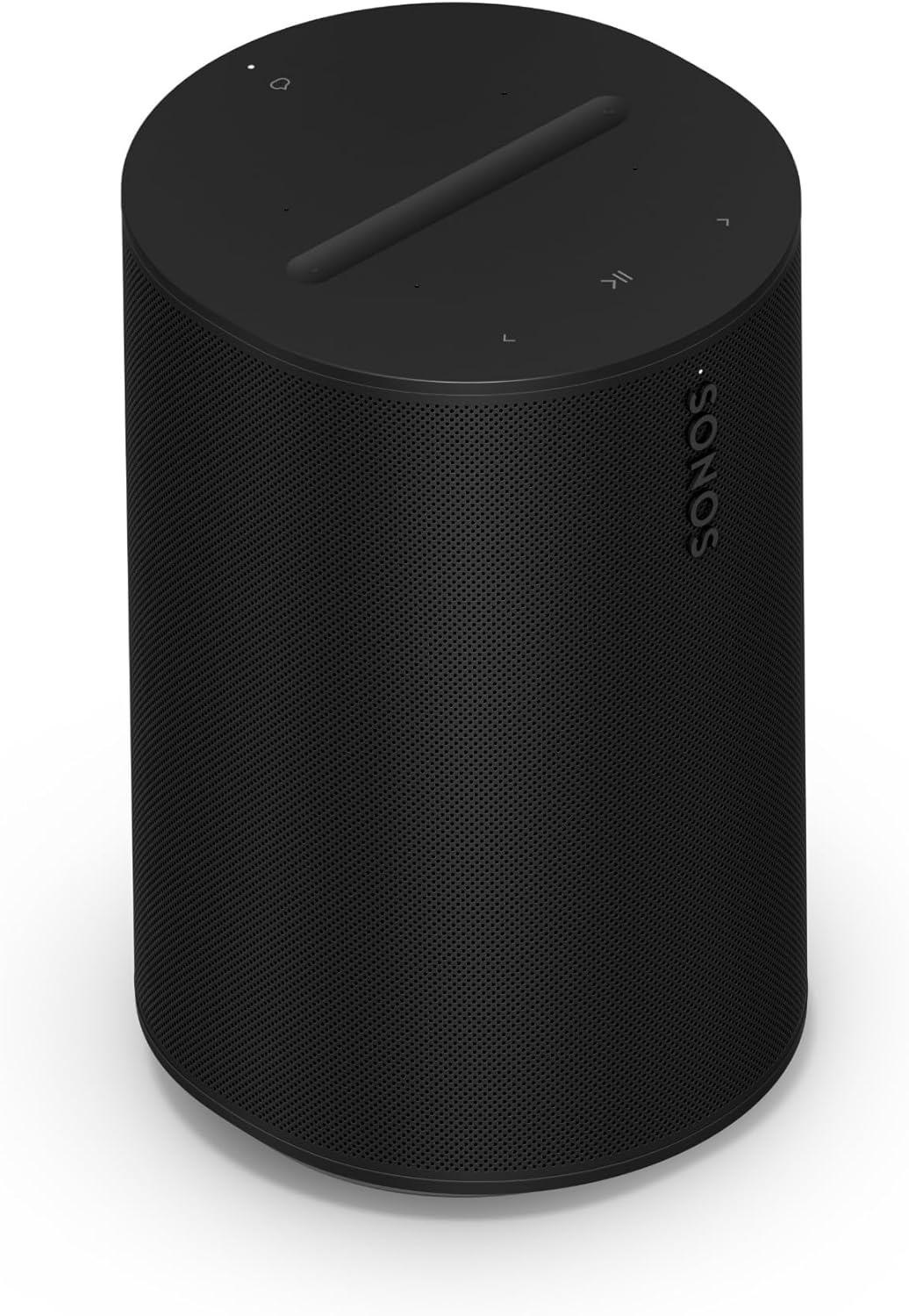
The Sonos Era 100 earns the highest SHE Speaker Privacy Score in this roundup at 8.8/10 — and it is the only device where the gap between it and second place is genuinely large. The foundation of that lead is Sonos Voice Control: 100% on-device processing where no audio or transcript is transmitted to the cloud. The Sonos tech blog confirms this explicitly. There is simply no audio data to misuse because none leaves the device in the first place.
Add a hardware mic kill switch — a physical toggle that breaks the microphone's electrical circuit — and you have a speaker where privacy protection operates at the hardware level, not the software level. Software privacy settings can be changed by the manufacturer without your knowledge. Hardware circuit breaks cannot be changed by a software update. The distinction matters if you take device privacy seriously.
The one notable concern in the Era 100's record is the 2024 Sonos privacy policy update that drew criticism from the audio community. Sonos has since clarified its data practices, and the core voice architecture — on-device processing, no transcript transmission — was not changed. Sonos collects app usage telemetry and device diagnostics, which is standard for connected hardware, but the voice command content itself stays local. The Era 100 also supports Alexa and Google Assistant integration if you want them — these do route to Amazon and Google servers respectively, so enabling third-party assistants changes the privacy calculus significantly.
For the full smart speaker comparison including audio quality and ecosystem integration, see our guide to the best smart speakers and displays in 2026. For a comparison of the Era 100's sound quality against the Echo and HomePod, our Sonos vs Echo vs HomePod sound quality guide covers that in depth.
"Sonos Voice Control's fully local processing is the most privacy-protective voice assistant implementation of any mainstream smart speaker. No audio reaches Sonos servers — not hotword detection, not queries, not transcripts. That's architecturally impossible to improve upon." — Sonos Tech Blog
What We Love
- 100% on-device Sonos Voice Control — no audio or transcript ever sent to the cloud
- Hardware mic kill switch — physical circuit disconnect, not software-mutable
- Ecosystem-neutral — AirPlay 2, Spotify Connect, Amazon Music, Tidal without ecosystem lock-in
- 8.8/10 SHE Privacy Score — highest in this roundup by a wide margin
What Could Be Better
- $219 is the highest hardware cost for the privacy-leader in this group — the HomePod mini gives similar privacy at $99 list
- Using Alexa or Google Assistant through Sonos routes to Amazon/Google clouds — the local privacy benefit only applies to Sonos Voice Control
- 2024 privacy policy update drew scrutiny — Sonos has clarified but the record is worth noting
The Verdict
The Sonos Era 100 is the most private smart speaker available at any price. If you want hardware-level voice privacy and best-in-class audio quality in the same device, it is the clear winner. The $219 price is steep compared to the HomePod mini at $99 list, which delivers similar privacy scores via a different architecture — but the hardware mute switch and 100% local processing are unique.
SHE Speaker Privacy Score
This is our proprietary metric for smart speaker privacy — no other site publishes this calculation. The SHE Speaker Privacy Score measures how well a device protects your voice data across the 7 factors that independent privacy researchers and regulators consistently identify as most consequential.
Formula: SHE Speaker Privacy Score = (On-Device Processing × 0.25) + (Data Deletion Ease × 0.15) + (Mute Hardware Quality × 0.15) + (Third-Party Data Sharing × 0.15) + (Human Review Opt-Out × 0.10) + (Transparency Report × 0.10) + (Regulatory Track Record × 0.10)
Factor definitions:
- On-Device Processing (25%): Percentage of voice commands processed locally without cloud transmission. 100% local = 10; ~70% local = 7; hotword-local only = 5; cloud-only = 2.
- Data Deletion Ease (15%): How straightforward it is to find, review, and delete collected data. Single-dashboard delete = 8–10; multi-step process = 5–7; difficult or obscured = 1–4.
- Mute Hardware Quality (15%): Physical circuit-break switch = 10; hardware button (verified) = 7; software-only disable = 3; no mute at all = 0.
- Third-Party Data Sharing (15%): Number of tracking destinations and ad ecosystem connectivity. No sharing = 10; limited, disclosed = 6–8; ad-connected = 3–5; broad and opaque = 1–2.
- Human Review Opt-Out (10%): Whether users can prevent human contractors from reviewing voice recordings. Clear opt-out = 8–10; opt-out exists but buried = 4–7; no opt-out = 1–3.
- Transparency Report (10%): Whether the company publishes regular transparency reports with government data request statistics. Annual report published = 8–10; partial disclosure = 4–7; no report = 1–3.
- Regulatory Track Record (10%): History of privacy enforcement actions and violations. Clean record = 10; minor settlements = 6–8; major fines or violations = 1–4.
| Speaker | On-Device | Deletion | Mute HW | 3P Sharing | Human Review | Transparency | Regulatory | SHE Privacy Score |
|---|---|---|---|---|---|---|---|---|
| Sonos Era 100 | 10.0 | 8.0 | 10.0 | 9.0 | 7.0 | 7.0 | 8.0 | 8.8 |
| Apple HomePod (2nd Gen) | 7.0 | 9.0 | 3.0 | 9.0 | 8.0 | 9.0 | 9.0 | 7.5 |
| Apple HomePod mini | 7.0 | 9.0 | 3.0 | 9.0 | 8.0 | 9.0 | 9.0 | 7.5 |
| Google Nest Audio | 5.0 | 7.0 | 7.0 | 5.0 | 6.0 | 8.0 | 6.0 | 6.1 |
| Amazon Echo (4th Gen) | 2.0 | 4.0 | 7.0 | 2.0 | 4.0 | 5.0 | 2.0 | 3.6 |
| Amazon Echo Dot (5th Gen) | 2.0 | 4.0 | 7.0 | 2.0 | 4.0 | 5.0 | 2.0 | 3.6 |
(SmartHomeExplorer editorial analysis — /methodology)
What this tells you: The gap between Sonos (8.8) and Amazon (3.6) is larger than the gap between Sonos and Apple (8.8 vs 7.5). The Amazon regulatory track record and cloud-only post-March-2025 architecture are the biggest point losses. Apple's only notable weakness is the missing hardware mute button. Google sits in a genuine middle ground — better than Amazon on data defaults, worse than Apple and Sonos on structural ad-ecosystem connectivity.
When NOT to Buy a Smart Speaker
- Sensitive conversations happen in that room. Medical, legal, or financial talk near an always-on mic makes the mute button non-negotiable — no software promise beats a room with no microphone in it.
- The Echo and Echo Dot, if privacy is a real concern. March 2025 removed local processing, 37 of 48 data points are collected, and the FTC enforcement record stands.
- Either HomePod, if a hardware mute switch matters. Neither has one; the Sonos Era 100 is the only pick here with a physical circuit break.
- Any cloud assistant, if your smart home runs local-first. It undercuts the Home Assistant or Matter control you built; our privacy and security guide covers local alternatives.
Frequently Asked Questions
Which smart speaker is the most private in 2026?
The Sonos Era 100 earns the highest SHE Speaker Privacy Score at 8.8/10. It is the only smart speaker where Sonos Voice Control processes requests 100% on-device — no audio, no transcript is transmitted to the cloud. It also includes a hardware mic kill switch that physically breaks the microphone circuit. The Apple HomePod mini at 7.5/10 is the best privacy option under $100 — same Apple privacy architecture as the full HomePod at a third the price.
Did Amazon really remove local voice processing from Echo devices?
Yes. In March 2025, Amazon eliminated the "Do Not Send Voice Recordings" option from all Echo devices. This option had allowed certain Alexa requests to be processed without sending audio to Amazon's servers. The change applies to all Echo hardware retroactively — devices already in homes lost local processing capability through a software update. Every Alexa voice request now goes to Amazon's cloud. This is the single most significant privacy regression in the smart speaker category in recent years, and it is the main reason Amazon Echo ranks last in our SHE Speaker Privacy Score.
Is Google Nest Audio more private than Amazon Echo?
Yes — significantly. The Google Nest Audio scores 6.1/10 versus the Echo's 3.6/10. The key advantages: Google does not save audio recordings by default (you must opt in explicitly), Google offers an 18-month auto-delete setting, and Google's regulatory track record is cleaner than Amazon's in the smart speaker category specifically. The Nest Audio still connects your voice activity to Google's ad ecosystem via text transcripts — which is the main reason it scores below Apple and Sonos. But the practical privacy in default settings is considerably better than Amazon's.
What does "hardware mute" actually mean, and why does it matter?
A hardware mute button physically breaks the electrical circuit connecting the microphone to the device's processor. When the circuit is broken, the microphone cannot capture audio regardless of software state — a firmware update cannot re-enable it. A software mute, by contrast, is an instruction to the device's software to ignore microphone input. Software instructions can be overridden by software updates, bugs, or in theory by a sufficiently determined actor. The Sonos Era 100 and Google Nest Audio have hardware circuit-break mutes. The Amazon Echo and Echo Dot have physical buttons that Amazon describes as hardware disconnects. The Apple HomePod and HomePod mini have software-only "Hey Siri" disable — no physical button at all.
Can I trust any smart speaker in a room where sensitive conversations happen?
The honest answer is: only if you use the mute button consistently and trust the company's privacy architecture. No connected device with an always-on microphone is completely private during the listening state. The Sonos Era 100 and Google Nest Audio have hardware circuit-break mutes that physically prevent audio capture when engaged. For rooms with genuinely sensitive conversations — a home office, a bedroom, a children's playroom — the best practice is to keep the hardware mute engaged by default and only release it when you are actively using voice commands. Our smart home privacy and security guide covers this in more detail.
Does the Apple HomePod mini work with Android phones?
No — HomePod mini setup and primary controls require an iPhone running iOS 14 or later. You cannot complete initial setup without an iPhone nearby. On Android, the HomePod mini is effectively unusable as a smart speaker. If you are Android-primary, the Google Nest Audio is the best privacy-forward option at $99, and our Alexa Plus vs Google Home guide covers how Google's assistant compares to Alexa for Android households.
The Bottom Line
Privacy here is really two questions: how much your voice leaves the room, and whether you can physically stop it. The scores answer the first — Sonos 8.8, both Apple HomePods 7.5, Google 6.1, Amazon 3.6 — and which of the two you care about decides your pick. If you want voice that never leaves the house, only the Sonos Era 100 processes requests fully on-device. If you are already on an iPhone, either HomePod buys you Apple's architecture and asks you to accept a software-only mute. If you are Android-primary, the Nest Audio is the most honest thing Google sells: audio not saved by default, a hardware mute, and 18-month auto-delete. And if you have Echo hardware you are not about to replace, the mute button is now the entire privacy strategy — use it.
Get the Sonos Era 100 if privacy is your top priority and you want the only mainstream smart speaker with 100% on-device voice processing and a hardware mic kill switch — also happens to be the best-sounding speaker in this guide at $219.
Get the Apple HomePod mini if you are in the Apple ecosystem and want strong privacy at $99 list — same architecture as the $299 HomePod 2nd Gen, plus free HomeKit hub, for a third of the list price.
Get the Apple HomePod (2nd Gen) if you want the best audio quality plus Apple's privacy architecture in one device and are willing to pay $299 — the HomePod 2nd Gen's room-filling sound is a genuine step up from the mini.
Get the Google Nest Audio if you are Android-primary or in the Google ecosystem and want a reasonable privacy posture — audio not saved by default, hardware mute, and 18-month auto-delete make this the most honest option at $99 for Google households.
Skip the Amazon Echo (4th Gen) if privacy matters to you — the March 2025 removal of local processing, 37/48 data points collected, and FTC enforcement history make this the weakest privacy performer in this roundup by a significant margin.
Skip the Amazon Echo Dot (5th Gen) if you are buying it specifically because it is cheaper and hoping the smaller size means less data collection — it does not. The privacy architecture is identical to the full Echo.
For the complete picture on which smart speakers deliver the best combination of privacy, audio quality, and smart home integration, our best smart speakers and displays guide covers all the factors together.
Sources & Methodology
This guide aggregates privacy assessments and data collection documentation from the following sources:
- Mozilla Privacy Not Included — independent product privacy assessments; HomePod models rated "Best Of," Amazon Echo rated "nightmare"
- Consumer Reports — false activation testing; Echo tracking destination analysis (13 destinations); smart speaker privacy comparison
- Federal Trade Commission (FTC) — enforcement actions: $25M Amazon fine (COPPA children's recordings), $5.8M Ring settlement (employee surveillance)
- Wirecutter (NY Times) — 2026 smart speaker privacy rankings; "Apple is the most privacy-friendly platform" assessment
- Sonos Tech Blog — Sonos Voice Control architecture: "no audio or transcript sent to cloud" confirmation
- Amazon Help & Customer Service — March 2025 policy change documentation: removal of "Do Not Send Voice Recordings" option
- Google Privacy Policy and Activity Controls — default audio storage settings, 18-month auto-delete documentation
- Apple Privacy Overview — Siri on-device processing percentage, anonymous random ID architecture documentation
- Electronic Frontier Foundation (EFF) — smart speaker surveillance risk assessments
- International Association of Privacy Professionals (IAPP) — smart speaker data collection framework
The SHE Speaker Privacy Score is our proprietary weighted metric — formula and factor weights defined above. All regulatory citations link to publicly available FTC enforcement documents. Prices verified on Amazon as of April 2026. SmartHomeExplorer did not receive review units from any manufacturer for this guide.
About the author: Nicholas Miles is the founder of SmartHomeExplorer.com, where he aggregates expert testing data to help people buy the right smart home devices without reading 14 separate reviews. He lives in a home with an Amazon Echo (currently muted), an Apple HomePod mini, and a Sonos Era 100 — which tells you something about how this research went.
SmartHomeExplorer.com earns affiliate commissions from qualifying purchases through Amazon Associates (tag: nsh069-20). This does not affect our rankings or recommendations — products are ranked by aggregated expert consensus and our proprietary SHE scoring methodology. We only recommend products we would buy with our own money.