

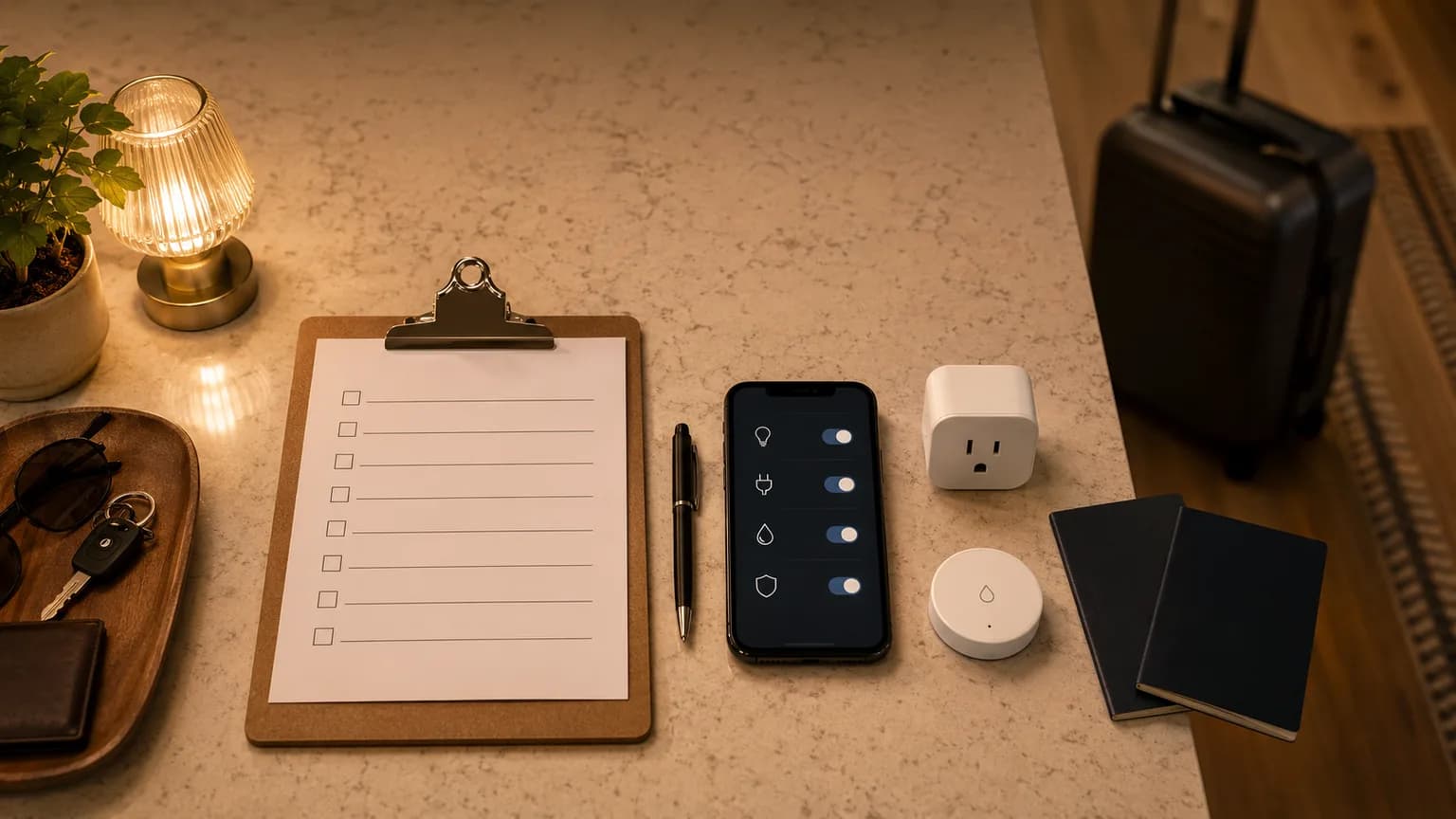
The Smart Home Vacation Prep Checklist (2026)
Two weeks between Tokyo and Seoul with two kids taught us that departure failures are procedural: the untested alert, the schedule nobody watched run, the valve nobody armed. This is the 72-hour countdown we now run before every trip — test, automate, arm, walk out calm.
This article contains affiliate links. We may earn a commission at no extra cost to you. Prices change frequently — check the current price on Amazon before buying. Learn more
The Short Answer
Before vacation: verify every camera notification tier 72 hours out, build away automations and evening presence schedules 48 hours out, arm water and temperature failsafes 24 hours out, then confirm locks during a final walkthrough. Our SHE Away-Mode Automation Score ranks the four-device control layer.
Featured in this Guide

Aqara
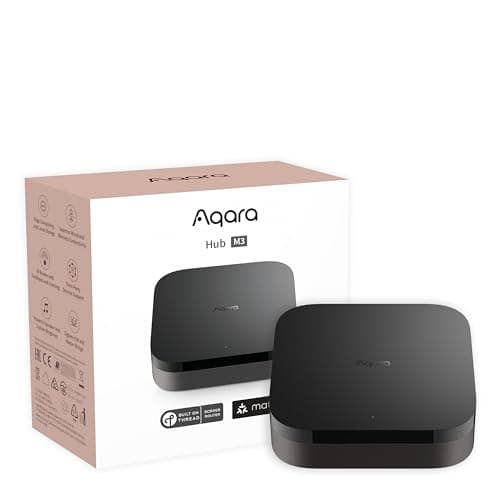
Hub M3
- •Bridges Alexa, Google Home, HomeKit, and Home Assistant from one hub — the guide's top composite at 8.2
Amazon
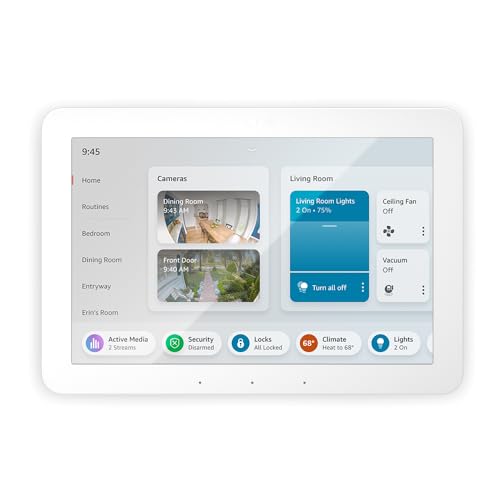
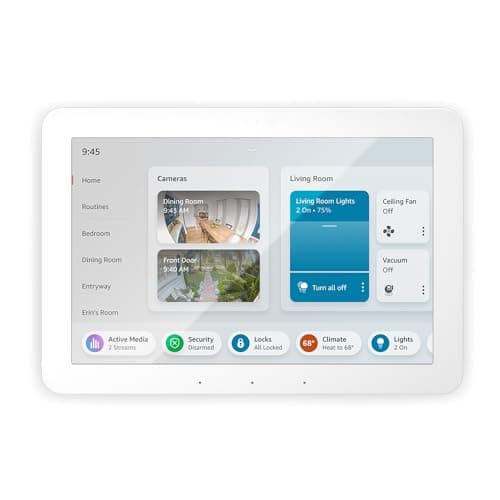
Echo Hub
- •An 8-inch Alexa panel at $179.99 list that puts every feed and alert tier on one screen for the pre-trip test pass
TP-Link
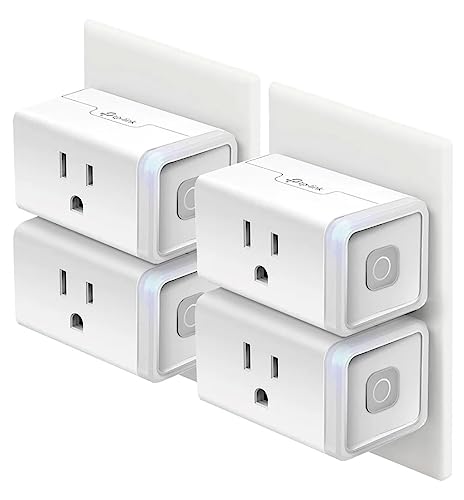
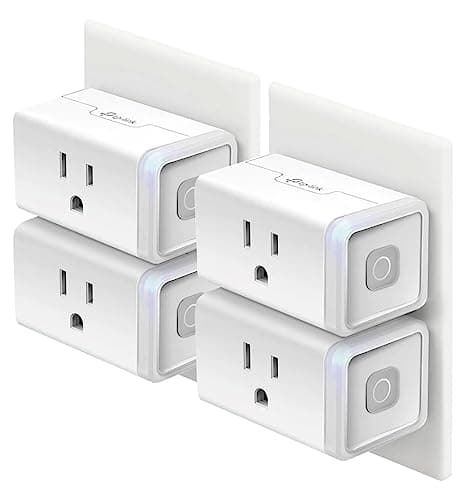
Kasa Smart Plug 4-pack (HS103P4)
- •Four Wi-Fi plugs running evening lamp schedules that keep firing whether or not you ever open the app
Moen
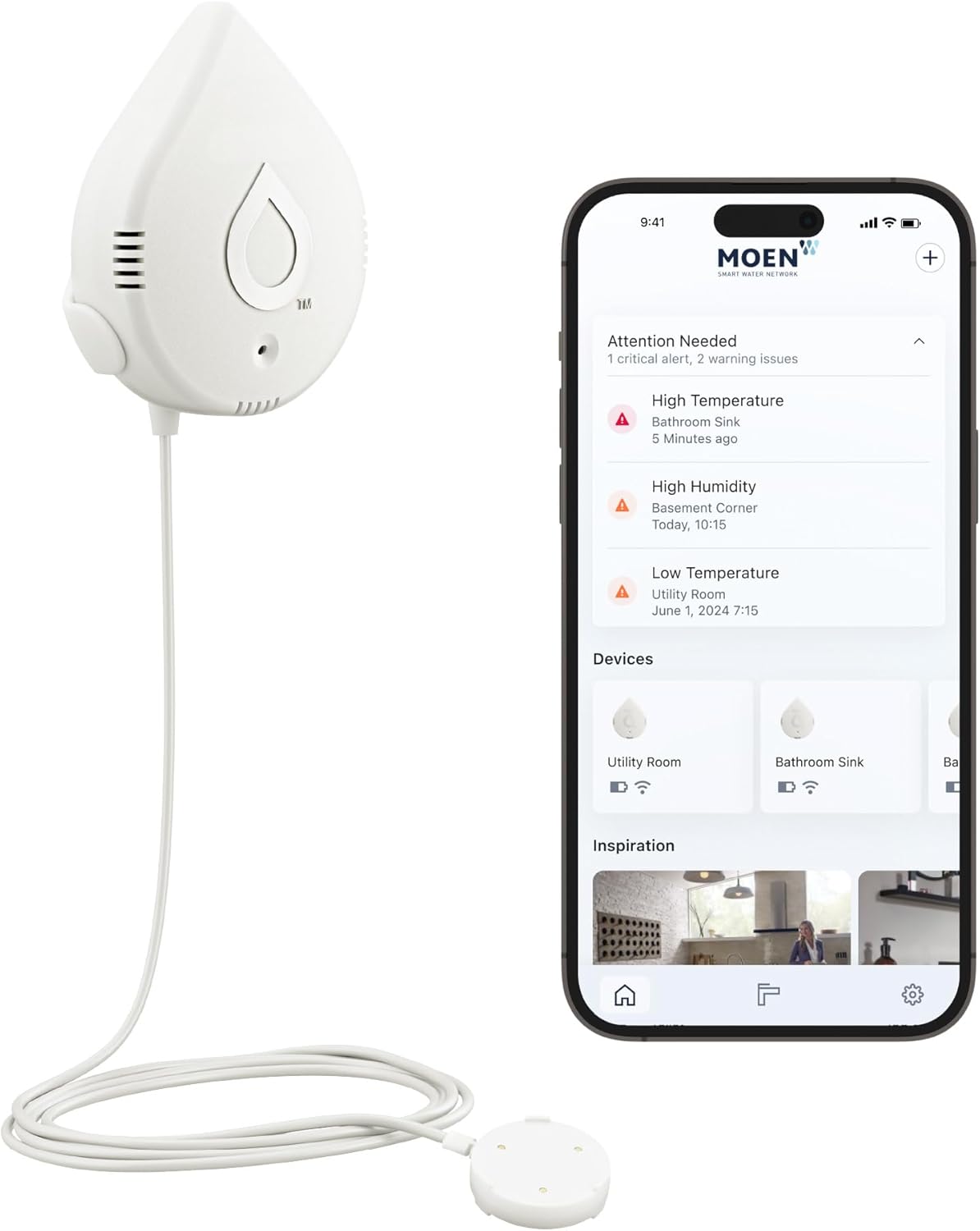
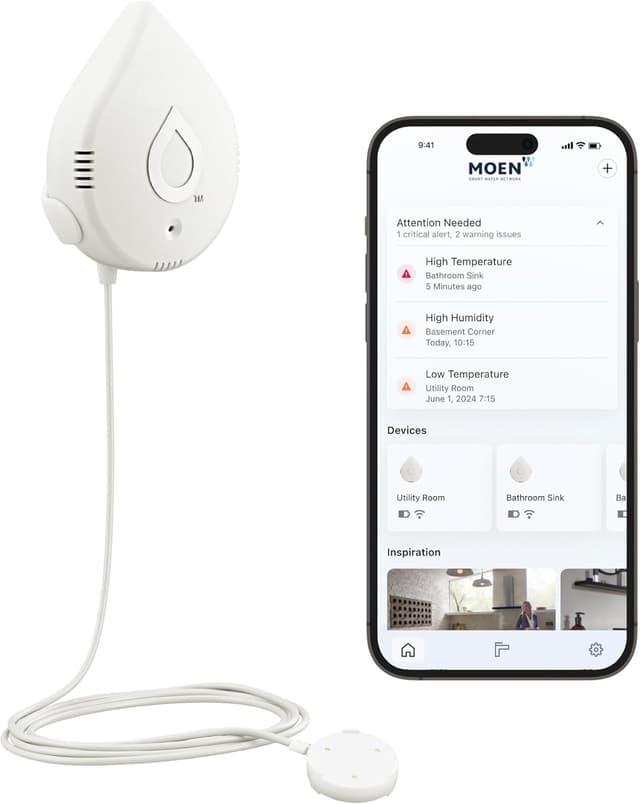
Flo Smart Water Leak Detector
- •$54.99 list to watch the water heater, with leak, humidity, and temperature alerts on a 3-year sealed battery
T-72 Hours: Compare the Control Layer
Security
Chart
 Smarthomeexplorer.com
Tap any pick to check its live price on Amazon.
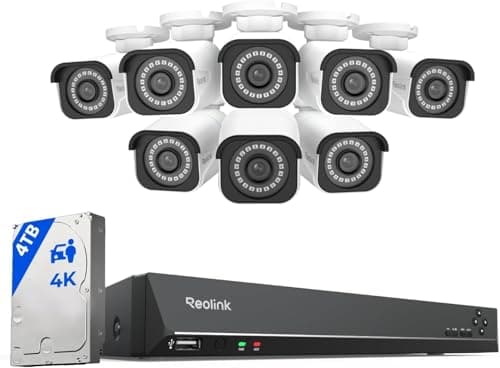
Reolink RLK16-800B8 4K 16-Channel PoE NVR System (8-Camera)
RecommendedCheck price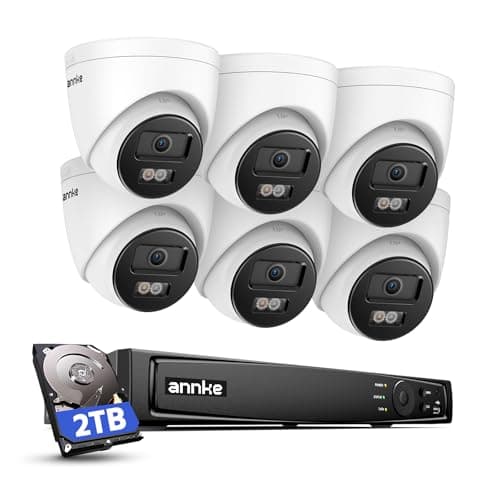
ANNKE 4K PoE NVR Security Camera System (6-Camera)
RecommendedCheck price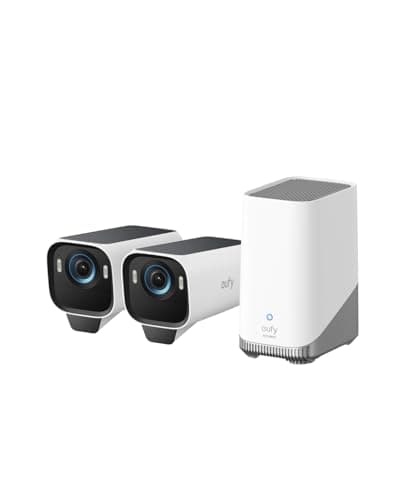
eufyCam S3 Pro 2-Cam Kit (Solar, 4K)
Must BuyCheck price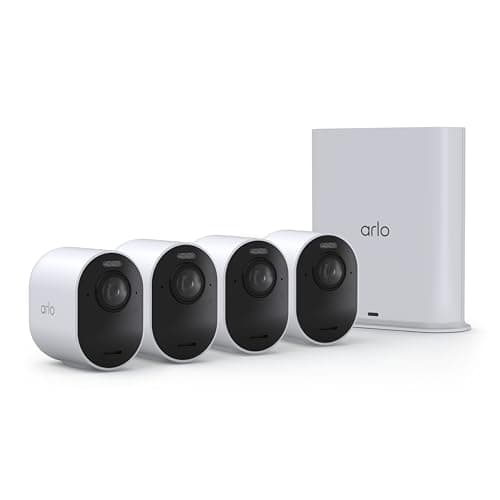
Arlo Ultra 4K HDR Security Camera (3rd Gen) 4-Cam Kit
$499.99RecommendedCheck price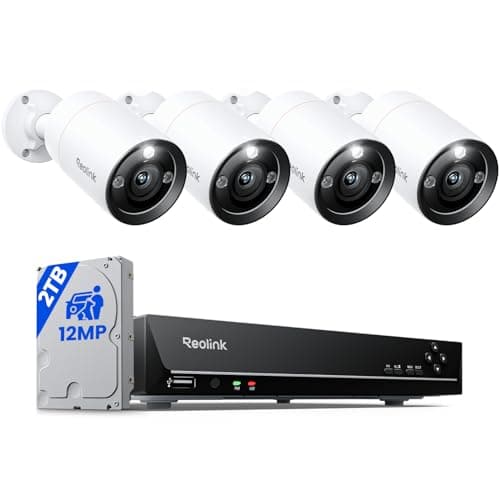
Reolink RLK8-1200B4-A 12MP 8-Channel PoE NVR System (4-Camera)
$729.99RecommendedCheck price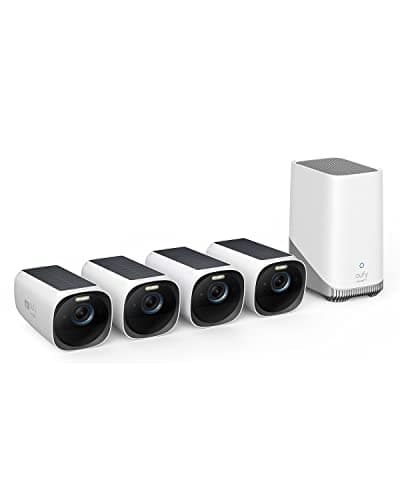
Eufy eufyCam S330 4-Cam Kit (with HomeBase S380)
$499.99Must BuyCheck price
The 72-Hour Countdown
The gear that secures an empty house lives in our How to Secure Your Smart Home While Traveling (2026) roundup — this page is the other half: what you configure and double-check in the final 72 hours. The same two-week family trip between Tokyo and Seoul that produced our The Japanese-Hotel Smart Home Setup (2026) guide convinced us departure failures are procedural, not hardware. In this guide we score the four-device away-mode control layer on the SHE Away-Mode Automation Score, a weighted composite of scheduling depth, remote override, failure alerting, and integration breadth. The Verge, Tom's Guide, PCWorld, Pocket-lint, HomeKit News, and WIRED anchor the outlet coverage, scoped per product. As of July 2026, the Aqara Hub M3 tops the calculation at 8.2 — the hub that bridges every ecosystem is the one that can automate all of them in your absence.
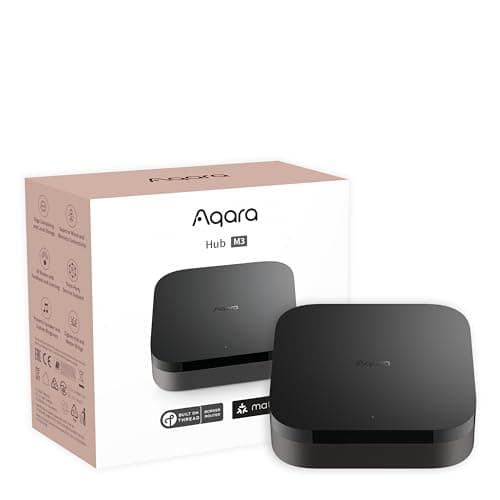
Away-Mode Command Center: Aqara Hub M3
T-48h — the away-mode command centerAqara Hub M3
- Bridges four major ecosystems from a single hub
- Cross-ecosystem scenes still lean on a cloud round-trip
(Current price, subject to change)
The Aqara Hub M3 earns 8.2 on the weighted SHE Away-Mode Automation Score, the top composite in this guide, because its 9.5 integration-breadth factor means one hub reaches every ecosystem you would otherwise check separately from a hotel. Pocket-lint and HomeKit News both cover the M3 in their multi-protocol hub coverage, and the capability a traveler feels is consolidation: Zigbee 3.0, Thread, Bluetooth, and an IR blaster on one device, with typical Matter pairing landing in about 30 mins. Matter and Zigbee scenes execute on the hub itself, while cross-ecosystem scenes still lean on a cloud round-trip — the honest asterisk on its 8.0 scheduling-depth factor. Versus the Amazon Echo Hub, which delivers a wall panel for one assistant, the M3 produces a single automation surface for Alexa, Google Home, Apple HomeKit, and Home Assistant, which is what enables a coherent away mode: entry sensors, lighting scenes, and camera alert tiers coordinated in one configuration. The high-AOV anchors that configuration supervises — the NVR kit, the lock, the shutoff — live on How to Secure Your Smart Home While Traveling (2026).
What We Love
- Bridges four major ecosystems from a single hub
- Matter and Zigbee scenes execute on the hub itself
- Typical Matter pairing lands in about 30 mins
- IR blaster folds legacy living-room gear into scenes
What Could Be Better
- Cross-ecosystem scenes still lean on a cloud round-trip
- Early Matter compatibility had teething issues per HomeKit News
- No Z-Wave radio for legacy sensor networks
The Verdict
If your away routine spans Alexa lamps, a HomeKit lock, and Google Home displays, the Aqara Hub M3 fits the brief — it bridges all of them from one hub and tops this guide at 8.2 on the SHE Away-Mode Automation Score. Start Matter pairing before the final week so testing is finished ahead of departure.
Ready to upgrade your home?
MOVA P10 Pro Ultra Robot Vacuum and Mop
See it on Amazon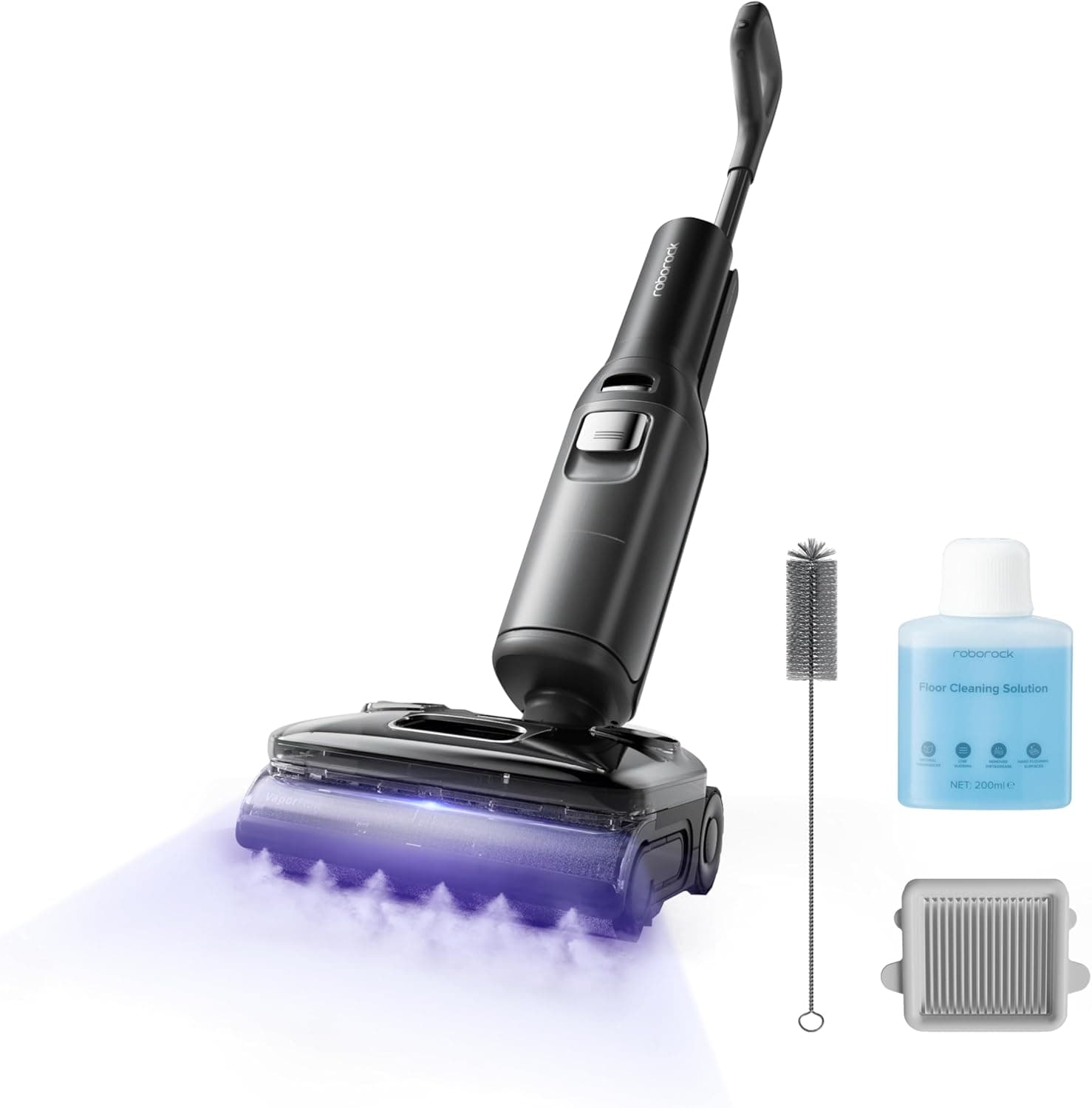
roborock F25 Ultra Steam Wet Dry Vacuum Mop
See it on Amazon
Philips Wi-Fi Keypad Deadbolt with Handle
See it on Amazon
Sponsored listings from Amazon’s Sponsored Products for Creators program, kept apart from our reviews and rankings. How we make money
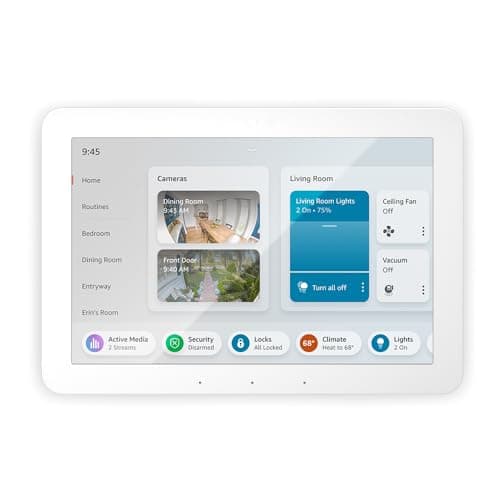
Test-Everything Wall Panel: Amazon Echo Hub
T-72h — the test-everything wall panelAmazon Echo Hub
- One panel shows every feed and alert tier at a glance
- Alexa-only — HomeKit and Google devices stay out of reach
(Current price, subject to change)
The Amazon Echo Hub earns 7.8 on the weighted SHE Away-Mode Automation Score, and its 8.5 scheduling-depth factor reflects what Alexa Routines deliver from one wall-mounted 8-inch panel: time, presence, and device triggers composed in a single interface. The Verge, Tom's Guide, and PCWorld all cover the Echo Hub as a smart-home controller, and The Verge's coverage characterizes it plainly as an Alexa-only device — the reason its integration-breadth factor sits at 7.0 relative to the M3's 9.5 despite Zigbee, Thread, and Matter radios onboard. For the test pass that starts 72 hours out, the panel is the point: every camera feed and every alert tier on one screen at $179.99, so a misconfigured notification surfaces while you can still fix it. The Alexa app reaches the same devices and Routines from the road, which yields the remote-override depth an away mode requires when a flight changes. If the cameras themselves deserve the upgrade first, our Best PoE NVR Security Camera Systems 2026 roundup covers the continuous-recording tier this panel would supervise.
What We Love
- One panel shows every feed and alert tier at a glance
- Wall-mounts by the door for the final walkthrough
- Zigbee, Thread, and Matter radios reduce bridge clutter
- The Alexa app reaches the same devices and Routines from the road
What Could Be Better
- Alexa-only — HomeKit and Google devices stay out of reach
- Cloud-dependent — Routines and remote checks fail during an internet outage
- Wall mounting is a small project of its own
- Deepest value assumes a largely Amazon device roster
The Verdict
For a household that already runs on Alexa end to end, you'll be well-served here: the Amazon Echo Hub puts every feed, routine, and alert tier on one wall panel at $179.99 list, turning the pre-departure test pass into a single walkthrough instead of an app scavenger hunt.
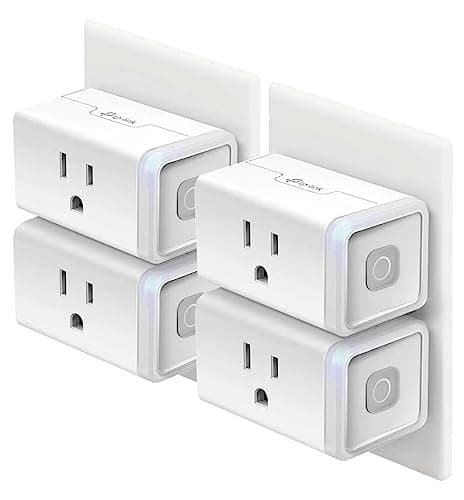
Presence Simulation Layer: Kasa Smart Plug 4-pack (HS103P4)
T-48h — presence simulation on schedulesKasa Smart Plug 4-pack (HS103P4)
- Schedules keep firing with the app closed
- No HomeKit on the base HS103 SKU — that requires the newer EP25
(Current price, subject to change)
The Kasa Smart Plug 4-pack (HS103P4) earns 7.0 on the weighted SHE Away-Mode Automation Score, a composite that credits an 8.0 scheduling-depth factor while penalizing alerting a plug simply does not attempt. The presence-simulation calculation is straightforward: four plugs, four lamps, evening schedules of roughly 2 hours each that keep firing with the app closed, no hub required because each plug joins Wi-Fi directly. Configuration belongs in the 48-hour window — build the schedules, watch one complete evening cycle execute, and confirm the lamps you chose read convincingly from the street. Compared to the hubs in this guide, the plugs are deliberately simple: Alexa and Google Home are supported out of the box, HomeKit requires the newer EP25 SKU, and the 5.5 failure-alerting factor is the honest cost of that simplicity. Simulation discourages the opportunist; documentation is a different job entirely, and the recording layer on our How to Secure Your Smart Home While Traveling (2026) page — the NVR and doorstep cameras — is what actually produces evidence when deterrence fails.
What We Love
- Schedules keep firing with the app closed
- Wi-Fi direct — nothing else to install or maintain
- Four plugs cover four rooms of presence lighting
- Setup to verified schedules inside one evening
What Could Be Better
- No HomeKit on the base HS103 SKU — that requires the newer EP25
- No alerting beyond device-offline notifications
The Verdict
When the goal is a lived-in look without rewiring anything, the Kasa Smart Plug 4-pack (HS103P4) is the path of least friction: four plugs on four lamps, evening schedules configured once, and nothing further to maintain while you travel.
Water Failsafe Sentinel: Moen Flo Smart Water Leak Detector
T-24h — the water failsafe sentinelMoen Flo Smart Water Leak Detector
- Watches leaks, humidity, and temperature extremes in one sensor
- Alert-only on its own — closing the valve requires the Flo shutoff
(Current price, subject to change)
The Moen Flo Smart Water Leak Detector earns 6.1 on the weighted SHE Away-Mode Automation Score, and the shape of that composite is the point: a 4.0 scheduling-depth factor because a sentinel runs no scenes, versus a 9.0 failure-alerting factor that leads this guide. WIRED covers the detector in its leak-sensor coverage, and the specification set matches the failsafe job you arm 24 hours before departure — leak, excess-humidity, and temperature-extreme alerts from a 3-year sealed battery, placed under the water heater or behind the washing machine with no plumbing work. Paired with the Moen Flo shutoff, its detection can close the main supply valve automatically, which converts an alert you might miss in another time zone into an action that already happened. That shutoff anchor — the device our travel-security page ranks first — lives on How to Secure Your Smart Home While Traveling (2026); at about $55 this sensor is the failsafe layer's entry point, and nothing else in this guide produces comparable disaster coverage per dollar.
What We Love
- Watches leaks, humidity, and temperature extremes in one sensor
- 3-year sealed battery outlasts many trip cycles
- Detection can trigger the paired Flo shutoff to close the main
- Battery-powered, tool-free placement — no plumbing work
What Could Be Better
- Alert-only on its own — closing the valve requires the Flo shutoff
- Single-spot coverage; multiple risk zones need multiple sensors
The Verdict
If the water heater sits out of sight and usually out of mind, no need to overthink it — the Moen Flo Smart Water Leak Detector stands watch for $54.99 list, and when paired it escalates to the Moen Flo shutoff anchor ranked first on our travel-security page.
How We Score: SHE Away-Mode Automation Score
SHE Away-Mode Automation Score
Score Formula
0.30 * scheduling_depth + 0.25 * remote_override + 0.25 * failure_alerting + 0.20 * integration_breadthScore Factors
- Scheduling Depth (30%)How much of the away routine the device executes on schedules and triggers without anyone opening an app. Routine engines composing time, presence, and device triggers score highest; self-firing lamp schedules score high; a sensor that runs no scenes scores low. Weighted heaviest because unattended execution is the entire premise of an away mode. Derived from manufacturer app and automation features, not a SHE lab measurement.
- Remote Override (25%)How completely the traveler can check, change, or cancel the configuration from the road. App access to every device and Routine the panel manages scores highest; hub-wide automation editing scores nearly as high; simple remote toggling scores mid; an alert-only sensor scores low. Derived from manufacturer app capability descriptions.
- Failure Alerting (25%)How reliably the device reports that something needs attention — and whether it can act. Leak, humidity, and temperature alerting that can trigger an automatic shutoff scores highest; hub-routed sensor notifications score mid-high; device-offline notifications alone score low. Derived from manufacturer alerting features.
- Integration Breadth (20%)How many ecosystems the device can fold into one away-mode configuration. Bridging Alexa, Google Home, HomeKit, and Home Assistant scores highest; single-assistant reach with multi-protocol radios scores mid; a proprietary single-app device scores lower on reach alone, though a paired-device link like the Flo shutoff lifts it to the mid band. Weighted lightest because breadth multiplies the other factors rather than replacing them. Derived from manufacturer compatibility listings.
SHE Away-Mode Automation Score — Ranked
Aqara Hub M3
SHE Away-Mode Automation Score8.2/10Bridges four ecosystems and keeps Matter and Zigbee scenes executing on the hub — the widest away-mode reach here
Amazon Echo Hub
SHE Away-Mode Automation Score7.8/10$179.99 — one wall panel to test every feed and alert tier before departure, with deep Alexa Routine scheduling
Kasa Smart Plug 4-pack (HS103P4)
SHE Away-Mode Automation Score7.0/10Evening presence schedules that fire on their own; alerting is minimal, so pair the plugs with the camera layer
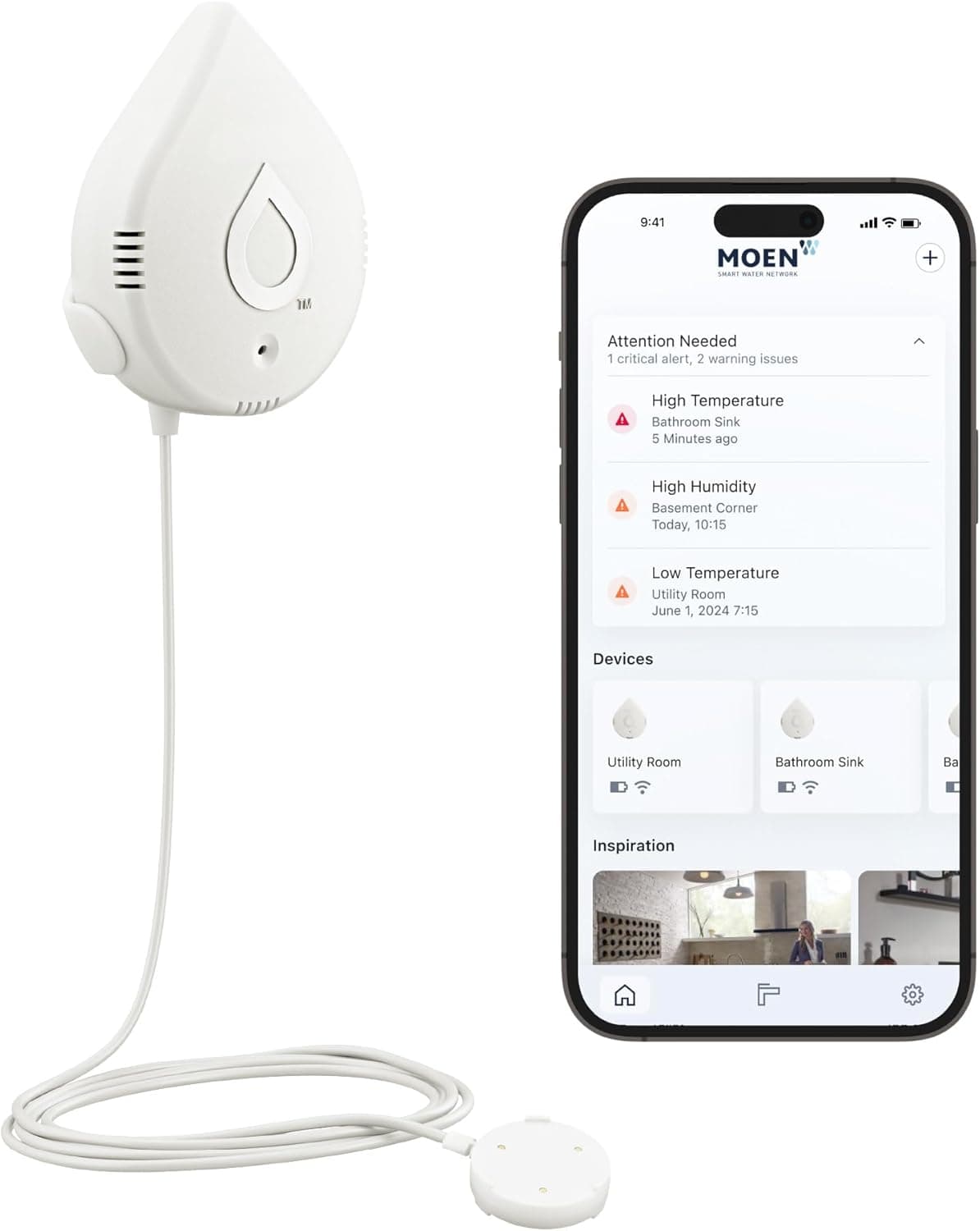
Moen Flo Smart Water Leak Detector
SHE Away-Mode Automation Score6.1/10About $55 — a failure-alerting specialist that watches water, humidity, and temperature rather than running scenes
SHE Away-Mode Automation Score
Composite of scheduling depth, remote override, failure alerting, and integration breadth (0-10).
SHE editorial composite from manufacturer specs + registered-outlet coverage, July 2026
T-24 Hours: Failsafes and Away Setpoints
The final day is for the systems that act without you. Water first: a detector under each high-risk appliance is the entry point, but the device that closes the main line by itself — the Moen Flo shutoff, ranked first on How to Secure Your Smart Home While Traveling (2026) — is the anchor worth funding before any gadget on this page. Cold-season travelers should extend that layer with the pipe-temperature sensors in our Best Freeze & Pipe-Protection Sensors: Vacation Homes 2026 guide, because a frozen line fails silently until it fails catastrophically. Then the thermostat: switch to away setpoints rather than powering HVAC down entirely, and schedule recovery for a few hours before you land — our Best Smart Thermostats for Vacation Homes 2026 picks manage those setpoints automatically, with remote override for the trip that runs 1 hour or three days long. Verify each failsafe fires a test alert to your phone before the suitcases reach the car; an unarmed failsafe protects nothing.
| Product | No Required Subscription | Works Without Extra Hub | Remote Control via App | Battery Powered | Executes Schedules Itself |
|---|---|---|---|---|---|
| Aqara Hub M3 | ✓ | ✓ | ✓ | ✕ | ✓ |
| Amazon Echo Hub | ✓ | ✓ | ✓ | ✕ | ✓ |
| Kasa Smart Plug 4-pack (HS103P4) | ✓ | ✓ | ✓ | ✕ | ✓ |
| Moen Flo Smart Water Leak Detector | ✓ | ✓ | ✕ | ✓ | ✕ |
Day-Of, and While You're Away
Day-of is deliberately short: confirm every door locked in the app during the final walkthrough, verify remote access from a phone that is off the home Wi-Fi, and hand out access the revocable way — the Schlage Encode Plus on How to Secure Your Smart Home While Traveling (2026) issues per-person codes you delete the day you return, which outperforms a key under the mat in every dimension that matters. Two inexpensive additions sharpen the while-away picture: the Aqara Door and Window Sensor (3-Pack) three-pack ($49.99) turns any entry into a specific notification on a roughly 2-year coin cell — it does require a Zigbee hub such as the M3 — and the Kasa Smart Color Bulb extends presence simulation to interior scenes a plugged lamp cannot reach. While you are away, discipline beats volume: action alerts loud, awareness alerts silent, everything else suppressed. And since the departure is also a trip, the Best Smart Tracker Wallets (AirTag & Find My) 2026 guide covers the luggage side, while our sister site's beginner's guide to travel points covers paying for the flights.
When NOT to Buy
Skip the hub tier if a housemate or trusted neighbor will genuinely be inside daily — human presence outperforms simulation, and the failsafe layer plus notification triage covers the remainder. Renters and short-weekend travelers can run the abbreviated version: leak detector placed, lamps scheduled, alerts tiered, locks confirmed. The 72-hour structure still applies; it simply compresses, because the discipline of testing before departure matters more than the amount of equipment being tested.
Who Should Buy What
Who Should Buy What
| If you are… | Recommended pick |
|---|---|
Multi-ecosystem households Your devices span Alexa, Google, and HomeKit, and you want one hub coordinating the entire away configuration instead of three apps at the gate | Aqara Hub M3 |
All-Alexa households Everything already answers to Alexa, and a wall panel by the door would make the pre-departure test pass a five-minute walkthrough | Amazon Echo Hub |
First-time preppers You want the cheapest credible away layer tonight — four lamps on evening schedules, verified from the street before you leave | Kasa Smart Plug 4-pack (HS103P4) |
Water-anxious travelers A water heater or washer sits where a slow leak would run unseen for days, and you want it watched on a sealed 3-year battery | Moen Flo Smart Water Leak Detector |
Frequently Asked Questions
What should I do to my smart home before leaving on vacation?
Work backward from departure. 72 hours out: test every camera feed and prune notification tiers so only person, package, leak, lock, and entry alerts remain loud. 48 hours out: build the away automations — evening presence schedules on smart plugs and lighting scenes — and watch one full cycle run. 24 hours out: arm the water failsafes and set the thermostat's away setpoints. Day-of: confirm every door locked in the app during a final walkthrough, and verify remote access from a phone off the home Wi-Fi.
How far in advance should I set up my smart home's vacation mode?
Start 72 hours before departure. The interval is not arbitrary: automations need at least one complete evening cycle to prove themselves, notification changes need a day of normal living to confirm nothing important was muted, and hardware surprises — a hub that needs re-pairing, a plug that dropped off Wi-Fi — need time to resolve while stores are still an option. Same-day configuration produces automations nobody ever watched run, which is how a presence schedule silently fails on its first real evening.
Which camera notifications should stay on while I travel?
Tier them. Action alerts — person detection, package detection, leak, lock, and entry-sensor events — stay on with sound. Awareness alerts, such as generic motion, drop to silent delivery you review in batches. Everything else gets suppressed for the trip. A traveler who receives every motion ping learns to swipe them away within 2 days, which defeats the entire alert layer; tiering is what keeps the one notification that matters loud.
How should I schedule lights so the house looks occupied?
Mimic your household's real pattern rather than a repeating on-off loop: front-room lamps for the evening block, a bedroom lamp slightly later, weekend timing that differs from weekdays. Smart plugs handle lamps; smart bulbs extend the effect to interior scenes a plugged lamp cannot reach. Verify the look once from the street before you leave, then let the schedules run the whole trip — consistency from night one matters more than theatrical variation.
Should I shut off the water before leaving on vacation?
A manual main shutoff is free and effective, but it disables irrigation, ice makers, and a house sitter's normal use. The layered alternative: a leak detector under each high-risk appliance, paired with an automatic shutoff valve on the main line — the Moen Flo shutoff our travel-security roundup ranks first — so the system closes the main only when detection demands it. Travelers in freeze-prone regions should add pipe-temperature sensing; our vacation-home freeze-protection guide covers that layer.
What should the thermostat do while I'm away?
Use away or vacation setpoints rather than powering HVAC off entirely: conditioned air protects pipes in winter and protects electronics, finishes, and humidity-sensitive materials in summer. Schedule comfort recovery for a few hours before you land instead of running the return day at full comfort. Our smart-thermostats-for-vacation-homes guide scores the models that manage this automatically, including remote override for when a return date moves.
What is the SHE Away-Mode Automation Score?
It is SmartHomeExplorer's proprietary composite for the pre-departure control layer, weighting scheduling depth (30%), remote override (25%), failure alerting (25%), and integration breadth (20%) on a 0-10 scale. It exists because vacation prep is an automation problem more than a hardware problem — a hub, a control panel, smart plugs, and a leak sentinel each contribute differently to a house that runs itself. The Aqara Hub M3 tops this guide at 8.2; full factor definitions are on our methodology page.
Bottom Line
Get the Aqara Hub M3 if your devices span multiple ecosystems and one hub should run the whole away configuration.
Get the Amazon Echo Hub if the house runs on Alexa and a wall panel would make the pre-trip test pass a single walkthrough.
Get the Kasa Smart Plug 4-pack (HS103P4) if you want a credible presence layer configured and verified inside one evening.
Get the Moen Flo Smart Water Leak Detector if a water heater or washer sits where a slow leak would run unseen while you travel.
This page is the checklist; the heavy protection lives one level up. If the budget covers one anchor, fund the Moen Flo shutoff or the Reolink NVR kit on How to Secure Your Smart Home While Traveling (2026) before any device here — then run this 72-hour countdown with whatever layer you own. The countdown costs nothing, and an untested smart home protects exactly as much as an empty one.
Sources & Methodology
Methodology: SHE Away-Mode Automation Score — Formula: 0.30 * scheduling_depth + 0.25 * remote_override + 0.25 * failure_alerting + 0.20 * integration_breadth. Factors: Scheduling Depth (30%): How much of the away routine the device executes on schedules and triggers without anyone opening an app. Routine engines composing time, presence, and device triggers score highest; self-firing lamp schedules score high; a sensor that runs no scenes scores low. Weighted heaviest because unattended execution is the entire premise of an away mode. Derived from manufacturer app and automation features, not a SHE lab measurement. | Remote Override (25%): How completely the traveler can check, change, or cancel the configuration from the road. App access to every device and Routine the panel manages scores highest; hub-wide automation editing scores nearly as high; simple remote toggling scores mid; an alert-only sensor scores low. Derived from manufacturer app capability descriptions. | Failure Alerting (25%): How reliably the device reports that something needs attention — and whether it can act. Leak, humidity, and temperature alerting that can trigger an automatic shutoff scores highest; hub-routed sensor notifications score mid-high; device-offline notifications alone score low. Derived from manufacturer alerting features. | Integration Breadth (20%): How many ecosystems the device can fold into one away-mode configuration. Bridging Alexa, Google Home, HomeKit, and Home Assistant scores highest; single-assistant reach with multi-protocol radios scores mid; a proprietary single-app device scores lower on reach alone, though a paired-device link like the Flo shutoff lifts it to the mid band. Weighted lightest because breadth multiplies the other factors rather than replacing them. Derived from manufacturer compatibility listings.
Expert review sources used in this analysis:
- SmartHomeExplorer aggregates expert review coverage and community sentiment to produce consensus-based buying guidance; we do not perform first-party product testing
- Outlet coverage is scoped per product to the outlets that genuinely cover each one: The Verge, Tom's Guide, and PCWorld for the Amazon Echo Hub; Pocket-lint and HomeKit News for the Aqara Hub M3; and WIRED for the Moen Flo Smart Water Leak Detector
- The Kasa Smart Plug 4-pack and the Aqara door and window sensor carry no outlet attributions — their assessments rest on manufacturer specifications; we state outlet coverage only, never a transcribed verdict
- Amazon prices were verified via the Creators API on 2026-07-26: Amazon Echo Hub $179.99 and Moen Flo Smart Water Leak Detector about $55; the Aqara Hub M3's live buy box was reading above its listed consensus price, and the Kasa 4-pack's buy box was ambiguous across pack listings, so verify both before purchase
- The SHE Away-Mode Automation Score is a transparent editorial composite weighting scheduling depth (30%), remote override (25%), failure alerting (25%), and integration breadth (20%), with factor scores derived from manufacturer specifications and registered-outlet coverage, not SHE lab measurements.
Nicholas Miles is the founder of SmartHomeExplorer and a longtime smart home enthusiast focused on helping everyday homeowners make better technology decisions. He researches, compares, and writes about products across security, climate, lighting, leak prevention, sensors, home energy, and automation, with an emphasis on real-world usefulness, ecosystem compatibility, reliability, privacy, and long-term value.
Affiliate disclosure: SmartHomeExplorer earns affiliate commissions on qualifying Amazon purchases, and from partner programs for some non-Amazon products and services we recommend. Our scoring methodology is independent of affiliate relationships.
More Guides
Security
How to Secure Your Smart Home While Traveling (2026)
Automation
The Japanese-Hotel Smart Home Setup (2026)
Security
Best PoE NVR Security Camera Systems 2026
Smart Sensors
Best Freeze & Pipe-Protection Sensors: Vacation Homes 2026
Smart Climate
Best Smart Thermostats for Vacation Homes 2026

EDC