
Best Freeze & Pipe-Protection Sensors: Vacation Homes 2026
The MarCELL PRO wins — the only cellular monitor whose alert chain survives the WiFi and power outage a winter storm causes, with a pipe-strappable probe and phone-call alerts.
This article contains affiliate links. We may earn a commission at no extra cost to you. Prices change frequently — check the current price on Amazon before buying. Learn more
The Short Answer
The MarCELL PRO wins on connectivity resilience. Its cellular radio plus 48 hours of backup battery sustain reporting through the interruption a winter storm produces. The Temp Stick instead delivers a -40 F operating floor and 0% recurring expenditure. The YoLink kit prioritizes multi-room coverage for 59.99$.
Featured in this Guide
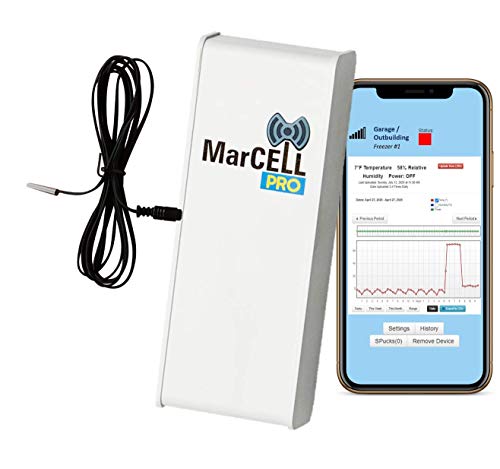
MarCELL
PRO Cellular Temperature, Humidity & Power Monitor (AT&T)
- •Only architecture surviving WiFi and power loss
- •adds a 6-ft pipe probe and phone-call alerts
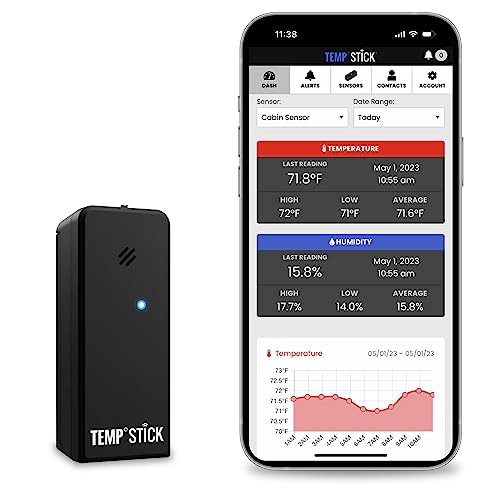
Temp
Stick Remote WiFi Temperature & Humidity Sensor
- •-40 F floor, unlimited SMS and email, loss-of-connection alerting, zero fees forever
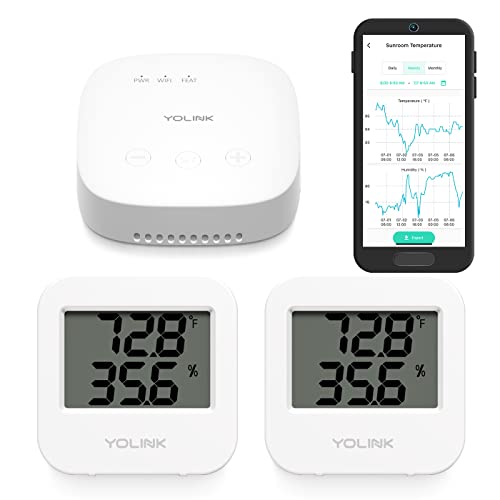
YoLink
SpeakerHub & Two Temp/Humidity Sensors Starter Kit
- •Two -22 F sensors and quarter-mile LoRa reach for $59.99 — best coverage per dollar
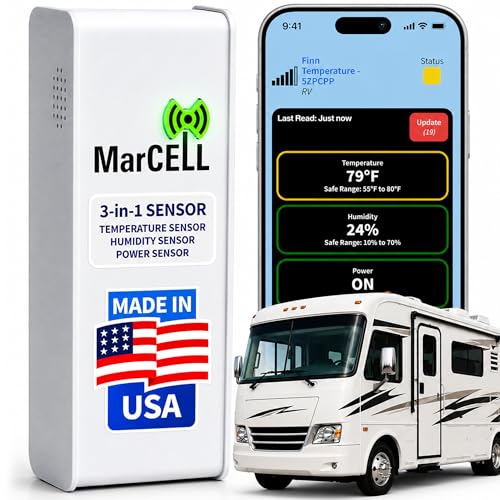
MarCELL
Cellular Temperature, Humidity & Power Monitor (Verizon)
- •Verizon cellular failover at $119.95 when the property has coverage and needs no probe
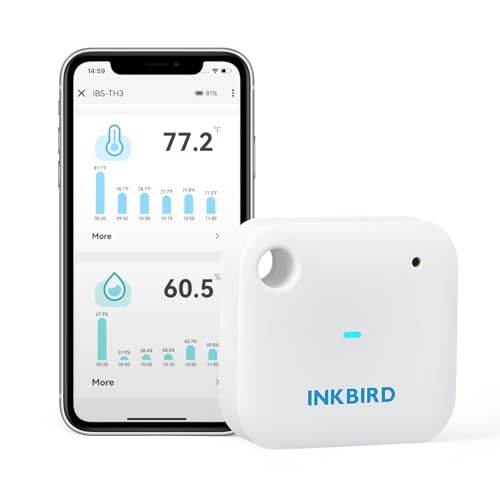
INKBIRD
IBS-TH3 WiFi Thermometer Hygrometer Monitor
- •The $21 sanity-check sensor
- •app-push only, so pair it with a redundant channel
Head-to-Head: Failover, Operating Floor, Redundancy, and the SHE Score
Smart Sensors
Chart
 Smarthomeexplorer.com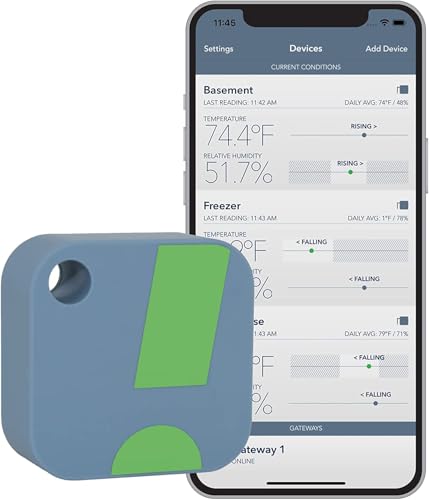
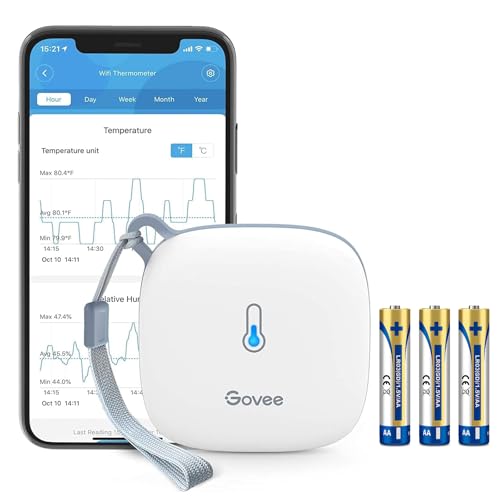
Tap any pick to check its live price on Amazon.
Reolink RLK16-800B8 4K 16-Channel PoE NVR System (8-Camera)
RecommendedCheck price
ANNKE 4K PoE NVR Security Camera System (6-Camera)
RecommendedCheck price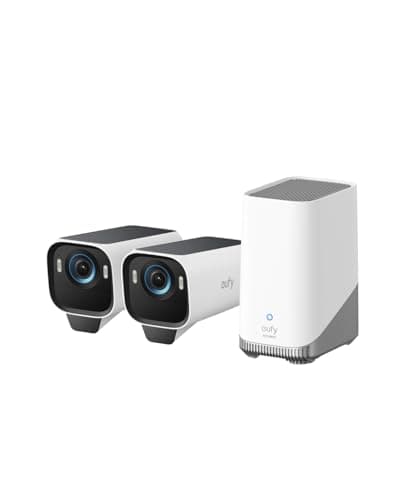
eufyCam S3 Pro 2-Cam Kit (Solar, 4K)
Must BuyCheck price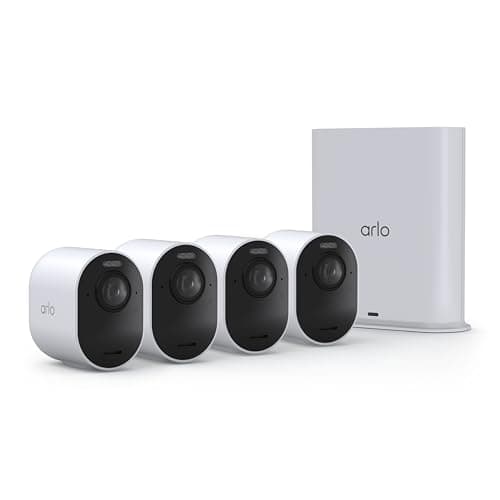
Arlo Ultra 4K HDR Security Camera (3rd Gen) 4-Cam Kit
$499.99RecommendedCheck price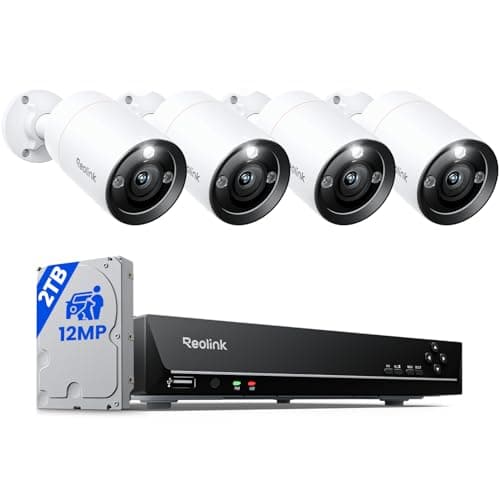
Reolink RLK8-1200B4-A 12MP 8-Channel PoE NVR System (4-Camera)
$729.99RecommendedCheck price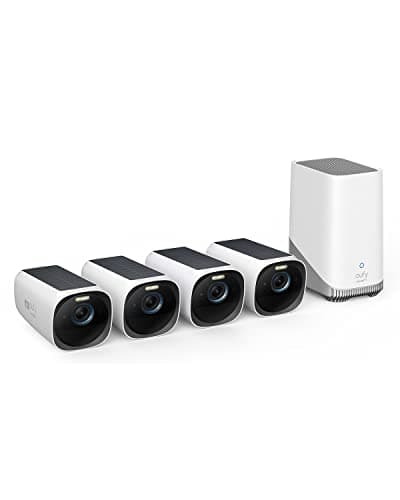
Eufy eufyCam S330 4-Cam Kit (with HomeBase S380)
$499.99Must BuyCheck price
Will It Warn Me in Time?
You configured the thermostat to 55 degrees and locked the cabin in October. This purchase determines whether you discover, remotely, that the furnace quit overnight. Insurance documentation clarifies the consequences. A 433-claim investigation calculates the average frozen-pipe loss at 27000$. Most policies reimburse a vacant-property catastrophe only when you maintained approximately 55 degrees of heat. That verification is precisely the responsibility this sensor performs continuously.
This roundup evaluates 7 sensors on the SHE Unattended Freeze Protection Score. Its dominant factor is connectivity failover, a 30% coefficient quantifying whether notifications survive interruption. The architecture decision is the purchasing decision. Cellular monitors incorporate redundant radio plus 48 hours of backup battery. That combination outlasts storm-induced failures. Bob Vila, Wirecutter, and CNET review this category, but none rank it on outage survival. The category spans 21$ to 199$ hardware, a 9x spread, plus a 14.95$ subscription versus 0% recurring expenditure.
Best Overall: MarCELL PRO Cellular Temperature, Humidity & Power Monitor (AT&T)
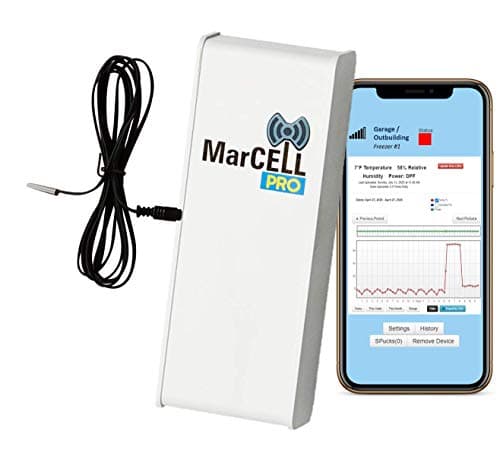
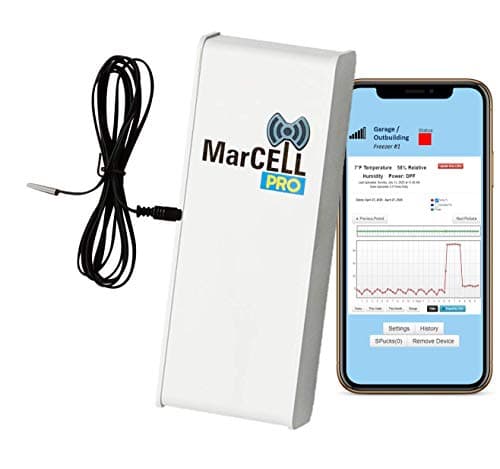
MarCELL PRO Cellular Temperature, Humidity & Power Monitor (AT&T)
- Only architecture that keeps reporting through both WiFi and power loss
- $14.95/mo subscription is mandatory and stops monitoring the day it lapses
(Current price, subject to change)
The MarCELL PRO Cellular Temperature, Humidity & Power Monitor (AT&T) earns the top composite of 7.65 on the SHE Unattended Freeze Protection Score, and it is the only pick maxing out connectivity failover, the formula's 30% coefficient. What that weighted number means for your property is direct. When a winter storm knocks out the internet and power together, this monitor keeps reporting over AT&T LTE for up to 48 hours on its battery. It alerts within seconds and reports the outage itself, so you learn the furnace lost power before the temperature moves.
The 6 ft external probe is the second standout, because it straps directly to the supply line where pipes actually freeze. That probe-to-pipe placement is the configuration that protects plumbing specifically, which is why the score rewards it on sensing reach. Phone-call alerts complete the redundancy within seconds: a ringing phone produces a response a silent push cannot. Across a 5-yr ownership window, the 14.95$ subscription totals under 900$ against a 27000$ average loss.
Compared to the Temp Stick Remote WiFi Temperature & Humidity Sensor, the PRO survives the power outage the Temp Stick cannot, in exchange for a $14.95/mo subscription the Temp Stick never charges.
What We Love
- Only architecture that keeps reporting through both WiFi and power loss
- 48-hr backup battery covers the outage and reports the outage itself
- 6-ft probe straps to the supply line — the highest-value placement for pipe protection
- Phone-call alerts wake you at 3 a.m. when a push notification will not
What Could Be Better
- $14.95/mo subscription is mandatory and stops monitoring the day it lapses
- 20 F internal sensor floor relies on the external probe for deep-cold spaces
- $199.00 hardware is the priciest unit in this roundup
The Verdict
If a winter storm can knock out both the internet and the power at your cabin, the MarCELL PRO Cellular Temperature, Humidity & Power Monitor (AT&T) fits the brief without compromise. The 7.65 reflects the one architecture that reports through that double outage, and the probe straps to the pipe. Treat the $14.95/mo as insurance against a $27,000 average loss — no need to overthink it.
Check price for the MarCELL PRO Cellular Temperature, Humidity & Power Monitor (AT&T) →
Ready to upgrade your home?
ECOVACS DEEBOT X12 PRO Omni Robot Vacuum and Mop
See it on Amazon
eufy SoloCam S340 Solar Security Camera, 4-Cam Kit
See it on Amazon
REOLINK 360° Solar Security Cameras, 4 Pack
See it on Amazon
Sponsored listings from Amazon’s Sponsored Products for Creators program, kept apart from our reviews and rankings. How we make money
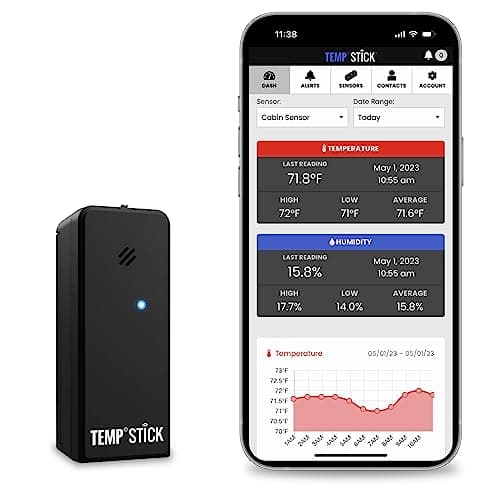
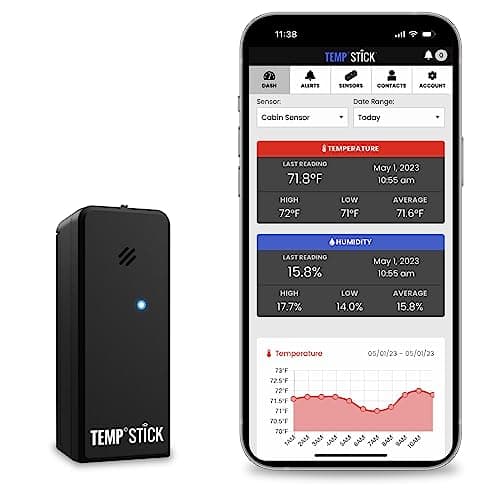
Best No-Subscription: Temp Stick Remote WiFi Temperature & Humidity Sensor
Temp Stick Remote WiFi Temperature & Humidity Sensor
- -40 F to 140 F range owns the unheated crawl space where pipes freeze
- Whole alert chain dies if the router, internet, or house power fails
(Current price, subject to change)
The Temp Stick Remote WiFi Temperature & Humidity Sensor earns a composite of 7.35 on the SHE Unattended Freeze Protection Score, the third-highest mark and the no-subscription leader. For your property that means the deepest operating floor in this guide paired with the cleanest cost structure. Its documented -40 F to 140 F range survives the unheated crawl space and runs about 1 yr on 2 AAs. Bob Vila's thermometer coverage cites that wide range for remote-property monitoring, and CNET and Consumer Reports review it too. At 149$ with a 0% recurring fee, the vendor recommends lithium AAs below freezing, since alkaline cells fade in deep cold.
Service continuity is where it pulls ahead of every cellular rival, because there is no subscription, ever. Unlimited SMS, email, and app alerts plus data logging stay free for the life of the sensor, so a forgotten renewal can never silence it. Its documented loss-of-connection alerting is the feature that makes a WiFi sensor trustworthy for an unattended property. The silence itself becomes the warning, which is why it scores mid on failover rather than bottom.
Compared to the Govee WiFi Smart Thermometer Hygrometer (H5179), the Temp Stick adds SMS, email, and outage signaling the app-push-only Govee lacks entirely.
What We Love
- -40 F to 140 F range owns the unheated crawl space where pipes freeze
- Unlimited SMS plus email plus app alerts, free forever — no subscription ever
- Loss-of-connection alerts turn router silence into a warning
- Two-AA design runs about 1 yr; lithium cells recommended for deep cold
What Could Be Better
- Whole alert chain dies if the router, internet, or house power fails
- $149.00 is mid-pack pricing for a single-point sensor
- Base unit has no external probe; that is the separate PRO SKU we do not carry
The Verdict
If your vacation home keeps always-on WiFi and you want verification without a recurring bill, the Temp Stick Remote WiFi Temperature & Humidity Sensor lines up with what you actually need. The 7.35 reflects a -40 F floor and unlimited alerts that never expire. The honest caveat: if the power drops, it can only tell you it has gone silent, which it does alert on.
Check price for the Temp Stick Remote WiFi Temperature & Humidity Sensor →
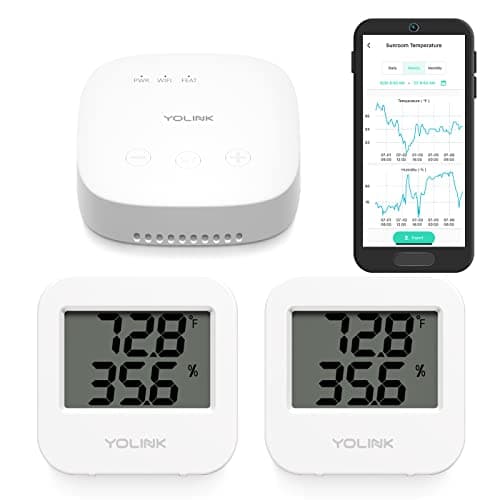
Best Multi-Room Value: YoLink SpeakerHub & Two Temp/Humidity Sensors Starter Kit
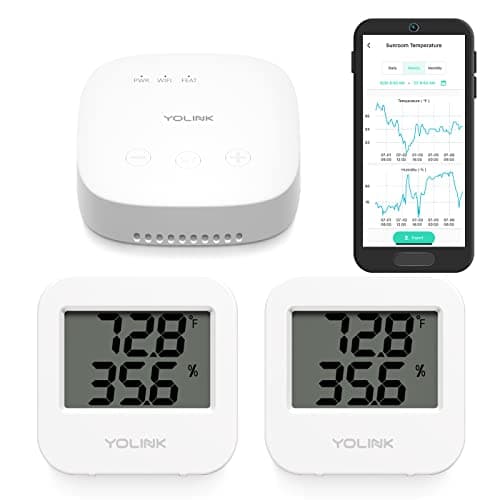
YoLink SpeakerHub & Two Temp/Humidity Sensors Starter Kit
- Two sensors for $59.99 — the best placement-per-dollar in the category
- The hub still needs mains power and house WiFi to reach you remotely
(Current price, subject to change)
The YoLink SpeakerHub & Two Temp/Humidity Sensors Starter Kit earns a composite of 7.55 on the SHE Unattended Freeze Protection Score, second overall and the runaway coverage-value pick. For your property that means 2x the sensing points, so the crawl space and the pump room report independently. Its LoRa radio carries a quarter mile through concrete and metal, and TechHive calls the platform a robust, long-range solution that reaches outbuildings a WiFi sensor cannot. The sensors run 2 yr on their batteries and hold a -22 F rating that covers most northern crawl spaces, all for 59.99$ with a 0% recurring fee.
Alert redundancy is stronger than the price suggests, because the SpeakerHub layers local spoken alerts on top of app, SMS, and email. When a caretaker or neighbor checks the property, an audible warning sounds onsite even before the remote message lands. That local-plus-remote signaling is the configuration that catches a problem fastest, and it is why the kit holds an 8 on alert redundancy. The catch is the hub itself, which depends on mains power and house WiFi for the remote leg.
Compared to the SensorPush HT1 Smart Temperature & Humidity Sensor, the YoLink kit ships two sensors and a hub for roughly a third of the SensorPush system's gateway-included cost.
What We Love
- Two sensors for $59.99 — the best placement-per-dollar in the category
- Quarter-mile LoRa carries through concrete and metal to outbuildings
- Sensors rated to -22 F with batteries that run 2+ yr
- SpeakerHub adds local spoken alerts a caretaker can actually hear onsite
What Could Be Better
- The hub still needs mains power and house WiFi to reach you remotely
- -22 F floor is shallower than the -40 F Temp Stick and SensorPush
- 2-sensor count is fixed in the kit; expanding the system costs extra
The Verdict
If you want to watch the crawl space, the pump room, and the main floor at once, the YoLink SpeakerHub & Two Temp/Humidity Sensors Starter Kit checks the boxes that matter for whole-property coverage. The 7.55 reflects two -22 F sensors and quarter-mile LoRa reach for $59.99. Just remember the hub leans on house power and WiFi for the remote leg.
Check price for the YoLink SpeakerHub & Two Temp/Humidity Sensors Starter Kit →
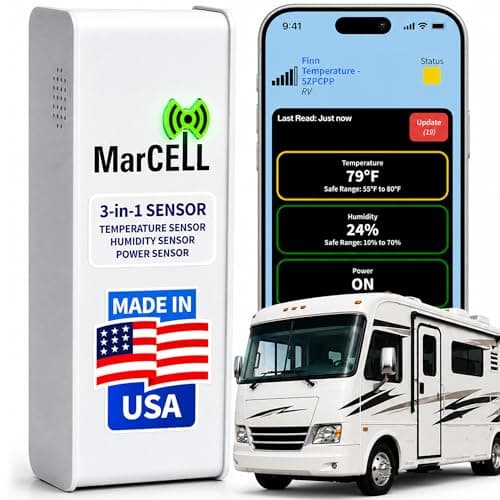
Best No-WiFi Cellular Value: MarCELL Cellular Temperature, Humidity & Power Monitor (Verizon)
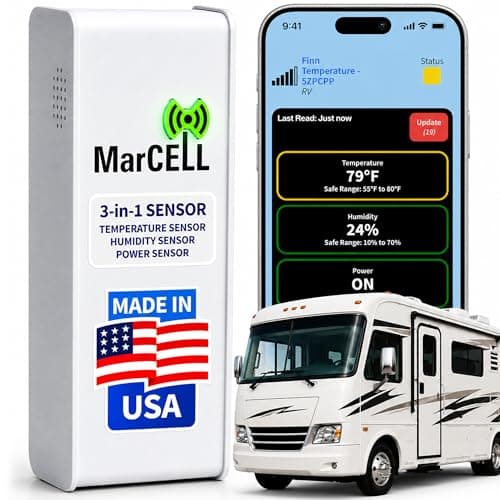
MarCELL Cellular Temperature, Humidity & Power Monitor (Verizon)
- No WiFi needed at all — ideal for a cabin with no broadband
- 20 F internal sensor only, with no external probe for deep-cold reach
(Current price, subject to change)
The MarCELL Cellular Temperature, Humidity & Power Monitor (Verizon) earns a composite of 6.65 on the SHE Unattended Freeze Protection Score and matches the PRO's perfect connectivity-failover mark. For a no-internet cabin that is the decisive trait, since the Verizon LTE radio reports with no router in the building at all. Cellular is the only architecture that works where broadband does not, which is what earns it a perfect 10 on connectivity failover. The 48-hr backup battery carries it through a power outage and reports that outage too.
Where it gives ground is the sensing hardware, because the internal sensor floors at 20 F with no external probe. The formula scores that as marginal for a deep-cold crawl space, the very spot the PRO's 6-ft probe is built to reach. Alert redundancy stays maxed, though, with phone call, SMS, email, and dashboard all bundled into the subscription. The call channel is what produces a 3 a.m. response a push cannot, so it ties the PRO at a 10 on that factor.
Compared to the MarCELL PRO Cellular Temperature, Humidity & Power Monitor (AT&T), the Verizon unit saves $79.05 and $6.70/mo but drops the external probe that reaches the coldest spaces.
What We Love
- No WiFi needed at all — ideal for a cabin with no broadband
- 48-hr backup battery covers and reports a power outage
- Phone call plus SMS plus email is the full redundant channel set
- $119.95 undercuts the PRO when the property has Verizon coverage
What Could Be Better
- 20 F internal sensor only, with no external probe for deep-cold reach
- $8.25/mo subscription is mandatory and silently ends monitoring if it lapses
- Single sensing point, so it cannot watch crawl space and pump room together
The Verdict
If your cabin runs on Verizon coverage and never had internet, the MarCELL Cellular Temperature, Humidity & Power Monitor (Verizon) is a sensible pick for that setup. The 6.65 reflects the same outage-proof cellular failover as the PRO at $119.95, minus the probe. Budget the $8.25/mo as the cost of monitoring that survives the storm.
Check price for the MarCELL Cellular Temperature, Humidity & Power Monitor (Verizon) →
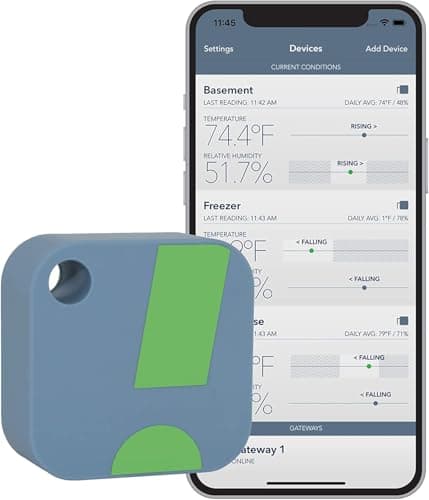
Best Accuracy and Logging: SensorPush HT1 Smart Temperature & Humidity Sensor
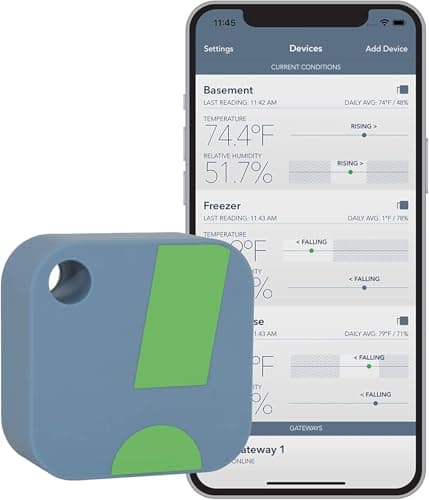
SensorPush HT1 Smart Temperature & Humidity Sensor
- Pro-grade accuracy and a -40 F floor that owns the cold crawl space
- Remote alerts force the $99.95 G1 gateway, pushing system cost to about $155
(Current price, subject to change)
The SensorPush HT1 Smart Temperature & Humidity Sensor earns a composite of 6.25 on the SHE Unattended Freeze Protection Score and ties the Temp Stick for the deepest -40 F operating floor. For your property that means the most precise record in this guide, which matters if you also store sensitive goods. Wirecutter calls it the best smart thermometer-hygrometer it has tested, citing professional-grade accuracy and data logging, and CNET reviews the HT1 too. Its onboard memory buffers readings through an outage and backfills on reconnect, so you never lose the temperature history.
The structural catch is the remote leg, because the HT1 alone is Bluetooth-only and useless from far away. Remote alerts require the separate G1 WiFi Gateway at 99.95$, which pushes real system cost to about 155$ on a 0% recurring plan. Even then it signals by app push alone, with no SMS, email, or call fallback, and the cell runs past 1 yr. Bob Vila lists the HT1 as an upgrade pick for its logging, but the formula docks it on redundancy and failover for unattended duty.
Compared to the Temp Stick Remote WiFi Temperature & Humidity Sensor, the SensorPush logs more precisely but needs the gateway and drops the SMS and email channels the Temp Stick includes free.
What We Love
- Pro-grade accuracy and a -40 F floor that owns the cold crawl space
- Onboard memory buffers readings through an outage and backfills on reconnect
- CR2477 cell rated past 1 yr of runtime
- Wirecutter named it the best smart thermometer-hygrometer it has tested
What Could Be Better
- Remote alerts force the $99.95 G1 gateway, pushing system cost to about $155
- App push only — no SMS, email, or call fallback when a phone is asleep
- Live away alerts die if the gateway's WiFi or power drops
The Verdict
If the same property stores a humidor, wine, or instruments and you want pro-grade records alongside freeze protection, the SensorPush HT1 Smart Temperature & Humidity Sensor is a sensible pick for that setup. The 6.25 reflects -40 F accuracy and buffered logging, with the honest asterisk that remote alerts force the $99.95 gateway. Quote the system at about $155.
Check price for the SensorPush HT1 Smart Temperature & Humidity Sensor →
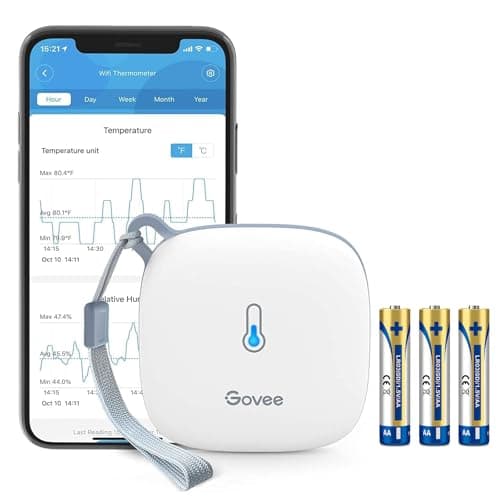
Best Budget WiFi: Govee WiFi Smart Thermometer Hygrometer (H5179)
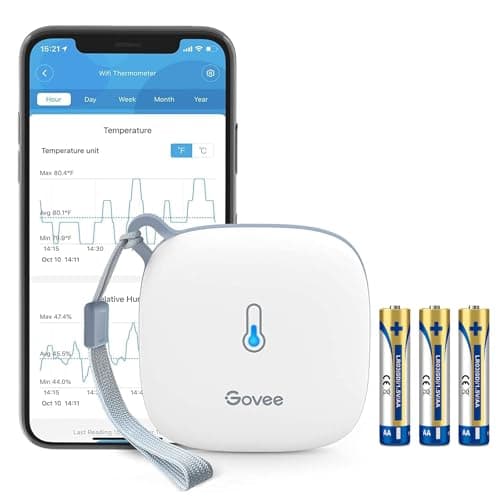
Govee WiFi Smart Thermometer Hygrometer (H5179)
- Strong accuracy spec at a $39.99 price
- App push only — no SMS, email, or call, and Do Not Disturb swallows it
(Current price, subject to change)
The Govee WiFi Smart Thermometer Hygrometer (H5179) earns a composite of 4.85 on the SHE Unattended Freeze Protection Score, the budget WiFi entry. For your property that means an accurate reading at a low price, with 2 yr of free exportable history and no subscription. Govee's published accuracy spec is the draw at 39.99$, and the compact unit drops into any room with WiFi coverage. CNET's smart-thermometer roundups cover the H5179 in this budget tier. As a second-opinion sensor in a heated, always-online home, it does honest work.
The ceiling is its alert model, and the formula does not pretend otherwise. It signals by app push alone, with no SMS, email, or call, so Do Not Disturb or a dead phone swallows the one channel entirely. There is no cellular or battery fallback when the router or power drops. The -4 F floor is fine indoors at 55 F but can be exceeded by a deep-cold snap in the unheated crawl space where pipes freeze. That temperature vulnerability constrains the floor factor to a 6.
Compared to the INKBIRD IBS-TH3 WiFi Thermometer Hygrometer Monitor, the Govee adds a second year of free data retention but shares the same app-push-only limitation.
What We Love
- Strong accuracy spec at a $39.99 price
- 2 yr of free exportable data history, no fees
- Compact WiFi sensor that drops anywhere with coverage
- Quick app onboarding with no gateway to manage
What Could Be Better
- App push only — no SMS, email, or call, and Do Not Disturb swallows it
- No cellular or battery fallback when the router or power drops
- -4 F floor can be exceeded by a deep-cold snap in an unheated crawl space
The Verdict
If you want a low-cost WiFi sensor for a heated, always-online second home, the Govee WiFi Smart Thermometer Hygrometer (H5179) checks the boxes that matter for a budget verifier. The 4.85 reflects a strong accuracy spec and 2 yr of free history, balanced against app-push-only alerts. Treat it as a sanity check, not your only line of defense.
Check price for the Govee WiFi Smart Thermometer Hygrometer (H5179) →
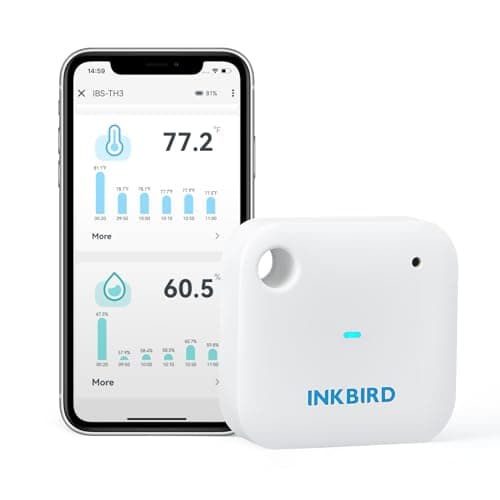
Best Budget: INKBIRD IBS-TH3 WiFi Thermometer Hygrometer Monitor
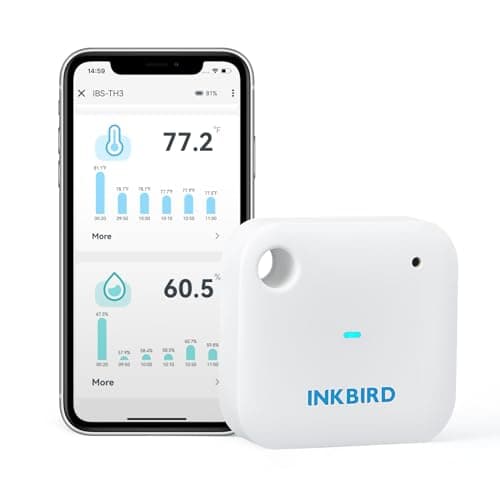
INKBIRD IBS-TH3 WiFi Thermometer Hygrometer Monitor
- $21.03 is the lowest price in the entire category
- App push only — the same swallowed-alert risk as the Govee
(Current price, subject to change)
The INKBIRD IBS-TH3 WiFi Thermometer Hygrometer Monitor earns a composite of 4.7 on the SHE Unattended Freeze Protection Score, the value floor of this guide. For your property that means a $21.03 sensor that drops into a basement, cellar, or utility room with WiFi. It logs 1 yr of free, exportable history and reports humidity alongside temperature. CNET and Consumer Reports both cover budget WiFi hygrometers in this tier. As an inexpensive second sensor backing up a stronger primary, it earns its keep.
The limitation is the same one that caps the Govee, and the formula treats it identically. Alerts arrive by app push alone, with no SMS, email, or call, so a single muted notification is the whole warning chain gone. There is no cellular or battery fallback for a router or power outage. The -4 F floor is fine indoors at a held 55 F but risky as the only defense in the deep-cold spaces where pipes freeze.
Compared to the Temp Stick Remote WiFi Temperature & Humidity Sensor, the Inkbird saves real money but drops three things. It loses the -40 F floor, the SMS and email channels, and the loss-of-connection alerting that make a WiFi sensor trustworthy alone.
What We Love
- $21.03 is the lowest price in the entire category
- 1 yr of free data storage and export
- Compact WiFi unit for basements, cellars, and utility rooms
- Fine as an inexpensive second-opinion sensor
What Could Be Better
- App push only — the same swallowed-alert risk as the Govee
- No cellular or battery fallback for a router or power outage
- -4 F floor is risky as the sole defense in a deep-cold crawl space
The Verdict
If you want the cheapest possible remote thermometer as a backup sanity check, the INKBIRD IBS-TH3 WiFi Thermometer Hygrometer Monitor is the path of least friction. The 4.7 reflects a $21.03 price and 1 yr of free history, paired with app-push-only alerts. Pair it with a redundant-channel sensor, and never lean on it alone.
Check price for the INKBIRD IBS-TH3 WiFi Thermometer Hygrometer Monitor →
How We Score: SHE Unattended Freeze Protection Score
SHE Unattended Freeze Protection Score
Score Formula
(Connectivity Failover × 0.30) + (Low-Temp Operating Floor × 0.20) + (Alert Redundancy × 0.20) + (Sensing Reach × 0.15) + (Service Continuity × 0.15)Score Factors
- Connectivity Failover (30%)Does the alert chain survive the WiFi and power outage a winter storm causes? Cellular radio plus an integrated 48-hr backup battery scores highest; a WiFi-direct sensor with documented loss-of-connection alerting and a LoRa-to-WiFi-hub kit score mid; Bluetooth buffering with no live alerts and plain WiFi with no outage signaling score lowest. The category's defining failure mode, weighted highest.
- Low-Temp Operating Floor (20%)Documented operating-range floor of the sensing hardware — the spec that decides whether it survives the unheated crawl space where pipes freeze. A -40 F floor tops the scale, -22 F close behind, -4 F mid, a 20 F internal sensor with an external probe lower, and a 20 F internal-only sensor lowest.
- Alert Redundancy (20%)Count and independence of documented alert channels, since app push alone is swallowed by Do Not Disturb and dead phones. Phone call plus SMS plus email plus dashboard scores highest; unlimited SMS plus email plus app, and app plus SMS/email plus local audible alerts, score mid; app-push-only scores lowest.
- Sensing Reach (15%)Can it monitor the pipe-critical spaces — crawl space, pump room, north bathroom — and not just one shelf? A multi-sensor kit with quarter-mile LoRa tops the scale; a 6-ft strappable probe and a 325-ft Bluetooth multi-sensor system rank high; a single-point WiFi sensor mid; a single internal sensor lowest.
- Service Continuity (15%)Subscription-lapse risk, since a forgotten renewal is a silent failure for an unattended property. No subscription ever with lifetime free alerts scores highest; free core alerts with multi-year data retention and a one-time gateway purchase score high; a mandatory cellular subscription that stops monitoring when it lapses scores lowest.
SHE Unattended Freeze Protection Score — Ranked
MarCELL PRO Cellular Temperature, Humidity & Power Monitor (AT&T)
SHE Unattended Freeze Protection Score7.7/10$199.00 — only architecture surviving WiFi and power loss; 6-ft pipe probe and call alerts
YoLink SpeakerHub & Two Temp/Humidity Sensors Starter Kit
SHE Unattended Freeze Protection Score7.5/10$59.99 — two -22 F sensors, quarter-mile LoRa, best coverage per dollar; hub needs WiFi
Temp Stick Remote WiFi Temperature & Humidity Sensor
SHE Unattended Freeze Protection Score7.3/10$149.00 — -40 F floor, unlimited alerts, no fees ever; dies with the router and power
MarCELL Cellular Temperature, Humidity & Power Monitor (Verizon)
SHE Unattended Freeze Protection Score6.7/10$119.95 — Verizon cellular failover for no-WiFi cabins; 20 F internal floor, no probe
SensorPush HT1 Smart Temperature & Humidity Sensor
SHE Unattended Freeze Protection Score6.3/10~$155 with gateway — pro-grade -40 F accuracy and logging; app-push only, gateway required
Govee WiFi Smart Thermometer Hygrometer (H5179)
SHE Unattended Freeze Protection Score4.8/10$39.99 — accurate budget WiFi sensor, 2 yr free history; app-push only, no outage fallback
INKBIRD IBS-TH3 WiFi Thermometer Hygrometer Monitor
SHE Unattended Freeze Protection Score4.7/10$21.03 — cheapest sensor here, 1 yr free history; app-push only, -4 F floor, second-opinion use
Cellular vs WiFi vs LoRa: Which Architecture for Your Property
The single most useful thing to understand before buying is that the three architectures fail in different places, and the outage a winter storm causes is where they separate. A plain WiFi-direct sensor like the Govee WiFi Smart Thermometer Hygrometer (H5179) or INKBIRD IBS-TH3 WiFi Thermometer Hygrometer Monitor joins the house router and reports cheaply with no recurring fee. But the entire alert chain dies the instant the router, the internet service, or the house power fails — and a winter storm causes exactly those failures. That single dependency is the WiFi category's weak point, and it is why plain WiFi units score lowest on connectivity failover. The Temp Stick Remote WiFi Temperature & Humidity Sensor is the resilient exception, because its documented loss-of-connection alert turns the silence itself into a warning when the connection drops.
Cellular monitors, the MarCELL PRO Cellular Temperature, Humidity & Power Monitor (AT&T) and MarCELL Cellular Temperature, Humidity & Power Monitor (Verizon), incorporate their own LTE radio plus 48 hours of backup battery. That combination sustains reporting through both a WiFi outage and a power outage. They also communicate the power loss directly, which a WiFi sensor cannot do once offline. Cellular is the only architecture that functions at a cabin with no broadband at all. The tradeoff is the mandatory subscription — 8.25$ monthly for the standard unit, 14.95$ monthly for the PRO. A lapsed card silently terminates monitoring, so Service Continuity scores lowest for cellular. Pick the carrier by which network covers the property.
LoRa hub systems, the YoLink SpeakerHub & Two Temp/Humidity Sensors Starter Kit, split the difference at 59.99$. Battery sensors communicate with a mains-powered hub over a quarter-mile LoRa link penetrating concrete and metal, and TechHive validates that long-range reach for outbuildings and crawl spaces. The 2 sensors run 2 yr per battery. That makes multi-room placement the advantage: one kit monitors the crawl space, the pump room, and the main floor simultaneously. The hub still depends on house power and WiFi for the remote transmission. The SensorPush sits alongside it, buffering readings through outages but requiring its 99.95$ gateway for any away alert, and Wirecutter's testing covers that gateway-paired system. Match the architecture to your property over a 5-yr ownership window: no internet means cellular, reliable WiFi means Temp Stick, and multi-room coverage means LoRa.
| Product | No WiFi Needed | Battery Backup | External Probe | Phone-Call Alert | No Subscription | Multi-Sensor |
|---|---|---|---|---|---|---|
| MarCELL PRO Cellular Temperature, Humidity & Power Monitor (AT&T) | ✓ | ✓ | ✓ | ✓ | ✕ | ✕ |
| Temp Stick Remote WiFi Temperature & Humidity Sensor | ✕ | ✕ | ✕ | ✕ | ✓ | ✕ |
| YoLink SpeakerHub & Two Temp/Humidity Sensors Starter Kit | ✕ | ✕ | ✕ | ✕ | ✓ | ✓ |
| MarCELL Cellular Temperature, Humidity & Power Monitor (Verizon) | ✓ | ✓ | ✕ | ✓ | ✕ | ✕ |
| SensorPush HT1 Smart Temperature & Humidity Sensor | ✕ | ✕ | ✕ | ✕ | ✓ | ✓ |
| Govee WiFi Smart Thermometer Hygrometer (H5179) | ✕ | ✕ | ✕ | ✕ | ✓ | ✕ |
When NOT to Buy
A freeze sensor is not always the right first purchase. If you fully drain the plumbing and shut off the water for the season, no pipe can burst, and a sensor becomes a nice-to-have rather than a necessity. The sensor's real job is verification: it confirms the heat your Best Smart Thermostats 2026: ecobee, Nest & 4 More thermostat holds at 55F is actually working when nobody is there. If your property already has internet but you only want appliance and food-safety monitoring, the freezer-focused angle in our Best WiFi Freezer Alarms 2026: 4 Ranked, Outage-Proof guide fits better than a structural freeze monitor. And skip the app-push-only budget units as your sole defense — for a $27,000 average loss, redundant alert channels are the spec that matters most.
Who Should Buy What
Who Should Buy What
| If you are… | Recommended pick |
|---|---|
No-internet cabin owner Your property has no broadband or the router stays off all winter, so you need cellular failover that reports with no WiFi and survives a power outage | MarCELL PRO Cellular Temperature, Humidity & Power Monitor (AT&T) |
Connected vacation-home owner Your house keeps always-on WiFi and heat at 55F, and you want verification and early warning with no recurring subscription fee | Temp Stick Remote WiFi Temperature & Humidity Sensor |
Whole-property coverage buyer You want the crawl space, pump room, and living space monitored at once, with wireless reach into basements and outbuildings | YoLink SpeakerHub & Two Temp/Humidity Sensors Starter Kit |
Verizon-only cabin owner The property has Verizon coverage but no internet, and you want outage-proof cellular failover without paying for the probe | MarCELL Cellular Temperature, Humidity & Power Monitor (Verizon) |
Budget second-opinion buyer You want a cheap remote thermometer as a redundant sanity check in a heated, always-online property and accept app-push alerts | INKBIRD IBS-TH3 WiFi Thermometer Hygrometer Monitor |
Frequently Asked Questions
What temperature should I keep a vacant vacation home at?
Most owners set the thermostat to at least 55F, and that number is not arbitrary. Per CNBC Select, insurers typically require a vacant-property owner to maintain roughly 55F heat or shut off and drain the water for a burst-pipe claim to be covered. Holding 55F keeps a margin above freezing for the pipes inside exterior walls. Set your sensor's alert threshold higher, around 40-45F, so you get warned well before anything reaches freezing.
Will a WiFi temperature sensor still work if the power goes out?
No — a plain WiFi sensor like the Govee H5179 or Inkbird IBS-TH3 goes silent the moment the router or house power fails, which is exactly what a winter storm causes. The Temp Stick is the WiFi exception: it sends a loss-of-connection alert, so the silence itself warns you. Only the cellular MarCELL and MarCELL PRO keep reporting through a power outage, because each carries an LTE radio plus a 48-hour backup battery and reports the outage too.
Do these freeze sensors require a monthly subscription?
Only the cellular units do. The MarCELL runs from $8.25/mo and the MarCELL PRO from $14.95/mo on annual billing, and monitoring stops the day the subscription lapses. The Temp Stick, YoLink kit, Govee, and Inkbird charge no recurring fee for core alerts. The SensorPush has no subscription either, but its remote alerts require a one-time $99.95 G1 gateway. For an unattended property, a no-fee unit removes one silent-failure mode.
How many sensors do I need for a vacation home?
It depends on the layout. A small, single-story home can be covered by one well-placed sensor near the most vulnerable plumbing. A larger property with a crawl space, a pump room, and exterior-wall bathrooms benefits from multiple points — the YoLink SpeakerHub kit ships two sensors with quarter-mile LoRa reach for $59.99, the best coverage-per-dollar option here. The SensorPush also scales with multiple sensors per gateway if you need pro-grade logging in several spots.
Where should I place a freeze sensor to protect my pipes?
Put the sensor where the pipes are coldest, not where you stand. The highest-value spots are the crawl space, the pump or utility room, and bathrooms on a north or exterior wall, since those freeze first. The MarCELL PRO's 6-ft external probe straps directly to the supply line for the most pipe-specific reading. Confirm your sensor's operating floor covers those spaces — a -4F-rated unit can fall below spec in a deep-cold crawl space where a -40F Temp Stick or SensorPush does not.
MarCELL PRO vs Temp Stick — which should I buy?
Buy the MarCELL PRO if the property faces real internet or power outage risk: it keeps reporting through both on cellular plus a 48-hour battery, adds a pipe-strappable probe, and sends phone-call alerts, in exchange for a $14.95/mo subscription. Buy the Temp Stick if the house has reliable WiFi and you never want a recurring bill: it matches the -40F floor, sends unlimited SMS and email, and alerts on loss of connection, all free for the life of the sensor.
Bottom Line
Get the MarCELL PRO Cellular Temperature, Humidity & Power Monitor (AT&T) if your property faces real WiFi and power outage risk and you want the only monitor that survives both, plus a pipe-strappable probe.
Get the Temp Stick Remote WiFi Temperature & Humidity Sensor if the house has reliable WiFi and you want the deepest -40 F floor with unlimited alerts and no fees ever.
Get the YoLink SpeakerHub & Two Temp/Humidity Sensors Starter Kit if you need multiple pipe-critical spaces monitored at once with the best sensor reach per dollar.
Get the MarCELL Cellular Temperature, Humidity & Power Monitor (Verizon) if the cabin has Verizon coverage and no internet and you want outage-proof failover without the probe.
Get the INKBIRD IBS-TH3 WiFi Thermometer Hygrometer Monitor if you want the cheapest remote thermometer as a redundant second sensor in a heated, always-online home.
The right call for most unattended properties with outage risk is the MarCELL PRO Cellular Temperature, Humidity & Power Monitor (AT&T) — the only architecture that keeps reporting when the WiFi and power both go down. For a house with rock-solid WiFi, the Temp Stick Remote WiFi Temperature & Humidity Sensor matches the -40 F floor with zero fees forever. Skip a standalone sensor entirely if you drain and shut off the water for the season — no water means no burst to warn about.
Sources & Methodology
Methodology: SHE Unattended Freeze Protection Score — Formula: (Connectivity Failover × 0.30) + (Low-Temp Operating Floor × 0.20) + (Alert Redundancy × 0.20) + (Sensing Reach × 0.15) + (Service Continuity × 0.15). Factors: Connectivity Failover (30%): Does the alert chain survive the WiFi and power outage a winter storm causes? Cellular radio plus an integrated 48-hr backup battery scores highest; a WiFi-direct sensor with documented loss-of-connection alerting and a LoRa-to-WiFi-hub kit score mid; Bluetooth buffering with no live alerts and plain WiFi with no outage signaling score lowest. The category's defining failure mode, weighted highest. | Low-Temp Operating Floor (20%): Documented operating-range floor of the sensing hardware — the spec that decides whether it survives the unheated crawl space where pipes freeze. A -40 F floor tops the scale, -22 F close behind, -4 F mid, a 20 F internal sensor with an external probe lower, and a 20 F internal-only sensor lowest. | Alert Redundancy (20%): Count and independence of documented alert channels, since app push alone is swallowed by Do Not Disturb and dead phones. Phone call plus SMS plus email plus dashboard scores highest; unlimited SMS plus email plus app, and app plus SMS/email plus local audible alerts, score mid; app-push-only scores lowest. | Sensing Reach (15%): Can it monitor the pipe-critical spaces — crawl space, pump room, north bathroom — and not just one shelf? A multi-sensor kit with quarter-mile LoRa tops the scale; a 6-ft strappable probe and a 325-ft Bluetooth multi-sensor system rank high; a single-point WiFi sensor mid; a single internal sensor lowest. | Service Continuity (15%): Subscription-lapse risk, since a forgotten renewal is a silent failure for an unattended property. No subscription ever with lifetime free alerts scores highest; free core alerts with multi-year data retention and a one-time gateway purchase score high; a mandatory cellular subscription that stops monitoring when it lapses scores lowest.
Expert review sources used in this analysis:
- SmartHomeExplorer aggregates expert review data and manufacturer specifications to produce consensus-based buying guidance for the products in this roundup
- We do not perform first-party product testing
- Operating-floor ratings, alert-channel documentation, backup-battery specs, cellular-subscription pricing, and Amazon pricing are drawn from manufacturer documentation
- They are corroborated against remote-thermometer and smart-sensor coverage from Bob Vila, Wirecutter, TechHive, CNET, and Consumer Reports
- Insurance context — the $27,000 average frozen-pipe loss and the roughly 55 F maintained-heat coverage requirement — is from a Risk & Insurance claims study and CNBC Select
- Amazon prices and availability verified 2026-06-09
- The SHE Unattended Freeze Protection Score weights connectivity failover, low-temperature operating floor, alert redundancy, sensing reach, and service continuity from aggregated specs and cited coverage
- No first-party measurements were conducted.
Nicholas Miles is the founder of SmartHomeExplorer and a longtime smart home enthusiast focused on helping everyday homeowners make better technology decisions. He researches, compares, and writes about products across security, climate, lighting, leak prevention, sensors, home energy, and automation, with an emphasis on real-world usefulness, ecosystem compatibility, reliability, privacy, and long-term value.
Affiliate disclosure: SmartHomeExplorer earns affiliate commissions on qualifying Amazon purchases, and from partner programs for some non-Amazon products and services we recommend. Our scoring methodology is independent of affiliate relationships.