

Reolink Argus 4 Pro vs eufyCam S330: Battery Cameras 2026
The Reolink Argus 4 Pro wins single-spot coverage with a 180° dual-lens view; the eufyCam S330 kit wins whole-property systems. No subscription either way.
This article contains affiliate links. We may earn a commission at no extra cost to you. Prices change frequently — check the current price on Amazon before buying. Learn more
The Short Answer
Buy the Reolink Argus 4 Pro for individual locations: its 180° dual-lens panorama monitors additional scenery versus the eufy's 135° at equivalent 28.4 px-per-degree resolution, with on-camera storage. The eufyCam S330 kit dominates whole-property surveillance: 2.6x battery capacity, facial recognition, expandable hub.
Featured in this Guide
Reolink
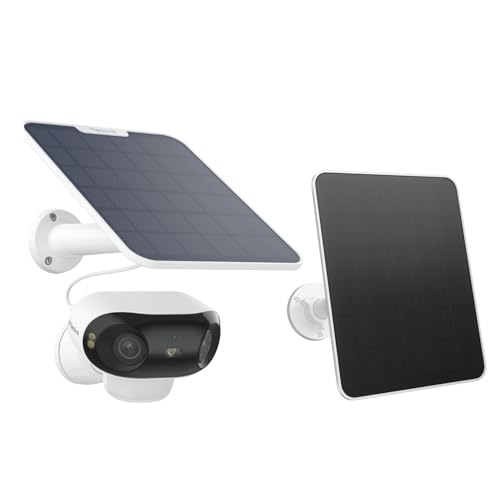
Argus 4 Pro + Solar Panel 2S Bundle
- •Widest 180° coverage, spotlight-free color night vision, on-camera storage, solar-sustained, no hub tax
Reolink
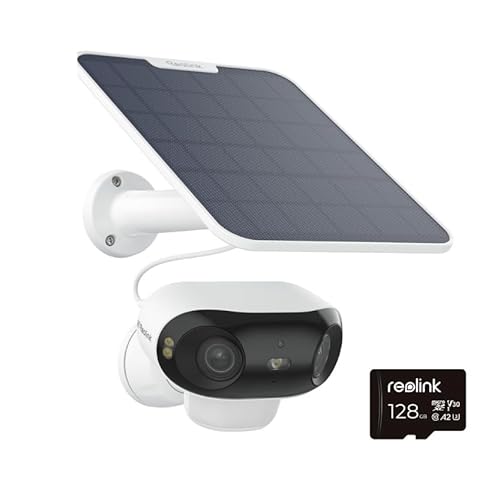
Argus 4 Pro (with 128GB microSD)
- •Everything to record day one in the box
- •128GB microSD included, nothing else to buy
Eufy
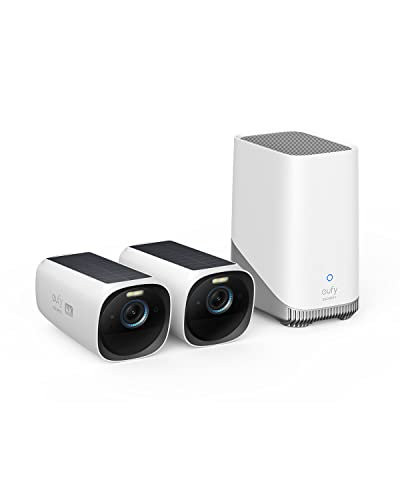
Security eufyCam S330 2-Cam Kit (HomeBase 3)
- •Biggest 13,000 mAh battery, integrated solar, face recognition, 16TB storage ceiling, $149.99 add-ons
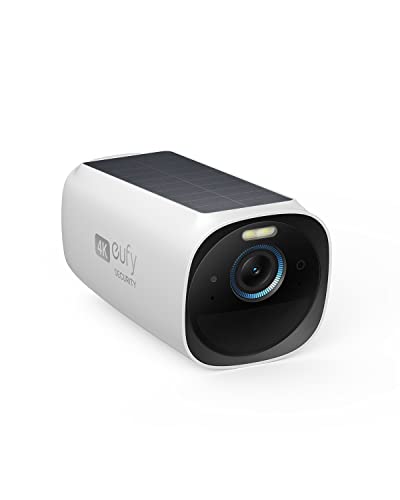
Eufy
Security eufyCam S330 Add-on Camera
- •By far the cheapest way to extend a HomeBase 3 system at $149.99 per camera
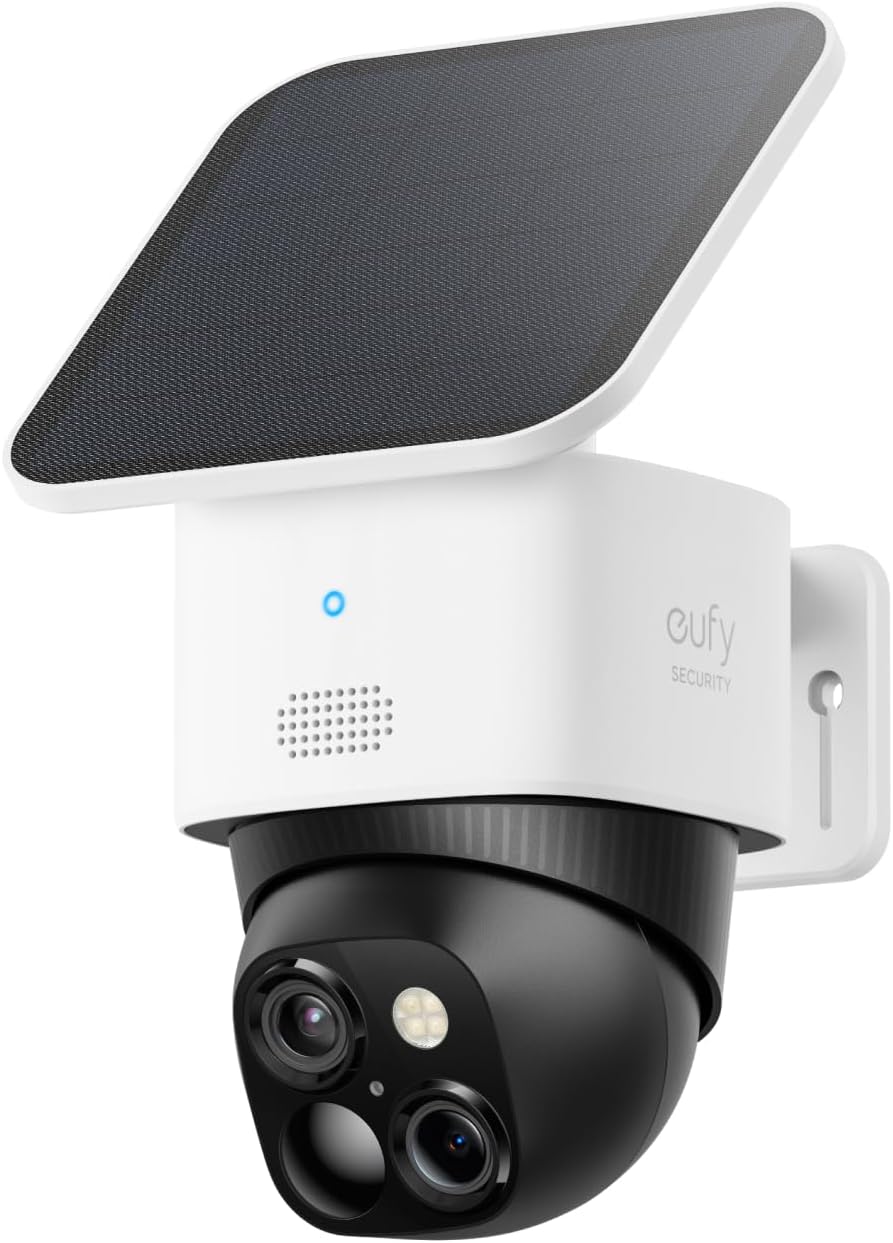
Eufy
SoloCam S340
- •360° motorized coverage plus telephoto zoom with no hub required at $199.99
Head-to-Head: Coverage, Power, Storage, and the SHE Score
Security
Chart
 Smarthomeexplorer.com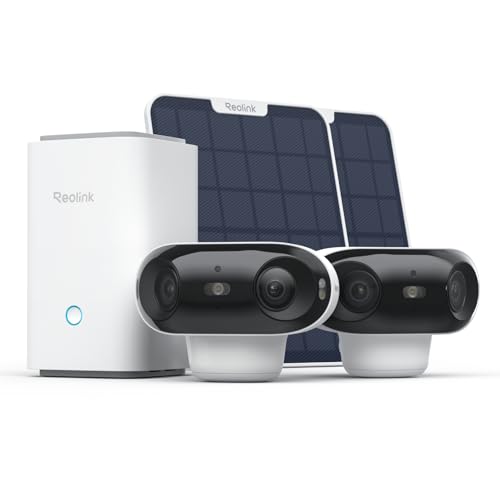
Two Opposite Bets on No-Subscription Cameras
You have ruled out monthly fees and buried wires. Now it is Reolink or eufy, and the two make opposite bets. Reolink concentrates everything in one camera: a blindspot-free 180° dual-lens panorama spanning 5120 horizontal pixels, on-camera microSD up to 512GB, ColorX illumination-free color night vision. eufy distributes across a system: a 13,000 mAh battery with integrated solar, face recognition, but storage living in a HomeBase 3 hub you also buy. We scored 6 SKUs on the weighted SHE Self-Powered Coverage Score, whose dominant coefficients are coverage reach and power endurance. The Reolink panorama watches a third more than the eufy's 135° lens at identical 28.4 px-per-degree resolution. PCWorld calls the dual-lens panorama the differentiator; TechRadar says eufy's solar means roughly 0 recharges per year. Over a 3-yr window both avoid 108$ to 360$ of cloud-subscription expenditure, and the eufy's 13,000 mAh battery holds 2.6x the Reolink's 5,000 mAh.
Best Overall (Single Spot): Reolink Argus 4 Pro + Solar Panel 2S Bundle
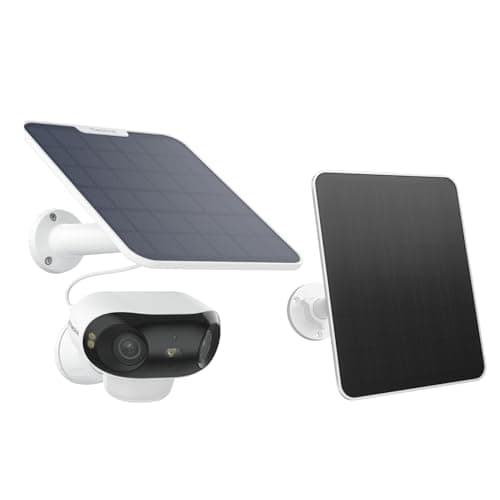
Reolink Argus 4 Pro + Solar Panel 2S Bundle
- 180° dual-lens view watches twice the scene of a single-lens battery cam
- 5,000 mAh is a fraction of eufy's 13,000 mAh battery without the panel
(Current price, subject to change)
The Reolink Argus 4 Pro + Solar Panel 2S Bundle earns the top composite of 8.5 on the SHE Self-Powered Coverage Score. For your single spot that number means one camera watches 2x the simultaneous arc most rivals split across two units. The weighted formula rewards coverage reach, and this SKU maximizes that factor decisively. Its dual lenses stitch a 5120 px panorama, computed to 28.4 px per degree. PCWorld calls that blindspot-free wide-angle illumination the headline differentiator versus single-lens battery cams.
Night performance is the second differentiator. ColorX combines a fast aperture and an enlarged sensor to produce full-color footage with no spotlight, which DigitalCameraWorld confirms needs 0 artificial illumination. The 5,000 mAh battery sustains roughly 4-6 weeks per charge, and the bundled Solar Panel 2S replenishes it indefinitely in decent sun. On-camera storage accommodates a microSD reaching 512GB, so footage never leaves the unit and 0 subscription applies. Over a 3-yr window that produces considerable savings.
Compared to the eufy Security eufyCam S330 2-Cam Kit (HomeBase 3), the Reolink yields the bigger battery plus face recognition, yet delivers substantially wider simultaneous coverage and circumvents the hub entirely.
What We Love
- 180° dual-lens view watches twice the scene of a single-lens battery cam
- 28.4 px per degree matches the eufy's per-degree sharpness despite the wider angle
- ColorX delivers full-color night footage with no spotlight or IR glow
- Solar Panel 2S ships in the bundle, so the 5,000 mAh cell self-sustains in sun
What Could Be Better
- 5,000 mAh is a fraction of eufy's 13,000 mAh battery without the panel
- No face recognition at any price on the Reolink platform
- Official IP66 rating trails the eufy's IP67 (use Reolink's spec, not the listing's IP67)
The Verdict
If you're covering one driveway or yard and want the widest view with zero infrastructure, the Reolink Argus 4 Pro + Solar Panel 2S Bundle fits the brief without compromise. The 8.5 reflects 180° coverage at full per-degree detail, ColorX night color, and a solar panel that self-sustains the battery. eufy has the bigger cell, but you'd be buying a hub you do not need for a single spot.
Check price for the Reolink Argus 4 Pro + Solar Panel 2S Bundle →
Ready to upgrade your home?
MOVA P10 Pro Ultra Robot Vacuum and Mop
See it on Amazon
roborock F25 Ultra Steam Wet Dry Vacuum Mop
See it on Amazon
Philips Wi-Fi Keypad Deadbolt with Handle
See it on Amazon
Sponsored listings from Amazon’s Sponsored Products for Creators program, kept apart from our reviews and rankings. How we make money
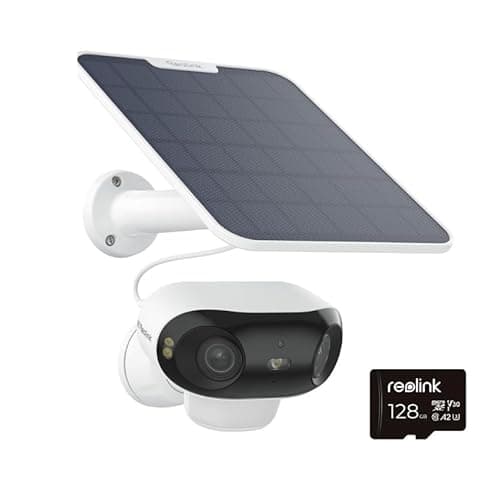
Best Value Entry: Reolink Argus 4 Pro (with 128GB microSD)
Reolink Argus 4 Pro (with 128GB microSD)
- 128GB microSD ships in the box, so it records the day it arrives
- No solar panel in this SKU, so plan to recharge every 4-6 weeks
(Current price, subject to change)
The Reolink Argus 4 Pro (with 128GB microSD) earns a composite of 8.4 on the SHE Self-Powered Coverage Score, second only to its solar sibling. For your budget that means the widest available view with nothing left on the shopping list. The included 128GB microSD drives the value proposition: it maximizes the storage-cost factor because the card accompanies the camera, which consequently records the day it arrives. Reviewed confirms the no-subscription local detection is the platform's distinguishing characteristic. Over a 3-yr window the included card produces 0$ of additional storage expenditure.
The hardware duplicates the bundle exactly. The identical dual-lens panorama distributes 5120 px across the arc for 28.4 px per degree, and ColorX delivers full-color illumination with no spotlight whatsoever. The singular difference is power provisioning, since this SKU ships no panel. The 5,000 mAh cell sustains roughly 4-6 weeks per charge, necessitating a recharge cadence unless you subsequently incorporate solar. That responsibility enables hands-on maintenance.
Compared to the Reolink Argus 4 Pro + Solar Panel 2S Bundle, this version produces an identical view and storage configuration while relinquishing the bundled panel plus the autonomous power that accompanies it.
What We Love
- 128GB microSD ships in the box, so it records the day it arrives
- Same 180° dual-lens panorama and 28.4 px per degree as the solar bundle
- Lowest 3-yr storage cost in this guide — nothing else to buy
- ColorX night color and local AI detection with no monthly fee
What Could Be Better
- No solar panel in this SKU, so plan to recharge every 4-6 weeks
- 5,000 mAh trails the eufy's 13,000 mAh battery by a wide margin
- No face recognition on the Reolink platform
The Verdict
If you want the widest view in the box with nothing left to buy, the Reolink Argus 4 Pro (with 128GB microSD) lines up with what you actually need. The 8.4 reflects the same 180° panorama as the bundle plus an included 128GB card, so it records day one. The only catch is power: no panel here, so add solar later if recharging every few weeks is not your thing.
Check price for the Reolink Argus 4 Pro (with 128GB microSD) →
Best Whole-Property System: eufy Security eufyCam S330 2-Cam Kit (HomeBase 3)
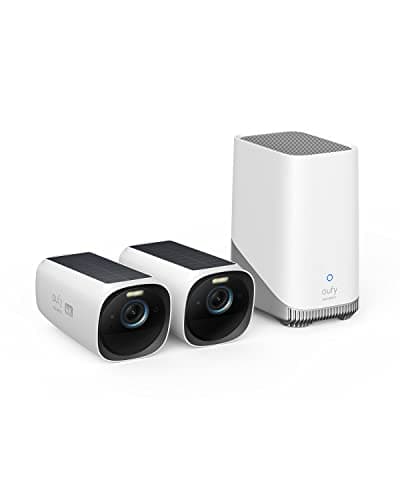
eufy Security eufyCam S330 2-Cam Kit (HomeBase 3)
- 13,000 mAh battery plus integrated solar is the biggest power runway here
- 135° fixed view is far narrower than Reolink's 180° panorama
(Current price, subject to change)
The eufy Security eufyCam S330 2-Cam Kit (HomeBase 3) earns a composite of 8.3 on the SHE Self-Powered Coverage Score, the top eufy result. For a growing property that number means the deepest power and storage runway in the set. The weighted formula rewards power endurance, and this kit maxes it: 13,000 mAh per camera plus an integrated solar panel on top. TechRadar reports the solar self-sufficiency means you may never recharge a battery, with a claimed 365-day runtime.
The system-level economics are the real draw. The HomeBase 3 starts at 16GB and expands to a 16TB ceiling. Once that hub is in place, each add-on camera runs $149.99. BionicMind face recognition also distinguishes known people from strangers, which Reolink cannot match at any price. The honest friction, per TechRadar and The Ambient, is a 2-5 second motion-to-recording delay and default motion settings that need tuning to find the security sweet spot.
Compared to the Reolink Argus 4 Pro + Solar Panel 2S Bundle, the eufy produces a 2.6x bigger battery and face recognition but a narrower 135° view, and it requires the hub the Reolink does without.
What We Love
- 13,000 mAh battery plus integrated solar is the biggest power runway here
- BionicMind face recognition distinguishes family from strangers
- HomeBase 3 centralizes storage with a 16TB ceiling
- Cheapest add-on path at $149.99 per camera once the hub is in place
What Could Be Better
- 135° fixed view is far narrower than Reolink's 180° panorama
- Cameras must pair to the HomeBase 3 first — more setup steps
- Reviewers report a 2-5 second motion-to-recording delay needing tuning
The Verdict
If you're building a whole-property system with 2 cameras now and more later, the eufy Security eufyCam S330 2-Cam Kit (HomeBase 3) is a sensible pick for that setup. The 8.3 reflects the biggest 13,000 mAh battery, integrated solar, face recognition, and a 16TB storage ceiling that scales. The Reolink sees wider per camera, but this is the platform that grows without per-camera storage headaches.
Check price for the eufy Security eufyCam S330 2-Cam Kit (HomeBase 3) →
Premium Reolink Multi-Cam: Reolink Home Hub with 2x Argus 4 Pro
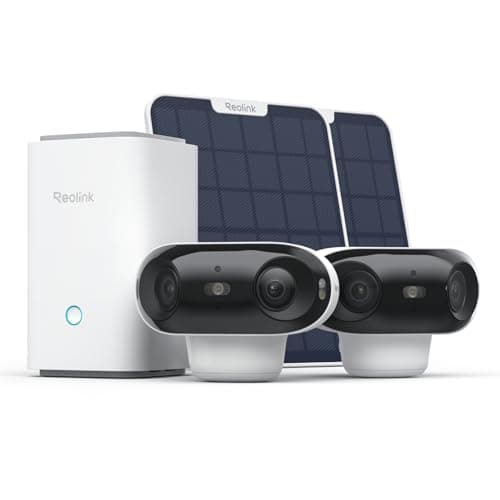
Reolink Home Hub with 2x Argus 4 Pro
- Two 180° panoramas cover the widest two-camera footprint in this set
- 5,000 mAh per camera, roughly 4-6 weeks per charge, no solar in this kit
(Current price, subject to change)
The Reolink Home Hub with 2x Argus 4 Pro earns a composite of 8.2 on the SHE Self-Powered Coverage Score. For a Reolink-committed buyer that number means two wide cameras plus encrypted central storage within one kit. It combines two dual-lens panoramas, each computed at 28.4 px per degree, producing the widest two-camera footprint in this guide. The Ambient highlights on-board local storage as the characteristic distinguishing the Argus 4 Pro platform from rivals, and the Home Hub extends that further through encryption.
The Home Hub accommodates 2x 512GB microSD for an encrypted ceiling, and dual-band Wi-Fi 6 keeps two simultaneous streams responsive. The limitations are power provisioning and ceiling magnitude. Each camera carries the identical 5,000 mAh cell sustaining roughly 4-6 weeks per charge, and this kit ships no panel, so autonomous power necessitates additional solar. The encrypted ceiling also trails the eufy's expandable hub by a considerable margin. Adding panels enables continuous self-replenishment.
Compared to the eufy Security eufyCam S330 2-Cam Kit (HomeBase 3), the Reolink hub delivers wider coverage plus encryption but relinquishes the bigger battery, face recognition, and the larger storage ceiling.
What We Love
- Two 180° panoramas cover the widest two-camera footprint in this set
- Encrypted central storage with a 2x512GB (1TB) ceiling
- Dual-band Wi-Fi 6 keeps two 4K streams responsive
- ColorX night color on both cameras with no spotlight
What Could Be Better
- 5,000 mAh per camera, roughly 4-6 weeks per charge, no solar in this kit
- 1TB storage ceiling is well below the eufy's 16TB
- No face recognition on the Reolink platform
The Verdict
If you want two of Reolink's wide cameras plus encrypted central storage, the Reolink Home Hub with 2x Argus 4 Pro checks the boxes that matter for a Reolink multi-cam setup. The 8.2 reflects two 180° panoramas and Wi-Fi 6 central storage. The tradeoffs are a 1TB ceiling versus eufy's 16TB and no bundled solar, so add panels if hands-off power matters.
Best for Existing eufy Owners: eufy Security eufyCam S330 Add-on Camera
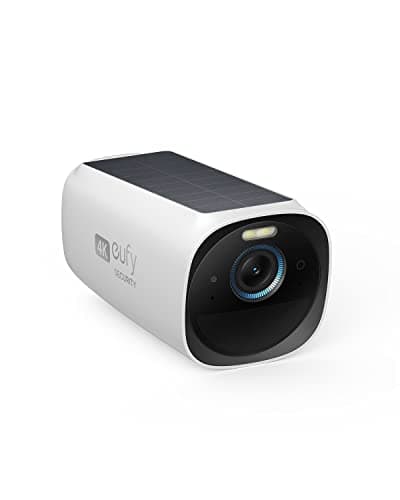
eufy Security eufyCam S330 Add-on Camera
- Cheapest way to extend a HomeBase 3 system at $149.99
- Records nothing without an existing HomeBase 3 — dead weight standalone
(Current price, subject to change)
The eufy Security eufyCam S330 Add-on Camera earns a composite of 7.5 on the SHE Self-Powered Coverage Score. For an existing eufy owner that number means the cheapest path to one additional camera carrying the class-leading battery. It carries the identical 13,000 mAh cell and integrated solar as the kit cameras, and it inherits BionicMind face recognition once it joins the HomeBase 3 hub. TechRadar credits that local, expandable hub storage with eliminating subscription fees, which over a 3-yr window represents substantial accumulated savings.
The rank reduction is entirely structural. This camera records nothing autonomously and requires a HomeBase 3 to function, so the storage-cost factor scores it correspondingly low. Trusted Reviews confirms the no-fee positioning materializes only once the hub is operational. The 149.99$ sticker appears inexpensive, but the honest entry price for a new buyer is the complete 379.99$ kit.
Compared to the eufy Security eufyCam S330 2-Cam Kit (HomeBase 3), the add-on delivers identical camera hardware while relinquishing the included hub that enables any recording whatsoever.
What We Love
- Cheapest way to extend a HomeBase 3 system at $149.99
- Same 13,000 mAh battery and integrated solar as the kit cameras
- Inherits BionicMind face recognition from the hub
- Records to the existing 16TB-ceiling HomeBase 3
What Could Be Better
- Records nothing without an existing HomeBase 3 — dead weight standalone
- 135° view is narrower than Reolink's 180° panorama
- Honest entry price is the $379.99 kit, not the $149.99 sticker
The Verdict
If you already own a HomeBase 3 and want to add a camera, the eufy Security eufyCam S330 Add-on Camera is the path of least friction — no need to overthink it. The 7.5 reflects the same big battery and face recognition as the kit at the cheapest add-on price. The one rule: it records nothing on its own, so this is strictly an extension, not a first camera.
Check price for the eufy Security eufyCam S330 Add-on Camera →
Best Hubless Pan/Tilt: Eufy SoloCam S340
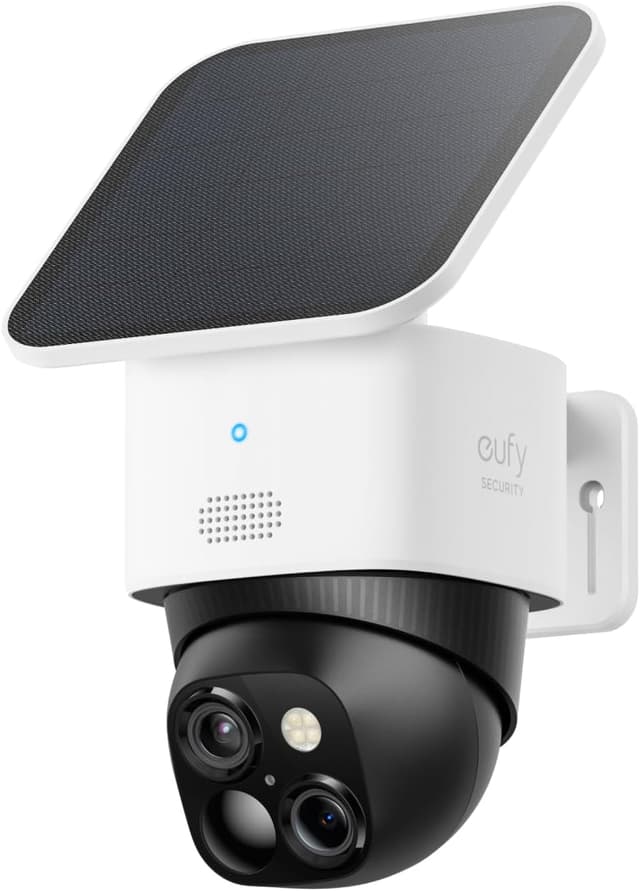
Eufy SoloCam S340
- 360° pan and 70° tilt covers an entire yard from one mount
- 8GB fixed onboard storage loops quickly with no standalone expansion
(Current price, subject to change)
The Eufy SoloCam S340 earns a composite of 7.35 on the SHE Self-Powered Coverage Score, the hubless eufy answer. For a single versatile vantage that number means motorized reach without a HomeBase 3. It pairs a 3K wide lens with a 2K telephoto, and Trusted Reviews verifies the 360° pan and 70° tilt arrangement. The detachable panel and roughly 2 hours of daily sun keep it continuously topped up, with a quoted ~3 months per charge at ~300 s of recording daily.
The honest tradeoffs are storage and the nature of pan/tilt. The 8GB fixed onboard storage loops quickly and has no standalone expansion without buying into HomeBase 3 anyway. A motorized camera also only records where it currently points, so its 360° figure is sequential coverage, not the simultaneous arc a fixed wide lens delivers. MakeUseOf verifies the S340's hardware quality and alert behavior in independent review.
Compared to the eufy Security eufyCam S330 2-Cam Kit (HomeBase 3), the S340 yields the big battery, face recognition, and expandable storage in exchange for hub-free standalone operation and a telephoto lens.
What We Love
- 360° pan and 70° tilt covers an entire yard from one mount
- 2K telephoto lens pulls plate-level detail at distance
- Detachable solar panel keeps it topped up with ~2 hours of sun
- Fully standalone — no HomeBase 3 required
What Could Be Better
- 8GB fixed onboard storage loops quickly with no standalone expansion
- A pan camera only records where it is currently pointed
- Face recognition needs a HomeBase 3 the hubless design skips
The Verdict
If you want eufy coverage without a hub and like the idea of pan/tilt, the Eufy SoloCam S340 is a sensible pick for that setup. The 7.35 reflects 360° motorized coverage, a telephoto lens, and included solar with no hub tax. The honest limits are the 8GB storage loop and the fact that a pan cam only sees where it points, so it is a single-spot scanner, not a wide watcher.
How We Score: SHE Self-Powered Coverage Score
SHE Self-Powered Coverage Score
Score Formula
(Coverage Reach × 0.25) + (Power Endurance × 0.25) + (3-Yr Storage Cost Efficiency × 0.20) + (Alert Intelligence × 0.15) + (Detail Density × 0.15)Score Factors
- Coverage Reach (25%)Simultaneous horizontal field of view from the published spec. Fixed FOV at or above 170° (blindspot-free dual-lens) scores the ceiling; fixed 120-170° scores mid; fixed under 120° scores low. Motorized full-rotation pan adds a partial bonus capped below the fixed-wide ceiling, because 360° pan is sequential — a pan camera only records where it is pointed.
- Power Endurance (25%)Battery capacity plus solar provisioning as shipped in the SKU. A 13,000 mAh cell with an always-attached integrated panel tops the scale; a 5,000 mAh cell with a bundled detachable panel sits mid; the same cell with no panel scores lower. eufy claims a 365-day battery on the S330; Reolink's 5,000 mAh runs roughly 4-6 weeks per charge per reviewer observation.
- 3-Yr Storage Cost Efficiency (20%)Out-of-pocket local-storage cost and runway per camera over 3 years, with all picks at $0/month by design. Storage media included in the box with healthy runway scores the ceiling; a hub included with a large expansion ceiling scores high; small fixed onboard storage scores mid; a camera that requires a separate ~$150 hub purchase to record at all scores low.
- Alert Intelligence (15%)On-device detection from the spec sheet. Face recognition that distinguishes known people (eufy BionicMind via HomeBase 3) plus person/vehicle/pet classes scores highest; local person/vehicle/animal classification without face recognition scores high; basic motion only scores low. None of the six SKUs require a cloud plan.
- Detail Density (15%)Horizontal pixels per degree of simultaneous FOV, computed from published resolution and FOV. The Argus 4 Pro spreads 5120 px across 180° for 28.4 px per degree; the eufyCam S330 spreads 3840 px across 135° for the same 28.4 px per degree — an exact tie. The SoloCam S340 sits lower on its wide lens but earns a partial bonus for the 2K telephoto's optical reach.
SHE Self-Powered Coverage Score — Ranked
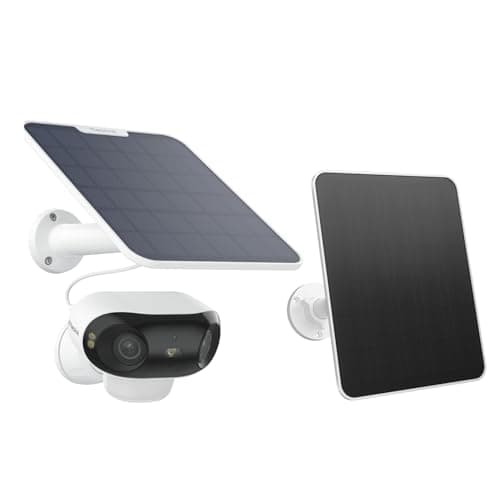
Reolink Argus 4 Pro + Solar Panel 2S Bundle
SHE Self-Powered Coverage Score8.5/10$233.98 — widest 180° view, ColorX night color, solar-sustained 5,000 mAh, on-camera storage, no hub
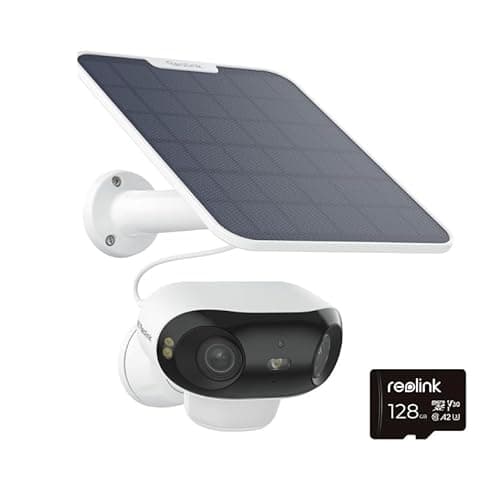
Reolink Argus 4 Pro (with 128GB microSD)
SHE Self-Powered Coverage Score8.4/10$231.64 — same 180° panorama with a 128GB card in the box; lowest 3-yr storage cost, no panel
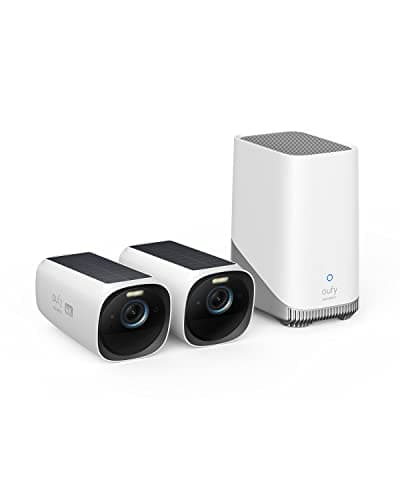
eufy Security eufyCam S330 2-Cam Kit (HomeBase 3)
SHE Self-Powered Coverage Score8.3/10$379.99 — biggest 13,000 mAh battery, integrated solar, face recognition, 16TB ceiling; 135° view
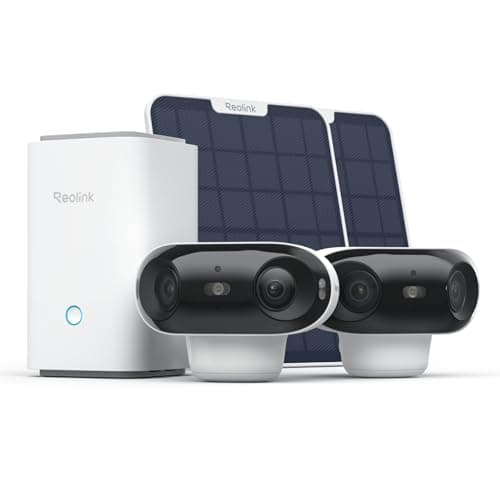
Reolink Home Hub with 2x Argus 4 Pro
SHE Self-Powered Coverage Score8.2/10$439.99 — two 180° cameras plus encrypted 1TB-ceiling storage and Wi-Fi 6; no solar in the kit
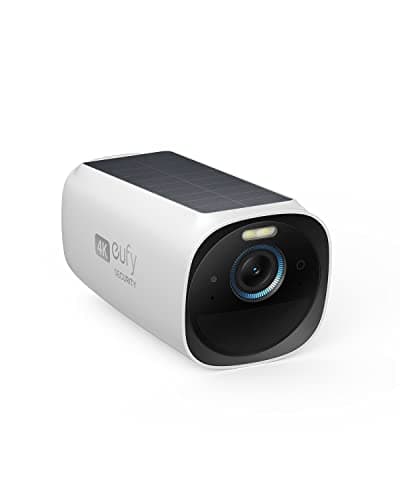
eufy Security eufyCam S330 Add-on Camera
SHE Self-Powered Coverage Score7.5/10$149.99 — class-leading battery and face recognition, but records nothing without a HomeBase 3
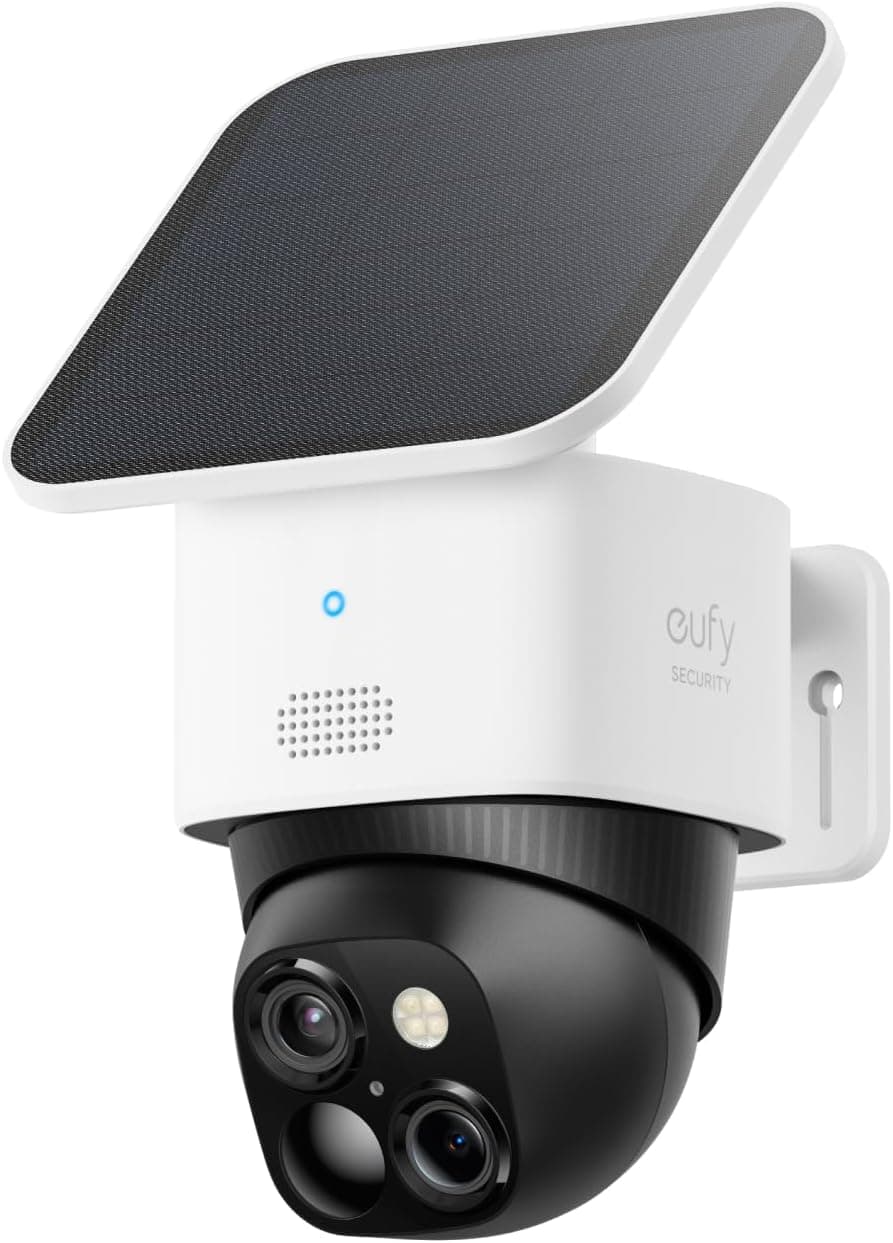
Eufy SoloCam S340
SHE Self-Powered Coverage Score7.3/10$199.99 — hubless 360° pan/tilt with telephoto and solar; 8GB fixed storage loops quickly
Ecosystems, Hubs, and Where the Storage Lives
Both platforms speak Alexa and Google Assistant, and neither does native Apple HomeKit on these SKUs, so cross-check your voice assistant before you commit. Storage ceilings separate them by 16x: eufy's HomeBase 3 expands to 16TB against the Reolink Home Hub's 2x512GB (1TB) cap. The decisive difference is not the voice layer but where the storage lives, which is the question that actually separates Reolink from eufy. Reolink keeps recording on the camera itself: the Argus 4 Pro takes a microSD up to 512GB, so the Reolink Argus 4 Pro (with 128GB microSD) records the day it ships with the included card. The optional Reolink Home Hub adds encrypted central storage and dual-band Wi-Fi 6 for multi-camera setups, but it is never required to record. That is what makes a single Reolink camera genuinely standalone.
eufy takes the opposite approach, and it shapes the whole buying decision. The eufyCam S330 cameras pair to a HomeBase 3 first, then mount, and the hub holds storage from 16GB up to a 16TB ceiling on a drive you supply. That centralization enables BionicMind face recognition across cameras and the cheap $149.99 add-on path, which is why the eufy Security eufyCam S330 2-Cam Kit (HomeBase 3) scales so well. The catch surfaces with the bare add-on: the eufy Security eufyCam S330 Add-on Camera records nothing without an existing hub, so its honest entry price is the $379.99 kit. TechRadar credits that local expandable storage with killing subscription fees, while Trusted Reviews confirms the no-fee positioning holds once the HomeBase is in place.
The hubless Eufy SoloCam S340 is the exception that proves the rule. It records to 8GB of fixed onboard storage with no hub required and self-sustains on roughly 2 hours of daily sun, which keeps it standalone but caps its runway. The Ambient flags on-board local storage as the Argus 4 Pro's defining edge over rivals. That framing extends across this comparison: the more storage sits on the camera, the less infrastructure you buy, but the lower your ceiling climbs. Match the storage model to how many cameras you expect to run over a multi-year window, not to today's single door.
| Product | Alexa | Google Home | Solar Included | Face Recognition | Hub Required | On-Camera Storage |
|---|---|---|---|---|---|---|
| Reolink Argus 4 Pro + Solar Panel 2S Bundle | ✓ | ✓ | ✓ | ✕ | ✕ | ✓ |
| Reolink Argus 4 Pro (with 128GB microSD) | ✓ | ✓ | ✕ | ✕ | ✕ | ✓ |
| eufy Security eufyCam S330 2-Cam Kit (HomeBase 3) | ✓ | ✓ | ✓ | ✓ | ✓ | ✕ |
| Reolink Home Hub with 2x Argus 4 Pro | ✓ | ✓ | ✕ | ✕ | ✓ | ✕ |
| eufy Security eufyCam S330 Add-on Camera | ✓ | ✓ | ✓ | ✓ | ✓ | ✕ |
| Eufy SoloCam S340 | ✓ | ✓ | ✓ | ✕ | ✕ | ✓ |
When NOT to Buy
Neither platform is the answer for every job. If you need 24/7 continuous recording rather than event clips, a wired PoE camera feeding an NVR from our Best Smart Security Cameras 2026: No-Sub Picks That Actually Detect hub is the correct category. Battery cameras record on motion to preserve power, so they cannot match that duty cycle. And if your home runs on Apple and you want HomeKit Secure Video, neither the Argus 4 Pro nor the S330 supports it on these SKUs. Look at a HomeKit-native camera instead. Match the recording model to your real need before you spend $200 to $440 on a battery system that records only when something moves.
Who Should Buy What
Who Should Buy What
| If you are… | Recommended pick |
|---|---|
Single-spot, zero-maintenance buyer You want one camera covering the widest arc with on-camera storage and solar power, no hub and no monthly fee | Reolink Argus 4 Pro + Solar Panel 2S Bundle |
Whole-property system builder You want 2 cameras now and more later with face recognition, the biggest battery, and a 16TB centralized storage ceiling | eufy Security eufyCam S330 2-Cam Kit (HomeBase 3) |
Day-one simplicity buyer You want everything in the box to record immediately with the lowest added storage cost and no hub to set up | Reolink Argus 4 Pro (with 128GB microSD) |
Existing eufy HomeBase 3 owner You already run a HomeBase 3 and want the cheapest way to add a face-recognition camera with the class-leading battery | eufy Security eufyCam S330 Add-on Camera |
Hubless pan/tilt buyer You want hub-free eufy coverage with 360° pan, telephoto zoom, and included solar for one versatile vantage point | Eufy SoloCam S340 |
Frequently Asked Questions
Is the Reolink Argus 4 Pro better than the eufyCam S330?
It depends on what you are building. For a single spot, the Argus 4 Pro is the stronger pick: its 180° dual-lens view watches a third more scene than the eufy's 135° lens at the same 28.4 px-per-degree sharpness, with ColorX color night vision and on-camera storage and no hub. For a whole-property system, the eufyCam S330 kit wins: a 13,000 mAh battery, integrated solar, BionicMind face recognition, and a 16TB HomeBase 3 ceiling that scales with cheap $149.99 add-on cameras.
Do the Reolink Argus 4 Pro and eufyCam S330 really have no monthly fees?
Yes. Both platforms record to local storage with no subscription required. Reolink stores on the camera's microSD (up to 512GB) or the optional Home Hub. eufy stores on the HomeBase 3, which expands from 16GB to a 16TB ceiling. Over 3 years that avoids the $108 to $360 a typical $3 to $10 per-month cloud plan would cost. TechRadar credits eufy's local expandable storage with killing subscription fees outright.
Does the eufyCam S330 work without a HomeBase 3?
No. The eufyCam S330 cameras, including the $149.99 add-on, must pair to a HomeBase 3 to record at all — the hub holds the storage and runs the BionicMind face recognition. That is why the honest entry price for a new buyer is the $379.99 2-camera kit, which includes the hub, not the bare add-on sticker. If you want a hubless eufy camera, the SoloCam S340 records to 8GB of fixed onboard storage with no hub required.
How long does the Reolink Argus 4 Pro battery last without solar?
The Argus 4 Pro carries a 5,000 mAh battery that runs roughly 4-6 weeks per charge in normal use per reviewer observation. Without a solar panel, that means a recharge every month or so. The Solar Panel 2S bundle adds a panel that tops the cell up indefinitely in decent sun, so the bundle is the better buy if you do not want to recharge. By contrast, eufy's S330 packs a 13,000 mAh cell with integrated solar and claims a 365-day battery.
Which has better night vision — ColorX or eufy's spotlight color?
They take different approaches. Reolink's ColorX uses an f/1.0 aperture and a 1/1.8-inch sensor to produce full-color night footage with no spotlight or IR glow, which DigitalCameraWorld confirms needs no artificial light. eufy uses a spotlight to enable color at night, which lights the scene but announces the camera's presence. ColorX is the subtler option for discreet color footage; the spotlight doubles as a deterrent if you want one.
Can either camera recognize faces?
Only eufy. The eufyCam S330's BionicMind AI, running through the HomeBase 3, distinguishes known family members from strangers. Reolink offers free local person, vehicle, and animal detection on the Argus 4 Pro platform, but no face recognition at any price. If telling family from strangers matters, the S330 is the only option here; if generic person and vehicle alerts suffice, both platforms cover that without a fee.
Should I get the eufy SoloCam S340 instead of the eufyCam S330?
The SoloCam S340 makes sense if you want eufy without a HomeBase 3. It is fully standalone with 8GB onboard storage, 360° pan and 70° tilt, a 2K telephoto lens, and an included detachable solar panel. The tradeoff is that 8GB loops quickly, a pan camera only records where it points, and face recognition needs the hub it skips. For a scaling face-recognition system, buy the S330 kit; for one hub-free versatile vantage, the S340 fits.
Bottom Line
Get the Reolink Argus 4 Pro + Solar Panel 2S Bundle if you want the widest single-camera coverage with solar power, on-camera storage, and no hub or monthly fee.
Get the eufy Security eufyCam S330 2-Cam Kit (HomeBase 3) if you are building a whole-property system and want the biggest battery, face recognition, and a 16TB storage ceiling.
Get the Reolink Argus 4 Pro (with 128GB microSD) if you want everything in the box to record day one with the lowest added storage cost.
Get the eufy Security eufyCam S330 Add-on Camera if you already own a HomeBase 3 and want the cheapest face-recognition camera to extend it.
Get the Eufy SoloCam S340 if you want hub-free eufy coverage with 360° pan, telephoto zoom, and included solar.
For a single spot, the Reolink Argus 4 Pro + Solar Panel 2S Bundle is the call — the widest view, color night vision, and solar power with no hub. For a system that grows, the eufy Security eufyCam S330 2-Cam Kit (HomeBase 3) wins on battery, face recognition, and a 16TB ceiling. Skip both if you need 24/7 continuous recording — a wired PoE NVR from our hub fits that job better than any battery camera.
Sources & Methodology
Methodology: SHE Self-Powered Coverage Score — Formula: (Coverage Reach × 0.25) + (Power Endurance × 0.25) + (3-Yr Storage Cost Efficiency × 0.20) + (Alert Intelligence × 0.15) + (Detail Density × 0.15). Factors: Coverage Reach (25%): Simultaneous horizontal field of view from the published spec. Fixed FOV at or above 170° (blindspot-free dual-lens) scores the ceiling; fixed 120-170° scores mid; fixed under 120° scores low. Motorized full-rotation pan adds a partial bonus capped below the fixed-wide ceiling, because 360° pan is sequential — a pan camera only records where it is pointed. | Power Endurance (25%): Battery capacity plus solar provisioning as shipped in the SKU. A 13,000 mAh cell with an always-attached integrated panel tops the scale; a 5,000 mAh cell with a bundled detachable panel sits mid; the same cell with no panel scores lower. eufy claims a 365-day battery on the S330; Reolink's 5,000 mAh runs roughly 4-6 weeks per charge per reviewer observation. | 3-Yr Storage Cost Efficiency (20%): Out-of-pocket local-storage cost and runway per camera over 3 years, with all picks at $0/month by design. Storage media included in the box with healthy runway scores the ceiling; a hub included with a large expansion ceiling scores high; small fixed onboard storage scores mid; a camera that requires a separate ~$150 hub purchase to record at all scores low. | Alert Intelligence (15%): On-device detection from the spec sheet. Face recognition that distinguishes known people (eufy BionicMind via HomeBase 3) plus person/vehicle/pet classes scores highest; local person/vehicle/animal classification without face recognition scores high; basic motion only scores low. None of the six SKUs require a cloud plan. | Detail Density (15%): Horizontal pixels per degree of simultaneous FOV, computed from published resolution and FOV. The Argus 4 Pro spreads 5120 px across 180° for 28.4 px per degree; the eufyCam S330 spreads 3840 px across 135° for the same 28.4 px per degree — an exact tie. The SoloCam S340 sits lower on its wide lens but earns a partial bonus for the 2K telephoto's optical reach.
Expert review sources used in this analysis:
- SmartHomeExplorer aggregates expert review data and manufacturer specifications to produce consensus-based buying guidance
- We do not perform first-party product testing
- Resolution, field-of-view, battery, solar, storage, and pricing specs are drawn from Reolink and eufy documentation
- They are corroborated against camera coverage from TechRadar, The Ambient, PCWorld, Trusted Reviews, DigitalCameraWorld, Reviewed, and MakeUseOf
- The pixels-per-degree figures are SHE-computed from published resolution and FOV
- Amazon prices and availability verified 2026-06-09
- The SHE Self-Powered Coverage Score weights coverage reach, power endurance, 3-year storage cost efficiency, alert intelligence, and detail density from aggregated specs and reviewer reports
- No first-party measurements were conducted.
Nicholas Miles is the founder of SmartHomeExplorer and a longtime smart home enthusiast focused on helping everyday homeowners make better technology decisions. He researches, compares, and writes about products across security, climate, lighting, leak prevention, sensors, home energy, and automation, with an emphasis on real-world usefulness, ecosystem compatibility, reliability, privacy, and long-term value.
Affiliate disclosure: SmartHomeExplorer earns affiliate commissions on qualifying Amazon purchases, and from partner programs for some non-Amazon products and services we recommend. Our scoring methodology is independent of affiliate relationships.
More Guides
Security
Best Smart Security Cameras 2026: No-Sub Picks That Actually Detect
Smart Security
Best Solar Security Cameras 2026: Wire-Free, No-Sub Picks
Security
Best Outdoor Security Cameras Without Subscriptions 2026
Security
Best Solar 4K AI Security Cameras (No Subscription) 2026

Security