
Hisense U8N vs Samsung S90D OLED 4K TV 2026
Samsung's S90D QD-OLED owns the dark room on infinite contrast; the brighter Hisense U8N Mini-LED owns the bright room and the 75-inch tier. We scored both to settle it.
This article contains affiliate links. We may earn a commission at no extra cost to you. Prices change frequently — check the current price on Amazon before buying. Learn more
The Short Answer
The Samsung S90D prevails overall through QD-OLED per-pixel illumination and >99% DCI-P3 colorimetry — dark-room quality no Mini-LED architecture replicates. Its limitation is brightness, deteriorating under glare. Watching in brightness instead? Choose the Hisense U8N, delivering approximately 2x illumination.
Featured in this Guide
Samsung
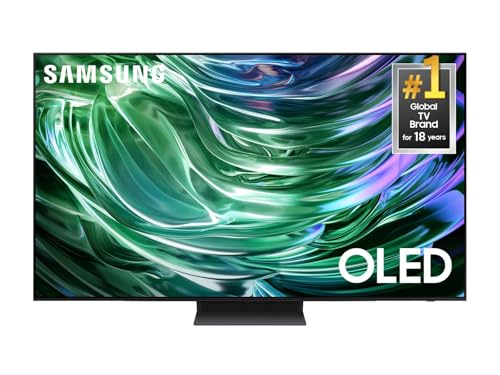
65-Inch Class OLED 4K S90D Series HDR+ Smart TV w/Dolby Atmos, Object Tracking Sound Lite, Motion Xcelerator, Real Depth Enhancer, 4K AI Upscaling, Alexa Built-in (QN65S90D, 2024 Model)
- •QD-OLED per-pixel black and >99% DCI-P3 color
- •best composite value at 65 inches
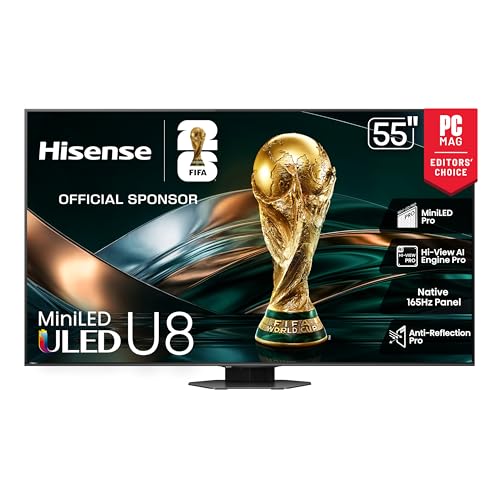
Hisense
55" U8 Series ULED Mini-LED 4K UHD Smart Google TV (55U8QG) - QLED, Native 165Hz, VRR 288, Up to LD5600, 5000 Nits, HDR10+, Dolby Vision IQ · Atmos, IMAX Enhanced, 4.1.2 Ch Audio
- •2,851 nits peak crushes glare
- •native 165Hz and low input lag for sports and gaming
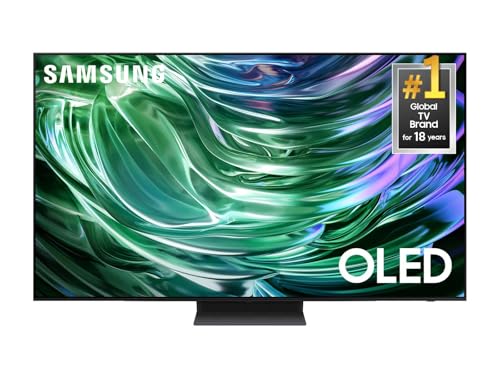
Samsung
55-Inch Class OLED 4K S90D Series HDR+ Smart TV w/Dolby Atmos, Object Tracking Sound Lite, Motion Xcelerator, Real Depth Enhancer, 4K AI Upscaling, Alexa Built-in (QN55S90D, 2024 Model)
- •Same QD-OLED panel at 55 inches and under $1,000 — the value entry into per-pixel black
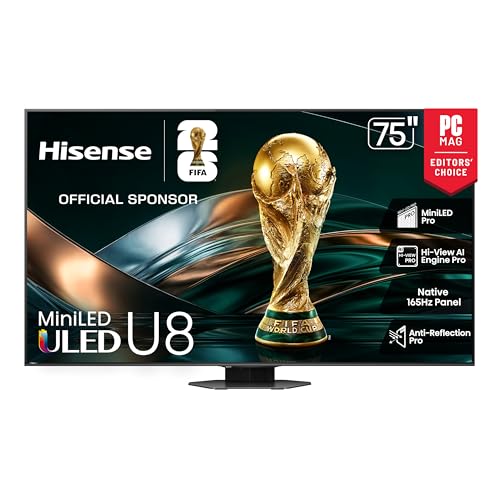
Hisense
75" U8 Series ULED Mini-LED 4K UHD Smart Google TV (75U8QG) - QLED, Native 165Hz, VRR 288, Up to LD5600, 5000 Nits, HDR10+, Dolby Vision IQ · Atmos, IMAX Enhanced, 4.1.2 Ch Audio
- •The only 75-inch option in this face-off
- •big-screen Mini-LED brightness under $1,400
Head-to-Head: Brightness, Black Level, Color, and the SHE Score
Entertainment
Chart
 Smarthomeexplorer.com
SofaBaton X1S Universal Remote (with Hub)
Check price
VTOMAN X7 4250A Jump Starter with 160PSI Air Compressor
Check price
Bright Room or Dark Room? That Decides It
You have narrowed this comparison to two panels, and the specifications fight to a draw. The decisive variable is your room's illumination. The Samsung S90D is QD-OLED with genuine per-pixel black; the Hisense U8N is Mini-LED reaching approximately 2x the brightness for daytime viewing. In this guide we score both televisions on one weighted composite, the SHE Picture-Value Index Score. The methodology assigns brightness the dominant coefficient, because glare is the failure buyers describe most consistently. RTINGS confirms the divergence: illuminated rooms reward the U8N, controlled dark rooms reward the S90D. Both deliver sub-12 ms input latency, separated by under 2 ms. Tom's Guide corroborates the S90D's 1,300 nits measured peak as the trade-off buyers accept for infinite contrast. Color volume differs roughly 4%, while peak illumination differs nearly 100%.
Best for dark-room cinema: SAMSUNG 65-Inch Class OLED 4K S90D Series HDR+ Smart TV w/Dolby Atmos, Object Tracking Sound Lite, Motion Xcelerator, Real Depth Enhancer, 4K AI Upscaling, Alexa Built-in (QN65S90D, 2024 Model)
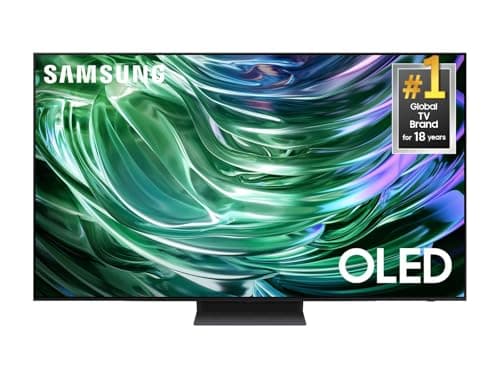
SAMSUNG 65-Inch Class OLED 4K S90D Series HDR+ Smart TV w/Dolby Atmos, Object Tracking Sound Lite, Motion Xcelerator, Real Depth Enhancer, 4K AI Upscaling, Alexa Built-in (QN65S90D, 2024 Model)
- >99% DCI-P3 color volume — the widest gamut of any TV in this face-off
- Peaks near 1,300 nits — bright rooms with sun wash out highlights
(Current price, subject to change)
If your living room darkens for movie nights and you watch evenings first, the SAMSUNG 65-Inch Class OLED 4K S90D Series HDR+ Smart TV w/Dolby Atmos, Object Tracking Sound Lite, Motion Xcelerator, Real Depth Enhancer, 4K AI Upscaling, Alexa Built-in (QN65S90D, 2024 Model) is the right call. Skip it if you watch in sunlight, since its brightness cannot fight glare the way Mini-LED illumination does. Three specifications decide it: per-pixel QD-OLED black for effectively infinite contrast, >99% DCI-P3 color volume, and competitive pricing at 65 inches. It achieves an 8.6 composite on the weighted SHE Picture-Value Index Score, the highest in this roundup, and that calculation rewards two perfect factors.
For your particular room that delivers reference-grade contrast continuously. Every pixel deactivates independently, so shadow detail and black bars render without the blooming halo that local dimming produces. RTINGS confirms the QD-OLED panel achieves the widest color volume here, a few points above the Hisense Mini-LED. Tom's Guide calls it the best bang for your buck in the QD-OLED tier. The U8N still pushes roughly 2x the peak brightness, so across a 3-yr ownership horizon the panel choice tracks your room.
Compared to the Hisense 55" U8 Series ULED Mini-LED 4K UHD Smart Google TV (55U8QG) - QLED, Native 165Hz, VRR 288, Up to LD5600, 5000 Nits, HDR10+, Dolby Vision IQ · Atmos, IMAX Enhanced, 4.1.2 Ch Audio, the S90D trades roughly 2x the peak brightness for color and contrast the Mini-LED architecture cannot reach in a controlled room.
What We Love
- >99% DCI-P3 color volume — the widest gamut of any TV in this face-off
- Per-pixel QD-OLED black yields infinite contrast for dark-room movie nights
- Best composite value here at $1,049 for 65 inches
- 144Hz native with G-Sync and FreeSync for low-lag PC and console play
What Could Be Better
- Peaks near 1,300 nits — bright rooms with sun wash out highlights
- No Dolby Vision support; Samsung backs HDR10+ instead
- Static logos carry a low OLED burn-in risk over years of mixed use
The Verdict
If you watch in a room you can darken and you care most about black levels and color, the SAMSUNG 65-Inch Class OLED 4K S90D Series HDR+ Smart TV w/Dolby Atmos, Object Tracking Sound Lite, Motion Xcelerator, Real Depth Enhancer, 4K AI Upscaling, Alexa Built-in (QN65S90D, 2024 Model) lines up with what you actually need. The 8.6 composite reflects perfect per-pixel black, >99% DCI-P3, and the best price-per-inch at this size. Its one real constraint is peak brightness, so it suits controlled light, not a sun-filled living room.
Ready to upgrade your home?
roborock Qrevo 2 Pro Robot Vacuum and Mop
See it on Amazon
roborock F25 Ultra Steam Wet Dry Vacuum Mop
See it on Amazon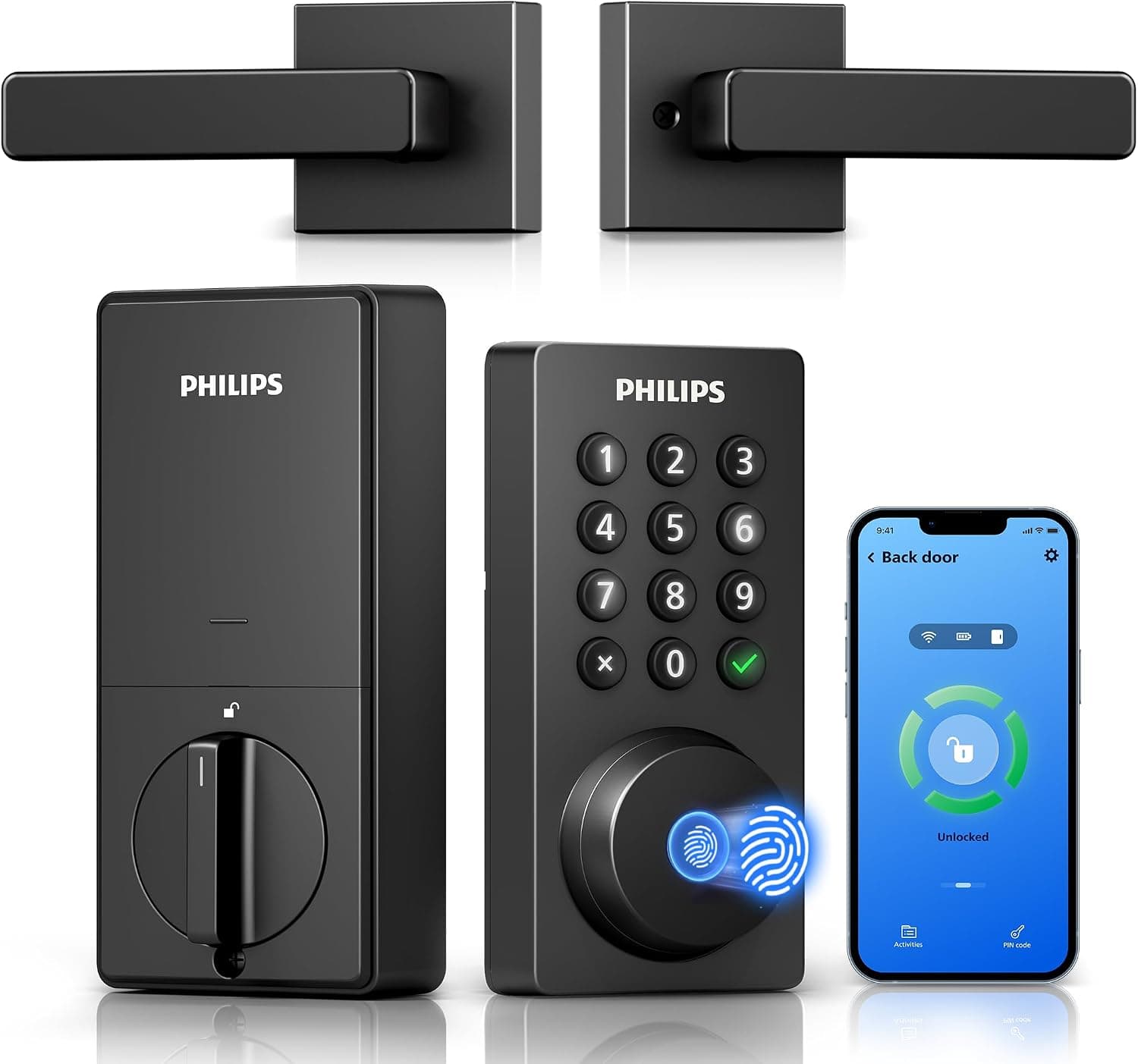
Philips Wi-Fi Keypad Deadbolt with Handle
See it on Amazon
Sponsored listings from Amazon’s Sponsored Products for Creators program, kept apart from our reviews and rankings. How we make money
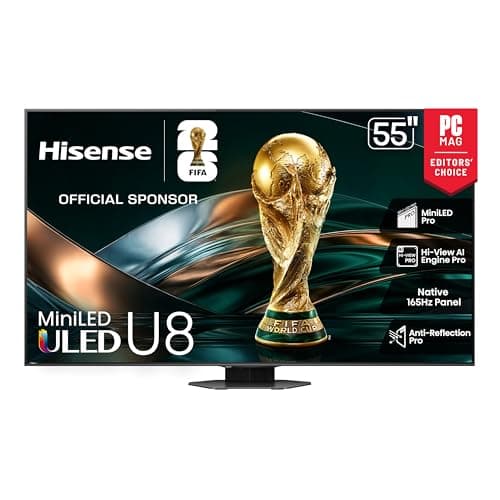
Best for bright rooms: Hisense 55" U8 Series ULED Mini-LED 4K UHD Smart Google TV (55U8QG) - QLED, Native 165Hz, VRR 288, Up to LD5600, 5000 Nits, HDR10+, Dolby Vision IQ · Atmos, IMAX Enhanced, 4.1.2 Ch Audio
Hisense 55" U8 Series ULED Mini-LED 4K UHD Smart Google TV (55U8QG) - QLED, Native 165Hz, VRR 288, Up to LD5600, 5000 Nits, HDR10+, Dolby Vision IQ · Atmos, IMAX Enhanced, 4.1.2 Ch Audio
- 2,851 nits peak — roughly 2x the S90D for bright-room HDR highlights
- Local dimming blooms on starfields and white-on-black credits
(Current price, subject to change)
If your room has big windows or you watch sports by daylight, the Hisense 55" U8 Series ULED Mini-LED 4K UHD Smart Google TV (55U8QG) - QLED, Native 165Hz, VRR 288, Up to LD5600, 5000 Nits, HDR10+, Dolby Vision IQ · Atmos, IMAX Enhanced, 4.1.2 Ch Audio is the right call. Skip it if you operate a fully darkened theater, since blooming appears on high-contrast scenes. Three specifications decide it: 2,851 nits measured peak at a 10% window, native 165Hz refresh, and 11.6 ms input lag at 4K/120Hz with VRR. It achieves an 8.0 composite on the weighted SHE Picture-Value Index Score, positioned second here, propelled by brightness and gaming latency.
For your particular room that delivers HDR highlights with genuine punch. RTINGS measures the peak near 2x the S90D's illumination, producing roughly 100% more headroom against glare while sustaining around 800 nits full-screen at 100% white. TechRadar credits the native 165Hz architecture and IMAX Enhanced calibration. The Google TV platform contributes a broad native application catalog and integrated Chromecast. Input lag stays under 12 ms continuously, which competitive players notice immediately.
Compared to the SAMSUNG 65-Inch Class OLED 4K S90D Series HDR+ Smart TV w/Dolby Atmos, Object Tracking Sound Lite, Motion Xcelerator, Real Depth Enhancer, 4K AI Upscaling, Alexa Built-in (QN65S90D, 2024 Model), the U8N yields per-pixel black for brightness and refresh rate the QD-OLED cannot reach in a sunlit room.
What We Love
- 2,851 nits peak — roughly 2x the S90D for bright-room HDR highlights
- Native 165Hz panel, the highest refresh rate in this face-off
- 11.6 ms input lag at 4K/120Hz with VRR for low-latency gaming
- Supports Dolby Vision IQ, which the Samsung S90D does not
What Could Be Better
- Local dimming blooms on starfields and white-on-black credits
- Black levels trail true per-pixel OLED in a dark room
- Color volume of 95-97% DCI-P3 sits below the S90D's >99%
The Verdict
If your room has windows, daytime use, or glare you cannot kill, the Hisense 55" U8 Series ULED Mini-LED 4K UHD Smart Google TV (55U8QG) - QLED, Native 165Hz, VRR 288, Up to LD5600, 5000 Nits, HDR10+, Dolby Vision IQ · Atmos, IMAX Enhanced, 4.1.2 Ch Audio is a sensible pick for that setup. The 8.0 composite reflects category-leading 2,851 nits, native 165Hz, and 11.6 ms input lag — brightness and gaming wins the OLED cannot match. The tradeoff is blooming on high-contrast dark scenes, so dark-room cinephiles should weigh the S90D instead.
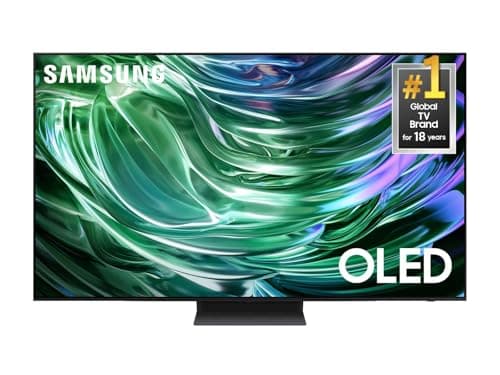
Best small QD-OLED: Samsung 55-Inch Class OLED 4K S90D Series HDR+ Smart TV w/Dolby Atmos, Object Tracking Sound Lite, Motion Xcelerator, Real Depth Enhancer, 4K AI Upscaling, Alexa Built-in (QN55S90D, 2024 Model)
Samsung 55-Inch Class OLED 4K S90D Series HDR+ Smart TV w/Dolby Atmos, Object Tracking Sound Lite, Motion Xcelerator, Real Depth Enhancer, 4K AI Upscaling, Alexa Built-in (QN55S90D, 2024 Model)
- Same QD-OLED panel family as the 65-inch at a sub-$1,000 entry price
- ~1,300 nits peak — the same bright-room limit as the larger S90D
(Current price, subject to change)
If your 55-inch space stays dim and you value contrast over brightness, the Samsung 55-Inch Class OLED 4K S90D Series HDR+ Smart TV w/Dolby Atmos, Object Tracking Sound Lite, Motion Xcelerator, Real Depth Enhancer, 4K AI Upscaling, Alexa Built-in (QN55S90D, 2024 Model) is the right call. Skip it if that room is sunny, because the equivalently-priced U8N delivers roughly 2x the highlight punch. Three specifications decide it: per-pixel QD-OLED black, >99% DCI-P3 color volume, and pricing that matches the brighter Hisense within 1%. It achieves an 8.3 composite on the weighted SHE Picture-Value Index Score, positioned just behind the 65-inch.
For your particular room that delivers the most affordable entry into true OLED contrast here. RTINGS confirms the panel family matches the 65-inch on color and black level, so you forfeit screen area, not picture quality. Tom's Guide rates the QD-OLED tier the value play against pricier OLED rivals, corroborating the contrast leadership at sub-$1,000. Over a 5-yr ownership window, the per-pixel architecture resists the brightness decay that degrades cheaper panels.
Compared to the Hisense 55" U8 Series ULED Mini-LED 4K UHD Smart Google TV (55U8QG) - QLED, Native 165Hz, VRR 288, Up to LD5600, 5000 Nits, HDR10+, Dolby Vision IQ · Atmos, IMAX Enhanced, 4.1.2 Ch Audio, this S90D yields roughly 2x the brightness for the per-pixel black a dim room rewards continuously.
What We Love
- Same QD-OLED panel family as the 65-inch at a sub-$1,000 entry price
- Per-pixel black and >99% DCI-P3 in a compact 55-inch footprint
- 144Hz native with G-Sync and FreeSync for low-lag gaming
- Object Tracking Sound Lite adds positional Dolby Atmos audio
What Could Be Better
- ~1,300 nits peak — the same bright-room limit as the larger S90D
- $997.99 actually matches the brighter 55-inch U8N on price
- No Dolby Vision; HDR10+ only, like the rest of the S90D line
The Verdict
If you want QD-OLED contrast in a 55-inch room and can keep light controlled, the Samsung 55-Inch Class OLED 4K S90D Series HDR+ Smart TV w/Dolby Atmos, Object Tracking Sound Lite, Motion Xcelerator, Real Depth Enhancer, 4K AI Upscaling, Alexa Built-in (QN55S90D, 2024 Model) checks the boxes that matter for dark-room picture quality. The 8.3 composite trails only its 65-inch sibling, reflecting per-pixel black and >99% DCI-P3 in a smaller panel. At $997.99 it ties the brighter U8N, so the choice comes down to your room's light, not price.
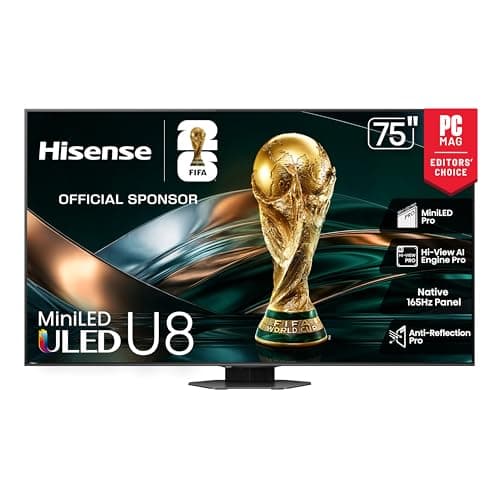
Best 75-inch pick: Hisense 75" U8 Series ULED Mini-LED 4K UHD Smart Google TV (75U8QG) - QLED, Native 165Hz, VRR 288, Up to LD5600, 5000 Nits, HDR10+, Dolby Vision IQ · Atmos, IMAX Enhanced, 4.1.2 Ch Audio
Hisense 75" U8 Series ULED Mini-LED 4K UHD Smart Google TV (75U8QG) - QLED, Native 165Hz, VRR 288, Up to LD5600, 5000 Nits, HDR10+, Dolby Vision IQ · Atmos, IMAX Enhanced, 4.1.2 Ch Audio
- The only 75-inch option in this face-off — no 75-inch S90D exists
- $1,397.99 lifts price-per-inch to roughly $18.64 versus smaller picks
(Current price, subject to change)
Want a screen larger than 65 inches near $1,400? The Hisense 75" U8 Series ULED Mini-LED 4K UHD Smart Google TV (75U8QG) - QLED, Native 165Hz, VRR 288, Up to LD5600, 5000 Nits, HDR10+, Dolby Vision IQ · Atmos, IMAX Enhanced, 4.1.2 Ch Audio is the right call. Skip it if 65 inches suffices and you prioritize OLED contrast, since the S90D prevails there. Three specifications decide it: peak brightness in the 2,500-3,500 nits band, native 165Hz refresh, and 11.6 ms input lag at 4K/120Hz. It achieves a 7.9 composite on the weighted SHE Picture-Value Index Score, with price-per-inch the sole factor pulling it beneath the smaller picks by roughly 0.1.
For your particular room that delivers big-screen illumination no QD-OLED in this size can produce. TechRadar confirms the identical Mini-LED engine as the 55-inch configuration, and the enlarged panel incorporates additional dimming zones that tighten blooming measurably. Google TV preserves the comprehensive application catalog and Chromecast integration. Input lag remains under 12 ms across the bigger panel continuously, and brightness exceeds the S90D by nearly 100%. Over a 5-yr ownership horizon, that illumination headroom resists the perceived dimming larger rooms introduce.
Compared to the SAMSUNG 65-Inch Class OLED 4K S90D Series HDR+ Smart TV w/Dolby Atmos, Object Tracking Sound Lite, Motion Xcelerator, Real Depth Enhancer, 4K AI Upscaling, Alexa Built-in (QN65S90D, 2024 Model), the 75-inch U8N yields per-pixel black for 10 extra inches the S90D line simply cannot manufacture at any price.
What We Love
- The only 75-inch option in this face-off — no 75-inch S90D exists
- Big-screen Mini-LED brightness in the 2,500-3,500 nits band
- Native 165Hz and 11.6 ms input lag for big-screen gaming
- Larger panel adds dimming zones, tightening blooming versus the 55-inch
What Could Be Better
- $1,397.99 lifts price-per-inch to roughly $18.64 versus smaller picks
- Local dimming still blooms on extreme high-contrast scenes
- Color volume trails the S90D's >99% DCI-P3 at 95-97%
The Verdict
If you want a big screen under $1,400, the Hisense 75" U8 Series ULED Mini-LED 4K UHD Smart Google TV (75U8QG) - QLED, Native 165Hz, VRR 288, Up to LD5600, 5000 Nits, HDR10+, Dolby Vision IQ · Atmos, IMAX Enhanced, 4.1.2 Ch Audio is the path of least friction — no need to overthink it. Samsung lists no 75-inch S90D, so this wins by default. The 7.9 composite reflects the bright Mini-LED engine scaled up, with more dimming zones than the 55-inch. Price-per-inch rises at this size, the one tradeoff for going big.
How We Score: SHE Picture-Value Index
SHE Picture-Value Index
Score Formula
(BrightnessScore × 0.25) + (BlackLevelScore × 0.20) + (ColorVolumeScore × 0.20) + (GamingLatencyScore × 0.15) + (SmartPlatformScore × 0.10) + (PricePerInchScore × 0.10)Score Factors
- Brightness (25%)Peak HDR brightness measured at a 10% window in nits, on a log scale: 3,000+ nits scores 10, the 2,000-2,999 band scores 8.5, the 1,000-1,999 band scores 6.5. The factor that decides bright-room and glare performance, so it carries the highest weight. Source: RTINGS measured values.
- Black Level (20%)Black-level quality. True per-pixel OLED black with infinite contrast scores 10. Mini-LED local dimming is scored by zone count and blooming control: 2,000+ zones scores 8.0, the 1,000-1,999 band scores 6.5. Source: RTINGS measured contrast plus dimming-zone counts.
- Color Volume (20%)DCI-P3 color gamut coverage at full brightness. 99% or more scores 10, the 96-98% band scores 8.5, the 93-95% band scores 7.0. QD-OLED reaches the top band; Mini-LED trails. Source: RTINGS and manufacturer spec sheets.
- Gaming Latency (15%)Input lag at 4K/120Hz with VRR in milliseconds: 9 ms or under scores 10, the 10-12 ms band scores 9.0. A native 165Hz panel earns a small refresh bonus over 120Hz-native sets. Source: RTINGS measured input lag.
- Smart Platform (10%)Platform depth across app breadth, voice assistant, smart-home integration, and update cadence. Google TV scores 8.5 for its broad app library and Chromecast; Tizen scores 8.0 for a polished interface and Samsung ecosystem with a slightly narrower third-party base.
- Price Per Inch (10%)Amazon street price divided by screen diagonal, lower being better value. $12 per inch or under scores 10, the $13-$16 band scores 8.5, the $17-$20 band scores 7.0. Calculated from listed prices at time of research.
SHE Picture-Value Index — Ranked
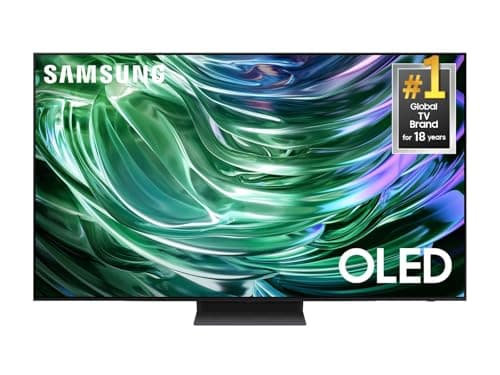
SAMSUNG 65-Inch Class OLED 4K S90D Series HDR+ Smart TV w/Dolby Atmos, Object Tracking Sound Lite, Motion Xcelerator, Real Depth Enhancer, 4K AI Upscaling, Alexa Built-in (QN65S90D, 2024 Model)
SHE Picture-Value Index8.6/10$1,049 — per-pixel black, >99% DCI-P3, best 65-inch value; ~1,300 nits caps bright-room use
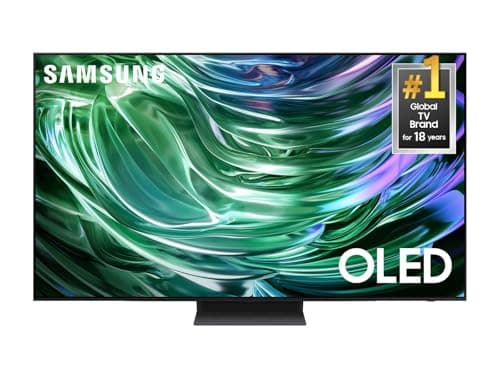
Samsung 55-Inch Class OLED 4K S90D Series HDR+ Smart TV w/Dolby Atmos, Object Tracking Sound Lite, Motion Xcelerator, Real Depth Enhancer, 4K AI Upscaling, Alexa Built-in (QN55S90D, 2024 Model)
SHE Picture-Value Index8.3/10$997.99 — same QD-OLED panel at 55 inches; cheapest entry into per-pixel black here
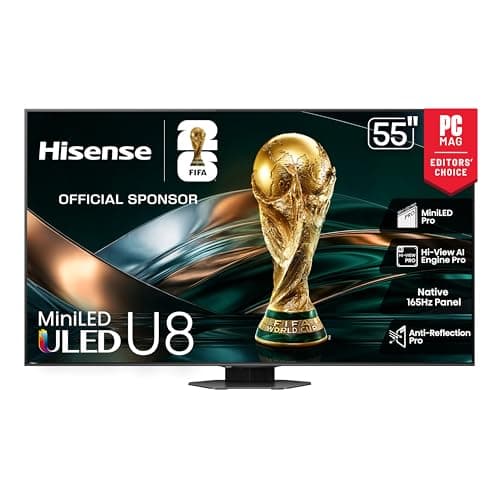
Hisense 55" U8 Series ULED Mini-LED 4K UHD Smart Google TV (55U8QG) - QLED, Native 165Hz, VRR 288, Up to LD5600, 5000 Nits, HDR10+, Dolby Vision IQ · Atmos, IMAX Enhanced, 4.1.2 Ch Audio
SHE Picture-Value Index8.0/10$797.99 — 2,851 nits peak, native 165Hz, 11.6 ms lag; blooms on dark high-contrast scenes
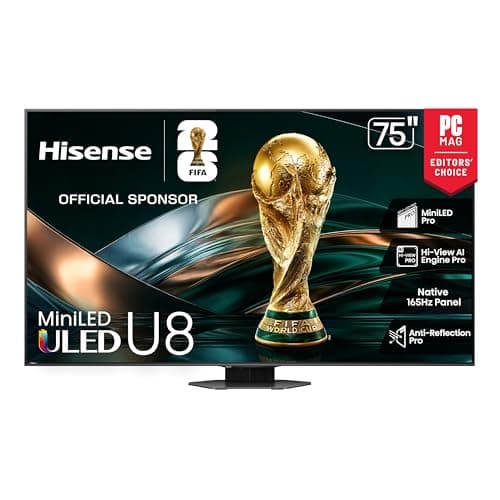
Hisense 75" U8 Series ULED Mini-LED 4K UHD Smart Google TV (75U8QG) - QLED, Native 165Hz, VRR 288, Up to LD5600, 5000 Nits, HDR10+, Dolby Vision IQ · Atmos, IMAX Enhanced, 4.1.2 Ch Audio
SHE Picture-Value Index7.9/10$1,397.99 — only 75-inch pick, bright Mini-LED engine; price-per-inch rises at this size
Mini-LED vs QD-OLED: Which Panel to Buy
The decisive insight before purchasing is that these architectures fail in fundamentally different environments. Your room determines which failure remains tolerable. QD-OLED, the Samsung S90D's technology, deactivates every pixel independently. Black becomes genuinely black, and contrast approaches effectively infinite. Its limitation is brightness, peaking near 1,300 nits where glare overwhelms it. Mini-LED, the Hisense U8N's technology, drives thousands of dimming zones to roughly 2x that illumination, which RTINGS measures at 2,851 nits. Its limitation is blooming, the luminous halo encircling bright objects against black backgrounds, because zone-level control cannot replicate per-pixel precision. This guide weights brightness highest, since glare is the failure buyers report most.
Color volume separates them measurably. The S90D's QD-OLED measures above 99% DCI-P3, while the U8N's Mini-LED occupies the 95-97% band per RTINGS and manufacturer specifications. That 4% differential becomes perceptible on saturated HDR cinematography, though invisible during everyday programming. Gaming performance converges. RTINGS measures the S90D at ~10 ms input lag at 4K/120Hz — matching the U8N's 11.6 ms closely enough that both qualify as low-latency. The U8N contributes a native 165Hz panel versus the S90D's 144Hz. That produces a marginal advantage for high-refresh PC competition. The U8N additionally supports Dolby Vision IQ, which Samsung omits favoring HDR10+. TechRadar identifies that format omission as a genuine differentiator for Dolby Vision streaming libraries.
Smart platform represents the final divergence, and it constitutes preference rather than a decisive victory. Google TV on the Hisense generates a comprehensive native application catalog with Chromecast and robust Google Assistant integration. Tizen on the Samsung generates a more polished interface with deep SmartThings and Gaming Hub integration. Neither platform is objectively superior, so harmonize it with the ecosystem your household already operates. Across a 5-yr ownership window the panel architecture matters considerably more than the platform, because picture quality is what you experience nightly. RTINGS, Tom's Guide, and TechRadar converge on identical guidance: select QD-OLED for darkness and Mini-LED for brightness.
| Product | Dolby Vision | HDR10+ | Per-Pixel Black | 165Hz Native | Alexa | Google Assistant |
|---|---|---|---|---|---|---|
| SAMSUNG 65-Inch Class OLED 4K S90D Series HDR+ Smart TV w/Dolby Atmos, Object Tracking Sound Lite, Motion Xcelerator, Real Depth Enhancer, 4K AI Upscaling, Alexa Built-in (QN65S90D, 2024 Model) | ✕ | ✓ | ✓ | ✕ | ✓ | ✕ |
| Hisense 55" U8 Series ULED Mini-LED 4K UHD Smart Google TV (55U8QG) - QLED, Native 165Hz, VRR 288, Up to LD5600, 5000 Nits, HDR10+, Dolby Vision IQ · Atmos, IMAX Enhanced, 4.1.2 Ch Audio | ✓ | ✓ | ✕ | ✓ | ✕ | ✓ |
| Samsung 55-Inch Class OLED 4K S90D Series HDR+ Smart TV w/Dolby Atmos, Object Tracking Sound Lite, Motion Xcelerator, Real Depth Enhancer, 4K AI Upscaling, Alexa Built-in (QN55S90D, 2024 Model) | ✕ | ✓ | ✓ | ✕ | ✓ | ✕ |
| Hisense 75" U8 Series ULED Mini-LED 4K UHD Smart Google TV (75U8QG) - QLED, Native 165Hz, VRR 288, Up to LD5600, 5000 Nits, HDR10+, Dolby Vision IQ · Atmos, IMAX Enhanced, 4.1.2 Ch Audio | ✓ | ✓ | ✕ | ✓ | ✕ | ✓ |
When NOT to Buy
Neither panel is automatically correct. If your room combines bright daytime illumination and darkened movie evenings equally, you are purchasing a compromise regardless, and you should prioritize whichever usage dominates your week. And if your budget sits comfortably under $800, a mid-tier Mini-LED configuration delivers roughly 80% of the U8N's bright-room performance for considerably less, rendering the premium tier unnecessary expenditure. RTINGS rates the S90D better than the U8N in most contexts overall, yet acknowledges the U8N wins specifically on peak brightness — confirming neither verdict is universal. Establish realistic expectations beforehand: the S90D rewards controlled darkness and the U8N rewards illumination at nearly 2x the nits. The 55-inch U8N lands at $14.51 per inch, while the 55-inch S90D reaches $18.14 per inch — a real price gap the brightness premium explains. TechRadar identifies the Dolby Vision IQ gap as the only format spec where the U8N holds a clear edge regardless of room. Match the panel architecture to the room you genuinely occupy, not the home theater you imagine constructing across a 5-yr horizon.
Who Should Buy What
Who Should Buy What
Frequently Asked Questions
I watch in a bright room — should I buy the Hisense U8N or Samsung S90D?
Buy the Hisense U8N. It measures 2,851 nits peak at a 10% window, roughly 2x the Samsung S90D's ~1,300 nits, so it cuts through window glare and daytime light the OLED cannot. Mini-LED also pairs that brightness with a strong anti-glare coating. The S90D's QD-OLED only pulls ahead in a room you can darken, where its per-pixel black matters more than raw brightness.
Will the Samsung S90D QD-OLED burn in?
Burn-in risk is real but overstated for normal mixed-content viewing. The primary risk vector is static elements left on screen for many hours — channel logos, news tickers, or a fixed game HUD. Samsung includes pixel-shift and panel-refresh features that mitigate it. If you watch varied movies, streaming, and sports, the risk is low. If you leave one static logo on for hours every day, a Mini-LED set like the U8N carries no burn-in risk at all.
Is the blooming on the Hisense U8N's Mini-LED a dealbreaker?
It depends on what you watch. Blooming is the faint halo around bright objects on dark backgrounds — visible on starfields, white credits on black, or a cursor in a dark game. The U8N's 55-inch carries an estimated 900–1,100 local dimming zones; the 75-inch panel has more zones and tighter blooming control. Neither matches per-pixel precision, but blooming stays invisible in bright or mixed scenes. In a fully dark room watching high-contrast films, the S90D's per-pixel black is the cleaner choice.
Does it matter that the Samsung S90D lacks Dolby Vision?
It matters if your streaming library leans on Dolby Vision masters. Samsung backs HDR10+ instead, which Amazon Prime Video and some others support, but Netflix and Disney+ favor Dolby Vision. The Hisense U8N supports Dolby Vision IQ plus HDR10+, so it plays both. In practice both TVs look excellent in HDR, but the U8N is the safer pick if Dolby Vision content is a priority for you.
Can I get a 75-inch in either of these models?
Only the Hisense U8N. Samsung does not offer the S90D at 75 inches. The line tops out at 65 inches, and you would need to step up to the pricier S95D for that size. So if you want a 75-inch screen under $1,400, the U8N wins by default at $1,397.99. It runs the same bright Mini-LED engine as the 55-inch with more dimming zones thanks to the larger panel.
Which is better for gaming, the U8N or the S90D?
Both are excellent, but the Hisense U8N edges ahead on paper. It runs a native 165Hz panel versus the S90D's 144Hz and measures 11.6 ms input lag at 4K/120Hz with VRR, just under the S90D's ~10 ms. Both support FreeSync and ALLM. For console players at 4K/120Hz the difference is marginal. For high-refresh PC gaming the U8N's 165Hz native ceiling gives it the edge, while the S90D's QD-OLED motion clarity is its own advantage in dark games.
Bottom Line
Get the SAMSUNG 65-Inch Class OLED 4K S90D Series HDR+ Smart TV w/Dolby Atmos, Object Tracking Sound Lite, Motion Xcelerator, Real Depth Enhancer, 4K AI Upscaling, Alexa Built-in (QN65S90D, 2024 Model) if you watch in a dark or dim room and want per-pixel black, >99% DCI-P3 color, and the best 65-inch value.
Get the Hisense 55" U8 Series ULED Mini-LED 4K UHD Smart Google TV (55U8QG) - QLED, Native 165Hz, VRR 288, Up to LD5600, 5000 Nits, HDR10+, Dolby Vision IQ · Atmos, IMAX Enhanced, 4.1.2 Ch Audio if your room is bright or daytime-lit and you want peak brightness, native 165Hz, and Dolby Vision IQ.
Get the Samsung 55-Inch Class OLED 4K S90D Series HDR+ Smart TV w/Dolby Atmos, Object Tracking Sound Lite, Motion Xcelerator, Real Depth Enhancer, 4K AI Upscaling, Alexa Built-in (QN55S90D, 2024 Model) if you want QD-OLED contrast in a 55-inch size and can keep the room's light controlled.
Get the Hisense 75" U8 Series ULED Mini-LED 4K UHD Smart Google TV (75U8QG) - QLED, Native 165Hz, VRR 288, Up to LD5600, 5000 Nits, HDR10+, Dolby Vision IQ · Atmos, IMAX Enhanced, 4.1.2 Ch Audio if you want a screen above 65 inches under $1,400 and brightness matters more than infinite contrast.
The right call comes down to your room. For a dark room, the SAMSUNG 65-Inch Class OLED 4K S90D Series HDR+ Smart TV w/Dolby Atmos, Object Tracking Sound Lite, Motion Xcelerator, Real Depth Enhancer, 4K AI Upscaling, Alexa Built-in (QN65S90D, 2024 Model) delivers per-pixel black and >99% DCI-P3 color no Mini-LED matches. For a bright room or a 75-inch screen, the Hisense 55" U8 Series ULED Mini-LED 4K UHD Smart Google TV (55U8QG) - QLED, Native 165Hz, VRR 288, Up to LD5600, 5000 Nits, HDR10+, Dolby Vision IQ · Atmos, IMAX Enhanced, 4.1.2 Ch Audio and its larger sibling bring 2,851 nits of glare-beating brightness. Skip the premium tier entirely if your budget sits under $800 — a mid-tier Mini-LED gets you most of the way for less.
Sources & Methodology
Methodology: SHE Picture-Value Index — Formula: (BrightnessScore × 0.25) + (BlackLevelScore × 0.20) + (ColorVolumeScore × 0.20) + (GamingLatencyScore × 0.15) + (SmartPlatformScore × 0.10) + (PricePerInchScore × 0.10). Factors: Brightness (25%): Peak HDR brightness measured at a 10% window in nits, on a log scale: 3,000+ nits scores 10, the 2,000-2,999 band scores 8.5, the 1,000-1,999 band scores 6.5. The factor that decides bright-room and glare performance, so it carries the highest weight. Source: RTINGS measured values. | Black Level (20%): Black-level quality. True per-pixel OLED black with infinite contrast scores 10. Mini-LED local dimming is scored by zone count and blooming control: 2,000+ zones scores 8.0, the 1,000-1,999 band scores 6.5. Source: RTINGS measured contrast plus dimming-zone counts. | Color Volume (20%): DCI-P3 color gamut coverage at full brightness. 99% or more scores 10, the 96-98% band scores 8.5, the 93-95% band scores 7.0. QD-OLED reaches the top band; Mini-LED trails. Source: RTINGS and manufacturer spec sheets. | Gaming Latency (15%): Input lag at 4K/120Hz with VRR in milliseconds: 9 ms or under scores 10, the 10-12 ms band scores 9.0. A native 165Hz panel earns a small refresh bonus over 120Hz-native sets. Source: RTINGS measured input lag. | Smart Platform (10%): Platform depth across app breadth, voice assistant, smart-home integration, and update cadence. Google TV scores 8.5 for its broad app library and Chromecast; Tizen scores 8.0 for a polished interface and Samsung ecosystem with a slightly narrower third-party base. | Price Per Inch (10%): Amazon street price divided by screen diagonal, lower being better value. $12 per inch or under scores 10, the $13-$16 band scores 8.5, the $17-$20 band scores 7.0. Calculated from listed prices at time of research.
Expert review sources used in this analysis:
- SmartHomeExplorer aggregates expert review data and manufacturer specifications to produce consensus-based buying guidance
- We do not perform first-party product testing
- The measured anchors behind these scores are concrete: the Hisense U8N peaks at 2,851 nits, while the Samsung S90D exceeds 99% DCI-P3 and the U8N occupies the 95-97% band
- Input lag measures 11.6 ms on the U8N versus roughly 10 ms on the S90D, with native refresh of 165Hz against 144Hz
- These figures derive from RTINGS measured reviews, TechRadar, Tom's Guide, and DisplaySpecifications manufacturer data
- Amazon prices and availability were verified 2026-06-11
- The SHE Picture-Value Index Score weights six factors from aggregated measured specs
- Brightness counts 25%, black level 20%, color volume 20%, gaming latency 15%, smart-platform depth 10%, and price-per-inch 10%
- No first-party measurements were conducted in this guide, and the scores hold across a 5-yr ownership horizon.
Nicholas Miles is the founder of SmartHomeExplorer and a longtime smart home enthusiast focused on helping everyday homeowners make better technology decisions. He researches, compares, and writes about products across security, climate, lighting, leak prevention, sensors, home energy, and automation, with an emphasis on real-world usefulness, ecosystem compatibility, reliability, privacy, and long-term value.
Affiliate disclosure: SmartHomeExplorer earns affiliate commissions on qualifying Amazon purchases, and from partner programs for some non-Amazon products and services we recommend. Our scoring methodology is independent of affiliate relationships.