
EcoFlow Delta Pro Ultra vs Anker SOLIX F3800 Plus 2026
The Delta Pro Ultra wins on scale ceiling and the cheapest expansion kWh; the F3800 Plus is the better-value entry at 6,000W and $2,300.
This article contains affiliate links. We may earn a commission at no extra cost to you. Prices change frequently — check the current price on Amazon before buying. Learn more
The Short Answer
The EcoFlow Delta Pro Ultra dominates flagship scalability. It delivers 7,200W output, a 90kWh ceiling, and $341.63/kWh expansion economics. The Anker SOLIX F3800 Plus, a Digital Trends Editors' Choice, counters on entry value. EcoFlow undercuts Anker's per-kWh rate by roughly 23%, inverting the mid-tier verdict.
Featured in this Guide
EcoFlow
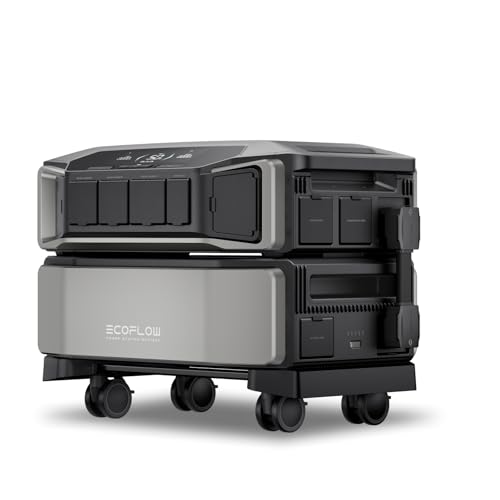
Delta Pro Ultra
- •Highest 7,200W output and 90kWh ceiling, plus the tier's cheapest $341.63/kWh expansion
EcoFlow
DELTA Pro Ultra + Extra Battery (12kWh)
- •Highest 7,200W output and 90kWh ceiling, plus the tier's cheapest $341.63/kWh expansion
EcoFlow
DELTA Pro Ultra Extra Battery
- •Highest 7,200W output and 90kWh ceiling, plus the tier's cheapest $341.63/kWh expansion
Anker
SOLIX F3800 Plus
- •6,000W split-phase at $2,299.99 buys the best 2,609W-per-$1,000 value and wheeled portability
Anker
SOLIX F3800 Plus + BP3800 Expansion Battery (7.68kWh)
- •6,000W split-phase at $2,299.99 buys the best 2,609W-per-$1,000 value and wheeled portability
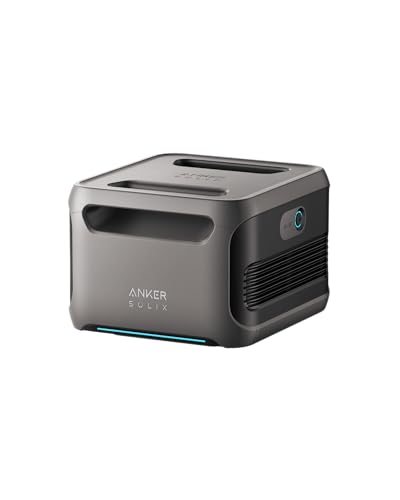
Anker
SOLIX BP3800 Expansion Battery
- •3,840Wh BP3800 at $442.71/kWh with a 10-year rated lifespan for F3800 Plus owners
Head-to-Head: Output, Capacity, Solar, and the SHE Score
Energy
Chart
 Smarthomeexplorer.com
Big Ass Fans Haiku L 52-Inch Smart Ceiling Fan
Check price
AlorAir Sentinel HDi90 Basement/Crawlspace Dehumidifier with Pump
Check price
AC Infinity CLOUDWAY T12 Whole House Fan
Check price
LG Dual Inverter Smart WiFi Window AC (10,000 BTU)
$499.00Check price
Midea U Smart Inverter Window AC (12,000 BTU)
Check price
Mysa Smart Thermostat for Electric Baseboard Heaters (V2)
Check price
Which Flagship Scales Furthest Per Dollar?
You have eliminated the mid tier already. Both flagships here energize an entire breaker panel, so the question abandons capability and becomes scalability. How much continuous output, how many accumulated kWh, and what does every incremental kWh cost? In this guide we compute one weighted composite, the SHE Flagship Scale Economics Score. It normalizes six factors from documented specifications and live Amazon prices into a coefficient-driven ranking. The dominant factors are output ceiling, capacity ceiling, and expansion economics, weighted at 20% each. EcoFlow's $341.63/kWh module produces the cheapest expansion kWh at this tier. Digital Trends named the F3800 Plus an Editors' Choice, while Trusted Reviews called the Delta Pro Ultra exceptionally flexible and TechRadar praised the Anker platform's industry-leading capabilities. If your continuous loads sit under 4,000W and budget under $3,500, step down to our EcoFlow Delta Pro 3 vs Anker SOLIX F3800 (2026) comparison instead.
Best Overall Flagship: EcoFlow Delta Pro Ultra
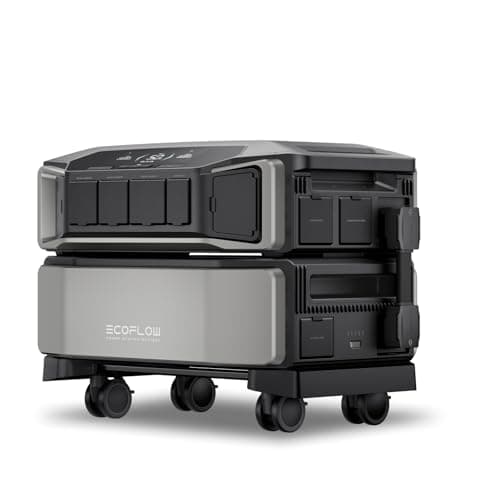
EcoFlow Delta Pro Ultra
- Highest continuous output here at 7,200W, parallelable to 21.6kW with three inverters
- Two-piece system over 180 lbs combined, designed to be parked rather than rolled
(Current price, subject to change)
The EcoFlow Delta Pro Ultra earns the top composite of 9.55 on the SHE Flagship Scale Economics Score, computed from a weighted formula across six normalized coefficients. It maximizes the output, capacity, expansion, and solar factors outright. The 7,200W continuous output simultaneously energizes a 3-ton AC, a well pump, and an electric range, and parallels to 21,600W across three inverters on Smart Home Panel 2. Trusted Reviews reviewed the Delta Pro Ultra as an exceptionally powerful and flexible station that can power any home appliance.
No alternative here accumulates to 90kWh, and that ceiling is precisely what the capacity factor rewards. Trusted Reviews calls it an exceptionally powerful and flexible station that can power any home appliance, portable only to a degree. The 5,600W solar input per inverter scales to 16,800W across three, and EcoFlow claims a 6.1kWh replenishment in about 2 hours of strong sun. The expansion economics produce the headline result. Each additional battery delivers capacity at $341.63/kWh, undercutting every alternative module.
Compared to the Anker SOLIX F3800 Plus, the Delta Pro Ultra delivers 60% more capacity and 20% more output for a parked two-piece install. The higher output and deeper 90kWh ceiling produce the better long-run economics whenever you intend to expand.
What We Love
- Highest continuous output here at 7,200W, parallelable to 21.6kW with three inverters
- 90kWh documented capacity ceiling, the deepest scaling runway at the tier
- Cheapest expansion kWh in this guide at $341.63 via the extra battery
- 5,600W solar input per inverter, roughly 1.75x the F3800 Plus ceiling
What Could Be Better
- Two-piece system over 180 lbs combined, designed to be parked rather than rolled
- 78% higher entry price than the F3800 Plus at $4,099.00
- Full 90kWh and 21.6kW ceilings assume Smart Home Panel 2 and an electrician install
The Verdict
If you are a whole-home outage planner sizing the entire panel — well pump, 3-ton AC, range — the EcoFlow Delta Pro Ultra fits the brief without compromise. The 9.55 composite reflects the highest output ceiling, the deepest 90kWh runway, and the tier's cheapest expansion kWh. You pay more to start, but no platform here scales further per dollar over a 10-yr horizon.
Ready to upgrade your home?
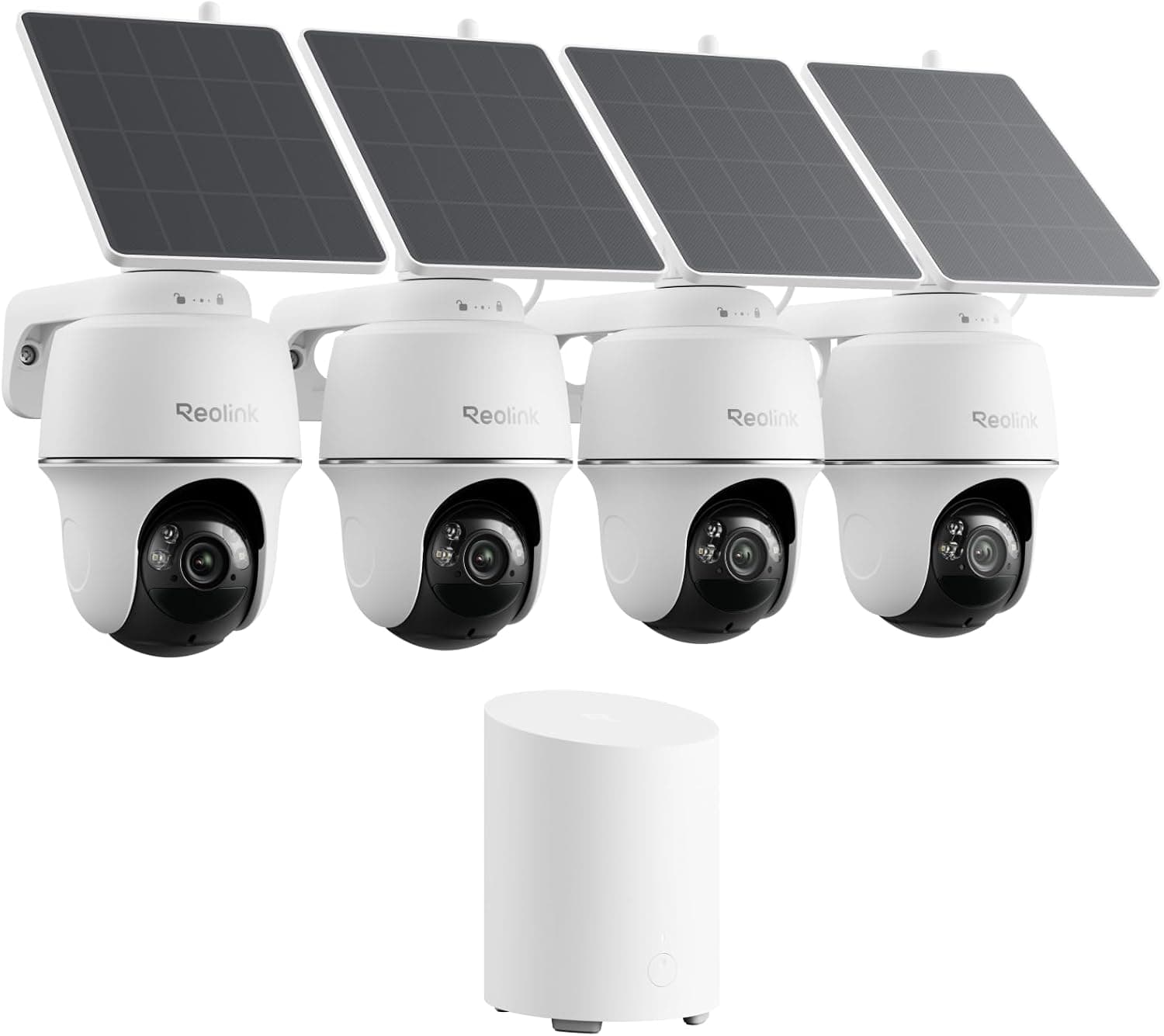
REOLINK 360° Solar Security Cameras, 4 Pack
See it on Amazon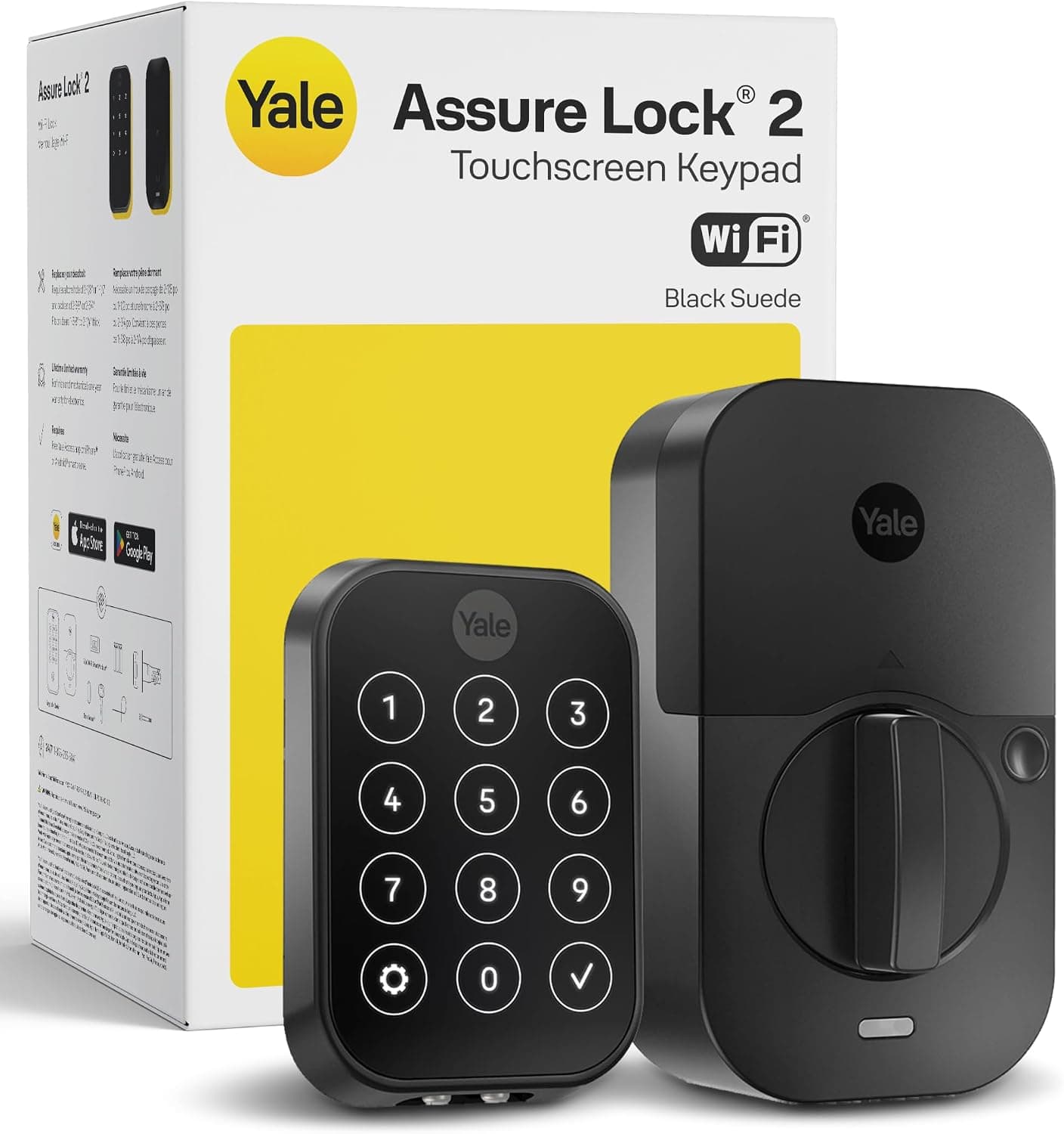
Yale Assure Lock 2 Wi-Fi Smart Lock with Keypad
See it on Amazon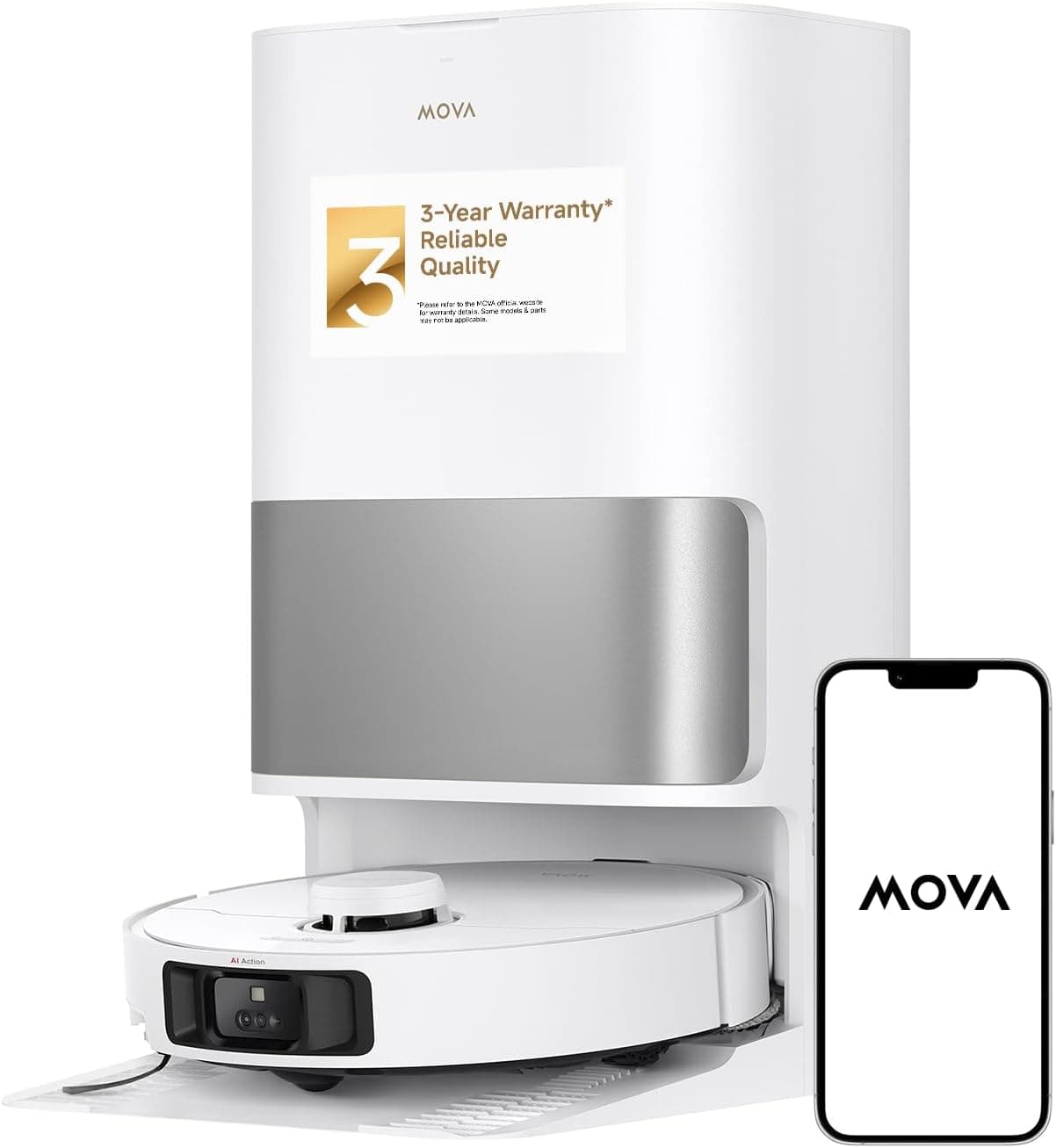
MOVA P10 Pro Ultra Robot Vacuum and Mop
See it on Amazon
Sponsored listings from Amazon’s Sponsored Products for Creators program, kept apart from our reviews and rankings. How we make money
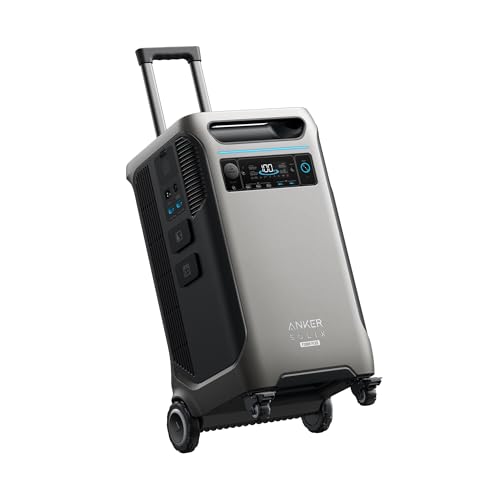
Best Value Entry: Anker SOLIX F3800 Plus
Anker SOLIX F3800 Plus
- Best entry value here at 2,609W per $1,000 of street price
- 26.88kWh single-stack ceiling; going further needs a second station, not just batteries
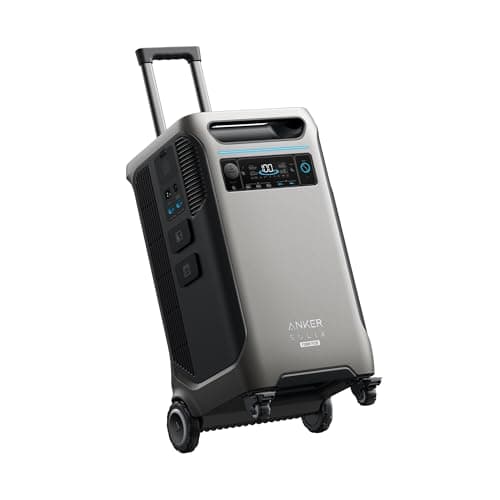
The Anker SOLIX F3800 Plus earns a composite of 7.85 on the SHE Flagship Scale Economics Score, computed from the same six-factor weighted formula. For your budget that translates into the best entry value here. Its 6,000W continuous split-phase output costs $2,299.99, which works out to 2,609W per $1,000 — the highest output-per-dollar coefficient in this guide. Digital Trends named it an Editors' Choice, saying it beats the competition in usability, versatility, and value, and TechRadar echoes that value verdict.
The flexibility is where it separates from EcoFlow. It charges natively from a gas generator at 3,300W and 240V, and integrates through a generic 50A transfer switch any electrician stocks. Digital Trends measured roughly 20 hours running a 150W refrigerator and a 3.17-hour AC recharge. Digital Trends also called the EV-charging use gimmicky, citing about 5 miles of Rivian range. TechRadar calls the system industry-leading, though it cautions the high initial cost may deter budget-conscious buyers.
Compared to the EcoFlow Delta Pro Ultra, the F3800 Plus rolls on wheels and starts for 78% less, but its documented ceiling — 53.76kWh dual-system versus the DPU's 90kWh platform maximum — is the scale gap Digital Trends' entry-value Editors' Choice award does not resolve.
What We Love
- Best entry value here at 2,609W per $1,000 of street price
- One wheeled 136.7-lb unit Digital Trends measured for true one-person portability
- Native 3,300W gas-generator charging at 240V needs no proprietary panel
- Works with a standard 50A transfer switch via NEMA 14-50 and L14-30 outlets
What Could Be Better
- 26.88kWh single-stack ceiling; going further needs a second station, not just batteries
- 3,200W solar input trails the Delta Pro Ultra's 5,600W per inverter
- BP3800 expansion at $442.71/kWh runs above EcoFlow's $341.63/kWh module
The Verdict
If you are a value-first storm prepper backing essential circuits through multi-day outages, the Anker SOLIX F3800 Plus is a sensible pick for that setup. The 7.85 composite reflects the best 2,609W-per-$1,000 entry value plus charging flexibility no panel matches. Digital Trends gave it an Editors' Choice; you can stop the search here for value-first whole-home backup.
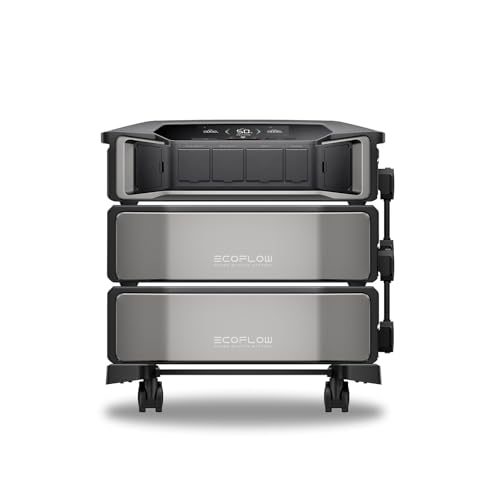
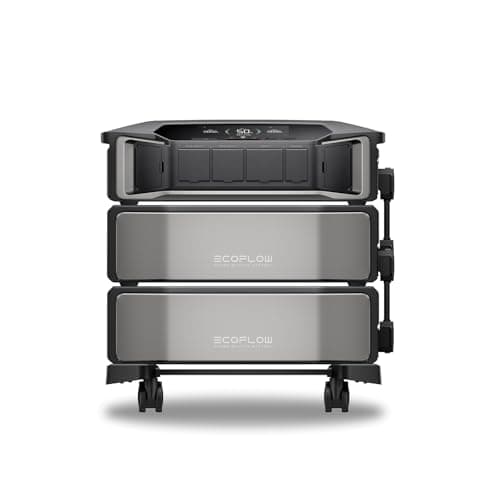
Best Deep-Outage Bundle: EcoFlow DELTA Pro Ultra + Extra Battery (12kWh)
EcoFlow DELTA Pro Ultra + Extra Battery (12kWh)
- 12,288Wh starting config doubles the base runtime out of the box
- $5,999.00 entry is the priciest single SKU in this guide
(Current price, subject to change)
The EcoFlow DELTA Pro Ultra + Extra Battery (12kWh) earns a composite of 8.75 on the SHE Flagship Scale Economics Score. For a deep-outage planner that delivers front-loaded resilience. The 12,288Wh starting configuration provides roughly double the base capacity, enough to perpetuate essential circuits across an extended multi-day interruption without a subsequent purchase. Trusted Reviews characterizes the Delta Pro Ultra platform as capable of energizing any home appliance, a versatility the bundle inherits completely.
The economics occupy the territory between the bare module and the standalone inverter. The blended $488.20/kWh exceeds the extra battery's $341.63/kWh marginal rate, yet still undercuts the comparable Anker F3800 Plus bundle's $520.70/kWh. It preserves the identical 7,200W output and the 5,600W-per-inverter solar ceiling that replenishes it rapidly.
Compared to the EcoFlow DELTA Pro Ultra Extra Battery purchased separately, this configuration costs more per kWh but ships pre-paired. That trade-off favors buyers who prioritize a singular decision over the cheapest incremental kWh.
What We Love
- 12,288Wh starting config doubles the base runtime out of the box
- Blended $488.20/kWh undercuts the Anker bundle's $520.70/kWh
- Same 7,200W output and 90kWh ceiling as the base inverter
- Inherits the 5,600W-per-inverter solar input for fast outage refills
What Could Be Better
- $5,999.00 entry is the priciest single SKU in this guide
- Entry output value drops to 1,200W per $1,000 at the bundle price
- Still a parked two-module install, not a wheeled unit
The Verdict
If you are a deep-outage planner who wants two days of essential-circuit runtime from day one, the EcoFlow DELTA Pro Ultra + Extra Battery (12kWh) checks the boxes that matter for multi-day resilience. The 8.75 composite reflects the doubled 12,288Wh start at a blended $488.20/kWh. You skip a second purchase later — the path of least friction for buyers who know one battery is not enough.
Check price for the EcoFlow DELTA Pro Ultra + Extra Battery (12kWh) →
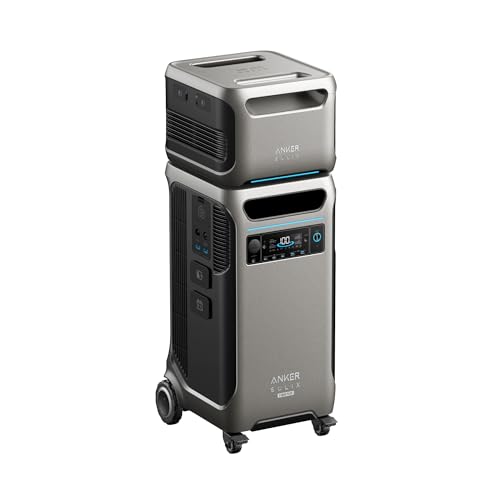
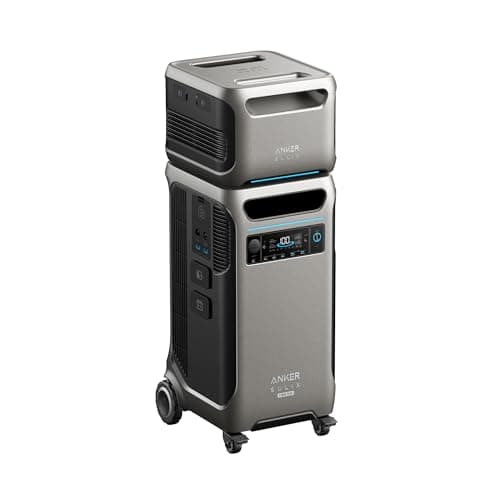
Best Anker Starting Stack: Anker SOLIX F3800 Plus + BP3800 Expansion Battery (7.68kWh)
Anker SOLIX F3800 Plus + BP3800 Expansion Battery (7.68kWh)
- 7,680Wh starting config doubles the base F3800 Plus runtime
- Blended $520.70/kWh is the highest expansion rate in this guide
(Current price, subject to change)
The Anker SOLIX F3800 Plus + BP3800 Expansion Battery (7.68kWh) earns a composite of 7.15 on the SHE Flagship Scale Economics Score. For an Anker-leaning buyer that delivers doubled resilience in a wheeled configuration. The 7,680Wh starting capacity perpetuates essential circuits well beyond the bare station, and both modules navigate on integrated wheels rather than requiring a stationary installation. TechRadar describes the F3800 system as a powerful and versatile home energy solution, a characterization the expanded stack extends directly.
Charging flexibility is the principal attraction. Gas-generator AC input escalates to 6,000W with the expansion battery attached, and the configuration still operates through a generic 50A transfer switch. The qualification is incremental cost. The bundle's blended $520.70/kWh constitutes the highest expansion rate in this guide, exceeding even the EcoFlow 12kWh bundle's $488.20/kWh, though TechRadar still considers the system's versatility industry-leading.
Compared to the Anker SOLIX BP3800 Expansion Battery purchased alone, the bundle ships pre-matched but costs more per kWh at a blended $520.70/kWh versus the standalone BP3800's $442.71/kWh. That trade-off favors buyers who prioritize a singular shipment over the leanest incremental rate.
What We Love
- 7,680Wh starting config doubles the base F3800 Plus runtime
- Gas-generator AC charging rises to 6,000W with the expansion attached
- Both modules roll; no electrician needed for a generic 50A switch
- Works through the Home Power Panel or a standard transfer switch
What Could Be Better
- Blended $520.70/kWh is the highest expansion rate in this guide
- Entry output value falls to 1,500W per $1,000 at the bundle price
- Solar input stays at 3,200W, below the EcoFlow ceiling
The Verdict
If you are an Anker-leaning prepper who wants more runtime than the bare station and values wheeled portability, the Anker SOLIX F3800 Plus + BP3800 Expansion Battery (7.68kWh) lines up with what you actually need. The 7.15 composite reflects the doubled 7,680Wh start and gas-plus-battery flexibility. You give up the cheapest per-kWh rate, but gain a roll-anywhere two-module stack — no need to overthink it.
Check price for the Anker SOLIX F3800 Plus + BP3800 Expansion Battery (7.68kWh) →
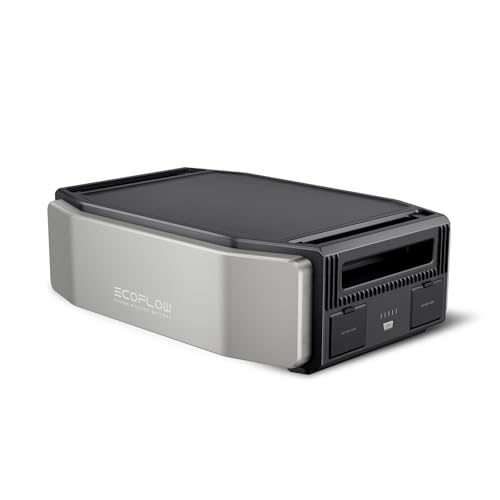
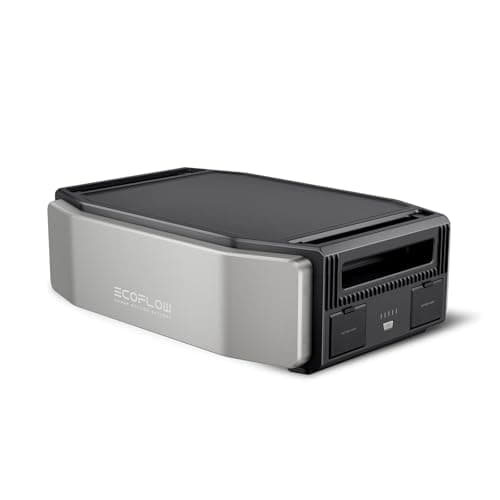
Best EcoFlow Add-On: EcoFlow DELTA Pro Ultra Extra Battery
EcoFlow DELTA Pro Ultra Extra Battery
- Cheapest expansion kWh at the tier at $341.63
- No inverter, so it cannot start a system on its own
(Current price, subject to change)
The EcoFlow DELTA Pro Ultra Extra Battery earns a composite of 8.2 on the SHE Flagship Scale Economics Score, and the expansion-economics coefficient is where it distinguishes itself. For an existing owner that constitutes the cheapest pathway to additional resilience. At $2,099.00 for 6,144Wh, the effective cost calculates to $341.63/kWh, the lowest incremental rate in this guide and roughly 23% beneath the Anker BP3800.
The module doubles the capacity of the Anker BP3800 per unit, and it inherits the host platform's 90kWh ceiling and 5,600W solar replenishment. Trusted Reviews characterizes the Delta Pro Ultra as capable of energizing any home appliance, and each battery extends that runtime proportionally. It incorporates no inverter independently, so it registers a middling output score and initiates nothing alone.
Compared to the Anker SOLIX BP3800 Expansion Battery, the EcoFlow module costs less per kWh at $341.63 versus $442.71 and accumulates more energy per unit at 6,144Wh versus 3,840Wh. That differential is the tier-flip finding: EcoFlow dominates expansion economics here, the inverse of the mid tier.
What We Love
- Cheapest expansion kWh at the tier at $341.63
- 6,144Wh per module, double the Anker BP3800's 3,840Wh
- Clips onto an existing stack with no separate inverter or panel
- Inherits the host's 90kWh ceiling and 5,600W solar refill
What Could Be Better
- No inverter, so it cannot start a system on its own
- Requires an existing Delta Pro Ultra inverter to function
- Integrates only through the host, one panel-depth point below it
The Verdict
If you already own a Delta Pro Ultra and want to scale capacity for the least money per kWh, the EcoFlow DELTA Pro Ultra Extra Battery fits the brief without compromise. The 8.2 composite reflects the cheapest marginal kWh in this guide at $341.63. The expansion decision is the brand decision — on the EcoFlow side you can stop the search here for adding runtime.
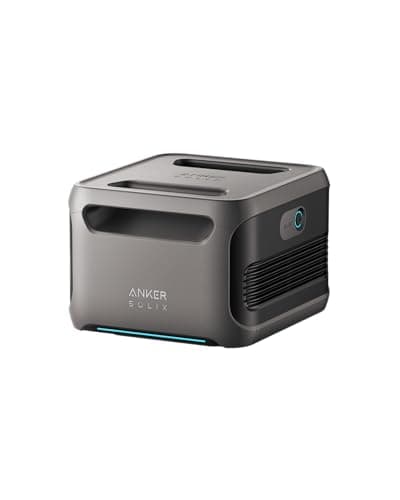
Best Anker Add-On: Anker SOLIX BP3800 Expansion Battery
Anker SOLIX BP3800 Expansion Battery
- 10-year rated lifespan, the longest stated longevity here
- $442.71/kWh runs above EcoFlow's $341.63/kWh module
(Current price, subject to change)
The Anker SOLIX BP3800 Expansion Battery earns a composite of 6.6 on the SHE Flagship Scale Economics Score, and for an existing F3800 Plus owner that constitutes a long-life capacity addition at a rate that undercuts the bundle. At $1,699.99 for 3,840Wh, the effective rate calculates to $442.71/kWh, which undercuts the F3800 Plus bundle's blended $520.70/kWh while carrying a 10-year rated lifespan. TechRadar describes the broader F3800 system as a powerful and versatile home energy solution with industry-leading capabilities.
The module attaches to an existing station and elevates the host's gas-generator charging ceiling to 6,000W. It constitutes half the EcoFlow extra battery's capacity per unit, and at $442.71/kWh it positions above the $341.63/kWh EcoFlow alternative. The expansion decision therefore becomes the brand decision, since modules do not migrate across ecosystems.
Compared to the EcoFlow DELTA Pro Ultra Extra Battery, the BP3800 costs more per kWh at $442.71 versus $341.63 and accumulates less energy per unit at 3,840Wh versus 6,144Wh. TechRadar's coverage of the F3800 system notes the high initial cost may deter budget-conscious buyers — the same cost reality applies to every expansion step. For an F3800 Plus owner, this module remains the only compatible expansion path, and its $442.71/kWh rate still beats the bundle's blended $520.70/kWh.
What We Love
- 10-year rated lifespan, the longest stated longevity here
- $442.71/kWh undercuts the F3800 Plus bundle's blended $520.70/kWh
- Attaches to an existing F3800 Plus with no separate inverter
- Raises the host's gas-generator charging ceiling to 6,000W
What Could Be Better
- $442.71/kWh runs above EcoFlow's $341.63/kWh module
- 3,840Wh per module, half the EcoFlow extra battery's capacity
- No inverter, so it cannot run a system independently
The Verdict
If you already own an F3800 Plus and want the longest-rated expansion module, the Anker SOLIX BP3800 Expansion Battery is a sensible pick for that setup. The 6.6 composite reflects a 10-year rated lifespan and a $442.71/kWh rate that beats the Anker bundle. Modules do not cross ecosystems, so the brand you bought is the brand you expand — and for Anker owners, this is the path of least friction.
How We Score: SHE Flagship Scale Economics Score
SHE Flagship Scale Economics Score
Score Formula
(Continuous Output Ceiling × 0.20) + (Capacity Ceiling × 0.20) + (Expansion Cost Efficiency × 0.20) + (Solar Recharge Ceiling × 0.15) + (Panel Integration Depth × 0.15) + (Entry Output Value × 0.10)Score Factors
- Continuous Output Ceiling (20%)Single-unit continuous 120/240V split-phase output plus the platform's documented paralleled maximum. 7,200W single unit parallelable to 21,600W across three inverters on Smart Home Panel 2 scores 10; 6,000W single unit parallelable to 12,000W with two stations via the Double Power Hub scores 8; expansion batteries contribute no inverter capacity and score 5. Sourced from verified Amazon listing specs and vendor paralleling documentation.
- Capacity Ceiling (20%)Documented maximum platform capacity in kWh. 90kWh (EcoFlow: 5 batteries per inverter at 30.72kWh per stack, 3 stacks via Smart Home Panel 2) scores 10; 53.76kWh dual-system or 26.88kWh single-stack (Anker: 6 BP3800 per station, second station required beyond) scores 7. Expansion batteries inherit the host platform's ceiling.
- Expansion Cost Efficiency (20%)Effective street cost per kWh, bracketed: $350/kWh or under scores 10; $351-449/kWh scores 8; $450-549/kWh scores 7. Stations score on their brand's expansion-module rate, bundles on their blended bundle rate, modules on their own rate. Computed from live Amazon prices: the Delta Pro Ultra extra battery at $341.63/kWh, the BP3800 at $442.71/kWh, the EcoFlow 12kWh bundle at $488.20/kWh, and the Anker bundle at $520.70/kWh.
- Solar Recharge Ceiling (15%)Maximum PV input per unit and per platform as a proxy for recharge speed during multi-day outages. 5,600W per inverter and 16,800W across three inverters scores 10; 3,200W per station and 6,400W dual-system scores 7. Expansion batteries inherit the host station's value since they recharge through the host MPPT.
- Panel Integration Depth (15%)Breaker-panel and transfer-switch integration depth plus charging-source flexibility. A dedicated 12-circuit panel with multi-inverter paralleling, TOU scheduling, and 20ms auto-switchover (EcoFlow Smart Home Panel 2) scores 9; a dedicated panel plus standard 50A transfer-switch compatibility plus native gas-generator AC charging at 3,300W/240V (Anker) scores 8; expansion batteries inherit the host station's score minus 1.
- Entry Output Value (10%)Continuous inverter watts per $1,000 of street price for the starting configuration, bracketed: 2,500 W/$1,000 or above scores 10; 1,700-2,499 scores 7; 1,200-1,699 scores 5. Computed: the F3800 Plus at 2,609 W/$1,000, the Delta Pro Ultra at 1,756, the EcoFlow 12kWh bundle at 1,200, the Anker bundle at 1,500. Expansion modules score a fixed 5.
SHE Flagship Scale Economics Score — Ranked
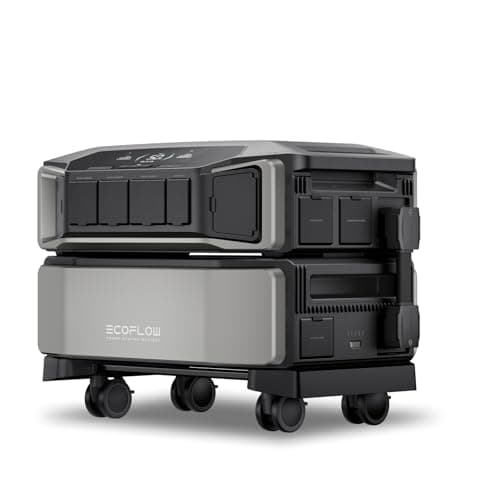
EcoFlow Delta Pro Ultra
SHE Flagship Scale Economics Score9.6/10$4,099 — 7,200W output, 90kWh ceiling, 16.8kW stacked solar, cheapest $341.63/kWh expansion
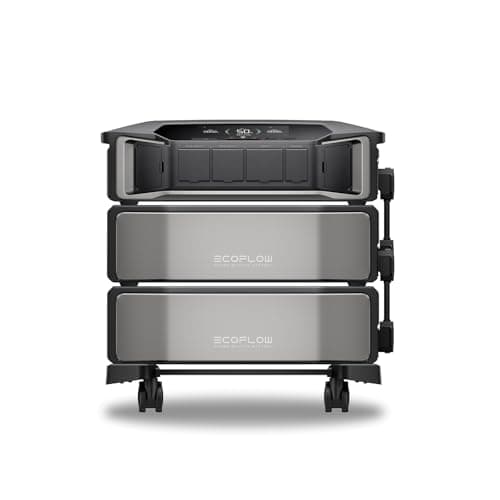
EcoFlow DELTA Pro Ultra + Extra Battery (12kWh)
SHE Flagship Scale Economics Score8.8/10$5,999 — 12,288Wh starting config at a blended $488.20/kWh; two-day runtime out of the box
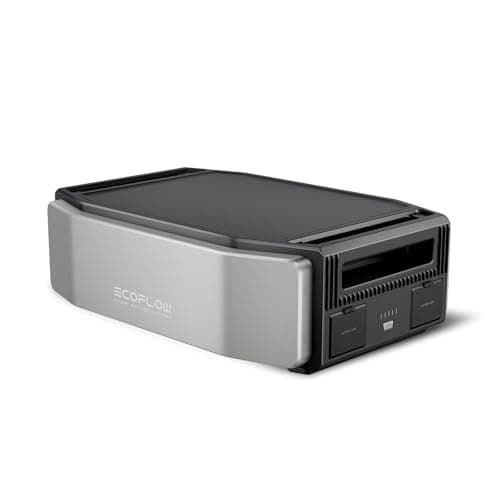
EcoFlow DELTA Pro Ultra Extra Battery
SHE Flagship Scale Economics Score8.2/10$2,099 — 6,144Wh module at $341.63/kWh, the cheapest marginal kWh in this guide
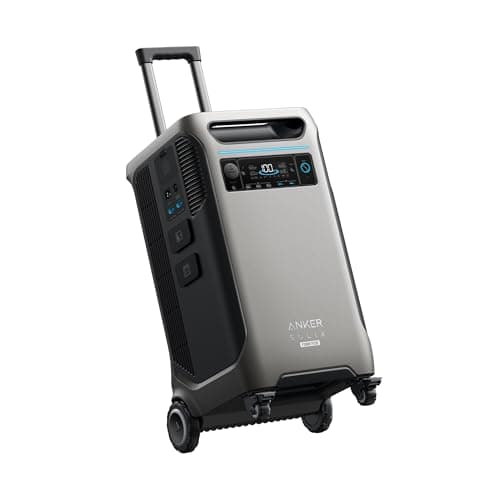
Anker SOLIX F3800 Plus
SHE Flagship Scale Economics Score7.8/10$2,299.99 — 6,000W split-phase, best 2,609 W/$1,000 entry value, gas-generator charging, wheeled
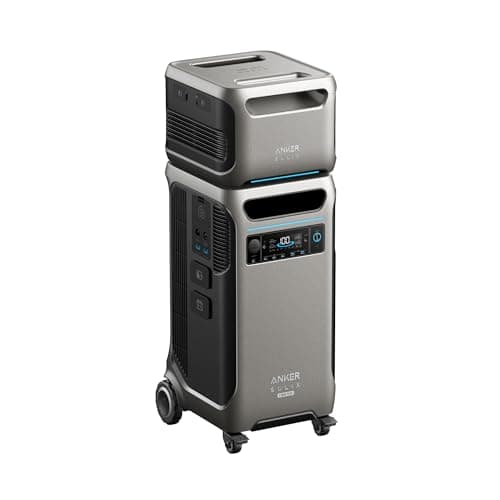
Anker SOLIX F3800 Plus + BP3800 Expansion Battery (7.68kWh)
SHE Flagship Scale Economics Score7.2/10$3,998.99 — 7,680Wh wheeled stack; blended $520.70/kWh is the highest expansion rate here
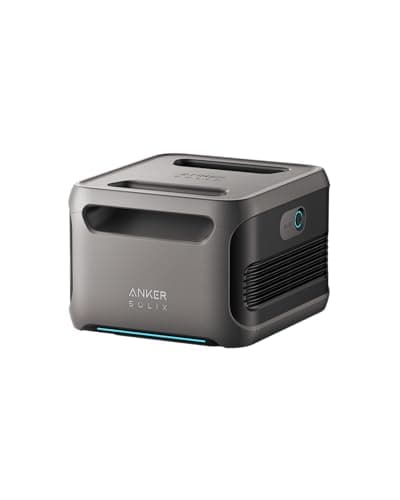
Anker SOLIX BP3800 Expansion Battery
SHE Flagship Scale Economics Score6.6/10$1,699.99 — 3,840Wh module at $442.71/kWh with a 10-year rated lifespan for F3800 Plus owners
Panel and Charging: How Each Wires Into Your House
The integration path is where these two platforms diverge most, and it shapes both your electrician bill and your charging options. The EcoFlow Delta Pro Ultra reaches its full ceilings through the Smart Home Panel 2. That dedicated panel backs up 12 circuits, parallels three inverters to 21,600W, schedules time-of-use charging, and switches over in 20ms. It is the deepest integration here, but the 21.6kW, 90kWh, and 16,800W-solar ceilings all assume that panel and a professional install. Trusted Reviews frames the Delta Pro Ultra as portable only to a degree, reinforcing the parked-installation reality. TechRadar's review of the Anker system flags that high initial cost as a real deterrent on either platform at this tier. Plan for roughly a 5-yr ownership window when you weigh the panel spend against the ceiling it unlocks.
The Anker SOLIX F3800 Plus pursues the more flexible, less proprietary approach. It integrates with the SOLIX Home Power Panel, but it additionally accommodates a standard 50A transfer switch through its NEMA 14-50 and L14-30 receptacles — the configuration any electrician stocks. Most distinctively, it recharges directly from a gas generator at 3,300W and 240V, escalating to 6,000W with an expansion battery attached. Digital Trends measured a 3.17-hour AC replenishment at 1,645W input on the unit. That positioning establishes the F3800 Plus as the hybrid-user selection: silent battery initially, gas as the contingency layer, no proprietary panel mandated. TechRadar considers this charging versatility an industry-leading capability. Both platforms specify 20ms-class UPS switchover, so switchover speed remains effectively a tie. Both operate dedicated applications for monitoring, scheduling, and over-the-air firmware updates.
| Product | 240V Split-Phase | Proprietary Panel | 50A Transfer Switch | Gas-Gen Charging | Solar Input | Stackable Battery |
|---|---|---|---|---|---|---|
| EcoFlow Delta Pro Ultra | ✓ | ✓ | ✕ | ✕ | ✓ | ✓ |
| EcoFlow DELTA Pro Ultra + Extra Battery (12kWh) | ✓ | ✓ | ✕ | ✕ | ✓ | ✓ |
| Anker SOLIX F3800 Plus | ✓ | ✓ | ✓ | ✓ | ✓ | ✓ |
| Anker SOLIX F3800 Plus + BP3800 Expansion Battery (7.68kWh) | ✓ | ✓ | ✓ | ✓ | ✓ | ✓ |
| Anker SOLIX BP3800 Expansion Battery | ✕ | ✓ | ✕ | ✕ | ✕ | ✓ |
| EcoFlow DELTA Pro Ultra Extra Battery | ✕ | ✓ | ✕ | ✕ | ✕ | ✓ |
When NOT to Buy
Neither flagship is automatically the correct call. If your continuous loads sit under 4,000W and your budget under $3,500, you are buying ceiling you will never reach. Step down to our EcoFlow Delta Pro 3 vs Anker SOLIX F3800 (2026) comparison instead. It covers the mid tier where the Delta Pro 3 and the F3800 non-Plus answer the same outage question for less money. TechRadar's own caution about high initial cost applies most sharply to buyers in that lower band. And if you want permanently installed, code-bolted home storage on the order of a Powerwall, that is installer-grade equipment outside the scope of any portable power station. These units back up a panel and travel; they are not a substitute for a fixed energy-storage system. Match the platform to loads you actually run, and skip the flagship premium whenever a mid-tier station genuinely covers your essential circuits.
Who Should Buy What
Who Should Buy What
| If you are… | Recommended pick |
|---|---|
Whole-home outage planner You want the entire panel backed up — well pump, 3-ton AC, range — and need 7,200W output with a 90kWh runway | EcoFlow Delta Pro Ultra |
Value-first storm prepper You want essential circuits through multi-day outages at the best output-per-dollar without flagship-entry money | Anker SOLIX F3800 Plus |
Deep-outage planner You want two days of essential-circuit runtime from day one rather than buying capacity twice | EcoFlow DELTA Pro Ultra + Extra Battery (12kWh) |
Hybrid gas-and-battery user You already own a generator and want silent battery backup first with gas as the fallback, no proprietary panel | Anker SOLIX F3800 Plus + BP3800 Expansion Battery (7.68kWh) |
EcoFlow owner scaling up You own a Delta Pro Ultra and want to add capacity toward 90kWh at the lowest per-kWh cost available | EcoFlow DELTA Pro Ultra Extra Battery |
Frequently Asked Questions
Can the EcoFlow Delta Pro Ultra really expand to 90kWh?
Yes, at the platform level. A single inverter stacks 5 batteries for 30.72kWh, and three inverter stacks combine through the Smart Home Panel 2 to reach the documented 90kWh ceiling. That full ceiling assumes the panel and a professional install — a single stack on one inverter tops out at 30.72kWh. The verified Amazon listing for the Delta Pro Ultra lists it as expandable to 90kWh.
How is the F3800 Plus different from the original F3800?
The headline change is solar input: the 2025 F3800 Plus accepts 3,200W of PV, up from the original F3800's 2,400W, which Digital Trends confirmed in its review. It also adds native gas-generator AC charging at 3,300W and 240V. Continuous output stays the same at 6,000W split-phase, and both share the BP3800 expansion battery and the SOLIX Home Power Panel ecosystem.
Which costs less per kWh to expand?
EcoFlow, at this tier. The Delta Pro Ultra extra battery works out to $341.63/kWh ($2,099 for 6,144Wh), while the Anker BP3800 runs $442.71/kWh ($1,699.99 for 3,840Wh) — roughly a 23% premium for Anker. Note this is the opposite of the Delta Pro 3 tier, where Anker's BP3800 won expansion economics against the pricier Delta Pro 3 battery. The verdict flips with the tier.
Do I need the brand's proprietary panel for whole-home backup?
It depends on the platform. EcoFlow's full ceilings (21.6kW paralleled, 90kWh, multi-inverter) require the Smart Home Panel 2. Anker is more flexible: the F3800 Plus reaches its ceiling through a standard 50A transfer switch via NEMA 14-50/L14-30 outlets, with the SOLIX Home Power Panel optional. If you want to avoid proprietary panel hardware, the Anker path is the more open one.
Can either charge from a gas generator?
The F3800 Plus charges natively from a gas generator at 3,300W and 240V, rising to 6,000W with an expansion battery attached — no extra hardware required. The Delta Pro Ultra routes generator input through its panel and Smart Generator ecosystem rather than accepting it directly. For a buyer who already owns a generator and wants battery-first backup with gas as the fallback, the F3800 Plus is the simpler fit.
How long will each run a refrigerator?
Digital Trends measured roughly 20 hours running a 150W refrigerator on the 3.84kWh Anker F3800 Plus, and about 43 hours on a 47W chest freezer. The 6.14kWh Delta Pro Ultra carries roughly 1.6x that base capacity, so it scales those runtimes proportionally. Both figures climb with every expansion battery you stack, and solar input extends them indefinitely during daylight outages.
Is this flagship tier overkill compared to the Delta Pro 3 or F3800?
If your continuous loads stay under 4,000W and your budget under $3,500, yes — the mid tier covers the same outage question for less. Step down to our Delta Pro 3 vs F3800 comparison, which weighs the $2,000-$4,500 band. The flagship tier earns its premium only when you need 6,000W-plus continuous output, deep stackable capacity, or maximum solar harvest for a whole-panel install.
Bottom Line
Get the EcoFlow Delta Pro Ultra if you want maximum 7,200W output, the deepest 90kWh ceiling, and the cheapest per-kWh expansion for a whole-home install.
Get the Anker SOLIX F3800 Plus if you want the best entry value at 2,609W per $1,000, wheeled portability, and gas-generator charging without a panel.
Get the EcoFlow DELTA Pro Ultra + Extra Battery (12kWh) if you want roughly two days of essential-circuit runtime as a starting config rather than buying capacity twice.
Get the Anker SOLIX F3800 Plus + BP3800 Expansion Battery (7.68kWh) if you want a wheeled Anker starting stack with doubled runtime and gas-plus-battery charging flexibility.
Get the EcoFlow DELTA Pro Ultra Extra Battery if you already own a Delta Pro Ultra and want to add capacity at the lowest per-kWh cost in this guide.
The right call for whole-home scale is the EcoFlow Delta Pro Ultra — highest output, deepest ceiling, and the tier's cheapest expansion kWh. For value-first essential-circuit backup, the Anker SOLIX F3800 Plus at $2,299.99 delivers the best watts per dollar plus gas-generator flexibility. Skip the flagship tier entirely if your loads stay under 4,000W and budget under $3,500 — the Delta Pro 3 comparison covers that band for less.
Sources & Methodology
Methodology: SHE Flagship Scale Economics Score — Formula: (Continuous Output Ceiling × 0.20) + (Capacity Ceiling × 0.20) + (Expansion Cost Efficiency × 0.20) + (Solar Recharge Ceiling × 0.15) + (Panel Integration Depth × 0.15) + (Entry Output Value × 0.10). Factors: Continuous Output Ceiling (20%): Single-unit continuous 120/240V split-phase output plus the platform's documented paralleled maximum. 7,200W single unit parallelable to 21,600W across three inverters on Smart Home Panel 2 scores 10; 6,000W single unit parallelable to 12,000W with two stations via the Double Power Hub scores 8; expansion batteries contribute no inverter capacity and score 5. Sourced from verified Amazon listing specs and vendor paralleling documentation. | Capacity Ceiling (20%): Documented maximum platform capacity in kWh. 90kWh (EcoFlow: 5 batteries per inverter at 30.72kWh per stack, 3 stacks via Smart Home Panel 2) scores 10; 53.76kWh dual-system or 26.88kWh single-stack (Anker: 6 BP3800 per station, second station required beyond) scores 7. Expansion batteries inherit the host platform's ceiling. | Expansion Cost Efficiency (20%): Effective street cost per kWh, bracketed: $350/kWh or under scores 10; $351-449/kWh scores 8; $450-549/kWh scores 7. Stations score on their brand's expansion-module rate, bundles on their blended bundle rate, modules on their own rate. Computed from live Amazon prices: the Delta Pro Ultra extra battery at $341.63/kWh, the BP3800 at $442.71/kWh, the EcoFlow 12kWh bundle at $488.20/kWh, and the Anker bundle at $520.70/kWh. | Solar Recharge Ceiling (15%): Maximum PV input per unit and per platform as a proxy for recharge speed during multi-day outages. 5,600W per inverter and 16,800W across three inverters scores 10; 3,200W per station and 6,400W dual-system scores 7. Expansion batteries inherit the host station's value since they recharge through the host MPPT. | Panel Integration Depth (15%): Breaker-panel and transfer-switch integration depth plus charging-source flexibility. A dedicated 12-circuit panel with multi-inverter paralleling, TOU scheduling, and 20ms auto-switchover (EcoFlow Smart Home Panel 2) scores 9; a dedicated panel plus standard 50A transfer-switch compatibility plus native gas-generator AC charging at 3,300W/240V (Anker) scores 8; expansion batteries inherit the host station's score minus 1. | Entry Output Value (10%): Continuous inverter watts per $1,000 of street price for the starting configuration, bracketed: 2,500 W/$1,000 or above scores 10; 1,700-2,499 scores 7; 1,200-1,699 scores 5. Computed: the F3800 Plus at 2,609 W/$1,000, the Delta Pro Ultra at 1,756, the EcoFlow 12kWh bundle at 1,200, the Anker bundle at 1,500. Expansion modules score a fixed 5.
Expert review sources used in this analysis:
- SmartHomeExplorer aggregates expert review data and manufacturer specifications to produce consensus-based buying guidance
- We do not perform first-party product testing
- Continuous-output figures, capacity ceilings, solar input ratings, and panel-integration specs are drawn from verified Amazon listings and vendor documentation
- Measured runtimes, recharge times, and the 136.7-lb weight are attributed to Digital Trends, which named the F3800 Plus an Editors' Choice
- The Anker SOLIX whole-home path is corroborated by TechRadar, and the Delta Pro Ultra framing by Trusted Reviews
- Expansion economics ($341.63/kWh, $442.71/kWh, $488.20/kWh, $520.70/kWh) are computed from live Amazon prices divided by listed Wh capacity, verified 2026-06-10
- The SHE Flagship Scale Economics Score weights continuous output ceiling, capacity ceiling, expansion cost efficiency, solar recharge ceiling, panel integration depth, and entry output value
- No first-party measurements were conducted.
Nicholas Miles is the founder of SmartHomeExplorer and a longtime smart home enthusiast focused on helping everyday homeowners make better technology decisions. He researches, compares, and writes about products across security, climate, lighting, leak prevention, sensors, home energy, and automation, with an emphasis on real-world usefulness, ecosystem compatibility, reliability, privacy, and long-term value.
Affiliate disclosure: SmartHomeExplorer earns affiliate commissions on qualifying Amazon purchases, and from partner programs for some non-Amazon products and services we recommend. Our scoring methodology is independent of affiliate relationships.