
Best WiFi 7 Mesh Systems for Smart Homes 2026
The eero Max 7 wins for smart homes — the only WiFi 7 mesh that builds a Thread border router, Zigbee radio, and Matter controller into every node and claims 250+ devices.
This article contains affiliate links. We may earn a commission at no extra cost to you. Prices change frequently — check the current price on Amazon before buying. Learn more
The Short Answer
The eero Max 7 wins for smart homes: the only WiFi 7 mesh integrating a Thread border router, Zigbee radio, and Matter controller into every node, replacing a separate hub. The TP-Link Deco BE63 is the value selection at 357 dollars; the NETGEAR Orbi 970 delivers dedicated quad-band backhaul across 10,000 sq ft.
Featured in this Guide
Amazon
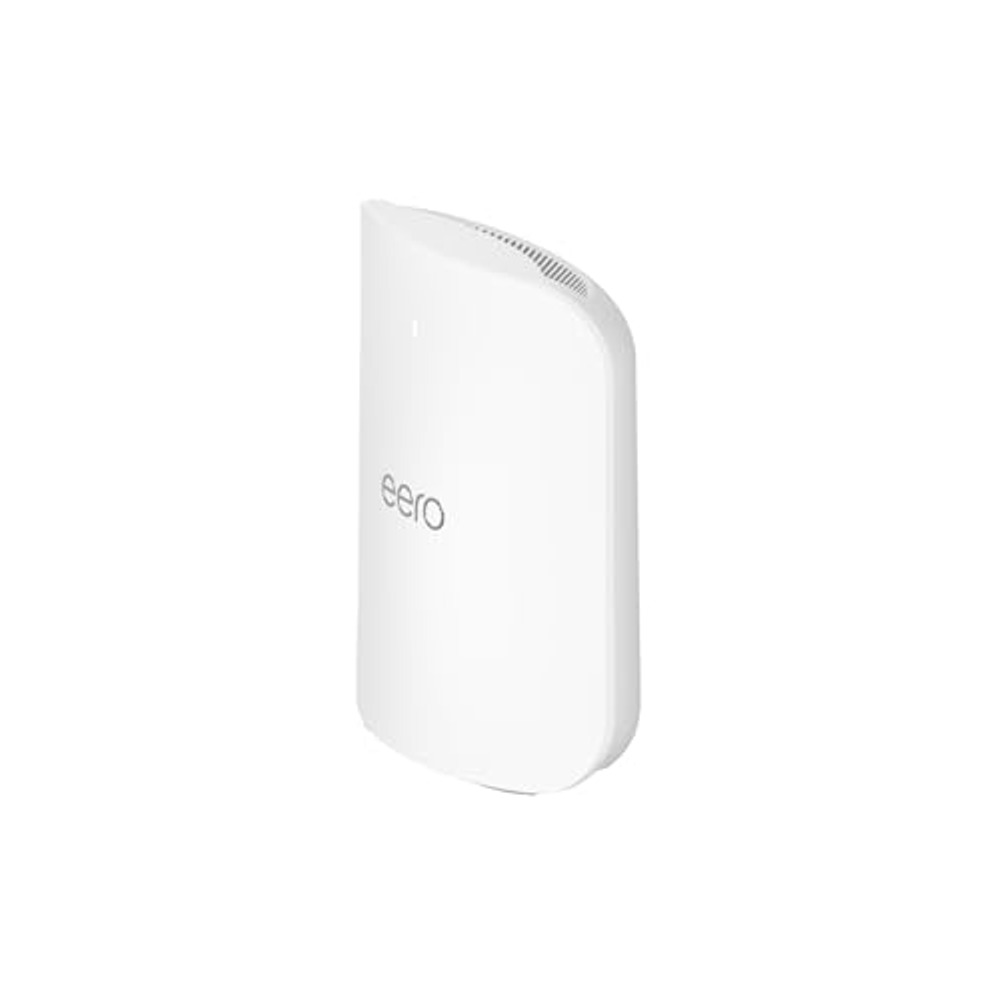
eero Max 7 Mesh WiFi 7 Router (1-Pack)
- •Only WiFi 7 mesh with Thread + Zigbee + Matter radios in every node
- •250+ device claim and 10G ports
Netgear
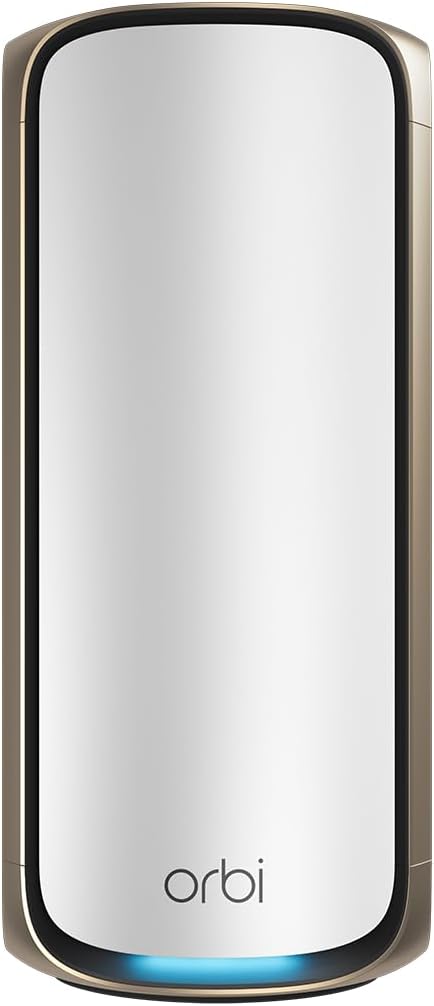
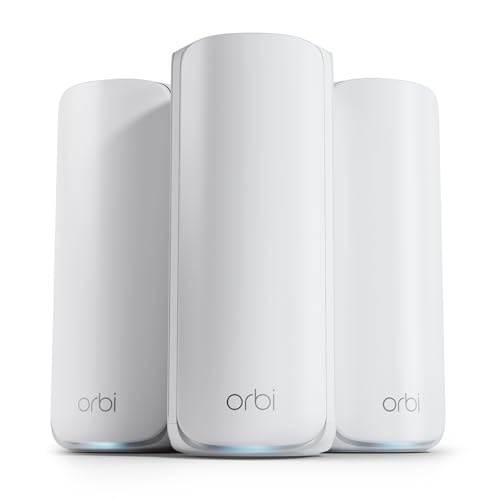
Orbi 970
- •Quad-band dedicated backhaul plus 10,000 sq ft
- •the no-compromise pick at the 1,800 dollar tier
ASUS
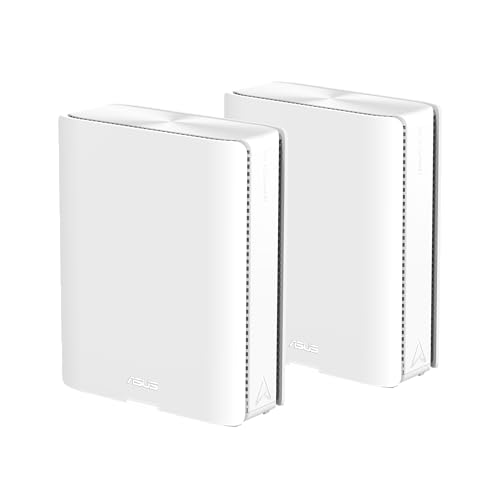
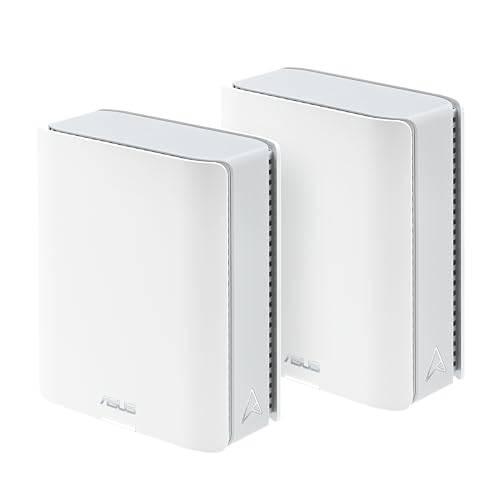
ZenWiFi BQ16 Pro Quad-Band WiFi 7 Mesh Router (2-Pack)
- •Dual-6GHz quad-band champion at ~755 dollars under the Orbi 970 with free lifetime security
TP-Link
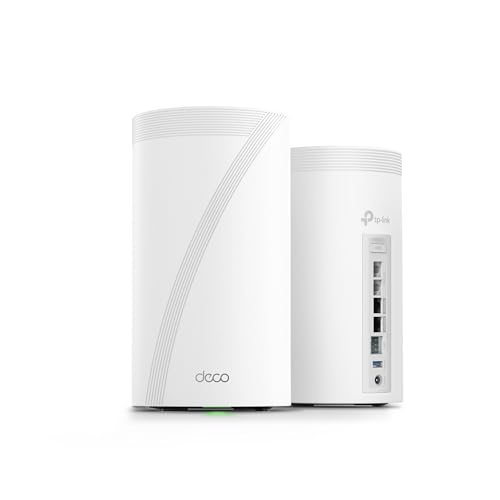
Deco BE85 Tri-Band WiFi 7 Mesh System (2-Pack)
- •2x 10G per node including an SFP+ combo for direct fiber backhaul
NETGEAR
Orbi 870 Series Tri-Band WiFi 7 Mesh System (RBE873, Router + 2 Satellites)
TP-Link
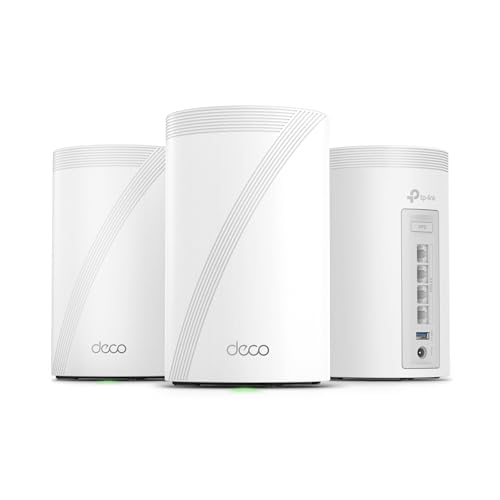
Deco BE63 Tri-Band WiFi 7 Mesh System (3-Pack)
- •Cheapest credible WiFi 7 mesh at 357 dollars
- •200+ devices, four 2.5G ports per node, IoT isolation
Head-to-Head: Backhaul, Radios, Capacity, and the SHE Score
Networking
Chart
 Smarthomeexplorer.com
Tap any pick to check its live price on Amazon.
EcoFlow DELTA Pro 3 Portable Power Station
RecommendedCheck price
PETKIT Purobot Ultra
Must BuyCheck price
PetSafe ScoopFree SmartSpin
RecommendedCheck price
Amazon Echo Show 15 (newest model)
RecommendedCheck price
Anker SOLIX F3800 Plus
$2,599.99RecommendedCheck price
Fastest Mesh, or Best Smart-Home Backbone?
You are upgrading because 60 simultaneously-chattering smart devices congest your aging router. The trap: buying the fastest mesh, then discovering zero smart-home radios. In this roundup we analyzed 8 WiFi 7 systems on one weighted composite, the SHE Smart Home Backhaul Fitness Score. The normalized formula prioritizes backhaul architecture, the Thread/Zigbee/Matter radio stack, and published capacity.
WiFi 7 delivers measurable resilience for device-dense homes. Multi-Link Operation aggregates dual radios simultaneously, 320MHz channels widen backhaul headroom, and 4096-QAM yields approximately 20% more throughput than predecessor WiFi 6E. The dominant differentiator: only the eeros enable integrated protocol radios. Throughput champions advertise BE27000-class numbers approaching 27x earlier-generation ceilings yet incorporate no smart-home radios whatsoever.
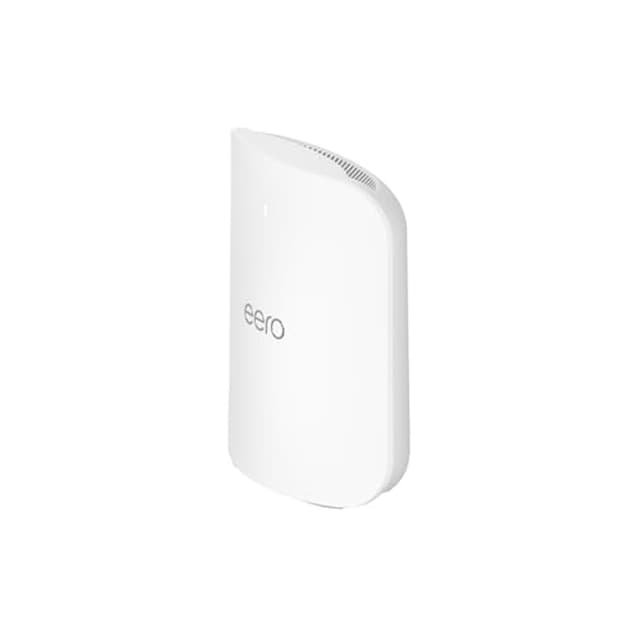
Best Overall for Smart Homes: Amazon eero Max 7 Mesh WiFi 7 Router (1-Pack)
Amazon eero Max 7 Mesh WiFi 7 Router (1-Pack)
- Only pick with Thread border router, Zigbee radio, and Matter controller in every node
- At 419 dollars for one unit it is pricey per node versus 3-pack rivals
(Current price, subject to change)
The Amazon eero Max 7 Mesh WiFi 7 Router (1-Pack) earns the top composite of 8.8 on the SHE Smart Home Backhaul Fitness Score because the weighted formula rewards smart-home fitness over drag-race speed. The composite translates concretely for your installation. Every node integrates a Thread border router, a Zigbee radio, and a Matter controller, continuously commissioning and routing your sensors, locks, and illumination. No alternative system incorporates a single protocol radio. Tom's Guide commends that consolidated hub responsibility, and the 250+ device specification represents the highest published capacity in this roundup.
The 2x 10GbE plus 2x 2.5GbE ports per unit enable accelerated wired backhaul, producing stable node-to-node interconnection without dedicated spectrum. CNET observes the eero application auto-configures the mesh within roughly 10 min, eliminating manual channel administration. The honest caveat: raw throughput disappoints. Reviewers found real-world velocity underwhelming relative to spec-comparable rivals, which justifies its radio-and-capacity victory rather than a Mbps victory.
Compared to the Netgear Orbi 970, the Orbi propels considerably more bandwidth and reserves dedicated backhaul spectrum. Yet it incorporates zero smart-home radios, necessitating a separate hub alongside it, forfeiting this ranking on the two highest-weighted factors.
What We Love
- Only pick with Thread border router, Zigbee radio, and Matter controller in every node
- Highest published device claim here at 250+ concurrent devices
- 2x 10GbE ports enable fast wired backhaul that sidesteps the shared-band tradeoff
- Replaces a separate smart-home hub, removing a box from the rack
What Could Be Better
- At 419 dollars for one unit it is pricey per node versus 3-pack rivals
- Raw throughput trails spec-similar systems like the Deco BE85
- No dedicated backhaul band, so heavy meshes lean on wired backhaul
The Verdict
If you are consolidating 100+ smart devices and want the router to be the hub, the Amazon eero Max 7 Mesh WiFi 7 Router (1-Pack) fits the brief without compromise. The 8.8 reflects what matters for a smart home: a Thread border router, Zigbee, and Matter controller in every node, plus a 250+ device claim. The Orbi 970 is faster, but it cannot replace your hub the way this one does.
Check price for the Amazon eero Max 7 Mesh WiFi 7 Router (1-Pack) →
Ready to upgrade your home?
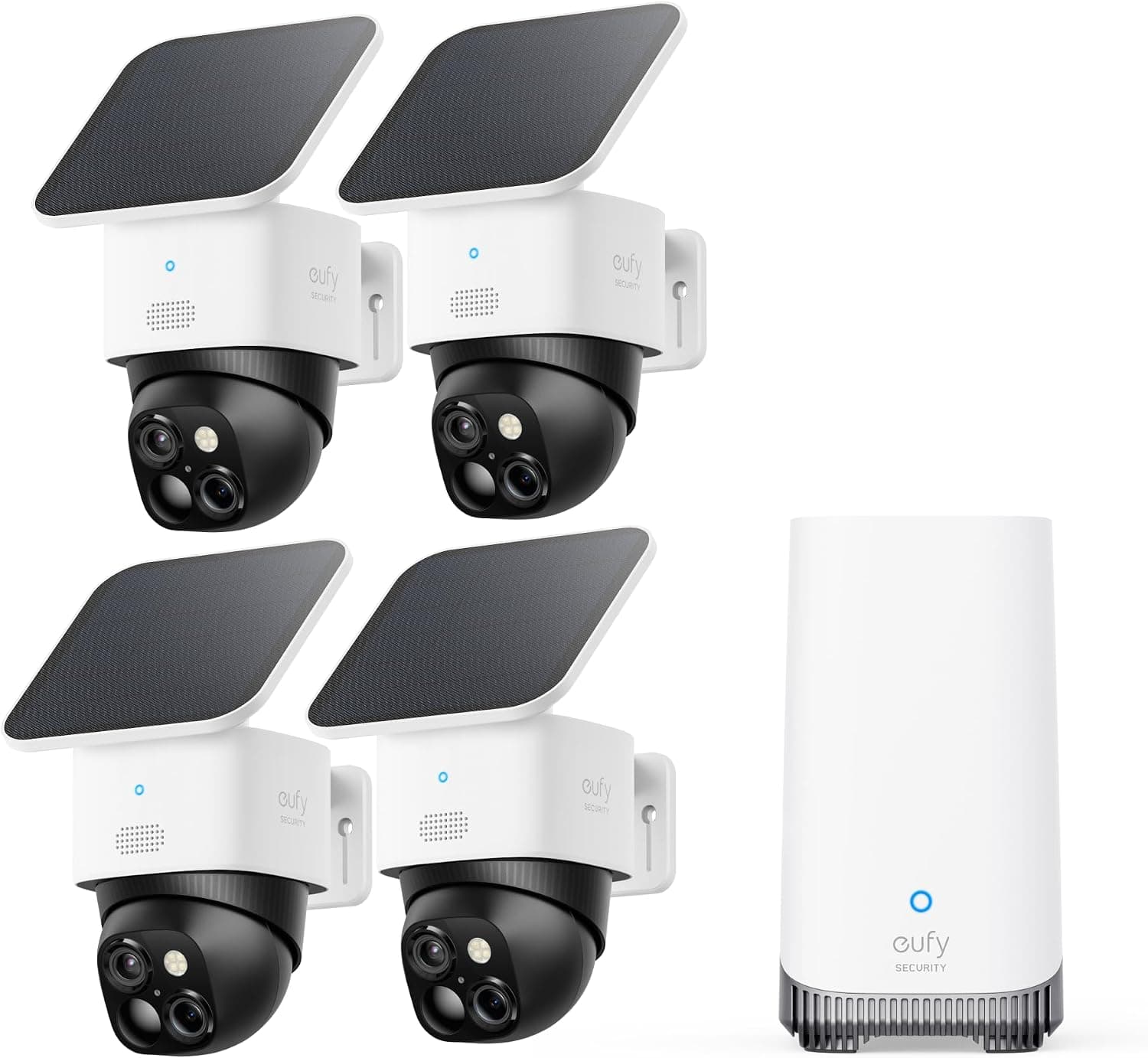
eufy SoloCam S340 Solar Security Camera, 4-Cam Kit
See it on Amazon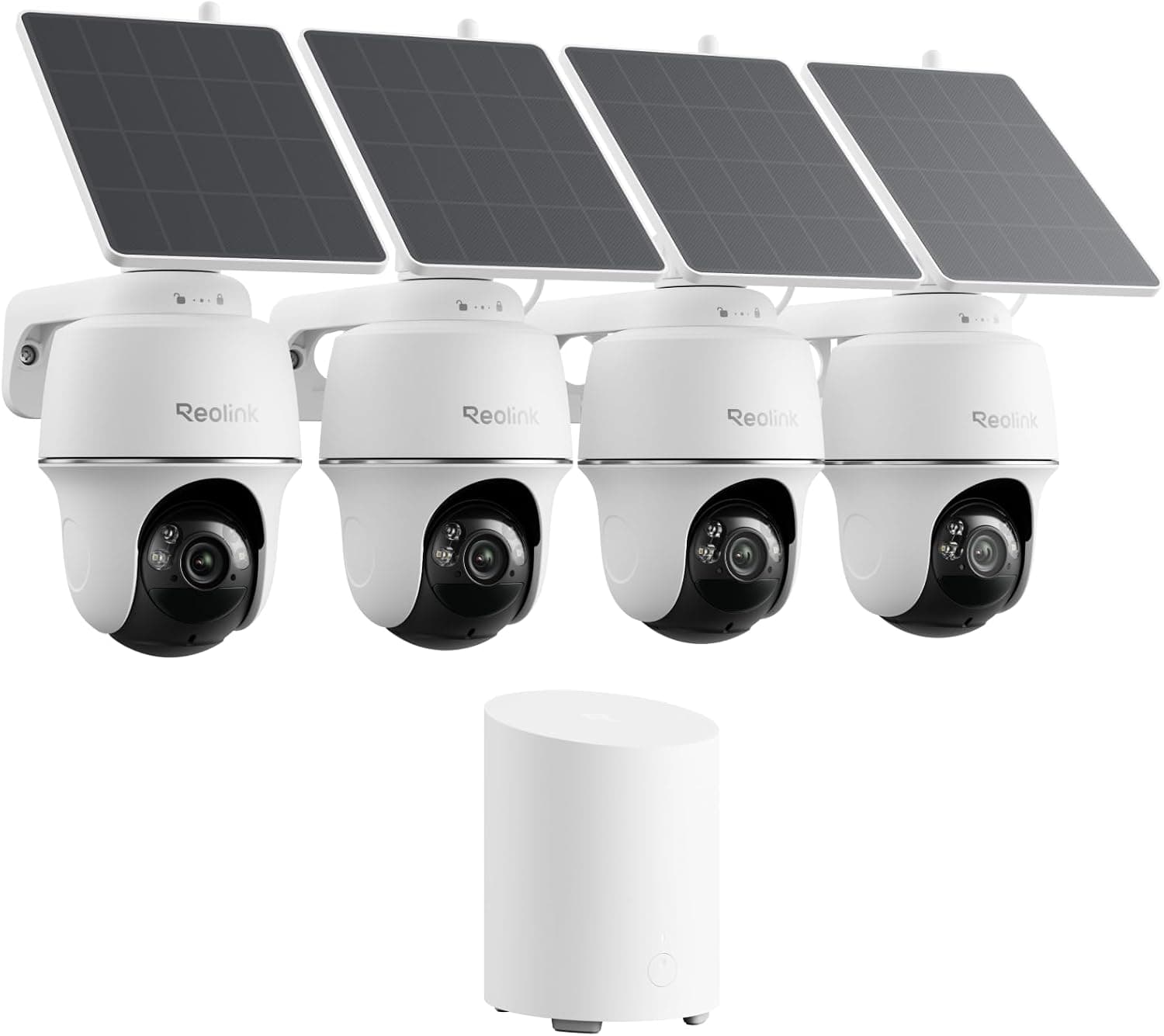
REOLINK 360° Solar Security Cameras, 4 Pack
See it on Amazon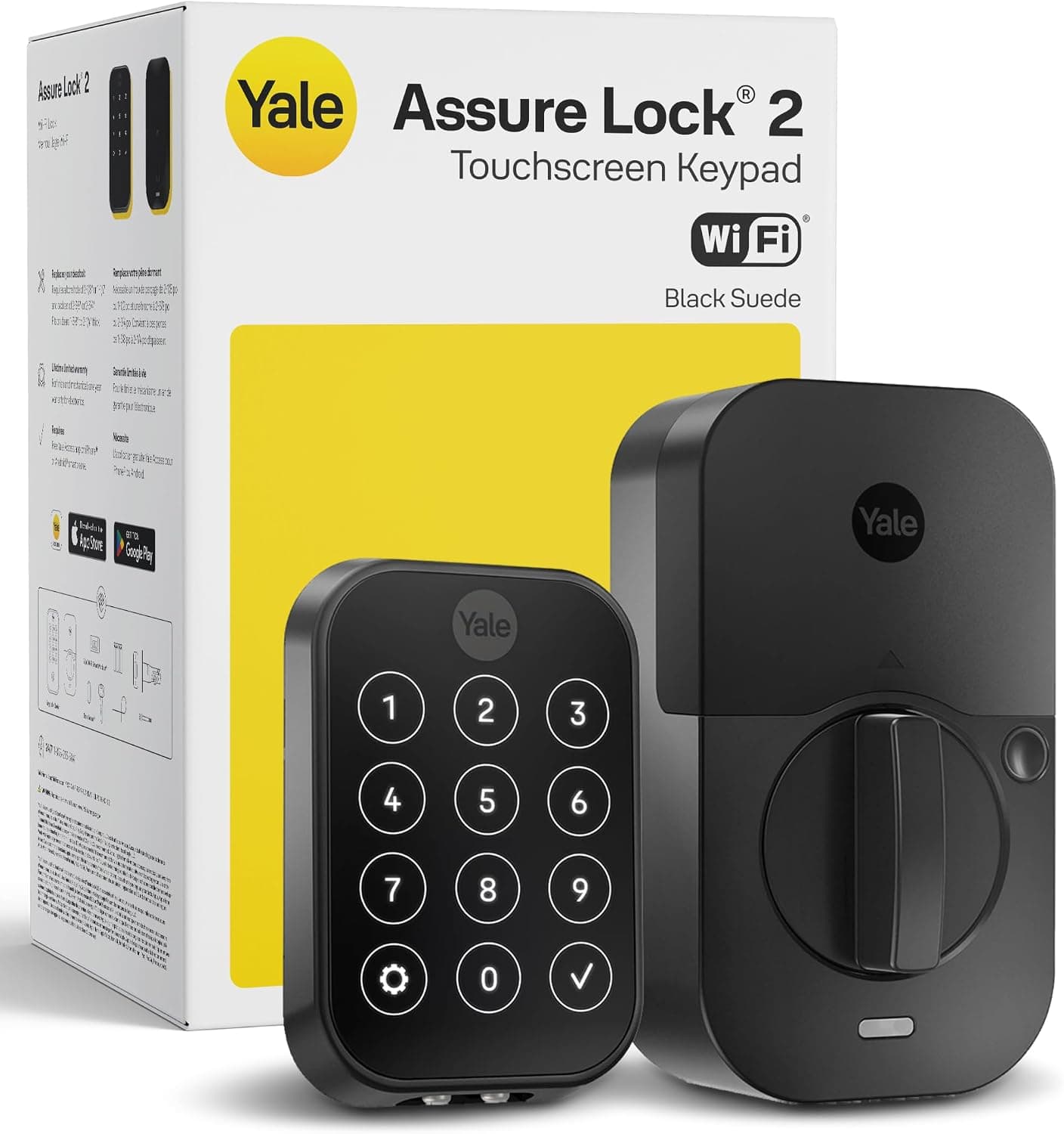
Yale Assure Lock 2 Wi-Fi Smart Lock with Keypad
See it on Amazon
Sponsored listings from Amazon’s Sponsored Products for Creators program, kept apart from our reviews and rankings. How we make money
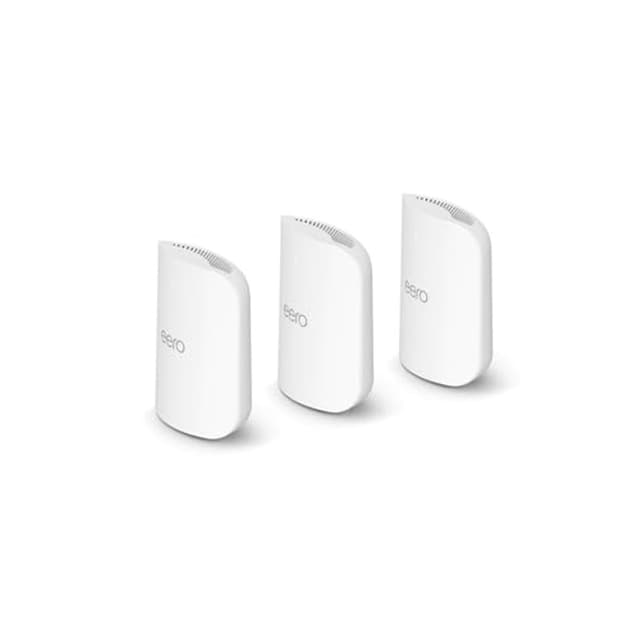
Best Mid-Size Hub Backbone: Amazon eero Pro 7 Tri-Band Mesh WiFi 7 Router (3-Pack)
Amazon eero Pro 7 Tri-Band Mesh WiFi 7 Router (3-Pack)
- Cheapest path to a Thread + Zigbee + Matter backbone at 549 dollars for three nodes
- 5GbE-only wired backhaul, no 10G ports like the Max 7
(Current price, subject to change)
The Amazon eero Pro 7 Tri-Band Mesh WiFi 7 Router (3-Pack) earns a composite of 7.75, the second mark here and the value entry to a complete hub backbone. For your installation that delivers the identical Thread border router, Zigbee radio, and Matter controller as the Max 7, distributed across three nodes for 549 dollars. Tom's Guide characterizes it as fast WiFi 7 mesh simplified, highlighting the consolidated smart-home responsibility throughout the multi-node kit.
The tradeoff: diminished backhaul provisioning. Its 2x2 MLO configuration and 5GbE-only interfaces trail the Max 7's 10G wired option, and per-node coverage approximating 2,000 sq ft per unit represents the lowest figure here. CNET frames the 3-pack as appropriately dimensioned for the mid-size IoT household rather than the largest properties. The radio architecture, not the throughput, earns its position.
Compared to the Amazon eero Max 7 Mesh WiFi 7 Router (1-Pack), the Pro 7 furnishes identical hub responsibility at a considerably lower per-node investment, relinquishing the 10G ports and the 250+ device ceiling.
What We Love
- Cheapest path to a Thread + Zigbee + Matter backbone at 549 dollars for three nodes
- 200+ device claim per node suits the mid-size smart home
- 6,000 sq ft of 3-node coverage from a phone-only setup
- Same full hub radio stack as the costlier Max 7
What Could Be Better
- 5GbE-only wired backhaul, no 10G ports like the Max 7
- 2x2 MLO streams trail the higher-stream flagships on throughput
- Per-node coverage of 2,000 sq ft is the lowest in this roundup
The Verdict
If you want a Thread/Zigbee/Matter hub spread across a mid-size home without the Max 7's price, the Amazon eero Pro 7 Tri-Band Mesh WiFi 7 Router (3-Pack) is a sensible pick for that setup. The 7.75 reflects the full radio stack across three nodes and a 200+ device claim. Coverage per node is modest, so it suits typical suburban layouts rather than sprawling estates.
Check price for the Amazon eero Pro 7 Tri-Band Mesh WiFi 7 Router (3-Pack) →
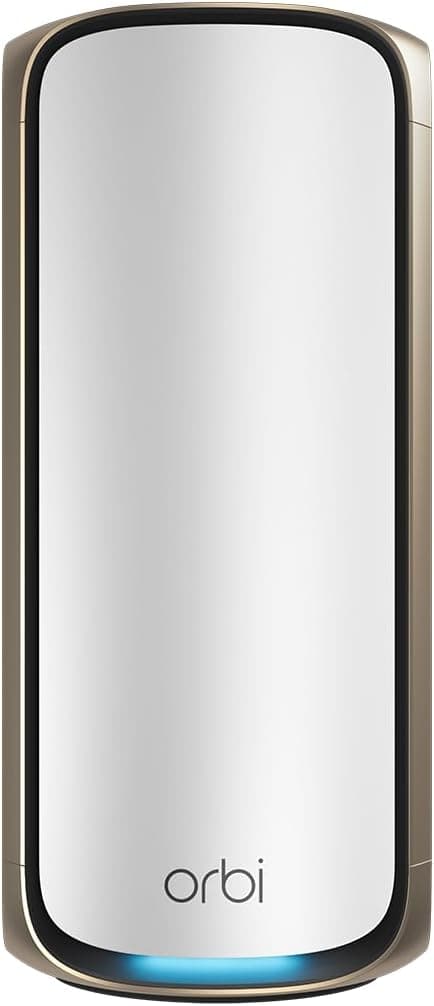
Best Premium Coverage: Netgear Orbi 970
Netgear Orbi 970
- Dedicated quad-band backhaul so node traffic never competes with clients
- No Thread, Zigbee, or Matter radios — needs a separate smart-home hub
(Current price, subject to change)
The Netgear Orbi 970 earns a composite of 7.6 on the SHE Smart Home Backhaul Fitness Score, third overall and the coverage maximalist's selection. For your installation that delivers a quad-band design reserving backhaul spectrum exclusively for node-to-node traffic. Tom's Hardware confirms the backhaul never competes with client devices, the single biggest stability lever in a device-dense home. It covers 10,000 sq ft across three nodes, the largest footprint here, achieving roughly 3,333 ft of per-node reach through a 10 Gig WAN port for the fastest fiber.
The smart-home stack is the consideration. PCMag observes it ships a basic isolated IoT SSID without a Thread border router or Zigbee radio, so a separate hub remains necessary. Its 200-device specification is strong yet trails the eero Max 7. The formula rewards backhaul and coverage, then applies the missing radios against a 25% weighted factor.
Compared to the ASUS ZenWiFi BQ16 Pro Quad-Band WiFi 7 Mesh Router (2-Pack), the Orbi reserves a fuller dedicated backhaul and covers more area, but it costs roughly 755 dollars more for a similar absence of protocol radios.
What We Love
- Dedicated quad-band backhaul so node traffic never competes with clients
- Largest coverage here at 10,000 sq ft across three nodes
- 10 Gig WAN port for the fastest multi-gig fiber plans
- Tom's Hardware rates the throughput excellent for big homes
What Could Be Better
- No Thread, Zigbee, or Matter radios — needs a separate smart-home hub
- At 1,799 dollars it is the most expensive pick in this roundup
- NETGEAR Armor security runs roughly 99 dollars per year after trial
The Verdict
If you have a large home on multi-gig fiber and already own a smart-home hub, the Netgear Orbi 970 lines up with what you actually need. The 7.6 reflects a dedicated quad-band backhaul and 10,000 sq ft of reach. Just know it carries no protocol radios, so your Thread and Zigbee devices still need a hub beside it.
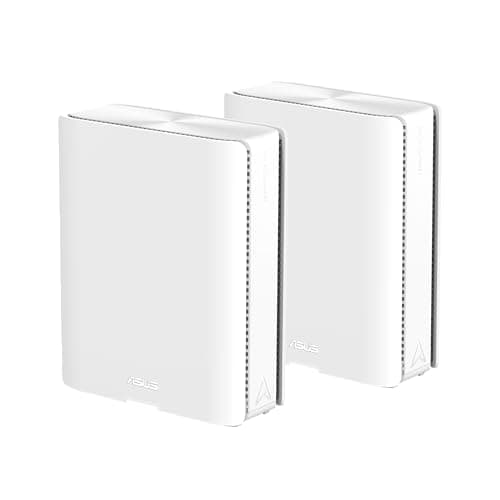
Best Performance per Dollar: ASUS ZenWiFi BQ16 Pro Quad-Band WiFi 7 Mesh Router (2-Pack)
ASUS ZenWiFi BQ16 Pro Quad-Band WiFi 7 Mesh Router (2-Pack)
- Dual 6GHz lets one band serve as a dedicated backhaul lane
- No Thread, Zigbee, or Matter radios — Smart Home Master is SSID segmentation only
(Current price, subject to change)
The ASUS ZenWiFi BQ16 Pro Quad-Band WiFi 7 Mesh Router (2-Pack) earns a composite of 7.55, fourth overall and the high-end value play. For your installation that delivers two full 6GHz bands, one devotable entirely to backhaul. Tom's Hardware crowned it the quad-band performance champion and measured the fastest wireless backhaul it had tested, approaching 3,500 Mbps close-range. TechRadar frames it as most of the flagship experience at roughly 42% beneath the Orbi 970's price.
Its Smart Home Master feature segments IoT traffic into three separate SSIDs, deeper isolation than a single guest network. Free lifetime AiProtection security eliminates the roughly 99-dollar annual fee NETGEAR and eero charge across a 5-yr ownership window. The radio stack is the limitation, since it integrates no Thread or Zigbee. ASUS publishes no device cap, so the formula scores capacity at the honest category baseline rather than an invented count.
Compared to the TP-Link Deco BE85 Tri-Band WiFi 7 Mesh System (2-Pack), the ASUS pushes a faster wireless backhaul and adds free security. The Deco answers with more aggressive wired-backhaul ports for the prosumer who wires every node.
What We Love
- Dual 6GHz lets one band serve as a dedicated backhaul lane
- Tom's Hardware measured the fastest wireless backhaul it had tested
- Roughly 755 dollars under the Orbi 970 for similar quad-band class
- Free lifetime AiProtection security with no annual subscription
What Could Be Better
- No Thread, Zigbee, or Matter radios — Smart Home Master is SSID segmentation only
- ASUS publishes no concurrent-device figure to verify capacity
- Two-node kit covers less total area than the three-node Orbi 970
The Verdict
If you want quad-band WiFi 7 speed without the Orbi's price and you run your own hub, the ASUS ZenWiFi BQ16 Pro Quad-Band WiFi 7 Mesh Router (2-Pack) checks the boxes that matter for that setup. The 7.55 reflects the fastest wireless backhaul Tom's Hardware tested plus free lifetime security. It segments IoT into three SSIDs cleanly, but it still carries no protocol radios.
Check price for the ASUS ZenWiFi BQ16 Pro Quad-Band WiFi 7 Mesh Router (2-Pack) →
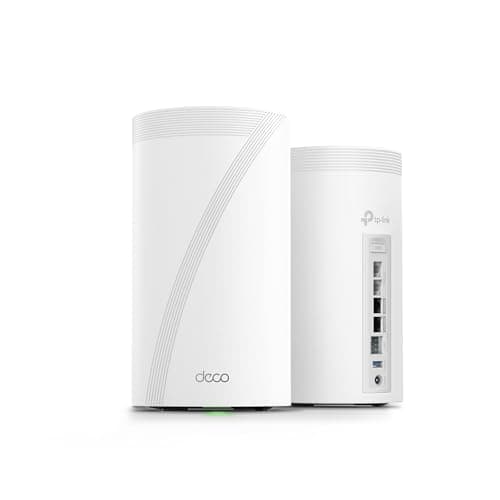
Best Wired-Backhaul Prosumer: TP-Link Deco BE85 Tri-Band WiFi 7 Mesh System (2-Pack)
TP-Link Deco BE85 Tri-Band WiFi 7 Mesh System (2-Pack)
- 2x 10G per node including an SFP+ combo for direct fiber backhaul
- No Thread border router — TP-Link confirms Deco cannot act as one
(Current price, subject to change)
The TP-Link Deco BE85 Tri-Band WiFi 7 Mesh System (2-Pack) earns a composite of 7.25, fifth overall and the wired-backhaul specialist. For your installation that delivers the most aggressive provisioning here: 2x 10G per node incorporating an SFP+ and RJ45 combination for direct fiber. CNET highlights that wired-backhaul capability as the standout, since every radio consequently serves clients rather than transporting mesh traffic. Its 12-stream tri-band classification supports substantial aggregate throughput across the 2-pack.
The smart-home narrative is segmentation, not radios. TP-Link community staff confirm Deco units cannot operate as a Thread border router, so the formula evaluates the radio factor on the isolated IoT network alone. The 200+ device specification matches the eero Pro 7, and AI-driven roaming transitions clients between nodes within milliseconds. It is a prosumer backbone, not a hub replacement.
Compared to the TP-Link Deco BE63 Tri-Band WiFi 7 Mesh System (3-Pack), the BE85 incorporates 10G and SFP+ interfaces plus additional streams, whereas the cheaper BE63 preserves identical IoT-isolation behavior on slower 2.5G wiring.
What We Love
- 2x 10G per node including an SFP+ combo for direct fiber backhaul
- 12-stream tri-band class for high aggregate throughput
- 200+ device claim matches the eero Pro 7
- Isolated IoT network keeps smart devices segmented
What Could Be Better
- No Thread border router — TP-Link confirms Deco cannot act as one
- At 699 dollars for two nodes it is mid-priced per node
- HomeShield security pushes some features behind a subscription
The Verdict
If you have Ethernet in the walls and maybe a fiber SFP+ run, the TP-Link Deco BE85 Tri-Band WiFi 7 Mesh System (2-Pack) is a sensible pick for that setup. The 7.25 reflects the best wired-backhaul ports in this roundup, 2x 10G per node with an SFP+ combo. The honest gap: no Thread border router, so smart-home radios still live in a separate hub.
Check price for the TP-Link Deco BE85 Tri-Band WiFi 7 Mesh System (2-Pack) →
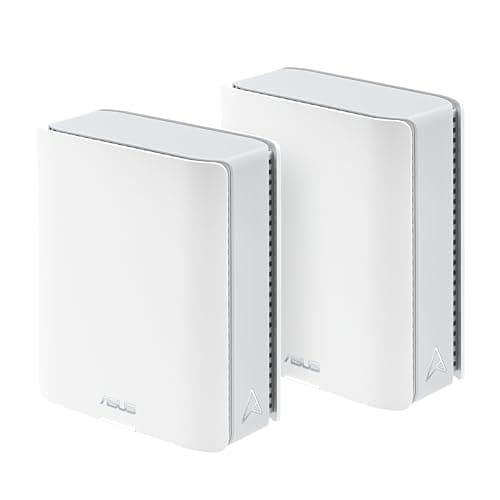
Best Tri-Band ASUS Value: ASUS ZenWiFi BT10 Tri-Band WiFi 7 Mesh Router (2-Pack)
ASUS ZenWiFi BT10 Tri-Band WiFi 7 Mesh Router (2-Pack)
- Dual 10G ports per node for fast wired backhaul
- Tri-band, not the dual-6GHz quad-band of the BQ16 Pro
(Current price, subject to change)
The ASUS ZenWiFi BT10 Tri-Band WiFi 7 Mesh Router (2-Pack) earns a composite of 6.75, sixth overall and the tri-band ASUS value. For your installation that delivers dual 10G ports per node prepared for wired backhaul, plus the identical Smart Home Master segmentation that partitions IoT into separate SSIDs. TechRadar describes it as a sleek, accelerated WiFi 7 mesh delivering most of the BQ16 Pro's experience at roughly 42% beneath that flagship's price. Its BE18000 classification supports 18x earlier-generation aggregate ceilings across 6,000 sq ft.
It runs tri-band MLO rather than the quad-band dual-6GHz lane of the BQ16 Pro, so its wireless backhaul omits a fully reserved band. The included security and parental controls add value with no annual fee across a 5-yr ownership window. As with every ASUS pick, the radio factor scores on SSID segmentation alone, and the absent device-capacity figure keeps capacity at the baseline.
Compared to the ASUS ZenWiFi BQ16 Pro Quad-Band WiFi 7 Mesh Router (2-Pack), the BT10 trades the dedicated 6GHz backhaul lane for a lower price while keeping the dual 10G ports and free security intact.
What We Love
- Dual 10G ports per node for fast wired backhaul
- TechRadar calls it most of the BQ16 Pro's speed for hundreds less
- Included security and parental controls at no annual fee
- Smart Home Master segments IoT cleanly into separate SSIDs
What Could Be Better
- Tri-band, not the dual-6GHz quad-band of the BQ16 Pro
- No Thread, Zigbee, or Matter radios
- ASUS publishes no device-capacity figure to verify
The Verdict
If you want ASUS AiMesh and dual 10G ports without paying for quad-band, the ASUS ZenWiFi BT10 Tri-Band WiFi 7 Mesh Router (2-Pack) checks the boxes that matter for that budget. The 6.75 reflects a tri-band MLO mesh with 10G wired backhaul and free security. TechRadar frames it as most of the BQ16 Pro for less. It segments IoT well but adds no protocol radios.
Check price for the ASUS ZenWiFi BT10 Tri-Band WiFi 7 Mesh Router (2-Pack) →
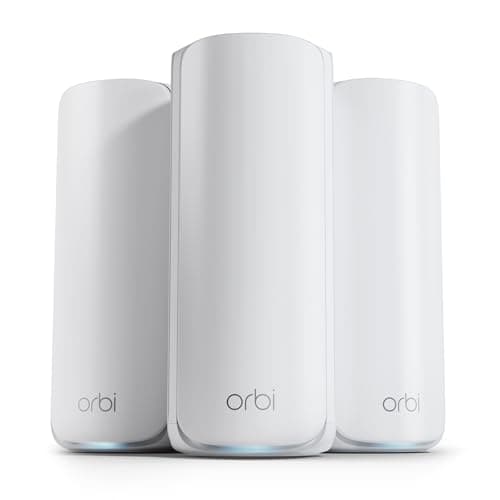
Best Mid-Tier Dedicated Backhaul: NETGEAR Orbi 870 Series Tri-Band WiFi 7 Mesh System (RBE873, Router + 2 Satellites)
NETGEAR Orbi 870 Series Tri-Band WiFi 7 Mesh System (RBE873, Router + 2 Satellites)
- Dedicated 5GHz backhaul band that keeps node traffic off client airtime
- No Thread, Zigbee, or Matter radios — needs a separate hub
(Current price, subject to change)
The NETGEAR Orbi 870 Series Tri-Band WiFi 7 Mesh System (RBE873, Router + 2 Satellites) earns a composite of 6.55, seventh overall and the mid-tier dedicated-backhaul selection. For your installation that delivers Orbi's patented dedicated 5GHz backhaul band, isolating node-to-node traffic from the airtime your clients consume. Tom's Hardware documents that dedicated-band approach as Orbi's signature stability advantage. It covers 9,000 sq ft across three nodes, achieving roughly 3,000 ft of per-node reach through a 10 Gig WAN port. Its BE21000 classification approaches 21x earlier-generation ceilings.
Capacity and radios are the constraints. Its 150-device specification is the lowest published figure in this guide, and like the Orbi 970 it ships a basic IoT SSID without Thread or Zigbee radios. The formula rewards the dedicated backhaul on an 8 yet applies the absent radio stack against the 25% factor.
Compared to the Netgear Orbi 970, the 870 keeps a dedicated backhaul band and most of the coverage for far less, trading the 970's fuller quad-band reservation and higher device claim.
What We Love
- Dedicated 5GHz backhaul band that keeps node traffic off client airtime
- 9,000 sq ft across three nodes for large homes
- 10 Gig WAN port for multi-gig fiber
- Orbi app simplifies node placement
What Could Be Better
- No Thread, Zigbee, or Matter radios — needs a separate hub
- 150-device claim is the lowest in this roundup
- NETGEAR Armor security runs roughly 99 dollars per year
The Verdict
If you want Orbi's dedicated backhaul across a large home but cannot justify the 970, the NETGEAR Orbi 870 Series Tri-Band WiFi 7 Mesh System (RBE873, Router + 2 Satellites) lines up with what you actually need. The 6.55 reflects a dedicated 5GHz backhaul band and 9,000 sq ft. The tradeoffs: a 150-device claim, the lowest here, and no smart-home radios, so a hub stays separate.
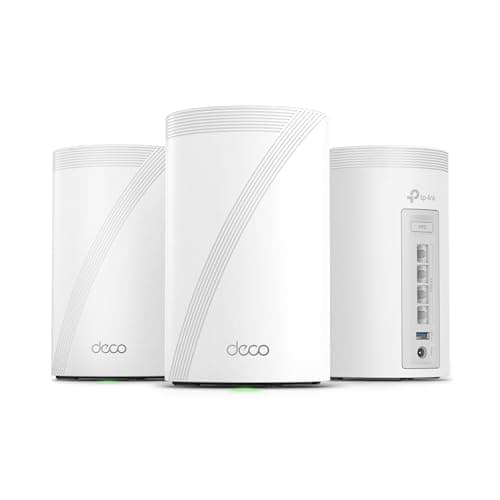
Best Value: TP-Link Deco BE63 Tri-Band WiFi 7 Mesh System (3-Pack)
TP-Link Deco BE63 Tri-Band WiFi 7 Mesh System (3-Pack)
- Cheapest credible WiFi 7 mesh here at 357 dollars
- 2.5G-only wired backhaul, no 10G ports
(Current price, subject to change)
The TP-Link Deco BE63 Tri-Band WiFi 7 Mesh System (3-Pack) earns a composite of 6.55, tied with the Orbi 870 but the unambiguous best-value selection at 357 dollars. For your installation that delivers the WiFi 7 generational transition without the four-figure expenditure. PCMag rates Deco configuration among the most beginner-accessible meshes, and the 3-pack auto-onboards from the application within roughly 5 min. Its 200+ device specification matches systems approaching 3x the price.
Four 2.5G ports per node furnish genuine wired-backhaul flexibility, though provisioning culminates at 2.5G rather than the 10G of pricier alternatives. CNET frames it as the value entry to credible WiFi 7 mesh. Like every TP-Link here, it isolates IoT on a dedicated network yet operates no Thread border router, so smart-home radios remain external. The formula scores capacity favorably and backhaul at the value tier.
Compared to the TP-Link Deco BE85 Tri-Band WiFi 7 Mesh System (2-Pack), the BE63 preserves identical IoT-isolation behavior and matching device specification while relinquishing the 10G and SFP+ interfaces for approximately 50% the price.
What We Love
- Cheapest credible WiFi 7 mesh here at 357 dollars
- Four 2.5G ports per node for wired backhaul flexibility
- 200+ device claim matches systems three times the price
- Isolated IoT network keeps smart devices segmented
What Could Be Better
- 2.5G-only wired backhaul, no 10G ports
- No Thread border router — IoT isolation only
- 6-stream tri-band trails the flagship throughput class
The Verdict
If you are upgrading from WiFi 5 or 6 and want the WiFi 7 jump without four figures, the TP-Link Deco BE63 Tri-Band WiFi 7 Mesh System (3-Pack) is the path of least friction. The 6.55 reflects a 200+ device claim and four 2.5G ports per node at 357 dollars. No 10G and no Thread radio, but for a growing device count on a sub-2.5G plan, no need to overthink it.
Check price for the TP-Link Deco BE63 Tri-Band WiFi 7 Mesh System (3-Pack) →
How We Score: SHE Smart Home Backhaul Fitness Score
SHE Smart Home Backhaul Fitness Score
Score Formula
(Backhaul Architecture × 0.25) + (Smart Home Radio Stack × 0.25) + (IoT Device Capacity × 0.20) + (Coverage per Node × 0.15) + (Multi-Gig Wired Provisioning × 0.15)Score Factors
- Backhaul Architecture (25%)Whether node-to-node traffic gets dedicated spectrum. Quad-band with fully reserved backhaul (Orbi 970) tops the scale; dual-6GHz with one band devotable to backhaul (BQ16 Pro) close behind; a dedicated 5GHz band (Orbi 870) next; shared tri-band MLO with strong wired-backhaul ports mid; 2.5G-only wired backhaul lowest. The single biggest stability lever in device-dense homes.
- Smart Home Radio Stack (25%)Protocol-radio presence. Thread border router plus Zigbee plus Matter controller plus BLE in every node (eero Max 7 and Pro 7) is the ceiling; multi-SSID IoT segmentation with no radios (ASUS Smart Home Master) mid; a single isolated IoT SSID (TP-Link Deco) lower; a basic IoT SSID with no segmentation depth (NETGEAR Orbi) lowest. The moat dimension where eero stands alone.
- IoT Device Capacity (20%)Vendor-published concurrent-device limit only, never inferred. 250+ devices tops the scale, 200-249 next, 150-199 lower, and a vendor that publishes no figure scores the category baseline rather than an invented count. Capacity is the headroom 100+ smart devices actually consume.
- Coverage per Node (15%)Each vendor's stated coverage divided by the nodes in the as-sold kit, so a 3-pack is judged per node, not per box. 3,300+ sq ft per node tops the scale down through 2,000 sq ft per node, always using the vendor's own figure for the exact SKU sold.
- Multi-Gig Wired Provisioning (15%)Per-node wired ports for backhaul and high-throughput clients. 2x 10G plus an SFP+ combo plus 2x 2.5G (Deco BE85) tops the scale; 2x 10G per node (eero Max 7, BQ16 Pro) next; dual 10G (BT10) below; 10G WAN with 2.5G LANs, four 2.5G, or 2x 5G per node lowest.
SHE Smart Home Backhaul Fitness Score — Ranked
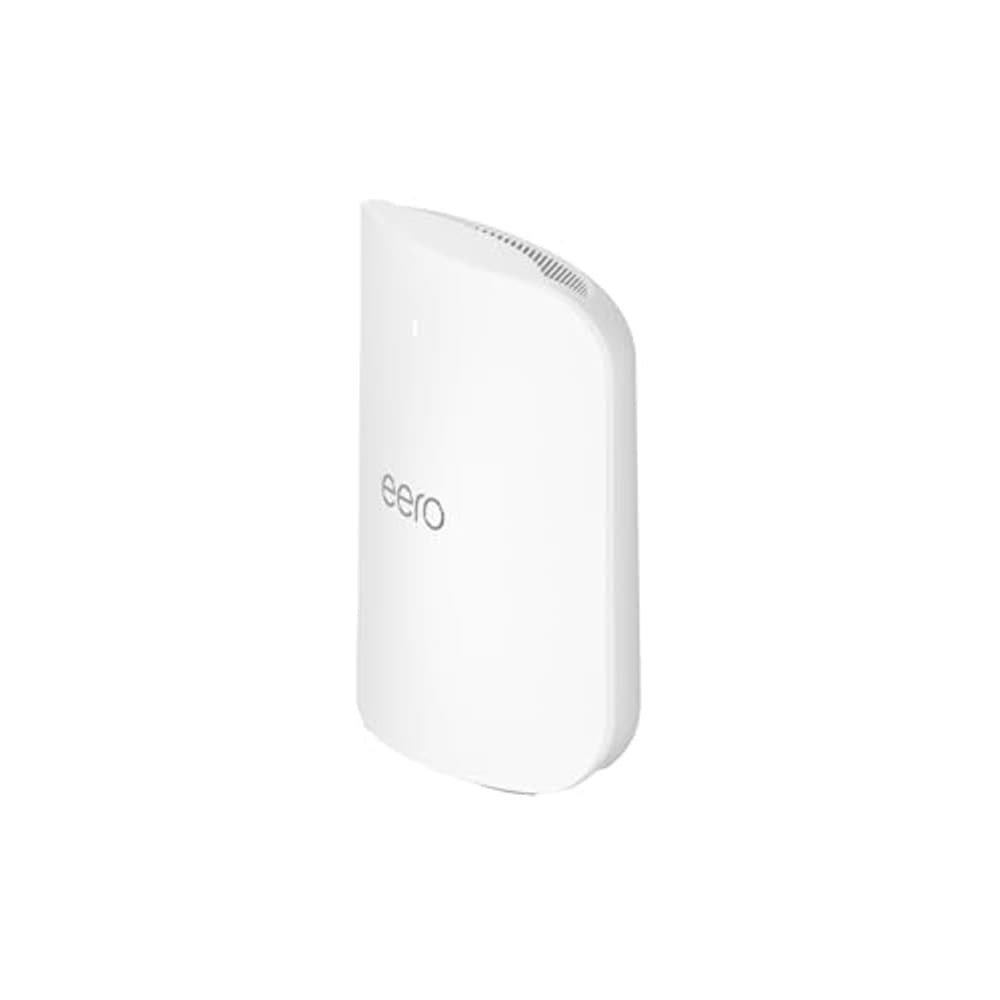
Amazon eero Max 7 Mesh WiFi 7 Router (1-Pack)
SHE Smart Home Backhaul Fitness Score8.8/10419 dollars/unit — only Thread + Zigbee + Matter stack; 250+ devices and 2x 10GbE ports
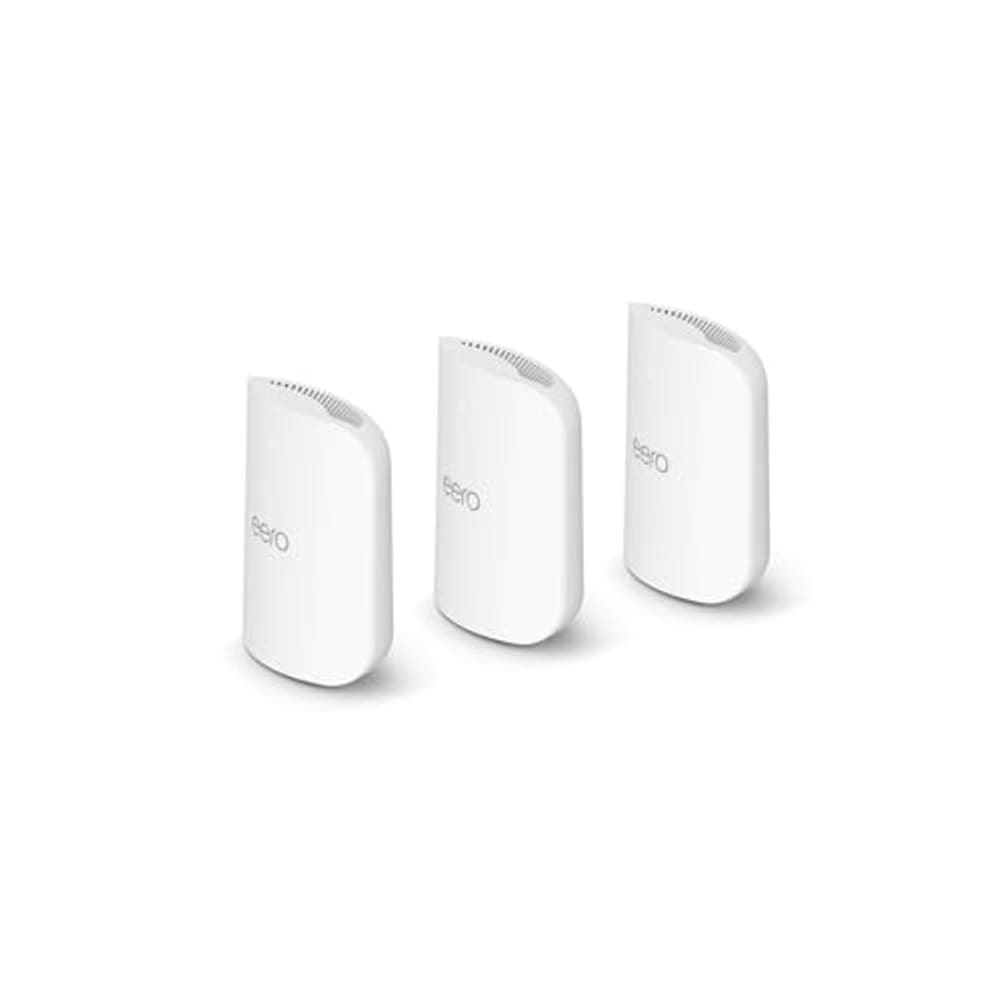
Amazon eero Pro 7 Tri-Band Mesh WiFi 7 Router (3-Pack)
SHE Smart Home Backhaul Fitness Score7.8/10549 dollars — cheapest full hub backbone across 6,000 sq ft; 200+ devices, 5GbE backhaul
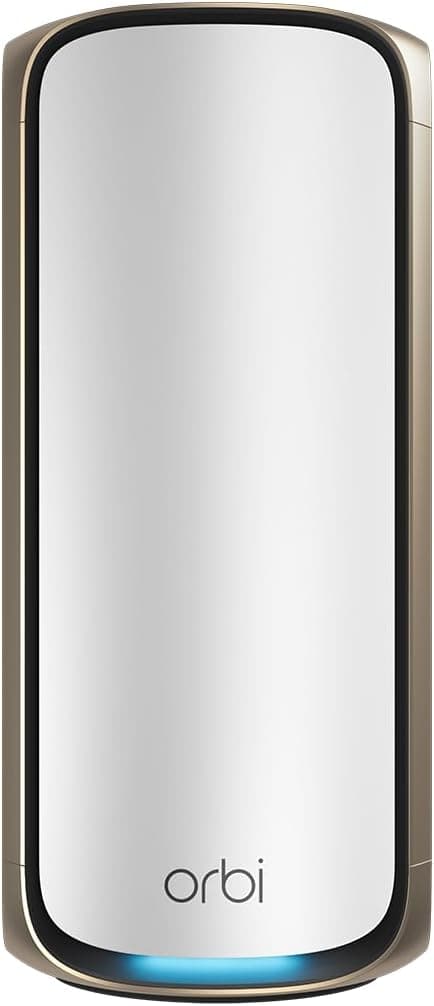
Netgear Orbi 970
SHE Smart Home Backhaul Fitness Score7.6/101,799 dollars — dedicated quad-band backhaul, 10,000 sq ft; no smart-home radios
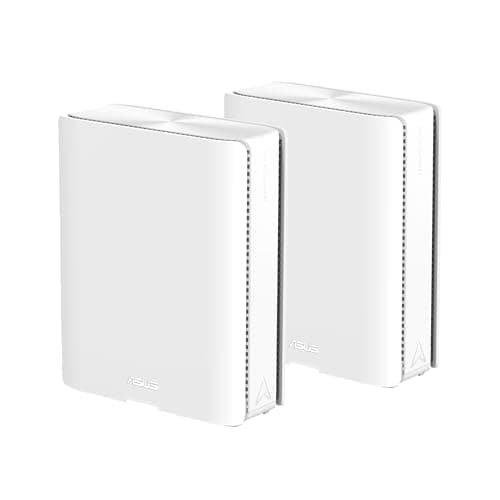
ASUS ZenWiFi BQ16 Pro Quad-Band WiFi 7 Mesh Router (2-Pack)
SHE Smart Home Backhaul Fitness Score7.5/101,044 dollars — fastest wireless backhaul tested, free security; no protocol radios
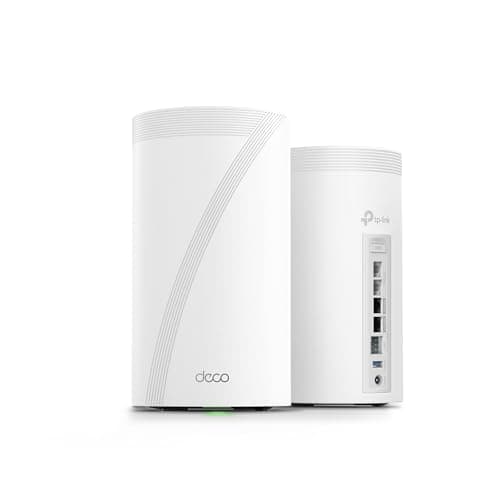
TP-Link Deco BE85 Tri-Band WiFi 7 Mesh System (2-Pack)
SHE Smart Home Backhaul Fitness Score7.3/10699 dollars — best wired backhaul, 2x 10G plus SFP+ per node; IoT isolation only
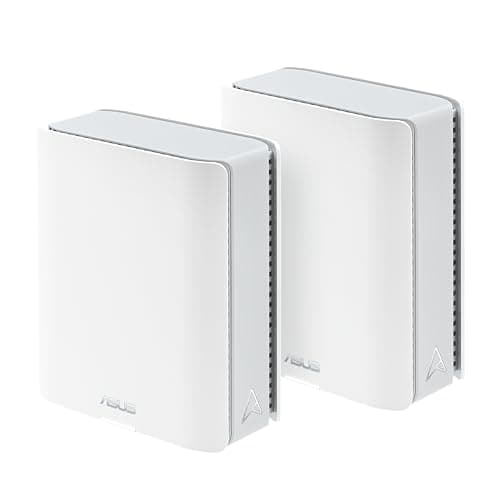
ASUS ZenWiFi BT10 Tri-Band WiFi 7 Mesh Router (2-Pack)
SHE Smart Home Backhaul Fitness Score6.8/10601 dollars — tri-band ASUS with dual 10G ports and free security; no radios
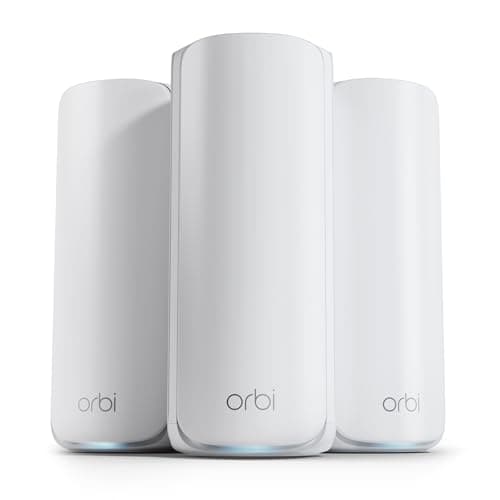
NETGEAR Orbi 870 Series Tri-Band WiFi 7 Mesh System (RBE873, Router + 2 Satellites)
SHE Smart Home Backhaul Fitness Score6.5/10999 dollars — dedicated 5GHz backhaul, 9,000 sq ft; 150 devices, no radios
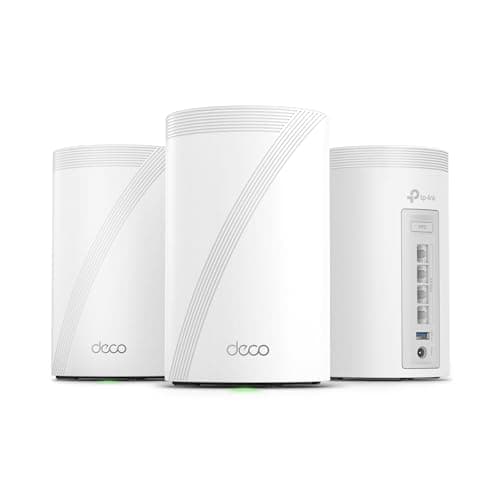
TP-Link Deco BE63 Tri-Band WiFi 7 Mesh System (3-Pack)
SHE Smart Home Backhaul Fitness Score6.5/10357 dollars — cheapest WiFi 7 mesh; 200+ devices, four 2.5G ports, IoT isolation
Dedicated Backhaul vs MLO: Is Quad-Band Worth It?
The most useful thing to understand before buying is how each system carries node-to-node traffic, because that determines stability under device load. A dedicated backhaul, the Netgear Orbi 970's quad-band approach, reserves spectrum exclusively for the mesh. Tom's Hardware confirms node traffic never competes with your clients, the single biggest stability lever in a home with 100+ devices. The ASUS ZenWiFi BQ16 Pro Quad-Band WiFi 7 Mesh Router (2-Pack) achieves something comparable with two full 6GHz bands, one devotable entirely to backhaul, and Tom's Hardware measured the fastest wireless backhaul it had tested at approximately 3,500 Mbps. Dedicated backhaul earns its premium, often a 50% surcharge, in dense, large homes.
Shared MLO, the approach the eero and TP-Link picks use, runs node traffic and client traffic over the same bands but lets a link use 5GHz and 6GHz simultaneously. CNET notes that Multi-Link Operation stabilizes the backhaul under load even without a reserved band, especially when you wire the nodes. That is why the TP-Link Deco BE85 Tri-Band WiFi 7 Mesh System (2-Pack) with its 2x 10G plus SFP+ ports and the Amazon eero Max 7 Mesh WiFi 7 Router (1-Pack) with 2x 10GbE both score well on backhaul despite lacking a dedicated band. Wired backhaul sidesteps the question entirely, since every radio then serves clients.
The second question is whether the mesh can be your smart-home hub. Only the eero picks build a Thread border router, Zigbee radio, and Matter controller into every node, so they commission and route sensors directly. The Orbi, ASUS, and TP-Link systems isolate IoT on a separate network but carry no protocol radios, so they pair best with a dedicated Best Zigbee and Thread USB Coordinators 2026 coordinator. PCMag and TechRadar both land on the same guidance for this roundup. Buy dedicated backhaul for raw stability in a big home, and buy eero when you want the router to replace the hub. Match the choice to your device count over a 5-yr ownership window rather than the spec sheet's peak number.
| Product | Thread Border Router | Zigbee | Matter Controller | Dedicated Backhaul | 10G Ports | Alexa |
|---|---|---|---|---|---|---|
| Amazon eero Max 7 Mesh WiFi 7 Router (1-Pack) | ✓ | ✓ | ✓ | ✕ | ✓ | ✓ |
| Amazon eero Pro 7 Tri-Band Mesh WiFi 7 Router (3-Pack) | ✓ | ✓ | ✓ | ✕ | ✕ | ✓ |
| Netgear Orbi 970 | ✕ | ✕ | ✕ | ✓ | ✓ | ✓ |
| ASUS ZenWiFi BQ16 Pro Quad-Band WiFi 7 Mesh Router (2-Pack) | ✕ | ✕ | ✕ | ✓ | ✓ | ✓ |
| TP-Link Deco BE85 Tri-Band WiFi 7 Mesh System (2-Pack) | ✕ | ✕ | ✕ | ✕ | ✓ | ✓ |
| TP-Link Deco BE63 Tri-Band WiFi 7 Mesh System (3-Pack) | ✕ | ✕ | ✕ | ✕ | ✕ | ✓ |
When NOT to Buy
WiFi 7 mesh is not automatically the appropriate decision. If your provisioned internet plan approaches 1 Gbps and you operate fewer than 30 devices, a prior-generation WiFi 6E mesh costs considerably less and saturates that connection comfortably. The 4096-QAM and 320MHz headroom rewards you once device population and internet provisioning simultaneously escalate. Match the expenditure to a genuinely device-dense installation on a multi-gig plan.
Who Should Buy What
Who Should Buy What
| If you are… | Recommended pick |
|---|---|
IoT-dense consolidator You run 50 to 150 smart devices and want the router to be the Thread, Zigbee, and Matter hub so you can remove a separate box | Amazon eero Max 7 Mesh WiFi 7 Router (1-Pack) |
Mid-size hub on a budget You want the consolidated Thread/Zigbee/Matter backbone across roughly 6,000 sq ft without the Max 7's per-node price | Amazon eero Pro 7 Tri-Band Mesh WiFi 7 Router (3-Pack) |
Performance maximalist on fiber You run a multi-gig plan and want a dedicated backhaul band plus 10G WAN across a large home, with a separate hub already in place | Netgear Orbi 970 |
High-end value seeker You want the quad-band performance class for hundreds less than the Orbi 970, with clean IoT segmentation and no annual security fee | ASUS ZenWiFi BQ16 Pro Quad-Band WiFi 7 Mesh Router (2-Pack) |
Value upgrader from WiFi 5 or 6 You have a growing device count on a sub-2.5G plan and want the cheapest credible WiFi 7 mesh with IoT isolation | TP-Link Deco BE63 Tri-Band WiFi 7 Mesh System (3-Pack) |
Frequently Asked Questions
Is WiFi 7 worth it over WiFi 6E for a smart home?
It depends on your device count and internet plan. WiFi 7 adds Multi-Link Operation, 320MHz channels on 6GHz, and 4096-QAM, which together stabilize mesh backhaul and raise per-link throughput roughly 20% over WiFi 6E. That headroom matters once you run 100+ devices or a multi-gig plan. For under 30 devices on a 1 Gbps line, a WiFi 6E mesh saturates your connection for far less money.
Which WiFi 7 mesh can also be my Thread and Matter hub?
Only the eero picks. The eero Max 7 and eero Pro 7 build a Thread border router, a Zigbee radio, and a Matter controller into every node, so the mesh itself commissions and routes your sensors, locks, and bulbs. NETGEAR Orbi, ASUS ZenWiFi, and TP-Link Deco all isolate IoT on a separate network but carry no protocol radios. TP-Link has confirmed Deco cannot act as a Thread border router.
Do I need dedicated backhaul, or is shared MLO fine?
Dedicated backhaul, the NETGEAR Orbi 970's quad-band design, reserves spectrum so node-to-node traffic never competes with clients, which is the biggest stability lever in a dense home. Shared MLO, used by eero and TP-Link, runs both over the same bands but lets a link use 5GHz and 6GHz at once. If you wire your nodes over Ethernet, wired backhaul sidesteps the question entirely and every radio then serves clients.
How many smart devices can these systems actually handle?
Vendor-published concurrent claims here range from 250+ devices (eero Max 7) down to 150 (NETGEAR Orbi 870). The eero Pro 7 and both TP-Link Decos claim 200+, and the Orbi 970 claims 200. ASUS publishes no figure for the ZenWiFi systems. Real-world ceilings vary with traffic patterns, but the published claim is the most honest comparison point, so we score capacity strictly from it and never invent a number.
eero Max 7 vs NETGEAR Orbi 970 — which should I buy?
The eero Max 7 wins for smart homes. It is the only one with a Thread border router, Zigbee, and Matter controller in every node plus a 250+ device claim, so it replaces a hub. The Orbi 970 pushes far more raw throughput with a dedicated quad-band backhaul and covers 10,000 sq ft, but it carries no smart-home radios and needs a separate hub. Buy the Max 7 to consolidate, the Orbi 970 for raw speed and coverage.
Do these systems charge ongoing subscription fees?
It varies by brand. ASUS includes lifetime AiProtection security free on the ZenWiFi BQ16 Pro and BT10. eero locks some advanced features behind eero Plus at roughly 99 dollars per year, and NETGEAR pushes Armor at a similar annual fee after a trial. TP-Link HomeShield offers a free tier with paid upgrades. If you want zero recurring cost for security, the ASUS picks are the cleanest on that front.
Bottom Line
Get the Amazon eero Max 7 Mesh WiFi 7 Router (1-Pack) if you run a device-dense smart home and want one box that is both the WiFi 7 backbone and the Thread/Zigbee/Matter hub.
Get the TP-Link Deco BE63 Tri-Band WiFi 7 Mesh System (3-Pack) if you want the cheapest credible WiFi 7 mesh with a 200+ device claim and IoT isolation for a growing home.
Get the Netgear Orbi 970 if you have a large home on multi-gig fiber and want dedicated quad-band backhaul across 10,000 sq ft.
Get the ASUS ZenWiFi BQ16 Pro Quad-Band WiFi 7 Mesh Router (2-Pack) if you want the quad-band performance class for hundreds less than the Orbi 970 with free lifetime security.
Get the TP-Link Deco BE85 Tri-Band WiFi 7 Mesh System (2-Pack) if you wire every node and want the most aggressive wired-backhaul ports including an SFP+ combo for fiber.
The right call for most device-dense smart homes is the Amazon eero Max 7 Mesh WiFi 7 Router (1-Pack) — the only WiFi 7 mesh that replaces your Thread, Zigbee, and Matter hub. For a tighter budget, the TP-Link Deco BE63 Tri-Band WiFi 7 Mesh System (3-Pack) at 357 dollars brings 200+ device support and IoT isolation. Skip WiFi 7 mesh entirely if you run under 30 devices on a 1 Gbps plan — a prior-generation WiFi 6E mesh saturates that line for far less.
Sources & Methodology
Methodology: SHE Smart Home Backhaul Fitness Score — Formula: (Backhaul Architecture × 0.25) + (Smart Home Radio Stack × 0.25) + (IoT Device Capacity × 0.20) + (Coverage per Node × 0.15) + (Multi-Gig Wired Provisioning × 0.15). Factors: Backhaul Architecture (25%): Whether node-to-node traffic gets dedicated spectrum. Quad-band with fully reserved backhaul (Orbi 970) tops the scale; dual-6GHz with one band devotable to backhaul (BQ16 Pro) close behind; a dedicated 5GHz band (Orbi 870) next; shared tri-band MLO with strong wired-backhaul ports mid; 2.5G-only wired backhaul lowest. The single biggest stability lever in device-dense homes. | Smart Home Radio Stack (25%): Protocol-radio presence. Thread border router plus Zigbee plus Matter controller plus BLE in every node (eero Max 7 and Pro 7) is the ceiling; multi-SSID IoT segmentation with no radios (ASUS Smart Home Master) mid; a single isolated IoT SSID (TP-Link Deco) lower; a basic IoT SSID with no segmentation depth (NETGEAR Orbi) lowest. The moat dimension where eero stands alone. | IoT Device Capacity (20%): Vendor-published concurrent-device limit only, never inferred. 250+ devices tops the scale, 200-249 next, 150-199 lower, and a vendor that publishes no figure scores the category baseline rather than an invented count. Capacity is the headroom 100+ smart devices actually consume. | Coverage per Node (15%): Each vendor's stated coverage divided by the nodes in the as-sold kit, so a 3-pack is judged per node, not per box. 3,300+ sq ft per node tops the scale down through 2,000 sq ft per node, always using the vendor's own figure for the exact SKU sold. | Multi-Gig Wired Provisioning (15%): Per-node wired ports for backhaul and high-throughput clients. 2x 10G plus an SFP+ combo plus 2x 2.5G (Deco BE85) tops the scale; 2x 10G per node (eero Max 7, BQ16 Pro) next; dual 10G (BT10) below; 10G WAN with 2.5G LANs, four 2.5G, or 2x 5G per node lowest.
Expert review sources used in this analysis:
- SmartHomeExplorer aggregates expert review data and manufacturer specifications to produce consensus-based buying guidance for this guide
- We do not perform first-party product testing
- Band architecture, backhaul behavior, port counts, coverage areas, device-capacity claims, and pricing are drawn from manufacturer documentation
- They are corroborated against WiFi 7 mesh coverage from Tom's Hardware, Tom's Guide, CNET, PCMag, and TechRadar
- The eero Thread border router, Zigbee, and Matter controller duty is documented by eero, and TP-Link community staff confirmed Deco cannot act as a Thread border router
- Amazon prices and availability verified 2026-06-10
- The SHE Smart Home Backhaul Fitness Score weights backhaul architecture, the smart-home radio stack, IoT device capacity, coverage per node, and multi-gig wired provisioning from aggregated specs
- No first-party measurements were conducted.
Nicholas Miles is the founder of SmartHomeExplorer and a longtime smart home enthusiast focused on helping everyday homeowners make better technology decisions. He researches, compares, and writes about products across security, climate, lighting, leak prevention, sensors, home energy, and automation, with an emphasis on real-world usefulness, ecosystem compatibility, reliability, privacy, and long-term value.
Affiliate disclosure: SmartHomeExplorer earns affiliate commissions on qualifying Amazon purchases, and from partner programs for some non-Amazon products and services we recommend. Our scoring methodology is independent of affiliate relationships.