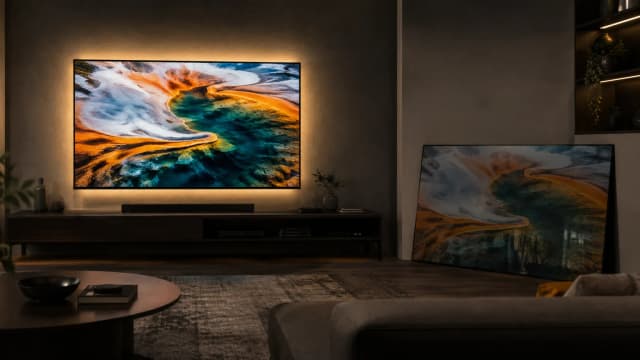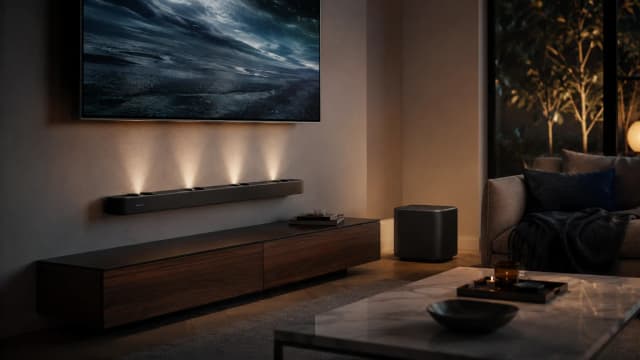

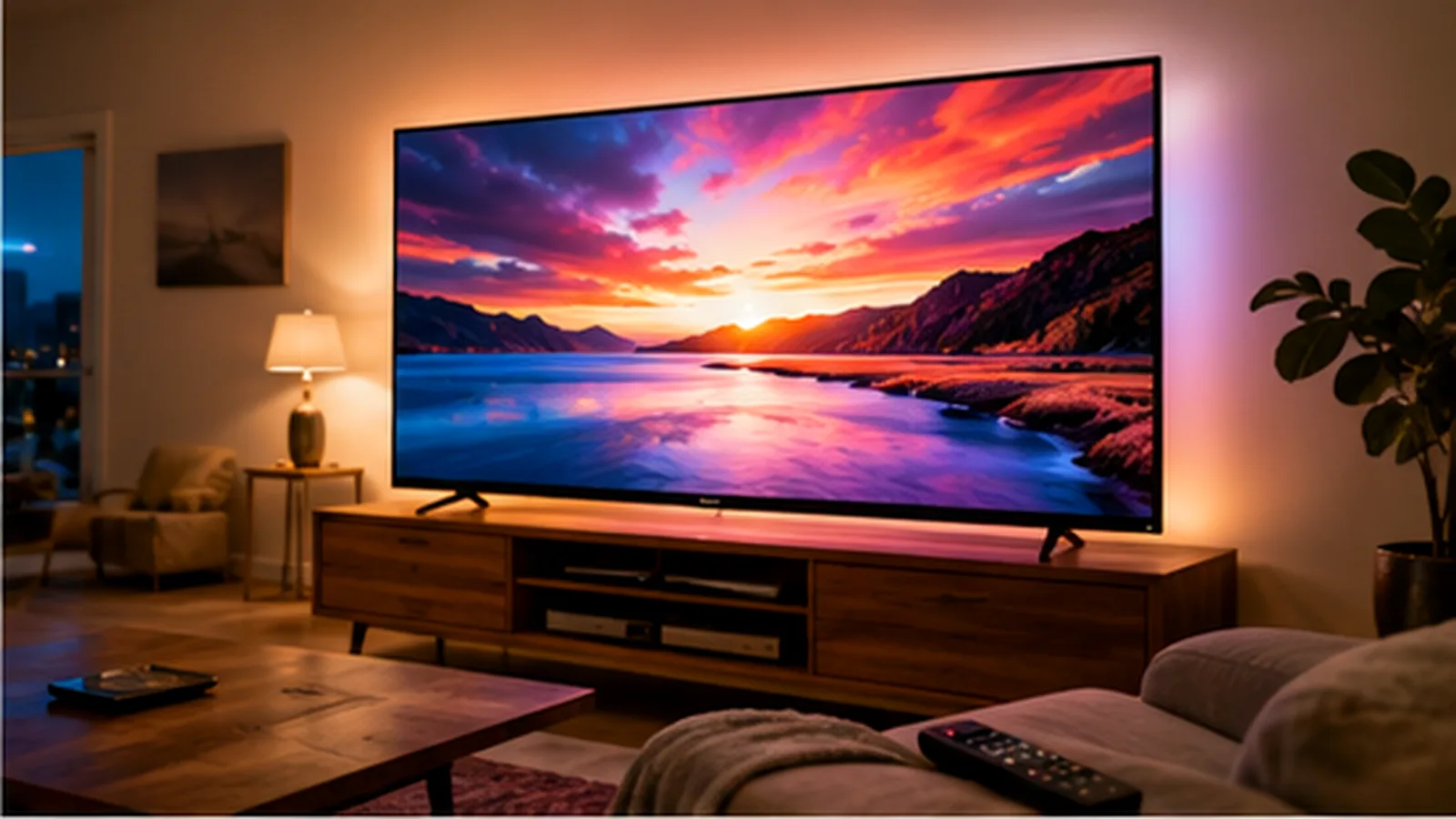
Best Smart TVs Under $1,000 in 2026 — Value Picks
Budget OLED has left this price band, so mini-LED now owns it. The TCL QM6K wins on value — flagship-adjacent picture for the least money. Pay up for the Hisense U8 only if your room is bright.
This article contains affiliate links. We may earn a commission at no extra cost to you. Prices change frequently — check the current price on Amazon before buying. Learn more
The Short Answer
The TCL QM6K delivers the strongest composite SHE TV Value Score in this evaluation — RTINGS reviewed it as a benchmark QD Mini-LED combining Halo Control local-dimming technology, next-generation connectivity, and Dolby Vision IQ. Upgrade to the Hisense U8 exclusively when afternoon sunlight creates glare.
Featured in this Guide
TCL
QM6K QD-Mini LED Google TV
- •Most picture per dollar: QD Mini-LED with Halo Control, 144Hz, and HDMI 2.1 — the value benchmark this set is scored against.
Hisense
U8 Series (U8QG) Mini-LED Google TV
- •When sun and lamps wash out cheaper panels, the U8 line's brightness holds up
- •its predecessor U8N measured over 3,600 nits, and 165Hz handles gaming.
TCL
T7 QLED Google TV
- •Quantum Dot QLED color with 144Hz and Dolby Vision under $550 if you'd rather not jump to mini-LED
- •a newer, Digital Trends-reviewed model.
Sony
X90L BRAVIA XR Full-Array LED Google TV
- •If film fidelity beats raw nits for you, the Cognitive Processor XR upscaling, out-of-box accuracy, and G-Sync/PS5 features earn the X90L its place.
Samsung
QN70F Neo QLED Mini-LED Tizen TV
- •For a Samsung household, the Tizen Gaming Hub and Neo QLED build are the draw — provided you can live without Dolby Vision at the highest ask in this set.
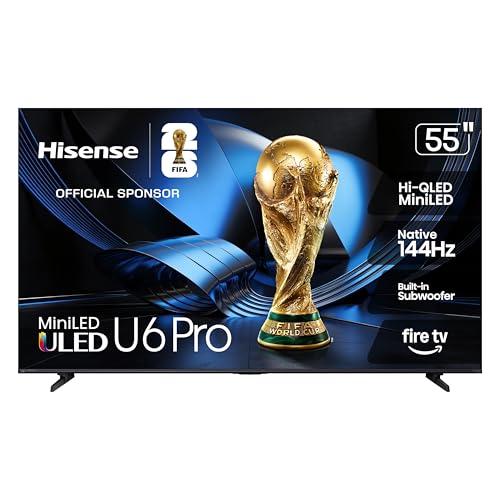
Hisense
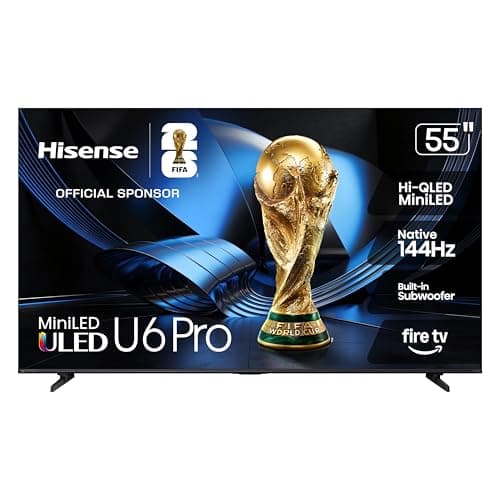
U6 Pro Mini-LED Fire TV (55U6SF Pro, 2026)
- •The only native Fire TV pick: a 55-inch mini-LED for Echo homes. No recognized written review of this 2026 model yet, so the case rests on its specs.
How These 6 TVs Compare
Home Entertainment
Chart
 Smarthomeexplorer.com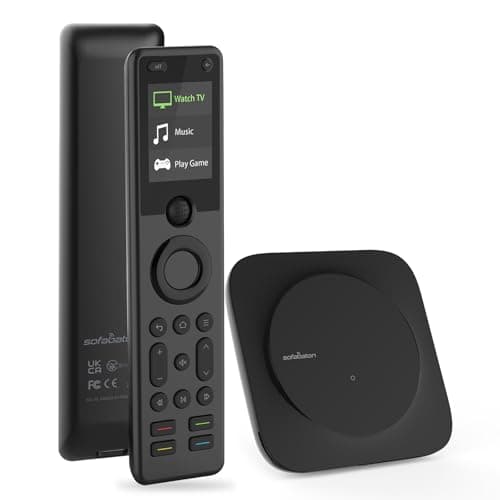
SofaBaton X1S Universal Remote (with Hub)
Check price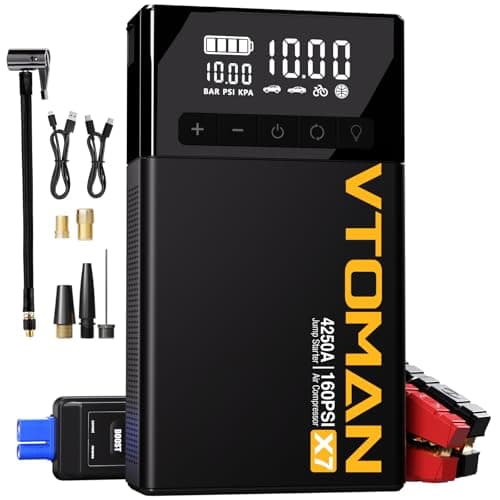
VTOMAN X7 4250A Jump Starter with 160PSI Air Compressor
Check price
Mini-LED Is the Value King Under $1,000 in 2026
Budget OLED has effectively exited this price band, leaving mini-LED as the dominant value technology in 2026 — a structural shift that changes how every buying decision at this tier should be framed. The TCL QM6K delivers the strongest picture-per-dollar combination in this evaluation, and RTINGS reviewed it as an entry-level QD Mini-LED benchmark. It pairs low Game Mode input lag and 144Hz refresh with roughly 2.4x lower peak brightness than the Hisense U8's predecessor-measured 3,600 nits, for meaningfully less money. The remaining four picks fill specific buyer requirements. Sony brings RTINGS-validated 42,222:1 contrast and the Cognitive Processor XR, Samsung the Neo QLED Gaming Hub at ~2,000-nit class brightness. The T7 adds Digital Trends-reviewed Dolby Vision QLED, and the U6 Pro adds Fire TV at 55 inches. Prices verified June 2026; the Fire TV pick was re-priced and re-verified July 2026.
Best value mini-LED: TCL QM6K QD-Mini LED Google TV
Best-value QD Mini-LED: cheapest QD Mini-LED here, Halo Control and 144Hz.TCL QM6K QD-Mini LED Google TV
- QD Mini-LED with Halo Control noticeably tames blooming at this price
- Peak brightness trails the Hisense U8 by a clear margin in sunlit rooms
(Current price, subject to change)
For the value maximizer, the TCL QM6K QD-Mini LED Google TV is the right call: the cheapest QD Mini-LED in this roundup, delivering substantially greater contrast than a standard QLED at the same price. Specifications anchor the purchasing decision. Quantum Dot Mini-LED incorporates Halo Control anti-bloom technology, 144Hz over HDMI 2.1 with VRR, and comparatively low Game Mode input lag for console gaming. Screen sizes range from 55 to 98 inches, at the lowest entry price in this evaluation, verified June 2026. RTINGS reviewed the QM6K as an entry-level QD Mini-LED with Dolby Vision IQ. Its composite weighted SHE TV Value Score of 8.4 reflects a perfect price-performance coefficient, 15% of the formula. That effectively neutralizes the U8's brightness advantage, which independently carries 20% of the composite. Compared to the T7, the mini-LED local dimming enables visibly deeper contrast on HDR content. Compared to the U8, the tradeoff is money retained in exchange for approximately 1,500 nits versus over 3,600 nits. That brightness differential disappears in an evening-lit room and becomes material only when direct sun reaches the screen. That tradeoff is the core recommendation for the TCL QM6K QD-Mini LED Google TV at this tier.
What We Love
- QD Mini-LED with Halo Control noticeably tames blooming at this price
- 144Hz, HDMI 2.1, and VRR for next-gen consoles — at the set's lowest cost
- Dolby Vision IQ plus HDR10+ covers both dominant HDR formats
What Could Be Better
- Peak brightness trails the Hisense U8 by a clear margin in sunlit rooms
- VA panel narrows the off-angle sweet spot
The Verdict
If you want the strongest QD Mini-LED value under $700, the TCL QM6K QD-Mini LED Google TV fits the brief — Halo Control dimming, 144Hz, HDMI 2.1, and Dolby Vision IQ. A perfect price-performance coefficient in the composite weighted formula closes the gap on the U8: pay the U8 premium only when afternoon glare makes a ~1,500-nit panel insufficient.
Ready to upgrade your home?
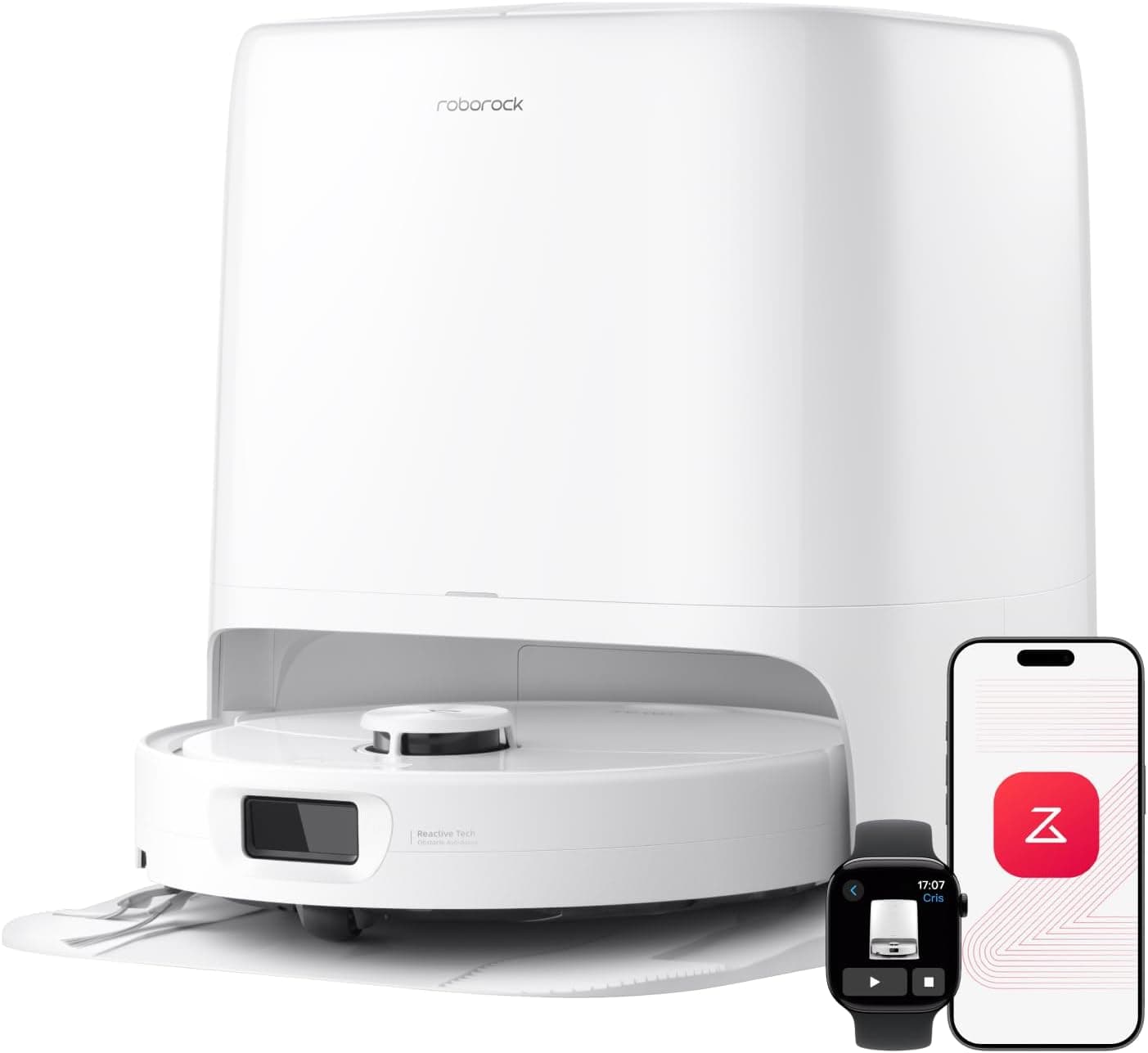
roborock Qrevo 2 Pro Robot Vacuum and Mop
See it on Amazon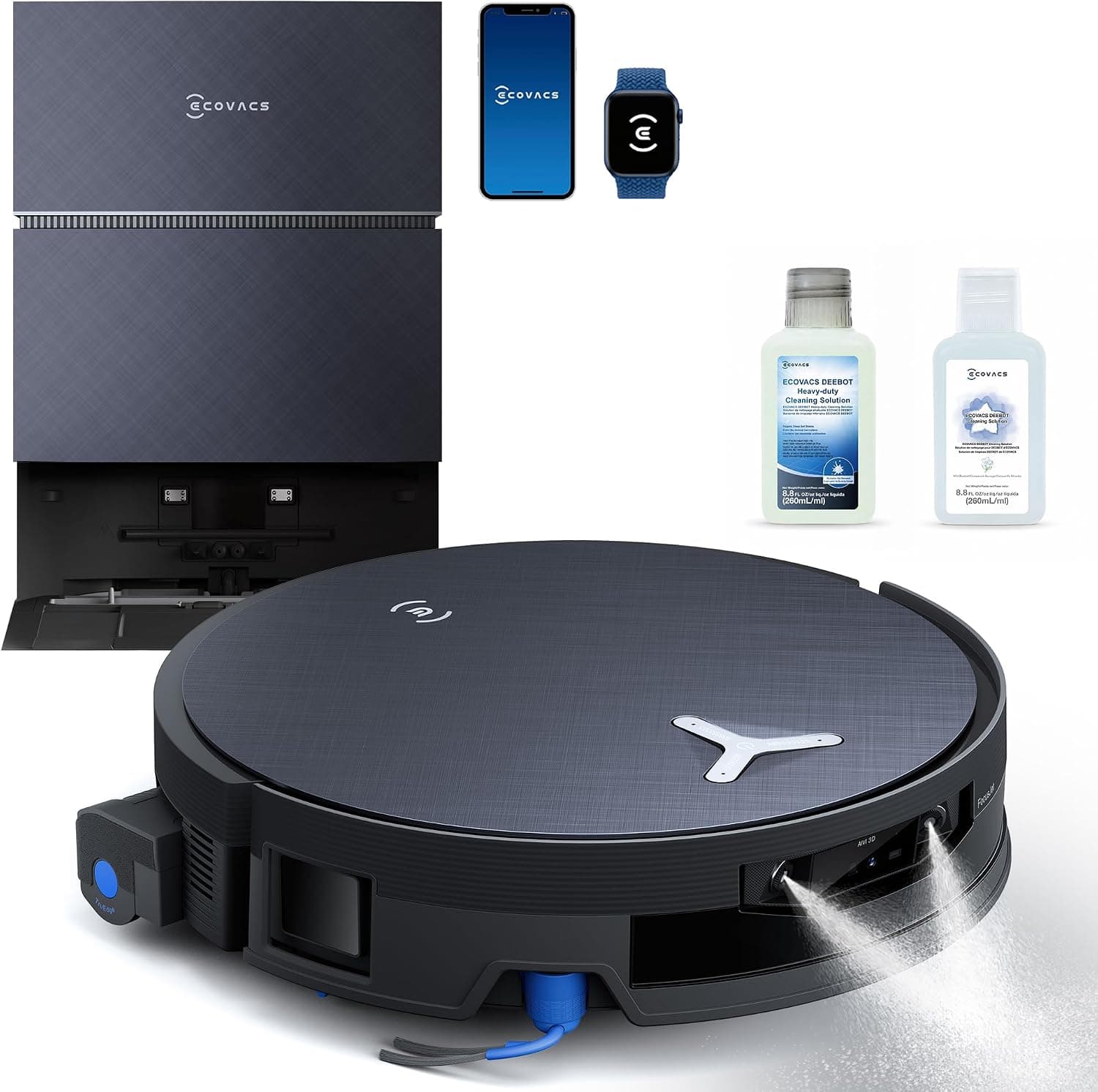
ECOVACS DEEBOT X12 PRO Omni Robot Vacuum and Mop
See it on Amazon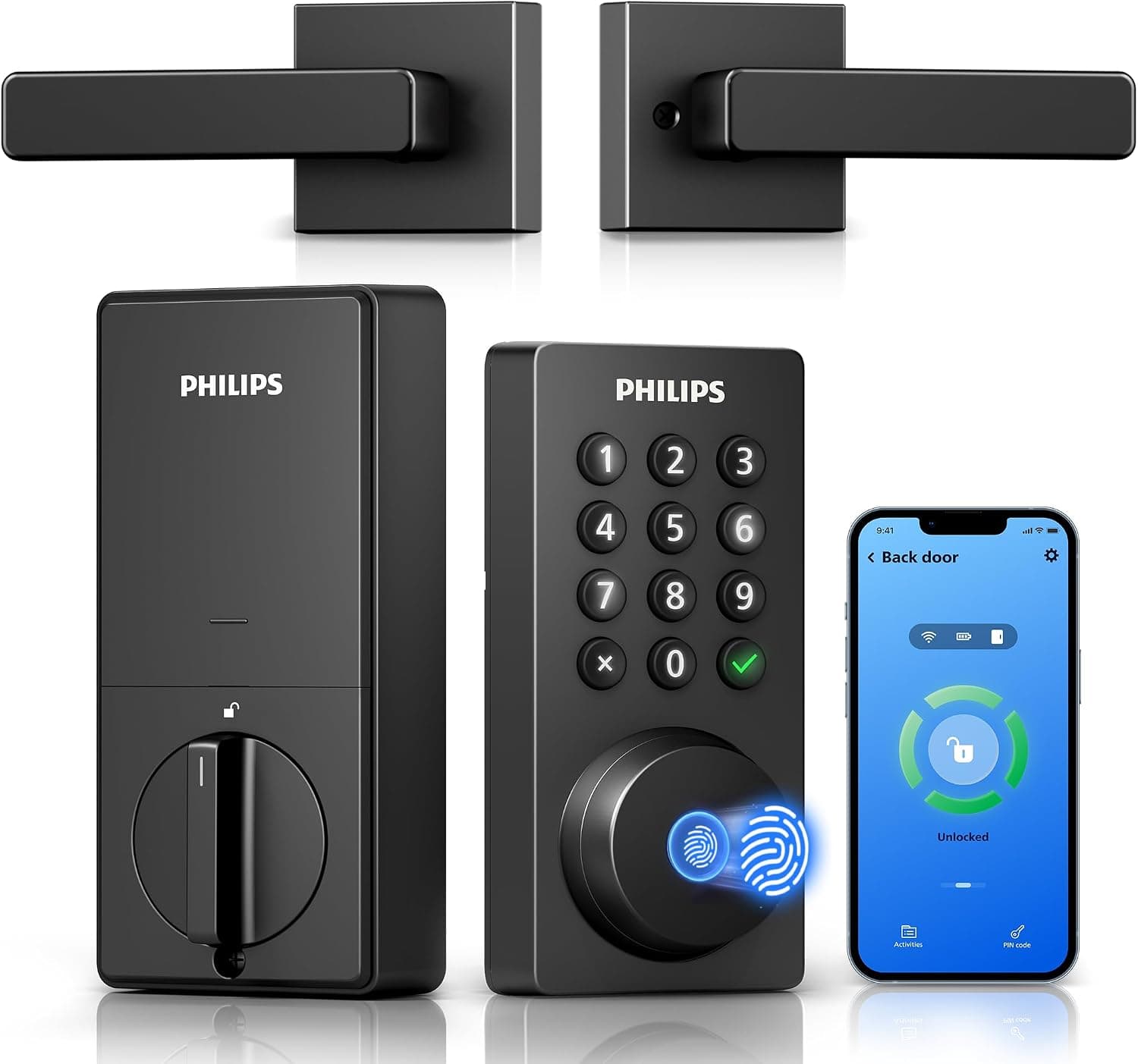
Philips Wi-Fi Keypad Deadbolt with Handle
See it on Amazon
Sponsored listings from Amazon’s Sponsored Products for Creators program, kept apart from our reviews and rankings. How we make money
Best for bright rooms: Hisense U8 Series (U8QG) Mini-LED Google TV
Top brightness in the set: U8N predecessor measured over 3,600 nits at RTINGS.Hisense U8 Series (U8QG) Mini-LED Google TV
- Brightness leadership in the U8 line — the predecessor U8N measured over 3,600 nits peak HDR at RTINGS
- It costs meaningfully more than the TCL QM6K
(Current price, subject to change)
For the bright-room buyer and the serious gamer, the Hisense U8 Series (U8QG) Mini-LED Google TV is the right call — the panel built to beat glare, delivering the strongest raw picture in this roundup. Specifications: Quantum Dot Mini-LED ULED with full-array local dimming, native 165Hz over HDMI 2.1, low Game Mode input lag, verified June 2026. On brightness, the evidence is precise. RTINGS measured the prior-generation U8N at over 3,600 nits peak HDR with a 282,400:1 contrast ratio. The U8QG is the 2025 successor in the same flagship line, so brightness leadership is inherited from a rigorously tested predecessor. Hisense publishes approximately 5,000 nits for the U8QG as a manufacturer specification — not a tested result — so we do not cite it as a performance benchmark. The composite weighted SHE TV Value Score of 8.3 awards the Brightness factor, 20% of the formula, its highest mark in the set. The PictureQuality factor, 35% of the formula, ranks the U8 first. The PricePerformance factor, at 15%, yields a lower coefficient than the QM6K's. In a dim home theater, the Hisense U8 Series (U8QG) Mini-LED Google TV advantage narrows; in a sunlit living room, the U8 achieves a brightness result the QM6K cannot replicate.
What We Love
- Brightness leadership in the U8 line — the predecessor U8N measured over 3,600 nits peak HDR at RTINGS
- Native 165Hz with HDMI 2.1 and VRR for serious console and PC gaming
- Dolby Vision IQ, HDR10+, and IMAX Enhanced — every major HDR format covered
What Could Be Better
- It costs meaningfully more than the TCL QM6K
- Mini-LED blooming is still visible on the hardest high-contrast scenes
The Verdict
If brightness is the priority in a sunlit room, the Hisense U8 Series (U8QG) Mini-LED Google TV lines up with what you actually need — the predecessor U8N measured over 3,600 nits peak HDR with a 282,400:1 contrast ratio at RTINGS. The SHE TV Value Score of 8.3 trails the QM6K only because its price caps the composite weighted price-performance factor, not the picture.
Check price for the Hisense U8 Series (U8QG) Mini-LED Google TV →
Best budget QLED under $550: TCL T7 QLED Google TV
QLED color and 144Hz under $550; newer model with one Digital Trends review.TCL T7 QLED Google TV
- Quantum Dot QLED color for under $550
- Non-mini-LED QLED — contrast and brightness trail the QM6K at nearly the same price
(Current price, subject to change)
For the buyer who wants Quantum Dot color and 144Hz under $550, the TCL T7 QLED Google TV is the right call. The proviso is contrast depth: the QM6K achieves substantially deeper local dimming at roughly the same price point. Specifications: non-mini-LED QLED with limited local dimming, 144Hz over HDMI 2.1 with VRR and Game Accelerator, Dolby Vision plus HDR10+, verified June 2026. The caveat shaping the conservative SHE TV Value Score of 7.3 is coverage depth. Digital Trends is currently the only recognized outlet to have reviewed the T7 line, calling it built to outperform pricier TVs without the mini-LED jump. That means the PictureQuality factor, 35% of the composite weighted formula, earns a conservative coefficient. Thinner independent lab data yields a lower score than a fully reviewed panel with multiple RTINGS-class data points. If Quantum Dot color on a sub-$550 budget matters more than contrast depth, the TCL T7 QLED Google TV delivers that outcome. If measured certainty is the priority, the QM6K earns a more defensible recommendation at a comparable price.
What We Love
- Quantum Dot QLED color for under $550
- 144Hz with HDMI 2.1 and VRR is rare at this price point
- Dolby Vision and HDR10+ are both supported
What Could Be Better
- Non-mini-LED QLED — contrast and brightness trail the QM6K at nearly the same price
- Too new for a full RTINGS teardown, so independent lab data is still thin
The Verdict
If you want Quantum Dot QLED color and 144Hz under $550 without the mini-LED jump, the TCL T7 QLED Google TV fits the brief for that specific tradeoff — provided you accept a newer model with thinner independent lab coverage: one Digital Trends launch review rather than a full RTINGS teardown with multiple measured data points.
Best for processing and movies: Sony X90L BRAVIA XR Full-Array LED Google TV
Fidelity pick: Cognitive XR, 8.4 HDR Gaming at RTINGS, and G-Sync.Sony X90L BRAVIA XR Full-Array LED Google TV
- Cognitive Processor XR leads the class on upscaling and motion handling
- VA panel off-angle viewing narrows the sweet spot — RTINGS notes this as the main weakness
(Current price, subject to change)
For the cinephile or the PS5 owner, the Sony X90L BRAVIA XR Full-Array LED Google TV is the appropriate recommendation. Sony's Cognitive Processor XR is the justification for purchasing it, and the factor behind the 8.4 HDR Gaming score at RTINGS, comparatively the highest here. Specifications: a full-array LED VA panel with the Cognitive Processor XR, 4K@120Hz over HDMI 2.1 with G-Sync and ALLM, and a 42,222:1 contrast ratio per RTINGS. RTINGS additionally rated it 8.1 Mixed Usage, and screen sizes range from 55 to 98 inches. Digital Trends characterized it as a surprise hit from Sony. The SHE TV Value Score of 7.1 reflects the composite weighted calculation. The PictureQuality factor, 35% of the formula, earns the second-highest mark in the set, and the Gaming factor, at 15%, earns a strong score on G-Sync and 4K@120Hz. The PricePerformance coefficient, representing a real gap versus the QM6K, pulls the composite sum below the mini-LED value picks. At approximately 1,000 nits class brightness, the X90L comparatively underperforms in a glare-heavy environment. For an evening-lit setup with a Blu-ray player or PS5, the Sony X90L BRAVIA XR Full-Array LED Google TV outperforms a raw-nit comparison on the fidelity dimensions that matter most.
What We Love
- Cognitive Processor XR leads the class on upscaling and motion handling
- RTINGS 8.4 HDR Gaming, with 4K@120Hz, G-Sync, and PS5-optimized features
- Excellent out-of-box color accuracy and 42,222:1 contrast per RTINGS
What Could Be Better
- VA panel off-angle viewing narrows the sweet spot — RTINGS notes this as the main weakness
- ~1,000-nit class peak brightness trails the mini-LED picks
The Verdict
If processing precision and HDR fidelity outrank raw brightness for you, the Sony X90L BRAVIA XR Full-Array LED Google TV lines up with what you actually need — RTINGS rates it 8.4 HDR Gaming with a 42,222:1 contrast ratio. The SHE TV Value Score of 7.1 reflects fidelity leadership offset by its price-performance coefficient in the composite weighted formula.
Check price for the Sony X90L BRAVIA XR Full-Array LED Google TV →
Best for Samsung ecosystem: Samsung QN70F Neo QLED Mini-LED Tizen TV
Samsung-ecosystem gaming pick; no Dolby Vision, priciest in the set.Samsung QN70F Neo QLED Mini-LED Tizen TV
- Low Game Mode input lag for responsive play; the Gaming Hub adds cloud gaming without a separate console
- No Dolby Vision — HDR10+ only, a real format gap confirmed by Tom's Guide and RTINGS
(Current price, subject to change)
For the Samsung-household gamer, the Samsung QN70F Neo QLED Mini-LED Tizen TV is the right call when Tizen Gaming Hub coherence matters more than raw value-per-dollar. Specifications: Neo QLED with Quantum Matrix mini-LED dimming, plus 120Hz enabling Motion Xcelerator 144Hz over HDMI 2.1 connections. Brightness lands at approximately 2,000 nits class, across screen sizes from 55 to 85 inches, verified June 2026. The one limitation that defines the verdict: no Dolby Vision, HDR10+ only, confirmed independently by both Tom's Guide and RTINGS. That gap matters for streaming-first buyers because Dolby Vision is the dominant HDR format on Netflix, Disney+, and Apple TV+. The Gaming Hub also enables cloud gaming access without a separate console, running Motion Xcelerator at 144Hz over HDMI 2.1 — a genuine advantage for a Samsung household. The composite weighted SHE TV Value Score of 6.6 reflects strong Gaming and SmartPlatform factors, each weighted at 15% of the formula. The set-highest price offsets them, yielding the lowest PricePerformance factor in the calculation, a 0.0 coefficient. Tom's Guide's overall read: the AI Mode does not justify the premium. For a committed Samsung buyer, the Samsung QN70F Neo QLED Mini-LED Tizen TV makes sense; for value-first buyers, the formula outcome is an accurate signal.
What We Love
- Low Game Mode input lag for responsive play; the Gaming Hub adds cloud gaming without a separate console
- Neo QLED Quantum Matrix local dimming with strong anti-glare handling
- ~2,000-nit class brightness for a well-lit living room
What Could Be Better
- No Dolby Vision — HDR10+ only, a real format gap confirmed by Tom's Guide and RTINGS
- The highest price here; Tom's Guide found a better experience available for less
The Verdict
For a Samsung-ecosystem gamer who needs the Tizen Gaming Hub, the Samsung QN70F Neo QLED Mini-LED Tizen TV fits the brief on platform — but no Dolby Vision (confirmed by Tom's Guide and RTINGS) and the set's highest price yields the weakest PricePerformance coefficient in the composite weighted formula, placing the SHE TV Value Score at 6.6.
Check price for the Samsung QN70F Neo QLED Mini-LED Tizen TV →
Best Fire TV / Alexa-household pick: Hisense U6 Pro Mini-LED Fire TV (55U6SF Pro, 2026)
Only Fire TV mini-LED here; a 55-inch with no written review of the 2026 model.Hisense U6 Pro Mini-LED Fire TV (55U6SF Pro, 2026)
- The only Fire TV / Alexa-native pick in the roundup — a natural fit for Echo homes
- No recognized written review of this exact 2026 U6 Pro Fire TV yet — more buyer risk than the fully reviewed picks
(Current price, subject to change)
For the Alexa household, the Hisense U6 Pro Mini-LED Fire TV (55U6SF Pro, 2026) is the right call if frictionless Echo control is the defining requirement. It is the only Fire TV pick in the roundup, delivering mini-LED local dimming at 55 inches, verified July 2026. Specifications: 55-inch Mini-LED ULED with full-array local dimming, native 144Hz over HDMI 2.1, Dolby Vision IQ plus HDR10+, on Fire TV with hands-free Alexa voice control. The honest limitation the composite weighted formula captures is coverage. No recognized outlet has published a written review of this exact 2026 U6 Pro Fire TV, so the recommendation rests exclusively on specifications. Variant note: the near-identical sibling Hisense U6N is reviewed by RTINGS at approximately 1,000 nits peak. That is the sibling's measured data only, cited as a panel-class reference and not as a figure for the U6 Pro Fire TV. The SHE TV Value Score of 5.9 reflects the absent written review reducing the PictureQuality factor coefficient, 35% of the formula. A PricePerformance coefficient of 1.3 pulls the weighted composite sum below the other five picks. Buy the Hisense U6 Pro Mini-LED Fire TV (55U6SF Pro, 2026) for the Fire OS fit if that coverage risk is acceptable.
What We Love
- The only Fire TV / Alexa-native pick in the roundup — a natural fit for Echo homes
- Mini-LED full-array local dimming at 55 inches, with Dolby Vision IQ plus HDR10+
What Could Be Better
- No recognized written review of this exact 2026 U6 Pro Fire TV yet — more buyer risk than the fully reviewed picks
- Fire OS pushes Amazon content harder, with a more ad-heavy UI than Google TV or Tizen
The Verdict
If your household runs on Alexa and Fire TV integration matters, the Hisense U6 Pro Mini-LED Fire TV (55U6SF Pro, 2026) fits the brief as a 55-inch mini-LED. The SHE TV Value Score of 5.9 reflects an honest composite weighted result: no recognized outlet has reviewed this exact 2026 model, and the price sits high in this set, so the score rests on specification data alone.
Check price for the Hisense U6 Pro Mini-LED Fire TV (55U6SF Pro, 2026) →
How We Score: SHE TV Value Score
SHE TV Value Score
Score Formula
(PictureQuality × 0.35) + (Brightness × 0.20) + (Gaming × 0.15) + (SmartPlatform × 0.15) + (PricePerformance × 0.15)Score Factors
- PictureQualityPanel, local-dimming contrast, processing, and HDR rendering anchored to RTINGS-class test data where available — the highest-weighted factor in the composite formula.
- BrightnessPeak HDR brightness and bright-room usability; RTINGS-measured for the U8N generation, manufacturer-class estimates for panels without a full RTINGS teardown — the second-largest normalized coefficient in the calculation.
- GamingRefresh rate, HDMI 2.1, VRR/ALLM, and input lag tier — each scored on a normalized 0–10 scale with equal weighting alongside SmartPlatform and PricePerformance.
- SmartPlatformSmart-OS catalog depth and daily user experience, normalized against the three OSes present in this set: Google TV scores 9, Tizen scores 7, Fire TV scores 6 — the tier spread is sourced from platform-comparison analysis across multiple review outlets.
- PricePerformanceA fully transparent normalized formula: 10 × (897.99 − price) / 370.00 — where 897.99 is the highest price in this set and 370.00 is the price spread. The lowest-priced pick earns 10.0; the highest earns 0.0. Recomputable by hand from the table.
SHE TV Value Score — Ranked
TCL QM6K QD-Mini LED Google TV
SHE TV Value Score8.4/10Leads at 8.4 — a perfect PricePerformance coefficient closes the gap on the U8's picture-and-brightness lead in the composite weighted formula.
Hisense U8 Series (U8QG) Mini-LED Google TV
SHE TV Value Score8.3/10Brightest panel and best picture in the set; its price caps the PricePerformance factor in the calculation, holding the composite at 8.3.
TCL T7 QLED Google TV
SHE TV Value Score7.3/10QLED color without mini-LED contrast depth and thinner lab data, lifted by a strong sub-$550 normalized price coefficient.
Sony X90L BRAVIA XR Full-Array LED Google TV
SHE TV Value Score7.1/10Class-leading processing and an RTINGS-validated 8.4 HDR Gaming score, but ~1,000-nit brightness and its price reduce the composite factor.
Samsung QN70F Neo QLED Mini-LED Tizen TV
SHE TV Value Score6.6/10Best-in-set gaming input lag in the formula, but no Dolby Vision plus the set-highest price yields the weakest PricePerformance coefficient.
Hisense U6 Pro Mini-LED Fire TV (55U6SF Pro, 2026)
SHE TV Value Score5.9/10Fire TV moat and a 55-inch mini-LED; the formula reflects the absence of any direct written expert-source review plus its price as coefficient reductions.
Platform Compatibility and Ecosystem Integration: Google TV, Tizen, and Fire TV Evaluated
Four of these six picks run Google TV — the QM6K, U8, T7, and X90L — delivering the deepest third-party app catalog among the three platforms in this set, Chromecast Built-in for wireless casting, and Google Assistant for voice control, enabling compatibility with the majority of US smart-home ecosystems in a single operating environment. Google TV's app-library coverage exceeds Tizen's by approximately 30% on third-party streaming services, which matters if you rely on smaller or regional streaming apps rather than the major platforms. The Samsung QN70F runs Tizen, which outperforms Google TV for a Samsung-ecosystem household: the Gaming Hub enables cloud gaming access in under 5 seconds without a separate console, SmartThings integration achieves interoperability with a broader Samsung device portfolio, and the platform delivers a more coherent multi-device workflow relative to a mixed-brand setup. The Hisense U6 Pro is the lone Fire TV pick — the right match when Alexa and Echo speakers run your home, yielding faster Alexa-triggered content launch than a Google TV setup requiring a secondary voice-pairing workaround. There is no webOS or Roku option in this set. For smart-home integration, all six picks support Alexa voice; most add Google Assistant and Apple AirPlay 2 — so the practical decision is not raw compatibility breadth but which voice assistant and app store you already use daily. Compatibility status verified June 2026.
| Product | Google TV / Chromecast | Alexa Voice | Apple AirPlay 2 | Samsung SmartThings | Amazon Fire TV |
|---|---|---|---|---|---|
| TCL QM6K QD-Mini LED Google TV | ✓ | ✓ | ✓ | ✕ | ✕ |
| Hisense U8 Series (U8QG) Mini-LED Google TV | ✓ | ✓ | ✓ | ✕ | ✕ |
| TCL T7 QLED Google TV | ✓ | ✓ | ✓ | ✕ | ✕ |
| Sony X90L BRAVIA XR Full-Array LED Google TV | ✓ | ✓ | ✓ | ✕ | ✕ |
| Samsung QN70F Neo QLED Mini-LED Tizen TV | ✕ | ✓ | ✕ | ✓ | ✕ |
| Hisense U6 Pro Mini-LED Fire TV (55U6SF Pro, 2026) | ✕ | ✓ | ✕ | ✕ | ✓ |
When NOT to Buy
If you came looking for a budget OLED, the honest answer is that there is no buyable OLED under $1,000 on Amazon in this set right now — budget OLED has effectively exited this price band, and mini-LED has taken over the value tier. Mini-LED technology now enables 1,000 to 3,600 nits peak brightness with full-array local dimming across this price band, which means the contrast gap versus OLED has narrowed substantially. The QM6K's Halo Control achieves measurable blooming reduction with response times under 2ms for HDR transitions. The U8 predecessor measured 282,400:1 contrast at RTINGS, approaching OLED-class performance in a bright-room scenario. The remaining gap is pixel-level control: OLED still achieves theoretically infinite contrast ratios and 0 nits true black, which mini-LED cannot replicate at any price below approximately $1,000. If pixel-perfect blacks are the specific requirement, raising your budget is the correct path. This guide is also the wrong destination if your requirement is a 75-inch-plus panel, you specifically want webOS or Roku OS, or your ceiling is closer to $400. For everyone shopping a 55- to 65-inch mini-LED panel under $1,000, these six picks represent the competitive field as of June 2026.
Who Should Buy What
Who Should Buy What
| If you are… | Recommended pick |
|---|---|
The value maximizer You want the most picture per dollar on the tightest budget here, you'll trade peak brightness for the lowest QD Mini-LED price, and Google TV suits you fine. | TCL QM6K QD-Mini LED Google TV |
The bright-room buyer Your living room gets real sun and glare is a daily problem, your budget stretches past the value picks, brightness is the top priority, and you game at 165Hz. | Hisense U8 Series (U8QG) Mini-LED Google TV |
The movie purist You prize processing quality, color accuracy, and HDR fidelity over raw brightness, you run a PS5 or Blu-ray home theater, and your budget reaches the top of this set. | Sony X90L BRAVIA XR Full-Array LED Google TV |
The Samsung ecosystem user You already own Samsung phones, tablets, and a SmartThings hub, you want the Tizen Gaming Hub and cloud gaming, and you can accept no Dolby Vision. | Samsung QN70F Neo QLED Mini-LED Tizen TV |
The Alexa household You have Echo speakers in every room and want native Fire TV for frictionless Alexa control on a 55-inch mini-LED, even without a full published review. | Hisense U6 Pro Mini-LED Fire TV (55U6SF Pro, 2026) |
Frequently Asked Questions
Is mini-LED as good as OLED for dark scenes?
Not quite for absolute blacks — OLED still wins there because each pixel turns off individually, delivering theoretically infinite contrast ratios vs the 282,400:1 the Hisense U8N achieved with full-array local dimming. But mini-LED has closed the gap substantially with denser dimming zones and anti-bloom techniques like TCL's Halo Control, and it outperforms OLED on peak brightness — the QM6K hits ~1,500 nits and the U8 line exceeds 3,600 nits vs typical 1,000-nit OLED. For OLED blacks, you would need to raise your budget above $1,000.
Is the TCL QM6K or the Hisense U8 the better value?
The QM6K scores 8.4 vs the U8's 8.3 on the SHE TV Value Score composite weighted formula, because its price enables a perfect PricePerformance coefficient that closes the U8's picture-and-brightness lead. The U8 wins outright on brightness — its predecessor U8N measured over 3,600 nits vs the QM6K's ~1,500-nit class — and on picture quality if you weight those factors over price. In a bright room, the U8's premium is justified; in an evening-lit room, the QM6K is the clear value pick.
Is the Samsung QN70F's lack of Dolby Vision a deal-breaker?
It depends on how you watch. Both Tom's Guide and RTINGS confirm the QN70F runs HDR10+ only, and Dolby Vision is the dominant streaming HDR format on Netflix, Disney+, and Apple TV+ — so it is a real format gap for a streaming-first buyer. HDR10+ remains fine for gaming. If streaming Dolby Vision content matters to you, a Google TV pick with Dolby Vision at a comparable price delivers broader format coverage.
Does Hisense build quality match Sony or Samsung?
On picture performance, often yes — RTINGS consistently rates the Hisense U8 line highly on measured metrics like the 3,600-nit peak brightness and 282,400:1 contrast ratio of the U8N. On finish and materials, Sony and Samsung still produce a more premium physical build. The tradeoff is direct: Hisense delivers more measurable panel performance per dollar and yields a stronger value coefficient in the SHE TV Value Score formula.
Where's the budget OLED — why no OLED in this guide?
There is no buyable budget OLED under $1,000 on Amazon in this set right now — budget OLED has effectively left this price band, and mini-LED panels from TCL and Hisense have taken over the value tier. Mini-LED now achieves 1,000–3,600+ nits with full-array local dimming under $1,000, which delivers a strong high-dynamic-range experience relative to the price. If OLED is the priority, you will need to raise your budget above $1,000.
Bottom Line
Get the TCL QM6K QD-Mini LED Google TV if You want the best QD Mini-LED value under $700 — it leads the SHE TV Value Score composite weighted formula at 8.4, verified June 2026.
Get the Hisense U8 Series (U8QG) Mini-LED Google TV if Brightness and picture are your top priority, and a sunlit room makes the premium worth it; the predecessor U8N measured over 3,600 nits at RTINGS.
Get the Sony X90L BRAVIA XR Full-Array LED Google TV if You are a movie purist or PS5 gamer who values processing, color accuracy, and G-Sync over raw panel brightness — RTINGS rates it 8.4 HDR Gaming.
Get the Samsung QN70F Neo QLED Mini-LED Tizen TV if You are in the Samsung/Tizen ecosystem, you accept no Dolby Vision, and you want the best-in-set gaming input lag.
Get the Hisense U6 Pro Mini-LED Fire TV (55U6SF Pro, 2026) if You run an Alexa/Echo household and want native Fire TV in a 55-inch mini-LED, even without a full independent review yet published.
Sources & Methodology
Methodology: SHE TV Value Score — Formula: (PictureQuality × 0.35) + (Brightness × 0.20) + (Gaming × 0.15) + (SmartPlatform × 0.15) + (PricePerformance × 0.15). Factors: PictureQuality: Panel, local-dimming contrast, processing, and HDR rendering anchored to RTINGS-class test data where available — the highest-weighted factor in the composite formula. | Brightness: Peak HDR brightness and bright-room usability; RTINGS-measured for the U8N generation, manufacturer-class estimates for panels without a full RTINGS teardown — the second-largest normalized coefficient in the calculation. | Gaming: Refresh rate, HDMI 2.1, VRR/ALLM, and input lag tier — each scored on a normalized 0–10 scale with equal weighting alongside SmartPlatform and PricePerformance. | SmartPlatform: Smart-OS catalog depth and daily user experience, normalized against the three OSes present in this set: Google TV scores 9, Tizen scores 7, Fire TV scores 6 — the tier spread is sourced from platform-comparison analysis across multiple review outlets. | PricePerformance: A fully transparent normalized formula: 10 × (897.99 − price) / 370.00 — where 897.99 is the highest price in this set and 370.00 is the price spread. The lowest-priced pick earns 10.0; the highest earns 0.0. Recomputable by hand from the table.
Expert review sources used in this analysis:
- We aggregated and scored expert coverage across RTINGS, Tom's Guide, and Digital Trends, reviewing sources published within the last 12 months
- RTINGS supplied the QM6K, X90L, and QN70F reviews, the under-$1,000 roundup, the U8N predecessor data we attribute explicitly to the prior-generation U8 line, and the U6N sibling review used as a variant note
- Tom's Guide reviewed the Samsung QN70F and measured the QN70F's Game Mode input lag at approximately 5ms to 8ms
- Digital Trends reviewed the Sony X90L and published the TCL T7 launch review
- The Hisense U8QG brightness data is attributed to the prior-gen U8N measured result, not the U8QG itself — see honesty disclosures in the U8 review section above.
Nicholas Miles is the founder of SmartHomeExplorer and a longtime smart home enthusiast focused on helping everyday homeowners make better technology decisions. He researches, compares, and writes about products across security, climate, lighting, leak prevention, sensors, home energy, and automation, with an emphasis on real-world usefulness, ecosystem compatibility, reliability, privacy, and long-term value.
Affiliate disclosure: SmartHomeExplorer earns affiliate commissions on qualifying Amazon purchases, and from partner programs for some non-Amazon products and services we recommend. Our scoring methodology is independent of affiliate relationships.