
Best Smart Speakers for Audiophiles 2026: Hi-Fi Sound
The gap between a smart speaker and a real hi-fi speaker has closed at the top of the range. The Sonos Era 300 brings true Dolby Atmos, the redesigned 2025 Echo Studio undercuts everyone, and the KEF LSX II LT is a real stereo pair if you'll skip voice.
This article contains affiliate links. We may earn a commission at no extra cost to you. Prices change frequently — check the current price on Amazon before buying. Learn more
The Short Answer
Buy the Sonos Era 300 ($379) for the best audiophile smart speaker: its dedicated up-firing driver delivers the only genuine Dolby Atmos here, versus rivals confined to lossy playback, topping our weighted SHE Audiophile Fidelity Score at 8.8 and outscoring the HomePod 2nd Gen ($299) at 8.5.
Featured in this Guide
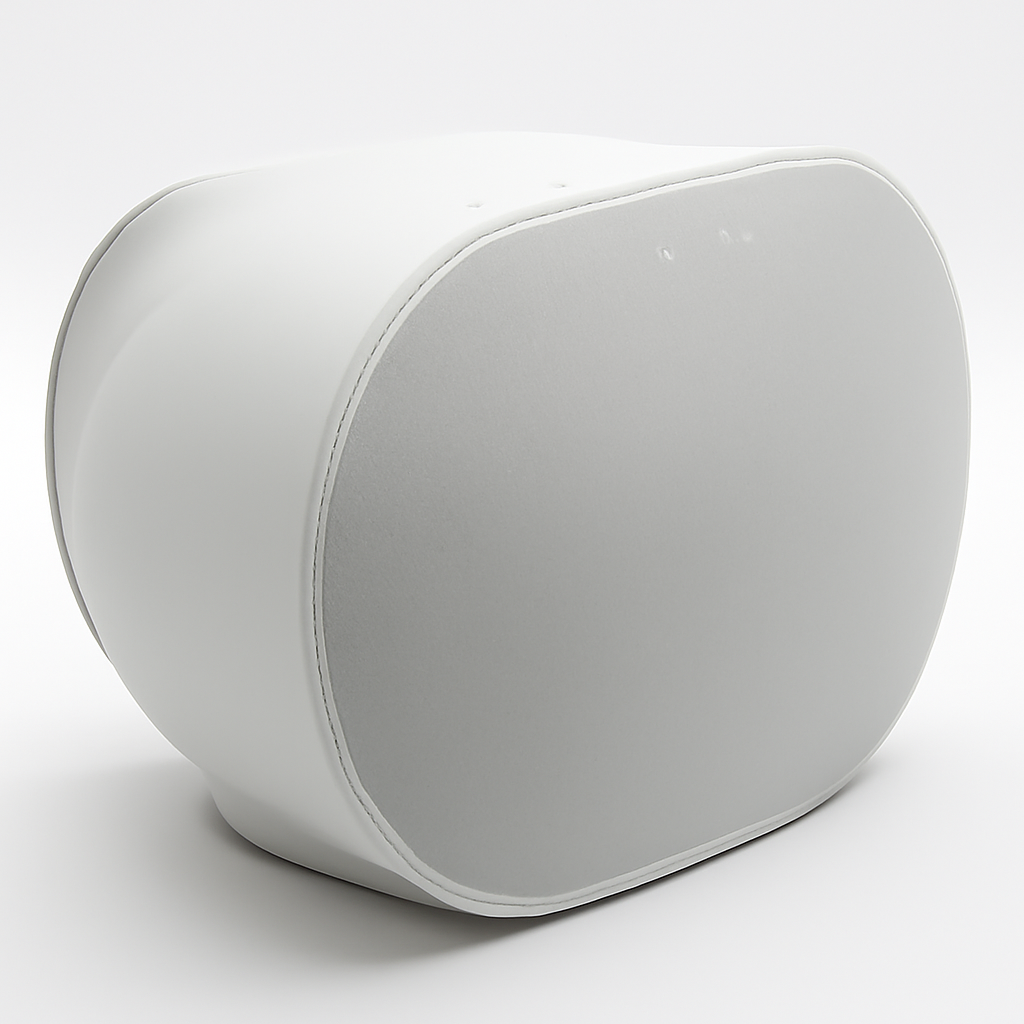
Sonos
Era 300
- •For the listener who wants true Dolby Atmos and native lossless from one $379 speaker that also joins a Sonos multi-room system.
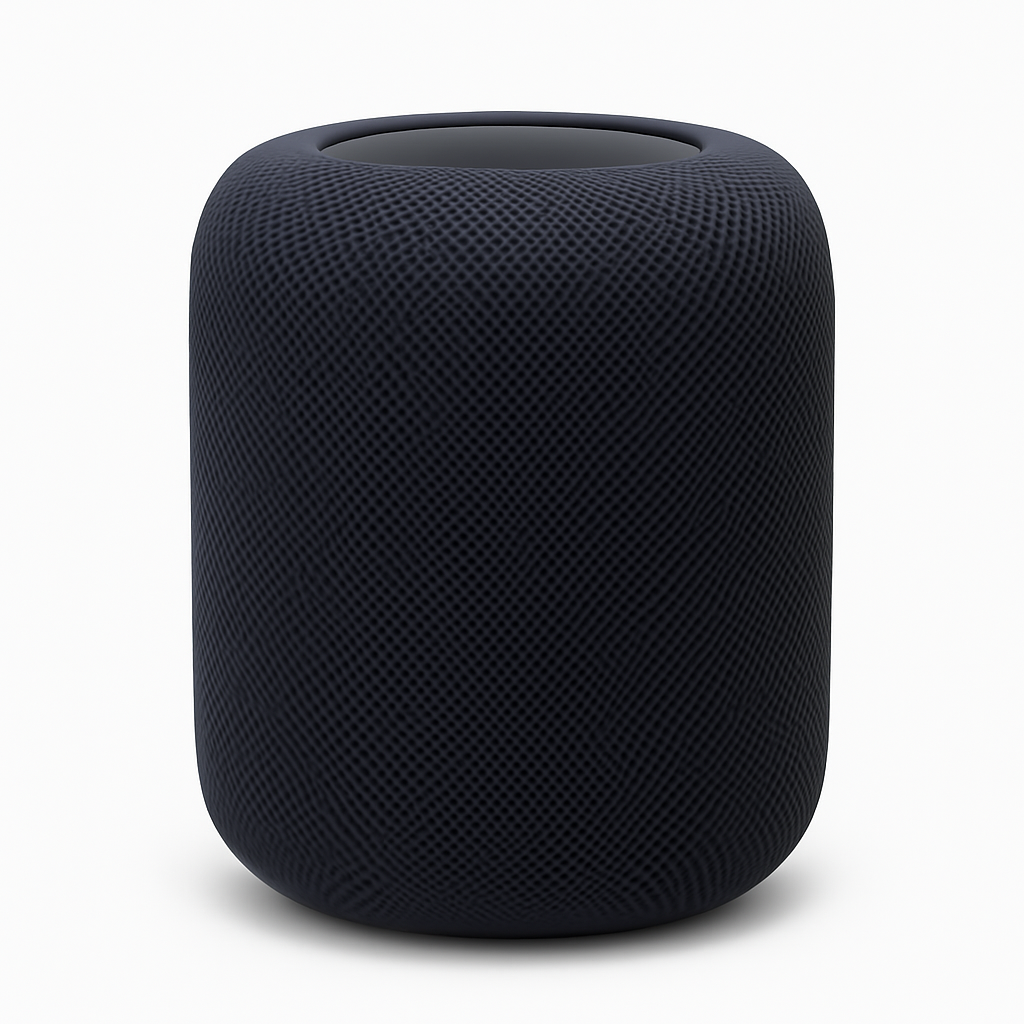
Apple
HomePod 2nd Gen
- •For the Apple household that wants the deepest bass, on-device Apple Music lossless, and a HomeKit hub in one $299 unit.
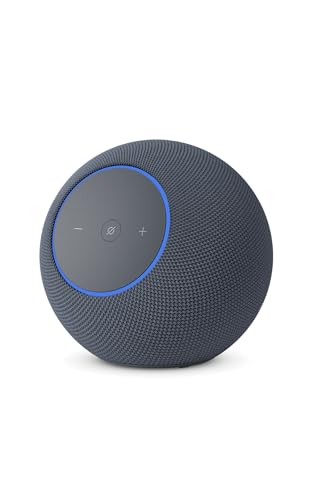
Amazon
Echo Studio (2025)
- •For the Alexa buyer who wants Atmos and Amazon Music Ultra HD for about $175 from the redesigned 2025 model.
Head to Head: Fidelity, Spatial Audio, and Value
Smart Speakers
Chart
 Smarthomeexplorer.com
XGIMI HORIZON 20 4K RGB Triple Laser Home Projector
Check price
SofaBaton X1S Universal Remote (with Hub)
Check price
VTOMAN X7 4250A Jump Starter with 160PSI Air Compressor
Check price
Audiophile Smart Speakers: The Real Decision
Historically the best-sounding smart speakers were confined to closed ecosystems while the most capable assistants treated audio as an afterthought; at the premium tier that tradeoff has narrowed. The Sonos Era 300 and the Apple HomePod 2nd Gen now rival passive bookshelf speakers in the same price band, an achievement no smart speaker delivered 3 years ago, and a stereo pair produces 2x the soundstage of a single unit.
One correction governs your shortlist: Amazon comprehensively redesigned the Echo Studio in October 2025, producing a unit approximately 40% smaller, built around the AZ3 Pro processor and Alexa+, and Engadget, TechRadar, and SoundGuys all document that the smaller enclosure surrenders some of the 2022 model's bass. Our weighted SHE Audiophile Fidelity Score, a normalized 0-10 composite, resolves the comparison and enables a like-for-like ranking: the Era 300 leads at 8.8 versus the HomePod's 8.5 and the 2025 Studio's value-leading 8.0.
Best Overall / Spatial Audio: Sonos Era 300
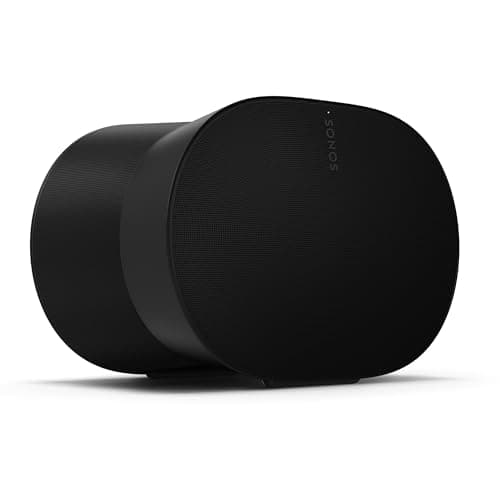
Best Overall + Best Spatial AudioSonos Era 300
- A six-driver array with an up-firing driver gives it the only true Dolby Atmos height channel in this guide.
- There's no Google Assistant support — Alexa or Sonos Voice Control only.
(Current price, subject to change)
If your priority is spatial audio that actually sounds three-dimensional rather than a marketing checkbox, the Sonos Era 300 is the one we'd point you to first. It earns the top 8.8 on our Audiophile Fidelity Score because its 6x-driver array is the only one here with a dedicated up-firing driver, which produces a real height channel on Atmos-encoded tracks — What Hi-Fi? gave it five stars and called its audio quality unbeatable for the size and the money. Just as important, it streams lossless FLAC natively from Amazon Music Unlimited and Qobuz, so the difference between a lossy and lossless track is one the hardware resolves rather than smooths over, and a stereo pair fields 2x those drivers.
Set expectations on the ecosystem fence and the room. The Sonos Era 300 runs Alexa or Sonos Voice Control but not Google Assistant, and the Atmos effect is most convincing with Atmos content and 8 ft ceilings. RTINGS notes the broad native lossless support differentiates it from AirPlay-only rivals. At $379 street it sits below its $449 list price. For one do-everything audiophile speaker, this is the call; for a pure Apple household, the HomePod fits cleaner.
What We Love
- A six-driver array with an up-firing driver gives it the only true Dolby Atmos height channel in this guide.
- It streams lossless FLAC natively from Amazon Music Unlimited and Qobuz, so the hardware actually resolves a hi-res stream.
- It works with Alexa and Sonos Voice Control and joins a Sonos multi-room or home-theater setup.
What Could Be Better
- There's no Google Assistant support — Alexa or Sonos Voice Control only.
- The Atmos height effect needs Atmos-encoded tracks and rewards higher ceilings.
- A stereo pair costs roughly $758, and line-in needs the optional USB-C combo adapter.
The Verdict
If you want one speaker that does spatial audio properly and you've shortlisted Sonos Era 300, this fits the brief without compromise on the thing that matters most here — it's the only pick with a dedicated height driver, and at $379 street it streams lossless from Amazon Music and Qobuz natively.
Best Bass / Apple Home: Apple HomePod 2nd Gen
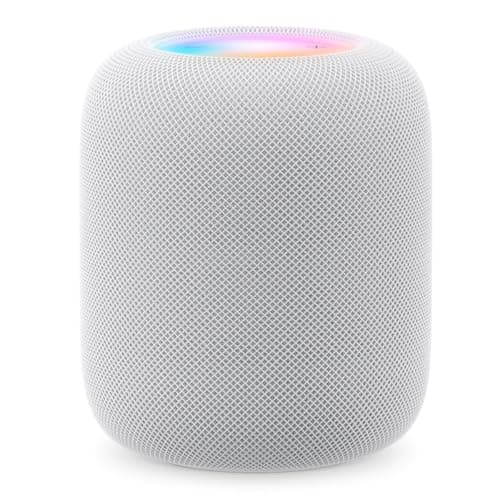
Best Bass + Best for Apple HomeApple HomePod 2nd Gen
- It produces the deepest, most controlled bass of any single cabinet here, with computational audio that adapts to the room.
- It's Apple-only — no native Android control and no non-Apple voice assistant.
(Current price, subject to change)
For the listener whose home runs on Apple and whose first love is bass, the Apple HomePod 2nd Gen lines up with what you need. We landed it just behind the Era 300 at 8.5 because it delivers the deepest, best-controlled low end of any single cabinet here — RTINGS measured outstanding bass extension and a balanced, room-correcting sound — and because Apple Music streams in lossless ALAC on the device. SoundGuys highlights that on-device hi-res support as the reason it sits a tier above the average voice speaker. It also pulls double duty as a HomeKit hub and Thread border router, and a 2x stereo pair widens the field, so it earns its shelf even when the music is off.
The honest qualification is the fence around it. The Apple HomePod 2nd Gen is Apple-only: Spotify, Tidal, and Qobuz stream over AirPlay 2, not natively, and full Atmos for music needs a pair or an Apple TV 4K. What Hi-Fi? frames its spatial audio as capable but not the dedicated-height-channel experience the Era 300 provides. At $299 it undercuts the Era 300 by $80, which is why it scores so well on value for an Apple buyer; outside that ecosystem, the Sonos wins.
What We Love
- It produces the deepest, most controlled bass of any single cabinet here, with computational audio that adapts to the room.
- Apple Music streams in lossless ALAC on-device, and it doubles as a HomeKit hub and Thread border router.
- Siri is processed on-device, and built-in temperature and humidity sensors add smart-home value.
What Could Be Better
- It's Apple-only — no native Android control and no non-Apple voice assistant.
- Spotify, Tidal, and Qobuz must stream over AirPlay 2 rather than natively.
- Full Atmos music needs a stereo pair or an Apple TV 4K, and a pair runs about $598.
The Verdict
For the Apple household that wants the biggest bass in a single speaker and has shortlisted Apple HomePod 2nd Gen, this checks the boxes that matter for that setup — RTINGS-grade low-end extension, on-device Apple Music lossless, and a HomeKit hub built in, for $299.
Best Value / Alexa: Amazon Echo Studio (2025)
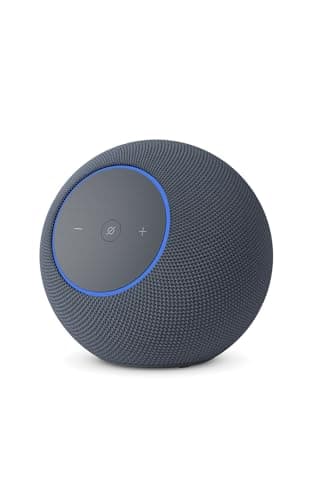
Best Value + Best for AlexaAmazon Echo Studio (2025)
- The October 2025 redesign is about 40% smaller, runs the AZ3 Pro chip, and is built around Alexa+ with a smart-home hub inside.
- Reviewers note the smaller 2025 model has less bass and a smaller sound than the larger 2022 Echo Studio it replaced.
(Current price, subject to change)
If your home already speaks Alexa and you want audiophile features without spending audiophile money, the Amazon Echo Studio (2025) is a sensible pick for that setup. It takes the value crown at 8.0 on our Fidelity Score for one clear reason: at about $175 street, it is the only way to get certified Dolby Atmos and Amazon Music Ultra HD lossless up to 24-bit/192 kHz at this price, and it carries a smart-home hub inside. TechRadar's review credits the AZ3 Pro chip and Automatic Room Adaptation for tuning the sound with no manual EQ, and the spherical body genuinely disappears on a shelf.
Go in clear-eyed about the redesign. This is not the speaker older guides describe: Engadget and SoundGuys both report the 40%-smaller 2025 model trades away some of the 2022 unit's bass for the new form factor, and its single up-firing driver can't match the Era 300's dedicated height array. Hi-res lossless is also tied to Amazon Music Unlimited — on Spotify you hear a lossy stream regardless of hardware. For an Alexa buyer valuing price and footprint over low-end slam, the Amazon Echo Studio (2025) is the value play; if bass is your headline, the HomePod earns the extra spend.
What We Love
- The October 2025 redesign is about 40% smaller, runs the AZ3 Pro chip, and is built around Alexa+ with a smart-home hub inside.
- It supports Dolby Atmos and streams Amazon Music Ultra HD up to 24-bit/192 kHz.
- At about $175 street it is the cheapest path into Atmos and hi-res lossless in this guide.
What Could Be Better
- Reviewers note the smaller 2025 model has less bass and a smaller sound than the larger 2022 Echo Studio it replaced.
- Hi-res lossless is tied to Amazon Music Unlimited; Spotify streams lossy.
- The single up-firing driver is less convincing on Atmos than the Era 300's dedicated array.
The Verdict
If you're on Alexa and you want hi-fi features without crossing $200, and you've shortlisted Amazon Echo Studio (2025), this is a sensible pick for that setup — Atmos, Amazon Music Ultra HD, and a built-in hub for about $175, as long as you go in knowing the redesigned model trades bass for size.
Best Pure Stereo Hi-Fi: Sonos Five Wireless HiFi Speaker
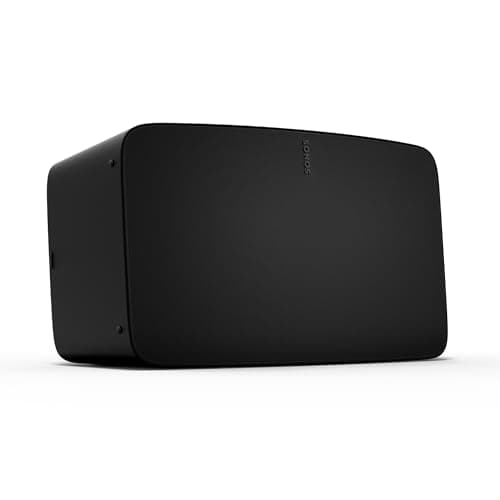
Sonos Five Wireless HiFi Speaker
- It's Sonos's most powerful single speaker — six Class-D amplifiers driving three tweeters and three mid-woofers.
- There's no microphone or voice assistant — it's a hi-fi speaker run from the Sonos app.
(Current price, subject to change)
If what you actually want is a powerful stereo speaker rather than a talkative one, the Sonos Five Wireless HiFi Speaker is the right call. It scores 7.5 on our Fidelity Score — held back only by the spatial-audio and value factors, since it has no Atmos and no voice and carries the highest single-unit price here — but on raw stereo capability it is the most powerful speaker Sonos makes, with 6x Class-D amplifiers behind 3x tweeters and 3x mid-woofers. Gear Patrol calls it the obvious choice for line-in and pure stereo, and that line-in is the feature audiophiles with a turntable will care about most, because nothing else here has it natively, and a stereo pair fields 2x that driver count.
The tradeoff is in the spec sheet. The Sonos Five Wireless HiFi Speaker has no microphone, no voice assistant, and no spatial audio — The Verge frames it as a hi-fi speaker you run from the app. It still streams lossless FLAC from Amazon Music and Qobuz and stereo-pairs into something that competes with a bookshelf-plus-amp setup. If you value output and a line-in over Atmos and Alexa, this earns its $599; for one speaker that does everything, the Era 300 is more flexible.
What We Love
- It's Sonos's most powerful single speaker — six Class-D amplifiers driving three tweeters and three mid-woofers.
- A 3.5 mm line-in connects a turntable or external source, which no other pick here offers natively.
- It streams lossless FLAC from Amazon Music and Qobuz and stereo-pairs into a real bookshelf-replacement system.
What Could Be Better
- There's no microphone or voice assistant — it's a hi-fi speaker run from the Sonos app.
- There's no Dolby Atmos or spatial audio of any kind.
- At $599 it's the most expensive single unit here, and it's large and heavy.
The Verdict
If you care about pure stereo sound and a turntable input more than voice control, and you've shortlisted Sonos Five Wireless HiFi Speaker, you'll be well-served here — it's the most powerful speaker Sonos makes and the only pick with native line-in, at $599.
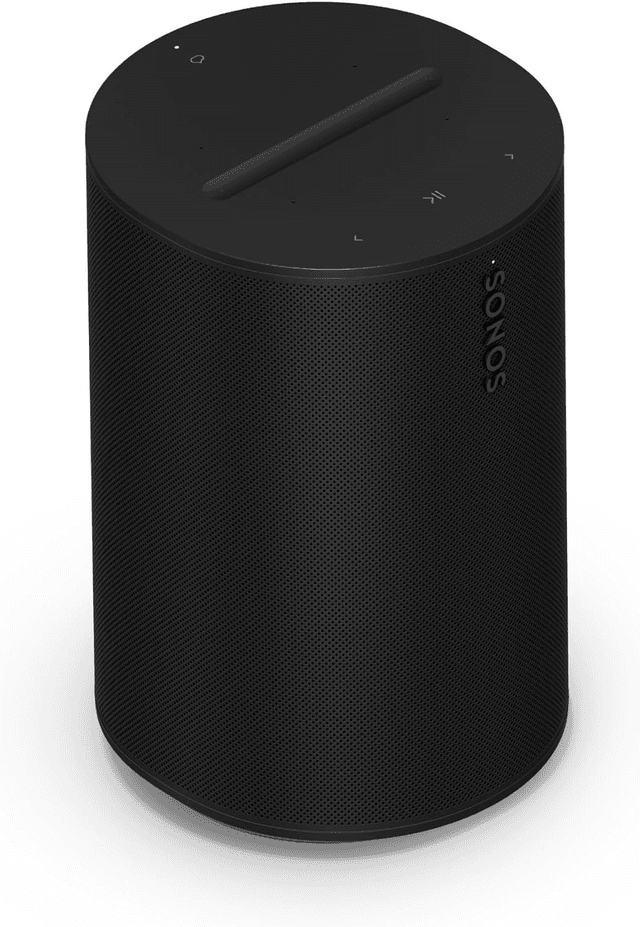
Best Compact Value: Sonos Era 100
Sonos Era 100
- Two angled tweeters give it real stereo separation from one compact unit, a clear step up over the Sonos One it replaced.
- There's no Dolby Atmos or height channels — it's stereo only.
(Current price, subject to change)
If your priority is Sonos sound and lossless streaming in a unit small enough for a desk or nightstand, the Sonos Era 100 fits the brief without compromise on the essentials. It lands at 7.3 on our Fidelity Score — the spatial-audio factor caps it, since it's stereo-only — but Tom's Guide calls it the best compact smart speaker for the money, and the reason is the 2x angled tweeters that give it genuine left-right separation, a real upgrade over the older Sonos One. Crucially for this list, it streams lossless FLAC natively from Amazon Music and Qobuz, so you keep the hi-res capability of its pricier siblings, and a 2x pair widens it further.
What you give up at this size is mostly scale. The Sonos Era 100 has no Atmos and less low-end weight than the Era 300 or HomePod, and The Verge notes it sticks to Alexa or Sonos Voice Control with no Google option. But it stereo-pairs cheaply, so two still come in under a single Era 300 while widening the soundstage. For a smaller room, a second Sonos zone, or a budget that won't stretch to the 300, this is the compact pick that keeps lossless.
What We Love
- Two angled tweeters give it real stereo separation from one compact unit, a clear step up over the Sonos One it replaced.
- It streams lossless FLAC natively from Amazon Music and Qobuz, plus AirPlay 2 and Spotify Connect.
- It works with Alexa and Sonos Voice Control and stereo-pairs cheaply for a wider soundstage.
What Could Be Better
- There's no Dolby Atmos or height channels — it's stereo only.
- It has less bass and output than the Era 300 or HomePod.
- There's no Google Assistant, and line-in needs the optional USB-C combo adapter.
The Verdict
If you want Sonos lossless and real stereo in a small footprint, and you've shortlisted Sonos Era 100, this fits the brief without compromise on the essentials — native lossless, Alexa or Sonos Voice, and a stereo-pair path, at $219.
Best True Audiophile (No Voice): KEF LSX II LT
Best True Audiophile Pick (No Voice)KEF LSX II LT
- It's a true active wireless stereo pair built on KEF's Uni-Q concentric driver — the most genuinely hi-fi sound in this guide.
- There's no built-in voice assistant — this is a hi-fi system with streaming, not a smart speaker.
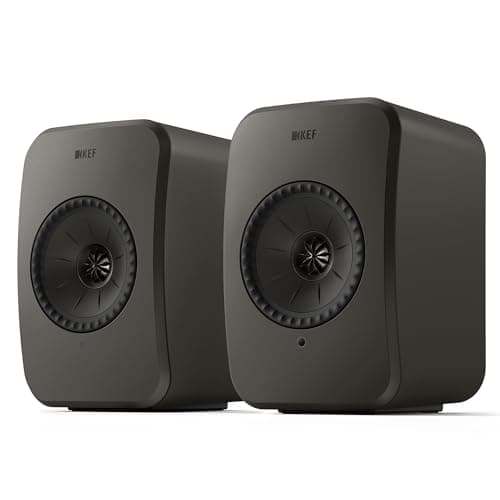
If you would happily trade Alexa for better sound, the KEF LSX II LT is the path of least friction to real hi-fi here. It scores 7.2 on our Fidelity Score — the spatial-audio and ecosystem factors pull it down because it has no Atmos and no voice — but on pure sound quality it's arguably the best, an active stereo pair built on KEF's Uni-Q concentric driver rather than a point-source. What Hi-Fi? calls it more affordable and lighter on features than the standard LSX II while still sounding superb, and the $449.99 covers two speakers.
Be clear about what this configuration is. The KEF LSX II LT incorporates no microphone and no assistant whatsoever — TechRadar and KEF position it as a dedicated hi-fi system fed from a streaming source over AirPlay 2, Chromecast, Spotify Connect, or its optical and USB-C inputs; per KEF's specification the network path handles high-resolution material to 24-bit/384 kHz, while USB-C tops out at 24-bit/192 kHz. The LT designation links its 2x speakers with a cable, whereas the standard LSX II operates wirelessly. For a desktop audiophile who won't converse with the speakers, this remains the most rewarding pick; for voice or Atmos, the Era 300 is the alternative.
What We Love
- It's a true active wireless stereo pair built on KEF's Uni-Q concentric driver — the most genuinely hi-fi sound in this guide.
- It streams over AirPlay 2, Chromecast, and Spotify Connect, with hi-res to 24-bit/384 kHz over the network and 24-bit/192 kHz over its USB-C input.
- It's two separate speakers, so you get a real left-right stereo image, and the price covers the pair.
What Could Be Better
- There's no built-in voice assistant — this is a hi-fi system with streaming, not a smart speaker.
- There's no Dolby Atmos or height channels.
- The LT version links the two speakers with a cable, unlike the wireless higher-tier LSX II.
The Verdict
If you're an audiophile who will gladly skip voice control for genuinely better sound, and you've shortlisted KEF LSX II LT, that's the path of least friction to real hi-fi — a true Uni-Q stereo pair with hi-res inputs, for $449.99 the pair.
How We Score: SHE Audiophile Fidelity Score
SHE Audiophile Fidelity Score
Score Formula
(0.25 × Measured Frequency Extension) + (0.25 × Lossless / Hi-Res Codec Support) + (0.20 × Spatial Audio Fidelity) + (0.20 × Value per Dollar) + (0.10 × Ecosystem & Voice Flexibility)Score Factors
- Measured Frequency Extension (weight 0.25)How low and how high the speaker actually reaches, drawn from bench data and reviewer measurements. The HomePod 2nd Gen and Sonos Five lead at 9.0 on deep, well-controlled extension; the Era 300 and KEF LSX II LT sit at 8.5; the redesigned 2025 Echo Studio scores 7.0 because reviewers report it lost bass relative to the 2022 model, and the compact Era 100 scores 6.5.
- Lossless / Hi-Res Codec Support (weight 0.25)Native support for lossless and hi-res formats. The HomePod (on-device Apple Music ALAC) and the KEF (hi-res to 24-bit/384 kHz over the network, 24-bit/192 kHz over USB-C) lead at 9.5; the Era 300, Sonos Five, and Era 100 score 9.0 on native FLAC from Amazon Music and Qobuz; the Echo Studio scores 8.5 because Ultra HD is tied to Amazon Music Unlimited.
- Spatial Audio Fidelity (weight 0.20)True height-channel Atmos outscores certified single-driver Atmos, which outscores plain stereo. The Era 300 leads at 9.5 with its dedicated up-firing driver; the HomePod and Echo Studio score 7.5 for Apple Spatial Audio and single-driver Atmos respectively; the Sonos Five, Era 100, and KEF score 4.0-5.0 as stereo-only designs.
- Value per Dollar (weight 0.20)Audio capability measured against street price. The $174.99 Echo Studio leads at 9.5; the $299 HomePod and the $219 Era 100 score 8.5; the $379 Era 300 scores 8.0; the KEF (a $449.99 pair, no voice) scores 7.0; the $599 Sonos Five scores 6.5 as the priciest single unit.
- Ecosystem & Voice Flexibility (weight 0.10)Breadth of native streaming services and assistants. The Era 300 and Era 100 lead at 9.0 with Alexa plus Sonos Voice and broad native lossless; the Echo Studio and Sonos Five score 7.5; the Apple-locked HomePod scores 6.5; the voice-free KEF scores 5.0.
SHE Audiophile Fidelity Score — Ranked
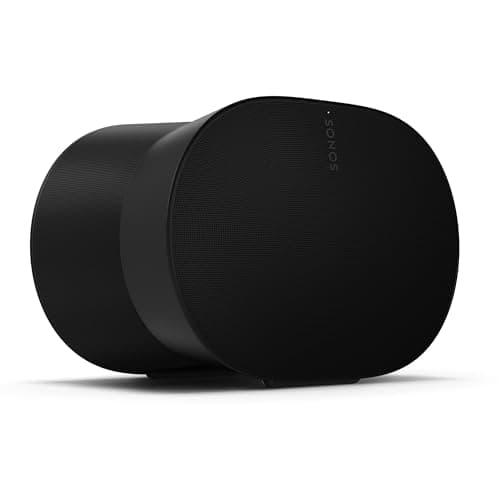
Sonos Era 300
SHE Audiophile Fidelity Score8.8/10The only true height-channel Atmos here, plus native lossless and broad ecosystem support, takes the top spot.
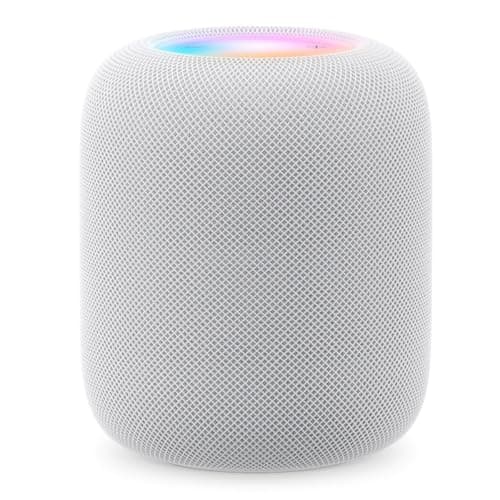
Apple HomePod 2nd Gen
SHE Audiophile Fidelity Score8.5/10The deepest bass and on-device Apple Music lossless follow closely; only the Apple-only fence holds it back.
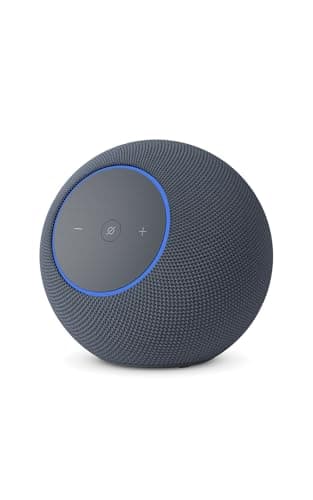
Amazon Echo Studio (2025)
SHE Audiophile Fidelity Score8.0/10The redesigned 2025 model wins on value — Atmos and Ultra HD lossless for about $175 — despite trading away some bass.
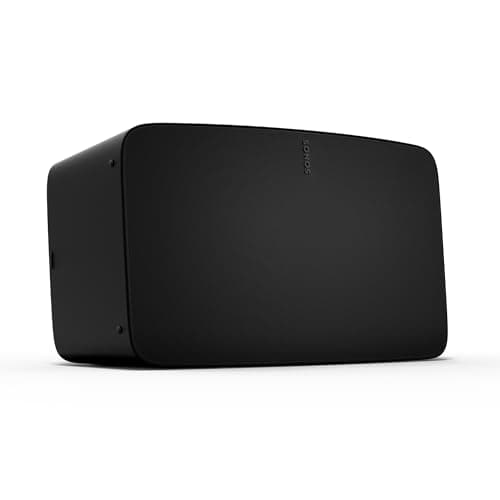
Sonos Five Wireless HiFi Speaker
SHE Audiophile Fidelity Score7.5/10Sonos's most powerful speaker with a line-in, capped only by no spatial audio and the highest single-unit price.
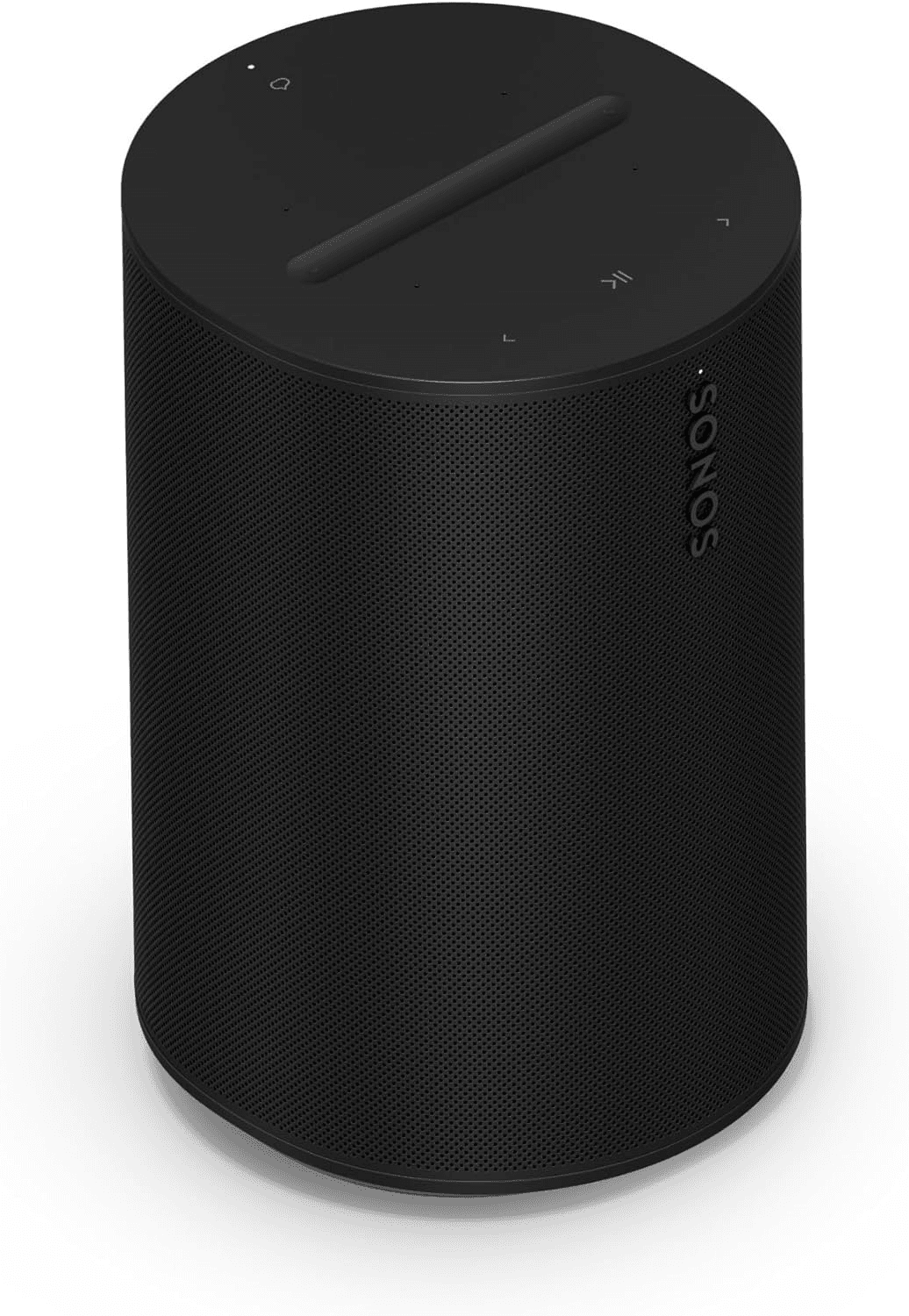
Sonos Era 100
SHE Audiophile Fidelity Score7.3/10Native lossless and real stereo separation in a compact, affordable unit, limited by no height channels.
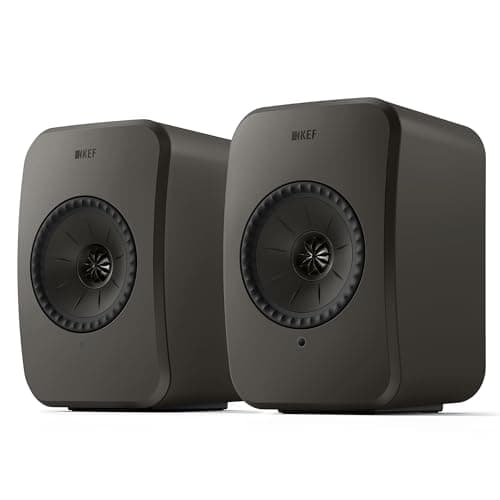
KEF LSX II LT
SHE Audiophile Fidelity Score7.2/10A genuine audiophile stereo pair held back on this score only by having no voice assistant and no Atmos.
SHE Audiophile Fidelity Score
Weighted composite of frequency extension, lossless support, spatial audio, value, and ecosystem flexibility (0-10).
SmartHomeExplorer composite of manufacturer specs and What Hi-Fi?, RTINGS, TechRadar, Engadget, and SoundGuys reporting.
Streaming and Voice Compatibility
This is where the "which one should I actually buy?" question usually resolves itself, because the answer is dictated less by the speaker and more by the streaming service and phone you already own. Every pick in this guide carries its SHE Audiophile Fidelity Score forward to here, but the matrix below is the practical tie-breaker. The Sonos Era 300, Era 100, and Sonos Five all stream lossless FLAC natively from Amazon Music Unlimited and Qobuz and accept AirPlay 2, which makes Sonos the most service-flexible family here. The Apple HomePod 2nd Gen is the opposite trade: it streams Apple Music lossless on-device and is the only pick that doubles as a HomeKit hub, but everything non-Apple arrives over AirPlay 2. The 2025 Echo Studio ties its hi-res lossless to Amazon Music Ultra HD and its assistant to Alexa+. The KEF LSX II LT carries no assistant at all — it's a streaming hi-fi pair you control from an app or a connected source. Match the speaker to the service you pay for, and the shortlist narrows to one or two fast.
| Product | Native Lossless | Dolby Atmos | Voice Assistant | AirPlay 2 | Acts as Hub |
|---|---|---|---|---|---|
| Sonos Era 300 | ✓ | ✓ | ✓ | ✓ | ✕ |
| Apple HomePod 2nd Gen | ✓ | ✕ | ✓ | ✓ | ✓ |
| Amazon Echo Studio (2025) | ✓ | ✓ | ✓ | ✕ | ✓ |
| Sonos Five Wireless HiFi Speaker | ✓ | ✕ | ✕ | ✓ | ✕ |
| Sonos Era 100 | ✓ | ✕ | ✓ | ✓ | ✕ |
| KEF LSX II LT | ✓ | ✕ | ✕ | ✓ | ✕ |
What You Actually Pay to Hear Lossless
The speaker is only half the cost of audiophile listening, because hi-res capability does nothing without a lossless source. The HomePod 2nd Gen and the 2025 Echo Studio each lean on a first-party service — Apple Music and Amazon Music Unlimited, both around 11 dollars a month, which compounds to roughly 132 dollars over a 1-year period — and outside that service you fall back to a lossy stream or AirPlay. The Sonos units are the most forgiving here, accepting native lossless FLAC from either Amazon Music or Qobuz, so you aren't locked to one provider to unlock the hardware. The KEF LSX II LT sidesteps the subscription entirely by accepting hi-res files directly over USB-C, the cheapest long-run path if you own your music.
Factor that subscription into the comparison before you decide. Across a 3-year horizon, a lossless service adds roughly 396 dollars to whichever speaker requires it, which is why our weighted Value-per-Dollar factor rewards the cheaper Echo Studio compared to the pricier Sonos Five, even though the Five is the more capable stereo speaker. A stereo pair of any model doubles both the soundstage and the spend: 2x the speakers, 2x the cost. If you already pay for Spotify and have no plans to switch, none of these speakers resolves a stream Spotify never sends in lossless — a single fact that reshapes the whole shortlist, which is the point of the next section.
When NOT to Buy
Decline the spatial-audio premium if Spotify remains your primary subscription, because Spotify still distributes a lossy stream in 2026 with no Dolby Atmos catalog whatsoever, which means the additional expenditure on the Era 300's dedicated height driver or the HomePod's hi-res converter purchases capability your streaming service cannot actually exercise. A Spotify-exclusive listener is consequently better accommodated by the more economical $219 Era 100, or by reconsidering the streaming service itself before committing to the hardware. Reconsider all 6 recommendations entirely if your listening environment substantially exceeds approximately 500 square feet, because these enclosures are engineered for near-field and medium-room reproduction rather than expansive volumes. A genuinely large open-plan environment fundamentally necessitates a discrete amplifier paired with passive loudspeakers, or a stereo-paired Sonos Five configuration at minimum; a solitary unit inevitably renders thin and underpowered once the surrounding architecture extends that considerably. Disregard the assistant-equipped recommendations if voice interaction constitutes your foremost requirement, because every selection here was evaluated predominantly on audio reproduction rather than far-field recognition accuracy. Should dependable smart-home command interpretation outweigh fidelity for your particular circumstances, a substantially cheaper Echo or Nest unit will consistently recognize your instructions more reliably than any audiophile speaker catalogued above. The KEF LSX II LT warrants specific avoidance for voice-oriented buyers, because it incorporates no microphone whatsoever, deliberately.
Who Should Buy What
Who Should Buy What
| If you are… | Recommended pick |
|---|---|
Spatial-audio listener You want true Dolby Atmos with a real height channel and native lossless from one flexible speaker. | Sonos Era 300 |
Apple household, bass-first You run Apple, subscribe to Apple Music, and want the deepest bass plus a HomeKit hub in one unit. | Apple HomePod 2nd Gen |
Alexa buyer on a budget You want Atmos and hi-res lossless for the lowest price and already use Amazon Music and Alexa. | Amazon Echo Studio (2025) |
Pure-stereo and turntable owner You want maximum stereo output and a line-in for a turntable and don't need voice control. | Sonos Five Wireless HiFi Speaker |
Compact-room or second-zone buyer You want Sonos lossless and real stereo in a nightstand-sized speaker at the lowest Sonos price. | Sonos Era 100 |
True audiophile, no voice You want an actual active stereo pair with audiophile drivers and hi-res inputs and will stream rather than speak. | KEF LSX II LT |
Frequently Asked Questions
What is the best smart speaker for audiophiles in 2026?
The Sonos Era 300 ($379) is our top pick at 8.8 on the SHE Audiophile Fidelity Score, because it's the only model here with a dedicated up-firing driver for true Dolby Atmos and it streams lossless FLAC natively from Amazon Music and Qobuz. For an Apple home that wants the deepest bass, the HomePod 2nd Gen ($299) is the alternative; for the lowest price into Atmos and hi-res, the redesigned 2025 Echo Studio ($174.99) wins on value.
Does the Sonos Era 300 support lossless audio?
Yes. The Era 300 streams lossless FLAC natively from Amazon Music Unlimited and Qobuz, and it also accepts AirPlay 2 and Spotify Connect. That broad native lossless support is one of the reasons it ranks first here — you aren't locked to a single streaming service to unlock the hardware's hi-res capability.
Is the redesigned 2025 Echo Studio worth it versus the old model?
It depends on what you valued. The October 2025 redesign is about 40% smaller, adds the AZ3 Pro chip and Alexa+, and at about $175 street it's the cheapest path into Dolby Atmos and Amazon Music Ultra HD. But Engadget, TechRadar, and SoundGuys all note the smaller body has less bass than the larger 2022 Echo Studio. If you want the new look, the smart-home hub, and the low price, it's worth it; if the old model's bass was the draw, the gap is real.
Is the Apple HomePod better than the Sonos Era 300?
It depends on your ecosystem and your priority. The HomePod 2nd Gen has deeper, more controlled bass and on-device Apple Music lossless, and it doubles as a HomeKit hub — but it's Apple-only and non-Apple services stream over AirPlay 2. The Era 300 has the only true height-channel Dolby Atmos here and broader native lossless support across Amazon Music and Qobuz. For an Apple, bass-first listener the HomePod wins; for spatial audio and service flexibility the Era 300 wins.
Can any of these play hi-res audio without a streaming subscription?
The KEF LSX II LT is the cleanest path, because it accepts hi-res files directly over USB-C (up to 24-bit/192 kHz) and optical (up to 24-bit/96 kHz) from a computer or source you own. The Sonos Five also has a 3.5 mm line-in for an external source. The HomePod and Echo Studio, by contrast, rely on their respective lossless services (Apple Music and Amazon Music Unlimited) to deliver hi-res streams.
Which smart speaker here has the best bass?
The Apple HomePod 2nd Gen has the deepest, most controlled bass of any single cabinet in this guide — RTINGS measured outstanding low-end extension, and its computational audio keeps the bass tight at volume. The Sonos Five can play louder overall as the most powerful unit here, but for sheer bass depth from one box, the HomePod leads. Note that the redesigned 2025 Echo Studio has less bass than the larger model it replaced.
Bottom Line
Get the Sonos Era 300 if You want the best all-around audiophile speaker — true Dolby Atmos, native lossless, and Sonos multi-room — for $379.
Get the Apple HomePod 2nd Gen if You're in the Apple ecosystem and want the deepest bass plus a HomeKit hub in one $299 unit.
Get the Amazon Echo Studio (2025) if You're on Alexa and want Atmos and hi-res lossless for the lowest price, from the redesigned 2025 model at about $175.
If you've narrowed it to Sonos specifically and want to compare its whole-home audio range, our best-sonos-multi-room-whole-home-audio-2026 roundup goes deeper on the Sonos lineup. This guide is for readers cross-shopping audiophile smart speakers across brands.
Sources & Methodology
Methodology: SHE Audiophile Fidelity Score — Formula: (0.25 × Measured Frequency Extension) + (0.25 × Lossless / Hi-Res Codec Support) + (0.20 × Spatial Audio Fidelity) + (0.20 × Value per Dollar) + (0.10 × Ecosystem & Voice Flexibility). Factors: Measured Frequency Extension (weight 0.25): How low and how high the speaker actually reaches, drawn from bench data and reviewer measurements. The HomePod 2nd Gen and Sonos Five lead at 9.0 on deep, well-controlled extension; the Era 300 and KEF LSX II LT sit at 8.5; the redesigned 2025 Echo Studio scores 7.0 because reviewers report it lost bass relative to the 2022 model, and the compact Era 100 scores 6.5. | Lossless / Hi-Res Codec Support (weight 0.25): Native support for lossless and hi-res formats. The HomePod (on-device Apple Music ALAC) and the KEF (hi-res to 24-bit/384 kHz over the network, 24-bit/192 kHz over USB-C) lead at 9.5; the Era 300, Sonos Five, and Era 100 score 9.0 on native FLAC from Amazon Music and Qobuz; the Echo Studio scores 8.5 because Ultra HD is tied to Amazon Music Unlimited. | Spatial Audio Fidelity (weight 0.20): True height-channel Atmos outscores certified single-driver Atmos, which outscores plain stereo. The Era 300 leads at 9.5 with its dedicated up-firing driver; the HomePod and Echo Studio score 7.5 for Apple Spatial Audio and single-driver Atmos respectively; the Sonos Five, Era 100, and KEF score 4.0-5.0 as stereo-only designs. | Value per Dollar (weight 0.20): Audio capability measured against street price. The $174.99 Echo Studio leads at 9.5; the $299 HomePod and the $219 Era 100 score 8.5; the $379 Era 300 scores 8.0; the KEF (a $449.99 pair, no voice) scores 7.0; the $599 Sonos Five scores 6.5 as the priciest single unit. | Ecosystem & Voice Flexibility (weight 0.10): Breadth of native streaming services and assistants. The Era 300 and Era 100 lead at 9.0 with Alexa plus Sonos Voice and broad native lossless; the Echo Studio and Sonos Five score 7.5; the Apple-locked HomePod scores 6.5; the voice-free KEF scores 5.0.
Expert review sources used in this analysis:
- Specifications and performance claims, verified as of June 2026, draw on What Hi-Fi?, RTINGS, and The Verge for the Sonos Era 300; RTINGS, What Hi-Fi?, and SoundGuys for the Apple HomePod 2nd Gen; Engadget, TechRadar, SoundGuys, and The Ambient for the redesigned 2025 Echo Studio; Gear Patrol, What Hi-Fi?, and The Verge for the Sonos Five; Tom's Guide, What Hi-Fi?, and The Verge for the Sonos Era 100; and What Hi-Fi?, TechRadar, and RTINGS for the KEF LSX II LT
- The October 2025 Echo Studio redesign — about 40% smaller, AZ3 Pro chip, Alexa+, with reviewers noting reduced bass versus the 2022 model — is documented by Engadget, TechRadar, and SoundGuys; older bench measurements of the original Echo Studio are not carried onto the 2025 unit
- Prices are live Amazon street prices verified via the Amazon Creators API on June 17, 2026
- The SHE Audiophile Fidelity Score is SmartHomeExplorer's own weighted, normalized 0-10 composite of measured frequency extension, lossless codec support, spatial-audio fidelity, value per dollar, and ecosystem flexibility; it is an editorial scoring framework, not an independent lab measurement.
Nicholas Miles is the founder of SmartHomeExplorer and a longtime smart home enthusiast focused on helping everyday homeowners make better technology decisions. He researches, compares, and writes about products across security, climate, lighting, leak prevention, sensors, home energy, and automation, with an emphasis on real-world usefulness, ecosystem compatibility, reliability, privacy, and long-term value.
Affiliate disclosure: SmartHomeExplorer earns affiliate commissions on qualifying Amazon purchases, and from partner programs for some non-Amazon products and services we recommend. Our scoring methodology is independent of affiliate relationships.