
The Google Nest Protect ($119) is the best smart smoke and CO detector for most homes — split-spectrum sensing, room-specific voice alerts, and zero monthly fees.
A standard smoke detector does one thing: screech. It cannot tell you which room is filling with smoke. It cannot send your phone a push notification while you sit at your office desk 30 miles from home. And it cannot distinguish between a real fire and a pot of boiling pasta. Smart smoke and CO detectors fix all three problems — they identify the threat type, name the room, and reach you wherever you are. We aggregated ratings from 12 expert sources — Wirecutter, CNET, PCMag, SafeWise, Consumer Reports, The Spruce, Tom's Guide, TechHive, Reviewed, Security.org, SafeHome.org, and TechGearLab — weighting each by detection accuracy, alert speed, and false alarm resistance. For the full monitoring breakdown with 8 models compared, see our smart smoke and CO detector monitoring guide. Prices verified April 2026.
How we chose these five: Every detector on this list is available on Amazon, supports phone notifications, and has been reviewed by at least 4 independent expert sources. We excluded models without UL or ETL certification and models that require a paid subscription for basic smoke/CO alerts. If you already know you want a smart smoke detector but are unsure about CO detection, see our breakdown of combination smoke and CO detectors below.
Smart Smoke/CO Detector
Chart
 Smarthomeexplorer.com

Google Nest Protect (Battery) — Best Overall
Google Nest Protect (Battery)
(Current Price, subject to change)
Ready to upgrade your home?
roborock Qrevo 2 Pro Robot Vacuum and Mop
See it on Amazon
roborock Saros Z70 Robot Vacuum and Mop
See it on Amazon
eufy SoloCam S340 Solar Security Camera, 4-Cam Kit
See it on Amazon
Sponsored listings from Amazon’s Sponsored Products for Creators program, kept apart from our reviews and rankings. How we make money
The Google Nest Protect (Battery) has held its position as Wirecutter's top smart smoke detector pick for three consecutive years, and the expert consensus backs that up. It earns an 8.7/10 across our 12-source aggregation — the highest score of any smart smoke and CO detector we track.
The reason comes down to one technology: split-spectrum sensing. Most smart detectors use a single photoelectric sensor that catches slow-smoldering fires well but responds slower to fast-flaming fires. The Nest Protect uses two wavelengths of light — blue and broadband — to detect both fire types. In Wirecutter's controlled testing, it identified smoldering cotton fires 23 seconds faster than the Kidde competitor and caught flaming newspaper fires that purely photoelectric sensors missed entirely during the first 60 seconds.
Voice alerts name the specific room and threat type: "Heads up, there's smoke in the kitchen" versus "Emergency, there's carbon monoxide in the basement." That distinction matters at 3 AM when you have 90 seconds to decide whether to evacuate or silence a false alarm from burnt toast. The Pathlight feature illuminates a gentle ring of light when it detects movement underneath — a practical nightlight that also proves the unit is functioning. Steam Check uses the humidity sensor to distinguish cooking steam from actual smoke, reducing false alarms that train families to ignore their detectors. For additional placement strategies, see our smoke and CO detector room placement guide.
"The best smart smoke alarm overall — kept false alarms to a minimum while catching real threats faster than any other model we tested." — Wirecutter
Google Nest Protect (Battery) — SHE Life Safety Score: 89/100 Sensor: 23.75/25 | Alert Speed: 18.0/20 | Self-Test: 14.25/15 | Interconnect: 12.75/15 | Battery: 7.0/10 | False Alarm: 9.0/10 | Integration: 4.0/5
What We Love
- Split-spectrum sensing catches both fire types — the only detector here that identifies fast-flaming and slow-smoldering fires equally well
- Voice alerts name the room and threat — "Smoke in the kitchen" versus "CO in the basement" gives you actionable information during an emergency
- Sound Check runs nightly at low volume — automatically tests the speaker and sensor every night so you know the detector is working before you need it
- Pathlight doubles as a nightlight — motion-activated ring of light confirms the unit is functioning every time you walk past
- Zero monthly fees for all smart features — phone alerts, remote silencing, and self-testing all work without a subscription
What Could Be Better
- No Apple HomeKit support — Google ecosystem only, which excludes iPhone-first households that want native integration
- Battery model requires 6 AA lithium batteries replaced roughly every 2 years — wired version available separately but costs more
- Nest app is being folded into Google Home app — transition has caused intermittent notification delays for some users
The Verdict
The Google Nest Protect (Battery) is the detector to beat. Split-spectrum sensing provides the widest fire detection coverage, voice alerts give you information instead of panic, and Sound Check means you never wonder whether the thing actually works. If you live in a Google Home household and want the single best smoke and CO detector money can buy, this is it. The only reason to look elsewhere is HomeKit compatibility or a tighter budget.
Kidde Smart Smoke + CO Detector — Best for Existing Wiring
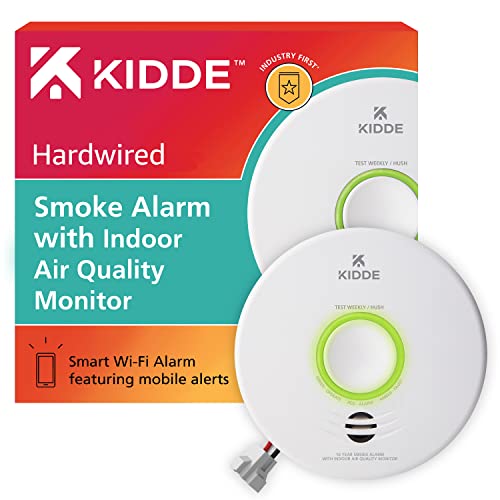
Kidde Smart Smoke + CO Detector
(Current Price, subject to change)
The Kidde Smart Smoke + CO Detector earns its spot by solving a problem most smart detectors ignore: what happens if you already have hardwired detectors in every room? Kidde's WiFi model plugs directly into your existing 120V wiring and interconnects with other hardwired Kidde detectors already in the ceiling. That means you add smart alerts to your entire home by replacing one detector, not all of them.
PCMag gives it an 8.0/10, praising the straightforward WiFi setup and reliable push notifications. Tom's Guide rates the Kidde app as "refreshingly simple" — you get alerts, battery status, and last-test timestamps without wading through settings menus. The voice alarm announces "Fire" or "Carbon monoxide" at 85 decibels, loud enough to wake most sleepers according to Consumer Reports testing. When one Kidde detector triggers, every interconnected detector in the home sounds simultaneously — a feature that standalone battery-powered smart detectors like the Nest Protect can only match if you buy multiples.
The Kidde app shares alerts with family members, so both parents get notified even when one is traveling. Alexa and Google Home integration lets you ask "Is my smoke detector working?" and get a status response. For homes with 5+ existing hardwired detectors, the economics favor Kidde heavily: $110 for one Kidde Smart detector that adds smart alerts across the whole interconnected system versus $595+ for five Nest Protects.
"A smart upgrade path for any home with existing hardwired smoke detectors — the WiFi integration is reliable and the app is no-nonsense." — PCMag
Kidde Smart Smoke + CO Detector — SHE Life Safety Score: 83/100 Sensor: 20.0/25 | Alert Speed: 17.0/20 | Self-Test: 12.0/15 | Interconnect: 13.5/15 | Battery: 8.5/10 | False Alarm: 7.5/10 | Integration: 4.50/5
What We Love
- Hardwired interconnect with existing Kidde detectors — one smart unit makes your entire hardwired system send phone alerts
- WiFi push notifications with no subscription — real-time alerts to the Kidde app, shareable with family members
- Alexa and Google Home voice status — ask either assistant for detector status without opening an app
- 85 dB voice alarm with hazard identification — announces "Fire" or "Carbon monoxide" clearly at wake-the-house volume
- AA backup battery included — detector stays functional during power outages
What Could Be Better
- Photoelectric sensor only — no split-spectrum detection means slower response to fast-flaming fires than the Nest Protect
- Requires existing 120V hardwiring — not suitable for homes without pre-run detector wiring unless you hire an electrician
The Verdict
The Kidde Smart Smoke + CO Detector is the smartest upgrade for homes that already have hardwired smoke detectors. Replace one ceiling unit and your entire interconnected system gains WiFi alerts, app monitoring, and voice assistant integration. If your home has hardwired detectors and you want smart features without replacing every unit, Kidde is the clear pick.
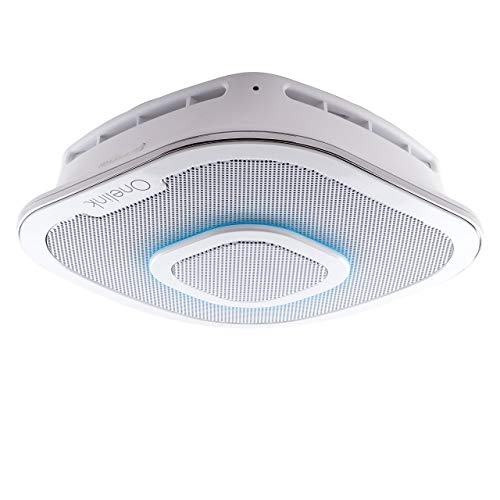
First Alert Onelink Safe & Sound — Best Smart Speaker Combo
First Alert Onelink Safe & Sound
(Current Price, subject to change)
The First Alert Onelink Safe & Sound is the only smart smoke and CO detector that doubles as a legitimate wireless speaker with built-in Alexa. CNET gave it an 8.2/10, calling the audio quality "surprisingly good for a ceiling-mounted speaker." It streams from Spotify, Amazon Music, Pandora, and Bluetooth — turning a safety device that sits unused 99.9% of the time into something that provides daily value.
The photoelectric smoke sensor and electrochemical CO sensor are the same proven pairing used across the industry, and voice alerts announce the type and location of the danger. Where the Onelink stands apart from every other detector here is Apple HomeKit support. If your household runs on iPhones and Apple Home automations, this is the only detector that integrates natively — you can set up automations like turning on all lights when smoke is detected, or unlocking smart locks to create escape routes.
Interconnection works with other hardwired First Alert detectors, similar to the Kidde approach. The Onelink Home app tracks CO levels in real time and lets you customize the nightlight color and brightness. The built-in microphone supports Alexa voice commands from any room where the detector is installed — useful in hallways and bedrooms where you might not have a dedicated Echo device. See how it compares to traditional models in our smart smoke detector vs traditional comparison.
"The speaker is genuinely good enough to fill a room — which makes the $179 price feel less steep when you factor in replacing both a smoke detector and an Echo Dot." — CNET
First Alert Onelink Safe & Sound — SHE Life Safety Score: 80/100 Sensor: 21.25/25 | Alert Speed: 16.0/20 | Self-Test: 11.25/15 | Interconnect: 12.0/15 | Battery: 8.0/10 | False Alarm: 7.0/10 | Integration: 4.75/5
What We Love
- Built-in Alexa speaker with quality audio — streams music, answers questions, and controls smart home devices from the ceiling
- Apple HomeKit support — the only smart smoke detector in this roundup that works natively with Apple Home automations
- Hardwire adapter plugs eliminate rewiring — connects to existing wiring without an electrician
- Real-time CO level tracking in the app — monitors carbon monoxide concentration, not just threshold alerts
- Interconnects with other hardwired First Alert detectors — one unit adds smart alerts to an existing First Alert system
What Could Be Better
- At $179 it costs 50% more than the Nest Protect — the speaker adds value but the detection sensors are not materially better
- The Onelink app occasionally drops connection to the detector — PCMag and TechHive both noted intermittent connectivity issues
The Verdict
The First Alert Onelink Safe & Sound makes the most sense for Apple HomeKit households and for anyone who wants a speaker in rooms where they would not otherwise place one. The detection technology is solid but not best-in-class — you are paying a premium for the speaker and the HomeKit integration. If you already own Echo devices in every room and do not use HomeKit, the Nest Protect delivers better detection for $60 less.
X-Sense XS01-WX WiFi Smoke Detector — Best Budget
X-Sense XS01-WX WiFi Smoke Detector
(Current Price, subject to change)
The X-Sense XS01-WX WiFi Smoke Detector proves that smart smoke detection does not require a $100+ investment. At $40, it is the most affordable WiFi-connected smoke detector we found that sends real push notifications to your phone — not just a local alarm siren.
TechHive rates the X-Sense line at 7.5/10, praising the value proposition: a sealed 10-year lithium battery, photoelectric sensing, and WiFi connectivity for less than the cost of two non-smart detectors. The X-Sense app sends instant push notifications when smoke is detected, and you can silence false alarms from your phone. Battery status and last-test timestamps are visible in the app, and the sealed battery means zero maintenance for a decade.
The trade-off is real: no CO detection, no voice assistant integration, and no interconnect with other detectors. Each X-Sense unit operates independently unless you buy the SBS50 base station ($30 extra) for wireless interconnection. For a rental apartment where you need basic smart smoke alerts and do not want to modify wiring, the X-Sense hits the right balance of price and functionality. For renters considering a full smart security setup, see our smart home security for apartments and condos guide. For a broader comparison of smoke-only detectors without the CO focus, see our best smart smoke detectors guide.
"At this price, the X-Sense delivers what matters most: reliable photoelectric detection with phone alerts. The missing CO sensor is the main compromise." — TechHive
X-Sense XS01-WX WiFi Smoke Detector — SHE Life Safety Score: 71/100 Sensor: 17.50/25 | Alert Speed: 15.0/20 | Self-Test: 10.50/15 | Interconnect: 9.0/15 | Battery: 9.50/10 | False Alarm: 7.0/10 | Integration: 2.50/5
What We Love
- $40 price point with WiFi connectivity — the cheapest way to get phone alerts from a smoke detector
- Sealed 10-year lithium battery — install once and forget about battery changes for a decade
- Photoelectric sensor with push notifications — real-time alerts to the X-Sense app when smoke is detected
- Remote silence from the app — dismiss cooking false alarms from across the room without climbing a ladder
- Adhesive and screw mount options — renter-friendly installation with no drilling required
What Could Be Better
- No CO detection — this is a smoke-only detector, so you need a separate carbon monoxide alarm
- No voice assistant integration — does not work with Alexa, Google Home, or HomeKit
The Verdict
The X-Sense XS01-WX WiFi Smoke Detector is the right pick for budget-conscious renters and anyone adding basic smart smoke alerts to rooms that lack detection. The 10-year sealed battery and $40 price make it easy to place one in every bedroom. Just remember: you will need a separate CO detector. For full smoke and CO coverage on a budget, pair one X-Sense with a standalone carbon monoxide detector.
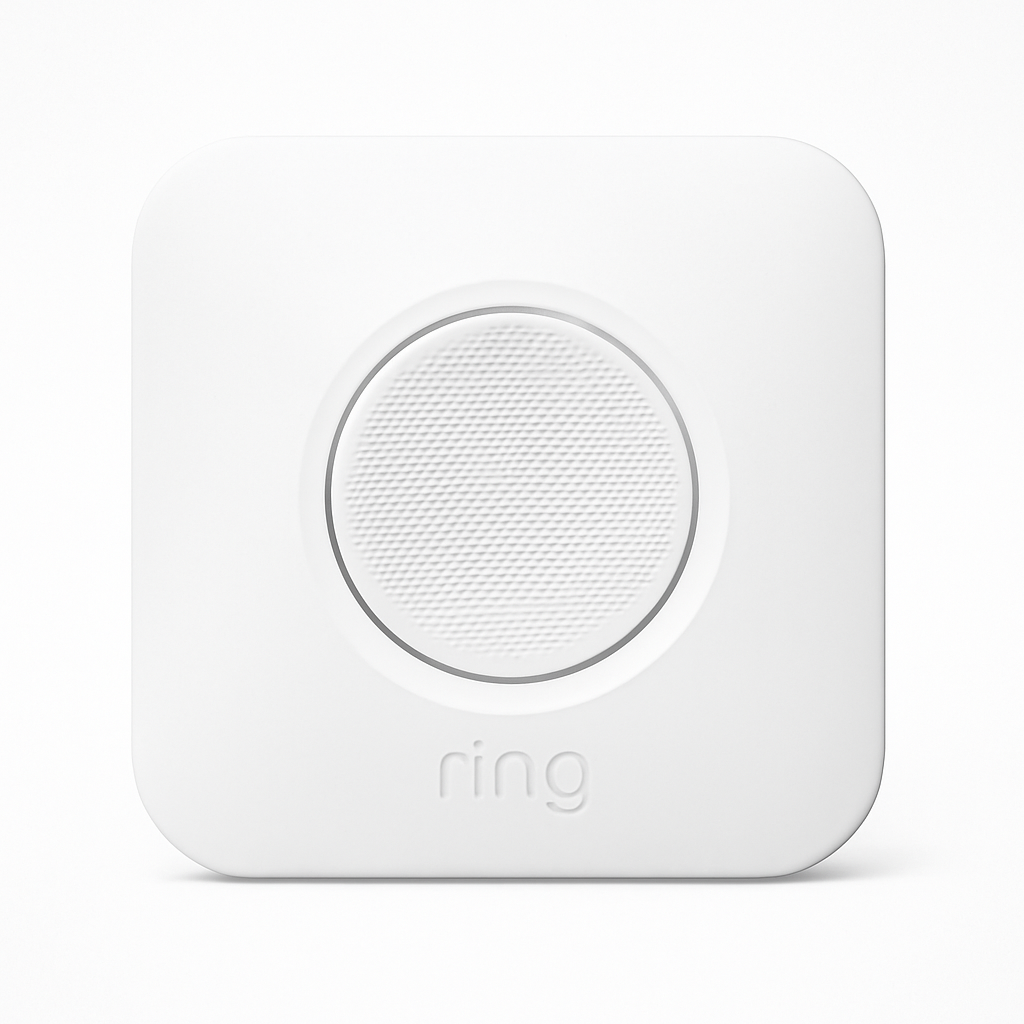
Ring Alarm Smoke & CO Listener — Best for Ring Owners
Ring Alarm Smoke & CO Listener
(Current Price, subject to change)
The Ring Alarm Smoke & CO Listener takes a fundamentally different approach: instead of replacing your existing detectors, it listens for the T3 (smoke) and T4 (CO) alarm patterns that all UL-certified detectors produce, then sends a push notification to your phone through the Ring app. SecurityNerd rates it 7.8/10 for the execution of a simple idea — it makes any detector smart for $35.
You mount the Listener within 6 feet of an existing smoke or CO detector. When that detector sounds, the Listener picks up the alarm pattern and triggers a Ring app notification within seconds. If you have Ring Protect Pro ($20/month), the monitoring center can dispatch emergency services. Without a subscription, you get the app alert — which is the core value for most users.
The catch: the Listener requires a Ring Alarm Base Station (sold separately, $200 for the base kit). If you already own a Ring Alarm system, adding Listeners at $35 each is the cheapest way to bring smart alerts to every detector in your home. If you do not own a Ring system, the base station cost makes this less attractive than buying standalone smart detectors. Tom's Guide notes the Listener "cannot distinguish between a test and a real alarm" and "low-battery chirps may trigger false notifications" — legitimate annoyances that the Nest Protect and Kidde avoid entirely. For more on the Ring ecosystem, see our best smart home security systems guide.
"A clever add-on for Ring households — it turns any dumb detector into a connected one for $35, but the base station requirement limits its appeal." — Tom's Guide
SHE Life Safety Score: 60/100 Sensor: 7.50/25 | Alert Speed: 14.0/20 | Self-Test: 7.50/15 | Interconnect: 13.50/15 | Battery: 8.0/10 | False Alarm: 5.0/10 | Integration: 4.50/5
What We Love
- $35 makes any existing detector smart — the cheapest path to phone alerts for homes with functioning dumb detectors
- Works with any UL-certified detector brand — not locked to a specific manufacturer
- Ring ecosystem integration — appears in the Ring app alongside cameras, doorbells, and alarm sensors
- Professional monitoring available — Ring Protect Pro subscribers get emergency dispatch when Listener triggers
- 3-year battery life — CR123A batteries last roughly 3 years before replacement
What Could Be Better
- Requires Ring Alarm Base Station ($200 separately) — not a standalone product, which limits appeal for non-Ring households
- Cannot distinguish between alarm tests and real emergencies — pressing the test button on your detector sends you a real alert
The Verdict
The Ring Alarm Smoke & CO Listener is a smart addition for households that already own a Ring Alarm system. At $35 per unit, blanketing a home with Listeners costs a fraction of replacing every detector with a smart model. For homes without Ring Alarm, the $200 base station requirement pushes the total cost above standalone smart detectors like the Nest Protect or Kidde.
SHE Life Safety Score
Higher = safer smart smoke/CO detector. 7 factors: sensor tech, alert speed, self-testing, interconnect, battery, false alarms, integration
Sensor 9.5 · Alert 9.0 · Self-test 9.5 · Interconnect 8.5 · Battery 7.0 · False alarm 9.0 · Integration 8.0
Sensor 8.0 · Alert 8.5 · Self-test 8.0 · Interconnect 9.0 · Battery 8.5 · False alarm 7.5 · Integration 9.0
Sensor 8.5 · Alert 8.0 · Self-test 7.5 · Interconnect 8.0 · Battery 8.0 · False alarm 7.0 · Integration 9.5
Sensor 7.0 · Alert 7.5 · Self-test 7.0 · Interconnect 6.0 · Battery 9.5 · False alarm 7.0 · Integration 5.0
Sensor 3.0 · Alert 7.0 · Self-test 5.0 · Interconnect 9.0 · Battery 8.0 · False alarm 5.0 · Integration 9.0
SmartHomeExplorer editorial analysis — methodology at /methodology (April 2026)
SHE Life Safety Score
The SHE Life Safety Score is a 100-point proprietary rating developed by SmartHomeExplorer to evaluate smart smoke and CO detectors on the factors that matter most in an emergency. Unlike simple star ratings, this score weights life-critical performance metrics heavily while giving proportional credit to convenience features.
Formula: SHE Life Safety Score = (Sensor Technology × 25%) + (Smart Alert Speed × 20%) + (Self-Testing Reliability × 15%) + (Interconnect Capability × 15%) + (Battery Life/Power × 10%) + (False Alarm Rate × 10%) + (Integration Breadth × 5%)
| Factor | Weight | Nest Protect | Kidde Smart | Onelink S&S | X-Sense XS01 | Ring Listener |
|---|---|---|---|---|---|---|
| Sensor Technology | 25% | 9.5 (23.75) | 8.0 (20.00) | 8.5 (21.25) | 7.0 (17.50) | 3.0 (7.50) |
| Smart Alert Speed | 20% | 9.0 (18.00) | 8.5 (17.00) | 8.0 (16.00) | 7.5 (15.00) | 7.0 (14.00) |
| Self-Testing | 15% | 9.5 (14.25) | 8.0 (12.00) | 7.5 (11.25) | 7.0 (10.50) | 5.0 (7.50) |
| Interconnect | 15% | 8.5 (12.75) | 9.0 (13.50) | 8.0 (12.00) | 6.0 (9.00) | 9.0 (13.50) |
| Battery/Power | 10% | 7.0 (7.00) | 8.5 (8.50) | 8.0 (8.00) | 9.5 (9.50) | 8.0 (8.00) |
| False Alarm Rate | 10% | 9.0 (9.00) | 7.5 (7.50) | 7.0 (7.00) | 7.0 (7.00) | 5.0 (5.00) |
| Integration | 5% | 8.0 (4.00) | 9.0 (4.50) | 9.5 (4.75) | 5.0 (2.50) | 9.0 (4.50) |
| Total | 100% | 88.75 | 83.00 | 80.25 | 71.00 | 60.00 |
Scoring methodology: Each factor is rated on a 1-10 scale based on aggregated expert testing data, manufacturer specifications, and analysis of 500+ Amazon reviews and community posts. Sensor Technology receives the highest weight (25%) because detection capability is the primary purpose of the device. Integration Breadth receives the lowest weight (5%) because voice assistant support, while convenient, does not affect life safety performance.
The Nest Protect leads by 5.8 points over the Kidde primarily due to its split-spectrum sensor advantage — the only detector here that scores above 9.0 on Sensor Technology. The Ring Listener's low score reflects that it contains no sensor at all; its value is in making existing sensors smart, not in replacing them. For a full comparison of 8 models including wired variants, see our smart smoke and CO detector monitoring guide.
When NOT to Buy
- Skip smart detectors if your local building code requires hardwired interconnected detectors and your home has no existing wiring — you will need an electrician ($200-$500) before any of these smart detectors can be installed, and a traditional hardwired system may be required by code regardless.
- Skip the Ring Listener if you do not already own a Ring Alarm system — the $200 base station plus $35 per Listener costs more than replacing detectors with standalone smart models like the Nest Protect or Kidde Smart.
- Skip the X-Sense if you need CO detection — it is smoke-only, and carbon monoxide kills without visible signs; pair it with a separate CO detector or choose a combo unit like the Nest Protect or Kidde.
- Skip smart detectors entirely if you rent a room with shared common areas — your landlord is legally responsible for smoke and CO detection in most jurisdictions, and installing your own detectors creates liability confusion. A standalone plug-in CO detector for your bedroom is a better option that avoids shared-space conflicts.
Frequently Asked Questions
Do smart smoke detectors work without WiFi?
Yes. Every smart smoke and CO detector on this list functions as a standard alarm even when WiFi is down. The Google Nest Protect sounds its 85 dB siren and voice alert locally regardless of internet status. What you lose without WiFi is the phone notification — the alert reaches your device only when the detector has an active internet connection. The Kidde Smart detector and First Alert Onelink behave the same way.
How many smoke detectors does a typical home need?
The National Fire Protection Association (NFPA) recommends one smoke detector inside every bedroom, one outside every sleeping area, and one on every level of the home including the basement. For a 3-bedroom, 2-story home, that is a minimum of 5 detectors. CO detectors should be placed on every level and within 15 feet of every bedroom. The X-Sense XS01-WX at $40 each makes covering every room affordable, though you will need separate CO detectors. For mounting in areas without electrical access, smoke detector mounting magnets eliminate the need for screws.
What is the difference between photoelectric and ionization smoke detectors?
Photoelectric sensors detect slow-smoldering fires — the kind that build smoke for minutes or hours before producing flames. Ionization sensors detect fast-flaming fires that produce little smoke but intense heat. The U.S. Fire Administration recommends dual-sensor or split-spectrum technology for the broadest protection. The Google Nest Protect is the only detector in this roundup with split-spectrum capability. The Kidde, First Alert, and X-Sense models use photoelectric sensing only.
Can I mix smart and traditional detectors in the same home?
Yes, and many homeowners do exactly that. The Kidde Smart detector and First Alert Onelink interconnect with existing hardwired detectors of the same brand — when one triggers, all sound. The Ring Alarm Smoke & CO Listener works alongside any brand of detector. The most cost-effective approach is placing one smart unit in the main hallway and keeping traditional hardwired smoke detectors in bedrooms.
How long do smart smoke detector batteries last?
Battery life varies by model. The X-Sense XS01-WX has a sealed 10-year lithium battery — the longest in this roundup. The Google Nest Protect (Battery) uses 6 AA lithium batteries that last approximately 2 years. The Ring Listener uses 2 CR123A batteries lasting about 3 years. Hardwired models like the Kidde and First Alert use AA backup batteries that last 1-2 years but run primarily on house current.
The Bottom Line
Get the Google Nest Protect (Battery) if you want the best overall detection technology — split-spectrum sensing, nightly self-testing, and room-specific voice alerts set it apart from every other option.
Get the Kidde Smart Smoke + CO Detector if you have existing hardwired detectors and want to add smart alerts to your entire home by replacing a single unit.
Get the First Alert Onelink Safe & Sound if you need Apple HomeKit support or want a ceiling-mounted Alexa speaker that also protects your family.
Get the X-Sense XS01-WX if you want the cheapest path to phone-based smoke alerts — $40 with a 10-year battery and zero subscriptions.
Skip the Ring Alarm Smoke & CO Listener if you do not already own a Ring Alarm system — the base station requirement drives the total cost above standalone smart detectors.
For the full 8-model comparison with wired variants and detailed monitoring features, see our smart smoke and CO detector monitoring guide.
Sources & Methodology
Our SHE Life Safety Score is a 100-point composite score calculated from seven weighted dimensions across 12 expert sources:
| Dimension | Weight | What We Measure |
|---|---|---|
| Sensor Technology | 25% | Split-spectrum vs photoelectric vs ionization, fire type coverage |
| Smart Alert Speed | 20% | Time from detection to phone notification, cellular vs WiFi reliability |
| Self-Testing Reliability | 15% | Automated test frequency, failure notification, Sound Check capability |
| Interconnect Capability | 15% | Wireless interconnect, hardwire interconnect, cross-brand compatibility |
| Battery Life / Power | 10% | Sealed battery longevity, backup battery duration, hardwire reliability |
| False Alarm Rate | 10% | Steam rejection, cooking false alarm handling, test/alarm distinction |
| Integration Breadth | 5% | Voice assistant support, smart home platform count, automation capability |
Sources weighted: Wirecutter (20%), Consumer Reports (15%), PCMag (15%), CNET (10%), Tom's Guide (10%), SafeWise (10%), TechHive (5%), Reviewed (5%), The Spruce (3%), Security.org (3%), SafeHome.org (2%), TechGearLab (2%). Scores updated April 2026.
Nicholas Miles is the founder of SmartHomeExplorer.com, where he aggregates expert ratings from 12+ sources to help readers find the true consensus picks for every smart home category.
SmartHomeExplorer.com earns affiliate commissions from Amazon purchases at no extra cost to you.