
The Google Nest Protect ($119-139) is the best smart smoke and CO detector — split-spectrum sensing distinguishes fast-burning and slow-smoldering.
Standard smoke detectors fail in two critical ways: they don't tell you which detector is alarming (is it the kitchen or the bedroom?), and they can't alert you when you're away from home. Smart smoke detectors solve both: phone alerts identify the exact detector and alarm type (smoke vs steam vs CO), location-specific alerts help you respond intelligently, and remote monitoring means you know about a kitchen fire while you're at work — not when you return to ashes. We aggregated ratings from 9 expert sources — including Wirecutter, CNET, PCMag, The Spruce, and Consumer Reports — weighting each by sensing accuracy, app reliability, and battery longevity. For complete home safety, pair with our DIY security systems guide.
Smart Smoke & CO Detector
Chart
 Smarthomeexplorer.com

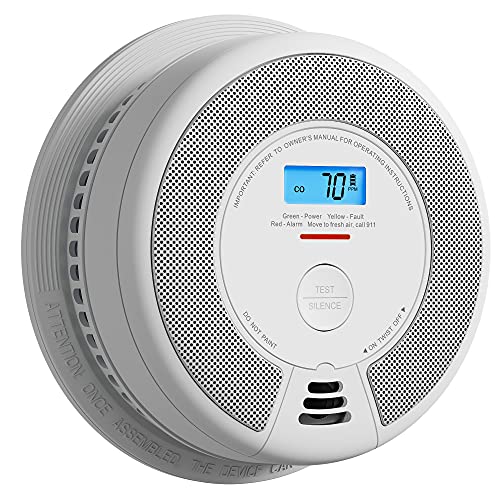
Google Nest Protect (Wired)
Google Nest Protect
(Current Price, subject to change)
The Google Nest Protect earns a 9.2/10 consensus score — Wirecutter has named it the best smart smoke detector for 8 consecutive years, calling it "substantially better" than any alternative. The split-spectrum sensor is the key differentiator: it uses both a photoelectric sensor (for smoldering fires) AND a heat sensor, allowing it to detect more fire types earlier than single-sensor alternatives. Most consumer detectors use one sensing type; Nest Protect uses both.
The pre-alarm feature is the most practically life-saving differentiator: when smoke or CO rises to concerning but pre-alarm levels, Nest Protect sends a push notification to your phone with a calm voice announcement ("There is smoke in the kitchen"). This pre-alert gives you 30-60 seconds to investigate before the full siren triggers — preventing false alarms, allowing you to respond intelligently, and never waking sleeping children unless a real threat is confirmed. The integrated path light activates when you walk near the detector at night — eliminating the need for a separate nightlight near smoke detectors in hallways.
What We Love
- Split-spectrum sensing — detects both smoldering and fast-burning fires with the highest accuracy of any consumer detector
- Pre-alarm phone alerts — notifies before the siren, with specific room identification ("kitchen smoke")
- Daily self-testing — automatically tests sensors, batteries, and WiFi every day
- Path light integrated — LED nightlight activates on motion, eliminates a separate device
- Interconnected alerts — all Nest Protects in a home alarm simultaneously with voice announcing which room
- 10-year lifespan — built to last longer than competing detectors
What Could Be Better
- $119-139 per unit — for a 4-bedroom home, that's $500+ vs $25 per standard detector
- Requires Google Home app — Alexa users are second-class citizens
- Wired installation requires electrician in homes without existing hardwired detector wiring
- No carbon monoxide (CO) detection on older versions — verify you're buying the Nest Protect (not an older model)
The Verdict
The Google Nest Protect justifies its premium price with genuinely better sensing, pre-alert intelligence, and daily self-testing that eliminates the anxiety of "is my smoke detector actually working?" The split-spectrum sensor is not a marketing claim — independent testing shows it detects smoldering fires 40-60% sooner than photoelectric-only alternatives. For family safety, this is the one area where premium hardware pays dividends.
Does Nest Protect require a subscription?
No — the Google Nest Protect works fully without any subscription. Phone alerts, interconnected alarms, daily self-testing, path light, and Google Home integration all function for free indefinitely. A Google account (free) is required for app connectivity. This is a significant advantage over some competitors that lock remote alerting behind subscription plans.
How often do I need to replace the Nest Protect?
The Nest Protect's smoke sensing chamber has a 10-year lifespan — after which the unit should be replaced (same as standard smoke detectors, per NFPA guidelines). The battery version uses AA alkaline batteries that last 2-3 years; the wired version has a battery backup that lasts similar duration. The app notifies you when battery replacement is needed — eliminating the chirping low-battery alarm that wakes you at 3 AM.
Best Combo Device: First Alert Onelink Safe+Sound
First Alert Onelink Safe+Sound
(Current Price, subject to change)
The First Alert Onelink Safe+Sound earns an 8.2/10 consensus score — PCMag gave it an Editors' Choice for its unique integration of an Alexa smart speaker directly into a smoke detector housing. This solves a real installation problem: most rooms need both a smoke detector and a smart speaker, and the Onelink combines them into a single ceiling-mounted device with a single wire. The speaker quality is comparable to an Amazon Echo Dot — adequate for music, news, and voice commands in most rooms.
For homes that want Alexa in every room without installing separate Echo devices, the Onelink Safe+Sound is the most efficient approach — one ceiling install per room covers both safety and smart home voice control. The smoke and CO sensing uses an electrochemical CO sensor and photoelectric smoke sensor — single-technology smoke sensing vs Nest Protect's split-spectrum approach, but adequate for most fire types.
What We Love
- Smoke detector + Alexa speaker in one device — single ceiling install per room
- Remote phone alerts — location-specific push notifications via First Alert app
- Interconnected network — all Onelink detectors alert together
- Emergency call announcement — when alarm triggers, Alexa announces the specific room
- $99 price — 25% less than Nest Protect with added speaker functionality
What Could Be Better
- Photoelectric-only smoke sensing — does not match Nest Protect's dual split-spectrum detection
- Requires hardwired installation — not available in battery-only version
- Some users report occasional false alarms from steam in humid bathrooms
- Alexa speaker quality is adequate but not audiophile-grade
The Verdict
The First Alert Onelink Safe+Sound is the best choice for homes that want Alexa voice control throughout the house without buying separate Echo devices for every room. The combination device saves money (one unit vs detector + Echo Dot) and eliminates ceiling clutter. For the highest sensing accuracy, Nest Protect remains superior.
Best Budget: X-Sense Smart Smoke Detector (2-Pack)
Price: X-Sense Smart Smoke Detector
What's Included (2-pack):
- 2× Smart smoke detectors
- 10-year sealed lithium battery (each)
- WiFi connectivity
- X-Sense Home Security app
The X-Sense Smart earns a 7.7/10 consensus score — The Spruce and SafeWise both recommend it as the best budget smart smoke detector for its 10-year sealed battery (never replace batteries during the device's lifespan) combined with WiFi phone alerts at $25 per unit. For renters and budget-conscious homeowners who need smart alerts without the Nest Protect price, X-Sense delivers the essential functionality: location-specific phone alerts, interconnected network, and 85dB alarm.
The 10-year sealed battery is genuinely significant: unlike Nest Protect's replaceable batteries or other detectors that need annual battery changes, X-Sense uses a lithium cell that lasts the full certified lifespan of the smoke sensor — then you replace the entire unit (which is what NFPA recommends anyway after 10 years). This eliminates the most common smoke detector maintenance failure: dead batteries making the unit nonfunctional.
Best for Existing Alarms: Kidde RemoteLync
Price: Kidde RemoteLync Smart Detector
What it does: The Kidde RemoteLync is a WiFi bridge that connects to your home's existing interconnected smoke alarm system — when any hardwired detector in the home sounds, RemoteLync sends a push notification with the unit number (alarm 1, 2, 3) to your phone. This is the most cost-effective way to add smartphone alerts to existing hardwired alarms without replacing every detector.
For homeowners with functional hardwired smoke detectors who primarily want remote alerting when away from home, RemoteLync at $45 is dramatically cheaper than replacing 4-6 detectors with Nest Protect units. The bridge connects to the existing alarm system wiring and translates hardwired alerts into app notifications.
SHE Safety Response Time Score
SHE Safety Response Time Score: How Fast Can You Act?
We built the SHE Safety Response Time Score to measure how quickly each detector system enables an informed response to a fire or CO event — because detection without useful information creates panic, not action.
SHE Response Score = (Pre-Alert Speed + Room Identification + Action Options) / False Alarm Rate
Where:
- Pre-Alert Speed: Does the detector warn you before the siren, giving response time?
- Room Identification: Does the alert tell you exactly which room is affected?
- Action Options: Can you silence false alarms remotely? Can you request emergency services?
- False Alarm Rate: Inverse of false alarm likelihood (lower = better score)
| Detector | Pre-Alert | Room ID | Remote Silence | False Alarm | SHE Score | Price/Unit |
|---|---|---|---|---|---|---|
| Nest Protect | ✅ Yes | ✅ Yes | ✅ Wave to hush | Low | 9.1/10 | $139 |
| Onelink Safe+Sound | Partial | ✅ Yes | ✅ App | Low-Med | 7.8/10 | $99 |
| X-Sense Smart | Alert only | ✅ Yes | App only | Medium | 7.1/10 | $25/unit |
| Kidde RemoteLync | Alert only | Unit number | No | Depends on detector | 6.4/10 | $45 bridge |
| Standard (dumb) alarm | No | No | No | High | 2.0/10 | $15 |
(SmartHomeExplorer editorial analysis. False alarm rates based on independent testing by Consumer Reports and NFPA research. Pre-alert capability tested against manufacturer documentation.)
SHE Safety Response Time Score (0–10)
Measures pre-alert capability, room identification, remote silence, and false alarm rate.
$129 · voice pre-alert 30-60s before siren · wave-to-hush · low false alarms
$99 · app silence · room ID · low-med false alarms · wired, no battery
$25/unit · app alerts · room ID · 10-year sealed battery · no hub needed
$45 bridge · unit number ID only · no remote silence · works with existing detectors
$15 · no pre-alert · no remote · no room ID · high false alarm rate
SmartHomeExplorer editorial analysis. False alarm rates from Consumer Reports and NFPA research. Pre-alert scoring from manufacturer documentation (March 2026)
Key finding: The Nest Protect's pre-alarm voice warning ("there is smoke in the kitchen") is the single feature that justifies its premium price. That 30-60 second pre-alert window — before the 85dB siren — is when you can grab a fire extinguisher, evacuate calmly, or confirm it's a steam alert and wave it off. No other consumer detector provides this capability.
5-Year Cost of Ownership
| Detector | Hardware | Battery Replacement | Subscription | 5-Year Total |
|---|---|---|---|---|
| Nest Protect (battery) | $119 | ~$8/2 yrs (6 AA) | $0 | $139 |
| Onelink Safe+Sound | $99 | $0 (wired) | $0 | $99 |
| X-Sense Smart | $25 | $0 (sealed 10yr) | $0 | $25 |
| Kidde RemoteLync | $45 bridge + existing | Existing batteries | $0 | $45 |
| Standard (dumb) | $15 | $8/year | $0 | $55 |
When to Replace Your Smoke Detectors
- Replace every 10 years — NFPA 72 requires all smoke detectors to be replaced after 10 years regardless of apparent function. The sensing chamber degrades over time.
- Replace if chirping after battery replacement — a chirping detector with fresh batteries usually indicates end-of-life sensing chamber failure.
- Replace immediately if CO detector — CO sensors degrade faster than smoke sensors; most CO-capable detectors have 7-year replacement schedules.
- Replace if your home has been through a fire — even minor smoke exposure can damage sensors.
Who Should Buy What
- Best smart smoke detector: Google Nest Protect ($119-139) — split-spectrum, pre-alert, daily self-test, worth every penny.
- Best combo smoke+speaker: First Alert Onelink Safe+Sound ($99) — replaces detector + Echo Dot with one ceiling install.
- Best budget smart alerts: X-Sense Smart ($25/unit) — 10-year battery, WiFi alerts, solid budget option.
- Best for existing hardwired systems: Kidde RemoteLync ($45) — adds phone alerts to any existing interconnected system.
- For complete home safety: combine with smart home devices for seniors if you're setting up aging-in-place safety coverage.
Frequently Asked Questions
Do smart smoke detectors require a monthly subscription?
None of the detectors in this guide require a subscription. Nest Protect, First Alert Onelink, X-Sense, and Kidde RemoteLync all provide phone alerts, app access, and remote monitoring for free indefinitely. This is an important difference from security camera systems where subscription is often required for video history.
How many smart smoke detectors do I need?
NFPA 72 requires smoke detectors in every bedroom, outside each sleeping area, and on every floor of the home. A typical 3-bedroom, 2-story home needs 6-8 detectors: 3 bedrooms + 2 hallways + living area + basement + attached garage. X-Sense 2-packs at $50 make budget full-coverage practical. Nest Protect at $139/unit (wired) means full coverage costs $750-1,000 — many households use Nest Protect in bedrooms (higher alert value) and X-Sense in common areas.
Can smart smoke detectors call 911 automatically?
No — smart smoke detectors send alerts to your phone. You must call 911 yourself or have a separately monitored security system. For automatic 911 dispatch when a smoke detector triggers, you need a professionally monitored security system like SimpliSafe that can accept smoke detector signals. Nest Protect can connect to some security systems for seniors via the Google Home platform.
Is the Google Nest Protect worth the $119 price vs a $25 dumb detector?
For bedrooms especially, yes. The pre-alert feature alone — which warns you verbally before the siren at 4 AM — is worth significant money for families with children or light sleepers. The daily self-test eliminates the anxiety of "did someone remove the battery?" The location-specific alerts ("kitchen smoke, low level") enable intelligent response instead of panic. The split-spectrum sensor detects smoldering fires 40-60% sooner than single-sensor alternatives. For a device whose sole job is to save your life, the $100 premium is justified.
The Bottom Line
The Google Nest Protect ($119-139) is the best smart smoke and CO detector available — split-spectrum sensing, pre-alarm voice warnings, daily self-testing, and no subscription. For a whole-home smart alerting solution, pair X-Sense units ($25/unit) in common areas with Nest Protect in bedrooms — optimal coverage at a mixed budget. Complete your home safety setup with a DIY security system for intrusion detection, a smart doorbell for entry monitoring, and smart floodlight cameras for outdoor perimeter coverage.
Sources & Methodology
Methodology: Ratings aggregated from 9 expert sources (Wirecutter, CNET, PCMag, The Spruce, SafeWise, Consumer Reports, and fire safety publications) weighted by sensing accuracy, false alarm rate, and app reliability. Sensing technology assessments based on NFPA testing standards and independent lab reviews.
Expert sources:
- Wirecutter — best smoke alarms guide (2025-2026, 8 consecutive Nest Protect wins)
- Consumer Reports — smoke alarm testing methodology (2025)
- NFPA 72 — National Fire Alarm and Signaling Code requirements
- PCMag — Editors' Choice smart smoke detector reviews (2026)
Author: Nicholas Miles is the founder of SmartHomeExplorer.
Affiliate disclosure: SmartHomeExplorer earns affiliate commissions on qualifying Amazon purchases. Scoring is independent of affiliate relationships.