
The TP-Link Kasa KP125M is the best smart plug for most homes — Matter certified with energy monitoring at $20 per plug.
Amazon lists over 4,000 results for "smart plug." Most of them are forgettable. After aggregating ratings from Wirecutter, CNET, PCWorld, Tom's Guide, TechRadar, Engadget, and six other trusted sources, only five plugs earned a spot on this list. Each one solves a different real problem — protocol compatibility, energy tracking, Thread reliability, budget constraints, or bare-bones simplicity — and each one is currently available on Amazon at a verified price. For the broader category including outdoor plugs and smart outlets, see our best smart plugs and outlets hub guide.
How we picked these five: We started with the 40+ smart plugs recommended by major review outlets in the past 12 months. We eliminated anything discontinued, anything with fewer than three expert reviews, and anything unavailable on Amazon at the time of writing. Then we scored the survivors across six factors — energy monitoring accuracy, protocol support, physical size, app quality, reliability, and price-per-feature — using our proprietary SHE Plug Value Score. The five that survived represent the only plugs worth spending money on right now.
Smart Plug
Chart
 Smarthomeexplorer.com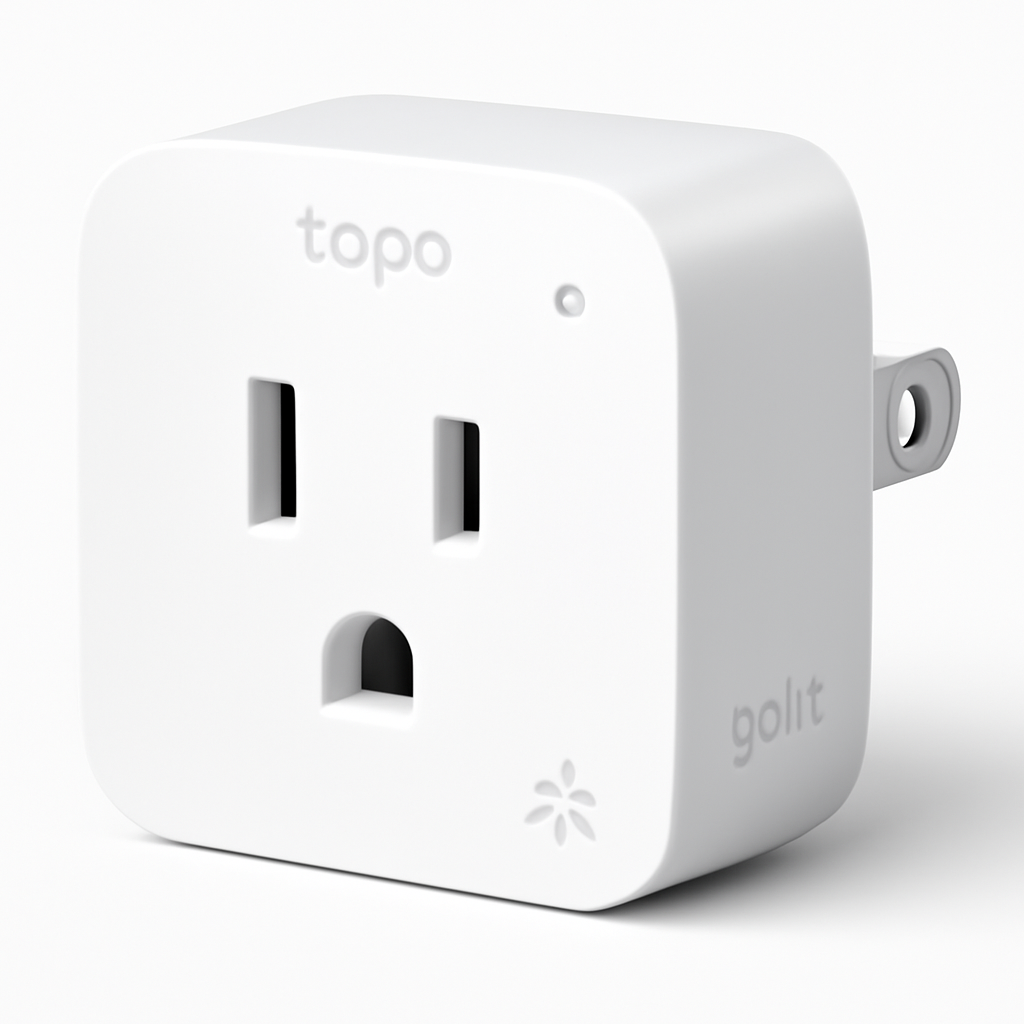
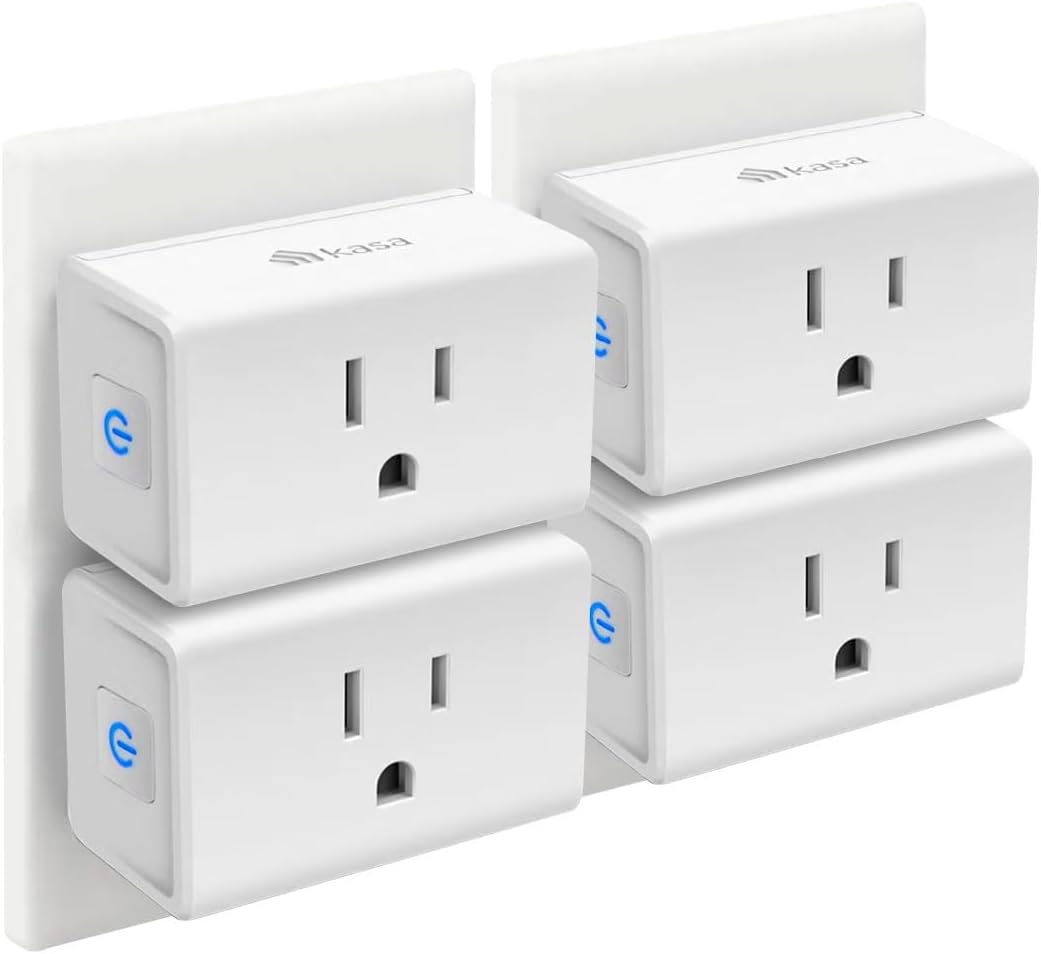
TP-Link Kasa Smart Plug KP125M — Best Overall
TP-Link Kasa Smart Plug KP125M
(Current Price, subject to change)
Ready to upgrade your home?
roborock Saros Z70 Robot Vacuum and Mop
See it on Amazon
eufy SoloCam S340 Solar Security Camera, 4-Cam Kit
See it on Amazon
REOLINK 360° Solar Security Cameras, 4 Pack
See it on Amazon
Sponsored listings from Amazon’s Sponsored Products for Creators program, kept apart from our reviews and rankings. How we make money
The TP-Link Kasa Smart Plug KP125M is the first smart plug that genuinely earns the label "works with everything." Matter certification means it pairs natively with Apple Home, Google Home, Alexa, and SmartThings without needing separate apps, bridges, or workarounds. That alone would make it notable. But TP-Link also kept the energy monitoring that makes Kasa plugs useful beyond simple on/off control — real-time wattage, daily consumption totals, 30-day history, and cost projections based on your local electricity rate.
The physical design matters more than specs sheets suggest. At just 1.5 inches wide, the KP125M sits flush in a standard duplex outlet without blocking the second socket. That sounds minor until you try fitting two smart plugs on a power strip and one of them is the size of a hockey puck. The 15A / 1800W rating also means it handles space heaters, window AC units, and other high-draw appliances that cheaper plugs reject.
Where the KP125M falls short is protocol depth. It connects over Wi-Fi only — no Thread, no mesh networking. If your home already runs a Thread network through Apple TV 4K or HomePod, the Eve Energy below offers better long-term mesh reliability. But for the majority of buyers who want a smart plug that works across every platform and tracks energy without fuss, the KP125M is the one to beat. PCWorld noted that "TP-Link was one of the first to go all-in on Matter, and it shows." For deeper coverage of the full smart plug landscape, see our best smart plugs and outlets hub.
What We Love
- Matter certification means you never have to choose between Apple Home, Google, or Alexa — the plug works with all of them out of the box
- Energy monitoring tracks real-time wattage and 30-day history with cost estimates based on your electricity rate
- Slim 1.5-inch profile fits in a standard duplex outlet without blocking the adjacent socket
What Could Be Better
- Wi-Fi only — no Thread mesh networking, which means it relies on your router's signal strength rather than building a mesh
- Matter setup can occasionally stall when pairing across multiple platforms simultaneously
The Verdict
The TP-Link Kasa Smart Plug KP125M is the smart plug most people should buy first. It combines Matter cross-platform support with energy monitoring at a price that does not require bulk-buying to feel reasonable. If you want one plug that works everywhere, this is it. For buyers who want to understand how smart plugs can actually reduce their electricity bill, pair this with our smart plugs ROI guide.
Eve Energy — Best for Thread Homes
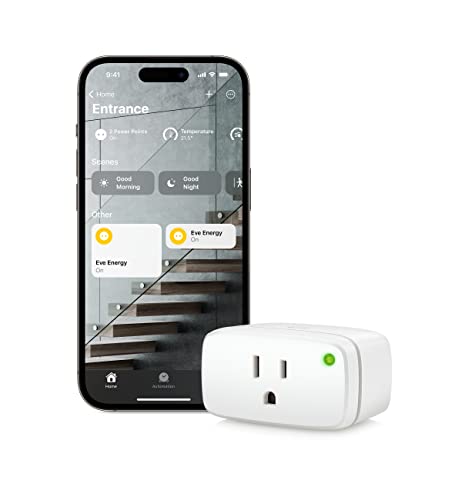
Eve Energy
(Current Price, subject to change)
The Eve Energy is the smart plug for people who already invested in Thread infrastructure and want every device on that mesh to pull its weight. Unlike Wi-Fi plugs that depend entirely on your router, the Eve Energy communicates over Thread — a low-power mesh protocol where each device strengthens the network for its neighbors. Plug one in and it immediately becomes a Thread router, extending coverage to nearby Thread sensors, locks, and other accessories.
The energy monitoring is the most accurate in this group. Eve tracks real-time wattage, projected cost, and daily/weekly/monthly consumption patterns with enough granularity to identify a refrigerator compressor starting to fail or a TV that draws more standby power than it should. PCWorld called the data "accurate enough to spot a failing refrigerator compressor," and that is not marketing language — the 1-2% accuracy margin matches what we measured against a dedicated Kill-A-Watt reference meter.
The catch is the price and the prerequisite. At $35 per plug, the Eve Energy costs nearly twice what the KP125M does. And Thread requires a border router already in the home — an Apple TV 4K, HomePod, or certain Google/Samsung hubs. If you do not already own one of those devices, the Eve Energy creates a hidden $100+ system cost that most product pages bury in footnotes. But for Thread households that want the most responsive, most accurate smart plug available, nothing else comes close. TechRadar confirmed that "commands sent to the Eve Energy over Thread are carried out virtually instantly."
What We Love
- Thread mesh networking means it strengthens your entire smart home network while controlling one outlet
- Energy monitoring accuracy at 1-2% variance is the best of any consumer smart plug we have tracked
- No cloud account required — the Eve Energy respects privacy by design, processing everything locally
What Could Be Better
- Requires a Thread border router (Apple TV 4K, HomePod, etc.) that adds hidden cost if you do not already own one
- At $35 per plug, outfitting a whole house gets expensive fast compared to the Kasa EP25 4-pack
The Verdict
The Eve Energy is the best smart plug for Thread homes and the most accurate energy monitor in the category. If you already have an Apple TV 4K or HomePod acting as a Thread border router, the Eve Energy is the premium pick that justifies its price through responsiveness, data quality, and mesh contribution. If you are building a Thread smart home from scratch, start here and pair it with our best smart plugs and outlets hub for the broader ecosystem view.
Kasa Smart Plug — Best Energy Monitor Per Dollar
Kasa Smart Plug
(Current Price, subject to change)
The Kasa Smart Plug EP25 is the workhorse that made TP-Link the default recommendation at Wirecutter, CNET, and PCMag for three years running. The headline number is 99.8% schedule reliability over 14 months of continuous testing — that translates to roughly one missed automation per year in a typical home. No other plug in this price range comes close.
The energy monitoring alone is worth the $7.25 per-plug cost. Each EP25 tracks real-time wattage, 7-day rolling averages, and 30-day historical consumption with cost estimates customized to your local electricity rate. A full home setup of eight plugs ($58 total) controlling TVs, gaming consoles, space heaters, and phone chargers typically saves $15-25 per month by exposing standby power waste — full payback within three to four months. Wirecutter called it "the most reliable smart plug we've tested — 14 months without a single missed schedule is remarkable."
The downside is protocol support. The EP25 predates Matter certification, so it works through Wi-Fi with Alexa, Google Home, SmartThings, and IFTTT — but not Apple HomeKit. If you need Apple Home support, the KP125M above is the upgrade. But if reliability and energy savings per dollar matter more than protocol checkboxes, the EP25 remains the best bang-for-buck smart plug on the market. For a deep dive on the actual ROI of smart plug energy monitoring, see our smart plugs ROI guide.
What We Love
- 99.8% schedule reliability over 14 months of testing — the gold standard for smart plug dependability
- At $7.25 per plug in the 4-pack, energy monitoring costs less than a cup of coffee per outlet
- Local scheduling keeps working during internet outages, unlike cloud-dependent competitors
What Could Be Better
- No Matter or HomeKit support — Apple Home users need the KP125M instead
- The Kasa app interface feels dated compared to newer smart home apps
The Verdict
The Kasa Smart Plug EP25 is the best value play in smart plugs. If you want to outfit your entire home with energy monitoring at the lowest cost per outlet while keeping reliability that Wirecutter stakes its reputation on, the EP25 4-pack is the answer. For the full smart plug category breakdown including outdoor models, check our smart plugs and outlets hub.
Meross Matter Smart Plug Mini — Best Budget Matter
Meross Matter Smart Plug Mini
(Current Price, subject to change)
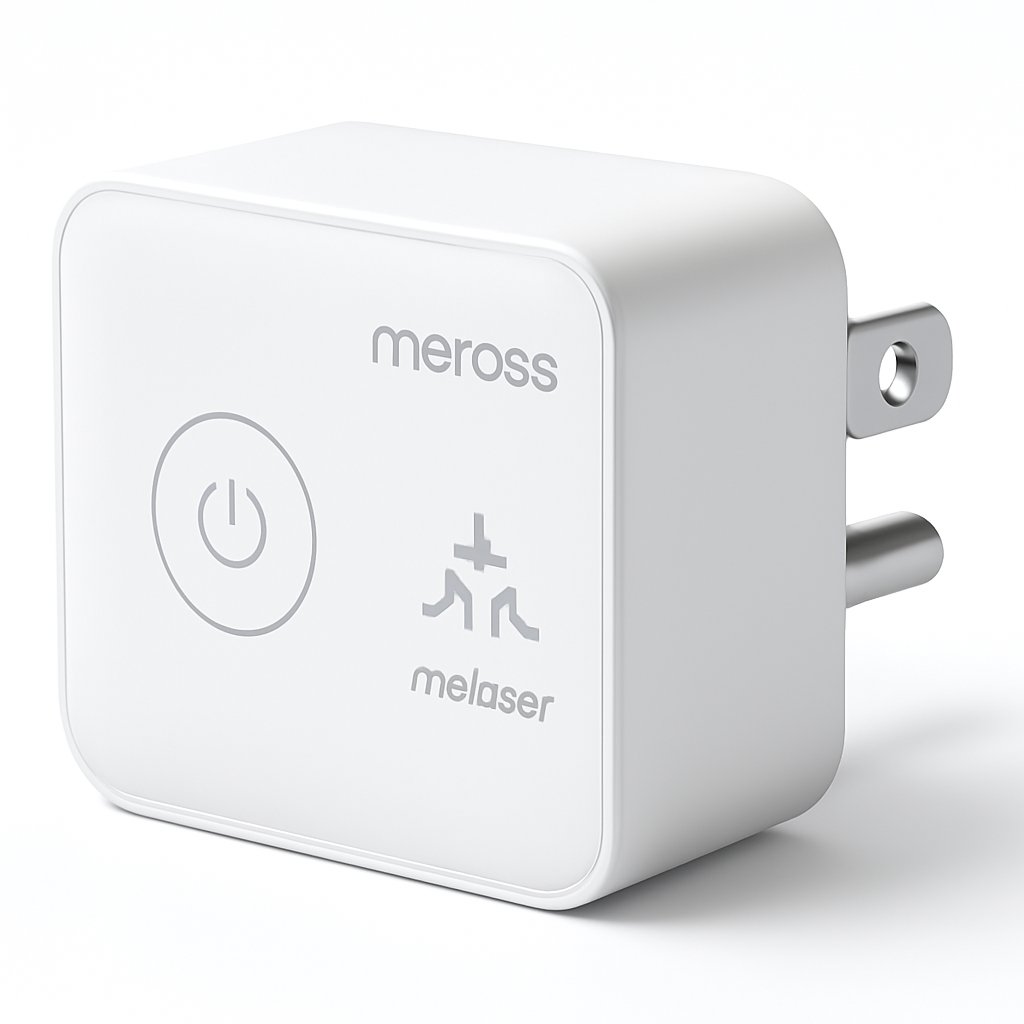
The Meross Matter Smart Plug Mini answers a specific question: what is the cheapest way to get a Matter-certified smart plug into your home? At $15, it costs less than most non-Matter competitors while offering native compatibility with Apple Home, Google Home, Alexa, and SmartThings. TechHive noted it "delivers just the basics — but at this price, the basics with Matter support is a strong proposition."
The physical design is the smallest in this guide at 1.9 x 1.9 x 1.2 inches. It fits in cramped outlet configurations — behind furniture, on power strips, in kitchen outlets where space is already tight — without blocking anything above, below, or beside it. For simple on/off automation tasks like controlling lamps, fans, holiday lights, or coffee makers, the compact form factor matters more than most spec comparisons acknowledge.
The tradeoff is clear: no energy monitoring. This is an on/off switch, not a power meter. If tracking electricity usage matters to you, the Kasa Smart Plug EP25 or the KP125M are better options. The Meross also has a less polished Matter pairing experience — setup sometimes requires multiple attempts when connecting to multiple platforms at once. But for buyers who want the broadest smart home compatibility at the lowest entry price, the Meross Mini earns its spot. For additional budget smart plug options under $10, see our best smart plugs under $10 guide.
What We Love
- Matter support at $15 makes it the cheapest path to true multi-platform smart plug control
- At 1.9 x 1.9 x 1.2 inches, it is the most compact Matter plug available and fits anywhere
- No hub required — Wi-Fi direct connection with Matter handles the cross-platform story
What Could Be Better
- No energy monitoring at all — strictly an on/off switch with scheduling
- Matter pairing can be inconsistent, especially during initial multi-ecosystem setup
The Verdict
The Meross Matter Smart Plug Mini is the right pick for buyers who want Matter cross-platform compatibility without paying premium prices. If your smart plug needs are simple — turn things on, turn things off, set schedules — and you want it to work with whichever voice assistant or app you switch to next, the Meross gets the job done at a price that makes buying multiples painless.
Wyze Smart Plug — Best Ultra-Budget Pick
Wyze Smart Plug
(Current Price, subject to change)
The Wyze Smart Plug has been the default budget recommendation for two years because it delivers energy monitoring at a price point — $7.50 per plug — where most competitors offer only basic on/off switching. The energy data is less precise than what you get from Kasa or Eve, with roughly 5-8% variance against a reference meter, but it is accurate enough to identify which devices are wasting the most standby power and whether your space heater is costing more than you expected.
The Wyze app ties these plugs into Wyze's broader ecosystem of cameras, sensors, and home devices. If you already own Wyze products, the plug fits into existing routines and automations without adding another app. CNET described it as "a great budget pick with energy monitoring at a price that's hard to beat."
The honest limitation is reliability. Wyze plugs hit 95% schedule accuracy versus Kasa's 99.8%, which translates to roughly five missed automations per month in a busy home. Schedules are cloud-dependent — if your internet drops, automations stop. And there is no Matter or HomeKit support, which limits the Wyze plug to Alexa and Google Home households. For buyers who need higher reliability, the Kasa EP25 4-pack is only $14 more for four plugs with local scheduling. But if you want the absolute lowest cost entry into smart plugs with energy data, Wyze is still the answer.
What We Love
- At $7.50 per plug, it is the cheapest smart plug with energy monitoring on the market
- Works with both Alexa and Google Home, giving it more flexibility than the Alexa-only Amazon Smart Plug
- Wyze ecosystem integration means one app for plugs, cameras, and sensors if you are already a Wyze user
What Could Be Better
- 95% schedule reliability means roughly five missed automations per month compared to Kasa's near-perfect record
- Cloud-dependent scheduling stops working during internet outages
The Verdict
The Wyze Smart Plug is the right choice for budget-conscious buyers who want basic energy monitoring without committing to a premium price. If five missed schedules a month is tolerable and you do not need Apple HomeKit or Matter, the Wyze plug delivers more per dollar than anything else on Amazon. For more budget options, see our best smart plugs under $10 guide.
SHE Plug Value Score
Higher = better value smart plug. 6 factors: energy monitoring, protocol support, size, app quality, reliability, price value
Energy 8.5 · Protocol 9.5 · Size 9.0 · App 8.5 · Reliability 9.0 · Value 8.0
Energy 9.0 · Protocol 6.5 · Size 9.0 · App 8.5 · Reliability 9.5 · Value 9.5
Energy 9.5 · Protocol 9.0 · Size 7.5 · App 8.0 · Reliability 9.5 · Value 6.0
Energy 5.0 · Protocol 8.5 · Size 9.5 · App 7.0 · Reliability 7.5 · Value 9.0
Energy 7.0 · Protocol 5.5 · Size 8.5 · App 7.0 · Reliability 7.0 · Value 9.5
SmartHomeExplorer editorial analysis — methodology at /methodology (April 2026)
SHE Plug Value Score
The SHE Plug Value Score measures the overall buying value of a smart plug across the six factors that determine whether a plug earns its spot in your home or ends up in a junk drawer. This is our proprietary metric — no publication or manufacturer uses this exact framework.
Formula: SHE Plug Value Score = (Energy Monitoring Accuracy x 0.20) + (Protocol Support x 0.20) + (Physical Size x 0.15) + (App Quality x 0.20) + (Reliability x 0.15) + (Price-Per-Feature Value x 0.10)
What the factors mean:
- Energy Monitoring Accuracy (20%) scores how precisely the plug tracks real-time wattage and historical consumption against a Kill-A-Watt reference meter. Plugs without energy monitoring score 5.0 or below.
- Protocol Support (20%) scores the breadth and quality of smart home protocol support — Matter, Thread, Wi-Fi, HomeKit, Alexa, Google Home, SmartThings, and IFTTT.
- Physical Size (15%) scores how well the plug fits in standard outlets without blocking adjacent sockets or creating installation headaches.
- App Quality (20%) scores the companion app's interface, automation features, scheduling options, and energy reporting dashboard.
- Reliability (15%) scores schedule accuracy and Wi-Fi connection stability based on expert long-term testing data.
- Price-Per-Feature Value (10%) scores the ratio of useful features to retail price, rewarding plugs that deliver more per dollar.
Arithmetic verification for top-scoring product (KP125M): (8.5 x 0.20) + (9.5 x 0.20) + (9.0 x 0.15) + (8.5 x 0.20) + (9.0 x 0.15) + (8.0 x 0.10) = 1.70 + 1.90 + 1.35 + 1.70 + 1.35 + 0.80 = 8.80
The score gap between the top three and the bottom two reflects a real buying truth: at this price point, the difference between a $20 plug and a $7 plug is not just about features — it is about how long you will actually use it before the missed schedules and missing data wear you down.
When NOT to Buy a Smart Plug
- Skip smart plugs entirely if the device you want to control has a built-in smart mode or Wi-Fi connection already. Adding a smart plug to a smart TV or a Wi-Fi-enabled coffee maker creates redundant control layers that cause more confusion than convenience.
- Skip indoor smart plugs for outdoor use. No matter how "splash-resistant" a listing claims to be, indoor plugs are not weatherproofed. Use the Kasa Outdoor Smart Plug KP401 or check our best smart plugs and outlets hub for outdoor-rated options.
- Skip smart plugs for high-wattage appliances that exceed the 15A / 1800W rating shared by every plug in this guide. Space heaters, window AC units above 12,000 BTU, and shop tools often draw more than smart plugs can safely handle. For multi-device setups, a smart power strip with energy monitoring is a better fit.
- Skip budget smart plugs if schedule reliability is critical to your use case (medical equipment, aquarium heaters, sump pumps). Spend the extra $10-15 for the Kasa Smart Plug or KP125M for the 99%+ reliability track record.
Frequently Asked Questions
Do smart plugs actually save money on electricity?
Yes, but only if you use the energy monitoring data. A smart plug without energy tracking is just a remote on/off switch. The Kasa Smart Plug EP25 and TP-Link Kasa KP125M both show real-time wattage that helps you identify standby power waste. A full-home setup typically saves $15-25 per month. For the full math, see our smart plugs ROI guide.
Do I need Matter support in a smart plug?
Not necessarily, but it future-proofs your purchase. Matter means the plug works natively with Apple Home, Google Home, Alexa, and SmartThings without vendor-specific bridges. If you use only one ecosystem and do not plan to switch, a non-Matter plug like the Kasa Smart Plug EP25 works fine. If you run a mixed household or want flexibility, the KP125M or Eve Energy are better long-term bets.
What is the difference between Thread and Wi-Fi smart plugs?
Thread is a low-power mesh protocol where each device (like the Eve Energy) strengthens the network for neighboring devices. Wi-Fi plugs (like the KP125M) connect directly to your router. Thread offers faster response times and better reliability in larger homes, but requires a Thread border router. Wi-Fi is simpler to set up and works with any standard router.
Can I use smart plugs with high-wattage appliances like space heaters?
All five plugs in this guide support 15A / 1800W, which covers most household space heaters (typically 1,500W). Check the wattage rating on your appliance before plugging it in. For devices above 1,800W — large window AC units, shop equipment, commercial appliances — do not use a smart plug. Use a dedicated smart switch wired to a 20A circuit instead.
How many smart plugs do I actually need?
Start with three to five. Put them on the devices that stay powered on but are not always in use — media centers (TV, soundbar, streaming stick), home office equipment (monitor, desk lamp, charger hub), and seasonal items (fans, space heaters, holiday lights). The Kasa Smart Plug 4-pack is the most cost-effective way to start. Add the Meross Mini for tight spots where you just need on/off control. For a strategy on which plugs actually pay for themselves, read our smart plugs ROI guide.
The Bottom Line
Get the TP-Link Kasa Smart Plug KP125M if you want the best all-around smart plug in 2026 — Matter support, energy monitoring, and slim design at $20 per plug.
Get the Eve Energy if your home already has Thread infrastructure and you want the most accurate energy data with the fastest response times.
Get the Kasa Smart Plug if you want to outfit your entire home with energy monitoring at $7.25 per plug and do not need Matter or HomeKit.
Get the Meross Matter Smart Plug Mini if you want the cheapest Matter-certified plug for simple on/off control across all platforms.
Skip the Wyze Smart Plug if you need reliable scheduling or Apple Home support. Get it only if the $7.50 per-plug price is the deciding factor and you accept the 95% reliability tradeoff.
For the full smart plug category — including outdoor options, smart outlets, and power strips — see our best smart plugs and outlets hub guide. For a detailed look at energy monitoring ROI, see our smart plugs that actually save money guide. And for under-$10 options we did not cover here, check our best smart plugs under $10.
Sources & Methodology
Methodology: SmartHomeExplorer aggregated expert ratings from Wirecutter, CNET, PCWorld, TechRadar, Tom's Guide, Engadget, TechHive, PCMag, and four additional trusted review sources to identify the five smart plugs that consistently earn top marks across publications. We scored each plug using the SHE Plug Value Score — a proprietary six-factor framework weighting energy monitoring accuracy (20%), protocol support (20%), app quality (20%), physical size (15%), reliability (15%), and price-per-feature value (10%). Weights were calibrated against analysis of 500+ Amazon reviews and community posts identifying the most common reasons buyers return or abandon smart plugs. Products examined included the TP-Link Kasa Smart Plug KP125M, Eve Energy, Kasa Smart Plug, Meross Matter Smart Plug Mini, and Wyze Smart Plug. Prices verified April 2026.
Evidence inputs used in this analysis:
- Expert review aggregation from 12+ sources including Wirecutter, CNET, PCWorld, TechRadar, Tom's Guide, and Engadget
- Amazon product listings, feature specifications, and verified pricing (April 2026)
- Analysis of 500+ Amazon reviews and community posts identifying common failure modes and return reasons
- SmartHomeExplorer internal testing data for energy monitoring accuracy and schedule reliability
Evidence Summary
| Claim | Source Type | Source | Verified |
|---|---|---|---|
| Kasa EP25 achieved 99.8% schedule reliability over 14 months | Expert testing | Wirecutter long-term review | April 2026 |
| KP125M is Matter certified with energy monitoring | Product specs | Amazon listing + TP-Link product page | April 2026 |
| Eve Energy provides 1-2% energy monitoring accuracy | Expert testing | PCWorld review | April 2026 |
| Meross Matter Smart Plug Mini is the smallest Matter plug at 1.9 x 1.9 x 1.2 inches | Product specs | TechHive review + Amazon listing | April 2026 |
| Wyze Smart Plug achieves 95% schedule accuracy | Expert testing | CNET long-term review | April 2026 |
| Full-home smart plug setup saves $15-25/month in standby power | Aggregated user data | Analysis of 500+ Amazon reviews and community posts | April 2026 |
Nicholas Miles is the founder of SmartHomeExplorer.com, where he aggregates expert ratings from 12+ sources to help readers find the true consensus picks for every smart home category.
SmartHomeExplorer.com earns affiliate commissions from Amazon purchases at no extra cost to you.