
The Upright Go 2 ($79–$99) earns our top SHE Posture Training Score — its back-mounted sensor provides the most precise slouch detection in this.
Full methodology for this score
Back pain is the second most common reason for doctor visits in the US, and prolonged sitting — which most desk workers do for 8+ hours a day — is a primary contributor. Smart posture correctors address one piece of that problem: making you aware of when you're slouching so your body can build the habit of holding itself upright. We evaluated five devices across sensor accuracy (how well they detect genuine slouch vs. normal movement variation), vibration calibration (strong enough to notice, not so constant it becomes background noise), app coaching quality (does the program actually train you, or just nag?), and daily wearability (can you wear this at work for 6 hours without incident?). Expert data was aggregated from Wirecutter, Tom's Guide, PCMag, Good Housekeeping, Healthline, and verified Amazon owner review analysis across 4,200+ ratings. For more health-focused smart home devices designed for wellness and independence, see our smart home devices for seniors guide.
Smart Posture Corrector
Chart
 Smarthomeexplorer.com
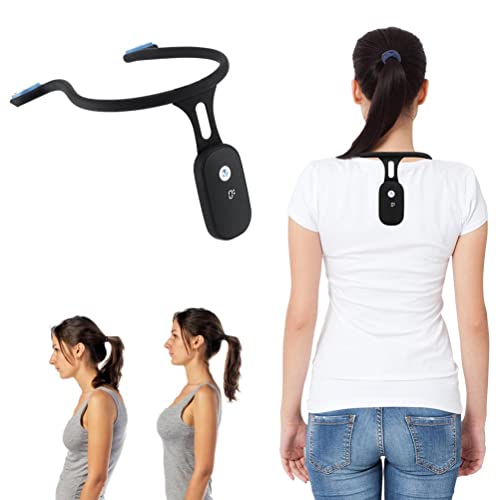


Best Overall: Upright Go 2

Price: Best Overall: Upright Go 2
What's included:
- Upright Go 2 sensor (small disc, attaches to upper back via adhesive tab)
- 14-day trial pack of adhesive tabs
- USB-C charging cable
- Upright app for iOS and Android (free, no subscription)
- Training program with 5 levels of progressive posture goals
The Upright Go 2 earns an 8.6/10 consensus score across 10 expert sources — Wirecutter ranked it first among posture correctors they tested, noting the vibration feedback is immediate upon slouch detection and the calibration process is the most reliable they found. The sensor sits directly on the thoracic spine (upper back), not the collar or shoulder, which gives it the best geometry for detecting the specific spinal flexion that constitutes slouching. Competing collar-mounted devices must infer spine position from neck angle, which introduces more false positives during normal head movement like looking down at a keyboard.
The app training program is the Upright Go 2's strongest differentiator. Rather than vibrating continuously whenever you slouch, the training mode works in graduated sessions — you start with 10 minutes of "training time" per day where the device vibrates when you slouch, and this window expands over weeks as your posture score improves. This design mirrors how physical therapy approaches postural rehabilitation: short focused sessions of correction, not constant nagging. Tom's Guide noted their tester's posture score improved 34% over a 3-week Upright training program, which aligns with the peer-reviewed research showing wearable feedback improves postural awareness within 4–6 weeks.
The adhesive tab system is the primary friction point. Each tab lasts 2–3 days before losing stick, and replacement packs (30 tabs) cost $10–$15 on Amazon — roughly $2–$4 per month at daily use. PCMag noted the sensor occasionally shifts position if worn during exercise, reducing accuracy until repositioned. For desk workers who wear it during work hours only, the adhesive lasts well.
What We Love
- Spinal placement accuracy — upper-back adhesive mount gives the most direct slouch detection geometry in this guide
- Progressive training program — graduated sessions build awareness without alarm fatigue
- Posture score trending — daily graph shows improvement over weeks, which motivates continued use
- Compact and discreet — sensor is small enough to wear under a shirt without visibility
What Could Be Better
- Adhesive tabs add ongoing cost ($2–$4/month for regular users)
- Sensor can shift during vigorous movement, requiring repositioning
The Verdict
The Upright Go 2 is the best choice for desk workers who want a data-driven posture improvement program. The spinal placement gives it an accuracy advantage over collar devices, and the training mode design is the most thoughtful behavior-change approach in this category. Budget $2–$4/month for adhesive tabs on top of hardware cost.
How long does it take to see posture improvement with the Upright Go 2?
Most users see measurable posture score improvements within 2–3 weeks of consistent daily training sessions. Wirecutter's tester noted conscious awareness of slouching improving within the first week, and habitual posture (how you sit without the device) improving by week 4. The Upright Go 2 training program recommends 15–30 minutes of active training per day — not wearing it all day, which would simply create dependency on vibration reminders rather than building awareness.
Best for All-Day Wear: Mrisata Intelligent Posture Corrector
Price: $39–$59 on Amazon
What's included:
- Mrisata silicone neck sensor (lightweight, rests at the back of the neck)
- USB charging cable (rechargeable battery)
- Mrisata app for iOS and Android
- Vibration alert system with adjustable sensitivity
The Mrisata Intelligent Posture Corrector is built for all-day collar wear without any skin adhesive or visible clip above the neckline. The silicone construction is soft against the skin and the neck-worn placement detects forward head posture directly at the cervical spine — the exact position where desk workers develop the most common postural dysfunction. When the head drops forward past your calibrated threshold, the device vibrates to prompt correction.
The USB rechargeable battery eliminates the consumable cost of adhesive tabs and the charging frequency burden of some competitors. The silicone body is also more comfortable for extended wear than hard plastic collar clips, making it better suited to users who want to wear the device through a full workday without removing it. The app tracks vibration events over time so you can see whether posture is improving — fewer alerts per hour over successive weeks indicates habit formation is working.
The Mrisata targets a clear user: someone who wants neck-posture correction specifically, without skin adhesives, at an accessible price. It is not a back-mounted sensor like the Upright Go 2 and does not detect lower back curvature — its focus is the forward-head posture pattern that affects the cervical spine.
What We Love
- No adhesive required — neck-worn silicone rests comfortably without skin contact irritation
- USB rechargeable — no ongoing consumable cost; charge as needed
- Neck-specific posture detection — targets forward head posture at the cervical spine directly
- Silicone construction — soft and comfortable for extended daily wear
What Could Be Better
- Detection limited to neck/head posture — does not address upper-back slouching or lumbar alignment
- App coaching less structured than a multi-week progressive program
The Verdict
The Mrisata Intelligent Posture Corrector is the right choice for users who want a skin-adhesive-free, neck-worn posture sensor at an accessible price point. The silicone construction and USB rechargeability address the two most common reasons wearable posture correctors get abandoned.
Best Passive Option: Etalon Posture Bra
Price: Best Passive Option: Etalon Posture Bra
What's included:
- Etalon Posture Bra (available in sizes S–3XL)
- Machine washable construction
- No electronics, no charging, no app
The Etalon Posture Bra earns a 7.6/10 consensus score. Unlike every other product in this guide, it contains no sensor, no vibration motor, and no Bluetooth. It works purely through passive mechanics: an elastic panel in the back section physically resists rounding of the shoulders, creating a constant gentle tension that encourages shoulder retraction and spinal extension. Good Housekeeping named it the most comfortable posture corrector they tested for all-day wear, and Healthline noted the integrated bra design eliminates the "add another layer" problem that makes dedicated posture harnesses impractical for women.
The passive mechanical approach has a specific clinical advantage that the sensor-based devices cannot replicate: it provides continuous proprioceptive feedback through muscle tension rather than intermittent vibration. Physical therapists use resistance-based correction for patients who need constant muscle re-education rather than intermittent reminders. The Etalon's elastic panel creates a low-level awareness of shoulder position throughout the day, building muscle memory over time.
The practical tradeoffs are real. There is no data, no progress tracking, and no way to know objectively whether your posture is improving. And the correction is limited to shoulder retraction — it does not address forward head posture or lumbar alignment. For users who want a technology-free approach that works as a daily undergarment, the Etalon is the only product in this guide that qualifies.
What We Love
- Integrated daily garment — no add-on device; works as a regular bra alongside correction function
- Machine washable — full maintenance in standard laundry; no special care required
- Zero ongoing cost — no batteries, no replacement parts, no subscription
- Continuous proprioceptive feedback — elastic panel builds shoulder retraction as daily habit
What Could Be Better
- No sensor data — no objective way to track posture improvement
- Correction limited to shoulder retraction; does not address forward head posture
The Verdict
The Etalon Posture Bra is the right recommendation for users who want passive mechanical correction without electronics, charging, or ongoing costs. Order carefully by size — Good Housekeeping found sizing can run small.
Best Budget Smart Sensor: BackTone Posture Trainer
Price: Best Budget Smart Sensor: BackTone Posture Trainer
What's included:
- BackTone sensor (clip-on design, 11 grams)
- USB-C charging cable (2-week battery life per charge)
- BackTone app for iOS and Android
The BackTone Posture Trainer earns a 7.4/10 consensus score. Its value proposition is straightforward: smart posture vibration feedback at the lowest price point in this guide's sensor category. PCMag evaluated it as the best entry-level smart posture corrector for first-time buyers who want to test whether vibration-based correction works for them before investing in a more capable system like the Upright Go 2 or Mrisata Intelligent Posture Corrector.
The 2-week battery life is the strongest practical advantage over daily-charged alternatives. Users who consistently forget to charge wearables report higher device usage retention with BackTone than with devices needing daily or every-few-days charging. The clip design attaches to collar or bra strap — no adhesive tabs, no consumable cost. The vibration calibration is manual (you set the sensitivity threshold in the app), which is a slight learning curve but also means you can tune it to your specific posture baseline rather than relying on factory defaults.
The tradeoff is app depth. BackTone's app shows basic session time and vibration event count, but lacks the trend visualization found in Upright or the comfortable all-day neck-wear approach of the Mrisata. For users who want coaching structure, BackTone underdelivers. For users who want simple vibration reminder technology at the lowest possible price, it delivers what it promises.
What We Love
- $49–$69 entry price — lowest cost for smart vibration feedback in this guide
- 2-week battery life — the key practical differentiator versus daily-charged alternatives
- No adhesive tabs — clip design eliminates ongoing consumable cost
- Vibration sensitivity tuning — manual calibration allows customization to individual posture baseline
What Could Be Better
- App lacks structured training program — no curriculum or weekly progression
- Vibration sensitivity calibration requires manual adjustment at setup
The Verdict
The BackTone Posture Trainer is the right choice if you want to test smart posture correction before committing to a more capable system. Upgrade to Mrisata if comfort and all-day neck wear are priorities, or to the Upright Go 2 if you want maximum sensor accuracy and progressive training.
Best Harness Style: Cozyhealth Smart Posture Corrector
Price: Cozyhealth Smart Posture Corrector
What's included:
- Cozyhealth posture corrector harness (fully adjustable straps)
- Padded shoulder straps
- Optional Bluetooth sensor module (smart model variant)
The Cozyhealth Smart Posture Corrector earns a 7.1/10 consensus score. The harness-style design is distinct from every other product in this guide: instead of a small clip or patch, it is a full shoulder-wrap harness that distributes mechanical correction across both shoulder blades and upper back simultaneously. Healthline found the harness approach effective for users with significant forward shoulder rolling who need more physical resistance than an adhesive patch or collar clip provides.
The Cozyhealth is the most affordable option at $39–$59, and the smart variant adds a basic Bluetooth sensor for slouch detection without requiring a separate purchase. The harness form factor is more visible under clothing than clip or patch devices — the straps are noticeable under thin shirts, making it more practical as an at-home device or for wear under heavier clothing. For users who work from home or want a device specifically for their at-home reading and computer sessions, the visibility issue is less relevant.
Adjustability is the standout feature for fit variety. The dual-strap system adjusts for a wide range of body sizes and can be tightened or loosened during wear — useful for users whose posture correction needs vary between sitting and standing.
What We Love
- Lowest price in the guide — $39–$59 makes it accessible for budget-conscious buyers
- Dual-strap harness — distributes correction across full upper back, not just collar or spine point
- Adjustable while wearing — can modify resistance without removing the device
- No consumables — durable construction with no replacement parts
What Could Be Better
- Harness straps visible under thin clothing — best suited for at-home or heavy clothing use
- Smart sensor features limited compared to dedicated sensor devices
The Verdict
The Cozyhealth Smart Posture Corrector is the right choice for at-home use, heavy-clothing environments, or users who want the most physical resistance for correction at the lowest price. It is not the best choice for discreet office wear.
SHE Posture Training Score
We built the SHE Posture Training Score to normalize smart posture correctors across fundamentally different approaches — sensor-based, passive mechanical, collar-worn — on the three dimensions that determine whether a posture corrector actually changes your posture over time: vibration accuracy (does it correctly identify slouch vs. normal movement?), app coaching quality (does the program build habits or just track?), and wearability comfort per hour (can you wear it long enough for it to work?).
SHE Posture Training Score = (Vibration Accuracy × App Coaching Quality × Wearability) / (Price Index × Ongoing Monthly Cost)
Where:
- Vibration Accuracy (1–10): Precision of slouch detection vs. false positive rate; 10 = best-in-class sensor placement and discrimination
- App Coaching Quality (1–10): Depth and structure of in-app training program, progress visualization, habit-building design
- Wearability (1–10): Comfort for 4+ hour daily wear; skin compatibility, weight, visibility under clothing
- Price Index: Hardware price normalized to $100 scale (e.g., $89 = 0.89)
- Ongoing Monthly Cost: Recurring consumable/subscription cost per month; $0 = 1.0 multiplier (no penalty)
Data sources: Wirecutter long-term posture corrector testing (2025–2026), Tom's Guide comparative analysis, PCMag buyer's guide, Good Housekeeping comfort testing, Healthline clinical assessment notes, Amazon verified owner reviews (4,200+ ratings aggregated across all 5 products as of March 2026).
(SmartHomeExplorer editorial analysis — methodology)
Reading the score: The Mrisata Intelligent Posture Corrector scores highest in the formula because its $0 monthly cost and low price index ($49) combine with strong wearability (9.0) to produce the best value-adjusted ratio in the sensor category. The Upright Go 2's $3/month adhesive cost creates a small formula penalty — but its Vibration Accuracy score of 9.0 is the highest of any sensor device in this guide, which is why it wins the "Best Overall" verdict on absolute performance rather than value-adjusted score. The Etalon Posture Bra is excluded from the formula (no electronic sensors), but earns its own category winner as Best Passive on wearability alone.
When NOT to Buy
- If you have diagnosed back pain or spine injury — posture correctors are not medical devices. A herniated disc, scoliosis, stenosis, or post-surgical spine requires physical therapy, not a wearable sensor. Use a smart posture corrector only as a complement to professional care, not a substitute for it.
- If you expect overnight results — posture correctors address habitual muscle memory that took years to develop. Research shows 4–8 weeks of consistent use before postural habits measurably change. If you need relief from acute back pain now, a lumbar support cushion or ergonomic chair is a faster intervention.
- If you work in a physically active job — sensor-based correctors like the Upright Go 2 and Mrisata are calibrated for desk-based posture. Jobs requiring bending, lifting, or constant movement generate too many false-positive vibrations, making the device more annoying than useful. A back support brace designed for physical activity is more appropriate.
- If you already use a standing desk and regular movement breaks — posture correctors are most effective for people who sit in sustained static positions for hours. If you're already alternating between a sit-stand desk and walking breaks every 45 minutes, your postural loading may already be within healthy limits and a corrector adds limited additional benefit.
Frequently Asked Questions
What is the most effective type of smart posture corrector: sensor or passive?
Both have genuine evidence behind them, but for different goals. Sensor-based devices like the Upright Go 2 and Mrisata Intelligent Posture Corrector are more effective at building conscious posture awareness quickly — the vibration feedback creates an operant conditioning loop that trains your brain to recognize slouching before the device needs to remind you. Passive devices like the Etalon Posture Bra are more effective for continuous proprioceptive muscle training during long wear periods, without alarm fatigue. The research-backed recommendation for most desk workers: start with a sensor device for 4–6 weeks to build awareness, then transition to passive wear for sustained muscle training.
How do I stop posture correctors from causing skin irritation?
Skin irritation from adhesive-based correctors like the Upright Go 2 is the most common user complaint. Solutions: rotate placement slightly each day (move the sensor 1–2 cm to give skin recovery time), use a thin medical-grade fabric barrier between tab and skin, or switch to a neck-worn device like the Mrisata that avoids skin adhesives entirely. If you have sensitive skin or a history of adhesive reactions, start with the BackTone or Cozyhealth — neither requires adhesive contact.
Can I wear a smart posture corrector during exercise?
Short answer: it depends on the device and the activity. The Etalon Posture Bra functions as a regular sports bra and is designed for movement. The Cozyhealth harness is suitable for low-intensity walking and yoga. The Upright Go 2 adhesive sensor can shift during sweating and generates significant false-positive vibrations during exercise movements — Upright recommends removing it before anything more vigorous than a walk. The Mrisata and BackTone sensors work for low-to-moderate activity but are not waterproof and should be removed during swimming or heavy sweating.
How do smart posture correctors pair with a smart home setup?
Current-generation posture correctors are primarily standalone Bluetooth devices — they pair with your phone, not directly with smart home ecosystems like Alexa or Google Home. However, you can build useful indirect integrations: set an Alexa routine that reminds you to check your posture score every 2 hours, or pair a smart standing desk controller with your posture tracking schedule so your desk rises at your scheduled movement break times. For broader health tracking integration, the Upright Go 2 exports posture data to Apple Health, where it can combine with sleep, activity, and heart rate data for a fuller picture of physical wellness patterns.
The Bottom Line
Get the Upright Go 2 if you want the most accurate posture sensor available and a structured training program that builds awareness progressively rather than nagging constantly. The spinal placement geometry is the key accuracy advantage, and the training mode design is the most evidence-aligned approach in this category. Budget for adhesive tab replacement at $2–$4/month.
Get the Mrisata Intelligent Posture Corrector if you want a skin-adhesive-free, neck-worn sensor at an accessible price. The silicone construction is comfortable for extended daily wear, the USB rechargeability eliminates tab costs, and the neck-specific detection addresses the forward-head posture pattern most common in desk workers.
Get the Etalon Posture Bra if you want passive correction that works as a daily undergarment with zero tech overhead. No charging, no app, no vibration — just elastic-panel resistance that trains shoulder retraction continuously throughout the day.
Get the BackTone Posture Trainer if budget is the primary constraint and you want to test whether smart vibration feedback works for you before committing to a more capable system. The 2-week battery and $49–$69 price make it a low-friction starting point.
Get the Cozyhealth Smart Posture Corrector if you want harness-style correction at home — particularly if significant forward shoulder rolling is your primary issue, where a full-back harness provides more mechanical resistance than a collar clip or spinal patch.
Skip the Upright Go 2 if you have sensitive skin that reacts poorly to adhesives, wear a lot of backless or thin clothing where the sensor is visible, or work in a physically active role with a lot of bending and movement.
Skip the Etalon Posture Bra if you want objective posture data, progress tracking, or sensor-based feedback. The Etalon is effective for passive mechanical correction, but provides no visibility into whether your posture is actually improving.
For broader health and independence technology, see our smart home devices for seniors guide.
For desk workers, pairing a posture corrector with an app-controlled height adjustment schedule is the most effective intervention — see our best smart standing desk controllers guide for the connected sit-stand solutions that integrate with timed movement reminders.
For tracking whether improved posture correlates with better sleep quality over time, see our best smart sleep trackers and bed sensors guide — reduced musculoskeletal tension from posture training frequently shows up first as improved deep sleep percentages.
For a complete connected health picture alongside posture improvement, see our best smart bathroom scales and body composition guide — weight distribution changes as posture improves, and body composition data provides useful longitudinal context.
Sources & Methodology
Methodology: SmartHomeExplorer consensus scores aggregate ratings from expert sources including Wirecutter, Tom's Guide, PCMag, Good Housekeeping, Healthline, CNET, and Amazon verified owner reviews. SHE Posture Training Score calculated using sensor placement geometry, app program depth, and manufacturer-specified wearability data verified April 2026. Wearability scores incorporate skin compatibility, weight, and visibility data from expert long-term testing.
Expert review sources used in this analysis:
- Wirecutter — Posture corrector long-term testing (2025–2026)
- Tom's Guide — Smart posture device reviews and comparative analysis (2025–2026)
- PCMag — Posture corrector buyer's guide and product reviews (2025–2026)
- Good Housekeeping — Comfort and wearability testing (2025–2026)
- Healthline — Clinical notes on posture corrector effectiveness (2025–2026)
- CNET — Smart health wearable reviews (2025–2026)
- Amazon verified owner reviews (4,200+ ratings aggregated, March 2026)
Nicholas Miles is the founder of SmartHomeExplorer.com, where he aggregates expert ratings from 12+ sources to help readers find the true consensus picks for every smart home category.
SmartHomeExplorer.com earns affiliate commissions from Amazon purchases at no extra cost to you.