
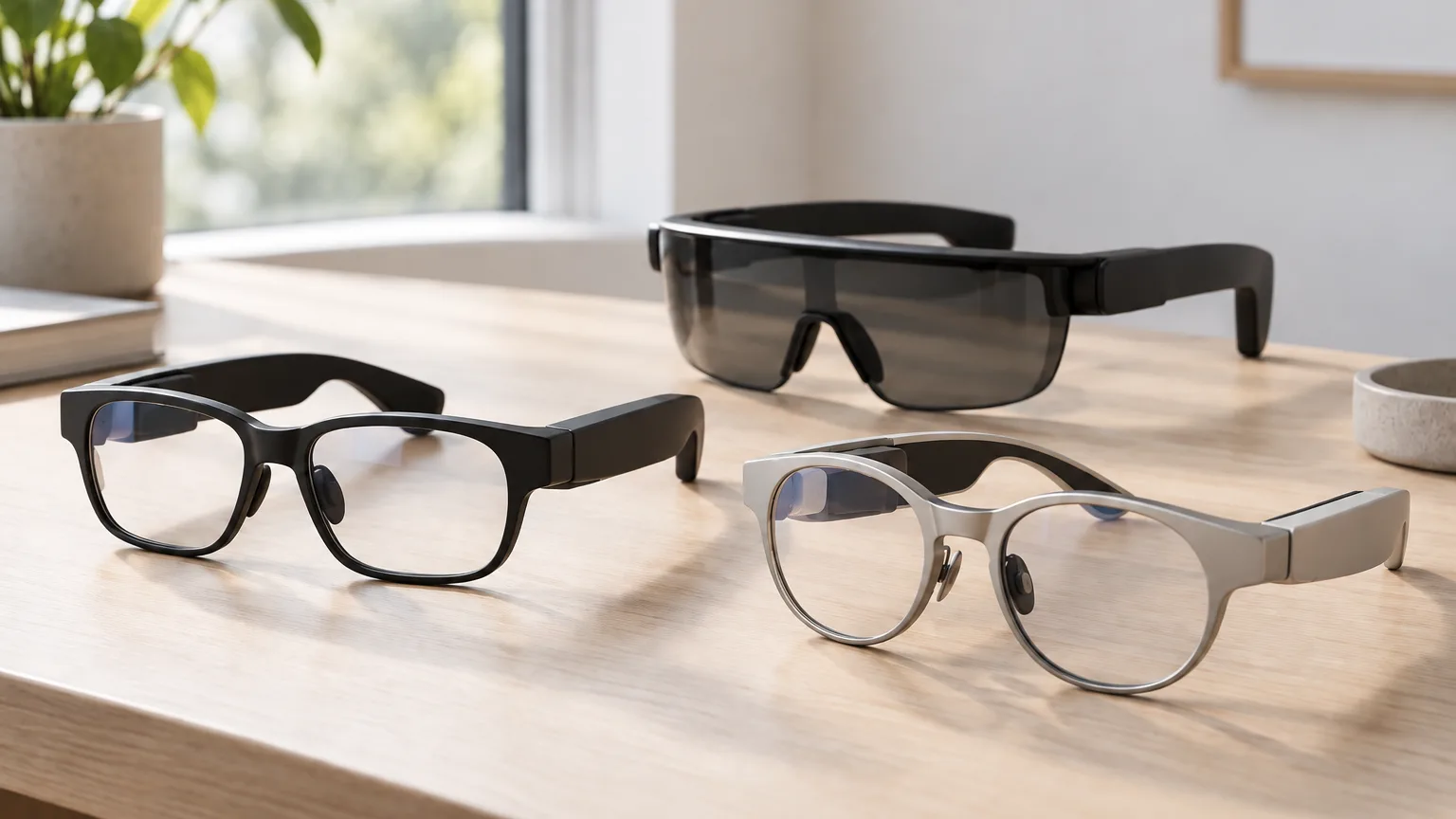
Best Smart Glasses for AI and Big Screens 2026
Three of the four pairs here ship with a cable that ties them to a source device, which undercuts the freedom glasses promise. This guide ranks them on price, onboard chip and wireless link, and the Ray-Ban Meta (Gen 2) Wayfarer AI Glasses lead.
This article contains affiliate links. We may earn a commission at no extra cost to you. Prices change frequently — check the current price on Amazon before buying. Learn more
The Short Answer
The Ray-Ban Meta (Gen 2) Wayfarer AI Glasses top the SHE Smart Glasses Quality Score, combining the lowest price here with an onboard processor and a wireless phone link. The VITURE Luma Pro XR Glasses finish last, lacking an onboard chip and tethered by a proprietary magnetic cable.
Featured in this Guide
Ray-Ban
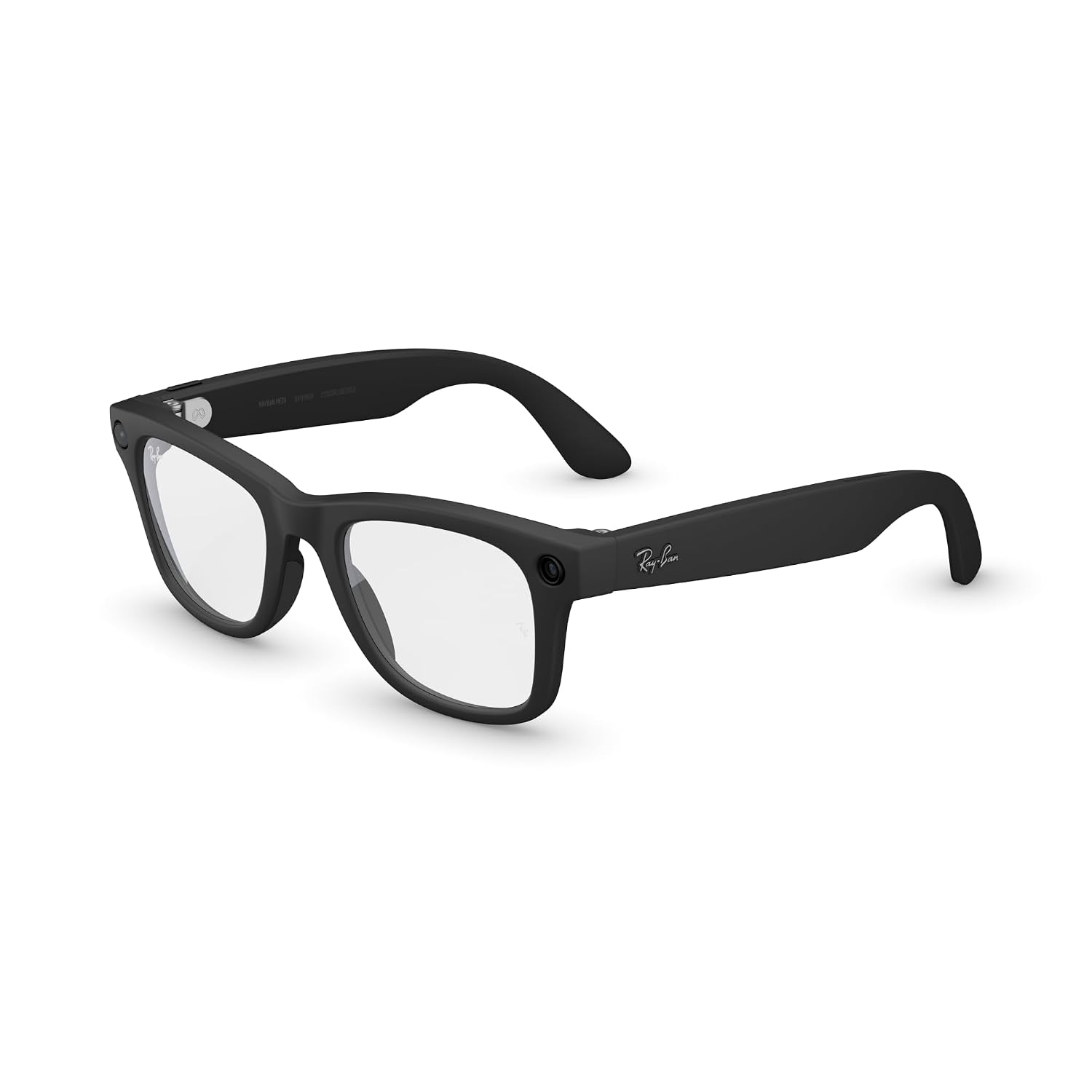
Meta (Gen 2) Wayfarer AI Glasses
- •Lowest price here with a Snapdragon AR1 Gen 1 chip
- •the only pair that links to a phone wirelessly
VITURE
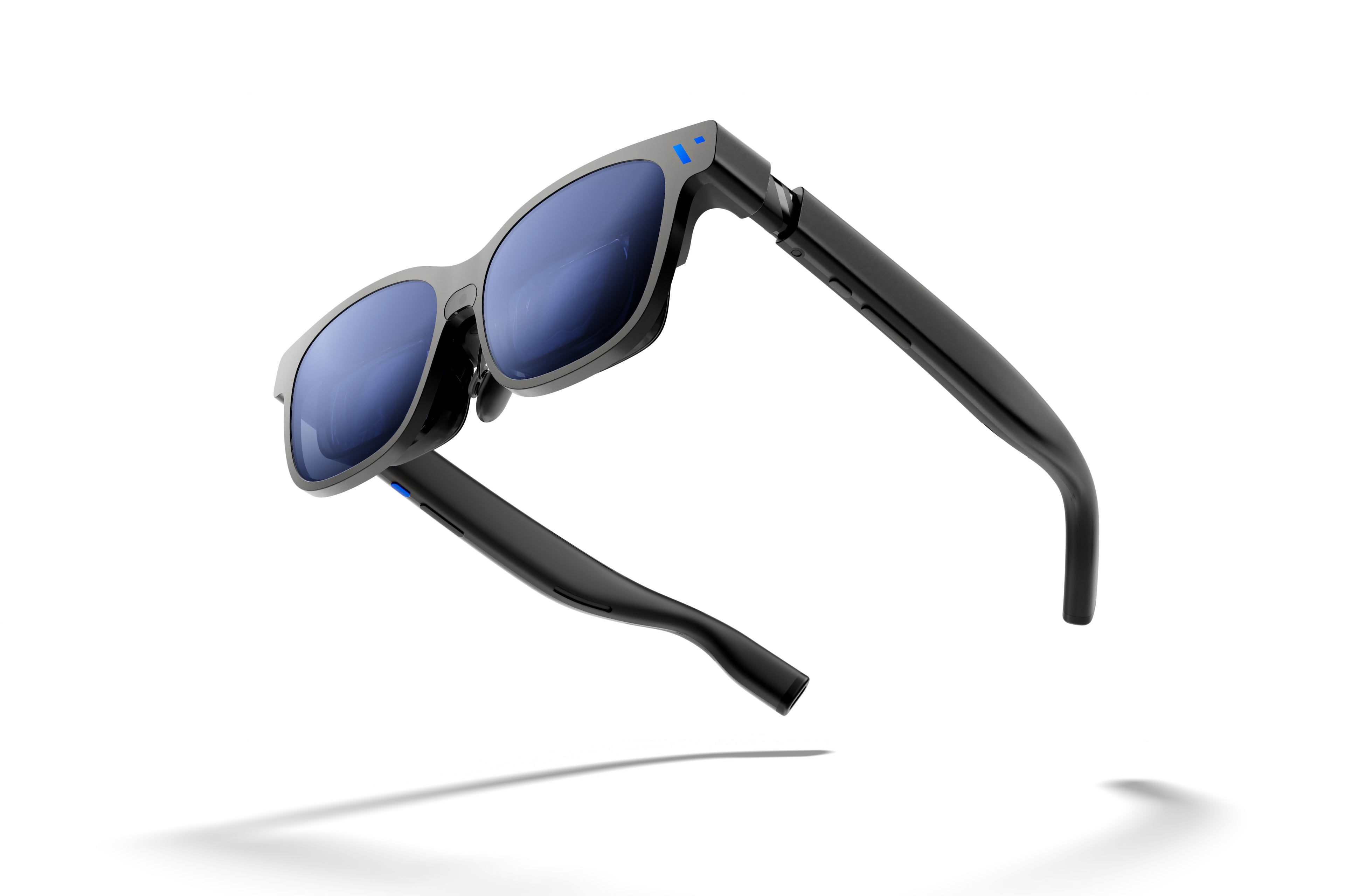
Beast XR Glasses
- •174-inch virtual display across a 58-degree view
- •built-in 3DoF tracking needs no app
XREAL
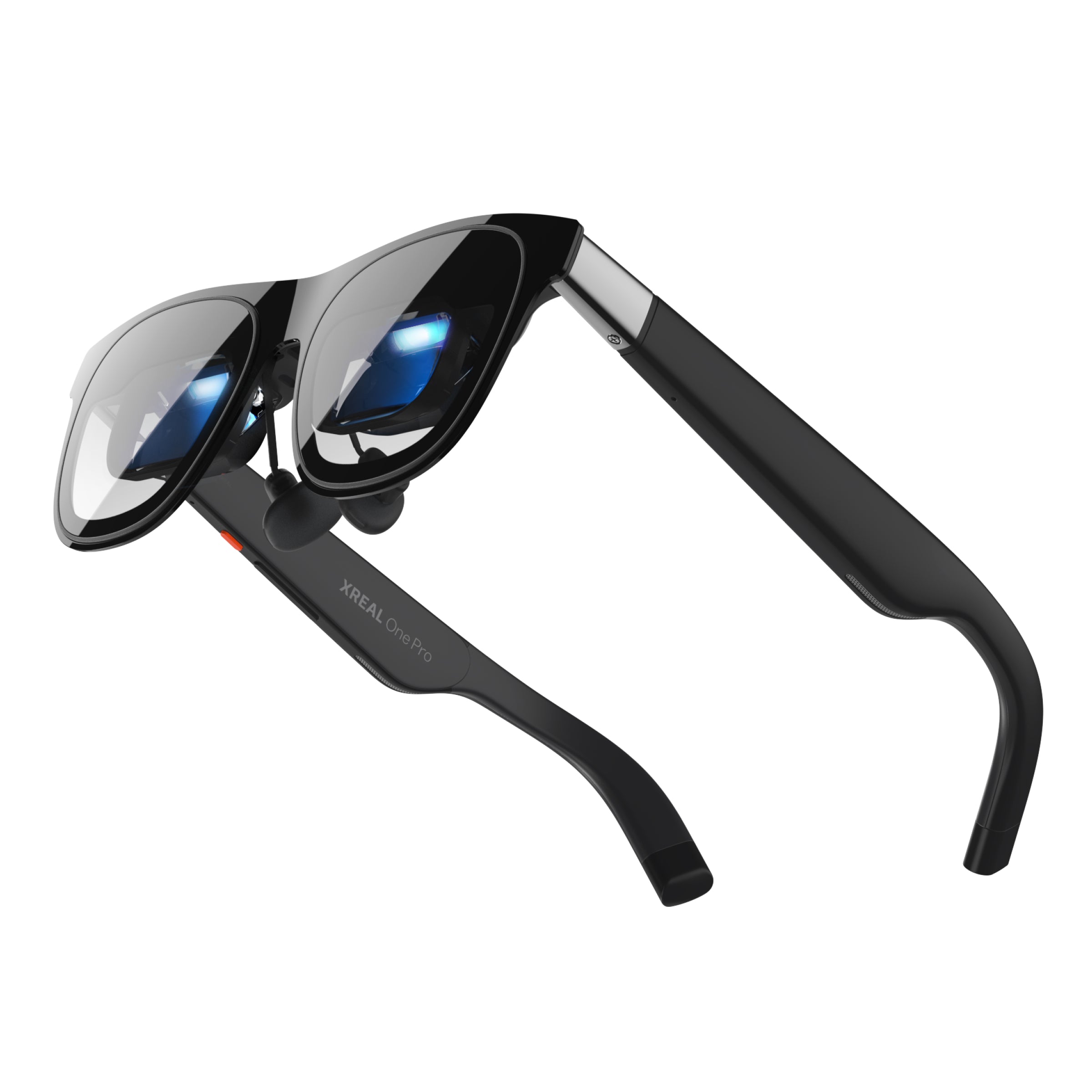
One Pro AR Glasses
- •X1 chip with 3 ms motion-to-photon latency
- •TechRadar measured 700 nits of perceived brightness
VITURE
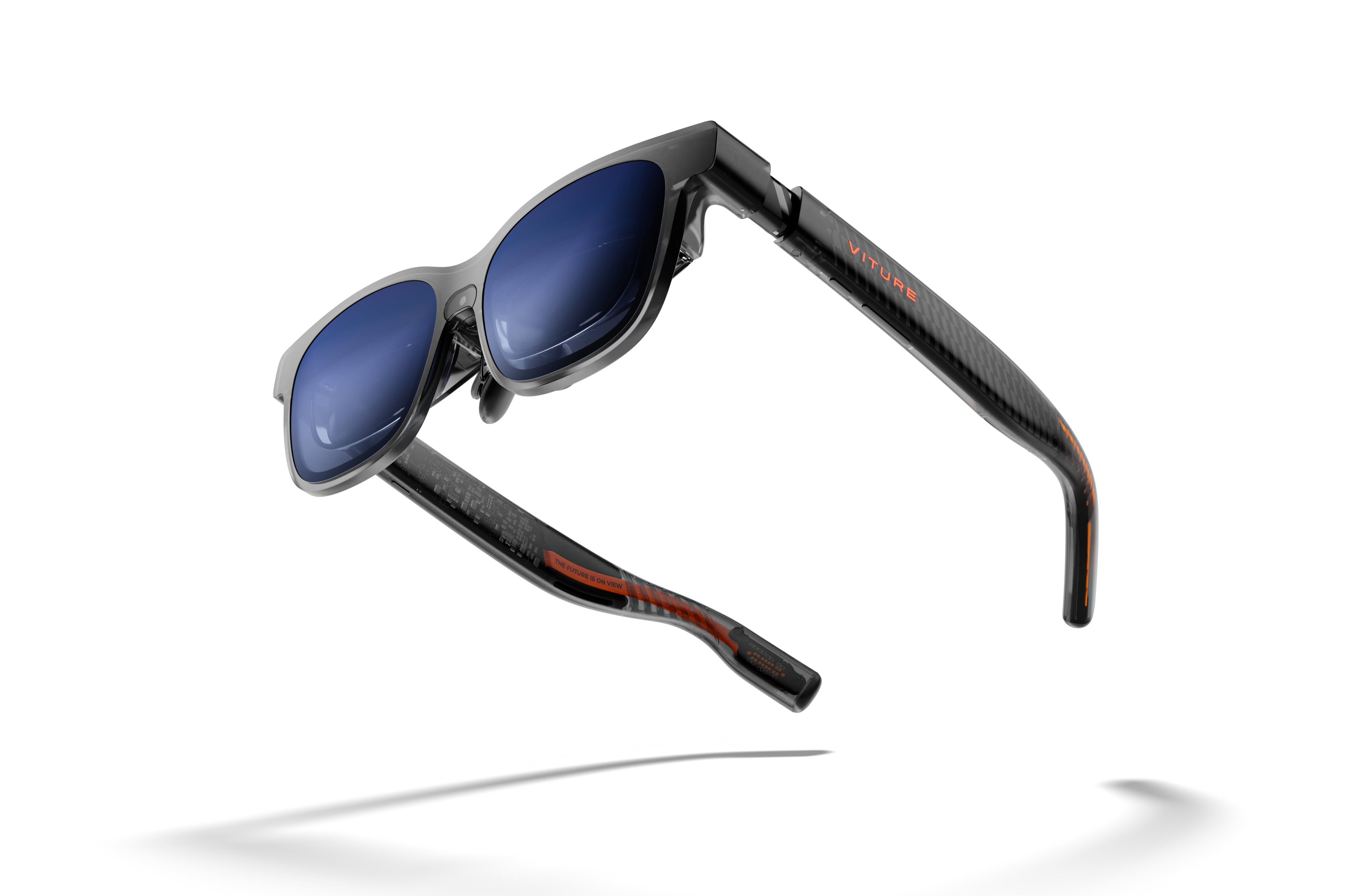
Luma Pro XR Glasses
- •Built-in diopter adjustment up to -4.0D
- •private 152-inch screen at 1000 nits
Head-to-Head: Price, Onboard Chip, Wireless Link and Setup
Wearables
Chart
 Smarthomeexplorer.com
Hyperice Normatec Elite Legs
Check price
Mito Red MitoMEGA 2.0
Check price
Soundcore Sleep A30 by Anker
Check price
Carex Day-Light Elite
Check price
Carex Day-Light Classic Plus
Check price
What the Smart Glasses Score Actually Rewards
The SHE Smart Glasses Quality Score is a weighted formula that rewards three documented attributes: a lower Amazon price, an onboard processing chip and a cable-free wireless link. Price carries 40 percent of the weight, the chip 35 percent and the wireless link 25 percent, and each factor is scaled across the four pairs in this guide. The composite produces a ten-point result, calculated from specifications and outlet reviews read as of September 2026.
The Ray-Ban Meta (Gen 2) Wayfarer AI Glasses rank first, combining the lowest price with a Snapdragon processor and wireless pairing to iOS and Android phones. The VITURE Luma Pro XR Glasses rank last, because a reviewer found no onboard chip and the box supplies a proprietary magnetic cable. The Ray-Ban pair costs less compared to every rival here, and the formula weighs no brightness, audio or comfort measure.
Best Overall Smart Glasses: Ray-Ban Meta (Gen 2) Wayfarer AI Glasses
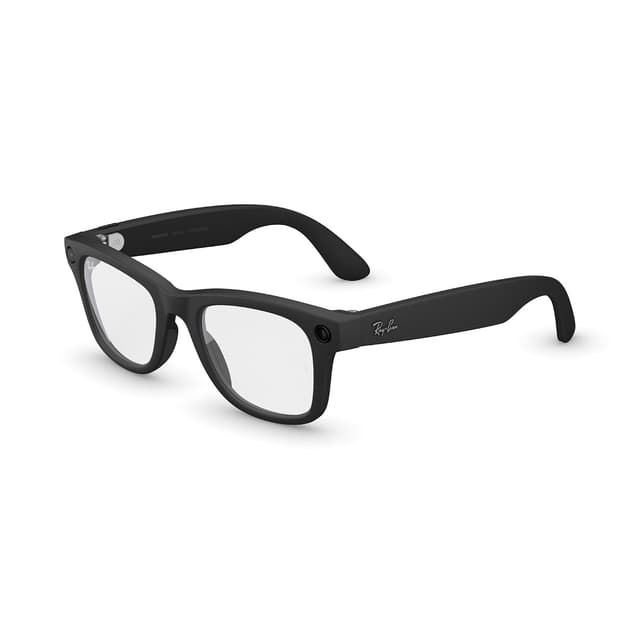
Ray-Ban Meta (Gen 2) Wayfarer AI Glasses
- Lowest price in this guide, with a Snapdragon AR1 Gen 1 chip on board
- No turn-by-turn directions via Meta AI
(Current price, subject to change)
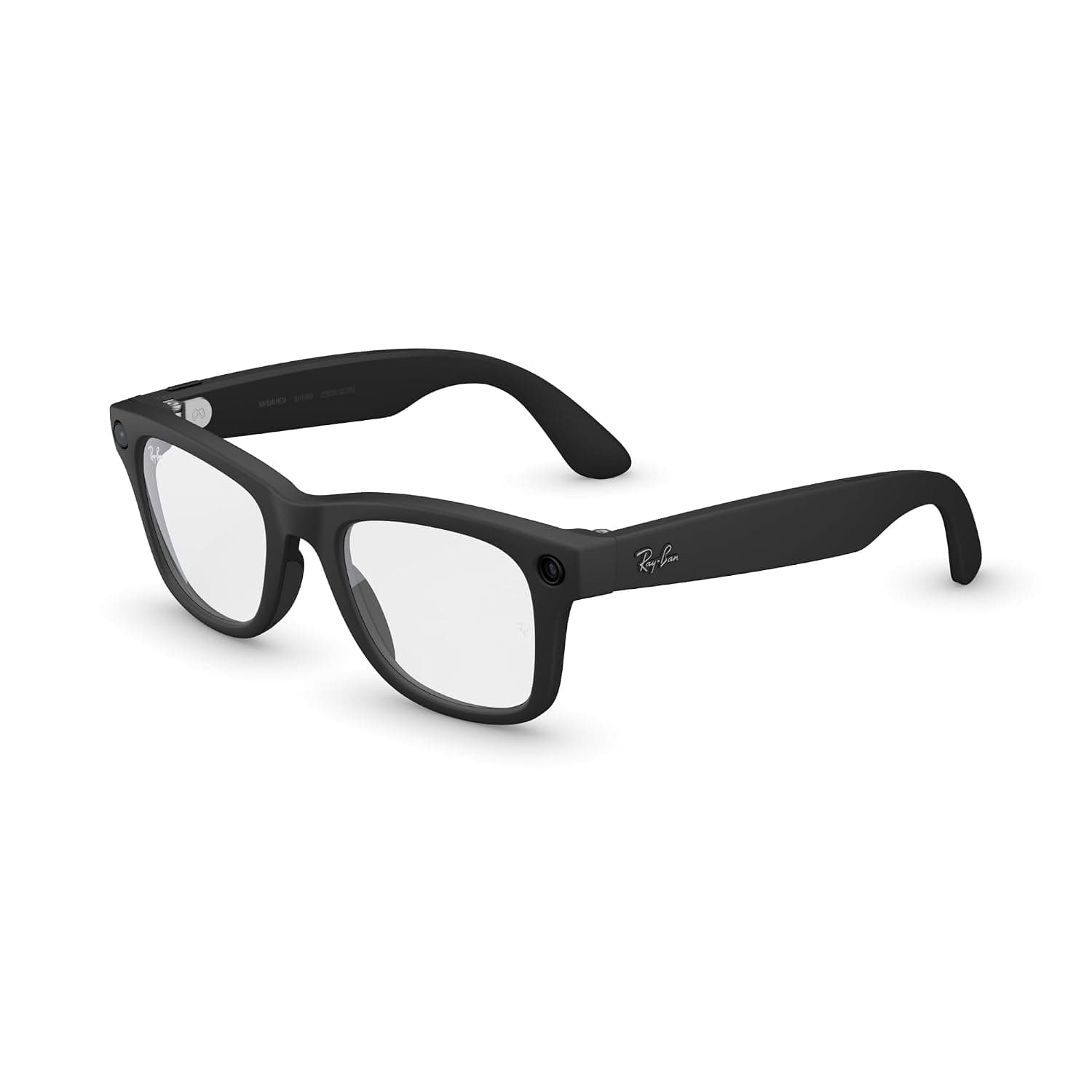
The Ray-Ban Meta (Gen 2) Wayfarer AI Glasses suit everyday wearers who want photography, conversation and assistance without a tethered source device. Their composite of 10.0 on the ten-point SHE Smart Glasses Quality Score reflects the lowest price in this guide, a Qualcomm Snapdragon AR1 Gen 1 chip and wireless connectivity.
Photography is the standout capability, because the camera-equipped Wayfarer frames record 3K Ultra HD video at 30fps from a 12MP sensor, according to Tom's Guide. Meta specifies up to 8 hours of typical use, while Android Central documents a charging case holding 48 hours of reserve and a 50% recharge in 20 mins. The glasses also support interpretation across six languages, which enables conversation in English, French, German, Italian, Portuguese and Spanish.
Compared to their costlier rivals here, the limitations are narrower but genuine, since Tom's Guide notes Meta AI cannot deliver turn-by-turn directions. Android Police adds that photographs are captured exclusively in portrait orientation, with no option to switch orientation.
What We Love
- Lowest price in this guide, with a Snapdragon AR1 Gen 1 chip on board
- Pairs wirelessly with iOS and Android over Wi-Fi 6 and Bluetooth 5.3
- 12MP camera records 3K Ultra HD video at 30fps
- Charging case holds 48 hours of charge and refills the glasses to 50% in 20 minutes
What Could Be Better
- No turn-by-turn directions via Meta AI
- Photos shoot in portrait orientation only
- Prescription lenses only through Meta or Ray-Ban
The Verdict
If you want a camera, open-ear audio and Meta AI without any cable, the Ray-Ban Meta (Gen 2) Wayfarer AI Glasses fits the brief. It also costs the least of the four pairs here, which is what lifts it to the top of the ranking.
Check price for the Ray-Ban Meta (Gen 2) Wayfarer AI Glasses →
Biggest Virtual Screen: VITURE Beast XR Glasses
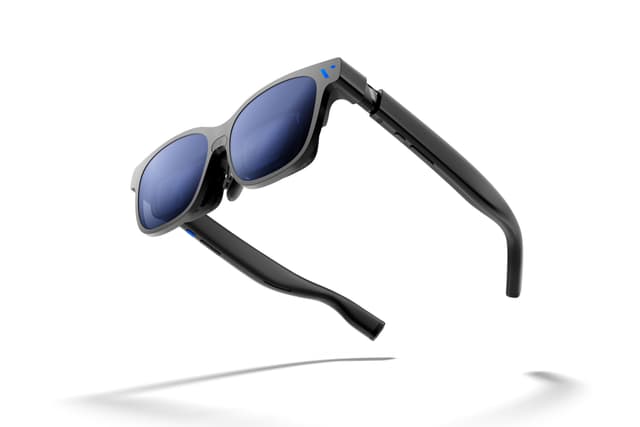
VITURE Beast XR Glasses
- 174-inch virtual screen across a 58-degree field of view
- Weighs 88 g, heavy for display glasses
(Current price, subject to change)
The VITURE Beast XR Glasses particularly suit viewers who prioritize the largest documented virtual display here, and Tom's Guide considers them the best AR glasses money can buy. Their composite of 4.4 on the ten-point SHE Smart Glasses Quality Score reflects a dedicated spatial computing chip, counterbalanced by the second-highest price and an included tethering cable.
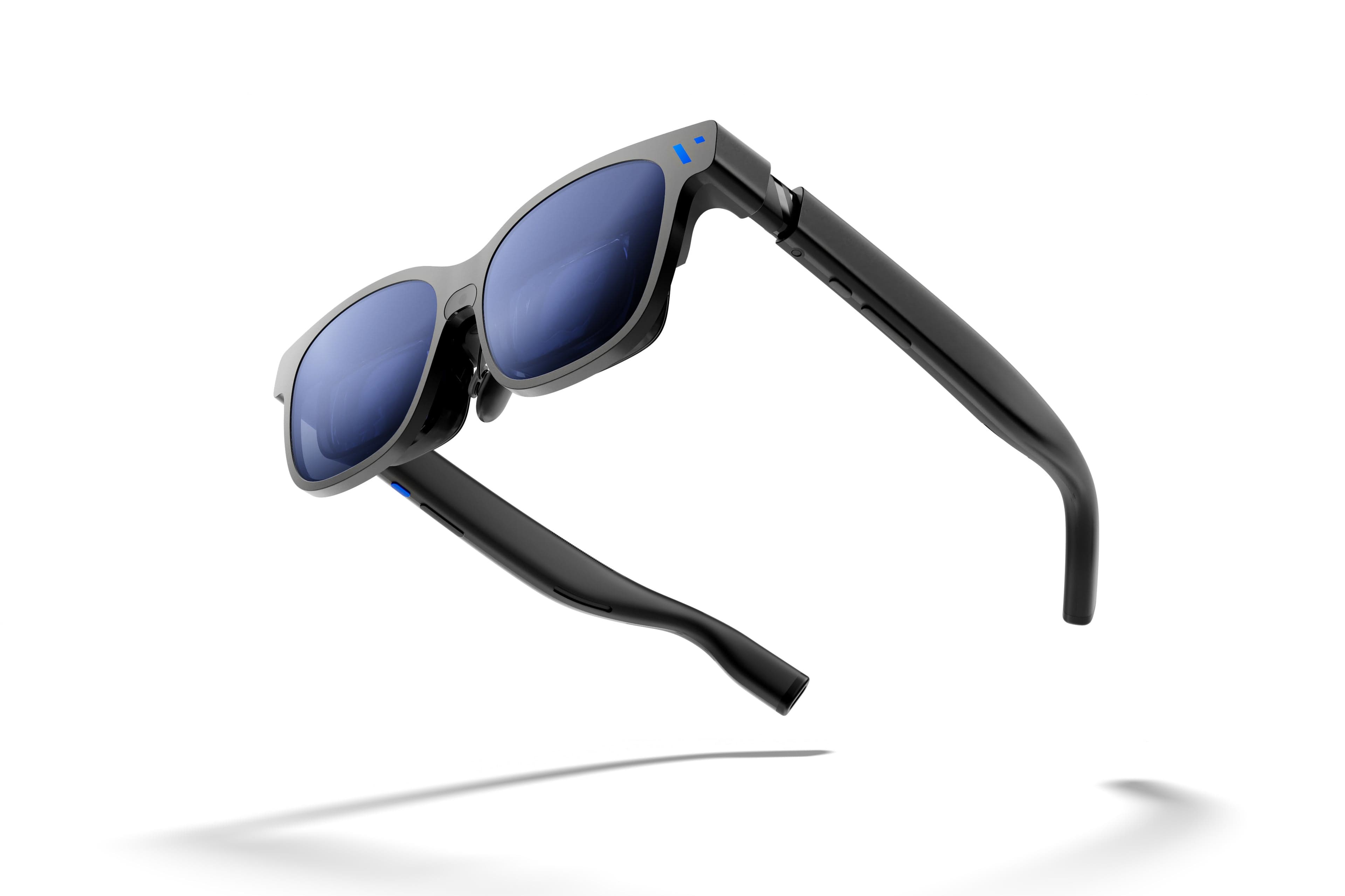
The 58-degree VITURE display glasses project a 174-inch virtual screen, which AR Compare characterizes as the widest field of view available in consumer XR glasses. Its Sony Micro-OLED display is rated at 1250 nits, and integrated VisionPair tracking enables a stationary, locked screen without any additional application or adapter. GameRevolution's reviewer comfortably wore them for 2 to 3 hours at a time, while VITURE recommends approximately 3 to 4 hours per viewing session.
Versus the XREAL One Pro AR Glasses at 87 g, the Beast weighs 88 grams, which AR Compare considers comparatively heavy for display glasses. Gaming Nexus additionally reported 1920x1080 output at launch pending a firmware update, and Impulse Gamer found peripheral HUD elements blurry enough to make HUD-heavy games eye-straining.
What We Love
- 174-inch virtual screen across a 58-degree field of view
- Sony Micro-OLED display rated at up to 1,250 nits
- Built-in VisionPair 3DoF tracking needs no app or adapter
- Standard USB-C connection replaces VITURE's old magnetic plug
What Could Be Better
- Weighs 88 g, heavy for display glasses
- No built-in myopia diopter adjustment
- Blurry HUD edges, per Impulse Gamer
The Verdict
When the biggest virtual screen matters most, the VITURE Beast XR Glasses lines up with what you actually need. Plan on a USB-C cable to your source device, and budget for prescription lenses if you need them.
Best for Low-Latency Viewing: XREAL One Pro AR Glasses
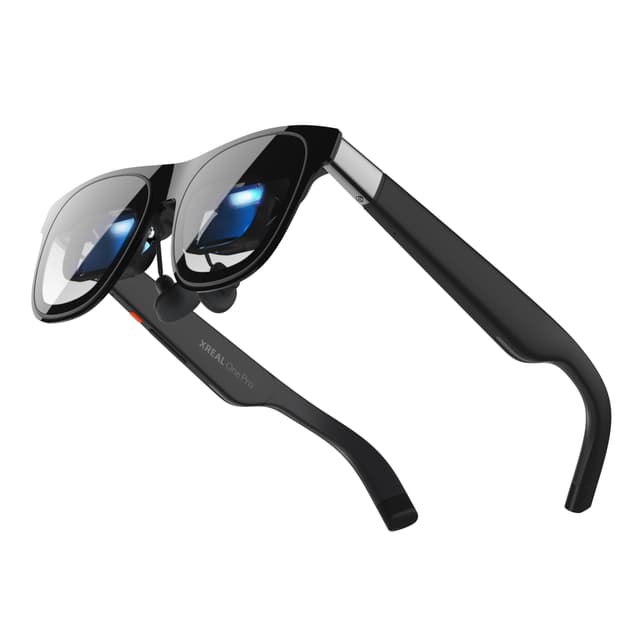
XREAL One Pro AR Glasses
- X1 spatial computing chip with 3 ms motion-to-photon latency
- No multi-monitor support, per Windows Central
(Current price, subject to change)
The XREAL One Pro AR Glasses suit entertainment-focused viewers, and TechRadar rated them the best AR smart glasses for entertainment, praising the Bose audio and full-HD image. Their composite of 3.5 on the ten-point SHE Smart Glasses Quality Score reflects the X1 spatial computing chip, pulled down by the highest price and an included tethering cable.
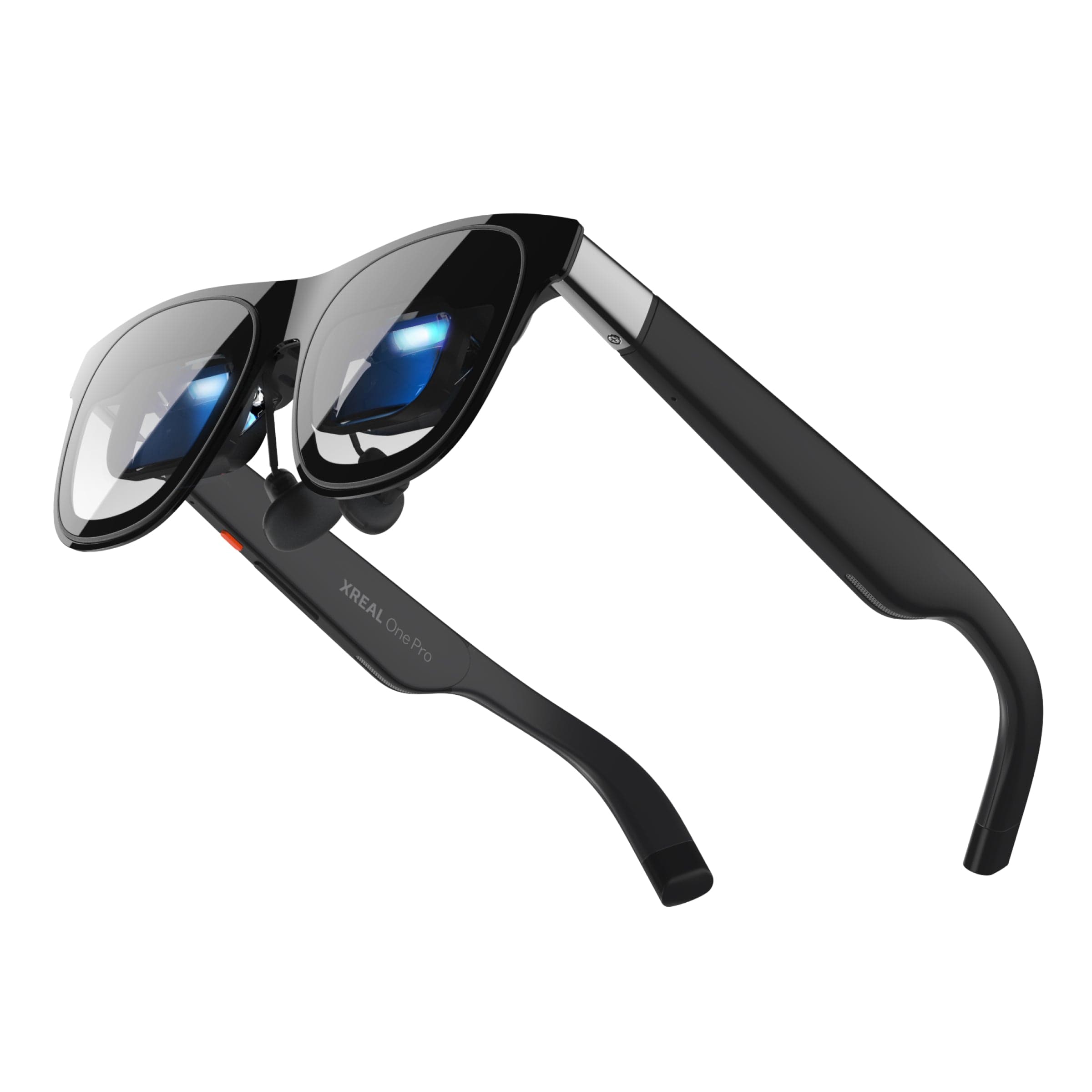
The X1 chip inside the XREAL One Pro display glasses delivers 3ms motion-to-photon latency, and TechRadar measured 700 nits of perceived brightness. Tom's Guide reports that fringing and edge blur are completely gone, while XREAL specifies a 57-degree field of view and native 3DoF anchoring without extra applications.
Windows Central criticizes the absence of hardware IPD or myopia adjustment and the inability to run multiple virtual displays, versus multi-screen support on the VITURE Luma Pro XR Glasses. Buyers must also choose between two eye-spacing sizes and order prescription lenses separately for the empty frame.
What We Love
- X1 spatial computing chip with 3 ms motion-to-photon latency
- TechRadar measured 700 nits of perceived brightness
- Tom's Guide found fringing and edge blur completely gone
- Sound chamber tuned by Bose engineers
What Could Be Better
- No multi-monitor support, per Windows Central
- Prescription frame ships without lenses
- Must pick one of two IPD sizes
The Verdict
For low-latency gaming and film on a USB-C device, the XREAL One Pro AR Glasses is a sensible pick for that setup. It ships in two IPD sizes, so choose the right one before ordering.
Best Built-In Myopia Adjustment: VITURE Luma Pro XR Glasses
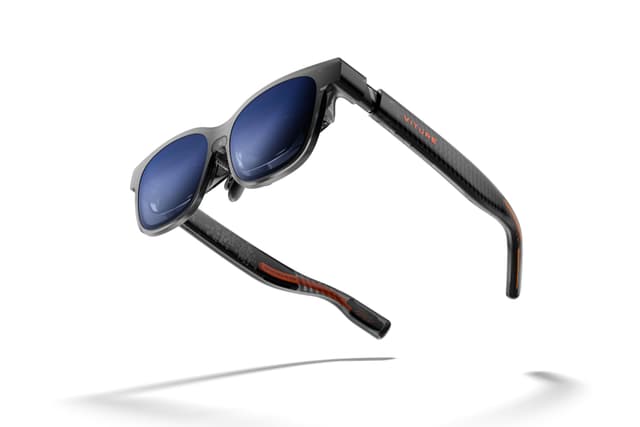
VITURE Luma Pro XR Glasses
- Private 152-inch screen at 1200p and 1000 nits
- Quiet audio, per Tom's Guide
(Current price, subject to change)
The VITURE Luma Pro XR Glasses particularly suit nearsighted viewers wanting a bright, private display, and Tom's Guide characterizes them as a sizable step forward in image quality. Their composite of 1.8 on the ten-point SHE Smart Glasses Quality Score reflects a relatively affordable price, counterbalanced by no onboard processing chip and a proprietary magnetic cable.
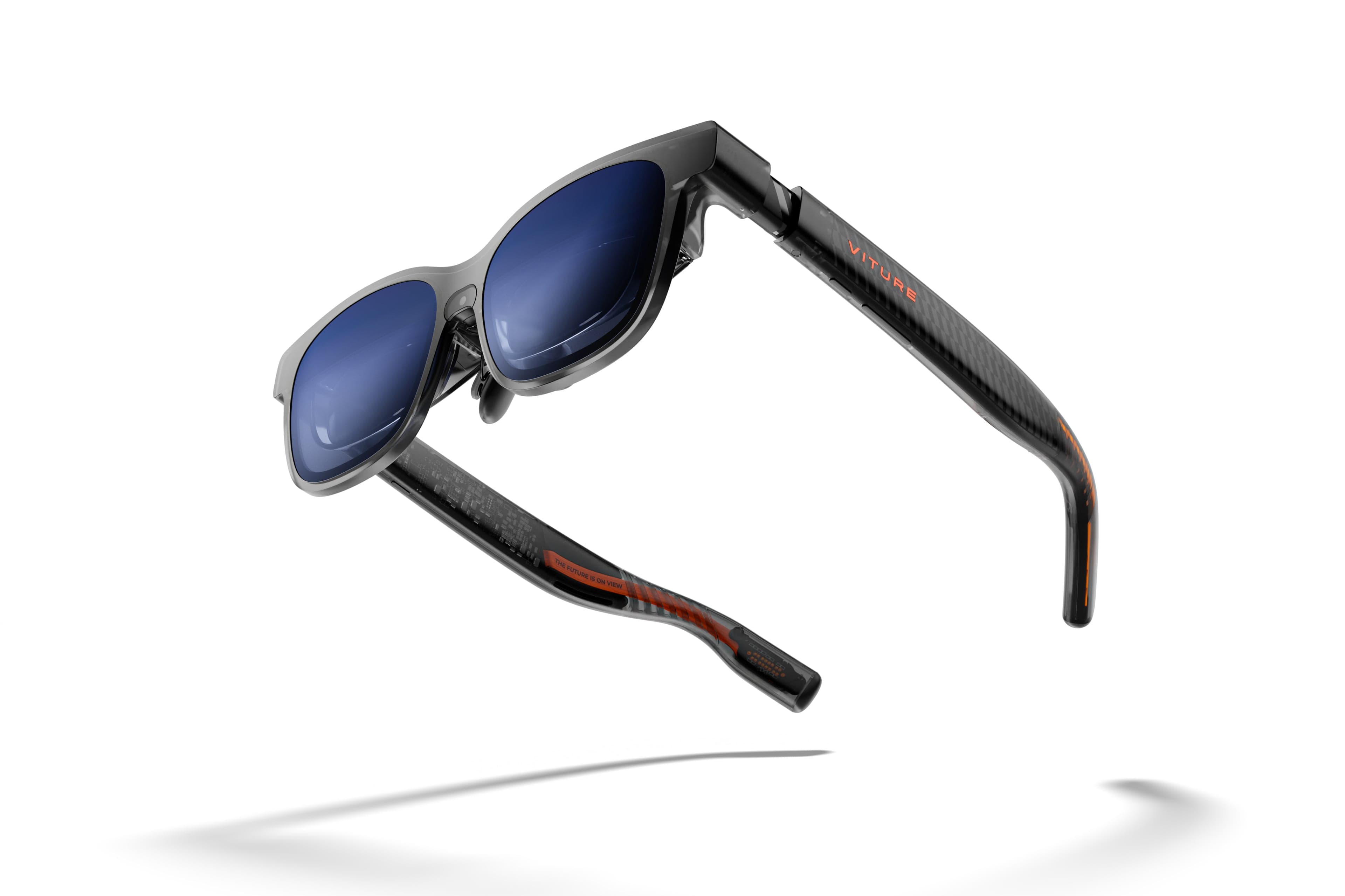
VITURE specifies a private 152-inch virtual screen at 1200p and 1000 nits, and the integrated myopia diopter adjustment accommodates nearsighted wearers without a separate prescription purchase. Android Authority explains that the wider 52-degree field of view, increased from 46 degrees previously, necessitates a narrower myopia correction range than earlier VITURE models offered. Its electrochromic lenses transition between tint levels in 0.1 seconds, while VITURE recommends approximately 3 to 4 hours of wear per viewing session.
Tom's Guide and Android Authority both criticize its quiet audio, and Android Authority additionally identifies absent hardware-based head tracking. AndroidGuys documents a narrow eyebox, a consequence of the wider field of view, which prevents some wearers from focusing the entire virtual screen. On weight, AR Compare lists it at 79 g compared to 84 g for the XREAL One, a model outside this guide.
What We Love
- Private 152-inch screen at 1200p and 1000 nits
- Built-in myopia adjustment up to -4.0D
- Magnetic breakaway cable pops off if snagged
- Weighs 79 g, lighter than the 84 g XREAL One
What Could Be Better
- Quiet audio, per Tom's Guide
- Head tracking needs the SpaceWalker app
- Narrow eyebox can blur the screen for some
The Verdict
If you are nearsighted and want a bright private screen, the VITURE Luma Pro XR Glasses checks the boxes that matter for that use. Expect to install the SpaceWalker app for head tracking and multi-screen modes.
How We Score: SHE Smart Glasses Quality Score
SHE Smart Glasses Quality Score
Score Formula
Amazon price, lower is better, 40% + Onboard processing chip 35% + Cable-free wireless link 25%, scaled to 10. The script does all the math. Each factor is scaled to 0-1 across this guide's products: a yes/no factor is its value (1 or 0); a number factor is (value - lowest) / (highest - lowest); a lower_better factor is then flipped (1 minus that). A number factor whose values are all equal gives every product 1, whichever its direction. A product's raw score is 10 x the sum of weight x scaled value, divided by the sum of the weights, kept to four decimal places; its SHE score is the raw score rounded half up to one decimal. Products are ranked by raw score, highest first; a tie goes to the higher consensus score, then to research order. A factor's chart cell is 10 x its scaled value, rounded half up to one decimal; a Setup Difficulty cell is the scorer's placement. Weight shares are whole percents for display only; the math uses the weights as given.Score Factors
- Amazon price, lower is betterThe amount on this guide's Amazon price receipt for each pair, lower is better, at 40% of the weight. The Ray-Ban Meta (Gen 2) Wayfarer AI Glasses cost the least and the XREAL One Pro AR Glasses the most, with the two VITURE pairs in between.
- Onboard processing chipOnboard processing chip, 35% of the weight: whether a maker spec or review names a processor built into the glasses. The Ray-Ban Meta (Gen 2) Wayfarer AI Glasses, VITURE Beast XR Glasses and XREAL One Pro AR Glasses have one; Tom's Guide found none in the VITURE Luma Pro XR Glasses.
- Cable-free wireless linkCable-free wireless link, 25% of the weight: whether the glasses connect to a phone wirelessly rather than by a supplied cable. Only the Ray-Ban Meta (Gen 2) Wayfarer AI Glasses do; the other three ship with a cable.
SHE Smart Glasses Quality Score — Ranked
Computed from published specs, outlet reviews read for this guide and Amazon prices checked on September 22, 2026; it is not a first-party performance, comfort or reliability test.
Ray-Ban Meta (Gen 2) Wayfarer AI Glasses
SHE Smart Glasses Quality Score10.0/1010.0: lowest price, onboard Snapdragon chip and the only wireless phone link here
VITURE Beast XR Glasses
SHE Smart Glasses Quality Score4.4/104.4: dedicated spatial computing chip, held back by a higher price and a USB-C cable
XREAL One Pro AR Glasses
SHE Smart Glasses Quality Score3.5/103.5: X1 chip, held back by the highest price and a supplied cable
VITURE Luma Pro XR Glasses
SHE Smart Glasses Quality Score1.8/101.8: second-lowest price, but no onboard chip and a magnetic cable
Compatibility: Phones, USB-C Sources and Prescriptions
Ecosystem support divides cleanly between one wireless design and three cabled display glasses. The Ray-Ban Meta (Gen 2) Wayfarer AI Glasses connect over Wi-Fi and Bluetooth to both iOS and Android phones, and prescription lenses are available only through Meta or Ray-Ban. The VITURE Beast XR Glasses and the XREAL One Pro AR Glasses use standard USB-C cables, and XREAL documents an anchored 3DoF screen without additional applications.
The VITURE Luma Pro XR Glasses depend on a proprietary magnetic connector cable, draw power from the connected device and need the SpaceWalker application for 3DoF and multi-screen modes. The most consequential compatibility catch is that every virtual-screen pair here ships with a cable rather than a wireless link, so your source device must offer a compatible USB-C connection.
Shoppers comparing other wearables can read our Best Smart Rings 2026: Oura 4 vs Galaxy Ring vs RingConn guide, while buyers wanting a larger shared picture should consider Best Portable Smart Projectors 2026: 6 WiFi Picks instead.
When NOT to Buy
Skip the category entirely if you expect all-day screen time, because VITURE suggests only 3 to 4 hours of wear per session for its display glasses. Skip the three virtual-screen pairs if your phone or laptop lacks a USB-C connection, since each ships with a cable to a source device. Skip the Ray-Ban Meta (Gen 2) Wayfarer AI Glasses if you depend on turn-by-turn directions, which Meta AI cannot provide on them.
Who Should Buy What
Who Should Buy What
| If you are… | Recommended pick |
|---|---|
Everyday AI and camera wearer You want photos, open-ear audio and Meta AI from glasses that pair wirelessly with an iPhone or Android phone and cost the least here. | Ray-Ban Meta (Gen 2) Wayfarer AI Glasses |
Biggest-screen viewer You want the largest virtual display in this guide, with head tracking built in, and do not mind a USB-C cable. | VITURE Beast XR Glasses |
Low-latency entertainment fan You play and watch on a USB-C device and value low latency, clean edges and Bose-tuned sound over price. | XREAL One Pro AR Glasses |
Nearsighted private-screen viewer You want built-in myopia adjustment and a bright private screen without ordering prescription inserts. | VITURE Luma Pro XR Glasses |
Frequently Asked Questions
Do any of these smart glasses work without a cable?
Only the Ray-Ban Meta (Gen 2) Wayfarer AI Glasses connect wirelessly, over Wi-Fi 6 and Bluetooth 5.3 to iOS and Android phones. The VITURE Beast XR Glasses ship with a USB-C to USB-C cable, and the XREAL One Pro AR Glasses ship with a C-C cable. The VITURE Luma Pro XR Glasses use a USB-C to magnetic connector cable and have no built-in battery, so they draw power from the connected device. That difference is why the cable-free wireless link carries 25% of the SHE Smart Glasses Quality Score. It is also a main reason the Ray-Ban pair ranks first at 10.0.
Which smart glasses here have the biggest virtual screen?
The VITURE Beast XR Glasses project a 174-inch virtual display across a 58-degree field of view, the widest AR Compare lists for consumer XR glasses. The XREAL One Pro AR Glasses reach a 171-inch screen and add an Ultrawide Mode curving out to 310 inches. The VITURE Luma Pro XR Glasses offer a 152-inch private screen at 1000 nits. The Beast sells for $548.98, compared with $599.00 for the XREAL. Screen size is not a factor in the score, so it does not lift either pair's ranking.
Can I use these smart glasses with a prescription?
Yes, though each maker handles it differently. The Ray-Ban Meta (Gen 2) Wayfarer AI Glasses take a prescription in every style and lens type, ordered only through Meta or Ray-Ban, and the box includes ordering instructions. The VITURE Beast XR Glasses have no built-in diopter adjustment but include a prescription lens frame. The XREAL One Pro AR Glasses ship with a prescription frame that has no lenses. The VITURE Luma Pro XR Glasses are the only pair here with built-in myopia adjustment, reaching -4.0D.
How long can I wear smart glasses comfortably?
Meta says the Ray-Ban Meta (Gen 2) Wayfarer AI Glasses last up to eight hours on a charge with typical use. Engadget's reviewer got a little more than five and a half hours of continuous music playback. VITURE suggests 3 to 4 hours of wear for both the Beast and the Luma Pro. GameRevolution's reviewer wore the VITURE Beast XR Glasses comfortably for 2 to 3 hours at a time. Comfort is not part of the SHE Smart Glasses Quality Score, so treat these figures as a separate check.
Why does the VITURE Beast XR Glasses rank second despite strong reviews?
Its consensus score of 9.0 matches the Ray-Ban Meta (Gen 2) Wayfarer AI Glasses, and CGMagazine scored it 9.5 as the best XR glasses available. The SHE Smart Glasses Quality Score does not weigh reviews, only price, an onboard chip and a wireless link. The Beast has a dedicated spatial computing chip, but it ships with a cable and costs $548.98, more than the Ray-Ban pair at $379.00. That combination gives it 4.4 on the score. If screen size matters more than price, its outlet ratings are the better guide.
Is the XREAL One Pro worth paying the most in this guide?
The XREAL One Pro AR Glasses are the most expensive pair here at $599.00, which is why price pulls their score down to 3.5. TechRadar rated them the best AR smart glasses for entertainment and measured 700 nits of perceived brightness. The X1 chip gives 3 ms motion-to-photon latency, and Tom's Guide found fringing and edge blur completely gone. Windows Central, though, faults the lack of multi-monitor support and hardware IPD adjustment. They suit buyers who value image quality over price.
Bottom Line
Get the Ray-Ban Meta (Gen 2) Wayfarer AI Glasses if you want camera, audio and Meta AI glasses that pair wirelessly with your phone at the lowest price here.
Get the VITURE Beast XR Glasses if you want the biggest virtual screen in this guide with head tracking built in, and a USB-C cable is fine.
Get the XREAL One Pro AR Glasses if low latency, clean edges and Bose-tuned sound matter more to you than paying the most here.
Get the VITURE Luma Pro XR Glasses if you are nearsighted and want built-in myopia adjustment with a bright private screen.
Sources & Methodology
Methodology: SHE Smart Glasses Quality Score — Formula: Amazon price, lower is better, 40% + Onboard processing chip 35% + Cable-free wireless link 25%, scaled to 10. The script does all the math. Each factor is scaled to 0-1 across this guide's products: a yes/no factor is its value (1 or 0); a number factor is (value - lowest) / (highest - lowest); a lower_better factor is then flipped (1 minus that). A number factor whose values are all equal gives every product 1, whichever its direction. A product's raw score is 10 x the sum of weight x scaled value, divided by the sum of the weights, kept to four decimal places; its SHE score is the raw score rounded half up to one decimal. Products are ranked by raw score, highest first; a tie goes to the higher consensus score, then to research order. A factor's chart cell is 10 x its scaled value, rounded half up to one decimal; a Setup Difficulty cell is the scorer's placement. Weight shares are whole percents for display only; the math uses the weights as given.. Factors: Amazon price, lower is better: The amount on this guide's Amazon price receipt for each pair, lower is better, at 40% of the weight. The Ray-Ban Meta (Gen 2) Wayfarer AI Glasses cost the least and the XREAL One Pro AR Glasses the most, with the two VITURE pairs in between. | Onboard processing chip: Onboard processing chip, 35% of the weight: whether a maker spec or review names a processor built into the glasses. The Ray-Ban Meta (Gen 2) Wayfarer AI Glasses, VITURE Beast XR Glasses and XREAL One Pro AR Glasses have one; Tom's Guide found none in the VITURE Luma Pro XR Glasses. | Cable-free wireless link: Cable-free wireless link, 25% of the weight: whether the glasses connect to a phone wirelessly rather than by a supplied cable. Only the Ray-Ban Meta (Gen 2) Wayfarer AI Glasses do; the other three ship with a cable.
Expert review sources used in this analysis:
- SHE Smart Glasses Quality Score, formula: Amazon price, lower is better, 40% + Onboard processing chip 35% + Cable-free wireless link 25%, scaled to 10
- The script does all the math
- Each factor is scaled to 0-1 across this guide's products
- A yes/no factor is its value (1 or 0)
- A number factor is (value - lowest) / (highest - lowest)
- A lower_better factor is then flipped (1 minus that)
- A number factor whose values are all equal gives every product 1, whichever its direction
- A product's raw score is 10 x the sum of weight x scaled value, divided by the sum of the weights, kept to four decimal places
- Its SHE score is the raw score rounded half up to one decimal
- Products are ranked by raw score, highest first
- A tie goes to the higher consensus score, then to research order
- A factor's chart cell is 10 x its scaled value, rounded half up to one decimal
- A Setup Difficulty cell is the scorer's placement
- Weight shares are whole percents for display only
- The math uses the weights as given
- Factors: Amazon price, lower is better (40%): the amount on this guide's Amazon price receipt for each pair, taken from the receipt rather than from a fact
- Onboard processing chip (35%): scores one when a maker spec or review fact names a processor or spatial computing chip built into the glasses
- It scores zero when a review fact states there is no on-board chip
- Cable-free wireless link (25%): scores one when a spec fact states the glasses connect to a phone wirelessly
- It scores zero when the maker's box contents show a cable is supplied to tie them to a source device
- Outlets on the site's list that were read and used: seven in total, including Tom's Guide and TechRadar, each cited by name in the reviews above
- Other sources read and used: AR Compare, CGMagazine, GameRevolution, Gaming Nexus, Impulse Gamer, AndroidGuys and CKTechCheck, plus maker pages from XREAL and VITURE and a Vision Australia box list
- Coverage shortfall: the VITURE Beast XR Glasses carry three verified ratings, and none of those three outlets is on the site's outlet list
- That product therefore has no evidence callout, and its standing rests on maker specifications and those outside reviews
- Ray-Ban Meta (Gen 2) Wayfarer AI Glasses: three verified ratings, all from outlets on the site's list, and one evidence callout
- XREAL One Pro AR Glasses: three verified ratings, all from outlets on the site's list, and one evidence callout
- VITURE Luma Pro XR Glasses: three verified ratings, two from outlets on the site's list, and one evidence callout
- Prices checked on September 22, 2026 from each product's Amazon listing
- Nothing was tested for this guide: no first-party testing or measurement of any pair was conducted, and none is implied
- Every figure comes from a maker specification or a named outlet's review.
Nicholas Miles is the founder of SmartHomeExplorer and a longtime smart home enthusiast focused on helping everyday homeowners make better technology decisions. He researches, compares, and writes about products across security, climate, lighting, leak prevention, sensors, home energy, and automation, with an emphasis on real-world usefulness, ecosystem compatibility, reliability, privacy, and long-term value.
Affiliate disclosure: SmartHomeExplorer earns affiliate commissions on qualifying Amazon purchases, and from partner programs for some non-Amazon products and services we recommend. Our scoring methodology is independent of affiliate relationships.