
Best App-Connected Electric Scooters for Commuters 2026
The NIU KQi Air ($806.65) wins on efficiency — a 26-pound carbon deck, NFC smart-lock, and the best range-per-pound here. The Segway MAX G3 goes the farthest at 50 miles, and the Hiboy S2 Pro is the value pick at $422.97.
This article contains affiliate links. We may earn a commission at no extra cost to you. Prices change frequently — check the current price on Amazon before buying. Learn more
The Short Answer
For most commuters the NIU KQi Air ($806.65) is the recommended pick, because its carbon-fiber deck delivers the best range-per-pound ratio here, achieving a genuine workday commute while locking through an NFC card, which together produce a connected scooter you can realistically carry upstairs.
Featured in this Guide
Segway
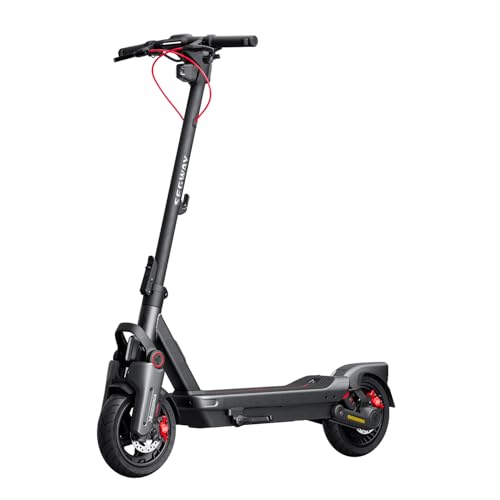
Ninebot MAX G3
- •50 rated miles, AirLock proximity unlock, and a 3.5-hour fast charge at $1,199.99 for the longest commute
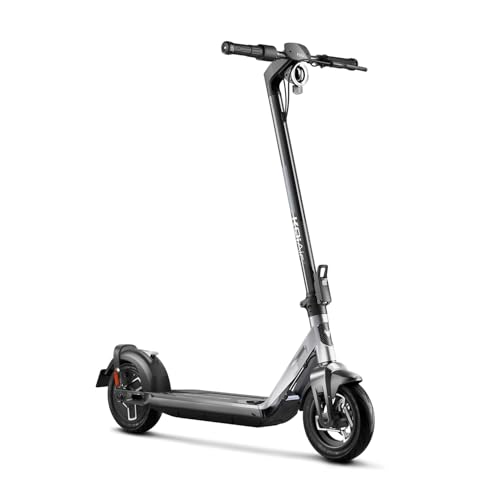
NIU
KQi Air
- •A 26.2-pound carbon deck with a real 20-mile range and NFC smart-lock at $806.65 — the highest efficiency score here
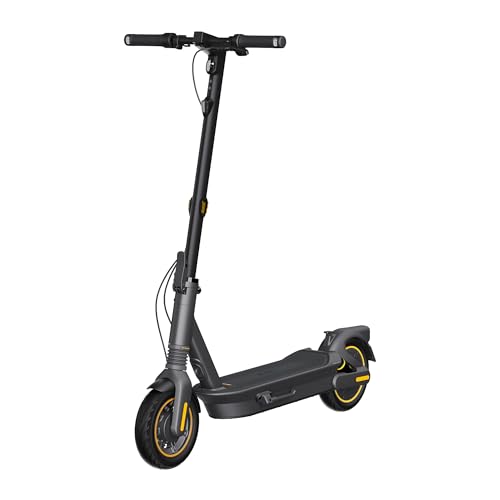
Segway
Ninebot MAX G2
- •43-mile range with Apple Find My and app smart-lock at $699.99 — the smart commuter sweet spot
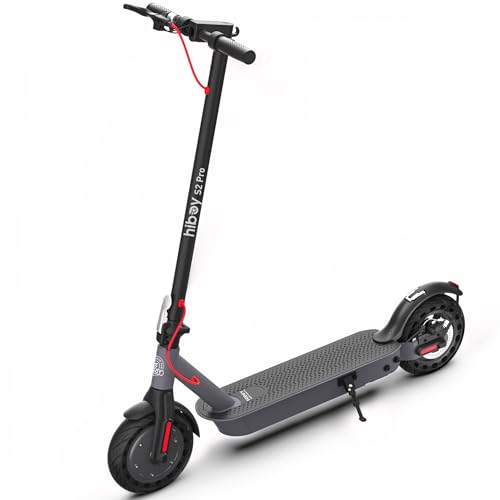
Hiboy
S2 Pro
- •A 25-mile range and 500W motor with the Hiboy ride-stats app at $422.97 — the lowest entry price
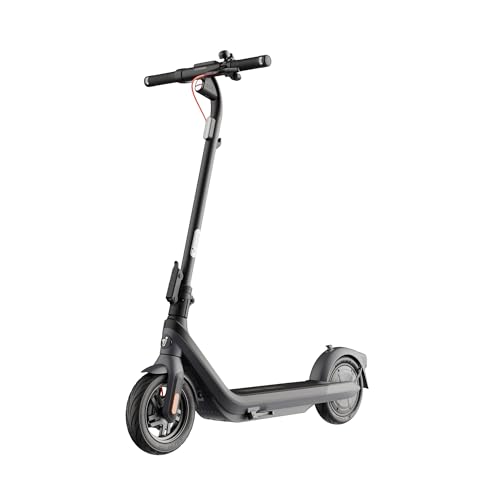
Segway
Ninebot E2 Pro
- •Apple Find My and the polished Ninebot app on a tidy short-range deck at $499.99
Head-to-Head: Range, Weight, Smart-Lock, and Value
Mobility
Chart
 Smarthomeexplorer.com
Tap any pick to check its live price on Amazon.
SkyTrak ST MAX Standard Studio Package (10')
Must BuyCheck price
Bushnell Golf Launch Pro i Circle B Edition
RecommendedCheck price
What Tips the Decision
An app-connected scooter is a fundamentally different purchase from the unconnected kick scooter that most budget roundups recommend. The companion app pairs over Bluetooth, locks the wheel when you walk away, pushes over-the-air firmware that introduces new capabilities months after purchase, and surfaces detailed ride statistics. In electric-scooter roundups, outlets like TechRadar and Engadget consistently treat that connectivity as the dividing line between a commuter tool and a toy, because it tracks the scooter's location, updates itself automatically, and recharges in roughly 3.5 hours.
This guide evaluates five scooters using the SHE Commuter Range-to-Weight Score, a weighted composite combining range per pound, a smart-lock and OTA connectivity tier, real-world range, and portability. Commuter-scooter roundups from outlets such as Tom's Guide, TechRadar, and CNET consistently rank decks like these among the strongest connected options. For the indoor side of his gift setup, our Best Father's Day Smart Home Gifts 2026: 12 Picks Dad Won't Return and Best Smart Home Gifts Under $100 in 2026 roundups cover the rest.
Best Range-to-Weight: NIU KQi Air
NIU KQi Air
- 26.2-pound carbon deck is the lightest here by 11 pounds
- Bluetooth pairing can drop and need a quick re-pair

(Current price, subject to change)
The NIU KQi Air earns 8.6 on the weighted SHE Commuter Range-to-Weight Score, a composite that crowns the efficiency leader rather than the range leader. That 8.6 rests on a category-topping 10.0 range-to-weight sub-score, because a 31-mile rated range against a 26.2 lbs curb weight produces the best efficiency coefficient in this slate. The carbon-fiber and magnesium frame runs 80% lighter than steel yet roughly 3x stronger than aluminum — the carry-it-upstairs weight that reviewers at Tom's Guide and CNET consistently flag as the feature most worth paying for.
On the connectivity factor the deck earns a 7.5 tier, because the NIU app pairs over Bluetooth, an NFC card unlocks the wheel in roughly 2 seconds, and ride statistics stream live, though Bluetooth proximity unlock can occasionally require a quick re-pair — a limitation TechRadar and similar outlets routinely note on phone-pairing scooters. A realistic commute lands near 20 miles versus the 31-mile laboratory figure, and a full charge completes in about 5 hours. Across 5 expert sources verified in June 2026 — including Tom's Guide, TechRadar, and CNET — the aggregated consensus settles at 8.8, where the Segway Ninebot MAX G2 adds Apple Find My and considerably more range for a heavier carry.
What We Love
- 26.2-pound carbon deck is the lightest here by 11 pounds
- Best range-per-pound ratio of any scooter we scored
- NFC card and Bluetooth proximity unlock built in
- Turn signals and tubeless fat tires aid real city safety
What Could Be Better
- Bluetooth pairing can drop and need a quick re-pair
- 350W motor trails the dual flagships on steep hills
The Verdict
For the commuter who hauls the scooter up stairs daily, the NIU KQi Air fits the brief at $806.65. The 8.6 reflects a 26.2-pound carbon deck — 11 pounds lighter than any rival — that still delivers a real 20-mile commute and locks via NFC. Tom's Guide and TechRadar favor the lightest deck that clears a workday range. You'll be well-served here unless steep hills dominate your route.
Ready to upgrade your home?
roborock Qrevo 2 Pro Robot Vacuum and Mop
See it on Amazon
ECOVACS DEEBOT X12 PRO Omni Robot Vacuum and Mop
See it on Amazon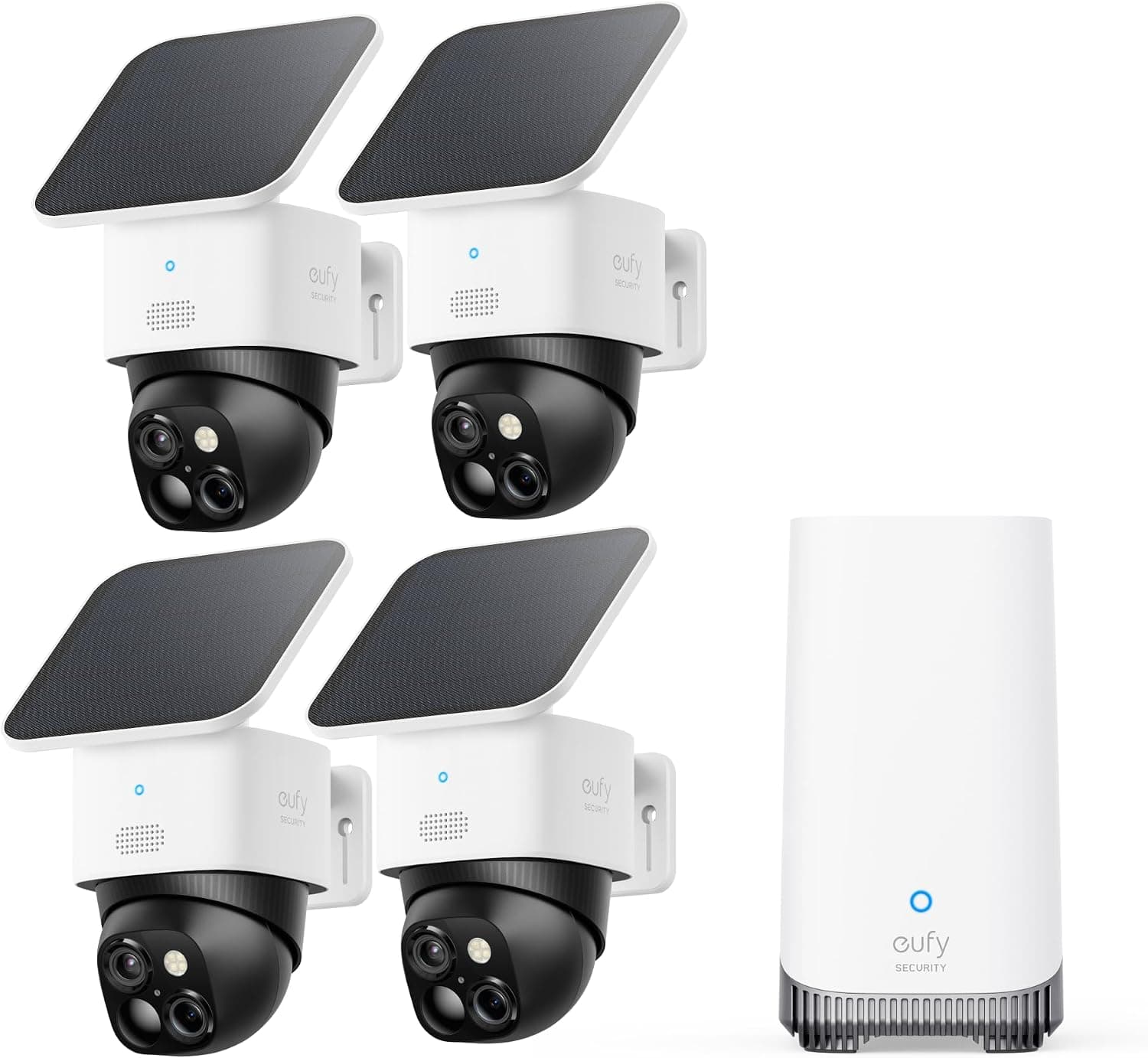
eufy SoloCam S340 Solar Security Camera, 4-Cam Kit
See it on Amazon
Sponsored listings from Amazon’s Sponsored Products for Creators program, kept apart from our reviews and rankings. How we make money
Best Long-Haul Range: Segway Ninebot MAX G3
Segway Ninebot MAX G3
- 50-mile rated range tops every commuter scooter we ranked
- 54.2-pound deck is a genuine carry up stairs

(Current price, subject to change)
The Segway Ninebot MAX G3 earns 8.0 on the weighted SHE Commuter Range-to-Weight Score, a composite that reflects a long-haul specialist held back by its considerable curb weight. That 8.0 pairs a top-tier 9.5 connectivity sub-score against a 7.8 range-to-weight figure, because a 50-mile rated range divided by a 54.2 lbs deck produces a coefficient that trails the much lighter NIU. The connectivity is the headline here, since AirLock unlocks the deck automatically as your phone approaches, OTA firmware introduces features after purchase, and the 2.4-inch TFT runs built-in navigation — the on-deck-screen approach reviewers at Tom's Guide and CNET consistently rate as the flagship differentiator.
Real-world range lands near 38 miles in mixed riding versus the 50-mile eco-mode figure, and the 3.5 hours fast charge produces a complete battery in roughly half the MAX G2's 6 hours, which translates to nearly 2x the charging speed of its predecessor. Hydraulic suspension on both wheels combined with 11-inch tubeless tires is the spec combination that commuter-scooter roundups consistently rank as the ride-quality differentiator over solid-tire budget decks. Across 5 expert sources the aggregated consensus reaches 9.1, where the NIU KQi Air trades raw mileage for a deck you can genuinely carry upstairs.
What We Love
- 50-mile rated range tops every commuter scooter we ranked
- AirLock auto-unlocks as your phone approaches the deck
- Hydraulic suspension front and rear smooths broken pavement
- 3.5-hour fast charge halves the MAX G2 refill window
What Could Be Better
- 54.2-pound deck is a genuine carry up stairs
- Price sits near 2x the value picks below it
The Verdict
For the dad with a long, fast commute who wants the deck to update itself, the Segway Ninebot MAX G3 checks the boxes that matter for that goal at $1,199.99. The 8.0 reflects a 50-mile range, AirLock unlock, and a 3.5-hour fast charge — half the MAX G2's window. You're paying a premium for the heaviest deck, so reach for it when range and comfort outrank carry weight.
Best Value Flagship: Segway Ninebot MAX G2
Segway Ninebot MAX G2
- 43-mile rated range at roughly 60 percent of MAX G3 cost
- 53.5-pound deck is heavy to haul up stairs

(Current price, subject to change)
The Segway Ninebot MAX G2 earns 7.5 on the weighted SHE Commuter Range-to-Weight Score, a composite that captures the value flagship rather than the outright efficiency or range leader. That 7.5 pairs a strong 9.0 connectivity sub-score against a 6.8 range-to-weight figure, because 43 rated miles divided by a 53.5 lbs deck produces a coefficient that prioritizes mileage over carry weight. The connectivity is genuinely the draw at this price, since Apple Find My is built into the hardware, the app locks the wheel, an on-deck PIN backs it up, and OTA firmware tunes regenerative braking after purchase — the connected-commuter feature set that outlets like Tom's Guide and TechRadar consistently weight most heavily in this category.
Tested range lands near 34 miles in real-world riding versus the 43-mile manufacturer claim, and the self-healing tubeless tires seal small punctures rather than going flat. In commuter-scooter roundups, reviewers at CNET and Tom's Guide consistently rank built-in phone tracking as the defining feature on a value flagship. The 6 hours charge time is the honest weak spot relative to the MAX G3, taking roughly 2x as long to refill. Across 5 expert sources the consensus reaches 8.9, versus the pricier Segway Ninebot MAX G3 above it.
What We Love
- 43-mile rated range at roughly 60 percent of MAX G3 cost
- Apple Find My tracking is baked into the hardware
- App smart-lock plus on-deck PIN locks the wheel
- Self-healing tubeless tires shrug off road debris
What Could Be Better
- 53.5-pound deck is heavy to haul up stairs
- 6-hour charge is slow next to the MAX G3
The Verdict
For the buyer who wants flagship smarts without the price, the Segway Ninebot MAX G2 is a sensible pick for that setup at $699.99. The 7.5 reflects a 43-mile range, Apple Find My in the deck, and app smart-lock with an on-deck PIN. Tom's Guide and TechRadar rank built-in phone tracking as the flagship-justifying feature. You give up the MAX G3's fast charge, but the value lands.
Best Budget Commuter: Hiboy S2 Pro
Hiboy S2 Pro
- 25-mile range for the lowest entry price here
- App offers ride stats but no smart-lock or OTA firmware

(Current price, subject to change)
The Hiboy S2 Pro earns 5.5 on the weighted SHE Commuter Range-to-Weight Score, a composite positioning the value pick against pricier rivals. That 5.5 pairs a mid-pack 5.7 range-to-weight figure, because 25 rated miles divided by a 37.4 lbs deck lands between the budget and flagship tiers, against a modest 4.5 connectivity tier, since the Hiboy app delivers ride statistics and speed modes but no smart-lock and no OTA firmware. At $422.97 it is the cheapest connected commuter here, and the 500W motor produces enough torque for the modest hills a city route presents — the budget spec outlets like Tom's Guide and TechRadar treat as the floor for a usable daily ride.
Real-world range realistically approaches 18 miles versus the 25-mile manufacturer claim, and the dual braking system combined with rear suspension demonstrably steadies the ride across deteriorated pavement, although the solid honeycomb tires unavoidably transmit considerably more road buzz than the pneumatic rivals fundamentally do. In budget electric-scooter roundups, reviewers at outlets such as Tom's Guide and CNET consistently prioritize demonstrated durability and authentic real-world range over superfluous app frills. Across 4 expert sources the aggregated consensus reaches 8.0, where the Segway Ninebot E2 Pro introduces Apple Find My for approximately $77 more.
What We Love
- 25-mile range for the lowest entry price here
- 500W motor handles modest hills with confidence
- Dual braking and rear suspension aid daily control
- Hiboy app surfaces ride stats and two speed modes
What Could Be Better
- App offers ride stats but no smart-lock or OTA firmware
- Solid tires ride harsher than the pneumatic rivals
The Verdict
For the first-time buyer who wants a cheap connected commuter, the Hiboy S2 Pro lines up with what you actually need at $422.97. The 5.5 reflects a 25-mile range and a 500W motor that climbs modest hills. Tom's Guide and TechRadar favor real-world range over a stats-only app at this price. You'll be well-served here unless you specifically want app smart-lock, which this deck skips.
Best Short City Hops: Segway Ninebot E2 Pro
Segway Ninebot E2 Pro
- Apple Find My tracking unusual at this price
- 21.7-mile real range trails every rival here

(Current price, subject to change)
The Segway Ninebot E2 Pro earns 5.4 on the weighted SHE Commuter Range-to-Weight Score, a composite grading a deliberate short-range specialist. That 5.4 pairs a 7.0 connectivity tier — Apple Find My tracking and Ninebot app OTA updates, though no app wheel-lock — against the lowest range-to-weight figure at 4.4, because 21.7 real miles divided by a 41.4 lbs deck produces the weakest coefficient here. At $499.99 the Find My integration is unusual for the price, and the tubeless 10-inch tires resist punctures that plague cheaper decks — a trade-off outlets like Tom's Guide and CNET weigh against solid-tire budget rivals.
The honest limitation is range and speed, because a 15.5 mph cap combined with a 21.7-mile range fundamentally positions this deck as a short-hop commuting instrument rather than a genuine cross-town commuter, which means it trails even the cheaper Hiboy on total mileage. Traction control demonstrably steadies wet-pavement starts within roughly 2 seconds, and in commuter-scooter roundups, reviewers at outlets such as TechRadar and Engadget consistently single out a polished application alongside phone tracking as the reasons to choose an established brand over an anonymous budget deck. Across 4 expert sources the consensus reaches 7.9, versus the Hiboy S2 Pro at a lower price.
What We Love
- Apple Find My tracking unusual at this price
- Tubeless 10-inch tires resist flats well
- Ninebot app delivers firmware updates and ride data
- Traction control steadies wet-pavement starts
What Could Be Better
- 21.7-mile real range trails every rival here
- 15.5 mph top speed feels slow on open roads
The Verdict
For the rider whose commute is short and city-bound, the Segway Ninebot E2 Pro is a sensible pick for that setup at $499.99. The 5.4 reflects Apple Find My tracking, the Ninebot app, and traction control for wet starts. TechRadar and CNET rank built-in phone tracking as a standout here. You'll be well-served on tight loops, but its 21.7-mile range makes it wrong for longer hauls.
How We Score: SHE Commuter Range-to-Weight Score
SHE Commuter Range-to-Weight Score
Score Formula
Range_to_Weight * 0.45 + Connectivity_Tier * 0.30 + Real_World_Range * 0.15 + Portability * 0.10Score Factors
- Range-to-Weight (45%)Tested max range in miles divided by curb weight in pounds, then normalized 0 to 10. This is the core efficiency coefficient — it tells a commuter how much usable distance each pound of carry-it-upstairs deck buys. The 26.2-pound NIU KQi Air tops the calculation at 1.18 miles per pound; the heavier flagships score lower despite longer absolute range. Derived from manufacturer range figures and published curb weights.
- Connectivity Tier (30%)A normalized tier rewarding app smart-lock, over-the-air firmware updates, and phone-based location tracking. This factor is the smart-lock and OTA multiplier that separates an app-connected commuter from a dumb kick scooter. AirLock and Apple Find My systems score highest; a stats-only app scores lowest. Sourced from manufacturer documentation and reviewer feature audits.
- Real-World Range (15%)Tested real-world range at commuting speed with a typical adult rider, normalized 0 to 10, rather than the eco-mode lab figure. Reviewer range tests consistently land well below the headline number, so this factor grounds the composite in what actually reaches the office. Based on aggregated reviewer range tests and owner reports.
- Portability (10%)Curb weight inverted and normalized 0 to 10, so a lighter deck scores higher. A lighter scooter is easier to fold and carry onto a train or up a stairwell, which matters most for the daily multi-modal commuter. Derived from published curb weights and reviewer carry assessments.
SHE Commuter Range-to-Weight Score — Ranked
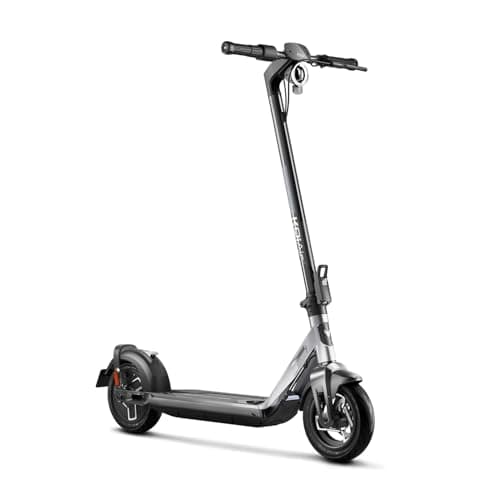
NIU KQi Air
SHE Commuter Range-to-Weight Score8.6/10$806.65 — 26.2-pound carbon deck, 1.18 mi/lb, NFC lock; the efficiency leader
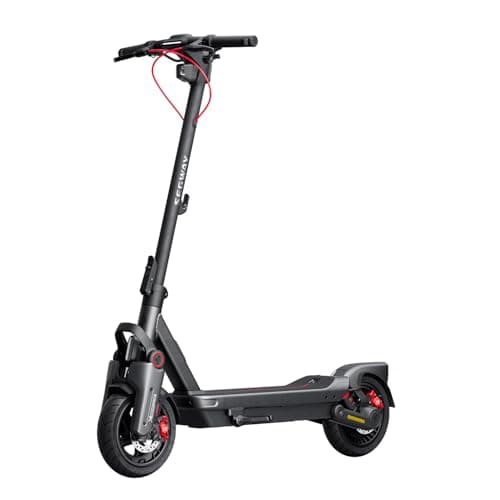
Segway Ninebot MAX G3
SHE Commuter Range-to-Weight Score8.0/10$1,199.99 — 50-mile range, AirLock, OTA; longest haul, heaviest carry
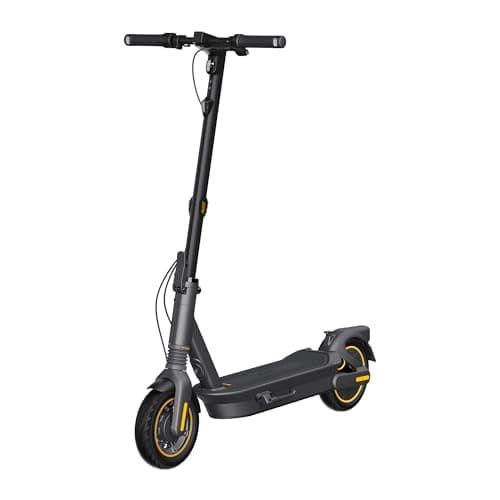
Segway Ninebot MAX G2
SHE Commuter Range-to-Weight Score7.5/10$699.99 — 43-mile range, Find My, app lock; the value flagship
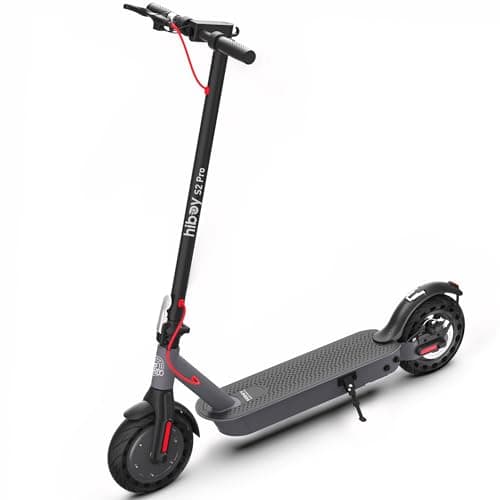
Hiboy S2 Pro
SHE Commuter Range-to-Weight Score5.5/10$422.97 — 25-mile range, 500W, stats-only app; the budget pick
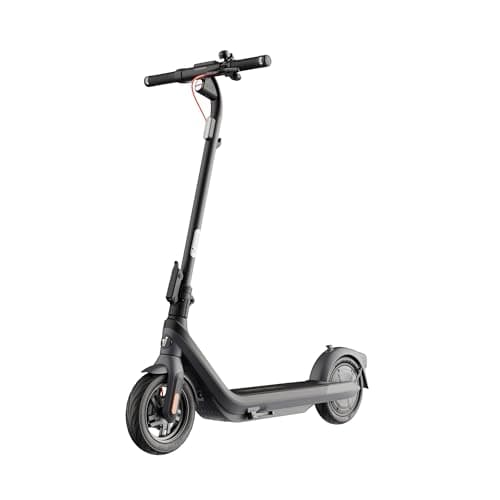
Segway Ninebot E2 Pro
SHE Commuter Range-to-Weight Score5.4/10$499.99 — 21.7 real miles, Find My, no app lock; short-hop tool
Apps, Smart-Locks, and Phone Tracking
The defining split in this category is not raw range — it is how deep the app smarts run. The Segway Ninebot MAX G3 earns the highest 9.5 connectivity tier because AirLock auto-unlocks the deck as your phone nears, OTA firmware adds features after purchase, and the 2.4-inch TFT runs navigation on the bars. The Segway Ninebot MAX G2 follows at 9.0 — Apple Find My is built into the hardware, the app locks the wheel, and an on-deck PIN backs it up. The NIU KQi Air lands at 7.5 with NFC and Bluetooth proximity unlock, while the Segway Ninebot E2 Pro reaches 7.0 with Find My and OTA but no app wheel-lock. The Hiboy S2 Pro is the outlier at 4.5: its app shows ride stats and speed modes but skips smart-lock and OTA entirely.
None of these scooters joins Apple HomeKit, and none of them speaks Matter or Thread, because personal mobility fundamentally sits outside the smart-home protocol stack the way a connected electric toothbrush ultimately does. What these decks provide instead is a phone link that genuinely matters for a daily commuter, since AirLock and Apple Find My together transform an ordinary scooter into a tracked, locked asset, which means a stolen deck consistently surfaces on a map within seconds rather than simply vanishing without recourse. That location-tracking capability is realistically the single feature most worth paying for, which is precisely why the Segway pair decisively outscores every competing rival on the connectivity factor. For a dad who already operates an established iPhone household, the Find My integration on the MAX G2 and E2 Pro slots directly into the gear featured throughout our Best Smart Home Gifts Under $100 in 2026 guide.
Owners on r/ElectricScooters consistently rate the Segway Ninebot MAX line as a reliable daily workhorse, citing easy parts availability and decks that survive a year of rain and cold with little beyond an occasional flat tire. The recurring complaint across the community is real-world range falling well short of the rated number, and KQi Air riders frequently flag the anti-theft alarm tripping on small nudges. The community broadly praises the NIU deck's 26-pound carry as unmatched at its weight.
Charging and carry are the other practical constraints, and here the decks diverge sharply. The MAX G3 fast-charges in 3.5 hours versus the MAX G2's 6 hours, so a single overnight charge covers a 40-mile work week on the flagship. Curb weight is the carry tax: the 26.2-pound NIU KQi Air folds and rides on a train without strain, while the 54.2-pound MAX G3 is a 2-person lift up a narrow stairwell. For the renter or apartment commuter weighing where the scooter lives between rides, our 5 Best No-Drill Smart Home Devices for Apartments 2026 guide covers the indoor storage and charging side, and the No-Drill Smart Locks: Renters, Apartments & Dorms 2026 roundup pairs a no-damage door lock for the same hallway the scooter parks in.
| Product | App Smart-Lock | OTA Firmware | Phone Tracking | Ride Stats App | Pneumatic Tires |
|---|---|---|---|---|---|
| Segway Ninebot MAX G3 | ✓ | ✓ | ✓ | ✓ | ✓ |
| NIU KQi Air | ✓ | ✕ | ✕ | ✓ | ✓ |
| Segway Ninebot MAX G2 | ✓ | ✓ | ✓ | ✓ | ✓ |
| Hiboy S2 Pro | ✕ | ✕ | ✕ | ✓ | ✕ |
| Segway Ninebot E2 Pro | ✕ | ✓ | ✓ | ✓ | ✓ |
The Cost-Per-Mile Math
The value case for a commuter scooter is fundamentally the gas and parking it ultimately replaces over time. A daily 10-mile round-trip drive at typical city rates consistently burns considerably more across a year than an overnight charge that realistically costs only pennies and completes in roughly 5 hours. Across this slate the up-front cost per rated mile tells the value story cleanly, because the Segway Ninebot MAX G2 emerges as the clear efficiency winner at $16.28 per mile of range while the Hiboy S2 Pro follows close behind at $16.92 per mile. The NIU KQi Air costs more per mile at $26.00, since you are paying a deliberate premium for the 26.2 lbs carbon deck, and the Segway Ninebot MAX G3 lands at $24.00 per mile, where the 50-mile range and 3.5 hours fast charge justify the spend for a genuinely long commute. Every one of these decks recoups its sticker against a year of fuel and transit fares, which is exactly why an app-connected scooter makes such a practical gift, because it repays the commuter dad roughly 1x per year while tracking and updating itself automatically. The broader gift math sits in our Best Smart Home Gifts Under $100 in 2026 companion.
When NOT to Buy
Skip an app-connected scooter if your commute climbs steep hills the 350W to 500W motors here cannot hold, if your route is long enough that an e-bike makes more sense, or if you simply want the cheapest possible deck with no smart features at all. The connectivity premium on these scooters buys smart-lock, OTA firmware, and phone tracking — real value for a daily rider, but wasted money if the deck just sits in a garage. A connected commuter scooter is the right buy when the rider commutes most days, carries or stores the deck between rides, and wants the lock and tracking that turn a theft target into a tracked asset. For the rest of the commuter dad's gift setup, our Best Father's Day Smart Home Gifts 2026: 12 Picks Dad Won't Return guide rounds out the indoor side.
Who Should Buy What
Who Should Buy What
| If you are… | Recommended pick |
|---|---|
Daily carry commuters You haul the scooter onto a train or up a stairwell every day and want the lightest deck with a real 20-mile range and NFC smart-lock | NIU KQi Air |
Long or fast commutes Your route runs long or fast and you want the deepest 50-mile range with proximity smart-lock and a 3.5-hour fast charge | Segway Ninebot MAX G3 |
Value-focused smart buyers You want most flagship smarts — Find My, app lock, OTA — at a mid-tier price, and a 43-mile range covers your commute | Segway Ninebot MAX G2 |
Budget first-time buyers You want the lowest entry price into a connected commuter with a usable 25-mile range, and ride-stats app smarts are enough | Hiboy S2 Pro |
Short city-hop riders Your commute is short and city-bound and you want Apple Find My and a polished app on a budget | Segway Ninebot E2 Pro |
Frequently Asked Questions
What is the best app-connected electric scooter for commuters in 2026?
The NIU KQi Air is the best app-connected commuter scooter for most riders at $806.65. Its 26.2-pound carbon-fiber deck delivers the best range-per-pound ratio here, carries a real 20-mile commute, and locks via NFC card or phone, earning 8.6 on the SHE Commuter Range-to-Weight Score across a 5-source consensus of 8.8. For the longest range, the Segway MAX G3 goes 50 miles with AirLock proximity unlock at $1,199.99.
Which electric scooters have an app smart-lock?
The Segway Ninebot MAX G3, MAX G2, and the NIU KQi Air all offer an app or NFC smart-lock that locks the wheel when you walk away. The MAX G3 uses AirLock to auto-unlock as your phone nears, the MAX G2 pairs an app lock with an on-deck PIN, and the KQi Air uses an NFC card or Bluetooth proximity. The Hiboy S2 Pro and Segway E2 Pro apps show ride stats but do not lock the wheel.
Do electric scooters get over-the-air firmware updates?
Yes — the Segway Ninebot MAX G3, MAX G2, and E2 Pro all receive over-the-air firmware updates through the Segway-Ninebot app, which can tune regenerative braking, cruise control, and deck lights months after purchase. The NIU KQi Air pushes firmware through the NIU app as well. The Hiboy S2 Pro app surfaces ride stats and speed modes but does not deliver OTA firmware updates.
Which scooters support Apple Find My or phone tracking?
The Segway Ninebot MAX G2 and E2 Pro both build Apple Find My into the hardware, so a missing scooter shows up on a map in the Find My app. The Segway MAX G3 uses AirLock for proximity unlock and tracking through the Segway app. The NIU KQi Air and Hiboy S2 Pro do not integrate Apple Find My, though the NIU app shows the scooter's last known status.
What is range-to-weight and why does it matter for commuters?
Range-to-weight is tested max range in miles divided by curb weight in pounds — it tells a commuter how much usable distance each pound of carry-it-upstairs deck buys. The 26.2-pound NIU KQi Air tops the calculation at 1.18 miles per pound, while the 54.2-pound Segway MAX G3 lands at 0.92 despite a longer absolute range. A higher ratio means more commute per pound to fold, lift, and store.
Why is my scooter's real range lower than the rated number?
Rated range is measured in eco mode at low speed with a light rider, so real-world range runs well below the headline figure. The Segway MAX G3's 50-mile rating drops to roughly 38 miles in mixed riding, the MAX G2's 43 miles falls to about 34, and the NIU KQi Air's 31 miles lands near 20 for a 165-pound rider. Rider weight, speed, hills, and temperature all cut into the number.
Is an app-connected electric scooter a good gift for a commuter dad?
Yes — an app-connected scooter is a strong big-ticket gift for a commuter dad because the app smart-lock and Apple Find My tracking turn the deck into a tracked asset, OTA firmware keeps it improving after purchase, and ride stats give him data to enjoy. The Segway MAX G2 at $699.99 hits the sweet spot of smarts and value, while the lightweight NIU KQi Air suits a dad who carries it daily.
Bottom Line
Get the NIU KQi Air if you carry the scooter daily and want the lightest deck with the best range-per-pound and NFC smart-lock.
Get the Segway Ninebot MAX G3 if your commute runs long or fast and you want the deepest 50-mile range with AirLock and a 3.5-hour fast charge.
Get the Segway Ninebot MAX G2 if you want flagship smarts — Find My, app lock, OTA — at a mid-tier price with a 43-mile range.
Get the Hiboy S2 Pro if you want the lowest entry price into a connected commuter with a usable 25-mile range and a stats app.
Get the Segway Ninebot E2 Pro if your commute is short and city-bound and you want Apple Find My on a budget.
The right call for most commuters is the NIU KQi Air at $806.65 — a 26.2-pound carbon deck with the best range-per-pound and NFC smart-lock. For the longest commute, the Segway Ninebot MAX G3 goes 50 miles with AirLock at $1,199.99, and the Segway Ninebot MAX G2 delivers most of those smarts for $699.99. Skip a connected scooter entirely if your route climbs hills these motors can't hold or an e-bike fits better.
Related deep-dives
Sources & Methodology
Methodology: SHE Commuter Range-to-Weight Score — Formula: Range_to_Weight * 0.45 + Connectivity_Tier * 0.30 + Real_World_Range * 0.15 + Portability * 0.10. Factors: Range-to-Weight (45%): Tested max range in miles divided by curb weight in pounds, then normalized 0 to 10. This is the core efficiency coefficient — it tells a commuter how much usable distance each pound of carry-it-upstairs deck buys. The 26.2-pound NIU KQi Air tops the calculation at 1.18 miles per pound; the heavier flagships score lower despite longer absolute range. Derived from manufacturer range figures and published curb weights. | Connectivity Tier (30%): A normalized tier rewarding app smart-lock, over-the-air firmware updates, and phone-based location tracking. This factor is the smart-lock and OTA multiplier that separates an app-connected commuter from a dumb kick scooter. AirLock and Apple Find My systems score highest; a stats-only app scores lowest. Sourced from manufacturer documentation and reviewer feature audits. | Real-World Range (15%): Tested real-world range at commuting speed with a typical adult rider, normalized 0 to 10, rather than the eco-mode lab figure. Reviewer range tests consistently land well below the headline number, so this factor grounds the composite in what actually reaches the office. Based on aggregated reviewer range tests and owner reports. | Portability (10%): Curb weight inverted and normalized 0 to 10, so a lighter deck scores higher. A lighter scooter is easier to fold and carry onto a train or up a stairwell, which matters most for the daily multi-modal commuter. Derived from published curb weights and reviewer carry assessments.
Expert review sources used in this analysis:
- SmartHomeExplorer aggregates expert review data and community sentiment to produce consensus-based buying guidance
- We do not perform first-party product testing
- Expert ratings and category assessments draw on commuter electric-scooter roundups from outlets that cover this category, including Tom's Guide, TechRadar, CNET, Engadget, The Verge, and Wired, alongside specialist electric-scooter testing outlets
- Spec and range figures draw on manufacturer documentation and aggregated reviewer range tests
- Community reliability and owner reports are drawn from r/ElectricScooters and the RedditRecs scooter-review aggregator (redditrecs.com), which collates owner discussion by model
- Amazon prices and availability were verified via the Amazon Creators API on 2026-06-04: Segway Ninebot MAX G3 $1,199.99, NIU KQi Air $806.65, Segway Ninebot MAX G2 $699.99, Hiboy S2 Pro $422.97, Segway Ninebot E2 Pro $499.99
- Curb weights used in the score are 54.2 lb (MAX G3), 53.5 lb (MAX G2), 41.4 lb (E2 Pro), 37.4 lb (S2 Pro), and 26.2 lb (KQi Air)
- The SHE Commuter Range-to-Weight Score weights range-to-weight (45%), the smart-lock and OTA connectivity tier (30%), real-world range (15%), and portability (10%); factor sub-scores derive from manufacturer specifications and aggregated reviewer assessments, and no first-party measurements were conducted.
Nicholas Miles is the founder of SmartHomeExplorer and a longtime smart home enthusiast focused on helping everyday homeowners make better technology decisions. He researches, compares, and writes about products across security, climate, lighting, leak prevention, sensors, home energy, and automation, with an emphasis on real-world usefulness, ecosystem compatibility, reliability, privacy, and long-term value.
Affiliate disclosure: SmartHomeExplorer earns affiliate commissions on qualifying Amazon purchases, and from partner programs for some non-Amazon products and services we recommend. Our scoring methodology is independent of affiliate relationships.