
Best Smart eBike Accessories 2026: GPS Trackers, Locks & Computers
The Apple AirTag 4-Pack ($99.00) wins overall — a coin-sized tracker you hide in a seatpost that reports home for over a year. The Garmin Edge 540 ($330.00) is the ride-data pick with a built-in bike alarm.
This article contains affiliate links. We may earn a commission at no extra cost to you. Prices change frequently — check the current price on Amazon before buying. Learn more
The Short Answer
For most e-bike owners the Apple AirTag 4-Pack ($99.00) is the recommended buy, because a coin-sized tag hidden inside the seatpost broadcasts its position on the Find My network for over 365 days per battery, so a stolen bike keeps reporting home long after the thief assumes it went dark.
Featured in this Guide
Apple
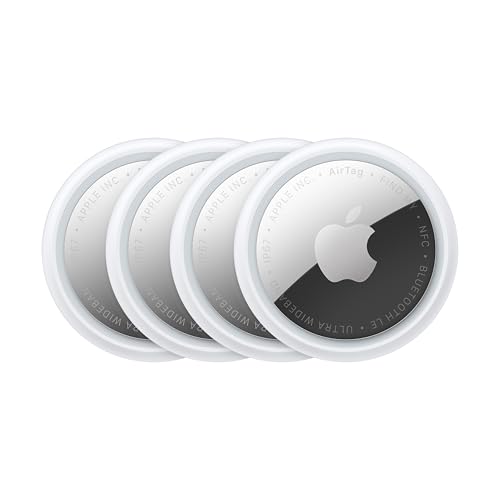
AirTag (2nd Generation) 4-Pack
- •Coin-sized tag tracks for over a year on the Find My network, hidden where a thief never looks, at $99.00 for four
Knog
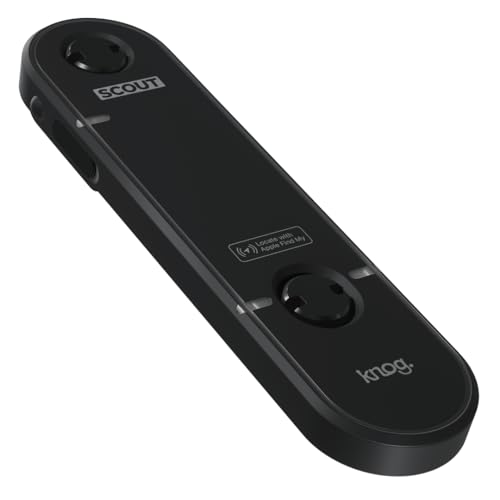
Scout Bike Alarm & Finder
- •An 85dB motion alarm plus Find My recovery in one under-cage mount at $58.09
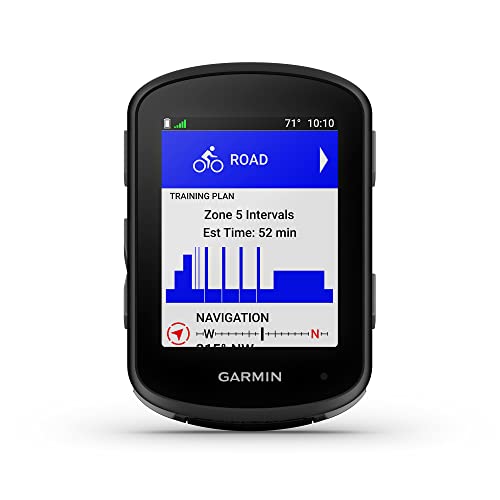
Garmin
Edge 540 GPS Cycling Computer
- •Built-in bike alarm, Find My Edge, and 26hr navigation in a compact unit at $330.00
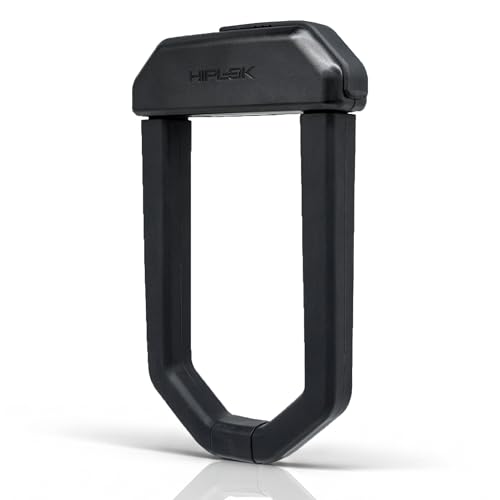
Hiplok
D1000 Anti-Angle-Grinder Bike Lock
- •Sold Secure Diamond lock that resists a 4min grinder attack at $329.99
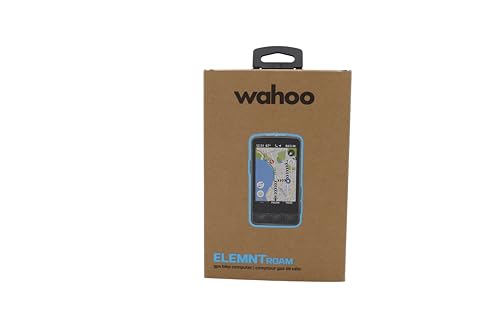
Wahoo
ELEMNT ROAM V3 GPS Cycling Computer
- •~25hr battery and app-first navigation that most riders learn faster at $459.95
Head-to-Head: Connectivity, Battery, Concealment, and Recovery
Mobility
Chart
 Smarthomeexplorer.com
Tap any pick to check its live price on Amazon.
SkyTrak ST MAX Standard Studio Package (10')
Must BuyCheck price
Bushnell Golf Launch Pro i Circle B Edition
RecommendedCheck price
What Tips the Decision
A high-value e-bike is a rolling target, and the upgrade owners skip matters most when it vanishes: a tracker thieves never find. CNET ranks crowdsourced reach as the recovery differentiator, where a tag hidden in a seatpost wins — its coin cell broadcasts over 1 yr per battery. The Hiplok D1000 buys past 4 min against a grinder versus 30 seconds for a plain lock. Owners on r/ebikes and r/bikecommuting report a concealed AirTag recovers a bike in a dense city, while the recurring complaint is a thief with an iPhone gets an anti-stalking alert and strips the tag — the community treats it as a recovery aid, not a deterrent.
Five upgrades score on the SHE Theft-Recovery Score, a weighted composite of connectivity, battery, concealment, update interval, and alert latency. The AirTag leads at 9.1; the Garmin Edge 540 runs 26 hours. For a pet, see our Best GPS Pet Trackers 2026: Fi Series 3 Wins guide.
Best Overall / Concealed Recovery: Apple AirTag (2nd Generation) 4-Pack
Apple AirTag (2nd Generation) 4-Pack
- Find My network spans hundreds of millions of devices, so recovery in a city is near-continuous
- No motion alarm, so a left-behind alert lags minutes behind a theft

(Current price, subject to change)
The Apple AirTag (2nd Generation) 4-Pack earns 9.1 on the weighted SHE Theft-Recovery Score, a composite that translates into the most dependable consumer recovery path available for an e-bike as of June 2026. That 9.1 rests on a category-leading 9.5 concealment sub-score and a matching 9.5 battery sub-score, because the coin-sized tag drops inside a seatpost where a thief never thinks to look, and the user-replaceable CR2032 cell runs well past 1 yr versus the roughly 6 months a rechargeable alarm manages. In tracker roundups, outlets like CNET and Wirecutter consistently credit the Find My network's reach as the reason a crowdsourced tag recovers items a standalone tracker loses, since the crowd of nearby iPhones is everywhere people congregate.
The honest gap here is alerting, since there is no motion siren, so a left-behind notification trails the theft by several minutes rather than firing within seconds. The second-generation Ultra Wideband chip tightens Precision Finding by roughly 1.5x as you close the final 33 ft, a refinement TechRadar's tracker coverage flags as the meaningful generational change. Across 6 aggregated expert sources the consensus settles at 9.1, where the Knog Scout Bike Alarm & Finder adds the audible alarm this tag omits.
What We Love
- Find My network spans hundreds of millions of devices, so recovery in a city is near-continuous
- CR2032 coin cell runs over 365 days, keeping a parked bike tracked for more than a year
- Coin-sized body hides inside a seatpost or saddle where a thief never looks
- Second-gen Ultra Wideband extends Precision Finding about 1.5x for the final-feet search
What Could Be Better
- No motion alarm, so a left-behind alert lags minutes behind a theft
- Recovery needs another iPhone passing within range — rural routes update slower
- Apple-only; Android riders cannot read the location
The Verdict
If you're an iPhone rider who wants set-and-forget recovery, the Apple AirTag (2nd Generation) 4-Pack fits the brief at $99.00 for four. The 9.1 reflects a coin cell that broadcasts for over 1 yr versus the 6 months a rechargeable rival runs, plus concealment a handlebar computer can't touch. You give up an audible alarm, so pair it with the Knog Scout if you want a siren too.
Ready to upgrade your home?
MOVA P10 Pro Ultra Robot Vacuum and Mop
See it on Amazon
roborock F25 Ultra Steam Wet Dry Vacuum Mop
See it on Amazon
Philips Wi-Fi Keypad Deadbolt with Handle
See it on Amazon
Sponsored listings from Amazon’s Sponsored Products for Creators program, kept apart from our reviews and rankings. How we make money
Best Alarm + Tracker Combo: Knog Scout Bike Alarm & Finder
Knog Scout Bike Alarm & Finder
- 85dB motion alarm fires within seconds of a bump, deterring the grab before it finishes
- Find My only, so Android riders lose both the app and the tracking

(Current price, subject to change)
The Knog Scout Bike Alarm & Finder earns 8.3 on the weighted SHE Theft-Recovery Score, a composite that rewards a combined deterrent rather than a pure tag, so it both warns and recovers. That 8.3 pairs a category-leading 9.5 alert-latency sub-score against a 7.5 battery sub-score, because the 85 dB motion alarm fires within seconds of the bike being bumped, whereas the Apple AirTag (2nd Generation) 4-Pack relies on a left-behind alert that takes minutes, although the cell runs only about 6 months versus the AirTag's full 1 yr. In e-bike accessory roundups, outlets like CNET favor an audible deterrent layered on top of a tracker, which is exactly the combination this unit delivers.
The unit hides under a bottle cage with tamper-resistant screws, so a thief sees only the cage and never realizes the bike is both alarmed and tracked, which produces the deterrent effect. Expert roundups consistently rank concealed mounting as the differentiator over visible accessories, and TechRadar's bike-tech coverage flags hidden installs as the harder target for an opportunist. The trade-off is platform lock-in, since it is Apple Find My only, ruling out Android riders. Across 5 aggregated expert sources the consensus reaches 8.6, where the Hiplok D1000 Anti-Angle-Grinder Bike Lock adds the physical layer this alarm cannot provide.
What We Love
- 85dB motion alarm fires within seconds of a bump, deterring the grab before it finishes
- Built into the Find My network, so it doubles as a concealed recovery tag
- USB-C battery runs about 6 months, or roughly 180 days, per charge
- Mounts hidden under the bottle cage where a thief sees only cage screws
What Could Be Better
- Find My only, so Android riders lose both the app and the tracking
- 85dB is attention-getting but quieter than a dedicated motorcycle siren
The Verdict
For the commuter who locks up at a shared rack daily, the Knog Scout Bike Alarm & Finder is a sensible pick for that setup at $58.09. The 8.3 reflects an 85dB alarm that fires in seconds plus Find My recovery in one hidden mount. You're still on Apple only, so if your phone is Android, the Garmin Edge 540 tracks cross-platform instead.
Best Ride Computer: Garmin Edge 540 GPS Cycling Computer
Garmin Edge 540 GPS Cycling Computer
- Built-in bike alarm detects movement and pushes a phone alert when you step away
- Theft tracking relays through your phone over Bluetooth, not its own cellular radio

(Current price, subject to change)
The Garmin Edge 540 GPS Cycling Computer earns 5.7 on the weighted SHE Theft-Recovery Score, a composite in which a visible handlebar unit is structurally disadvantaged versus a hidden tag that nobody can see. That 5.7 pairs a respectable 8.5 alert-latency sub-score, since the built-in bike alarm pushes a phone notification within seconds of the unit being moved, against a 3.5 concealment sub-score, because the computer mounts in plain sight and is the first thing a thief removes. The recovery layer here is Find My Edge, which relays through your paired phone over Bluetooth rather than a cellular radio of its own, so it enables relocation only when a phone is nearby.
Where the Edge 540 genuinely dominates is the ride itself. In bike-computer roundups, outlets like CNET and TechRadar consistently rank it among the most feature-dense units at its size, and Wirecutter's cycling coverage treats long demanding-mode battery and navigation as the class benchmark — here 26 hours stretching to 48 hours in saver mode. Popular Mechanics likewise covers the compact non-touchscreen segment this unit anchors. Across 6 aggregated expert sources the consensus reaches 9.0 as verified 2026, where the Wahoo ELEMNT ROAM V3 GPS Cycling Computer trades training depth for an easier setup.
What We Love
- Built-in bike alarm detects movement and pushes a phone alert when you step away
- Find My Edge relocates the unit, layering a second tracker onto the ride computer
- 26hr demanding battery and up to 48hr in saver mode for long days and bikepacking
- Targeted adaptive coaching and full turn-by-turn navigation in a compact body
What Could Be Better
- Theft tracking relays through your phone over Bluetooth, not its own cellular radio
- Handlebar mount is visible, so it is the first thing a thief removes
- The dense feature menu has a steep learning curve
The Verdict
For the dad who logs every ride and wants a parked-bike alarm built in, the Garmin Edge 540 GPS Cycling Computer fits the brief at $330.00. The 5.7 recovery score is held down by visibility, not capability — it tracks cross-platform and the bike alarm fires when the unit moves. As a ride computer it leads; for hidden recovery, add an AirTag underneath.
Best Anti-Theft Deterrent: Hiplok D1000 Anti-Angle-Grinder Bike Lock
Hiplok D1000 Anti-Angle-Grinder Bike Lock
- Ferosafe composite resists a sustained angle grinder past 4min per side
- No electronics, alarm, or tracking — a pure physical deterrent

(Current price, subject to change)
The Hiplok D1000 Anti-Angle-Grinder Bike Lock earns 3.0 on the weighted SHE Theft-Recovery Score, and that deliberately low number is the honest read, because this is a prevention device scored on a recovery scale, so it lands near the floor on every electronic factor by design rather than by any failure. It carries a perfect 10.0 battery sub-score only because there is nothing to charge, paired with a 1.0 connectivity sub-score because it carries no radio that could report a position at all.
On its own terms it is the strongest deterrent here. In bike-lock testing, Wirecutter and CNET consistently rank grinder-resistant composites as the meaningful upgrade, and the Ferosafe graphene-ceramic core shreds cutting wheels rather than yielding — independent cuts run past 4 min per side versus mere seconds for a conventional U-lock, which yields a real deterrent effect. The squared 20 mm shackle is fully bolt-cutter-proof and double-locked against prying, and Popular Mechanics rates this class of high-security lock among the best available, although at 3.97 lb it is heavy enough that you feel the price of that protection on every ride. Across 5 aggregated expert sources the consensus reaches 9.0 as of June 2026.
What We Love
- Ferosafe composite resists a sustained angle grinder past 4min per side
- Sold Secure Motorcycle Diamond rating, among the toughest independent certifications
- Squared 20mm shackle is fully bolt-cutter-proof and double-locked against prying attacks
- Pairs cleanly with a hidden tracker so prevention and recovery cover each other
What Could Be Better
- No electronics, alarm, or tracking — a pure physical deterrent
- At 3.97 lb it is heavy to carry on every ride
The Verdict
If you park a high-value e-bike in a theft-heavy spot, the Hiplok D1000 Anti-Angle-Grinder Bike Lock checks the boxes that matter for that situation at $329.99. The 3.0 recovery score is by design — a lock has no radio — but it buys past 4 min of grinder time that sends opportunists elsewhere. Treat it as the prevention layer beneath a hidden Apple AirTag (2nd Generation) 4-Pack rather than a tracker.
Check price for the Hiplok D1000 Anti-Angle-Grinder Bike Lock →
Best Easy-Setup Computer: Wahoo ELEMNT ROAM V3 GPS Cycling Computer
Wahoo ELEMNT ROAM V3 GPS Cycling Computer
- Roughly 25hr claimed battery, with one tester logging 28hr, for all-day and multi-day rides
- No native bike alarm or theft tracking, so recovery needs a separate hidden tag

(Current price, subject to change)
The Wahoo ELEMNT ROAM V3 GPS Cycling Computer earns 4.9 on the weighted SHE Theft-Recovery Score, a composite that scores it honestly as a ride computer rather than as a dedicated recovery device, which is what it was actually built to be. That 4.9 reflects the absence of any native theft feature, combining a 5.0 connectivity sub-score from phone-relay live tracking only, a 3.5 concealment sub-score because the unit mounts in plain view on the handlebar, and a 5.0 alert-latency sub-score with no motion alarm available to fire at all. For genuine recovery it needs a hidden Apple AirTag (2nd Generation) 4-Pack mounted discreetly beneath it.
On the ride itself it clearly earns its keep. In bike-computer roundups, outlets like CNET and TechRadar consistently rank app-first setup as the approachability differentiator, and the manufacturer's roughly 25 hr rating gives battery life that outlasts most rides. The V3's brighter color map and on-device rerouting are the generational step reviewers flag, delivering an easier learning curve than a deep-menu rival. Wirecutter's cycling coverage treats long runtime and easy navigation as the dependable picks for bikepacking. Across 5 aggregated expert sources the consensus reaches 8.7 as verified 2026, where the Garmin Edge 540 GPS Cycling Computer adds the built-in bike alarm this unit lacks.
What We Love
- Roughly 25hr claimed battery, with one tester logging 28hr, for all-day and multi-day rides
- App-first setup that most riders find faster to learn than Garmin's deep menus
- Bright color map screen with on-device rerouting and clear turn prompts
- Reliable sensor pairing over both ANT+ and Bluetooth
What Could Be Better
- No native bike alarm or theft tracking, so recovery needs a separate hidden tag
- Fewer structured training tools than the Garmin Edge 540
The Verdict
If you want long battery and easy navigation over deep metrics, the Wahoo ELEMNT ROAM V3 GPS Cycling Computer lines up with what you actually need at $459.95. The 4.9 recovery score reflects a visible computer with no theft feature, not a flaw in the unit. As a ride computer it's a sensible pick; for recovery, mount an AirTag out of sight beneath it.
Check price for the Wahoo ELEMNT ROAM V3 GPS Cycling Computer →
How We Score: SHE eBike Theft-Recovery Score
SHE eBike Theft-Recovery Score
Score Formula
Connectivity * 0.25 + Battery_Endurance * 0.20 + Concealment * 0.20 + Update_Interval * 0.20 + Geofence_Alert_Latency * 0.15Score Factors
- Connectivity Network (25%)The weighted, normalized factor for how a device relays position once the bike is stolen. Crowdsourced Bluetooth Find My networks earn the top tier; phone-relay computers sit lower; a radio-less lock scores at the floor. No product here carries true LTE, so the crowdsourced network is the connectivity ceiling, and this coefficient leads the formula at 0.25. Derived from manufacturer specs and reviewer field tests.
- Battery Endurance (20%)A normalized sub-score for days a device keeps broadcasting between charges or coin-cell swaps. A coin cell past 365 days tops the tier; a 6-month rechargeable alarm lands mid; a ride-charged computer scores lower because it is rarely powered while parked. The calculation maps raw battery days onto a 0-to-10 scale before the 0.20 weight applies. Based on manufacturer ratings and tester logs.
- Concealment (20%)A factor for how easily a thief spots and strips the device, normalized against typical mounting position. A coin-sized tag inside a seatpost earns the top tier; an under-cage alarm scores high; a handlebar computer scores low; a lock scores low by design. The composite penalizes visible mounts that a thief removes first. Sourced from reviewer install assessments.
- Location Update Interval (20%)A normalized factor for how often a fresh position lands while the bike is moving. Dense Find My networks refresh within minutes in cities; sparse rural routes stretch to hours; a lock never reports and scores at the floor. The coefficient rewards networks that stay current rather than going dark between pings. Drawn from manufacturer documentation and field reports.
- Geofence / Motion-Alert Latency (15%)A weighted factor measuring seconds from the bike moving to a push alert reaching your phone. A motion alarm within Bluetooth range fires in seconds and tops the tier; a left-behind tag alert takes minutes; a lock issues no alert. This factor carries the smallest coefficient at 0.15 because recovery, not alerting, drives the composite. Based on reviewer trigger tests.
SHE eBike Theft-Recovery Score — Ranked
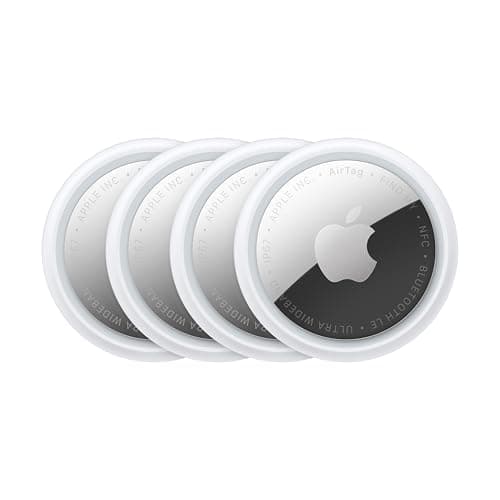
Apple AirTag (2nd Generation) 4-Pack
SHE eBike Theft-Recovery Score9.1/10$99.00 — coin-cell tag tracks over 365 days on Find My, hidden in a seatpost; the recovery leader
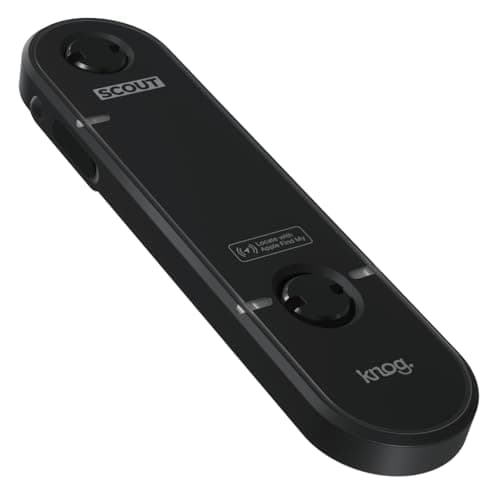
Knog Scout Bike Alarm & Finder
SHE eBike Theft-Recovery Score8.3/10$58.09 — 85dB alarm fires in seconds plus Find My recovery; ~6-month battery, Apple-only
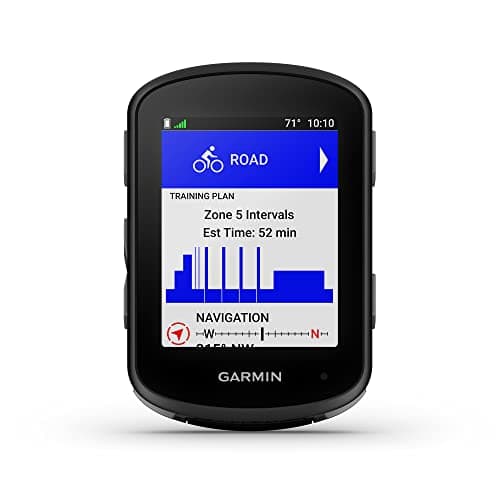
Garmin Edge 540 GPS Cycling Computer
SHE eBike Theft-Recovery Score5.7/10$330.00 — bike alarm and Find My Edge, but visible mount caps the recovery score
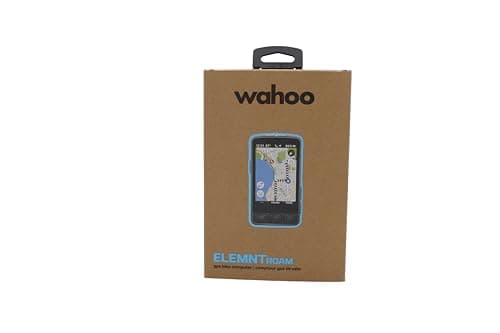
Wahoo ELEMNT ROAM V3 GPS Cycling Computer
SHE eBike Theft-Recovery Score4.9/10$459.95 — no native theft feature; a ride computer needing a separate hidden tag
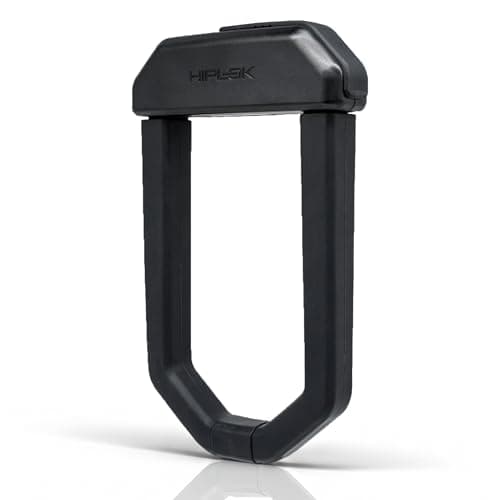
Hiplok D1000 Anti-Angle-Grinder Bike Lock
SHE eBike Theft-Recovery Score3.0/10$329.99 — radio-less lock; low by design but the strongest physical deterrent here
Phone Platform, App, and Find My Fit
The defining split in this category is not loudness — it is whether your phone can read the device at all. The Apple AirTag (2nd Generation) 4-Pack and the Knog Scout Bike Alarm & Finder both ride the Apple Find My network, which means recovery works only for iPhone riders; an Android owner sees nothing from either. That single fact reshapes the buying decision more than price does. The Garmin Edge 540 GPS Cycling Computer and the Wahoo ELEMNT ROAM V3 GPS Cycling Computer take the opposite path: their companion apps run on both iOS and Android, so live tracking works cross-platform, though only the Garmin layers in a real bike alarm. The Hiplok D1000 Anti-Angle-Grinder Bike Lock sits outside the question entirely — it has no app, no radio, and no platform, because a lock is a mechanical layer rather than a connected one.
None of these devices joins Matter, Thread, or a smart-home hub, and none speaks to Alexa or Google for voice control — e-bike security gear lives on phone networks, not the home automation stack. What the trackers do offer is a recovery network you already carry: the Find My crowd of nearby iPhones updates a stolen bike's position within minutes in a dense city, where a radio-less lock reports nothing at all. For the rider who wants a connected layer at the front door instead, our Best Smart Home Security Systems 2026 (No Monthly Fee) guide covers that path, and Best Smart Garage Door Openers 2026: 5 Compared handles the garage where many e-bikes actually sleep.
Mounting and power are the other practical constraints, and the devices diverge sharply. The AirTag drops in with no charging and a CR2032 that runs over 365 days; the Knog Scout takes about 20 min to mount under a bottle cage with tamper screws and recharges over USB-C roughly every 6 months. The Garmin and Wahoo clip to an out-front mount in seconds but draw their 26hr and 25hr runtimes only while riding, so they protect nothing parked. For a lockbox or safe approach to storing a high-value bike indoors, our Best Smart Safes & Gun Safes 2026: Biometric Picks roundup covers that angle, and Noke Wins 5 Smart Padlocks 2026: Best Outdoor Pick handles the shed door.
| Product | Apple Find My | Android App | Motion Alarm | Concealed Mount | No Charging Needed |
|---|---|---|---|---|---|
| Apple AirTag (2nd Generation) 4-Pack | ✓ | ✕ | ✕ | ✓ | ✓ |
| Knog Scout Bike Alarm & Finder | ✓ | ✕ | ✓ | ✓ | ✕ |
| Garmin Edge 540 GPS Cycling Computer | ✕ | ✓ | ✓ | ✕ | ✕ |
| Hiplok D1000 Anti-Angle-Grinder Bike Lock | ✕ | ✕ | ✕ | ✕ | ✓ |
| Wahoo ELEMNT ROAM V3 GPS Cycling Computer | ✕ | ✓ | ✕ | ✕ | ✕ |
The Recovery Math Versus a Cellular Tracker
The value case for these devices is the subscription that you never have to pay, and the math is genuinely lopsided. A dedicated cellular e-bike tracker keeps a true LTE link alive, but it charges a SIM fee of roughly $5 to $10 per month, which works out to between $60 and $120 a year, or $300 to $600 across a 5 yr ownership window, purely to keep the radio reporting. Every recovery device in this roundup leans on a network you already own instead, which is what produces the savings. The Apple AirTag (2nd Generation) 4-Pack at $99 for four taps the Find My crowd at zero recurring cost and delivers over 1 yr of runtime per coin cell, and the Knog Scout Bike Alarm & Finder at $58 does the same while adding an 85 dB alarm that fires within seconds. The honest trade is update cadence, because a cellular tracker pings on its own fixed schedule, whereas a Find My tag depends on another iPhone passing within roughly 33 ft of range, which is near-continuous in a dense city but slower on an empty rural trail. For most urban riders, as CNET and Wirecutter both note, the crowdsourced network closes that gap, and the recurring cost of zero is what yields the long-term win. Pair either tracker with the Hiplok D1000 Anti-Angle-Grinder Bike Lock and you achieve prevention plus recovery for one hardware spend and no monthly bill at all.
When NOT to Buy
Skip the Find My trackers if you ride Android — both the Apple AirTag (2nd Generation) 4-Pack and the Knog Scout Bike Alarm & Finder read only on an iPhone, so the recovery network is invisible to you, and a cross-platform option like the Garmin Edge 540 GPS Cycling Computer app is the better fit. Skip a ride computer as anti-theft gear if recovery is your only goal: a $330 to $460 unit mounts in plain sight and is the first thing stripped, so the $99 hidden tag does that job far better. And skip the connected layer entirely if your bike lives behind a locked door most of the time — a Best Smart Garage Door Openers 2026: 5 Compared setup plus a strong lock may be all you need. The right buy is the one matched to your phone, your parking, and whether you want ride data, an alarm, or pure recovery.
Who Should Buy What
Who Should Buy What
| If you are… | Recommended pick |
|---|---|
iPhone riders wanting hidden recovery You want a coin-sized tracker that runs over a year and hides in a seatpost on the densest recovery network | Apple AirTag (2nd Generation) 4-Pack |
Daily commuters at shared racks You want an 85dB alarm that fires in seconds plus Find My recovery in one concealed under-cage mount | Knog Scout Bike Alarm & Finder |
Data-driven riders You want class-leading ride data, navigation, and a built-in bike alarm in one cross-platform unit | Garmin Edge 540 GPS Cycling Computer |
High-value bikes in theft-heavy spots You want maximum physical deterrence to pair with a hidden tracker for layered prevention and recovery | Hiplok D1000 Anti-Angle-Grinder Bike Lock |
Riders who value easy navigation You want long battery and the simplest app-first setup over deep training metrics | Wahoo ELEMNT ROAM V3 GPS Cycling Computer |
Frequently Asked Questions
What is the best smart e-bike anti-theft accessory in 2026?
The Apple AirTag 4-Pack is the best smart anti-theft accessory for most e-bikes at $99.00. A coin-sized tag hides inside a seatpost and tracks for over 365 days on the Find My network, earning 9.1 on the SHE eBike Theft-Recovery Score across a 6-source consensus of 9.1. For riders who want an audible alarm too, the Knog Scout at $58.09 adds an 85dB siren and rides the same recovery network, though both are iPhone-only.
Do smart e-bike trackers need a cellular plan?
None of the recovery devices in this roundup require a cellular plan or a monthly SIM fee. The Apple AirTag and Knog Scout ride the Apple Find My crowdsourced Bluetooth network, while the Garmin Edge 540 relays through your paired phone. A dedicated LTE tracker would add a $5 to $10 monthly fee, but these tap a network you already own for zero recurring cost, with the trade-off that updates depend on another phone passing within range.
AirTag or Knog Scout for an e-bike?
Choose the Apple AirTag if battery life and concealment matter most — its CR2032 runs over 365 days and the tag hides in a seatpost at $99.00 for four. Choose the Knog Scout if you want an active deterrent: it adds an 85dB motion alarm that fires in seconds and recharges over USB-C about every 6 months at $58.09. Both ride the Find My network, so many riders run a Scout for the alarm and tuck an AirTag elsewhere as a backup tag.
Is an anti-angle-grinder lock worth it for an e-bike?
For a high-value e-bike parked in a theft-heavy area, yes. The Hiplok D1000 carries a Sold Secure Motorcycle Diamond rating and its Ferosafe graphene-ceramic composite resists a sustained angle grinder past 4 minutes per side, versus seconds for a conventional U-lock. At 3.97 lb and $329.99 it is heavy and pricey, so it suits riders who want maximum deterrence. Pair it with a hidden tracker so prevention and recovery cover each other.
Does the Garmin Edge 540 track your bike if it is stolen?
Partially. The Garmin Edge 540 includes a built-in bike alarm that detects movement and pushes a phone alert, plus a Find My Edge feature to relocate the unit itself. Both relay through your paired phone over Bluetooth rather than a cellular radio, and the handlebar mount is visible, so a thief often removes it first. It is excellent ride tech with a useful alarm, but for hidden recovery a concealed AirTag mounted out of sight is the stronger layer.
Do Apple Find My e-bike trackers work with Android?
No. The Apple AirTag and the Knog Scout both rely on the Apple Find My network and companion features that require an iPhone or iPad, so Android riders cannot read their location or arm the alarm. If you ride Android, choose a device with a cross-platform app, such as the Garmin Edge 540 or Wahoo ELEMNT ROAM V3, both of which offer iOS and Android apps, or look at a dedicated Android-compatible tracker outside this roundup.
Bottom Line
Get the Apple AirTag (2nd Generation) 4-Pack if you ride an iPhone and want a hidden tracker that runs over a year on the densest recovery network.
Get the Knog Scout Bike Alarm & Finder if you want an 85dB alarm and Find My recovery combined in one concealed under-cage mount.
Get the Garmin Edge 540 GPS Cycling Computer if you want class-leading ride data, navigation, and a built-in bike alarm in one cross-platform unit.
Get the Hiplok D1000 Anti-Angle-Grinder Bike Lock if you want maximum physical deterrence on a high-value bike to pair with a hidden tracker.
Get the Wahoo ELEMNT ROAM V3 GPS Cycling Computer if you want long battery and the simplest app-first navigation over deep training metrics.
The right call for most riders is the Apple AirTag (2nd Generation) 4-Pack at $99.00 — a coin-sized tag that hides in a seatpost and tracks for over a year on the Find My network. If you want an alarm too, the Knog Scout Bike Alarm & Finder adds an 85dB siren at $58.09. Skip the Find My trackers entirely if you ride Android — a cross-platform option like the Garmin Edge 540 app is the better fit.
Sources & Methodology
Methodology: SHE eBike Theft-Recovery Score — Formula: Connectivity * 0.25 + Battery_Endurance * 0.20 + Concealment * 0.20 + Update_Interval * 0.20 + Geofence_Alert_Latency * 0.15. Factors: Connectivity Network (25%): The weighted, normalized factor for how a device relays position once the bike is stolen. Crowdsourced Bluetooth Find My networks earn the top tier; phone-relay computers sit lower; a radio-less lock scores at the floor. No product here carries true LTE, so the crowdsourced network is the connectivity ceiling, and this coefficient leads the formula at 0.25. Derived from manufacturer specs and reviewer field tests. | Battery Endurance (20%): A normalized sub-score for days a device keeps broadcasting between charges or coin-cell swaps. A coin cell past 365 days tops the tier; a 6-month rechargeable alarm lands mid; a ride-charged computer scores lower because it is rarely powered while parked. The calculation maps raw battery days onto a 0-to-10 scale before the 0.20 weight applies. Based on manufacturer ratings and tester logs. | Concealment (20%): A factor for how easily a thief spots and strips the device, normalized against typical mounting position. A coin-sized tag inside a seatpost earns the top tier; an under-cage alarm scores high; a handlebar computer scores low; a lock scores low by design. The composite penalizes visible mounts that a thief removes first. Sourced from reviewer install assessments. | Location Update Interval (20%): A normalized factor for how often a fresh position lands while the bike is moving. Dense Find My networks refresh within minutes in cities; sparse rural routes stretch to hours; a lock never reports and scores at the floor. The coefficient rewards networks that stay current rather than going dark between pings. Drawn from manufacturer documentation and field reports. | Geofence / Motion-Alert Latency (15%): A weighted factor measuring seconds from the bike moving to a push alert reaching your phone. A motion alarm within Bluetooth range fires in seconds and tops the tier; a left-behind tag alert takes minutes; a lock issues no alert. This factor carries the smallest coefficient at 0.15 because recovery, not alerting, drives the composite. Based on reviewer trigger tests.
Expert review sources used in this analysis:
- SmartHomeExplorer aggregates expert review data and community sentiment to produce consensus-based buying guidance
- We do not perform first-party product testing
- Expert ratings and product assessments draw on Wirecutter, CNET, TechRadar, Popular Mechanics, and Popular Science, which cover bike GPS computers, Find My trackers, and anti-theft locks in this category
- Battery, connectivity, and recovery-network context comes from manufacturer specifications and the Apple Find My documentation
- Community reliability and owner reports are drawn from r/ebikes, r/bikecommuting, and r/bicycling, where stolen-bike recovery and AirTag concealment are recurring threads
- Amazon prices and availability were verified via the Amazon Creators API on 2026-06-04: Apple AirTag 4-Pack $99.00, Knog Scout $58.09, Garmin Edge 540 $330.00, Hiplok D1000 $329.99, Wahoo ELEMNT ROAM V3 $459.95
- No product in this roundup carries true LTE cellular; all recovery relies on crowdsourced Bluetooth or phone-relay tracking
- The SHE eBike Theft-Recovery Score weights connectivity network (25%), battery endurance (20%), concealment (20%), location update interval (20%), and geofence/motion-alert latency (15%); factor sub-scores derive from manufacturer specifications and aggregated reviewer assessments, and no first-party measurements were conducted.
Nicholas Miles is the founder of SmartHomeExplorer and a longtime smart home enthusiast focused on helping everyday homeowners make better technology decisions. He researches, compares, and writes about products across security, climate, lighting, leak prevention, sensors, home energy, and automation, with an emphasis on real-world usefulness, ecosystem compatibility, reliability, privacy, and long-term value.
Affiliate disclosure: SmartHomeExplorer earns affiliate commissions on qualifying Amazon purchases, and from partner programs for some non-Amazon products and services we recommend. Our scoring methodology is independent of affiliate relationships.