
Best Whole-Home Multi-Zone Audio Amps 2026
Whole-home audio comes down to one question nobody answers plainly: how many rooms does this box actually power, and what is it permitted to send to each? The Dayton Audio DAX88 amplifies 6x zones for $1,396.99. The Sonos, WiiM and Denon amps deliver one zone each.
This article contains affiliate links. We may earn a commission at no extra cost to you. Prices change frequently — check the current price on Amazon before buying. Learn more
The Short Answer
For households covering more than three rooms, a single Dayton Audio DAX88 at $1,396.99 represents the most economical legitimate route to genuine whole-home distribution, amplifying 6x independent stereo zones — though the nominally eight-zone chassis actually amplifies only six.
Featured in this Guide
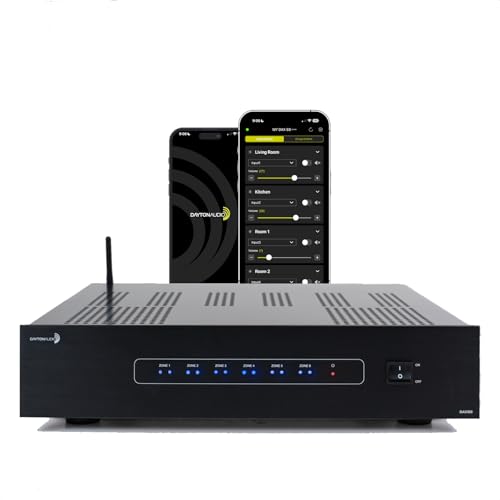
Dayton
Audio DAX88 8-Source 8-Zone Distributed Audio Matrix Amplifier
- •6x independently amplified stereo zones from one $1,396.99 chassis — roughly $232 per zone, and less than four WiiM Amp Pros cost
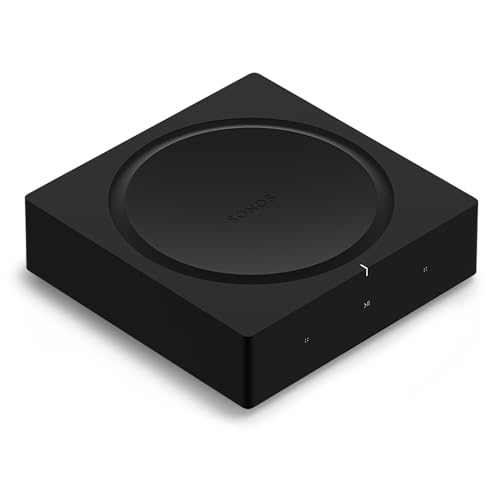
Sonos
Amp
- •125 W per channel into 8 ohms with full Sonos multi-room grouping and AirPlay 2, at $797.00 per zone
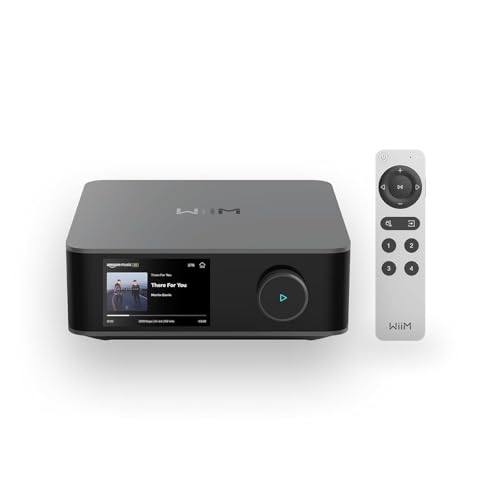
WiiM
Amp Ultra Streaming Amplifier with Touchscreen
- •100 W into 8 ohms, 200 W into 4 ohms, and a published 2 to 8 ohm impedance range for $529.00
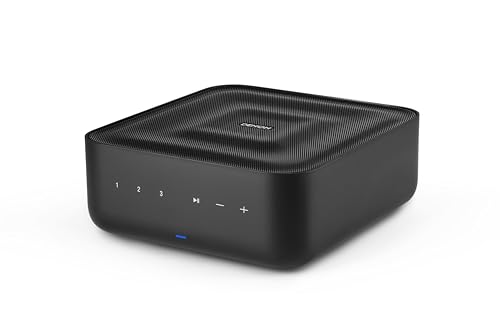
Denon
Home Amp Wireless Streaming Amplifier with HEOS
- •HDMI eARC rather than plain ARC, a 4 to 16 ohm speaker range, and HEOS grouping at $899.00
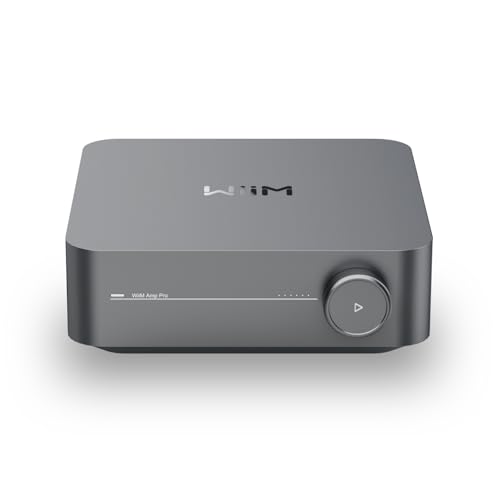
WiiM
Amp Pro Multiroom Streaming Amplifier
- •The cheapest entry to a genuine powered streaming zone at $379.00, if your household is Google or Alexa rather than Apple
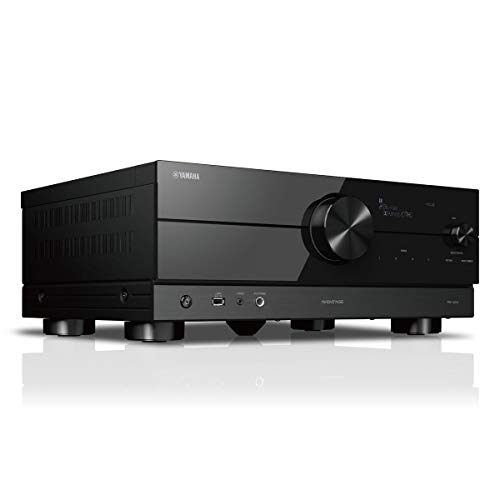
Yamaha
RX-A2A AVENTAGE 7.2-Channel AV Receiver
- •A 7.2-channel AVENTAGE receiver whose Zone 2 runs as a preout or as powered terminals, $899.95 against a $1,099.95 list price
Head-to-Head: Zones, Power, Impedance, Routing
Audio
Chart
 Smarthomeexplorer.com
Tap any pick to check its live price on Amazon.
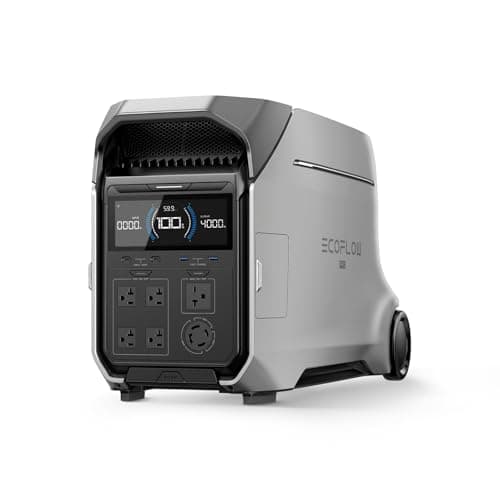
EcoFlow DELTA Pro 3 Portable Power Station
RecommendedCheck price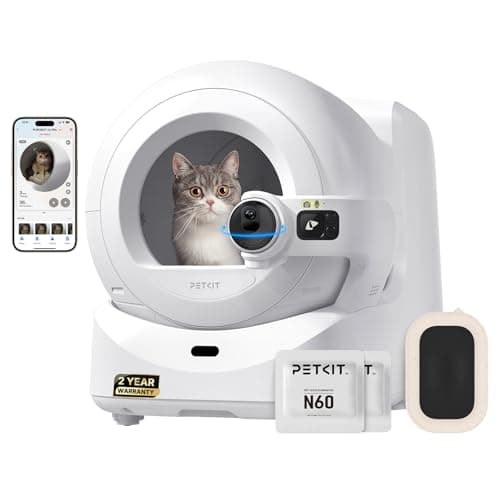
PETKIT Purobot Ultra
Must BuyCheck price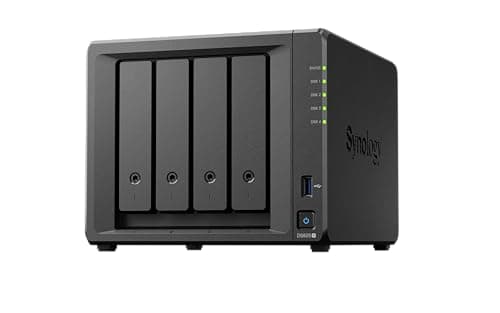
Synology DS925+ 4-Bay NAS
Must BuyCheck price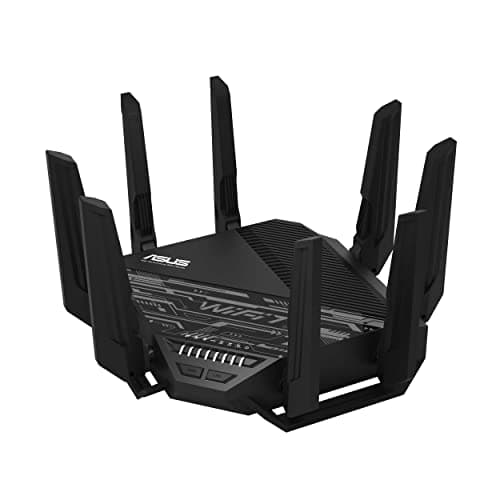
ASUS RT-BE96U
RecommendedCheck price
PetSafe ScoopFree SmartSpin
RecommendedCheck price
Amazon Echo Show 15 (newest model)
RecommendedCheck price
What Tips the Decision
Whole-home audio marketing collapses two fundamentally different architectures into a single phrase. A streaming amplifier — the Sonos Amp, either WiiM, the Denon Home Amp — powers precisely one zone, and the system scales only by purchasing another complete unit for the subsequent room. A distributed matrix amplifier such as the Dayton Audio DAX88 amplifies numerous zones from one centralized chassis. An audio-video receiver occupies the intermediate position, appending a solitary second zone onto a home-theater installation.
Calculate before purchasing, because the crossover arrives earlier than most buyers anticipate. Covering four rooms requires roughly 2.28x the investment in Sonos Amps that a single six-zone DAX88 demands, and even the economical WiiM Amp Pro accumulates past the matrix amplifier's price at the fourth room. This guide's weighted composite normalizes that reality by treating zone scalability as the heaviest factor. Our Best Wired Outdoor Whole-Home Speaker Systems (2026) guide covers the speakers hanging off these amplifiers.
Best Overall: Dayton Audio DAX88 8-Source 8-Zone Distributed Audio Matrix Amplifier
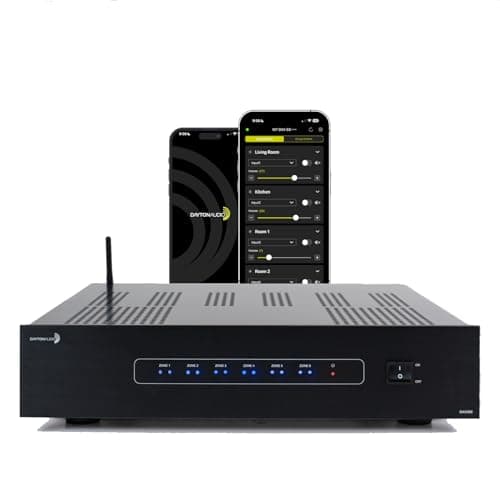
Dayton Audio DAX88 8-Source 8-Zone Distributed Audio Matrix Amplifier
- 6x independently amplified stereo zones from a single $1,396.99 chassis works out near $232 per powered room, below any per-room streaming amp here
- The 8-zone name overstates it: zones 7 and 8 are line-level RCA preamp outputs, so reaching eight powered rooms means buying a separate amplifier
(Current price, subject to change)
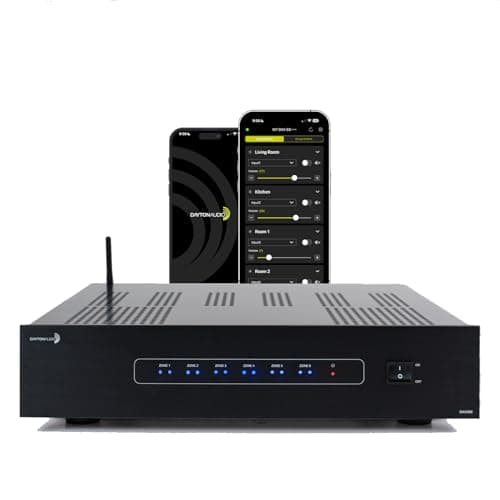
The Dayton Audio DAX88 8-Source 8-Zone Distributed Audio Matrix Amplifier earns the highest weighted composite in this guide at 8.3 on the SHE Multi-Zone Audio Score, and it gets there almost entirely on the factor weighted heaviest. Six amplified stereo zones fed by 4x RCA, seven 3.5mm analog and two optical inputs means three rooms playing three different things at once — no streaming amplifier here manages that without buying three of itself. Dayton's specification reads "6 x stereo amplified, 2 x stereo preamp," and the documentation is equally direct: zones 1 through 6 are powered speaker outputs on 4-pole Phoenix connectors, while zones 7 and 8 are RCA preamp outputs intended to drive an external amplifier.
Power is normalized across the roster at 75 WPC into 8 ohms and 135 WPC into 4 ohms with all channels driven, alongside a 4-ohm minimum on stereo channels and an 8-ohm minimum on any bridged zone. Compared to the per-room streaming amplifiers, the real costs are installation and ecosystem rather than price. This is a home-run-wiring product supporting up to 8x wall keypads through the separate DAX88HUB, and its streaming stack terminates at AirPlay 1, Spotify Connect and DLNA. Neither What Hi-Fi? nor any other allowlisted outlet has tested it.
What We Love
- 6x independently amplified stereo zones from a single $1,396.99 chassis works out near $232 per powered room, below any per-room streaming amp here
- A genuine matrix, not a splitter: eight sources can feed different zones simultaneously, so kitchen, office and patio each play something different
- Dayton rates it at 75 WPC into 8 ohms and 135 WPC into 4 ohms with all channels driven, with a documented 4-ohm minimum on stereo channels
- Zones bridge for extra power where a room needs it, additional units network together, and the manufacturer listing carries a 5-year warranty
What Could Be Better
- The 8-zone name overstates it: zones 7 and 8 are line-level RCA preamp outputs, so reaching eight powered rooms means buying a separate amplifier
- Streaming stops at AirPlay 1, Spotify Connect and DLNA — no Alexa, no Google Cast, no HEOS, no Sonos, and no allowlisted outlet has published a hands-on review
The Verdict
For a house with four or more rooms to cover, the Dayton Audio DAX88 8-Source 8-Zone Distributed Audio Matrix Amplifier checks the boxes that matter for a genuine whole-home build at $1,396.99. The 8.3 composite reflects six genuinely amplified zones plus true source-matrix routing from one chassis. The tradeoff is a wiring-closet install and the thinnest streaming stack in this guide.
Check price for the Dayton Audio DAX88 8-Source 8-Zone Distributed Audio Matrix Amplifier →
Ready to upgrade your home?
roborock Qrevo 2 Pro Robot Vacuum and Mop
See it on Amazon
ECOVACS DEEBOT X12 PRO Omni Robot Vacuum and Mop
See it on Amazon
Philips Wi-Fi Keypad Deadbolt with Handle
See it on Amazon
Sponsored listings from Amazon’s Sponsored Products for Creators program, kept apart from our reviews and rankings. How we make money
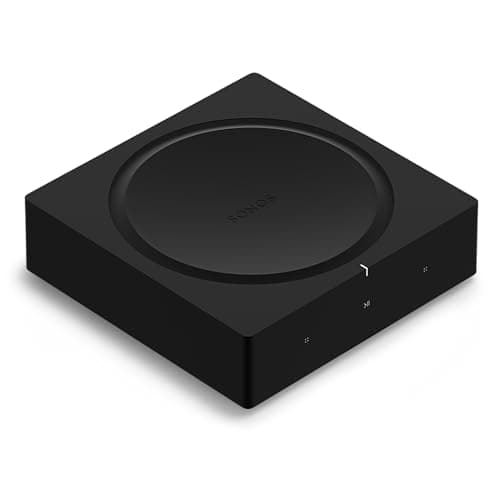
Best Ecosystem: Sonos Amp
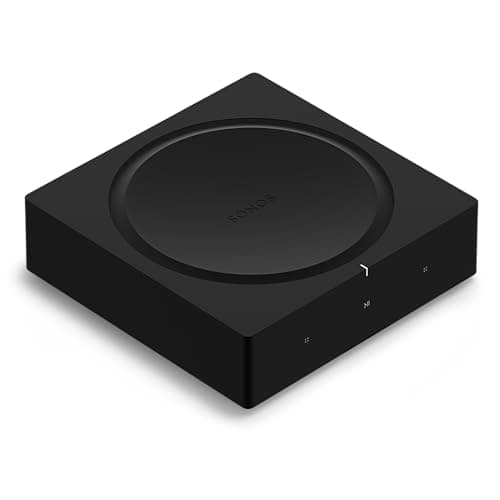
Sonos Amp
- 125 W per channel into 8 ohms is the strongest 8-ohm rating in this guide, from a Class-D design in a chassis only 2.52 inches tall
- One Sonos room per Amp at $797.00 makes four rooms roughly 2.28x the cost of a single six-zone DAX88 that still has two zones spare
(Current price, subject to change)
The Sonos Amp earns 8.1 on the SHE Multi-Zone Audio Score, second overall, and leads decisively on the streaming and ecosystem factor, with TechHive and What Hi-Fi? both having reviewed it. Sonos publishes the amplifier section plainly: a Class-D digital amplifier rated at 125 W per channel into 8 ohms, banana-plug connections, an auto-detecting subwoofer output with adjustable crossover, 2x Ethernet ports, and an auto-switching supply drawing 2.5A. The chassis measures 2.52 by 8.54 by 8.54 inches. AirPlay 2 arrives natively, separating it from both WiiM amplifiers evaluated in this guide.
Where the composite deteriorates is zone scalability, and the deficiency there is financial rather than technical. Each Amp constitutes exactly one Sonos room. Sonos documents that 2x pairs of 8-ohm speakers may be wired in parallel to a single Amp, which suits a large room or a patio, but that configuration remains one zone reproducing one source rather than two independently addressable rooms. Relative to the matrix alternative, four Sonos rooms approach 2.28x the DAX88's price. Sonos is also the most prescriptive manufacturer here regarding what may be connected at all.
What We Love
- 125 W per channel into 8 ohms is the strongest 8-ohm rating in this guide, from a Class-D design in a chassis only 2.52 inches tall
- Every Amp appears as a room in one Sonos app alongside every other Sonos speaker, the lowest-friction multi-room path evaluated here
- AirPlay 2 support means an iPhone, iPad or Mac casts to it directly, which neither the WiiM Amp Pro nor the Amp Ultra permits
- HDMI ARC plus line-in lets a TV or turntable in one room be redistributed to Sonos speakers elsewhere in the house
What Could Be Better
- One Sonos room per Amp at $797.00 makes four rooms roughly 2.28x the cost of a single six-zone DAX88 that still has two zones spare
- Sonos's set-up guide publishes required speaker wattage by impedance: 125 W at 8 ohms, 187.5 W at 6 ohms, 250 W at 4 ohms
The Verdict
If the house already runs Sonos, or the household is Apple-first, the Sonos Amp is the path of least friction at $797.00. The 8.1 composite reflects the broadest streaming reach in this guide paired with the strongest 8-ohm power rating. What you pay for that convenience is the weakest per-zone economics of any streaming amp evaluated here.
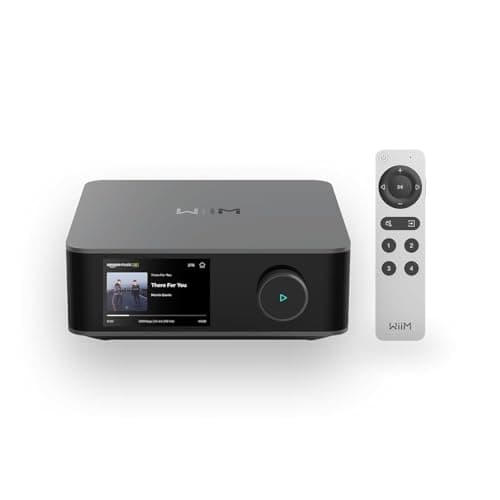
Best Power Headroom: WiiM Amp Ultra Streaming Amplifier with Touchscreen
WiiM Amp Ultra Streaming Amplifier with Touchscreen
- A published 2-ohm minimum is the lowest documented impedance floor in this guide, which removes most speaker-matching guesswork
- WiiM's specification table lists AirPlay 2, HomePod grouping and Siri as unsupported, so an Apple-first household forfeits direct casting
(Current price, subject to change)
The WiiM Amp Ultra Streaming Amplifier with Touchscreen earns 8.0 on the weighted composite and posts the strongest drive-headroom sub-score in the roster. WiiM's specification is unusually forthcoming: 100 W per channel into 8 ohms and 200 W into 4 ohms at 0.08% THD with two channels driven, Class-D amplification with post-filter feedback, an impedance range of 2 to 8 ohms, THD+N at or below 0.005%, damping factor 94, and frequency response spanning 20 Hz to 20 kHz within half a decibel. Most manufacturers in this tier publish a wattage and stop there, whereas a stated minimum impedance actually tells a buyer whether particular speakers are safe to connect.
The deficiency is Apple compatibility. WiiM's comparison table marks AirPlay 2, HomePod grouping and Siri unsupported on both the Amp Ultra and the Amp Pro, while the older, cheaper WiiM Amp retains all three capabilities. Google Cast, Alexa multi-room, Spotify Connect, TIDAL Connect, DLNA and Roon Ready are present throughout, so the limitation has a defined shape rather than a blanket one. Compared to the WiiM Amp Pro Multiroom Streaming Amplifier, the Ultra purchases roughly 1.67x the rated power at 8 ohms plus a superior converter, at about 1.4x the price per zone.
What We Love
- A published 2-ohm minimum is the lowest documented impedance floor in this guide, which removes most speaker-matching guesswork
- 100 W per channel into 8 ohms and 200 W into 4 ohms at 0.08% THD with two channels driven gives an open-plan room genuine headroom
- Specifications are strong on paper: THD+N at or below 0.005%, signal-to-noise at or above 120 dB, damping factor 94
- The 3.5-inch touchscreen and rotary control mean the zone remains usable without anyone opening an application
What Could Be Better
- WiiM's specification table lists AirPlay 2, HomePod grouping and Siri as unsupported, so an Apple-first household forfeits direct casting
- At $529.00 it costs roughly 1.4x the WiiM Amp Pro per zone while sharing an identical streaming platform
The Verdict
For the one room that has to fill an open floor plan, the WiiM Amp Ultra Streaming Amplifier with Touchscreen fits the brief at $529.00. The 8.0 composite reflects the best power-and-impedance combination measured here, with a documented 2 to 8 ohm range no competitor matches. The cost of admission is AirPlay 2, which WiiM does not implement on this particular model.
Check price for the WiiM Amp Ultra Streaming Amplifier with Touchscreen →
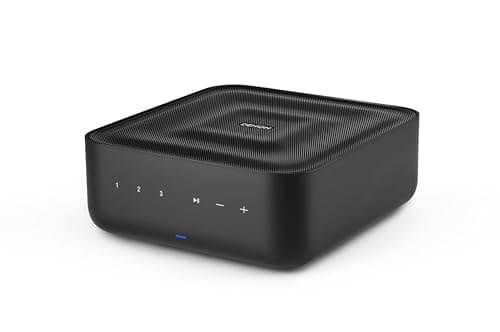
Best HEOS Zone: Denon Home Amp Wireless Streaming Amplifier with HEOS
Denon Home Amp Wireless Streaming Amplifier with HEOS
- A documented 4 to 16 ohm range is the most permissive high-impedance ceiling here, which suits long in-ceiling runs and older speakers
- No allowlisted expert outlet has published a hands-on review of this specific model, so every figure derives from Denon documentation rather than independent measurement
(Current price, subject to change)
The Denon Home Amp Wireless Streaming Amplifier with HEOS earns 7.9 on the SHE Multi-Zone Audio Score, at roughly 2.37x the per-zone cost of the cheapest pick here. Denon's specification sheet rewards careful reading: rated output is 100 W + 100 W into 8 ohms across the full 20 Hz to 20 kHz band at 0.05% THD, and separately 125 W + 125 W into 4 ohms at 1 kHz. The full-band figure represents the harder test, and publishing both is considerably more transparent than the single-frequency rating competitors quote. Output connectors are specified for 4 to 16 ohms.
Two characteristics separate it from the remaining single-zone field. The first is eARC, since every other streaming amplifier here stops at plain HDMI ARC, and the WiiM Amp Pro Multiroom Streaming Amplifier manual explicitly limits its ARC input to stereo PCM and Dolby Digital rather than DTS. The second is Dirac Live, which appears in Denon's own owner's manual as a supported calibration path. The costs are economics and evidence. Compared to every other pick in this tier, no outlet on our citation allowlist has published a hands-on review, so these figures should be read as manufacturer claims rather than confirmed measurements.
What We Love
- A documented 4 to 16 ohm range is the most permissive high-impedance ceiling here, which suits long in-ceiling runs and older speakers
- HDMI eARC rather than plain ARC gives the television zone more audio bandwidth than any streaming amplifier here that stops at ARC
- Rated 100 W + 100 W into 8 ohms across the full 20 Hz to 20 kHz band at 0.05% THD, a stricter condition than a 1 kHz-only rating
- HEOS grouping plus AirPlay 2 covers both the Denon multi-room path and direct Apple casting, which neither WiiM amplifier provides
What Could Be Better
- No allowlisted expert outlet has published a hands-on review of this specific model, so every figure derives from Denon documentation rather than independent measurement
- At $899.00 for one zone it is roughly 2.37x the per-zone cost of the WiiM Amp Pro, and the most expensive streaming amplifier evaluated here
The Verdict
If the house already runs HEOS, or a television zone specifically requires eARC, the Denon Home Amp Wireless Streaming Amplifier with HEOS is a sensible pick for that setup at $899.00. The 7.9 composite reflects strong published power figures alongside the highest impedance ceiling in this guide. The honest caveat is that nobody on our source allowlist has independently tested this model.
Check price for the Denon Home Amp Wireless Streaming Amplifier with HEOS →
Best Value Per Zone: WiiM Amp Pro Multiroom Streaming Amplifier
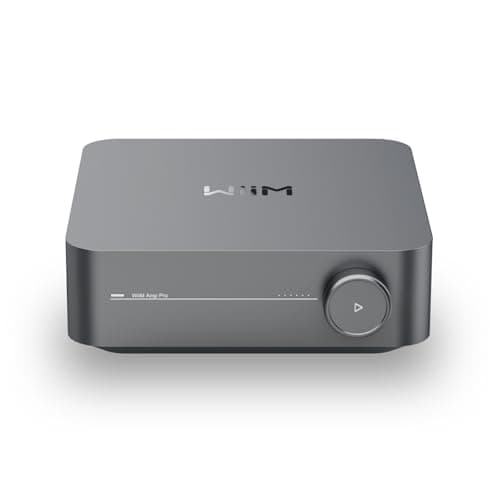
WiiM Amp Pro Multiroom Streaming Amplifier
- At $379.00 this is the cheapest genuine powered streaming zone in this guide, so three rooms still land below a single DAX88 chassis
- WiiM's spec table lists AirPlay 2, HomePod grouping and Siri as unsupported, and What Hi-Fi? lists 'No AirPlay' among its cons
(Current price, subject to change)
The WiiM Amp Pro Multiroom Streaming Amplifier earns 7.7 on the weighted composite, and its argument is economic rather than technical. WiiM's specification normalizes to 60 W per channel into 8 ohms and 120 W into 4 ohms, using the same TI TPA3255 amplifier as the base WiiM Amp but substituting an ESS ES9038 Q2M converter, lifting signal-to-noise from 108 dB to 120 dB. What Hi-Fi? reviewed it in June 2025 and concluded that improvements to the sound quality make this compact, capable and affordable streaming amplifier a more enjoyable listen and easy to recommend, while listing "No AirPlay" among the cons.
That omission is a genuine branch point rather than a footnote, and it is the single most misunderstood fact about this product. WiiM's own table marks AirPlay 2, HomePod grouping and Siri unsupported on the Amp Pro, whereas the older $299.00 WiiM Amp retains all three. An Apple household purchasing the newer, costlier model for its superior converter forfeits the casting path it uses most. The input side has a comparable shape: the manual states the HDMI ARC and optical inputs support stereo PCM and Dolby Digital but not DTS.
What We Love
- At $379.00 this is the cheapest genuine powered streaming zone in this guide, so three rooms still land below a single DAX88 chassis
- 60 W per channel into 8 ohms and 120 W into 4 ohms handles typical bookshelf and in-ceiling pairs without audible strain
- Signal-to-noise of 120 dB and THD+N of 0.0005% at 5 W are a measurable improvement on the base WiiM Amp's 108 dB and 0.0025%
- Groups with Nest and Echo speakers, and supports Spotify Connect, TIDAL Connect, DLNA and Roon Ready throughout
What Could Be Better
- WiiM's spec table lists AirPlay 2, HomePod grouping and Siri as unsupported, and What Hi-Fi? lists 'No AirPlay' among its cons
- The HDMI ARC and optical inputs carry stereo PCM and Dolby Digital but not DTS, so this is a music amplifier that tolerates a television
The Verdict
For a two- or three-room build on a Google or Alexa household, the WiiM Amp Pro Multiroom Streaming Amplifier lines up with what you actually need at $379.00. The 7.7 composite reflects the lowest cost per powered zone of any streaming amp in this guide against comparatively modest 60 W drive capability. The genuine dealbreaker, if the household owns iPhones, remains the absent AirPlay 2.
Check price for the WiiM Amp Pro Multiroom Streaming Amplifier →
Best Theater Crossover: Yamaha RX-A2A AVENTAGE 7.2-Channel AV Receiver
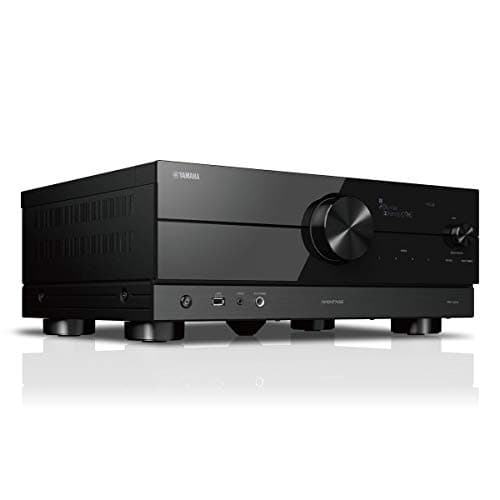
Yamaha RX-A2A AVENTAGE 7.2-Channel AV Receiver
- Zone 2 is genuinely dual-mode: a line-level ZONE OUT preout for an external amplifier, or powered terminals via EXTRA SP1/SP2 once Power Amp Assign is set
- HDMI sources cannot reach Zone 2 at all: Yamaha's multi-zone table shows a dash for HDMI on both the EXTRA SP and ZONE OUT paths
(Current price, subject to change)
The Yamaha RX-A2A AVENTAGE 7.2-Channel AV Receiver earns 6.9, last in this roster, and the reason is architectural rather than sonic. What Hi-Fi? reviewed it in August 2021 and found that while it may not have its full complement of features just yet, the Yamaha RX-A2A is still well kitted out and delivers exciting audio. As a receiver it performs: 7.2 channels rated at 100 W each into 8 ohms at 0.06% THD, Dolby Atmos and DTS:X, YPAO, MusicCast, AirPlay 2 and a phono input. Auro-3D is not supported, which Yamaha's table marks unavailable on both the RX-A2A and RX-A4A.
The multi-zone reality requires precision, because it is routinely described incorrectly. Zone 2 exists in two forms simultaneously: a line-level ZONE OUT preout feeding an external amplifier, and a genuinely powered option where zone speakers connect to the EXTRA SP1 or EXTRA SP2 terminals after setting Power Amp Assign. Both are real. Yamaha's multi-zone output table shows HDMI unavailable to Zone 2 on both paths, leaving analog, network, USB, tuner and 2-channel PCM as the only permitted sources. Compared to the Dayton Audio DAX88 8-Source 8-Zone Distributed Audio Matrix Amplifier, that is one restricted zone relative to six unrestricted ones.
What We Love
- Zone 2 is genuinely dual-mode: a line-level ZONE OUT preout for an external amplifier, or powered terminals via EXTRA SP1/SP2 once Power Amp Assign is set
- Rated 100 W per channel into 8 ohms across the full 20 Hz to 20 kHz band at 0.06% THD with two channels driven
- MusicCast plus AirPlay 2 lets the theater room join a wider multi-room system rather than remaining isolated
- Yamaha publishes explicit speaker minimums — 4 ohms for the fronts, 6 ohms elsewhere — with a menu setting to match
What Could Be Better
- HDMI sources cannot reach Zone 2 at all: Yamaha's multi-zone table shows a dash for HDMI on both the EXTRA SP and ZONE OUT paths
- Powering Zone 2 internally consumes amplifier channels via a Power Amp Assign choice: 7.1 +1Zone mutes the surround backs, 5.1.2 +1Zone mutes the front presence pair
The Verdict
If you were buying a home-theater receiver anyway and want a second zone as a bonus, you'll be well-served here by the Yamaha RX-A2A AVENTAGE 7.2-Channel AV Receiver at $899.95 against a $1,099.95 list. The 6.9 composite is the lowest here because one restricted zone is the weakest multi-zone proposition evaluated. As a receiver it is well regarded; as a whole-home engine it is not the tool.
Check price for the Yamaha RX-A2A AVENTAGE 7.2-Channel AV Receiver →
How We Score: SHE Multi-Zone Audio Score
SHE Multi-Zone Audio Score
Score Formula
0.30 * zone_scalability + 0.25 * speaker_drive_headroom + 0.25 * streaming_ecosystem_reach + 0.20 * source_routing_flexibilityScore Factors
- Zone Scalability (30%)How many independent rooms one purchase genuinely powers, and what the next room costs after that. This factor normalizes amplified zone count against price per zone, and it credits only zones with actual speaker outputs — line-level preamp zones that require a separate amplifier are counted as what they are. A six-zone chassis at roughly $232 per room scores far above a single-zone box at $797.00 or $899.00. It carries the heaviest coefficient because room count determines total spend on a whole-home build, and it is the specification most often overstated on the box.
- Speaker Drive Headroom (25%)Manufacturer-rated watts per channel together with the published minimum and maximum speaker impedance the amplifier is designed to tolerate. Ratings measured across the full 20 Hz to 20 kHz band score above single-frequency ratings taken at 1 kHz, and a manufacturer that publishes an explicit impedance range scores above one publishing only a wattage. The weight sits second because this pair of numbers decides which speakers a buyer may safely connect, and a mismatch is the one failure mode in this category that can damage hardware.
- Streaming & Ecosystem Reach (25%)Which streaming and voice platforms the amplifier joins natively — AirPlay 2, Google Cast, Alexa, Spotify Connect, TIDAL Connect, Roon, and any first-party multi-room tier such as Sonos, HEOS or MusicCast. This factor is scored strictly against each manufacturer's own support table rather than marketing copy, which is why two amplifiers in this guide lose points for AirPlay 2 they are widely assumed to have. It ties the drive-headroom weight because a zone that will not accept audio from the phone in your pocket is a zone you stop using.
- Source Routing Flexibility (20%)Whether different zones can play different sources simultaneously, and which inputs are actually permitted to reach a second room. A true source matrix scores at the top of the tier; a design where every extra zone must mirror the main zone, or where HDMI is blocked from the second zone entirely, scores at the bottom. The coefficient closes the formula because routing limits shape daily use without affecting whether the system works at all, and because those limits are usually documented only in a manual footnote.
SHE Multi-Zone Audio Score — Ranked
Dayton Audio DAX88 8-Source 8-Zone Distributed Audio Matrix Amplifier
SHE Multi-Zone Audio Score8.3/10$1,396.99 — 6x amplified stereo zones plus 2x preamp zones, true 8-source matrix
Sonos Amp
SHE Multi-Zone Audio Score8.1/10$797.00 — 125 W/ch into 8 ohms, full Sonos grouping and AirPlay 2, one zone
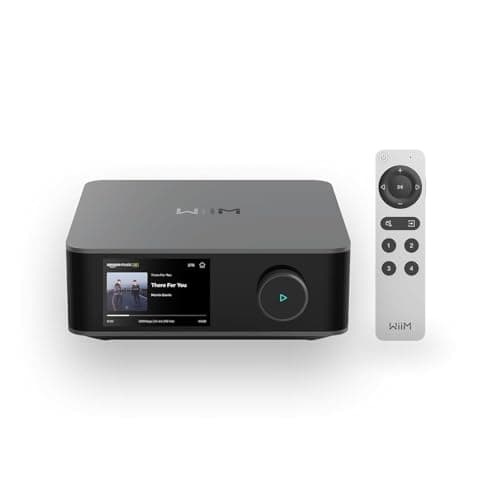
WiiM Amp Ultra Streaming Amplifier with Touchscreen
SHE Multi-Zone Audio Score8.0/10$529.00 — 100 W/ch into 8 ohms, published 2 to 8 ohm range, no AirPlay 2
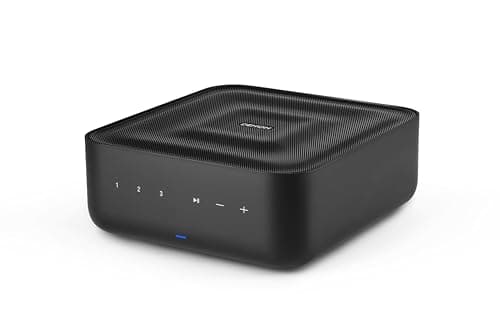
Denon Home Amp Wireless Streaming Amplifier with HEOS
SHE Multi-Zone Audio Score7.9/10$899.00 — 100 W + 100 W into 8 ohms, 4 to 16 ohm range, HEOS and eARC
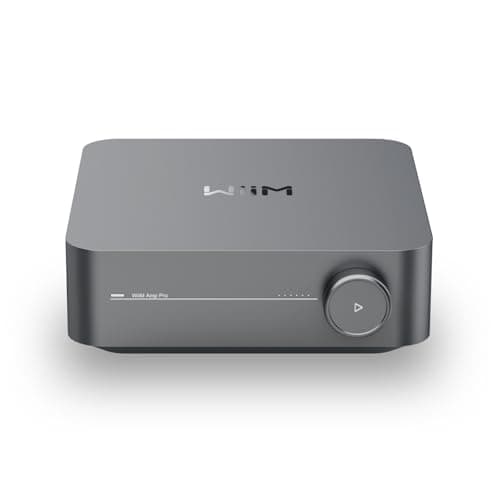
WiiM Amp Pro Multiroom Streaming Amplifier
SHE Multi-Zone Audio Score7.7/10$379.00 — 60 W/ch into 8 ohms, cheapest powered zone here, no AirPlay 2
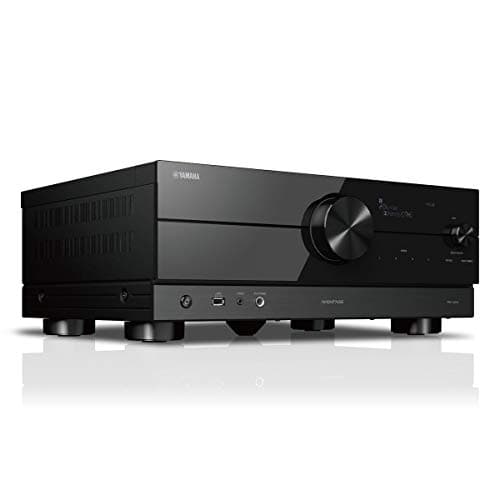
Yamaha RX-A2A AVENTAGE 7.2-Channel AV Receiver
SHE Multi-Zone Audio Score6.9/10$899.95 against $1,099.95 list — 7.2-ch receiver, one Zone 2 HDMI cannot reach
Speaker Matching: The Impedance Rules That Actually Matter
This is the portion of a whole-home installation where an error costs hardware rather than convenience, so treat every figure below as a manufacturer minimum rather than a suggestion. Each amplifier publishes its own limits, and they differ substantially. The Sonos Amp is strictest: Sonos's own set-up documentation publishes a per-impedance wattage table for attached speakers — 125 W at 8 ohms, 187.5 W at 6 ohms, and 250 W at 4 ohms — and describes the Amp as working with traditional 8-ohm bookshelf speakers as well as pairs of 6- or 4-ohm speakers. The WiiM Amp Ultra Streaming Amplifier with Touchscreen publishes the lowest floor, at 2 ohms. The Denon Home Amp Wireless Streaming Amplifier with HEOS specifies 4 to 16 ohms. The Dayton Audio DAX88 8-Source 8-Zone Distributed Audio Matrix Amplifier requires 4 ohms minimum on stereo channels and 8 ohms minimum on any bridged zone. The Yamaha RX-A2A AVENTAGE 7.2-Channel AV Receiver asks for at least 4 ohms on the front pair and 6 ohms elsewhere, shipping configured for 8-ohm speakers. WiiM guides WiiM Amp Pro Multiroom Streaming Amplifier buyers toward a published range of 8, 6 and 4 ohms — two 8-ohm pairs in parallel — with a stated minimum impedance of 2.67 ohms on its own spec page.
Two rules follow from that comparison, and both deserve internalizing before speakers are purchased. Firstly, wiring 2x speaker pairs in parallel halves the impedance the amplifier encounters and correspondingly doubles the current it must supply: two 8-ohm pairs present a 4-ohm load, which clears the published minimum on the Sonos Amp, both WiiM amps, the Denon Home Amp and the DAX88 stereo channels, but not on the Yamaha's non-front channels, where Yamaha asks for at least 6 ohms, nor on a bridged DAX88 zone, where the floor rises to 8 ohms; whereas two 4-ohm pairs present a 2-ohm load that sits below the published minimum of five of the six — only the WiiM Amp Ultra's stated 2-ohm floor lands exactly on it, and 2 ohms still falls below even the Amp Pro's published 2.67-ohm minimum. Parallel only 8-ohm speakers, and only on an amplifier rated to 4 ohms or lower — precisely the configuration Sonos documents and diagrams. Secondly, do not wire speakers in series to circumvent the problem, since Sonos states plainly that series wiring is not recommended because it results in poor sound quality. If you need more rooms than your amplifier has channels, add zones rather than stacking speakers onto one channel. Our Best Smart Speakers for Audiophiles 2026: Hi-Fi Sound guide covers the powered alternatives if passive wiring holds no appeal, and sister site DeskGearHQ ranks desk-scale audio in its computer speaker roundup.
| Product | Multiple Amplified Zones | AirPlay 2 | Alexa or Google Native | HDMI Input | Subwoofer Output | Published Impedance Range |
|---|---|---|---|---|---|---|
| Dayton Audio DAX88 8-Source 8-Zone Distributed Audio Matrix Amplifier | ✓ | ✕ | ✕ | ✕ | ✕ | ✓ |
| Sonos Amp | ✕ | ✓ | ✕ | ✓ | ✓ | ✓ |
| WiiM Amp Ultra Streaming Amplifier with Touchscreen | ✕ | ✕ | ✓ | ✓ | ✓ | ✓ |
| Denon Home Amp Wireless Streaming Amplifier with HEOS | ✕ | ✓ | ✕ | ✓ | ✓ | ✓ |
| WiiM Amp Pro Multiroom Streaming Amplifier | ✕ | ✕ | ✓ | ✓ | ✓ | ✓ |
| Yamaha RX-A2A AVENTAGE 7.2-Channel AV Receiver | ✓ | ✓ | ✕ | ✓ | ✓ | ✓ |
Where the Math Flips: Cost Per Zone
Every streaming amplifier evaluated here carries a fixed price per room, and that arithmetic constitutes the entire argument. Relative to a single Dayton Audio DAX88 covering six zones, equipping four rooms with Sonos Amps costs approximately 2.28x as much, equipping them with Denon Home Amps roughly 2.57x, and equipping them with WiiM Amp Ultras about 1.51x. Even the economical WiiM Amp Pro, which undercuts the matrix amplifier comfortably across two or three rooms, crosses above it at the fourth room while still covering two fewer zones. Compared to any per-room approach, the crossover therefore arrives at four rooms and produces a widening gap thereafter.
Two costs sit outside that calculation and belong in the budget regardless. The distributed amplifier requires home-run speaker cable from every room back to one closet, which is straightforward in new construction or an unfinished basement and genuinely disruptive in a finished two-storey house, whereas streaming amplifiers need only power and wireless coverage wherever the speakers already reside. Additionally, the DAX88's optional wall keypads route through a separate DAX88HUB, so a system with a control panel in every room exceeds the chassis price considerably. The honest framing is that a matrix amplifier trades installation labour against hardware expenditure, and which side of that trade prevails depends more on your walls than on your ears.
When NOT to Buy
Skip this entire category if you neither own nor intend to install passive speakers, because every amplifier evaluated here exists to drive speakers possessing no amplification of their own. If your rooms are already covered by Echos, Nests or HomePods, purchasing a streaming amplifier adds a box and resolves nothing. Skip the Yamaha RX-A2A AVENTAGE 7.2-Channel AV Receiver if whole-home audio is the genuine objective rather than a home theater with a bonus room attached. Skip the Dayton Audio DAX88 8-Source 8-Zone Distributed Audio Matrix Amplifier if you cannot run cable to a central closet, since a matrix amplifier without home-run wiring becomes an expensive single-room amplifier. Compared to the alternatives, ecosystem lock-in should outweigh substantial avoidable expenditure before you commit to per-room amplifiers across four or more rooms.
Who Should Buy What
Who Should Buy What
| If you are… | Recommended pick |
|---|---|
Four-plus room builders You are covering four or more rooms and can run speaker cable back to a single closet or rack location | Dayton Audio DAX88 8-Source 8-Zone Distributed Audio Matrix Amplifier |
Apple-first households You cast from iPhones, iPads and Macs by habit and want one app that covers every room in the house | Sonos Amp |
Big-room owners One zone has to fill an open-plan space or drive low-impedance speakers, and you want a published impedance range | WiiM Amp Ultra Streaming Amplifier with Touchscreen |
HEOS and eARC households You already run HEOS or Denon gear, or a TV zone specifically needs eARC rather than plain HDMI ARC | Denon Home Amp Wireless Streaming Amplifier with HEOS |
Two- and three-room starters You want the cheapest route to a couple of genuine streaming zones and you cast from Android or ask Alexa | WiiM Amp Pro Multiroom Streaming Amplifier |
Home-theater-first buyers You need a 7.2-channel Atmos receiver for the main room and will feed a second zone from streaming or a turntable | Yamaha RX-A2A AVENTAGE 7.2-Channel AV Receiver |
Frequently Asked Questions
Does the Dayton Audio DAX88 really power eight zones?
No. Dayton's own specification reads '6 x stereo amplified, 2 x stereo preamp,' and the product documentation is explicit that zones 1 through 6 are powered speaker outputs on 4-pole Phoenix connectors while zones 7 and 8 are line-level RCA preamp outputs. Those last two zones are designed to feed an external amplifier or a commercial 70V system, which is genuinely useful, but reaching eight powered rooms means buying a second amplifier. Budget the DAX88 as a six-zone amp with two bonus line-level outputs, not as an eight-zone amp.
Does the WiiM Amp Pro support AirPlay 2?
No, and this catches many buyers out because the cheaper WiiM Amp does. WiiM's own comparison table lists AirPlay 2, 'Group with HomePods' and 'Work with Siri' as unsupported on both the WiiM Amp Pro and the WiiM Amp Ultra, while the original WiiM Amp retains all three. Google Cast, Alexa Cast, Alexa multi-room, Spotify Connect, TIDAL Connect, DLNA and Roon Ready are supported across all three models. If your household streams primarily from Apple devices, the base WiiM Amp, the Sonos Amp and the Denon Home Amp are the AirPlay 2 options here.
Is Zone 2 on the Yamaha RX-A2A powered or preout?
Both, depending on how you configure it. Yamaha's specification table lists 'Zone 2 Audio Output: Preout' for the line-level ZONE OUT jacks, and separately lists 'Powered Zone: Zone 2,' because zone speakers can connect directly to the EXTRA SP1 or EXTRA SP2 terminals once Power Amp Assign is changed in the Setup menu. The catch with the powered route is that it borrows amplifier channels from the main room, via a Power Amp Assign choice between 7.1 +1Zone (which mutes the surround back speakers) and 5.1.2 +1Zone (which mutes the front presence pair), per Yamaha's own manual. The preout route avoids that but needs a separate amplifier.
Can I send my streaming box or console to the second zone on an AV receiver?
Not on the Yamaha RX-A2A. Its multi-zone output table shows HDMI as unavailable to Zone 2 on both the EXTRA SP speaker terminals and the ZONE OUT preout. The sources Zone 2 can receive are analog audio, network streaming, USB, the tuner, and coaxial or optical digital audio when the signal is 2-channel PCM. That means a turntable, an internet radio station or a Spotify stream can play in the second room, but an Apple TV, a games console or a cable box connected over HDMI cannot. This is a common and expensive assumption to get wrong, so check the multi-zone table of any receiver before planning around it.
What speaker impedance do I need for a multi-zone amplifier?
It varies by amplifier, and the manufacturer minimum is the number that matters. The WiiM Amp Ultra publishes a 2 to 8 ohm range, the Denon Home Amp specifies 4 to 16 ohms, and the Dayton Audio DAX88 requires at least 4 ohms on stereo channels and 8 ohms on any bridged zone. Sonos's set-up documentation lists supported speaker configurations at 8, 6 and 4 ohms with required wattages rising as impedance falls (250 W at 4 ohms). Yamaha asks for at least 4 ohms on the front pair and 6 ohms elsewhere on the RX-A2A, with a menu setting to match. Most mainstream in-ceiling and bookshelf speakers are 8 ohms, which is safe on every amp here.
Can I run two pairs of speakers from one amplifier channel?
Sometimes, and only with 8-ohm speakers. Wiring two pairs in parallel halves the impedance the amplifier sees, so two 8-ohm pairs present a 4-ohm load. That clears the published minimum on the Sonos Amp, both WiiM amps, the Denon Home Amp and the DAX88 stereo channels — but not the Yamaha's non-front channels, which want 6 ohms, nor a bridged DAX88 zone, which wants 8 ohms. Two 4-ohm pairs would present a 2-ohm load, below the stated minimum of five of the six amps here. Sonos documents the four-speaker parallel setup explicitly, supplies a wiring diagram, and says speaker impedance should be 8 ohms for it — and says not to wire speakers in series, because it results in poor sound quality. Two pairs on one channel is still one zone playing one thing.
Should I buy one streaming amp per room or a single matrix amplifier?
Count your rooms and do the arithmetic. At July 2026 prices, three rooms costs $1,137.00 in WiiM Amp Pros, which stays under the $1,396.99 Dayton Audio DAX88 that covers six, while the same three rooms in Sonos Amps already costs $2,391.00 and overshoots it. At four rooms the WiiM route reaches $1,516.00 and the Sonos route $3,188.00, so the matrix amplifier wins on price against both while still leaving two zones spare. The tradeoff is not only money: the WiiM amps bring Google Cast and Alexa grouping, and the Sonos and Denon amps bring AirPlay 2 and their own multi-room layers, none of which the DAX88 has, and none of them need home-run wiring. Three rooms or fewer, buy streaming amps; four or more with a wiring path, buy the matrix.
Can different rooms play different music at the same time?
On a matrix amplifier, yes by design — the Dayton Audio DAX88 accepts eight sources and can route any of them to any of its six amplified zones simultaneously, so three rooms can genuinely play three different things. On streaming amps, each unit is one zone, so different rooms play different music only because you bought a separate amp for each. On the Yamaha RX-A2A, Zone 2 can play a different source from the main room, but only from the limited list of non-HDMI sources it is permitted to receive. Wiring two speaker pairs to one amplifier channel does not create two zones; both pairs always play the same thing.
Do I need an AV receiver for whole-home audio?
No, and for most whole-home builds a receiver is the wrong tool. An AV receiver is a home-theater product that adds one extra zone as a secondary feature, which is why the Yamaha RX-A2A finishes last in this guide despite being a capable receiver. It offers a single Zone 2, that zone cannot receive HDMI sources, and powering it internally costs the main room amplifier channels. Buy a receiver because you want Atmos in the main room and will treat the second zone as a bonus. If audio in four or six rooms is the actual goal, a distributed matrix amplifier or a set of streaming amps does the job better for the money.
How much does a whole-home audio amplifier cost?
The six amps in this guide span $379.00 to $1,396.99 at prices verified through the Amazon Creators API on July 26, 2026: $379.00 for the WiiM Amp Pro, $529.00 for the WiiM Amp Ultra, $797.00 for the Sonos Amp, $899.00 for the Denon Home Amp, $899.95 for the Yamaha RX-A2A against a $1,099.95 list price, and $1,396.99 for the six-zone Dayton Audio DAX88. Budget separately for speakers, speaker cable, and on the DAX88 the optional DAX88HUB and wall keypads. Amazon prices move frequently, so confirm the live price before buying.
Bottom Line
Get the Dayton Audio DAX88 8-Source 8-Zone Distributed Audio Matrix Amplifier if you are covering four or more rooms and can run speaker cable back to one closet.
Get the Sonos Amp if you want one app for the whole house, AirPlay 2, and TV audio that redistributes to other rooms.
Get the WiiM Amp Ultra Streaming Amplifier with Touchscreen if one zone has to fill an open-plan room and you want a published impedance range, not a guess.
Get the Denon Home Amp Wireless Streaming Amplifier with HEOS if you already run HEOS, or a TV zone specifically needs eARC rather than plain HDMI ARC.
Get the WiiM Amp Pro Multiroom Streaming Amplifier if you want the cheapest route to two or three real streaming zones on a Google or Alexa household.
Get the Yamaha RX-A2A AVENTAGE 7.2-Channel AV Receiver if you need a 7.2-channel Atmos receiver anyway and will treat the second zone as a bonus.
For most homes past three rooms the right call is the Dayton Audio DAX88 8-Source 8-Zone Distributed Audio Matrix Amplifier at $1,396.99 — 6x genuinely amplified zones and true source-matrix routing earn the top 8.3 SHE Multi-Zone Audio Score, though it demands home-run wiring and its streaming stack stops at AirPlay 1, Spotify Connect and DLNA. For one to three rooms on an Apple household the Sonos Amp at $797.00 is the smoother path; on a Google or Alexa household the WiiM Amp Pro Multiroom Streaming Amplifier at $379.00 does the same job for less than half. Skip the category entirely if you have no passive speakers and no intention of installing any.
Sources & Methodology
Methodology: SHE Multi-Zone Audio Score — Formula: 0.30 * zone_scalability + 0.25 * speaker_drive_headroom + 0.25 * streaming_ecosystem_reach + 0.20 * source_routing_flexibility. Factors: Zone Scalability (30%): How many independent rooms one purchase genuinely powers, and what the next room costs after that. This factor normalizes amplified zone count against price per zone, and it credits only zones with actual speaker outputs — line-level preamp zones that require a separate amplifier are counted as what they are. A six-zone chassis at roughly $232 per room scores far above a single-zone box at $797.00 or $899.00. It carries the heaviest coefficient because room count determines total spend on a whole-home build, and it is the specification most often overstated on the box. | Speaker Drive Headroom (25%): Manufacturer-rated watts per channel together with the published minimum and maximum speaker impedance the amplifier is designed to tolerate. Ratings measured across the full 20 Hz to 20 kHz band score above single-frequency ratings taken at 1 kHz, and a manufacturer that publishes an explicit impedance range scores above one publishing only a wattage. The weight sits second because this pair of numbers decides which speakers a buyer may safely connect, and a mismatch is the one failure mode in this category that can damage hardware. | Streaming & Ecosystem Reach (25%): Which streaming and voice platforms the amplifier joins natively — AirPlay 2, Google Cast, Alexa, Spotify Connect, TIDAL Connect, Roon, and any first-party multi-room tier such as Sonos, HEOS or MusicCast. This factor is scored strictly against each manufacturer's own support table rather than marketing copy, which is why two amplifiers in this guide lose points for AirPlay 2 they are widely assumed to have. It ties the drive-headroom weight because a zone that will not accept audio from the phone in your pocket is a zone you stop using. | Source Routing Flexibility (20%): Whether different zones can play different sources simultaneously, and which inputs are actually permitted to reach a second room. A true source matrix scores at the top of the tier; a design where every extra zone must mirror the main zone, or where HDMI is blocked from the second zone entirely, scores at the bottom. The coefficient closes the formula because routing limits shape daily use without affecting whether the system works at all, and because those limits are usually documented only in a manual footnote.
Expert review sources used in this analysis:
- SmartHomeExplorer aggregates expert review data and manufacturer documentation to produce consensus-based buying guidance
- We do not perform first-party product testing
- Every specification in this guide — channel counts, zone topology, powered-versus-preout behaviour, wattage, impedance limits and format support — was taken exclusively from the manufacturer's own published specification sheet, owner's manual or support documentation, and never from an outlet review: Dayton Audio's DAX88 product specification and manual, Sonos's Amp user guide plus its support article on connecting four speakers, WiiM's Amp and Amp Pro technical specification page and the WiiM Amp Ultra user manual version 1.0.5, Denon's DENON HOME AMP specifications page, and Yamaha's RX-A2A specification table and owner's manual
- Every ASIN, price and condition was verified against the Amazon Creators API on July 26, 2026, with condition confirmed New and no refurbished listing used: WiiM Amp Pro $379.00 (B0DFPJ91ZX), WiiM Amp Ultra $529.00 (B0F995W2NG), Sonos Amp $797.00 (B07LD8NN37), Denon Home Amp $899.00 (B0D6XCGVCZ), Yamaha RX-A2A $899.95 against a $1,099.95 list-price basis (B08DWKCHH6), and Dayton Audio DAX88 $1,396.99 (B09F7WYJSB)
- Independent expert-review coverage is uneven across this roster and we have not papered over the gap
- What Hi-Fi? has reviewed the WiiM Amp Pro, the WiiM Amp Ultra, the Sonos Amp and the Yamaha RX-A2A, and TechHive and Sound & Vision have reviewed the Sonos Amp, but no outlet on our citation allowlist has published a hands-on review of the Denon Home Amp or the Dayton Audio DAX88
- Claims about those two products are manufacturer claims and are labelled as such in their sections; no outlet is credited with testing a product it has not tested
- The weighted formula behind the SHE Multi-Zone Audio Score applies these coefficients: zone scalability 30%, speaker drive headroom 25%, streaming and ecosystem reach 25%, and source routing flexibility 20%, with each normalized factor scored on a 0-10 tier
- Confirm the live price and stock status on Amazon before buying, since prices and promotions change frequently.
Nicholas Miles is the founder of SmartHomeExplorer and a longtime smart home enthusiast focused on helping everyday homeowners make better technology decisions. He researches, compares, and writes about products across security, climate, lighting, leak prevention, sensors, home energy, and automation, with an emphasis on real-world usefulness, ecosystem compatibility, reliability, privacy, and long-term value.
Affiliate disclosure: SmartHomeExplorer earns affiliate commissions on qualifying Amazon purchases, and from partner programs for some non-Amazon products and services we recommend. Our scoring methodology is independent of affiliate relationships.