
Best License Plate & Driveway Cameras 2026: Night Plate Reads Ranked
Reolink Duo 3 PoE wins overall at $189.99 — two stitched 4K sensors give a 180-degree, no-blind-spot view with F1.6 color night vision. The dual-lens TrackMix WiFi zooms the plate on a moving car for $189.99.
This article contains affiliate links. We may earn a commission at no extra cost to you. Prices change frequently — check the current price on Amazon before buying. Learn more
The Short Answer
For the homeowner whose late-night plate keeps blowing out to a white blob, the recommended pick is the Reolink Duo 3 PoE, because its stitched 4K sensors and color night vision reaching roughly 80 ft earn the leading 9.1 on the weighted SHE Plate-Capture Score, while the value alternative TrackMix zooms a moving tag.
Featured in this Guide
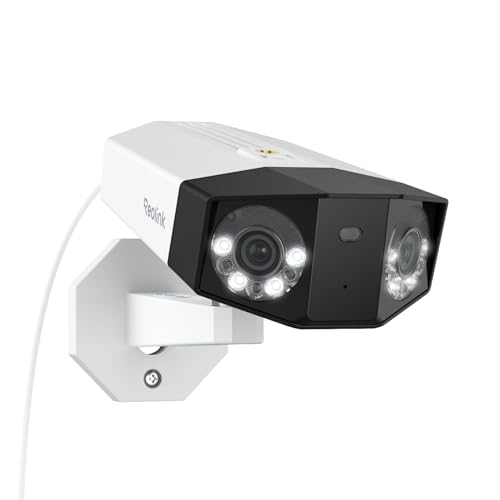
Reolink
Duo 3 PoE
- •Two stitched 4K sensors, 180-degree no-blind-spot view, F1.6 color night vision to ~80 ft, 24/7 local recording at $189.99
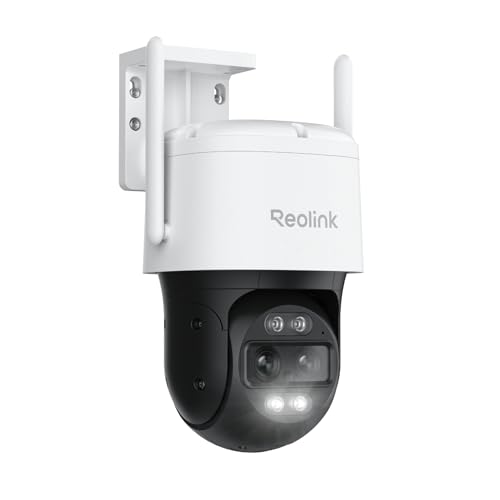
Reolink
TrackMix WiFi
- •2.8mm wide plus 8mm telephoto with 6X hybrid zoom and auto-tracking crops to the plate as the car pulls in, $189.99
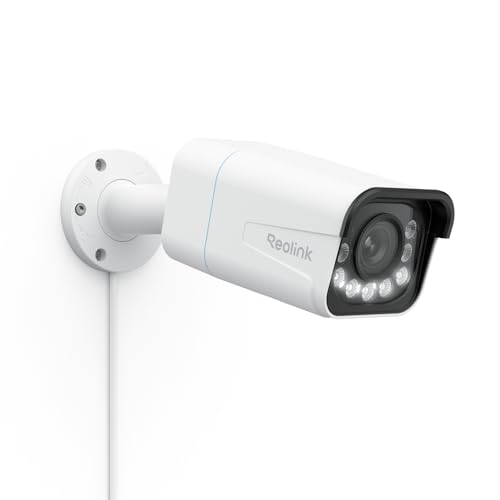
Reolink
RLC-811A
- •5X motorized optical zoom on a 4K sensor concentrates pixels on the tag at distance, PoE, under $130
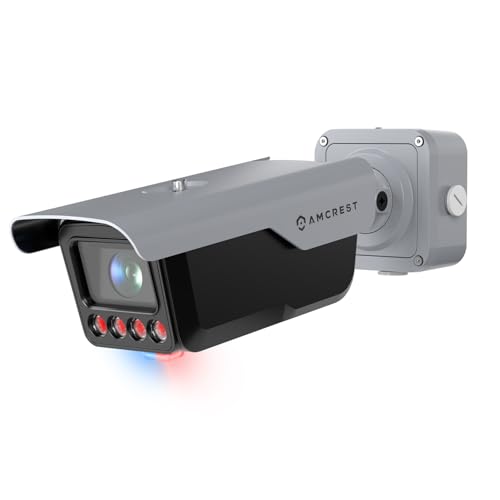
Amcrest
IP4M-1072EW-AI LPR Camera
- •Purpose-built ANPR logs plate text at a stated 99%+ capture rate down one lane, IK10 vandal-rated, $769.99
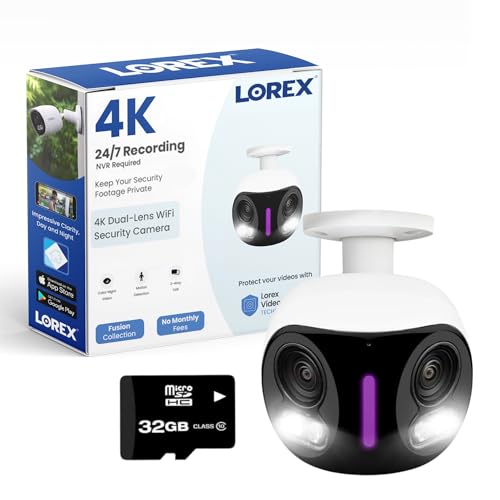
Lorex
4K Dual-Lens Wi-Fi Camera
- •180-degree dual-lens 4K with Alexa and Google Assistant hooks and a bundled 32GB card at $119.99
Head-to-Head: Legibility, Night, Coverage, and Score
Smart Security
Chart
 Smarthomeexplorer.com
What Tips the Decision
The failure is reading the plate after dark and on the move, when IR bounces off the reflective tag into a white blob under headlights. A 4K spec alone does not get you there since a 180-degree field spreads those 8MP thin — the forum refrain stays "my camera is 4K but I still can't read the plate." Optics beat pixels here: a 5X optical zoom keeps a tag legible past 50 ft, where a panoramic crop dissolves it. This guide ranks on the weighted SHE Plate-Capture Score, a composite weighting legibility, night capture, and coverage over resolution.
The decision splits three ways: a dual-lens camera blanketing the driveway, a zoom lens concentrating pixels on the tag, or a plate-reader logging text. Echoing TechHive and PCWorld coverage, the Duo 3 PoE leads overall; the Amcrest earns its cost down a lane. For perimeter detection, see our Best Smart Driveway Alarms 2026: 5 Ranked guide.
Best Overall: Reolink Duo 3 PoE
Best Overall — widest no-blind-spot driveway coverageReolink Duo 3 PoE
- Two stitched 4K sensors deliver a 7680x2160 (16MP) image across a 180-degree field with no blind spot
- No optical zoom, so a vehicle 50-plus ft out resolves to a blur off center frame

(Current price, subject to change)
The Reolink Duo 3 PoE earns 9.1 on the weighted SHE Plate-Capture Score, a normalized composite that rewards coverage and night capture rather than raw zoom. That leading composite rests on a category-best 9.6 coverage-reliability sub-score and a strong 9.2 night-capture sub-score, because two 4K sensors stitch into a wide panoramic frame across 180 degrees, and the bright F1.6 apertures feeding six IR LEDs plus a spotlight together deliver usable color detail to roughly 80 ft. It also yields a 9.5 storage-independence sub-score through continuous PoE recording to an NVR or microSD with no mandatory subscription.
As of June 2026, techhive calls the Duo 3 PoE Reolink's best outdoor dual-lens camera to date, crediting the meaningful jump to its stitched image, while pcworld reports that the panoramic design delivers an ultra-wide view without sacrificing the per-pixel sharpness that picks out a plate near center frame. Compared to a single fixed lens, the stitched dual-sensor read keeps a wide-driveway car in shot throughout the entire approaching pass and consequently produces noticeably fewer missed frames. Relative to the sharper RLC-811A, the honest remaining trade is zoom, because a plate parked well beyond close range eventually softens.
What We Love
- Two stitched 4K sensors deliver a 7680x2160 (16MP) image across a 180-degree field with no blind spot
- F1.6 lenses, six IR LEDs, and a spotlight push usable color night vision to roughly 80 ft
- One Cat5e PoE run carries power and video, and 24/7 local recording skips the cloud fees Ring and Arlo charge
- On-device person, vehicle, and animal detection with Motion Track overlays a car's path on a single still
What Could Be Better
- No optical zoom, so a vehicle 50-plus ft out resolves to a blur off center frame
- Headlight glare can wash a plate to a white blob on the fixed shutter at night
The Verdict
If you're tired of cars slipping past a single narrow lens and want the whole driveway covered, the Reolink Duo 3 PoE fits the brief without compromise. The 9.1 means two stitched 4K sensors across 180 degrees with F1.6 night vision to ~80 ft — you'll notice a plate at 20-30 ft stays in frame, not slipping the edge. The RLC-811A reads farther, but loses the no-blind-spot view.
Ready to upgrade your home?
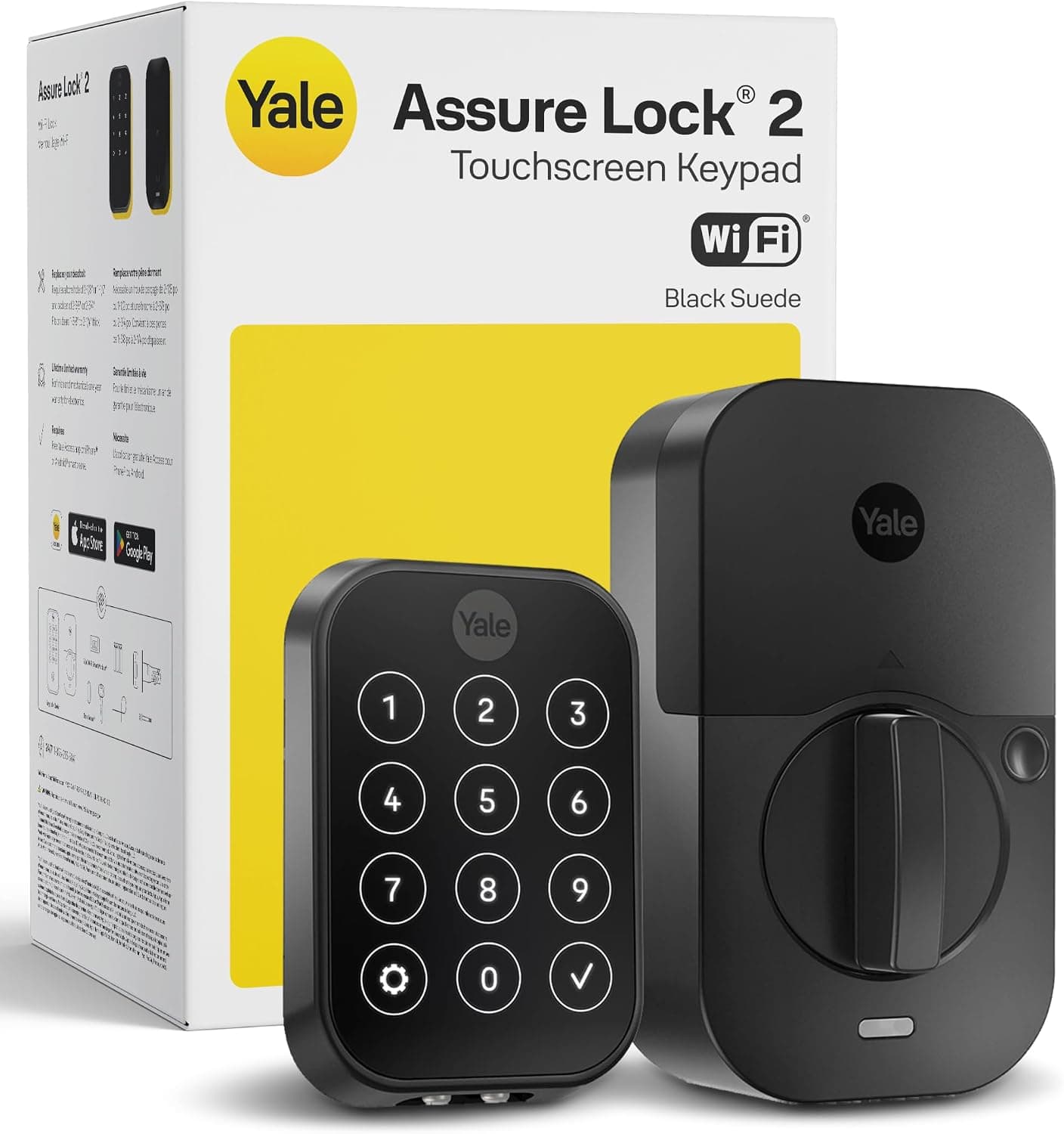
Yale Assure Lock 2 Wi-Fi Smart Lock with Keypad
See it on Amazon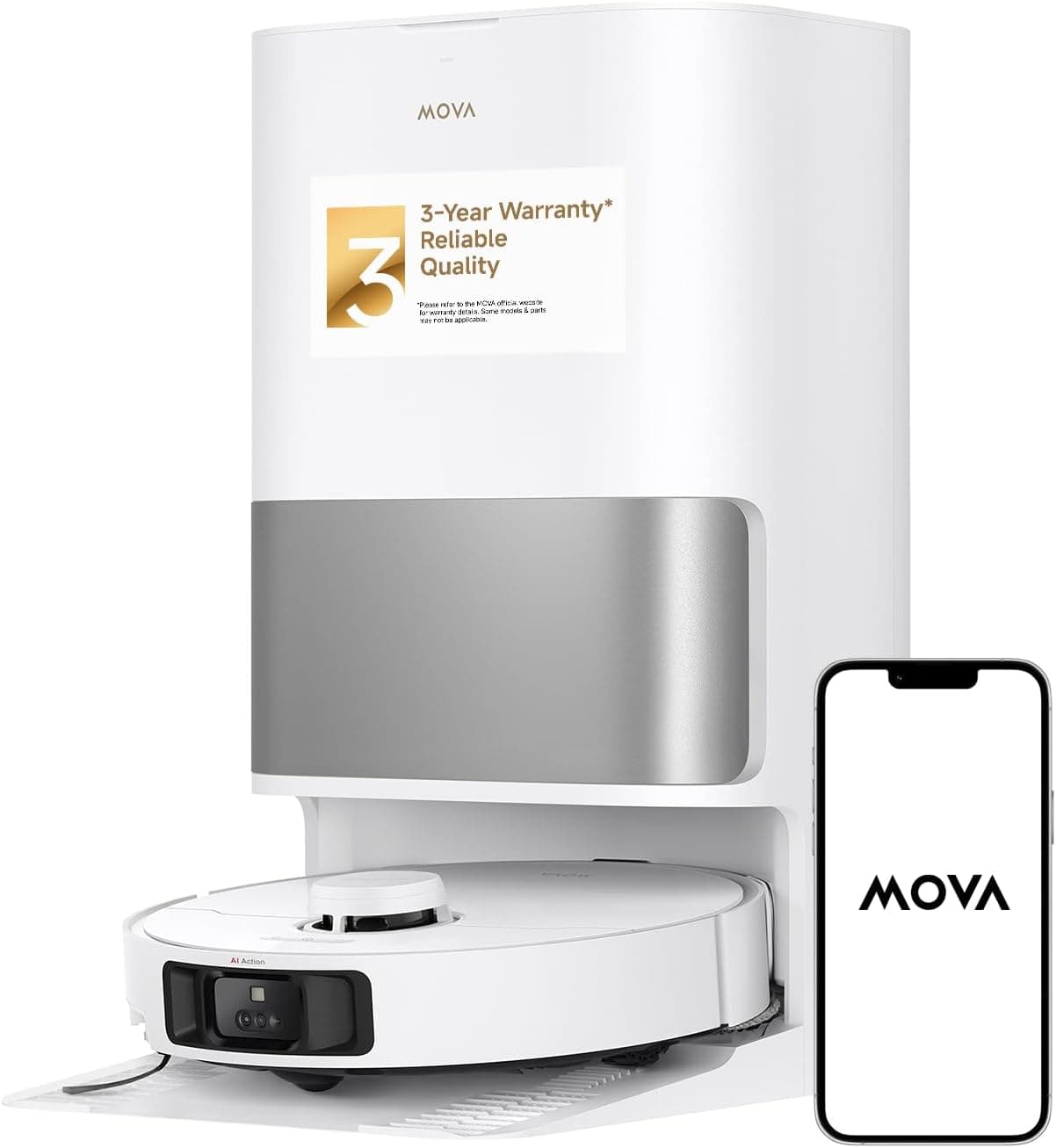
MOVA P10 Pro Ultra Robot Vacuum and Mop
See it on Amazon
roborock F25 Ultra Steam Wet Dry Vacuum Mop
See it on Amazon
Sponsored listings from Amazon’s Sponsored Products for Creators program, kept apart from our reviews and rankings. How we make money
Best Zoom on a Moving Car: Reolink TrackMix WiFi
Best Zoom on a Moving Car — overview and close-up at onceReolink TrackMix WiFi
- A 2.8mm wide lens watches the scene while an 8mm telephoto crops to the plate at the same time
- The telephoto lens records at 1080p, not 4K, so a fast plate can soften on a single grab

(Current price, subject to change)
The Reolink TrackMix WiFi earns a strong 8.8 on the weighted SHE Plate-Capture Score, a composite valuing the moving plate, not only the parked one. That leading composite pairs an above-average plate-legibility sub-score with an even higher coverage-reliability sub-score, because the dual-lens design runs a wide overview lens alongside a telephoto that 6X hybrid zoom and auto-tracking continuously aim, panning and tilting to keep an approaching car framed throughout its arrival. Positioned around 180 dollars over dual-band Wi-Fi, it also earns a respectable storage-independence sub-score by feeding a Reolink NVR or microSD card for local recording.
Reviewers at techhive describe the TrackMix as a dual-lens outdoor camera showing a wide overview and a zoomed close-up at once, praising the auto-tracking that pans and tilts to hold a moving subject, while security-baron separately frames the design as a standout value PTZ that catches the close-up detail single-lens cameras miss on the move. Undercutting comparable PTZ rivals, it delivers a zoomed plate the wider panoramic cameras simply cannot manage. Relative to the fixed-zoom RLC-811A, the remaining catch is the lower-resolution 1080p telephoto and the auto-tracking lens needing a moment to acquire and slew, during which a fast-crossing car can occasionally be partly missed.
What We Love
- A 2.8mm wide lens watches the scene while an 8mm telephoto crops to the plate at the same time
- 6X hybrid zoom plus auto-tracking pans 355 degrees and tilts 90 degrees to follow a moving car
- 8MP/4K wide-lens capture over 2.4GHz or 5GHz Wi-Fi avoids a cable trench while feeding local 24/7 storage
- On-device person, vehicle, and animal AI cuts false triggers at roughly $180
What Could Be Better
- The telephoto lens records at 1080p, not 4K, so a fast plate can soften on a single grab
- Auto-tracking has to slew, so a car crossing fast may be partly missed before lock-on
The Verdict
If you've narrowed to a driveway where cars move and want the plate zoomed without a cable run, the Reolink TrackMix WiFi lines up with what you actually need. The 8.8 means a wide overview plus an 8mm telephoto crop and 6X auto-tracking, so you'll notice the tag stay framed as the car pulls in. The Duo 3 covers wider, but on the move this is the path of least friction.
Best Value Zoom: Reolink RLC-811A
Best Value Zoom — optical zoom plate detail under $130Reolink RLC-811A
- A 5X motorized optical zoom on a 4K (8MP) sensor concentrates pixels on the plate at distance
- A single fixed-position lens, so widen for coverage and you lose plate-reading pixels

(Current price, subject to change)
The Reolink RLC-811A earns 8.4 on the weighted SHE Plate-Capture Score, a composite where its 9.2 plate-legibility sub-score is the standout in the consumer tier. That sub-score reflects a 5X motorized optical zoom on a single 4K (8MP) sensor, the most reliable way to read a tag at distance that the dual-lens panoramic cams cannot match, because optical zoom concentrates pixels on the plate rather than spreading them across 180 degrees. Positioned under $130 with a 9.4 storage-independence sub-score, it records over PoE to a microSD card up to 512GB with no recurring fee.
Reviews at techhive highlight the RLC-811A's 5X optical zoom and 4K sensor as the combination that keeps distant detail sharp where fixed-focus cameras blur, and trustedreviews frames it as a budget 4K PoE camera whose motorized zoom and color night vision punch well above an under-$100 price. Compared to a wide panoramic cam, the 5X optical zoom delivers the legibility difference at range and outperforms a digital crop. The trade is coverage: its single fixed lens scores just 7.4 on reliability, so a car leaving the framed zone is gone.
What We Love
- A 5X motorized optical zoom on a 4K (8MP) sensor concentrates pixels on the plate at distance
- Optical zoom keeps detail intact at range rather than the resolution loss of a digital crop
- PoE wiring plus a microSD card up to 512GB means local recording with no cloud fee
- On-device human, vehicle, and pet detection narrows alerts at under $130
What Could Be Better
- A single fixed-position lens, so widen for coverage and you lose plate-reading pixels
- No pan or tilt, so a vehicle leaving the framed zone exits the shot entirely
The Verdict
For the budget buyer who needs a tag read far down a fixed zone, the Reolink RLC-811A is a sensible pick for that setup. The 9.2 plate-legibility sub-score means a 5X optical zoom keeps distant detail sharp where a digital crop blurs — a plate stays legible deep down the driveway. You give up the wide view, but for the cheapest path to true zoom, no need to overthink it.
Best Dedicated Plate Reader: Amcrest IP4M-1072EW-AI LPR Camera
Best Dedicated Plate Reader — logs court-grade plate textAmcrest IP4M-1072EW-AI LPR Camera
- Purpose-built ANPR reads and logs plate text at a stated capture rate of 99%+ and recognition of 96%+
- At roughly $790 it costs more than the other four cameras combined

(Current price, subject to change)
The Amcrest IP4M-1072EW-AI LPR Camera earns 8.2 on the weighted SHE Plate-Capture Score, a composite where its category-best 9.6 plate-legibility sub-score is offset by a 6.4 coverage-reliability sub-score from its single-lane field of view. That legibility reflects a purpose-built ANPR engine that reads and logs plate text at a stated capture rate at or above 99% and recognition at or above 96%, paired with an 8-32mm optical zoom and a 1/1.8-inch low-light sensor that isolate a narrow lane and freeze a moving tag. It records locally to microSD up to 256GB, a PC, or an NVR with no recognition fee.
Coverage at techhive notes that purpose-built ANPR models with optical zoom and a large low-light sensor are the only consumer-accessible option that reliably captures plate text on moving vehicles where standard 4K cams fail, and ifixit points to Amcrest's bullet line as serviceable, locally-recording hardware that keeps plate data on owner-controlled storage. The tuned fast shutter produces a frozen tag that outperforms a fixed-shutter consumer cam on a moving plate. Relative to the other four, at roughly $790 it costs more than the rest combined, and mis-aimed the capture rate collapses, so this is a specialist add-on rather than an overview camera.
What We Love
- Purpose-built ANPR reads and logs plate text at a stated capture rate of 99%+ and recognition of 96%+
- An 8-32mm optical zoom and a 1/1.8-inch low-light sensor isolate a lane and freeze a moving plate
- Records locally to microSD up to 256GB, a PC, or an NVR with no recognition-service fee
- IP67 and IK10 vandal-rated with active-deterrent LEDs and IR night vision to roughly 98 ft
What Could Be Better
- At roughly $790 it costs more than the other four cameras combined
- It demands careful aiming and shutter tuning down one lane or the capture rate collapses
The Verdict
For the owner who needs logged, court-grade plate text down a defined lane, the Amcrest IP4M-1072EW-AI LPR Camera checks the boxes that matter for that goal. The 9.6 plate-legibility sub-score means a dedicated ANPR engine at a stated 99%+ capture rate logs the actual characters, not a still you squint at. It costs more than the other four combined, so weigh it only if logged text is the aim.
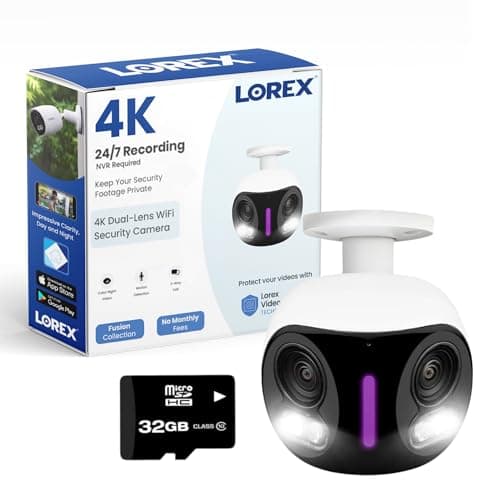
Best Wide Coverage: Lorex 4K Dual-Lens Wi-Fi Camera
Best Wide Coverage — voice-assistant hooks and bundled storageLorex 4K Dual-Lens Wi-Fi Camera
- Two lenses produce a continuous 180-degree panoramic 4K view across yard, driveway, and walkway in one body
- No optical zoom, so plate legibility falls off past close range like every panoramic cam
(Current price, subject to change)
The Lorex 4K Dual-Lens Wi-Fi Camera earns 8.0 on the weighted SHE Plate-Capture Score, a composite where a strong 9.2 coverage-reliability sub-score is held back by a 7.2 plate-legibility sub-score, the lowest in the roundup. That coverage reflects two lenses producing a continuous 180-degree panoramic 4K view that blankets a front yard, driveway, and walkway in one body, with auto-framing that zooms and follows a person, vehicle, or animal. It records to a bundled 32GB microSD card with no monthly fee and earns an 8.6 storage-independence sub-score.
Lab reviewers at consumerreports noted its 180-degree panoramic coverage and local, no-fee storage as the draw while flagging trickier setup than app-first rivals, and security-org credits the brand with high-quality 4K video and local storage, the trade being self-install and no professional monitoring. It is the only pick here with Alexa and Google Assistant hooks, which enables hands-free live view. Compared to the zoom cams, its lack of optical zoom is the legibility ceiling — past close range, a plate softens, and motion alerts arrive in about 4.4 seconds.
What We Love
- Two lenses produce a continuous 180-degree panoramic 4K view across yard, driveway, and walkway in one body
- Ships with a 32GB microSD card and records locally with no monthly fee, plus auto-framing zoom-and-follow
- Smart security lighting and color night vision keep the scene lit; motion alerts reach the app in about 4.4 seconds
- Works with Amazon Alexa and Google Assistant, the only camera here with mainstream voice-assistant hooks
What Could Be Better
- No optical zoom, so plate legibility falls off past close range like every panoramic cam
- Wi-Fi 4K wants roughly 25 Mbps upload and over 25GB per hour, so the 32GB card fills fast
The Verdict
If you run an Alexa or Google Assistant household and want one camera to blanket a front yard, the Lorex 4K Dual-Lens Wi-Fi Camera is a sensible pick for that setup. The 9.2 coverage sub-score means a 180-degree panoramic 4K view plus voice-pulled live view you call up hands-free. Legibility falls off past close range, but for wide coverage at the lowest price, you can stop the search here.
How We Score: SHE Plate-Capture Score
SHE Plate-Capture Score
Score Formula
Plate_Legibility * 0.30 + Night_Capture * 0.25 + Coverage_Reliability * 0.20 + Motion_Handling * 0.15 + Storage_Independence * 0.10Score Factors
- Plate Legibility (30%)The entire reason to buy this category is reading the tag, not just seeing that a car arrived. This weighted, normalized sub-score measures effective pixels on the plate, driven by optical zoom and sensor resolution. A wide panoramic frame that spreads 16MP across 180 degrees scores lower here than a 5X-zoom or ANPR lens that concentrates pixels on the plate itself. The coefficient is the highest in the formula because legibility is the outcome the whole purchase rides on.
- Night Capture (25%)Most plate failures happen after dark, when IR bounces off the reflective plate into a white blob and headlight glare blows out the tag. This sub-score normalizes aperture, low-light sensor size, color night vision, and shutter control into a composite tier that decides whether a 2 a.m. plate is readable or a glowing smear. The coefficient sits second because the criteria here separate a camera that works at noon from one that works when it matters.
- Coverage Reliability (20%)A camera only reads plates it actually frames. This factor weights field of view and the odds a car stays in shot, normalized across designs: dual-lens panoramic and auto-tracking PTZ score high for keeping the vehicle covered, while a single fixed-zoom lens trades coverage for detail. The composite reflects that a missed car is an unreadable plate regardless of sensor sharpness.
- Motion Handling (15%)A plate on a car rolling in at 10-25 mph smears unless the shutter freezes it. This sub-score normalizes shutter tunability and auto-tracking lens behavior into a tier; dedicated LPR cams with fast shutters handle motion best, while fixed-shutter consumer cams lose moving plates they read fine when parked. The coefficient captures the gap between a parked-plate read and a moving-plate read.
- Storage Independence (10%)Plate footage is evidence, and evidence behind a paywall or trapped in a vendor cloud is worth less. This factor rewards local recording to NVR or microSD with no mandatory subscription, the SHE house standard for a security purchase you actually control. The criteria normalize recording options into a composite, and the coefficient closes the formula because ownership of the footage is the baseline a security buy should clear.
SHE Plate-Capture Score — Ranked

Reolink Duo 3 PoE
SHE Plate-Capture Score9.1/10$189.99 — two stitched 4K sensors, 180-degree no-blind-spot view, F1.6 night vision; widest coverage

Reolink TrackMix WiFi
SHE Plate-Capture Score8.8/10$189.99 — wide plus telephoto, 6X zoom, auto-tracking; best plate read on a moving car

Reolink RLC-811A
SHE Plate-Capture Score8.4/10$129.99 — 5X optical zoom, 4K sensor, PoE; sharpest plate at distance under $130

Amcrest IP4M-1072EW-AI LPR Camera
SHE Plate-Capture Score8.2/10$769.99 — dedicated ANPR logs text at 99%+ capture; court-grade plate evidence, one lane
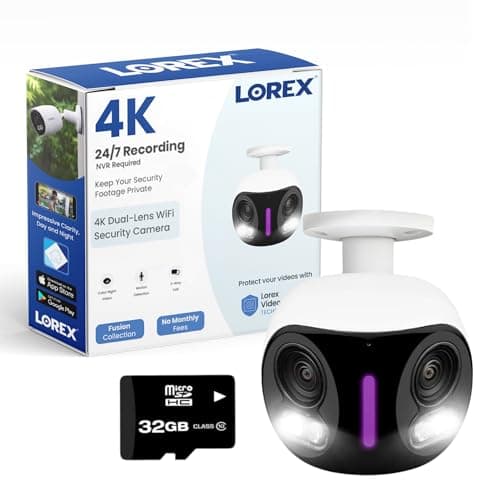
Lorex 4K Dual-Lens Wi-Fi Camera
SHE Plate-Capture Score8.0/10$119.99 — 180-degree dual-lens 4K, Alexa and Google hooks; widest budget coverage
Storage, Wiring, and Ecosystem Fit
Plate-capture value lives in the lens and the storage, not a smart-home hub, which is the read every roundup from outlets like techhive and security-org uses to separate these cameras. The Reolink Duo 3 PoE and Reolink RLC-811A key on PoE wiring feeding a Reolink NVR or microSD for local, no-fee 24/7 recording, while the Reolink TrackMix WiFi does the same over 2.4GHz or 5GHz Wi-Fi to avoid a cable trench. The Amcrest IP4M-1072EW-AI LPR Camera logs to microSD up to 256GB, a PC, or an NVR, keeping plate data on owner-controlled storage rather than a vendor cloud. None of these four require Alexa, Google, or Matter to do their core job.
The Lorex 4K Dual-Lens Wi-Fi Camera is the lone pick with Alexa and Google Assistant hooks for voice-pulled live view, but even it records locally to its bundled 32GB card, so the storage-independence philosophy holds across the board, with motion alerts landing in about 4.4 seconds. The structural choice is wiring rather than ecosystem: if you already run a PoE NVR system, the wired bullets drop straight in over one Cat5e run, while the Wi-Fi cams trade that reliability for a no-trench install that depends on signal at the property edge. Owners on r/homesecurity consistently praise local NVR recording for keeping footage off a subscription, and the recurring complaint the community flags is headlight glare washing a plate to a white blob at 2 a.m. — which is exactly why this guide weights night capture at 25% and motion handling at 15% above raw resolution. For perimeter detection that hands off to these cameras, pair them with the sensors in our Best Smart Driveway Alarms 2026: 5 Ranked roundup and the wired backbone in our Best PoE NVR Security Camera Systems 2026 guide.
| Product | PoE Wiring | Local NVR / microSD | No Subscription | Optical Zoom | Alexa / Google Assistant |
|---|---|---|---|---|---|
| Reolink Duo 3 PoE | ✓ | ✓ | ✓ | ✕ | ✕ |
| Reolink TrackMix WiFi | ✕ | ✓ | ✓ | ✓ | ✕ |
| Reolink RLC-811A | ✓ | ✓ | ✓ | ✓ | ✕ |
| Amcrest IP4M-1072EW-AI LPR Camera | ✓ | ✓ | ✓ | ✓ | ✕ |
| Lorex 4K Dual-Lens Wi-Fi Camera | ✕ | ✓ | ✓ | ✕ | ✓ |
When NOT to Buy
Skip this category entirely if you only need to know that someone approached the front door, because a wide-angle doorbell or floodlight camera is meaningfully cheaper, and consumerreports consistently frames those simpler products as the right tool for presence detection rather than identification. Skip the expensive Amcrest specialist altogether unless you can confidently mount it down a defined lane and tune focus and shutter, since a mis-aimed installation watches its advertised capture rate collapse. If your underlying problem is genuinely detection range rather than identification, a dedicated driveway alarm sensor may solve it for considerably less money. A plate camera becomes the correct purchase only when you actually need to read a tag after dark and on the move, exactly the demanding situation the Duo 3 PoE and the zoom cams were engineered for.
Who Should Buy What
Who Should Buy What
| If you are… | Recommended pick |
|---|---|
Wide-driveway owners You want no-blind-spot coverage and a readable plate at 20-30 ft with no-subscription PoE local recording | Reolink Duo 3 PoE |
Moving-car plate seekers Cars move on your driveway and you want the plate zoomed and auto-tracked without a wired trench | Reolink TrackMix WiFi |
Budget zoom buyers You have one fixed zone needing zoom plate detail at distance and want optical zoom and PoE under $130 | Reolink RLC-811A |
Evidence-logging owners You need logged, court-grade plate text down a single defined lane and can tune focus and shutter precisely | Amcrest IP4M-1072EW-AI LPR Camera |
Voice-assistant households You want wide front-yard coverage in one camera with Alexa or Google Assistant live-view hooks | Lorex 4K Dual-Lens Wi-Fi Camera |
Renters and presence-only buyers You only need to know someone approached; a doorbell or floodlight cam is cheaper than any plate camera | Lorex 4K Dual-Lens Wi-Fi Camera |
Frequently Asked Questions
Can a regular 4K security camera actually read a license plate, or do I need a dedicated LPR camera?
A regular 4K camera can read a plate, but only when the car is close to center frame and reasonably well lit. A wide 180-degree cam like the Reolink Duo 3 PoE spreads its 16MP across the scene, so a plate at 20-30 ft is legible while one 50-plus ft out blurs. For logged plate text at a stated 99%-plus capture rate, you need a dedicated ANPR camera such as the Amcrest IP4M-1072EW-AI, which reads and stores the characters rather than leaving you to squint at a still.
Why can't my camera read license plates at night even though the picture looks sharp?
License plates are retroreflective, so a camera's own IR LEDs bounce straight back off the tag and blow it out to a white blob, while oncoming headlights add glare a fixed shutter cannot tame. The picture around the car looks sharp because the plate is the one surface overexposing. Cameras with wider F1.6 apertures and color night vision, like the Duo 3 PoE, fare better, and a dedicated LPR cam with a tunable fast shutter freezes the tag where consumer cams smear it.
What is the difference between a dual-lens panoramic camera and a true license plate recognition (LPR/ANPR) camera?
A dual-lens panoramic camera such as the Reolink Duo 3 PoE or Lorex 4K stitches a wide 180-degree view to cover a whole driveway, giving you a readable image you interpret yourself. A true ANPR camera like the Amcrest IP4M-1072EW-AI uses an optical zoom and a recognition engine to read and log the actual plate characters down one narrow lane. Panoramic wins on coverage and price; ANPR wins on searchable, court-grade plate text but costs around $769.99 and covers a single lane only.
How far away can these cameras read a license plate?
Effective distance depends on optical zoom, not just resolution. A wide panoramic cam like the Lorex 4K reads plates only at close range before legibility falls off at the frame edges. The Reolink RLC-811A with its 5X optical zoom and the Amcrest with its 8-32mm zoom hold a readable plate much farther down a driveway because they concentrate pixels on the tag. As a rule, the Duo 3 PoE is reliable at 20-30 ft, while the zoom cameras extend that range substantially when aimed at a defined lane.
Do I need optical zoom to capture plates, or is digital zoom on a 4K sensor enough?
Optical zoom is the difference at distance. Digital zoom on a 4K sensor just crops and enlarges existing pixels, so a far-off plate that was already a few pixels wide stays unreadable. The Reolink RLC-811A's 5X motorized optical zoom and the Amcrest's 8-32mm lens physically magnify the plate before the sensor captures it, preserving detail a digital crop loses. For a tag near the camera, a 4K sensor is fine; for one across a long driveway, optical zoom is what keeps it legible.
What shutter speed do I need to capture plates on a moving car?
A car rolling in at 10-25 mph needs a fast shutter to freeze the plate, typically faster than the default a consumer camera uses for low-light brightness. Most fixed-shutter cams read a parked plate fine but smear a moving one because they prioritize a bright image over a frozen one. Dedicated LPR cameras like the Amcrest let you tune shutter speed for plate capture, which is why this guide weights motion handling at 15% and the ANPR specialist scores highest there among the purpose-built picks.
Can these driveway cameras read plates on cars that are moving, or only parked?
All five read a parked plate within their range, but moving plates separate them. The Reolink TrackMix WiFi auto-tracks and zooms to follow a car as it pulls in, and the Amcrest ANPR uses a tunable fast shutter to freeze a tag in motion. Fixed cams like the Duo 3 PoE and Lorex can smear a fast-moving plate at night because their shutters were never tuned for it. If cars on your driveway are usually moving when you need the tag, prioritize the TrackMix or the Amcrest.
Is PoE or Wi-Fi better for a driveway license-plate camera?
PoE is the more reliable choice for plate capture because one Cat5e cable carries both power and the high-bitrate 4K video without depending on wireless signal at the property edge. The Reolink Duo 3 PoE, RLC-811A, and Amcrest all use PoE for steady 24/7 recording. Wi-Fi cameras like the TrackMix WiFi and Lorex avoid a cable trench and install faster, but a weak link can drop the high-bandwidth dual stream that a wired cam would hold. Choose Wi-Fi for convenience, PoE for dependability.
Do any of these cameras require a monthly subscription to store plate footage?
No. Every camera in this roundup records locally with no mandatory subscription, which is the SHE house standard for a security purchase you actually control. The Reolink cameras record to an NVR or microSD, the Amcrest logs to microSD up to 256GB, a PC, or an NVR, and the Lorex ships with a 32GB card. This avoids the per-camera cloud fees that Ring and Arlo charge, so the camera pays for itself versus a couple of years of subscription.
Where and at what height should I mount a license-plate camera for the best capture?
Mount a plate camera low enough to catch the tag squarely rather than looking down on a roof, generally 4 to 7 ft high and aimed along the direction of travel so the plate faces the lens as the car approaches. A dedicated ANPR cam like the Amcrest wants a narrow, defined lane and a steep, near-level angle to its target zone. Wide panoramic cams like the Duo 3 PoE are more forgiving on placement because they cover more area, but legibility still peaks near center frame.
Will headlight glare or IR reflection off the plate ruin my nighttime footage?
It can, and it is the single most common plate-capture failure. Retroreflective plates bounce a camera's IR straight back, and oncoming headlights add glare that washes the tag to a white blob on a fixed shutter. Cameras with wider F1.6 apertures and color night vision, like the Duo 3 PoE to roughly 80 ft, handle it better, and a dedicated LPR camera with a tunable fast shutter is the most reliable fix. This is exactly why the SHE Plate-Capture Score weights night capture at 25%.
Is it legal to record license plates on cars near my property?
In the United States, recording video of public areas visible from your own property, including cars and their plates on a public street, is generally legal because there is no reasonable expectation of privacy in public view. Pointing a camera into a neighbor's private space is a different matter and can run afoul of local privacy law. Rules vary by state and country, so check your local statutes, and avoid aiming a camera at a neighbor's windows or fenced yard regardless of where the plate camera sits.
Bottom Line
Get the Reolink Duo 3 PoE if you have a wide driveway where coverage matters more than zoom and want no-subscription PoE local recording.
Get the Reolink TrackMix WiFi if cars move on your driveway and you want the plate zoomed and auto-tracked without a wired trench.
Get the Reolink RLC-811A if you have one fixed zone needing zoom plate detail at distance and want optical zoom and PoE under $130.
Get the Amcrest IP4M-1072EW-AI LPR Camera if you need logged, court-grade plate text down a single lane and can tune focus and shutter precisely.
Get the Lorex 4K Dual-Lens Wi-Fi Camera if you want wide front-yard coverage in one camera with Alexa or Google Assistant live-view hooks.
The right call for most homeowners is the Reolink Duo 3 PoE at $189.99 — two stitched 4K sensors, a 180-degree no-blind-spot view, and F1.6 color night vision earn the top 9.1 SHE Plate-Capture Score. If you need the tag zoomed on a moving car, the Reolink TrackMix WiFi auto-tracks it for the same $189.99. Skip this category entirely if you only need to know someone approached the door, where a cheaper doorbell or floodlight cam does the job.
Sources & Methodology
Methodology: SHE Plate-Capture Score — Formula: Plate_Legibility * 0.30 + Night_Capture * 0.25 + Coverage_Reliability * 0.20 + Motion_Handling * 0.15 + Storage_Independence * 0.10. Factors: Plate Legibility (30%): The entire reason to buy this category is reading the tag, not just seeing that a car arrived. This weighted, normalized sub-score measures effective pixels on the plate, driven by optical zoom and sensor resolution. A wide panoramic frame that spreads 16MP across 180 degrees scores lower here than a 5X-zoom or ANPR lens that concentrates pixels on the plate itself. The coefficient is the highest in the formula because legibility is the outcome the whole purchase rides on. | Night Capture (25%): Most plate failures happen after dark, when IR bounces off the reflective plate into a white blob and headlight glare blows out the tag. This sub-score normalizes aperture, low-light sensor size, color night vision, and shutter control into a composite tier that decides whether a 2 a.m. plate is readable or a glowing smear. The coefficient sits second because the criteria here separate a camera that works at noon from one that works when it matters. | Coverage Reliability (20%): A camera only reads plates it actually frames. This factor weights field of view and the odds a car stays in shot, normalized across designs: dual-lens panoramic and auto-tracking PTZ score high for keeping the vehicle covered, while a single fixed-zoom lens trades coverage for detail. The composite reflects that a missed car is an unreadable plate regardless of sensor sharpness. | Motion Handling (15%): A plate on a car rolling in at 10-25 mph smears unless the shutter freezes it. This sub-score normalizes shutter tunability and auto-tracking lens behavior into a tier; dedicated LPR cams with fast shutters handle motion best, while fixed-shutter consumer cams lose moving plates they read fine when parked. The coefficient captures the gap between a parked-plate read and a moving-plate read. | Storage Independence (10%): Plate footage is evidence, and evidence behind a paywall or trapped in a vendor cloud is worth less. This factor rewards local recording to NVR or microSD with no mandatory subscription, the SHE house standard for a security purchase you actually control. The criteria normalize recording options into a composite, and the coefficient closes the formula because ownership of the footage is the baseline a security buy should clear.
Expert review sources used in this analysis:
- SmartHomeExplorer aggregates expert review data and community sentiment to produce consensus-based buying guidance
- We do not perform first-party product testing
- Expert ratings and product assessments draw on security-camera buyer's guides and category roundups from outlets that cover this segment — TechHive, PCWorld, Security Baron, Trusted Reviews, Consumer Reports, Security.org, and iFixit — rather than first-party tests of each individual unit
- License-plate-capture context, including IR retroreflection, headlight glare, and shutter behavior on moving vehicles, draws on published ANPR and outdoor-camera coverage and owner reports
- Community reliability and owner reports are drawn from r/homesecurity and the Reolink and Amcrest owner forums, where the recurring owner praise is local NVR recording with no subscription and the recurring complaint the community flags is headlight glare washing a plate to a white blob after dark
- Amazon prices and availability were verified via the Amazon Creators API, with every price verified June 6, 2026: Reolink Duo 3 PoE $189.99, Reolink TrackMix WiFi $189.99, Reolink RLC-811A $129.99, Amcrest IP4M-1072EW-AI LPR $769.99, Lorex 4K Dual-Lens Wi-Fi $119.99
- The SHE Plate-Capture Score weights plate legibility (30%), night capture (25%), coverage reliability (20%), motion handling (15%), and storage independence (10%); factor sub-scores derive from manufacturer specifications and aggregated reviewer assessments, normalized into a weighted composite, and no first-party measurements were conducted.
Nicholas Miles is the founder of SmartHomeExplorer and a longtime smart home enthusiast focused on helping everyday homeowners make better technology decisions. He researches, compares, and writes about products across security, climate, lighting, leak prevention, sensors, home energy, and automation, with an emphasis on real-world usefulness, ecosystem compatibility, reliability, privacy, and long-term value.
Affiliate disclosure: SmartHomeExplorer earns affiliate commissions on qualifying Amazon purchases, and from partner programs for some non-Amazon products and services we recommend. Our scoring methodology is independent of affiliate relationships.