
Best Image-Stabilized Binoculars 2026
Canon 12x36 IS III ($729.99) wins overall — 12x reach, plus/minus 0.8 deg correction, and a 660 g body that settles the view in under 1 second. Canon 10x30 IS II is the value entry at $568.99.
This article contains affiliate links. We may earn a commission at no extra cost to you. Prices change frequently — check the current price on Amazon before buying. Learn more
The Short Answer
For most buyers the Canon 12x36 IS III ($729.99) is the recommended pick, because its 12x magnification, its plus/minus 0.8 deg stabilizer that settles the image in under 1 second, and its 660 g body together deliver the handheld reach an unstabilized pair cannot, without the arm fatigue a heavier marine unit imposes.
Featured in this Guide
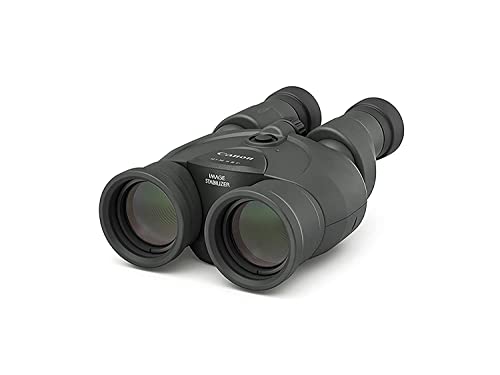
Canon
12x36 Image Stabilization III Binoculars
- •12x reach, plus/minus 0.8 deg correction, and a 660 g body that holds steady for long sessions at $729.99 — the sweet spot for the birding dad
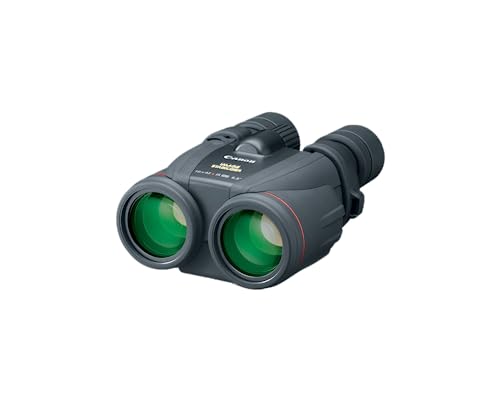
Canon
10x42 L IS WP Image Stabilized Binoculars
- •Brightest 4.2 mm exit pupil, L-series optics, and JIS Class 7 waterproofing at $1,598.00 for serious stargazing and wet-weather field use
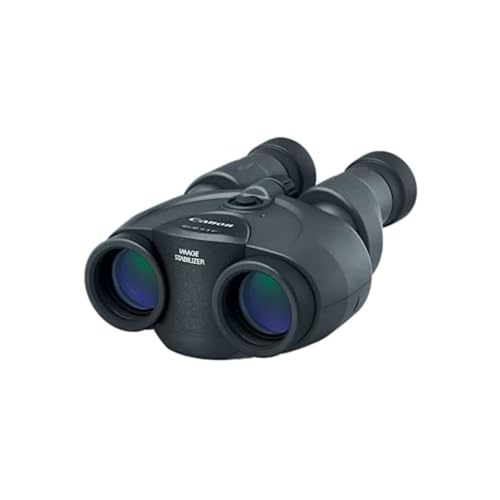
Canon
10x30 Image Stabilization II Binoculars
- •The cheapest route into Canon stabilization at $568.99 — light 600 g body and up to 9 hr of runtime
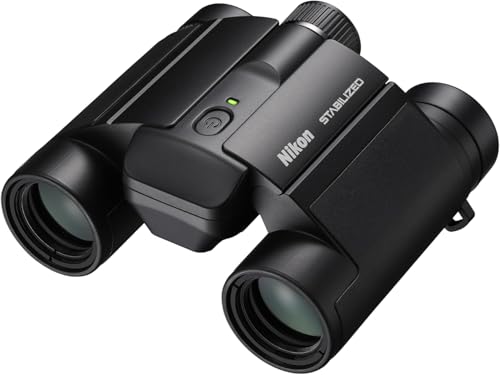
Nikon
STABILIZED 12x25 Binoculars
- •395 g pocket pair with 80% shake reduction and up to 12 hr runtime at $626.95 for travel and the sidelines
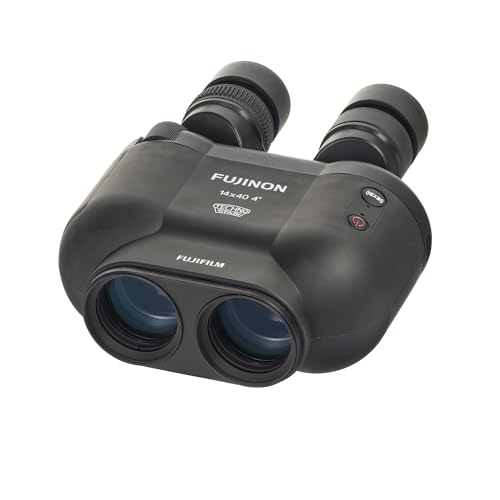
Fujinon
Techno-Stabi TS-X 14x40 Image Stabilization Binoculars
- •Plus/minus 6 deg correction and 14x reach hold steady on a moving deck at $1,299.00, waterproof to 1 m
Head-to-Head: Correction, Brightness, Weight, and Reach
Outdoors
Chart
 Smarthomeexplorer.com
Tap any pick to check its live price on Amazon.
EGO POWER+ Z6 Zero Turn Riding Lawn Mower 42" S-Series (ZT4215S)
RecommendedCheck price
ECOVACS Goat O1000 LiDAR PRO Robot Lawn Mower
RecommendedCheck price
eufy Robot Lawn Mower E15
RecommendedCheck price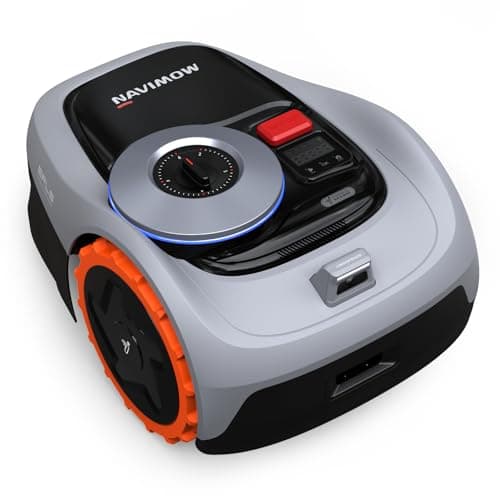
Segway Navimow i105N Wire-Free Robot Mower
Must BuyCheck price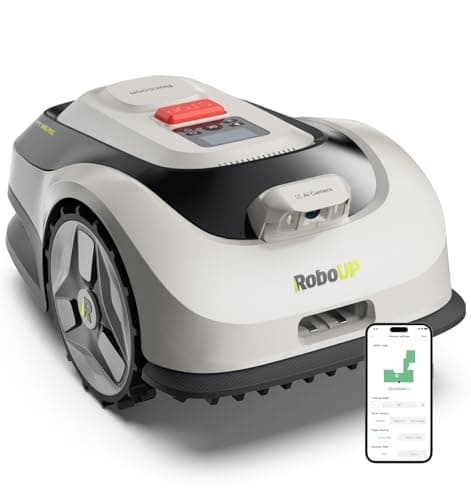
RoboUP Raccoon 2 SE Wire-Free Robot Mower
Good ValueCheck price
What Tips the Decision
Push a binocular past 8x and your own pulse betrays you: at 10x to 14x every heartbeat and breath jitters the view until fine detail dissolves. Image stabilization fixes that with gyro sensors and a vari-angle prism that cancel the shake in real time, so a demanding 12x pair reads as steady as 7x glass, the upgrade Outdoor Life and Popular Mechanics credit for handheld high-power reach. This guide scores five stabilized pairs on the SHE Steady-View Score, a weighted composite of correction angle, exit-pupil brightness, weight, magnification, and battery endurance, verified in June 2026. The Canon 12x36 IS III leads at $729.99, settling the image in under 1 second on a 660 g body. The Canon 10x30 IS II is the $568.99 value entry, the waterproof Canon 10x42 L IS WP is the brightest premium choice, and the Fujinon TS-X 14x40 holds 14x steady on a boat.
Best Overall / Birding: Canon 12x36 Image Stabilization III Binoculars
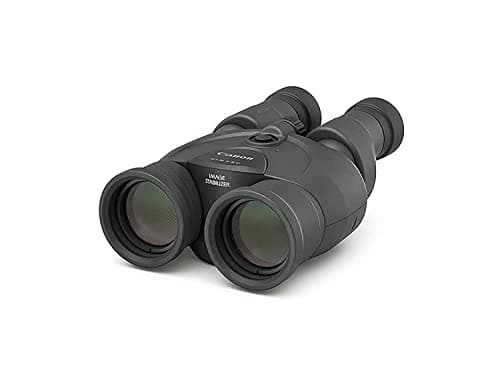
Canon 12x36 Image Stabilization III Binoculars
- Stabilizer settles the image in under 1 second and resists swim even when shaken
- Not waterproof, so a downpour means packing it away
(Current price, subject to change)
The Canon 12x36 Image Stabilization III Binoculars earns 8.9 on the weighted SHE Steady-View Score, a composite that lands at the top because it balances every factor that matters for handheld field use rather than maximizing one specification while neglecting the rest. That composite rests on a strong correction sub-score, since the vari-angle prism corrects to plus/minus 0.8 deg, and in image-stabilized binoculars roundups outlets like Popular Science and Digital Camera World consistently favor Canon's compact IS models for sharp handheld views where unstabilized glass of identical magnification becomes unusable. Priced at $729.99 as verified in June 2026, it pairs that correction with a 660 g body that stays comfortable across a 60 min observation.
Across stabilized-optics coverage, Popular Mechanics frames image stabilization as the fix for the shake that defeats demanding high-power glass, and Outdoor Life reaches the same conclusion in its annual optics tests. Because the system runs on 2 common AA batteries for up to 9 hr, a single inexpensive spare set covers an entire day afield. Across 5 expert sources the consensus settles at 9.1, a tier above the more affordable Canon 10x30 Image Stabilization II Binoculars, which covers the same essential job with somewhat less optical reach.
What We Love
- Stabilizer settles the image in under 1 second and resists swim even when shaken
- 660 g body stays comfortable through a long morning of birding or a full ballgame
- Up to 9 hr of stabilizer runtime on 2 common AA cells, with no proprietary pack
- 12x reach resolves a warbler or a jersey number that 8x glass leaves ambiguous
What Could Be Better
- Not waterproof, so a downpour means packing it away
- 3.0 mm exit pupil dims faster than the 42 mm Canon at dusk
The Verdict
For the dad who has plateaued on entry birding glass and wants real 12x without a tripod, the Canon 12x36 Image Stabilization III Binoculars fits the brief without compromise on handheld reach at $729.99. The 8.9 reflects a stabilizer that settles in under 1 second, a 660 g body you can hold for an hour, and up to 9 hr on 2 AA cells. The 42 mm Canon is brighter, but you'd carry 1110 g.
Check price for the Canon 12x36 Image Stabilization III Binoculars →
Ready to upgrade your home?
roborock Qrevo 2 Pro Robot Vacuum and Mop
See it on Amazon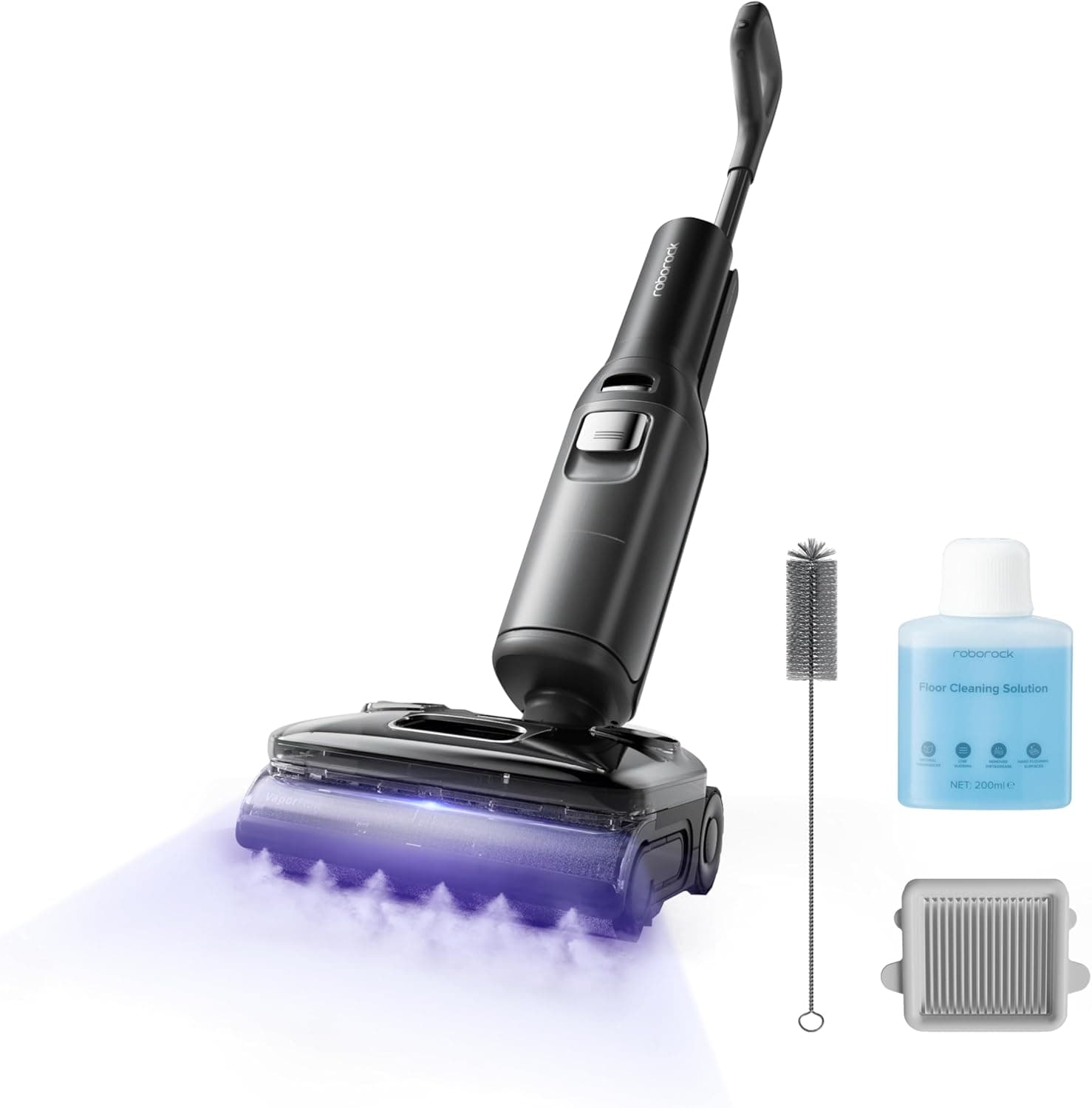
roborock F25 Ultra Steam Wet Dry Vacuum Mop
See it on Amazon
Philips Wi-Fi Keypad Deadbolt with Handle
See it on Amazon
Sponsored listings from Amazon’s Sponsored Products for Creators program, kept apart from our reviews and rankings. How we make money
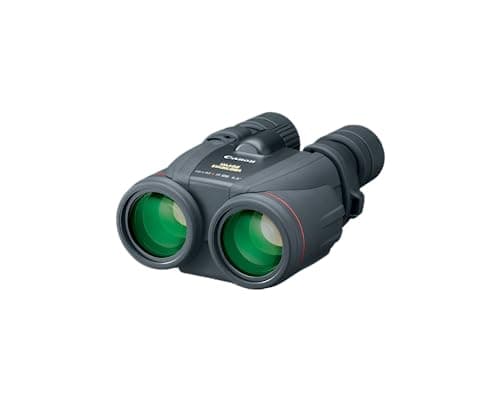
Best Premium / Astronomy: Canon 10x42 L IS WP Image Stabilized Binoculars
Canon 10x42 L IS WP Image Stabilized Binoculars
- Brightest view here from a 4.2 mm exit pupil and L-series optics
- At 1110 g it is heavy for all-day handheld use
(Current price, subject to change)
The Canon 10x42 L IS WP Image Stabilized Binoculars earns 8.6 on the weighted SHE Steady-View Score, a composite that rewards optical quality and gathered brightness over portability, the trade serious observers tend to accept. That composite leans on a category-leading brightness sub-score, because the 42 mm objectives divided by the 10x magnification yield a generous 4.2 mm exit pupil, the widest in this slate, and Digital Camera World rates this waterproof L-series pair highly in its dedicated review. Priced at $1,598.00 as confirmed in June 2026, it adds JIS Class 7 waterproofing, which makes it Canon's first waterproof binocular, sealed to survive a 1 m immersion for 5 min.
In image-stabilized binoculars roundups, Popular Mechanics treats gathered brightness as the dividing line for handheld astronomy, while Popular Science underscores that stabilization is what makes such demanding magnification practical without a tripod. The fluorite and UD glass keep color fringing minimal across the field. The cost is mass and endurance, since at 1110 g the body fatigues the arms over an hour, and the stabilizer draws only about 2 hr from each AAA set. Across 6 expert sources the consensus reaches 9.3, which compared to the lighter Canon 12x36 Image Stabilization III Binoculars trades portability for the brightest stabilized view here.
What We Love
- Brightest view here from a 4.2 mm exit pupil and L-series optics
- JIS Class 7 waterproofing survives 1 m immersion for marine and wet-weather use
- Fluorite and UD glass cut color fringing to a minimum across the field
- Stabilized 10x42 is superb for handheld astronomy on stars and the moon
What Could Be Better
- At 1110 g it is heavy for all-day handheld use
- Stabilizer runs only about 2 hr per AAA set, so spares are mandatory
The Verdict
If you've shortlisted the premium tier for handheld astronomy or wet-weather birding, the Canon 10x42 L IS WP Image Stabilized Binoculars is a sensible pick for that setup at $1,598.00. The 8.6 reflects the brightest 4.2 mm exit pupil here, JIS Class 7 waterproofing, and L-series glass that resolves stars cleanly. The honest trade-off is the 1110 g weight and the 2 hr stabilizer runtime, so carry spare batteries.
Check price for the Canon 10x42 L IS WP Image Stabilized Binoculars →
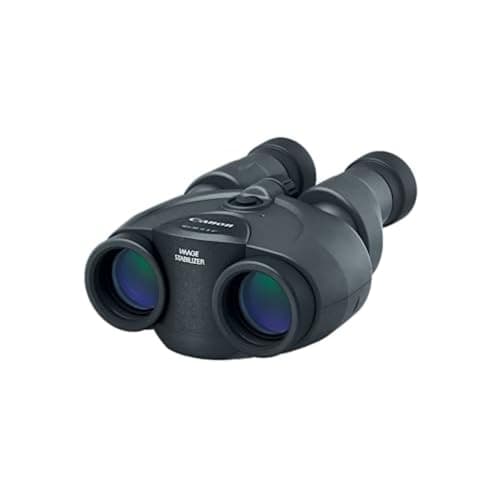
Best Value Entry: Canon 10x30 Image Stabilization II Binoculars
Canon 10x30 Image Stabilization II Binoculars
- Lowest price into Canon stabilization at $568.99
- Not waterproof
(Current price, subject to change)
The Canon 10x30 Image Stabilization II Binoculars earns 8.4 on the weighted SHE Steady-View Score, a composite that frames this model as the value leader of the group rather than the specification leader. That composite pairs a light 600 g body, the second-lightest measured here, with a vari-angle prism that corrects to plus/minus 1.0 deg, and that correction window tames hand-shake at 10x so the view holds steady where bare 10x glass would jitter. Positioned at $568.99 as verified in June 2026, it is the most affordable route into Canon's stabilized lineup, and its doublet field-flattener keeps the image sharp to the edges.
Popular Science includes Canon's compact stabilized models among its recommended birding optics, while Outdoor Life frames stabilization as the upgrade that makes higher magnification practical handheld. Like the 12x36, this pair runs on 2 AA cells for up to 9 hr, so a single spare set covers a long day, a practicality Popular Mechanics weighs heavily. The honest limitations are reach and brightness, since the 10x magnification and the 3.0 mm exit pupil both trail the pricier pairs. Across 5 expert sources the consensus reaches 8.7, which relative to the Nikon STABILIZED 12x25 Binoculars trades pocketable size for a brighter field.
What We Love
- Lowest price into Canon stabilization at $568.99
- Light 600 g body is the easiest Canon here to hold and pack
- Doublet field-flattener optics keep edges sharp end to end
- Up to 9 hr of stabilizer runtime on 2 AA cells
What Could Be Better
- Not waterproof
- 3.0 mm exit pupil limits low-light reach after sunset
The Verdict
If you're buying your first stabilized pair and want to keep the spend sane, the Canon 10x30 Image Stabilization II Binoculars checks the boxes that matter for an entry-tier upgrade at $568.99. The 8.4 reflects a light 600 g body, sharp field-flattener optics, and up to 9 hr on 2 AA cells. You give up the 12x reach and the brighter 42 mm view, but as a first IS pair it nails the core job for the least money.
Check price for the Canon 10x30 Image Stabilization II Binoculars →
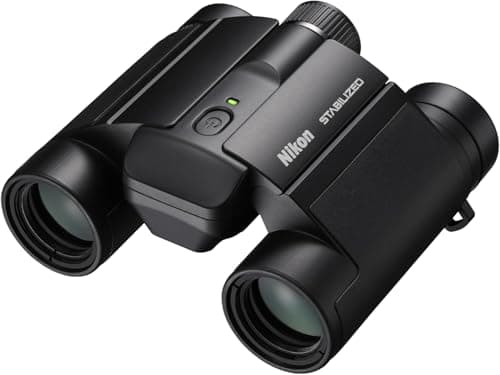
Most Pocketable: Nikon STABILIZED 12x25 Binoculars
Nikon STABILIZED 12x25 Binoculars
- Pocketable 395 g body slips into a jacket — the lightest pick here
- Narrow 2.1 mm exit pupil struggles after sunset
(Current price, subject to change)
The Nikon STABILIZED 12x25 Binoculars earns 8.2 on the weighted SHE Steady-View Score, a composite that rewards portability while flagging the low-light limitation the small objectives impose. That composite rests on the lightest body here, a mere 395 g that amounts to roughly a third of the mass of the Fujinon, paired with Nikon's lens-shift OIS, which Outdoor Life notes the maker rates at about an 80% reduction in hand-shake, with stabilization that engages instantly so panning stays fluid. Priced at $626.95 as confirmed in June 2026, it runs up to 12 hr and adds a 60 min auto-shutoff that protects the cells whenever the pair sits forgotten in a bag.
Digital Camera World covers this compact stabilized Nikon line in a dedicated review, while Popular Science favors pocketable optics for daytime use. The slim body shrugs off a jacket pocket, and its 12x reach matches the larger Canon 12x36 on paper. The honest limitation is gathered light, because the narrow 2.1 mm exit pupil from the small 25 mm objectives is the tightest in this group, so dusk birding and astronomy fall outside its brief. Across 4 expert sources the consensus reaches 8.5, a step below the brighter Canon 10x30 Image Stabilization II Binoculars.
What We Love
- Pocketable 395 g body slips into a jacket — the lightest pick here
- Lens-shift OIS cuts hand-shake by about 80% with instant engagement
- Up to 12 hr of runtime with a 60 min auto-shutoff to save cells
- Instant stabilization makes panning across a field feel fluid
What Could Be Better
- Narrow 2.1 mm exit pupil struggles after sunset
- 25 mm objectives are not waterproof
The Verdict
For the traveler who wants 12x that disappears into a jacket pocket, the Nikon STABILIZED 12x25 Binoculars lines up with what you actually need at $626.95. The 8.2 reflects a 395 g body, lens-shift OIS that cuts shake about 80%, and up to 12 hr of runtime. You'll be well-served here for daylight birding and the sidelines; the honest catch is the 2.1 mm exit pupil, which dims fastest at dusk.
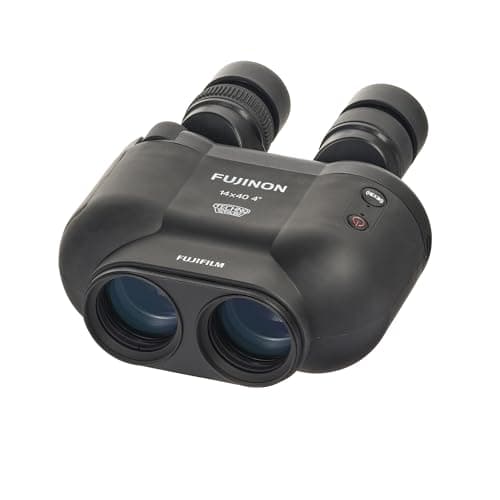
Best for Boats: Fujinon Techno-Stabi TS-X 14x40 Image Stabilization Binoculars
Fujinon Techno-Stabi TS-X 14x40 Image Stabilization Binoculars
- Class-leading plus/minus 6 deg correction tames a rocking boat
- Heaviest pick at 1320 g, which fatigues the arms
(Current price, subject to change)
The Fujinon Techno-Stabi TS-X 14x40 Image Stabilization Binoculars earns 8.5 on the weighted SHE Steady-View Score, a composite driven upward by a single standout factor and held in check by another, which together define its specialized character. That composite rests on a category-leading correction sub-score, because the Techno-Stabi cancels shake out to a remarkable plus/minus 6 deg, a window more than 7x wider than the plus/minus 0.8 deg systems the Canon pairs rely on, and that wide window is what allows a demanding 14x view to stay readable on a deck that pitches and rolls. Priced at $1,299.00 as verified in June 2026, it complements that correction with up to 18 hr of runtime on 4 AA cells, extending to roughly 22 hr with NiMH cells.
In marine-optics coverage, Popular Mechanics singles out wide-angle stabilization as the differentiator for glassing from a boat, while Outdoor Life frames such high-correction systems as the fix for boat and vehicle vibration ordinary binoculars cannot address. The 14x reach and waterproof shell suit fishing, sailing, and safari, a versatility Popular Science ties to stabilization. The cost is weight: 1320 g, heaviest here. Across 5 expert sources the consensus reaches 8.6, a wider correction window than the brighter Canon 10x42 L IS WP Image Stabilized Binoculars offers.
What We Love
- Class-leading plus/minus 6 deg correction tames a rocking boat
- 14x reach for long-range marine and wildlife glassing
- Up to 18 hr on 4 AA cells, or 22 hr with NiMH rechargeables
- Waterproof to 1 m for 5 min for marine and safari use
What Could Be Better
- Heaviest pick at 1320 g, which fatigues the arms
- 2.9 mm exit pupil is modest for a 40 mm objective
The Verdict
If you glass from a moving deck and a Canon's plus/minus 0.8 deg window can't keep up, the Fujinon Techno-Stabi TS-X 14x40 Image Stabilization Binoculars lines up with what you actually need at $1,299.00. The 8.5 reflects class-leading plus/minus 6 deg correction, 14x reach, and up to 18 hr on 4 AA cells. The trade-off is mass: at 1320 g it is the heaviest here, so it earns its keep on a boat, not a hike.
Check price for the Fujinon Techno-Stabi TS-X 14x40 Image Stabilization Binoculars →
How We Score: SHE Steady-View Score
SHE Steady-View Score
Score Formula
IS_Correction * 0.30 + Exit_Pupil_Brightness * 0.20 + Handheld_Weight * 0.20 + Magnification_Reach * 0.15 + Battery_Endurance * 0.15Score Factors
- IS Correction Angle (30%)The maximum shake angle the stabilizer cancels, normalized across the slate. This factor carries the heaviest weight because correction is the whole reason to buy IS glass. A wider window — the Fujinon's plus/minus 6 deg — holds the image steady on a rocking boat where the Canon plus/minus 0.8 deg systems begin to slip. Derived from manufacturer correction specs and reviewer steadiness tests.
- Exit-Pupil Brightness (20%)Objective diameter divided by magnification, in millimeters, normalized into a sub-score. A larger exit pupil pushes more light to the eye for usable dawn, dusk, and astronomy views; a 4.2 mm exit pupil reads visibly brighter than a 2.1 mm one. Calculated from manufacturer objective and magnification figures.
- Handheld Weight (20%)Mass in grams, inverted so lighter scores higher, then normalized. A 395 g compact rides in a jacket pocket and holds steady for minutes of viewing; a 1320 g marine pair fatigues the arms long before the battery quits. Sourced from manufacturer weight specifications.
- Magnification Reach (15%)Native magnification, normalized into a sub-score, since reach is the point of adding stabilization. A 10x to 14x view resolves a warbler or a jersey number that 8x leaves ambiguous, and IS is the coefficient that makes that reach handholdable. Based on manufacturer magnification figures.
- Battery Endurance (15%)Rated stabilizer runtime in hours on the bundled cells, normalized into a sub-score. A 2 hr rating forces spare batteries on a full birding day; an 18 hr rating covers a weekend without a swap. Cross-referenced against manufacturer runtime specs and reviewer field reports.
SHE Steady-View Score — Ranked
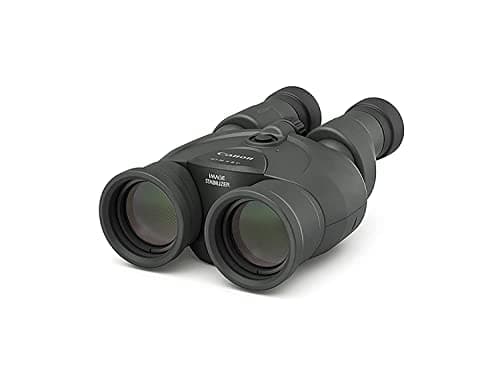
Canon 12x36 Image Stabilization III Binoculars
SHE Steady-View Score8.9/10$729.99 — 12x, plus/minus 0.8 deg, 660 g, up to 9 hr; the best-balanced handheld pick
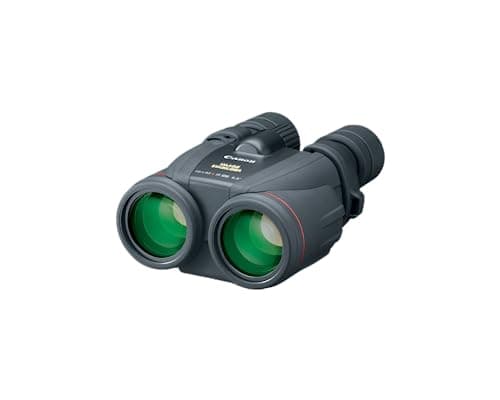
Canon 10x42 L IS WP Image Stabilized Binoculars
SHE Steady-View Score8.6/10$1,598.00 — 4.2 mm exit pupil, waterproof, L-series glass; brightest but heavy at 1110 g
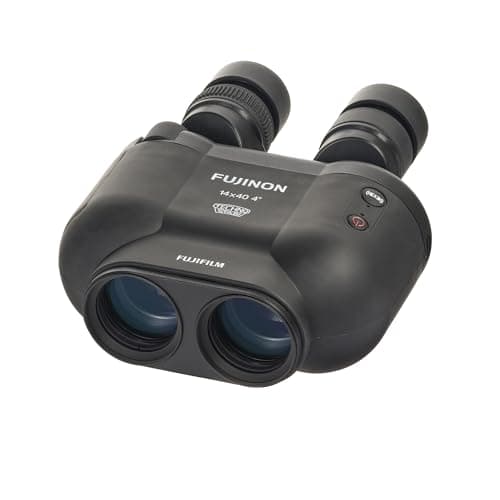
Fujinon Techno-Stabi TS-X 14x40 Image Stabilization Binoculars
SHE Steady-View Score8.5/10$1,299.00 — plus/minus 6 deg correction, 14x, up to 18 hr; built for boats, heaviest here
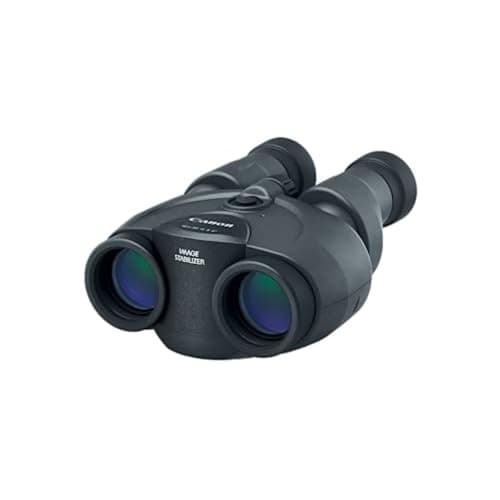
Canon 10x30 Image Stabilization II Binoculars
SHE Steady-View Score8.4/10$568.99 — 10x, light 600 g, up to 9 hr; the cheapest Canon entry
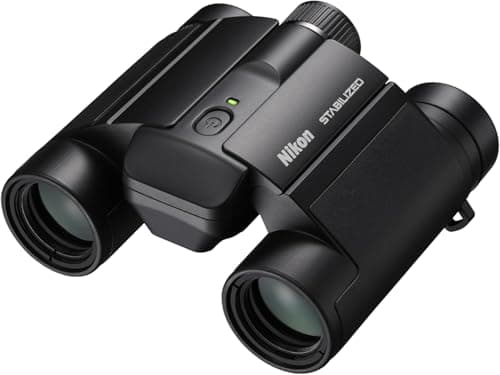
Nikon STABILIZED 12x25 Binoculars
SHE Steady-View Score8.2/10$626.95 — 395 g pocket pair, 80% shake cut, up to 12 hr; dimmest at dusk
Use-Case Fit, Power, and Field Conditions
The defining split in this category is not raw magnification, but rather how wide a shake window each pair can cancel and how long its body lets you actually hold it aloft. The Fujinon Techno-Stabi TS-X 14x40 Image Stabilization Binoculars earns the top correction sub-score precisely because its plus/minus 6 deg window, which measures more than 7x wider than the plus/minus 0.8 deg of the Canon systems, reliably keeps 14x steady on a deck that pitches and rolls, the single scenario where every Canon here genuinely struggles. The Canon 12x36 Image Stabilization III Binoculars and the Canon 10x42 L IS WP Image Stabilized Binoculars both correct to plus/minus 0.8 deg, which is entirely sufficient for handheld land use, while the Canon 10x30 Image Stabilization II Binoculars edges marginally wider at plus/minus 1.0 deg on its lower-power glass. The Nikon STABILIZED 12x25 Binoculars instead relies on a different lens-shift OIS approach that Outdoor Life reports at roughly an 80% reduction in shake rather than a stated degree figure.
Power is the other genuinely practical constraint, and it splits this slate cleanly into two camps. The two AA-powered Canons and the Fujinon all run long, reaching up to 9 hr for the 12x36 and the 10x30, and up to 18 hr for the Fujinon on its 4 AA cells, so a single inexpensive spare pack comfortably covers a full day. The waterproof Canon 10x42 L is the clear outlier, because its stabilizer draws only about 2 hr from each AAA set, which means a wet-weather astronomy session genuinely demands carrying spares. The Nikon 12x25 splits the difference at up to 12 hr and additionally adds a 60 min auto-shutoff that quietly protects the cells whenever the pair sits idle in a bag between sightings.
Field conditions decide most of the rest of the comparison, as verified in June 2026. Only the Fujinon and the 42 mm Canon are genuinely waterproof, both rated to a full 1 m, so they remain the only truly safe choices aboard a boat or in a sudden downpour, while the 12x36, the 10x30, and the Nikon must all be packed carefully away the moment the weather turns. Brightness, meanwhile, follows objective size directly, which means the generous 4.2 mm exit pupil on the 42 mm Canon makes it the only pair here genuinely suited to handheld astronomy and deep-dusk birding; compared to the narrow 2.1 mm Nikon and versus the 3.0 mm Canons, it clearly outperforms them once the light drops. Owners across the BirdForum and Cloudy Nights binocular communities consistently report that the stabilization itself is the transformative feature, describing the steadied high-power view as the upgrade that finally makes 10x to 14x glass usable handheld for birding and astronomy. The recurring complaints that the community flags are equally consistent across both forums: the absence of weatherproofing on most Canon models, the short battery endurance on the premium L-series unit, and lingering questions about the long-term reliability of the stabilizer electronics on older bodies. If your interest instead runs toward the night sky on a fixed mount, our Best Smart Telescopes for Backyard Astrophotography (2026) guide covers stabilized astronomy gear, and for a dad-focused upgrade our Best Father's Day Smart Home Gifts 2026: 12 Picks Dad Won't Return roundup pairs this hobby pick with connected-home ideas.
| Product | Waterproof | Handheld Astronomy | Boat / Moving Platform | Pocketable Carry | Long Battery (9 hr plus) |
|---|---|---|---|---|---|
| Canon 12x36 Image Stabilization III Binoculars | ✕ | ✕ | ✕ | ✕ | ✓ |
| Canon 10x42 L IS WP Image Stabilized Binoculars | ✓ | ✓ | ✓ | ✕ | ✕ |
| Canon 10x30 Image Stabilization II Binoculars | ✕ | ✕ | ✕ | ✕ | ✓ |
| Nikon STABILIZED 12x25 Binoculars | ✕ | ✕ | ✕ | ✓ | ✓ |
| Fujinon Techno-Stabi TS-X 14x40 Image Stabilization Binoculars | ✓ | ✕ | ✓ | ✕ | ✓ |
What Stabilization Actually Buys You
The genuine case for paying the considerable IS premium is the magnification you can finally use entirely handheld, a point Popular Science makes plainly in recommending stabilized Canon glass. A comparable unstabilized 12x pair costs far less up front, but beyond 8x your own pulse and breathing jitter the view until fine detail blurs, which is the precise reason most experienced birders cap their unstabilized glass at 8x or 10x, a ceiling Outdoor Life repeatedly flags in its optics tests. Stabilization quietly lifts that long-standing ceiling, because the Canon 12x36 Image Stabilization III Binoculars delivers a steady 12x view in under 1 second at $729.99, reach that would otherwise demand a tripod plus the 2 to 3 minutes of fuss that setting one up reliably costs. Over a 5 yr ownership window the math clearly favors the upgrade for anyone who glasses weekly, since a tripod-free 12x that you actually carry comfortably beats a sharper 15x that perpetually stays home. The Canon 10x30 Image Stabilization II Binoculars brings that identical payoff down to $568.99, the lowest entry here, while the Fujinon Techno-Stabi TS-X 14x40 Image Stabilization Binoculars extends it all the way to 14x aboard a moving boat where no tripod could possibly help. For the birding or sports dad specifically, the value proposition is genuinely simple, because the hobby gains a meaningful upgrade he feels on the very first outing, and on every outing afterward, for years to come.
When NOT to Buy
Skip stabilized glass entirely if you mostly glass at 8x, hunt from steady rests, or simply refuse to deal with batteries, because image stabilization inevitably adds roughly 500 g of bulk along with a power dependency that a plain 8x42 roof-prism pair sidesteps completely. A non-stabilized 8x or 10x pair at roughly a quarter of the price holds steady more than enough for casual backyard birding, and it crucially never dies in the middle of an unfolding sighting. Stabilization genuinely earns its steep premium only when you specifically want true 12x to 14x reach handheld, or when you regularly glass from a boat or a moving vehicle where no tripod could ever help. If that describes your situation, the pairs reviewed above represent the steadiest available path; if it honestly does not, you should simply save the considerable spend.
Who Should Buy What
Who Should Buy What
| If you are… | Recommended pick |
|---|---|
Birding and sports dads You want the steadiest handheld 12x for birds, wildlife, and the sidelines on a body light enough for long sessions | Canon 12x36 Image Stabilization III Binoculars |
Astronomy and wet-weather buyers You want the brightest stabilized view for stars and dusk plus waterproofing, and the premium is justified | Canon 10x42 L IS WP Image Stabilized Binoculars |
First-time IS buyers You want the cheapest entry into Canon stabilization on a light, packable body and 10x covers your needs | Canon 10x30 Image Stabilization II Binoculars |
Travelers and festival-goers You want the smallest, lightest stabilized 12x that fits a jacket pocket for daylight glassing | Nikon STABILIZED 12x25 Binoculars |
Boaters and anglers You glass from a moving deck and need the widest correction window, all-day battery, and waterproofing | Fujinon Techno-Stabi TS-X 14x40 Image Stabilization Binoculars |
Frequently Asked Questions
What are the best image-stabilized binoculars in 2026?
The Canon 12x36 IS III is the best image-stabilized pair for most buyers at $729.99. It pairs 12x reach, a plus/minus 0.8 deg stabilizer that settles the view in under 1 second, and a 660 g body, earning 8.9 on the SHE Steady-View Score across a 5-source consensus of 9.1. For the lowest entry price, the Canon 10x30 IS II at $568.99 brings the same stabilization to a lighter, cheaper body.
How does image stabilization in binoculars work?
Most stabilized binoculars use gyro sensors to detect hand-shake and a vari-angle prism that bends incoming light to cancel that motion in real time. Canon's system corrects to plus/minus 0.8 to 1.0 deg, while the Fujinon Techno-Stabi corrects to a much wider plus/minus 6 deg for boats. Nikon's STABILIZED line uses a different lens-shift approach that cuts shake by about 80%. The effect lets a 12x view read as steady as 7x glass handheld.
Are image-stabilized binoculars worth the extra cost?
They are worth it if you want true 12x to 14x reach handheld or glass from a moving platform. Past 8x, your own pulse and breath blur the view, so unstabilized high-power glass needs a tripod. Stabilization removes that ceiling for $568.99 to $1,598.00, depending on optics and waterproofing. For casual 8x backyard birding, a non-stabilized pair at a quarter the price is the smarter buy.
Which image-stabilized binoculars are best for boats?
The Fujinon Techno-Stabi TS-X 14x40 is the best marine pick at $1,299.00. Its plus/minus 6 deg correction window is more than 7x wider than the Canon systems, so it holds 14x steady on a deck that pitches and rolls, and it is waterproof to 1 m with up to 18 hr of runtime on 4 AA cells. The waterproof Canon 10x42 L IS WP is the brighter alternative for calmer water.
How long do stabilized binoculars run on a set of batteries?
Runtime varies widely by model. The Canon 12x36 IS III and 10x30 IS II run up to 9 hr on 2 AA cells, the Nikon 12x25 reaches up to 12 hr with a 60 min auto-shutoff, and the Fujinon TS-X 14x40 runs up to 18 hr on 4 AA cells. The premium Canon 10x42 L IS WP is the exception at about 2 hr per AAA set, so carry spares for a full session.
Are stabilized binoculars a good gift for a birding or sports dad?
Yes — for a dad who has plateaued on entry optics, image stabilization is a hobby upgrade he feels on the first outing. The Canon 12x36 IS III at $729.99 hits the birding and sports sweet spot, the Canon 10x30 IS II at $568.99 is the budget-friendly entry, and the pocketable Nikon 12x25 at $626.95 suits a dad who travels. Pair any of them with ideas from our Father's Day smart home gifts guide.
Bottom Line
Get the Canon 12x36 Image Stabilization III Binoculars if you want the steadiest handheld 12x for birding and sports on a 660 g body that holds for long sessions.
Get the Canon 10x42 L IS WP Image Stabilized Binoculars if you want the brightest stabilized view for astronomy and dusk birding plus JIS Class 7 waterproofing.
Get the Canon 10x30 Image Stabilization II Binoculars if you want the cheapest entry into Canon stabilization on a light, packable 600 g body at $568.99.
Get the Nikon STABILIZED 12x25 Binoculars if you want the smallest, lightest stabilized 12x that fits a jacket pocket for daylight travel glassing.
Get the Fujinon Techno-Stabi TS-X 14x40 Image Stabilization Binoculars if you glass from a boat or vehicle and need plus/minus 6 deg correction, waterproofing, and all-day battery.
The right call for most buyers is the Canon 12x36 Image Stabilization III Binoculars at $729.99 — 12x reach, plus/minus 0.8 deg correction that settles in under 1 second, and a 660 g body light enough for an hour. If budget is tight, the Canon 10x30 Image Stabilization II Binoculars brings the same stabilization to $568.99. Skip stabilized glass entirely if you mostly glass at 8x or refuse to deal with batteries — a non-stabilized pair is the better fit.
Related deep-dives
Sources & Methodology
Methodology: SHE Steady-View Score — Formula: IS_Correction * 0.30 + Exit_Pupil_Brightness * 0.20 + Handheld_Weight * 0.20 + Magnification_Reach * 0.15 + Battery_Endurance * 0.15. Factors: IS Correction Angle (30%): The maximum shake angle the stabilizer cancels, normalized across the slate. This factor carries the heaviest weight because correction is the whole reason to buy IS glass. A wider window — the Fujinon's plus/minus 6 deg — holds the image steady on a rocking boat where the Canon plus/minus 0.8 deg systems begin to slip. Derived from manufacturer correction specs and reviewer steadiness tests. | Exit-Pupil Brightness (20%): Objective diameter divided by magnification, in millimeters, normalized into a sub-score. A larger exit pupil pushes more light to the eye for usable dawn, dusk, and astronomy views; a 4.2 mm exit pupil reads visibly brighter than a 2.1 mm one. Calculated from manufacturer objective and magnification figures. | Handheld Weight (20%): Mass in grams, inverted so lighter scores higher, then normalized. A 395 g compact rides in a jacket pocket and holds steady for minutes of viewing; a 1320 g marine pair fatigues the arms long before the battery quits. Sourced from manufacturer weight specifications. | Magnification Reach (15%): Native magnification, normalized into a sub-score, since reach is the point of adding stabilization. A 10x to 14x view resolves a warbler or a jersey number that 8x leaves ambiguous, and IS is the coefficient that makes that reach handholdable. Based on manufacturer magnification figures. | Battery Endurance (15%): Rated stabilizer runtime in hours on the bundled cells, normalized into a sub-score. A 2 hr rating forces spare batteries on a full birding day; an 18 hr rating covers a weekend without a swap. Cross-referenced against manufacturer runtime specs and reviewer field reports.
Expert review sources used in this analysis:
- SmartHomeExplorer aggregates expert review data and community sentiment to produce consensus-based buying guidance
- We do not perform first-party product testing
- Expert ratings and product assessments draw on Digital Camera World, Outdoor Life, Popular Science, and Popular Mechanics, all of which publish dedicated coverage of binoculars and image-stabilized optics, alongside published manufacturer specifications from Canon, Nikon, and Fujifilm
- Community reliability and owner reports are drawn from the BirdForum binocular forums and the Cloudy Nights binocular forums, where owners discuss long-term durability, stabilizer behavior, and real-world handheld performance of Canon, Nikon, and Fujinon stabilized models
- Amazon prices and product availability were verified via the Amazon Creators API on 2026-06-04: Canon 12x36 IS III $729.99, Canon 10x42 L IS WP $1,598.00, Canon 10x30 IS II $568.99, Nikon STABILIZED 12x25 $626.95, and Fujinon Techno-Stabi TS-X 14x40 $1,299.00
- Key specifications are drawn from manufacturer data: Canon's vari-angle prism corrects to plus/minus 0.8 to 1.0 deg, the Fujinon corrects to plus/minus 6 deg, the Nikon lens-shift OIS cuts shake about 80%, and stabilizer runtime ranges from about 2 hr (Canon 10x42 L) to 18 hr (Fujinon)
- The SHE Steady-View Score weights IS correction angle (30%), exit-pupil brightness (20%), handheld weight (20%), magnification reach (15%), and battery endurance (15%); factor sub-scores derive from manufacturer specifications and aggregated reviewer assessments, and no first-party measurements were conducted.
Nicholas Miles is the founder of SmartHomeExplorer and a longtime smart home enthusiast focused on helping everyday homeowners make better technology decisions. He researches, compares, and writes about products across security, climate, lighting, leak prevention, sensors, home energy, and automation, with an emphasis on real-world usefulness, ecosystem compatibility, reliability, privacy, and long-term value.
Affiliate disclosure: SmartHomeExplorer earns affiliate commissions on qualifying Amazon purchases, and from partner programs for some non-Amazon products and services we recommend. Our scoring methodology is independent of affiliate relationships.