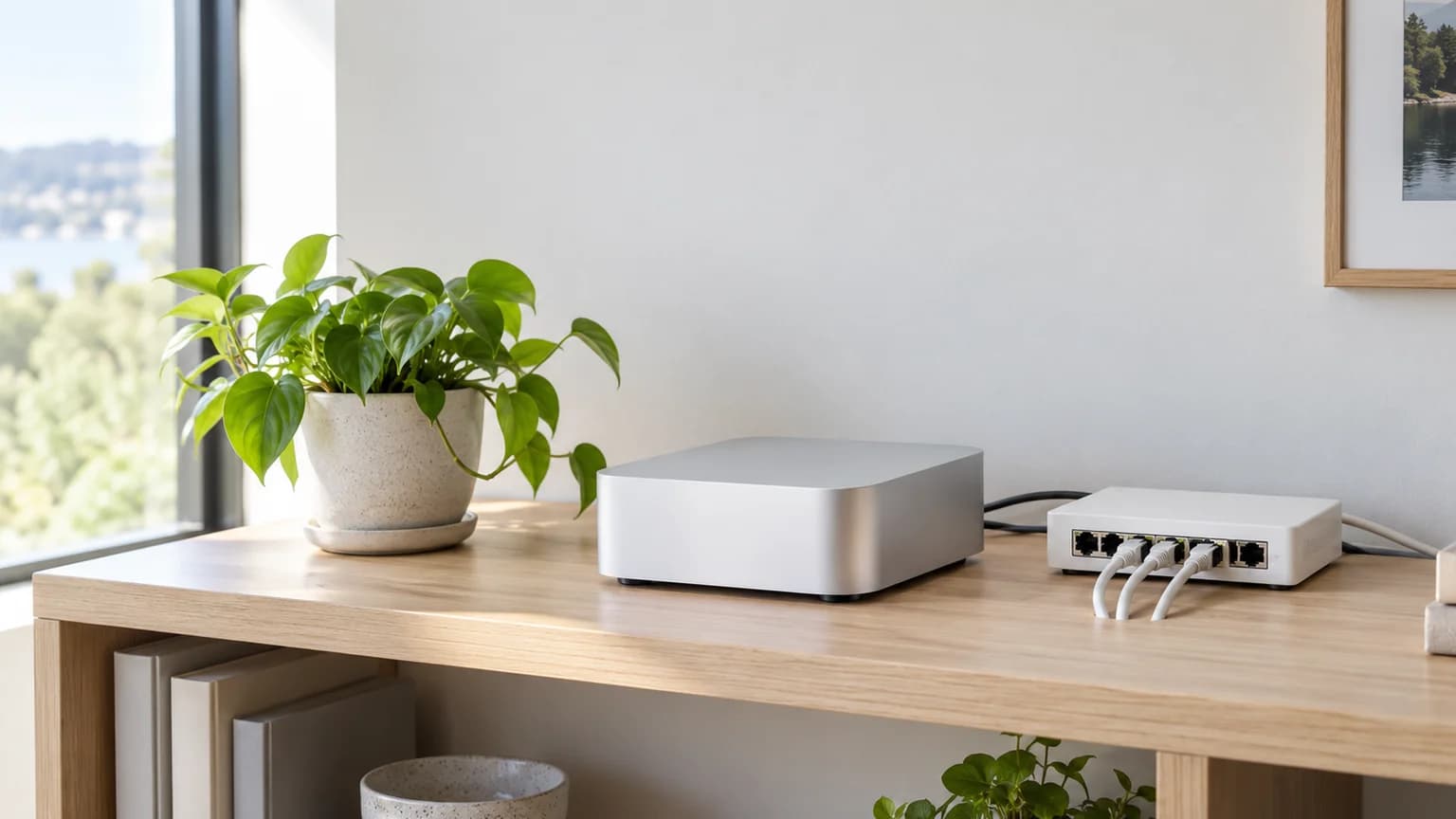

A Thread Border Router bridges Thread devices to your home network — and most 2026 buyers already own one hidden in a HomePod mini, Echo Hub, or SmartThings Station.
Most 2026 buyers already own a Thread Border Router. The question is rarely "should I buy one." It's "do the TBRs I already own cooperate?" — and that is where Thread 1.4's credential-sharing rollout still breaks down. This guide aggregates expert reviews from Wirecutter, The Verge, Tom's Guide, XDA, PCMag, and CNET plus community failure reports, then scores five 2026 hubs on the SHE Thread Future-Proof Score to surface which TBR deserves to be primary and which is a Thread-island contributor.
What is a Thread Border Router?
A Thread Border Router (TBR) sits on both a Thread mesh and your regular home network at the same time. Thread is a low-power IPv6 mesh built on 802.15.4 radios — the same radio family as Zigbee, different stack. Your phone, your Wi-Fi router, and your Matter controller can't talk to Thread devices directly. The border router is the translator that makes a Thread sensor reachable from an iPhone or a Home Assistant dashboard.
Technically, a TBR runs an IPv6 routing table mapping Thread mesh addresses to your home network, advertises itself over mDNS for Matter controller discovery, persists the Thread network key, and (in Thread 1.4+) shares that key with other TBRs on the same network. It keeps a radio link up 24/7, which is why border routers are always mains-powered and almost always baked into hubs you already own.
Why do you need a Thread Border Router?
You need a Thread Border Router if — and only if — you use Matter-over-Thread accessories. Matter-over-Wi-Fi devices (most smart plugs, video doorbells, cameras) pair directly to Wi-Fi and don't need a TBR.
Thread is reserved for low-power accessories where Wi-Fi would drain a battery in a week: contact, motion, and leak sensors, smart locks, and some light bulbs and shade controllers. If your shopping list includes those categories — or a spec sheet says "Matter over Thread" — a TBR is mandatory. Without one, the device will commission into your Matter controller and then sit offline, unreachable. The good news: you probably already own at least one TBR. The next section walks through the ones hiding in plain sight.
What devices can be used as a Thread Border Router?
Expert reviewers at How-To Geek and The Verge have catalogued the Thread radios embedded in devices you already own. The 2026 categories:
- Smart speakers and displays. Apple HomePod (2nd gen) and HomePod mini, Amazon Echo Hub, Echo (4th gen), Echo Show 8/15, Google Nest Hub (2nd gen), Nest Hub Max, Nest Audio.
- Mesh Wi-Fi routers. Google Nest Wifi Pro, Eero 6+/Pro/Max 7, TP-Link Deco X80 (select models), Apple TV 4K.
- Dedicated smart home hubs. Samsung SmartThings Station, Samsung SmartThings Hub, Aqara Hub M3, Aqara Hub M2, Home Assistant Yellow.
- DIY OpenThread Border Router. Home Assistant Green running the OpenThread Border Router add-on plus a Thread radio dongle (Home Assistant Connect ZBT-2, SMLIGHT SLZB-06MG26, Sonoff Dongle Max) — the only explicitly DIY path.
The Connectivity Standards Alliance maintains Matter certification records; OpenThread maintains the protocol source the DIY path runs on.
How many Thread Border Routers do I need?
One is enough. Multiple TBRs only help if they cooperate, and cooperation in 2026 is still ecosystem-gated.
The community pain-point: a household accumulates three or four TBRs over time (Siri in the kitchen, Alexa in the den, SmartThings Station for Qi charging), and none of them share the same Thread network. Each TBR creates its own isolated Thread mesh — a Thread island — and an accessory within range of all three will only pair with the first one to respond. Thread 1.4 added Thread Credential Sharing to federate TBRs into one mesh, but per XDA field reports and Bitdefender's "Thread 1.4 Slow Rollout Leaves Smart Homes Fragmented" coverage, cooperation works within one ecosystem and breaks across ecosystems. The matter-smarthome.de platform tracker publishes per-hub version velocity.
The practical answer for 2026: pick one TBR as primary, verify your other hubs support Thread 1.4, and treat anything still on Thread 1.3 as a Thread-island contributor — fine to own, not fine to rely on for mesh redundancy. If you're still weighing which protocol to build around in the first place, our Matter-vs-Thread-vs-Zigbee protocol decision guide walks through the tradeoffs end-to-end.
SHE Thread Future-Proof Score — 2026 TBR Rankings
What it measures: How well a 2026 hub performs as a Thread Border Router — Thread version support, multi-TBR mesh cooperation, cross-ecosystem reach, local operation, Matter version velocity, and power efficiency.
Formula: SHE Thread Future-Proof Score = (Thread Version × 0.20) + (Mesh Role × 0.20) + (Ecosystem Breadth × 0.20) + (Local Operation × 0.15) + (Matter Certification × 0.10) + (Battery/Power Efficiency × 0.15)
Data sources: Wirecutter, Tom's Guide, The Verge, XDA, PCMag, CNET, matter-smarthome.de platform tracker, How-To Geek, Home Assistant Community field reports, Apple discussion threads.
| Hub | Thread Version | Mesh Role | Ecosystem Breadth | Local Operation | Matter Cert | Battery/Power | SHE Thread Future-Proof Score | Verdict |
|---|---|---|---|---|---|---|---|---|
| Aqara Hub M3 | 9.5 | 9.5 | 10.0 | 9.0 | 9.0 | 9.0 | 9.40 | Best Overall |
| Samsung SmartThings Station | 8.5 | 8.5 | 9.0 | 6.5 | 9.5 | 7.5 | 8.25 | Best for Most Households |
| Home Assistant Green | 8.5 | 5.5 | 9.5 | 10.0 | 8.5 | 7.5 | 8.18 | Best for DIY Power Users |
| Apple HomePod mini | 8.0 | 6.5 | 5.5 | 8.0 | 9.0 | 6.0 | 7.00 | Best for Apple-only Homes |
| Amazon Echo Hub | 7.5 | 7.5 | 6.0 | 5.5 | 7.0 | 6.5 | 6.70 | Best for Alexa Dashboard Homes |
(SmartHomeExplorer editorial analysis — methodology)
Six factors, each scored 0–10 from the aggregated expert-review and platform-tracker dataset. Mesh Role and Ecosystem Breadth are deliberately weighted to match the 2026 fragmentation reality — a TBR that refuses to share credentials is demoted no matter how polished the rest of the hardware is. Full scoring mechanics live at /metrics/she-thread-future-proof-score. The same metric is used in our Thread-enabled future-proof devices guide, so the Aqara Hub M3's 9.40 score carries across guides by design.
2026 Thread Border Router
Chart
 Smarthomeexplorer.com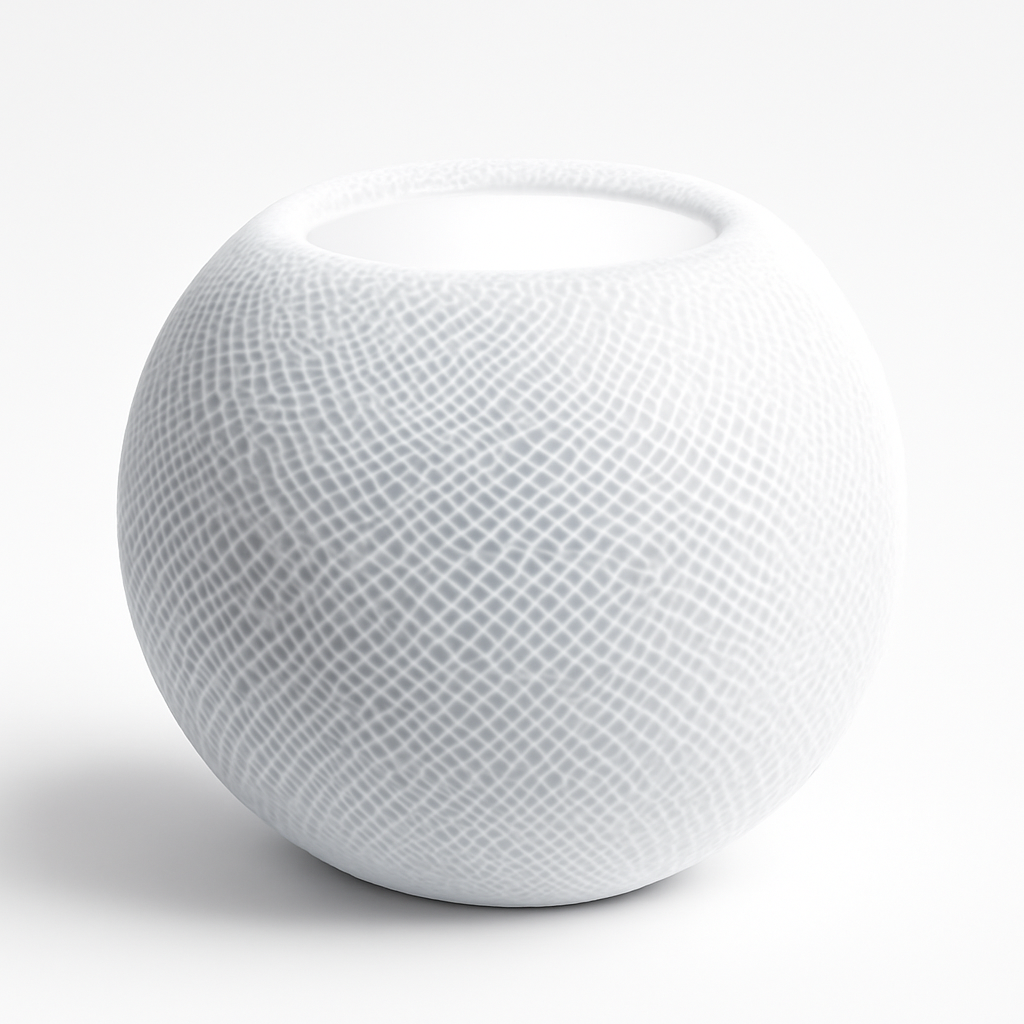

Apple HomePod mini — the Apple TBR baseline
Apple HomePod mini
(Current Price, subject to change)
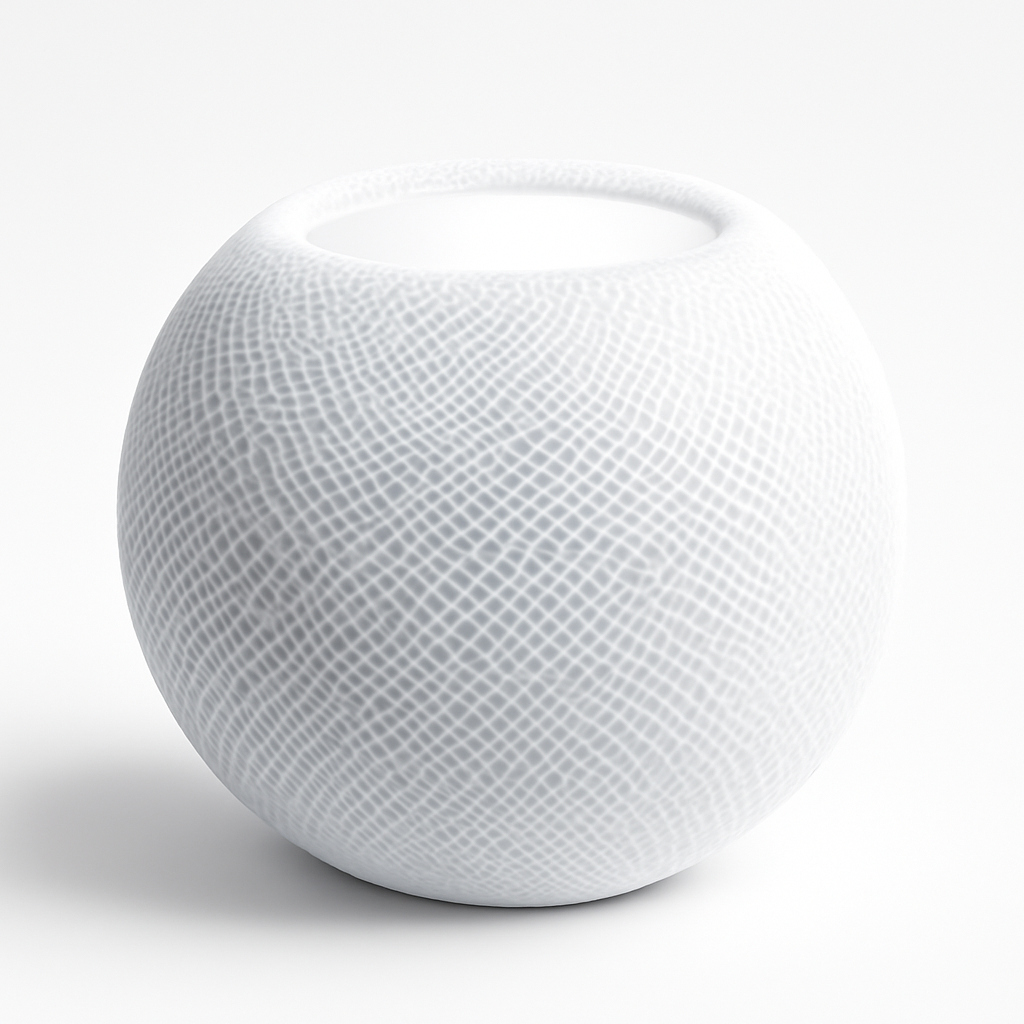
The Apple HomePod mini is the Apple ecosystem's default Thread Border Router and the product most buyers land on first when trying Matter from an iPhone. It also most directly demonstrates the Thread-island problem: paired with current firmware it routes Thread devices reliably inside Apple Home, but paired with non-Apple border routers on the same network it often refuses to join their mesh. A good TBR — an insular one.
"HomePod mini is the best HomeKit hub and Siri speaker for Apple users — Thread border router is a bonus" — Wirecutter, rating 8.5
"Apple's HomeKit platform makes linking up and managing the best smart home devices easy. You can control the best HomeKit devices manually from your iPhone, iPad, or Apple TV or go hands-free with voice commands on any Siri voice assistant-enabled gadget such as the HomePod smart speaker." — Tom's Guide, rating 8.6
What We Love
- Thread Border Router works reliably inside Apple Home — accessories pair fast and stay online
- HomeKit hub role is transparent — no app setup friction once signed into iCloud
- A smart SHE pick for Apple-first households — buy it on Amazon when HomeKit is your primary surface
- Pairs cleanly with the Aqara Hub M3 for cross-ecosystem Thread reach
What Could Be Better
- Apple ecosystem only — non-Apple Matter controllers cannot use it as primary TBR
- Routinely fails to join non-Apple border router meshes per XDA and Apple discussion threads
- No display — all feedback is voice or from the phone
The Verdict
Apple-only households who accept that their Matter experience lives inside HomeKit will find the HomePod mini hard to beat at its $99 list price — though Amazon marketplace pricing runs higher, so check today’s price. The SHE Thread Future-Proof Score of 7.00 reflects the closed-ecosystem cost: polished and reliable inside Apple Home, a poor neighbor to the rest of the Thread world. In a multi-ecosystem household, keep it as a SECONDARY border router.
Samsung SmartThings Station — cooperative TBR, fast version velocity
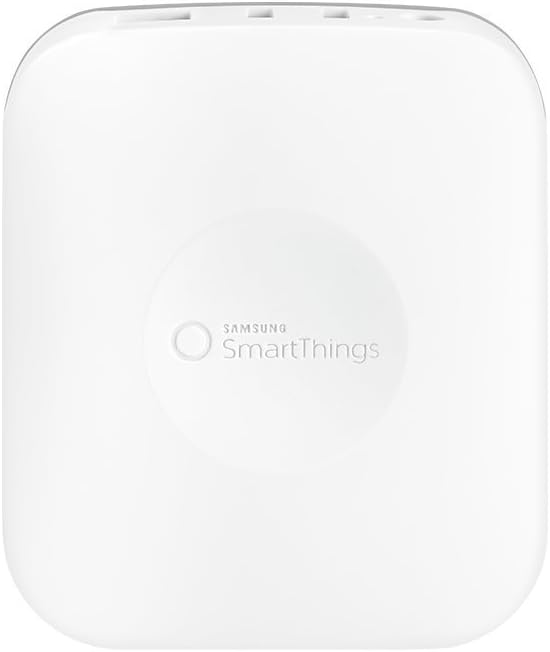
Samsung SmartThings Station
(Current Price, subject to change)
The Samsung SmartThings Station is the only Thread Border Router on this list that hides inside a counter-top charger, which is the angle Tom's Guide emphasized in its review. It's also the hub with the fastest Matter version velocity in the consumer category per matter-smarthome.de — Samsung ships Matter updates faster than Apple, Google, or Amazon. For a TBR that cooperates in a multi-TBR mesh via multi-admin commissioning across Alexa, Google, and SmartThings, this is the most defensible 2026 pick.
"The SmartThings Station is the best Matter hub for most households — five protocols in a wireless charger form factor" — Tom's Guide, rating 8.2
What We Love
- Fastest Matter version velocity of any consumer hub — new device classes land on SmartThings first
- Cooperative TBR with multi-admin commissioning across Alexa, Google, and SmartThings
- Counter-space answer — grab one on Amazon; the Qi charger pays rent next to your bed
- Thread 1.4 on the Samsung roadmap — future-proofing on the table
What Could Be Better
- Limited local processing — leans on SmartThings cloud for many automations
- Thread 1.3 today means cross-ecosystem mesh cooperation is still rollout-dependent
- Qi puck form factor — you can't wall-mount it like the Echo Hub
The Verdict
For most households wanting one TBR that cooperates with at least one other major ecosystem and ships Matter updates quickly, the Samsung SmartThings Station earns its 8.25 SHE Thread Future-Proof Score honestly — a plug-and-play cooperative TBR with a built-in Qi charger as the kicker.
Aqara Hub M3 — cross-ecosystem TBR
Aqara Hub M3
(Current Price, subject to change)
PCMag called the Aqara Hub M3 the most-protocol-complete hub under $150, and that's the product's actual moat. It's the only hub here that functions as a Matter controller across Apple Home, Google Home, Alexa, SmartThings, and Home Assistant simultaneously via multi-admin commissioning. PoE lets you hide it in a network closet, Zigbee 3.0 keeps legacy sensors working, the IR blaster covers dumb TVs, and the Amazon title calls out "Thread Border Router" explicitly.
"The Aqara Hub M3 is the best HomeKit-centric hub for Aqara device owners with broad sensor support" — PCMag, rating 8.3
What We Love
- Cross-ecosystem Matter controller — the only hub here speaking Apple, Google, Alexa, SmartThings, and Home Assistant simultaneously
- Cooperative TBR with Thread 1.3 today, Thread 1.4 in active rollout
- Editor's pick at $119.99 on Amazon — the best protocols-per-dollar ratio in 2026
- PoE install option lets you hide it in a network rack and forget it
What Could Be Better
- Aqara Home app has a learning curve — expect a few hours of setup vs. Apple or SmartThings
- Smaller English-language community than Home Assistant or SmartThings
The Verdict
The Aqara Hub M3 earns its 9.40 SHE Thread Future-Proof Score as the clearest Best Overall pick: strongest cross-ecosystem reach, highest Mesh Role, PoE install option, and a price $60 under the Echo Hub. If you own devices across more than one ecosystem, this is the TBR to build around.
Amazon Echo Hub — Alexa TBR + wall dashboard
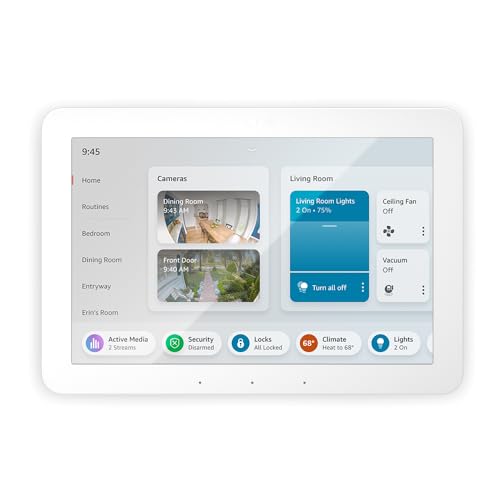
Amazon Echo Hub
(Current Price, subject to change)
The Amazon Echo Hub's primary job is to be an 8-inch wall-mounted Alexa dashboard. Thread Border Router is a bonus role on top — CNET's review framed it exactly that way. It's mostly cooperative in shared meshes but routes Alexa-paired accessories through Amazon servers, which introduces a cloud dependency the Apple and Home Assistant hubs avoid. The Matter 1.2 version ceiling is the real cost: newer device classes requiring Matter 1.3 or 1.4 (robot vacuums, heat pumps, some cameras) fall back to the capability floor when paired here.
"The Echo Hub is the best wall-mounted smart home controller — a touchscreen dashboard with built-in Zigbee and Matter" — CNET, rating 7.9
What We Love
- 8-inch wall-mountable dashboard is unique here — no other hub doubles as a control panel
- Solid Alexa-first pick at $179.99 on Amazon for Echo-committed households
- Zigbee coordinator keeps older Echo Plus-era Zigbee accessories working
- Cooperative TBR in shared meshes once other hubs reach Thread 1.4
What Could Be Better
- Matter 1.2 ceiling per matter-smarthome.de holds newer device classes at the capability floor
- Alexa-routing cloud dependency — weaker local operation than Aqara Hub M3 or Home Assistant Green
- $179.99 is the priciest entry despite the Matter 1.2 constraint
The Verdict
The Amazon Echo Hub's 6.70 SHE Thread Future-Proof Score reflects its priorities honestly — the dashboard is the product, the TBR is the bonus. Alexa-committed households wanting a wall panel with Thread built in will find it fine. Anyone weighing it for the TBR alone should buy the Aqara Hub M3 at $60 less.
Home Assistant Green — dedicated OTBR for DIY homes
Home Assistant Green
(Current Price, subject to change)
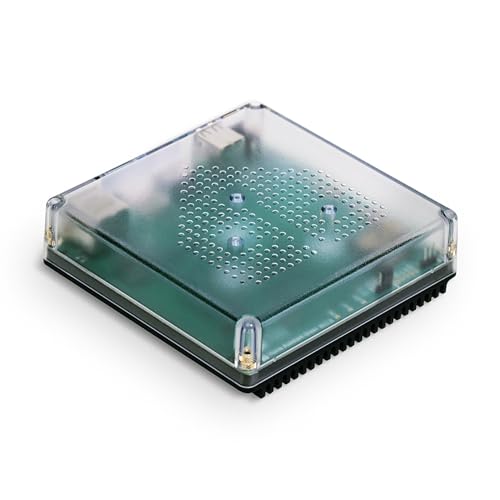
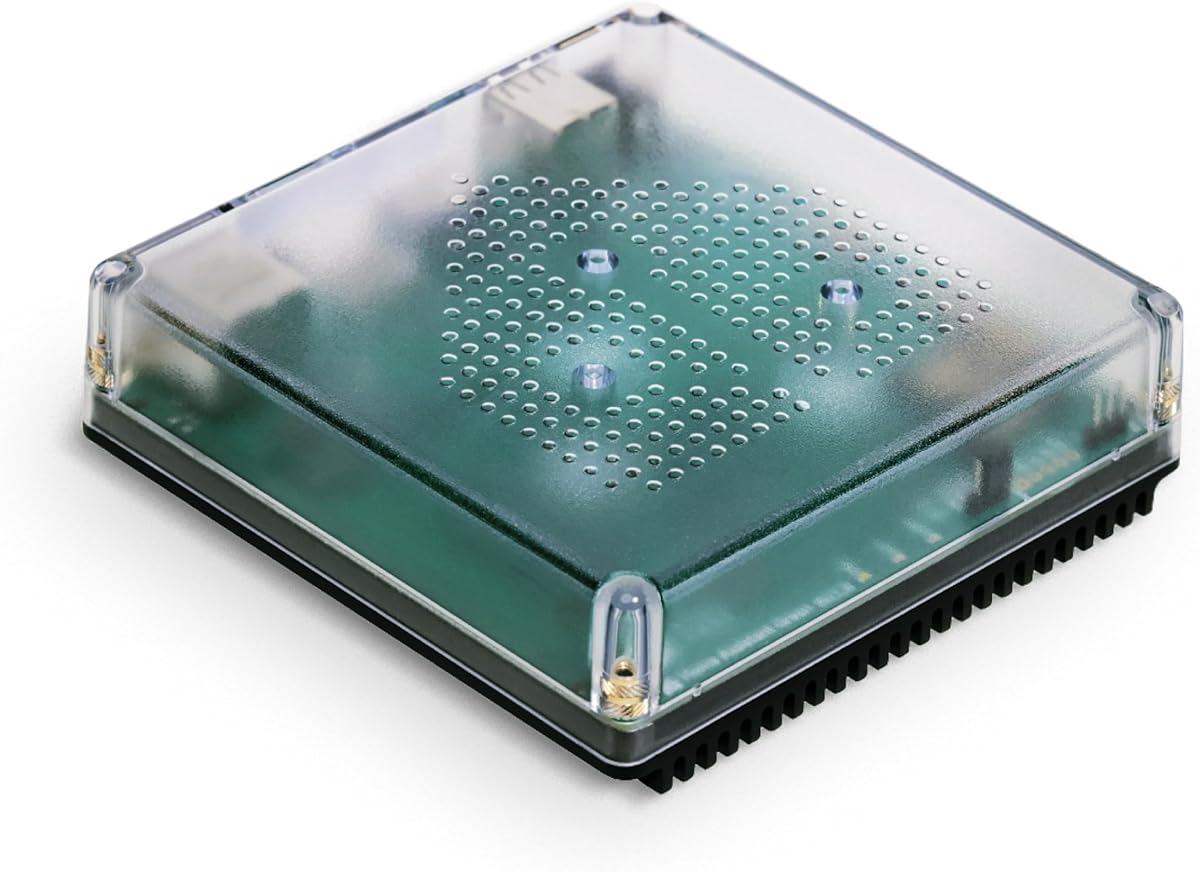
Home Assistant Green is the DIY path on this list. The Verge's review flagged that it's not plug-and-play out of the box — to serve as a TBR, you pair it with a Thread radio (Home Assistant Connect ZBT-2, SMLIGHT SLZB-06MG26, or Sonoff Dongle Max) and install the OpenThread Border Router add-on. Once configured, it runs the most local, most integrated TBR you can buy: 100% local processing, the broadest integration count in the category, and full control over automation logic.
"Home Assistant is the most capable smart home platform — if you're willing to put in the time to set it up" — The Verge, rating 8.5
What We Love
- 100% local operation — nothing leaves your network; Thread routing stays local during ISP outages
- Broadest integration count of any hub here via community integrations
- Official Nabu Casa hardware at $179 on Amazon with guaranteed software updates
- OpenThread Border Router add-on is the same reference implementation Google and Nest ship
What Could Be Better
- TBR function requires an OTBR add-on plus a Thread radio dongle — more assembly than any other hub here
- Mesh Role scored 5.5 — DIY path is dedicated rather than cooperative out of the box
The Verdict
For DIY power users who want the most local, most integrated TBR, the Home Assistant Green's 8.18 SHE Thread Future-Proof Score is the honest read: strong on Local Operation and Ecosystem Breadth, demoted on Mesh Role because the DIY path is an island by default. Pair it with the Aqara Hub M3 if you want both local control and cross-ecosystem reach.
Why multiple Thread Border Routers break (and when Thread 1.4 fixes it)
Three TBRs on the same network will not automatically merge into one Thread mesh — they usually form three islands and argue about which is canonical. This is the core 2026 fragmentation story.
Thread 1.4 added Thread Credential Sharing so border routers can share a network key and federate instead of competing. The feature is on paper per the Connectivity Standards Alliance. The feature is not universally shipped: Bitdefender's 2026 coverage ("Thread 1.4 Slow Rollout Leaves Smart Homes Fragmented") and HeyCoach's parallel reporting converge on the same conclusion — Apple rolled first on HomePod, Google followed on Nest Hub, Samsung has a roadmap, Amazon does not yet. Even when two TBRs both speak Thread 1.4, sharing credentials across ecosystems requires the Matter controller layer to honor multi-admin commissioning. That works well between SmartThings and Google, acceptably between SmartThings and Alexa, and badly between Apple Home and everything else per XDA's multi-year field reporting.
The pragmatic answer: own a cross-ecosystem TBR as primary, keep your existing HomePod or Echo as secondary for voice-assistant reasons, and don't expect mesh-merging until the firmware catches up. Our Matter/Thread fatigue explainer unpacks the wider interop problem in depth, and the Matter-vs-Thread-vs-Zigbee primer covers how these protocols layer together.
Thread Border Router troubleshooting
When a Thread device goes offline, the border router is the first thing to check. Field reports from the Home Assistant community and r/MatterProtocol converge on a short checklist:
- Restart the border router first. The TBR holds the persistent Thread network key and the IPv6 routing table; rebooting rebuilds both and resolves most Thread outages.
- Confirm firmware is current. Thread 1.4 and multi-admin commissioning updates ship continuously — an out-of-date TBR fails to cooperate with a 1.4-current peer even on the same brand.
- Check IPv6 is not blocked on your router. Some Wi-Fi routers ship with IPv6 disabled by default. A TBR without IPv6 reachable on the LAN cannot be discovered by Matter controllers.
- Verify you don't have two TBRs fighting to be primary. Apple Home, Alexa, and SmartThings apps each expose a Thread network view. Two different Thread network IDs means you have Thread islands — re-commissioning to the preferred TBR usually fixes it.
- Check the 2.4GHz vs 5GHz trap. Matter commissioning requires your phone on the same 2.4GHz network as the hub. Mesh routers steering to 5GHz cause pairing failures that look like TBR failures.
If all of those check out and Thread devices still won't commission, the Home Assistant community recommends pairing directly to a known-good TBR (a HomePod mini or SmartThings Station) and migrating the accessory back to your preferred ecosystem after.
Bottom Line
If you're new to Thread, you almost certainly already own a border router. The question is whether it cooperates with the others you already own — and Thread 1.4 credential sharing is the right fix, just not shipping everywhere yet.
Get the Aqara Hub M3 if you want one TBR covering Apple, Google, Alexa, SmartThings, and Home Assistant. Get the Samsung SmartThings Station if you want the fastest Matter version velocity and a built-in Qi charger. Get the Home Assistant Green if you want 100% local operation and the broadest integration count. Skip the Apple HomePod mini if you expect it to cooperate with non-Apple TBRs without friction.
When NOT to Buy a Thread Border Router
Most readers should not buy a dedicated TBR. If you already own an Apple HomePod, Echo Hub, Nest Hub (2nd gen), or SmartThings Station, one of those is almost certainly enough for a first Matter-over-Thread accessory. If every device in your home runs Matter-over-Wi-Fi (most plugs, cameras, video doorbells, many lights), there's no Thread mesh to bridge. And if your shopping list is still Zigbee or Z-Wave, a TBR is hardware for a house you don't live in yet — revisit when your next lock or sensor is labelled Matter over Thread.
Frequently Asked Questions
What is a Thread Border Router?
A Thread Border Router bridges a Thread mesh (802.15.4 IPv6 low-power radios) to your Wi-Fi and Ethernet network so phones, Matter controllers, and cloud services can reach Thread accessories. Examples include the Apple HomePod mini, Amazon Echo Hub, Samsung SmartThings Station, and Aqara Hub M3 — each ships with a Thread Border Router built in.
Why do you need a Thread Border Router?
You only need a Thread Border Router if you use Matter-over-Thread accessories. Matter-over-Wi-Fi devices (most smart plugs, video doorbells, and cameras) pair directly with your Wi-Fi router. Thread is reserved for battery-sensitive categories like contact sensors, motion sensors, leak sensors, and smart locks — if your shopping list includes those, a TBR is mandatory.
What devices can be used as a Thread Border Router?
Four categories ship with TBR support in 2026. Smart speakers and displays with embedded Thread radios (Apple HomePod mini, Amazon Echo Hub, Google Nest Hub 2nd gen). Mesh Wi-Fi routers with Thread radios (Nest Wifi Pro, Eero 6+/Pro/Max 7, Apple TV 4K). Dedicated smart home hubs (Samsung SmartThings Station, Aqara Hub M3). DIY OpenThread Border Router setups (Home Assistant Green with a Thread radio dongle and the OTBR add-on).
How many Thread Border Routers do I need?
One is sufficient. Multiple TBRs help with redundancy and range only if they cooperate via Thread 1.4 Credential Sharing. That feature is not yet universally supported across ecosystems — Apple rolled first, Google followed, Samsung is on the roadmap, Amazon remains on Thread 1.3. Until every TBR on your network is Thread 1.4, extra hubs create Thread islands rather than redundancy.
What Google devices are Thread Border Routers?
Three Google devices ship as Thread Border Routers in 2026: the Nest Hub (2nd gen), the Nest Hub Max, and the Nest Wifi Pro mesh router. Google's Matter version velocity is documented as behind Samsung's on matter-smarthome.de, but the border router itself works fine within Google Home and cooperates with Apple border routers once both are on Thread 1.4.
Sources & Methodology
This guide aggregates expert reviews from Wirecutter, The Verge, Tom's Guide, XDA, PCMag, and CNET, plus platform-tracker data from matter-smarthome.de, community field reports from r/MatterProtocol and the Home Assistant forum, Thread 1.4 rollout reporting from How-To Geek and Bitdefender, and spec references from the Connectivity Standards Alliance and OpenThread. Consensus scores reflect weighted averages; the SHE Thread Future-Proof Score is SmartHomeExplorer editorial analysis with full methodology at /methodology and /metrics/she-thread-future-proof-score.
Next-step reading:
- Matter/Thread fatigue explainer — companion piece on the wider interop problem
- Matter-vs-Thread-vs-Zigbee protocol explainer — primer on how the three protocols layer
- Matter-vs-Thread-vs-Zigbee protocol decision guide — which protocol to build around
- Best Thread-enabled future-proof devices — source guide for the SHE Thread Future-Proof Score
- Best Matter-compatible devices — product selection reference
SmartHomeExplorer aggregates expert review data across 1,230 consensus-reviewed products and 376 buying guides. For this explainer, we compared five Thread Border Routers using coverage from Wirecutter, The Verge, XDA, Tom's Guide, PCMag, CNET, and the matter-smarthome.de platform tracker, plus community failure-mode reports from r/MatterProtocol and the Home Assistant forum. Prices come from the Amazon Creators API at publish time; the SHE Thread Future-Proof Score is calculated against Thread 1.4 support records and CSA interop data. SHE aggregates and scores; we do not test products in-house.
Written by Nicholas Miles. Nick has covered smart home technology since 2024 and founded SmartHomeExplorer.com to aggregate consensus ratings from 2042 editorial sources across 1229 smart home products and 376 buying guides to surface the true consensus picks for every category.
Disclosure: SmartHomeExplorer.com earns affiliate commissions from qualifying Amazon purchases. This doesn't influence our rankings — our methodology is published at /methodology.