

Robot Vacuum vs Traditional: 5-Year Cost (2026)
A self-empty robot costs more than a cordless stick on day one — but consumables rewrite the math. We costed five machines over five years of genuine-OEM upkeep, and the cheapest to buy is rarely the cheapest to own. Here is the full picture, as of June 2026.
This article contains affiliate links. We may earn a commission at no extra cost to you. Prices change frequently — check the current price on Amazon before buying. Learn more
The Short Answer
Costed over a 5-year horizon, the cheapest robot to own is the bagless Shark Matrix, whose minimal consumables and vacuum-only design hold its lifetime cost lowest. The premium Ecovacs runs about 4.5x higher, while a $499 Roborock finishes within $9 of the $849 Dyson once genuine consumables are counted.
Featured in this Guide
Shark
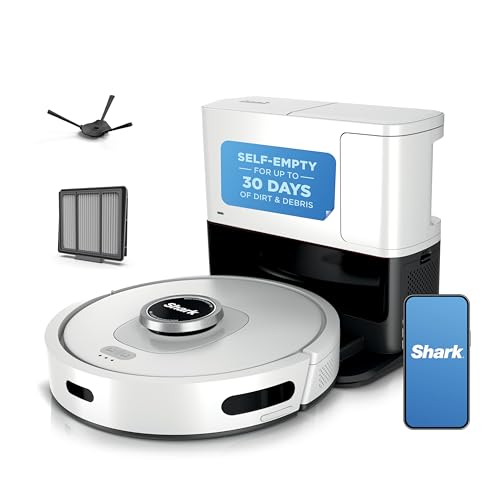
Matrix Self-Empty Robot Vacuum
- •For the budget buyer who just wants floors cleaned: the lowest five-year cost to own at $561.89, with a bagless dock and no mop parts.
Dyson
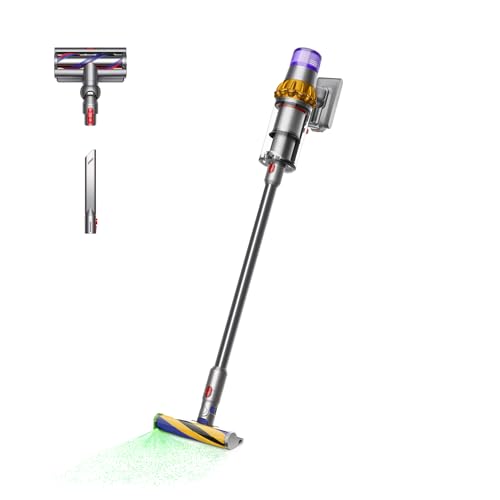
V15 Detect Origin
- •For the owner who would rather run a vacuum by hand than feed a dock: near-zero consumables and the lowest upkeep here.
Roborock
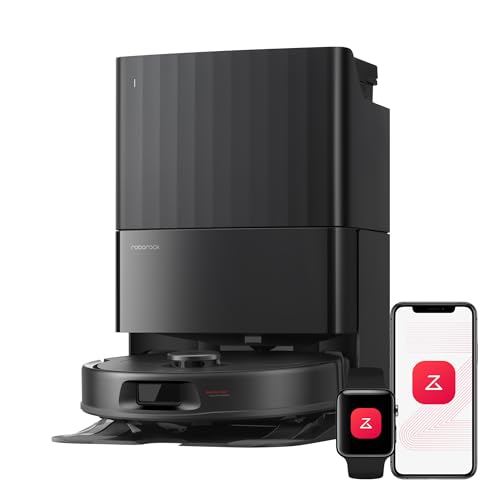
Qrevo S Pro Robot Vacuum and Mop
- •For the shopper who wants mopping at the cheapest sticker and accepts higher consumable spending over five years.
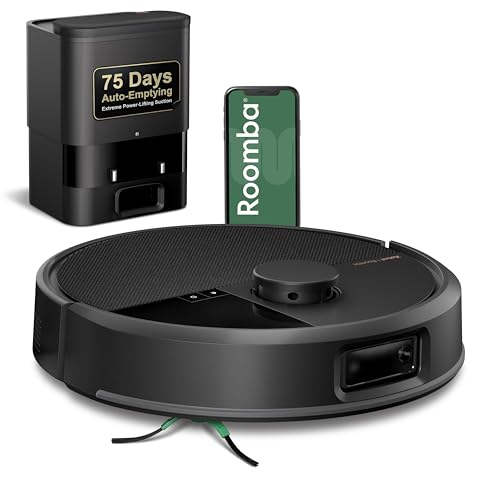
iRobot
Roomba Max 705 Vac
- •For the iRobot loyalist who wants bagged, hands-off emptying and is willing to pay a premium to own it.
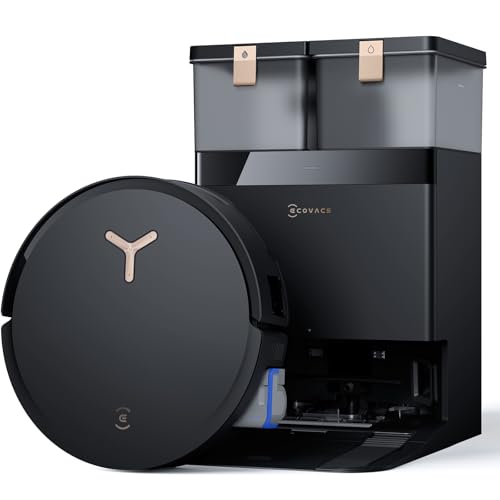
Ecovacs
Deebot X8 Pro Omni
- •For the buyer who wants a self-washing roller mop and full automation and has budgeted for the highest lifetime cost.
Five Machines, Costed Head to Head
Smart Cleaning
Chart
 Smarthomeexplorer.com
Big Ass Fans Haiku L 52-Inch Smart Ceiling Fan
Check price
AlorAir Sentinel HDi90 Basement/Crawlspace Dehumidifier with Pump
Check price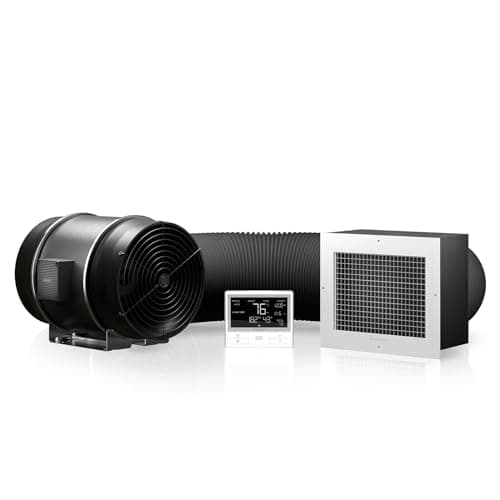
AC Infinity CLOUDWAY T12 Whole House Fan
Check price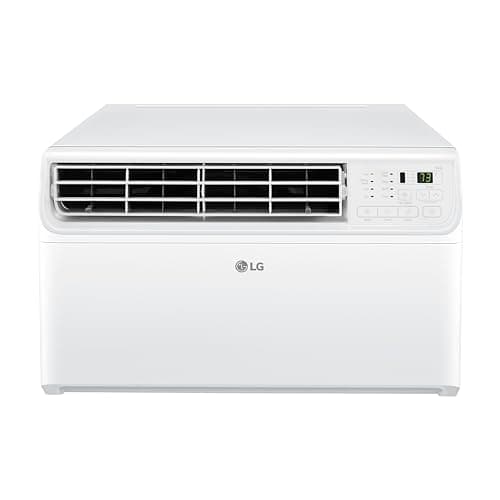
LG Dual Inverter Smart WiFi Window AC (10,000 BTU)
Check price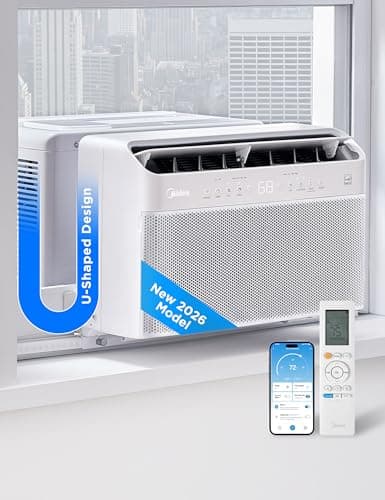
Midea U Smart Inverter Window AC (12,000 BTU)
Check price
Mysa Smart Thermostat for Electric Baseboard Heaters (V2)
Check price
Sticker Price or Lifetime Cost: The Real Decision
Side by side, the verdict appears settled: a self-emptying robot demands considerably more money than a cordless stick. Yet the purchase price represents only the initial installment. Across a 5-year ownership horizon, genuine consumables quietly reorganize the entire ranking — the 6.8 lbs, 60 min Dyson ultimately finishes within $9 of the comparatively cheaper Roborock, while the premium Ecovacs escalates to approximately 4.5x the Shark once every replacement dust bag, mop pad and brush is accounted for.
This guide settles it with our weighted, normalized SHE Five-Year Cost-of-Ownership Score, a single composite of upfront price plus a 5-year stack of genuine-OEM consumables. With RTINGS, T3 and Vacuum Wars confirming the underlying specs, verified as of June 2026, the pattern delivers a clear lesson: the cheapest machine to buy is rarely the cheapest to own.
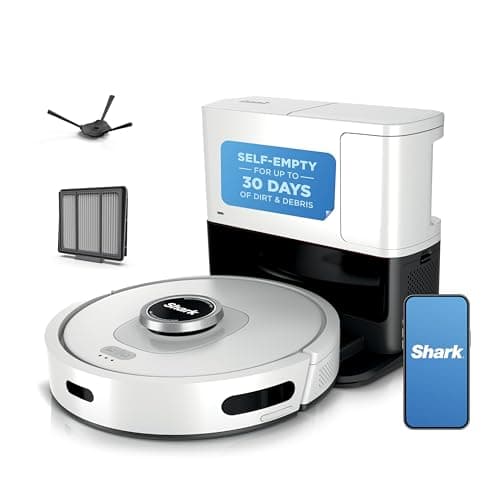
Best Cost to Own: Shark Matrix Self-Empty Robot Vacuum
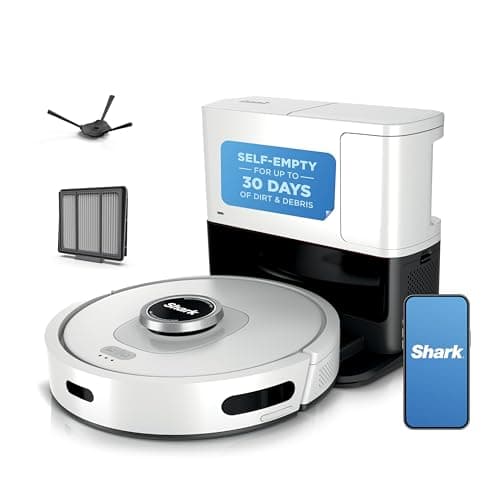
Shark Matrix Self-Empty Robot Vacuum
- Bagless self-empty base means you never buy dust bags — the single biggest consumable saving here.
- No mopping at all — it is a pure vacuum.
(Current price, subject to change)
For the cost-conscious buyer who simply wants floors handled, the Shark Matrix lines up cleanly with the budget logic, because its bagless self-empty base eliminates the single most expensive recurring item every other robot here carries: dust bags. Across a 5-year horizon that absence, combined with a vacuum-only design that buys no mop pads or solution, holds its genuine consumables to roughly a third of its rivals'. RTINGS lab-tests the AV2511AE and confirms the wet-cleaning omission, so you are paying for suction and self-emptying alone. At about 7 lbs the robot is unremarkable and Shark publishes no suction figure, yet the arithmetic is decisive: its weighted composite tops the SHE Five-Year Cost-of-Ownership Score because the lowest lifetime cost, not the lowest sticker, anchors the top of the normalized scale. Relative to the premium machines it concedes mopping and app polish, but as a pure cost proposition it delivers the cheapest 90 min cleans you can automate.
What We Love
- Bagless self-empty base means you never buy dust bags — the single biggest consumable saving here.
- Vacuum-only design buys no mop pads or solution, holding five-year consumables near $162.
- Lowest lifetime cost in the comparison at about $562, on a roughly $399.99 sticker.
What Could Be Better
- No mopping at all — it is a pure vacuum.
- Shark publishes no suction figure, so you cannot compare Pa.
The Verdict
If your priority is the least money spent over five years and you do not need a mop, the Shark Matrix Self-Empty Robot Vacuum lines up with what you actually need — a bagless self-empty dock that buys no dust bags and the lowest lifetime cost here at about $562.
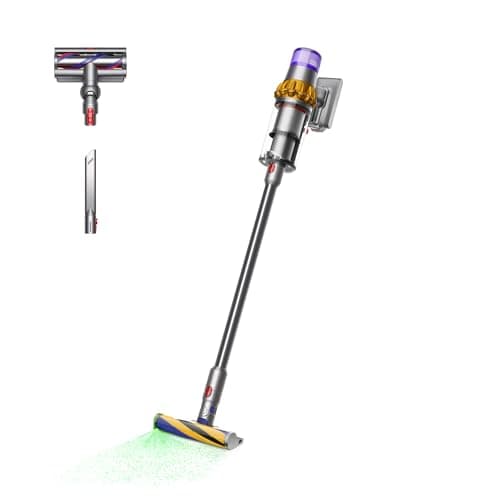
Best Traditional / Lowest Upkeep: Dyson V15 Detect Origin
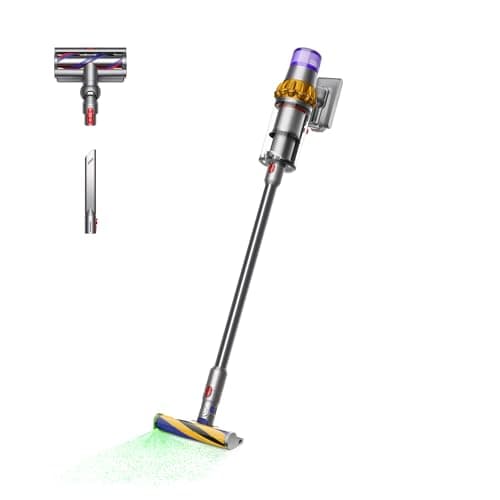
Dyson V15 Detect Origin
- Near-zero consumables: a washable HEPA filter and one click-in battery over five years.
- Fully manual — no self-empty dock and no scheduled cleaning.
(Current price, subject to change)
If you would rather own a vacuum than manage one, the Dyson V15 Detect Origin represents the comparison's genuine surprise, and its weighted 8.3 composite on the SHE Five-Year Cost-of-Ownership Score thoroughly explains why. Because it is a manual cordless with no dock to replenish, RTINGS and TechRadar both document that a washable HEPA filter and a single click-in battery constitute effectively the entire 5-year consumables obligation, which means a premium $849.99 sticker ultimately carries almost nothing behind it. That near-zero upkeep is precisely why the Origin lands within $9 of the considerably cheaper Roborock once both machines are fully costed — approximately 1.8x the Shark, versus the Ecovacs at substantially more. The honest reservations remain genuine: at 6.8 lbs you propel it personally, 60 min of runtime restricts a continuous session, and the Origin includes only 3 attachments rather than the complete kit's 5. Nevertheless, as a lifetime-cost proposition it comfortably outperforms its intimidating price.
What We Love
- Near-zero consumables: a washable HEPA filter and one click-in battery over five years.
- 240 air watts of suction in a 6.8 lbs cordless you control by hand.
- Lands within $9 of the much cheaper Roborock once both are fully costed.
What Could Be Better
- Fully manual — no self-empty dock and no scheduled cleaning.
- The Origin bundle ships 3 attachments rather than the full kit's 5.
- 60 min of runtime caps a single session.
The Verdict
If you would rather own a vacuum than maintain one, the Dyson V15 Detect Origin is a sensible pick for that setup — a manual cordless whose washable filter and lone battery make its five-year upkeep near zero, landing it within $9 of the cheaper Roborock to own.
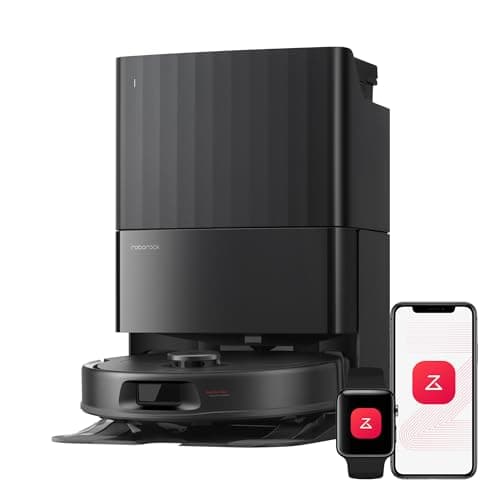
Cheapest Mop-and-Vac Sticker: Roborock Qrevo S Pro Robot Vacuum and Mop
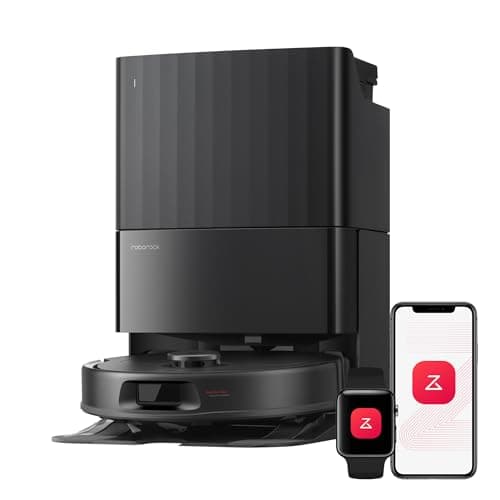
Roborock Qrevo S Pro Robot Vacuum and Mop
- Cheapest mop-and-vac sticker here at about $499.99.
- Genuine consumables near $499 nearly double the cost to own.
(Current price, subject to change)
For the shopper drawn to a $499.99 mop-and-vac that looks like the value of the field, the Roborock Qrevo S Pro checks the boxes that matter for capability — but the SHE Five-Year Cost-of-Ownership Score tells a subtler story. Its cheap sticker is genuine, yet a bagged dock plus spinning mop pads plus floor solution stack up: across 5-year ownership those genuine-OEM parts roughly equal the purchase price, pushing its lifetime total to within $9 of the far pricier Dyson and to about 1.8x the Shark. T3 covers the 18,500 Pa S Pro and its self-washing dock, and the hardware is legitimately strong and produces clean results over about 180 min of runtime. The takeaway is not that it is a bad buy; it is that its weighted composite lands a hair below the manual Dyson because consumables, not the sticker, decide the ranking. Compared to the Shark it mops; relative to the Dyson it simply costs more to feed.
What We Love
- Cheapest mop-and-vac sticker here at about $499.99.
- 18,500 Pa suction with a self-washing, self-drying bagged dock.
- Dual liftable spinning mop pads over roughly 180 min of runtime.
What Could Be Better
- Genuine consumables near $499 nearly double the cost to own.
- Five-year total of $998.77 lands just behind the manual Dyson.
The Verdict
If you want genuine mopping at the cheapest sticker and can stomach the consumables, the Roborock Qrevo S Pro Robot Vacuum and Mop checks the boxes that matter for capability — just know its $499.99 price grows to $998.77 to own, a hair behind the pricier Dyson.
Check price for the Roborock Qrevo S Pro Robot Vacuum and Mop →
iRobot Ecosystem Pick: iRobot Roomba Max 705 Vac
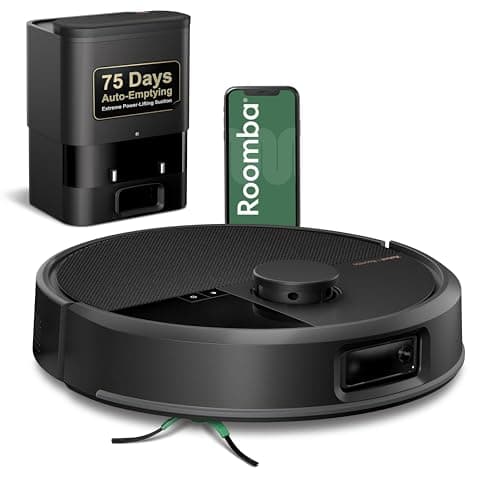
iRobot Roomba Max 705 Vac
- Bagged AutoEmpty dock runs up to a 75-day cycle between bag swaps.
- Second-highest entry price at $899.99 and vacuum-only.
(Current price, subject to change)
If you are loyal to iRobot's application and want bagged, hands-off emptying, you'll be well-served here, although the Roomba Max 705 Vac essentially asks you to pay for that convenience twice. Its $899.99 sticker already represents the second-highest entry in this guide, and across a 5-year ownership horizon a bagged AutoEmpty dock, edge brushes, filters and rubber roller assemblies progressively push its genuine consumables near $493, elevating the lifetime total to approximately 2.5x the Shark. RTINGS and Consumer Reports both cover the vacuum-only Vac variant, so you are at least spared mop pads and cleaning solution entirely. Weighing 7.5 lbs with 13,000 Pa and roughly 120 min of runtime, it cleans capably, yet its weighted composite of 6.6 reflects competent hardware burdened by a substantial entry price and ongoing bag expenditure. Compared to the considerably cheaper Shark, it ultimately justifies little of that premium on cost grounds alone — precisely what the normalized score exists to expose.
What We Love
- Bagged AutoEmpty dock runs up to a 75-day cycle between bag swaps.
- 13,000 Pa with Carpet Boost in a 7.5 lbs robot.
- Backed by the mature iRobot app and ecosystem.
What Could Be Better
- Second-highest entry price at $899.99 and vacuum-only.
- Bagged dock and roller sets push consumables near $493.
The Verdict
If you are committed to iRobot and want bagged, hands-off emptying, you'll be well-served here — the iRobot Roomba Max 705 Vac cleans capably, but its $899.99 entry and bagged dock push it to about 2.5x the Shark to own.
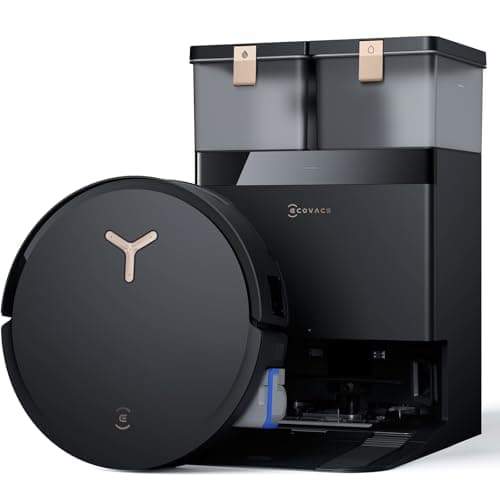
Most Automation, Highest Cost: Ecovacs Deebot X8 Pro Omni
Ecovacs Deebot X8 Pro Omni
- Self-washing OZMO roller mop with hot-water wash and hot-air dry.
- Highest lifetime cost by far at about $2,540 to own.
(Current price, subject to change)
For the buyer who wants a roller-mopping flagship that washes and dries itself and is genuinely prepared to pay throughout the machine's entire life, the Ecovacs Deebot X8 Pro Omni fits that brief — provided you consult the SHE Five-Year Cost-of-Ownership Score beforehand. It anchors the very bottom at the highest lifetime cost here, approximately 4.5x the Shark and roughly 2.6x the Dyson, because its self-washing OZMO roller mop, bagged dock and metered floor solution collectively accumulate into genuine consumables near 9.5x the Shark's modest total. TechRadar and Vacuum Wars both cover the X8 Pro Omni, while Reviewed.com documents the hot-water roller wash, so the automation is unmistakably real and, for certain households, entirely worthwhile. Weighing 11.7 lb with 18,000 Pa and up to 228 min of runtime, the hardware genuinely impresses. But measured purely on cost, its weighted composite registers a 2.0, the lowest in this comparison — because the price of maximum automation is ultimately paid every month, not merely once.
What We Love
- Self-washing OZMO roller mop with hot-water wash and hot-air dry.
- 18,000 Pa and up to 228 min of runtime.
- The most hands-off cleaning-and-mopping automation in the set.
What Could Be Better
- Highest lifetime cost by far at about $2,540 to own.
- Genuine consumables near $1,540 — roller mop, bagged dock and solution.
- About 4.5x the Shark's five-year cost.
The Verdict
If a self-washing roller mop and full automation are the brief and budget is no object, the Ecovacs Deebot X8 Pro Omni fits the brief — provided you accept the highest lifetime cost here, about 4.5x the Shark, paid out in consumables every month.
How We Score: SHE 5-Year Cost-of-Ownership Score
SHE 5-Year Cost-of-Ownership Score
Score Formula
(1.00 × Five-Year Total Ownership Cost)Score Factors
- Five-Year Total Ownership Cost (weight 1.00)The single documentable measure: the upfront evergreen price plus five years of genuine-OEM consumables — brushes, filters, dust bags, mop pads or rollers and cleaning solution, replaced on the manufacturer's recommended cadence. The set is normalized 0 to 10 with the lowest five-year total anchored at 10 and the highest at 2, so a lower lifetime cost earns a higher score. The Shark's $561.89 total anchors the top; the Ecovacs' $2,539.79 anchors the bottom.
- Energy and Labor (excluded, weight 0.00)Electricity is omitted as negligible — every machine draws similar modest power, a few dollars a year against hundreds in consumables. Reclaimed-time value is also kept out of the score and handled separately as a labeled, reader-adjustable scenario, because labor value is personal rather than documentable. The score therefore measures cost only, not cleaning quality or convenience.
SHE 5-Year Cost-of-Ownership Score — Ranked
Shark Matrix Self-Empty Robot Vacuum
SHE 5-Year Cost-of-Ownership Score10.0/10Lowest lifetime cost in the set — a bagless dock buys no dust bags and a vacuum-only design buys no mop parts, anchoring the top at $561.89.
Dyson V15 Detect Origin
SHE 5-Year Cost-of-Ownership Score8.3/10The surprise: a premium $849.99 cordless with near-zero consumables finishes within $9 of the much cheaper Roborock once both are fully costed.
Roborock Qrevo S Pro Robot Vacuum and Mop
SHE 5-Year Cost-of-Ownership Score8.2/10A $499.99 sticker erased by roughly $499 of genuine consumables, landing its five-year total at $998.77 — a hair behind the manual Dyson.
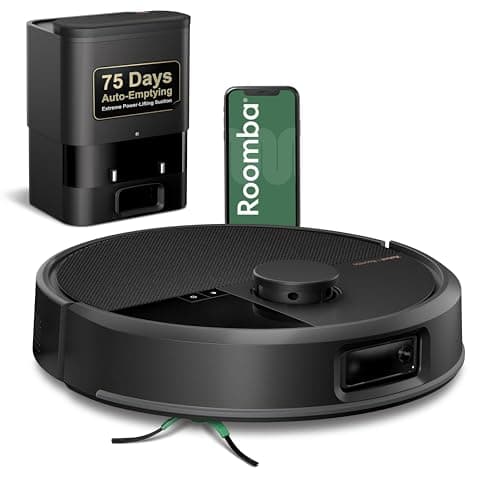
iRobot Roomba Max 705 Vac
SHE 5-Year Cost-of-Ownership Score6.6/10Second-highest entry price plus a bagged dock lift its five-year total near $1,393, about 2.5x the Shark despite being vacuum-only.
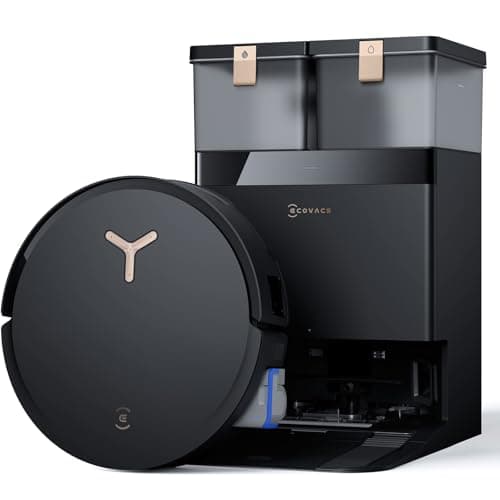
Ecovacs Deebot X8 Pro Omni
SHE 5-Year Cost-of-Ownership Score2.0/10Highest lifetime cost by far at $2,539.79 — about 4.5x the Shark — as the self-washing roller mop, bagged dock and solution dominate.
SHE 5-Year Cost-of-Ownership Score
Upfront price plus five years of genuine-OEM consumables, normalized 0-10 — the lowest lifetime cost scores highest.
SmartHomeExplorer composite of manufacturer specs plus RTINGS, T3, TechRadar and Vacuum Wars coverage.
What Each One Actually Does
Beyond cost, these five machines are not interchangeable, and the difference decides which belongs in your home. Two are vacuum-only: the bagless Shark Matrix and the manual Dyson V15 Detect Origin clean floors but never touch a mop. The Roborock Qrevo S Pro and the Ecovacs Deebot X8 Pro Omni add genuine mopping — the Roborock with dual spinning pads, the Ecovacs with a self-washing OZMO roller that the dock rinses in hot water and dries. The Roomba Max 705 Vac is the bagged, vacuum-only middle option. All four robots dock and self-empty and answer to their maker's app plus Alexa and Google voice control; the Dyson, being a cordless stick, enables nothing automated — you run it by hand. Match the capability to your floors first, then weigh the 5-year cost we evaluated above.
The Time-Value Question: Inputs, Not Findings
One cost the SHE Five-Year Cost-of-Ownership Score deliberately excludes is your time, because labor value is personal rather than documentable. Treat the following strictly as adjustable inputs, not as results. For a roughly 1,500 sq ft home vacuumed two to three times a week, manual vacuuming runs about 30 to 60 hours a year; a self-empty robot reclaims most of it, leaving perhaps 5 to 10 hours of dock emptying and pad washing, for a net of roughly 25 to 50 hours a year tied to that stated home size. What that reclaims is your call: valued at fifteen dollars an hour it yields about 1,875 to 3,750 dollars over the 5-year window; at twenty-five dollars, about 3,125 to 6,250; at forty dollars, about 5,000 to 10,000. Adjust the home size, frequency and hourly figure to your own situation. This matters only if you would genuinely spend the reclaimed time on something you value; for many the real payoff is simply not doing a disliked chore — which is precisely why we keep it out of the cost score entirely.
When NOT to Buy
Stub WNTB (Block 3B fallback).
Who Should Buy What
Who Should Buy What
| If you are… | Recommended pick |
|---|---|
Lowest cost to own You want floors vacuumed with the least money spent over five years and do not need any mopping. | Shark Matrix Self-Empty Robot Vacuum |
Owns it, never feeds it You would rather run a cordless by hand than maintain a dock, and you value near-zero consumables. | Dyson V15 Detect Origin |
Cheapest mop-and-vac sticker You want hands-free vacuuming plus genuine mopping at the lowest purchase price and accept higher upkeep. | Roborock Qrevo S Pro Robot Vacuum and Mop |
iRobot-app loyalist You are committed to the iRobot ecosystem and want bagged, hands-off emptying without mopping. | iRobot Roomba Max 705 Vac |
Maximum automation, cost no object You want a self-washing roller mop and full dock automation and will pay for it across the machine's life. | Ecovacs Deebot X8 Pro Omni |
Frequently Asked Questions
Is a robot vacuum cheaper to own than a traditional vacuum?
It depends entirely on the models. Over five years, the bagless Shark Matrix robot is the cheapest to own here at about $562 — less than the $850 Dyson cordless's $990 lifetime cost. But the Ecovacs robot runs about $2,540 to own, far more than the Dyson. The robot-versus-traditional question is really a consumables question: bagless, vacuum-only robots win on cost, while roller-mop robots with bagged docks lose.
Why does the $500 Roborock cost almost as much as the $850 Dyson to own?
Consumables. The Roborock Qrevo S Pro's $499.99 sticker is genuine, but five years of genuine-OEM main brushes, side brushes, filters, dust bags, mop pads and floor solution add roughly $499 — nearly doubling the cost. The Dyson V15 Detect Origin, as a manual cordless, needs only a washable filter and a single battery, about $140 over the same span. That gap closes the price difference to within $9.
What consumables are counted in the five-year cost?
Genuine-OEM parts only: main and side brushes, filters, self-empty dust bags, mop pads or rollers, and cleaning solution, replaced on the manufacturer's recommended cadence over five years. Energy is excluded as negligible. We use genuine parts as a consistent basis; aftermarket multi-part kits can cut robot consumables roughly 50 to 70 percent, but because every robot benefits similarly, the cost ranking does not change.
Does the cost score include the time a robot saves me?
No, deliberately. The SHE 5-Year Cost-of-Ownership Score measures documentable dollars only. Reclaimed time is real but personal, so we present it separately as adjustable inputs: a self-empty robot may reclaim roughly 25 to 50 hours a year in a 1,500 sq ft home, which you can value at whatever your hour is worth. We keep it out of the cost score so the dollar comparison stays objective.
Which robot vacuum is cheapest to own in 2026?
The Shark Matrix Self-Empty (AV2511AE), at about $562 over five years. Its bagless self-empty base eliminates recurring dust-bag purchases — the biggest hidden cost in self-emptying robots — and its vacuum-only design means no mop pads or solution. RTINGS confirms it does not wet-mop. If you need mopping, expect a higher lifetime cost from the Roborock, Roomba or Ecovacs.
Bottom Line
Get the Shark Matrix Self-Empty Robot Vacuum if You want the lowest five-year cost to own and do not need a mop — the bagless dock keeps consumables minimal.
Get the Dyson V15 Detect Origin if You prefer owning a vacuum to managing one and value near-zero upkeep over a self-empty dock.
Get the Roborock Qrevo S Pro Robot Vacuum and Mop if You want mopping at the cheapest sticker and accept that consumables push its lifetime cost near the Dyson's.
Get the iRobot Roomba Max 705 Vac if You are loyal to iRobot and want bagged hands-off emptying, knowing you pay a premium to own it.
Get the Ecovacs Deebot X8 Pro Omni if You want a self-washing roller mop and full automation and have budgeted for the highest lifetime cost here.
Sources & Methodology
Methodology: SHE 5-Year Cost-of-Ownership Score — Formula: (1.00 × Five-Year Total Ownership Cost). Factors: Five-Year Total Ownership Cost (weight 1.00): The single documentable measure: the upfront evergreen price plus five years of genuine-OEM consumables — brushes, filters, dust bags, mop pads or rollers and cleaning solution, replaced on the manufacturer's recommended cadence. The set is normalized 0 to 10 with the lowest five-year total anchored at 10 and the highest at 2, so a lower lifetime cost earns a higher score. The Shark's $561.89 total anchors the top; the Ecovacs' $2,539.79 anchors the bottom. | Energy and Labor (excluded, weight 0.00): Electricity is omitted as negligible — every machine draws similar modest power, a few dollars a year against hundreds in consumables. Reclaimed-time value is also kept out of the score and handled separately as a labeled, reader-adjustable scenario, because labor value is personal rather than documentable. The score therefore measures cost only, not cleaning quality or convenience.
Expert review sources used in this analysis:
- Prices and specifications were verified as of June 2026 and reflect evergreen list or street pricing, not the live post-Prime-Day deal prices, which were excluded under our MSRP-not-deal rule
- Suction, runtime, weight, dock type and consumables were confirmed per exact SKU against each manufacturer's specifications; Shark and Dyson publish no Pa suction figure, so none is invented
- Outlet coverage is scoped to the exact model each outlet tested: RTINGS covers the Shark Matrix AV2511AE, the Roomba Max 705 Vac and the Dyson V15 Detect; Consumer Reports covers the Roomba Max 705 Vac; T3 covers the Roborock Qrevo S Pro; and TechRadar, Vacuum Wars and Reviewed.com cover the Ecovacs Deebot X8 Pro Omni, with TechGearLab among the Dyson V15 Detect's reviewers
- The SHE Five-Year Cost-of-Ownership Score is SmartHomeExplorer's own weighted, normalized composite: upfront price plus a 5-year stack of genuine-OEM consumables, scaled 0 to 10 so the lowest lifetime cost anchors the top
- Consumables use genuine-OEM parts as a consistent basis; aftermarket kits cut robot consumables roughly 50 to 70 percent, but the ranking holds
- In this guide we evaluated cost only — cleaning quality and convenience live in the reviews above.
Nicholas Miles is the founder of SmartHomeExplorer and a longtime smart home enthusiast focused on helping everyday homeowners make better technology decisions. He researches, compares, and writes about products across security, climate, lighting, leak prevention, sensors, home energy, and automation, with an emphasis on real-world usefulness, ecosystem compatibility, reliability, privacy, and long-term value.
Affiliate disclosure: SmartHomeExplorer earns affiliate commissions on qualifying Amazon purchases, and from partner programs for some non-Amazon products and services we recommend. Our scoring methodology is independent of affiliate relationships.
More Guides
Smart Cleaning
Best Robot Vacuum Mops 2026: Ranked & Compared
Smart Cleaning
Best Self-Emptying Robot Vacuums 2026: 6 Docks Ranked
smart-cleaning
Roborock vs Dreame vs Narwal Robot Vacuum Mop (2026)
Smart Cleaning
Best Flagship Robot Vacuums Over $1,000 (2026)
smart-cleaning
Best Robot Vacuums for Pet Hair 2026: 5 Picks
Smart Cleaning