
eero Max 7 vs Netgear Orbi 970 (2026)
The eero Max 7 wins the value verdict — it is the only one of these two WiFi 7 flagships that also serves as a Thread, Zigbee, and Matter hub, while the Orbi 970 3-pack costs ~52% more.
This article contains affiliate links. We may earn a commission at no extra cost to you. Prices change frequently — check the current price on Amazon before buying. Learn more
The Short Answer
The eero Max 7 wins this comparison for smart-home households. It integrates Thread, Zigbee, and Matter radios, so the mesh consolidates a standalone hub — and the Orbi 970 3-pack costs about 52% more. Choose the Netgear Orbi 970 instead when you require its dedicated backhaul architecture and 10,000 sq ft coverage.
Featured in this Guide
Amazon
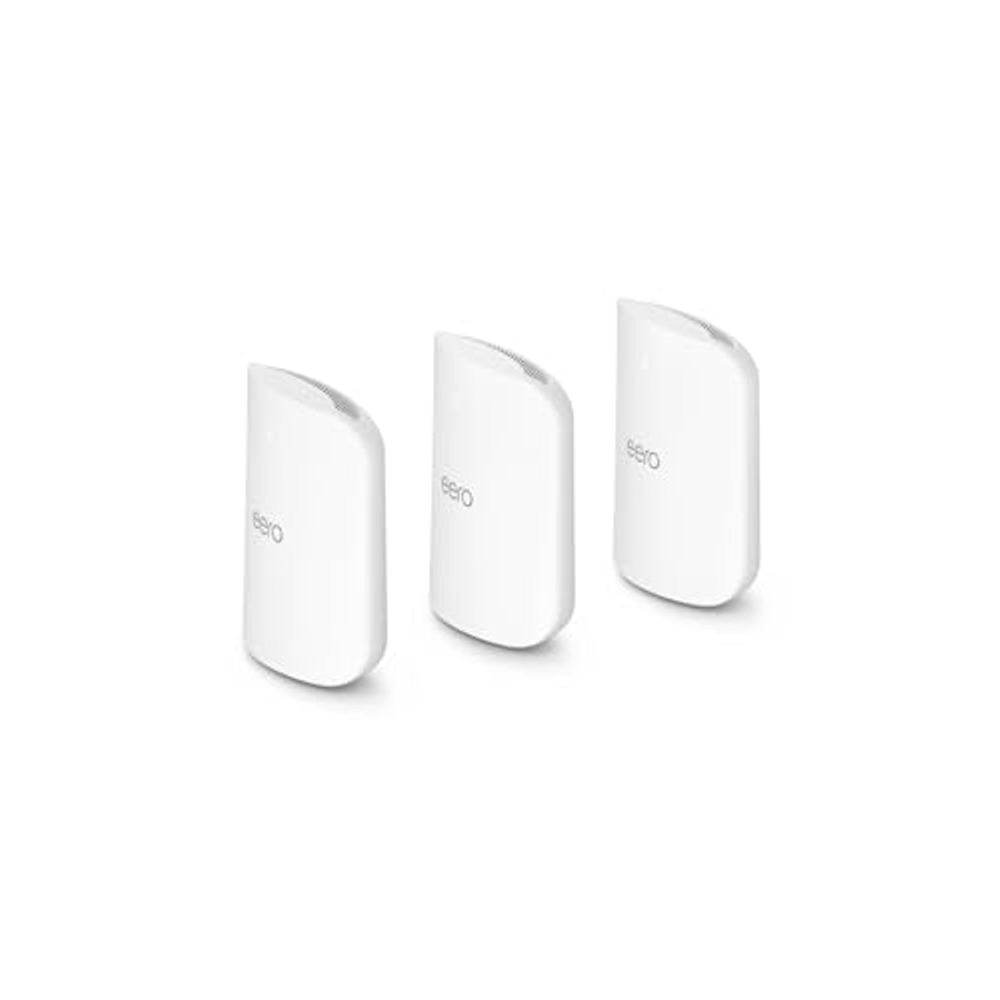
eero Max 7 Mesh WiFi System (3-Pack)
- •Only flagship here that is also a Thread, Zigbee, and Matter hub
- •wins value 88.0 to 67.5
NETGEAR
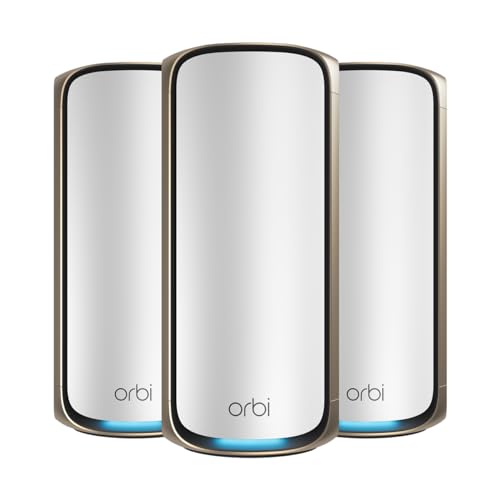
Orbi 970 Series Quad-Band WiFi 7 Mesh System (RBE973S, 3-Pack)
- •Dedicated backhaul, 10,000 sq ft, dual 10GbE — the multi-gig, max-square-footage pick
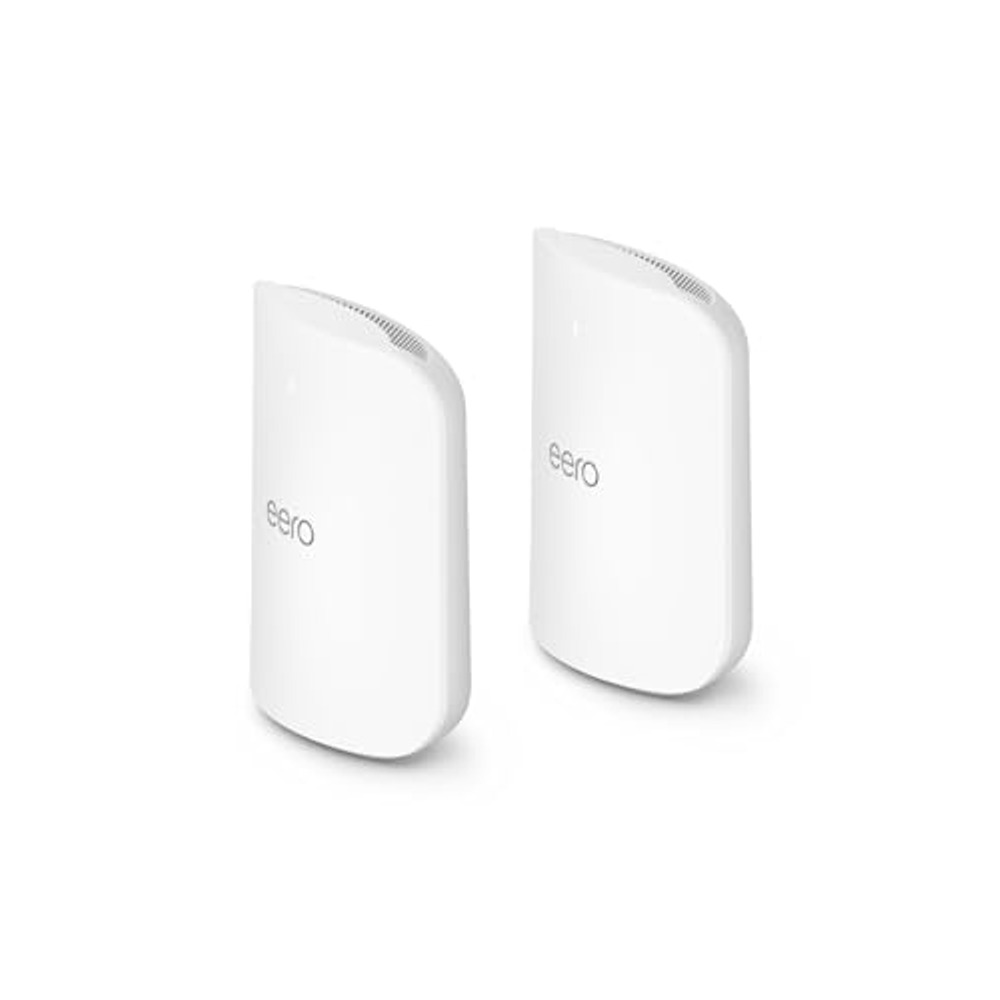
Amazon
eero Max 7 Mesh WiFi System (2-Pack)
- •Flagship WiFi 7 plus the full hub stack at the price of one Orbi 970 router
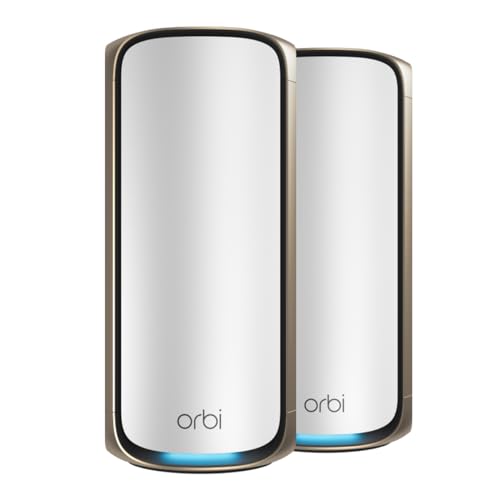
NETGEAR
Orbi 970 Series Quad-Band WiFi 7 Mesh System (RBE972S, 2-Pack)
- •6,600 sq ft from two units with dedicated backhaul, below the device-dense threshold
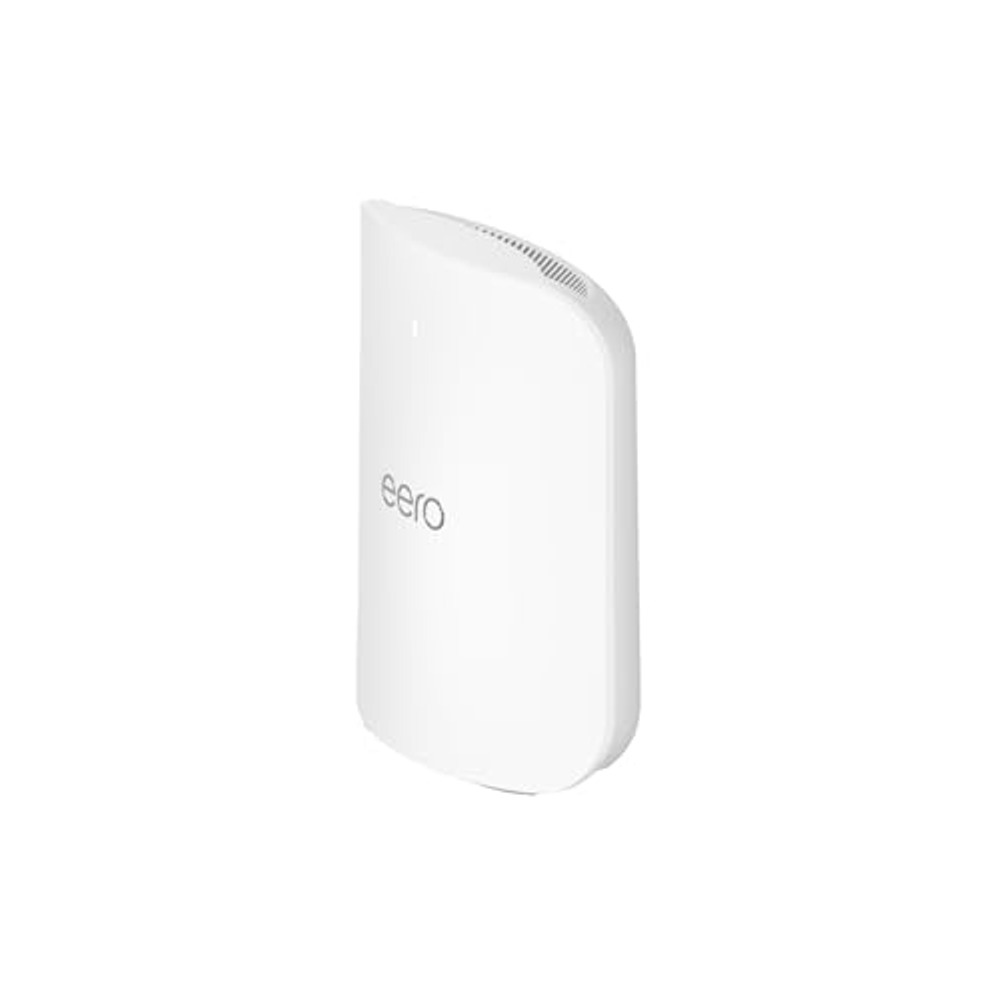
Amazon
eero Max 7 Mesh WiFi Router (1-Pack)
- •Single-node WiFi 7 plus a built-in smart-home hub at the lowest flagship entry price
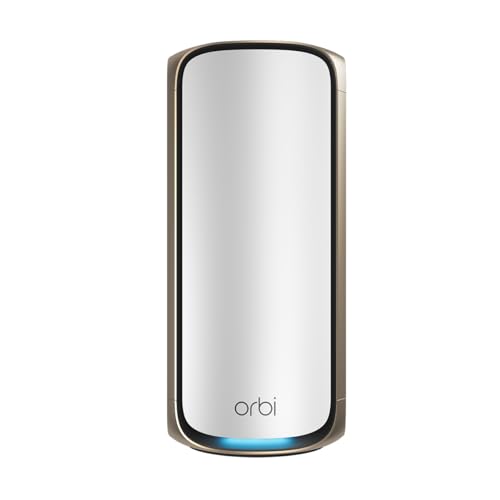
NETGEAR
Orbi 970 Series Quad-Band WiFi 7 Router (RBE971S, 1-Pack)
Head-to-Head: Backhaul, Smart-Home Radios, Subscriptions, and the SHE Score
Networking
Chart
 Smarthomeexplorer.com
Tap any pick to check its live price on Amazon.
EcoFlow DELTA Pro 3 Portable Power Station
RecommendedCheck price
PETKIT Purobot Ultra
Must BuyCheck price
PetSafe ScoopFree SmartSpin
RecommendedCheck price
Amazon Echo Show 15 (newest model)
RecommendedCheck price
Anker SOLIX F3800 Plus
$2,599.99RecommendedCheck price
Which Premium Are You Paying For?
You have narrowed your WiFi 7 upgrade to two flagships, so throughput is mostly settled. Both saturate any residential connection, and both install in under 10 mins. The decision is which premium your investment underwrites. The Netgear Orbi 970 commands a roughly 1.5x price multiple per 3-pack for a dedicated 4x4 5GHz backhaul rated 8,647 Mbps across 10,000 sq ft of coverage. The eero Max 7 allocates that expenditure differently. It integrates Thread, Zigbee, and Matter radios into every node, consolidating your standalone smart-home hub.
In this guide we aggregated expert benchmarks and manufacturer specifications, then scored both architectures on one weighted composite, the SHE Flagship Mesh Value Score. The formula normalizes every dollar-denominated factor, and its dominant coefficient quantifies throughput per dollar. Tom's Guide measured the configurations within 4% at close range, yet the Orbi 3-pack costs substantially more. That valuation gap determines the verdict over a 5-yr horizon.
Best Overall for Smart Homes: Amazon eero Max 7 Mesh WiFi System (3-Pack)
Amazon eero Max 7 Mesh WiFi System (3-Pack)
- Only flagship here that is also a Thread, Zigbee, and Matter hub
- App-only management, no web UI, limited advanced settings
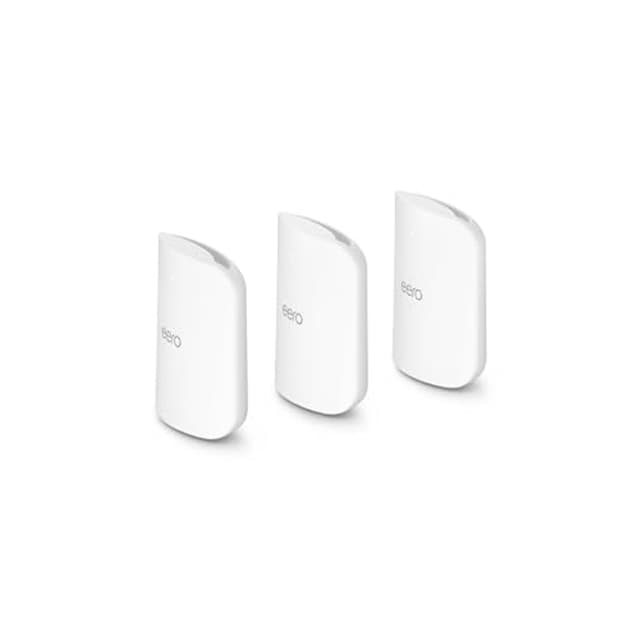
(Current price, subject to change)
The Amazon eero Max 7 Mesh WiFi System (3-Pack) earns the top composite of 88.0 on the SHE Flagship Mesh Value Score. What that quantification means for your household is concrete. Whenever you integrate a Thread sensor or a Matter lock, this mesh already operates as the border router and controller. It eliminates a separate coordinator and shaves 30 mins off a typical hub installation. Android Central confirms the Thread, Zigbee, Matter, and BLE radios populate every node. The 750+ device rating exists precisely for IoT density across a 5-yr ownership window.
Each node incorporates 2x 10GbE plus 2x 2.5GbE provisioning, so the wired backbone remains identical wherever you reposition a unit. Tom's Guide measured 2.567 Gbps throughput, within 4% of the competing Orbi configuration despite the Orbi 3-pack costing roughly 52% more. The aggregate radio bandwidth reaches 20,865 Mbps per node continuously. Coverage encompasses 7,500 sq ft across three nodes, accommodating most suburban residences without the Orbi premium.
Compared to the NETGEAR Orbi 970 Series Quad-Band WiFi 7 Mesh System (RBE973S, 3-Pack), the eero relinquishes the dedicated backhaul band and 2,500 sq ft of incremental coverage. The Orbi costs approximately 52% more per 3-pack, and the eero includes the entire smart-home radio stack.
What We Love
- Only flagship here that is also a Thread, Zigbee, and Matter hub
- 750+ device rating sized for a smart-home-dense house
- Identical 10GbE ports on every node — placement is forgiving
- $615 cheaper than the Orbi 970 3-pack at $1,184.99
What Could Be Better
- App-only management, no web UI, limited advanced settings
- Shared backhaul shares airtime with client traffic under load
- 7,500 sq ft trails the Orbi 970's 10,000 sq ft coverage
The Verdict
If you run a Thread, Zigbee, and Matter house and want the mesh to replace a standalone hub, the Amazon eero Max 7 Mesh WiFi System (3-Pack) fits the brief without compromise. The 88.0 means flagship WiFi 7 plus a full IoT radio stack while the Orbi 3-pack costs ~52% more. The honest trade is app-only management, so power users lose granular controls.
Check price for the Amazon eero Max 7 Mesh WiFi System (3-Pack) →
Ready to upgrade your home?
eufy SoloCam S340 Solar Security Camera, 4-Cam Kit
See it on Amazon
REOLINK 360° Solar Security Cameras, 4 Pack
See it on Amazon
Yale Assure Lock 2 Wi-Fi Smart Lock with Keypad
See it on Amazon
Sponsored listings from Amazon’s Sponsored Products for Creators program, kept apart from our reviews and rankings. How we make money
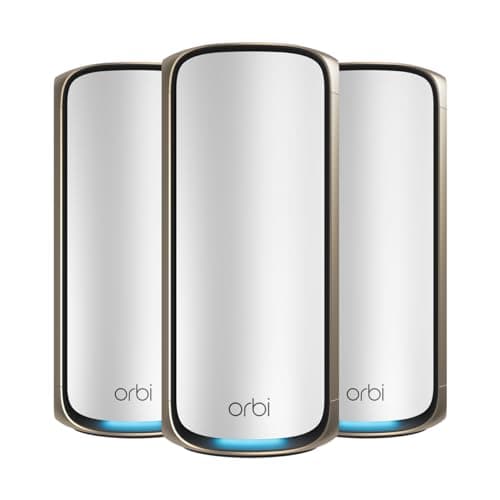
Premium Performance Pick: NETGEAR Orbi 970 Series Quad-Band WiFi 7 Mesh System (RBE973S, 3-Pack)
NETGEAR Orbi 970 Series Quad-Band WiFi 7 Mesh System (RBE973S, 3-Pack)
- Dedicated quad-band backhaul keeps satellite speeds high under load
- No Thread, Zigbee, or Matter radios — needs a separate hub
(Current price, subject to change)
The NETGEAR Orbi 970 Series Quad-Band WiFi 7 Mesh System (RBE973S, 3-Pack) earns a composite of 67.5 on the SHE Flagship Mesh Value Score, the strongest Orbi result here. For your property that translates into superior coverage and the strongest backhaul architecture in the comparison. TrustedReviews quantifies the dedicated 4x4 5GHz backhaul at 8,647 Mbps, MLO-combined with the 6GHz band up to 11,530 Mbps. That dedicated channel preserves satellite-client throughput because node-to-node traffic never contends for their airtime.
The router incorporates 10GbE WAN and 10GbE LAN provisioning plus 4x 2.5GbE connectivity, which a multi-gig fiber subscription rewards. Coverage encompasses 10,000 sq ft across the router and two satellite extenders continuously, and app-guided setup completes in roughly 15 mins. Tom's Guide documents the RBE973S includes 1-yr of Netgear Armor, then transitions to subscription billing thereafter across the 5-yr horizon.
Compared to the Amazon eero Max 7 Mesh WiFi System (3-Pack), the Orbi relinquishes the entire IoT radio stack and costs approximately 52% more per 3-pack. It produces a faster, larger network for a property where square footage governs the purchasing decision.
What We Love
- Dedicated quad-band backhaul keeps satellite speeds high under load
- 10,000 sq ft is 33% more coverage than the eero 3-pack
- Dual 10GbE WAN and LAN on the router for multi-gig fiber
- Web UI plus granular controls for power users
What Could Be Better
- No Thread, Zigbee, or Matter radios — needs a separate hub
- 200-device cap is low for a smart-home-dense household
- $1,799.99 is $615 more than the eero Max 7 3-pack
The Verdict
If you have a large, multi-gig-fiber property and raw architecture matters more than IoT integration, the NETGEAR Orbi 970 Series Quad-Band WiFi 7 Mesh System (RBE973S, 3-Pack) lines up with what you actually need. The 67.5 reflects a dedicated backhaul and 10,000 sq ft, the things value cannot price away. The caveat to state plainly: no smart-home radios and a 200-device cap that a dense Zigbee house can hit.
Check price for the NETGEAR Orbi 970 Series Quad-Band WiFi 7 Mesh System (RBE973S, 3-Pack) →
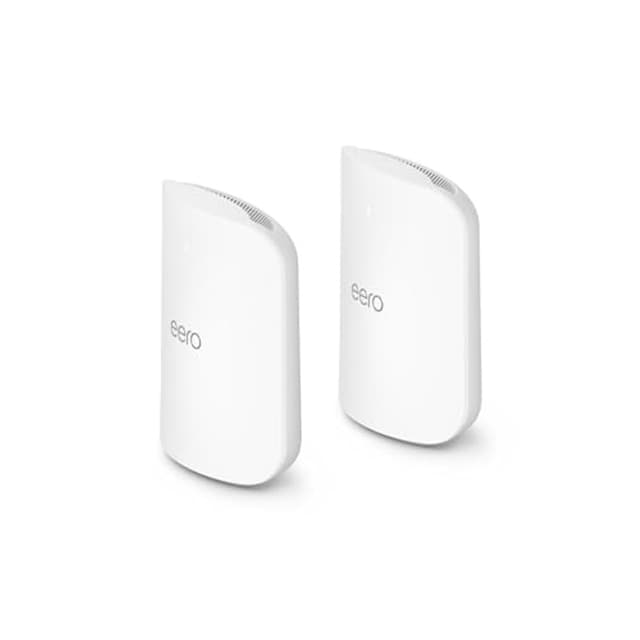
Best Value: Amazon eero Max 7 Mesh WiFi System (2-Pack)
Amazon eero Max 7 Mesh WiFi System (2-Pack)
- Flagship WiFi 7 plus the full hub stack at $799.99
- App-only management with no web UI, like all eero
(Current price, subject to change)
The Amazon eero Max 7 Mesh WiFi System (2-Pack) earns a composite of 87.6 on the SHE Flagship Mesh Value Score, marginally behind the 3-pack configuration. For your residence that represents flagship architecture at the equivalent price of one Orbi 970 router. Both nodes incorporate the complete Thread, Zigbee, Matter, and BLE radio stack continuously. The mesh consolidates your smart-home hub immediately. Android Central confirms the radios remain identical across eero Max 7 pack sizes.
Coverage encompasses 5,000 sq ft, accommodating a typical 3-bedroom residence, and the 500+ device rating sustains a busy IoT household. Each node incorporates 2x 10GbE plus 2x 2.5GbE provisioning, identical to the 3-pack and 1-pack. The wired backbone preserves throughput across the full 5,000 sq ft wherever you reposition either unit.
Compared to the NETGEAR Orbi 970 Series Quad-Band WiFi 7 Mesh System (RBE972S, 2-Pack), the eero relinquishes 1,600 sq ft alongside the dedicated backhaul. It recovers substantial expenditure plus the entire IoT radio stack.
What We Love
- Flagship WiFi 7 plus the full hub stack at $799.99
- Same price as a single Orbi 970 router, but two nodes
- 5,000 sq ft suits a typical 3-4 bedroom home
- Identical 10GbE ports on both nodes for a fast backbone
What Could Be Better
- App-only management with no web UI, like all eero
- 5,000 sq ft is below the Orbi 2-pack's 6,600 sq ft
- Shared backhaul rather than a dedicated band
The Verdict
If you want flagship WiFi 7 and a built-in smart-home hub at the lowest credible price, the Amazon eero Max 7 Mesh WiFi System (2-Pack) is a sensible pick for that setup. The 87.6 reflects two nodes plus the full Thread, Zigbee, and Matter stack for what one Orbi router costs. For a medium home, that is the path of least friction.
Check price for the Amazon eero Max 7 Mesh WiFi System (2-Pack) →
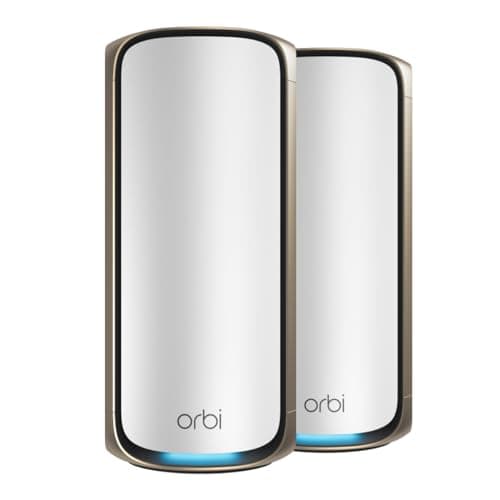
Large Home, Fewer Devices: NETGEAR Orbi 970 Series Quad-Band WiFi 7 Mesh System (RBE972S, 2-Pack)
NETGEAR Orbi 970 Series Quad-Band WiFi 7 Mesh System (RBE972S, 2-Pack)
- 6,600 sq ft from just two units with dedicated backhaul
- 200-device cap is low for a dense smart home
(Current price, subject to change)
The NETGEAR Orbi 970 Series Quad-Band WiFi 7 Mesh System (RBE972S, 2-Pack) earns a composite of 59.7 on the SHE Flagship Mesh Value Score. For your property that delivers large-residence coverage from a two-unit configuration with the dedicated-backhaul advantage preserved. TrustedReviews documents the identical quad-band backhaul architecture the 3-pack employs. Satellite clients retain their airtime because node-to-node traffic occupies a separate channel, which produces consistent throughput under load.
Coverage encompasses 6,600 sq ft, 1,600 sq ft beyond the eero 2-pack, and the router incorporates dual 10GbE provisioning for fiber. The 200-device rating represents the constraint to evaluate. A serious Zigbee or Matter household can approach it, so confirm your device population before committing.
Compared to the Amazon eero Max 7 Mesh WiFi System (2-Pack), the Orbi contributes coverage and a dedicated backhaul. It relinquishes the IoT radio stack alongside substantial relative expenditure.
What We Love
- 6,600 sq ft from just two units with dedicated backhaul
- Dual 10GbE ports on the router for multi-gig fiber
- Web UI plus granular controls for self-managed networks
- Dedicated backhaul holds satellite throughput under load
What Could Be Better
- 200-device cap is low for a dense smart home
- No Thread, Zigbee, or Matter radios on either unit
- $1,499.99 nearly doubles the eero 2-pack price
The Verdict
If you have a large home with a moderate device count and want dedicated backhaul without a third node, the NETGEAR Orbi 970 Series Quad-Band WiFi 7 Mesh System (RBE972S, 2-Pack) checks the boxes that matter for that setup. The 59.7 reflects 6,600 sq ft and a dedicated backhaul band. The honest gap is the 200-device cap and the missing smart-home radios you would replace elsewhere.
Check price for the NETGEAR Orbi 970 Series Quad-Band WiFi 7 Mesh System (RBE972S, 2-Pack) →
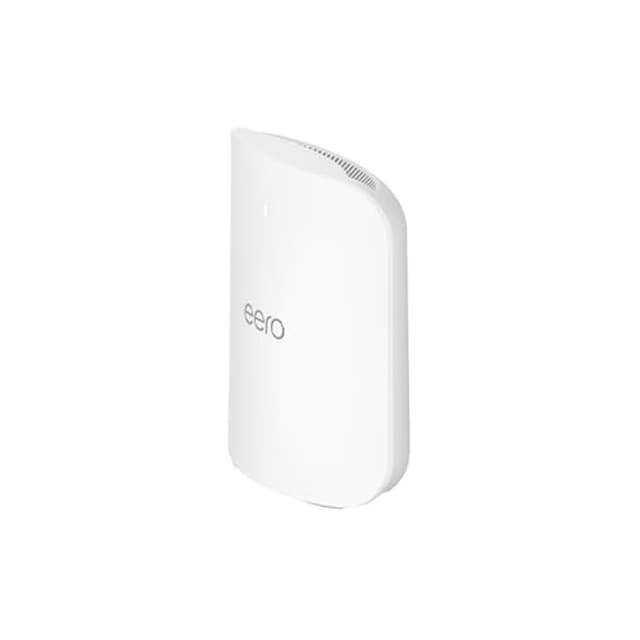
Apartment / Starter: Amazon eero Max 7 Mesh WiFi Router (1-Pack)
Amazon eero Max 7 Mesh WiFi Router (1-Pack)
- Flagship WiFi 7 plus a smart-home hub at $419.99
- 2,500 sq ft suits an apartment, not a house
(Current price, subject to change)
The Amazon eero Max 7 Mesh WiFi Router (1-Pack) earns a composite of 85.3 on the SHE Flagship Mesh Value Score. For an apartment or starter configuration that represents honest value. The single router incorporates the complete Thread, Zigbee, Matter, and BLE radio stack, consolidating your smart-home hub from the initial device you integrate. Android Central confirms the radios populate every eero Max 7 node, including the standalone router.
Coverage encompasses 2,500 sq ft with a 250+ device rating, dimensioned for an apartment or a compact residence. The router incorporates 2x 10GbE plus 2x 2.5GbE provisioning for a fast wired backbone. Whenever you outgrow it, integrating a second eero enables TrueMesh without replacing the original node.
Compared to the NETGEAR Orbi 970 Series Quad-Band WiFi 7 Router (RBE971S, 1-Pack), the eero commands approximately 47% less while contributing the entire IoT radio stack. It relinquishes the Orbi's larger single-router footprint and dedicated-backhaul headroom.
What We Love
- Flagship WiFi 7 plus a smart-home hub at $419.99
- Full Thread, Zigbee, and Matter stack on one router
- 2x 10GbE ports for a fast single-node backbone
- Expands into mesh when you add a second eero
What Could Be Better
- 2,500 sq ft suits an apartment, not a house
- Single node, so no dedicated backhaul exists yet
- App-only management like the rest of the eero line
The Verdict
If you have an apartment or a smart-home starter and want a flagship router that is also your hub, the Amazon eero Max 7 Mesh WiFi Router (1-Pack) lines up with what you actually need. The 85.3 reflects WiFi 7 plus a full Thread, Zigbee, and Matter stack at the lowest entry price here. It expands into mesh later, so no need to overthink the first node.
Check price for the Amazon eero Max 7 Mesh WiFi Router (1-Pack) →
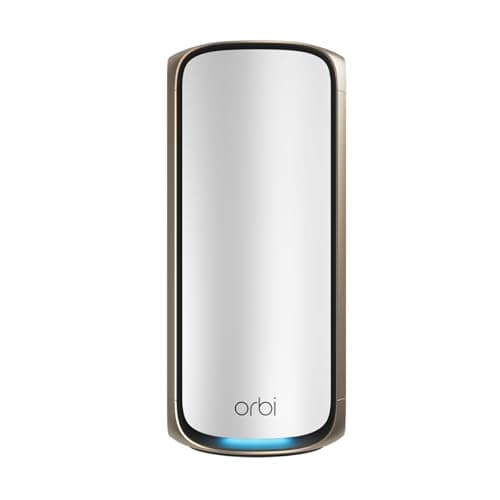
Expandable Single Router: NETGEAR Orbi 970 Series Quad-Band WiFi 7 Router (RBE971S, 1-Pack)
NETGEAR Orbi 970 Series Quad-Band WiFi 7 Router (RBE971S, 1-Pack)
- Largest single-router footprint here at 3,300 sq ft
- $799.99 buys one node — the same as a 2-pack eero
(Current price, subject to change)
The NETGEAR Orbi 970 Series Quad-Band WiFi 7 Router (RBE971S, 1-Pack) earns a composite of 57.7 on the SHE Flagship Mesh Value Score. For your network that delivers the largest single-router coverage in the comparison plus a clear expansion trajectory. The standalone router encompasses 3,300 sq ft and incorporates a 10GbE internet port, so a multi-gig fiber subscription is never underutilized. TrustedReviews documents the identical quad-band engine the kits employ.
The constraint is valuation at this tier. The single-router price matches the eero Max 7 2-pack, which delivers two nodes alongside the complete IoT radio stack. The dedicated backhaul band only justifies its premium once you integrate a satellite, and no Thread, Zigbee, or Matter radios exist here.
Compared to the Amazon eero Max 7 Mesh WiFi Router (1-Pack), the Orbi router encompasses 800 sq ft of additional coverage. It relinquishes the entire smart-home radio stack and approximately 47% in relative pricing against the eero single node.
What We Love
- Largest single-router footprint here at 3,300 sq ft
- 10GbE WAN port ready for multi-gig fiber
- Web UI plus granular controls on one unit
- Expands into the full Orbi 970 mesh later
What Could Be Better
- $799.99 buys one node — the same as a 2-pack eero
- No Thread, Zigbee, or Matter radios at all
- Dedicated backhaul only matters once you add a satellite
The Verdict
If you want an Orbi 970 single router now and plan to add satellites later, the NETGEAR Orbi 970 Series Quad-Band WiFi 7 Router (RBE971S, 1-Pack) is a sensible pick for that setup. The 57.7 reflects the largest single-router footprint here and a 10GbE WAN port. The caveat is value: $799.99 buys one node, the same price as a two-node eero Max 7 with a built-in hub.
Check price for the NETGEAR Orbi 970 Series Quad-Band WiFi 7 Router (RBE971S, 1-Pack) →
How We Score: SHE Flagship Mesh Value Score
SHE Flagship Mesh Value Score
Score Formula
(Throughput per Dollar × 0.30) + (Backhaul Efficiency × 0.20) + (Smart Home Radio Value × 0.20) + (Subscription Pressure × 0.15) + (Coverage per Dollar × 0.15)Score Factors
- Throughput per Dollar (30%)Total system radio bandwidth (vendor aggregate Mbps per node times nodes in the pack) divided by live Amazon price, normalized so the best value in the set scores 100. eero node aggregate is 20,865 Mbps; Orbi 970 is BE27000-class at 27,000 Mbps. The eero 3-pack hits 52.8 Mbps/$ versus the Orbi 3-pack's 45.0, so price normalization is the dominant coefficient.
- Backhaul Efficiency (20%)Platform backhaul architecture from published specs. The Orbi 970's dedicated quad-band backhaul — a 4x4 5GHz link rated 8,647 Mbps, MLO-combined with 6GHz to 11,530 Mbps per TrustedReviews — scores 95. eero's dynamic shared tri-band TrueMesh with WiFi 7 MLO scores 70, because client and node-to-node traffic share airtime under load. Platform-inherent, so identical across pack sizes.
- Smart Home Radio Value (20%)Built-in IoT radio stack, scored on what the mesh replaces. A Thread border router, Zigbee hub, Matter controller, and BLE on every node (eero Max 7) scores 100 — it replaces a standalone hub and a USB coordinator. The Orbi 970 scores 15: no IoT radios, with a separate 2.4GHz IoT SSID as its only smart-home concession.
- Subscription Pressure (15%)Inverse of paywalling, where 100 means the full feature set carries no subscription. eero scores 60: routing and the Thread, Zigbee, and Matter radios are free, but security, ad-block, and content filtering sit behind one eero Plus bundle at $99.99/yr. The Orbi scores 45 because Armor ($99.99/yr after a 1-yr trial) plus a separate $69.99/yr Smart Parental Controls totals ~$170/yr.
- Coverage per Dollar (15%)Vendor-rated coverage in square feet divided by live Amazon price, normalized so the best in the set scores 100. The eero 3-pack delivers 6.33 sq ft/$ versus the Orbi 3-pack's 5.56, and the gap widens at the smaller pack sizes where the Orbi premium grows. Coverage ratings: eero 7,500/5,000/2,500 sq ft; Orbi 10,000/6,600/3,300 sq ft.
SHE Flagship Mesh Value Score — Ranked
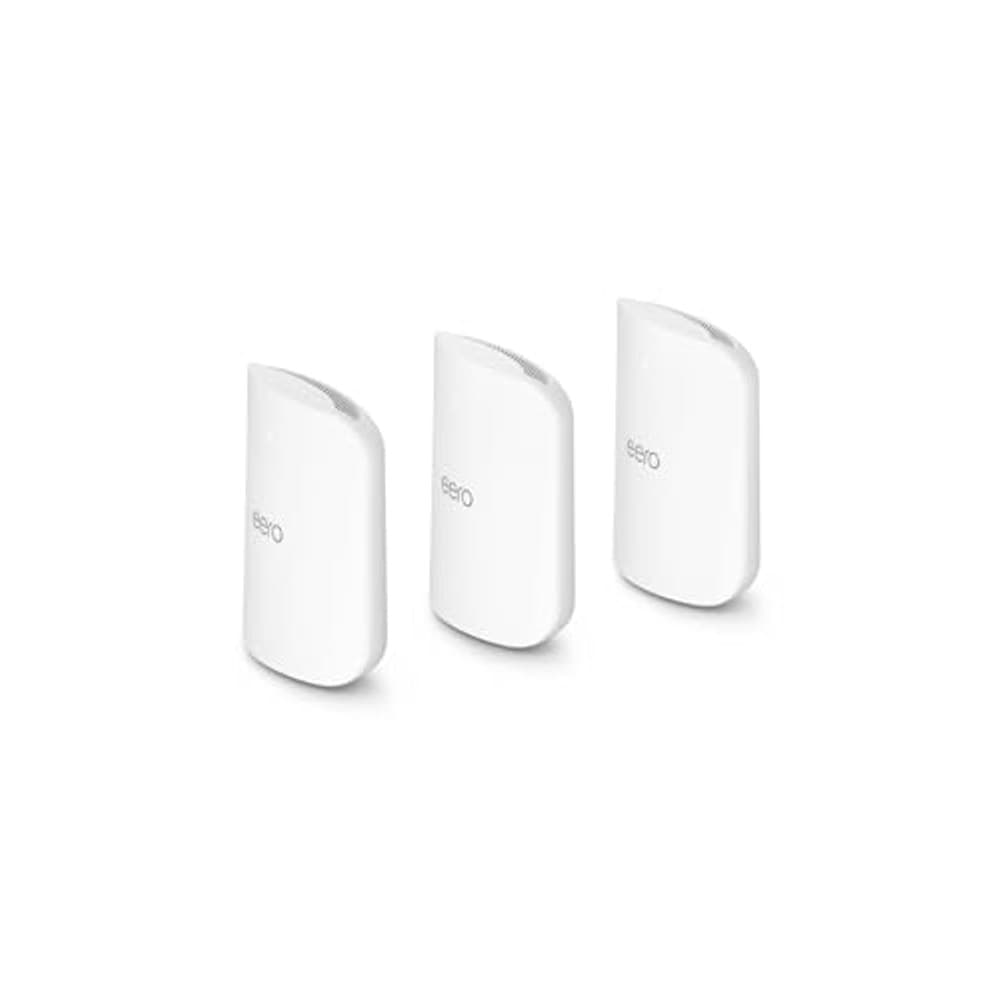
Amazon eero Max 7 Mesh WiFi System (3-Pack)
SHE Flagship Mesh Value Score8.8/10$1,184.99 — best throughput and coverage per dollar plus the full Thread, Zigbee, Matter hub stack
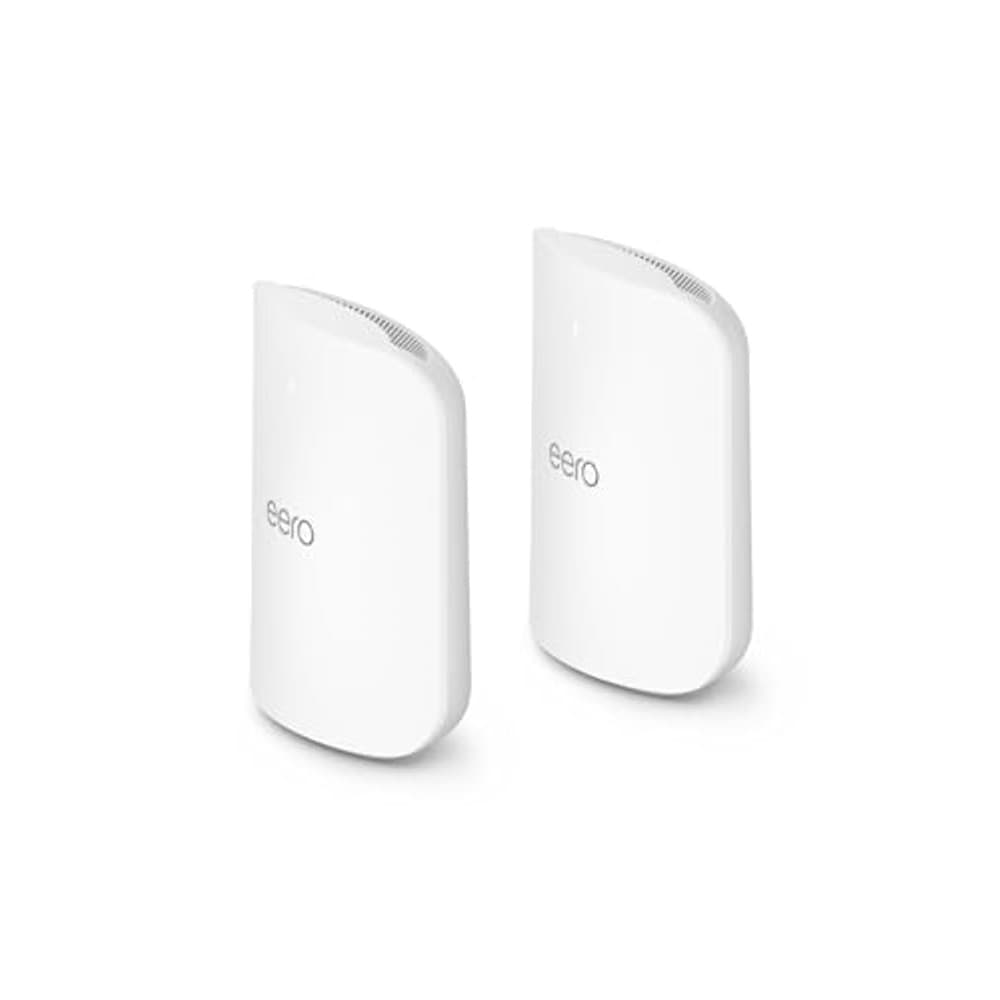
Amazon eero Max 7 Mesh WiFi System (2-Pack)
SHE Flagship Mesh Value Score8.8/10$799.99 — flagship WiFi 7 plus the hub stack at the price of one Orbi 970 router
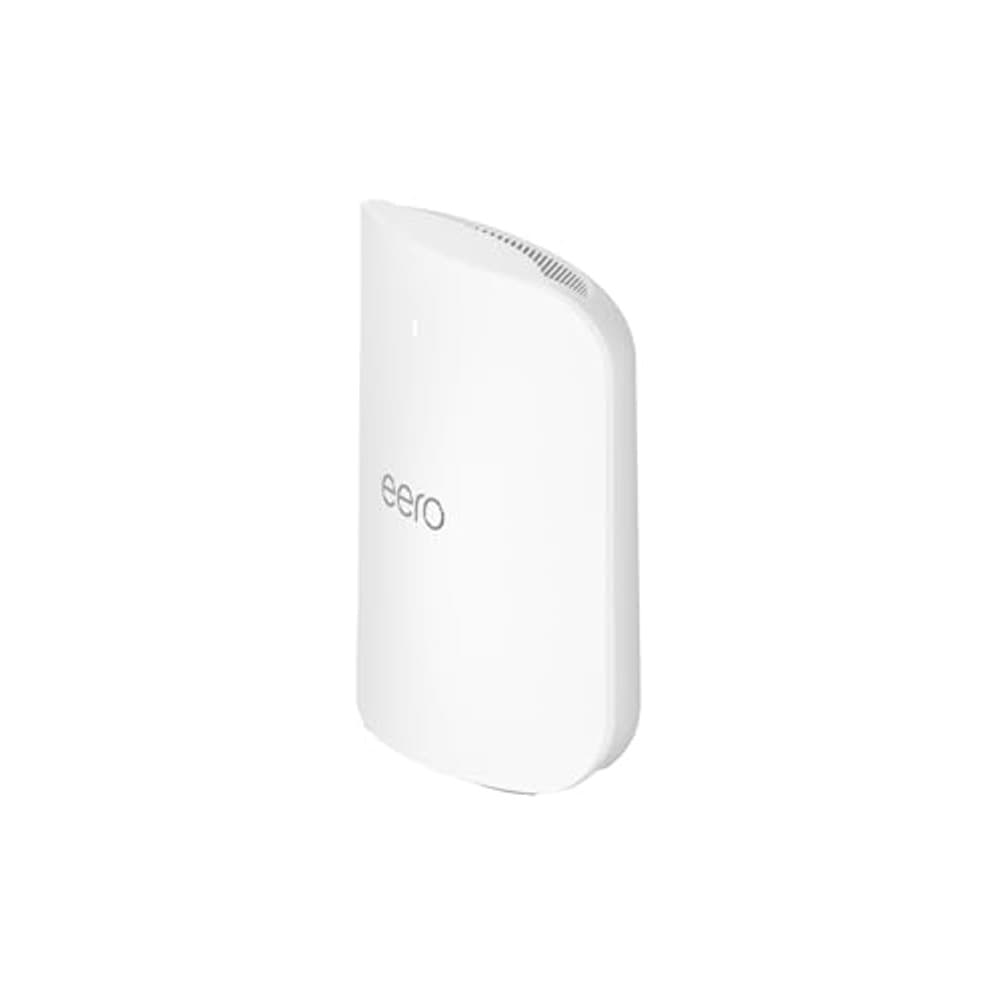
Amazon eero Max 7 Mesh WiFi Router (1-Pack)
SHE Flagship Mesh Value Score8.5/10$419.99 — single-node WiFi 7 plus the full IoT radio stack at the lowest flagship entry price
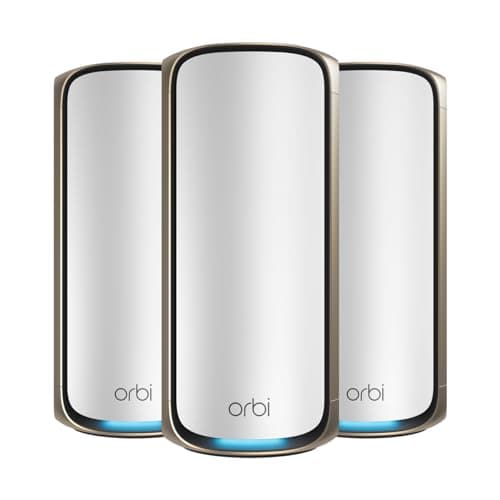
NETGEAR Orbi 970 Series Quad-Band WiFi 7 Mesh System (RBE973S, 3-Pack)
SHE Flagship Mesh Value Score6.8/10$1,799.99 — dedicated backhaul, 10,000 sq ft, dual 10GbE; no IoT radios, 200-device cap
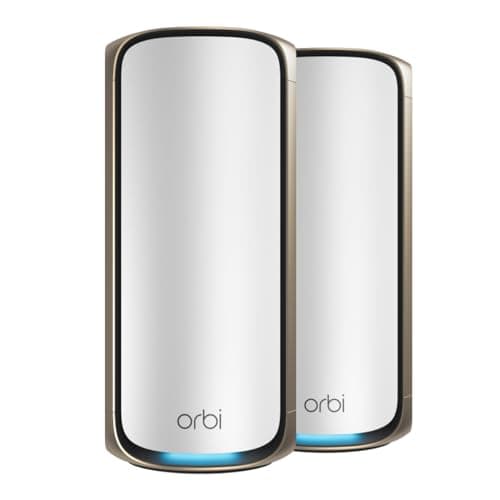
NETGEAR Orbi 970 Series Quad-Band WiFi 7 Mesh System (RBE972S, 2-Pack)
SHE Flagship Mesh Value Score6.0/10$1,499.99 — 6,600 sq ft with dedicated backhaul from two units; no smart-home radios
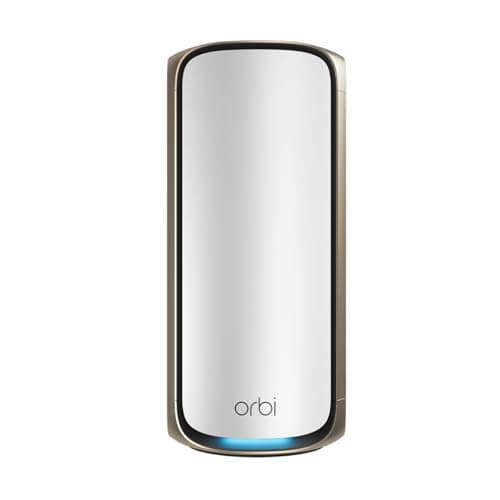
NETGEAR Orbi 970 Series Quad-Band WiFi 7 Router (RBE971S, 1-Pack)
SHE Flagship Mesh Value Score5.8/10$799.99 — largest single-router footprint and 10GbE WAN; one node at the price of a 2-pack eero
Dedicated Backhaul Architecture Versus Integrated Smart-Home Radios
The essential distinction before purchasing is that these flagships optimize fundamentally different objectives at the premium tier. The Netgear Orbi 970 invests its expenditure into a dedicated quad-band backhaul architecture. A separate 4x4 5GHz channel transports node-to-node communication, rated 8,647 Mbps and MLO-combined with the 6GHz band up to 11,530 Mbps per TrustedReviews. That configuration preserves satellite-client throughput under heavy concurrent load. The eero Max 7 implements a dynamic shared TrueMesh backhaul instead, so client and node communication contend for airtime. The practical differential materializes under simultaneous saturation across multiple satellites, not an individual device. Tom's Guide nonetheless measured the configurations within 4% at close range.
The eero Max 7 allocates its premium toward integrated radios. Every node incorporates a Thread border router, a Zigbee hub, a Matter controller, and BLE, consolidating a standalone smart-home hub alongside a USB coordinator. Android Central confirms this radio stack populates each eero Max 7 unit. The Orbi 970 incorporates none of those radios whatsoever. Its solitary smart-home accommodation is a separate 2.4GHz IoT SSID, and its 200-device ceiling sits considerably beneath the eero's 750+ rating. A device-dense Zigbee or Matter household can approach that 200 limitation, the single specification most likely to disqualify the Orbi.
Both architectures impose a recurring subscription, and neither incorporates more than rudimentary parental controls without payment. The eero Plus bundle covers Advanced Security, ad-blocking, parental controls, VPN, 1Password, and Malwarebytes within one consolidated fee. The Orbi necessitates two subscriptions to achieve parity: Netgear Armor following a 1-yr inclusion, plus a separate subscription for Smart Parental Controls, approximately 70% additional annual expenditure combined. Both are account-mandatory, yet only the eero remains app-exclusive — the Orbi incorporates a web UI with granular configuration, which power users consistently prefer. Match the premium to your residence. Integrated radios and dollar-efficiency favor the eero, while raw backhaul architecture and 10,000 sq ft favor the Orbi across a 5-yr ownership window.
| Product | Thread | Zigbee | Matter | Dedicated Backhaul | Web UI | Alexa |
|---|---|---|---|---|---|---|
| Amazon eero Max 7 Mesh WiFi System (3-Pack) | ✓ | ✓ | ✓ | ✕ | ✕ | ✓ |
| NETGEAR Orbi 970 Series Quad-Band WiFi 7 Mesh System (RBE973S, 3-Pack) | ✕ | ✕ | ✕ | ✓ | ✓ | ✓ |
| Amazon eero Max 7 Mesh WiFi System (2-Pack) | ✓ | ✓ | ✓ | ✕ | ✕ | ✓ |
| NETGEAR Orbi 970 Series Quad-Band WiFi 7 Mesh System (RBE972S, 2-Pack) | ✕ | ✕ | ✕ | ✓ | ✓ | ✓ |
| Amazon eero Max 7 Mesh WiFi Router (1-Pack) | ✓ | ✓ | ✓ | ✕ | ✕ | ✓ |
| NETGEAR Orbi 970 Series Quad-Band WiFi 7 Router (RBE971S, 1-Pack) | ✕ | ✕ | ✕ | ✓ | ✓ | ✓ |
When NOT to Buy
Neither system is automatically the correct decision. Both saturate any residential internet plan. If your home is under 2,500 sq ft with a sub-gigabit connection, a cheaper WiFi 7 mesh from our Best WiFi 7 Mesh Systems for Smart Homes 2026 hub does the job for far less. If you already own a capable smart-home hub and run a wired backbone, the Orbi's dedicated-backhaul edge may not justify its price either. Match the premium to the property, and skip both flagships whenever a modest home or an existing hub means the headroom goes unused.
Who Should Buy What
Who Should Buy What
| If you are… | Recommended pick |
|---|---|
Smart-home-dense households You run 50-200+ Thread, Zigbee, and Matter devices and want the mesh to replace a standalone hub and coordinator | Amazon eero Max 7 Mesh WiFi System (3-Pack) |
Large-property performance maximalists You have 8,000-10,000 sq ft on multi-gig fiber and want a dedicated backhaul band and dual 10GbE ports | NETGEAR Orbi 970 Series Quad-Band WiFi 7 Mesh System (RBE973S, 3-Pack) |
Value-conscious flagship buyers You want WiFi 7 future-proofing plus a built-in hub at the lowest credible flagship price for a medium home | Amazon eero Max 7 Mesh WiFi System (2-Pack) |
Large home, moderate device count You have up to 6,600 sq ft and a modest device count and want dedicated backhaul from just two units | NETGEAR Orbi 970 Series Quad-Band WiFi 7 Mesh System (RBE972S, 2-Pack) |
Apartments and smart-home starters You have a compact space up to 2,500 sq ft and want a flagship router that also doubles as your smart-home hub | Amazon eero Max 7 Mesh WiFi Router (1-Pack) |
Frequently Asked Questions
Is the Netgear Orbi 970 worth $600 more than the eero Max 7?
For most smart homes, no. Tom's Guide measured the two within ~4% at close range (2.675 vs 2.567 Gbps), yet the Orbi 970 3-pack costs ~52% more at $1,799.99 versus $1,184.99. The Orbi earns the premium only for large properties (up to 10,000 sq ft) on multi-gig fiber where its dedicated backhaul and dual 10GbE ports matter. For everyone else, the eero Max 7 wins the SHE Flagship Mesh Value Score 88.0 to 67.5.
Does the eero Max 7 replace a smart home hub?
Yes. Every eero Max 7 node has a Thread border router, a Zigbee hub, a Matter controller, and Bluetooth LE built in, so the mesh acts as your smart-home hub. Android Central confirms the radios ship on each node. That replaces both a standalone hub and a USB Zigbee/Thread coordinator. The Netgear Orbi 970 has none of these radios — it offers only a separate 2.4GHz IoT SSID — so a smart-home house pairing the Orbi still needs a dedicated hub.
Do I need a dedicated backhaul band in a mesh system?
Only for large homes under heavy simultaneous load. A dedicated backhaul, like the Orbi 970's 4x4 5GHz band rated 8,647 Mbps (TrustedReviews), carries node-to-node traffic on its own band so satellite clients keep full speed. The eero Max 7 uses a dynamic shared TrueMesh backhaul, where client and node traffic share airtime. For most homes the difference is minor; it matters in 8,000+ sq ft properties streaming across multiple satellites at once.
Does the eero Max 7 require an eero Plus subscription?
No. Routing, WiFi 7, and the Thread, Zigbee, and Matter radios all work without any subscription. eero Plus ($99.99/yr) is optional and adds Advanced Security, ad-blocking, content-filter parental controls, a VPN, 1Password, and Malwarebytes. The Netgear Orbi 970 takes a similar approach with Netgear Armor ($99.99/yr after a 1-yr trial), but it also charges a separate $69.99/yr for Smart Parental Controls, so matching the eero Plus bundle costs Orbi owners roughly $170/yr across two subscriptions.
How many smart home devices can each system handle?
The eero Max 7 3-pack is rated for 750+ devices, sized specifically for IoT-dense households running many Thread, Zigbee, and Matter gadgets. The Netgear Orbi 970 is rated for 200 devices across all pack sizes. That 200-device cap is low for a serious smart home — a busy Zigbee or Matter house can approach it — so confirm your device count before choosing the Orbi if you run a dense setup.
Which system covers a large home better?
The Netgear Orbi 970 covers more area: the 3-pack is rated to 10,000 sq ft versus the eero Max 7 3-pack's 7,500 sq ft, and the Orbi 2-pack hits 6,600 sq ft versus eero's 5,000. The Orbi's dedicated backhaul also holds satellite speeds better across a sprawling floor plan. For very large or multi-story homes on fast fiber, the Orbi 970 is the coverage pick; the eero 3-pack still covers most suburban homes for $615 less.
Can you manage the eero Max 7 from a web browser?
No. The eero Max 7 is app-only, with no web interface and limited advanced settings, which power users consistently cite as its main limitation. The Netgear Orbi 970 offers both a mobile app and a full web UI with granular controls, including network segmentation and port-level configuration. If you want web-based administration and deeper network controls, the Orbi 970 is the better fit; if you prefer the simplest possible setup, the app-only eero is the consumer benchmark.
Is the VPN in the eero Plus bundle the same as a router-level VPN?
Not quite. The eero Plus VPN is a bundled privacy feature inside the $99.99/yr subscription — it is not a client you configure to route your whole household through a third-party provider like Surfshark or Proton VPN. If you specifically want a router that runs a WireGuard or OpenVPN client to your own VPN provider, see our Do You Need a VPN for Your Smart Home? (2026) breakdown, which rates 3 firewalls (279$ to 679$) built for that job — neither eero Max 7 nor the Orbi 970 supports third-party VPN client mode.
Bottom Line
Get the Amazon eero Max 7 Mesh WiFi System (3-Pack) if you run a Thread, Zigbee, and Matter house and want the mesh to replace a standalone hub while the Orbi 3-pack costs ~52% more.
Get the NETGEAR Orbi 970 Series Quad-Band WiFi 7 Mesh System (RBE973S, 3-Pack) if you have an 8,000-10,000 sq ft property on multi-gig fiber and want a dedicated backhaul band and dual 10GbE.
Get the Amazon eero Max 7 Mesh WiFi System (2-Pack) if you have a medium home and want flagship WiFi 7 plus a built-in hub for the price of one Orbi router.
Get the NETGEAR Orbi 970 Series Quad-Band WiFi 7 Mesh System (RBE972S, 2-Pack) if you have a large home with a moderate device count and want dedicated backhaul from two units.
Get the Amazon eero Max 7 Mesh WiFi Router (1-Pack) if you have an apartment or smart-home starter and want a flagship router that doubles as your hub.
The right call for most smart homes is the Amazon eero Max 7 Mesh WiFi System (3-Pack) — the only flagship here that is also a Thread, Zigbee, and Matter hub; the Orbi 3-pack costs ~52% more. Choose the NETGEAR Orbi 970 Series Quad-Band WiFi 7 Mesh System (RBE973S, 3-Pack) when 10,000 sq ft coverage and a dedicated backhaul band justify the premium. Skip both flagships if your home is under 2,500 sq ft on a sub-gigabit plan — a cheaper WiFi 7 mesh from our hub does the job for less.
Sources & Methodology
Methodology: SHE Flagship Mesh Value Score — Formula: (Throughput per Dollar × 0.30) + (Backhaul Efficiency × 0.20) + (Smart Home Radio Value × 0.20) + (Subscription Pressure × 0.15) + (Coverage per Dollar × 0.15). Factors: Throughput per Dollar (30%): Total system radio bandwidth (vendor aggregate Mbps per node times nodes in the pack) divided by live Amazon price, normalized so the best value in the set scores 100. eero node aggregate is 20,865 Mbps; Orbi 970 is BE27000-class at 27,000 Mbps. The eero 3-pack hits 52.8 Mbps/$ versus the Orbi 3-pack's 45.0, so price normalization is the dominant coefficient. | Backhaul Efficiency (20%): Platform backhaul architecture from published specs. The Orbi 970's dedicated quad-band backhaul — a 4x4 5GHz link rated 8,647 Mbps, MLO-combined with 6GHz to 11,530 Mbps per TrustedReviews — scores 95. eero's dynamic shared tri-band TrueMesh with WiFi 7 MLO scores 70, because client and node-to-node traffic share airtime under load. Platform-inherent, so identical across pack sizes. | Smart Home Radio Value (20%): Built-in IoT radio stack, scored on what the mesh replaces. A Thread border router, Zigbee hub, Matter controller, and BLE on every node (eero Max 7) scores 100 — it replaces a standalone hub and a USB coordinator. The Orbi 970 scores 15: no IoT radios, with a separate 2.4GHz IoT SSID as its only smart-home concession. | Subscription Pressure (15%): Inverse of paywalling, where 100 means the full feature set carries no subscription. eero scores 60: routing and the Thread, Zigbee, and Matter radios are free, but security, ad-block, and content filtering sit behind one eero Plus bundle at $99.99/yr. The Orbi scores 45 because Armor ($99.99/yr after a 1-yr trial) plus a separate $69.99/yr Smart Parental Controls totals ~$170/yr. | Coverage per Dollar (15%): Vendor-rated coverage in square feet divided by live Amazon price, normalized so the best in the set scores 100. The eero 3-pack delivers 6.33 sq ft/$ versus the Orbi 3-pack's 5.56, and the gap widens at the smaller pack sizes where the Orbi premium grows. Coverage ratings: eero 7,500/5,000/2,500 sq ft; Orbi 10,000/6,600/3,300 sq ft.
Expert review sources used in this analysis:
- SmartHomeExplorer aggregates expert review data and manufacturer specifications to produce consensus-based buying guidance
- We do not perform first-party product testing
- Band architecture, backhaul ratings, coverage areas spanning 2,500 ft to 10,000 sq ft, device capacities, port counts, and pricing are drawn from vendor specification sheets (eero.com, netgear.com)
- Throughput benchmarks are attributed to Tom's Guide IxChariot testing (eero Max 7 at 2.567 Gbps and the Orbi at 2.675 Gbps close range, a differential under 4%)
- Backhaul ratings (8,647 Mbps dedicated, 11,530 Mbps MLO-combined) originate from the TrustedReviews Orbi 970 Series review, and the value framing draws on Android Central's Orbi 970 coverage
- The Netgear Armor subscription follows a 1-yr inclusion on S-SKUs per Tom's Guide
- Amazon prices and availability verified 2026-06-10
- The SHE Flagship Mesh Value Score weights throughput per dollar, backhaul efficiency, smart-home radio value, subscription pressure, and coverage per dollar
- Those factors derive from aggregated specifications and published benchmarks across a 5-yr ownership horizon
- No first-party measurements were conducted.
Nicholas Miles is the founder of SmartHomeExplorer and a longtime smart home enthusiast focused on helping everyday homeowners make better technology decisions. He researches, compares, and writes about products across security, climate, lighting, leak prevention, sensors, home energy, and automation, with an emphasis on real-world usefulness, ecosystem compatibility, reliability, privacy, and long-term value.
Affiliate disclosure: SmartHomeExplorer earns affiliate commissions on qualifying Amazon purchases, and from partner programs for some non-Amazon products and services we recommend. Our scoring methodology is independent of affiliate relationships.