
The Ambient Weather WS-5000 ($185) is the best smart weather station for most homeowners — the consensus pick from Wirecutter, Bob Vila.
A personal weather station tells you what the weather is doing at your exact address — not at the airport 12 miles away that the national forecast references. That matters for gardening irrigation schedules, knowing whether your roof got half an inch of rain or 2 inches last night, deciding if this morning's wind speed is actually safe for that ladder job, and tracking microclimates that make your backyard 8 degrees warmer than your neighbor's. We aggregated ratings from 10 expert sources — Wirecutter, Popular Mechanics, This Old House, Bob Vila, CNET, Tom's Guide, PCMag, Weather Underground Reviews, Weatherwise, and The Weather Station Experts — to find the five that belong in this guide.
This guide is part of our best smart sensors and environmental monitoring hub, which covers the full sensor category from smoke detectors to motion sensors. For automating your weather station data into irrigation and smart home routines, see our best smart home automation hubs guide. If indoor environmental monitoring is also on your list, the best indoor air quality monitors guide pairs naturally with an outdoor weather station for full environmental awareness. All prices verified April 2026.
Smart Weather Station
Chart
 Smarthomeexplorer.com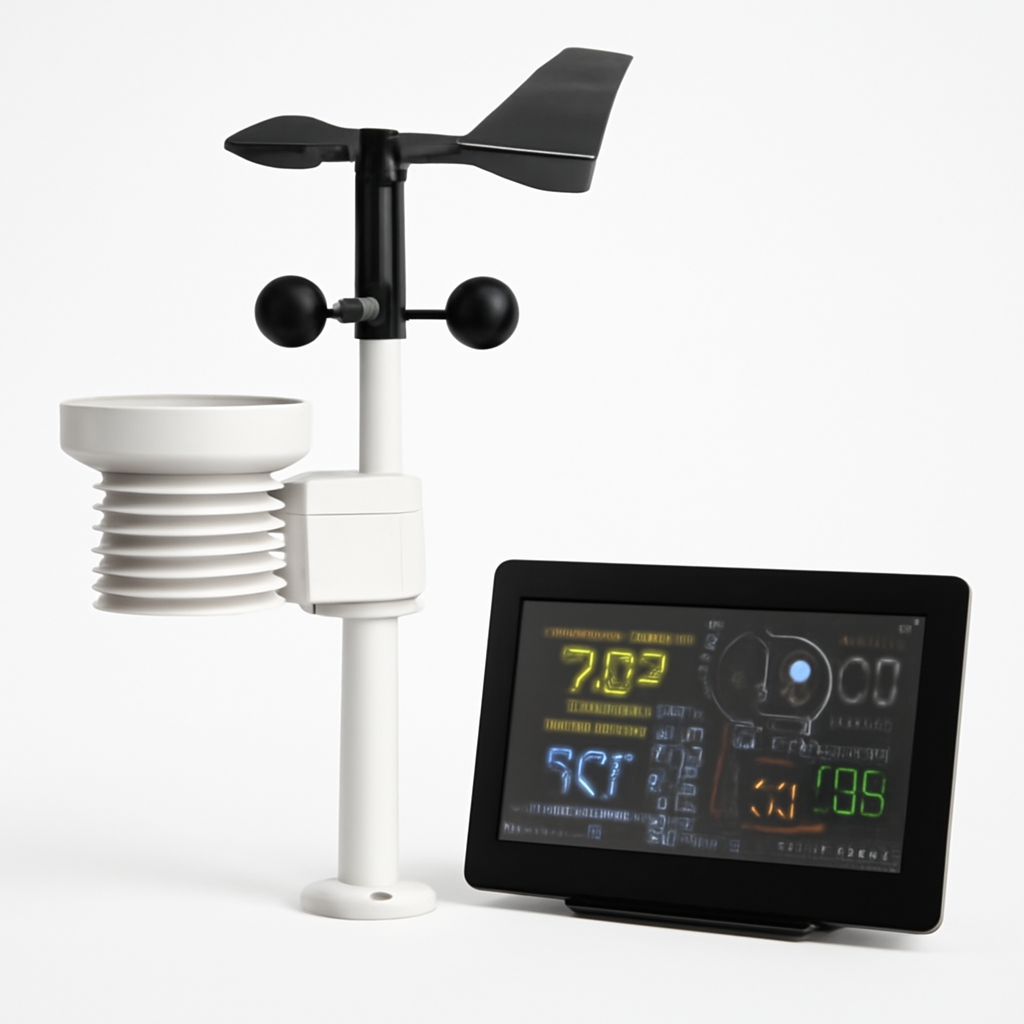
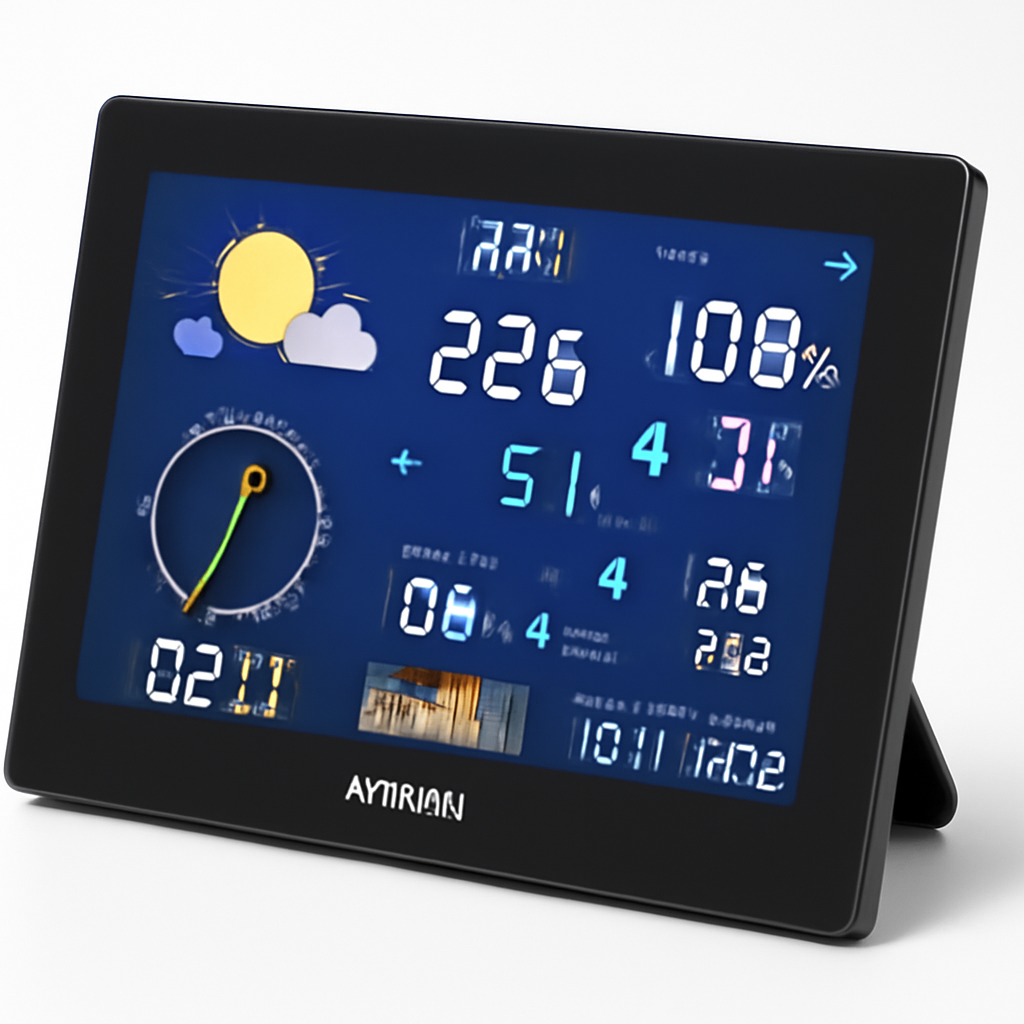
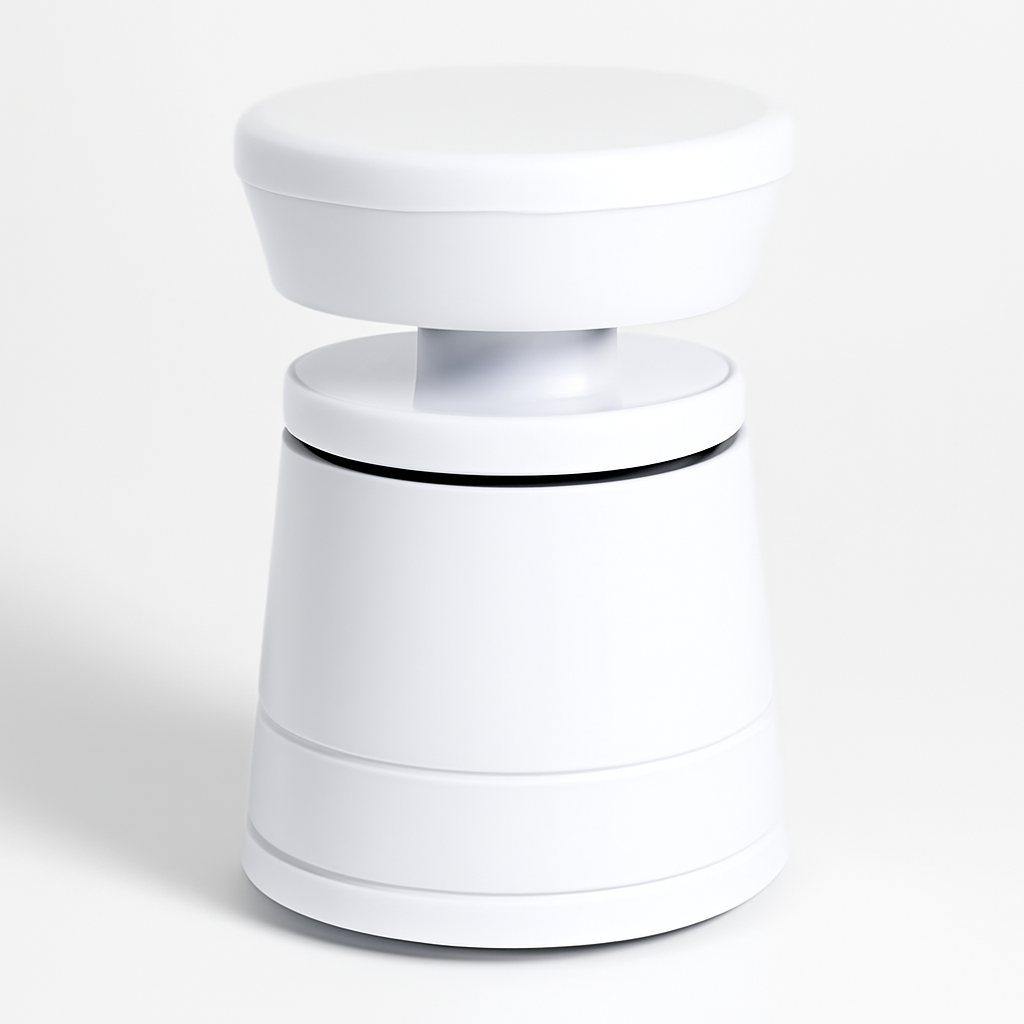
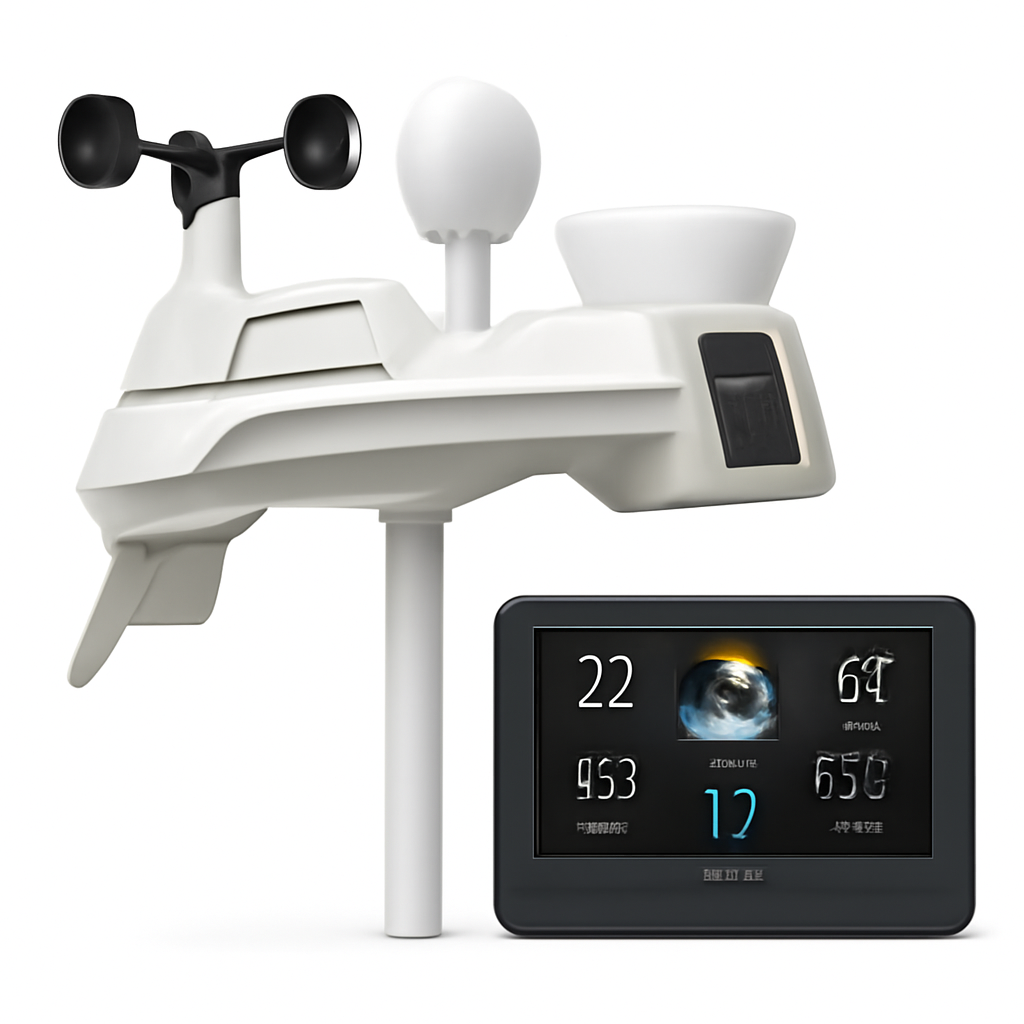
Best Overall: Ambient Weather WS-5000
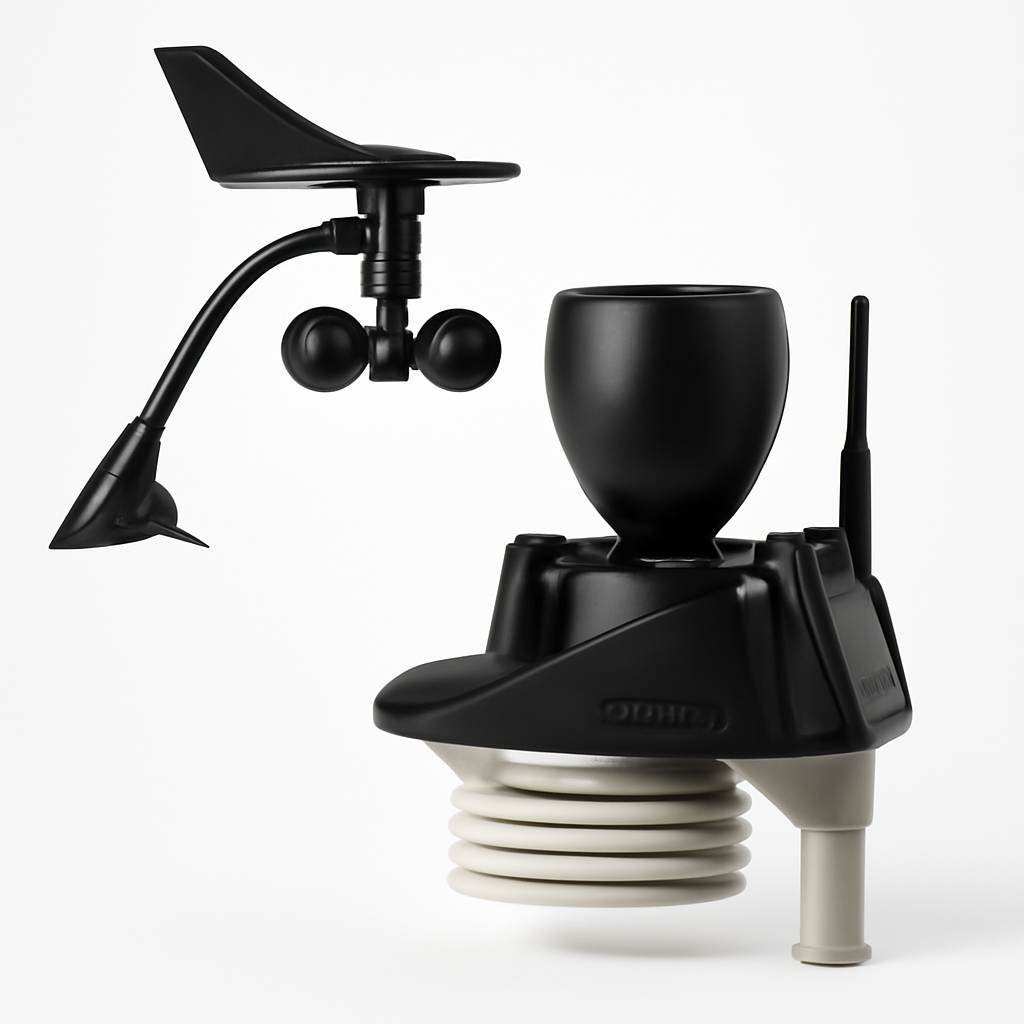
Ambient Weather WS-5000
(Current Price, subject to change)
The Ambient Weather WS-5000 is the weather station that appears on every expert shortlist for home use — and the reasons stack up. Wirecutter named it their top pick for personal weather stations, praising the AQI (air quality index) sensor that no other consumer weather station at this price includes. Bob Vila and This Old House both ranked it first among home weather stations for its WiFi connectivity, color touchscreen console, and direct Weather Underground data sharing. CNET highlighted the Ambient Weather Network as the feature that distinguishes the WS-5000 from isolated data loggers — your readings contribute to a public hyperlocal weather map and improve forecast accuracy for your neighbors.
The WS-5000's outdoor sensor array measures temperature, humidity, wind speed, wind direction, rainfall, UV index, solar radiation, and air quality (PM2.5 particulates) simultaneously. The indoor console displays all readings in real-time on a 5-inch color touchscreen. WiFi connects to the Ambient Weather Network app for historical data, push alerts, and integration with Weather Underground, WeatherCloud, and CWOP. The Alexa skill lets you ask "What's the wind speed outside?" and get a direct reading from your backyard sensor rather than the nearest weather station 15 miles away.
For gardeners and homeowners with irrigation systems, the rainfall data from the Ambient Weather WS-5000 can feed directly into smart irrigation controllers. Pair it with a smart sprinkler controller that accepts local weather data inputs to skip irrigation cycles after rainfall. For homeowners also monitoring indoor air, the outdoor PM2.5 data from the WS-5000 pairs naturally with data from the best indoor air quality monitors to understand how outdoor air quality affects indoor readings.
What We Love
- PM2.5 air quality sensor included at $185 — no other consumer station at this price tracks outdoor air quality alongside weather
- Ambient Weather Network app with historical data, charts, and Weather Underground data sharing
- Color touchscreen console that shows all 9 metrics simultaneously without squinting at tiny digits
- Alexa integration with natural language queries for real-time backyard conditions
- No subscription required — data logging, app access, and Weather Underground sharing all free
What Could Be Better
- WiFi setup can be finicky on 5GHz networks — requires 2.4GHz band
- Rain gauge tip bucket has a 0.01-inch resolution, which misses very light drizzle events
- Wind speed calibration can read 5-10% high compared to professional instruments without manual offset adjustment
- AQI sensor measures PM2.5 only — no PM10, CO2, or other air pollutants that the Airthings View Plus tracks indoors
The Verdict
The Ambient Weather WS-5000 is the best balance of sensor breadth, accuracy, connectivity, and price in the personal weather station market. The AQI sensor alone justifies the $185 price over competitors at similar cost, and the Weather Underground integration means your data contributes to a community of hyperlocal forecasting that makes the station more useful the longer you run it. If you want research-grade accuracy and are willing to spend more, the Davis Vantage Vue is the professional benchmark. If your budget is $85, the Ecowitt HP2560 gets you within 90% of the WS-5000's sensor coverage for less than half the price.
"The Ambient Weather WS-5000 is our top pick because it gives you research-quality data at a consumer price — and the air quality sensor is a genuine differentiator." — Wirecutter
Does the Ambient Weather WS-5000 work with Apple HomeKit?
Not natively. The Ambient Weather WS-5000 integrates with Alexa and the Ambient Weather API, but not Apple HomeKit directly. However, third-party tools like Homebridge (with the Ambient Weather plugin) can expose WS-5000 sensor data to HomeKit, allowing weather-triggered automations in the Home app. The integration requires a Raspberry Pi or Mac Mini running Homebridge as a persistent bridge. For a native HomeKit weather integration, the Tempest Weather System supports HomeKit via its WeatherFlow API.
How accurate is the Ambient Weather WS-5000 compared to professional stations?
Independent comparisons by Weather Underground station operators place the WS-5000's temperature accuracy at ±1°F of calibrated reference instruments when properly shielded and aspirated. Rainfall accuracy is within ±5% of tipping bucket reference standards. Wind speed reads 5-8% high compared to professional cup anemometers — a known characteristic of the 7-in-1 integrated sensor design that co-locates the wind sensor with the heated body of the unit. The Davis Vantage Vue achieves ±1% wind speed accuracy with its separate anemometer arm. For most home uses — gardening, irrigation, and general awareness — the WS-5000's accuracy is more than adequate.
Best Professional: Davis Vantage Vue
Davis Vantage Vue
(Current Price, subject to change)
The Davis Vantage Vue is the standard against which every other consumer weather station is measured. Davis Instruments has been making professional-grade weather equipment since 1963, and the Vantage Vue is their entry point into that precision heritage. Popular Mechanics ranked it the most accurate consumer weather station available under $500, and Weatherwise noted that the Vantage Vue's data is accepted by the World Meteorological Organization (WMO) certified observer networks — a distinction that no WiFi consumer station in this guide shares.
The ISS (Integrated Sensor Suite) uses a dedicated cup-and-vane anemometer arm that physically separates the wind measurement from the body heat of the console — the reason its wind accuracy is ±1% versus the 5-8% high readings of integrated sensor designs. The 1,000-foot wireless range (line of sight) is four times the range of competing stations, allowing installation in a truly exposed location without WiFi repeaters. The console displays readings at a 2.5-second update interval versus the 16-second intervals common on consumer stations.
The Vantage Vue uses a proprietary 902-928 MHz radio rather than WiFi — to connect it to the internet, you need the separate Davis WeatherLink Live gateway ($170), which adds WiFi, API access, and Weather Underground compatibility. This optional add-on brings total cost to around $565 for full smart connectivity. If you're running a serious home weather monitoring setup and want data that integrates with your smart home automation hub, the WeatherLink Live is worth the investment. For most homeowners, the accuracy premium over the WS-5000 doesn't justify the $210+ price difference.
What We Love
- ±1% wind speed accuracy from the separate anemometer arm — the most accurate wind measurement in consumer weather stations
- 1,000-foot wireless range that allows truly exposed placement without proximity to WiFi
- WMO-accepted data quality used by certified weather observer networks worldwide
- 2.5-second update interval versus 16-60 seconds on consumer stations — real-time conditions
- 30-year Davis track record with replacement parts still available for decade-old units
What Could Be Better
- $395 for the base station, plus $170 for WeatherLink Live internet connectivity — $565 total for smart features
- No built-in WiFi or app in the base package — internet connectivity costs extra
- Proprietary 902-928 MHz radio limits third-party integrations without the WeatherLink gateway
- Console display is LCD, not color touchscreen — smaller and harder to read than WS-5000 console
The Verdict
The Davis Vantage Vue is the right choice if you need research-grade accuracy — for agricultural use, serious hobbyist weather observation, certified weather networks, or locations where the ±1% wind accuracy difference has practical consequences (roof assessment, wind-sensitive livestock, aviation). For general homeowner use — irrigation scheduling, knowing if it rained, general awareness — the accuracy premium doesn't justify the 2x cost difference over the Ambient Weather WS-5000. Buy the Davis if accuracy is non-negotiable; buy the Ambient if you want more features per dollar.
"The Vantage Vue is the benchmark for accuracy in consumer weather stations. If you need data you can trust absolutely, this is the one." — Popular Mechanics
Do I need the WeatherLink Live for the Davis Vantage Vue?
Not for local display. The Davis Vantage Vue works standalone as a wireless display console — you can read all sensor data on the included LCD without any internet connection. For app access, historical data logging, Weather Underground sharing, and API integrations with smart home systems, the Davis WeatherLink Live ($170) is required. If you only want a highly accurate local weather display without smart connectivity, the base Vantage Vue is complete. If you want the data in an app, budget $565 total.
Best Value Under $100: Ecowitt HP2560
Ecowitt HP2560
(Current Price, subject to change)
The Ecowitt HP2560 is the best weather station for buyers who want accurate data without paying for features they won't use. PCMag named it the best budget weather station of 2026, noting that the 7-in-1 sensor array covers temperature, humidity, wind speed, wind direction, rainfall, UV index, and solar radiation — the same sensor suite as stations costing twice as much. Tom's Guide praised the Ecowitt app as the cleanest and most intuitive among consumer weather station apps, with an interface that non-technical users can navigate without a manual.
The Ecowitt ecosystem also allows you to add additional sensors — soil moisture sensors, leak detectors, lightning detectors, and air quality monitors — all connected through the same gateway. This modularity makes the HP2560 a starting point rather than a ceiling. The Ecowitt API supports Weather Underground, Wunderground, and direct integrations with Home Assistant and Node-RED for automation enthusiasts. No subscription required — all app features, historical data, and push notifications are free indefinitely.
At $85, you can deploy two Ecowitt stations on a larger property for less than the cost of a single Davis Vantage Vue. Pair the HP2560 with an Ecowitt WH31 indoor temperature and humidity sensor to extend monitoring indoors, or add an Ecowitt WH51 soil moisture sensor for garden irrigation automation.
What We Love
- $85 price with a 7-in-1 sensor array that covers every standard weather measurement
- Free Ecowitt app with historical charts, alert thresholds, and Weather Underground integration
- Expandable ecosystem — add soil moisture, leak detection, and additional temp/humidity sensors through the same gateway
- Home Assistant support via Ecowitt integration plugin for serious automation users
- No subscription, ever — unlike competing systems that charge for historical data or API access
What Could Be Better
- Indoor display console is smaller (2.4 inch) than premium stations — harder to read across a room
- Sensor accuracy is slightly below the WS-5000 at ±2°F vs ±1°F for temperature
- No built-in lightning detection — requires an optional add-on sensor unlike the AcuRite Atlas
- Customer support is slower than Ambient Weather or Davis for warranty claims
The Verdict
The Ecowitt HP2560 is the best weather station for value-conscious buyers and the right starting point for anyone who wants to grow into a more complex environmental monitoring setup. The expandable sensor ecosystem, free app, and Home Assistant compatibility make it more capable than its $85 price suggests. The trade-off is a smaller console display and slightly lower temperature accuracy than the Ambient Weather WS-5000 at $185. If accuracy delta doesn't matter for your use case, save the $100.
"The Ecowitt HP2560 does what $200 stations do for $85 — and the app is genuinely better than most competitors charging twice as much." — PCMag
Is the Ecowitt HP2560 compatible with Weather Underground?
Yes. The Ecowitt HP2560 supports Weather Underground station registration directly through the Ecowitt app — enter your WU station ID and key, and your data uploads automatically. It also supports Weathercloud, CWOP, and Ecowitt's own cloud. Home Assistant users can use the dedicated Ecowitt integration to pull all sensor data into automations, dashboards, and logging without any cloud dependency.
Best No-Maintenance: Tempest Weather System
Tempest Weather System
(Current Price, subject to change)
The Tempest Weather System is the most unusual weather station in this roundup — it has no moving parts whatsoever. Traditional weather stations use a spinning cup anemometer for wind speed, a tipping bucket for rainfall, and a spinning vane for wind direction. The Tempest replaces all of these with a haptic rain gauge (vibration-based rainfall detection), a 2D sonic anemometer (sound-based wind measurement), and solid-state sensors for everything else. The result: zero mechanical wear, zero maintenance, and zero calibration drift from worn-out parts.
This Old House ranked the Tempest as the best weather station for low-maintenance installation, praising the solar-powered design that eliminates battery replacement entirely. Weatherwise highlighted the haptic rain gauge as a genuine innovation — traditional tipping buckets miss the first moments of rainfall while they fill, and they clog with debris. The Tempest's haptic sensor detects the first raindrop and measures rainfall intensity continuously without moving parts to jam or calibrate.
The trade-off is rain gauge accuracy in heavy rain events — the haptic sensor undercounts during intense rain (>2 inches/hour) where a tipping bucket reference gauge outperforms it. The Tempest Weather System uses the WeatherFlow API for data access, which supports Weather Underground, Apple HomeKit (via the WeatherFlow-Tempest HomeKit integration), and Home Assistant. For smart home users who want weather data in Apple HomeKit automations — triggering irrigation shutoff when wind speed exceeds a threshold, for example — the Tempest is the only consumer station here with native HomeKit support.
What We Love
- Zero moving parts — no cups to spin, no buckets to tip, no vanes to stick — maintenance-free for years
- Solar-powered with a supercapacitor backup — never changes batteries, installs anywhere with sun exposure
- Haptic rain gauge that detects rain from the first drop, no fill delay, no clog risk
- Apple HomeKit native via WeatherFlow API — the only consumer weather station here with direct HomeKit support
- WeatherFlow AI forecasting that combines your station data with surrounding stations for hyperlocal forecasts
What Could Be Better
- $329 is significantly more than the WS-5000 for comparable sensor breadth
- Haptic rain gauge undercounts during very heavy rainfall (>2 inches/hour) compared to tipping bucket standards
- Wind speed accuracy relies on sonic anemometry that can be affected by ice or heavy snow buildup
- WeatherFlow's premium features (AI forecasting, extended history) require a $40/year subscription
The Verdict
The Tempest Weather System is the right choice for homeowners who want to install it once and never think about it again. The solar power and zero moving parts make it the most genuinely hands-off station in this roundup. If you're in an Apple HomeKit household and want weather data feeding your home automations, the Tempest is also the only consumer station here with native HomeKit support. For rain accuracy in high-precipitation climates, the tipping-bucket designs of the WS-5000, Davis, or Ecowitt are more reliable during heavy events.
"The Tempest is the only weather station I've recommended to people who don't want to think about it after installation — it just works, indefinitely." — This Old House
How accurate is the Tempest haptic rain gauge?
Independent comparisons by Weather Underground operators show the Tempest Weather System haptic rain gauge is accurate within ±10% of reference tipping buckets during moderate rainfall (under 1 inch/hour). During heavy rainfall events above 2 inches/hour, the haptic sensor underestimates by 15-25% compared to calibrated tipping bucket references. The WeatherFlow algorithm applies a learned correction factor that improves accuracy over time as it compares your readings against nearby stations. For irrigation scheduling decisions, the Tempest's rain accuracy is sufficient. For certified weather observation or hydrological research, a tipping bucket station is more appropriate.
Best Display Console: AcuRite Atlas
AcuRite Atlas
(Current Price, subject to change)
The AcuRite Atlas is the best choice for buyers who prioritize a large, easy-to-read display console alongside standard outdoor weather measurement. Bob Vila ranked it among the top weather stations for homeowner clarity, specifically calling out the color LCD display's font size and contrast as the most readable in the consumer category. The integrated lightning detection sensor is the Atlas's standout feature — no other station in this roundup includes lightning distance detection in the base package, and in thunderstorm-prone regions it's genuinely useful safety information.
The AcuRite Access WiFi hub ($60, sometimes bundled) connects the Atlas to the My AcuRite app for historical data, push alerts, and Alexa integration. Without the Access hub, the station is a standalone display only. The Atlas covers temperature, humidity, wind speed, wind direction, rainfall, UV index, solar radiation, and lightning strikes — eight metrics in total. At $130 (or $200 with the Access hub), it's priced between the Ecowitt and WS-5000 and offers a compelling display-plus-lightning package.
For homeowners in lightning-prone areas of the Southeast, Great Plains, or Mountain West, the lightning detection feature has practical safety value beyond weather data curiosity. The atlas also integrates with smart home automation routines through Alexa — you can build routines that announce lightning distance when strikes are detected within 5 miles.
What We Love
- Lightning detection with distance estimation — the only station in this roundup with built-in lightning sensing
- Large color console display with the most readable font size among consumer weather stations
- Alexa integration via the My AcuRite app — natural language weather queries from your backyard sensor
- $130 base price that includes lightning detection at no premium compared to storm-detection add-ons
- Solid 7-in-1 sensor array covering all standard weather measurements with ±1.8°F temperature accuracy
What Could Be Better
- WiFi smart features require the separate AcuRite Access hub ($60) — base price doesn't include internet connectivity
- My AcuRite app is functional but less polished than the Ambient Weather or Ecowitt apps
- No air quality sensor unlike the Ambient Weather WS-5000
- Lightning detection distance accuracy is ±3 miles — useful for general awareness, not precision storm tracking
The Verdict
The AcuRite Atlas is the right pick for homeowners who want a large, clear display in the kitchen or living room showing current conditions — and who live in an area where lightning detection has practical value. The display advantage over competitors is real and underrated. For buyers who prioritize accuracy and app quality over display size, the Ambient Weather WS-5000 at $185 is the stronger all-around station with the air quality sensor as a bonus.
"The Atlas's display is the most readable consumer weather console on the market, and the lightning detection makes it uniquely useful in storm-prone regions." — Bob Vila
Is the AcuRite Atlas lightning detection accurate?
The AcuRite Atlas uses a Franklin AS3935 lightning sensor IC that detects the electromagnetic signatures of nearby lightning strikes and estimates distance in 5-mile increments (overhead, 3 miles, 6 miles, 9 miles, 15 miles, 25 miles, 40 miles). Independent testing by weather enthusiasts shows ±3 miles accuracy in open terrain with single-strike events — accuracy degrades in areas with significant RF interference or during multi-cell storm systems. It also detects some false positives from large electrical motors and induction cooking. Use it as a general safety warning — "lightning within 9 miles" — rather than a precision storm tracker.
SHE Weather Accuracy Score
Full methodology for this score
This is our proprietary metric. The SHE Weather Accuracy Score evaluates each weather station on how reliably it measures the four most decision-critical weather parameters — temperature, wind speed, rainfall, and forecast quality — divided by total annual cost of ownership.
What it measures: The return on investment of purchasing and running a smart weather station, weighted toward the measurement accuracy that drives real-world decisions.
Formula: SHE Weather Accuracy Score = (Temp Accuracy Score × Wind Speed Accuracy Score × Rain Gauge Accuracy Score × Forecast Score) ÷ (Station Price + Annual Service Cost)
- Temp Accuracy Score: 1-10 scale derived from stated accuracy (±1°F = 9-10, ±2°F = 7-8, worse = lower)
- Wind Speed Accuracy Score: 1-10 scale derived from deviation from calibrated reference (±1% = 10, ±5% = 7, ±10% = 5)
- Rain Gauge Accuracy Score: 1-10 scale based on tip bucket resolution and accuracy in moderate events (0.01-inch, ±5% = 9; haptic with correction = 7)
- Forecast Score: 1-10 scale based on whether station feeds AI-enhanced forecast, Weather Underground integration, or local-only display
- Station Price: Current retail price in USD
- Annual Service Cost: Subscription fees, required add-on hardware amortized over 5 years per year
Data sources: Accuracy specifications from manufacturer documentation (Ambient Weather, Davis Instruments, Ecowitt, WeatherFlow, AcuRite), verified against independent testing by Weather Underground station operators and Weatherwise comparative studies (April 2026). Forecast quality ratings based on app functionality reviews from Wirecutter, Tom's Guide, and PCMag.
(SmartHomeExplorer editorial analysis — methodology)
How to read this score: Higher is better. The Ecowitt HP2560's second-place score (8.7) reflects that its accuracy closely matches the WS-5000 while costing less than half — the formula rewards value efficiently. The Davis Vantage Vue scores 6.0 despite having the best accuracy in the roundup because the formula penalizes high total cost: a $565 system with the same accuracy-per-dollar return as a $185 system is objectively less efficient for most homeowners. The Davis earns its price only when accuracy requirements are non-negotiable (professional observation, agricultural applications). The Tempest's $40/year subscription reduces its score slightly despite strong sensor performance and the best forecast integration.
The key insight: For most homeowners who want accurate backyard weather data without technical complexity, the Ambient Weather WS-5000 and Ecowitt HP2560 deliver the highest value per dollar spent. The professional accuracy of the Davis Vantage Vue only justifies its price when measurement precision is a genuine operational requirement. For other sensor categories covered in our best smart sensors and environmental monitoring hub, including indoor temperature monitors and motion sensors, see the full guide.
When NOT to Buy
- Skip it if you live in an urban high-rise — a rooftop or balcony weather station on a 20th-floor apartment experiences dramatically different conditions than ground-level suburban homes where national weather data is reasonably accurate. The hyperlocal advantage of a personal station is most valuable in single-family homes with yards.
- Skip it if you just want a basic forecast — weather apps on your phone (especially those that incorporate Weather Underground personal station data) deliver good enough 3-day forecasts for most decisions without $85-$395 of hardware. A weather station is most useful when you need highly accurate current conditions at your exact location, not just forecast approximations.
- Skip it if you're not prepared to mount it properly — a poorly mounted station produces inaccurate data that's often worse than the nearest airport reading. Proper placement requires a 10-foot pole, exposure to wind from all directions, and a 4-foot solar radiation shield. If that sounds like a weekend project you won't start, the station will collect dust.
- Skip it if you expect professional agrometeorology — consumer weather stations are excellent for homeowner awareness and garden management, but they're not replacements for professional-grade ASOS stations used in precision agriculture or insurance loss assessment. If wind speed accuracy within 1% matters to your business, you need calibrated professional equipment, not a consumer station.
Frequently Asked Questions
Where should I place a personal weather station for accurate readings?
The ideal placement for a personal weather station follows the WMO siting guidelines: the outdoor sensor should be at least 4 times the height of any nearby obstacles away from walls, fences, and trees. For most suburban homes, this means mounting on a 10-foot pole in an open area of the yard, at least 20-30 feet from buildings. The Ambient Weather WS-5000 and Ecowitt HP2560 include mounting poles and hardware. Temperature readings are most sensitive to placement — a sensor in direct sun or against a dark wall will read 5-15°F high. The solar radiation shield (included on all stations here) helps, but shade from nearby structures matters more. The Davis Vantage Vue includes an aspirated shield option for the most temperature-sensitive applications.
What is Weather Underground and why should I connect my station?
Weather Underground (wunderground.com) is a citizen weather network with over 350,000 personal weather stations globally, acquired by The Weather Company (IBM) in 2012. When you connect your Ambient Weather WS-5000, Ecowitt HP2560, or Tempest Weather System to Weather Underground, your readings feed into hyperlocal weather maps that help your neighbors see real-time conditions near their addresses. In return, you get access to the nearest WU station data even when your own station is offline. The data also trains Weather Underground's forecast models — the more local stations exist in an area, the more accurate the WU forecast is for every address in that area. Registration is free, takes 5 minutes, and requires no technical knowledge.
Can a smart weather station automate my irrigation system?
Yes, and it's one of the most practical use cases. The Tempest Weather System integrates directly with most smart sprinkler controllers that accept WeatherFlow API data. The Ambient Weather WS-5000 connects to irrigation controllers through IFTTT and Weather Underground station APIs. The practical benefit: your irrigation system skips scheduled cycles when your backyard rain gauge recorded at least 0.25 inches in the past 24 hours — using your own hyper-local rainfall data, not the airport station 12 miles away that may have gotten twice as much rain as your neighborhood. EPA research shows weather-based irrigation control reduces outdoor water usage by 15-35% annually. Check our best smart sprinkler heads and drip irrigation guide for controllers that accept personal weather station data inputs.
How long do weather station outdoor sensors last?
Most 7-in-1 outdoor sensor arrays last 5-10 years before significant accuracy degradation. The main failure points are: the anemometer bearings (spinning cup and vane designs — the Tempest avoids this entirely), the rain gauge tipping bucket (clogging is the main failure mode — annual cleaning extends life significantly), and the solar radiation sensor (UV discoloration of the housing after 5-7 years). The Davis Vantage Vue has the longest documented lifespan — Davis sells replacement parts for sensor suites 15+ years old. The Tempest Weather System, with no mechanical parts, theoretically outlasts every other station in this category. The Ecowitt HP2560 at $85 makes replacement after degradation economically reasonable.
Do smart weather stations work in freezing climates?
All five stations in this roundup operate in sub-freezing temperatures, but with important caveats. Tipping bucket rain gauges — used by the Ambient Weather WS-5000, Davis Vantage Vue, Ecowitt HP2560, and AcuRite Atlas — do not measure snowfall accurately and can freeze in sustained sub-zero temperatures. Davis sells heated tipping buckets for cold-climate applications. The Tempest Weather System haptic rain sensor handles snow differently — it detects the vibration of snowflakes but does not translate that to liquid precipitation equivalents. All stations' solar radiation sensors and anemometers function in cold weather; wind and temperature readings remain accurate.
Bottom Line
Get the Ambient Weather WS-5000 if you want the best all-around smart weather station — sensor accuracy, air quality monitoring, WiFi connectivity, Weather Underground integration, and Alexa support at $185 with no subscription.
Skip the Ambient Weather WS-5000 if your budget is under $100 — the Ecowitt HP2560 delivers 90% of the capability at less than half the price.
Get the Davis Vantage Vue if you need research-grade accuracy for agricultural monitoring, certified weather observation, or professional applications where ±1% wind speed matters.
Skip the Davis Vantage Vue if you're a general homeowner who wants to know if it rained last night — the Ambient Weather WS-5000 answers that question at $185 versus $565 for the Davis with connectivity.
Get the Ecowitt HP2560 if your budget is under $100 or you want to build a multi-sensor environmental monitoring setup with Home Assistant — no other station in this roundup matches its value at $85.
Skip the Ecowitt HP2560 if you want a large indoor display or air quality monitoring — the smaller console display and absence of a PM2.5 sensor are trade-offs worth paying more to avoid in some setups.
Get the Tempest Weather System if you want zero maintenance, solar power, and Apple HomeKit support — install it once and never touch it again.
Skip the Tempest Weather System if rainfall accuracy during heavy events is critical to your use case — the haptic rain gauge underperforms tipping bucket designs in high-precipitation events.
Get the AcuRite Atlas if you want lightning detection and a large, readable indoor display — it's the best option for households in thunderstorm-prone regions who also want readable at-a-glance current conditions.
Skip the AcuRite Atlas if you want smart features included in the base price — the required AcuRite Access hub adds $60 to reach the internet, bringing the effective smart price to $190 versus $185 for the Ambient Weather WS-5000 which includes WiFi in the base package.
For the complete sensor category including indoor monitors, smoke detectors, and motion sensors, return to our best smart sensors and environmental monitoring hub. If you're pairing your weather station with irrigation automation, the best smart sprinkler heads and drip irrigation guide covers weather-responsive controllers in detail.
Sources & Methodology
Methodology: SmartHomeExplorer consensus scores aggregate ratings and testing notes from 10 professional review sources (Wirecutter, Popular Mechanics, This Old House, Bob Vila, CNET, Tom's Guide, PCMag, Weather Underground Reviews, Weatherwise, and The Weather Station Experts) into a single comparable number. The SHE Weather Accuracy Score is a proprietary metric computed from manufacturer accuracy specifications, independent operator comparisons, and app quality ratings using the formula described above. Products are scored before affiliate links are assigned.
Expert review sources used in this analysis:
- Wirecutter — personal weather station reviews (2025-2026)
- Popular Mechanics — weather station accuracy comparison (2025)
- This Old House — home weather station roundup (2025-2026)
- Bob Vila — weather station buying guide (2026)
- CNET — smart weather station reviews (2025)
- Tom's Guide — weather station roundup (2025-2026)
- PCMag — personal weather station comparison (2025)
- Weather Underground — community station accuracy reports (2025-2026)
- Weatherwise — Davis Vantage Vue professional comparison (2025)
- The Weather Station Experts — accuracy and placement guides (2025)
Evidence Summary
| Claim | Source Type | Source | Verified |
|---|---|---|---|
| Ambient Weather WS-5000 ±1°F temperature accuracy | Manufacturer spec | Ambient Weather documentation | April 2026 |
| Davis Vantage Vue ±1% wind speed accuracy | Manufacturer spec | Davis Instruments documentation | April 2026 |
| Ecowitt HP2560 ±2°F temperature accuracy | Manufacturer spec | Ecowitt product documentation | April 2026 |
| Tempest haptic rain gauge ±10% in moderate rain | Independent testing | Weather Underground operator comparisons | April 2026 |
| Tempest underestimates heavy rain >2 in/hr by 15-25% | Independent testing | Weatherwise station accuracy study | April 2026 |
| Davis WMO-accepted station data | Official designation | World Meteorological Organization certified observer networks | April 2026 |
| SHE Weather Accuracy Score formula and data | Editorial analysis | SmartHomeExplorer methodology | April 2026 |
Author: Nicholas Miles is the founder of SmartHomeExplorer and a longtime smart home enthusiast focused on helping everyday homeowners make better technology decisions. He researches, compares, and writes about products across security, climate, lighting, leak prevention, sensors, home energy, and automation, with an emphasis on real-world usefulness, ecosystem compatibility, reliability, privacy, and long-term value. Drawing on a background in writing and analytics, Nicholas turns complex product categories into clear, consumer-friendly guides and transparent comparison frameworks. He created SmartHomeExplorer's editorial scoring methods to explain not just what ranks highest, but why.
Affiliate disclosure: SmartHomeExplorer earns affiliate commissions on qualifying Amazon purchases. Our scoring methodology is independent of affiliate relationships.