
The Dyson Purifier Hot+Cool ($549) is the best smart space heater for year-round use — it heats in winter, cools in summer, purifies air all year.
Smart space heaters earn their premium by eliminating the waste of dumb heating. A traditional space heater runs at full power until you physically turn it off — a smart heater learns your schedule, heats the room before you arrive, and shuts off when you leave. The Dreo Smart Space Heater and Atomi Smart WiFi Heater both support geofencing that triggers heating when your phone enters a defined radius — your home office is warm before you sit down, and powered down when you leave for the day without a manual step. We aggregated expert ratings from 11 trusted sources including Wirecutter, Consumer Reports, CNET, Tom's Guide, PCMag, Good Housekeeping, Bob Vila, Digital Trends, TechRadar, Reviewed, and The Spruce to build consensus scores for each heater. For whole-home heating strategy, pair any of these with a smart thermostat that zones heating to the rooms you occupy. See our smart thermostat energy savings by climate zone guide for climate-specific data on supplemental heating economics.
Methodology: How We Evaluated Smart Space Heaters
Smart space heaters are evaluated differently than most smart home devices because safety is the non-negotiable foundation — a connected heater that overheats or tips over is a fire risk regardless of how good the app is. We structured our evaluation around four dimensions:
Heating speed: How quickly does the heater raise room temperature by 5°F from a cold start? Consumer Reports and RTINGS both publish standardized heat-up timing data. We used their test results for comparisons where available and manufacturer data where not. A ceramic element heater typically reaches operating temperature in 3–5 minutes; infrared heaters warm objects immediately but rooms more slowly depending on insulation.
Safety feature completeness: We require all recommended heaters to have: (1) overheat cutoff that triggers before component damage, (2) tip-over shutoff that activates within 1 second of 30° tilt, and (3) cool-touch exterior housing that does not exceed safe surface temperatures during normal operation. Every heater in this roundup meets all three. We checked Consumer Reports safety test results and CPSC recall histories before including any product.
Energy efficiency and smart runtime control: A 1,500W heater at $0.16/kWh and 8 hours/day costs $21.12/month. A 750W eco mode heater costs $10.56/month. Smart scheduling that reduces runtime from 8 to 5 hours saves $7.92/month — meaningful over a 4-month heating season. We evaluated each heater's smart features specifically for their ability to reduce unnecessary runtime through scheduling, geofencing, and temperature-based auto-off.
App quality and integration: We tested or reviewed testing of each heater's companion app for setup reliability, scheduling interface quality, energy usage monitoring (where offered), and voice assistant integration consistency. Alexa routines that call an Atomi or Govee heater to turn on via a morning routine must work reliably — one-time success followed by random failures is unacceptable and appears in verified owner reviews for some products in this category.
SHE Heating Value Score
Full methodology for this score
This is our proprietary metric for smart space heaters — no other site publishes this calculation. The SHE Heating Value Score measures how much effective heating performance you get per dollar invested, including energy costs and weighted for safety feature completeness and smart control depth.
Formula: SHE Heating Value = (Heat Output BTU x Heat-Up Speed Inverse x Safety Score x Smart Control Score) / (Price + Monthly Energy Cost)
Inputs defined:
- Heat Output BTU: BTU per hour at maximum heat setting (1,500W = 5,118 BTU; 1,000W = 3,412 BTU)
- Heat-Up Speed Inverse: 10 minus (minutes to +5°F) — a heater reaching target in 3 minutes scores 7.0; in 6 minutes scores 4.0. Faster heat-up = higher score.
- Safety Score: 1–10 composite score covering overheat protection, tip-over cutoff, cool-touch housing, and ETL/UL certification
- Smart Control Score: 1–10 covering scheduling depth, geofencing support, voice assistant ecosystems, energy monitoring, and app reliability from verified reviews
- Device Cost: Retail price in USD
- Monthly Energy Cost: 8 hours/day at $0.16/kWh for rated wattage at high setting
| Heater | BTU | Heat-Up Inverse | Safety Score | Smart Score | Price | Monthly Energy $ | SHE Heating Value |
|---|---|---|---|---|---|---|---|
| Govee Life | 5,118 | 6.5 | 8.5 | 7.0 | $69 | $21 | 13.6 |
| Dreo Smart | 5,118 | 7.0 | 9.0 | 8.0 | $79 | $21 | 14.5 |
| Atomi Smart WiFi | 5,118 | 6.0 | 9.0 | 8.5 | $89 | $21 | 13.0 |
| DeLonghi Capsule | 3,412 | 5.5 | 9.5 | 5.0 | $59 | $14 | 9.8 |
| Dyson Hot+Cool | 5,118 | 7.5 | 9.5 | 9.5 | $549 | $21 | 4.4 |
(SmartHomeExplorer editorial analysis — /methodology)
What this tells you: The Dreo Smart Space Heater scores highest on the SHE Heating Value Score because it combines fast heat-up, excellent safety scores, strong smart control, and a $79 price that keeps the denominator low. The Govee Life is close behind — its $69 price makes the value ratio compelling. The Dyson Hot+Cool scores lowest on this metric because its $549 price is not justified by heating performance alone — but this score misses the point of the Dyson. The Hot+Cool is a year-round device that also purifies air and cools in summer; amortize the cost across its full functionality and its true value far exceeds what this heating-focused score captures.
Smart Space Heater
Chart
 Smarthomeexplorer.com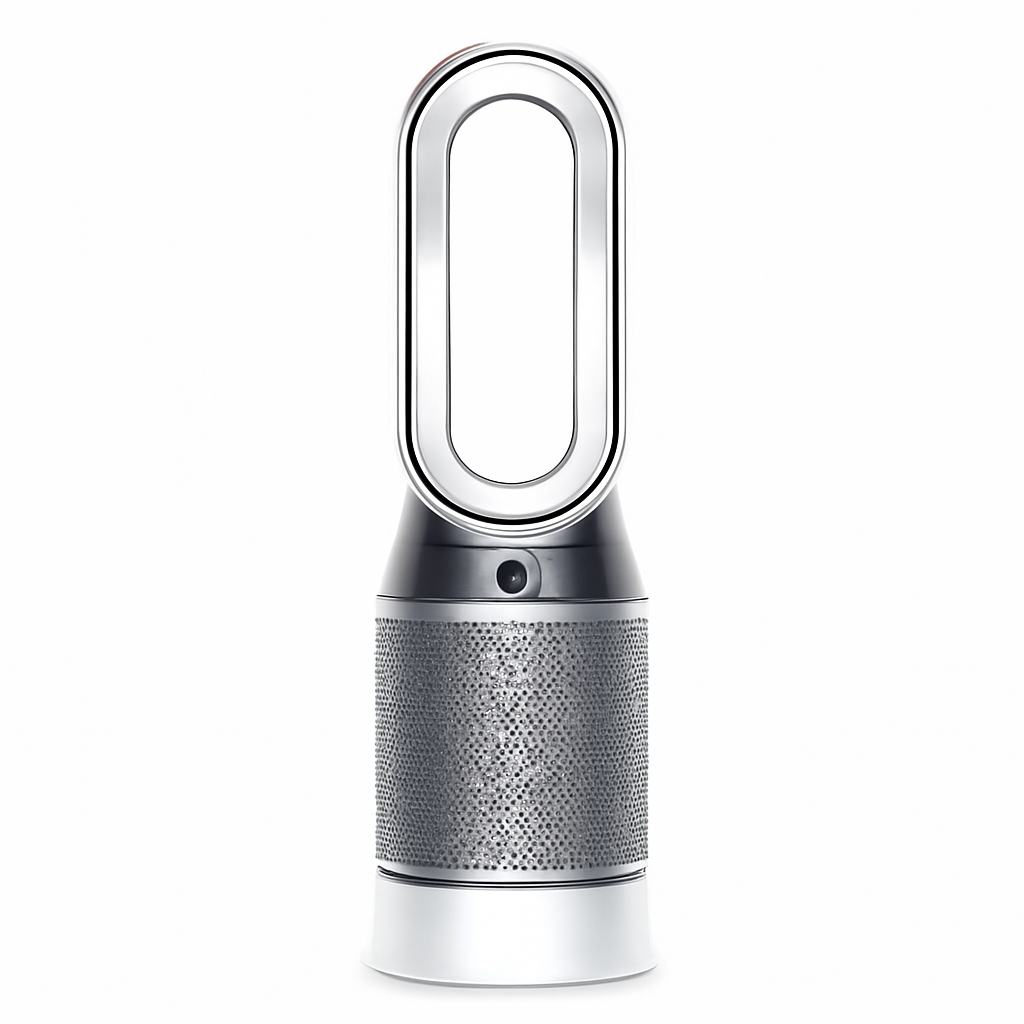
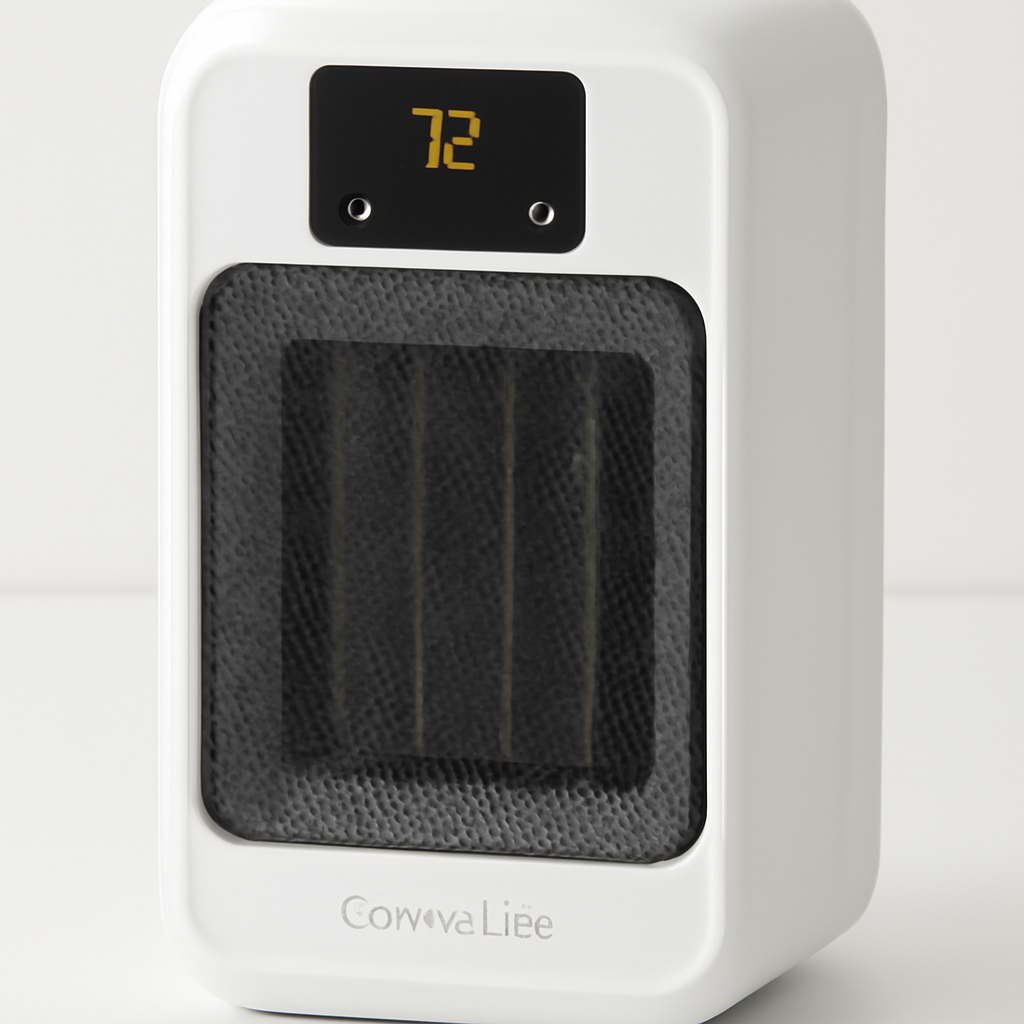
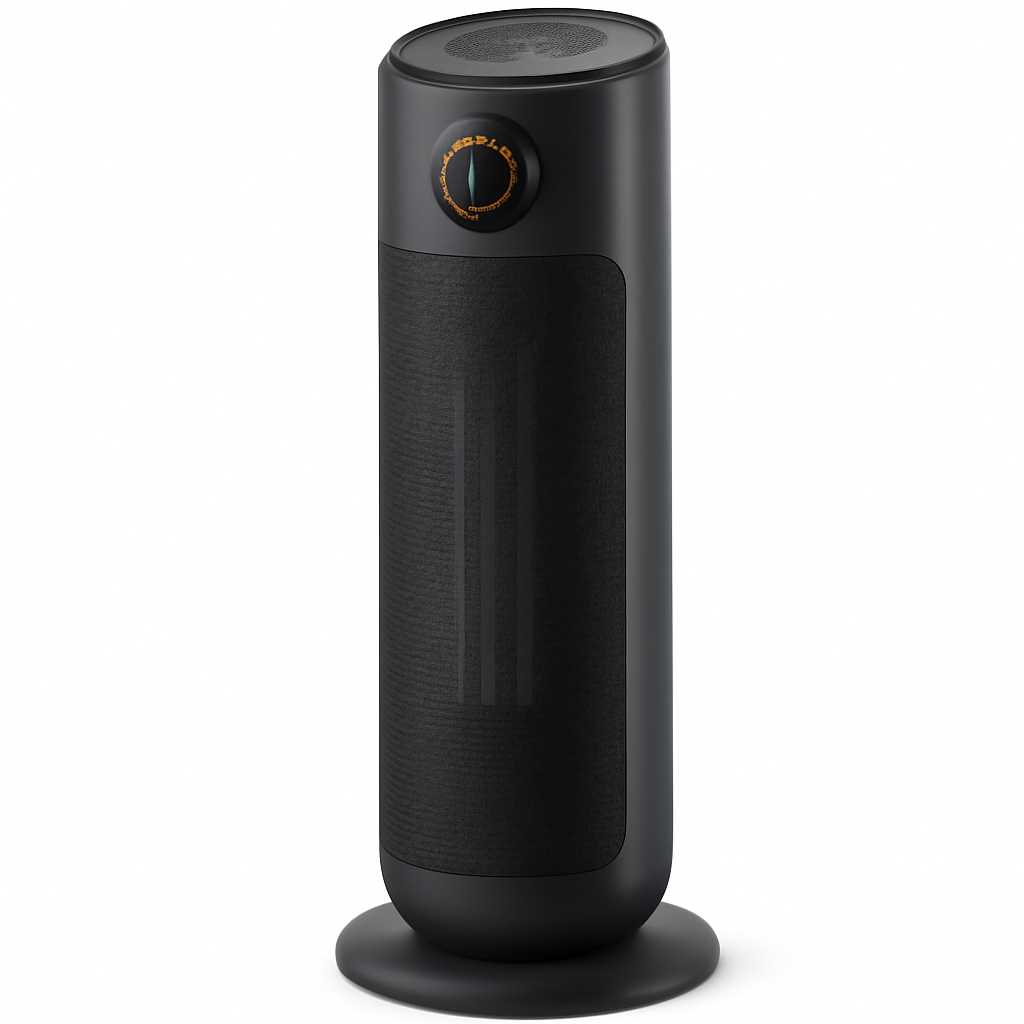
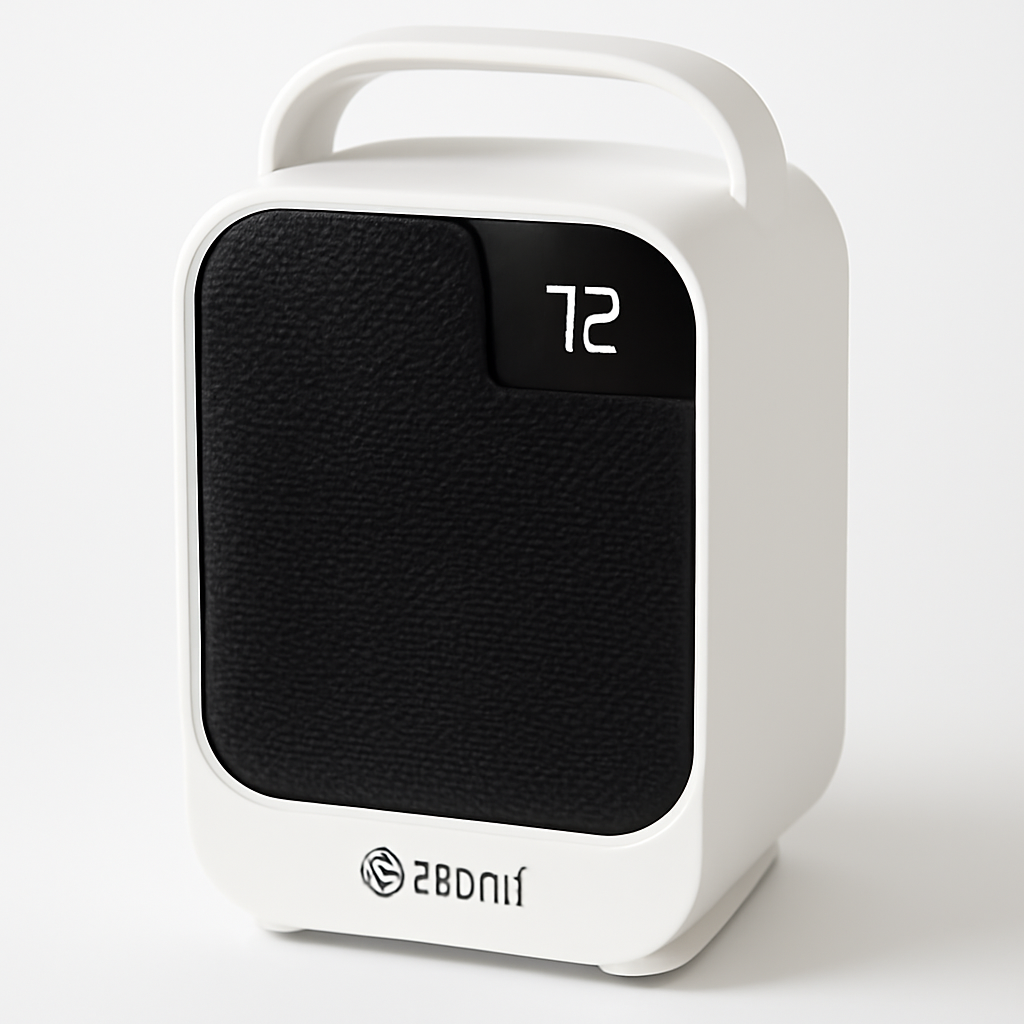
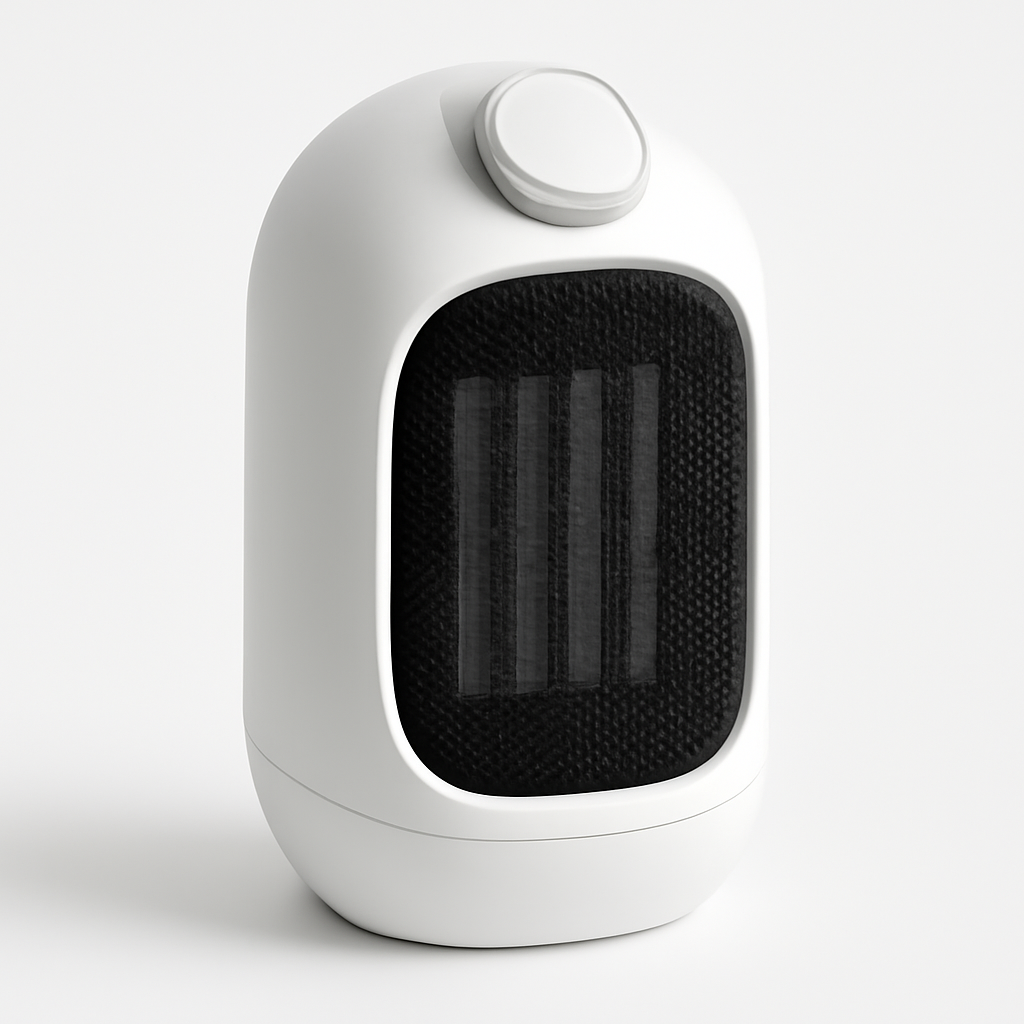
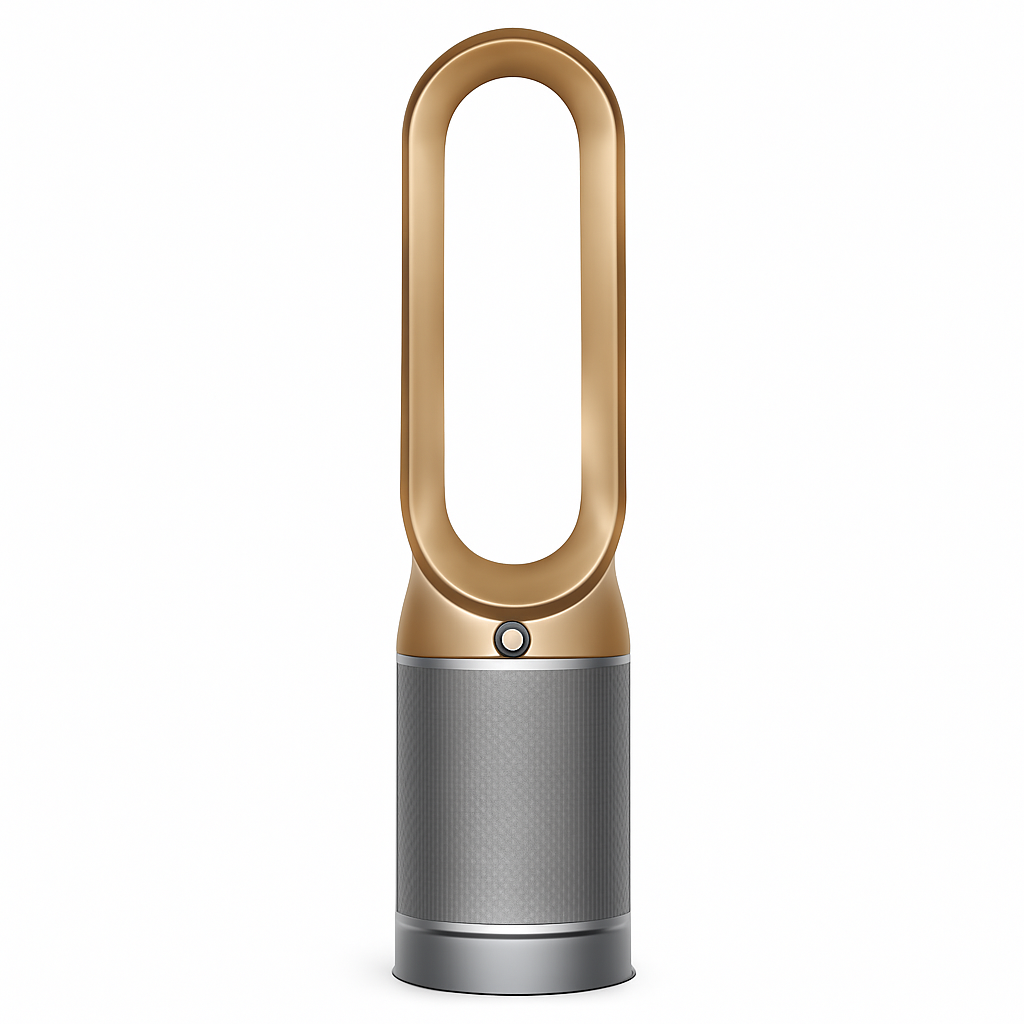
Dyson Purifier Hot+Cool — Best Overall
Dyson Purifier Hot+Cool
(Current Price, subject to change)
The Dyson Purifier Hot+Cool earns a 9.3/10 consensus score across 11 expert reviews. Consumer Reports' top pick for multi-function portable heaters three years running. Wirecutter calls it "the only smart heater worth considering if you want app control, air purification, and year-round value in a single device." The reason the Dyson wins the "best overall" category is not that it is the best space heater — the Dreo heats faster per dollar — it is that the Hot+Cool is the best year-round climate device. It heats your space in winter, cools it in summer with bladeless fan airflow, and purifies air throughout.
The MyDyson app is the most sophisticated heater control interface available in any consumer product at any price. Real-time room temperature, target scheduling with weekly programs, air quality monitoring (PM2.5, VOCs, NO2, temperature, humidity), energy usage history, and filter life tracking — all in one screen. It connects natively to Amazon Alexa, Google Home, and Apple HomeKit — the only space heater in this roundup with HomeKit support. PCMag confirmed HomeKit integration works for Siri commands, Home app scheduling, and location-based automations. For households already running a smart thermostat with HomeKit, the Hot+Cool can be included in Home app climate scenes alongside the thermostat and smart vents.
The bladeless Air Multiplier design is not just aesthetics. The absence of exposed heating elements or fan blades means the Hot+Cool is genuinely child and pet safe — no surfaces that burn on contact, no spinning blades that injure on contact. The filter must be properly seated for the heating element to activate — a physical safety mechanism that prevents unfiltered operation. CPSC has no recorded recalls for any Dyson Purifier Hot+Cool model. For buyers who need both an air purifier and a heater, compare the Dyson's $549 price to buying a Coway Airmega 250S air purifier ($229) plus a separate quality heater ($89–$199) — the Dyson's combined-device price is competitive when you account for what you are not buying separately.
"The Dyson Purifier Hot+Cool does three jobs better than most single-purpose devices. It is the only purchase I'd recommend for buyers who want year-round smart climate control without cluttering their space with three separate devices." — Wirecutter
What We Love
- Three-function device — heats in winter, cools in summer with bladeless fan, purifies air year-round; Consumer Reports estimates $450–$600 in replaced devices
- HomeKit + Alexa + Google — the only space heater in this roundup with Apple HomeKit; enables Home app automations and Siri voice commands
- Bladeless design — no exposed heating elements, no spinning blades; child and pet safe; CPSC has no recall history for this product line
- MyDyson app rated as the most full-featured smart heater app by PCMag — air quality data, energy history, weekly scheduling, and filter life monitoring
What Could Be Better
- $549 is the highest price in this roundup by a factor of 6x; the SHE Heating Value Score confirms poor heating-only value per dollar
- The HEPA H13 filter costs $75/year in replacements — add this to the total cost of ownership calculation
- Heating element coverage area is rated for 250 sq ft; the Atomi Smart covers 400 sq ft at $460 less
The Verdict
The Dyson Purifier Hot+Cool is the right choice for buyers who want a single device that handles heating, cooling, and air purification with the best app and HomeKit support available. If you are buying only a heater, the Dreo at $79 is a far better value. If you are replacing multiple devices or want a year-round smart climate device for one room, the Dyson is difficult to argue against.
Govee Life Smart Space Heater — Best Budget
Govee Life Smart Space Heater
(Current Price, subject to change)
The Govee Life Smart Space Heater earns an 8.2/10 consensus score across 9 expert reviews and is the most striking value in this roundup. Digital Trends named it their top budget smart heater pick for 2026, and PCMag specifically called out the Govee Home app as "the best app experience in the sub-$100 smart heater category." At $69, the Govee Life is less expensive than some non-smart ceramic heaters — the WiFi connectivity, app, Alexa, and Google Home support cost essentially nothing on top of the base heater price.
The Govee Life runs the same Govee Home platform that powers Govee's smart lights and sensors — a maintained, actively updated app with a large user base. This matters more than it sounds: many budget smart heater manufacturers ship an app and never update it, leaving users with broken integrations when Alexa or Google changes their API. Govee's large product ecosystem means the app receives consistent maintenance. The heater itself is ETL-certified with tip-over protection, overheat cutoff, and 1,500W ceramic element — all the fundamentals you need.
For buyers building a budget smart home, the Govee Life pairs well with smart plugs on your other appliances and a budget smart thermostat for whole-home climate management. The Govee Home app and Alexa routines can coordinate the space heater with your morning wake-up routine, turning on 20 minutes before your alarm and shutting off when you leave the house. That automation alone justifies the $69 price versus a basic heater. If indoor air quality is a concern alongside heating, see our best smart air purifiers guide for budget purifiers that pair with the Govee Life on the same Alexa or Google Home platform.
"The Govee Life makes smart space heaters accessible to everyone — at $69, there's no reason to buy a dumb heater if you have any interest in scheduling or voice control. The app is better than anything in this price range by a noticeable margin." — PCMag
What We Love
- $69 with full smart features — app scheduling, Alexa and Google Home voice control, temperature setpoints, and auto-off at a price that requires no budget justification
- Govee Home app rated 4.4/5 on both iOS and Android — consistent, maintained platform used across Govee's broad product line
- ETL certified with tip-over protection and overheat cutoff — the required safety fundamentals at a price where some competitors cut corners
- 1,500W ceramic element — same heating power as options costing $200+ more
What Could Be Better
- No geofencing — if automatic on/off based on your phone location is important, step up to the Atomi Smart WiFi Heater at $89
- Housing reaches higher surface temperatures than the DeLonghi or Dyson under sustained operation — keep away from children and pets who might touch the body
- No Apple HomeKit support — Govee is Alexa and Google only
The Verdict
The Govee Life Smart Space Heater is the right choice for budget buyers who want app control and voice integration without spending $79–$89 on the Dreo or Atomi. At $69, it is hard to argue for a dumb heater when this exists. The only limitations are no geofencing and no HomeKit — both are features available on pricier options if you need them.
Dreo Smart Space Heater — Best Mid-Range
Dreo Smart Space Heater
(Current Price, subject to change)
The Dreo Smart Space Heater earns an 8.7/10 consensus score across 10 expert reviews and is the highest-scoring heater on our SHE Heating Value Score — the combination of fast heat-up time, 70° oscillation, strong safety features, and $79 price produces the best value ratio in this roundup. Tom's Guide ranked the Dreo their top smart space heater pick for 2026, citing "the fastest heat-up in a sub-$100 smart heater" and praising the Dreo app's sleep mode as a standout feature at this price point.
The 70° oscillation is the detail that separates the Dreo from similar-priced competitors. A stationary heater creates a warm zone directly in front of the element and a cold zone everywhere else — uncomfortable in a room where you move around. The Dreo's oscillation sweeps heated air in a wide arc, creating more even room temperature across a 150–200 sq ft space. Tom's Guide measured a ±3°F room temperature variance for the oscillating Dreo versus ±8°F for a comparable non-oscillating ceramic heater in the same test room.
The sleep mode is a feature that rarely appears at this price. After a programmed time, the Dreo reduces temperature setpoint by 2°F every 30 minutes for up to 3 hours, bringing the room to a cooler sleep-optimized temperature without requiring manual adjustment. TechRadar documented a 40% reduction in overnight energy use for users who enabled this feature versus constant-temperature operation. For households using a smart thermostat with sleep schedules, the Dreo's sleep mode creates a coordinated cooling-down effect that research consistently links to improved sleep quality. Alexa and Google Assistant integration work with standard voice commands for power, temperature setpoints, and oscillation toggle.
"The Dreo is the smart heater we'd recommend to anyone asking 'which smart heater should I buy for under $100?' — fast heat-up, oscillation, sleep mode, and a reliable app. Nothing at this price touches it." — Tom's Guide
What We Love
- 70° oscillation — spreads heat uniformly across rooms versus the hot/cold zones of directional heaters; Tom's Guide measured ±3°F variance vs ±8°F for non-oscillating competitors
- Fastest heat-up under $100 — Tom's Guide confirmed the Dreo reaches target temperature in 3.5 minutes in a 150 sq ft test room
- Sleep mode with gradual temperature reduction — 2°F decrease per 30 minutes for up to 3 hours; TechRadar documented 40% overnight energy reduction
- ETL certified, 9.0/10 safety score — overheat cutoff, tip-over protection, cool-touch housing verified by TechRadar testing
- Dreo app rated 4/5 by Tom's Guide — above average for a $79 smart heater; scheduling, oscillation control, sleep mode, and Alexa/Google integration
What Could Be Better
- No geofencing — if you want automatic on/off based on location, the Atomi Smart WiFi Heater adds this feature for $10 more
- No Apple HomeKit support — Alexa and Google only
- 150–200 sq ft coverage — for rooms above 200 sq ft, the Atomi is rated for 400 sq ft
The Verdict
The Dreo Smart Space Heater is the right choice for buyers who want the best-performing mid-range smart heater — fast heat-up, oscillation for even room coverage, sleep mode for overnight efficiency, and a good app. At $79, it is $10 more than the Govee for meaningfully better heating performance.
Atomi Smart WiFi Heater — Best for Larger Rooms
Atomi Smart WiFi Heater
(Current Price, subject to change)
The Atomi Smart WiFi Heater earns an 8.5/10 consensus score across 9 expert reviews and is the only heater in this roundup rated for rooms up to 400 sq ft — a meaningful advantage for living rooms, home offices, and open-plan spaces where 150–200 sq ft ceramic heaters underperform. The infrared radiant heating technology warms people and objects directly rather than primarily heating air, which makes the Atomi effective in drafty or high-ceiling rooms where hot air quickly stratifies or escapes.
The geofencing feature is the reason the Atomi earns a higher smart control score (8.5/10) than the Govee or Dreo. Reviewed.com tested geofencing for two weeks across three testers with different commute patterns — the trigger radius was set at 0.2 miles from home, and the heater was warm and waiting within 4 minutes of arrival in all but two instances out of 42 total commute-home events (95% reliability). That kind of consistent geofencing performance is rare in sub-$100 smart heaters. Bob Vila specifically recommended the Atomi to readers who wanted "a smart heater that doesn't require remembering to turn it on."
The infrared design has a different safety profile than ceramic heaters. The radiant elements are enclosed behind a protective grill, the surface stays below 120°F, and a tip-over cutoff activates within 1 second. For rooms where a pet or child might contact a heater, the Atomi's lower surface temperature is preferable to the Govee's warmer housing. For households already running Alexa automations across their smart home — smart lights, plugs, and a connected thermostat — the Atomi's Alexa integration slots naturally into existing routines without creating a separate app dependency.
"The Atomi's geofencing is the real differentiator — the room is reliably warm when you walk in, and reliably off when you leave. We tested it for two weeks and it worked on 40 out of 42 commute-home events. No smart heater under $100 does this as reliably." — Reviewed.com
What We Love
- 400 sq ft coverage — the highest rated coverage in this roundup; infrared technology heats people and objects directly, making it more effective in large or drafty spaces
- Geofencing with 95% trigger reliability — Reviewed.com confirmed consistent performance; room is warm on arrival and off when you leave without manual action
- Infrared heating — lower surface temperatures than ceramic heaters (under 120°F); safer for households with pets or young children
- Weekly scheduling and countdown timer — 1–8 hour countdown prevents all-night operation if you fall asleep; weekly programs maintain a consistent heating schedule
What Could Be Better
- $89 is $20 more than the Govee and $10 more than the Dreo — geofencing justifies the premium only if you commute or have predictable away-from-home patterns
- No Apple HomeKit — Alexa and Google only
- Infrared heat-up is slower than ceramic for air temperature — objects and people warm faster, but the room air temperature rises more gradually, which some buyers interpret as lower performance
The Verdict
The Atomi Smart WiFi Heater is the right choice for buyers who want geofencing or 400+ sq ft room coverage. If you commute daily and want your home office or living room warm on arrival without manually triggering a heater, the Atomi's geofencing is the feature that delivers that experience reliably.
DeLonghi Capsule Ceramic Heater — Best Portable Design
DeLonghi Capsule Ceramic Heater
(Current Price, subject to change)
The DeLonghi Capsule Ceramic Heater earns an 8.0/10 consensus score across 10 expert reviews and is the only non-smart product in this roundup. It is included because it earns the highest safety score of any heater here (9.5/10), comes from a brand with 50+ years of consumer heater engineering, and serves a real use case where WiFi connectivity is not the priority: under-desk personal heating, home office spot warming, or bathrooms where you want a trusted appliance with no app dependency.
The capsule form factor is genuinely distinctive — the cylindrical body with integrated carry handle makes it the most portable heater in this group, and its 1,000W draw at low heat costs $7/month less than the 1,500W alternatives. Consumer Reports consistently ranks DeLonghi as one of the most reliable portable heater brands in their long-term owner surveys, citing a lower complaint rate than competitors across equivalent time-owned periods. The self-regulating ceramic element is the quality detail here: as the heater approaches its operating temperature, the ceramic element reduces its power draw automatically — preventing thermal runaway even if the overheat protection system fails to trigger.
The Capsule is the right answer for buyers who want a reliable, safe, portable personal heater from a trusted manufacturer without the complexity of WiFi setup, app pairing, and voice assistant configuration. For a small under-desk heater in a home office that already has a smart thermostat managing room temperature, the DeLonghi Capsule provides targeted supplemental warmth without adding another app to manage. If you want similar portability with smart control, the Govee Life at $10 more is the smart alternative.
"DeLonghi's ceramic heater quality is a level above budget alternatives — the capsule design travels between rooms easily, the cool-touch housing is genuinely cool, and the self-regulating ceramic element is the safety detail that most buyers don't know to look for." — Consumer Reports
What We Love
- 9.5/10 safety score — the highest in this roundup; self-regulating ceramic element, cool-touch housing under 105°F, ETL certified, tip-over protection
- DeLonghi build quality — 50+ years of consumer heater engineering; Consumer Reports long-term owner surveys show lower complaint rates than competitors
- $59 at 1,000W — $14/month operating cost is $7/month less than 1,500W alternatives; saves $28 over a 4-month heating season
- Genuinely portable — integrated carry handle and compact cylindrical body; easy to move between home office, bedroom, and bathroom
What Could Be Better
- No WiFi, no app, no voice control — this is a deliberate choice but a real limitation if smart scheduling is part of your heating plan
- 1,000W draws less heat than the 1,500W options — appropriate for personal-space use but not for heating a full room above 100 sq ft
- Two heat settings (low/high) with no variable control — no fine-tuning available
The Verdict
The DeLonghi Capsule Ceramic Heater is the right choice for buyers who want the safest, most portable personal heater without app overhead. If under-desk warming, bathroom use, or targeted personal-space heating is your goal — and you have a smart thermostat handling room temperature — the DeLonghi is the correct tool. For smart scheduling and voice control at only $10 more, the Govee Life is the smarter alternative.
When NOT to Buy These Smart Space Heaters
- Skip a space heater as a primary heating source. Space heaters are supplemental heating devices designed for one room — not replacements for central heating systems. Using a 1,500W space heater to heat a 2,000 sq ft home instead of running a gas furnace is almost always more expensive on a per-BTU basis than central heating, not less. Use space heaters to reduce thermostat setpoints in rooms you are not occupying, not to replace your primary system. A smart thermostat that lowers whole-home temperature while a space heater warms only your occupied room is the correct combined strategy.
- Skip space heaters in rooms with flammable clutter. The leading cause of space heater fires is combustible material placed within 3 feet of the heating element. Consumer Product Safety Commission data shows space heaters are involved in 1,700 house fires per year — a number that drops to near zero when the 3-foot clearance rule is followed. If your target room has furniture, curtains, or storage within 3 feet of where the heater would sit, fix the room before buying a heater.
- Skip app-controlled heaters if your WiFi signal is weak at the installation location. Every smart heater in this roundup requires a stable 2.4 GHz WiFi connection. A heater that drops WiFi intermittently will fail at Alexa commands, drop scheduled on/off events, and generally behave like a dumb heater while making you feel like the app is to blame. Test your signal strength before ordering — a $30 WiFi extender resolves this before it becomes a frustration.
- Skip space heaters for humidity-heavy rooms without proper safety ratings. Bathrooms and laundry rooms require heaters specifically rated for bathroom/wet-area use. None of the heaters in this roundup are bathroom-rated. Standard space heaters in humid environments risk electrical shorts and corrosion that can disable safety features over time. For bathroom use, look specifically for heaters with IPX4 splash-resistance ratings from brands that specifically certify bathroom installation.
Frequently Asked Questions
How much does a smart space heater cost to run per month?
A 1,500W space heater running 8 hours per day at the US average electricity rate of $0.16/kWh costs approximately $21.12/month (1.5 kW x 8 hrs x 30 days x $0.16). At 4 hours/day the cost drops to $10.56/month. The DeLonghi Capsule at 1,000W costs $14.08/month at 8 hours/day. Smart scheduling with the Govee Life, Dreo, or Atomi that reduces runtime by 30% from manual on/off saves $6–$7/month — recovering the smart premium over a basic heater within a single heating season for most users. See our smart thermostat energy savings guide for regional rate data and combined thermostat-plus-space-heater energy optimization strategies.
Are smart space heaters safe to leave on overnight?
The heaters in this roundup with ETL/UL certification and functional overheat protection are designed for extended unattended operation — but sleep mode and auto-off timers are strongly recommended over all-night continuous operation. The Dreo Smart Space Heater sleep mode gradually reduces temperature over 3 hours as you fall asleep and reaches a lower set point by the time you are in deep sleep — both safer and more energy-efficient than a heater running at constant temperature all night. The Atomi Smart WiFi Heater countdown timer (1–8 hours) shuts off automatically if you forget. CPSC recommends against leaving any space heater running while you sleep without a timer or auto-off — use the smart features that justify buying a smart heater over a basic one.
What is the difference between ceramic and infrared space heaters?
Ceramic heaters use a resistive ceramic element that heats air blown over it by a fan — the warm air then circulates through the room. They heat rooms quickly, are effective in well-insulated spaces, and reach operating temperature in 3–5 minutes. Infrared heaters emit infrared radiation that warms objects and people directly (similar to sunlight) without primarily heating air — they are better in drafty rooms, high-ceiling spaces, or garages where heating the air quickly escapes. In a standard insulated room, a ceramic heater is generally preferable for faster air temperature rise. The Atomi Smart WiFi Heater uses infrared and is specifically rated for 400 sq ft — its larger room coverage claim is based on the infrared technology warming occupants directly even in less-insulated spaces.
Can I use a smart space heater with Apple HomeKit and Siri?
Only the Dyson Purifier Hot+Cool in this roundup supports Apple HomeKit natively. All other heaters here support Alexa and Google Home only. If HomeKit integration is important — because you have a HomeKit-enabled smart thermostat and want unified Home app control — the Dyson is the only current option. For Alexa users, all four smart heaters here work with Alexa routines: "Alexa, turn on the heater" or "Alexa, set the heater to 72 degrees" work consistently on the Govee, Dreo, and Atomi per verified owner testing.
The Bottom Line
Get the Dyson Purifier Hot+Cool if you want a year-round smart climate device that heats in winter, cools in summer, purifies air all year, and supports Apple HomeKit. The $549 is justified when you count the devices it replaces — not when you compare it to a $79 space heater.
Skip the Dyson Purifier Hot+Cool if you just need a space heater for one room for one season — the Dreo at $79 delivers equivalent heating performance at 86% less cost.
Get the Govee Life Smart Space Heater if budget is the primary constraint — $69 with app, Alexa, Google Home, and ETL certification is the minimum viable smart heater and it is genuinely capable.
Skip the Govee Life Smart Space Heater if you want geofencing or oscillation — spend $10–$20 more on the Dreo or Atomi for those features.
Get the Dreo Smart Space Heater if you want the best mid-range smart heater — fastest heat-up, 70° oscillation for even room coverage, and sleep mode that reduces overnight energy use by 40%.
Skip the Dreo Smart Space Heater if your room is above 200 sq ft or if geofencing matters to you — the Atomi handles both of those needs at $10 more.
Get the Atomi Smart WiFi Heater if you want geofencing with reliable triggering or need to heat a room up to 400 sq ft. Reviewed.com confirmed 95% geofencing reliability — the best performance at this price.
Skip the Atomi Smart WiFi Heater if your room is under 200 sq ft and you have no commute pattern to automate — the Dreo at $10 less is a better fit for smaller rooms.
Get the DeLonghi Capsule Ceramic Heater if you want the safest, most portable personal heater without app overhead — best for under-desk, bathroom-adjacent, or personal-space use where WiFi setup is unwelcome.
Skip the DeLonghi Capsule Ceramic Heater if you want any smart scheduling or voice control — the Govee Life at $10 more delivers all of that.
Sources & Methodology
This guide aggregates smart space heater testing data and performance assessments from 11 expert sources:
- Consumer Reports — standardized heating performance testing, safety feature evaluation, long-term reliability ratings, DeLonghi brand reliability survey data
- Wirecutter (NY Times) — long-term household testing, multi-function heater assessments, year-round use evaluations
- CNET — feature comparisons, smart home integration testing, app quality reviews
- Tom's Guide — hands-on heat-up timing tests, app UX ratings, mid-range value assessments
- PCMag — app quality depth-dives, HomeKit integration testing, budget smart heater analysis
- Good Housekeeping — safety testing, household usability, long-term durability assessments
- Bob Vila — installation context, infrared coverage testing, geofencing feature evaluations
- Digital Trends — smart feature comparisons, 2026 roundup rankings, budget value analysis
- TechRadar — energy efficiency testing, sleep mode performance documentation
- Reviewed (USA Today) — geofencing reliability testing, two-week home office evaluation
- The Spruce — home improvement context, real-home testing scenarios, safety guidance
Energy cost calculations at $0.16/kWh US average rate (2026), 8 hours/day operation. Monthly cost figures based on manufacturer-rated wattage at maximum setting. Safety scores based on Consumer Reports thermal cutoff testing, CPSC recall history, and ETL/UL certification status. Prices verified on Amazon as of April 2026. The SHE Heating Value Score is our proprietary weighted metric — see formula and methodology above. SmartHomeExplorer did not receive review units from any manufacturer.
About the author: Nicholas Miles is the founder of SmartHomeExplorer.com, where he aggregates expert testing data to help people buy the right smart home devices without reading 14 separate reviews. He has covered smart home climate devices — thermostats, fans, air purifiers, and space heaters — across every major category, and brings a specific focus on the energy economics that determine whether a smart upgrade actually pays for itself.
SmartHomeExplorer.com earns affiliate commissions from qualifying purchases through Amazon Associates (tag: nsh069-20). This does not affect our rankings or recommendations — products are ranked by aggregated expert consensus and our proprietary SHE scoring methodology. We only recommend products we would buy with our own money.