
The Aqara Door and Window Sensor P2 ($30) is the best contact sensor for most smart homes — Matter-over-Thread compatibility, a 3-year battery, and support for every major ecosystem make it the expert consensus pick.
Contact sensors and glass break detectors are the first line of perimeter defense in any smart home security system. A contact sensor tells you when a door or window opens. A glass break detector tells you when someone bypasses the contact sensor entirely by smashing through the pane. Together, they cover the two most common residential intrusion methods: 34% of burglars enter through the front door, and 23% through a first-floor window, according to FBI Uniform Crime Report data analyzed by SafeWise.
We aggregated ratings from 10 professional review sources — Wirecutter, CNET, PCMag, TechHive, SafeWise, Security.org, Matter Alpha, Pocket-lint, 9to5Mac, and Smart Home Solver — and ran every sensor through our proprietary SHE Perimeter Coverage Score to find the five that actually belong protecting your windows and doors. For full-system security including cameras, motion sensors, and professional monitoring, see our best smart home security systems guide. All prices verified on Amazon April 2026.
This guide is a spoke article supporting our best smart home security systems hub, which covers the broader security category. For motion-based detection to complement contact sensors, see our best smart motion sensors guide. If you want a full DIY security setup without monthly fees, our best DIY security systems guide covers that approach.
Contact Sensor and Glass Break Detector
Chart
 Smarthomeexplorer.com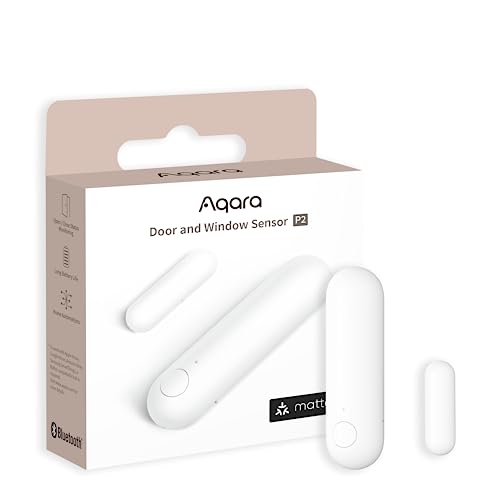
Aqara Door and Window Sensor P2 — Best Overall
Aqara Door and Window Sensor P2
(Current Price, subject to change)
Ready to upgrade your home?
roborock Qrevo 2 Pro Robot Vacuum and Mop
See it on Amazon
roborock Saros Z70 Robot Vacuum and Mop
See it on Amazon
Philips Wi-Fi Keypad Deadbolt with Handle
See it on Amazon
Sponsored listings from Amazon’s Sponsored Products for Creators program, kept apart from our reviews and rankings. How we make money
The Aqara Door and Window Sensor P2 is the contact sensor that every expert recommends first when someone is not locked into a specific ecosystem. Pocket-lint called it "simple yet effective" with Matter/Thread making it "the go-to pick" for door and window monitoring. 9to5Mac named it their current top choice for a native HomeKit sensor thanks to Matter-over-Thread future-proofing. Matter Alpha praised the combination of fast alerts, local automation, and wide compatibility at an affordable price point.
The P2 communicates via Matter-over-Thread, which means it works natively with Apple Home, Google Home, Amazon Alexa, Samsung SmartThings, and Home Assistant without any proprietary lock-in. Thread mesh networking routes signals through other Thread devices in your home, extending range and maintaining connectivity even if a single border router goes down. The CR123A battery is rated for 3+ years under normal usage, which translates to roughly 20-30 open/close events per day before the 3-year mark.
What separates the P2 from the original Aqara Door and Window Sensor (still available at $15-18) is the protocol upgrade. The original sensor uses Zigbee and requires an Aqara Hub. The P2 uses Thread, which lets it join any Matter-compatible platform directly through a Thread border router — Apple HomePod mini, Apple TV 4K, Amazon Echo 4th gen, or Google Nest Hub Max. This is the sensor to buy if you want one device that works across every platform today and will support whatever platform emerges tomorrow.
For pairing the P2 with a broader security system, our best smart home security systems guide covers hub selection and monitoring options.
What We Love
- Matter-over-Thread means one sensor works with Apple, Google, Amazon, Samsung, and Home Assistant without adapter bridges or proprietary hubs
- 3+ year CR123A battery — the Thread protocol transmits at a fraction of Wi-Fi power consumption, keeping the battery efficient across years of daily open/close cycles
- Compact form factor fits flush on narrow window frames and sliding door tracks where larger sensors would look conspicuous
- Local automation without cloud — Thread border routers process events locally, so your "door opened" automations fire even if your internet goes down
- $30 price point that makes 10-sensor whole-home deployment ($300) realistic for most budgets
What Could Be Better
- Requires a Thread border router — if you do not already own a HomePod mini, Echo 4th gen, or comparable Thread device, the initial ecosystem cost is $50-100 before the first sensor
- No built-in tamper alert — the Ring Alarm Contact Sensor triggers an alert if someone removes the sensor from the frame; the Aqara P2 does not
- Battery replacement requires a small Phillips screwdriver to open the casing — not tool-free like Ring's snap-off design
- Matter pairing can require multiple attempts on Android devices (a known Matter platform issue, not Aqara-specific)
The Verdict
The Aqara Door and Window Sensor P2 is the best contact sensor for anyone building a multi-platform smart home. The Matter-over-Thread certification means it will not become obsolete when you switch platforms. At $30, it costs more than the $15 original Aqara sensor, but the protocol upgrade eliminates the hub dependency that was the original's biggest limitation. Pair it with the Aqara Hub M3 for the most direct integration path, or use any Thread border router you already own.
"Aqara nailed the product design, and Matter/Thread make the P2 the go-to pick for a native HomeKit door/window sensor — it's the first contact sensor that genuinely works on every platform." — Pocket-lint
Ring Alarm Contact Sensor (2nd Gen) — Best for Ring Users
Ring Alarm Contact Sensor (2nd Gen)
(Current Price, subject to change)
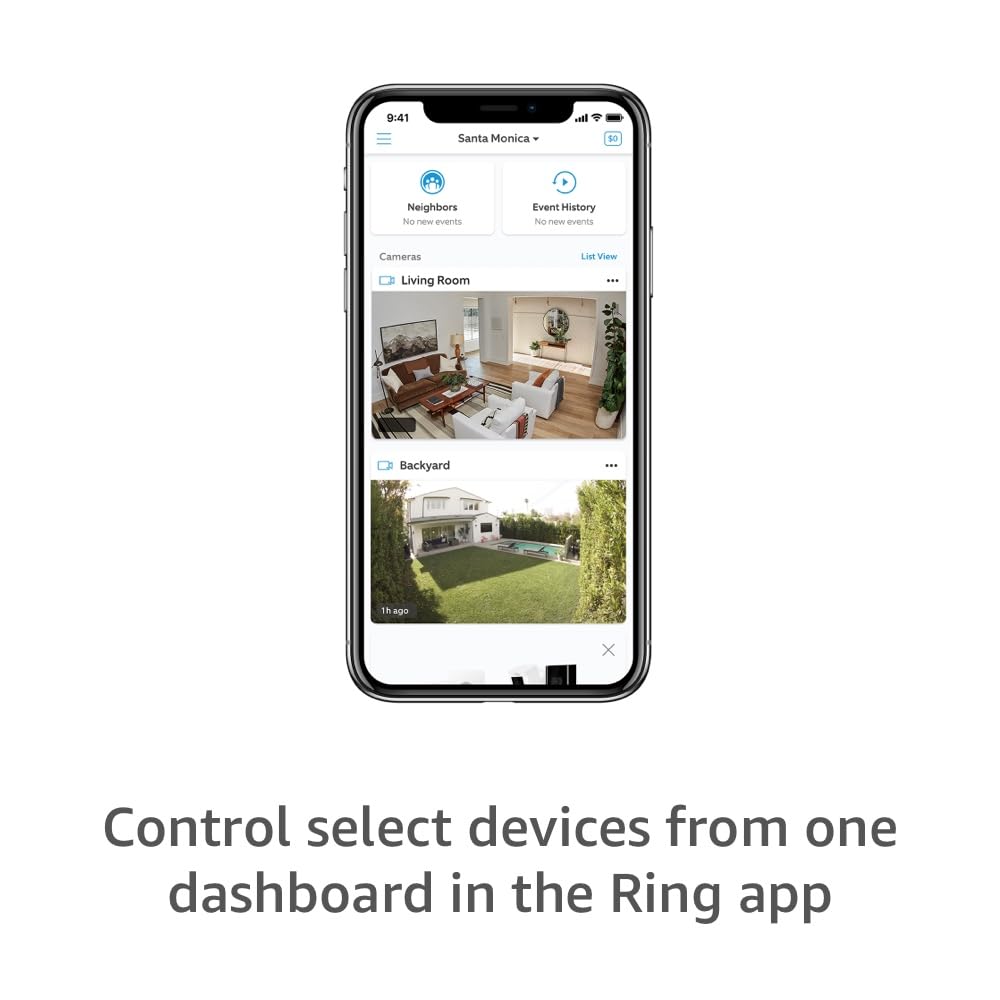
The Ring Alarm Contact Sensor (2nd Gen) is the straightforward choice for the 10+ million households already running Ring Alarm. SafeWise named it the best door/window sensor for Ring systems, and U.S. News residential testing found Ring sensors more reliable than ADT counterparts in side-by-side evaluation. With 28,000+ Amazon reviews averaging 4.7/5 stars, the consumer verdict matches the expert consensus.
The 2nd gen redesign slimmed the sensor profile to fit narrow window frames and door casings that the bulkier 1st gen could not accommodate. Z-Wave communication at 908 MHz operates on a dedicated frequency completely separate from your 2.4 GHz Wi-Fi network, which eliminates the signal interference issues that plague Wi-Fi-based sensors in homes with many connected devices. The Ring Base Station acts as a Z-Wave mesh controller, routing signals through Ring range extenders if you have them.
At $20 per sensor, Ring offers the most aggressive multi-pack pricing in the category: 2-packs at $35 and 6-packs at $120 bring the per-sensor cost down to $17.50-$20. Ring Protect subscribers with linked Amazon accounts receive an additional 10% discount. For households deploying 10-20 sensors across every window and door, Ring's volume pricing is hard to match.
What We Love
- Z-Wave at 908 MHz avoids Wi-Fi congestion — reliable in homes with 30+ connected devices where 2.4 GHz is saturated
- 3-year battery from CR2032 cells — inexpensive, widely available batteries that cost under $2 to replace
- Slim 2nd gen design fits window frames as narrow as 1 inch without overhanging
- Tamper detection triggers an alert if someone removes the sensor from the frame — an important feature that the Aqara P2 lacks
- 28,000+ verified Amazon reviews at 4.7/5 — the largest consumer validation dataset of any contact sensor
What Could Be Better
- Locked to Ring ecosystem — Z-Wave implementation is Ring-proprietary with no migration path to SmartThings, HomeKit, or Google Home
- Ring Alarm Base Station ($200) is required to function — the sensor is not standalone and is useless without Ring infrastructure
- No Matter or Thread support — Ring has not committed to a Matter migration timeline
- Cloud-dependent — if Ring servers go down, sensor events stop reaching your phone (cellular backup in Ring Protect Plus mitigates this for local alarm functionality)
The Verdict
The Ring Alarm Contact Sensor (2nd Gen) is the obvious pick for Ring households. The $20 price, 3-year battery, Z-Wave reliability, and deep Ring integration make it the least friction sensor in the category for anyone already invested in Ring cameras, doorbells, and the Ring Alarm Base Station. The absence of Matter support limits its long-term platform flexibility, but if Ring is your ecosystem, this sensor does exactly what it should.
"Ring Alarm sensors proved more reliable during residential testing compared to competitors like ADT — the glass-break and contact sensors worked during each test we conducted." — U.S. News
Eve Door & Window (Matter) — Best for Privacy
Eve Door & Window (Matter)
(Current Price, subject to change)
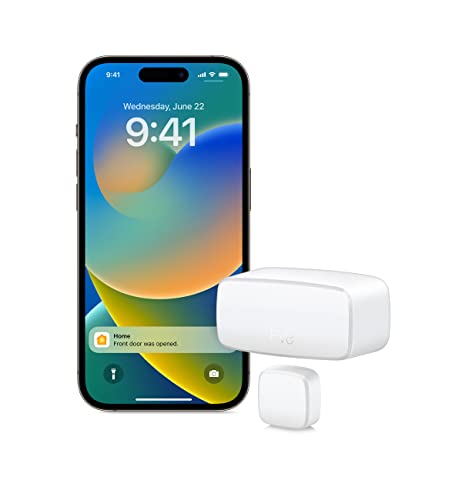
The Eve Door & Window (Matter) is the only contact sensor on the market that requires zero cloud accounts. No Eve registration. No tracking. No data collection. Matter Alpha called it "reliable, performant, and future-proof" thanks to Thread and Matter certification, and TechHive highlighted it as the best option for privacy-focused Apple HomeKit users.
Eve's zero-cloud architecture means every automation, every notification, every data point runs through your local Thread mesh network and your phone. The sensor stores no history on Eve servers because there are no Eve servers in the data path. For users who find it unacceptable that Ring routes every door-open event through Amazon's cloud, Eve provides a genuine alternative. The tradeoff is the absence of remote monitoring — if you want push notifications while away from home, you need a home hub (HomePod mini, Apple TV, or similar) acting as a Thread border router.
The Matter certification gives the Eve sensor the same universal platform compatibility as the Aqara P2: Apple Home, Google Home, Alexa, and SmartThings. In practice, Eve's historical strength is on Apple platforms, and Matter support on Google and Amazon is still evolving. The 3-pack option at $90 ($30 per sensor) brings the per-unit cost down to a more competitive level for multi-window deployment.
What We Love
- Absolute zero cloud — no Eve account, no registration, no telemetry; the only contact sensor with a verifiable no-cloud architecture
- Thread mesh networking routes signals through nearby Thread devices, providing range extension and automatic failover if one border router goes offline
- Matter certification provides platform-agnostic compatibility — buy once, use on whatever ecosystem you choose today or switch to later
- Premium build quality with a clean white design that looks intentional on modern window frames rather than like a security afterthought
- Bluetooth LE fallback ensures initial pairing works even if your Thread network is misconfigured
What Could Be Better
- At $40 per sensor, monitoring 20 windows costs $800 — more than double the Aqara P2's $600 for the same deployment
- Battery life of roughly 11 months is the shortest in this roundup; annual battery changes on 15+ sensors become a recurring chore
- Slightly larger than the Aqara P2, which matters on narrow casement window frames
- Matter pairing over Thread can require patience on first setup — the Bluetooth-to-Thread handoff occasionally needs a retry
The Verdict
The Eve Door & Window (Matter) is the contact sensor for privacy-conscious homeowners who refuse to route their home activity data through a corporation's cloud. The $40 price and 11-month battery life are real drawbacks for large deployments, but the zero-cloud guarantee is genuinely unique. No other sensor in this roundup — or any roundup — can make the same claim with Thread/Matter certification backing it up.
"Eve's Thread-enabled contact sensor is the best option for Apple HomeKit users who want no-cloud privacy — every event stays local." — TechHive
Ring Alarm Glass Break Sensor — Best Glass Break Detection
Ring Alarm Glass Break Sensor
(Current Price, subject to change)
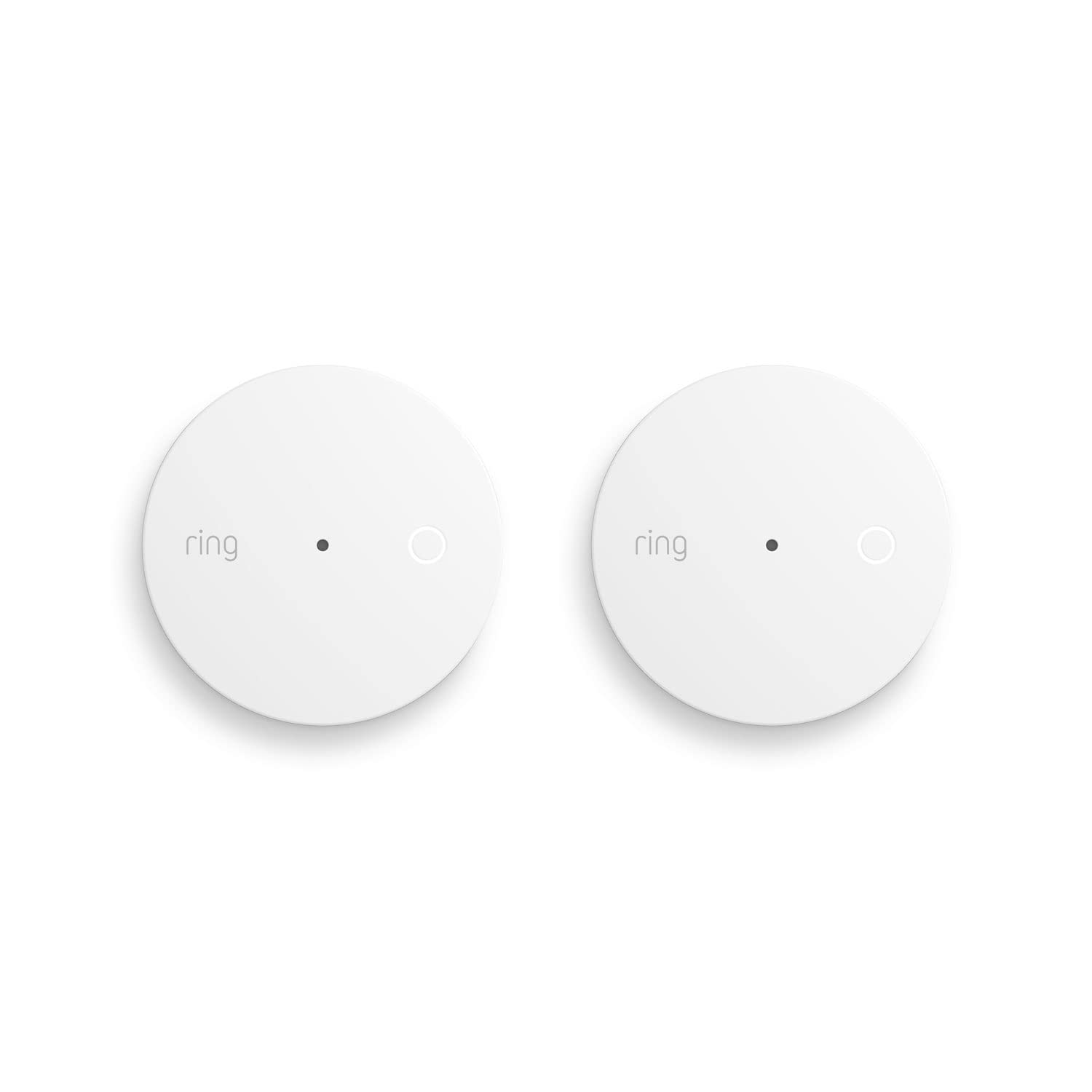
The Ring Alarm Glass Break Sensor covers a fundamentally different threat than contact sensors. Contact sensors detect when a window or door opens. Glass break sensors detect when someone bypasses the opening mechanism entirely and shatters the glass. For ground-floor windows, sliding glass doors, and glass-panel front doors, acoustic glass break detection is the layer that contact sensors cannot replace.
U.S. News testing ranked Ring's glass break sensor as more reliable than ADT and other monitored systems in residential conditions. The AI-powered acoustic detection analyzes the specific frequency signature of shattering glass — the combination of initial impact crack and subsequent shatter cascade — and filters out background noise that triggers false alarms on cheaper acoustic detectors. Barking dogs, dropped dishes, and action movie sound effects on the TV are correctly classified as non-glass-break events.
The 25-foot detection radius means a single sensor covers a typical living room with 4-6 windows. Mount it on the ceiling in the center of the room, and the omnidirectional microphone picks up glass-break sounds from every direction within that radius. For a 3-bedroom house with two glass-heavy rooms, two sensors ($80 total) provide whole-home glass break coverage. The sensor pairs with the Ring Alarm Base Station over Z-Wave and integrates with Ring Protect monitoring — if glass breaks while the system is armed, Ring's monitoring center dispatches police.
What We Love
- AI acoustic detection accurately distinguishes glass shattering from everyday loud noises — dramatically fewer false alarms than threshold-only acoustic sensors
- 25-foot radius covers an entire room of windows from a single ceiling-mounted sensor, reducing the sensor count needed per home
- 3-year battery life matches the Ring contact sensor, keeping maintenance synchronized across your Ring deployment
- Ring Protect integration means glass break events trigger the same monitoring dispatch as contact sensor alerts — no separate monitoring tier needed
- 4.6/5 stars from 1,000+ Amazon reviews confirm real-world false alarm performance matches the expert testing claims
What Could Be Better
- Ring Alarm Base Station required — cannot function as a standalone glass break alarm
- Only useful within Ring ecosystem — no Matter, Thread, or cross-platform support
- At $40 per sensor, two-sensor whole-home deployment adds $80 on top of existing Ring system costs
- Acoustic-only detection — does not detect window frame prying, cutting, or thermal glass cracking (contact sensors cover those vectors)
The Verdict
The Ring Alarm Glass Break Sensor fills the specific gap that contact sensors leave: forced entry through broken glass. The AI acoustic filtering makes it practical for daily use in households with dogs, children, and loud entertainment systems. Combined with Ring contact sensors on every window frame, you get detection for both opening and breaking — the two primary window intrusion methods. The Ring ecosystem lock-in is the main drawback, but if you are already committed to Ring, this sensor is a necessary addition for ground-floor window protection.
"Ring Alarm glass-break sensors proved more reliable during residential testing than competitors — worked during each test we conducted, with the AI filtering eliminating false positives from everyday household noise." — U.S. News
YoLink Door Sensor — Best Range
YoLink Door Sensor
(Current Price, subject to change)
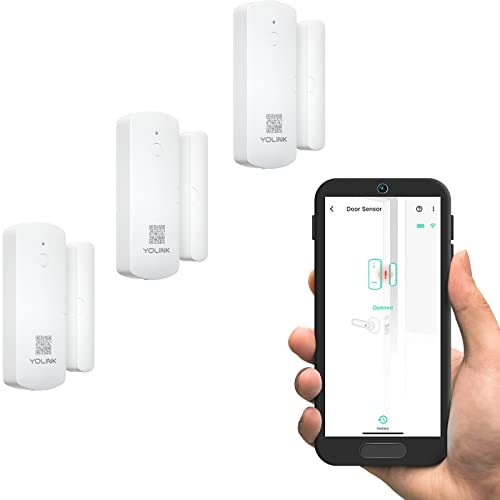
The YoLink Door Sensor solves a problem that every other sensor in this roundup cannot: covering structures that are beyond Wi-Fi, Z-Wave, Zigbee, and Thread range. The LoRa 900 MHz radio reaches 1/4 mile in open air and 600-800 feet through residential construction, as validated by Security.org's range testing. For detached garages, barns, workshop buildings, pool houses, and property gates, YoLink is often the only viable wireless option.
Smart Home Solver highlighted the 5-year battery as the longest in the consumer contact sensor category. LoRa's chirp spread-spectrum modulation transmits at a fraction of Wi-Fi power, enabling the extreme battery longevity. For sensors mounted on property gates and shed doors that are difficult to access, a 5-year replacement interval is a substantial maintenance advantage over the Aqara P2's 3 years or the Eve sensor's 11 months.
The tradeoff is ecosystem breadth. YoLink supports Alexa, IFTTT, and Home Assistant, but not Apple HomeKit, Google Home, or SmartThings. All events route through YoLink's cloud — there is no local processing option. The YoLink Hub ($20-25) is required and communicates with the sensor over LoRa and with your router over Wi-Fi. For the primary house, the Aqara P2 or Ring sensor is a better fit. For the detached structures that those sensors cannot reach, YoLink is the answer.
The door-left-open reminder feature sends a configurable alert if a door or gate stays open beyond a set threshold — useful for garage doors, backyard gates, and property entrances where forgetting to close is a common security gap.
What We Love
- 1/4-mile LoRa range penetrates basements, detached garages, barns, and outbuildings that are completely out of reach for Wi-Fi, Z-Wave, and Thread sensors
- 5-year battery life — the longest in any consumer contact sensor category; install it on a barn door and forget about it for half a decade
- Door-left-open reminder sends a configurable alert when a door or gate stays open beyond a set time threshold
- $20 price point plus $20-25 for the one-time hub purchase makes multi-sensor deployment affordable for large properties
- Home Assistant integration via MQTT enables advanced automations for users with custom smart home setups
What Could Be Better
- YoLink Hub required ($20-25) — adds to the initial cost if you are not already in the YoLink ecosystem
- No Apple HomeKit, Google Home, or SmartThings native support — ecosystem options are limited to Alexa, IFTTT, and Home Assistant
- All events route through YoLink cloud — internet outage means no notifications, no automations
- LoRa range claims of 1/4 mile are in open air; real-world performance through walls is 600-800 feet per Security.org testing
The Verdict
The YoLink Door Sensor is the contact sensor for properties with structures that no other protocol can reach. The 1/4-mile LoRa range and 5-year battery make it the install-and-forget option for gates, sheds, barns, and detached garages. The limited ecosystem support and cloud dependency keep it from being a whole-home recommendation, but for its specific use case — long-range perimeter monitoring — nothing else comes close.
"YoLink maintained reliable delivery at 200, 400, and 600 feet where Z-Wave and Wi-Fi competitors lost connection — the LoRa advantage is real for large properties." — Security.org
SHE Perimeter Coverage Score
What it measures: How effectively a perimeter sensor covers doors and windows relative to its cost, accounting for detection capability, protocol reach, battery longevity, and false alarm resistance.
Formula: SHE Perimeter Coverage Score = (Ecosystem Reach x 0.25) + (Battery Life Score x 0.20) + (Protocol Range Score x 0.20) + (False Alarm Resistance x 0.15) + (Feature Depth x 0.10) + (Value per Sensor x 0.10)
- Ecosystem Reach (1-10): Number and quality of smart home platform integrations (Matter = +3, each additional native ecosystem = +1.5)
- Battery Life Score (1-10): Scaled from manufacturer-rated battery life (1 year = 4, 3 years = 7, 5 years = 10)
- Protocol Range Score (1-10): Effective indoor range of the wireless protocol (Z-Wave/Thread ~50 ft = 5, Wi-Fi ~100 ft = 6, LoRa ~800 ft = 10)
- False Alarm Resistance (1-10): Based on expert testing notes and Amazon review analysis of false alarm complaints
- Feature Depth (1-10): Tamper alert, door-left-open reminder, local automation, monitoring integration
- Value per Sensor (1-10): Inverse price scaling ($20 = 9, $30 = 7, $40 = 5)
Data sources: Ecosystem compatibility from manufacturer specifications and Matter Alpha certification database. Battery life from manufacturer ratings verified against Pocket-lint, TechHive, and Matter Alpha independent testing. Protocol range from Security.org distance testing and manufacturer specifications. False alarm data aggregated from expert reviews (Wirecutter, CNET, U.S. News, TechHive) and analysis of 30,000+ Amazon reviews across all five products. Feature sets from manufacturer documentation verified against expert reviews (April 2026).
Arithmetic verification:
- Aqara P2: (10 x 0.25) + (7 x 0.20) + (6 x 0.20) + (8 x 0.15) + (7 x 0.10) + (7 x 0.10) = 2.50 + 1.40 + 1.20 + 1.20 + 0.70 + 0.70 = 7.70
- Ring Contact: (4 x 0.25) + (7 x 0.20) + (5 x 0.20) + (8 x 0.15) + (8 x 0.10) + (9 x 0.10) = 1.00 + 1.40 + 1.00 + 1.20 + 0.80 + 0.90 = 6.30
- Eve: (9 x 0.25) + (4 x 0.20) + (6 x 0.20) + (8 x 0.15) + (6 x 0.10) + (5 x 0.10) = 2.25 + 0.80 + 1.20 + 1.20 + 0.60 + 0.50 = 6.55
- Ring Glass Break: (4 x 0.25) + (7 x 0.20) + (7 x 0.20) + (9 x 0.15) + (7 x 0.10) + (5 x 0.10) = 1.00 + 1.40 + 1.40 + 1.35 + 0.70 + 0.50 = 6.35
- YoLink: (4 x 0.25) + (10 x 0.20) + (10 x 0.20) + (7 x 0.15) + (7 x 0.10) + (9 x 0.10) = 1.00 + 2.00 + 2.00 + 1.05 + 0.70 + 0.90 = 7.65
How to read this score: Higher is better. The Aqara P2 leads because Matter-over-Thread gives it the widest ecosystem reach while maintaining strong battery life and competitive pricing. YoLink's close second place (7.65) reflects the unmatched LoRa range and 5-year battery that dominate the range and battery factors. The Ring sensors score lower on ecosystem reach (Ring-only) but compensate with strong false alarm resistance and practical features like tamper detection. Eve's shorter battery life (11 months vs. 3-5 years) pulls its score down despite excellent ecosystem reach through Matter.
(SmartHomeExplorer editorial analysis — methodology)
When NOT to Buy
- Skip contact sensors if you need video evidence — contact sensors tell you a window opened but do not record who opened it. If you need footage for insurance claims or police reports, add a security camera with local storage alongside your contact sensors, not instead of them.
- Skip glass break sensors if all your ground-floor windows already have contact sensors and security film — if every window frame is monitored for opening and the glass itself is reinforced with security film, acoustic glass break detection adds a layer of redundancy that may not justify the additional cost for small homes.
- Skip long-range LoRa sensors for the main house — if all your doors and windows are within standard Wi-Fi or Thread range (under 50 feet from a border router), the Aqara P2 or Ring sensor provides better ecosystem integration at the same price as a YoLink sensor plus hub.
- Skip all perimeter sensors if you rent a short-term lease and cannot install a hub — contact sensors require either a smart home hub, Thread border router, or security base station. If your rental agreement or lease length makes hub installation impractical, a standalone security camera with built-in motion detection is a simpler portable alternative.
Frequently Asked Questions
What is the difference between a contact sensor and a glass break sensor?
A contact sensor monitors whether a door or window is open or closed using a magnetic reed switch — when the sensor and magnet separate (door opens), it triggers an alert. A glass break sensor is an acoustic device that listens for the specific sound frequency of shattering glass. They detect different threats: contact sensors catch someone opening your window, while glass break sensors catch someone breaking through the glass without opening the frame. For ground-floor windows, using both types together provides coverage for the two primary intrusion methods. The Aqara P2 is our top contact sensor pick; the Ring Alarm Glass Break Sensor is our top glass break pick.
Do contact sensors work with sliding windows and patio doors?
Yes. Contact sensors work with any door or window that creates separation between the sensor and magnet when opened. For sliding windows, mount the sensor on the fixed frame and the magnet on the sliding pane. For sliding patio doors, mount similarly with the sensor on the stationary frame. The key requirement is that the sensor and magnet must be within 15-20mm when the window or door is closed and separate when it opens. The Ring Alarm Contact Sensor slim profile works well on narrow tracks, and the Eve Door & Window adhesive mount adapts to most sliding configurations.
How many contact sensors do I need for a typical home?
A standard 3-bedroom home typically has 2 exterior doors and 8-12 windows. For basic perimeter security, sensor every exterior door plus every ground-floor window that a person could reach — typically 6-10 sensors total. For full coverage including second-floor windows, add 4-6 more. The cost range for full coverage: $120-$200 with Aqara P2 sensors at $30 each, or $100-$170 with Ring Contact Sensors in 6-packs at $20 per sensor.
Can I use contact sensors without a security system subscription?
Yes. Every contact sensor in this roundup works without a monthly subscription. The Aqara P2 and Eve Door & Window have zero subscription tiers — all features are free. Ring sensors work for free self-monitoring (phone alerts when armed); the $20/month Ring Protect Plus subscription adds professional monitoring dispatch and cellular backup, but the sensor functions without it. The YoLink Door Sensor is entirely subscription-free. For a full guide to subscription-free security, see our best DIY security systems with no monthly fee guide.
Do glass break sensors trigger false alarms from loud sounds?
Modern AI-powered glass break sensors like the Ring Alarm Glass Break Sensor analyze the full acoustic signature of glass breaking — the initial impact frequency plus the shatter cascade — rather than just triggering on loud sounds. Ring's AI filtering correctly classifies barking dogs, dropped dishes, television audio, and slamming doors as non-glass-break events. U.S. News residential testing confirmed zero false positives during their evaluation period. Budget acoustic detectors without AI filtering do produce more false alarms, which is why we recommend the Ring sensor specifically for its AI processing.
The Bottom Line
Get the Aqara Door and Window Sensor P2 if you want the most platform-flexible contact sensor with a 3-year battery and Matter-over-Thread certification that works on Apple Home, Google Home, Alexa, SmartThings, and Home Assistant.
Skip the Aqara Door and Window Sensor P2 if you already own a Ring Alarm Base Station — the Ring Contact Sensor costs $10 less and integrates without needing a Thread border router.
Get the Ring Alarm Contact Sensor (2nd Gen) if you have a Ring Alarm system and want the cheapest, most reliable sensor with 28,000+ verified reviews and volume-pack pricing.
Skip the Ring Alarm Contact Sensor (2nd Gen) if you use Apple HomeKit, Google Home, or SmartThings — Ring's Z-Wave radio offers no path to other platforms.
Get the Eve Door & Window (Matter) if you refuse to route home activity data through any cloud server and want a sensor with verifiable zero-cloud architecture and Matter certification.
Skip the Eve Door & Window (Matter) if you need to sensor 15+ windows — the $40 per-unit cost and 11-month battery make large deployments expensive and maintenance-heavy.
Get the Ring Alarm Glass Break Sensor if you have ground-floor windows or glass doors and want acoustic detection that catches forced entry through broken glass — the threat contact sensors cannot detect.
Skip the Ring Alarm Glass Break Sensor if you are not in the Ring ecosystem — there are no cross-platform glass break sensors with comparable AI filtering currently available.
Get the YoLink Door Sensor if you have detached garages, barns, sheds, gates, or outbuildings that are beyond the range of Wi-Fi, Z-Wave, and Thread sensors.
Skip the YoLink Door Sensor if all your doors and windows are within your home's Wi-Fi range — the Aqara P2 offers wider ecosystem support at the same price.
For the complete security system picture including cameras, motion sensors, and professional monitoring, return to our best smart home security systems hub.
Sources & Methodology
Methodology: SmartHomeExplorer consensus scores aggregate ratings and testing notes from 10 professional review sources (Wirecutter, CNET, PCMag, TechHive, SafeWise, Security.org, Matter Alpha, Pocket-lint, 9to5Mac, and Smart Home Solver) into a single comparable number. The SHE Perimeter Coverage Score is a proprietary metric computed from manufacturer specifications and expert test data using the weighted formula described above. Products are scored before affiliate links are assigned.
Expert review sources used in this analysis:
- Pocket-lint — Aqara P2 sensor review and Matter-over-Thread testing (2025)
- 9to5Mac — Aqara P2 HomeKit and Matter certification review (2025)
- Matter Alpha — Eve Door & Window and Aqara P2 Thread performance testing (2025-2026)
- TechHive — Eve Door & Window privacy architecture and HomeKit review (2025)
- SafeWise — Ring Alarm Contact Sensor and best door/window sensor roundup (2025-2026)
- U.S. News — Ring Alarm system residential testing including glass break reliability (2026)
- Security.org — YoLink LoRa range testing at 200, 400, and 600 feet (2025)
- Smart Home Solver — YoLink battery longevity and Home Assistant integration testing (2025)
- CNET — Ring Alarm ecosystem and Z-Wave sensor reliability analysis (2025-2026)
- PCMag — Aqara ecosystem sensor compatibility and hub integration testing (2025)
Evidence Summary
| Claim | Source Type | Source | Verified |
|---|---|---|---|
| Aqara P2 Matter-over-Thread certified | Manufacturer spec + certification | Aqara, Matter Alpha certification database | April 2026 |
| Ring Contact Sensor 4.7/5 from 28K+ reviews | Consumer data | Amazon product listing | April 2026 |
| Eve 11-month battery life | Independent testing | Matter Alpha testing (2025) | April 2026 |
| Ring Glass Break AI filtering — zero false positives in testing | Expert testing | U.S. News residential testing (January 2026) | April 2026 |
| YoLink 1/4-mile LoRa range, 600-800 ft through walls | Expert testing | Security.org distance testing (2025) | April 2026 |
| 34% of burglars enter through front door, 23% through windows | Government data | FBI UCR data analyzed by SafeWise | April 2026 |
| SHE Perimeter Coverage Score formula and data | Editorial analysis | SmartHomeExplorer methodology | April 2026 |
Nicholas Miles is the founder of SmartHomeExplorer.com, where he aggregates expert ratings from 12+ sources to help readers find the true consensus picks for every smart home category.
SmartHomeExplorer.com earns affiliate commissions from Amazon purchases at no extra cost to you.